

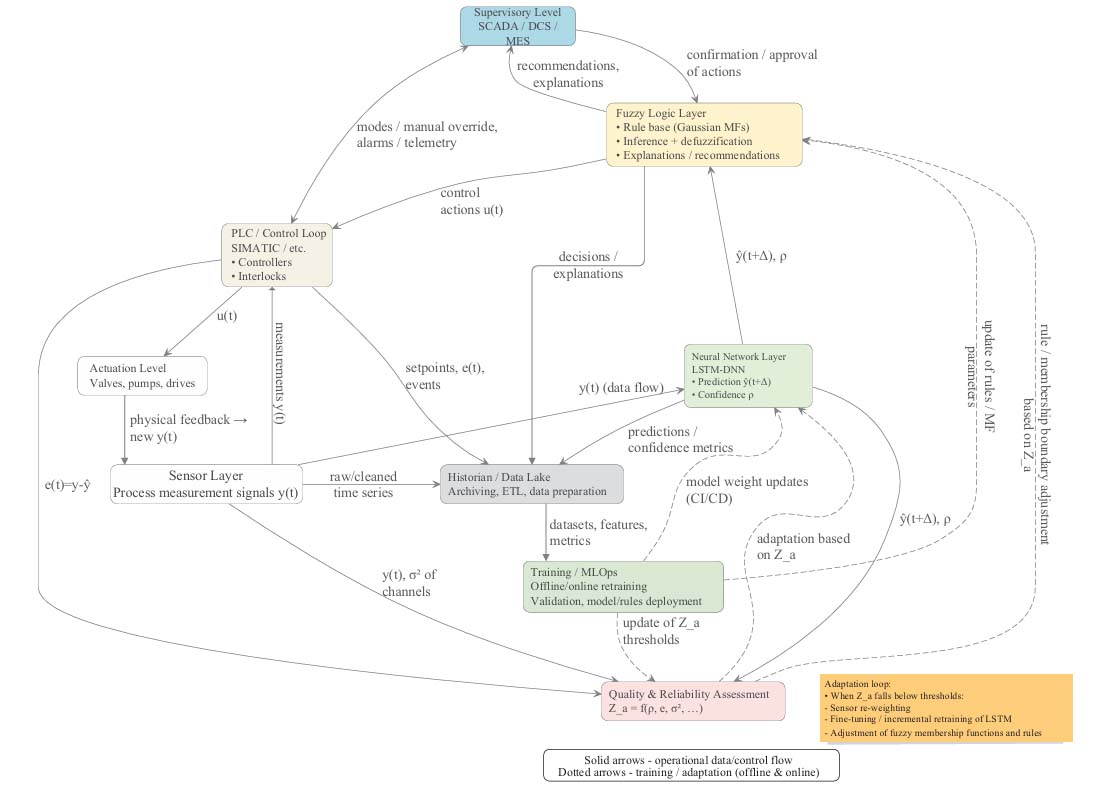
Figure 1.
Architecture of a hybrid neuro-fuzzy IUS with a feedback adaptation loop
Table 1.
LSTM-DNN architecture and training parameters
| Component | Description |
|---|---|
| LSTM layers | 1-2 stacked layers |
| Hidden units | e.g., 32–64 |
| Activation | tanh (LSTM), ReLU (DNN) |
| Optimizer | Adam |
| Loss function | MSE |
| Training epochs | e.g., 100 |
| Validation | sliding window |
Table 2.
Comparative analysis of the membership functions for input and output variables
| Term | Parameters trapmf | Interpretation |
|---|---|---|
| Low | [0, 0, 0, 40] | low load / low risk |
| Medium | [30, 45, 55, 70] | medium range |
| High | [60, 100, 100, 100] | high load/risk |
| Output variable: Za – degree of interference immunity (0-100). | ||
| Term | trapmf parameters | Interpretation |
| Low | [0, 0, 0, 50] | low system stability |
| Med | [25, 40, 60, 75] | medium level of protection |
| High | [50, 100, 100, 100] | high stability |

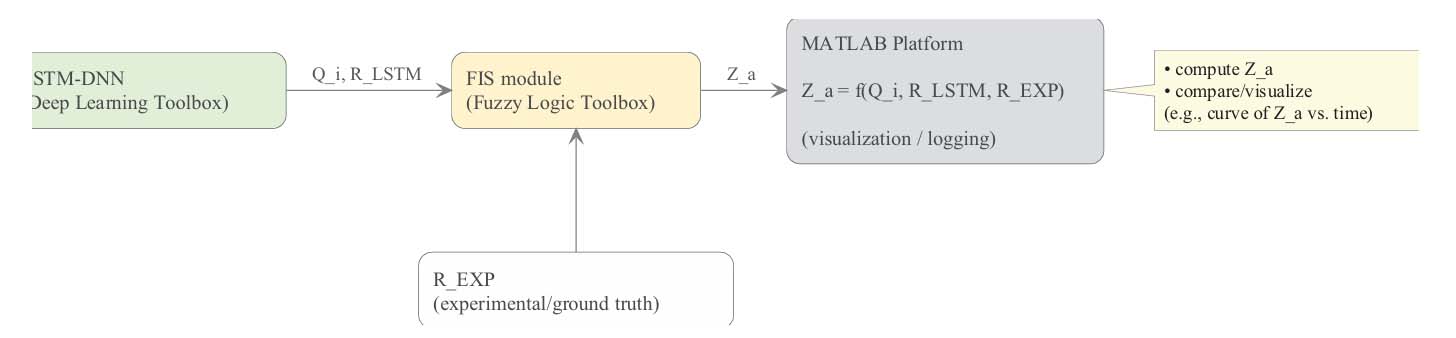
Figure 2.
Diagram of the model implementation in the MATLAB R2024a environment using the Fuzzy Logic Toolbox and Deep Learning Toolbox packages
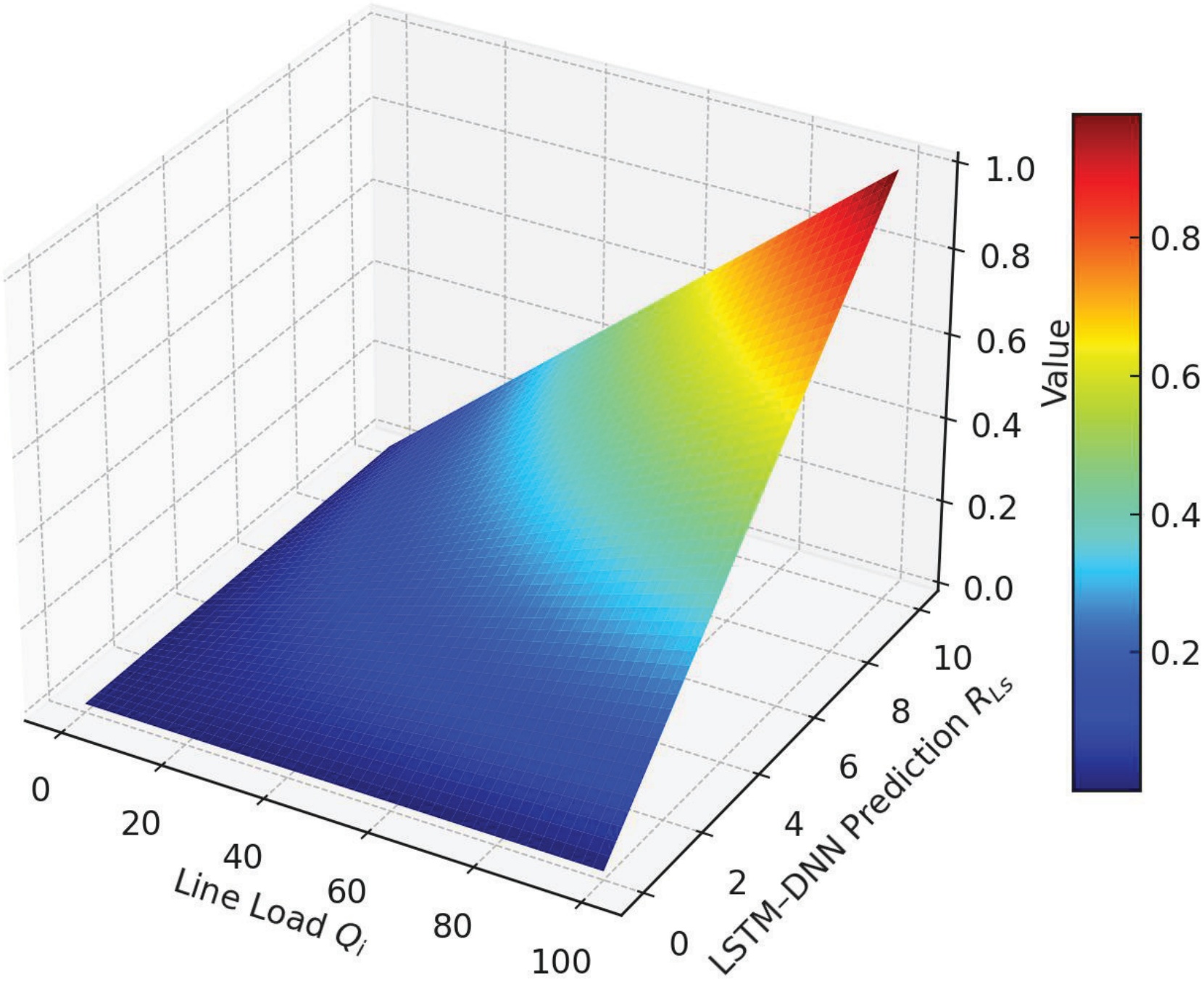
Figure 3.
Three-dimensional response surface of the dependence of the degree of interference immunity Za on the parameters Qi (line load) and RLSTM (predicted risk) at a fixed expert risk level REXP = 50 (normalized range of input parameters [0,100])
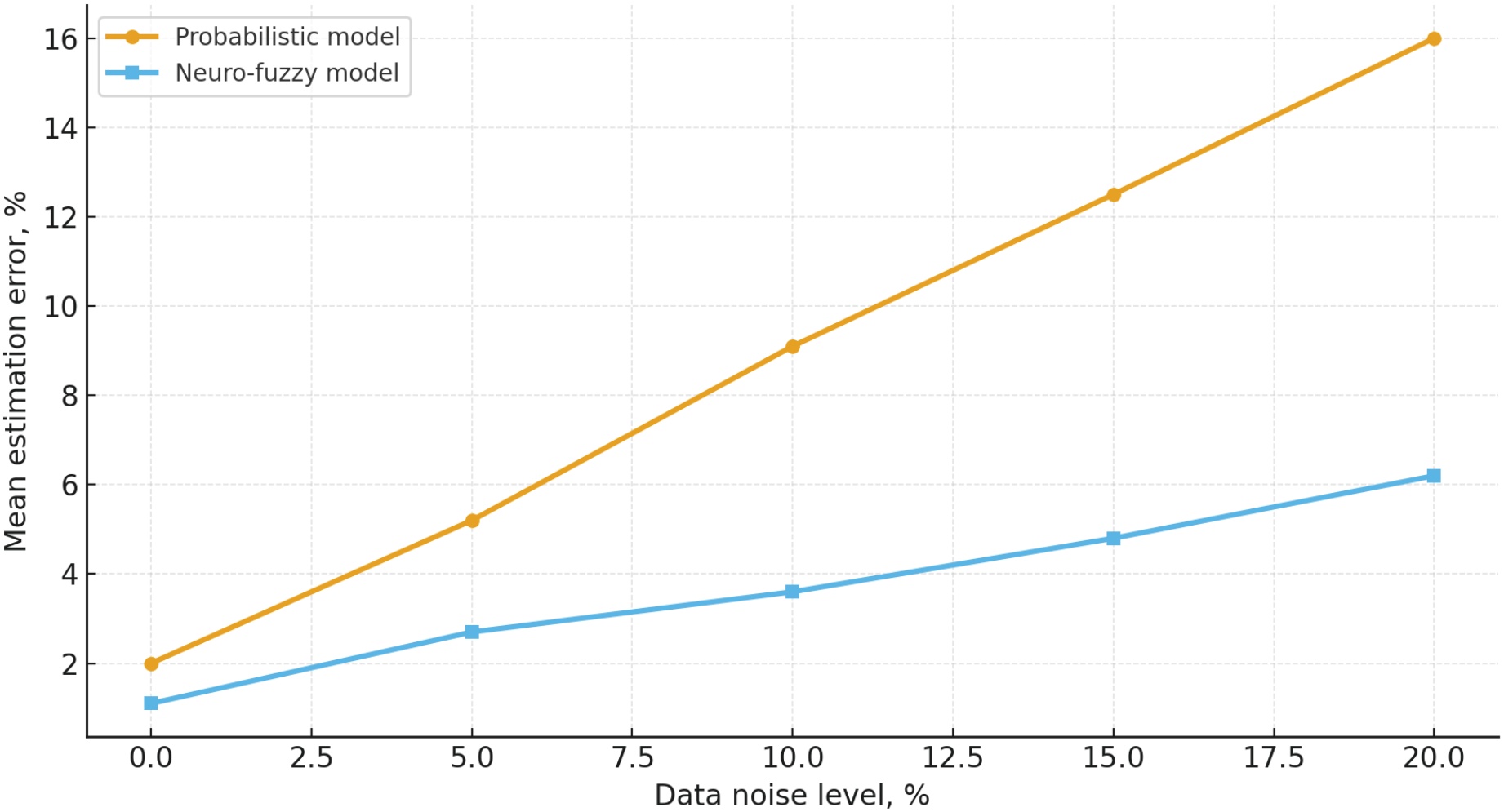
Figure 4.
Comparison of the average noise immunity estimation error for probabilistic and neuro-fuzzy models at different levels of input data noise
Table 3.
Comparative analysis of the characteristics of probabilistic and neuro-fuzzy models
| Indicator | Probabilistic model | Neuro-fuzzy model | Improvement |
|---|---|---|---|
| Average error at 15% noise, % | 12.4 | 4.8 | ↓ 61 |
| Adaptation time, s | 1.00 T | 0.82 T | ↓ 18 |
| Resistance to data omission, % of reliable estimates | 71 | 91 | + 20 |
| Processing of expert factors | None | Implemented | - |