

Figure 1
A) slit glass, B) platen.

Figure 2
Shapes overlay with simulated defects – various shapes and densities.

Figure 3
Block overlays with simulated defects - blocks with varying densities and size (increasing density, solid density, diminishing density.).

Figure 4
Konica 7155 digital black and white copier.

Figure 5
Original document having no visible printing defects.

Figure 6
Photocopier defects from platen glass using the shapes acetate overlay (Figure 2) with the copier’s lightest density.

Figure 7
Photocopier defects from slit glass using the triangle shape overlay (Figure 2) with the copier’s lightest density.
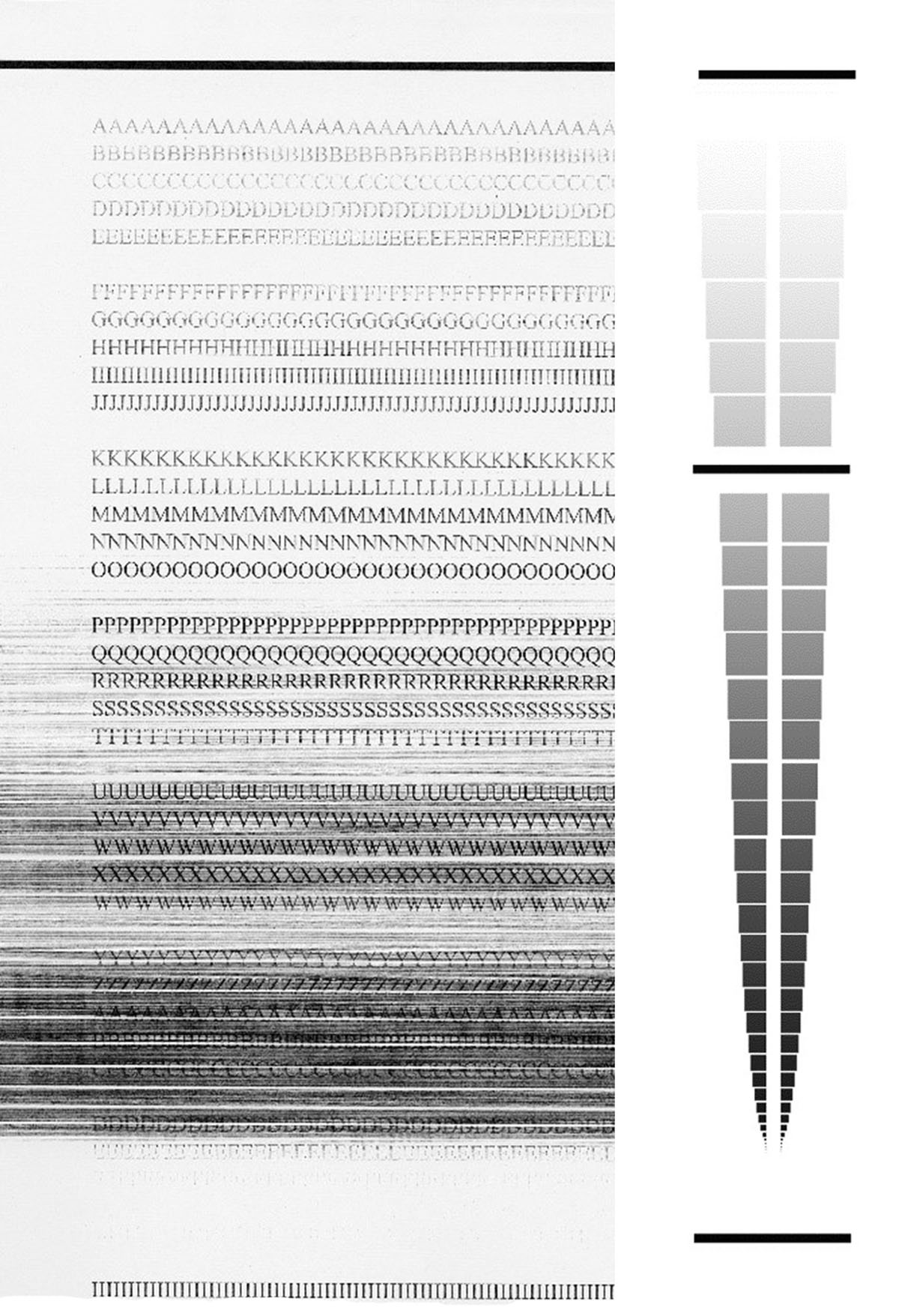
Figure 8
Exemplar collected from slit glass with the increasing density blocks using the lightest density copier setting.

Figure 9
Exemplar collected from slit glass with equal density blocks using the lightest density copier setting. The defects remained dark, but the copied text lightened.