
Introduction
The research was constructed to explore the hypothesis a rubber stamp transfer from one document to another through direct contact is reproducible, recoverable by an EDD, and due to the oil content present in the ink of the rubber stamp device.
The Electrostatic Detection Apparatus (ESDA®) produced by Foster and Freeman, is widely used by Forensic Document Examiners. The invention of the ESDA over 40 years ago has allowed document examiners to provide significant evidence in the form of the primary images recovered (1). In the early 1990’s, Dr. Keith Snape, a private examiner in the United Kingdom, recovered indentations that were not the common primary indentations associated with writing directly from an originating document (2). Dr. Snape explained to FDE Steven Strach, the images recovered were believed to be the result of a sheet having heavy pressure writing placed in contact with the recipient page.
Dr. Strach, Messrs. McCormack, Radley, and Westwood, further explored the phenomena, resulting in their excellent paper, “ESDA Detected Secondary Impressions.”(3).
Forensic Document Examiner Farrell Shiver conducted research similarly related to the transfer of indentations by paper-to-paper contact. Mr. Shiver shipped 32 envelopes, hand addressed by two individuals; one using heavy pen pressure and the other using normal pen pressure.
The envelopes, with a blank page inserted, were shipped to various locations across country via the U.S. Postal Service and Federal Express. Secondary images, varying in quality, were recovered from all of the pages in which heavier pen pressure was used. A few of the secondary images were recovered from the pages written with lighter pen pressure (4). Again, the research corroborated the transfer of indented writing by page-topage contact through pressure and friction.
Additional related research papers are available, such as Secondary Impressions of Writing and ESDA-Detectable Paper-Paper Friction, by
K. Barr et al., (5), and Secondary Impressions, by
A. Barton and J. Walker (6).
The case work and observations by the above listed colleagues, were related to secondary impressions resulting from pressure and abrasion caused transfers. Another paper, authored by Janis Tweedy, briefly documented the interfering property of the adhesive on Post-it® Notes.(7)
Method and Materials
Fourteen common self-stamping units were used. The stamps were of various ages and from various manufacturers. The stamps included:
AccuStamp®, pre-inked, oil-based, “COPY” logo. The stamp is a contained unit, with a non-rotating die plate.
IDEAL 100, self-inking, water-based, “Credit Balance” logo. The stamp is a contained unit, with a rotational die plate. 3. Office Max, pre-inked, oil-based, “RECEIVED” logo. The stamp is a contained unit, with a non-rotating die plate.
Staples, OfficStamp®, pre-inked, oilbased, “PAST DUE” logo. The stamp is a contained unit, with a non-rotating die plate.
Staples, OfficStamp®, pre-inked, oil-based, “CONFIDENTIAL” logo. The stamp is a contained unit, with a non-rotating die plate.
Staples, OfficStamp®, pre-inked, oil-based, “DRAFT” logo. The stamp is a contained unit, with a non-rotating die plate.
Shiny®, Printer S-853, self-inking, waterbased, “INSPECTED” logo. The stamp is a contained unit, with a rotational die plate.
Shiny®, Printer S-854, self-inking, water-based, “Billed to Customer” logo. The stamp is a contained unit, with a rotational die plate.
Shiny®, Printer S1822, self-inking, water- based, “Emailed” logo. The stamp is a contained unit, with a rotational die plate.
Shiny®, Printer S1824, self-inking, waterbased, “DO RE ME – MUSIC STORE” logo. The stamp is a contained unit, with a rotational die plate.
Traditional hand stamp of my signature, oil-based ink pad.
Traditional hand stamp of my signature, water-based ink pad.
Trodat, Printy 4913, self-inking, waterbased, “TechnaPrint” logo. The stamp is a contained unit, with a rotational die plate.
Xstamper®, pre-inked, oil based, “COPY” logo. The stamp is a contained unit, with a non-rotating die plate.
Three stamp impressions from each stamp were placed on two of each of the following -paper types:
Epson Stylus Color – Ink Jet Paper.
Mead Writing Tablet.
Strathmore Vision Drawing Paper – 64 lb.
Ampad – Gold Fibre Planning Pad.
Advantage – Premium Bright Ink Jet + Laser paper – 24 lb.
Each stamped page was separated from the others by four blank pages (the listed Advantage printer paper, #5 above). Seven samples were sent via US Postal Service (USPS) – Priority Mail from Eugene, OR, to Forensic Document Examiner (FDE) Farrell Shiver in Woodstock, GA, then returned. The blank pages positioned in front and back of the stamped pages were processed for indentations. The remaining seven samples were separated in the same manner as the first seven, then placed in a file covered with a fivepound weight.
A different type of secondary impression was recently noted by the author during normal casework. Documents originating in Barbados, were shipped from a client for examination. Within the FedEx envelope, was a cover letter from the submitting attorney. Beneath the letter, were two, single-paged documents in question. Numerous other pages followed, having known writing samples.
The cover letter included a rubber-stamped image of the word, “COPY,” shown below:
Both questioned documents were processed for indentations, with the “COPY” image recovered in the same position on both pages.
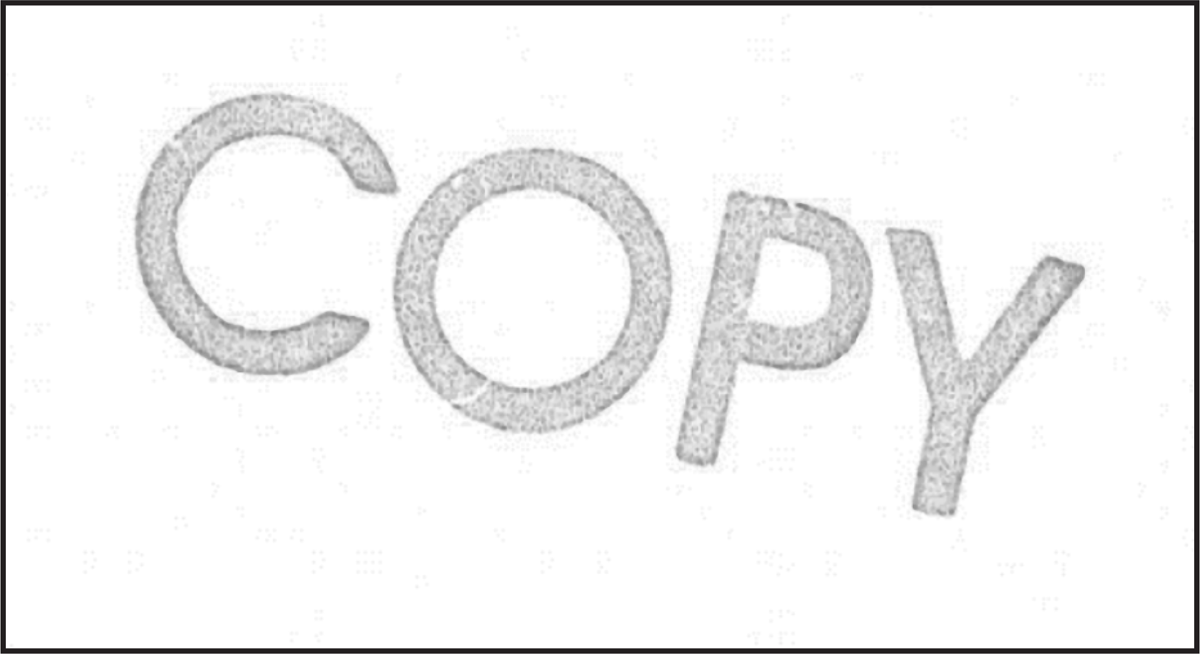
Image 1
Donor stamp impression.
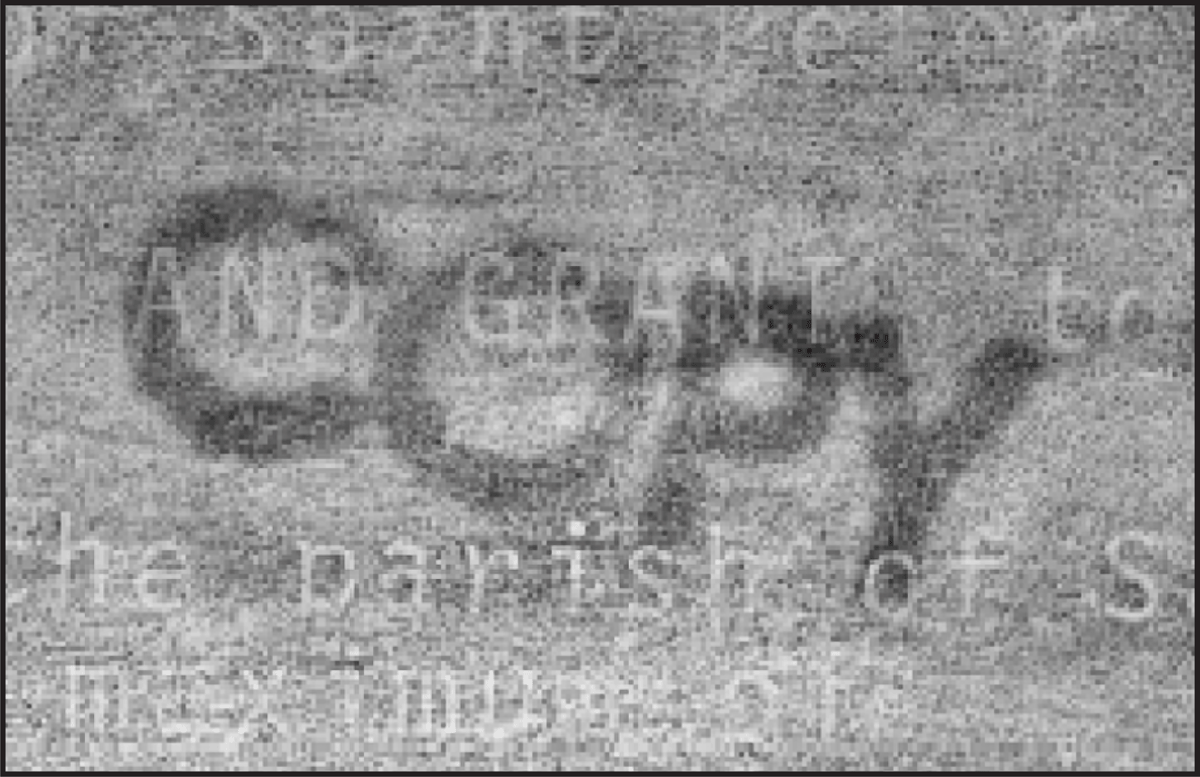
Image 2
First recipient page (Q-1-a) developed by an EDD.
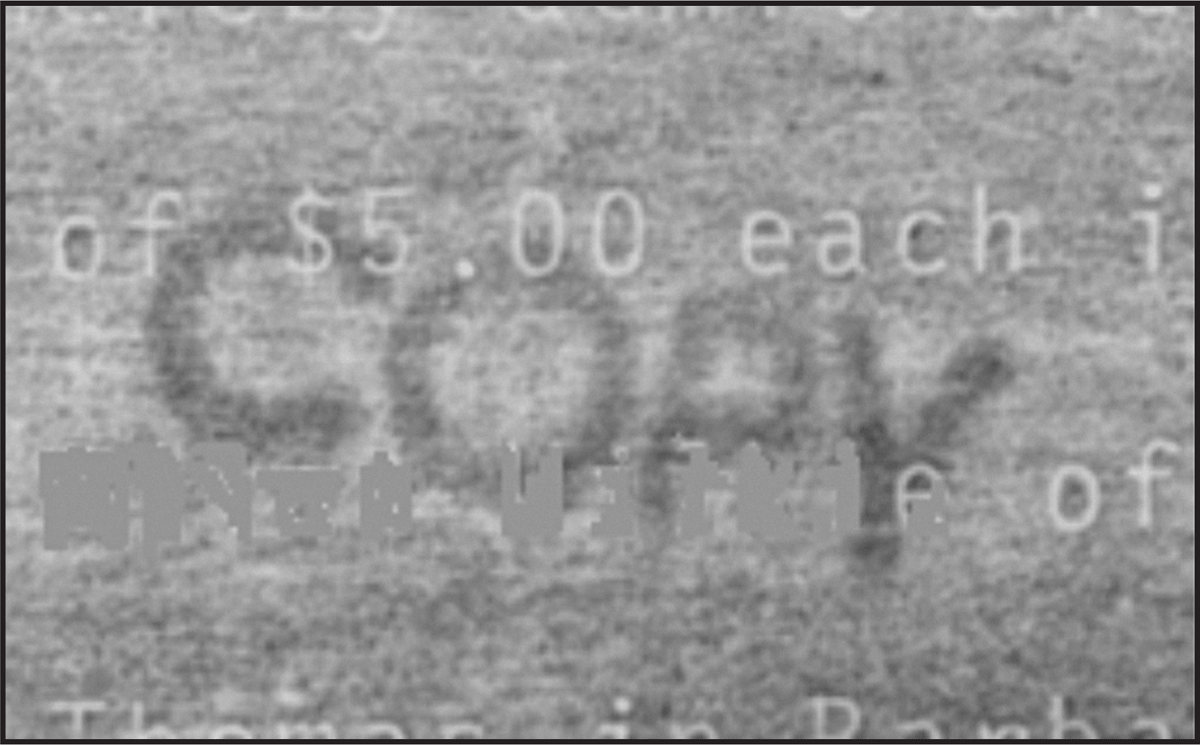
Image 3
Second recipient page (Q-1-b) developed by an EDD.
The first page of the questioned document, labeled as Q-1-a, was placed behind the originating letter having the rubber stamp impression. The second page of the questioned document, shown as Q-1-b above, was in direct contact behind Q-1-a in the envelope. (For privacy reasons, some identifying information was intentionally blurred in the above image.)
It was apparent the two “COPY” images were not the result of indentations transferred through pressure and friction from the originating letter to both recipient documents. The structure of the rubber stamp plate does not lend itself to causing concentrated indentations common to writing instruments.
The mechanics and interaction of rubber stamps with ink and substrate, was explained in detail by Dr. Patrick Gane, a Professor at the School of Chemical Engineering at Aalto University in Aalto, Finland (8):
“Rates of change of shear and extension are crucial when considering the deformation of the elastomeric printing form and understanding the response of an ink to the printing dynamic. We can consider these step-wise as follows:
The print form in the stamp is inked. This is a relatively crude step in the process, when compared to continuous printing methods, as there is little to no metering or levelling of the ink. The ink load as a result is generally somewhat in excess, covering both the high points of the form profile as well as the valleys either side.
The inked stamp is brought into contact with the substrate. Normally, document paper is uncoated, or at most surface sized. The optical properties are predominantly determined by the quality of cellulose fiber used in the manufacture, i.e. most often produced by the Kraft pulping process resulting in high bright bleached fiber. Brightness and opacity of the substrate paper sheet are largely controlled by the light scattering voids and refractive index contrast interfaces within the sheet. To achieve optimal optical performance, microscopic fillers are used.
Under the pressure of contact, the stamp surface becomes deformed due to the elastomeric response to pressure. In addition, the bulky fibrous substrate also compresses to some extent narrowing the pores and connecting throats between them under the stamp contact area, thus reducing immediate pressure-driven permeation. The image form deformation extends the area of contact, reducing the angularity at the edge of the image profile, and, due to the elastic nature during the short time of contact, acts to lower the contact pressure at the centre of the image profile plane.
In response to the profile and substrate deformation in 3., the ink flows between the form and the substrate to the outer edge of the image and there forms a meniscus of excess ink volume.
The stamp is rapidly removed, allowing the form to recover to its original shape. At the same time, the ink film splits. The split dynamic is controlled by the acceleration of the stamp removal and varies dramatically depending on the ink rheology. Rapid acceleration leads to liquids becoming momentarily acting like a solid.
As a result of the rheological specific response of the ink, the split, leaving ink behind on the surface and some returning on the stamp surface, varies from a brittle fracture to a filament extending between the substrate surface and the stamp upon retraction. The filament starts to draw the excess ink from the image boundary area toward the centre. It then eventually breaks when the surface tension of the ink is exceeded by the Hencky extension strain, and the image ink in the filament falls back to the substrate surface. Material constituents of the ink controlling this include pigment solids concentration (higher concentration the more brittle the separation), pigment dispersant and thickener polymers (develop a strong extensional resistance effect due to initial polymer alignment under stretching), and soluble surfactants, which reduce surface tension. Thus, the distribution of ink volume is determined differently depending on these dynamic properties.
The ink dries. For a low viscosity pigmented ink, this can lead to the socalled coffee stain effect, arising from the Marangoni flow toward the ink-airsubstrate boundary as absorption of the vehicle occurs (dominating in oil-based inks) plus rapid thin film edge evaporation in the case of water-based inks. …. As the evaporation and absorption continues, the edge of the image becomes a concentrate of pigment and previously dissolved solute components. The result is that the image edge contains more ink components than the center.
Absorption into the substrate proceeds by capillary action both filling the substrate pores and via precursor thin film wicking along fibres. The first reduces the optical contrast of the substrate and the latter leads to ink vehicle and soluble component strike-through to the reverse side. For dye-based inks, colorant becomes transmitted through the sheet. For pigment inks, pigment migration is largely prevented due to concentrating flocculation effects at the substrate surface and the tortuosity in the pathway between fibres.
Ink component separation can occur inside the paper.
To capture the series of events 1–7, Fig. 1 shows a schematic of the deformations occurring between the stamp and the substrate, and the resulting distribution of ink depending on its rheological properties.
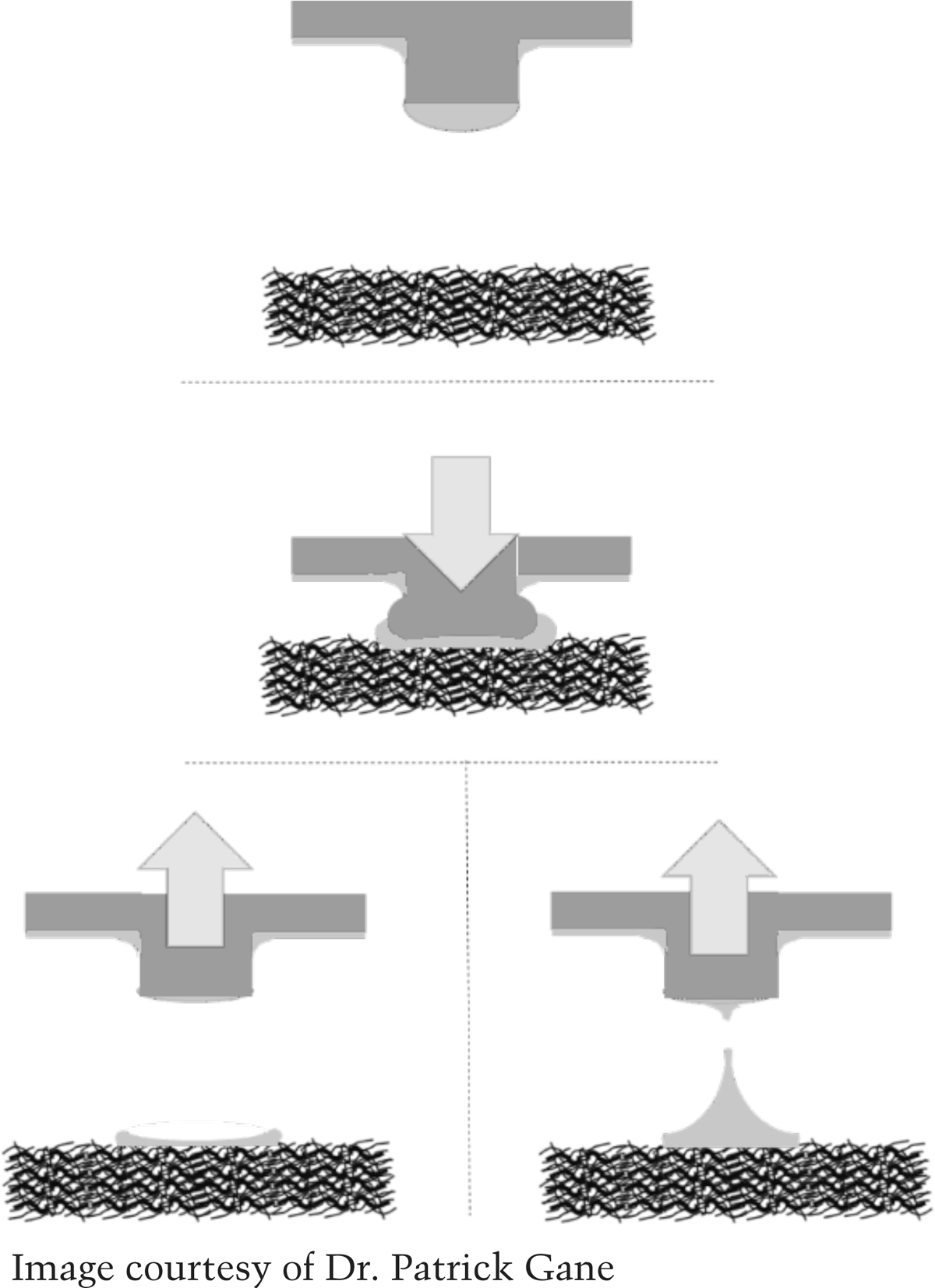
Figure 1
Schematic encompassing the process points 1.-7., illustrating finally the two extremes of ink distribution on the substrate surface depending on ink rheology: note that during the deformation of the elastomer, displaced ink to the outside of the image form can link with reservoir ink surrounding the image profile, in turn leading to high levels of excess ink surrounding the image profile boundary.
Steps 8.–9. are strongly dependent on the ink distribution on the surface of the substrate, and, if we consider the two end points in Fig. 1, then a series of similar schematics can be constructed to describe ink drying by evaporation and absorption on the surface, as shown in Fig. 2(a), and the resulting strike through (if any) on the reverse side, Fig. 2(b).
On both coated and uncoated papers, pigment in inks tends to coagulate on the paper surface or partially block the throats between pores inside the paper bulk. However, in the case of uncoated papers, depending on paper basis weight and formation uniformity, there may be pinholes in the paper that allow ink pigments to strike through to the reverse side, especially in the case of low viscosity inks.”
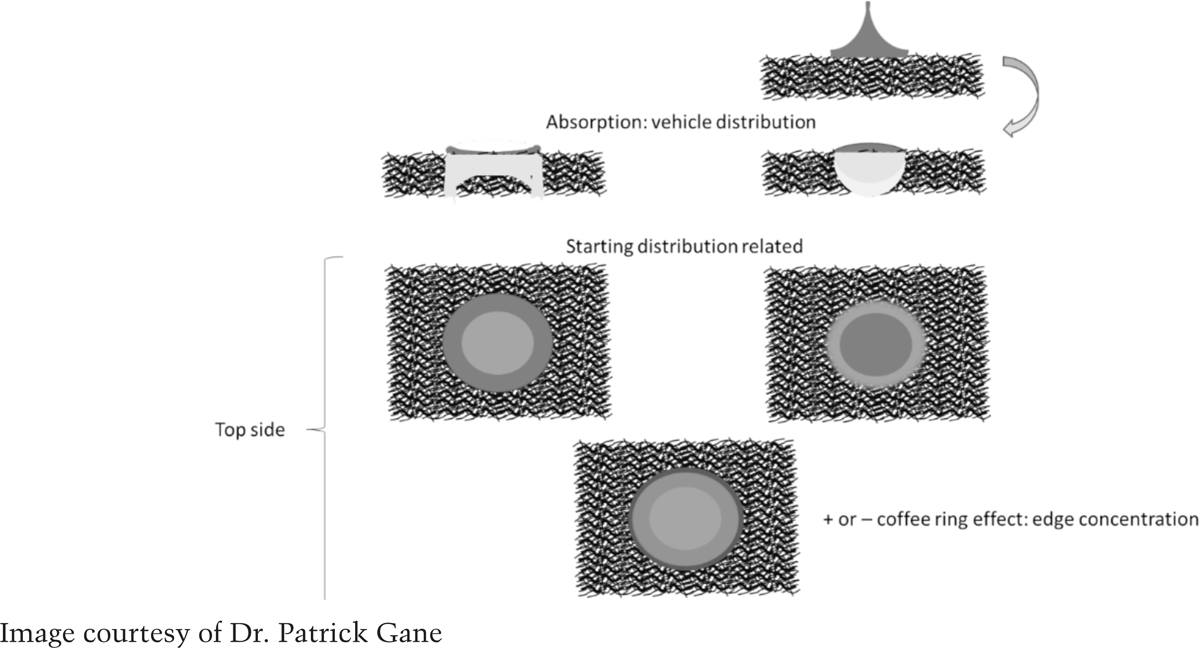
Figure 2
(a) Top side ink distribution after absorption and evaporation, (b) expected strike through properties arising on the reverse side.
Dr. Gane provided conclusions related to identifying the use of different ink types. With regard to water-based stamp inks: “If this does not show any coloration strike through effect onto the underlying sheet, then we must assume that the ink is pigment-based and that the pigment is remaining on the surface and/or in the sub-surface pores of the stamped sheet top surface. We may also assume that the ink vehicle does not contain levels of soluble substances that prevent permeation of the water through the sheet.
Now let’s consider the oil-based ink: The oil is perhaps not rapidly drying, and even might never dry, although other resins might be present to generate the required setting. Just like the oil from chips in contact with a non-grease-proof paper it will increase the translucency of the sheet as it permeates through, and, if there is sufficient oil, it can transfer onto an underlying sheet and so change its optical properties also. … Retained oil at the surface could necessarily transfer to a top contacting sheet.
Now for the gel water-based ink: The gellant could be cellulosic, polymeric superabsorber (e.g. polyacrylate), polyvinyl alcohol, or it could be mineral-based, such as sepiolite or a swelling montmorillonite/bentonite nanoclay in its sodium exchanged form, amongst others.”(9)
Research commenced to determine the reproducibility of the case event. Fourteen stamp units, listed previously in the Method and Materials section, were used. The stamps were of various ages and from various manufacturers. The actual manufacturer of the stamp inks is unknown because the ink manufacturers generally sell the ink in bulk on a wholesale basis. The ink is repackaged in consumer sized containers or stamp units and sold under the name of the retailer (10).
Three stamp impressions from each stamp were placed on two of each of the various paper types listed in the Methods and Materials section. Each stamped page was separated from the others by four blank pages. All samples were sent via USPS – Priority Mail from Eugene, OR, to FDE Farrell Shiver in Woodstock, GA, then returned. The blank pages positioned in front and back of the stamped pages were processed for indentations.
Secondary, non-indented images were obtained on all five paper types indicating the common paper types were not a significant factor in the image transfers. Images were obtained from both the blank cover page, as well as the following blank page with the use of the oil-based stamps and the single stamp having a gel-based inkpad. The results varied in clarity, from smudged, illegible images to several having relatively defined edges. The water-based stamps, aside from the gel-based stamp, did not produce secondary impressions.
The first of the following images, Image 4, shows an original “COPY” stamped across the face of the originating document (Strathmore Vision Drawing Paper – 64 lb). The stamp was an Xstamper, having oil-based ink (#14 on the list of stamps used). Image 5 has the results of the EDD from the cover page. The third image, Image 6, is from the recipient page beneath the donor page. The clarity equals that of EDD images common to writing instrument indentations.

Image 4
Originating document with stamped word “COPY.”

Image 5
EDD lift of the recipient page covering the originating document.

Image 6
EDD lift of the recipient page following the originating document.
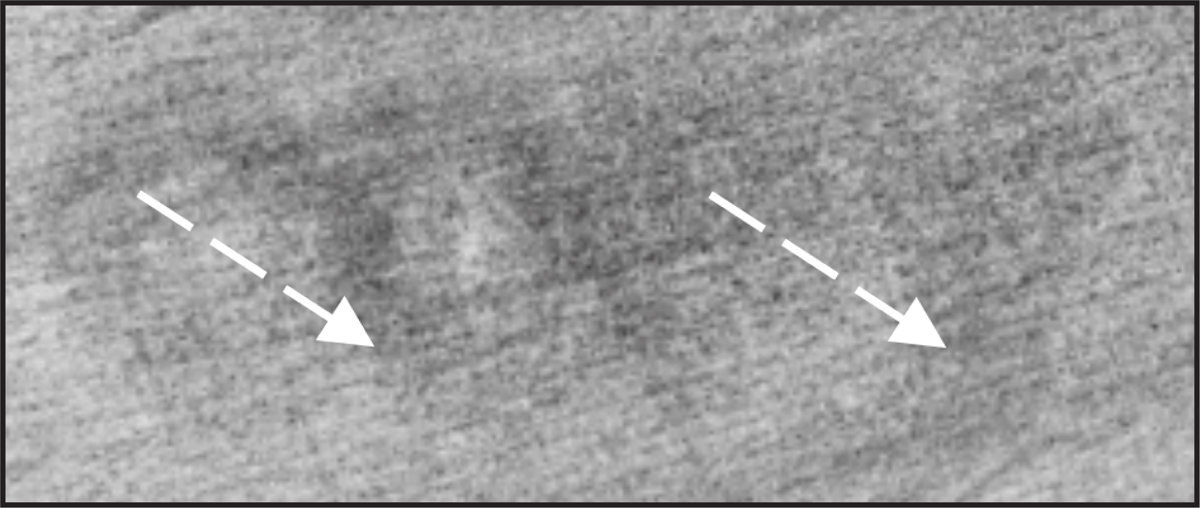
Image 7
Arrows show the repositioning of a recipient page in its downward movement to the right.

Image 8
Illustration of the “tram effect”. (Image printed with the permission of Mr. Shiver.)

Image 9
EDD lift of reverse side of an originating document.
Prior research related to secondary impressions, caused by pressure and movement, showed samples of the shifting of the originating and/or recipient documents during transport. Similarly, evidence of image re-positioning or movement was noted in the current research. An example is provided below, showing a repositioning of the stamp image in a downward movement toward the right.
An interesting feature in prior research related to pressure and movement of secondary images, was the appearance of “tram-lines.” The features were mentioned by Strach et al., ibid. as well as Shiver, ibid. The Strach et al., paper stated, “For larger amounts of motion the lines perpendicular to the motion are sometimes detected more at the extremes of motion resulting in a tramline effect along with some streaking of more prominently developed points between the extrema.”
Mr. Shiver illustrated the effect with the following image:
The tram lines for secondary impressions from handwriting sources were not observed in the stamp transfers on the secondary images recovered in the current research.
As mentioned before, the rubber-stamped images were transferred to the page preceding, the page following, as well as the second page following the originating document. The effect was not the result of a primary indentation from a writing instrument. Logically, the stamped image transfers would not be caused by etching through pressure and/or movement from the originating page to the recipient page(s).
The above image is of an EDD lift from reverse side of an originating document. There was bleed-through from the stamps, which showed an interesting feature on the EDD image. The word “COPY,” consisted only of the letter outlines. Although the middle of the letter outline on the stamp plate was void, the EDD toner was attracted to that area.
The focus of the stamp transfers was quickly directed toward the ink properties. Inks are complex in their formulas, containing items such as:
Pigments and/or dyes (organic and inorganic).
Dispersants (surfactants and polymers).
Resins or polymers improve binding, rheology and mechanical properties.
Humectants retard premature drying.
Defoamers and antifoaming agents.
Wetting agents enhance contact with the substrate.
pH modifiers (usually amine derivatives).
Biocides and bacteriostats.(11).
The main liquid component of rubber stamp ink is referred to as the “vehicle” or “carrier,” as it is in pen inks. The carrier is responsible for carrying the pigments and/or dyes and other components from the ink source in the stamp to the paper, plastic or other end product. Depending upon the substrate the stamped image will be placed on, as well as consideration of the drying time, lubrication, etc., the carrier may be water, alcohol or oil based. An oil-based type carrier became the logical candidate responsible for the secondary stamp transfers.
Glycol, and similar oil-based products, are used as an ink ingredient in stamp pads due to their low evaporation rate and penetration qualities (12). Contact was made with Ink Chemist Valery Aginsky. Dr. Aginsky agreed an ingredient in an oil-based ink, such as oleic acid, glycol or castor oil would be responsible for the change in paper characteristics that results in EDD secondary development (13). Oleic acid is an ingredient common to animal fats and vegetable fats such as olive oil, peanuts, sunflower seeds.
As mentioned previously, Dr. Gane provided the following information regarding an oil-based ink stamp application to paper:
“The oil is perhaps not rapidly drying, and even might never dry, although other resins might be present to generate the required setting. Just like the oil from chips in contact with a non-greaseproof paper it will increase the translucency of the sheet as it permeates through, and, if there is sufficient oil, it can transfer onto an underlying sheet and so change its optical properties also. … Retained oil at the surface could necessarily transfer to a top contacting sheet.”(8)
As stated previously, the water-based stamps used for the donor documents in this research did not produce images on their following pages. A gel ink pad (mineral or water-based), was used with a signature stamp resulting in the image shown in Image 10. The EDD lift from the recipient page is shown in Image 11.

Image 10
Originating document.
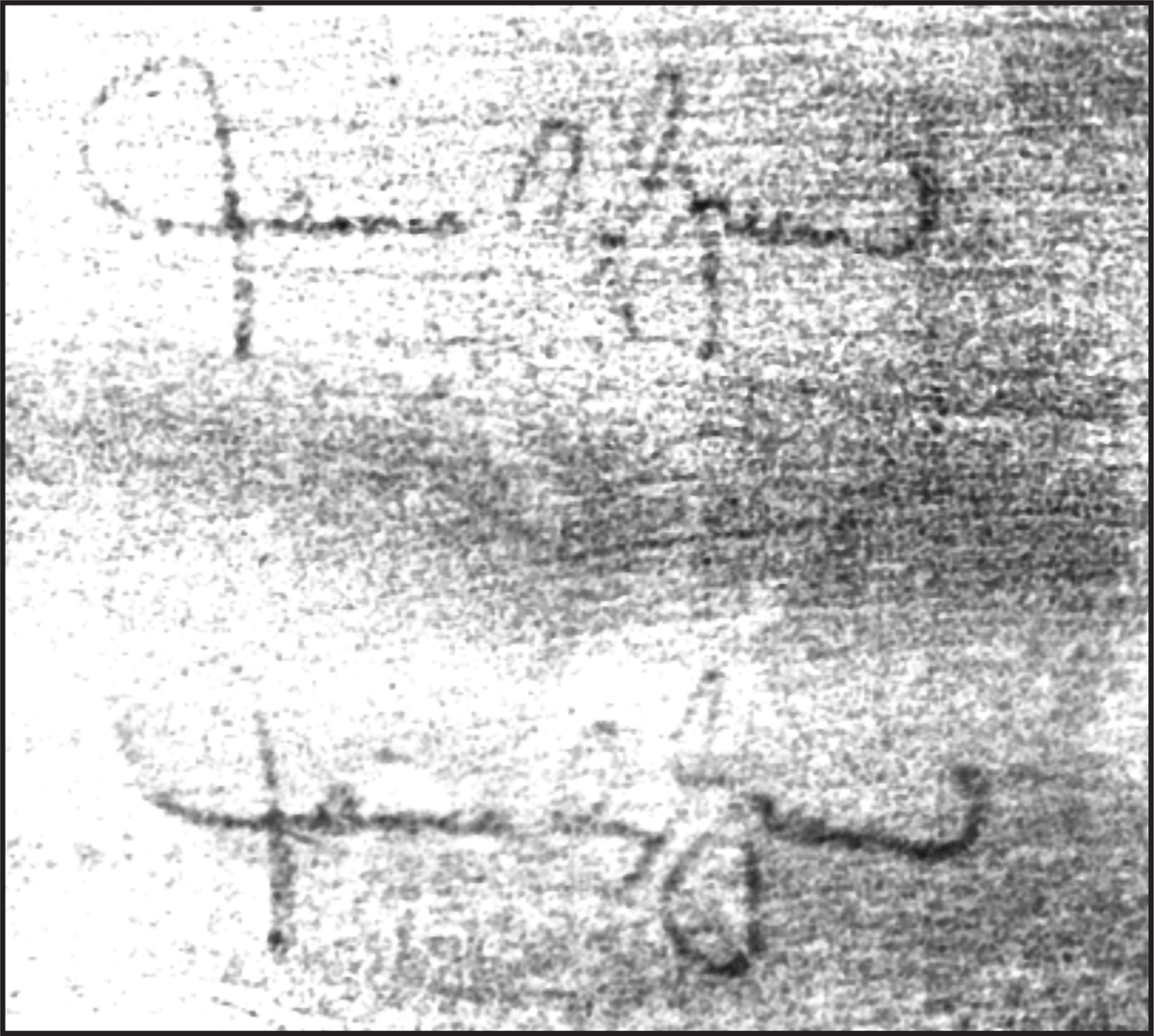
Image 11
EDD lift from the originating document.

Image 12
Originating document with ball point pen signatures.
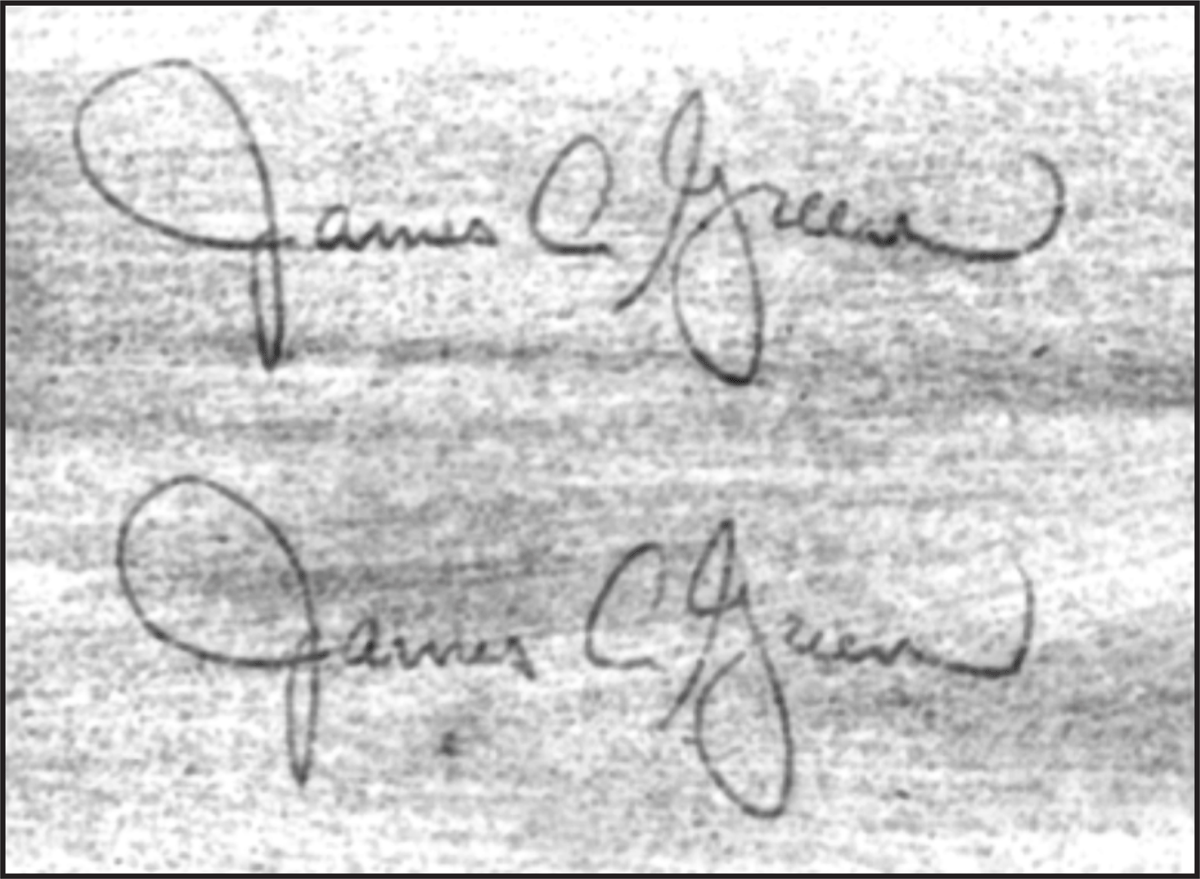
Image 13
EDD lift of indentations penned signatures in Image 12.
The following image, on the left, shows a pair of signatures written with a ball point pen. The EDD lift from the corresponding recipient page, is shown in image 13.
The signatures shown in the lift from the rubber-stamped signatures do not have the same degree of clarity as the EDD lift from the common ink pen impressions. However, Forensic Document Examiners are aware that not all signature lifts from ink pen indentations, result in clear impressions. Factors such as the type of writing instrument used, paper type, writing surface, pen pressure, etc., may have an effect on the image quality of the lift. The EDD lift from the signature stamp appeared may easily be interpreted as an impression created by a writing instrument.
The transfer of a rubber stamp impression from an originating document to a recipient document, falls within the definition of “indentations” in the Standard for Examination of Documents for Indentations by the Academy Standards Board:
“3.4 indentations: Latent or visible impressions and/or embossments in paper or other media. This also includes paper fiber disturbances which do not optically appear as impressions.”(14).
The latter part of the definition appears appropriate for rubber stamp transfers.
In the aforementioned research paper, by Barr, et al (ibid) an explanation for an embossing transfer was described as:
“…In relation to secondary impressions, it would seem that the embossing on the reverse side of the donor paper imparts some type of physico-mechanical and/or electrical disturbance to any subsequent recipient paper, given the proper conditions.”
An isolated part of that description, “…electrical disturbance to any subsequent recipient paper, given the proper conditions,” may be more of a direct explanation for the cause.
As with the completion of most research, further questions resulted, including:
How does the passage of time influence a successful transfer of a stamped image?
How do pressure differences upon paper storage or shipment impact the stamped image transfers?
What specific stamp ink additives are responsible for the image transfer, i.e., which inks are more, or less, likely to do so?
Is there an expiration period in which a stamp image transfer to a recipient document, will dry or evaporate, preventing the image from being visualized during an EDD exam?
Conclusions
Rubber stamped images may be transferred from a donor document to other pages in physical contact. Only oil-based inks, and a gel-based ink, were successful in transferring images as well as image clarity.
A recovered EDD lift of a transferred stamp image may vary in clarity, similar to lifts obtained from originating documents written upon with a common pen. The 70+ image films produced during the research indicated the rubber stamp lifts were commonly less distinct than lifts from indented pen impressions.
In contrast to the common indentation process, there are no visible embossed paper fiber disturbances due to the result of pressure applied by the stamp. An examination of recipient ocuments, using oblique lighting, did not reveal physical impressions by the various stamps used.
Stamp impressions may be transferred to a recipient document placed in front of a page having the stamped (donor) image, as well as to a page placed behind the donor page. This “set-off” of the original stamp image, without the inclusion of a dye or pigment to make the transferred logo visible, also supports the theory the ink’s carrier is responsible for such transfers. This feature differentiates it from the common transfer of embossed pen writing.
Rubber signature stamps are of particular concern related to their image transfers. The actual use of signature stamps is obviously insignificant, compared to the use of writing instruments for writing signatures. However, the opportunity exists for the misinterpretation of a signature stamp transfer to another document. A document, having a stamped signature incidentally transferred to an unrelated document, may imply the person signed other documents at the time of the signing of the recipient document. The misinterpretation may skew evidence, “…regarding the source, production, or history of a document or other item.” (15).
Limitations of the present study include stamps tested were limited to those mentioned, paper type, storage and shipment methods. Future research could be performed by research teams able to chemically analyze the ink for composition. This may provide some information on the ink composition responsible for secondary transfers of rubber stamp impressions. Also, additional testing to compare EDD lift signatures from common writing instruments to those made by signature stamp impressions would be of value to determine if there are any characteristics that could reliably separate the two groups.