
Introduction
In forensic casework, pen ink strokes are analyzed to determine the type of writing instrument used, the chemical composition of the ink, how many inks were used to create a document, the age of the ink, and the sequence of pen strokes on a document. Pen inks are the most commonly studied element within questioned documents research, with approximately 60% of the published studies focusing on pen inks [1]. Pen inks are complex mixtures and are composed of a variety of components that are chosen to improve the overall performance of the writing instrument and to meet customer demands and expectations. Components can include chemicals such as, but not limited to, colorants to give the ink color, resins to bind ink to the paper, solvents to suspend the ink components in a liquid form, preservatives to extend shelf life and usability, biocides to prevent microbial growth, lubricants to allow metal components to move smoothly, and other chemical components and additives [2].
Ballpoint and gel ink writing instruments remain the most commonly researched pen inks and the most commonly encountered pen type in forensic document examinations. Although porous-tipped pens are prevalent in the market, they are not as extensively studied. As a result, there is a general lack of research-based knowledge on these types of writing instruments. They occasionally appear in forensic science casework in signed and official documents. Porous-tipped pen inks can easily be distinguished from ballpoint and gel ink types. Both ballpoint and gel ink pens make use of a metal ball as the main ink delivery mechanism. Their inks are viscous and usually sit on top of the paper surface, which can be efficiently observed using simple micro-scopical analysis. Porous-tipped pens on the other hand use capillary action to move liquid ink through a porous-tip. The fluidity of these types of pens allows the ink to seep into paper medium.
Differences in the appearance of the ink strokes are assessed to distinguish between ballpoint, gel, and porous-tipped pen inks. Striation patterns, ink gooping, a trough in the presence of heavy hand pressure, and concentrated ink at the edges of ink strokes are indicators of ballpoint pen ink [2, 3]. Gel pen ink can be identified based on the tracking effect of the ink stroke, ink skipping, and gooping at certain changes in writing direction [3, 4]. Porous-tipped pens deliver a solid colored ink stroke with, usually, no indication of a depressed trough, and sometimes with feathering seen at the edge of the ink stroke [3, 5]. Poroustipped pens are typically referred to as “felt-” or “fiber-tipped pens.” These pens are extremely versatile writing instruments. Their applications can range from simple writing, highlighting, and labeling, to drawing, sketching, and designing. In artistic communities, porous-tipped pens are considered a form of wet-media that combines drawing and painting methodologies [6]. Despite their popularity in the general public, there are still elements about porous-tipped pens that are under-researched.
This article discusses the early developments of the porous-tipped pen throughout history starting in the early 1900s, distinguishing stroke features of porous-tipped pens from other fluid pen inks, and their ink composition. A survey of the porous-tipped pen market, the key findings from that survey, and artistic blending writing instruments are also discussed, as well as a review of the current state of porous-tipped pens within questioned documents.
Early Developments
Porous-tipped writing instruments are relatively new within the writing instrument industry compared with writing instruments such as pencils, fountain pens, and ballpoint pens. The general design of porous-tipped pens evolved from a brush pen that required to be dipped in liquid ink to the steel-tipped fountain pen to a writing instrument that contains an absorbent ink reservoir and a fibrous nib. The first United States patent of a porous-tipped writing instrument was a felt-tipped marking pen with replaceable nibs proposed by Newman in 1910 [7]. Other porous tipped writing instruments were then patented such as Garvery’s brush pen [8], a fountain paintbrush by Paskach [9], Wood’s lettering brush [10], a capped “fountain pen” with replaceable, multisized felt tips [11], and Rosenthal’s famous marking pen which would eventually enter the United States market in 1952 as the Magic Marker [12, 13]. Since then, Unites States patents focused on improving nib designs, ink reservoirs, writing instrument manufacture, and ink delivery of porous-tipped writing instruments [14, 15, 16, 17, 18, 19, 20, 21, 22, 23, 24, 25, 26, 27, 28, 29, 30]. Other porous-tipped writing instruments also began to appear in the market such as highlighters, dry erase markers, and permanent markers starting in the 1990s [13, 31].
The first modern day porous-tipped pen, a thinner version of the marker, was created by Horie from Pentel, at the time the Tokyo Stationary Company, in 1962 [5, 13]. This debut of the fibertipped pen spread to the United States, where in 1966 Black published the first research article that focused on porous-tipped pens. Black’s study described the general mechanisms of various types of “fiber” pens, writing characteristics observed when using one of these instruments, and any detectable characteristics that forensic document examiners can note when analyzing questioned writing for signs of forgery, alterations, sequence of ink strokes, ink comparisons, eradications, and ink dating [5]. Since Black’s publication, many methods have been utilized to record the physical, optical, and chemical characteristics of these pens in the past fifty years, despite the low amount of published research on porous-tipped pens. Research in this area is split between studies on ink strokes resulting from the use of these writing instruments and the application of methods to determine optical and chemical characteristics.
Ink Stroke Characteristics
As discussed above, porous-tipped pen ink strokes can be distinguished from the viscous ink of ballpoint and gel ink pens. Porous-tipped pens, however, share a fluid, absorbent ink type with rollerball and fountain tip pens. Rollerball and porous-tipped pens tend to share overall similar solid and uniform ink stroke morphologies. Rollerball pens utilize a metal ball in their ink delivery mechanism, therefore oblique lighting can be used to observe a trough in the ink stroke, while fountain pens are distinguished based on their double track effect [32, 33].
Early research on porous-tipped writing instruments mainly focused on ink stroke characteristics. Ink stroke characteristics of porous-tipped writing instruments include wide, ribbon-like strokes, blunt initial and terminal strokes, and heavy ink deposits due to hesitation or pauses when writing. When writing with a porous-tipped pen, the writer merely has to press on the desired writing surface, preferably an absorbent type, to allow the fluid ink to be absorbed into the writing surface. The amount of ink deposited is dependent on the amount of pressure the user applies to the writing surface since the ink used in porous-tipped writing instruments is fluid. Figure 1 illustrates typical ink stroke characteristics of a porous-tipped marker, including feathering at the edges of the ink stroke, the blunt initial and terminal strokes, and the heavy ink deposit with increased pressure.
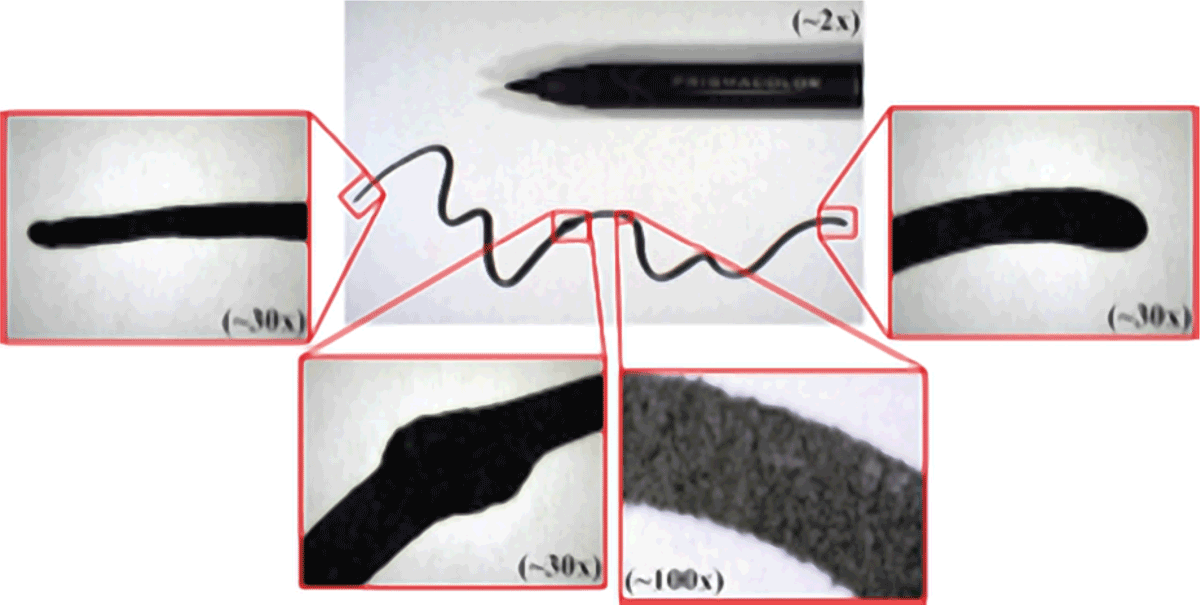
Figure 1
Stroke characteristics of a porous-tipped Prismacolor Premier® Brush|Fine Art Marker brush tip: a) blunt initial stroke; b) blunt terminal stroke; c) ink feathering; d) heavy ink deposit with pausing.
Different terms are used to denote porous-tipped pens. The terms felt-, fiber-, and plastic-tipped pens, and marker pens are typically used. These pens all utilize fluid ink and share the same inner mechanism of ink deposition. Several authors have proposed distinctions between different types of porous-tipped pens. Black described the distinction between “felt,” “fiber,” and “porous” pens: while fiber-tipped pen tips are porous fibers shaped into a nib, felt-tipped pens have processed nibs that can be made of fibers or plastic beads, and porous-tipped pens are described as being constructed by a solid piece of porous material [5]. Porous-tipped pens are said to have similar microscopic appearance as fibertipped pens. Radley utilized both terms fiber- and porous-tipped pens, however there was no distinction made between the two types of pens, often using the two terms interchangeably [34]. Hilton studied the stroke characteristics and effects of handwriting of ballpoint, fountain, roller ball, and porous-tipped pens and identified two types of porous-tipped pens: the fiber- and plastictipped [35, 36]. Fiber-tipped pens use fiber or felt tips, and the plastic-tipped pens use a porous hard plastic which can create grooves on the writing surface and finer ink strokes. Ellen also described two types of porous-tipped pen types: felt-tipped and fiber-tipped pen types, where fiber-tipped pen nibs contain more densely packed fibers in their nibs compared with felt-tipped pens [33]. Owen simply described felt-tipped markers as pens with felt strips in the tip of the writing instrument [5].
The rise of porous-tipped pens as an artistic medium has prompted concerns amongst art conservationists and artists about the lightfastness of these products. Feller recommended the use of alizarin paint as a standard of lightfastness after testing 75 felt-tipped markers from 8 manufactures and found that many of these markers faded almost completely [37]. Mathyer attempted to determine if differences in writing instruments would affect the handwriting characteristics of the writer and found that there was little to no effect on individuals’ handwriting characteristics [38]. Tappolet tested 14 fiber-tipped pens to show the advantages of using high-performance thin layer chromatography (HPTLC) over basic thin layer chromatography (TLC) and recommended two eluent solvent systems (isopropanol/1-pentanol/ distilled water and isobutanol/isopropanol/ distilled water) for the analysis of fiber-tipped pens [39]. Ellen reported on the use of an electrostatic detection apparatus (ESDA) to the determination of the sequence of ink strokes involving porous- and fiber-tipped pens [33]. It was found that ESDA could determine stroke sequence of dry rollerball versus fiber- and porous-tipped pens, but it was unclear if this distinction could be made with fiber-tipped ink stroke intersecting with a porous-tipped pen ink stroke. Franke et al. proposed a more objective approach to distinguish different pen types based on stroke texture. Images obtained from various writing instruments, such as pencils, ballpoint, rollerball, fountain, plastic-tipped, fiber-tipped, and felt-tipped pens, were further analyzed using the co-occurrence matrix and Fisher Discrimination Analysis [40]. Non-destructive techniques continued to become more sophisticated and more statistical methods were being included in more recent research. The introduction of the Video Spectral Comparator (VSC) as a high-resolution imaging system has offered unprecedented capabilities to analyze and compare ink specimens non-destructively manner. As it is the case of all ink types, porous-tip pen inks exhibit high degrees of between-source variation with regards to their properties when exposed to different illumination conditions.
The sequence of homogeneous intersecting lines between ballpoint, gel, rollerball, and fibertipped pens was attempted to be analyzed using Fourier transform infrared attenuated total reflectance (FTIR-ATR) imaging, however the paper substrate overpowered the ink spectra of the fluid ink type pens due to the ink being absorbed into the paper medium [41]. da Silva et al. proposed a robust method involving a combination of the VSC 6000/HS with the statistical data analytical method of partial least squares for discriminant analysis (PLS-DA) to validate a discrimination method between various blue pen, including 4 felt-tipped pens, 12 ballpoint, 1 erasable, 1 fountain, 3 gel, and 4 rollerball pens, writings on different types of paper [42]. Moore and Buzzini analyzed 42 felt-tipped markers and a blended ink sample to test a combination of filtered light sources and gray value measurements as a novel image analysis method, and it was concluded that the eight filters proposed combined with gray value analysis was most efficient for the discrimination between single ink stroke samples, with the proposed filters alone being more efficient for detecting a particular ink within a sample blended with several inks [43, 44].
Ink Composition
Early porous-tipped ink formulas used a variety of solvents including toluene, xylene, alicyclic hydrocarbons, and alkylene carbonates [45, 46]. The shift from toluene and xylene to other types of solvents was motivated to make porous-tipped marker inks safer for consumer use. The Sakura Color Products Co. released a United States Patent in which their ink composition was highly detailed with numerous chemical options and eight ink mixture combinations were provided. The ink was a mixture of an alicyclic hydrocarbon solvent with a resinous binder and a modified dye [45]. This patent reports the use of several organic solvents ranging from alcohols to esters to ketones, binders composed of rosin, petroleum, and alkyd derivatives, 114 organic ammonium compounds to create the modified dye, and 375 dyes from multiple classes.
Brenke and Koch proposed chemical ingredients to be used in felt-tipped and marker writing instruments, which include ethylene and propylene carbonates for the ink solvent, a water-soluble dye that is insoluble in the organic solvent, wetting agents nonylphenylpolyglycol ether, fatty acid polyglycol ester, alkylpolyglycol ether, and fatty alcohol ethoxalates, as well as preservatives ortho-phenophenyl, orotho-hydroxydiphenyl, 6-acetoxy-2,4-dimethyl-m-dioxane, and three ink mixture examples [46]. Li and Mott described chemicals used in aqueous pigmentbased inks for permanent markers and paint inks. The listed ingredients were humectants, acrylic resins, suspending agents, volatile pH regulants, drying agents, denaturants, color developers and enhancers, and adhesion promoters [47]. Staedtler Mars GmbH & Co. KG, a German stationary manufacturing company, developed the chemical composition for an improved and more stable aqueous ink that could be used in capillary writing instruments, including felt-tipped pens, and printing systems. Chemicals described were ethylene glycol as a solvent, hydrocolloids, or polysaccharides as binding agents, five different moist-keeping agents, triethanol amine as a buffer, tertiary butyl hydroperoxide and monophenyl glycol ether as preservatives and diluting agents, several emulsifying agents, multiple pen block preservatives, and 14 food and acid dyes as colorants [48].
According to manufacturer information, Copic ® products such as Copic Ink, Copic Sketch Marker, and the Copic Colorless Blender include alcohols ethanol, propanol, and isopropanol, colorants Neozapon Red 395, Neozapon Blue 807, Neozapon Yellow 141, Orasol Black CN, as well as other ingredients such as Markeid NO 32, surfactants TRITONTM X-45 and TRITONTM X-100, antioxidant Ionole® CP, and rosin to act a resin were among other chemicals. Ethanol is the most abundant component, ranging from 62-85.5% and thirteen colors for permanent ink products can be obtained from colorants C.I. Basic Yellow 37 and C.I. Basic Blue 7, organic compounds 1-methoxy-2-propanol, propan-2-ol, and 2-amino-2-methylpropanol.
Most research addresses discrimination capabilities between pen inks [1], which does not often require chemical identification. These studies at most will mention general ingredients such as water- or alcohol-based solvents. There is also the known issue that many companies will not disclose their products’ chemical ingredients due to proprietary reasons. The possibility that pen ink compositions can change over time to offer improved products also needs to be considered.
The increased use of instrumental analysis methods in forensic settings and art conservation has allowed more comprehensive outlook into the chemical composition of porous-tipped pens. Sodo et al. applied Raman spectroscopy to the analysis of two marker pen drawings and also applied TLC analysis the chemical characterization of six total red, orange, and yellow marker pens from four manufacturers, and colorants Tartrazine, Ponceau4R, Sunset yellow, Eosin Y, and Erythrosine overlapped between these pens [49]. Kula et al. sought to expand upon the applicability of laser induced breakdown spectroscopy (LIBS) to analyze the elemental composition of blue, black, and red, porous-tipped, roller ball, gel, and ballpoint pens. The majority of samples analyzed were ballpoint and gel pen ink samples. It was concluded that LIBS was particularly useful for pigment detection, and the discriminating power for this method was found to be 83%, 82%, and 61% for blue, black, and red samples respectively, however elements detected in porous-tipped samples were limited to lithium and chromium due to paper interference [50]. Izzo et al collected 12 felt-tipped pens from four brands, which were chosen based on popularity within Italian artistic artworks. These samples were analyzed using a combination of techniques including TLC, FTIR spectroscopy, nuclear magnetic resonance (NMR), pyrolysis gas chromatography mass spectrometry (py-GC-MS), and x-ray fluorescence (XRF) in order to identify the chemical composition of the studied pens [51]. These complimentary techniques allowed the authors to understand the complexity of the composition of the inks. All five techniques were able to identify dyes, while FTIR and py-GC-MS were most useful for solvents and additives. Colorants identified were C.I. Acid Yellow 23, C.I. Acid Red 18, C.I. Acid Blue 9, and C.I. Pigment Blue 15, and solvents determined included fatty acids, colophony, glycols, 2-phenoxyethanol, and benzotriazole derivatives [51]. Garrappa et al. evaluated the complimentary responses of micro-Raman spectroscopy, FTIR spectroscopy, and py-GC-MS on four different colored Faber-Castell artist pens used by contemporary artists to determine their chemical composition. Colorants C.I. Pigment Yellow 81, C.I. Pigment Violet 23, C.I. Pigment Blue 15:3, and C.I. Pigment Red 146, binders polyamide, acrylic, and a copolymer of styrene and methylmethacrylate, solvents glycerol and diethylene glycol, antioxidant phenolic, and plasticizer diisooctyl phthalate were identified. Micro Raman spectroscopy confirmed its best suitability for colorant analysis while FTIR and py-GC-MS confirmed their ability to characterize binders, solvents, and additives [52]. Germinario et al. focused on artistic pens from three different brands. They used TLC, py-GC-MS, and FTIR, Vis-reflectance, micro-Raman, and surface enhanced Raman (SERS) spectroscopic methods to identify 14 colorants, six binders, and 12 solvents and additives across the 12 analyzed pens [53]. The combination of TLC, micro-Raman spectroscopy, and SERS identified phthalocyanine, dioxazines, and azo pigments and azo, xanthene, and triarylmethane dyes. FTIR spectroscopy was useful for the detection of solvents, additives, dyes, and pigments, and py-GC-MS also detected solvents, additives, dyes, and pigments, along with binders such as styrene acrylic resins and plant hums [53]. Finally, Smith et al. applied Raman spectroscopy, visible and UV fluorescence photography, FTIR spectroscopy, py-GC-MS, liquid chromatography diode array mass spectrometry (LC-DAD-MS), and microfade testing to a contemporary art piece that was made using 30 artistic felt-tipped markers to understand the fading in the art piece’s color and to identify chemicals found in the markers [54]. The signal from the acrylic resin of the art piece dominated most of the Raman and all of FTIR spectra. Synthetic food dyes C.I. Acid Yellow 23, C.I. Acid Red 18, C.I. Acid Yellow 3, Sunset Yellow FCF, C.I. Acid Red 14, C.I. Acid Blue 9, C.I. Acid Red 52, C.I. Acid Violet 17, and C.I. Solvent Red 140 were mostly identified using Raman spectroscopy and LCDAD-MS [54].
Survey of Porous-Tipped Pen Market
Key Findings
An open-source survey of 141 different brands with 966 individual products revealed what manufactures have been producing for their respective markets during the 2018-2019 period. Information for this survey was gathered through the websites of popular pen and marker manufacturers such as Crayola®, Sharpie®, Paper Mate®, and Pentel®. Then, artistic brand websites were explored including Copic®, Arteza®, Prisma color®, and Faber-Castell. Finally, more specific terms were used to explore other lesser known manufacturers. Pens offered for in-store purchases were considered as well. Specifications such as brand name, product name, pen type, tip type and size, colors available, application, where to obtain these products, and general notes were acquired. Table 1 shows a list of products that summarizes the search.
Table 1
Porous-tipped writing instrument products included (or not) in market survey.
| Included | Not included |
| Brush pens and markers | Paint markers |
| Permanent markers | Brush pens that require dipping |
| Metallic markers | Gel highlighters |
| Metallic brush markers | Deco markers |
| Glitter markers | Colorless blending markers |
| Pens | Water markers and brushes |
| Markers | Pens in a set containing artistic materials |
| Highlighters | Markers designed specifically to write on: cars, outdoor objects, |
| Erasable highlighters | tape, ceramics, glass, currency, skin, overhead projectors, and |
| Dual tipped pens, markers, and highlighters | white boards |
| Fineliners | |
| Calligraphy markers and pens | |
| Technical pens | |
| Washable markers and pens | |
| Stamp markers | |
| Some industrial markers |
The advertised applications of porous-tipped pens can be divided into four general categories: 1) Products marketed for technical, non-artistic applications such as writing, marking, labeling, and highlighting, 2) products marketed for creative and artistic applications such as coloring, blending, sketching, and drawing, 3) products marketed with both non-artistic and artistic applications, and 4) products that did not fit into either of the three previously mentioned categories. Insofar, 391 (40%) of the individual products had artistic applications, 310 (32%) were nonartistic products, 218 (23%) were mixed applications, and 48 (5%) did not fit into any of these categories. The top three companies with the most individual products were Artline® at 56 individual products, monami® at 36, and Staedtler at 31. While some products such as fineliners and highlighters are available only in one color, many products come in a wide range of shades. For example, products by Copic®, Spectrum noirTM, and ShinHan come in a variety of hues with 358, 216, and 204 individual colors, respectively. The inks of the porous-tipped writing instruments can be alcohol-or water-based and dye-based or pigment-based. Some pens even come with replaceable nibs or refillable ink cartridges or even a combination of both. Porous-tipped nibs can also come in different sizes, ranging from 0.05 mm to 3 inches, and different materials such as nylon, plastic, cotton, and ceramic. Figure 2 shows the variety of porous-tipped pen tip shapes and sizes from five different black porous-tipped writing instruments.
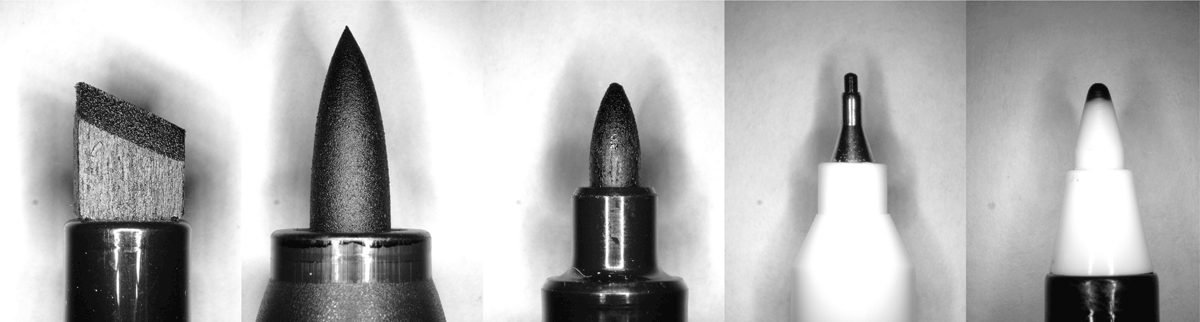
Figure 2
From right to left, Spectrum noirTM Colouring System Marker chisel tip, Prismacolor® Premier Brush|Fine Marker brush tip, Arteza® EverblendTM Art Marker fine tip, Tanmit Dual Tip Brush Pen fine point tip, and amazonbasics Felt Tip Marker pen fine point tip (20x zoom).
Artistic Blending Writing Instruments
As revealed in the survey of the porous-tipped pen market, porous-tipped writing instruments can be split into four groups, the two main groups being artistic and non-artistic poroustipped pens. Clear differences between these two groups were observed when conducting this survey. Non-artistic porous-tipped pens were less complex compared with artistic pens. They are available in fewer colors, more commonly red, blue, and black. Their tips are typically small, fine nibs. The most popular types of non-artistic porous-tipped pens are highlighters and permanent markers, making the most common advertised applications highlighting and writing. The most abundant non-artistic products come from Artline®, monami®, and Geddes®.
Artistic porous-tipped pens are typically available in more colors, despite the manufactures offer fewer individual products compared with non-artistic manufactures. They are available with multiple sized tips, and they are more often dual-tipped. Figure 3 illustrates the differences in writing characteristics between artistic and nonartistic porous-tipped pens from different manufacturers. Artistic porous-tipped pens are commonly labeled as markers, with Marvy Uchida®, Ooly, and Crayola® having the most individual products for purchase. One of the main advantages of artistic porous-tipped pens is that artists, hobbyists, designers, and the like can use these writing instruments to blend colors in an almost watercolor-like effect (Figure 4). This effect is accomplished with a combination of fluid inks and, often, the brush-like tips of some of these writing markers. Users of artistic porous-tipped pens have their own blending techniques and preferences.
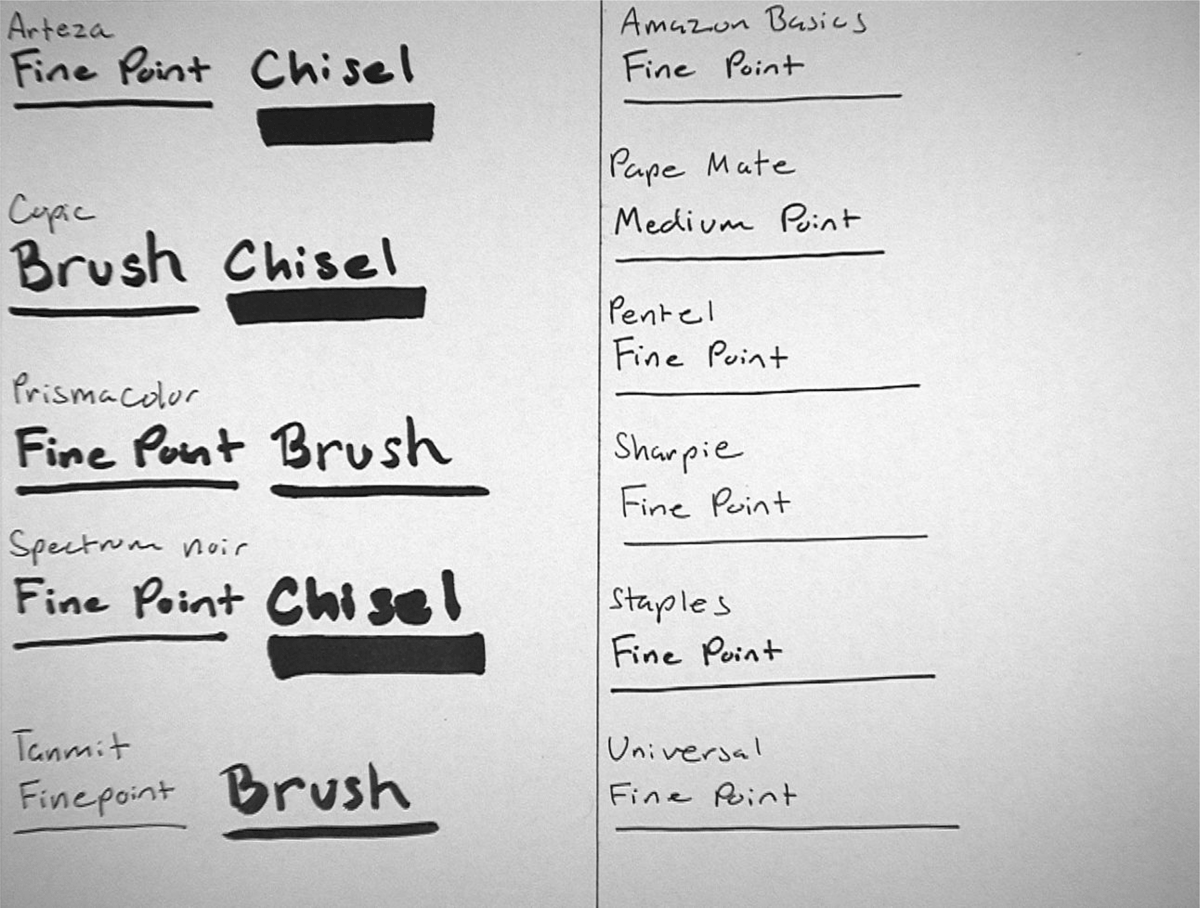
Figure 3
A comparison of writing characteristics from artistic porous-tipped pens, left column, and non-artistic porous-tipped pens, right column.

Figure 4
Example of artistic porous-tipped pens used to create blended ink effects.
Discussion
Although comprehensive, the presented survey cannot be considered exhaustive enough to contain every single porous-tipped writing instrument in the current market since products are continuously being introduced and removed. However, the survey proved to be a valid resource in obtaining valuable information about new trends about porous-tipped markers, especially in the light of a more widespread distribution of these artistic writing and drawing instruments and their availability to the general public. Also, some of the specifications documented in this survey were subjective. Specifications such as product name, type size, and available colors are often found in the company’s website, other specifications such as tip type and pen application are sometimes not as obvious based on what was available on the product’s website. Such specifications such as the type of tip were documented based on images of the products available on the manufacturers’ website. The application (i.e., artistic vs. non-artistic) was based on the general design observed on the manufacturers’ website, as well as on the knowledge about the targeted audience. This survey is also not a reflectance of product popularity. That is, the number of individual products catalogued does not necessarily reflect how popular a brand and their respective products are.
Porous-tipped pens are commonly classified as either fiber- or felt-tipped when mentioned in the questioned documents literature, and it was during an extensive research into the poroustipped writing instrument market at large that it was concluded that such classifications can be misinforming. Porous-tipped pens can certainly be divided into fiber- and felt-tipped pen groups. However, the current market has been offering porous-tipped pens with a large variety of different types of tips. Pens commonly used by the general public such as ballpoint, rollerball, and gel pens have their own ink characteristics that forensic document examiners identify and exploit. These pens all share the same type of tip consisting of a rotating metal ball encased in a tube. Of course, they come in a variety of sizes, but the mechanism of the tip is the same. On the other hand, porous-tipped writing instruments share a similar mechanism with other poroustipped writing instruments in that the inside of the pen holds an absorbent ink reservoir and the ink travels through a porous tip by way of capillary action. However, the types of tips a poroustipped pen have can range from brushes to nibs to chisels to bullets to conical shapes.
Porous-tipped pens, although they can be traced to the early 1900s, do not have the amount of studied information within questioned documents compared with ballpoint and the more recent gel pens. As porous-tipped pens have evolved and improved, they would grow to encompass a largely artistic following. The application of porous-tipped pens found in the present market survey arises the question on whether or not there are differences between non-artistic and artistic porous-tipped pens that can be beneficial for forensic document examiners. The creation of blended ink samples could pose a challenge during examinations, as the blending of inks can change the color observed, making discrimination by visual analysis alone and the recognition of the single ink components difficult.
Examination methodologies and instrumentation have improved during the last decades. Studies on porous-tipped pens have evolved from simple handwriting examination to ink discrimination based on optical and chemical characteristics. Consequently, researchers are in a better position to explore commonly used examination methods on challenging samples such as blended ink samples. Most research on porous-tipped pens merely describes ink stroke characteristics, and there are few studies that have thoroughly investigated the ink composition of porous-tipped pens. In most studies, porous-tipped pens are analyzed alongside other pen types. It was also found that even in art conservation studies, poroustipped pens are not frequently analyzed. In addition, there are no forensic science studies within questioned documents that analyze blended ink samples. Only one study analyzed the chemical components of drawings, however the authors conducted this study from an art conservationist perspective [49]. Much of the information regarding their chemical composition was found in United States patents. There is certainly a general understanding of the most efficient techniques to analyze pen inks, including the use of high resolution imaging systems, such as the VSC, and TLC. However, there are other techniques to either expand up on or explore for porous-tipped pen analysis such as gray value measurements and hyperspectral imaging, which can capture a large array of data and add objectivity to image analysis by providing numerical data about different types of optical characteristics, especially in studies where multiple features from a large number of samples are compared. The continuous addition of new products in the porous-tipped pen market may also increase the level of complexity of these products, and as such, objective and efficient techniques can offer increased selectivity of the adopted analytical methodologies.
Conclusion
The forensic document examiner, when concluding that an ink sample was made using a poroustipped pen, may still have difficulties to further characterize what type of tip was used. Distinguishing between porous-tipped pen tip types is an issue considering that porous-tipped pens are either arbitrarily labeled under one group name or labeled as “felt-” or “fiber-tipped” in the literature. The fact of the matter is that there is such diversity within the porous-tipped pen market that is unexplored. The application of artistic poroustipped pens as blending materials also needs to be further investigated as these types of samples are extremely under-researched within forensic science. Questioned documents research concerning pen inks has been leaning towards objective techniques that may assist the expert judgment of forensic document examiners. This approach needs to also be further applied to a more detailed study of porous-tipped pens and to explore, more innovative non-destructive methods. The high variety of porous-tipped writing instruments, their ubiquitous uses, and their highly variable features offer the impetus for further studies that can provide forensic document examiners with critical information to be used to reliably identify and compare these types of specimens.