
Introduction
A paucity of research on 21st century initials along with a case involving disputed initials on a loan application motivated this study. Computer keyboarding, diminished teaching of cursive writing to school children and more use of hand printing in modern writing may have an impact of the use of initials in everyday business documents. This study was conducted to explore the distinctiveness of handwritten initials and their resemblances or differences when compared to the capital letters representing the first letter of each name in a signature. Initials are condensed signatures. Forensic document examiners use the same methodology in examining initials as they do for signatures and extended hand printing or cursive writing. Appreciation for the individuality of initials and their consistency or departure from the first letter of each name in a signature will help forensic document examiners correctly identify or eliminate writers of initials in disputed documents.
The origins of writing developed thousands of years ago. The first language scribed was Sumerian and it was written using cuneiform writing formed by triangular reeds impressed into wet clay as early as 3100 B.C.E. (1). This writing developed into the Roman alphabet with first examples from the 7th century B.C.E (1). Abbreviations followed in writing development because of the desire for brevity and economy of writing effort and materials, parchment and papyrus were difficult and more expensive to make than the cellulose papers of today (2). Once signatures appeared they were soon followed by abbreviated signatures, initials. Initials are defined as “The first letter or letters of a person’s name or names, used as a shortened signature for identification” (3). Initialisms consist of acronyms like USA and FDR (for former US president Franklin Delano Roosevelt) and consist of the first letters of words that are pronounced as separate letters (2). Another example of an initialism is B.C.E. for Before Common Era.
Studies conducted in the 1980’s explored the individuality of initials used as abbreviated signatures and their significance to the work of forensic document examiners (FDE). In Galbraith’s 1981 study, signatures and initials were collected from 65 writers and of those 69% made changes or additions to initials that did not occur in the signatures (4). In later research by Galbraith in 1983, 135 writers submitted signatures and initials for comparison and 72% made changes or additions in their initials that were not written in the capital letter of each name of the signature that the initials symbolized (5). Both studies used smaller sample sizes and measured differences between initials and capital letters of signatures differently from the 8 research questions in this study.
The goal of this study is to widen the scope of the previous research and observe any changes to modern initials formations. Consideration of 8 specific research questions were evaluated from the data collected. A larger sample size was collected. The influence of 21st century writing styles were evaluated to note differences from handwriting practices in the 1980’s.
Methods and Materials
Initials and Signatures Collection
Signatures and initials were collected from a total of 456 people, 260 females and 196 males, in 2017. Sources of the handwriting were from friends, family, workplace colleagues of friends and family, forensic laboratory employees in Milwaukee, Wisconsin, Chicago, Illinois, Atlanta, Georgia, Ottawa, Ontario, Toronto, Ontario, and the attendees of the annual meeting of the American Society of Questioned Document Examiners in: San Diego, California. Participants ranged in age from 15 – 82 with the median age 45. 85% of participants were between 25 and 65 years of age. National origins of participants included 28 countries with 70% from the USA and 21% from Canada.
Collection forms for the study consisted of the data collection form shown in Figure 1. That was a white sheet of paper 216 x 279 mm (8.5 x 11 inches) size printed with black toner. The participants were asked to use black ballpoint pens; however, any pen type was accepted. Magnifiers of 3.5x were used to make the signature and initial comparisons. Rulers with inches and centimeters measured approximate sizes and relative heights of initials.
Eight Research Questions
Initials and signature sample forms were examined to address 8 research questions:
Are one or more initials constructed similarly to the capital letters used in each person’s signature?
Do people use punctuation marks in writing their initials?
Are the initials smaller, larger or the same approximate size as the capital letters in each person’s signature?
Are each person’s initials cursive or hand printed?
Are each person’s initials connected or separated?
Do each person’s initials end with a circular flourish?
Do each person’s initials have the same relative heights as the capital letters in each person’s signature?
Do each person’s initials have the same slant as the capital letters in each person’s signature?
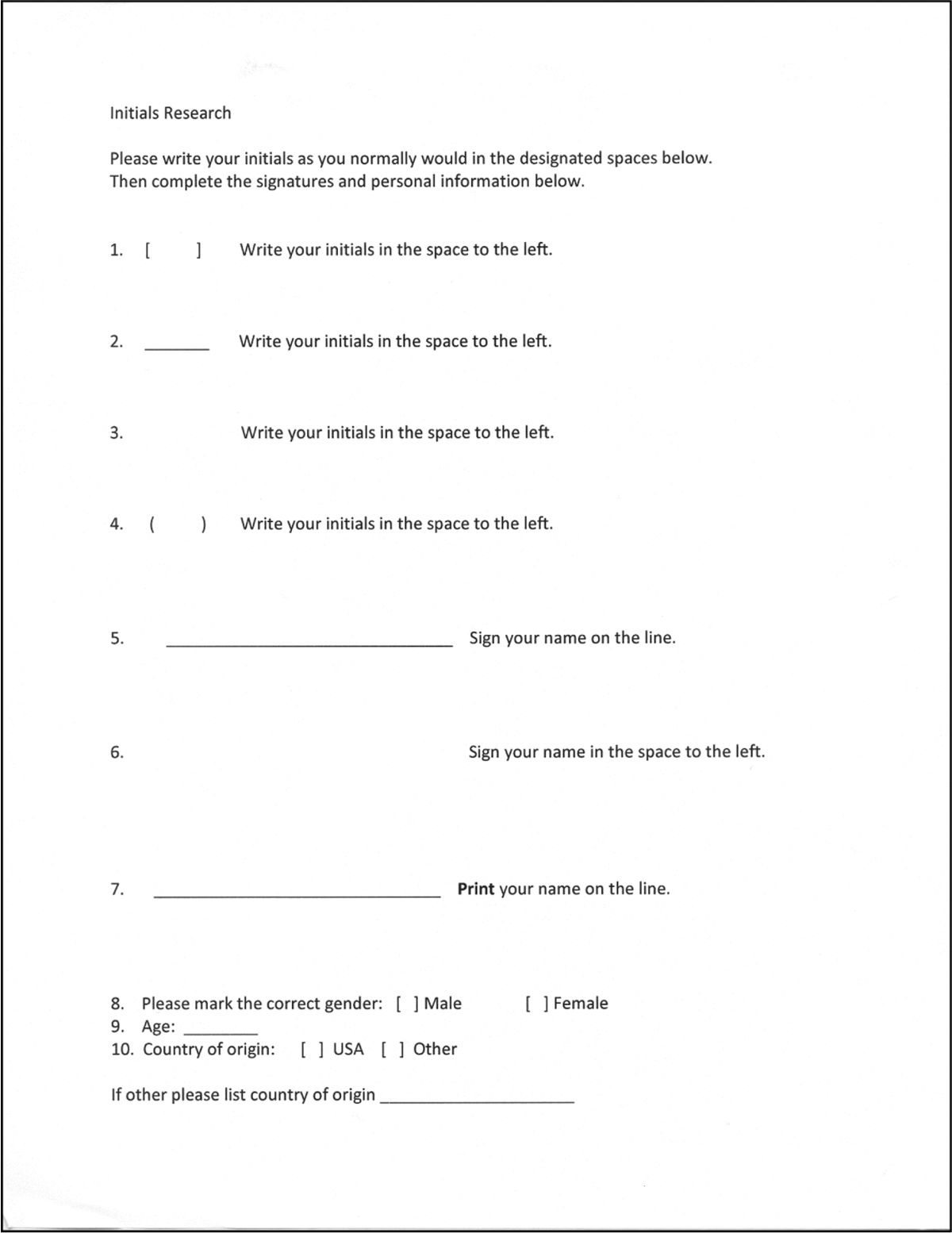
Figure 1
Example of a blank data collection form.
Each data collection sample was examined to answer the research questions. Data was arranged in an Excel spreadsheet with each participant’s name on the X axis and research questions 1-8 along the top on the Y axis. Data was generated from the Excel spread sheet to arrange the results in tables for each question.
Results
The results of the collected data from 456 participants in the context of the 8 research questions posed in the study are shown in tables and two bar charts.
Research Question 1
Are one or more initials constructed similarly to the capital letters used in each person’s signature?
Results showed 61% yes and 39% no in answer to the question.
Table 1 shows the results arranged according to the answers yes or no and further broken down by male, female and age groups.
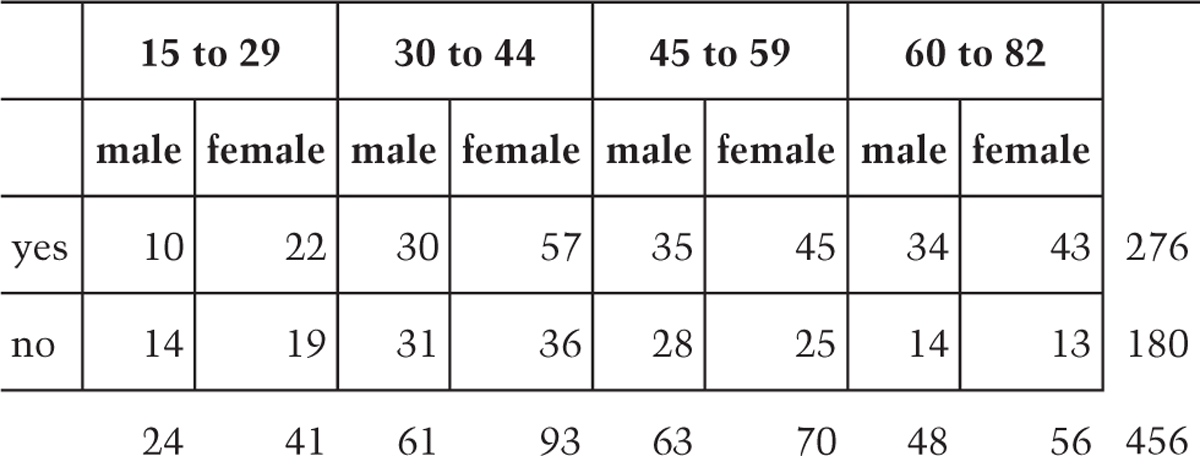
Table 1.
Lists answers to Research Question 1.
An example of Initials different from a signature from Research Question 1 appear in Figure 2.
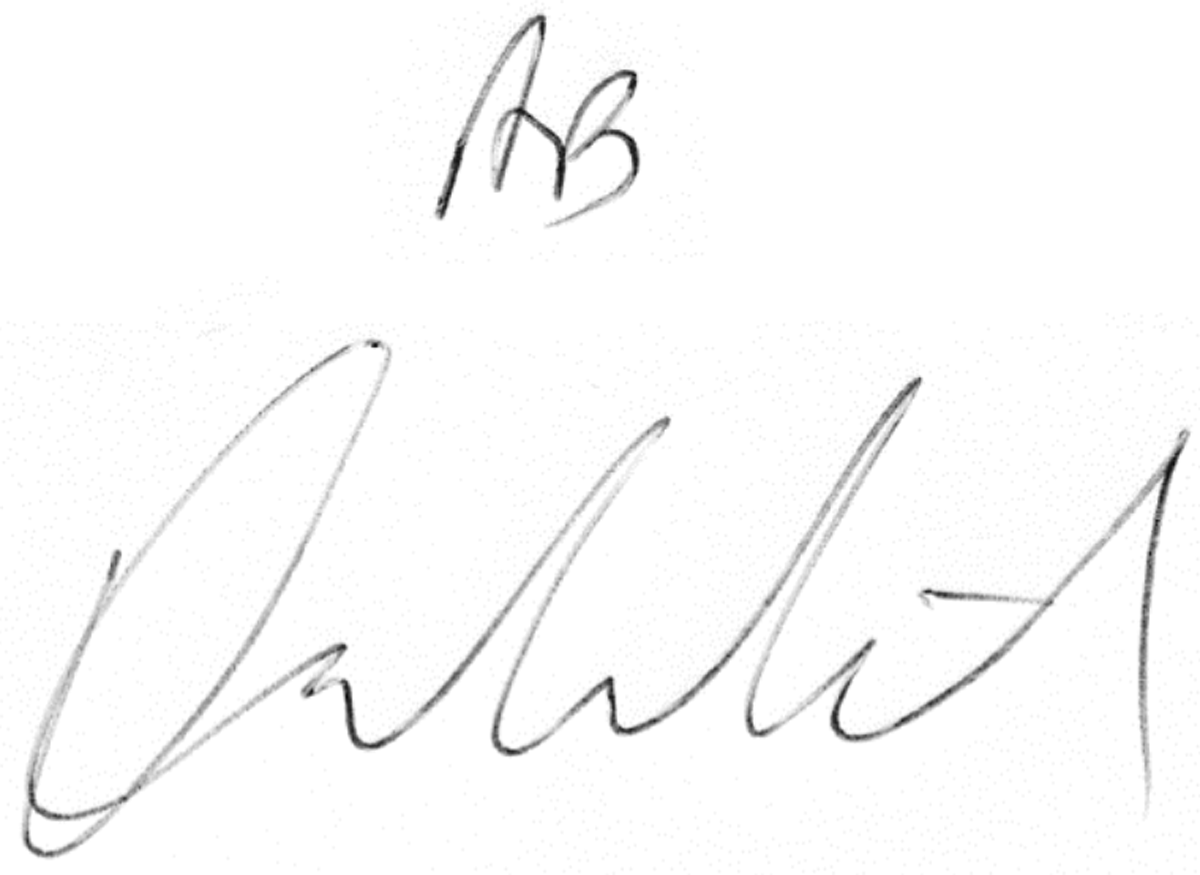
Figure 2
Initials and signature have different capital letters.
Figures 3 and 4 show more specific results of Research Question 1 arranged according to responses by gender and age groups.
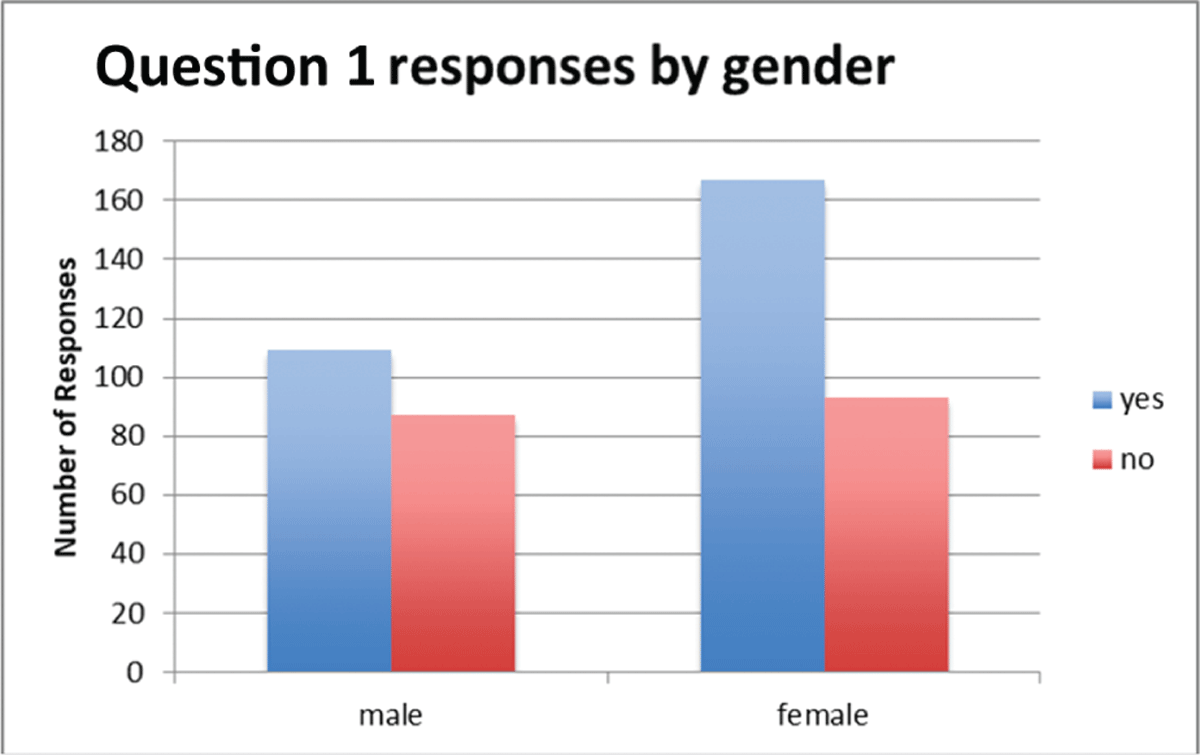
Figure 3
Bar graph showing responses to Research Question 1 by gender.
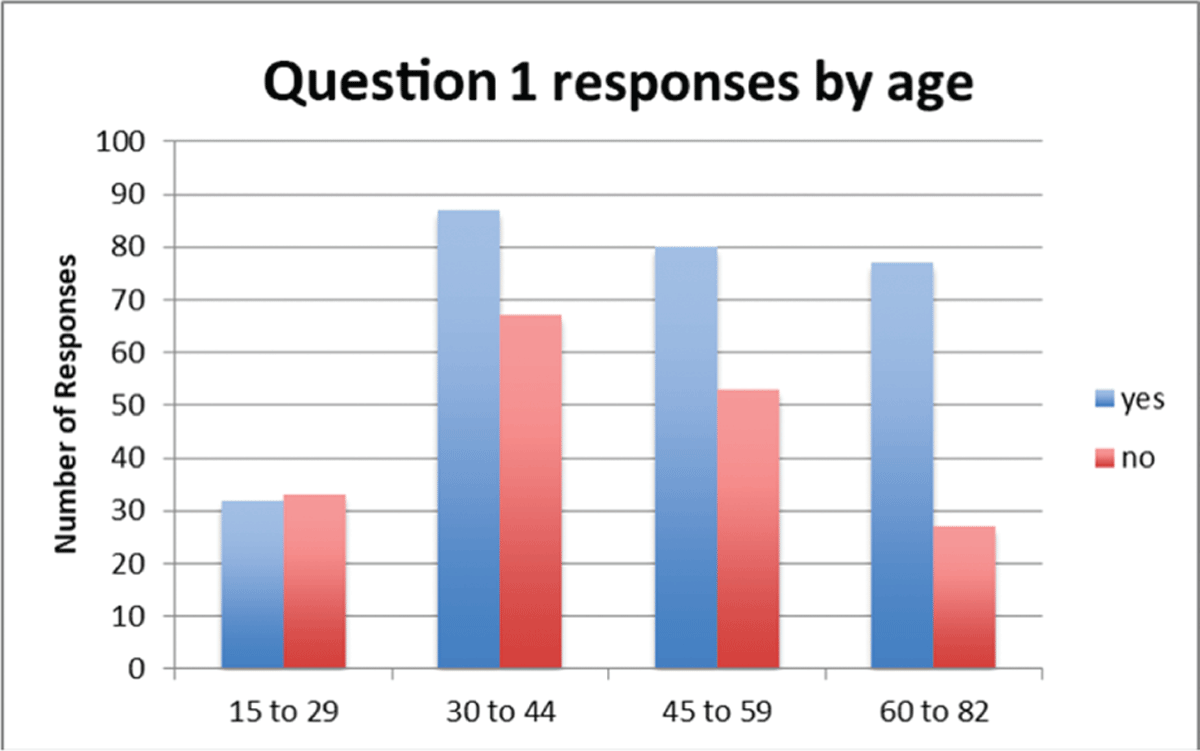
Figure 4
Bar graph showing responses to Research Question 1 by age groups.
Research Question 2
Do people use punctuation marks in writing their initials?
Results showed 7% yes and 93% no in answer to the question.
Table 2 shows the results arranged according to the answers yes or no and further broken down by male, female and age groups.
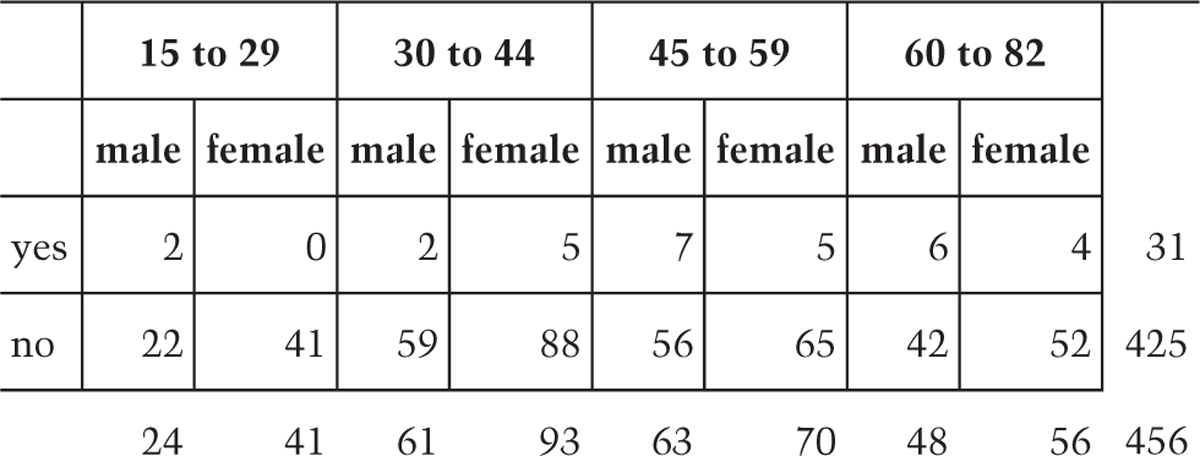
Table 2.
Lists answers to Research Question 2.
An example of a person who used punctuation marks in writing their initials appears in Figure 5.
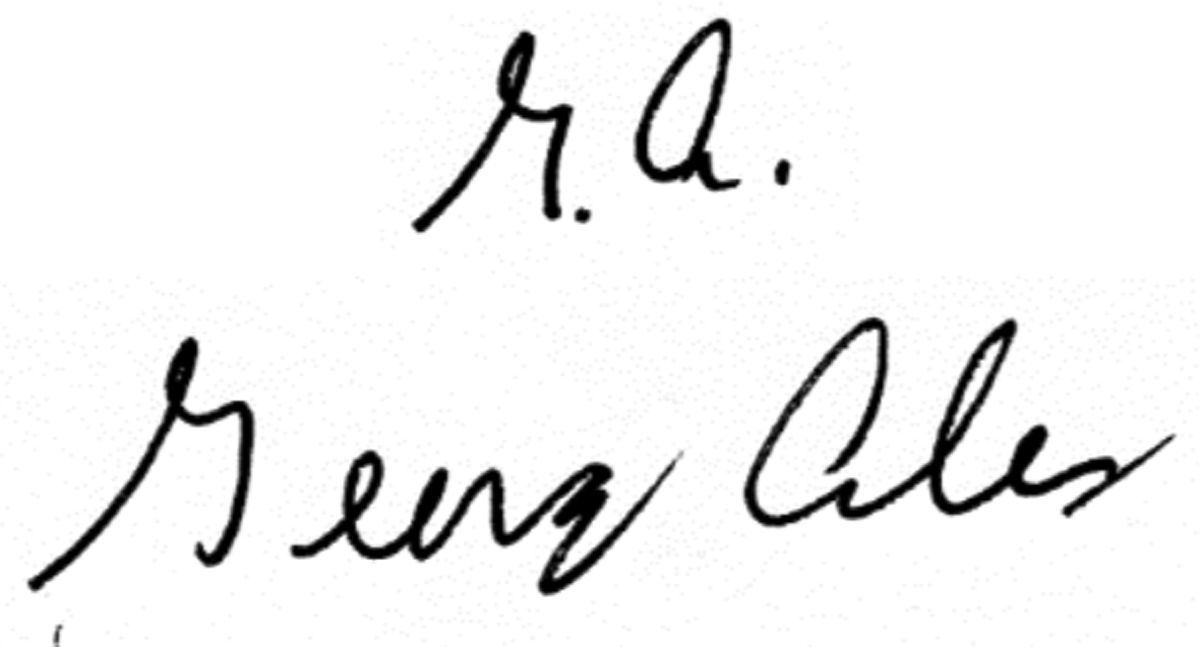
Figure 5
Initials written with punctuation above the signature.
Research Question 3
Are the initials smaller, larger or the same approximate size as the capital letters in each person’s signature?
Results showed 90% wrote initials smaller, 9% wrote initials the same size, and .21% wrote initials larger than the capital letters of the signature.
Table 3 shows the results arranged by smaller, same size and larger and further broken down by male, female and age groups.
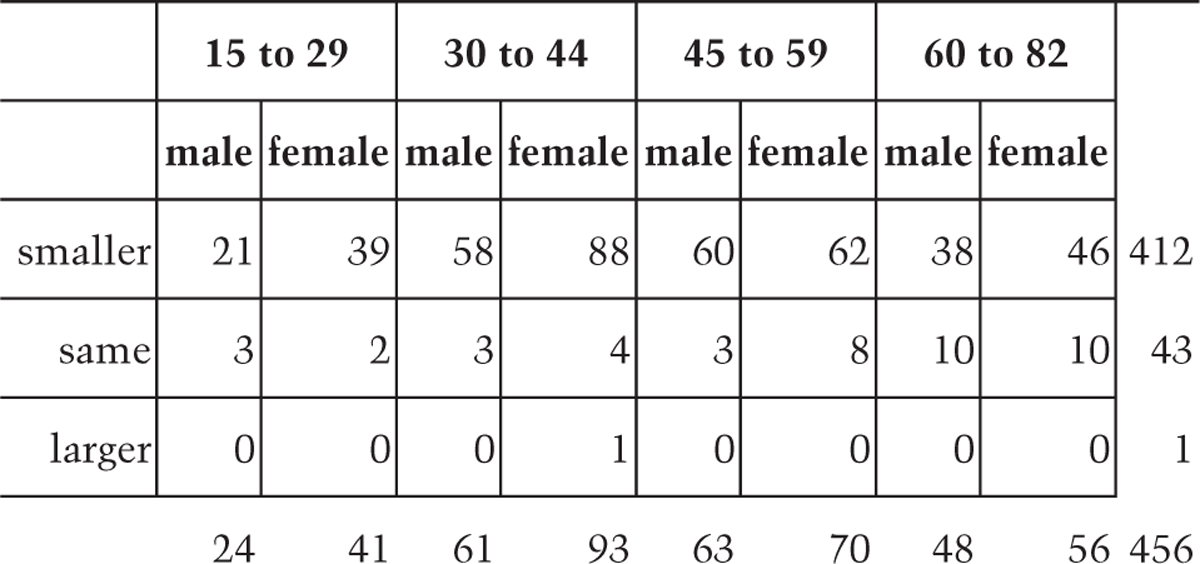
Table 3.
Lists answers to Research Question 3.
An example of a person who made her initials smaller than the capital letters of the signature appears in Figure 6.
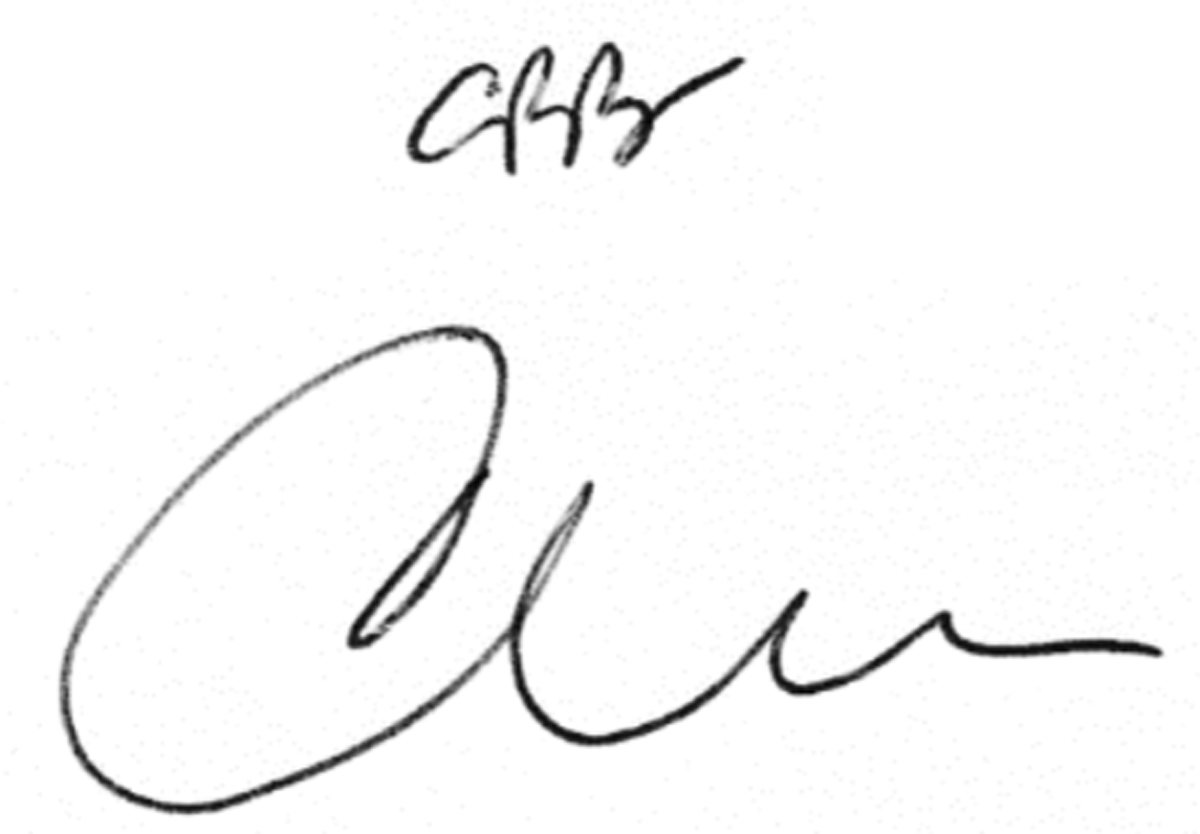
Figure 6.
Initials written smaller that capital letters of signature.
Research Question 4
Are each person’s initials cursive or hand printed?
Results showed 59% cursive and 41% hand printed their initials.
Table 4 shows the results arranged by cursive, hand printed and further broken down by male, female and age groups.
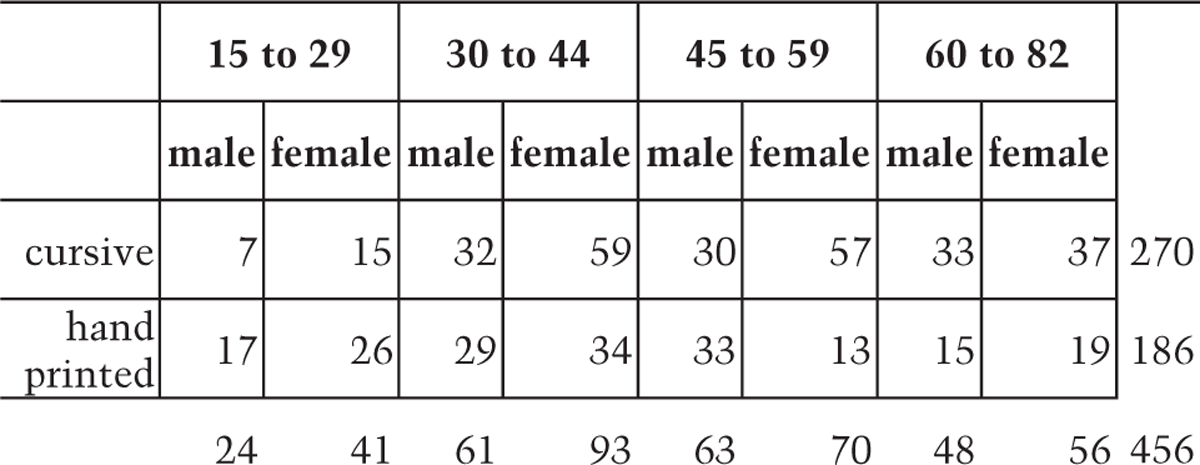
Table 4.
Lists answers to Research Question 4.
An example of a person who wrote their initials in cursive form appears in Figure 7.
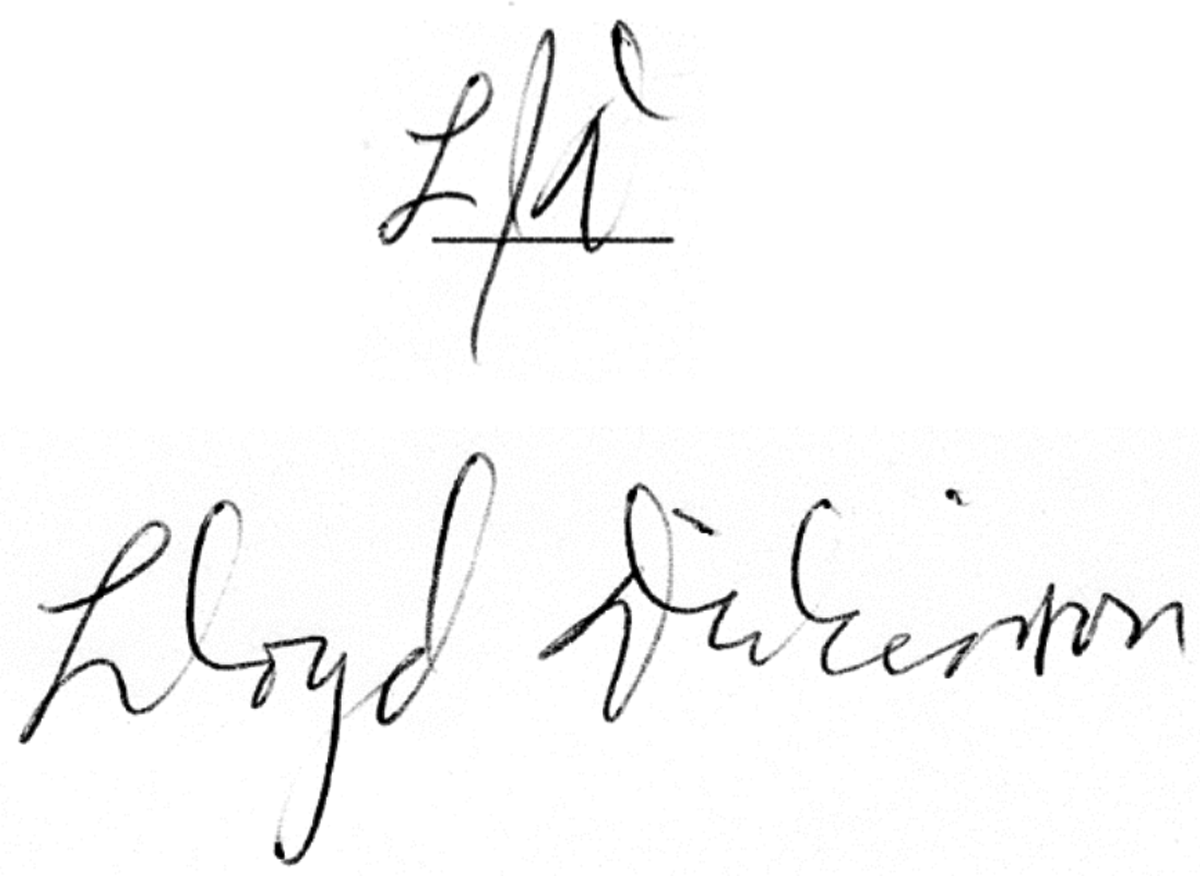
Figure 7
Initials written in cursive above the signature.
Research Question 5
Are Initials connected or separated?
Results showed 50% connected their initials and 50% separated their initials.
Table 5 shows the results arranged by connected, separated and further broken down by male, female and age groups.
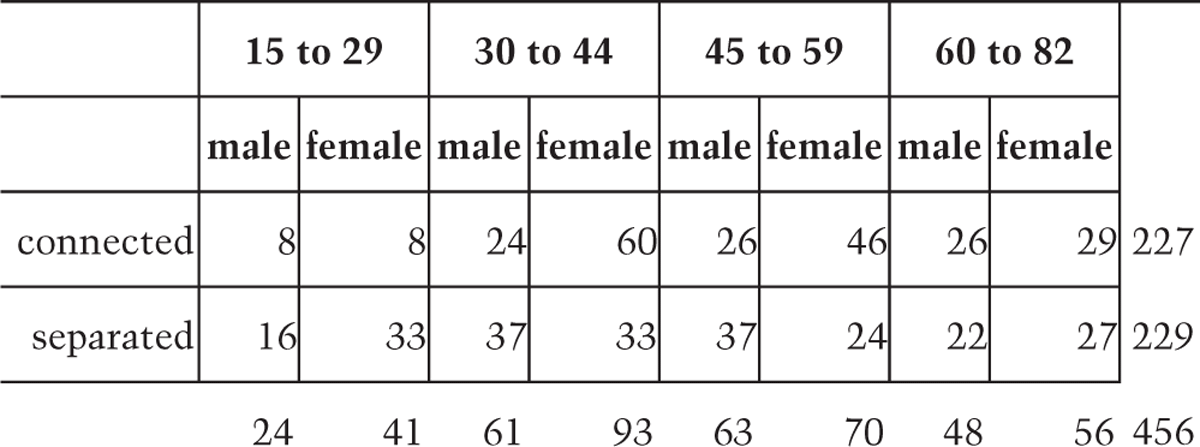
Table 5.
Lists answers to Research Question 5.
An example of a person who connected his initials appears in Figure 8.
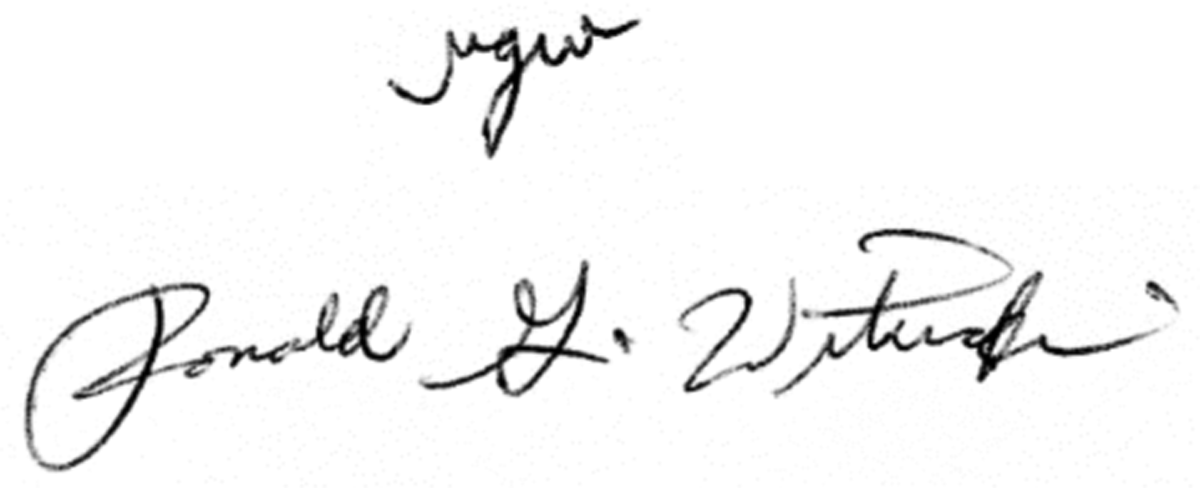
Figure 8
Initials connected above the signature.
Research Question 6
Do each person’s initials end with a circular flourish?
Results showed 3% ended their initials with a circular flourish and 97% did not.
Table 6 shows the results arranged by yes or no and further broken down by male, female and age groups.
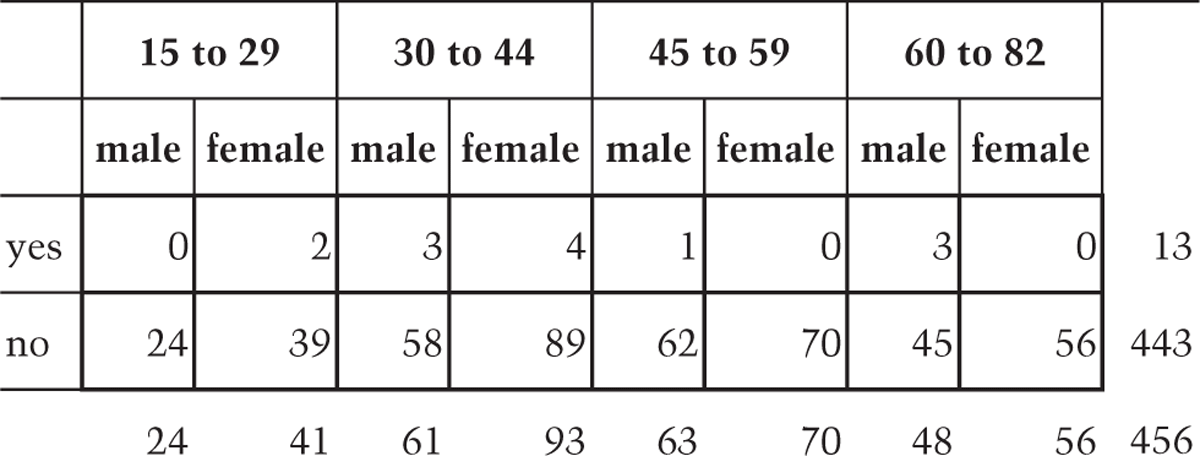
Table 6.
Lists answers to Research Question 6.
An example of initials that end with a circular flourish appears in Figure 9.
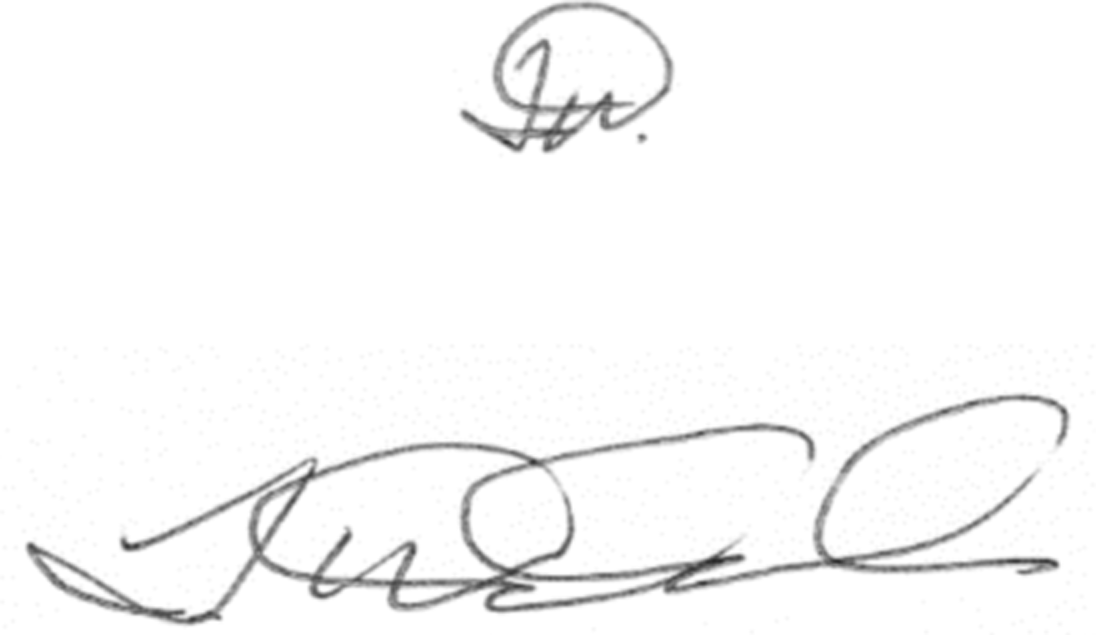
Figure 9
Initials written with a circular flourish and signature below.
Research Question 7
Do each person’s initials have the same relative heights as the capital letters in each person’s signature?
Results showed 76% did have the same relative heights and 24% did not.
Table 7 shows the results arranged by yes or no and further broken down by male, female and age groups.
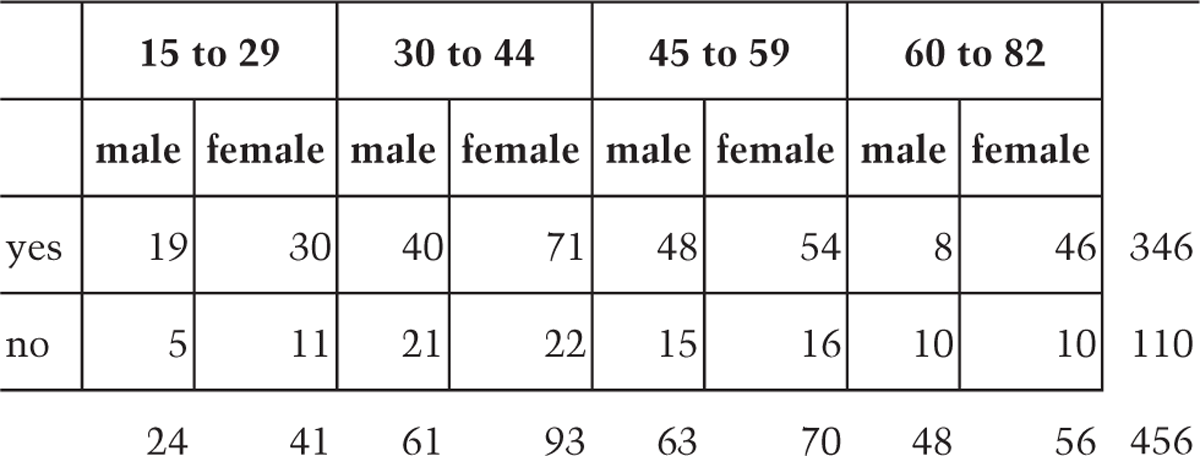
Table 7.
lists answers to Research Question 7.
An example of initials that have the same relative heights as the capital letter of the signature appears in Figure 10.
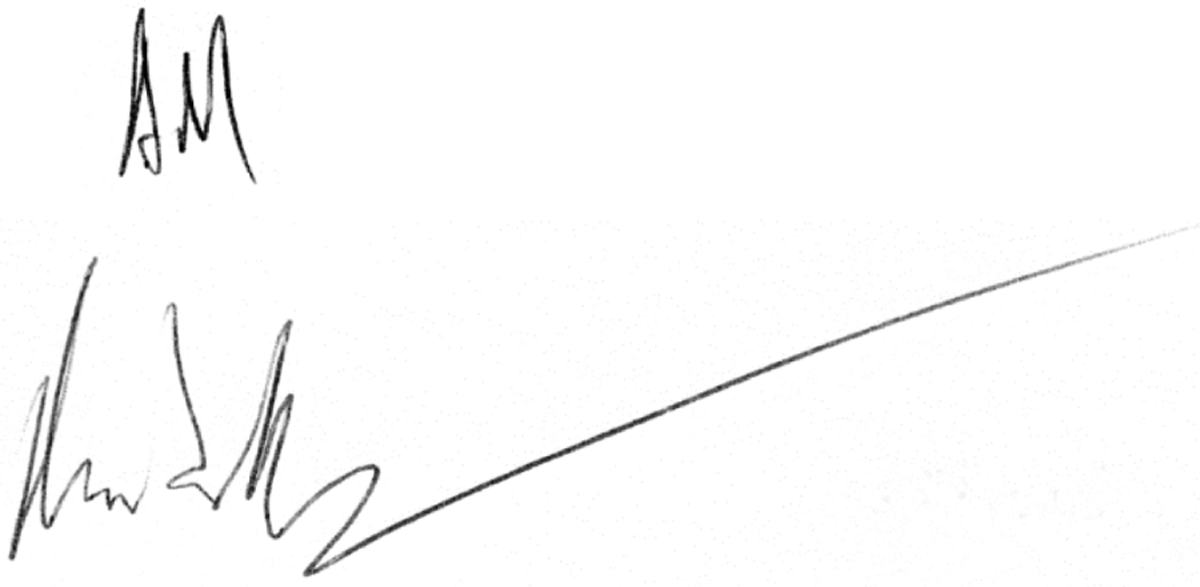
Figure 10
Initials written with the same relative heights as the signature.
Research Question 8
Do each person’s initials have the same slant as the capital letters in each person’s signature?
Results showed 79% had the same slant in the initials as in the signature and 21% did not.
Table 8 shows the results arranged by yes or no and further broken down by male, female and age groups.
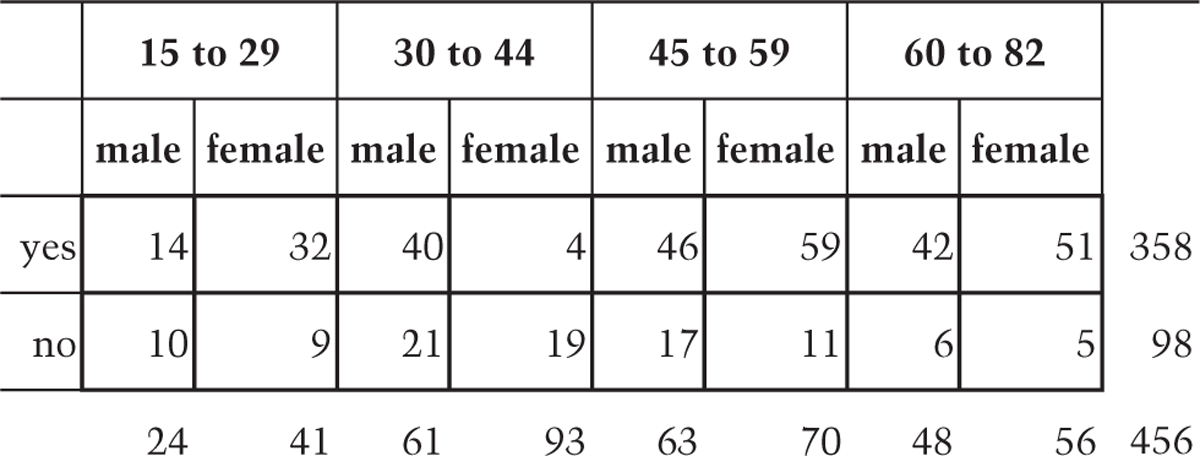
Table 8.
Lists answers to Research Question 8.
An example of initials with the same slant as the capital letters of the signature appears in Figure 11.
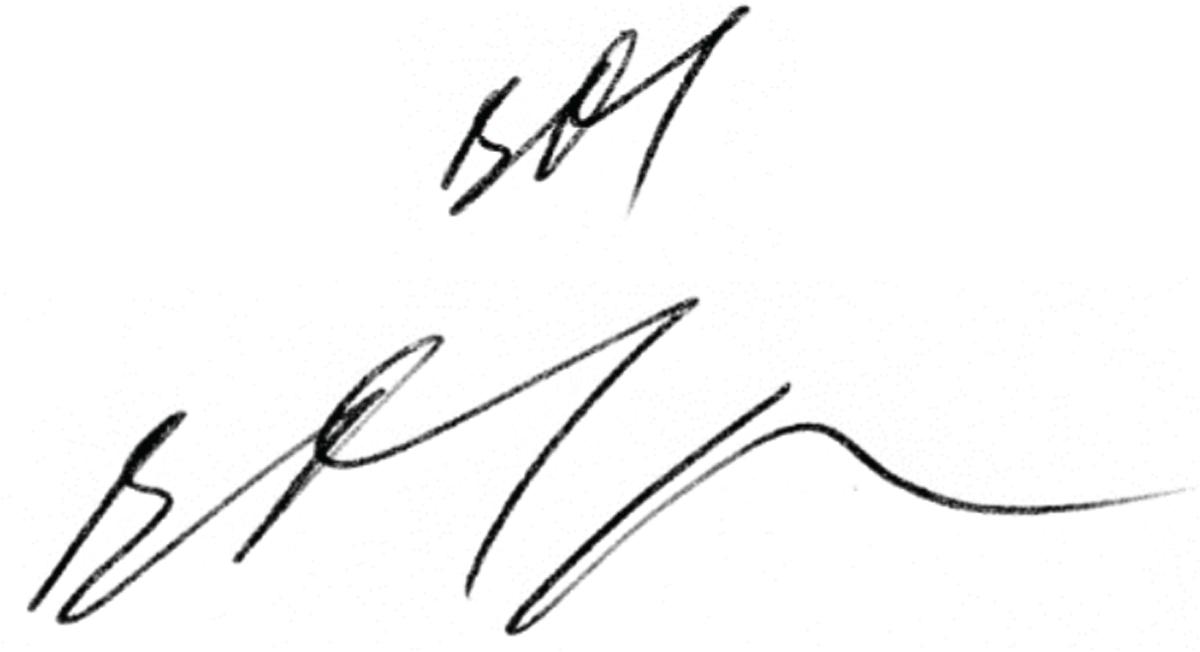
Figure 11.
Initials written with a similar slant to the capital letters of the signature.
Statistical Examination
Application of the chi-squared test for independence was considered in Research Question 1— Are one or more initials constructed similarly to the capital letters used in each person’s signature?—however, the independence of the variables in this study was not of central interest for each research question.
Construction of initials relative to capital letters of signatures varied by age group, χ2 (df = 3, N = 456) = 12.48, p = .006, with the youngest respondents (15-29) roughly equally likely to match construction or not, whereas older participants were much more likely to match the construction of their initials with capital letters in their signatures see bar graph in Figure 4. Construction of initials did not significantly vary by gender, χ2 (df = 1, N = 456) = 3.47, p = .062 see bar graph in Figure 3. A statistically significant finding in the chi-squared test for independence is generally when p < .05.
Discussion
This study revealed general changes in initials compared to the capital letters of a signature from the Galbraith study in 1983 (5). Below the Galbraith study results are contrasted with this study in the areas commonly assessed in both studies.
| 1983 Galbraith Study: | 2017 Lewis Study: |
| 1. 21% used periods in initials | 1. 7% used periods in initials |
| 2. 6% used ending flourishes | 2. 3% used ending flourishes |
| 3. 31.5% connected initials | 3. 50% connected initials |
| 4. 9% changed proportions of initials | 4. 24% changed proportions of initials |
The results above show that since the 1980s fewer people use periods in writing their initials, fewer people use ending flourishes, more people connect their initials and more people change the proportions of their initials relative to capital letters in their signatures. Since 91% of the participants were from the USA and Canada, these results may not apply equally to writers from other countries.
A few rare combinations were observed in the collected sample from this study. Figure 12 shows two initials combined as one shape that differ from the formation of the capital letters in the signature.
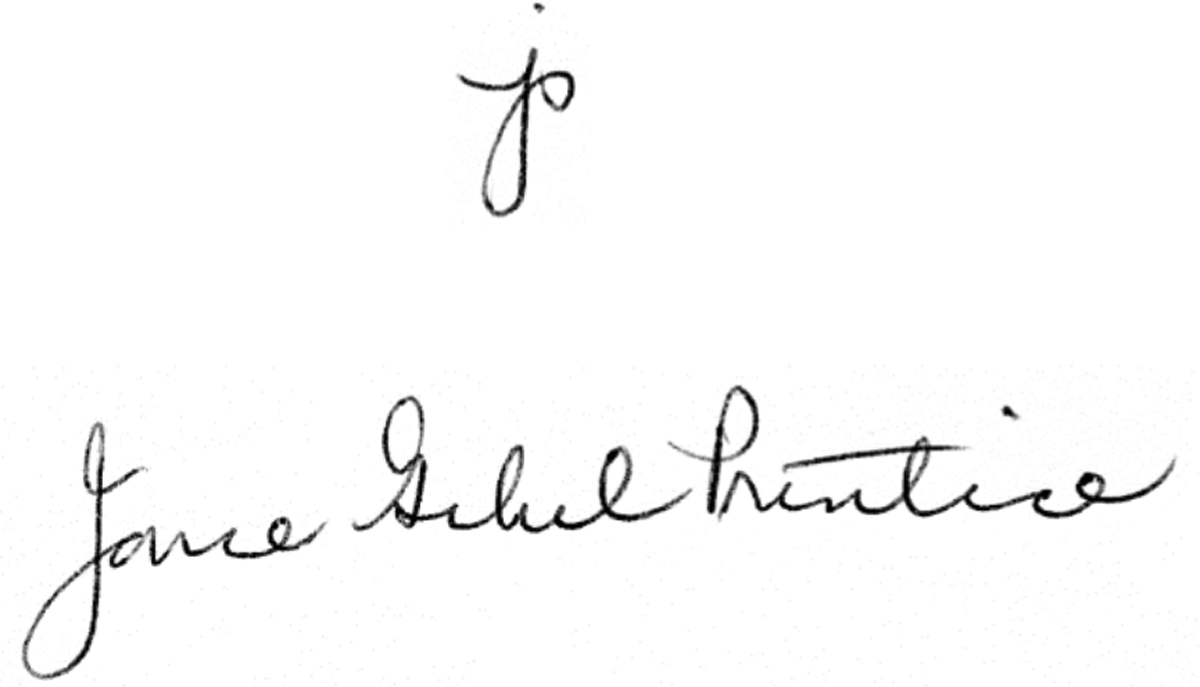
Figure 12.
Initials written as one form above signature.
In Figure 13 initials are displayed that were written one on top of the other and punctuated. This was a rare formation.
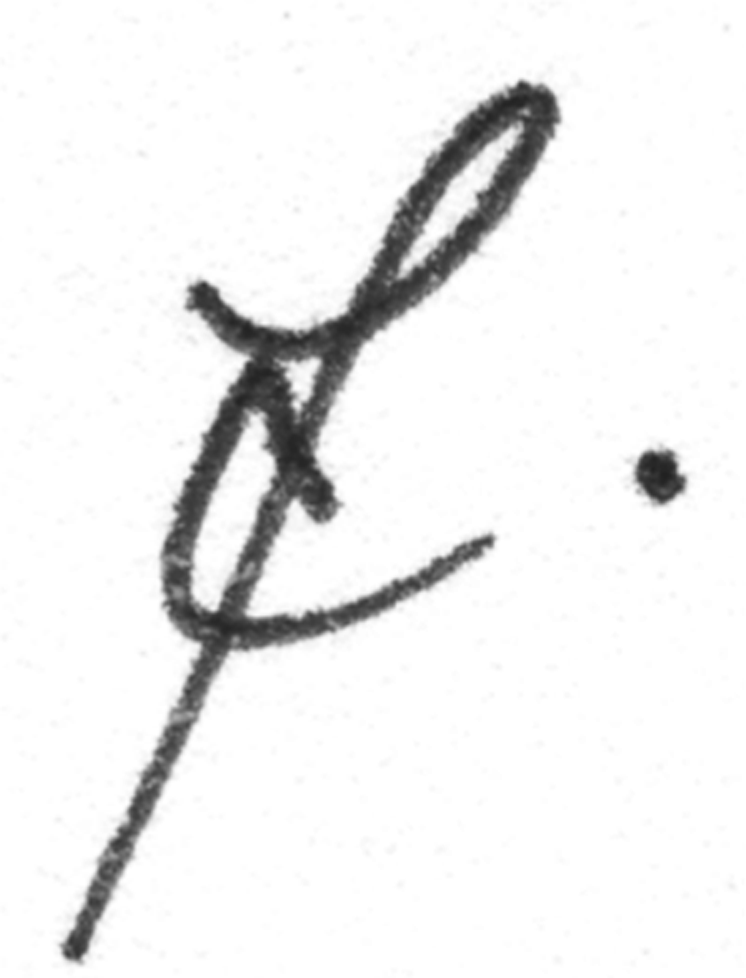
Figure 13.
Initials written one on top of the other and punctuated enlarged.
Conclusion
The data generated by this study will help FDE determine how common or rare initials formations are that occur in their casework. It also reminds FDE that initials are not always constructed the same as the capital letters in a person’s signature. So if initials are in question on a document known initials must be collected for comparison. The capital letters of the signature are not appropriate comparison standards for initials.
The main research question was Research Question 1 which asked—Are one or more initials constructed similarly to the capital letters use in each person’s signature? The answer was yes for 61% and no for 39%. This does not allow FDE to assume that they can use the capital letters of known signatures to compare with questioned initials.
The question that led to this study of initials was “How rare is the use of periods in initials?” The data shows that only 7% use punctuation (mostly periods) in writing initials. So it is relatively rare. The case in question also had questioned initials arranged in an unusual proportion to the baseline of writing.
Ending initials with a circular flourish that appears in Figure 9 is rare and occurred in only 3% of the participants in this study.
Initials have value for identification depending on their individuality. Figures 12 and 13 show rare initial formations that have great value for identification.
Acknowledgements
The author wishes to thank Dr. Rose Maier Hartman for her help with statistics and Lisa Gordee for her assistance with images.