
Table 1
Peer-reviewed articles and published (in conference proceedings) papers that discuss the ink aging methods which measure the gradual disappearance of high boiling solvents from ink on paper (listed in chronological succession)9
| Year | Author(s) | Reported scope of applicability | The essentials of the reported method |
|---|---|---|---|
| 1985 | Stewart | < 70 days | Stewart conducted a “preliminary study” of a gradual loss with time of the solvents contained in ballpoint ink on paper and stated that if an ink contained at least two solvents, A and B, and solvent A is more volatile (evaporates faster) than solvent B, then: – the relative content of the A and B solvents (i.e., the A/B ratio) starts decreasing as soon as the ink was placed (and thus began “drying”) on paper; and – the A/B ratio correlates with the age of the ink on paper during a certain period of time after the ink was placed on paper. As an illustration showing how this ink aging parameter (A/B ratio) changes with the age of ink, the article contains an aging curve “A/B ratio—Age of Ink” obtained for one (unnamed) ballpoint ink. Though the aging curve leveled of ca. 70 days after the ink was placed on paper, the author claimed that “[c]ertain ballpoint pen ink formulations were shown to have reproducible aging curves up to one-and-one-half years after placement on paper” [13]. However, the article contains no experimental data that would support this claim. |
| 1993 | Aginsky | < 2 months | Aginsky studied the aging of a slow aging ballpoint ink (made in Italy) by measuring the above “A/B ratio” (using two high boiling solvents— phenoxyethoxyethanol and 2-PE) approximately every 2 weeks. The “A/B ratio—Age of Ink” aging curve obtained for this ink leveled off within less than two months after the ink was placed on paper [14]. Based on the published experimental data, it is clear that the scope of applicability of the “A/B ratio” ink aging approach proposed by Stewart is very limited—less than two months after an ink’s placement on paper. Besides, this approach is applicable only to a relatively small percentage of ballpoint inks that contain at least two high boiling solvents. Finally, as no “A/B ratio—Age of Ink” experimental data obtained for a representative set of ballpoint inks has yet been published, this approach still remains at the same “preliminary study” level as when reported in 1985. Also, the author introduced two ink-aging methods that both used the quantitation of the inks’ semi-volatile components—the high boiling solvents that “boil higher than 200°C” [14, p. 1145]. |
| 1996 | Aginsky | Several months (oil-based ballpoint inks; water-based inks including rollerball inks, inkjet inks, etc.) | Two new ink-aging methods were reported in 1996 [7]. Both methods were developed for dating inks “which contain comparatively high boiling solvents (those that boil higher than 200°C)” [14]. One method (the above “SET”) was designed to date oil-based ballpoint inks, and the other was the first ink-aging method applicable for both conventional (oil-based) ballpoint inks and water-based inks of various types, such as rollerball and porous tip pen inks, as well as stamp pad and inkjet printing inks. The latter ink-aging method (now known as “SLRM”) was described as a method for “Dating Inks by Evaluating Decrease of the Evaporation Rate [R%] of Ink’s Vehicle Solvents Due to Aging.” The ink samples of various ages taken from the above oil- and water-based inks were extracted by acetonitrile, and the concentrations of the inks’ high boiling solvents in the extracts obtained were determined by GC-MS. For the Senator (Germany) black oil-based ballpoint ink tested, the content of the solvent PE was measured and the aging curve “R%—Age of Ink” leveled off within less than 6 months after the ink was placed on paper. For MonAmi (Korea) black rollerball and Trotto black porous tip pen inks, as well as a Mosbitchim (Russia) violet stamp pad ink (all three inks are water based), the content of the solvent Diethylene Glycol (b.p. 245°C) was measured and the aging curves leveled off within 4 months after each of the inks was placed on paper. Finally, for an HP (USA) inkjet ink tested (this ink is also water based), the content of the solvent 2-Pyrrolidone was measured and the aging curve leveled off within less than 9 months after the ink was placed on paper [7]. |
| 2002 | Aginsky | 6 months | This conference paper reviewed the state of the art in the area of ink aging analysis in 2002. In particular, the paper discusses the ink aging methods that are based on the analysis of 2-PE and other high boiling solvents present in ink on paper, and it states that, “The vehicle-to-dye ratio method [and the] ink dating method that evaluates the decrease in the evaporation rate of ink volatile components as a function of the ink age allow one to obtain a good correlation between the ink aging parameter measured and the actual age of ink for a period of time comprising up to six months after the ink has been placed on paper (document)” [8]. |
| 2002 | Gaudreau and Brazeau | 10 months | The authors of this conference paper [11] stated that, ”Once the ink is applied to paper, the aging process with respect to changes that are significant and measurable over certain time periods start. Solvent evaporation is the first [aging] process to begin. It has been well established that ink solvents on paper will decrease over time. The rate of evaporation is fast and nearly constant following the application of the ink to paper”, and then they theorized that the process of the solvent evaporation “stabilizes over a period of approximately six to eighteen months and is not significant much beyond two years after the ink has been applied to paper.” [Emphases added] The authors described their use of the SLRM as follows. First, the content P of the solvent 2-PE is measured in A) a set (“set A1”) of ink-on-paper samples taken from the questioned entry, and B) a set (“set B1”) of paper blank samples taken from areas in a close proximity (immediately next) to ink lines of the questioned entry. Then the content PT of the 2-PE is measured for similar sets of ink-on-paper samples (“set A2”) and paper blank samples (“set B2”) after these samples were subjected to an artificial aging that mimics their natural aging. The premise is that if an ink on paper were “fresh” (less than several months old), then a substantial amount of 2-PE will evaporate from both the ink-on-paper samples (“set A2”) and paper blank samples (“set B2”) during the process of their artificial aging. And vice versa, if an ink on paper were “old” (say, several years old), then A) the content of 2-PE will not (substantially) decrease after the aging of the ink-on-paper samples, and similarly B) the content of 2-PE will not (substantially) decrease after the aging of the paper blank samples.10 Finally, the value of R% characterizing the solvent loss ratio is calculated as it was first described by Aginsky in 1996 [7]: R% 5 100 x [(P – PT) / P]. The following two “broad time thresholds” for evaluating the actual age of ink on paper using the SLRM were reported by the authors in this 2002 paper: if the value of R% is larger than 50%, then the age of the ink is less than 150 days, and if the value of R% is larger than 25%, then the age of the ink on paper is less than 300 days (i.e., less than 10 months).11 In 2010, the 25% threshold was abandoned by the CBSA laboratory12 (as the SLRM, when using this threshold, had shown multiple false-positive results13) and revised to an “R% value larger than 35% indicating the age of the ink to be less than 18 months.”14 |
| 2003 | Andrasko | 4 to 6 months | This ink-aging technique (it uses a combination of headspace solid-phase microextraction, solvent extraction, and GC-MS for monitoring a decrease of the solvent 2-PE levels in ballpoint inks as they age on paper) was reported as being able to “reveal if an ink is fresh (4–6 months old at most)” or more than one year old [16]. |
| 2004 | Wilson, LaPorte, and Cantu | Ca. 6 months (rollerball and gel inks) | The authors detected and identified multiple high boiling solvents in gel (glycerin, etc.) and rollerball (2-pyrrolidone, etc.) inks on paper and determined that the contents of these solvents were decreasing as the gel and rollerball inks were aging on paper. In particular, it was determined that the “glycerin peak was very abundant in the fresh [ink] sample, as well as in the week-old sample, and was [small but still reliably] detectable in samples aged 6 months” [21]. |
| 2006 | Wang et al. | 3 months | The study in China of 74 different blue ballpoint ink formulations (“of domestic and international origins”) was a continuation of the previous similar studies done by Bezhanishvili et al. [17] and Aginsky [14]. Writing samples were produced every 2 weeks for 10 months. This ink aging method uses gas chromatography to measure the amount of two high boiling solvents, 2-PE and/or benzyl alcohol, extracted from a sample of ink on paper and spectrophotometry to measure the amount of phthalocyanine or triarylmethane dyes extracted from the same ink sample. For each of the 74 inks tested, the 2-PE/dye ratio was decreasing with the age of ink, and the aging curve leveled off within three (3) months after the ink was placed on paper. For the inks that contained benzyl alcohol, the benzyl alcohol/dye ratio was decreasing with the age of ink within up to two (2) months after the ink was placed on paper. To make sure that results were repeatable, each test was repeated 5 times. Based of the results obtained, Wang et al. concluded that this ink aging method could only be used for determining the approximate age of ballpoint ink on document if the actual age of the writing is less than 3 months [18]. |
| 2006 | Xu et al. | 3 months (rollerball and gel inks) | The natural aging of six water-based inks (Zebra, Schneider, Staedtler, and Montblanc roller ball and gel pen inks) was studied using gas chromatography by measuring the decrease of the content of high boiling solvents in each ink as the ink was aging on paper. The aging curves obtained for each of the inks analyzed leveled off within three months after the ink was placed on paper. In addition, the authors studied the aging of the same inks using the SLRM (described above) and, based on the results obtained, they proposed the following threshold definitions [19]: 30% < R% < 80%: the ink is fresh (less than 10 days old); 0% < R% < 30%: the writing age is between 10 and 90 days; and R% 5 0: the ink is over 90 days old. Xu et al. concluded that the reported ink-aging method, which is based on using gas chromatography for measuring the loss of high boiling solvents from inks on paper, “can be applied effectively for determining the relative age and absolute age of roller and gel ink entries … The method requires neither a questioned ink formula identification nor known inks for comparison” [19, pp. 142–143]. |
| 2007 | Brazeau and Gaudreau | < 6 months | In this study, three solvents “having high boiling point (ca. 200–240°C),” benzyl alcohol, N-methyl-2-pyrrolidone, and 2-PE, were quantified in both ink and paper “by the analysis of the headspace above the paper surface using the SPME technique.” The authors concluded that their “results are consistent with a similar study reported [16], where the method can be applied to detect whether inks are less than 6 months old.” Also, they suggested that, using their method, “the approximate age of an ink could be inferred from one or a series of SPME readings” [20]. |
| 2007 | Weyermann et al. | Ca. 2 weeks | Liquid extraction followed by GC-MS was used to measure the quantitative decrease of solvents from ink entries made with a blue Parker ballpoint pen. “Quantities of ethoxyethoxyethanol, dipropylene glycol, phenoxyethanol and phenoxyethoxyethanol were studied in ink entries up to 1.5 years old, thus allowing to calculate aging curves for this particular pen. The low quantities of solvents (in the microgram range for a 1 cm ballpoint entry) were found to decrease quickly after deposition of the ink on paper through the competitive processes of evaporation and diffusion. Losses of up to 75% of solvents were observed after a few seconds. The amount of ethoxyethoxyethanol [boiling point 196°C] stopped decreasing after about 10 days (quantities reached the nanogram range for a 1 cm ink entry), while the aging curves of dipropylene glycol [b.p. 230°C], phenoxyethanol [b.p. 247°C] and phenoxyethoxyethanol [b.p. 287°C] level off considerably after 2 weeks” [31]. Experiments were also conducted to determine the limits of the lateral diffusion of the above solvents from the Parker ballpoint ink lines into the paper (Igepa Plus multifunctional bright-white paper) at certain controlled (normal) laboratory conditions. Based on the lateral diffusion experiments, it was suggested that “for quantitative analysis not only the ink stroke itself, but also several mm of the adjacent paper should be used for extraction of the solvents.” Finally, the authors concluded that though “precise dating would not be possible” (due to the unknown initial composition of the questioned ink and typically unknown storage conditions), nevertheless “age boundary limits could eventually be determined [that will cover] all possible situations: any kind of paper, ink type and storage conditions. This could help determine if an ink stroke is fresh, old or very old” [31, p. 126]. |
| 2008 | Tomcik and LaPorte | < 6 months (water-based inks) | This study was a continuation of the previous work that detected and identified multiple high boiling solvents in gel (e.g., glycerin) and rollerball (e.g., 2-pyrrolidone) inks on paper and determined that the contents of these solvents were decreasing as the gel and rollerball inks were aging on paper [21]. In 2008, based on the dynamic approaches to ink dating involving solvent evaporation, the authors studied the natural aging of fiber tip, gel, rollerball, and fountain pen inks on paper. As each ink was aging on paper, the decreasing content of a particular solvent in the ink was measured by GC/MS (ink samples were extracted by acetonitrile) with a one-month interval between measurements [22]. |
| 2008 | Bügler et al. | Several months | Bügler et al. used GC-MS to analyze over 300 different ballpoint inks chosen randomly from a reference collection at the Forensic Science Institute of the Bavarian State Bureau of Investigation and used 85 of the inks to study their aging on paper over a period of 1.5 years. Specifically, the authors monitored the evaporation rate of the high boiling solvents 2-PE (found in over 95% of the inks analyzed), benzyl alcohol, and N-methyl-2-pyrrolidone, as well as several other semi-volatile components of the inks. The authors stated that, “solvent evaporation from ink on paper can be divided into an initial fast process, and after a few hours to days, the evaporation slows down and reaches a low, steady rate.” They introduced an improved (mass independent) version of the SLRM, in which a two-step thermo desorption of the solvent 2-PE (first at a low temperature and then at a high temperature) is used instead of a liquid extraction of 2-PE. It was established that “fresh ink releases a relative amount of solvent at a certain low temperature in a defined period of time, which decreases as the ink ages. As a consequence, this relative amount of solvent [2-PE] released at a certain low temperature, and its decrease with time, can be used [as an age-dependent parameter] to estimate ink age. This age-dependent parameter was studied in 85 different inks ranging in age from 1 week to 1.5 years. Bügler et al. conclude the article as follows: “Practical casework confirmed that the dating procedure described herein can be applied to ink entries with a maximum age of several months” [23].15 |
| 2010 | Ezcurra et al. | < 2 months | In this study, two experiments were conducted [30]. Experiment 1—A Bic (USA) medium point blue ballpoint ink was used to prepare writings (signatures) on multiple pages of 80 g multipurpose white paper, which were separated in four groups, A through D: A (one page), B (2 pages), C (3 pages), and D (5 pages). In each of the four groups, only one page (the last page in groups B, C and D) was signed. As the ink of the signatures was aging naturally, ink samples were taken from the signatures, extracted in acetonitrile, and the loss of 2-PE from the aging ink was measured by GC-MS. In each of the four groups (‘documents’ A through D), the aging curve “Content of 2-PE—Age of Ink” leveled off within 2 months after the ink’s application to paper. The authors concluded that, “[t]he number of pages in a document and the location of the signature on the 1 st or the last page [in the multipage document] had no influence on the kinetics of PE evaporation.” Experiment 2—For ‘document’ D, the lower page of which (page 5) was signed with the Bic ink, the vertical diffusion of the 2-PE from the Bic ink on page 5 into the paper of the upper four pages was measured—first 1 hour (test A) and then 5 months (test B) after page 5 had been signed. Test A showed that “a small amount of the volatile component [2-PE]” diffused from the area bearing the signature on page 5 into similar in size and location areas on page 4 (the first page above the writing on page 5) and page 3. No detectable amounts of the 2-PE (above the limit of detection) were found on pages 1 and 2. Test B showed that 5 months after page 5 had been signed no detectable amounts of the 2-PE (above the limit of detection) were found on any of the four pages above page 5. Thus, the results of the A test show that “a [transient] cross-contamination [of the pages adjacent to the signature page is possible if, for example, a multipage] document is signed in the same area on 2 or more pages.” At the same time, the results of the B test show that the transient cross-contamination of pages 3 and 4 lasted for only a relatively short period of time—less than 5 months. The authors did not make an effort to determine how much less than 5 months that period of time was. |
| 2012 | Kirsch et al. | 3.5 months | The authors studied the natural aging of 161 different blue and black ballpoint ink formulations. The content of the solvent 2-PE in each ink aging on paper was measured (using high performance liquid chromatography) every four weeks over a period of 350 days. The decrease of the PE content with the age of ink was evaluated using Neumann trend tests. For all inks tested, the aging curves leveled off within 3.5 months [24]. In this work, the authors monitored the aging behavior of each ink rather than using the calculated (predetermined) R% threshold values. |
| 2012 | Bügler | 6 months | The application of the above improved version of the SLRM (that utilizes thermo desorption of 2-PE) to 80 different ballpoint inks showed significant variations in slopes of aging curves between different inks. The aging curves obtained for slow aging inks leveled off after ca. 4 months. It was concluded that the “method is applicable if ink is not older than a few months” and that the only scientifically sound conclusion in an ink aging case (when using this version of the SLRM) is either “Ink fresher than 6 months” or “Case is Inconclusive” [25]. |
| 2012 | Koenig and Weyermann | < 2 months | When studying the aging of fast, medium and slow aging inks, the authors revealed that the ink aging parameter R% was correlating with the age of the inks only within less than two months after the inks were placed on paper. In other words, the (statistically valid) decrease of the 2-PE levels in the inks aging on paper was determined only for the inks the age of which was less than two months. Also, the authors have found that the ink aging parameter R% depends not only on the age of ink but also on the writing pressure: R% significantly increased with increased writing pressure (i.e., with increased amount of ink deposited by the ballpoint pen on paper) [26]. |
| 2013 | Su-Yeon Kim et al. | 7 months (gel inks) | The forensic scientists from South Korea have studied the aging of gel pen inks manufactured in South Korea, Japan and Germany. They measured the decrease of the content of high boiling solvents in each ink as the ink was aging on paper. The authors concluded that a measurable decrease of the content of the inks’ high boiling solvents correlated with the age of the inks within up to 7 months [27]. |
| 2014 | Filippov and Shapovalov | < 18 months (gel ink) | Liquid extraction followed by GC-MS was used to measure the quantitative decrease of high boiling solvents (glycerin, diethylene glycol, etc.) during the natural aging of gel and rollerball inks on paper. When gel inks containing glycerin were examined, chemical derivatization of glycerin (using the derivatizing agent BSTFA) was used to increase the sensitivity of the analysis and repeatability of the quantitative results. The authors have developed an ink-aging technique for dating gel ink that contain glycerin. First, the concentration (C1) of glycerin in ink on paper is determined by conducting two or three (depending on the amount of ink available for the examination) quantitative GC-MS analyses of the ink. (For each quantitative GC-MS analysis, six micro discs of ink on paper 0.9 mm in diameter each are taken). Then, after the ink on the paper is aged naturally at controlled laboratory conditions (normal room temperature and humidity) for 30 days, another two or three measurements of the concentration (C2) of glycerin in the ink are conducted. As similar as possible ink samples should be taken for both examinations performed 30 days apart (according to the published recommendations for performing ink aging tests using the solvent loss ratio method [7, 10, 11, 12]). The loss, R%, of glycerin during the 30-day natural aging of the ink is calculated as follows: R% = 100 x (C1—C2) / C1 The age of the ink is evaluated using the following threshold definition: if R% is significantly larger than 13%, it indicates that the age of the ink is less than 18 months [33]. |
| 2014 | Li et al. | < 6 months (rollerball ink) | The results of the natural aging of 30 black gel pen inks manufactured in China were reported. Ink samples were applied to paper every two weeks for ca. 2 years. Liquid extraction followed by GC analysis were used to measure the decrease of the content of four high boiling solvents (1,2-propylene glycol, diethylene glycol, ethylene glycol, and glycerol) in each ink as the ink was aging on paper. The authors concluded 1) that a measurable decrease of the content of the inks’ high boiling solvents correlated with the age of the inks within less than 6 months, 2) that “the loss of [the inks’ solvents] occurred quickly under UV-induced aging conditions”, and 3) that the “natural and UV-induced aging conditions are related, which can be used to identify whether the questioned document has been artificially aged with UV radiation” [35]. |
| 2014 | Aginsky | < 6 months(rollerball and oilbased ballpoint inks) | The aging of 14 conventional ballpoint and one water-based (rollerball) inks was studied using SLRM (some of the ballpoint inks were also examined using SET). Each ink contained the solvent 2-PE. The decrease of the 2-PE content in an ink on paper with the age of the ink was observed only for rather “fresh” writings, specifically for those the age of which did not exceed a few (sufficiently less than six) months. It was concluded that “SLRM is capable of monitoring/measuring only a relatively fast and thus short (not longer than six months) age-dependent process in ink on paper—the process of the ‘evaporation’ of phenoxyethanol (or other high boiling volatile components of ink) from ink strokes” [10]. |
| 2015 | Koenig et al. | < 100 days | Liquid extraction followed by GC-MS analysis were used to study the aging of “middle, slow and fast” aging ballpoint inks. First, the quantity of the solvent PE (as well as 7 other high boiling solvents present in the inks) in ink on paper was monitored (measured by GC-MS) as a function of time (ink’s age). No decrease of any of the solvents “was statistically observed anymore after 100 days” of the inks’ aging. Secondly, the authors noted that not only “PE quantity” but also R% values (the ink aging parameter calculated when using SLRM) were influenced by the writing pressure, even when the “sample collection procedure” (for each measurement of R%, 10 pairs of samples were collected) was conducted in accordance with published recommendations, and finally they suggested that more research would be needed to determine whether it is possible to reduce the influence of the writing pressure [36]. |
| 2017 | Koenig and Weyermann | “few months” | The aging of 25 ballpoint inks (”chosen as representative of the different ageing behaviours observed in previous studies”) was studied by measuring the content of the solvent PE (and multiple other high boiling solvents present in the inks) and calculating various ink aging parameters, including “PE quantity” and R%. The authors concluded that these aging parameters “presented a descending trend over the whole time range, demonstrating their potential to date a document created a few weeks to a few months before the analyses” [37]. Two other conclusions of this study are as follows: “[A] Two different ink dating methods were implemented and different validation criteria were studied, i.e. their field of implementation, their repeatability and their robustness. While the method using liquid extraction (SLR method) appeared to be valid, the method using a thermodesoption extraction (TD-GC/MS method) was not sensitive enough and lacked of robustness. [B] Three different interpretation models were developed (threshold approach, trend tests and likelihood ratio calculation) and evaluated in relation to their rate of success and potential false response. The threshold and likelihood approaches were both suitable to interpret ink dating results, although their success rates were low and limited to specific cases (especially when the hypothesised counterfeit age is younger than few months). The trend tests, in their current state in the literature, were not suitable to interpret ink dating results and had to be modified in order to increase their reliability. A threshold, based on slope calculation seemed to be more promising” [38]. |
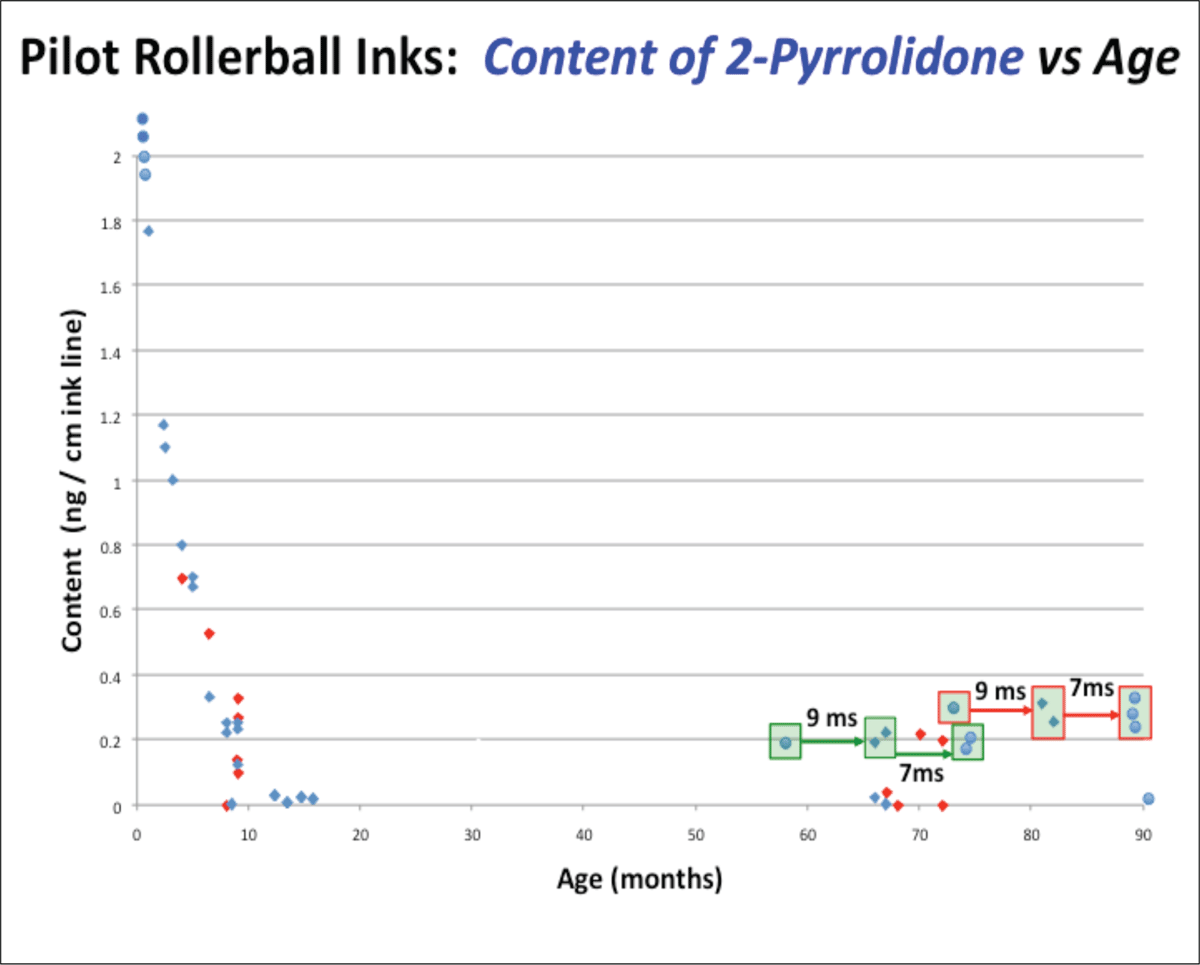
Figure 1
The content of the solvent 2-PD in the inks of known dated entries written with Pilot Precise V5 blue rollerball ink (data point depicted as blue diamonds and balls) and other Pilot rollerball inks of blue, black, red, and green colors (red diamonds). All the data points shown in this Figure were obtained when examining areas where two written lines completely overlapped (areas of intersection or retracing). The data points highlighted in green illustrate the processes of aging of two a priori old inks—ca. 5-year old (the data points in three boxes with green edges) and ca. 6-year old (the data points in three boxes with red edges) Pilot Precise V5 blue rollerball inks. The data shows the absence of further aging (further loss of the 2-PD) of these two old inks during the 16 months (first 9 months and then another 7 months) of their additional natural aging on paper.
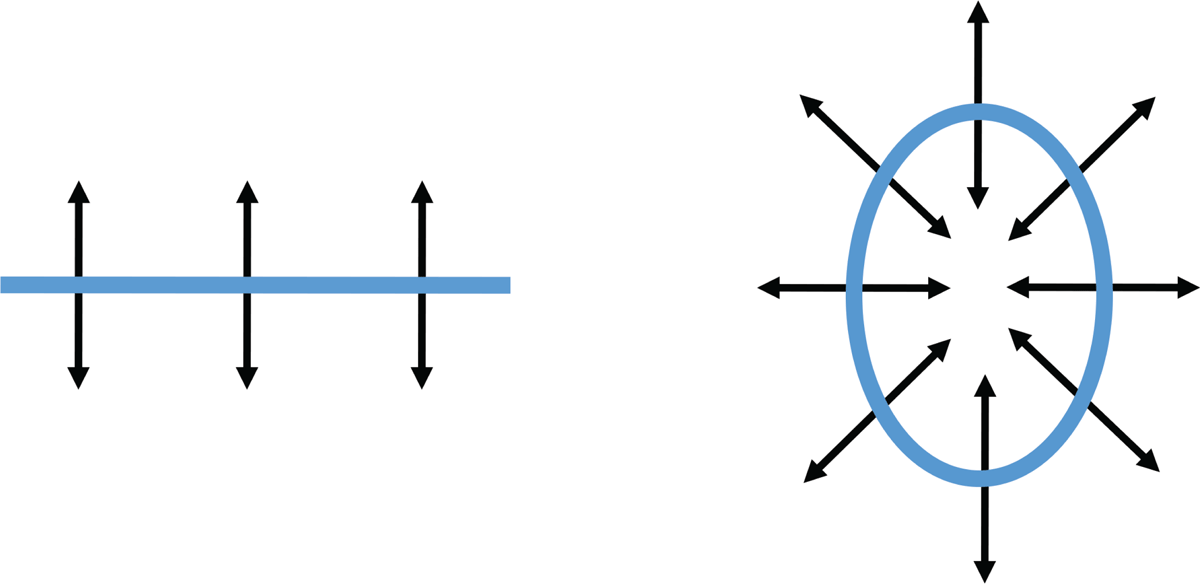
Figure 2
Solvent diffusion (shown with the arrows) away from a straight line (left) and diffusion inside and outside the loop of the letter “o” (right). (For more details see Figure 5 and the discussion concerning this figure in a paper by Weyermann et al. [28]).
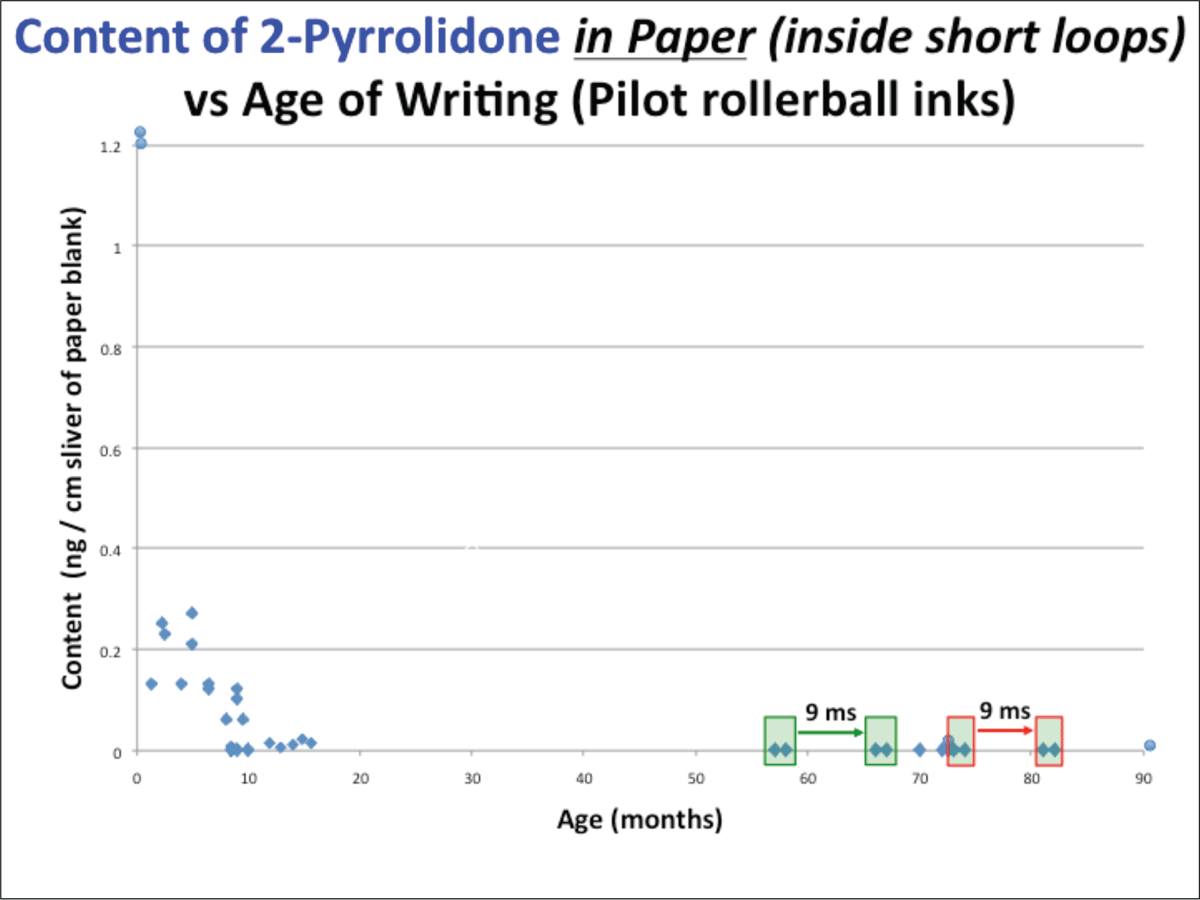
Figure 3
The content of the solvent 2-PD in the paper blank samples taken in close proximity to ink strokes (from the paper’s areas located inside written loops) of known dated entries written with Pilot rollerball inks of blue, black, red, and green colors (most of the data points, including those highlighted in green, relate to Pilot Precise V5 blue ink).
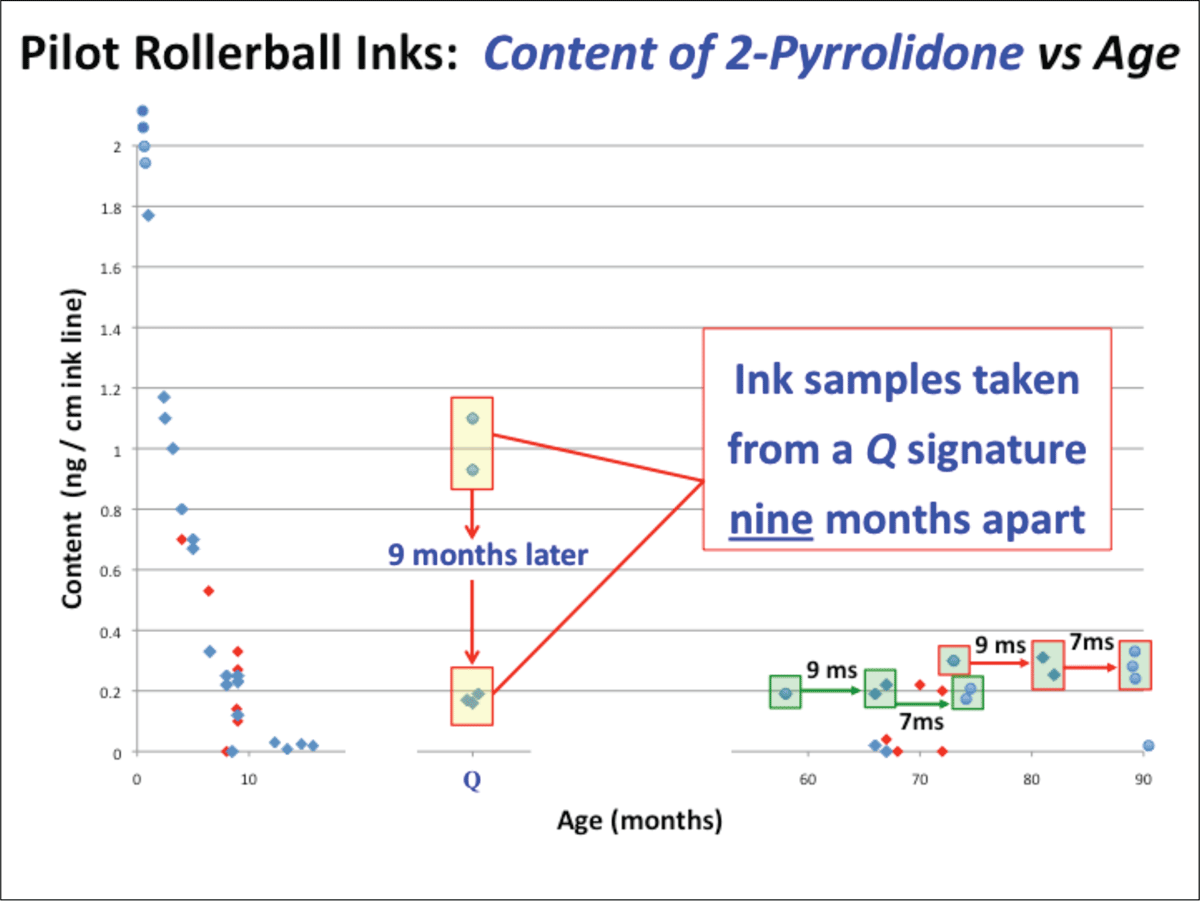
Figure 4
(A) The data points highlighted in yellow: the content of the solvent 2-PD in the ink of the Q signature was, in average, ca. 1.0 nanogram (ng) per 1-cm (about 0.4-inch) ink line in June 2015,17 and it decreased down to ca. 0.2 ng/cm ink line by March 2016. (B) The other data points on the graphic are the same ones shown in Figure 1 above. All the data points shown in this Figure were obtained when examining areas where two written lines completely overlapped (areas of intersection and retracing).
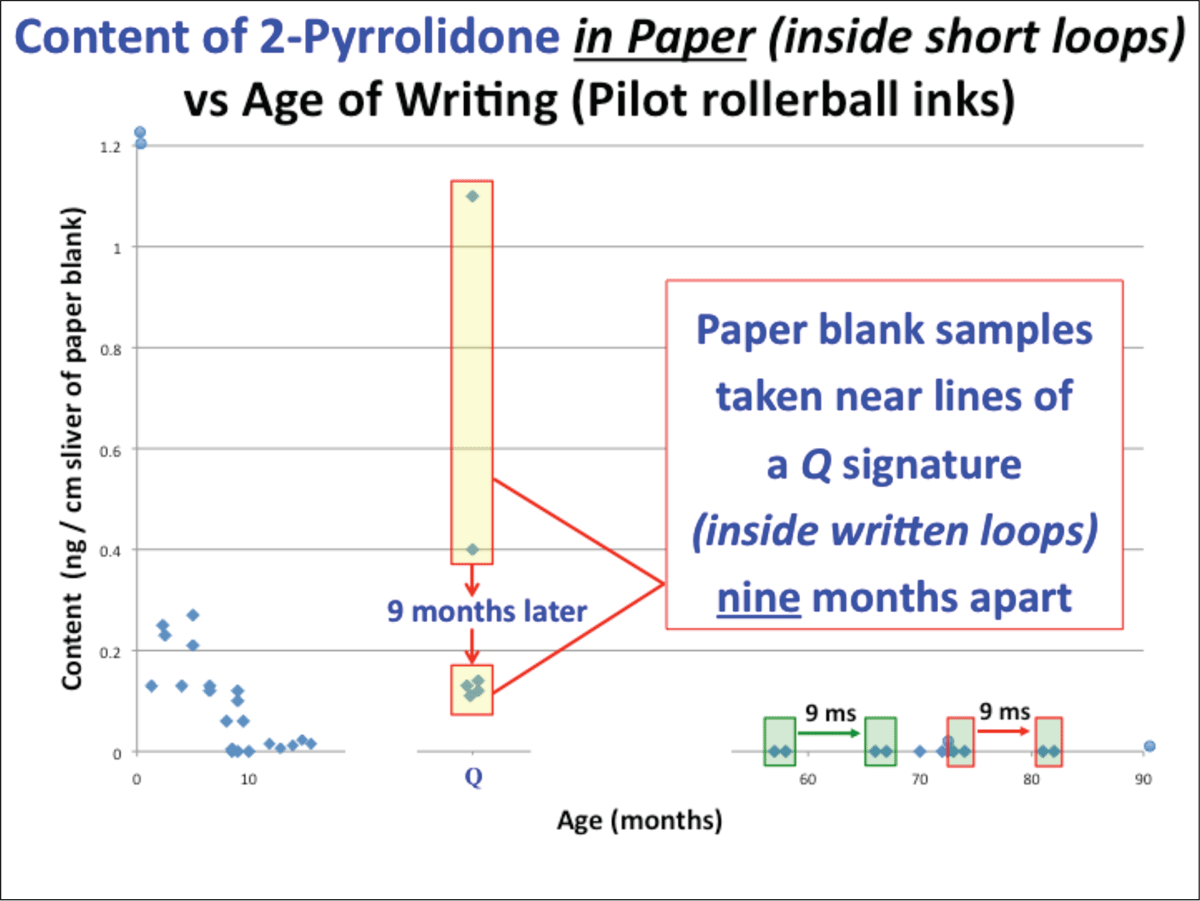
Figure 5
(A) The data points highlighted in yellow: the content of the solvent 2-PD in the paper blank samples taken in close proximity to ink strokes (from the paper’s areas located inside written loops) of the Q signature was, in average, ca. 0.75 ng per 1-cm sliver of paper in June 2015,19 and it decreased down to ca. 0.13 ng per 1-cm sliver of paper by March 2016. (B) The other data points on the graphic are the same ones shown in Figure 3 above.