
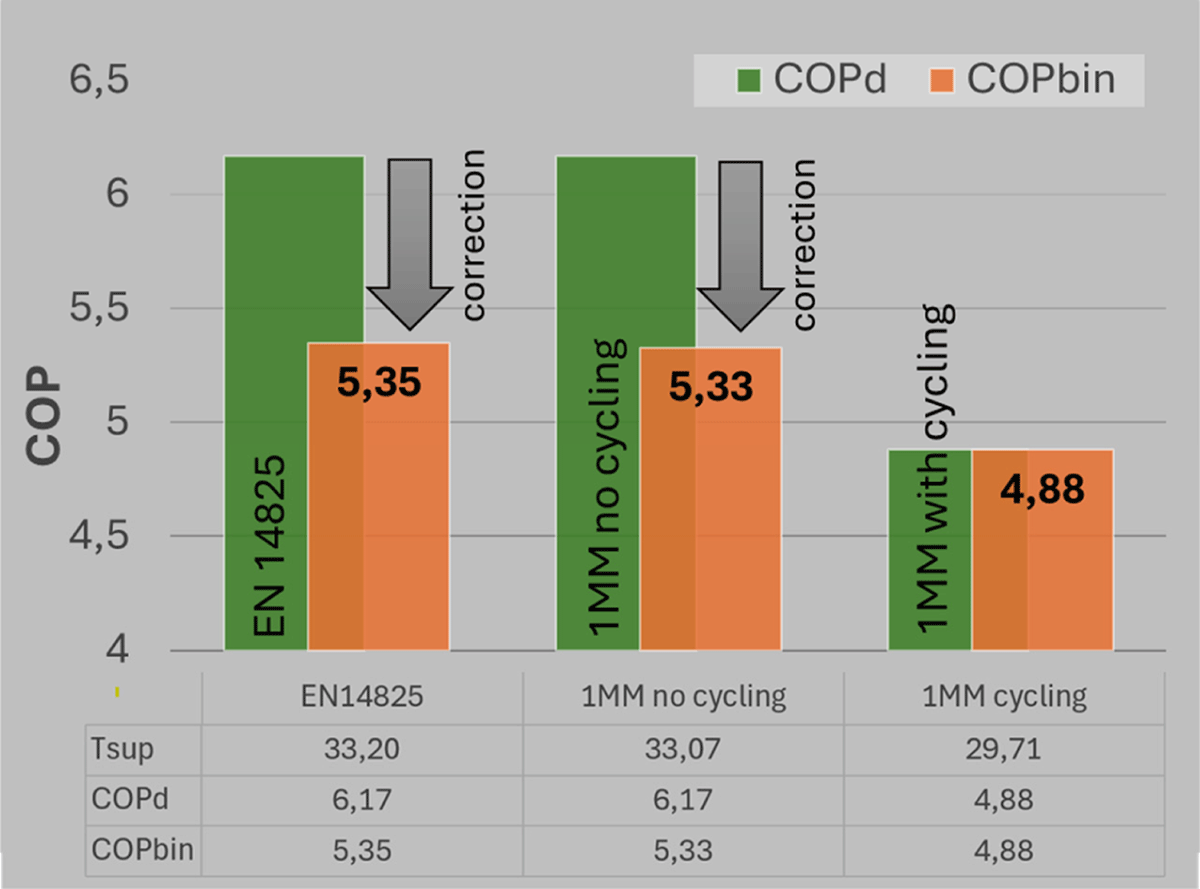
Figure 1
COPd and COPbin values for three different test methodologies measured at the same heat pump and at the same operating condition.
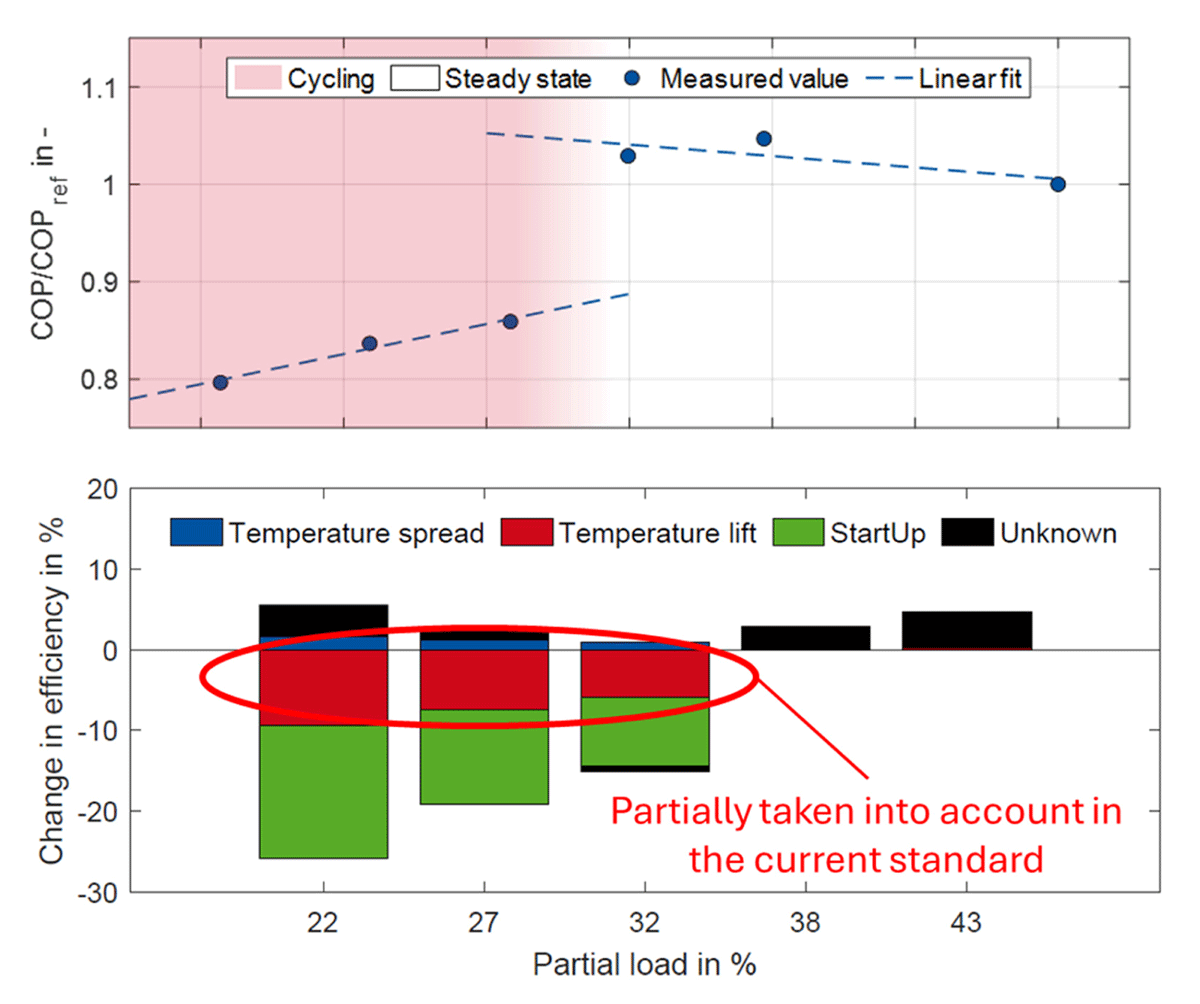
Figure 2
Measurement of COP at different part load conditions (above). Analysis of influencing factors on the efficiency during cycling operation at different part load conditions (below).
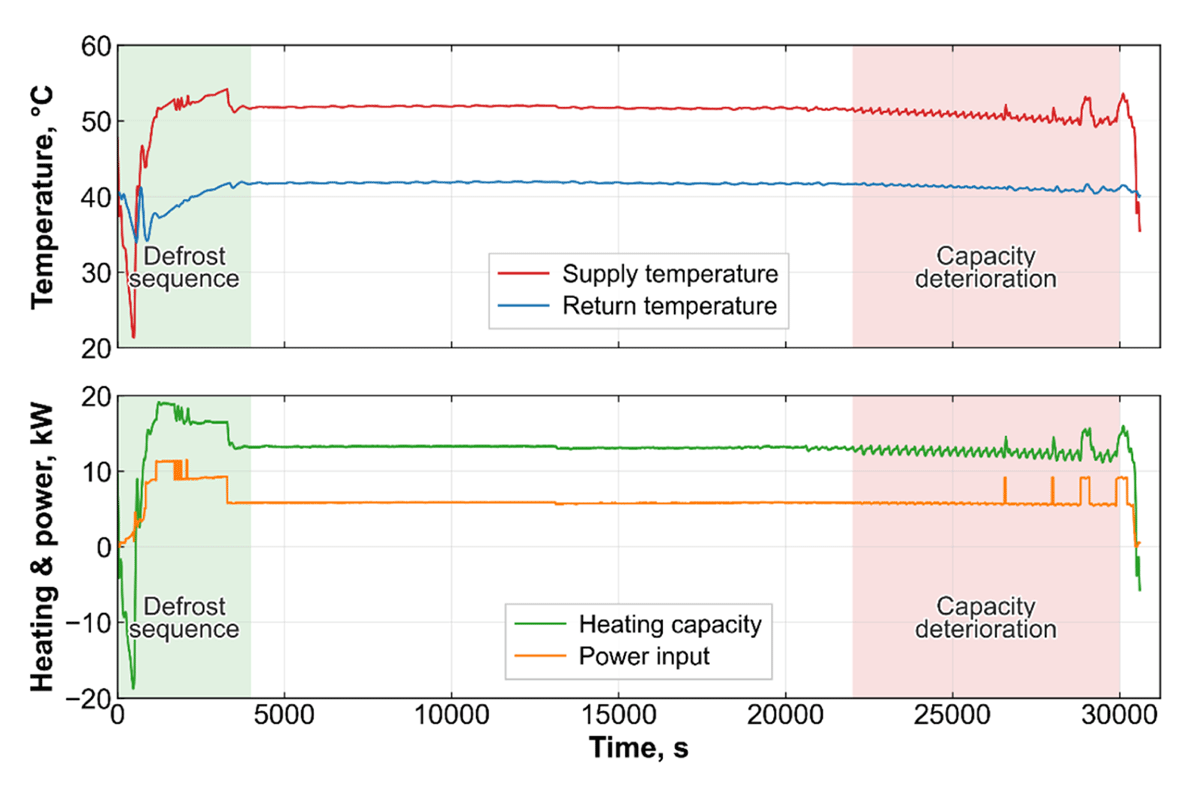
Figure 3
Laboratory measurement of an air-to-water heat pump at bivalent temperature (–7 °C).
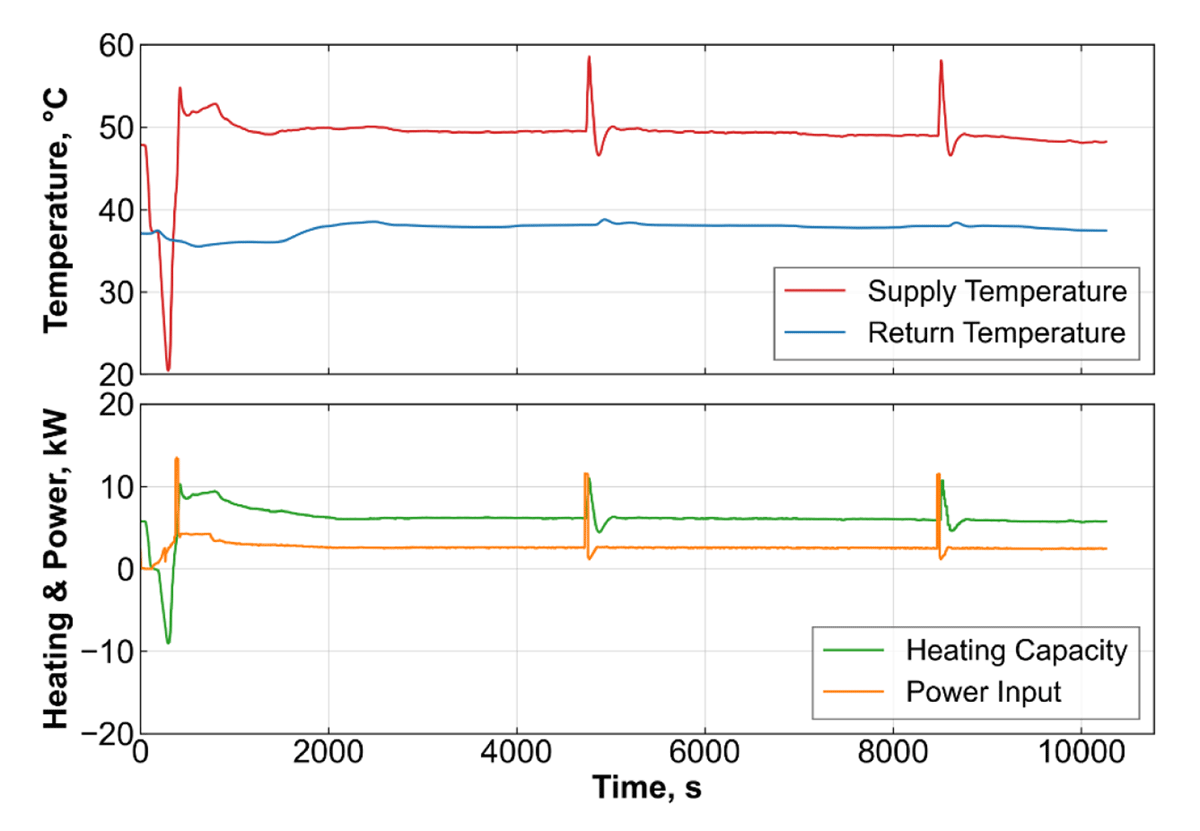
Figure 4
Laboratory measurement of an air-to-water heat pump at bivalent temperature (–7 °C). Spikes in electric power input originate from the electric back-up heater.
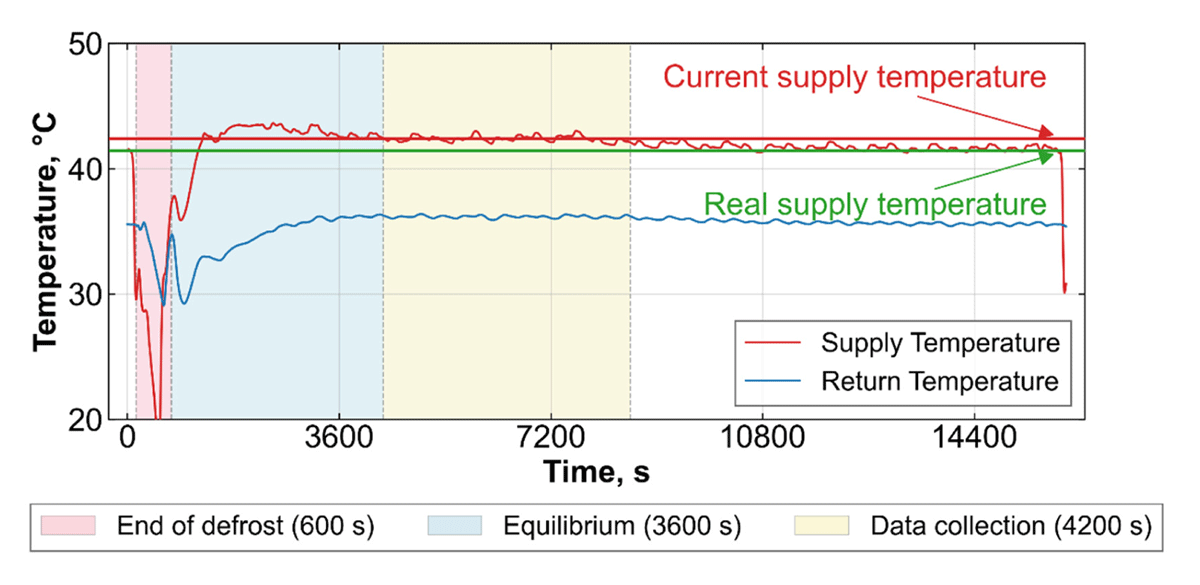
Figure 5
Measurement data of an air-to-water heat pump operating at part load B. Red line represents the supply temperature, blue line the return temperature.
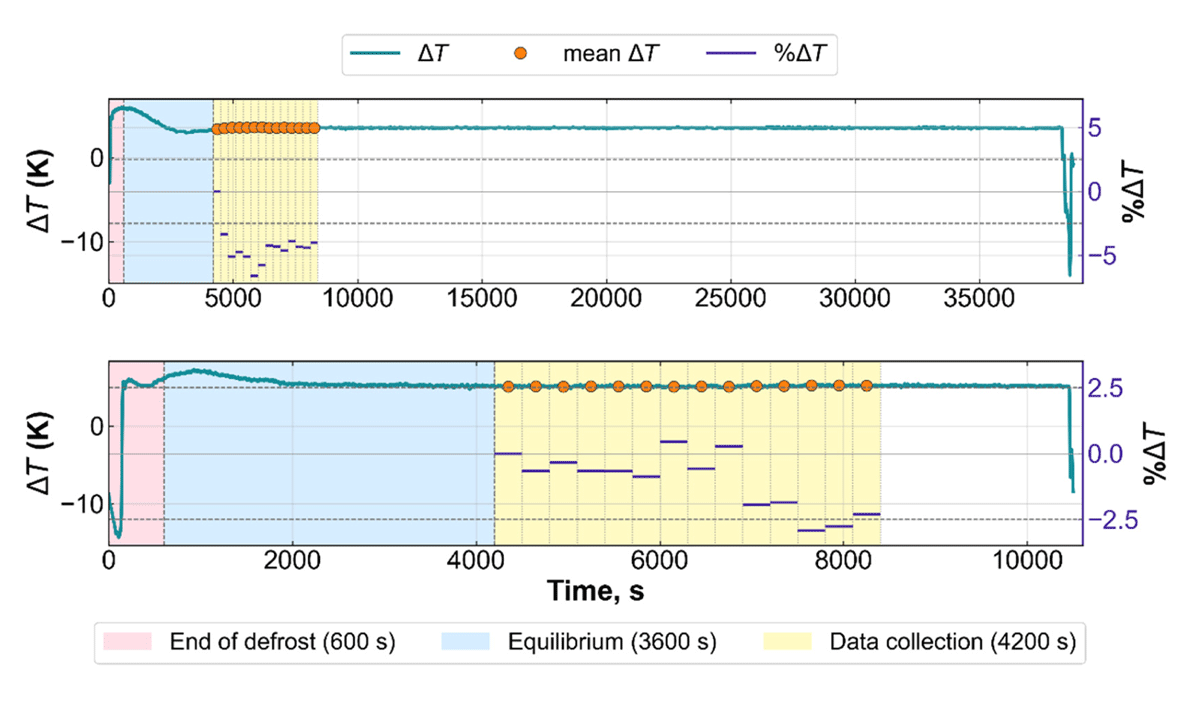
Figure 6
Temperature difference between the supply and return water flow (ΔT) for two different heat pumps at the same operating condition and the relative change of temperature difference with the first 5 min period of data acquisition period as the reference value.
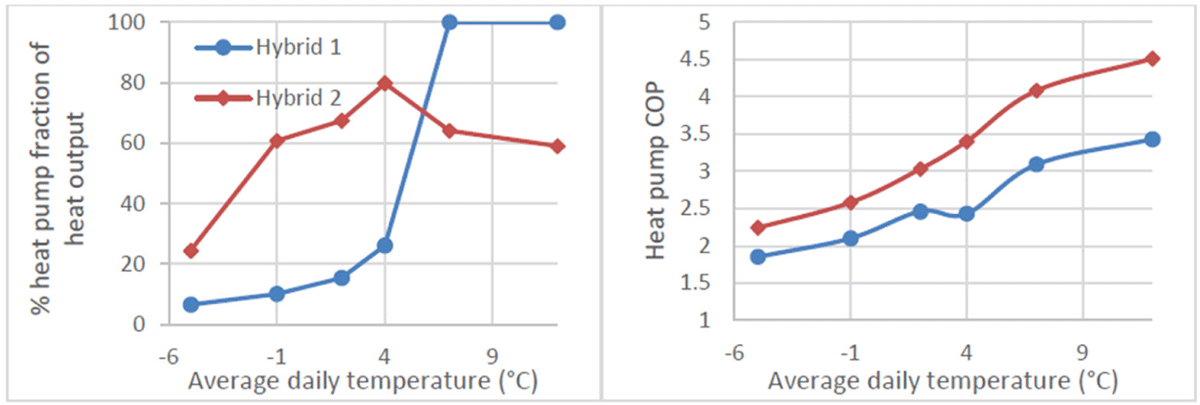
Figure 7
Results of a hardware-in-the-loop measurement of two different hybrid heat pumps according to the compensation method. Source: (Bulut et al., 2022).
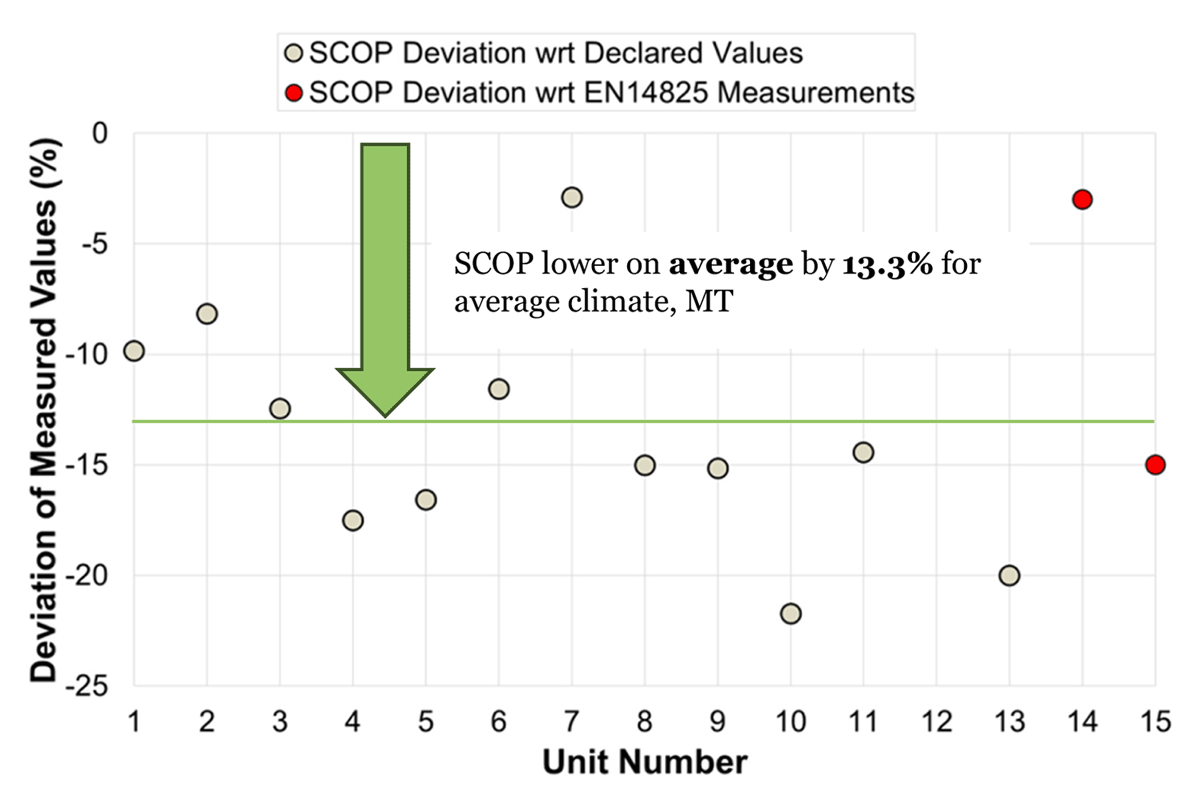
Figure 8
Comparison between measured SCOP values obtained from load-based measurement including a building model, and SCOP values from declarations by the manufacturers (grey dots) or measurements according to EN 14825 (red dots).
Table 1
Overview of issues criticised in the current methodology and proposed solutions by the Regulatory Committee and BAM. Issues without remarks are considered to be solved by the methodology.
| ISSUE WITH CURRENT METHODOLOGY | COMPENSATION METHOD IN THE LATEST DRAFT REGULATION | LOAD-BASED METHOD AS PROPOSED BY BAM |
|---|---|---|
| Native controls / fixed compressor speed | Both methodologies do not override native controls and the compressor speed is not fixed. | |
| Cycling operation | Cycling is optional for compensation method; if “modelled”, the current approach with Cd factor should be applied. If used, incentives through control correction factor F(1) = 0 (issue solved partially) | Not an issue, since cycling is explicitly always allowed. |
| Back-up heater | If the appliance is placed on the market with a back-up heater, it should be on and considered at all operating conditions throughout the test. If not, the same procedure as in the current methodology should apply. (issue solved partially) | Back-up heater included in the testing if integrated. If not, modelled assuming an ideal virtual back-up heater operating in real-time. |
| Consideration of defrost operation | The supply temperature for operating conditions including defrost and cycling should be obtained from the average value of the entire data acquisition period. Data acquisition times for different operation modes not defined. | The supply temperature for operating conditions including defrost should be obtained from the average value of the entire data acquisition period. Data acquisition times defined to capture at least three full defrost or on-off cycles but limited to a maximum test time. No minimum test time proposed. |
| Hybrid heat pump testing | Both separate and combined methods should be allowed. (issue not solved) | Only combined method allowed. Concept of a virtual boiler is being explored. |