
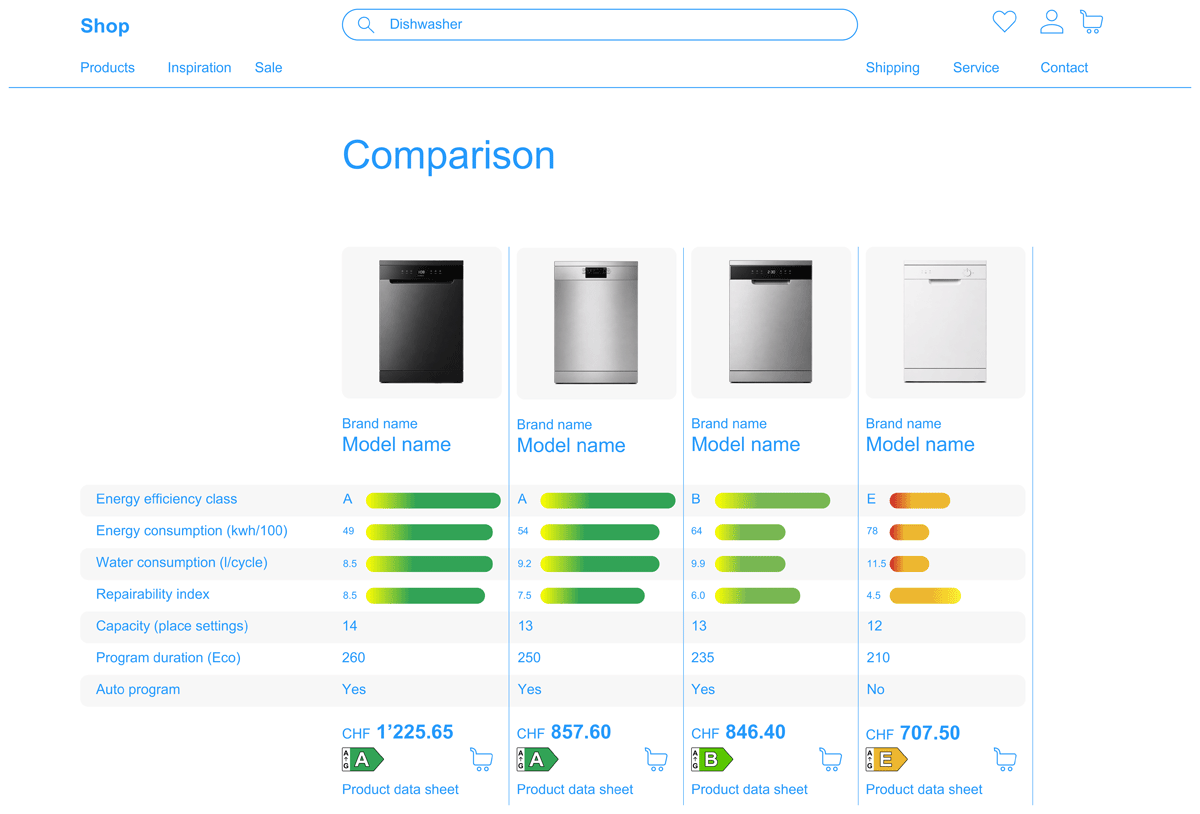
Figure 1
Example of a “green” UX pattern that positions energy and water consumption and repairability at the top of the list in the product comparison. Additionally, colour is used to reinforce the lower consumption and better repairability. This frames these attributes of the product as most relevant and visualizes the best-performing regarding products in a persuasive way.
Note: that this use of colour sits at the threshold between “green” and “dark” patterns. The project and the Circular Experience Library do not endorse dark patterns but seek to highlight that grey areas exist and that designers and retailers need to make conscious, context-specific choices when applying such patterns.
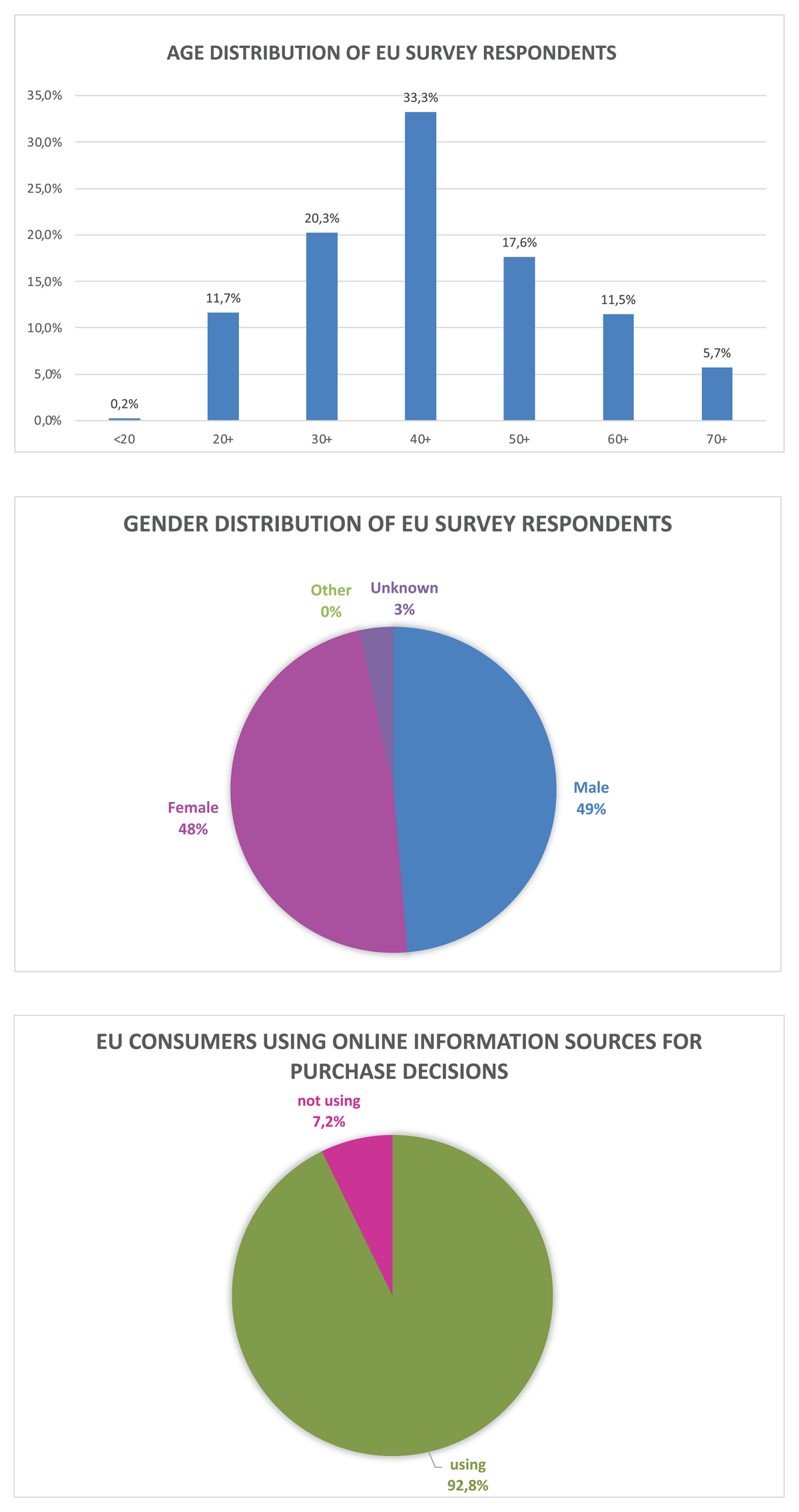
Figure 2
Overview of the type of consumers who provided the input into the survey by their age and gender and the share of those using online information sources for purchasing decisions.
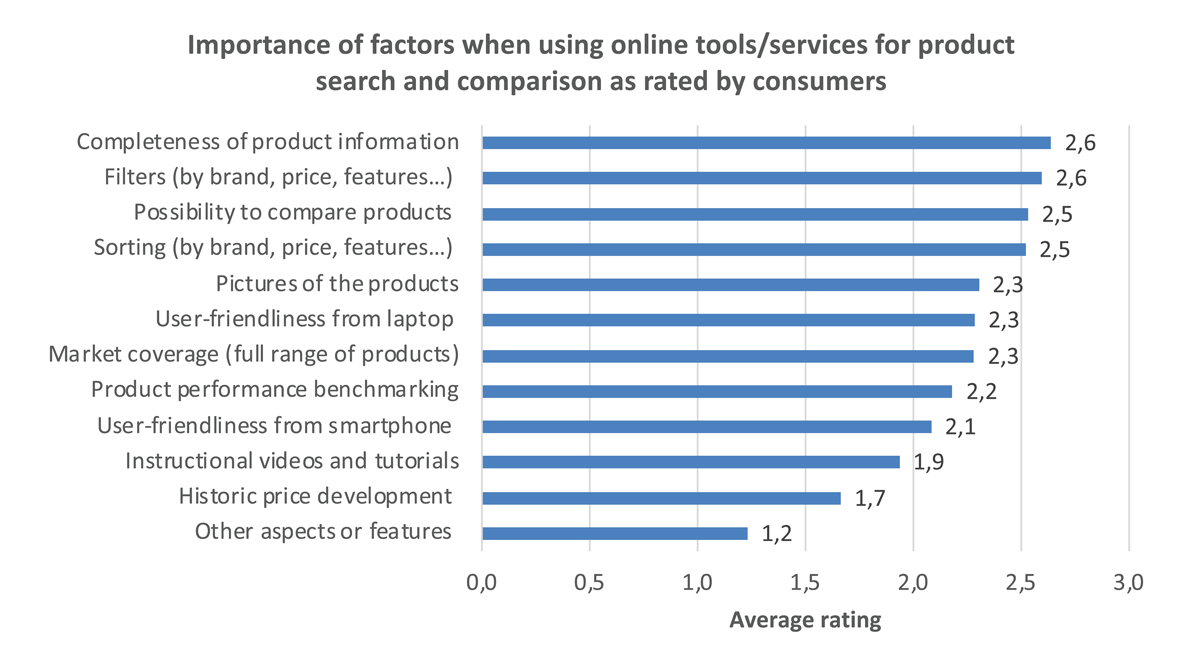
Figure 3
The most important aspects when using online tools for product search and comparison – aggregated consumer ratings.
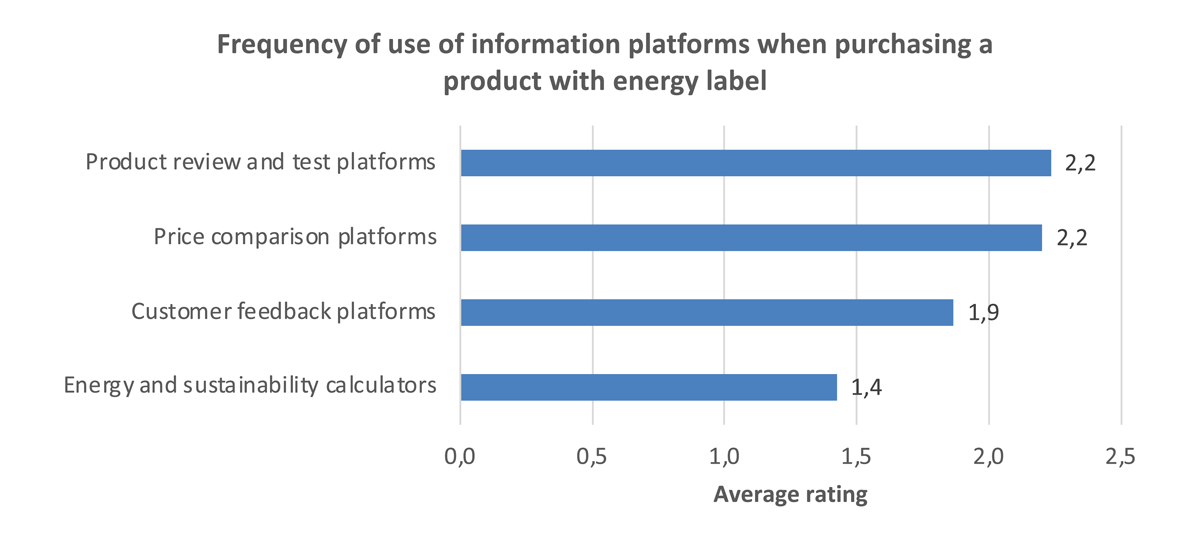
Figure 4
Frequency of use of information platforms as declared by consumers when purchasing products with energy labels – aggregated consumer ratings.
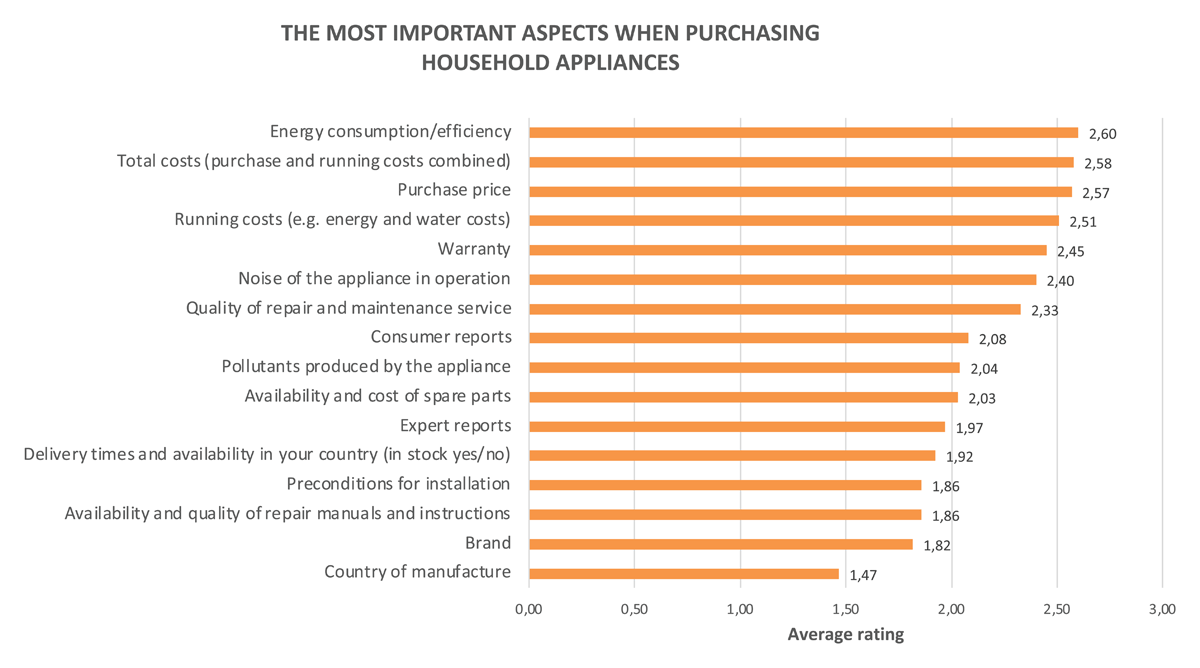
Figure 5
The most important aspects when purchasing household appliances – aggregated consumer ratings.
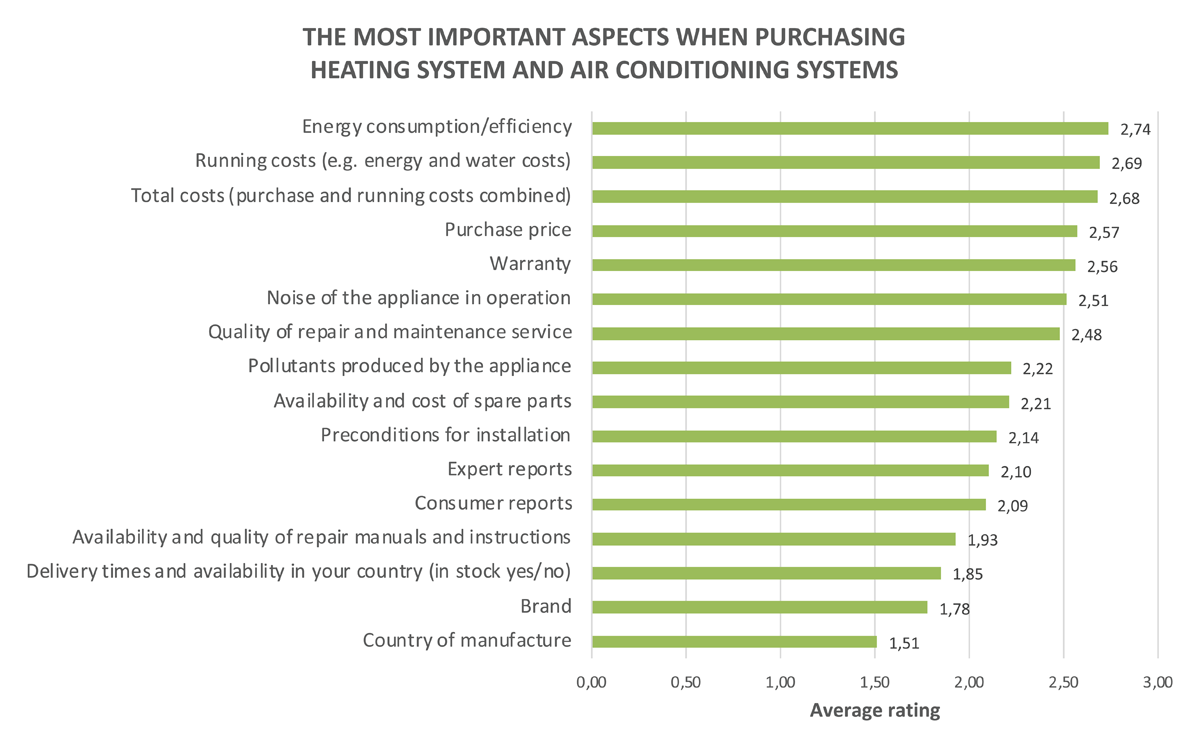
Figure 6
The most important aspects when purchasing a heating system and air conditioning – aggregated consumer ratings.
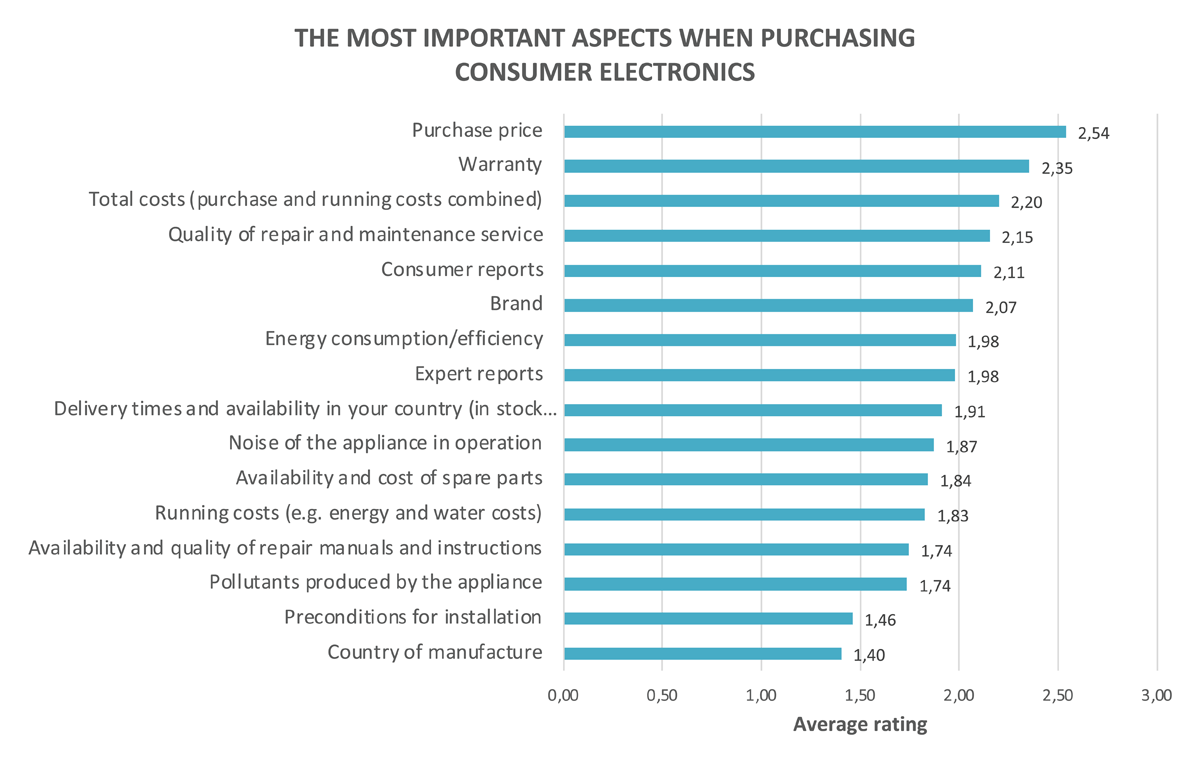
Figure 7
The most important aspects when purchasing consumer electronics – aggregated consumer ratings.
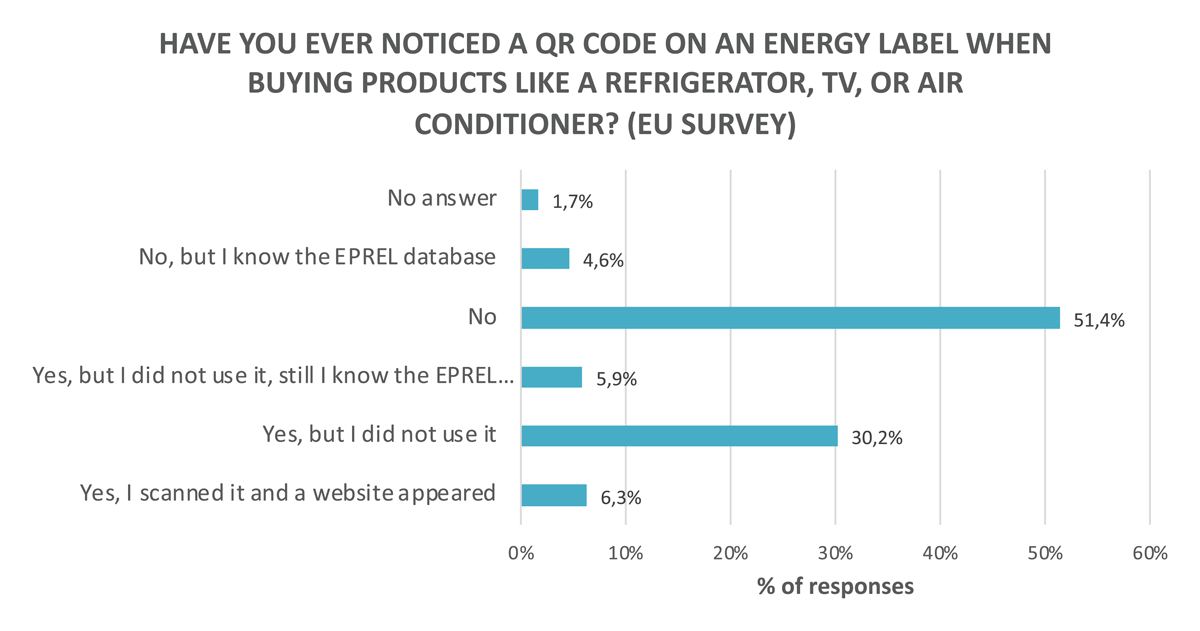
Figure 8
Awareness of consumers about the QR code on energy labels.
Table 1
Description of the customer journey with six phases used in the project.
| PHASE | EMOTION/MINDSET | TYPICAL QUOTES | PARALLEL ACTIVITIES | TRIGGER FOR NEXT STEP |
|---|---|---|---|---|
| 1. Recognise need | Uncertainty, perception of problem | ‘The old washing machine is making strange noises.’ | Discuss with partner, ask friends, check old bill | Defect or increased energy consumption, change in household |
| 2. Search for products | Curiosity, orientation | ‘I’ll see what models are available.’ | Research in online shops, tests, forums, energy advice | Interesting model found, clear criteria emerge |
| 3. Evaluate & compare | Trust grows, consideration | ‘We read reviews yesterday – the B model sounds good.’ | Read reviews, compare prices, check subsidy programmes | Favourite identified, price/availability is right |
| 4. Purchase | Determination, certainty | ‘I’ll take that model; it has good reviews and also saves electricity.’ | Check delivery conditions, gather final opinions | Sufficient trust, delivery time and price are right |
| 5. Post purchase | Focused, anticipation | ‘Ordered! Delivery is on Wednesday.’ | Tracking, plan installation, dispose of old appliance | Product delivered, commissioning successful |
| 6. Use | Satisfaction, confirmation | ‘Good thing we bought that – it runs quietly and uses less electricity.’ | First use, share experiences, monitor energy consumption | Positive user experience, energy savings visible |
Table 2
Overview of the 17 proposed patterns and where they act along the customer journey.
| NO. | PATTERN NAME | SHORT DESCRIPTION | JOURNEY |
|---|---|---|---|
| 1 | Pre-anchoring in search engine results | Introduce energy efficiency early via search engine advertisement by a trusted organisation | 1. Recognise need |
| 2 | Efficiency first sorting | Default product sorting by energy efficiency | 2. Search for products |
| 3 | A+B class toggle | Toggle to show only highly efficient products | |
| 4 | Total cost calculator | Make lifetime costs visible and comparable | |
| 5 | City-based challenge | Show personal impact as part of regional savings | |
| 6 | Framing | Design comparisons to favour efficient products, highlight subsidy information | 3. Evaluate & compare |
| 7 | Interactive energy label | Replace static labels with interactive widgets | |
| 8 | Lowest lifetime costs | Highlight products with lowest total lifetime costs | |
| 9 | Reinforce decision with info on savings and durability | Reminder of energy and cost savings, reinforce with extra repairability data | 4. Purchase |
| 10 | Hyperlocal social proof | Nudge via local peer comparisons | |
| 11 | Efficient alternatives | Suggest more efficient options in the cart | |
| 12 | Anti-licensing | Prevent rebound effects after sustainable purchases | 5. Post purchase |
| 13 | Validation | Confirm and validate the user’s good decision | |
| 14 | Onboarding in delivery-phase | Use waiting time to share energy-saving advice | |
| 15 | Sense of impact community | Communicate shared savings during product use | 6. Use |
| 16 | Capsule structure | Expand efficiency mindset across product categories | |
| 17 | Milestone communication | Visualise savings progress via milestones |
Table 3
Five AI-assisted personas were developed for evaluating the UX patterns.
 |  |  |  |  |  |
|---|---|---|---|---|---|
| Name | Clara Meier | Marc Schneider | Yasmine Keller | Hans Müller | Elena Gruber |
| Type | Committed Caretaker (15%) | Progressive Purchaser (19%) | Novelty Seeker (23%) | Casual Conscious Consumer (19%) | Savvy Economiser (24%) |
| Age | 52 | 34 | 24 | 45 | 62 |
| Place of residence | Small town in the canton of Aargau | City of Zurich | Lausanne | Suburb of Bern | Canton of St. Gallen (rural area) |
| Household | Married, two adult children (no longer living at home) | Single, shared flat with friends | Single, first job (marketing) | Married, two children (aged 10 and 14) | Widowed, lives alone |
| Income | Upper middle range (~CHF 110,000/year) | Good (~CHF 75,000/year) | Lower middle class (~CHF 50,000/year) | Average income (~CHF 65,000/year) | Fixed (AHV + pension fund) (~CHF 45,000/year) |
| Online purchasing behaviour | Regular but careful; prefers Swiss shops, sustainability of products is important | Frequent, tech-savvy, orders new products, interested in reviews, but not exclusively | Very active – loves new products, gadgets, impulse purchases, strongly influenced by social media | Regular, but primarily purpose-oriented (family, household), not necessarily technology-first | increasingly online (coronavirus trend), but rather price-sensitive, vouchers, comparisons |
| Attitude towards sustainability | Very high – “I want to live as ecologically as possible”, willing to pay more, returns only in exceptional cases | High – pays attention to environmental aspects, but not uncompromisingly; “if it fits and makes sense” | Moderately experimental – interested if trendy; but price and design often more decisive | Conscious, but not radical; “I try, but I don’t want to make every compromise” | Low to moderate – energy and cost savings are key, environmental aspects are secondary |
| Main hurdle | High acquisition costs, complex technology, uncertainty regarding manufacturer’s efficiency claims | Usability (installation, app control), data protection concerns, effort versus benefit | Price, fast-moving innovation (“what will be new next year?”), installation & compatibility | Price premium for top efficiency, lack of time for research, possible overload of information | Complexity of technology, financing, little interest in premium features |
Table 4
Sources given to the AI on the basis of which the five personas were developed.
|
|
|
|
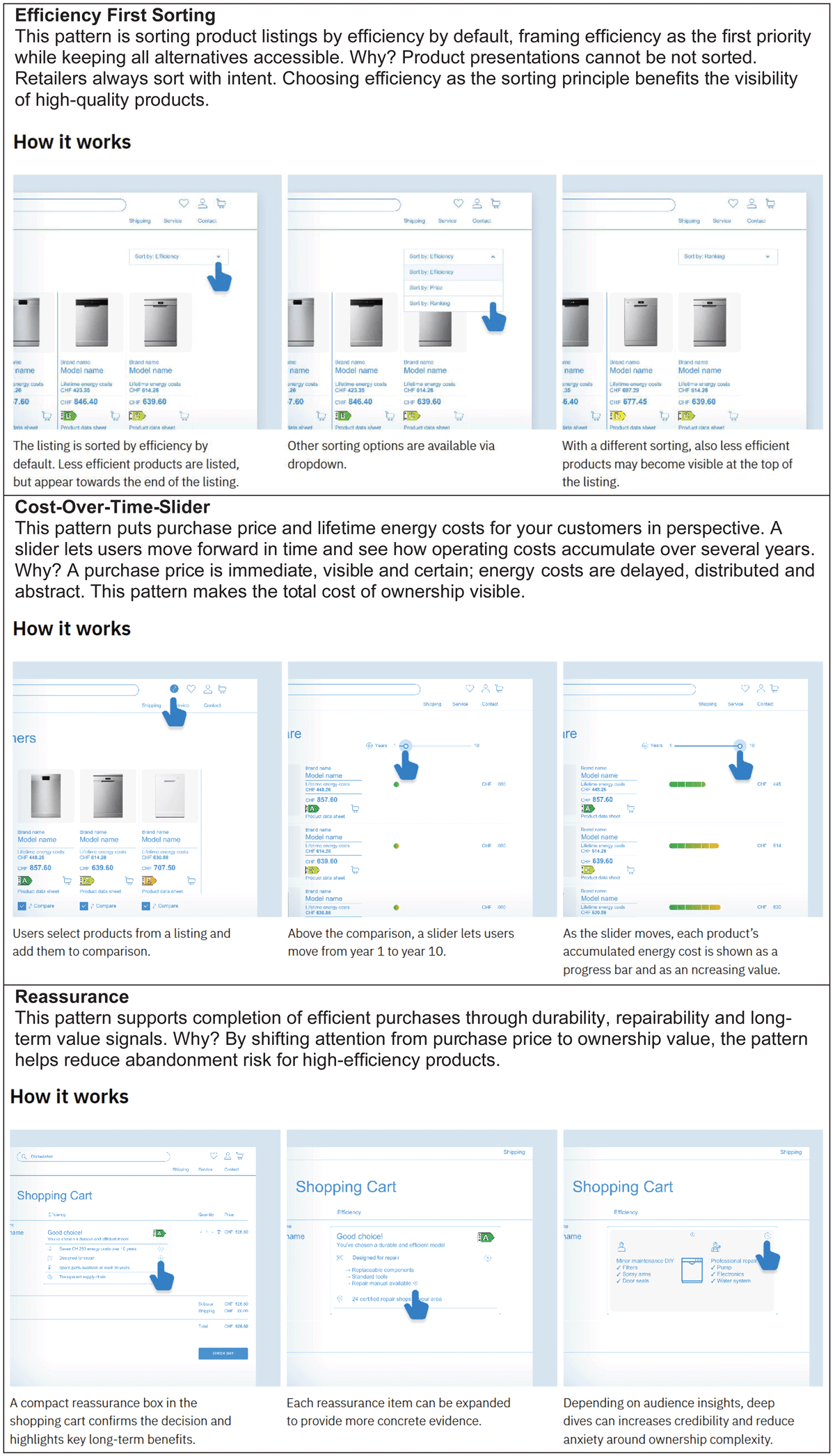
Figure 9
UX patterns to encourage energy-efficient behaviour are available for free use.
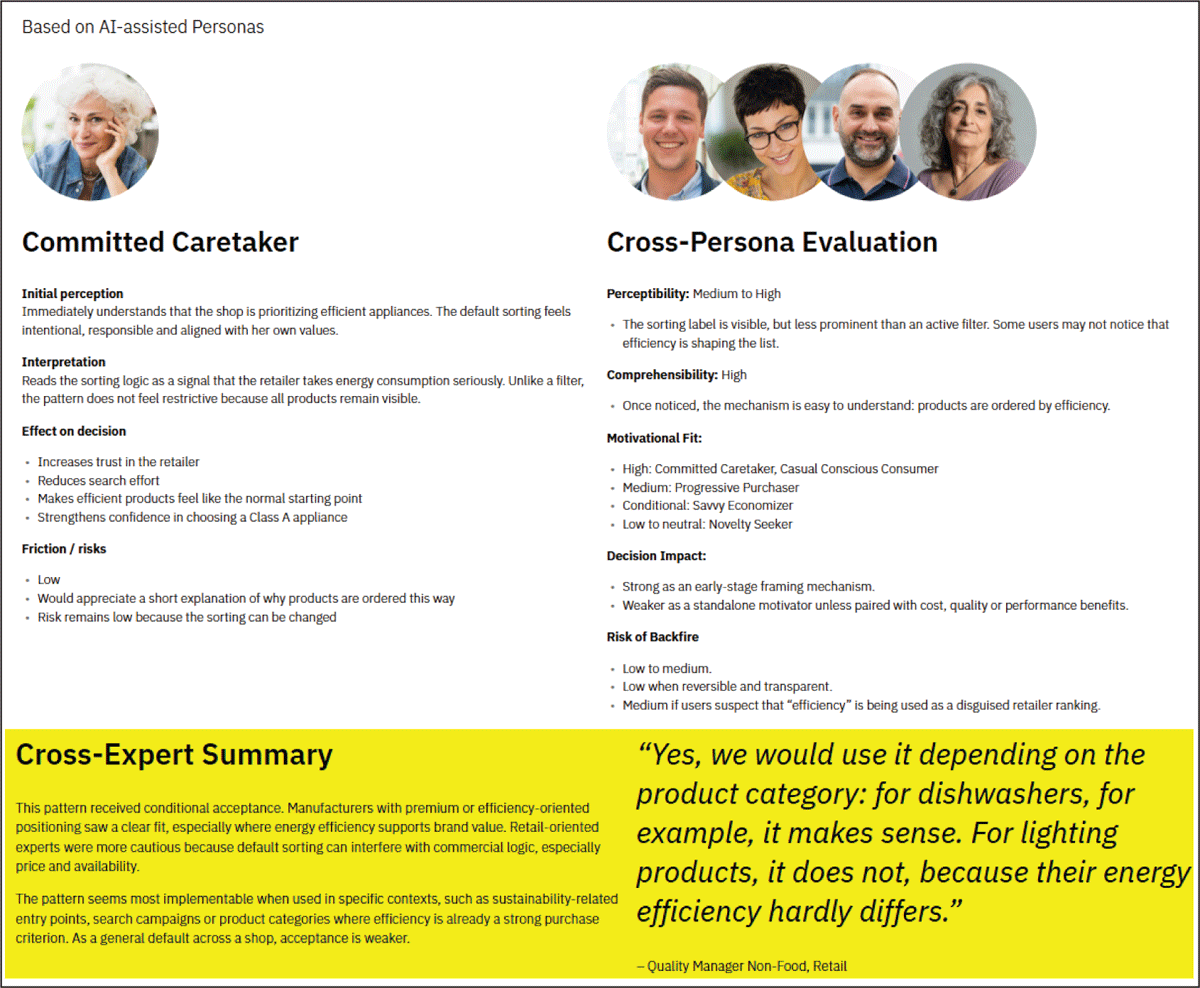
Figure 10
Insights from AI-assisted personas and interviews with potential implementers provide guidance to UX designers. Here, the example for the pattern Efficiency First Sorting is shown.
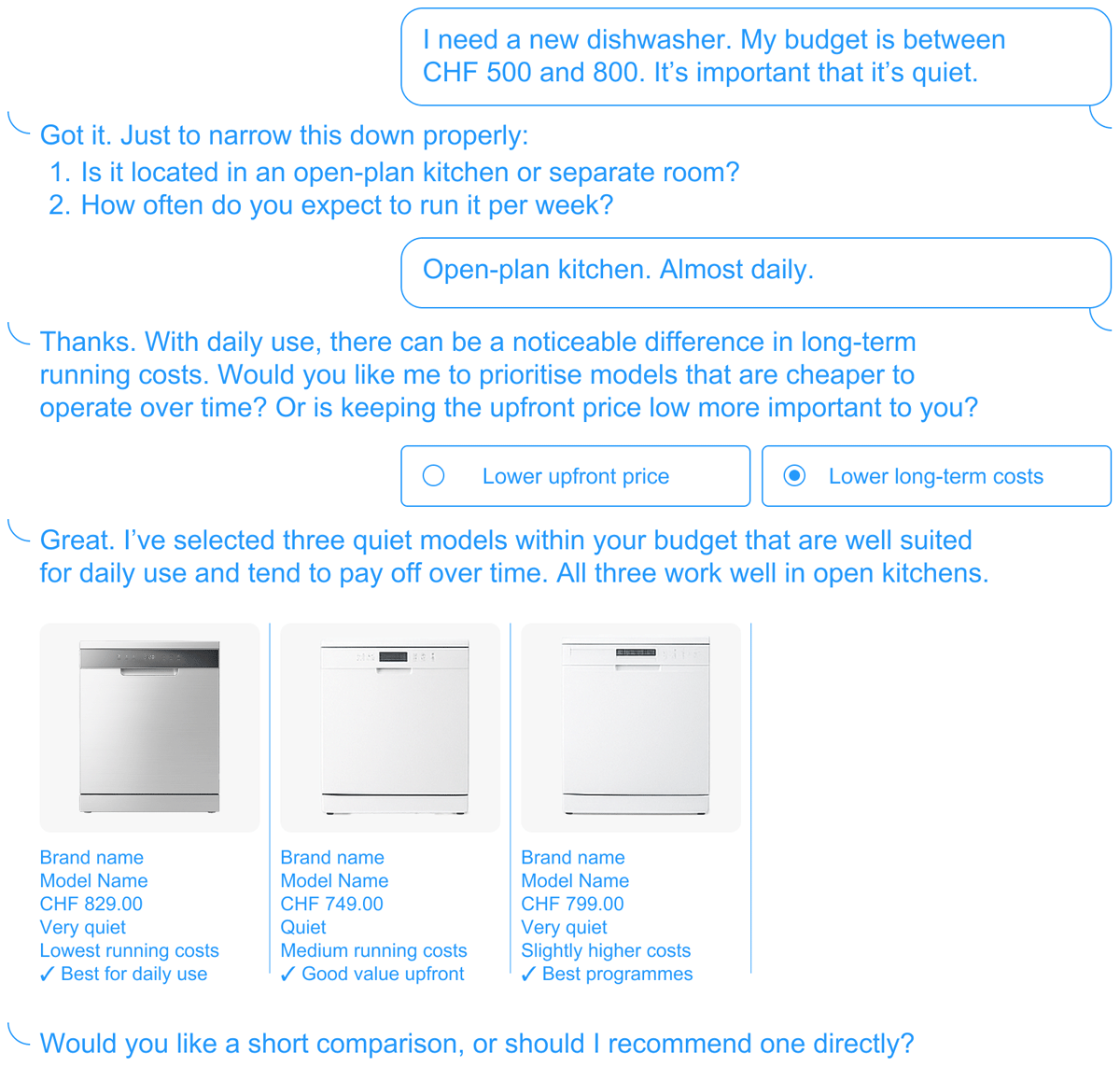
Figure 11
Fictional chat with an AI agent lending support for finding the right product.