
Introduction
The construction sector accounts for about 40% of global energy-related CO2 emissions, driven by raw material extraction, material production, and construction activities (Rashid et al, 2024). Concrete is the most widely used material, and cement production alone contributes roughly 5–8% of global anthropogenic GHG emissions due to its large-scale demand (Baskar and Nivethitha, 2026). Increasing urbanization intensifies the need for low-carbon construction materials. The International Energy Agency highlights that buildings are critical for climate action, yet the sector is not on track for net zero by 2050. Achieving full decarbonisation presents major challenges, requiring bold approaches to reduce and offset emissions (IEA, 2026).
Biochar has been identified by the IPCC as a scalable negative-emission technology capable of capturing CO2 at up to twice its weight (Zhang et al, 2022). Biochar is a charcoal-like substance, produced by heating organic biomass in the absence of oxygen (pyrolysis) to make it carbon-rich and chemically stable. Integrating biochar into construction materials can reduce cement use while providing a carbon-sequestering pathway (Iqbal et al, 2025). The use of biochar at low dosages in cementitious composites has been found to improve mechanical properties like compressive strength and flexural strength (Praneeth et al. 2021). As well as exhibiting insulating properties, improving air quality, being able to soak up moisture and protect from radiation, biochar may allow buildings to be turned into carbon sinks. Moreover, converting biomass waste—which would otherwise release biogenic CO2 and diminish longterm carbon sink capacity—into biochar reduces landfill use and yields a valuable constructiongrade material (Sadrolodabaee et al. 2025a).
Despite its proven advantages, biochar has seen limited uptake in real-world construction. While many studies show promising laboratory results for biochar-enhanced concrete, translating these findings into practical applications remains challenging (Iqbal et al, 2025). A disconnect also persists between engineering performance, thermal performance, and stakeholder acceptance of biochar-concrete in buildings. Greater awareness is needed of biochar’s commercial potential, revenue opportunities, carbon-credit value, and environmental benefits for the construction sector.
This study is a part of a UK Research and Innovation-funded project to develop a decision support framework for adopting biochar cementitious composites. In addition to assessing the physical, mechanical, and chemical properties of these materials, dynamic modelling is carried out to evaluate their thermal performance in buildings. The project integrates stakeholder collaboration to produce qualitative and quantitative indicators that capture the holistic value of biochar in low-carbon construction. Ongoing engagement with building practitioners ensures that the research outcomes are practical, applicable, and aligned with industry needs rather than purely academic.
The paper presents the results of the initial investigation and sets out how interdisciplinary methods can deliver meaningful insight into technology performance and a holistic understanding of biochar’s challenges and opportunities in buildings.
Literature Review
Biochar in civil Engineering and construction materials
Many forms of biochar use and application are emerging, including its use as a building material. Studies concluded that wood-based biochar is highlighted as the most used biomass type, excelling in CO2 capture and sequestration and in improving material properties, surpassing other biochar types (Song et al, 2023).
The key factors that modify the performance of construction materials include particle size, biomass type, surface morphology, dosage, chemical composition, and porous nature (Maljaee et al, 2021). Optimising biochar performance in cementitious materials requires understanding how feedstock type and production conditions influence its properties. Biochar is produced from diverse biomass sources such as sewage sludge, miscanthus, rice husks, corn stalks, coffee grounds, peanut shells, waste wood, and poultry waste (Singh et al, 2026, Song et al, 2023). Biochar properties and functionality vary significantly depending on the feedstock and thermochemical conversion methods (e.g., slow and fast pyrolysis, microwave processes, hydrothermal carbonisation). When used as a partial substitute for cement or sand, biochar alters both fresh and hardened material behaviour (Sadrolodabaee et al. 2025a). Its high porosity, surface area, and water-absorption capacity reduce workability, with minor effects at low dosages (≤3 wt%) but substantial flowability loss at higher contents due to increased water demand. Biochar’s influence extends to mechanical properties such as compressive strength, flexural strength, and tensile strength (Danish et al, 2021). Optimally dosed biochar (1–5 wt%) can enhance mechanical performance through multiple mechanisms, including densification of the interfacial transition zone (ITZ), internal curing, and crack-bridging effects (Iqbal et al. 2025; Senadheera et al. 2023).
Previous studies have primarily investigated low dosages of biochar in mortar/concrete intended for structural applications (Iqbal et al. 2025; Senadheera et al. 2023). In these cases, finely ground biochar particles typically replace a small portion of Portland cement (PC), serving as fillers and nucleation sites for hydration. This leads to microstructural densification and improved early-age strength, usually at replacement levels of ≤5% (Danish et al. 2021; Legan et al. 2022). At higher dosages (>5 wt%), biochar generally increases porosity and reduces mechanical strength (Senadheera et al. 2023), making it unsuitable for structural concrete where compressive strength is the primary performance criterion.
To advance low-carbon concrete and maximize biochar’s carbon sequestration potential, higher dosages are desirable, as they enable greater long-term storage of atmospheric carbon within the material (Ahmed et al. 2025). Consequently, biochar incorporation at elevated levels is more appropriate for non-structural or semi-load-bearing applications, where reductions in strength are acceptable if offset by sustainability benefits.
Most existing research employs biochar as a fine powder replacing cement, which has a limited impact on other serviceability properties (e.g., thermal or acoustic performance). In contrast, using biochar in larger pelletized or granular form—as a partial replacement for aggregates—may offer greater advantages for functional properties such as reduced thermal conductivity or improved sound absorption.
To address these gaps, the present study investigates the incorporation of high amounts of biochar as a partial replacement for aggregates in concrete mixtures specifically designed for non-structural applications. The overarching goal of the project is to develop sustainable vibro-compressed concrete building blocks with enhanced environmental performance. This paper contribution focuses on initial experimental results from incorporating biochar as an aggregate substitute in concrete mixtures produced via conventional casting methods, providing foundational insights into material behaviour before scaling to vibro-compression processing.
Thermal properties of biochar and its impact on building energy performance
The thermal insulation properties of concrete and cementitious composites are enhanced when biochar is incorporated into the mixture. This improvement is attributed to the porous structure of biochar (Figure 1), which creates air pockets that act as insulation (Osman et al. 2023). The thermal conductivity of concrete, while dependent on a range of parameters, is usually between 0.62 and 3.3 W/(m·K) for standard concrete, or 0.4–1.89 W/(m·K) for concrete with lightweight materials (Cuthbertson et al. 2019). Studies have shown that biochar has a heat flux of approximately 50 kW/m2 and, therefore, can act as a heat shield. Tests on biochar-cement composites have highlighted a thermal conductivity value of 0.58 W/(m·K) (Zhang et al. 2025). Cuthbertson et al. (2019) measured the thermal conductivity of concrete with biochar mixed in at different percentages. They showed that concrete with 1 and 2 wt% biochar had the lowest thermal conductivity values. Their results also highlighted the effect of biochar dispersion in the concrete on inconsistencies in variations of thermal conductivity values across concrete samples with different biochar percentages. Other studies on biochar-concrete composites found that the thermal conductivity of the material decreased by up to 26% when biochar was added to the mortar (Praneeth et al. 2021; Lin et al. 2023; Singhal, 2023). When compared to ordinary mortar, the addition of 1%, 3%, 5%, and 10% biochar can reduce the thermal conductivity by 16%, 22%, 30%, and 39% (Song et al. 2023).
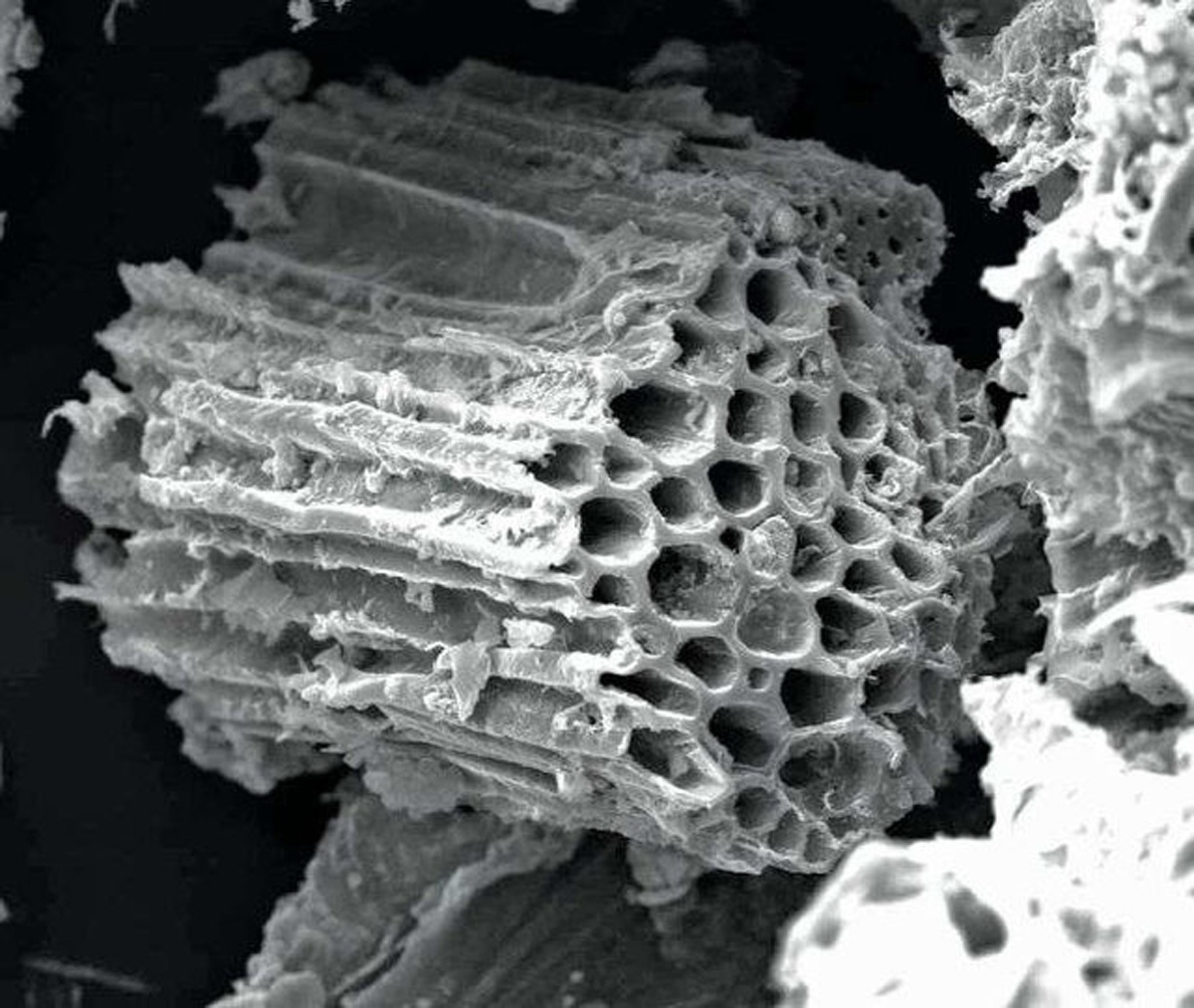
Figure 1
The porous structure of biochar (Gąsior and Tic, 2017).
The improved thermal insulation performance of cementitious materials due to incorporating biochar is important for reducing the energy consumption of buildings for heating or cooling purposes. The thermal conductivity of biochar-embedded materials is therefore a fundamental parameter for quantifying the value of biochar in buildings.
However, in addition to direct thermal transmittance, there is also the need to consider thermal mass properties; that is, the ability of a material to absorb, store, and re-release heat into a space. Whilst the biochar material may not, in itself, cause significant changes in thermal mass of the building envelope, the choices made on materials to allow for biochar to be incorporated will be an important factor. For example, the difference in thermal mass between a timber frame and concrete construction (where the latter offers more obvious solutions for biochar integration) is significant. A more heavyweight structure generally produces a less variable heating load (with the building material providing a “lag” in thermal response to external variations in temperature) which, as well as impacting operational energy and carbon calculations, can change how a heating system should be controlled in terms of diurnal patterns. Dynamic building simulation (as opposed to more steady-state models) allows for an opportunity to quantify such an effect and include it in an overall comparative analysis between buildings with and without biochar-integrated construction.
Social, behavioural, and market barriers to adoption
Despite the technical promise of biochar-based construction materials, adoption in mainstream building practice remains limited (Zhang et al. 2022). This gap reflects not only material-performance uncertainty but also institutional, behavioural, and market-related constraints. The construction sector is structurally risk-averse, with innovation uptake strongly shaped by liability exposure, regulatory compliance, insurance requirements, and long-term durability assurances (Lizarralde et al. 2015). Even when laboratory studies demonstrate improvements in compressive strength, durability, or thermal conductivity (Akinyemi & Adesina 2020; Barbhuiya et al. 2024), practitioners typically require extensive field validation before specifying unfamiliar materials. Research has shown that translating laboratory success into real-world implementation remains a persistent challenge for biochar-integrated concrete (Roychand et al. 2025). The uncertainties related to long-term performance, fire resistance, and regulatory acceptance, as building material approval pathways are often conservative and standards-driven (Sirico et al. 2022; Zhang et al. 2022).
Sustainable construction choices are not determined solely by performance metrics but by how stakeholders interpret risk, responsibility, and value within their professional roles (Lau & Chen 2022). Engineers may prioritise structural reliability and compliance; contractors may focus on workability and cost; regulators on safety certification; and sustainability professionals on carbon reduction and lifecycle impact (Lizarralde et al. 2015). This plurality of evaluation logics can result in divergent assessments of what constitutes “acceptable” performance. Literature findings indicate that awareness of biochar’s carbon sequestration capacity and broader environmental benefits remains uneven, despite growing evidence of its carbon-negative potential (Wang et al. 2023; Yang et al. 2021). Such knowledge gaps can weaken confidence in adoption, particularly when sustainability claims are not supported by clear lifecycle data and standardised benchmarks (Luo et al. 2023). Adoption willingness is therefore shaped by perception, trust, and confidence-building mechanisms as much as by technical evidence (Luo et al. 2023; Latawiec et al. 2017).
Without clear regulatory frameworks, early adopters may bear disproportionate financial and reputational risk. Importantly, the value proposition of biochar-integrated materials spans carbon sequestration, thermal performance improvements, and waste valorisation (Wang et al. 2023; Yang et al. 2021; Luo et al. 2023), yet these benefits may not accrue directly to those responsible for procurement decisions. This misalignment between cost-bearing actors and benefit-receiving actors can inhibit market diffusion. Addressing these social, behavioural, and market barriers therefore requires not only technical optimisation but also structured multi-stakeholder engagement, an approach reflected in the interdisciplinary framework adopted in this study.
Methodology
This study adopts an interdisciplinary methodology that integrates social science, civil engineering, and building modelling to investigate both end-user needs and technical performance requirements for biochar use in buildings. The approach recognises that successful adoption of biochar-based materials depends not only on engineering feasibility, but also on stakeholder acceptance, regulatory expectations, and whole-building energy and carbon impacts.
The methodology is iterative and co-creative as shown in Figure 2, involving continuous exchanges between stakeholders, laboratory experiments, and modelling activities to ensure that technical development remains aligned with real-world conditions and industry priorities. This is work in progress, and this study presents only the tasks completed to date for Phase 1.
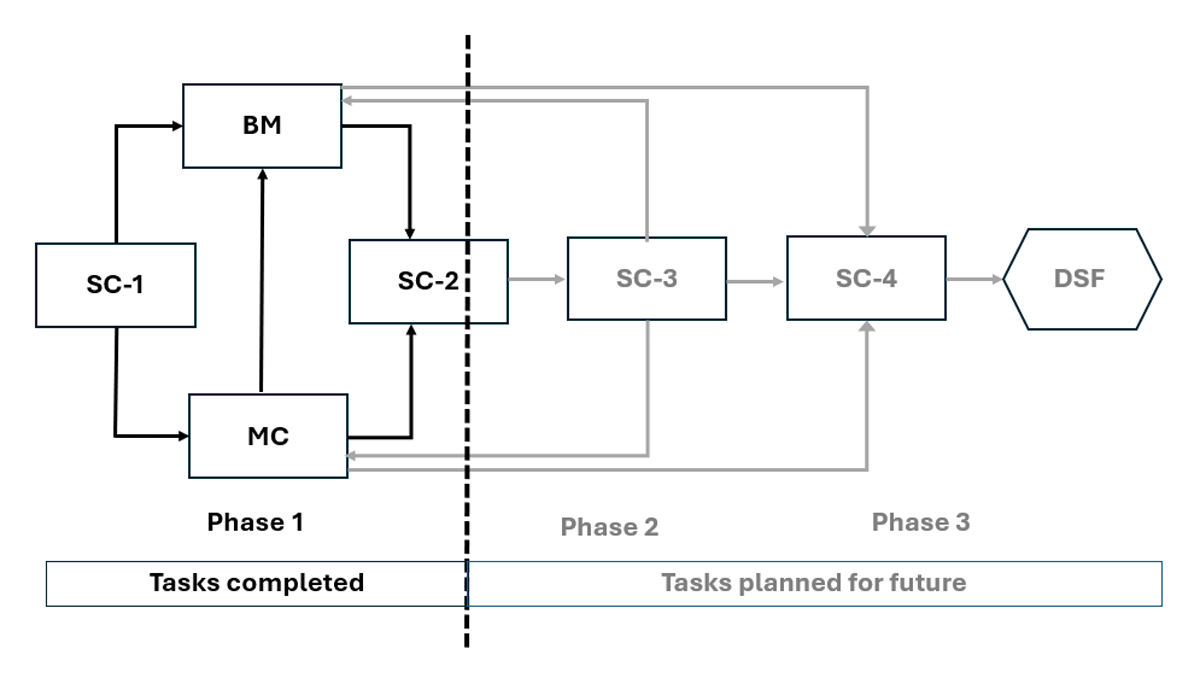
Figure 2
Research methodology flow chart. (Note. BM: building modelling; MC: material characterization; SC: stakeholder consultation; DSF: decision support framework).
Social science component: stakeholder engagement and co-creation
Phase 1 began with a stakeholder workshop held at Heriot-Watt University (HWU), Edinburgh, where 22 experts from industry and academia were brought together to explore the role of biochar in sustainable construction. Most participants were from Scotland, with some from Northern Ireland and England. Full ethical approval was obtained from the HWU Ethics Committee, and informed consent was obtained from all participants involved in the study.
The research instrument chosen was focus groups, where group dynamics generated a broader range of information and ideas than individual responses gathered privately (Stewart et al. 2007). Discussions were structured into three focus groups:
Biochar sources for construction
Product development
Product implementation
The discussions were conducted in two sessions. The first session focused on understanding stakeholders’ existing knowledge to inform project direction and gauge the current situation. The second session aimed to identify what stakeholders would like to know to guide the project methodology. The consultation outputs directly informed material selection and identified priorities for material characterisation (MC) and building modelling (BM), ensuring subsequent technical work was grounded in stakeholder expectations and practical feasibility.
Civil engineering component: material development and characterisation
The experimental work focused on developing a biochar-cementitious composite where stakeholder insights (SC-1) on preferred feedstocks, pyrolysis temperatures, and residence times—parameters known to influence material quality—formed the key inputs (Figure 2).
Experimental design considerations included:
aggregate versus cement replacement pathways
required mechanical, physical, and thermal performance criteria
biochar dosages and particle-size distributions
volumetric or weight-based replacement methods
curing conditions
Biochar was initially incorporated as a volumetric replacement of natural aggregates at levels of 0%, 10%, and 50%. CEM I 52.5 N Portland cement (PC) was used as the binder. Natural fine aggregates (fA, ≤4 mm) and coarse aggregates (cA, 4–6.3 mm) were combined in a proportion of 80% fA and 20% cA by mass. The detailed mix proportions denoted as 0BC, 10BC, and 50BC are presented in Table 1.
Table 1
Mix proportions and nomenclature of the mixes.
| SERIES BASED ON BC/AGG (VT.%) | TOTAL SOLID COMPOSITION (VT.%) | TOTAL SOLID COMPOSITION (WT.%) | PC/NA (WT.%) | BC/NA (WT.%) | W/PC (WT.) | SP/PC (WT.%) |
|---|---|---|---|---|---|---|
| 0BC | 30PC + 70NA | 20PC + 80NA | 24 | 0 | 0.45 | 1.0% |
| 10BC | 30PC + 63NA + 7BC | 21PC + 77NA + 2BC | 27 | 2 | 0.50 | 1.5% |
| 50BC | 30PC + 35NA + 35BC | 29PC + 60NA + 11BC | 48 | 18 | 0.60 | 3.0% |
[i] Note: vt.%: per volume; wt.%: per mass; Agg: aggregates; NA: natural aggregates; W: water; BC: biochar; SP: superplasticizer; PC: Portland cement.
For each mix, PC and natural aggregates were first dry mixed for 2 minutes. The biochar (used in its as-received dry condition) was then added and mixed for an additional 1 minute. Subsequently, 80% of the mixing water was introduced and blended for 2 minutes. Finally, the remaining water combined with the superplasticizer (SP) was added, and the mixture was mixed at high speed for a further 2 minutes to ensure homogeneity.
The fresh mixtures were cast into prismatic moulds (40 × 40 × 160 mm3) and compacted using vibration. After 24 hours, the specimens were demoulded, sealed with cling film to prevent moisture loss, and air cured. Mechanical and physical characterisation was performed after 28 days, including three-point flexural strength testing (3 specimens) followed by compressive strength testing on the broken halves (4 broken halves), according to BS EN 196-1 and an established formula (Sadrolodabaee et al. 2021). The two remaining broken halves were used for measuring the water absorption of the specimens based on the method described elsewhere (Sadrolodabaee et al. 2025b). The bulk density was measured at 28-day curing. Thermal conductivity was determined for selected mixes using a TEMPOS thermal properties analyser. Material characterisation (MC) generated quantitative evidence on the structural and thermal behaviour of biochar composites (Table 1), providing essential input for building modelling (BM).
Building modelling component: whole-building performance simulation
The building modelling process involved: defining biochar application options, developing baseline models for the selected building types, and simulating annual energy consumption and carbon emissions using IES Virtual Environment (IESVE 2025).
SC1 informed the selection of building archetypes and likely application areas for biochar within the building envelope. The development of the detailed case-study models required thermal and physical data from the MC as input (Figure 2). This enabled the assessment of how biochar-integrated materials influenced operational performance at the whole-building scale.
Four simulation scenarios were considered. In the first scenario, envelope thermal properties were taken from Talbott (1995). The second scenario modelled the same buildings using a concrete external wall (0BC), with thermal properties derived from the 0BC block sample. The third and fourth scenarios modelled external walls constructed using 10BC and 50BC biochar-concrete blocks, respectively, employing their measured thermal properties.
The metrics used in the analysis were taken from the newly launched UK Net Zero Carbon Building Standard (UKNZCBS). The UKNZCBS is an industry-developed framework that provides a unified definition for “net zero carbon aligned buildings” in the UK, with the aim of accelerating the construction and use of genuinely lower carbon buildings (UKNZCBS 2024). This standard takes into account operational carbon emissions and energy use intensity by defining a pass/fail metric for energy use intensity (EUI) and an annual operational carbon emissions intensity metric, which is a mandatory reporting metric but does not have a specific pass/fail limit. EUI is a measure of the total energy a building consumes over a year, normalised by its gross internal floor area (GIA) (for residential buildings) in kWh/m2year. The annual operational carbon emissions intensity (kgCO2e/m2year) is the primary metric for operational carbon in the UKNZCBS. The measured energy consumption over a 12-month period is multiplied by specific carbon emission factors to calculate this metric.
These metrics were calculated for each case study building in four different simulation scenarios: 1) timber external walls, 2) 0BC concrete external walls, 3) 10BC biochar concrete external walls, and 4) 50BC biochar concrete external walls. The operational EUI and carbon emissions were then calculated for each case study building for each scenario and compared against each other in order to highlight the impacts of using biochar-composite instead of concrete or timber as external wall material.
Integration and Iterative co-creation
The methodology follows an iterative co-creation cycle in which:
stakeholder insights guide experimental design and building modelling,
material and modelling outcomes are presented back to stakeholders for evaluation.
In parallel with MC and BM work, a second stakeholder consultation (SC2) is being prepared with material experts and consultants. Indicators identified in Phase 1, together with evidence from the literature, technical data, and expert review, are being used to develop questionnaires that capture measurable performance expectations and adoption-related concerns (Sourani & Sohail, 2015; Taghipoorreyneh & De Run, 2020; Hallowell & Gambatese, 2010). The outcomes of SC2 will be shared with practitioners via a workshop (SC3) and fed back into MC and BM to optimise the mixes.
Results and discussion
Social science results
The stakeholder feedback showed that 60% of respondents identified them as biochar advocates, 15% as influencers, and 10% as users. 10% were unfamiliar with biochar, and one participant considered themselves an opponent. Half of the audience were unsure about the carbon-saving potential of incorporating biochar into building materials, underscoring the need for initiatives like this project to raise awareness of biochar’s potential as a carbon sink among industry experts.
Stakeholders emphasised the need for feedstock criteria aligned with end-product performance requirements and greater consistency in testing and standards, which currently differ across organisations. Participants noted the value of learning from international practice and scaling models, alongside improved national coordination and information-sharing. They stressed the importance of clearly defining end-user requirements, establishing a government-supported framework for biochar-based building materials, and exploring vertically integrated systems that address waste streams while producing targeted biochar products.
Participants highlighted that despite growing interest, evidence is still required on optimal mix designs, compatibility with conventional materials, impacts on mechanical performance, sustainability benefits and compliance with fire and leaching regulations. Standardised formulations and design guidelines are lacking, and the feasibility of integrating biochar into high-volume construction materials remains uncertain. Life-cycle assessments and real-world performance metrics were identified as critical for validating environmental claims.
Stakeholder input was instrumental in defining key parameters for MC and BM, as outlined below:
Shortlisting of biomass feedstocks for experimentation: Stakeholder consultations highlighted agricultural and forestry residues as the most suitable feedstocks for producing biochar intended for construction applications.
Selection of buildings/materials for biochar integration: Participants identified new residential and non-residential buildings as having the highest potential, compared with existing buildings. Concrete was identified as the preferred material for biochar incorporation, due to its extensive global use and substantial potential for carbon footprint reduction.
Selection of building elements for biochar-cementitious composites: Stakeholders emphasized that non-structural elements represent the most suitable initial applications for biochar–concrete composites, where mechanical demands are lower, and sustainability benefits can be prioritized. Thus, a concrete building block is selected as the final application of this work.
Standard performance requirements: Stakeholders highlighted structural strength and durability, thermal conductivity, fire resistance, hygroscopic behaviour, environmental sustainability, and cost/workability. Biochar was recognised as having potential to enhance several of these aspects—particularly insulation, fire performance, and embodied-carbon reduction—owing to its porous structure, low thermal conductivity, and carbon-sequestration capacity.
Civil engineering results
Based on the stakeholder feedback, the primary feedstocks chosen were miscanthus, wood pellets and wood sawdust for concrete production. For each feedstock, biochar was produced at two pyrolysis temperatures (500 °C and 550 °C) to assess the influence of temperature on concrete properties and performance. This paper contribution summarizes the initial results obtained from miscanthus-derived biochar produced at 500 °C with a residence time of 20 minutes. The elemental composition of the miscanthus biochar (BC), determined by CHNS/O analysis, showed 63.18% carbon—within the typical range of 60–90% reported in the literature (Gupta et al. 2020) along with 3.16% hydrogen, 0.67% nitrogen, 0.88% sulphur, and 10.21% oxygen.
The mechanical and physical test results are summarised in Table 2. The compressive strength (CS) of the mixes decreased with increasing biochar dosage, with the CS of the reference mix reducing by 61% when 50% biochar was incorporated. A concurrent reduction in bulk density and an increase in water absorption (WA of 50BC mix increased more than 130% compared to the reference mix) were also observed. These trends indicate that biochar incorporation led to higher porosity within the mortar, which explains the pronounced decline in CS. Similar trends of reduction in CS and density, as well as an increase in water absorption by adding lightweight components, were already reported in the literature (Sadrolodabaee et al. 2025b), Sadrolodabaee et al. 2023), Farina et al. 2022). Nonetheless, the CS of the mix with 50% biochar (BC) was satisfactory for non-structural concrete applications oriented to the non-load bearing blocks (7 ≥ MPa) (Chen et al. 2022).
Table 2
Results of the mechanical and physical tests after 28 days.
| SAMPLES | CS (MPa) | FS (MPa) | BULK DENSITY (g/cm3) | WA (%) | THERMAL CONDUCTIVITY (W/mK) |
|---|---|---|---|---|---|
| 0BC | 65.2 (±1.05) | 9.0 (±0.60) | 2.32 | 6.82 | 1.53 |
| 10BC | 56.4 (±1.30) | 8.4 (±0.58) | 2.24 | 7.63 | 1.27 |
| 50BC | 25.3 (±0.55) | 5.5 (±0.16) | 1.94 | 15.88 | 0.76 |
[i] Note: CS: compressive strength; FS: flexural strength; WA: water absorption.
Flexural strength (FS) was likewise reduced with increasing biochar content, although to a lesser extent than CS, showing a reduction of approximately 39% at 50% biochar replacement. This suggests that biochar incorporation has a more significant influence on compressive behaviour than on flexural performance. However, the FS of more than 3.5 MPa could be used for non-structural applications like concrete paving flags (Sadrolodabaee et al. 2025b; UNE-EN 1339 2004).
The initial thermal conductivity measurements were carried out on oBC, 10BC, and 50 BC samples. The results of these measurements are reported in Table 2 and implemented in the case study models. As it can be observed in these results, the incorporation of biochar reduced the thermal conductivity of the concrete samples, consistent with findings for other bio-based inclusions—such as natural fibres—in cementitious composites (Mahpour et al., 2023; Sadrolodabaee et al. 2022). Notably, the 50% biochar incorporation could reduce the thermal conductivity by 50% compared to the reference sample.
Building modelling results
Based on stakeholder input, residential buildings and non-structural wall systems were selected. The measured thermal conductivity values of the concrete samples were applied to the IES-VE models.
For this study, five residential buildings have been selected as case studies (Figure 3). Four of those are affordable housing developments, and one is a detached house, all located in Findhorn Ecovillage, Scotland. Case study 1 consists of two blocks comprising four one-bedroom flats and four studio flats. Case study 2 includes two studio apartments and four one-bedroom flats. Case study 3 is a detached house. Case studies 4 and 5 include four and five two-bedroom flats, respectively and are currently under construction. These case studies were chosen due to their use of sustainable materials in their current construction, which provides a suitable comparison benchmark for biochar-concrete.
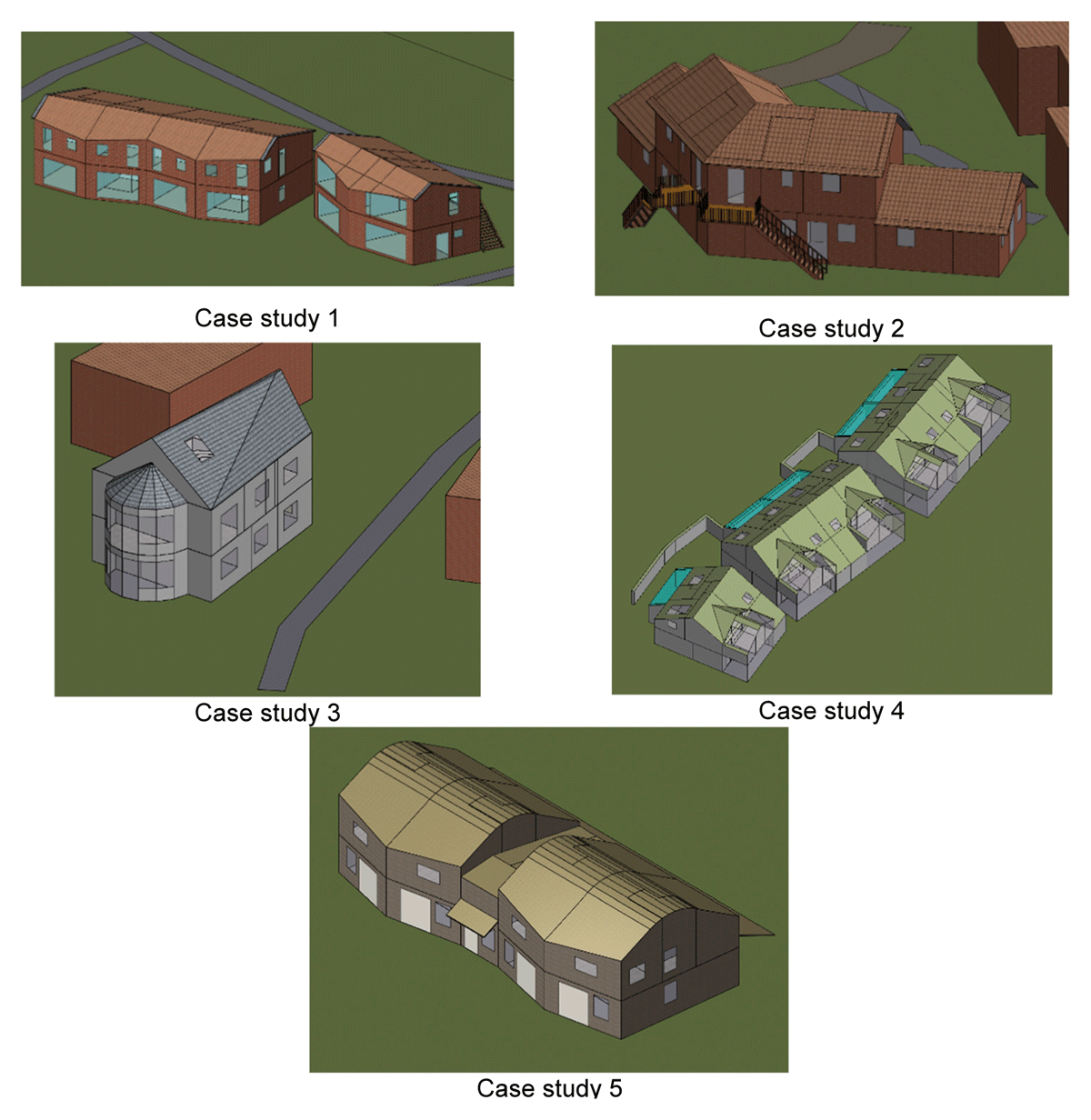
Figure 3
Case study buildings in IES-VE.
Table 3 lists the specifications for each case study and simulation scenario. For each simulation scenario, the corresponding external wall construction (Figure 4) is assigned to the model, facilitating a comparison of the impacts of using biochar-concrete instead of concrete and timber on the operational energy consumption and carbon emissions.
Table 3
Case study buildings’ specifications.
| SIMULATION SCENARIO 1 | SIMULATION SCENARIO 2 | SIMULATION SCENARIO 3 | SIMULATION SCENARIO 4 | |
|---|---|---|---|---|
| External wall type | Timber | Concrete | 10BC Biochar-concrete | 50BC Biochar-concrete |
| External wall U-value (W/m2K) | 0.1546 | 0.1561 | 0.1558 | 0.1545 |
| Roof U-value (W/m2K) | 0.1019 | |||
| Floor U-value (W/m2K) | 0.2042 | |||
| Windows U-value (W/m2K) | 1.2097 | |||
| Heating system | Air source heat pump | |||
| Case study 1 GIA (m2) | 541 | |||
| Case study 2 GIA (m2) | 380 | |||
| Case study 3 GIA (m2) | 193 | |||
| Case study 4 GIA (m2) | 828 | |||
| Case study 5 GIA (m2) | 381 | |||
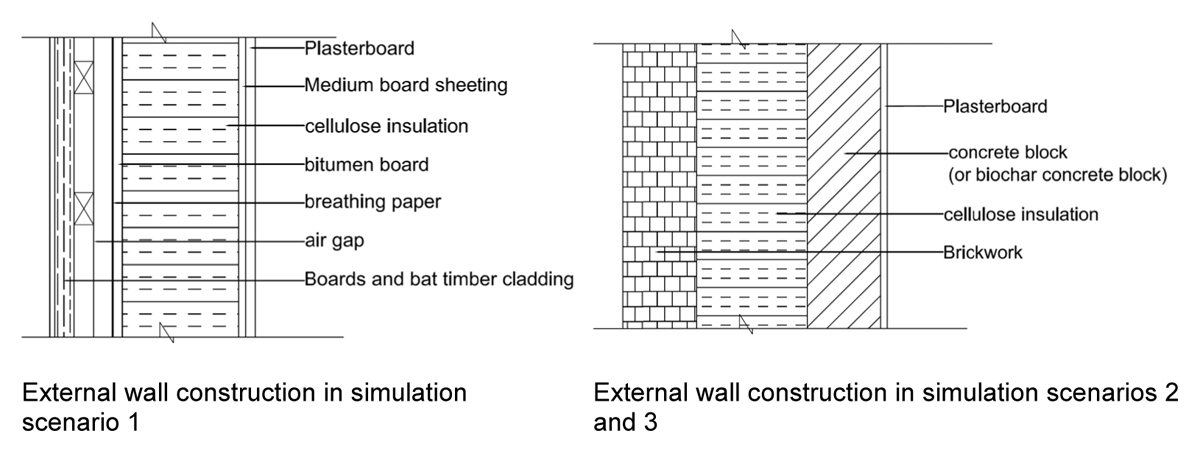
Figure 4
External wall construction details in each simulation scenario.
Figure 5 shows the operational energy and carbon emission values derived from the IES-VE models and the EUIs calculated using the UKNZCBS methodology (UKNZCBS 2024). As can be seen from the results in Figure 5, the differences in the total annual energy consumption across different scenarios are not significant. These small differences have led to similar results for the operational carbon emissions. Replacing the timber external wall construction in scenario 1 with the 50BC biochar-concrete in scenario 4 leads to changes of 0.52%, 0.38%, 0.42%, 0.17% and 0.25% in annual operational energy and emissions for case studies 1 to 5, respectively. Comparing scenarios 2 and 4 (incorporating 50% biochar into concrete) also shows 0.02%, 0.05%, 0.10%, 0.08% and 0.13% reductions in annual operational energy and emissions for case studies 1 to 5, respectively. These values are lower when 10% biochar is incorporated into concrete, ranging from 0.006% to 0.023% reductions. The increase in the biochar amount in concrete from 10% in scenario 3 to 50% in scenario 4 has also resulted in reductions of operational energy and carbon emissions by 0.023% to 0.11%.
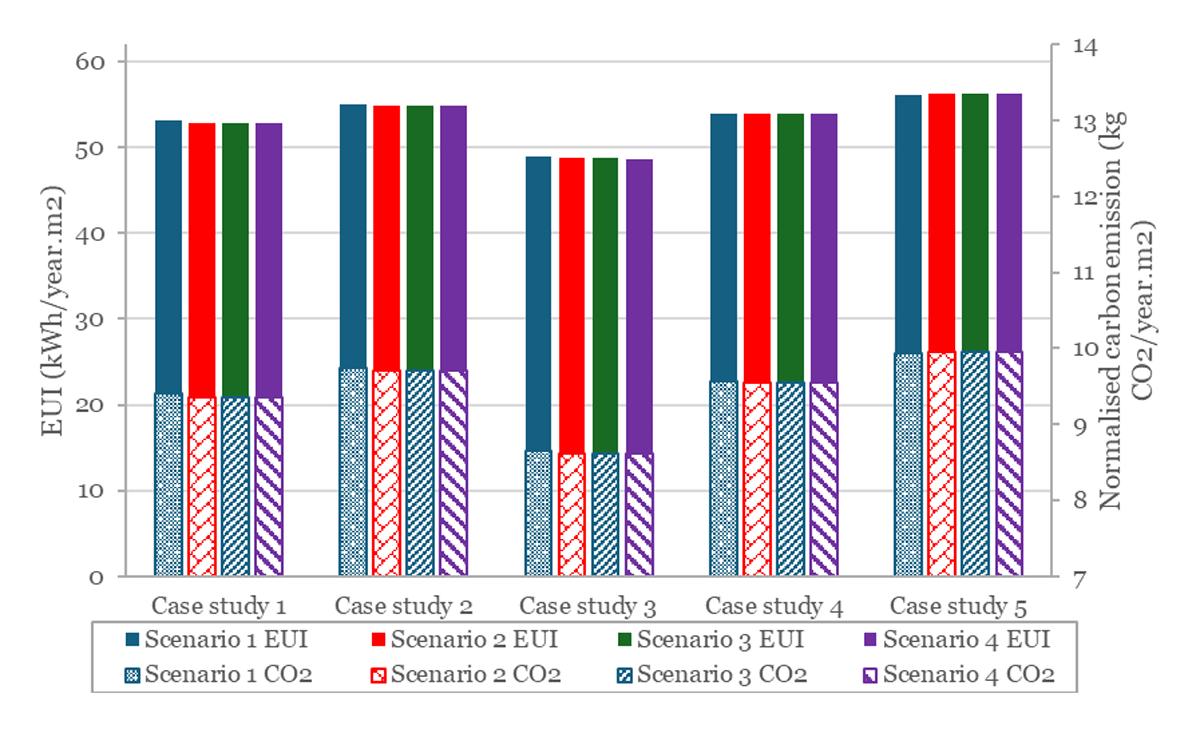
Figure 5
Operational energy and carbon emissions in the case study buildings.
The operational EUI metric shows minimal advantages of using biochar-concrete over standard concrete or timber in the case study buildings. This mainly results from minor variations in U-values of the external wall structure when biochar was added to the concrete sample, and the bigger impact of insulation on the U-values compared to the timber cladding or concrete blocks. As observed from the results, the increase in the biochar percentage in the concrete mixture has reduced the operational energy and carbon emissions of the building. However, as mentioned, these values are not significant overall.
Future work and next steps
The activities described in this section represent planned future work and are not part of the completed Phase 1 tasks reported in this paper.
In Phase 2, a mixed-method approach (Reinhoudt-den Boer et al. 2024) using a modified Delphi method (Sadraei & Mas 2026; Sourani & Sohail 2015) will be employed to prioritise decision-support indicators for practitioners considering biochar-concrete. The method is well suited to contexts with incomplete evidence (Dalkey & Helmer 1963; Linstone & Turoff 1975; Hsu & Sandford 2007; Okoli & Pawlowski 2004) and enables comparison of thresholds across stakeholder groups, where evaluations are shaped by regulatory, professional, and market factors (Lizarralde et al. 2015; Barthel & Seidl 2017). Given perspectives of engineers, contractors, manufacturers, regulators, and sustainability experts, a multi-stakeholder Delphi is appropriate (Fellenor et al. 2021; Siarova & van der Graaf 2022). The study will use mixed Delphi rounds, consistent with mixed-method established research (Brady 2015; Taghipoorreyneh & De Run 2020; Reinhoudt-den Boer et al. 2024).
Questionnaires in SC2 will be tailored to specific professional groups, and each Delphi round will provide anonymised statistical feedback to support reflective judgement while maintaining independence (Hsu & Sandford, 2007; Okoli & Pawlowski 2004). Follow-up qualitative phases will explore reasoning, clarify ambiguities, and refine indicator definitions, supporting genuine rather than superficial consensus (Brady 2015; Reinhoudt-den Boer et al. 2024). Consensus will be defined using a ≥70% agreement threshold and stability measures across rounds (Sadraei & Ma 2026; Pfendtner-Heise et al. 2024).
By integrating quantitative consensus metrics with qualitative insights, the study will reveal how different professional groups construct acceptable performance criteria and sustainability priorities for biochar-concrete (Taghipoorreyneh & De Run 2020; Reinhoudt-den Boer et al. 2024).
The Delphi findings will be used to optimise the biochar–concrete samples (MC) and shared with stakeholders (SC3). The resulting material properties will then be fed back into the building modelling (BM) to assess their impact on the thermal performance of the case-study buildings (see Figure 2).
In phase 3, another stakeholder consultation (SC4) will take place to disseminate the data yielded by the optimised samples and, gauge the value and challenges of carbon credits that can be obtained for a building project using biochar. By integrating social science insights with engineering evidence and whole-building simulation, the project delivers a decision support framework (DSF) for adopting biochar-integrated concrete with indicators proposed that would also be transferrable to other new materials.
Conclusions
This study demonstrates an interdisciplinary methodology that combines social-science methods with material testing and building-performance modelling to generate a more comprehensive understanding of biochar-concrete. This work is ongoing, and the findings completed to date for phase 1 are reported in this paper.
The stakeholder engagement activities revealed high levels of interest—60% of participants self-identified as biochar advocates—yet also highlighted substantial knowledge gaps, with half of the respondents uncertain about the carbon-saving potential. These findings emphasise that technical innovation alone is insufficient; effective deployment of biochar in construction requires improved awareness, clearer communication of performance benefits, and coordinated standards across the sector. Stakeholders also articulated the contextual factors shaping technology uptake. Discussions underscored the need for consistent feedstock criteria, alignment between material properties and end-product requirements, and greater clarity around policy drivers, subsidies, and accreditation processes.
Engineering experiments and building modelling further contextualised these perspectives by quantifying material and operational performance. Mechanical testing showed that increasing biochar content reduces compressive and flexural strength and increases porosity and water absorption; however, mixes with high biochar dosages still meet requirements for several non-structural applications. Although biochar incorporation increased the porosity of the composites, leading to reduced density and mechanical strength, evidence suggests that it may improve thermal insulation performance, thereby highlighting a clear performance trade-off that supports the potential use of biochar-integrated mixes in lightweight and non-structural applications where thermal efficiency is prioritised over strength. Further, the embodied carbon of the materials will be reduced by incorporating a high amount of biochar.
Building simulations extended this analysis to real-world contexts, showing that replacing conventional materials with 10% and 50% biochar-concrete yields small but measurable reductions in operational energy and carbon emissions. While these reductions are modest—this modelling provides an evidence base for evaluating realistic performance expectations and identifying scenarios where biochar may offer the greatest benefit.
In the next stage, Delphi approach will be used to develop and prioritise decision-support indicators for considering biochar-concrete in building applications. Taken together, the interdisciplinary approach clarifies that biochar’s value lies not only in its material characteristics but also in how it is integrated within wider regulatory, economic, and design systems. Social-science methods identify uncertainties around standards, end-user requirements, and incentives; engineering experiments quantify structural, durability, and thermal boundaries; and building modelling evaluates the implications for operational performance. By bringing these perspectives together, the study demonstrates that interdisciplinary methods are essential for delivering meaningful insight into identifying pathways for scaling biochar-based materials.
Additional File
The additional file for this article can be found as follows:
PowerPoint Slides
PowerPoint Slides relating to this article. DOI: https://doi.org/10.66506/essp.8-096-26.s1
eceee paper ID
8-096-26