
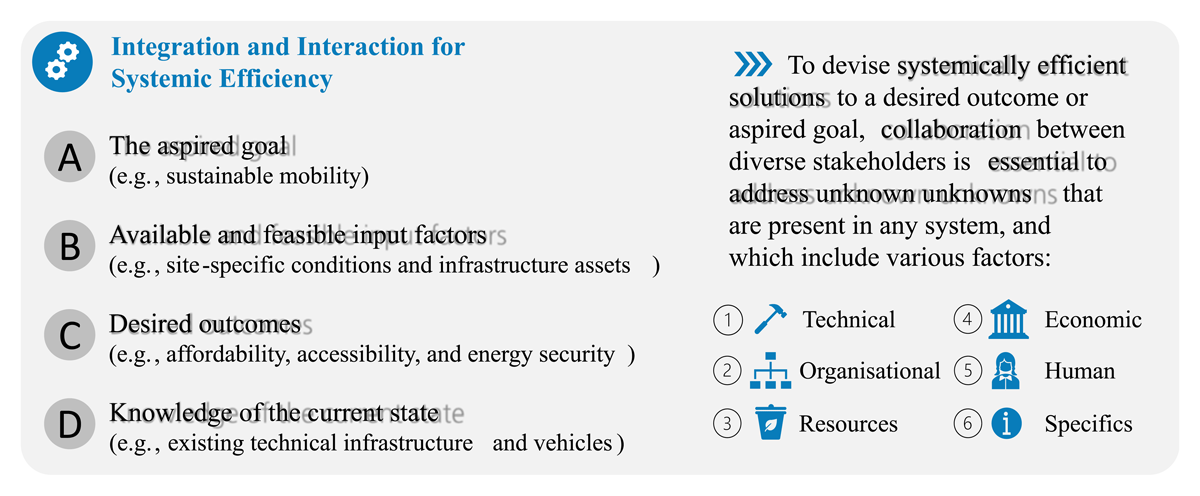
Figure 1
Framework for systemic efficiency in sustainable mobility. Adapted from Buettner et al. (2024b).
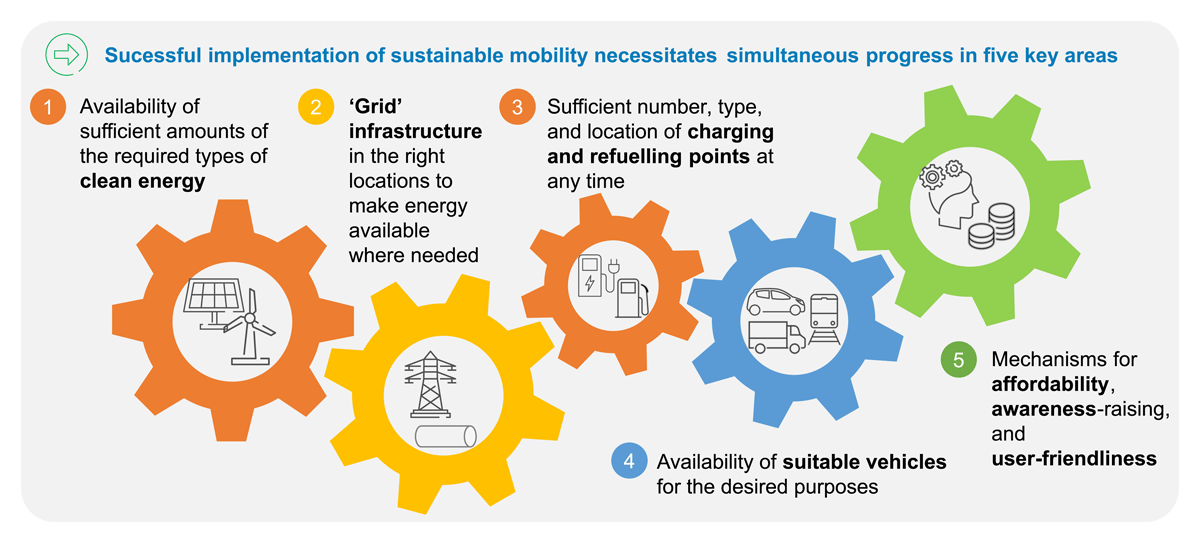
Figure 2
Systemic prerequisites for a successful sustainable mobility transition. Adapted from Buettner (2024).
Table 1
Systemic characteristics of alternative energy carriers.
| ENERGY CARRIER | INPUTS, ENERGY SOURCES, AND INFRASTRUCTURE REQUIREMENTS | KEY ENABLERS | KEY BARRIERS |
|---|---|---|---|
| Direct electricity | Renewable electricity (wind, solar, hydro); batteries and critical minerals; grid-based transmission; charging infrastructure (stationary and dynamic) | High energy efficiency; direct renewable integration; grid balancing (smart charging, V2G); local use reduces transport needs | Grid capacity constraints; peak load management; charging infrastructure rollout; limited long-term storage means; material demand |
| Hydrogen | Renewable electricity and water for electrolysis; compression/liquefaction; storage; transport via pipelines, trucks, or ships; port and hub infrastructure | Enables long-distance energy transport; large-scale and long-duration storage; spatial decoupling of production and use; clustering in industrial hubs | High costs; multiple conversion losses; infrastructure gaps; water demand; handling complexity and safety requirements |
| Synthetic fuels (carbon-based e-fuels, incl. SAF, e-diesel, e-kerosene, methanol) | Renewable electricity via hydrogen; CO2; synthesis and refining; transport via existing liquid fuel infrastructure (pipelines, tankers, ports, airports) | Drop-in compatibility with existing infrastructure; high energy density; suitability for long-distance transport; storage of surplus renewable energy | Very energy-intensive production; high CAPEX; dependence on sustainable CO2 sources; multiple conversion losses; low current scale |
| Gaseous and bio-based fuels (biogas/biomethane) | Organic waste, residues, manure, sewage; upgrading systems; distribution via gas grids or local transport and storage infrastructure | Circular use of waste streams; compatibility with existing gas infrastructure; regional production potential | Limited sustainable feedstock; competing uses (e.g. land, food); methane leakage risks; limited scalability |