
Table 1
Arnstein’s ladder of citizen participation.
| FORM OF PARTICIPATION | LEVEL OF PARTICIPATION |
|---|---|
| Citizen Power | Citizen control |
| Delegated power | |
| Partnership | |
| Tokenism | Placation |
| Consultation | |
| Informing | |
| Non-participation | Therapy |
| Manipulation |
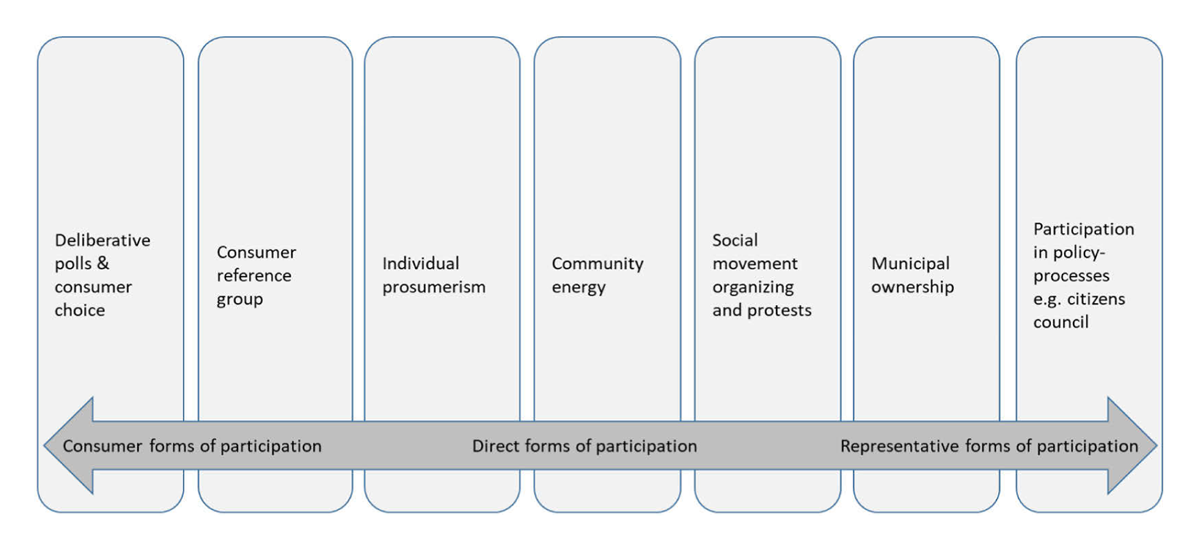
Figure 1
Participation types involved in energy projects (Wahlund & Palm, 2022).
Table 2
Consequence strategies used to influence behaviour.
| ACTIVITY | DESCRIPTION |
|---|---|
| Feedback | Information about household energy consumption, energy saving or time of use of energy. Can be continuous or periodic (daily, weekly, monthly). Can be comparative to encourage competition and social comparison |
| Rewards | Fiscal or non-monetary rewards allocated based on achievement of understandable and measurable goals. |
Table 3
Antecedent intervention strategies used to influence behaviour.
| ACTIVITY | DESCRIPTION |
|---|---|
| Information provision | Addresses knowledge-deficit, using and different techniques that include leaflets, posters, information sheets, newsletters, videos, blogs, social media, digital platforms, comic strips. |
| Goal setting | Assumes that citizens’ environmental behaviour is influenced by goals that are either hedonic (pleasure seeking), gain (status seeking) or normative (seek to act appropriately). |
| Peer influence | Techniques include social modelling that defines local champions to promote a preferred behaviour and definition of subjective norms by for instance comparing household energy consumption to a cohort average. |
| Gamification | Wraps learning about specific subject matter, e.g. demand response into a game setting. By playing the game, the citizen learns about the activity and how to apply it to modify their energy consumption behaviour. |
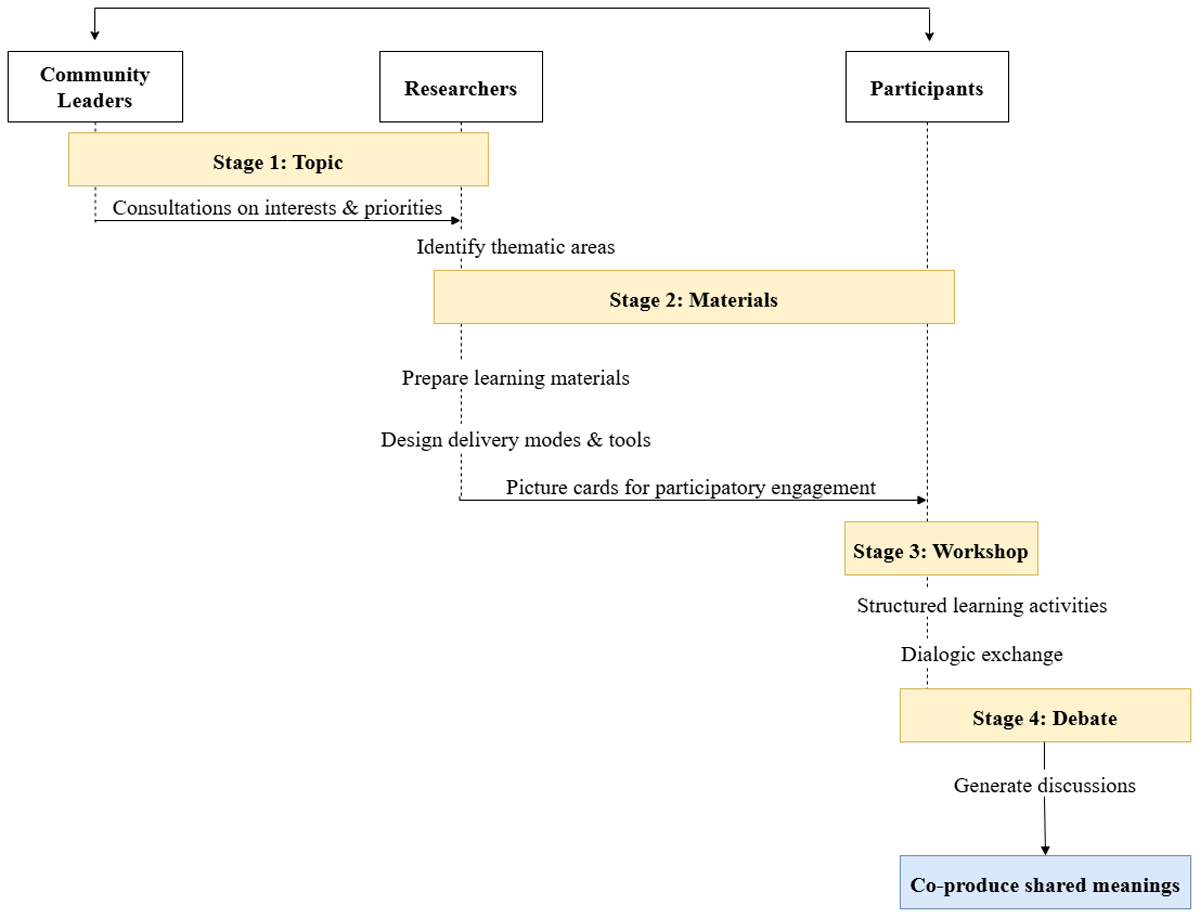
Figure 2
Methodological Framework for Participatory Learning.
Table 4
Picture card topics for participatory learning.
| TOPIC | ||||
|---|---|---|---|---|
| ENERGY | STORAGE | GRID | PEOPLE | |
| Subtopic | Building | Electrical battery | Grid scenarios | Practices |
| Solar | Thermal | Flexible charging | Comfort | |
| Wind | Tariff | |||
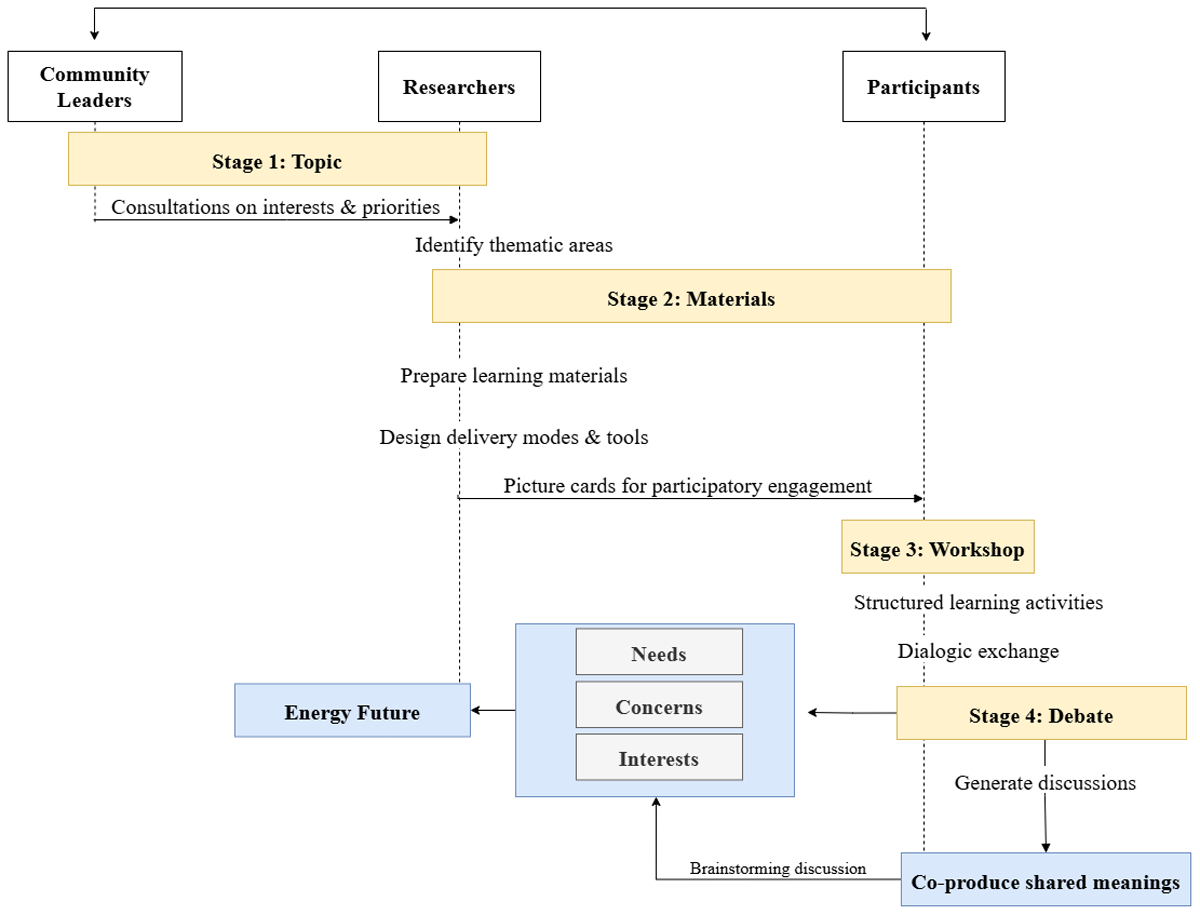
Figure 3
Methodological framework for co-creating future energy scenarios.