
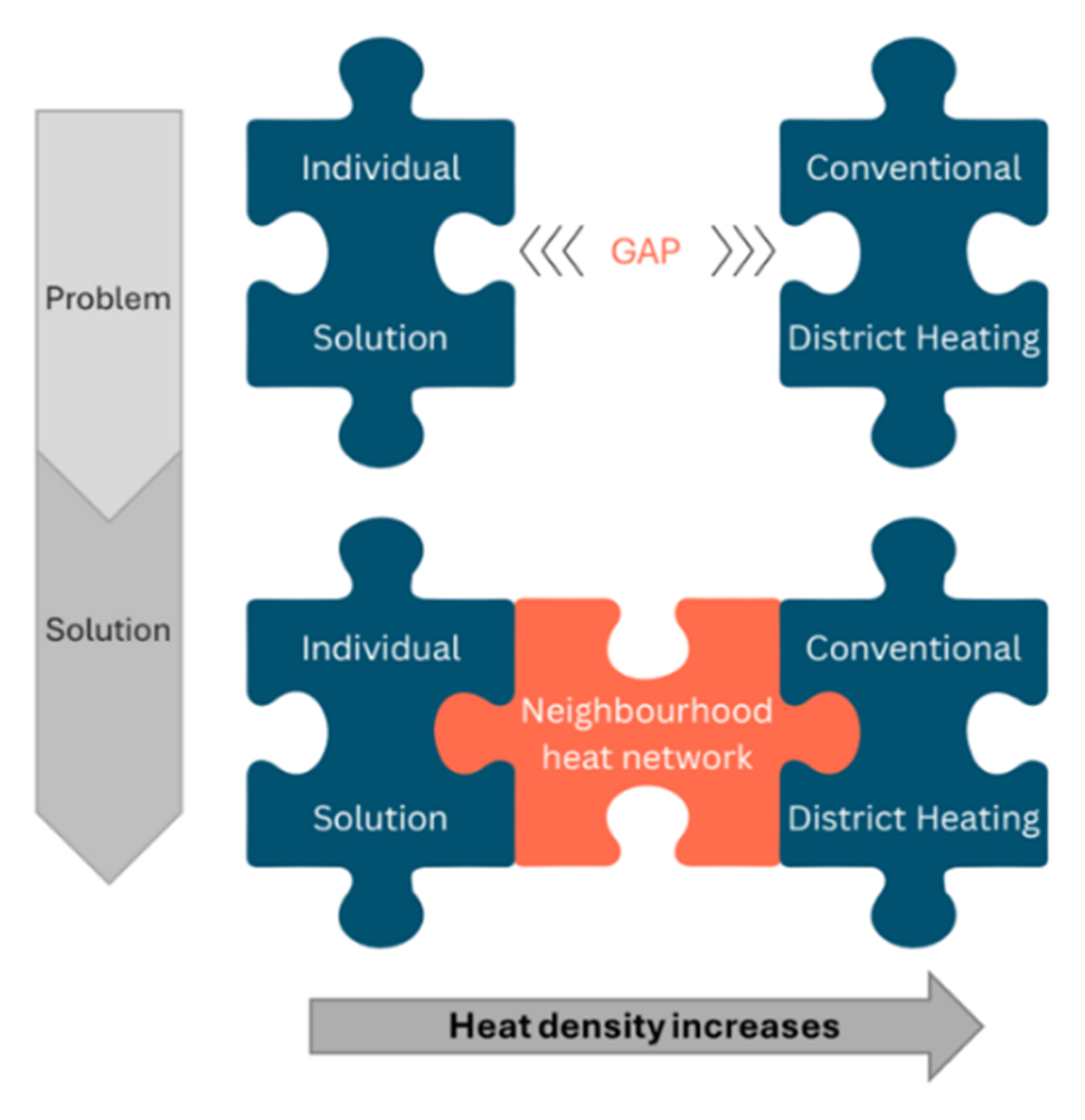
Figure 1
Gap closed by neighbourhood H&C networks.
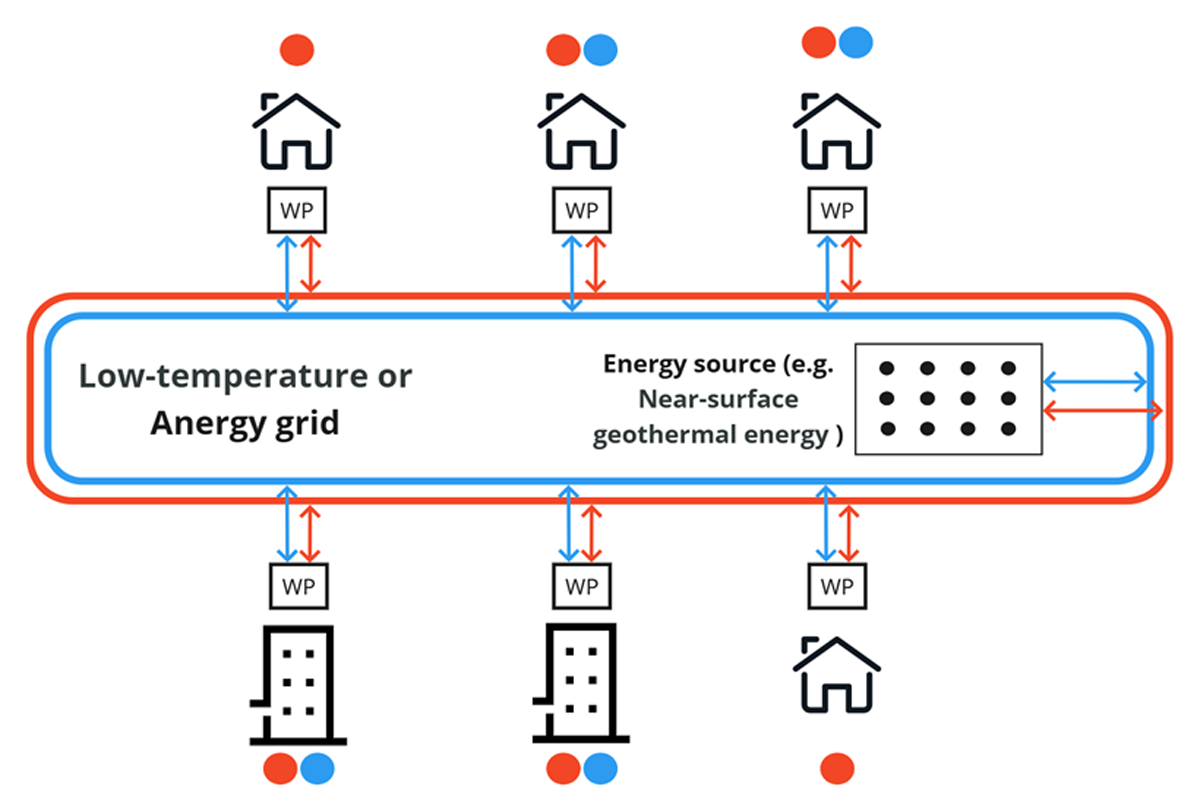
Figure 2
Basic configuration of a neighbourhood H&C networks.
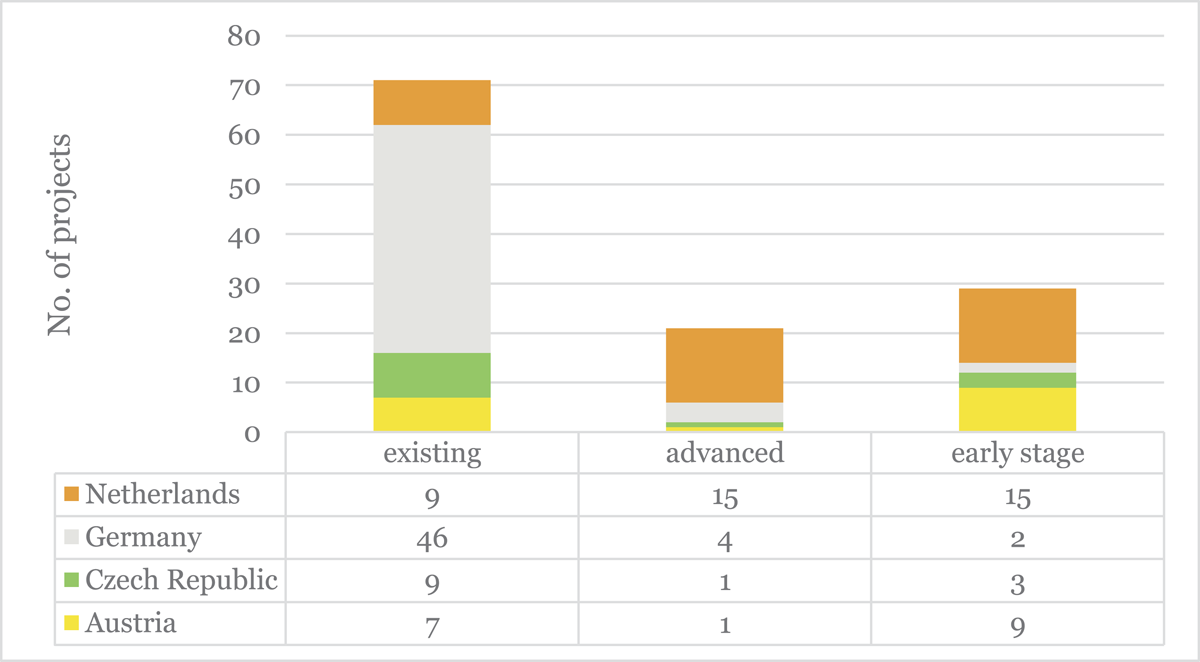
Figure 3
Status of identified neighbourhood H&C projects in the participating countries.
Table 1
Characterisation of “cold village heating” in Rech.
| LOCATION | RECH IM AHRTAL, GERMANY | SUPPLY TEMP. | 5–25°C |
|---|---|---|---|
| Year | 2024 | Heat Source | Ground probe fields |
| Distance | 4 km | Operator | Municipality |
| Buildings | 53, rural area | Billing | Capacity Pricing |
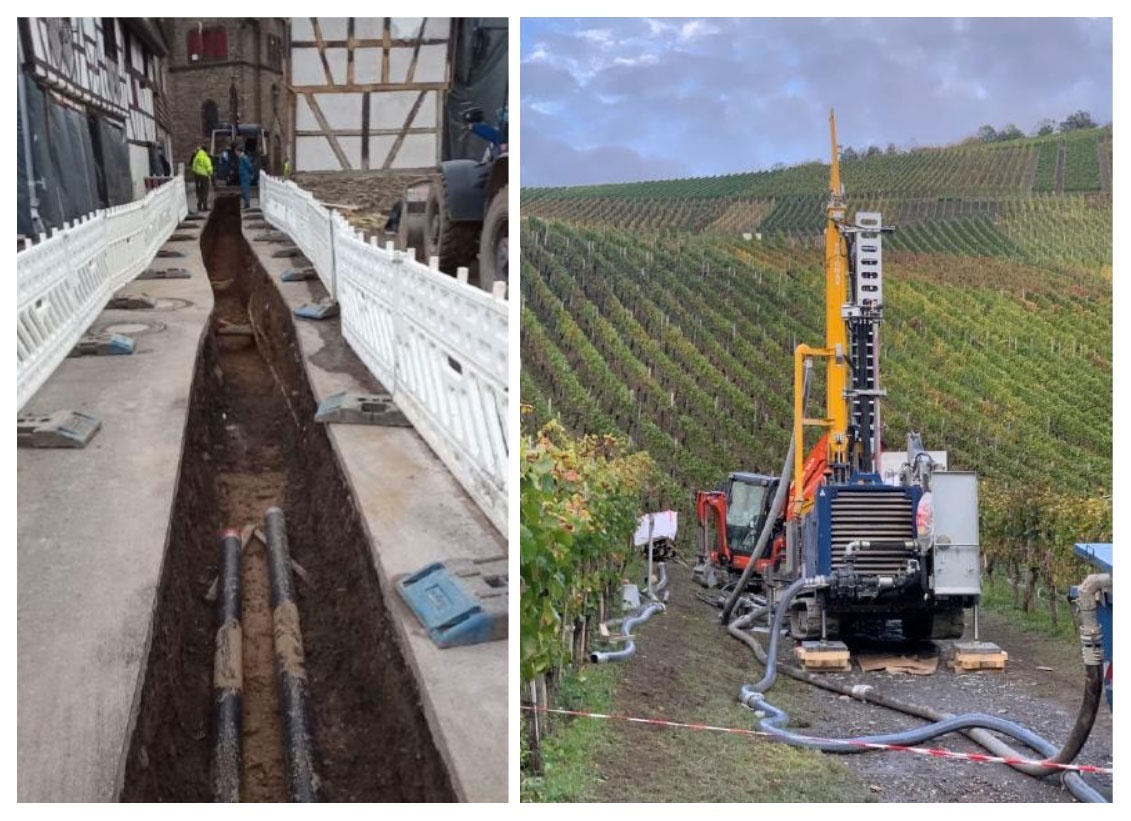
Figure 4
Construction phase of the anergy grid in the city of Rech (left) and exploiting of the borehole heat exchanger field (right) (Ngahan & Giel 2022).
Table 2
Characterisation of neighbourhood H&C network in Simon-Denk-Gasse, Vienna.
| LOCATION | VIENNA, 9th DISTRICT | SUPPLY TEMP. | 12°C |
|---|---|---|---|
| Year | 2025 | Heat Source | Groundwater well |
| Distance | – | Operator | Sozialbau AG (housing cooperative) |
| Buildings | 5 | Billing | Different for each building (depending on the applicable housing law) |
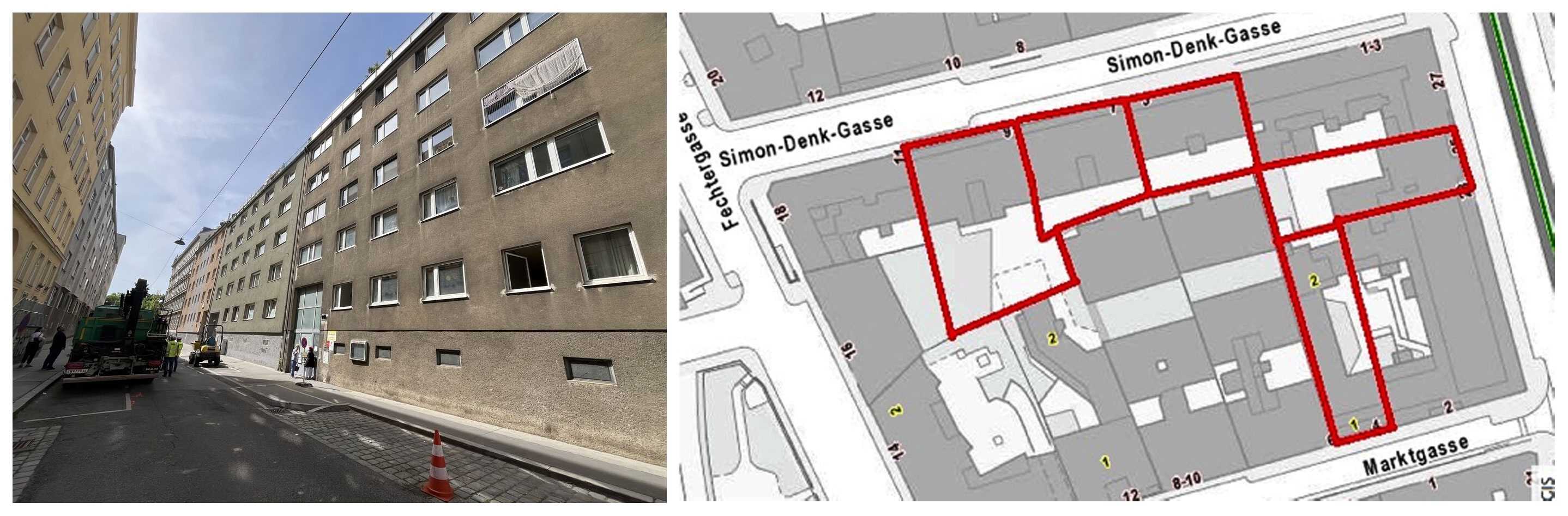
Figure 5
Post-war buildings as a typical building type in Simon-Denk-Gasse, Vienna, and the properties in the street block (Photo credit: SOZIALBAU AG).
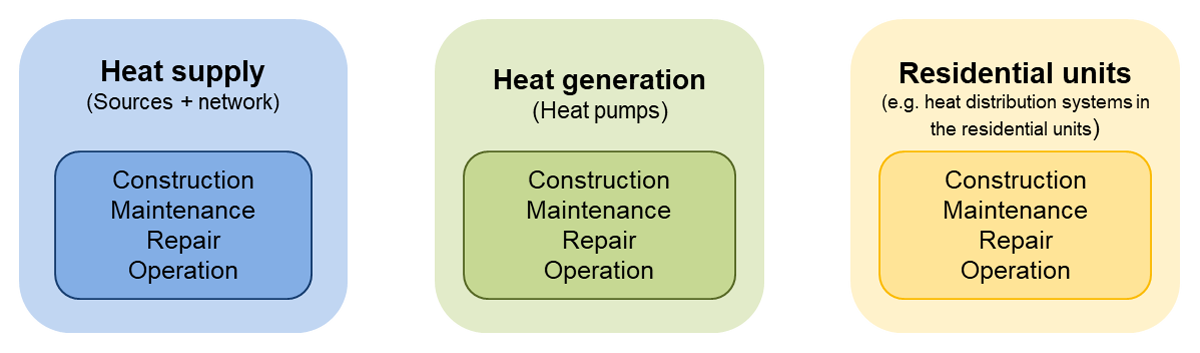
Figure 6
Assignment of roles and responsibilities related to the development of a neighbourhood H&C network.
Table 3
Bottom-up and top-down approaches.
| BOTTOM-UP | TOP-DOWN |
|---|---|
| Property owner model | Municipal utility model |
| Heating community model | Energy service model |
Table 4
Advantages and disadvantages from the users’ perspective – property owner model.
| ADVANTAGES | DISADVANTAGES |
|---|---|
|
|
Table 5
Advantages and disadvantages from the users’ perspective – heating community model.
| ADVANTAGES | DISADVANTAGES |
|---|---|
|
|
Table 6
Advantages and disadvantages from the municipal perspective – municipal utility model.
| ADVANTAGES | DISADVANTAGES |
|---|---|
|
|
Table 7
Advantages and disadvantages from the municipal perspective – energy service model.
| ADVANTAGES | DISADVANTAGES |
|---|---|
|
|
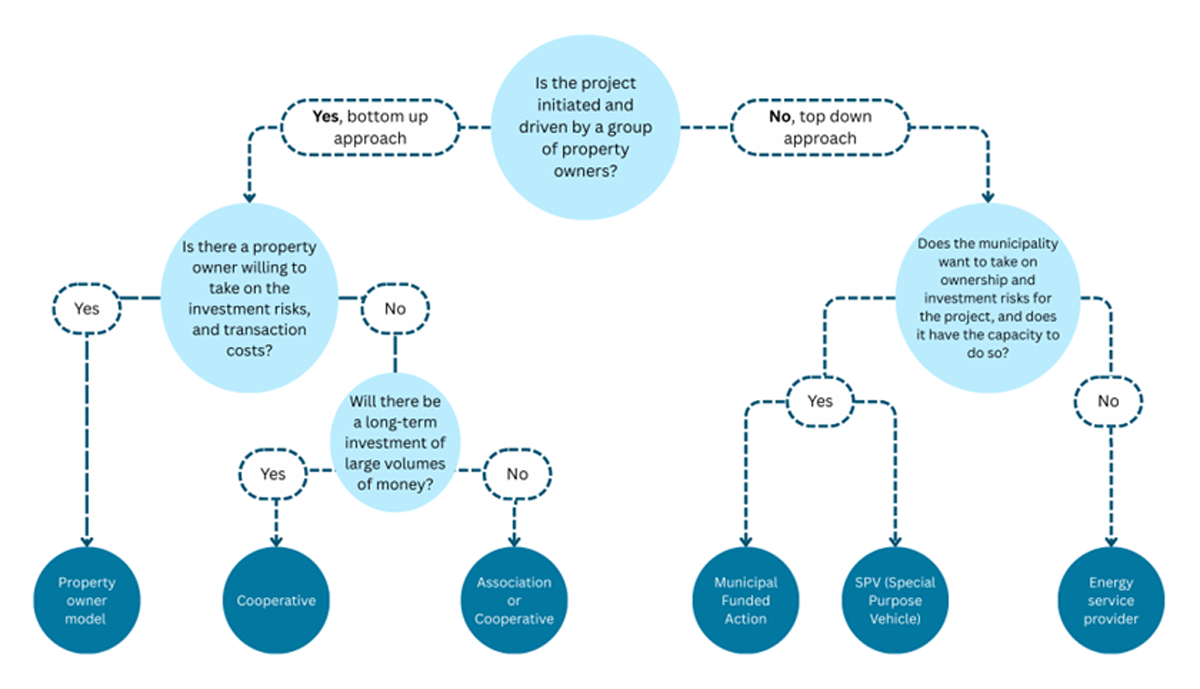
Figure 7
Decision tree for selecting organisational models in neighbourhood H&C projects (source: e7 GmbH).
Table 8
Overview and evaluation of possible billing models and associated district heating technologies.
| BILLING MODEL | SYSTEM | DESCRIPTION | PROPERTY BOUNDARY (5GDHC) | EVALUATION |
|---|---|---|---|---|
| Fixed + variable | Low–temperature and anergy networks | Fixed base price covering O&M, plus charge per kWh heat. Most common for DH. Heat contracting possible. | Condenser Evaporator | + stable revenue, consumption incentive – metering and accounting necessary |
| Variable | Low–temperature networks | Variable pricing of kWh heat and network usage efficiency. Heat contracting possible. | – | + consumption and efficiency incentive, transparency – complex metering, accounting and tariff calculation |
| Fixed | passive anergy networks | Fixed charge based on peak capacity. Energy costs of decentral HPs are paid by consumer. No heat contracting possible. | Evaporator | + simple accounting, no metering necessary, low operator risk, individual HP installation – no regard of network load |
| Flat rate | Low–temperature and anergy networks | All–inclusive heating and cooling, monthly pricing according to estimated consumption/living area. | Condenser | + maximum simplicity, predictable costs for consumers, bundled electricity and HP purchasing – no consumption or efficiency incentive, cross–subsidisation risk |