
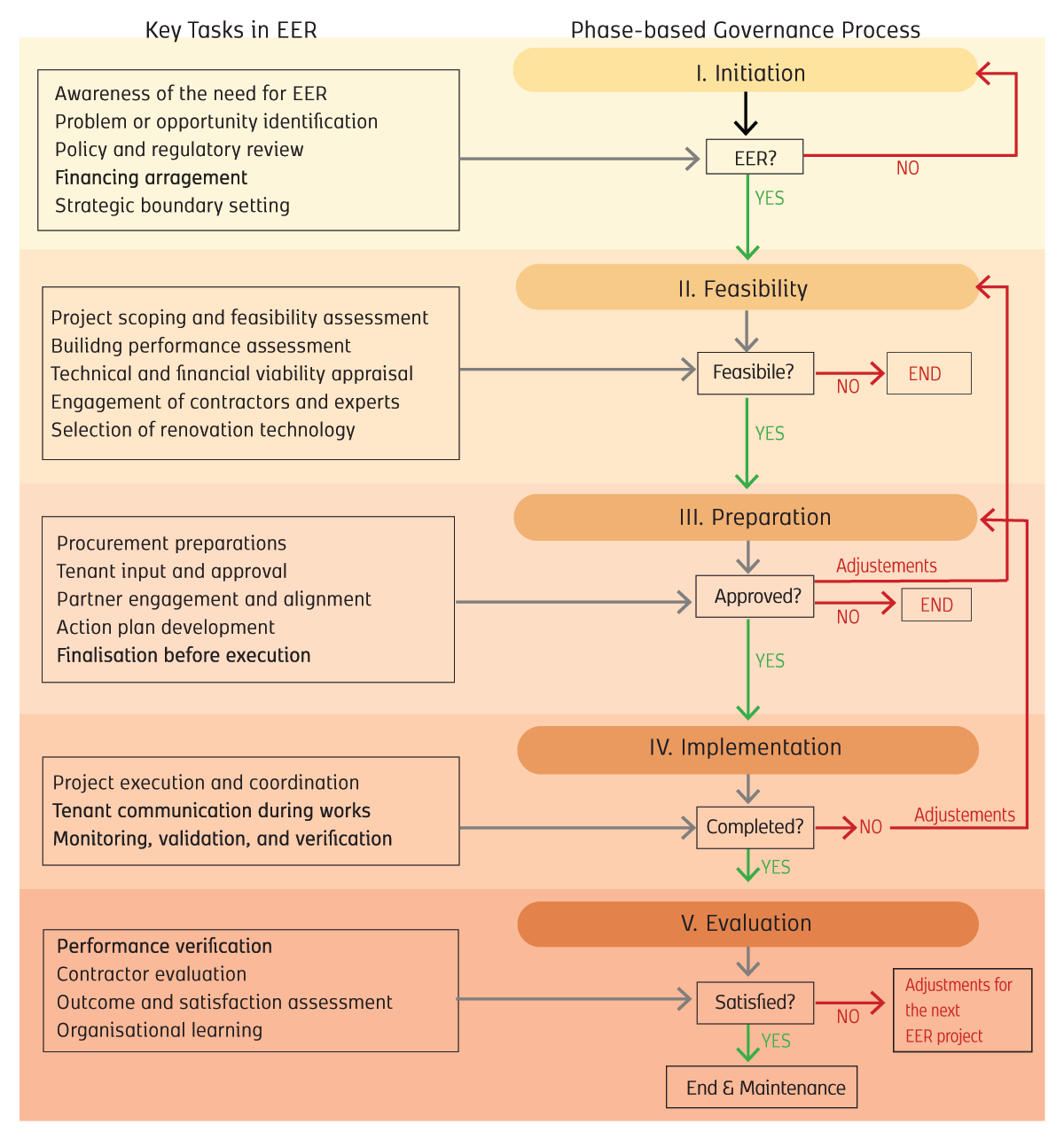
Figure 1
Estimated key phases and tasks of an EER decision-making process in social housing (Author’s synthesis based on relevant literature).
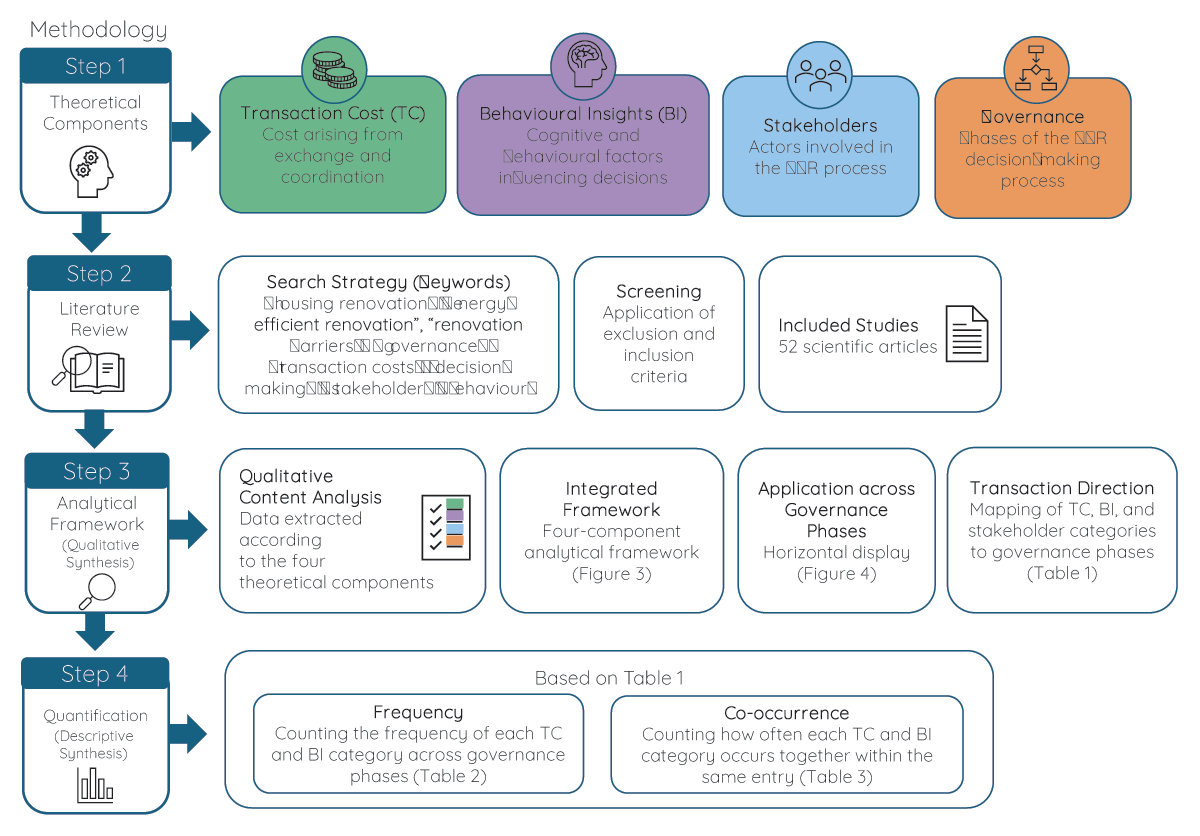
Figure 2
Research methodology.
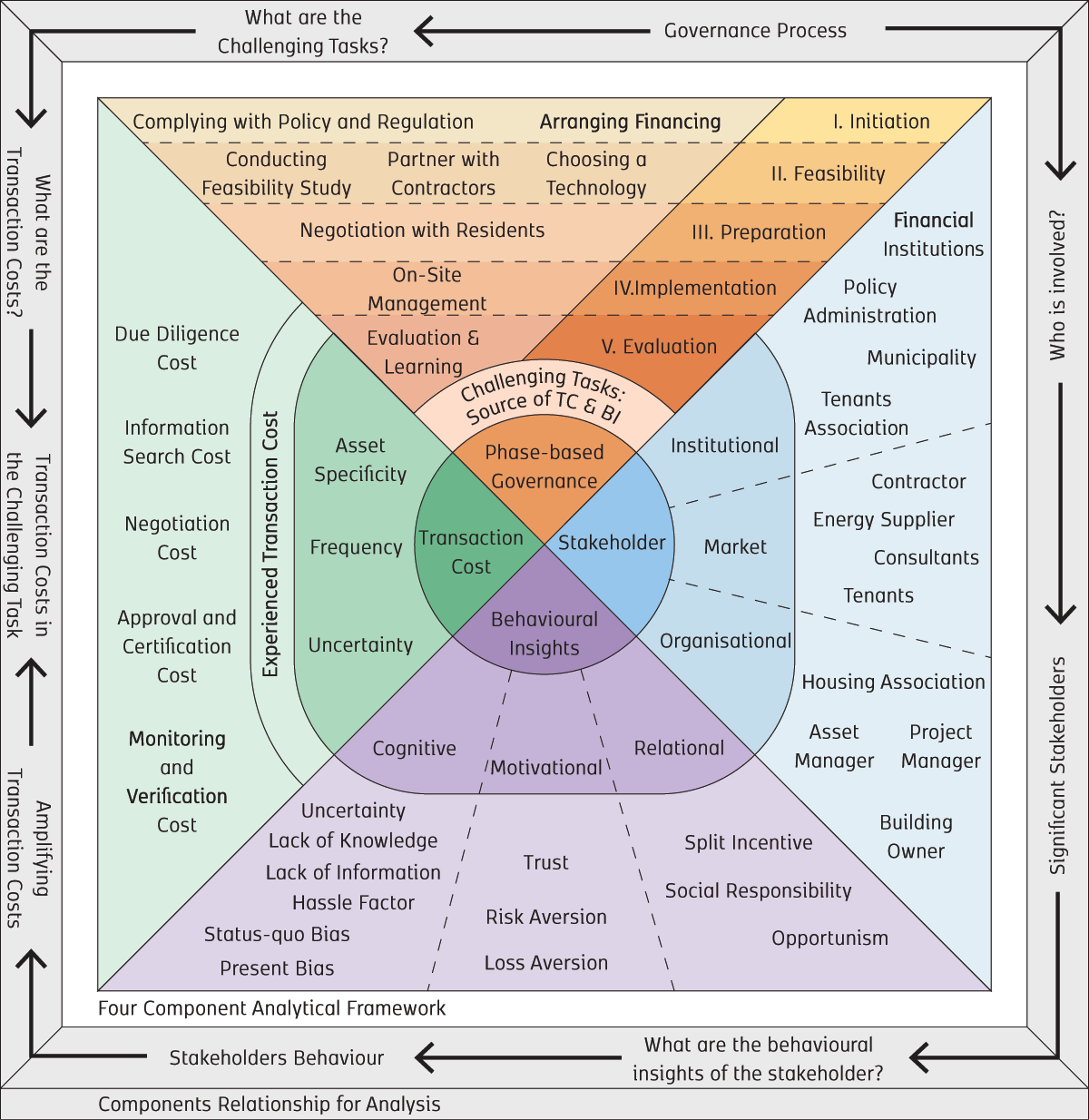
Figure 3
A four-component analytical framework (designed by the author, based on theoretical assumptions).
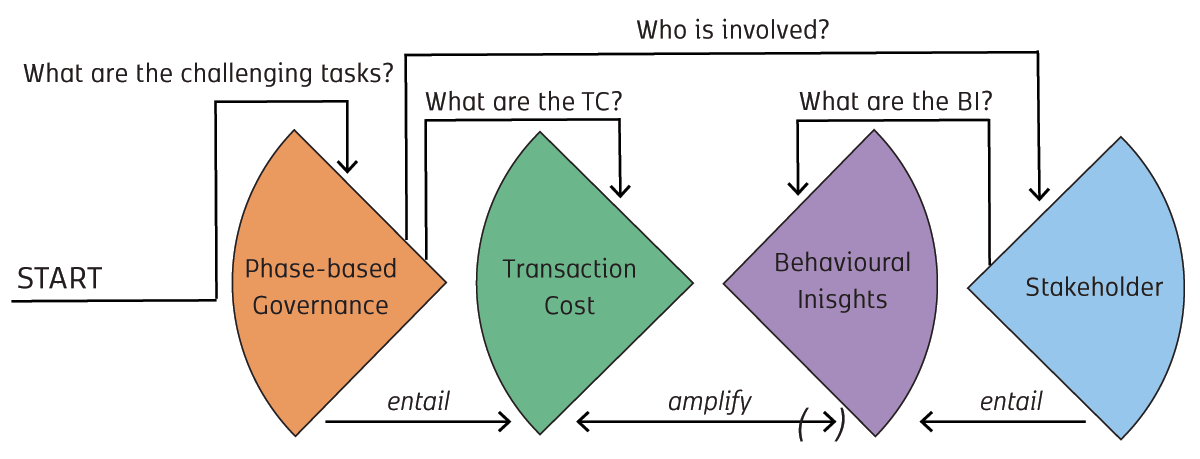
Figure 4
Instructions for analysis using the four-component analytical framework for horizontal display (based on Figure 3).
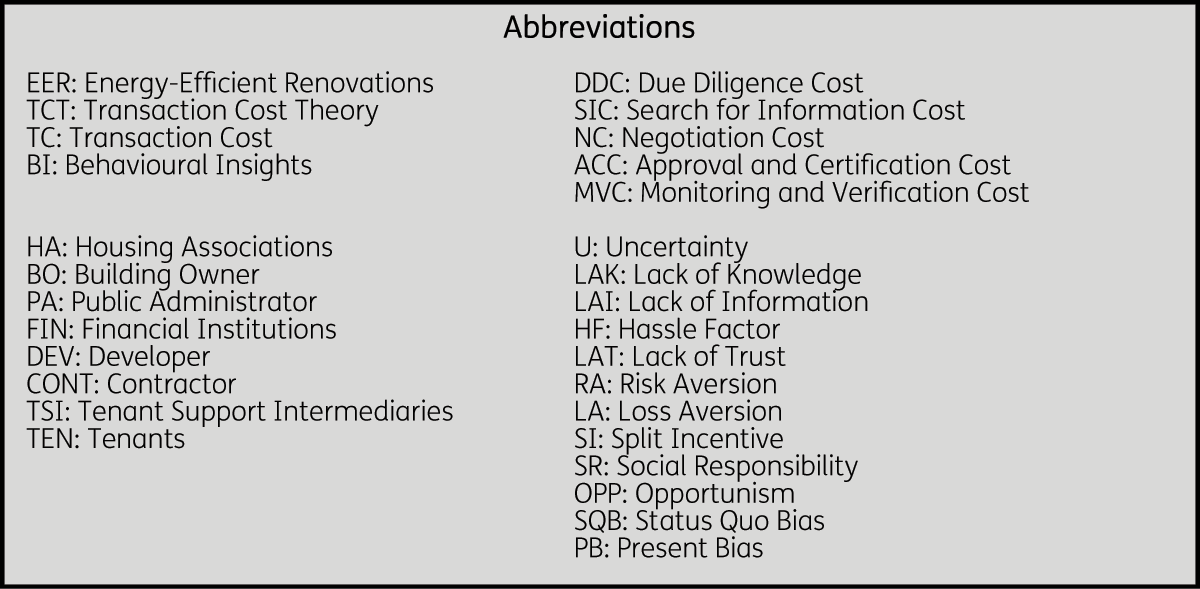
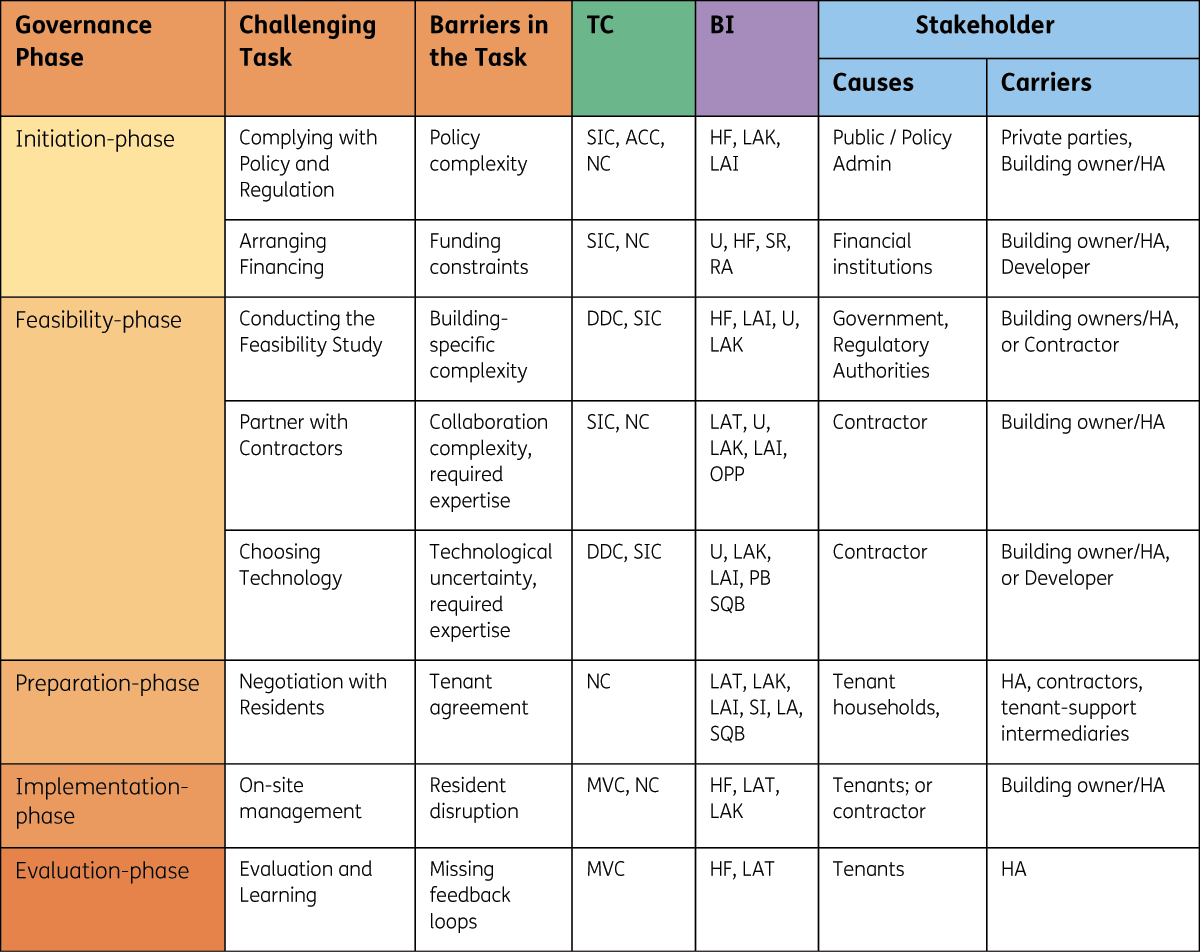
Table 1
Transaction costs, behavioural insights, and stakeholders in social housing EER projects (summary of sections 4.2.1 to 4.2.5).
Note: This table summarises the coded findings from the 52 scientific articles analysed and discussed in Sections 4.2.1–4.2.5. The organisation of the findings follows the analytical framework presented in Figures 3 and 4, linking EER phases with TC, BI, and stakeholder categories.
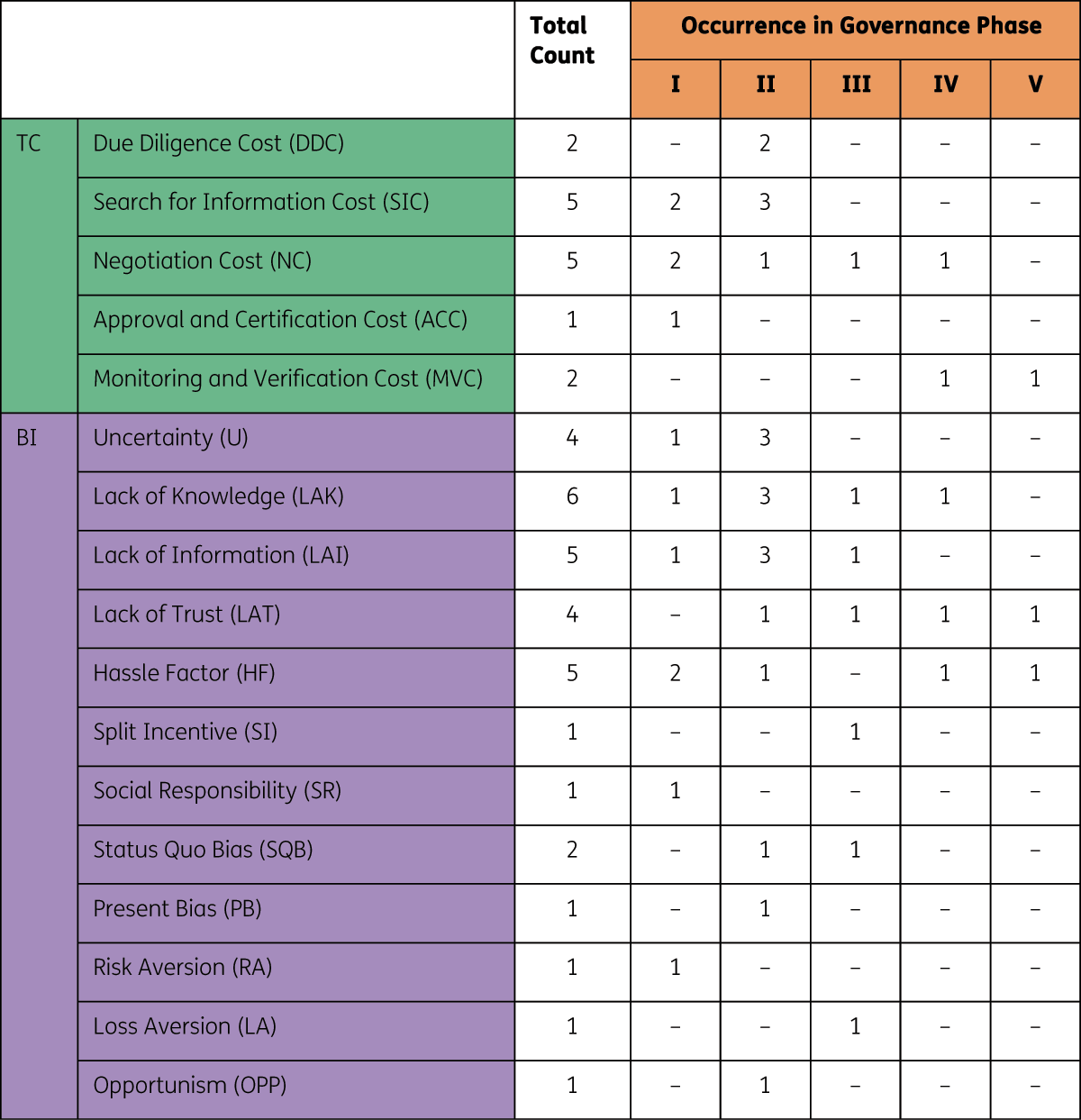
Table 2
Frequency of TC and BI categories across governance phases (based on Table 1).
Note: This table is derived from Table 1 and presents the frequency of each TC and BI category across the EER governance phases.
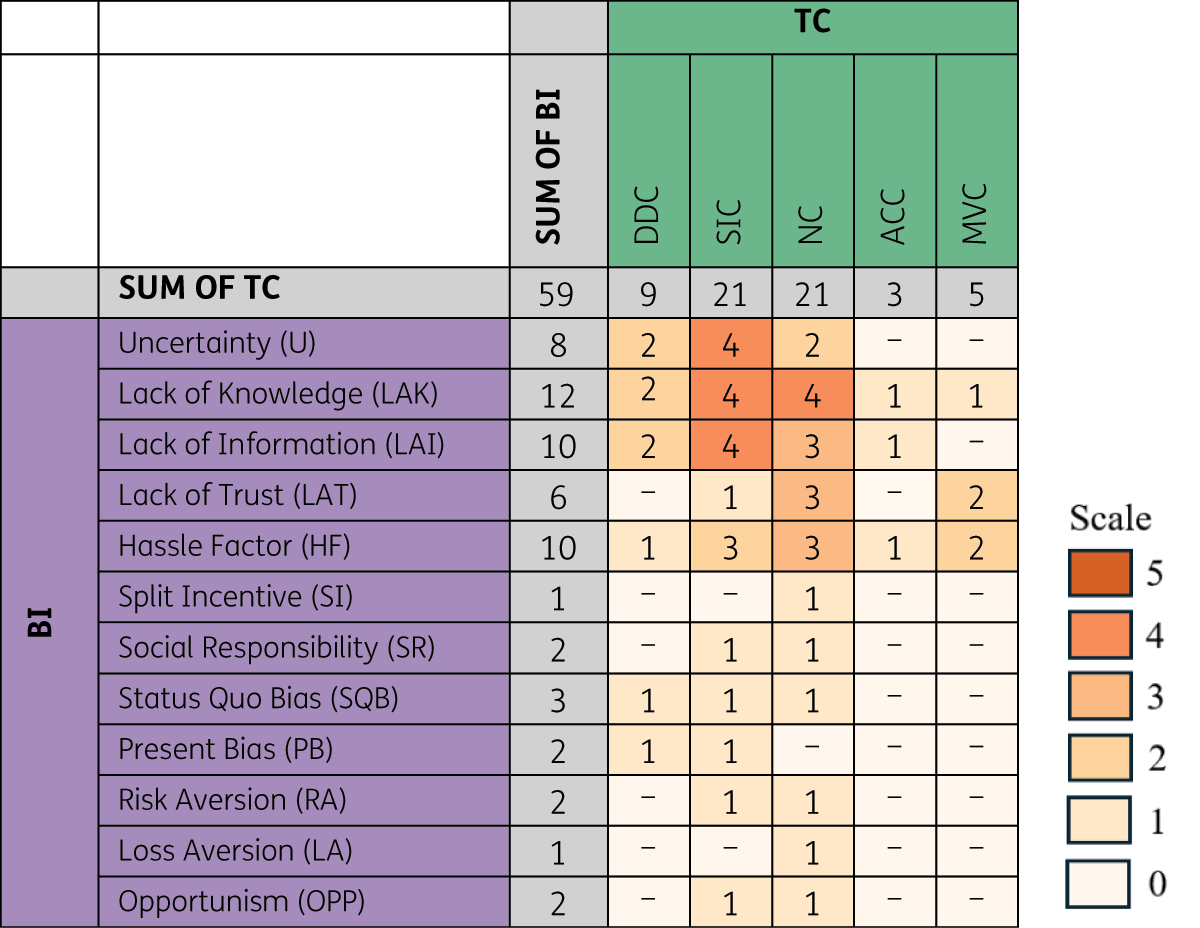
Table 3
Co-occurrence of TC and BI (based on Table 1).
Note: This table is derived from Table 1 and presents the co-occurrence of TC and BI categories. The co-occurrence indicates how often a specific TC category and BI category are identified together within the same Table 1 entry.