
1 Introduction
The European Union aims to cut energy use and greenhouse gas emissions by considering energy-efficient renovation (EER) a key lever for achieving Europe’s 2050 net-zero energy transition goal. The recast Energy Performance of Buildings Directive (EPBD), which Member States are required to implement, further specifies these objectives by placing particular emphasis on improving the energy performance of social housing and alleviating energy poverty (EC, 2024). In the Netherlands, this challenge is particularly urgent in the social housing sector, where housing associations (HA) manage around one-third of the housing stock and are incentivised to upgrade dwellings with low energy labels (E/F/G) to at least label D by 2028 (Aedes, 2022). EER, therefore, is not only a technical or environmental issue, but also an organisational one. It requires HA to make timely decisions and coordinate projects effectively across multiple actors and phases.
EER can deliver major benefits, including lower energy use, reduced emissions, and improved housing quality (Boza-Kiss et al., 2021; BPIE, 2021). Yet, despite these advantages, EER projects continue to face persistent barriers, including financial, institutional, administrative, technical, and social obstacles (BPIE, 2013; Elgendy et al., 2024; Palm & Reindl, 2018). Existing studies have been valuable in identifying these barriers, but they often present them as static lists. As a result, these static barrier lists offer limited insight into how problems emerge and intensify throughout the governance process. What remains insufficiently understood is how barriers accumulate through coordination burdens and interdependencies across project phases.
Especially the split-incentive dilemma (tenant-landlord dilemma) constitutes a fundamental economic barrier to energy renovation in the rental sector, where housing owners generally bear the upfront investment costs, whereas tenants receive the benefits through lower energy expenditure and improved comfort (Castellazzi et al., 2017; Dobi-Rózsa & Balaci, 2024). While economic analysis explains the EER underinvestment as a consequence of the misalignment between investment cost and benefits, it fails to explain why otherwise feasible EER projects are delayed or disrupted, nor how these outcomes vary across project phases and stakeholder interaction.
Transaction Cost Theory (TCT) offers a more process-oriented perspective by conceptualising “hidden barriers” as transaction costs (TC) embedded in coordination and exchange (Wang et al., 2025; Wu et al., 2019). These costs include the time, effort, and resources required for activities such as searching for information, negotiating agreements, ensuring compliance, monitoring implementation or dispute resolution (Kiss, 2016; Qian et al., 2015; Wu et al., 2019). TCT is a useful theoretical lens because it does not treat barriers as isolated problems, but links them to specific tasks, phases, and stakeholder interactions in which they arise (Coase, 1986; Williamson, 1979; Williamson, 1985; Wu et al., 2019). However, empirical TC research still often remains descriptive, focusing on categorising TC-types rather than analysing how TC interact and reinforce one another throughout the renovation process (Kiss, 2016; Qian et al., 2015; Wu et al., 2019; Li et al., 2025).
To address this limitation, this article argues that Behavioural Insights (BI) should complement TCT. BI helps explain why TC becomes more severe in practice by showing how uncertainty, trust, risk perceptions, and hassle factors shape stakeholder behaviour and responses to coordination demands (EEA, 2023). This is particularly relevant in complex organisational settings, where decisions are not driven solely by formal structures but also by behavioural frictions among stakeholders. Recent behavioural science scholarship, therefore, calls for greater attention to organisational contexts rather than focusing only on individual-level interventions (Chater & Loewenstein, 2023; Hallsworth, 2022).
This article, therefore, moves beyond static barrier identification by developing a literature-grounded analytical framework for analyzing hidden barriers in EER. The framework structures the analysis around four components: project tasks in renovation phases, the TC, behavioural factors, and stakeholders involved. Based on this rationale, the study is guided by the following research question: How can hidden barriers in EER be analysed through an analytical framework that integrates renovation phases, project tasks, stakeholder interactions, TC, and BI?
The remainder of the article is structured as follows: Section 2 reviews the theoretical foundations of TCT, BI, and renovation governance. Section 3 outlines the research methodology. Section 4 presents and discusses the resulting analytical framework drawn from the literature review.
2 Theoretical Foundation: Building Blocks from Prior Theory
This section develops the theoretical foundation of the analytical framework by clarifying its core building blocks. Section 2.1 outlines the relevant governance structure in EER and the associated multi-actor landscape. Section 2.2 provides the TCT perspective on hidden cost in renovation, followed by Section 2.3, which discusses the contribution of BI.
2.1 Phase-based governance and stakeholder interfaces
The realization of EER projects unfolds through a sequence of governance phases. Prior research consistently describes renovation projects as a phased process that moves from early problem recognition and assessment to planning, implementation, and post-project review (Liang et al., 2016; Palm & Reindl, 2018; Villalba Muñoz et al., 2024). This phase-based view is important because barriers do not arise in isolation; they emerge within specific tasks, decision moments, and actor interactions.
In the Dutch social housing context, EER decision-making can be structured into five generalized governance phases: initiation, feasibility, preparation, implementation, and evaluation, see Figure 1 (Albeda & Veraart, 2020; Hoppe, 2012; Horian et al., 2025; and further see Straub & Meijer, 2025). The initiation phase concerns awareness, problem recognition, early research, and the definition of strategic boundaries such as portfolio priorities, regulatory conditions, and investment direction. The feasibility phase focuses on performance assessment, technical and financial appraisal, and the exploration of viable renovation pathways, often in consultation with external experts. The preparation phase translates preferred options into actionable plans and centres on approvals, procurement preparation, and resident-side alignment, including tenant engagement and consent requirements in Dutch social housing. The implementation phase concerns project execution, inter-organisational coordination for good tenants’ communication, and the monitoring of quality, timing, and delivery. Finally, the evaluation phase addresses performance verification, and organisational learning for future projects. Together, these phases provide a governance structure for analysing where coordination demands intensify and where hidden barriers become visible.
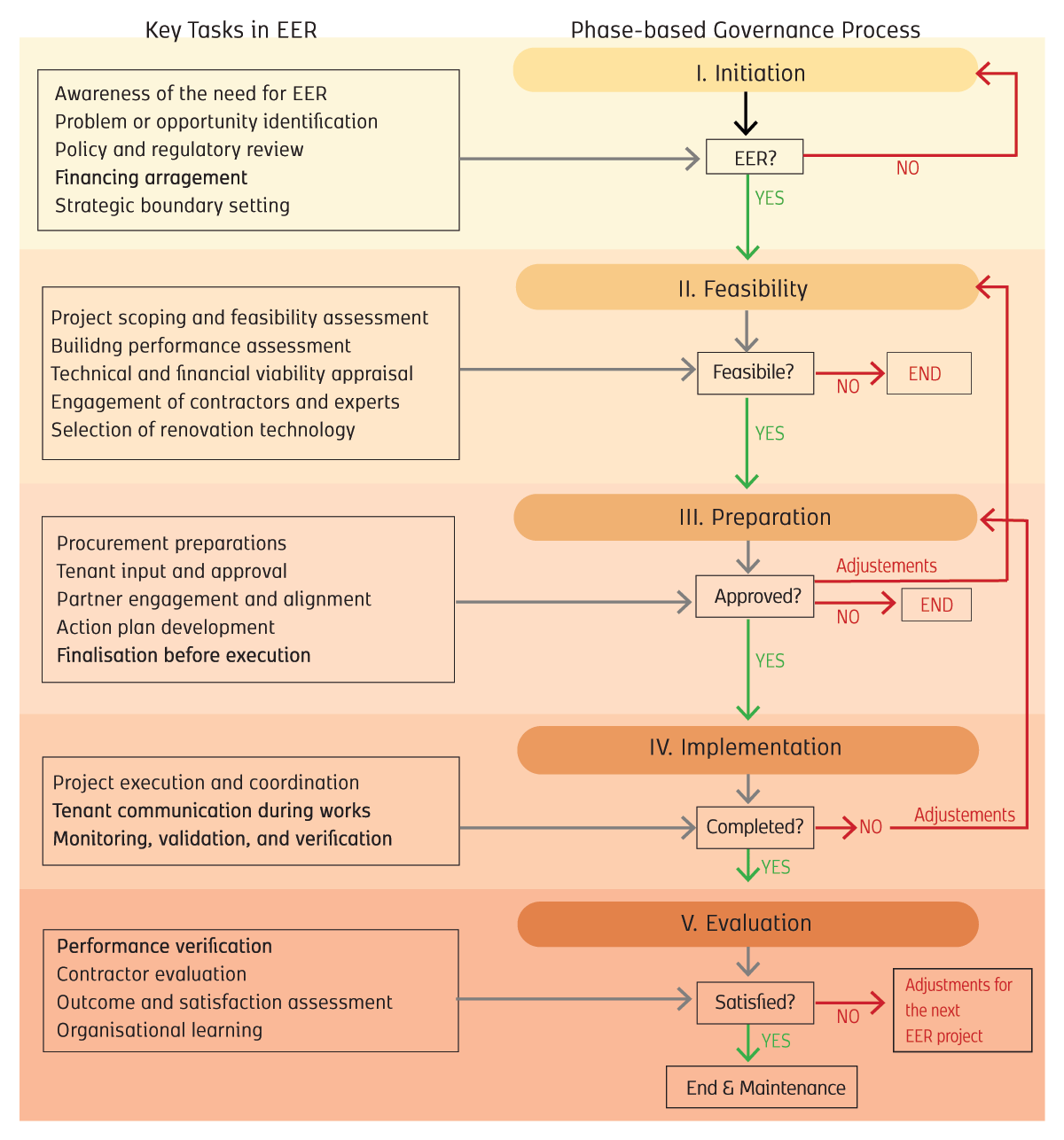
Figure 1
Estimated key phases and tasks of an EER decision-making process in social housing (Author’s synthesis based on relevant literature).
A phase-based governance view also requires attention to stakeholder interfaces, because renovation outcomes depend on how actors interact across the process (Caspani & Gunnarsson, 2022; Liang et al., 2016). EER decision-making takes place in a multi-actor environment involving internal HA (organizational) actors, residents, market parties, and external institutions. In Dutch social housing, these actors can be grouped into internal HA stakeholders such as asset managers, financial staff, and project teams; users such as tenants, tenant committees, and tenant associations; market actors such as contractors, installers, and technology providers; and external institutional actors such as municipalities, regulators, and sector bodies (Horian et al., 2025; Lambrechts et al., 2021). This distinction matters because TC arise from the interaction and exchanges among project stakeholders, including costs of coordination, negotiation, monitoring, and enforcement (Williamson, 1985). TC research increasingly emphasises that such costs are not abstract project characteristics, but are produced through concrete interfaces between actors (Ketokivi and Mahoney, 2015; Qian et al., 2015).
2.2 Transaction Cost Theory (TCT): Hidden costs in renovation
Developed by Ronald Coase (1937/1986), and further expanded upon by Oliver Williamson (1979; Williamson, 1985), the TCT helps to detect hidden barriers and explains organizational decision-making in terms of the costs of coordination, contracting, and exchange. TCT extends beyond a general cost-benefit analysis by examining less visible costs that contribute to governance challenges and inefficient transactions. In the built environment research, it provides a valuable lens for identifying “hidden barriers” that emerge throughout the renovation process that go beyond direct investment and construction cost. These TC typically arise across project phases, especially where new technologies, multiple stakeholders, and policy compliance create additional coordination demands. Accordingly, this study applies TCT as a governance lens to examine where and why such hidden costs emerge in renovation processes.
The context-related review of literature revealed five overarching TC-categories (Kiss, 2016; Kiss & Mundaca, 2014; Qian et al., 2015; Wang et al., 2025; Wu et al., 2019): First, due diligence costs (DDC) arise from collecting, verifying, and assessing information prior to entering a project, such as feasibility assessments, screening procedures, and checks of stakeholders’ reliability, financial stability, technical capacity, or regulatory compliance Second, search for information costs (SIC) relate to information gathering activities, including obtaining certifications and technical specifications, as well as identifying relevant policy requirements, subsidy conditions, or suppliers. Third, negotiation costs (NC) reflect the resources devoted to coordination and communication, including efforts associated with conflict management and dispute resolution. Fourth, approval and certification costs (ACC) occur when transactions require formal authorization by institutional bodies or other competent authorities. Fifth, monitoring and verification costs (MVC) include activities such as quality control, random inspections, and reviews of compliance with policy and performance requirements.
The level of TC is shaped by three pillars: asset specificity, transaction frequency, and uncertainty (Qian et al., 2014, inspired by Williamson, 1985, 1996). Asset specificity refers to investments that cannot be reallocated without incurring losses (i.e., “sunk” cost) and often require non-standard contracting and raising TC (Williamson, 1985, 1996). Frequency refers to recurring interactions or repetitive transactions, whereas TC can be reduced through learning and long-term contracting. Uncertainty refers to situations involving imperfect or unknown information and are aspects of economic, market, and policy uncertainty. The factor of uncertainty has been in discussion as the behavioural uncertainty of involved stakeholders influences TC, particularly when the transactions are seen as asset-specific (Coggan et al., 2010). Recent studies have refined TCT by linking these pillars to practical determinants in renovation projects. For example, professional expertise, project-specific knowledge, tailored contracts, and specialized personnel have been connected to asset specificity, while technical, institutional, and behavioural uncertainty have been linked to the uncertainty pillar (Li et al., 2013; Tan et al., 2026; Wang et al., 2025).
However, TCT alone does not fully explain the behavioural dynamics observed in renovation decision-making. Prior studies in TCT research show that factors such as split incentive, information asymmetry, opportunistic behaviour, and ill-informed users can intensify TC, especially in tenant-sensitive contexts where landlord and tenant interests are misaligned (Castellazzi et al., 2017; Qian et al., 2014). Although Williamson (1996) already acknowledged behavioural assumptions such as bounded rationality and opportunism, renovation literature suggests that a stronger behavioural lens is needed to explain how such frictions shape decision-making in practice. For this reason, TCT in this study is complemented with behavioural insights.
2.3 Behavioural Insights (BI): influencing decision-making, and friction in collaboration
BI provides a useful lens for explaining why renovation decisions are often delayed or only partially implemented, even when technical and financial arguments appear favourable. Rooted in behavioural science, BI synthesize insights from psychology, behavioural economics, and sociology, and applies these findings to analyse and address practical problems in real-world settings (Hallsworth, 2023). In energy and policy research, BI are increasingly used to complement conventional economic explanations by clarifying how BI influence action and inaction (Kuehnhanss, 2019; Mundaca et al., 2022). In this sense, BI translates social-scientific explanations of behaviour into concepts relevant for practical policy design (Dewies et al., 2022; Dupoux et al., 2025; Hallsworth, 2023; OECD, 2019).
In this study, BI are applied not as a narrow checklist of cognitive biases, but as a broader behavioural insights lens for understanding how decisions are shaped within organisations and between collaborating actors (e.g. Hallsworth, 2023). This helps open the “black box” of decision-making that standard economic models often leave unexplained or treat as residual noise (Mundaca et al., 2022). Based on the context-specific literature review, the analytical framework distinguishes three categories of BI: cognitive, motivational, and relational.
First, cognitive determinants concern whether actors can understand, process, and evaluate a decision situation. This category includes uncertainty (U), lack of knowledge (LAK), lack of information (LAI), and the hassle factor (HF). Uncertainty concerns doubts about future outcomes, technologies, policies, or process implications, which can discourage action in complex renovation settings (Della Valle & Bertoldi, 2022; Tan et al., 2025; Wu et al., 2019). Lack of knowledge refers to insufficient expertise, skills, or awareness among decision-makers and professionals, including a limited understanding of technologies, benefits, and long-term impacts (Abrardi, 2019; Beillan et al., 2011; Caspani & Gunnarsson, 2022; Wang et al., 2025). Lack of information, captures imperfect or asymmetric access to relevant information (März, 2018; Muyingo, 2015; Wilson & Dowlatabadi, 2007). Hassle factor refers to the psychological burden associated with disruption, process complexity, and the time and energy required to engage with renovation decisions (De Vries et al., 2020). These determinants can be reinforced by status quo bias (SQB), the tendency to prefer existing arrangements (Della Valle & Bertoldi, 2022; EEA, 2023; Samuelson & Zeckhauser, 1988), or present bias (PB), the tendency to prioritise immediate costs and inconveniences over future benefits (Caspani & Gunnarsson, 2022; DellaValle, 2019; O’Donoghue & Matthew, 1999).
Second, motivational determinants refer to whether actors feel willing, secure, or motivated to engage in a decision. This category includes lack of trust (LAT), risk aversion (RA), and loss aversion (LA). Trust concerns confidence in other actors, institutions, and the information they provide (Coggan et al., 2010; DellaValle, 2019). Risk aversion reflects the tendency to avoid choices associated with uncertain outcomes (Bensouda & Benali, 2022; Tan et al., 2026). Loss aversion refers to the tendency to weigh perceived losses more heavily than equivalent gains; in renovation contexts, this means that expected disruption, or effort, may be experienced more strongly than potential future benefits (Caspani & Gunnarsson, 2022; Della Valle & Bertoldi, 2022; DellaValle, 2019; Kahneman et al., 1991).
Third, relational determinants refer to the ways decisions are shaped by social relations, conflicting interests, and perceived obligations. This category includes split incentives (SI), social responsibility (SP), and opportunism (OPP). Split incentives arise where costs and benefits are distributed unevenly across stakeholders, reducing motivation to act collectively (Della Valle & Bertoldi, 2022; Mjörnell et al., 2022). Social responsibility reflects the extent to which actors consider collective, social, or environmental consequences or requirements in their decision-making (Dobi-Rózsa & Balaci, 2024; Mjörnell et al., 2022). Opportunism captures behaviour oriented toward self-interest with limited regard for collective outcomes (Coggan et al., 2010; Tan et al., 2026), commonly discussed in TC related research (Williamson, 1985). TCT assumes that economic actors may behave opportunistically, defined as self-interest seeking, which can create contractual hazards and increase the need for appropriate governance mechanisms (Coase, 1986; Williamson, 1985).
2.4 Rationale for combining TCT and BI
This study combines TCT and BI because both address different dimensions of the same decision problem in renovation projects. TCT provides a governance lens for identifying where hidden costs arise in renovation processes, such as during due diligence, information search, negotiation, approval and certification, and monitoring and verification. Its strength lies in showing where frictions emerge in complex renovation processes. Yet, TCT tends to treat these frictions mainly as structural consequences of governance arrangements and institutional conditions.
BI complements this by explaining how and why such frictions are intensified in practice. It captures behavioural insights through which actors perceive uncertainty, process information, respond to effort, and engage with others under bounded rationality. Behavioral determinants such as lack of knowledge, trust deficits, hassle factors, and split incentives can reinforce biases such as risk aversion, loss aversion, present bias, and status quo bias, thereby amplifying coordination burdens and slowing decision-making. Drawing on Cyert and March’s (1963) behavioral theory of the firm, this study strengthens the organizational perspective by integrating existing TCT assumptions of bounded rationality and opportunism, and enriches it through a set of behavioral determinants.
3 Methodology
This study applies a theory-rooted qualitative design to develop an analytical framework that explains how “hidden barriers” emerge and persist in EER decision-making in social housing. The methodological objective is twofold: (1) to combine TCT and BI as complementary explanatory lenses, and (2) to translate this combined theoretical foundation into an analytical framework that can be used to categorize, interpret, and discuss governance-related delays and decision frictions across project phases.
The methodology follows a four-step process that combines the development of a theory-driven analytical framework, a narrative literature review, and qualitative and quantitative synthesis; see Figure 2.
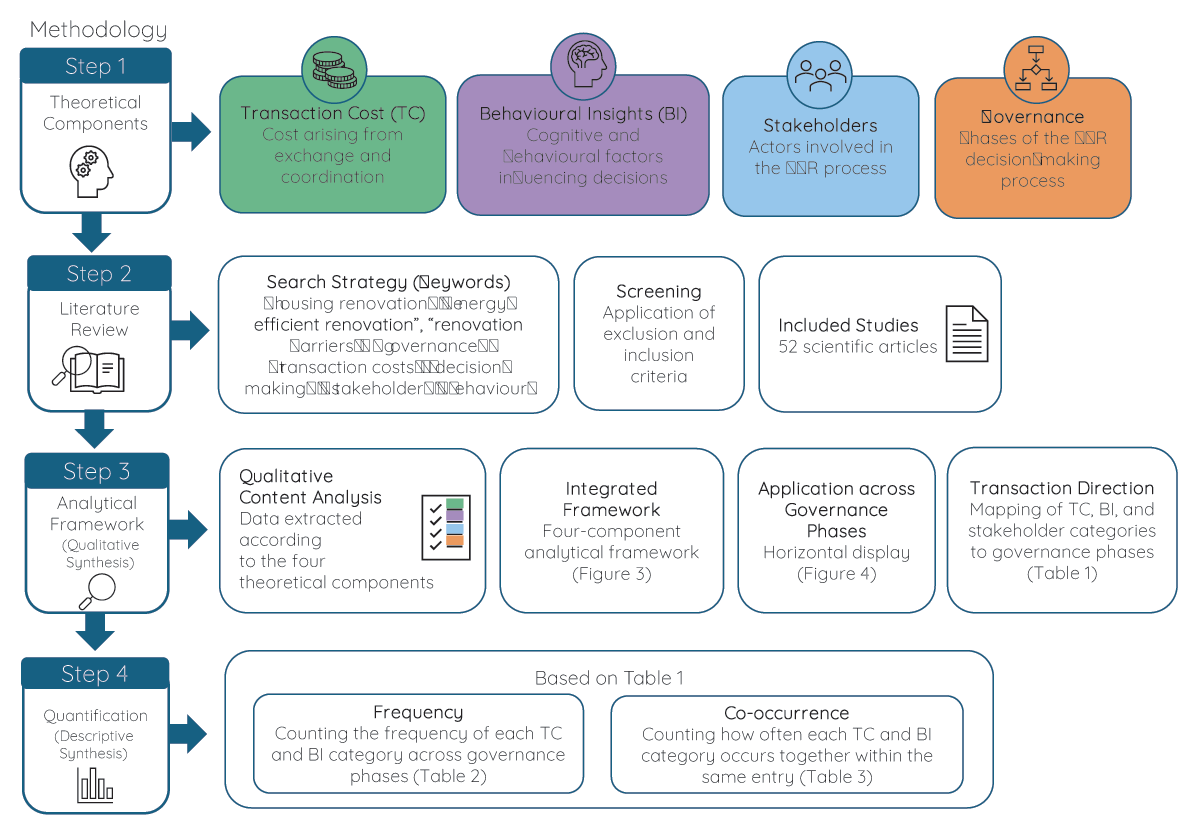
Figure 2
Research methodology.
Step 1, the study first identifies four core components that guide the review and analysis: governance and stakeholder interfaces (Section 2.1), transaction costs (Section 2.2), and behavioural insights (Section 2.3).
Step 2, a narrative literature review was conducted to support theoretical development. The semi-systematic or narrative literature review is suitable when a research topic has been examined from various perspectives across multiple disciplines, making a full systematic review process impractical (Green et al., 2006; Wong et al., 2013). The review followed an interpretative and iterative approach, in which academic literature was identified through combinations of keywords such as “housing renovation”, “energy-efficient renovation”, “renovation barriers”, “governance”, “transaction costs”, “decision-making”, “stakeholder”, and “behaviour” using search option of Scopus and Google Scholar, complemented by backward and forward snowballing from key publications. Studies focusing solely on technical aspects of EER, without addressing organizational governance processes, management, or stakeholder interactions, were excluded. The analytical framework draws on 52 scientific articles: 21 primarily address TC, while the remaining 31 examine behavioural factors that can be interpreted through a BI lens.
The review included studies addressing EER governance and organisational challenges, including social housing renovation governance, as well as studies from adjacent transformation contexts where comparable coordination and decision frictions have been identified and documented. These include renovation and retrofitting (Ebrahimigharehbaghi et al., 2020; Kiss, 2013; Kiss & Mundaca, 2014; Li et al., 2025; Lundmark, 2024; Mundaca et al., 2013; Pardalis et al., 2021), nearly zero-energy buildings (Wang et al., 2025), prefabricated housing (Wu et al., 2019), building information modelling (Tan et al., 2025, 2026), greenhouse gas emission trading (Antinori & Sathaye, 2007), contracting (Lu et al., 2015; Meijer & Straub, 2022; Rajeh et al., 2015), environmental policy (Coggan et al., 2010), and a behavioural perspective for energy efficiency (De Feijter, 2023; De Vries et al., 2020; Della Valle & Bertoldi, 2022; März, 2018) or energy use (Mundaca et al., 2022; Wilson & Dowlatabadi, 2007).
Step 3, the development of the theoretical and analytical framework. A theoretical framework refers to a structured synthesis of concepts and relationships derived from prior theory that guides how a phenomenon is explained and what elements should be included in subsequent analysis (Grant & Osanloo, 2014). Here, the theoretical framework is derived from literature at the intersection of:
TCT-informed accounts of decision-making and governance in the built environment, and/or
behavioural lenses applied to organisational and multi-actor transformation processes relevant to EER.
The theoretical framework is treated as the result of the literature review (intellectual positioning and conceptual grounding). It is presented as a methodological device that enables structured categorisation and interpretation, and provides a basis for broader discussion and guides empirical research (Miles & Huberman, 1994; Ostrom, 2009). The contribution of connecting BI to the intensification of TC is treated as a theory-driven finding emerging from literature synthesis, which is used to support more specific mitigation strategies and policy design by clarifying which BI are likely to intensify which TC in tenant-sensitive, multi-actor EER projects. For clarity, a perspective of a stakeholder has to be taken in order to identify the transaction direction, e.g., TC caused by the construction owner that affects various collaborating stakeholders (Li et al., 2013; Qian et al., 2015).
The literature reviewed in Sections 2.1–2.3 was interpreted and organised according to four theoretical components. The components and relationships were further refined based on the broader literature review, resulting in the four-component analytical framework presented in Figure 3, and subsequently adapted for horizontal application across the governance phases, presented in Figure 4. Building on this framework, the selected scientific literature was qualitatively analysed using content analysis. Coding was conducted at the level of text passages rather than individual words. A coding unit consisted of a passage in which a study described a barrier related to a specific phase of the EER process. Each relevant passage was then classified according to the corresponding TC, BI, and stakeholder category. To avoid double counting, each category was recorded only once per EER phase within each study, even when it was mentioned multiple times. Accordingly, each entry in Table 1 represents one unique combination of TC, BI, and stakeholder category, and the EER phase identified in the reviewed literature.
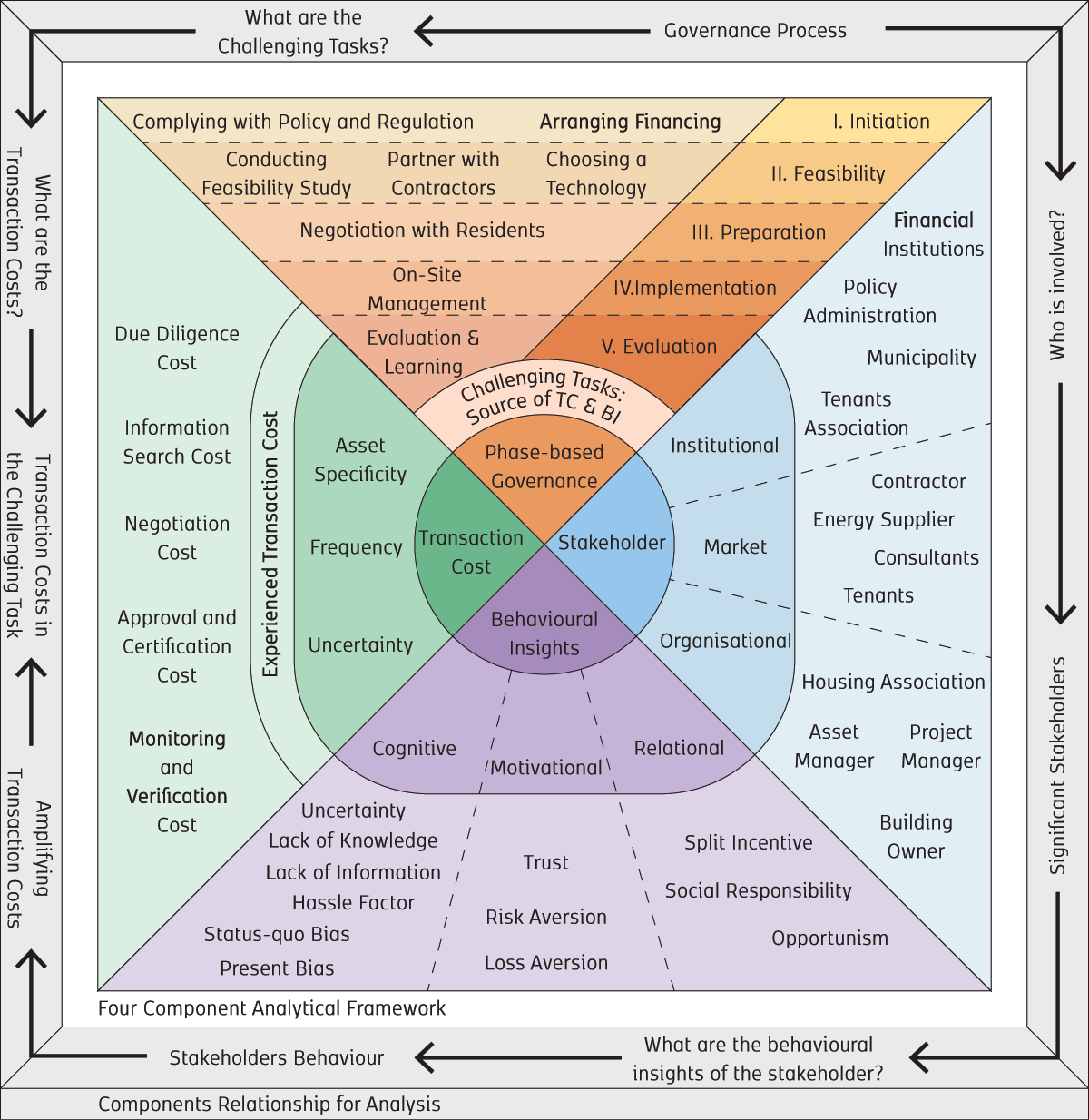
Figure 3
A four-component analytical framework (designed by the author, based on theoretical assumptions).
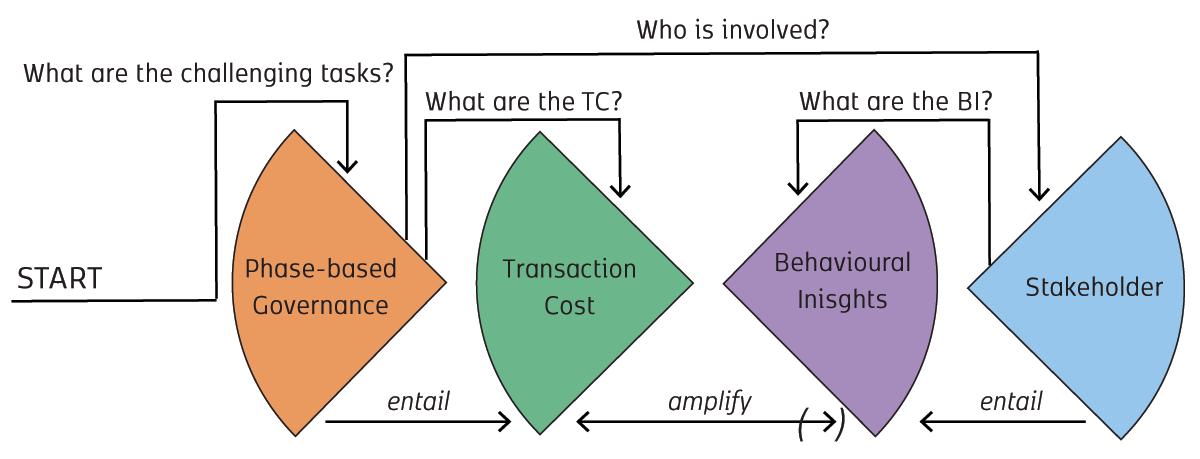
Figure 4
Instructions for analysis using the four-component analytical framework for horizontal display (based on Figure 3).
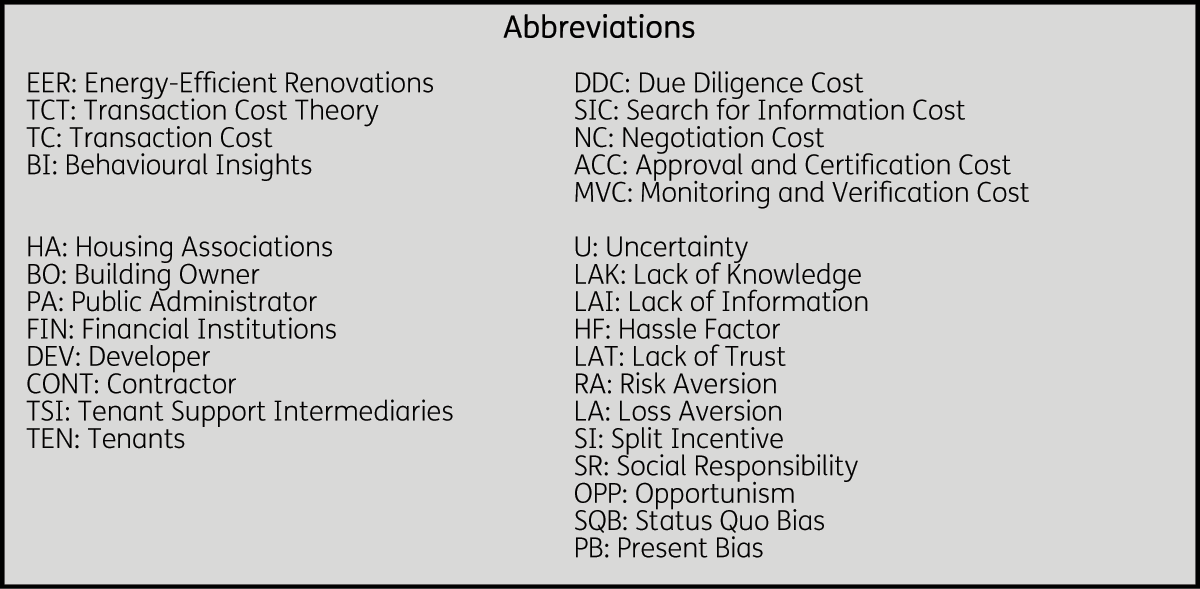
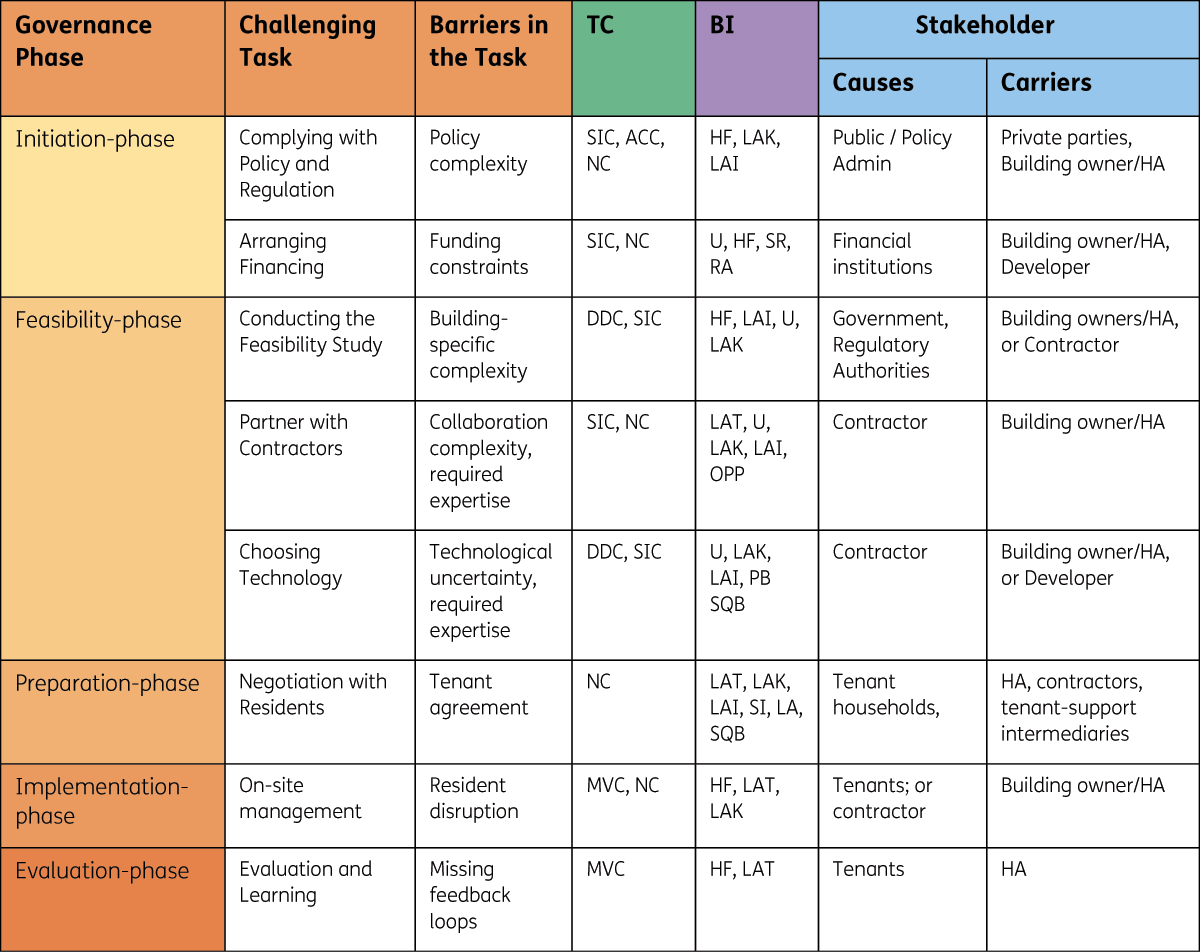
Table 1
Transaction costs, behavioural insights, and stakeholders in social housing EER projects (summary of sections 4.2.1 to 4.2.5).
Note: This table summarises the coded findings from the 52 scientific articles analysed and discussed in Sections 4.2.1–4.2.5. The organisation of the findings follows the analytical framework presented in Figures 3 and 4, linking EER phases with TC, BI, and stakeholder categories.
Step 4, quantification (descriptive synthesis), is based on the entries in Table 1. The frequency of each TC and BI category across the governance phases is counted and presented in Table 2, while the co-occurrence of TC and BI categories is presented in Table 3.
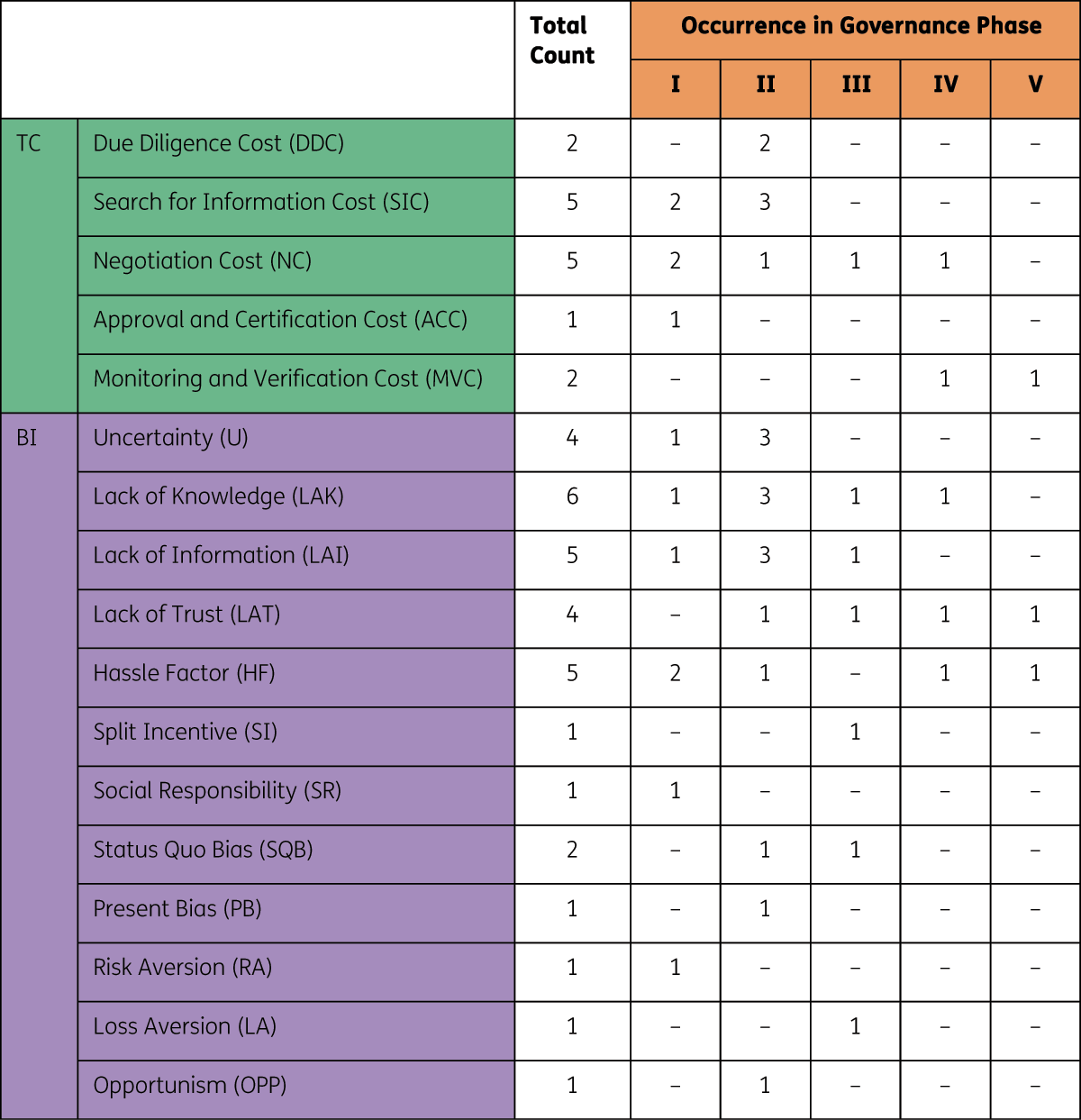
Table 2
Frequency of TC and BI categories across governance phases (based on Table 1).
Note: This table is derived from Table 1 and presents the frequency of each TC and BI category across the EER governance phases.
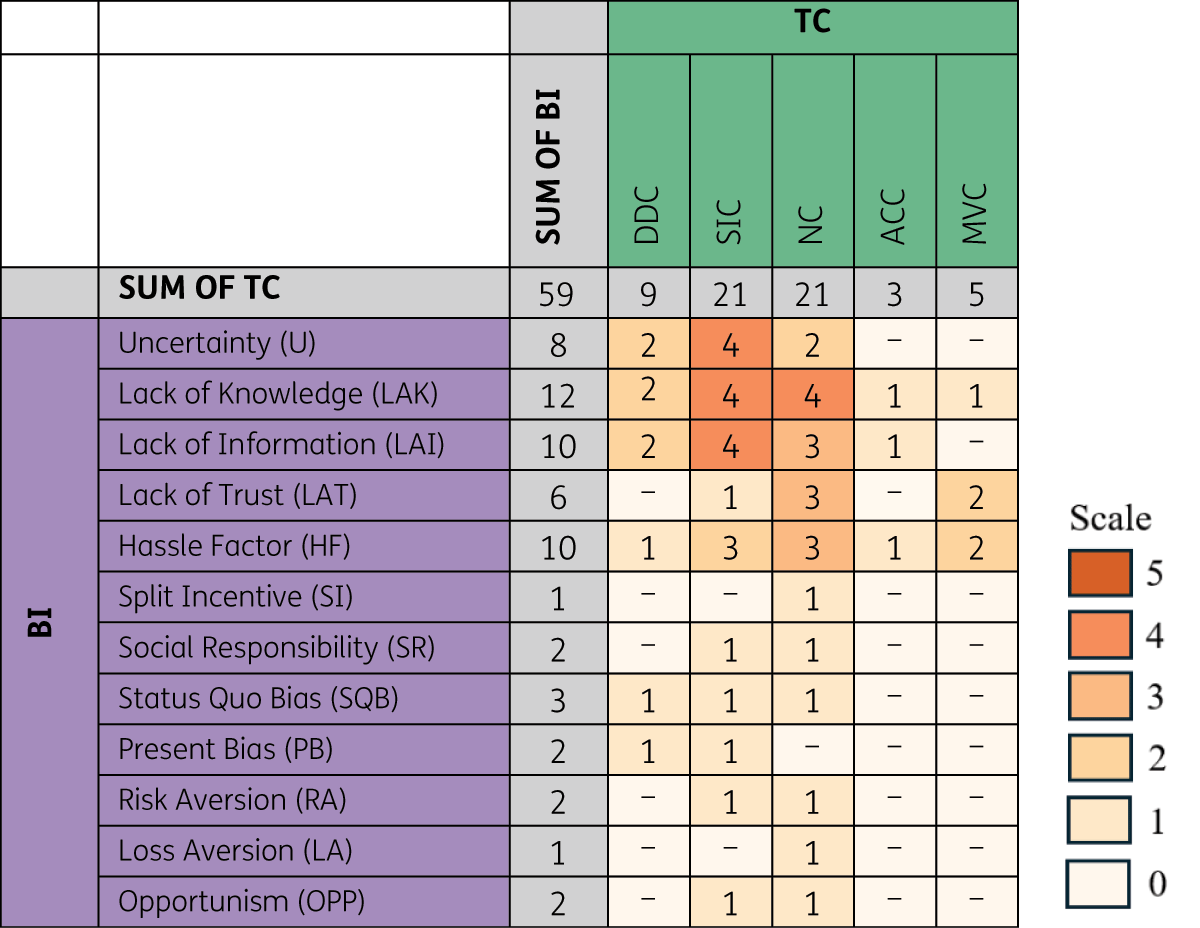
Table 3
Co-occurrence of TC and BI (based on Table 1).
Note: This table is derived from Table 1 and presents the co-occurrence of TC and BI categories. The co-occurrence indicates how often a specific TC category and BI category are identified together within the same Table 1 entry.
4 Results and Discussion
4.1 A four-component analytical framework
Building on the literature review in Sections 2.1, 2.2, and 2.3, this study sees a great fit in the integration of the TCT and BI lenses to develop an analytical framework proposed in Figure 3. The analytical framework (Figure 3) supports analysis along a single logic: (1 – orange) governance phases specify “where” decisions occur; (2 – blue) stakeholder configurations specify “who” interacts; (3 – green) TC categories specify “what type of friction” is generated; and (4 – purple) BI categories specify “why frictions escalate” under bounded rationality and social influence. It provides an overview of what is included in the analysis. The outer border of the quadrant explains the relationship between the components, and the inner quadrant explains the four components.
4.2 Showing connections: TC and BI per task in the decision phase and stakeholder involvement
The analytical framework rests on the proposition that TC and BI co-produce delays and non-adoption in renovation governance. Its contribution is to make this interaction explicit by linking each governance phase to a challenging task, the stakeholders involved, the TC generated, and the BI that may amplify them. Accordingly, the literature is analysed through a four-component sequence: Challenging task → stakeholder involved → TC → BI, which amplifies the TC (see Figure 4).
The phase-based examples presented in Table 1 (sections 4.2.1–4.2.5) are not intended as absolute or universally fixed relationships. They are theory-informed interpretations of recurring patterns in the literature and should be understood as plausible analytical explanations rather than deterministic causal statements.
4.2.1 Initiation phase: awareness, research, and information gathering
Challenging task: complying with policy and regulations. A key challenge in this phase is complying with policy and regulations, as changing laws and subsidies, regulatory requirements, permit procedures, and building transition approvals can delay or complicate decisions on EER (Horian et al., 2025). The main stakeholders involved are HA, as the building owner, and policy users (Horian et al., 2025), alongside public administrators and other private parties engaged in compliance and approval processes, for whom research, information gathering, and policy analysis already involve TC (Coggan et al., 2010). These pressures generate a search for information cost (SIC), as the building owner must invest time and resources in identifying relevant policy support and collecting compliance-related information (Coggan et al., 2010; W. Li et al., 2025). In addition, approval-related interaction with government departments created further TC in the form of approval, which causes negotiation cost (Kiss, 2016; W. Li et al., 2025). From a behavioural perspective, these TC appear to be further reinforced when policy information is perceived as complex and burdensome, creating hassle factors that slow down information processing until the information is neglected (De Vries et al., 2020). Limited understanding of incentive policies adds to this complexity and may further increase the effort required to identify and assess applicable support schemes (Wang et al., 2025). This challenge can be compounded by stakeholder-related barriers, including a lack of awareness and interest, a shortage of qualified advisors, a lack of transparency and communication, or insufficient technical know-how (Elgendy et al., 2024).
Challenging task: arranging financing. Another key challenge is arranging finance, as high upfront costs, difficult collection of funds, insufficient funding, and limited access to financing can constrain the initiation of EER projects (Elgendy et al., 2024). The main stakeholders involved are building owners and developers, together with financial institutions that shape access to capital and lending conditions (Qian et al., 2014; Wang et al., 2025). The related TC arises primarily from difficulties in assessing payback periods and financial returns, which increases the search for information costs for building owners and developers (Wang et al., 2025). In addition, project-specific financing arrangements often require extensive contract negotiation, generating further negotiation costs between project actors and financial providers (Wang et al., 2025). From a behavioural perspective, these costs may be further intensified by risk aversion, particularly where investments are associated with technical uncertainty and uncertain future returns (Caspani & Gunnarsson, 2022; Qian et al., 2014). Uncertainty over whether high upfront costs will be justified by future savings can discourage commitment to renovation finance (Femenías et al., 2018), especially where large initial expenditures are required (Hope & Booth, 2014) conflicting with the social responsibility of social housing (Mjörnell et al., 2019). In addition, the process of applying for subsidies and loans may itself create hassle factors, adding psychological burden to already constrained financial decision-making (De Vries et al., 2020).
4.2.2 Feasibility phase: assessment and partnering with experts
Challenging task: conducting the feasibility study. A challenge in this phase is conducting the feasibility study. Because feasibility assessments, pre-studies, and technical procurement requirements are highly building-specific, they entail substantial due diligence and information search costs (Kiss, 2016; Tan et al., 2025; Wang et al., 2025; Wu et al., 2019). The main stakeholders involved are building owners, developers, contractors, and, in some cases, local governments, which must collect and compare policies, standards, and guidelines (Kiss, 2016; Tan et al., 2025; Wang et al., 2025; Wu et al., 2019). Carriers of these challenges are the building owner, HA or contractors involved in collecting and assessing the building-specific information, while governments or regulatory authorities may contribute to the challenge through complex and fragmented policies, standards, approval procedures and technical requirements. From a behavioural perspective, the complexity of this task points to decision frictions related to effortful choice (De Vries et al., 2020), imperfect information, and inattention (Caspani & Gunnarsson, 2022; DellaValle, 2019), and institutional uncertainty and lack the professional knowledge needed to assess building-specific options (Tan et al., 2026). This interpretation is consistent with reported barriers such as lack of technical know-how, weak quality assurance, absence of standardized solutions, and complex multi-level regulations (Elgendy et al., 2024).
Challenging task: partner with contractors. A second challenge is partnering with contractors. In order to compensate for limited knowledge of policy, finance, and technical options, building owners often seek external expertise, which in the Dutch HA context may be provided by contractors (Eikelenboom et al., 2021; Meijer & Straub, 2022). Dutch HA pursues such partnerships to streamline renovation processes and improve sustainability, quality, and comfort outcomes while keeping total housing costs as low as possible (Meijer & Straub, 2022). Yet, establishing these partnerships also creates substantial search for information cost and negotiation cost, as suitable collaboration arrangements must be identified and contracts specified between HA/developers, and contractors (Kiss, 2016; Tan et al., 2026). These TCs increase further when contracts are highly specific, and professional capacity is scarce (Tan et al., 2026), or decision-makers have limited prior experience (Mundaca et al., 2013). From a behavioural perspective, these dynamics highlight the relevance of distrust and behavioural uncertainty, particularly when actors anticipate opportunistic behaviour or question whether the contractor’s motivations, capabilities, and quality standards align with those of the HA. Under such conditions, more proof, monitoring, and contractual detail may be demanded, thereby further inflating TC.
Challenging task: choosing technology. A third major challenge in the feasibility phase is choosing the technology. Selecting appropriate technologies for energy efficiency requires substantial additional knowledge about emerging technical options, products, and performance principles, making this a time-intensive task for building owners, developers, and contractors (Kiss, 2016; Muyingo, 2015). As a result, the task generates both due diligence costs and search for information costs, particularly under conditions of technological uncertainty (Kiss, 2016; Tan et al., 2026). In this case, the building owner/HA bears the cost when the contractor cannot provide the necessary expertise or access to the necessary technology. From a behavioural perspective, such uncertainty may reinforce incorrect expectations, non-standard beliefs, and reluctance to invest in unfamiliar energy-efficient technologies (Della Valle & Bertoldi, 2022). Present bias may further shift attention toward immediate burdens rather than long-term gains, while status quo bias can reinforce preference for maintaining existing systems instead of pursuing upgrades (Della Valle & Bertoldi, 2022).
4.2.3 Preparation phase: approvals and resident-side alignment
Challenging task: negotiation with residents, getting their approval. In the preparation phase, a central challenge is negotiating with residents and securing their approval, as reaching an agreement among affected tenants can substantially delay the renovation trajectory (Horian et al., 2025; Maghsoudi Nia et al., 2024). One barrier could be the legally required tenant agreement in some countries, e.g. 70% threshold in the Netherlands, and formal tenant approval in Sweden and Denmark (Reindl et al., 2025; Straub & Meijer, 2025). However, tenants appreciate being chosen and receiving attention in EER projects (Furman & Hadjri, 2025; Mjörnell et al., 2022). The main stakeholders involved are HA, tenant households, and tenant representatives, retrofit contractors, and, in some cases, municipal or tenant-support intermediaries that facilitate communication and dispute resolution, such as energy coaches (Croon et al., 2025; Straub & Meijer, 2025). These frictions generate negotiation costs, as substantial effort is required to provide information, address concerns, and build consensus around participation in the renovation project (W. Li et al., 2025). From a behavioural perspective, these costs may be further intensified by loss aversion and status quo bias, as immediate disruption may weigh more heavily in residents’ decision-making than future gains in comfort or energy performance (Della Valle & Bertoldi, 2022). Trust concerns and perceived unfairness can further delay approval (Brown et al., 2014), particularly where tenants lack the knowledge needed to assess a complex renovation proposal and differ in their policy knowledge, technical understanding, environmental concerns, attitudes toward becoming natural gas free, trust in actors, and areas of interest (Bensouda & Benali, 2022; Jansma et al., 2020). This challenge is further shaped by the split-incentive dilemma, a condition that captures transactionally active tenant negotiation, influenced by an imbalance in perceived benefits (Dobi-Rózsa & Balaci, 2024; Palm & Reindl, 2018) At the same time, information asymmetry between project developers and end-users can further complicate informed approval and resident-side alignment (Qian et al., 2015).
4.2.4 Implementation phase: coordination and monitoring
Task: on-site management. In the implementation phase, a central challenge is on-site management, as renovation work must be coordinated in occupied buildings while minimizing disruption and maintaining quality standards (Jia et al., 2021). In the Dutch context, barriers include poor communication by HA and contractors, and major disruptions such as mess left behind, nuisance from scaffolding, repeated house visits, noise, work across multiple living spaces, occupied parking areas, changing schedules, and excessive dust (Broers et al., 2022). The main stakeholders involved are HA as building owners, main contractors, subcontractors, and tenants (Furman & Hadjri, 2025; Tan et al., 2026). These execution-phase frictions generate substantial monitoring and verification costs for the building owner, as works must be continuously supervised, corrected, and aligned with contractual and regulatory expectations (Ebrahimigharehbaghi et al., 2022; Kiss, 2016). From a behavioural perspective, these costs may be further intensified when renovation disrupts daily routines and is experienced as burdensome by occupants, creating hassle factors that increase frustration and reduce cooperation (De Vries et al., 2020). Complaints and resistance may become more likely when tenants feel treated as passive recipients rather than as partners in the process, making communication and trust critical to implementation in social housing settings (Brown et al., 2014; Morgan et al., 2024). In addition, a lack of technical know-how and lack of quality assurance can further exacerbate coordination and monitoring difficulties (Elgendy et al., 2024).
4.2.5 Evaluation phase: performance verification and learning
Challenging task: evaluation and learning. In social housing renovation programs, a recurring barrier is that post-renovation performance and user experience are not systematically captured or translated into future projects (Maslova & Burgess, 2023). This is particularly relevant in occupied stock, where tenant-reported outcomes frequently reveal problems that remain invisible in design-stage assumptions and thereby help explain performance gaps between predicted and actual outcomes (Salvia et al., 2020). The main stakeholders involved are HA, which typically carry out post-renovation evaluation, together with tenants whose experiences and in-home conditions form an essential source of feedback (Colclough et al., 2022; Pedersen et al., 2021). These barriers generate monitoring and verification costs, as additional inspections, measurement campaigns, and evidence compilation are required to assess actual performance and document lessons for future projects (Maslova & Burgess, 2023). From a behavioural perspective, these costs may be further intensified by hassle factors and distrust, which can reduce willingness to share usage data or allow access to the home for follow-up monitoring (Salvia et al., 2020).
4.3 Co-occurrence, support for policy and practitioners
The findings show that TCT and BI are complementary diagnostic lenses for identifying renovation barriers and informing more effective policy and practice. Across the reviewed literature, frictions concentrate primarily in the early governance phases, especially in initiation and feasibility, where actors must define problems, gather information, assess options, and align stakeholders. This indicates that barriers emerge early, before implementation begins.
Table 2 shows that lack of knowledge, lack of information, trust, and hassle factors are the most recurrent BI across governance phases, pointing to persistent cognitive burdens throughout renovation processes. Among TC, search for information and negotiation costs occur most frequently, underscoring the central role of information gathering, coordination, and stakeholder alignment. Although fewer barriers are identified in later phases, monitoring and verification costs and hassle factors remain relevant during implementation and evaluation, suggesting that burdens do not disappear once projects move beyond planning.
Table 3 demonstrates that BI rarely occurs in isolation. Rather, they cluster with specific TC categories. In particular, lack of knowledge and lack of information frequently co-occur with search for information costs and negotiation costs, indicating that informational deficits and coordination burdens reinforce one another. Trust and uncertainty are also linked to several TC, showing that collaboration problems seem to be relational and behavioural. These results support analysing renovation governance through an integrated TCT-BI perspective.
For policymakers and practitioners, this implies that effective support should go beyond financial and technical instruments alone. In line with BI literature, interventions should reduce cognitive and motivational frictions by simplifying processes, clarifying consequences, improving information provision, and lowering efforts through reminders, defaults, or other forms of choice architecture (Della Valle & Bertoldi, 2022; Dupoux et al., 2025; EEA, 2023; Thaler & Sunstein, 2009). TCT complements this by pointing to governance strategies that reduce coordination burdens, such as better information channels, clearer stakeholder roles, demonstration projects, and structured exchange formats (Kiss, 2016). Taken together, the findings suggest that renovation support is likely to be more effective when it addresses both behavioural frictions and the governance settings in which they arise.
5 Conclusion
This study developed an analytical framework that explains the “hidden barriers” in EER projects by linking governance phases (where decisions occur), stakeholder configurations (who interacts), TC (what frictions arise), and BI (how frictions amplify).
The applicability of this framework can be understood as follows: the governance process follows a generalized decision-making governance of Dutch HA. The stakeholders, TC, and BI, however, are established in the context-specific literature on housing associations or large-scale developers of rental dwellings. Therefore, the applicability of this is generic and designed to be adapted in various renovation processes concerning professional, large-scale EER. At present, the framework adopts an organisational perspective; however, it also offers potential for analysing individual customer decision-making journeys, for example in homeowner contexts.
The proposed framework serves as an analytical tool for researchers and practitioners to identify “hidden barriers” that may emerge as early as the initial consideration of EER or the adoption of renewable energy technologies in such projects. Practitioners and policymakers can use these insights to design appropriate incentive structures to overcome these barriers.
The framework shows that renovation barriers are not limited to technical or financial constraints but arise from the interaction of coordination burdens and behavioural frictions throughout the project trajectory. TCs are therefore not confined to initial contracting; they recur throughout the process, from early scoping and feasibility to implementation, monitoring, and aftercare. BI helps explain how and why these frictions intensify, for example, through a lack of knowledge, information, trust, uncertainty, and hassle. The contribution of this study is to offer a complementary lens for analysing and anticipating barriers to successful renovation transitions, while also supporting the design of more effective interventions. In this way, TCT, rooted in institutional economics, is strengthened by incorporating behavioural mechanisms that shape how TC arise, accumulate, and persist in practice.
While this analytical framework examines hidden barriers from a horizontal transaction-level perspective, moving from barriers identified the governance process, to challenging tasks, and subsequently to TC shaped by stakeholder behaviour, the TC–BI relationship may also operate in the opposite direction. For example, implementation-related hassle may generate distrust, which in turn increases monitoring costs in the next projects. In this article, we deliberately focus on amplifying direction from BI to TC, while recognizing the reverse feedback loop as an important avenue for future empirical research.
Acknowledgements
We are thankful to the eceee 2026 Summer Study for presenting an earlier version of this analytical framework in “Panel 7: Policies and Programs for Better Buildings”. Further, we explored its applicability to other European and international contexts of EER projects across tenures beyond social housing in a validation workshop.
Data Accessibility Statement
All literature used for this study is referenced accordingly and mentioned in the references.
Author Contributions
Stefanie Horian: Conceptualization, Writing – original draft, review, editing, Methodology, Investigation, Formal Analysis, Data curation, Data development. Queena K. Qian: Conceptualization, Writing – review, editing, Supervision, Funding acquisition. Henk Visscher: Writing – review, editing, Supervision.