
Introduction
English is widely recognized as an essential skill that opens opportunities for children and adults to participate in the global labor market, higher education, and the global community at large. As such, the aim of English instruction for non-English learners is to enable them to function in most life spheres in accordance with their needs and desires (Laufer & Hulstijn 2001; Harmer 2007; Hoter 2020). Education systems allocate resources to teach English as a second or additional language as part of their recognition of the responsibility to prepare their students for a changing future (Copland et al. 2023) and ‘to equip learners with skills such as communication and interpersonal relationships, personal resilience, self-awareness, critical thinking, and international language skills’ (Israeli Ministry of Education [IMOE] site 2023). This trend is evident across diverse educational contexts, from East Asia to Europe, where countries are reforming their English education policies to meet future challenges (Lee 2024). However, teaching and learning English as a foreign language presents a complex challenge for both teachers and students alike, and regarding spoken language acquisition, it requires students to gain confidence and mastery in using oral language for real-time communication (Copland et al. 2014). AI has significantly transformed spoken English education by providing innovative tools and platforms that enhance learning experiences offer personalized and interactive learning environments that improve students’ speaking proficiency (Anggraini & Faisal 2024).
This study is informed by several foundational theories in the field of second language acquisition that support the pedagogical design principles implemented. Vygotsky’s Sociocultural Theory (1978) emphasizes the central role of social interaction and mediated learning in cognitive development, suggesting that language learning is most effective when it occurs through meaningful, collaborative activities supported by tools or more knowledgeable peers. This aligns with our emphasis on AI as a mediating tool. In addition, Swain’s (1995) Output Hypothesis highlights the importance of language production in promoting learners’ awareness of linguistic gaps and fostering language development. This supports our focus on creating opportunities for students to produce spoken English actively and reflectively, both through interaction with AI and in classroom-based speaking tasks. Finally, Long’s Interaction Hypothesis (1996) underscores the role of negotiation of meaning in language acquisition, proposing that conversational interaction facilitates language development when learners modify their output in response to feedback. This principle is reflected in our design of dialogic interactions with AI platforms. By grounding the study in these well-established theories, we provide a robust theoretical foundation for the design elements and instructional strategies employed in the development of the AI-enhanced learning environment.
Challenges in Teaching Spoken English
Teaching a foreign language involves four foundational components: reading, writing, listening, and speaking. These are grouped into receptive language skills of reading and listening for input assimilation and productive language skills of writing and speaking for active expression. The distinction between receptive and productive language skills significantly influences English teaching methodology and classroom management. While students may excel in understanding English, they often struggle with speaking skills (Burns 2019).
Many factors can affect students’ English speaking abilities (see Figure 1): a primary factor is limited exposure and opportunities to speak and hear the language. Another is a lack of mastery in grammar, pronunciation, vocabulary, comprehension, and fluency. Alongside these, there are psychological barriers such as lack of confidence, fear of speaking in public, and fear of taking the risk of speaking in front of a peer group (Burns 2019; Nartha 2024).
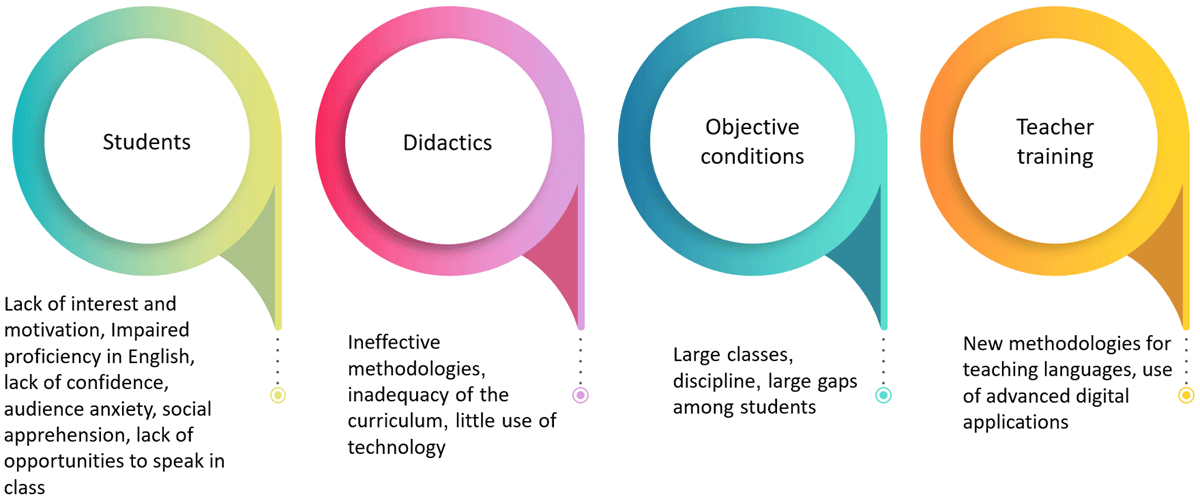
Figure 1
Summary of challenges in teaching and learning spoken English (Burns 2019; Ferlazzo 2023, Leong & Ahmadi 2017; Nartha 2024; Rivera & Villanueva 2023).
Many learners are deterred from producing language due to awareness of their limitations in formal structures, thus avoiding practicing and developing their communication skills. Furthermore, the desire to improve speaking proficiency in English also depends on the students’ motivation level (which is not always sufficiently encouraged by the teacher), a lack of interest in the material being taught, and limited opportunities to speak English in class (Leong & Ahmadi 2017).
The formal classroom framework is usually not ideal for acquiring authentic spoken language. Moreover, language acquisition—and spoken language acquisition in particular—heavily relies on the learners’ ability to receive personal and immediate feedback, which can enhance the feeling of success and the learners’ motivation level but is often not feasible within the typical classroom setting (Rivera & Villanueva 2023).
At the teacher level, teaching spoken English poses a significant challenge worldwide. Teachers face difficulties due to inadequate training and ineffective teaching methods while also dealing with external constraints such as large classes, disciplinary problems, and heterogeneous groups. In the context of learning a second language, where exposure is limited to class time, these challenges are often amplified by teachers’ insufficient language proficiency levels and limited abilities to create speaking opportunities. Inadequate lesson time and frontal teaching approaches further reduce students’ speaking time in class (Leong & Ahmadi 2017; Ferlazzo 2023).
Pre-AI Digital Tools in Language Learning
Traditional language learning methods emphasize reading and writing with passive, context-detached acquisition of grammar rules and vocabulary (Richards & Rodgers 2014). Technology integration has advantages in enhancing English language teaching methods (Whig 2022) and has been shown to increase school students’ engagement and motivation in language learning (Abdullaeva 2023). Digital tools enable interaction with native speakers and authentic communication (Bao & Lv 2022), while allowing personalized learning at the students’ own pace (Alqahtani 2019). These tools promote learners’ autonomy and adaptability (Ding 2018), providing immediate feedback on performance (Heift & Chapelle 2012). The use of audio, video, and visual graphics enhances motivation (Xie et al. 2019; Sadoski 2005), while digital simulation imitates authentic verbal interaction (Peterson 2012). However, technology may also serve as a distraction from learning content (Saylan et al. 2023), cause cognitive overload (Mayer 2019), and limit direct human interaction (Dooly 2022). Effective educational applications should be learning-efficient and user-friendly (Ngadiman et al. 2020; Wartella 2015), promote active learning (Dawson & Donevant 2023), provide meaningful experiences (Ngadiman et al. 2021), and facilitate social interaction. According to Kessler & Hubbard (2017) and Gonda et al. (2018), combining tailored pedagogy with technology maximizes learning benefits, aligning with recent findings that ‘technology-based and face-to-face interaction activities may complement each other for effective instruction’ (Haim & Levi, 2024, p. 44). Canals & Mor (2022) identified key principles for technology-enhanced language teaching, emphasizing active language use and learning-by-doing. Additional principles include promoting meaning-focused tasks in immersive environments, though some aspects like timely feedback and collaborative learning did not reach expert consensus.
While pre-AI digital tools have made significant contributions to language learning, their limitations in providing personalized, adaptive, and interactive learning experiences became increasingly apparent. These traditional tools, though valuable, often lack the sophistication needed for complex language learning tasks, particularly in oral skills development (Shadiev & Yang 2020; Shaji & Nagaraj 2020). The emergence of artificial intelligence in education marks a paradigm shift in addressing these limitations. As we transition from static digital solutions to intelligent, adaptive systems, it becomes crucial to understand the evolution and current trends of AI in education, which represent a fundamental transformation in how we approach language teaching and learning.
Artificial Intelligence in Education: Evolution and Current Trends
Artificial intelligence in education has evolved over the years, from the intelligent tutoring systems of the 1960s–70s to today’s diverse applications. Current AI utilization includes personalized teaching, support for learners with disabilities, automated assessment and chatbots, learning resource curation, learning analytics, and remote supervision. These tools enable individualized learning experiences and provide comprehensive monitoring and assessment capabilities (Holmes & Tuomi 2022).
Studies examining general design principles for AI-based education platforms (AIED) have identified various clusters of principles worth considering when designing AIED technologies. Kabudi et al. (2022) conducted in-depth interviews with 22 expert researchers and developers from around the world and developed a list of 15 meaningful features and functionalities, among them game-based learning components, individualized/personalized feedback and remediation, adaptation mechanisms, adaptivity methods, effective learning analytics, measurement of skills, mastery of skills, and interactive visualized educational dashboards (Kabudi et al., 2022, p. 86). Other researchers have emphasized the importance of ethical considerations in AIED design, particularly equity and transparency (Holstein and Doroudi 2021, Webb, Luckin & Ecoff 2023), issues that have gained increased attention with AIED’s growing adoption.
AI Applications in Language Learning
Artificial intelligence-driven products are increasingly prominent in the realm of language learning in general and spoken English in particular, leveraging advanced technologies to provide personalized, interactive, and adaptive learning experiences. These AI-driven platforms, such as chatbots, virtual tutors, and language learning apps (e.g., Duolingo, Babbel, Rosetta Stone, Microsoft Team’s Reading Progress, and Google Read Along), utilize natural language processing (NLP) and machine learning algorithms to simulate conversations, offer instant feedback on pronunciation, grammar, and vocabulary (Wang et al. 2024), and adapt their teaching strategies based on the learner’s progress, thereby addressing the limitations of earlier computerized systems (Zhang & Lu 2021). Many of these products incorporate speech recognition technology to accurately assess and improve the learner’s speaking skills, while others use gamification to enhance engagement and motivation (Daulay 2023).
The integration of AI into language learning tools not only democratizes access to education but also significantly enriches the process of acquiring spoken English skills, offering learners a customizable and immersive experience that traditional methods may not provide (Zou et al. 2023).
Empirical studies on the use of AI systems in spoken English suggest that the use of these platforms can have a positive impact on achievement, motivation, and self-regulated learning (Anggraini & Faisal 2024). Wei (2023) found that the use of AI-assisted language applications increased young learners’ speaking performance and reduced foreign language anxiety. Similarly, Xu et al. (2023) found that AI-assisted language learning tools improved English language learner speech and interaction. Furthermore, Li (2022) have demonstrated that an oral English teaching mode based on natural language processing can improve the comprehensive ability of oral English among middle school students (ages 12–13). Additionally, artificial intelligence plays a crucial and fundamental role in reducing educational disparities, particularly in language instruction. Recent studies indicate that AI-based technologies enable access to quality learning resources in areas where educational infrastructure is limited (Al-Smadi et al. 2024). Moreover, AI-driven platforms offer scalable solutions capable of reaching a wider audience, thus making language learning more accessible to diverse populations (Anggraini & Faisal 2024). This ability to make education accessible through advanced technology represents a significant step toward the democratization of language education on a global scale.
The Israeli Context: Computerized Oral Bagrut Exam
In 2022, the Chief Inspector for English Language Instruction of the Israeli MOE introduced a digital platform for both conducting and preparing for the oral matriculation exam, replacing the previous system of in-person assessment by human examiners. The Computerized Oral Bagrut Exam (COBE) aligns with the Common European Framework of Reference for Languages (CEFR), the international standard for describing language ability.
The matriculation exam itself is currently delivered using the schools’ computers via a separate, dedicated digital platform and consists of three parts: Part A is speaking on a topic chosen by the system from a pre-prepared list known by the student in advance of the exam; Part B is a Q&A session regarding a personal project prepared in advance by the student; and Part C is responding to a video of selected content (such as a personal interview, a lecture, or similar).
Each segment has a detailed assessment rubric in accordance with the curriculum of the English language department and is accessible to students through the MOE website. Students are tested twice using this format, first in a graded practice test modeled on the actual matriculation exam process but graded by the students’ own English teacher, and a second time using the actual matriculation exam, which is graded by external assessors. During the assessment process itself, each of the students sits individually in front of a computer as it runs the testing platform, advancing them through the matriculation stages and recording their answers. These recordings are stored in a central MOE system and are then transferred to the students’ teachers (in the case of the practice exam) or the external assessors (in the case of the actual exam), who evaluate the recording contents against the indicator.
In 2019, the Research & Development Division of the Ministry of Education of Israel, together with the Chief Inspector of English Language Instruction, issued an open call for EdTech companies to apply for the Spoken English Challenge. This competition-based pilot development initiative sought to identify and test digital platforms to increase speaking and listening time in English for junior high (7th–8th grade) students in public schools while exploring ways of integrating the use of these platforms into the existing English language curriculum. The initiative challenged the developers to improve factors such as personalization and motivation to speak everyday conversational English while reducing language anxiety. Findings from this program indicated that these technologies have the potential to enhance the teaching and learning of spoken English through increasing students’ speaking and listening time in a safe environment that contributes to their levels of confidence and exposure, thereby supporting fluency, syntax, and vocabulary acquisition. The pilot framework also exposed teachers and students to the use of tools for teaching and learning spoken English in schools and at home.
While the open call for the challenge predated widespread public access to generative AI platforms and did not require AI integration, most selected solutions already incorporated AI technology in their speech-based activities.
As a natural continuation of this project and coinciding with the rapid development of AIED applications and the concurrent public availability of generative AI tools, it was decided to examine the contribution of AI-powered platforms to learning spoken English in high schools, especially among students preparing for the matriculation exams.
The present study employs DBR to examine how AI-based tools can be effectively integrated into oral English exam preparation in the Israeli education system. Specifically, we investigate the following research question: How can AI-based tools be effectively integrated into the preparation process for the oral English matriculation exam in the Israeli education system?
Sub-questions:
What design principles should guide the development of AI-based tools for oral English exam preparation?
How do teachers and students perceive the integration of AI tools in oral English practice and assessment?
What adaptations are needed to align AI language learning platforms with specific educational assessment requirements?
Current Pilot
The Israeli MOE expressed interest in exploring whether AI-based language-learning platforms have the potential to enhance or improve students’ readiness for the oral English matriculation exam, recognizing these platforms’ abilities to provide personalized responses, immediate feedback, and extensive practice in listening and speaking skills, potentially reducing language anxiety while increasing diversity and variety in the types of interactions and conversation topics. Moreover, the MOE seeks to understand whether integrating these tools into teaching can increase students’ motivation and enable them to gain more confidence and control over using spoken English in various contexts. However, the solutions currently available are not specifically tailored to the unique requirements of the oral English matriculation exam in Israel. As a result, many teachers and students struggle to fully utilize them and harness their potential for exam preparation.
The Research & Development Division and the Languages Department of the Israeli Ministry of Education partnered to conduct a joint design research project with the following objectives:
Map the needs of teachers and students preparing for the national matriculation exam in spoken English vis-a-vis the opportunities and limitations of the current digital system for assessment practice and delivery;
Evaluate existing AI-based solutions against the needs cited above;
Determine the desirable pedagogic design principles of an AI-based system that would fit the matriculation preparation requirements as defined in the previous stages and adapt them (with the suppliers);
Glean best practices for integrating an AI-based system as part of the matriculation preparation.
This article will present preliminary findings of the research, addressing the first three objectives above.
In light of the transformative potential of implementing AI into educational settings and processes, in 2023, the IMOE established the Institute for Applied Research of AI and Education as part of the Research and Development Division. In its pilot year (2023–24), the institute was tasked with investigating the role of AI in enhancing teaching and/or learning outcomes in selected subjects and launched eight pilot studies in partnership with relevant partners from within the MOE.
The current pilot study focuses on the integration of AI applications into the preparation process of students facing the advanced-level (4–5 units) national matriculation exam in spoken English. The initiative was designed to determine the needs of high school teachers and their students regarding the exam preparation objectives against the current capabilities of AI-powered platforms in meeting those objectives, specifically, the platforms’ abilities to help advance students’ proficiency and confidence levels in spoken English.
The trial was implemented with a total of 751 high school students (ages 15–18) in 34 classrooms from 14 schools around the country, with a purposeful sample of 18 leading English teachers who were recommended for the project by the director of the languages department of the MOE. These educators, recognized for their innovative pedagogical approaches and interest in educational technology, were considered ideal candidates for testing and assessing the effectiveness of AI in enhancing teaching methodologies and student outcomes. The purpose of this collaborative venture was both to evaluate the immediate benefits and challenges associated with AI integration and to characterize the requirements of the AI system such that it would respond to the needs of teachers and students, thus establishing a foundation for broader implementation that could enhance spoken English in high schools throughout the country. Yet, this research raises questions and findings relevant for international researchers and educators regarding the adaptation of AI-based language learning tools across different cultural and educational contexts.
Methodology
Method, Procedure, & Participants
The study utilized a DBR approach, chosen as a suitable research model for studying innovative pedagogy methodologies, including new educational technologies, in dynamic learning environments (Anderson & Shattuck 2012; Mor & Winters 2007; Bell 2004). This approach was developed over 25 years ago as a way to utilize design-based methodologies to “convey the inherent complexity involved in trying to improve learners’ educational experiences, situated as they are in complex and challenging, contemporary classroom environments and beyond” (Hall, 2020, p. 158). The DBR model can be applied to improve teaching methods through close collaboration between researchers, designers, and practitioners (Amiel & Reeves 2008; Wang & Hannafin 2005) and is especially suitable for examining the role and impact of digital technologies in an educational setting (Hall 2020; Tinoca et al. 2022).
The concept of developing learning platforms or technologies through collaboration among researchers, educators, students, and entrepreneurs aligns with DBR methodologies, as this approach emphasizes the iterative design and testing of educational interventions in real-world settings, bridging the gap between pedagogic research, real-world pedagogic practice, and edtech development. This community-of-practice model is increasingly recognized as crucial for creating impactful and sustainable educational innovations (Hall 2020). The collaboration of entrepreneurs and researchers with practitioners (such as teachers) and end-users (such as students) ensures that the educational innovations are practical, effective, and meet the needs of all stakeholders, as demonstrated in Figure 2.
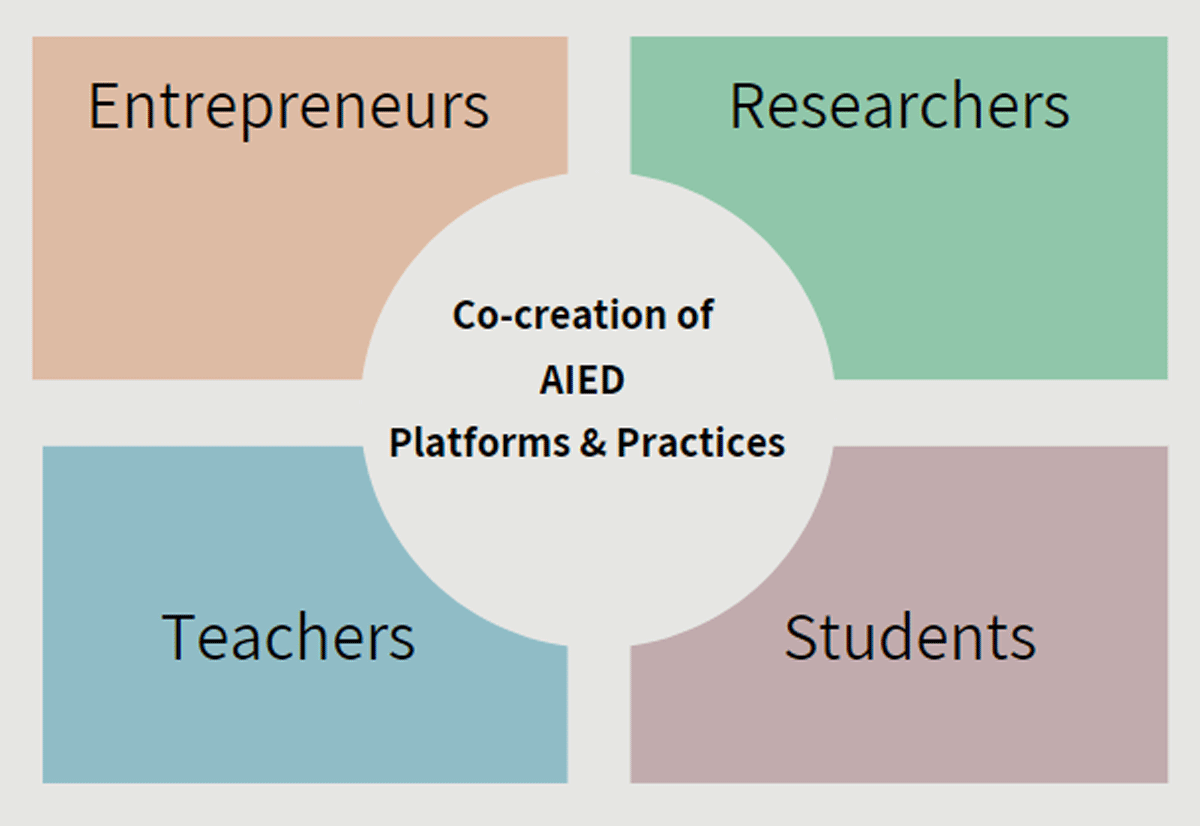
Figure 2
Partnership agents for co-creating AIED.
In the context of the current study, the DBR model allowed for full, active participation and decision-making by the participating teachers during both preparation and classroom implementation in each of the iterations, while providing a consistent framework for data collection and making necessary modifications in-progress, based on the emerging data.
The DBR model utilized in the study included a preparation phase, which consisted of creating a knowledge map and framing the research question, designing the pilot structure, reviewing relevant AI platforms, and specifying a small number of them as particularly relevant to the study.
Also, during this phase, a cohort of leading high school English teachers was selected to participate in the study by members of the pilot steering committee, including staff from the R&D Department and the office of the Chief Inspector for English Language Instruction. The teachers were chosen according to a strict set of guidelines established by the MOE as part of its ‘Open Call’ process for selecting participants in pilot development projects funded by the ministry, and they were compensated for their participation with supplemental teaching hours for the duration of the pilot.
Over a five-month period, the teachers attended a total of six development workshops, designed and run by the pilot steering and development team and held once every three weeks over Zoom. The workshops all followed a similar structure, which included small group trials of a chosen AI-based digital platform (usually a specialized platform for learning English, with occasional trials of a general-use generative AI platform). The teachers were asked to reflect on their experiences with the platform through group discussion and to summarize their thoughts and reflections in writing according to a questionnaire created by the development team.
During the first three workshops in the series, the teachers were asked to begin work on a design pattern (Eyal & Gil 2020; Mor et al. 2014) based on a fixed format created by the researchers for the purposes of the study. This format asked the teachers to identify a challenge, propose an effective, classroom-based solution that implemented one or more AI-based platforms, and then summarize and reflect on the results of their classroom trial. The teachers were given a fair amount of leeway to choose any challenge they deemed relevant to trialing the platforms with their classes.
Figure 3 presents an overview of the iterative stages of the DBR model as practiced with teachers participating during the workshop series. Table 1 (below) summarizes the phases of the DBR model as they were practiced in this study.
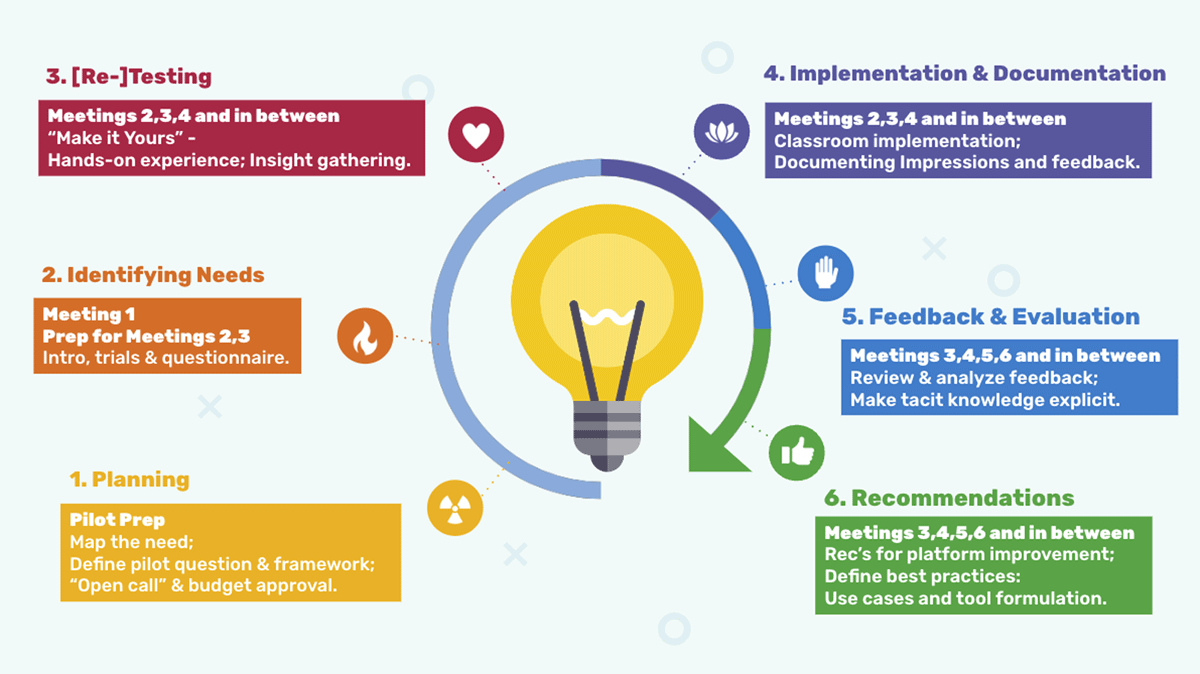
Figure 3
The DBR Process Model as practiced in the current pilot.
Table 1
Phases of the DBR model in practice – Iterations and design decisions.
| ITERATION NO. | FINDINGS AND CHALLENGES | DESIGN DECISIONS FOR THE NEXT ITERATION |
|---|---|---|
| 0 Stage | (Preparatory Phase) Researchers compiled a list of specialized AI-powered platforms currently available. Researchers finalized study structure, workshop schedule, and design pattern elements. Pilot participants were selected and contacted, and their participation confirmed. | Three specialized platforms were chosen to test during the pilot. Option was left open to test general-purpose GenAI. |
| Iteration 1 | (Meeting 1) Teachers tested one of the preselected, specialized platforms (Platform X) and filled out a questionnaire noting their experiences, feedback, and questions. The research team shared these findings with the platform developer. (Meeting 2) Teachers tested a general-purpose GenAI platform using a pre-written prompt and shared their experiences in group discussion. Teachers learned the design pattern (DP) framework and created their first design pattern (DP1, Part A) using an AI platform of their choice (specialized or general purpose). | (Following Meeting 1) Research team reviewed and analyzed teachers’ questionnaire responses and analyzed suitability of the specialized platforms. One of the specialized platforms was determined unsuitable for matriculation preparation. (Following Meeting 2) Teachers refined DP1 (Part A) individually or in pairs, ran it in class, and wrote their feedback (Part B). Research team reviewed and analyzed data from DP1 and identified important criteria, including ease of use, onboarding techniques, platform feedback accuracy, student engagement, level, and rubric alignment. The general-purpose GenAI platform was determined unsuitable for matriculation preparation. |
| Iteration 2 | (Meeting 3) Teachers viewed a live demo and then tested Platform Y and provided feedback to the platform developers. Teachers began a second design pattern (DP2) in groups. | (Following Meeting 3) Teachers refined DP2 (Part A) individually or in pairs, ran it in class, and wrote their feedback (Part B). Research team reviewed and analyzed data from DP2. Most criteria identified during DP1 were reconfirmed. Technical problems with the platforms were identified. A second specialized platform was determined unsuitable for matriculation preparation. Developers of the remaining specialized platform refined the platform according to teachers’ feedback and requests for rubric alignment. |
| Iteration 3 | (Meeting 4) Teachers watched a demo of Platform X (revised) and then retested and provided feedback to the platform developers. (Meeting 5) Teachers responded via group discussion to their trials with Platform X (revised). Teachers retested the platform in pairs, assessed each other’s performances as if it was the real exam, compared their own assessments with that of the platform, and recorded their comparisons in writing. Teachers were asked to suggest changes to the platform assessment rubric. (Meeting 6) Teachers were asked to rank the design principles extracted from the previous iterations and to justify their selection from their own professional point of view and the inferred perspective of their students. | (Following Meeting 4) Teachers ran a sample oral matriculation exam using Platform X. Teachers first graded their students’ results as they would have the actual exam and then compared these results with the AI-driven platform feedback. (Following Meeting 5) Research team reviewed and analyzed data collected from the teacher trials during Meeting 5. (Following Meeting 6) Research team reviewed and analyzed data collected from the ranking during Meeting 6. |
Criteria for Platform Selection and Integration of Iterative Feedback
The selection of platforms for this study was based on a combination of pedagogical and technical criteria, including alignment with matriculation exam requirements, ease of use for teachers and students, accessibility, and responsiveness to feedback. The iterative process followed the principles of DBR, in which teacher feedback was systematically collected through questionnaires, group discussions, and classroom trials.
As detailed in Iteration 1 of the table above, the research team analyzed teacher input regarding the initial platforms and determined that one specialized and one general-purpose platform were not suitable for matriculation preparation. These decisions were based on criteria such as platform feedback accuracy, student engagement, and rubric alignment. Feedback collected in later iterations (e.g., Iterations 2 and 3) continued to guide refinements made by developers, illustrating how the design evolved through collaboration with teachers in authentic classroom contexts.
Instruments and materials
The research process utilized select tools in qualitative research for the purposes of data collection and analysis. All data from teachers was collected with the teachers’ full consent and participation, and student data was collected exclusively by the teachers and did not contain personal identifying information beyond class and matriculation levels. The following tools were implemented:
Protocols of discussions held in meetings with the research participants, leading high school English teachers (n = 18). A total of six group meetings were held, one meeting every three weeks over a period of five months (October 2023–February 2024). Meetings were conducted via Zoom and accompanied by a slide deck, each lasting 90 minutes; meetings were recorded via Zoom and transcribed.
Structured Design Pattern format for teachers, delivered via Google Slides. Between each of the meetings, the participants were requested to implement classroom trials based on lessons they had designed (individually or together with other participating teachers). The teachers were asked to use a consistent design pattern format both to plan the lesson (Part A) and to reflect on their experience afterwards (Part B), as described above.
Structured semi-open questionnaire for teachers, requesting their feedback on a preliminary rubric for design criteria for AI-based platforms for learning spoken English for the matriculation exam.
The data from each of these research tools were analyzed and processed, as described below. (Additional data collected in the context of this trial included personal interviews with participating teachers and grades received by students on the matriculation pretest. These data were not available by the time of publication).
Data Analysis and Processing
A thematic content analysis approach (Vaismoradi et al. 2013) was used to analyze the data collected. First, coding was conducted by carefully reading all texts in the protocols and questionnaires distributed to teachers, identifying relevant sections, and coding the central themes that emerged. A name was then assigned to each theme, and relevant quotations were categorized. A second teacher questionnaire served to validate the themes that emerged from the teachers’ earlier responses. This process was jointly conducted by both researchers until consensus was reached. Following each iteration of the research, this process was repeated, ultimately resulting in the formation of three major thematic clusters in accordance with the research questions: mapping the needs of teachers and students from the system, key pedagogic design principles for AI platforms, and teachers’ and learners’ experiences.
Ethical Considerations
This research was approved by the Ministry of Education’s Chief Scientist and the R&D ethics committee. All collaborators and participants provided informed consent after receiving detailed information about the study. Participation was voluntary with the right to withdraw at any time. To ensure confidentiality, all data was anonymized, with personal identifiers removed and pseudonyms used in reporting. Digital data was stored securely on password-protected servers, accessible only to the research team, and all procedures adhered to educational research ethical guidelines without interfering with the normal educational process.
Findings
A) Mapping the current needs of the teachers and students using the existing digital platform for the matriculation exam in spoken English
During the preparation phase of the pilot, a mapping of the current situation was conducted by the joint development team to better understand the current situation generally and to note those specific aspects seen as requiring improvement. This mapping, and the summary that follows, was constructed from information gathered through semi-structured interviews with colleagues from the Chief Inspector of the English-Language Department and her team, as well as semi-structured personal interviews with several digital Pedagogy Champions high school English teachers currently teaching the COBE modules in their classes.
Human versus computerized assessment. The shift from human- to computer-administered oral exams introduced both advantages and challenges into the assessment process. Among the advantages, the computerized system worked to make the assessment process more consistent and uniform while increasing efficiency, decreasing waiting time for students, and reducing the number of examiners required during the testing process. On the other hand, the previous testing process, built on interaction with a human examiner, encouraged conversation and often acted to reduce exam anxiety for the students being examined.
Challenges in testing methods. The current testing method, while partially digitized, still necessitates professional (human) evaluation of the recorded test output, a task requiring hours of concentrated and repetitive listening that can lead to inconsistent results. During the testing process itself, technical difficulties can arise, with negative implications for the students’ exam results. Examples of such problems include situations where a student accidentally presses the STOP button more than once while recording (a situation that requires assessors to deduct points, even if the answers provided are correct) or cases where recordings have been misplaced or lost within the centralized system, forcing the affected students to sit the test again later.
Challenges of the assessment process. The format of the practice test is like the matriculation exam itself, but the grading is conducted by the students’ teachers, a multi-stage process requiring significant time and effort to complete. These stages include collecting the recordings from the system, locating individual recordings for each student in every class, downloading the recordings from the school system to the teacher’s computer, and listening to all the recordings—a process that can take up to 25 minutes per student. The evaluation of the practice exam, while providing English teachers a lot of important information about their students’ abilities and progress, requires a lot of time and effort from both students and teachers. This makes it extremely difficult to faithfully reproduce the exam conditions more than the required once a year, despite the great value that both teachers and students derive from the experience.
Around-the-clock access. The digital course that helps students prepare for the matriculation exam carries its own advantages and limitations. Among the benefits, the course contents are built by expert staff from the Office of the English Inspectorate, assuring both content quality and suitability for the exam. The materials are well organized within the platform and remain accessible to students around the clock, encouraging independent use after school hours and allowing students to progress at their own pace, review challenging material multiple times, or jump ahead freely, according to their abilities. The course is accessible through a centralized digital learning delivery system, allowing the teachers to monitor the progress and learning rates of their students and to adjust their classroom teaching accordingly.
Practice and real-time feedback. Along with the many advantages of the digital course, one of the notable disadvantages is the inability of students to practice conducting two-way, unscripted conversations on selected topics and to receive immediate feedback according to the computerized matriculation evaluation rubric. According to the designers of the course, these features would have contributed significantly to the value of the course, assuming the technology was of high enough quality to process natural speech and respond accordingly. Until recently, the available education technologies did not meet these criteria; however, recent leaps in generative AI have opened possibilities for integrating technologies that can allow students to converse with a computer and receive feedback in real time.
B) Examination of existing, relevant AI-based solutions that may meet the requirements
In the first iteration of the pilot, after defining the needs of the teachers and students, the teachers were asked to experiment with their students using several AI-based applications.
Apart from the generic AI platforms, the applications intended for improving spoken English were selected according to several criteria, among them: 1. Israeli companies that could provide support for teachers and students; 2. Applications that have the potential to prepare students for the COBE exam; 3. Companies that expressed a willingness to make changes to the platform in order to tailor it for the COBE exam preparation.
Below, Table 2 presents the main applications that were examined during this stage and their characteristics.
Table 2
Platforms tested during the pilot.
| PLATFORM CHARACTERISTICS | GENAI-POWERED PLATFORM |
|---|---|
| General-use GenAI application allowing voice recognition with an option to request feedback on the processed text (speech-to-text). | Bard |
| General-use GenAI application with voice recognition plugin. | ChatGPT (v.3.5) |
| A customizable avatar with a human-like appearance, capable of conducting a dialogue based on generative AI technologies and a customizable system response setting. The platform includes separate dashboards for teachers and students. | BV (Specialized platform for spoken English) |
| Simulations of scripted conversations presented by human actors in short video clips. Learners first view a brief interaction between two characters and are then asked to play one of them and speak directly to the other, using a written script for guidance. A simple point system rewards accurate speech, and teachers have access to student data. | SP (Specialized platform for spoken English) |
| Scenarios of English-language conversations with an avatar, including simulations and activities. The system is adaptive, identifying the learners’ level and adjusting itself accordingly while providing a detailed analysis of various assessment metrics, including a recording of the learner’s speech, with separate dashboards for teachers and students. | SN (Specialized platform for spoken English) |
C) Design principles of an AI-based system for matriculation preparation from teachers’ experience in class
When considering design requirements for the AI-based learning platforms being tested, the pilot did not aim to establish new standards so much as to confirm existing ones while addressing the specialized criteria for preparing students for the oral matriculation exam in Israel. In fact, all the platforms vetted for the pilot were of high quality, incorporated existing pedagogical design considerations, and were developed with the direct input of local educators from their conception. We shall now present the pilot findings regarding pedagogical design principles for the AI-powered edtech platforms tested, followed by analysis of these findings and resulting adjustments to these principles.
Table 3 presents the teachers’ responses to a first draft of potential criteria for establishing design principles for evaluating an AI-based system for matriculation preparation in spoken English, according to current MOE requirements in Israel. This draft was constructed based on teachers’ responses to semi-structured questionnaires, their work on two iterations of design patterns, and summaries of their conversations as part of the group workshops. The criteria were extracted, coded, and categorized into main topics, secondary topics, and specific aspects for each of these topics and then arranged according to the main and secondary topics. Teachers were requested to rate each aspect using a Likert Scale (1–5, where 1 means omit this aspect or feature, and 5 means crucial), as well as adding open comments explaining their rating choices. A selection of these comments appears in the chart.
Table 3
Design principles for GenAI-based platforms for preparing for the matriculation exam in spoken English.
| PRIMARY CATEGORY | SECONDARY CATEGORY | DESIGN PRINCIPLE | AVG | ST | EXP. CITATIONS |
|---|---|---|---|---|---|
| Pedagogic Alignment | Content level | Vocabulary practice/enrichment | 4.6 | 0.91 | Vocabulary is the foundation of language. Having prompt words on the screen in ‘describe a picture’ activities is great! |
| Real-life or meaningful topics | 4.3 | 1.12 | Yes! Crucial so they stay motivated, curious and enjoy it. This is super important for students to be engaged in the speaking activities. | ||
| Personalization (in real time/responsive) | 4.2 | 0.72 | Personalization was important to my students. If this means that the AI avatar says the student’s name, YES! People love that! | ||
| Teacher-chosen content | 4.2 | 0.75 | Teachers should be able to choose the right content for their classes. | ||
| Attributes | Provides a broad choice of tasks | 4.8 | 0.69 | Students feel empowered and motivated when they have a choice. A variety of choices gives the students freedom to choose what meets their needs and interests. Too much choice can be overwhelming. | |
| Encourages repetition/asking questions | 4.2 | 1.12 | Asking questions is important – repetition less so – as the students can do the activity again | ||
| Allows open-ended/free conversation | 4.1 | 1.06 | Necessary to give our students as close to a ‘real life’ simulator as we can. This scares me as a teacher … I can imagine students trying to draw the AI into inappropriate topics. | ||
| Encourages taking initiative in conversing | 3.65 | 1.27 | You can easily figure that it is a robot [at] work and, in most cases, responses are automatic… but this characteristic in particular [makes] my students give up in some cases and feel frustrated. This is good as long as it is clear to the students what they need to do. I think it’s nice when it reflects human conversation. | ||
| Scaffolding | Makes use of prompts (in English or L1) | 4.4 | 0.45 | Great for weaker/intermediate students, but also for stronger students who just need the prompt to re-focus their attention. | |
| Allows teachers to create or alter prompts | 3.7 | 1.06 | Many teachers want the system ready to use. We [teachers] like it when things are ready. | ||
| UX/UI | Navigation | Activity length indicator | 4.22 | 0.83 | Important! Time management for both the students and teachers to either plan the class time accordingly, or for the students to know their pace (especially for COBE time limit, practice managing their speaking time). It is very important for the student to see his conversation length. |
| Option to sort or choose activities by Bands (Note: Lexical Bands are CEFR-based but specific to Israel) | 4.1 | 0.75 | Students don’t really care, and we should not care that much as long as they are speaking. Excellent idea for specific vocabulary practice or to suit the class’s level. CEFR levels will make this useful [also] for people outside of Israel. | ||
| Onboarding materials/ideas for teachers | 3.88 | 0.94 | Get[ing] the teachers on board, comfortable with using it first, then use it in class- from experience [this] is key for it to work [in the] long term. If it isn’t simple, they won’t use it. | ||
| Lexical Band indicator on each activity | 3.78 | 0.83 | I would like a toggle option from the teacher’s side. | ||
| Onboarding materials/ideas for students | 3.75 | 0.94 | Yes – I spent too much time explaining to the students what to do. I found students often skipped it. | ||
| Accuracy | Accuracy of speech interpretation | 4.75 | 0.47 | [The ability to recognize] different accents (or just bad pronunciation). Very important for fluency, understanding. | |
| Performs even in noisy environment | 4.33 | 0.37 | Using the AI tools in a large class can be really problematic. …otherwise, I will not be able to use it in class. | ||
| Accessibility | Avatar relatability/likeability | 4.5 | 0.5 | Especially [important] the likeability. Most avatars did not match the age group of my students. Important – maybe use avatars of different identities and allow students to choose/change from time to time. Needs to seem human. | |
| Platform access from home | 4.44 | 0 | Although many pupils only work at school, those who want to continue should be able to. Especially important on phones. Good for homework. Some schools lack a computer lab. | ||
| Assess- ment | Criteria | Rubric criteria completely parallel COBE | 4.22 | 0.47 | Would be nice, though the most important thing for students is to communicate, but there could be more COBE focused activities/feedback. There should also be easier leveled rubrics that the teacher can choose from. |
| Practice features completely parallel COBE | 3.89 | 0.94 | Not all speaking is COBE preparation. It’s nice for students to have different options, including fun activities, not just COBE questions. | ||
| Confidence assessment | 3.33 | 1.25 | It would be a great indicator Fluency is more important. Important, though when we want to encourage weak learners, it is not the most important thing. | ||
| Only positive feedback/reinforcement | 2.3 | 1.04 | If it is only positive, it won’t really help. On the other hand, if opportunities for learning are phrased in a positive way, that’s the best. Depends on the level of the students…Ensure that struggling students receive as much positive feedback as possible | ||
| Format | Teacher access to student activity | 4.6 | 0 | This will enable the teachers to observe their students’ performance and check their progress. Great for teachers to get a full understanding. Yes! I know my students the best… (sorry…) | |
| Instant/real-time feedback for students | 4.5 | 0.69 | Important for them and encourages them to try again. | ||
| Instant/real-time feedback for teachers | 4.4 | 0.34 | Important to know who is working, how to help, mediate etc… So we can give our own feedback as well. Reports are more important than instant feedback for teachers. | ||
| Variety of assessment feedback formats (not just visual) | 4 | 1.21 | Visual, written, audio, translated into Hebrew/Arabic… Definitely – I highly recommend…an oral feedback format. Yes, end of the term reports on vocab learned, for example, or a ‘certificate of excellence’ auto generated can go a long way! |
Discussion and Conclusions
The purpose of this study was to define pedagogical design principles for an AI-based system aimed at preparing high school students for the English oral matriculation exam. Mapping the current needs of the teachers and students using the existing digital platform for the matriculation exam in spoken English raised several issues: The transition to computer-administered oral exams combines advantages of consistency and efficiency with challenges of reduced personal interaction and increased exam anxiety. The current testing landscape, characterized by a partially digitized methodology, necessitates significant human input for evaluation and grapples with technical challenges that risk inconsistencies and necessitate potential retesting. Simultaneously, while the practice test closely replicates the matriculation exam, it imposes a heavy grading burden on teachers, complicating the frequent replication of exam conditions. Furthermore, the digital course designed for exam preparation offers high-quality content and flexibility, facilitated by its digital nature, which allows for around-the-clock access and self-paced learning, yet it limits direct interaction and lacks the capability for students to engage in real-time, two-way conversations. However, this shortfall presents an opportunity for the integration of advancing AI technologies, poised to fill the void by enabling interactive dialogues and immediate feedback.
We collaborated with local entrepreneurs to evaluate a range of generative AI platforms, with a focus on those offering voice-recording features. While none of the platforms fully met all the identified requirements, one system stood out due to its capacity to integrate modules aligned with the technical and pedagogical demands of matriculation exam preparation. This system was selected for further development.
Based on the iterative feedback gathered from participating teachers, we formulated a set of pedagogical design principles addressing four key areas: learning processes, assessment practices, teacher experience and interface features (user experience/user interface; UX/UI), and student experience and UX/UI. These principles were subsequently validated and ranked by the teachers, enabling preliminary conclusions, as outlined below.
Among the design principles deemed important for pedagogic alignment of the platform with English-language learning and assessment goals, ‘vocabulary practice/enrichment’ (4.6) was ranked as the most important content-related factor, while ‘a broad choice of tasks’ (4.8) was considered a crucial attribute of the platform, as most of the teachers credited this aspect with increasing student engagement, motivation, and autonomy. An additional content-related factor validated by the teachers was ‘real-life or meaningful topics’, reflecting the idea that relevant learning content appeals to students and is also significant in encouraging student engagement with the platform. The role of pedagogic scaffolding (‘makes use of prompts’, 4.4) in platform content design also ranked among the top factors and is particularly noteworthy in this context, as AI-driven platforms can be well suited to responding to each student’s needs and making suitable adjustments in real time.
Among the user experience and user interface factors (UX/UI) selected, the importance of ‘accuracy of speech interpretation’ (4.75) was emphasized. This finding reflected teacher feedback throughout the duration of the study, whereby teachers frequently voiced their concerns when their students’ vocalizations were not accurately interpreted by a given platform, leading to much frustration on the part of both students and teachers. The principle of ‘avatar relatability/likeability’ (4.5) was considered important as well, although this in itself is a broad category when considering factors of user interface and may be worthy of further study in and of itself.
Regarding assessment design principles, several factors were considered for validation, as in keeping with the focus of the current study. Some of these factors, such as ‘teacher access to student activity’ (4.6) and ‘instant/real-time feedback for teachers’ (4.4), considered the needs of teachers and their role as collaborators with the platform in administering and grading assessment tasks. Other factors, including ‘instant/real-time feedback for students’ (4.4), prioritized the added value of utilizing AI-driven platforms for students.
It is interesting to note that although the pilot emphasized student preparation for the oral matriculation exam, the scores assigned to factors directly relevant to this task—‘rubric criteria completely parallel COBE’ (4.22) and ‘practice features completely parallel COBE’ (3.89)—were lower than many of the other criteria, suggesting that teachers place value on using the platform to improve their students spoken English beyond the context of ‘teaching to the test’. In fact, during one of the teacher workshop sessions, this idea was brought up directly and discussed by the teachers, highlighting that it is a pedagogical issue of importance in and of itself. The teachers understood the opportunities that AI-based technologies present for this issue and suggested ways that the platform could help them and their students to reap the benefits of both worlds, for example, including a setting that toggles the platform’s assessment rubric and its associated algorithms and interfaces between ‘practice for the sake of speaking’ and ‘practice for the matriculation exam’. The teachers also offered valuable verbal feedback and discussion regarding the capacity of the platform in boosting the confidence levels of their students and the crucial role that confidence plays in students’ speaking abilities generally, even as they did not necessarily want the platform to call direct attention to this factor (‘confidence assessment’, 3.33).
Our initiative focused on enhancing spoken language abilities of high school students while empowering teachers and decision-makers within the Ministry of Education to become more discerning consumers of AI-based systems for educational purposes by highlighting the cutting-edge innovations in spoken English learning through AI, as discussed in Holmes and Tuomi (2022) and in Zhang and Lu (2021).
Our research underscores the pivotal role that teachers, as change agents, play in integrating technology into the educational landscape, and as such, this collaboration has allowed for a deep understanding of the needs, challenges, and preferences of teachers and students concerning the use of AI-based educational technology for practicing spoken English. Throughout the iterative process, the developers of the specialized platforms utilized this information to adapt and improve their systems, based on feedback from teachers and their students. The pilot findings align with the AIED features cited in previous research, including the importance of platform ability to simulate real-life scenarios, provide personalized feedback, and adapt to individual learning styles, therefore offering a more immersive and interactive learning experience (Zou et al. 2023; Leshchenko et al. 2023; Zhang & Lu 2021). These design principles are also in alignment with those outlined in Canals and Mor (2022), especially regarding the critical role played by personalization, engaging content, interactive learning environments, and effective feedback in enhancing an educational technology-based learning experience.
This collaborative approach, emphasizing understanding user needs and challenges, aligns well with the growing emphasis on responsible design of AI applications (Lajoie & Li 2023) and may ease future implementation of appropriate AI-based learning platforms on a broader scale. These leading educators are not just implementers but also critical contributors to the development process, ensuring that the AI systems are tailored to effectively address the unique needs of their students, a point further elaborated by Kabudi et al. (2021). Through the teachers’ active involvement, we aim to create learning environments that are both innovative and responsive to the educational demands of the 21st century. The collaborative effort between technology developers and educational professionals is essential for crafting AI-assisted learning tools that are practical, engaging, and capable of making a tangible difference in students’ language acquisition journeys.
The integration of AI tools in education raises several important ethical and equity concerns that must be carefully addressed to ensure responsible implementation. In this study, attention was given to data privacy by using anonymized user identifiers and limiting data access to authorized personnel. The platform was designed to minimize data storage and ensure compliance with school-level digital policies.
Equitable access was considered in the choice of free and low-bandwidth tools, aiming to support students from diverse socioeconomic backgrounds. However, challenges related to infrastructure disparities and digital literacy remain and must be further addressed in large-scale implementations.
Inclusivity was also a guiding principle, with an emphasis on clear interface design and support for learners with varying proficiency levels. Future development should expand further by incorporating features that address the needs of students with learning differences or limited language exposure. These considerations are aligned with ongoing ethical debates on AI in education and highlight the importance of continuous evaluation and adaptive design.
Global Implications and Cross-Linguistic Applications
While this study was conducted within the Israeli educational context, the developed AI-based system and its underlying principles demonstrate potential for broader international implementation. The system’s architecture addresses universal challenges in spoken language assessment that transcend geographical and cultural boundaries. The key aspects that support global implementation include pedagogical elements such as personalization capabilities and varied scaffolding options, alongside technical features like accurate speech interpretation and platform accessibility. The assessment framework, which includes instant feedback mechanisms and varied feedback formats, addresses universal needs in language education (Litman et al. 2018). Furthermore, the AI-based architecture can be extended to support other target languages, as the underlying technological framework is language-agnostic. This adaptability is particularly relevant for countries seeking to modernize their language assessment systems, educational institutions implementing distance learning programs, and language learning centers requiring scalable solutions.
Recommendations for further research
The findings of this study have significant implications for distance learning and outreach in English language teaching. The methodological approach and technological solutions developed can be particularly valuable for remote learning environments, enabling broader access to quality English language instruction beyond traditional classroom settings. While this study was conducted within the Israeli educational context, its framework can be adapted to various international settings, as the challenges addressed are common across different educational systems worldwide.
Building on these implications, the next phase of this pilot involves deploying the appropriate AI-based English learning platforms across Israel’s education system and especially for students preparing for the matriculation exam. A broader study is recommended to address the aspects and challenges specifically related to implementation and to ensure diverse representation, to further validate the design principles identified, and to articulate a comprehensive language of design patterns for AI-assisted language learning.
Although student feedback was collected during the study, both through usage data within the platform and through direct reflections, this data was not analyzed in the current paper, which focused on the system’s pedagogical and technical design. Future research should include a focused analysis of student perspectives to deepen understanding of user experience, usability, and learner engagement with AI tools.
Additionally, a teacher training program on effective AI tool use for English teaching should be developed, incorporating documented pedagogical models and best practices. Future research could explore AI’s impact on student motivation and learning engagement and the feasibility of AI platforms for other relevant languages like Hebrew and Arabic. Establishing international collaborations could enhance the assessment of AI language learning tools’ effectiveness, allowing for cross-cultural validation and adaptation of these educational technologies.
During the preparation of this work, the author(s) used Perplexity, ChatGPT, and Wordtune to retrieve academic papers and for grammatical editing. After using these tools, the authors reviewed and edited the content as needed, and they take full responsibility for the content of the publication.
Additional File
The additional file for this article can be found as follows:
Appendices. Appendix A to E. URI: https://eurodljournal.com/articles/148/files/683dae7c8c442.pdf
Acknowledgements
The authors would like to thank Meirav Zerbib, Ronit Drori, Dr. Yishay Mor, Dr. Tziona Levi, Sigalit Arditi, and Gail Singer for their support and key contributions to this study. We are also grateful to the English teachers who participated in this study for their valuable contributions and professional dedication.
The work reported in this paper was sponsored and managed by the Institute of Applied Research in AI & Education, R&D Division, Israeli Ministry of Education. All products and outputs of this work are the intellectual property of the Ministry.
Competing Interests
The authors have no competing interests to declare.