
Table 1
Experiments available about hydrogen tank bursts in the open literature.
| N° | H2 STATE | TANK TYPE | TANK VOLUME (Liter) | TANK POSITION | TANK SIZE L/D (m) | TANK INITIAL PRESSURE (MPa) | TANK BURST PRESSURE (MPa) | TANK BURST TEMPERATURE (K) | BURSTING METHOD | REF. |
|---|---|---|---|---|---|---|---|---|---|---|
| 1 | LH2 | LH2 | 120 | H | 0.722/0.46 | 0.5 to 1.48 | 0.5 to 1.48 | 20 | Cutting charge | (Pehr, 1996) |
| 2 | GH2 | IV III | 72.4 88 | H under a SUV | 0.84/0.41 | 34.3 31.8 | 35.7 | 312.15 | Fire | (Weyandt, 2005); (Weyandt, 2007) |
| 3 | GH2 | IV | 35 | H | N.P.* | 70 | 94.54 | 379.8 | Fire | (Molkov et al., 2021) |
| 3–1 | GH2 | III | 36 | H | N.P. | 70 | 99.47 | 394.2 | Fire | (Molkov et al., 2021) |
| 4 | GH2 | III | 9 | H | N.P. | 70 | 70 | N.P. | Cutting charge | (López et al., 2015) |
| 5 | GH2 | IV | V corresponding to 2.1 kg of CGH2 | In a vehicle | N.P. | 70 | N.P. | N.P. | Fire | (Park and Kim, 2023) |
| 6 | GH2 | III | 165 | N.P. | 1.775/0.37 | 35 | 43.8 to 44 | N.P. | Fire | (Shen et al., 2018) |
| 7 | GH2 | III | 6.8 | V | 0.52/0.157 | 30.6/31.0 | 49.7 ± 3.3 | N.P. | Fire | (Wang et al., 2023) |
| 8 | LH2 | LH2 (MLI) | 1000 (filling 35–40% – 27 kg of LH2) | H | N.P. | 0.4 | 5 | 26.2–32.4 (estimated) | Fire | (van Wingerden et al., 2022) |
| 9 | GH2 | IV | 580 | H | 2.06/0.686 | 25 | 25 | 288.15 | projectile | (Brooks and Glover, 2022) |
[i] *N.P. not provided.
Table 2
Characteristics of fragments collected after hydrogen tank bursts in the open literature.
| N° | NUMBER OF FRAGMENTS | MASS (kg) /VELOCITY (m/s) | MAXIMUM FLYING DISTANCE (m) | REF. |
|---|---|---|---|---|
| 1 | From 2 to a large number | N.P.* | 15 in case of large number of fragments | (Pehr, 1996) |
| 2 | 4 main (61% of 32 kg) At least 2 (Test2) | 14, 2, 2, 1.6/N.P. Large tank SUV parts | 82, 49, 33.6, 41 107 | (Weyandt, 2005); (Weyandt, 2007) |
| 4 | 2 | N.P./100 | N.P. | (López et al., 2015) |
| 5 | At least 1 | 2.1 | 74 | (Park and Kim, 2023) |
| 6 | At least 3 (test1) | 79 (Test1)/N.P. | Test 1: 32.5 (hitting a truck) Test 2: 200 | (Shen et al., 2018) |
| 7 | 9 (test1), 7 (test2) | 0.214 to 0.013 (test1), 2.9 to 0.92 (test2)/N.P. | 19.5 (0.214 kg) to 46 (test1) 15.4 (2.9 kg) to 41.7 (0.304 kg) | (Wang et al., 2023) |
| 8 | 53 (6 > 60 kg) | 261, 124, 76, 72, 65, 61/N.P. | 30, 6, 67, 167, 124, 10 after collision with a wall | (Collina et al., 2023) |
[i] *N.P. not provided.
Table 3
Test conditions for the fragments analysis in Hytunnel-CS tests.
| TEST N° | Pg(MPa) GAS | TYPE | V (liter) | WEIGHT (kg) | L/D (M) | CUTTING CHARGE LOCATION (m) FROM LEFT END | PHOTO |
|---|---|---|---|---|---|---|---|
| 31 | 4.1 (0.5 He, 3.6 H2) | III | 150 | 70 | 1.53/0.41 | 0.765 | 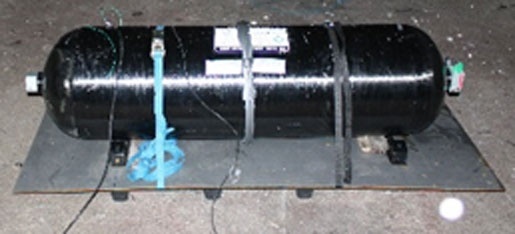 |
| 32 | 9.0 H2 | IV | 78 | 64.6 | 0.96/0.44 | 0.48 | 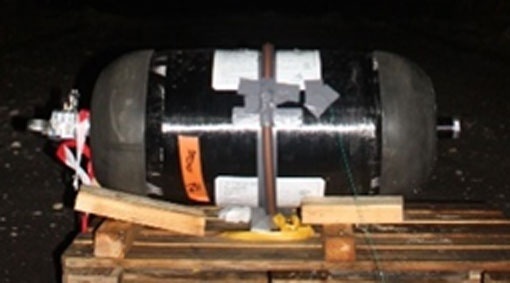 |
| 36 | 33.2 H2 | III | 150 | 73.6 | 1.53/0.41 | 0.3 | 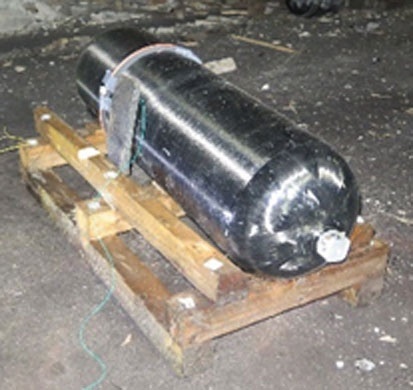 |
| 37 | 52.0 H2 | IV | 78 | 64.6 | 0.96/0.44 | 0.32 | Same as test 32 |
| 38 | 61.0 H2 | IV | 78 | 64.6 | 0.96/0.44 | 0.32 | Same as test 32 |
| 42 | 19.4 H2 | I | 50 | 60.5 | 1.45/0.25 | 0.5 | 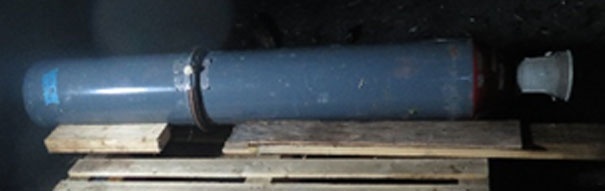 |
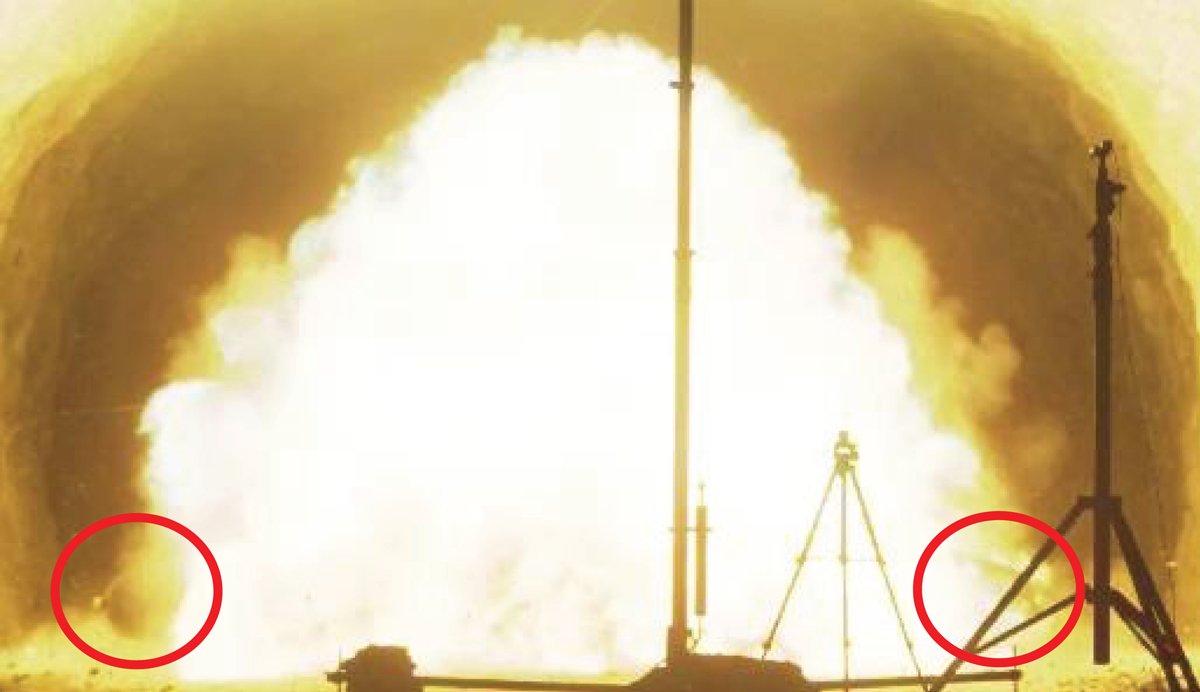
Figure 1
Test 31 – Fragments emerging from the fireball.
Table 4
Test conditions for the fragments analysis in open atmosphere.
| TEST N° | Pg(MPa) | TYPE | V (liter) | WEIGHT EMPTY (kg) | L/D (m) | CUTTING CHARGE LOCATION | PHOTO |
|---|---|---|---|---|---|---|---|
| 4 | 52 to 54 | IV | 240 | 219 | 2.575/0.48 | Between two tanks | 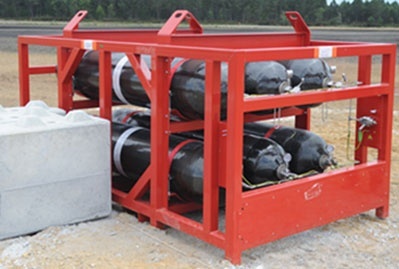 |
| 6 | 53 | IV | 240 | 219 | 2.575/0.48 | Centered | 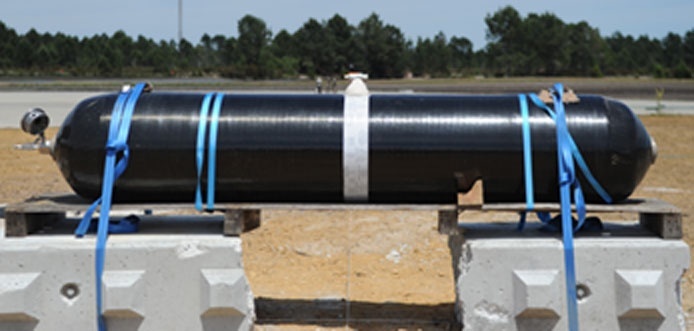 |
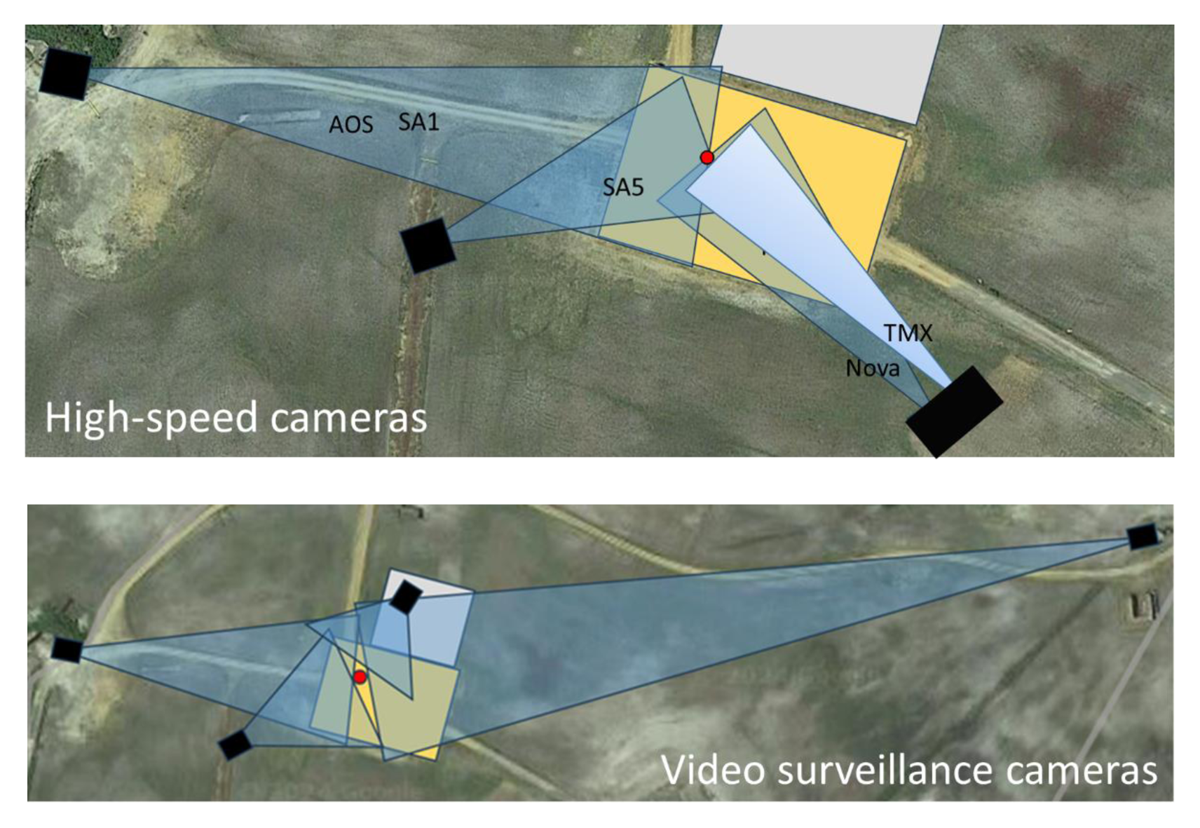
Figure 2
Arrangement of cameras in the test site.
Table 5
Results for the fragments velocity in tunnel geometry.
| TEST N° | MASS OF GAS M (kg) | Ei (MJ) | Estimated mass of fragment M (kg) | F | Θ | MEASURED INITIAL VELOCITY Vi (m/s) | EXP. FRACTION OF THE INTERNAL ENERGY (%) | THEORETICAL VELOCITY Vi (m/s) | ||
|---|---|---|---|---|---|---|---|---|---|---|
| VI1 | VI2 | VI3 | ||||||||
| 31 | 0.452 (H2) 0.127 (He) | 1.40 | Left: 35.0 | 0.014 | 1.14 | 31.9 ± 0.1 | 1.3 | 45 | 24 | 48 |
| Right: 35.0 | 29.0 ± 0.5 | 1.0 | 45 | 24 | 48 | |||||
| 32 | 0.568 (H2) | 1.67 | Left: 32.3 | 0.041 | 1.13 | 71.2 ± 1.8 | 4.9 | 51 | 28 | 63 |
| Right: 32.3 | 93.5 ± 6.0 | 8.5 | 51 | 28 | 63 | |||||
| 36 | 3.500 (H2) | 10.42 | Right: 59.2 | 0.107 | 0.41 | 102.2 ± 0.4 | 3.0 | 122 | 158 | 136 |
| 37 | 2.587 (H2) | 7.72 | Left: 21.5 | 0.237 | 0.47 | 179.1 ± 9.9 | 4.5 | 97 | 82 | 173 |
| Right: 43.1 | 127.6 ± 0.5 | 4.5 | 115 | 123 | 152 | |||||
| 38 | 2.907 (H2) | 8.68 | Left: 21.5 | 0.278 | 0.44 | 261.3 ± 17.4 | 8.5 | 103 | 102 | 186 |
| Right: 43.1 | 124.2 ± 0.2 | 3.8 | 122 | 153 | 164 | |||||
| 42 | 0.737 (H2) | 2.19 | Right: 38.9 | 0.017 | 0.66 | 28.1 ± 5.1 | 0.7 | 63 | 46 | 45 |
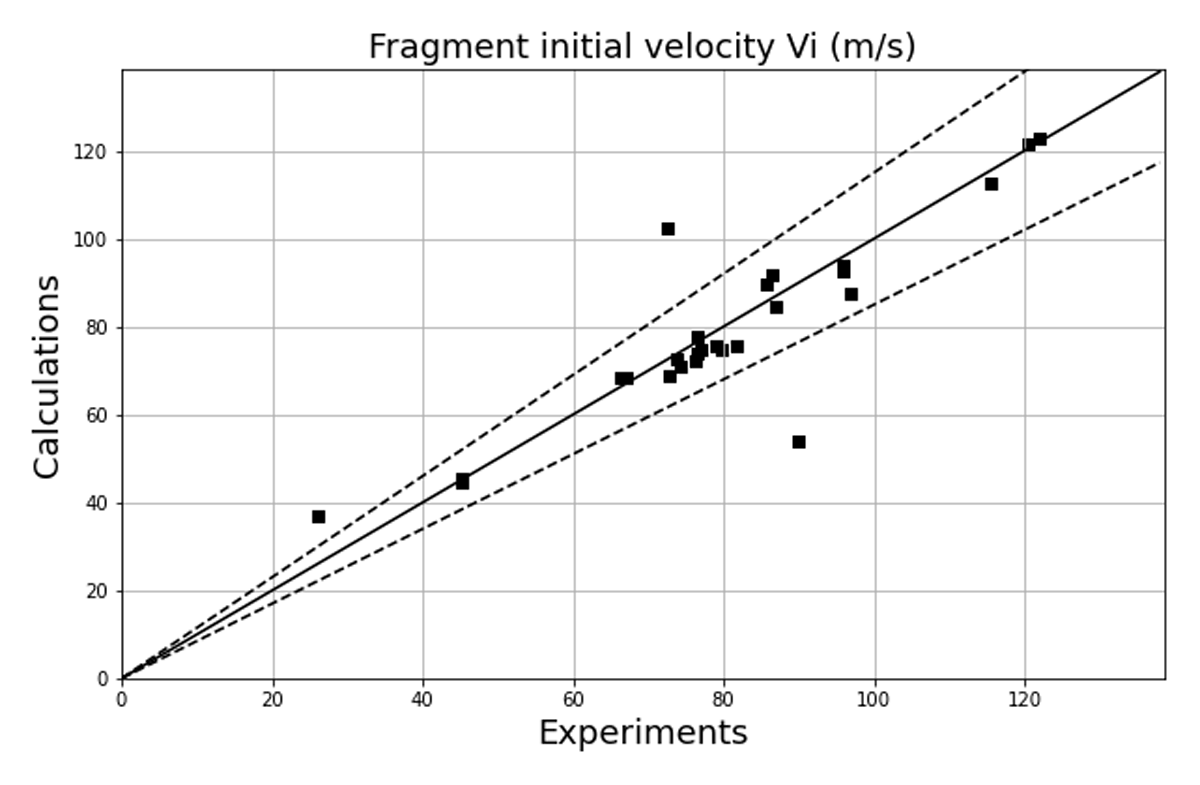
Figure 3
Computed versus measured initial velocities of air pressure vessel burst fragments.
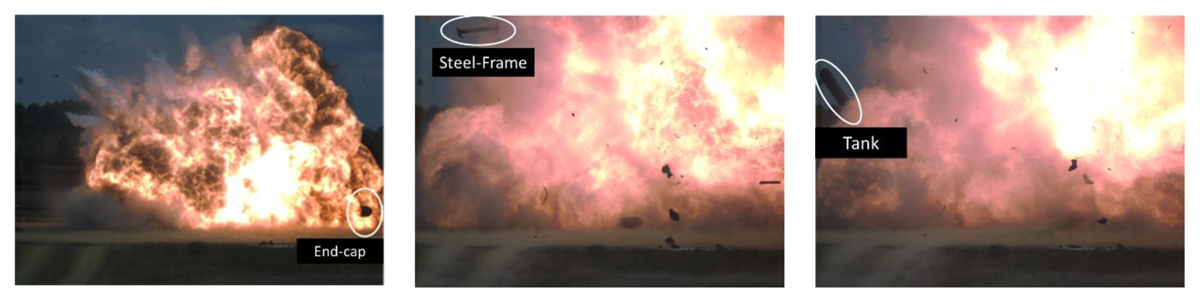
Figure 4
Test 4 – Fragments emerging from the fireball.
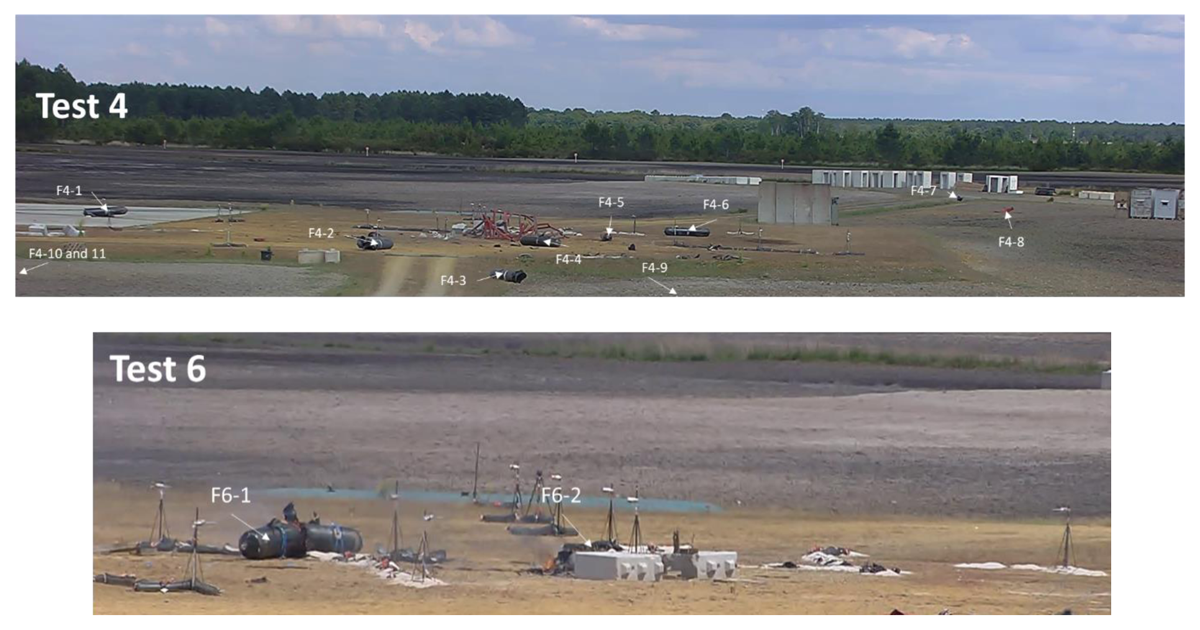
Figure 5
Tests 4 and 6 – Pictures of the experimental test site after the rupture of the tanks with the main fragments.
Table 6
Results for the fragments analysis in open atmosphere.
| N° | MASS M (kg) | VI (m/m)at x,y m | INCLINATION ANGLE θ (°) | FLYING DISTANCE (m) | ESTIMATED CD | ESTIMATED AD (m2) | PHOTO |
|---|---|---|---|---|---|---|---|
| F4–1 | 227 | 23.51(at 5,5 m | 45 | 30 | 1.2 | 0.74 | 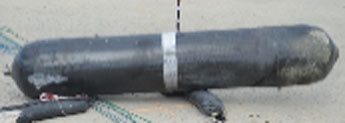 |
| F4–2 | 179 | 123 at10, 2, m | 20 | 16 | 1.2 | 0.67 | 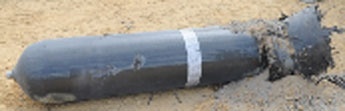 |
| F4–3 | 154 | 153 at 10,0.3 m | 0 | 27 | 1.2 | 0.65 | 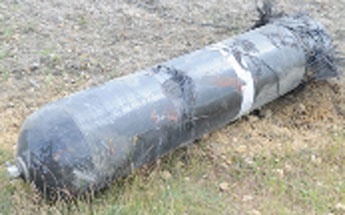 |
| F4–4 | 227 | Engulfed in the fireball | 8 | Engulfed in the fireball | 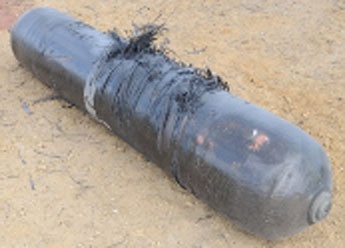 | ||
| F4–5 | 227 | 5 | 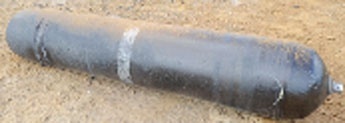 | ||||
| F4–6 | 227 | 12 | 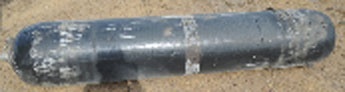 | ||||
| F4–7 | 46 | 48.53 at 14,2 m | 11 | 112 | 0.8 | 0.18 | 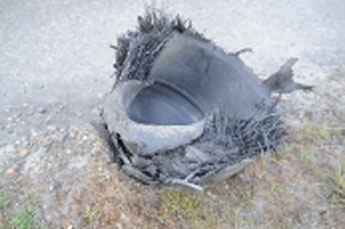 |
| F4–7 bis | 73* | 1912 at 4.7,1.3 m | 2 | Not recovered | 1.17 | 0.18 | 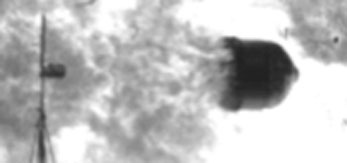 |
| F4–8 | 9.4 | 1143 at 12,1.5 m | 7 | 80 | 1.17 | 0.30 | 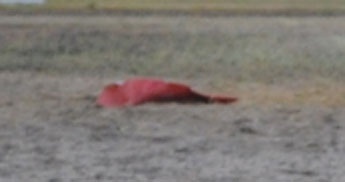 |
| F4–9 | 4.2 | 503 at 8, 0.5 m | 22 | 52 | 1.7 | 0.15 | 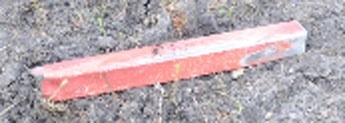 |
| F4–10 | 12 | 573 at 2, 8.5 m | 83 | 63 | 1.7 | 0.25 | 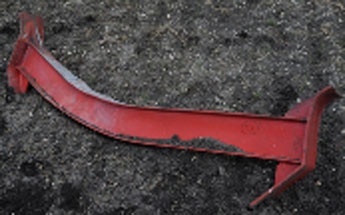 |
| F4–11 | 12 | 223 at 3, 8.3 m | 64 | 40 | 1.7 | 0.25 |  |
| F6–1 | 220 | 7.51 at 2,2 m | 30 | 6.8 | 1.2 | 0.74 | 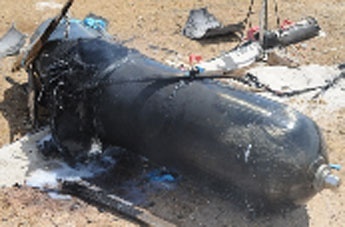 |
| F6–2 | 3 | Not analyzed | 1 | Not analyzed | 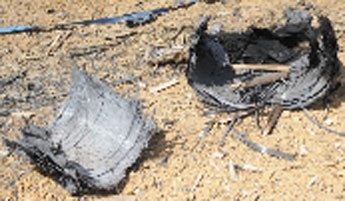 | ||
[i] 1Nova, 2SA5, 3video *estimated from the video.
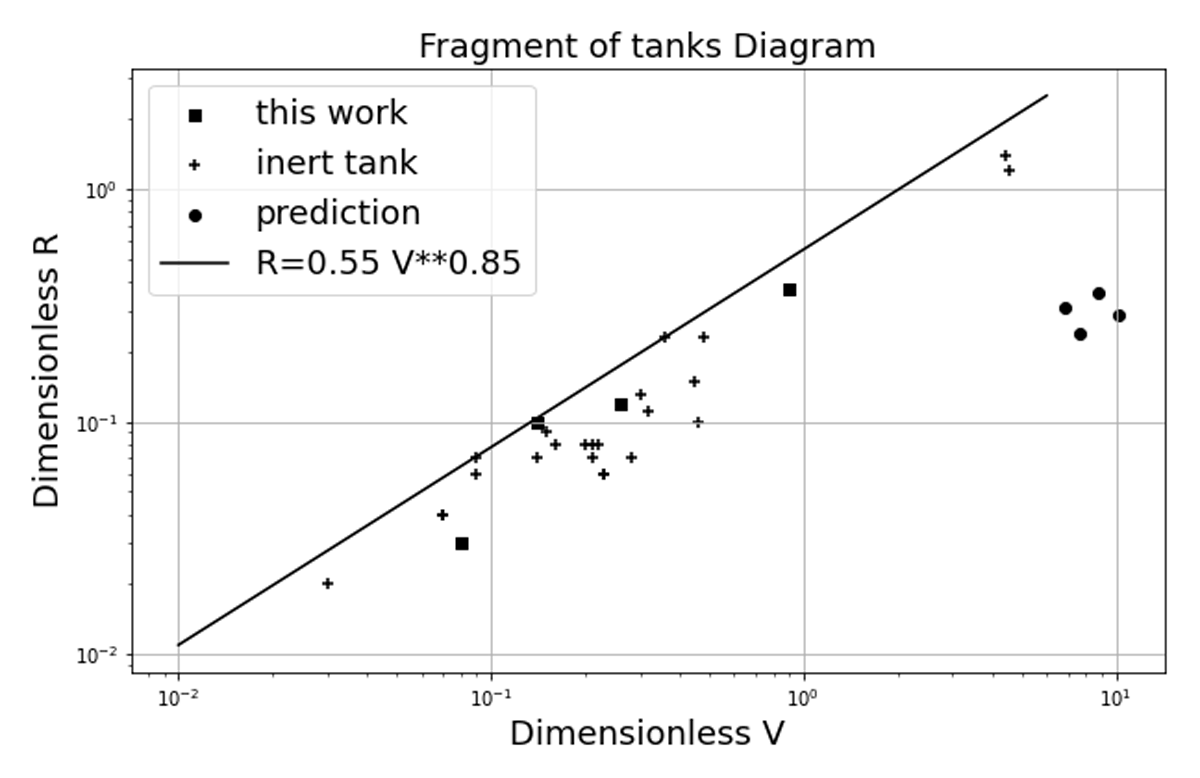
Figure 6
Dimensionless diagram for fragments assuming zero inclination angle initially.