
1.0 Introduction
Hydrogen is a key player for the decarbonization of modern economy, offering versatile and clean applications across transportation, industry, and power generation. However, safety issues related to high flammability and potential for explosions must be carefully managed for safe use and handling based on predictive modeling, robust infrastructure design, and relevant safety protocols. In France, the Ministry of the Armed Forces is studying the possibility of installing hydrogen storage technologies in operations outside the country. This particular context entails different types of aggression from the conventional industrial context, for which the hydrogen risk is studied in detail. It is, therefore, important to carry out specific test campaigns simulating the most likely types of attack, in order to estimate effect distances for pressure waves, thermal radiation following a fireball, and any fragments emitted during an attack. The first type of attack to consider is a ballistic attack in which a gunman targets the pressurized hydrogen storage facility. These shots can be repeated to achieve catastrophic rupture of the tank. Few results are available in the open literature.
Ballistic tests are not always mandatory in the different Regulations, Codes, and Standards (RCS) around the world regarding the development of Compressed Gaseous Hydrogen (CGH2) tanks for mobility. For example, SAE J2579, ANSI AGV2, ISO 19881, and GBM 35544 have a ballistic test with the bullet or impactor at a 90° angle whereas EC-406/2010 uses a 45° angle. The latter underlines that at least one sidewall of the tank shall be penetrated by an armor-piercing bullet or impactor with a diameter of 7.62 mm or greater. However, as pointed out by Wang et al. (2019), legal weapons are available in the US, the UK, France, and Germany. It is also worth mentioning that illegal weapons are in circulation in Europe; the EU (European Union) gave an estimation of 35 million in 2017 (European Council, 2024). Paczkowski (2004) reported ballistic tests (in the center of the tank at a 90° angle and about 100 m distance) with 7.62 mm non-civilian ammunition (Armor-Piercing (AP) and Armor-Piercing-Incendiary (API)) on Type III and IV tanks pressurized between 20.7 and 24.1 MPa. They observed in some tests with Type IV tanks that the inner liner was swollen around the entry hole. Using API ammunition on Type IV tanks led to double walls penetration with ignition on the front side and not on the backside. AP ammunition generally led to only leakage without flame. They also tested the effect of rocket propelled grenade (RPG), showing that the tank vented quickly with a short burn off period. However, they do not quantify the effect of using hydrogen instead of inert gas on the released energy and associated overpressures. Recently, Runefors and Egardt (2021) have performed ballistic tests for different types of hydrogen tanks. They measured about 9 mm for the size of the hole made by 7.62 mm AP ammunition in Type I tanks and 10–12 mm for 300 WM caliber. For Type III or Type IV tanks, the irregular pattern is generally in the order of 7–8 mm for 7.62 mm ammunition. Gehandler et al. (2022) have investigated the ballistic effect of multiple rounds of civilian ammunition on Type IV CGH2 tanks. From the three tests, their results showed that multiple rounds were needed to start leakage and issue tank rupture. A jet flame with blast wave was observed from one test with a 52 L tank at 41 MPa, leading to 23.4 kPa at 5 m and 11 kPa at 10 m (22.5° angle). In their conclusions, they pointed out that the kinetic energy of the bullets (about 250 J) was far less than the energy required to damage a Type IV high-pressure tank (about 3000 J from EU-HYPACTOR project). However, this comparison has limited application because bullets have smaller impact zones leading to higher damage at low kinetic energy. Finally, Sandia National Lab has recently conducted an experimental program on the catastrophic failure of Type IV CGH2 tanks (Brooks and Glover, 2022). For the two hydrogen tests, a projectile (caliber 50) with a 22° angle (from the symmetry axis of the tank) was thrown to the horizontal tank to ensure catastrophic failure. Their results were compared to predictions using the Brode estimation for a perfect gas of mechanical energy and 3% chemical energy. This leads to over-prediction of peak pressures using the Baker methodology (Tang and Baker, 1999). The conservatism of the methods is therefore important. However, this conservatism is spatially heterogeneous. The small number of tests carried out makes it impossible to define a method for taking this effect into account. Overall, conservatism is greater for flammable gases, and they concluded that the chemical energy involved in the formation of a pressure wave has to be refined. They also reported ignition during these tests, but no further information was provided regarding the fireball size and duration.
This bibliography shows that the available results do not allow us to predict with sufficient confidence the consequences of a ballistic attack representative of a battlefield. Consequently, additional tests were carried out jointly by SID-EPN and CEA and reported in this article. They involved a large number of measurements for phenomena such as blast wave propagation, development, and thermal radiation from fireballs. These diagnostics should provide a clear understanding of the phenomena involved, and enable us to define a protection solution to minimize the consequences. This article is organized as follows: in the first part, the test conditions are described, together with the measuring equipment used. Then, the results are detailed, separating Type I from Type IV tanks. Conclusions follow.
2.0 Test Conditions
The tests were performed in the SID-EPN test pad in the south of France. The selected ammunition is the 12.7 × 99 mm (caliber 50) APHEI. This type of ammunition is armor-piercing, high explosive, and incendiary. The rifle used for these tests is a Barrett M107 A1 in its semi-automatic version, allowing a high firing rate. The bullet weights 43 g and the datasheets mention that such a bullet can reach a speed of 903 m/s at 24 m, representing a kinetic energy of about 17,500 J. The distance between the shooter and the hydrogen tanks during the tests is about 200 m. The bullet speed at this distance was measured twice by two different methods. The image processing of the high-speed camera gave a speed of about 750 m/s and the Doppler radar gave a speed of 660 m/s, giving respective kinetic energy of about 12,094 J and 9,365 J. The Vereinigung der Prüfstellen für angriffshemmende Materialien und Konstruktionen (VPAM) (2009) provides the muzzle energy (kinetic energy at the muzzle exit) and the energy density for different calibers used by both armed forces and hunters; the authors added the corresponding values for the type of ammunition used in the test series at 24 m. For other calibers, the distance from the muzzle at which the bullet speed is measured is not mentioned in the VPAM document, but in theory, it is measured directly at the muzzle exit. Figure 1 illustrates the high power of destruction of the caliber 12.7 × 99 mm (caliber 50) APHEI compared to other calibers, especially in terms of muzzle energy. Surprisingly, all the bullets reported in VPAM (2009) as usually used by the hunters (big-game hunting) have a higher energy density than the ones usually used by the armed forces due to their high bullet weight/caliber ratio; only the 12.7 × 99 mm (caliber 50) APHEI is above. It is also worth mentioning that the most common handgun calibers usually have a muzzle energy below 750 J, except for the 357 Magnum, the 41 Remington Magnum, and the 44 Remington Magnum. In terms of energy density, handgun calibers are all below 20 J/mm2.
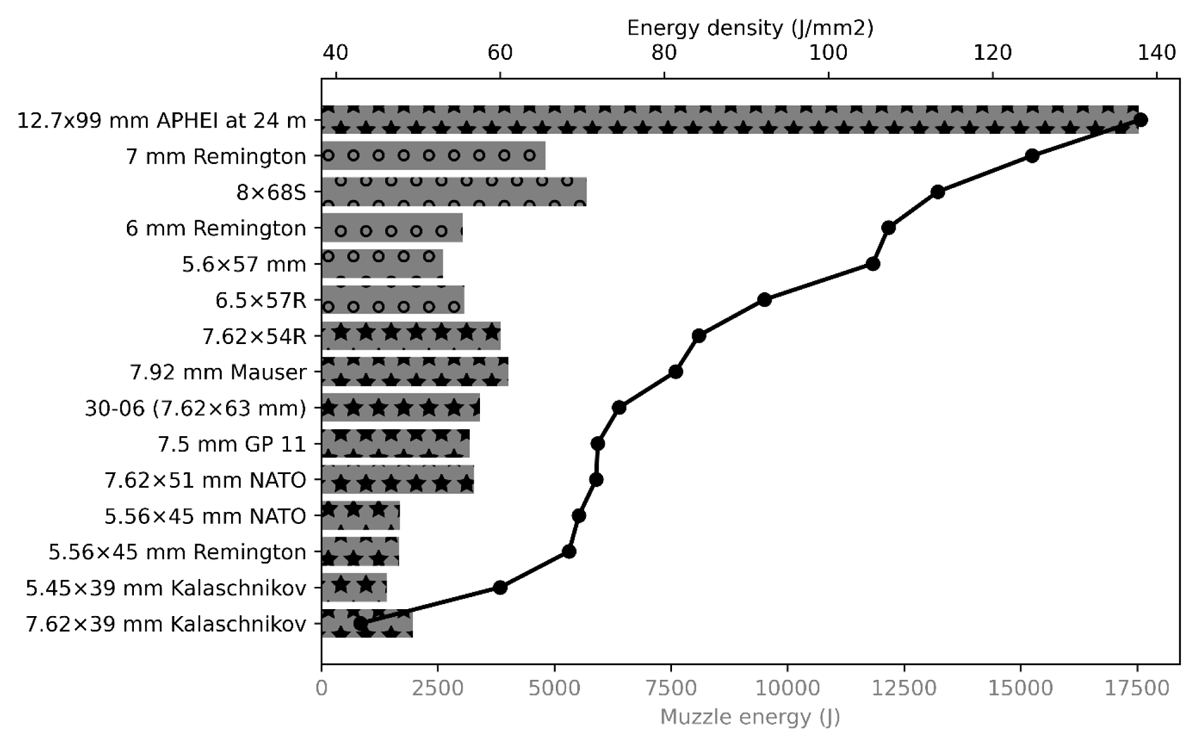
Figure 1
Muzzle energy and energy density for different calibers used by armed forces (★) or by hunters (o).
Concrete blocks were set at the back of the hydrogen tanks to catch the bullets of eventual off-target shots to prevent forest fire in the surroundings (cf. Figure 2). This specific safety measure has an impact on the shock wave measurements, as this concrete wall will induce a reflected shock wave.
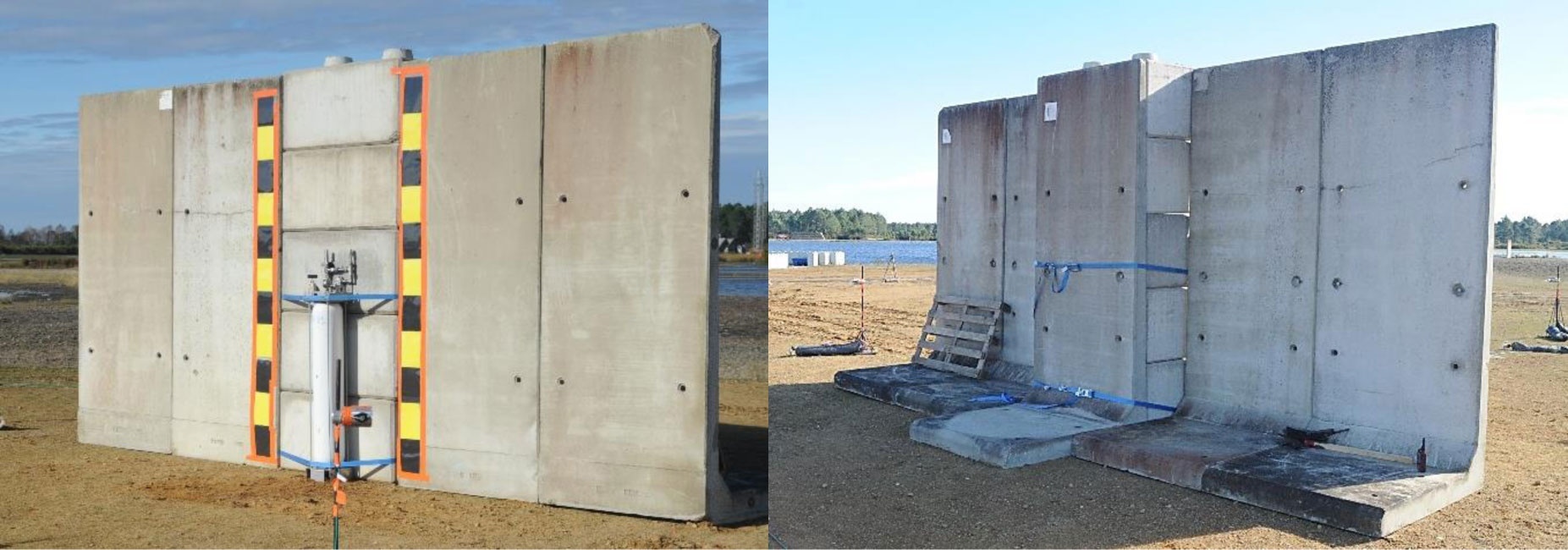
Figure 2
Concrete blocks at the back of the hydrogen tanks—left: front view with a Type I tank. Right: rear view.
The instrumentation consisted of:
19 piezoelectric pressure gauges mounted in pencil gauge holders:
15 manufactured by KITSLER (025Q01, 050Q01, and 250Q01 models),
Four manufactured by PCB (137B26, 137B32, and 137B24 models).
Five heat flux sensors from Captec,
Five high-speed cameras:
Phantom TMX7510,
Photron SA1,
Photron Nova S20,
Phantom VEO equipped with an ultraviolet (UV) intensifier,
Telops MS M2k multispectral camera in infrared (IR).
The pressure sensors were distributed around the hydrogen tank along four different axes: F, C, Da, and Db (cf. Figure 3). The numbers refer to the relative distance in meters to the target and additional letters are added at the end when sensors are doubled.
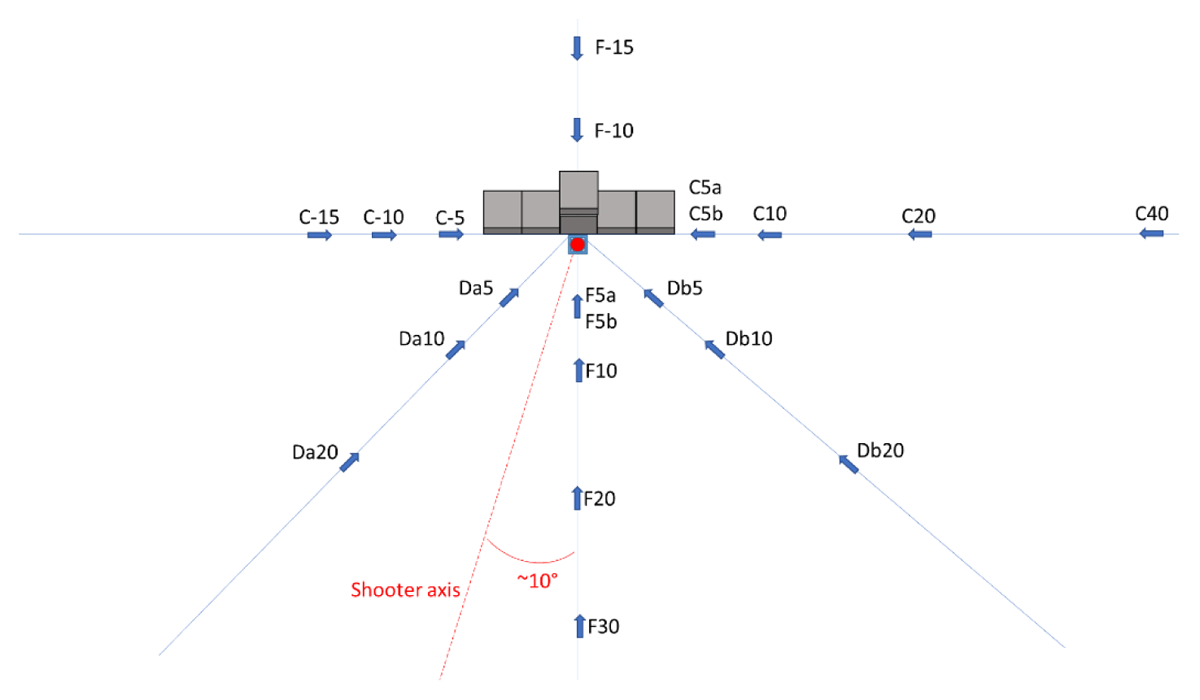
Figure 3
Target’s overall layout with hydrogen tank (red disk), pressure sensors, and shooter axis.
Figure 4 shows the layout of the different cameras and their respective field of view (FOV). In the test series, the bullet hit the CGH2 tanks at an angle around 90°. The shooter had the instruction to target the middle of the CGH2 tanks. Deviations occurred and were measured but they are not reported in this article.
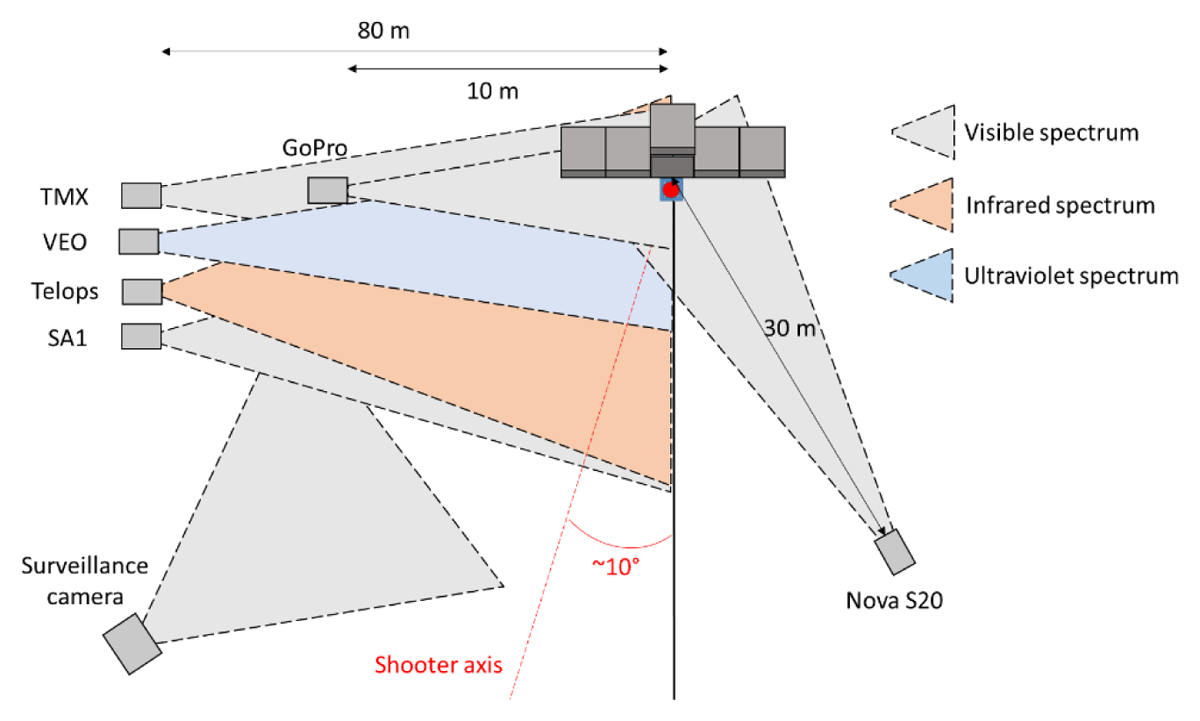
Figure 4
Layout and field of visions of the different cameras.
Four cameras were placed side by side. The Phantom TMX allows one to record images in black and white in the visible spectrum as well as the Photron Nova S20. The Photron SA1 records color images also in the visible spectrum. The Telops MS M2K is a multispectral camera that allows one to record images in the IR spectrum with eight filters. Additional video cameras were added for test monitoring—for example, control of the manometer located on the hydrogen tank.
Two types of tanks were tested, and their main characteristics are reported in Table 1. Some of them are pressurized with nitrogen and others with hydrogen, to quantify the effect of the possible chemical reaction.
Table 1
Characteristics of tested CGH2 tanks.
| TANK TYPE | VOLUME (L) | PRESSURE (BARG) | SIZE OUTSIDE DIAMETER, LENGTH, THICKNESS (mm) |
|---|---|---|---|
| Type I | 32 | 490–505 | 227, 1265, 14.3 |
| Type IV | 200 | 475–480 | 480, 2175, N.P. |
Unfortunately, the wall thickness of Type IV CGH2 tanks is confidential information.
3.0 Results
We present the results in detail by reservoir type, since behavior under ballistic stress differs widely between the two types.
3.1 Type I CGH2 tanks
The various cameras installed during the tests capture the sequence of events from the impact of the bullet to the development of the jet fire for a Type I tank hit by an APHEI ammunition. First, the bullet pierces the cylinder, producing a small fireball because of the explosive and incendiary components (Figure 5a and 5b) that ignite the leaking pressurized hydrogen. Next, the fast images from the TMX camera allow us to follow the path of the various waves (Figure 5c). Initially, the shock wave and the matter wave travel at the same speed (450 m/s at 60 cm). The shock wave then travels away at around 340 m/s from 150 cm. The matter wave slows down and is overtaken by the reactive wave initiated by the ignition of the bullet. These two waves have a speed close to 250 m/s at 150 cm. Finally (Figure 5d), the jet-fire structure is set up with a characteristic jet shape featuring an opening angle measured at around 22°, a virtual origin located at –27 cm and a slight lift-off of 9 cm.
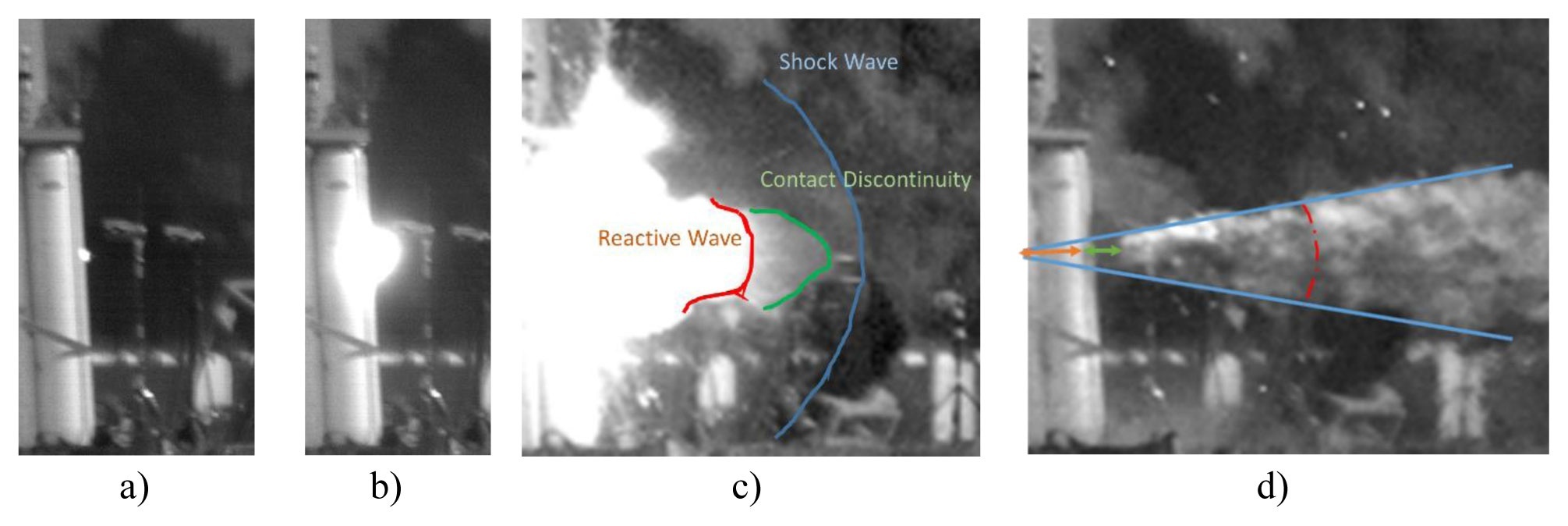
Figure 5
Sequence of events during the development of a jet fire for Type I tanks (TMX Camera).
Figure 6 shows the flame at the heat flux peak in visible, IR at 1850 nm, and UV spectrums. The filter chosen on the IR multispectral camera allows recording the flame length over time without being disturbed by the surrounding light. The flame lengths in the UV and IR spectrum are similar—12.8 and 12.9 m respectively—and the flame length in the visible spectrum is slightly bigger.
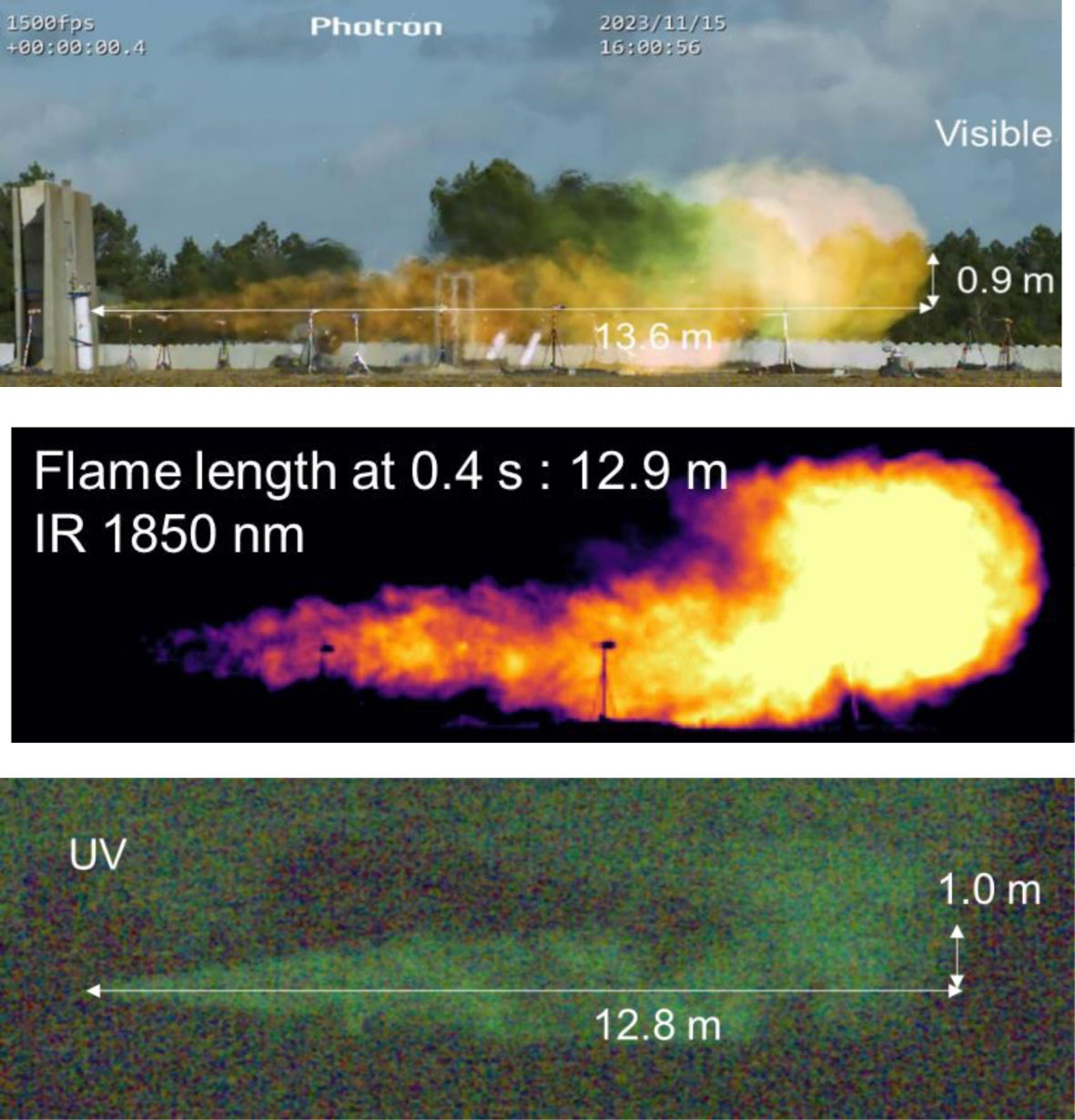
Figure 6
Comparison of jet-fire shapes seen from different wavelengths at the same time point (visible SA1, TELOPS IR @ 1850 nm, VEO UV @ 307 nm).
A Python script was elaborated to record the flame length over time with the images recorded by the IR camera at 1850 nm. The results of this data processing are visible in Figure 7: the blue line refers to the raw flame length captured by the camera, the orange line corresponds to the flame length from the surface of the Type I tank, the one of interest regarding the safety. The green line is the difference between the two lines, giving negative values when a bullet hits the tank. On the images of the visible camera, it seems that between the impact time point and around one second after it, particles of matter from the APHEI ammunition are entrained by the jet. At least during this first stage, one can say that this is not a pure hydrogen/air flame. The particles of matter are probably a mixture of metallic particles, notably copper oxide as suggested by the pale green color observed in the convected part at the end of the flame on visible images, and soot.
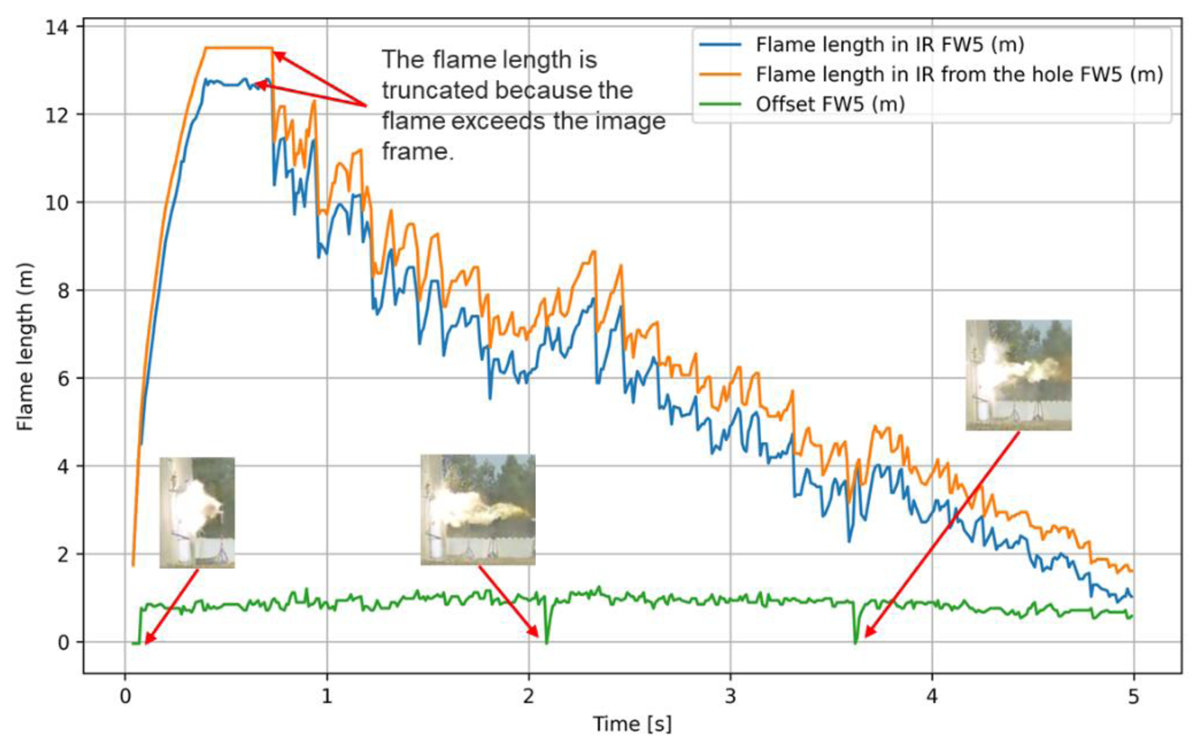
Figure 7
Flame length over time recorded by the IR camera with the 1850 nm filter.
The first impact visible in Figure 7 gave a circular orifice of a diameter equal to about 8 mm, slightly smaller than the diameter of the bullet. Based on this diameter and on the initial pressure in the tank, 490 barg, a blowdown time of 6 s was calculated with eLab based on the under-expanded jet theory without losses (Molkov and Saffers, 2013). The blowdown was considered as adiabatic considering the fast blowdown time. Then the flame length was estimated over time using Molkov and Saffers’ model (2013) for an under-expanded jet without losses:
The results were calculated at various time points before the second bullet impacted the tank during the regression phase of the flame length, between 0.7 and 2 s (cf. Figure 7). Figure 8 presents the results of the calculation; the time scale was adjusted to Figure 7. The calculations are in good agreement with the experimental values given by the IR camera with the 1850 nm filter in the regression phase of the flame.
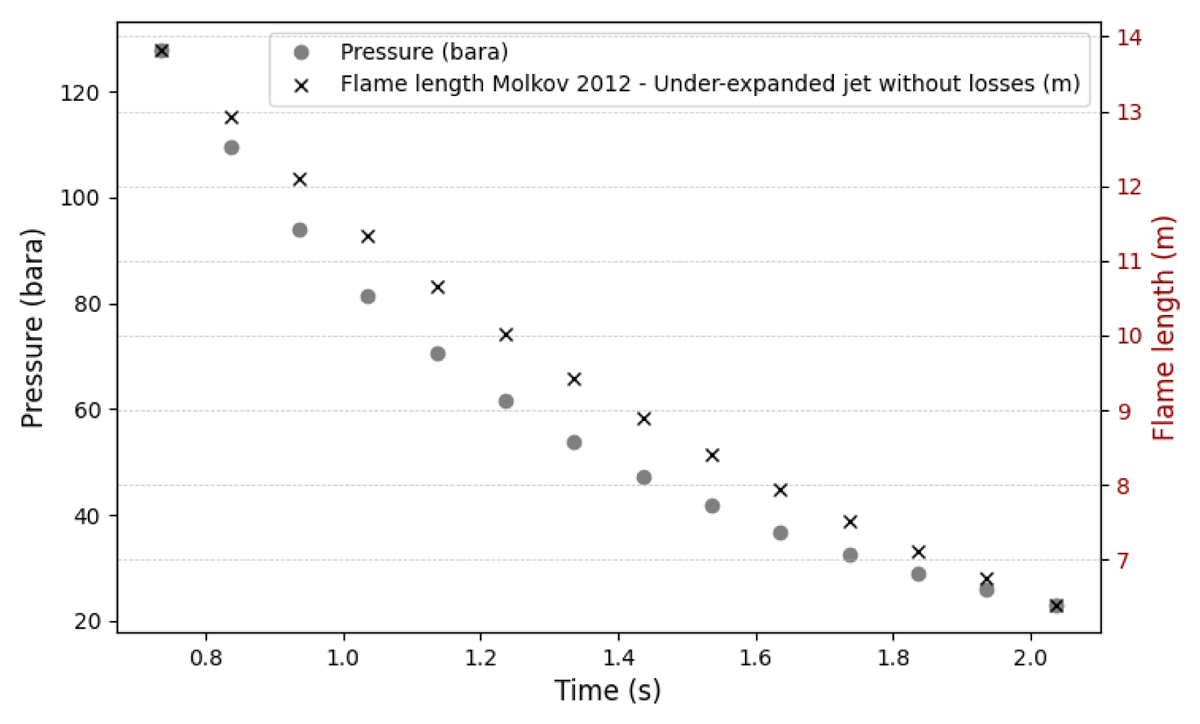
Figure 8
Flame length estimation with Molkov and Saffers’ (2013) model during the blowdown at an initial pressure of 491 bara with a leak diameter of 8 mm.
Figure 9 presents development of the jet fire during three different tests after the first impact (t0); it shows a good reproducibility between the tests for the Type I tank.
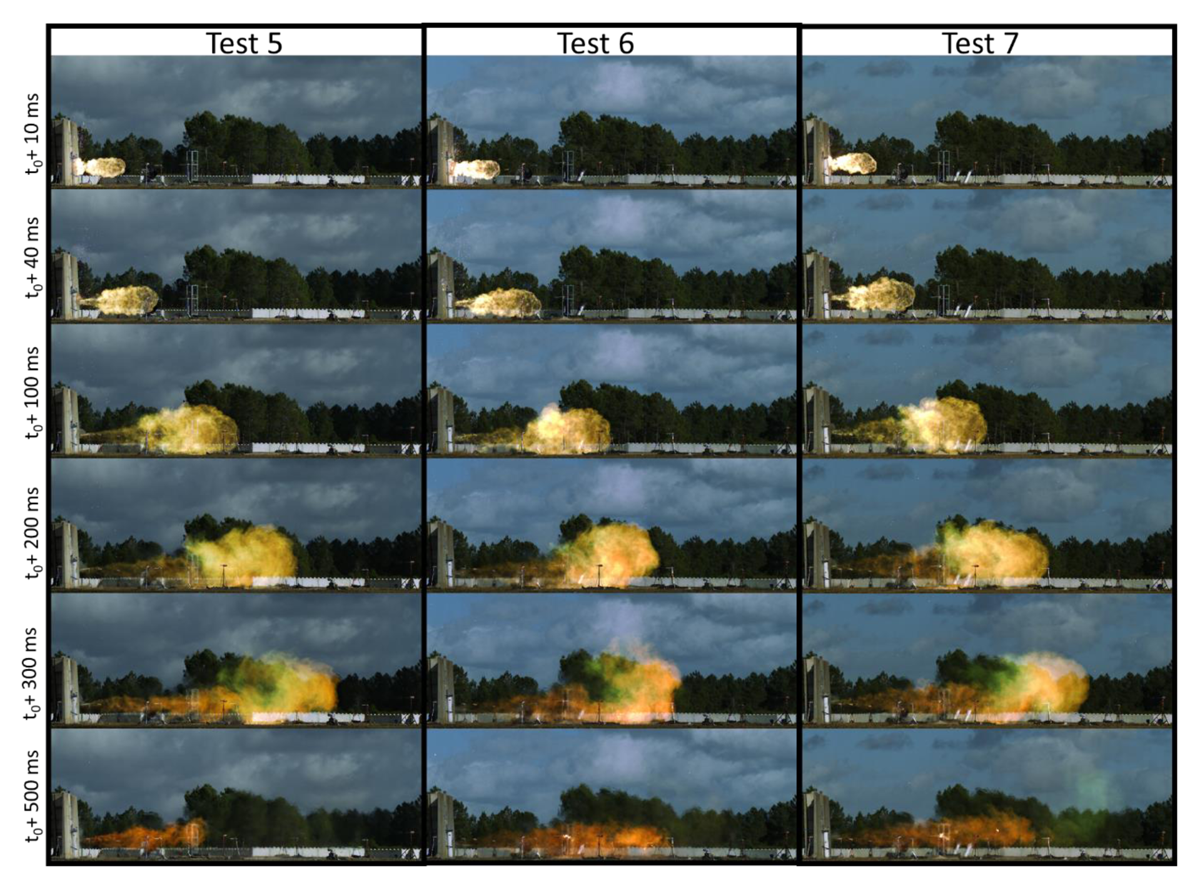
Figure 9
Development of the jet fire during three different tests.
3.2 Type IV CGH2 tanks
The behavior of Type IV tanks differs significantly from Type I tanks upon impact with the bullet of APHEI ammunition (Figure 10). Indeed, the bullet penetrates the tank but it does not necessarily generate a visible leak. This behavior might be associated with the structure of the tank, which is composed of multiple layers of carbon fibers. During the penetration, the bullet could deviate from its initial trajectory through the carbon layers, which could explain the observation of differences between the angles of the jet flame and the shot.
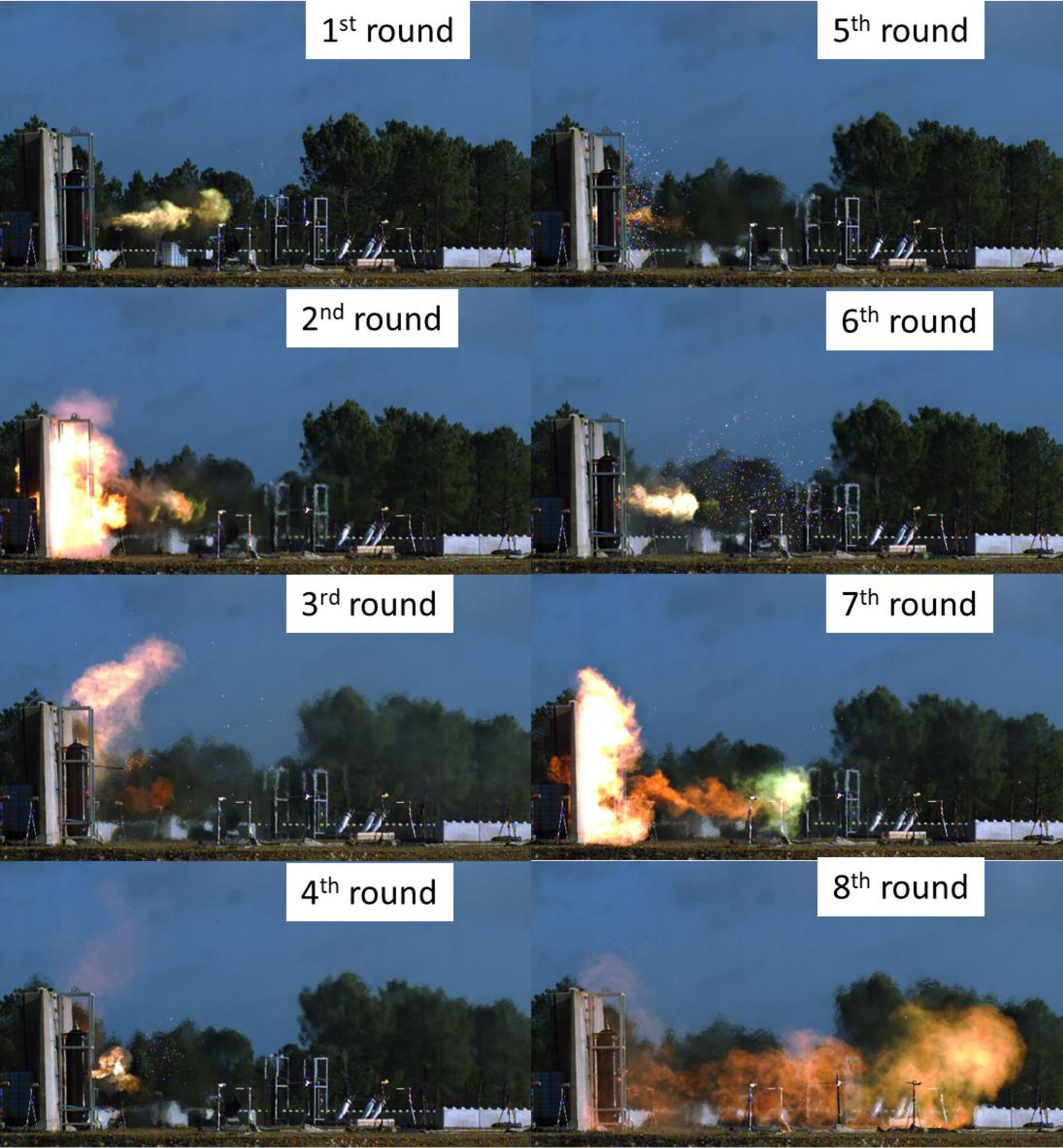
Figure 10
Sequence of events during consecutive API rounds.
Rapid flashovers can occur (Figure 11). A flashover is an ignition of the cloud around the cylinder within a short time, but longer than a partially premixed flame leading to a deflagration. No overpressure is recorded on the blast sensors. Most of the time, this ignition occurs when the bottle is punctured from one side to the other. The visible difference between a flashover and a deflagration is that in the case of a flashover, the cloud ignites immediately on impact.
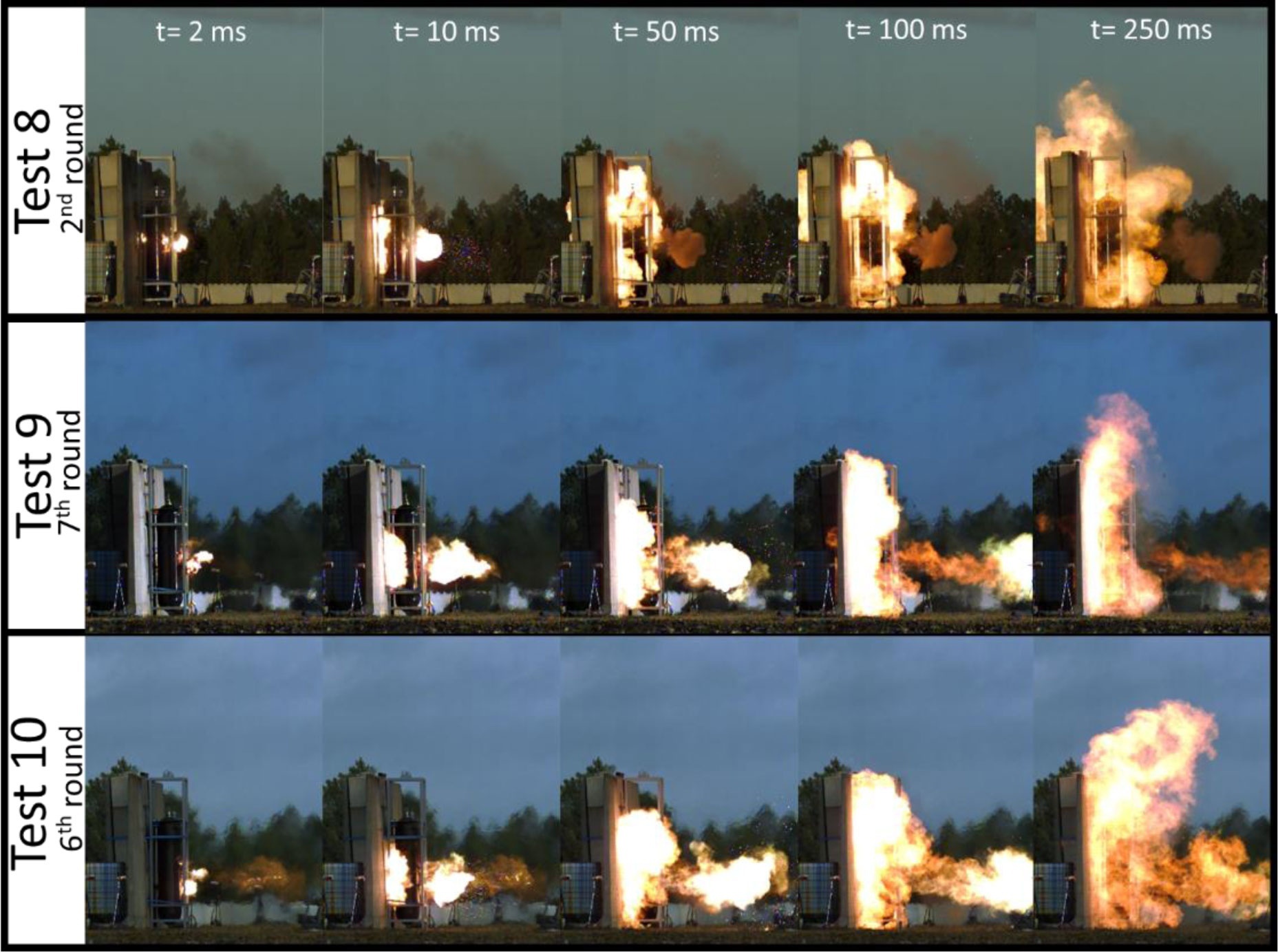
Figure 11
Evolution of a flashover following bullet impact in three different tests.
A self-sealing behavior was also observed after some bullet impacts that first led to a leak. Several hypotheses can be proposed. The heat generated by the bullet impact may melt the material and reconstruct a solid barrier to the leak, or it could also be hypothesized that the liner is opened and then resealed under pressure.
No significant pressure build-up was observed for any of the hydrogen cylinder shots, except for one. For this test, it is necessary to understand the sequence of events in order to define what allowed the gas to burn in the deflagration mode. The first bullet created leaks into the front face, which ignites due to its explosive/incendiary component (Figure 12a). A jet fire of about 5 m long develops. The impact of the second bullet is visible on the cameras. However, blast sensor measurements show that the level of the shock wave induced by the explosive of the expected bullet is not reached. To interpret the reasons for the very low level, we can put forward a hypothesis: the second round of bullets penetrates the cylinder and most of the energy is released in the inner part of the cylinder. In the second image of Figure 12b, the perforation in the rear of the bottle is visible. This tends to show that part of the explosive energy contained in the bullet is used to create a hole in the rear of the bottle. Then, hydrogen gas escapes and does not ignite immediately (Figure 12c). However, after about 300 ms, the flammable mixture comes close to the jet fire and ignites (Figure 12d). A flame develops and accelerates due to the obstruction generated by the tank and the wall, and a shock wave forms (Figure 12e). Between 12 and 24 kPa are recorded at 5 m with a strong dissymmetry.
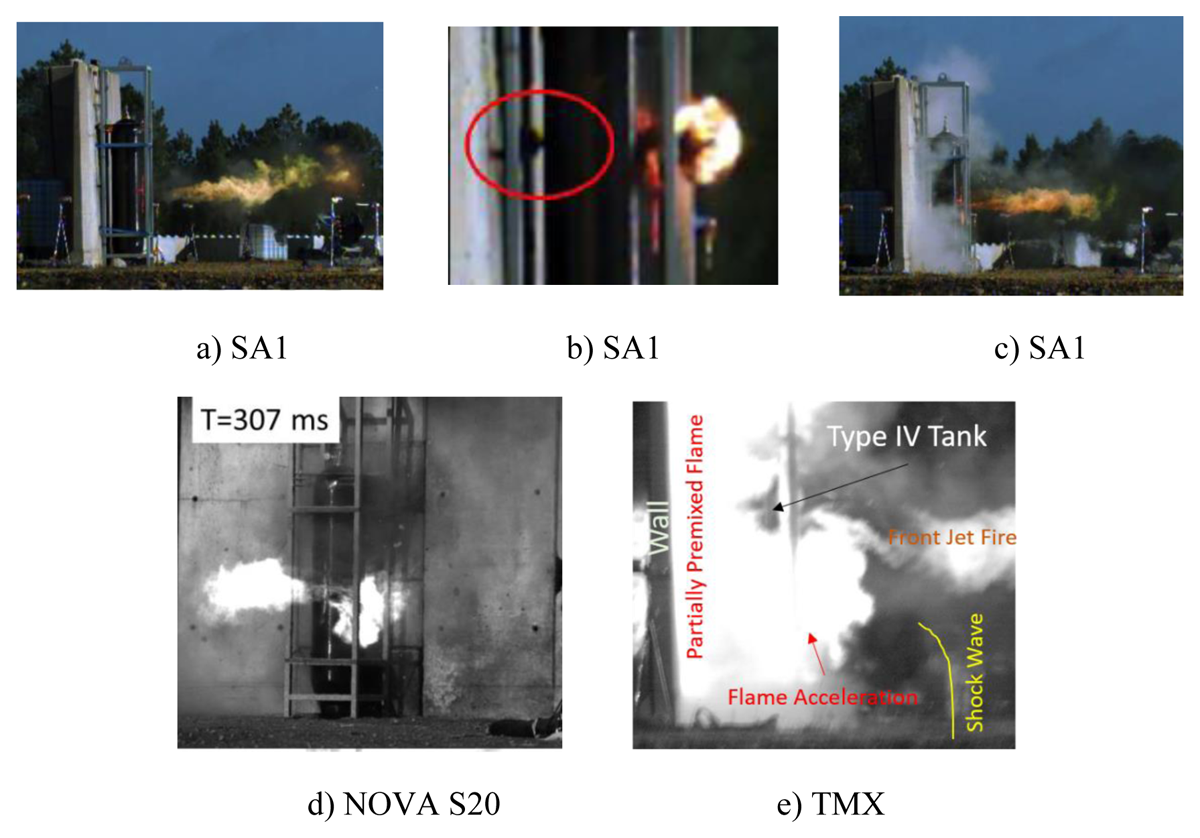
Figure 12
Sequence of events leading to a deflagration.
4.0 Conclusions
The main conclusion is that pressurized hydrogen storage tanks react differently to the ballistic stresses studied, depending on their type.
For Type I tanks, the reaction is always the same. When perforated, a jet is formed in the direction of the shooter, and this jet is ignited by the bullet used in these tests. No significant overpressure is measured. The major risk is therefore jet fire, with its size, visibility, and radiated flux.
For Type IV tanks, the reactions can be very different, and include failure, deflagration, fire runaway, jet fire, self-sealing behavior, etc. Some events occur at random and are therefore difficult to reproduce. Other phenomena are due to the partial confinement or obstructions installed during testing, such as a deflagration following the ignition of a flammable cloud formed when the tank was pierced at the rear. In this respect, the bullet used perforates the tanks either simply on the front or on both sides, again with a lack of reproducibility. A full rupture of a tank was also observed during a test with a tank pressurized by nitrogen, but it is not reported in this article.
From a design point of view, partial confinement to protect the storage can increase the accidental effects as observed with the development of a deflagration wave.
Competing Interests
Etienne Studer is a board member associated with the journal.