
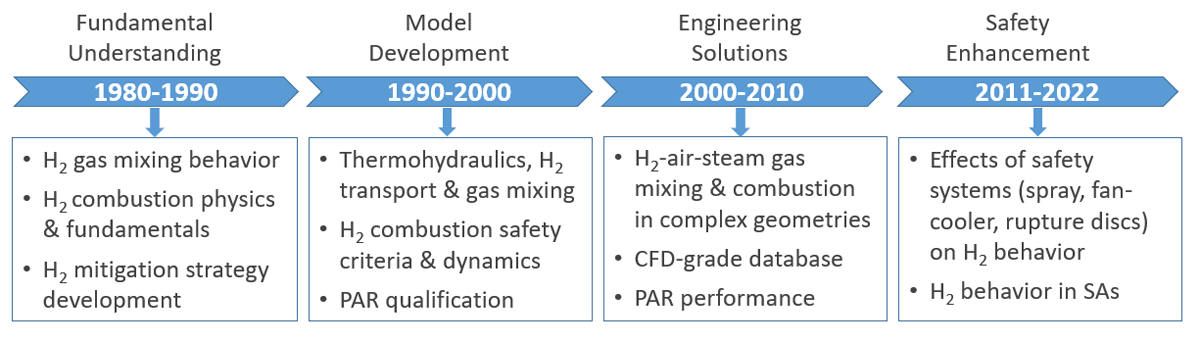
Figure 1
Evolution of H2 safety research in nuclear community.
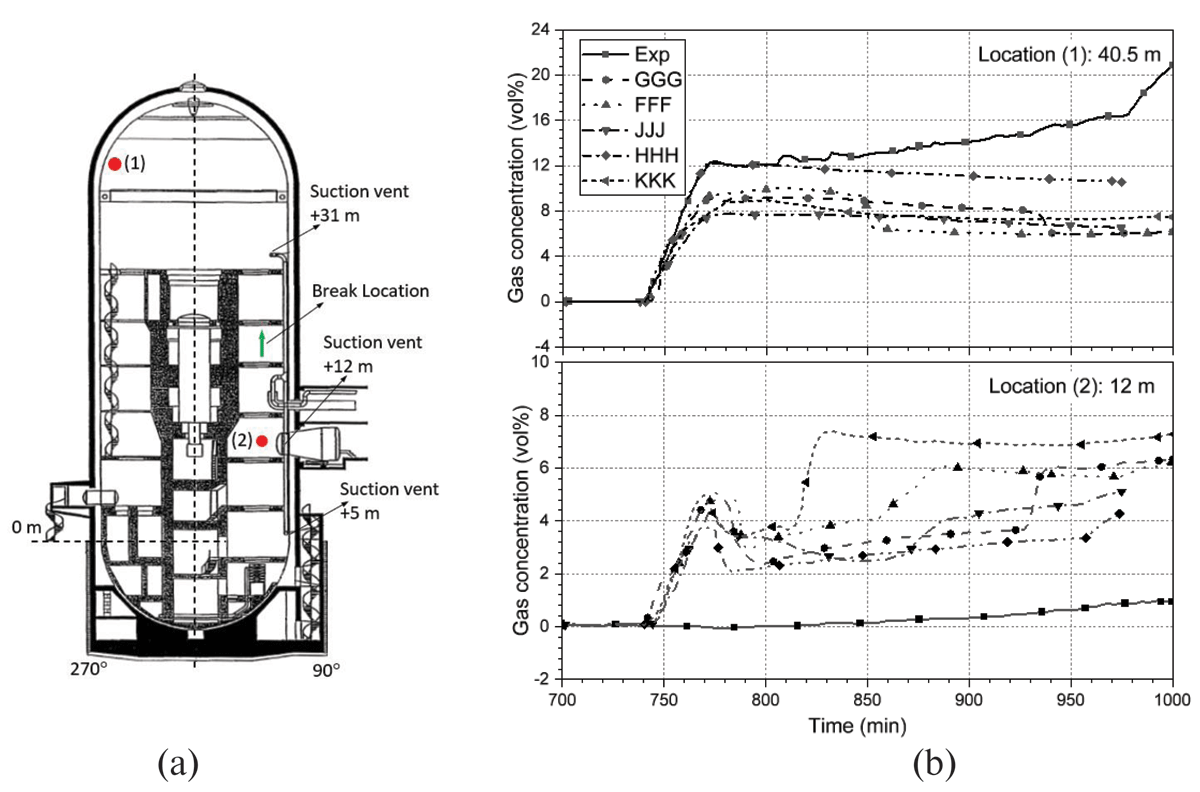
Figure 2
ISP 29 benchmark exercise: (a) HDR facility, (b) comparison of gas concentrations predicted by LP codes with experimental data (NEA, 1993).
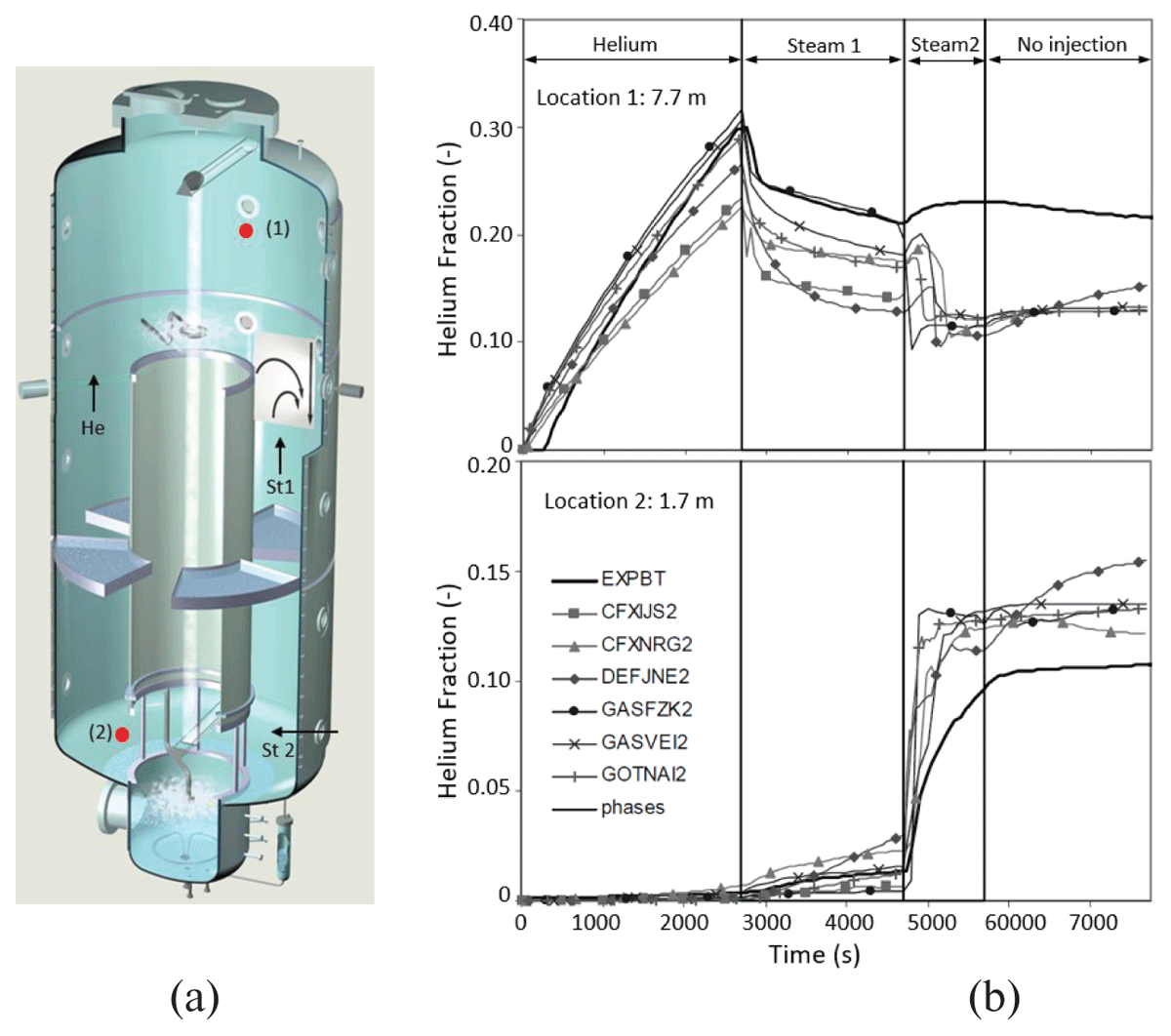
Figure 3
ISP47 THAI benchmark exercise: (a) THAI facility, (b) comparison of helium concentrations predicted by 3D/CFD codes with experimental data (NEA, 2007).
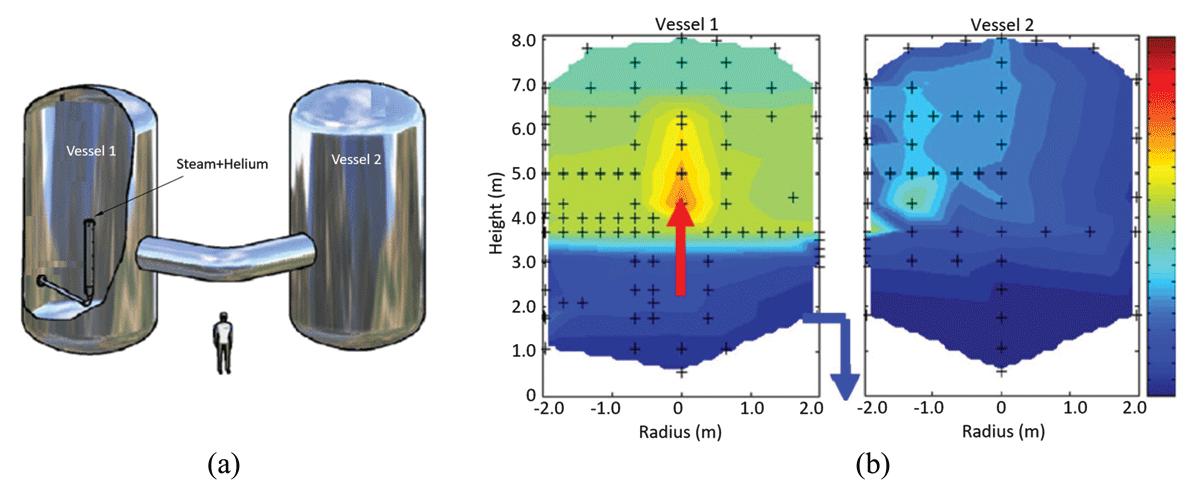
Figure 4
SETH–PANDA test 25: (a) PANDA facility, (b) experimental measurements of temperature fields (Paladino et al., 2010).
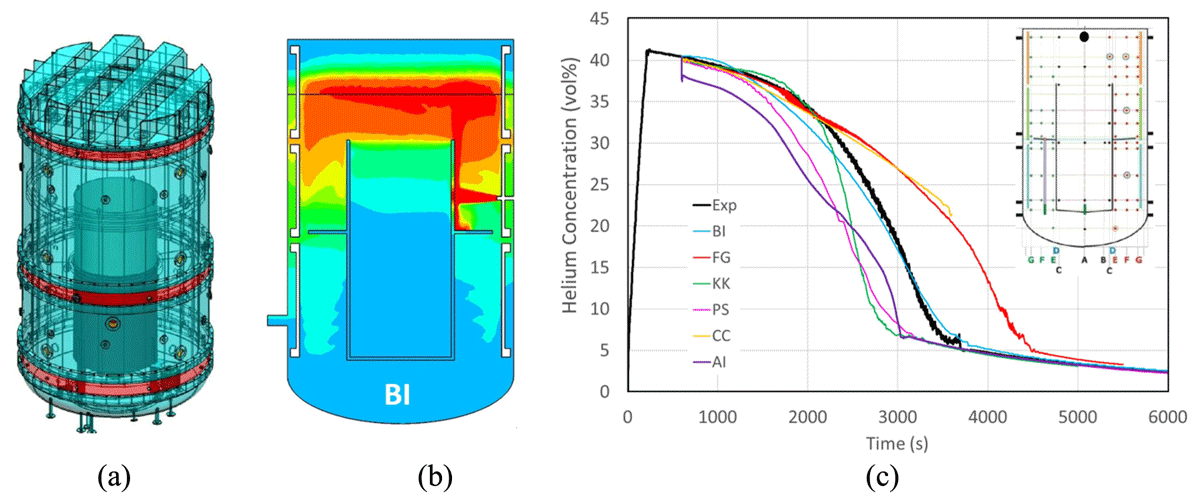
Figure 5
HYMERES–MISTRA HM1-1 benchmark exercise: (a) MISTRA facility, (b) gas temperature field predicted by CFD-ACE+ at 2100 s, (c) comparison of helium concentrations at the ceiling predicted by various codes with experimental data (Studer et al., 2018).
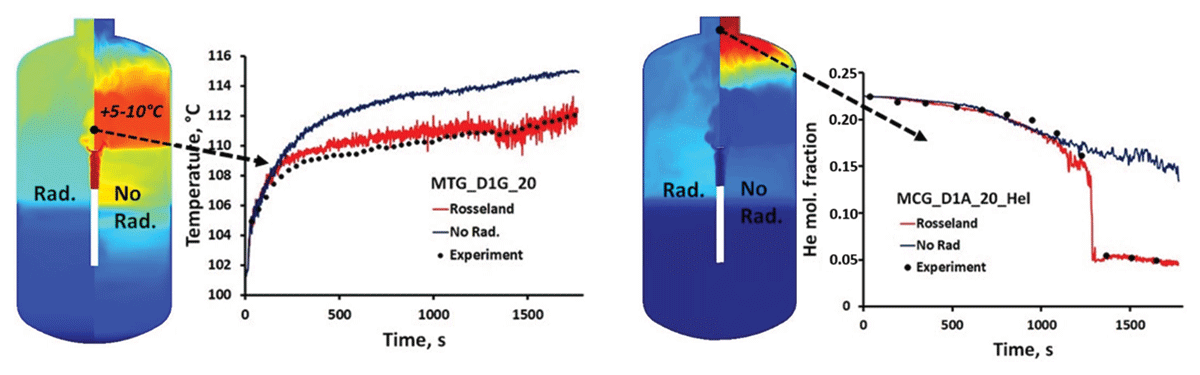
Figure 6
HYMERES–PANDA HP1_8 benchmark exercise: (a) gas temperature in the stratified layer, (b) helium erosion at the top of Vessel 1 with and without radiation model, modified from (Yu Glotov et al., 2019).
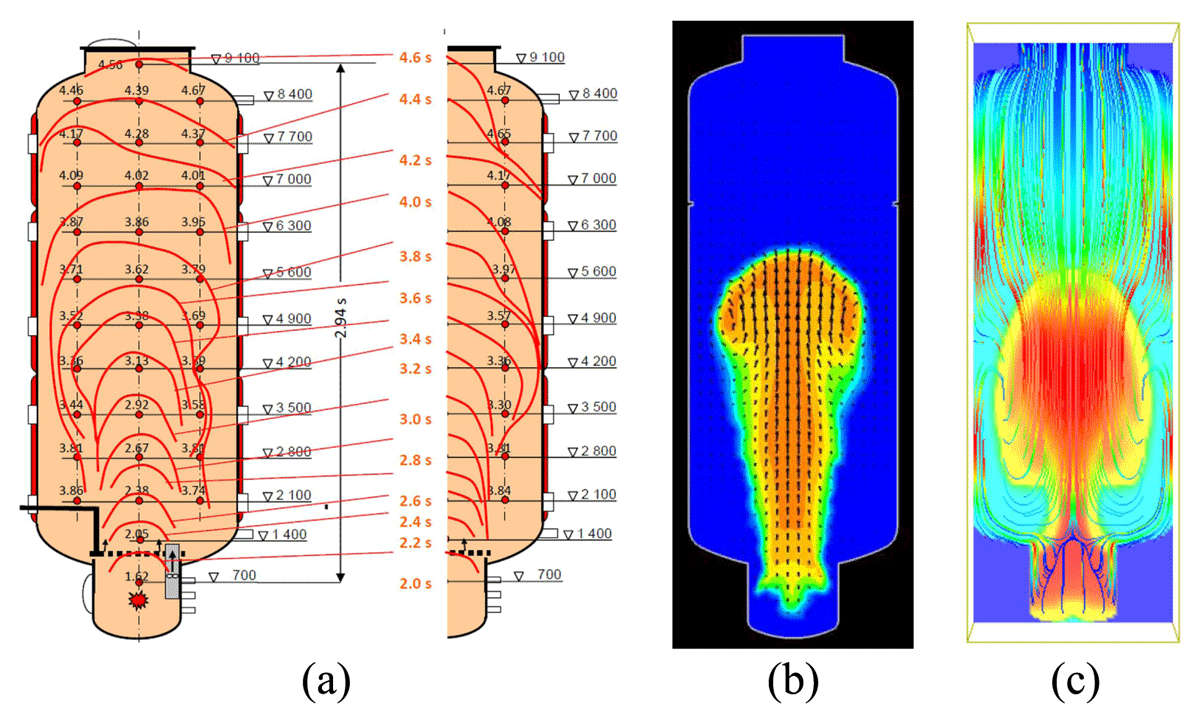
Figure 7
ISP49 THAI flame front: (a) experiment, (b) CFX, (c) COM3D (NEA, 2012).
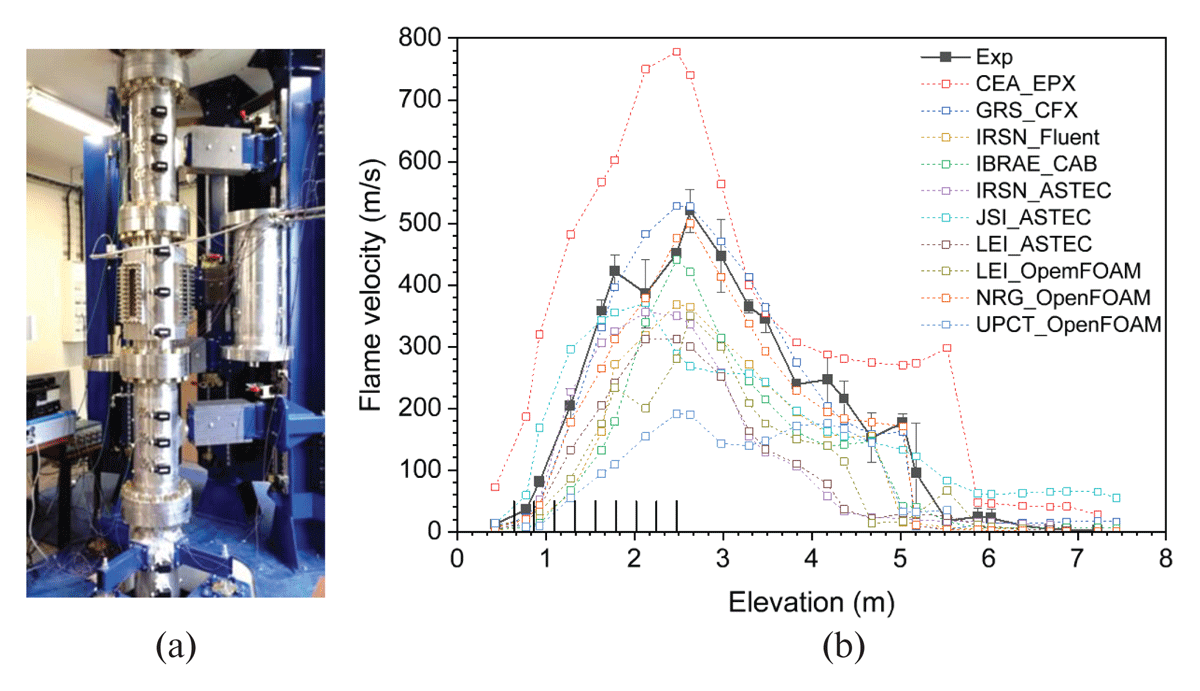
Figure 8
ETSON-SAMHYCO-NET benchmark of fast flames: (a) ENACCEF2 facility, (b) comparison of simulation results with experimental data (Bentaib et al., 2022).
Table 1
Summary of Qualifications for AECL/CNL PAR.
| QUALIFICATION ASPECT | OPERABILITY |
|---|---|
| Pressure | 1–4 bar(abs) |
| Temperature | 13–108°C (ambient), up to 750°C (catalyst) |
| H2 concentration | >0.5 vol.% |
| Relative humidity | Up to 100% |
| Radiation | 2000 kGy gamma |
| Post-accident H2 transient | Yes (24 h post-LOCA H2 transient in CANDU reactor) |
| Seismic acceleration | Up to 9.5 g (horizontal) and 6.3 g (vertical) |
| Thermal aging | 40 years at 50°C |
| H2 combustion | Yes |
| Cable/kerosene fires | Yes |
| Sprays (before and after H2 release): | |
| Water; NaOH; Na3PO4; B(OH)3, borax, KOH; Na3PO4, LiOH | Yes |
| Low O2 concentration | Yes (1–2 vol.%) |
| Post-accident chemicals (I2, CH3I, H2 N4, Cl2, HCl) | Yes |
| Long-term exposures to plant operating conditions | Yes (up to 42 months) |
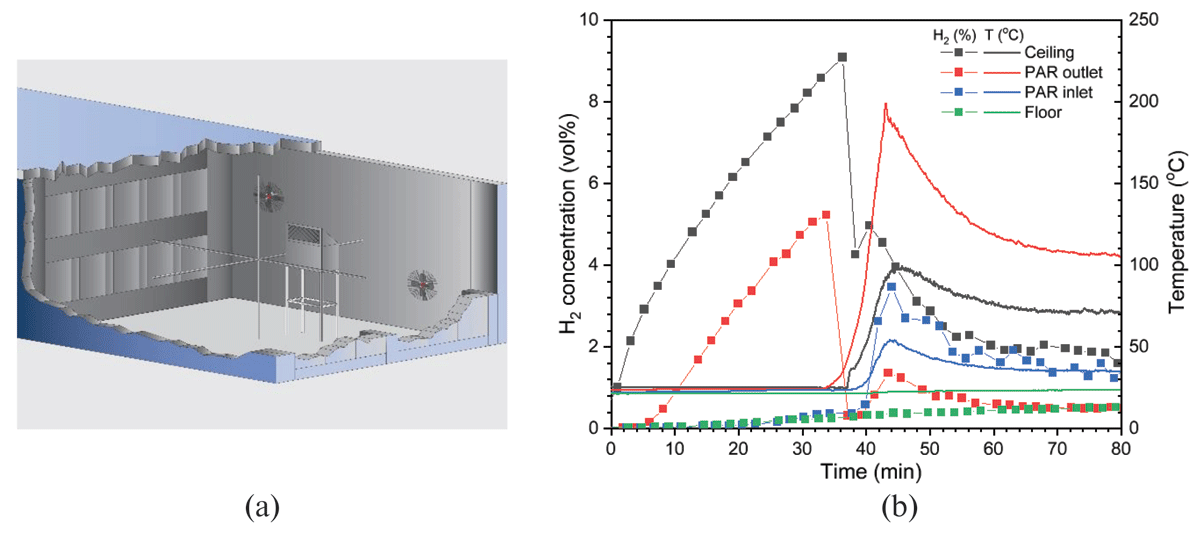
Figure 9
PAR performance during continuous H2 release: (a) CNL’s large-scale vented combustion test facility and a standard PAR with 31 catalytic plates, (b) evolution of H2 concentrations and gas temperatures.