
Mastering increasing complexity and being prepared for future challenges requires companies and institutions alike to take specific measures to ensure prosperity and their own survival. Instead of hectic actionism (aktionismus), sustainable strategies are required that provide entrepreneurs and operators with the effectiveness and efficiency to be able to manage the company/institution securely and act economically at the same time, even in the face of the highest dynamics.
Lean cost and corporate structures as well as resource-saving production and service processes are therefore required in order to best arm oneself against the various current and future requirements. In order to anchor these issues more securely and sustainably in both corporate strategy and operational implementation, companies must have tools at their disposal with which such complex and multi-layered tasks can be reliably monitored, controlled and thus (economically) successfully managed.
The viable system model (VSM) developed by Stafford Beer (1959/1962) is a diagnostic tool and structural basis for any kind of organization. In our opinion, its combination with selected tools and methods of lean management provides suitable building blocks for designing such a management system that is both sustainable and changeable.
The VSM is an excellent diagnostic tool for several reasons:
It provides a holistic perspective, viewing organizations as complex systems, and analyses their structure, interactions, and dynamics at all levels.
It is easy to use, providing clear models and concepts that allow problems in organizations to be quickly identified and understood.
It is flexible, being applicable to different types of organizations, regardless of their size, industry, or structure.
It focuses on adaptability, emphasizing an organization’s ability to adapt to change and survive, which is crucial in today’s fast-paced world.
It promotes long-term solutions, not only helping to identify current problems but also supporting the development of long-term strategies to improve organizational performance.
It can be easily and productively combined with other management tools and management models. In this article, this thesis is illustrated using the example of an integration of lean management and VSM.
Numerous branches of industry, but also the service sector, are facing far-reaching changes. Rising wage demands and cost and the shortage of skilled labour, coupled with increasing and ever more international competition are forcing more and more companies and service providers to find new solutions to these challenges. For Germany, known as a high wage country with an ageing population, this problem is particularly challenging. At the same time, the generations entering the labour market are also undergoing profound changes in terms of their attitude to work, responsibility, and leisure; their use of digital media; and, above all, in terms of their size, which is steeply decreasing. What the generations entering the labour market have in common is that they have completely different expectations of management behaviour in companies than the generations before them. Instead of clear boundaries, for example, they demand flat hierarchies and the opportunity to participate. This development is fuelling the problem of the much-discussed shortage of skilled workers (Industrie- und Handelskammer für Niederbayern, 2023), which tends to make it more difficult to find professionally and personally suitable candidates for in-company training. To prepare oneself against these various future requirements, there is an urgent requirement for lean cost and company structures and resource-saving processes. What all of these considerations have in common is that they describe proceeding changes that are characterized by increasing challenges, complexity and dynamism, as well as being associated with uncertainty. The effects of these changes have arrived in society, but especially in the international and national markets and here in particular on the labour market.
Due to the factors mentioned above, the observations made in the following case studies in the construction industry, mechanical engineering, and healthcare are highly relevant for most entrepreneurs and service providers.
Rationale of a Cybernetic Approach in Conjunction with Lean Management
The VSM was first published in 1959 in Stafford Beer’s (1959/1962) book Cybernetics and Management. The aim of the model is not only to represent a viable and self-organising system (which can be an organization, a company, or even an entire state), but also to use it as a diagnostic and design tool (Beer, 1985). Beer justifies the necessity of such an approach with the ineffectiveness of traditional hierarchical structures, which are often based on the design or appearance of the organizational structure.
Cybernetics offers a solution for this, as well as for the most fundamental management task: “The fact is, however, that there is a whole science having to do with the manager’s own prerogative: TO ORGANIZE EFFECTIVELY. It is called cybernetics” (Beer, 1985, p. i).
With the development of the VSM, which describes complex social systems as viable entities, Beer laid the foundation for management cybernetics, which is intended to ensure controllability despite high complexity, dynamics, and limited predictability.
For this reason, all strategies that promise the successful handling of increasing complexity and dynamism and at the same time enable the sustainable anchoring of efficiency-enhancing tools, must be an indispensable component of a modern management system in future if the company in question wants to continue to operate successfully on the market.
In the course of human history, it has been observed that different forms of organization have emerged depending on the purpose of the respective association. Frederic Laloux (2015, p. 35ff) mentions the following types of organizations with selected examples: tribal-impulsive (mafia), traditional-conformist (Catholic Church), modern-performance-oriented (multinational companies), postmodern-pluralist (culture-oriented organizations) and integral-evolutionary. It is characteristic of the latter, according to Laloux (2015, p. 54), that their representatives speak with surprising frequency about their organization as living organisms or living systems. For Laloux, this kind of organization could open up completely new possibilities if organizations could be filled with the evolutionary power of the living self.
It is precisely this force that the proponents of management cybernetics such as Fredmund Malik are convinced has the potential to successfully meet future challenges in the management of complex systems. Malik (2015, p. 94) speaks of the outstanding capabilities of evolving systems and even names his method based on the evolutionary approach: “REvolution” of organisations and their management (Malik, 2015, p. 36). Malik emphasizes the advantage of such a system most clearly in the foreword to Hetzler’s (2010) work Real-Time Control for Mastering Complexity, saying that mastering complexity and thus having the logic of evolution as an advantage on your side makes the management of and in complex systems almost a pleasure (p. 12).
The first characteristic of evolutionary organizations, according to Laloux, is self-management, which increasingly dissolves traditional hierarchical structures and transfers leadership to the workers. One example of how such approaches can work and be superior to the sole application of lean, for example, is the tyre manufacturer Michelin with its “Responsabilitation” programme. In the article “Power to the workers: Michelin’s great experiment”, Jean-Michel Guillon, head of HR at the Michelin Group, shows that the lean-driven fixation of managers on increasing productivity gave employees the feeling that the company had lost its soul (Hill, 2017).
An evolution-based organizational system appears to be well suited to forming a viable basis for an efficiency-focused method such as lean management. The VSM is therefore considered as a construct that offers an optimal basic structure for a sustainable connection with the methods of lean management due to its evolutionary ability to constantly adapt to the requirements of its environment and its further development expertise.
The VSM acts as a structuring element that is used for a new management system with the participation of lean tools and methods. The most important factors to be considered here are the self-organization and viability of the systems. Beer (1979) locates the principles of viability at the heart of the company, i.e., its original purpose: “The laws of viability lie at the heart of any enterprise. So too do human beings” (inside cover).
These elements ensure that the system does not come to a standstill, continuously adapting to changing environmental conditions and thus remaining scalable even as the company grows. As mentioned above, the self-organization of the system is an important success factor: It ensures the continuity of the system function and the further development and growth of the system. In addition, the constantly updated input from the system’s environment is both a risk minimisation tool and a driver of innovation. A closed information chain is required for information flows, which are necessary to fulfil tasks and responsibilities within the system and to be able to communicate the results to the relevant departments. When categorising lean methods within the VSM, it is important to bear in mind that there are also lean methods that can only develop their full effect at certain locations within the company.
For example, at a later stage, the lean principles should completely permeate the company and be omnipresent and binding for everyone. To achieve this, however, it is necessary to anchor the mindset and the lean principles in System 5 in the VSM (the tasks and functions of the VSM systems will not be discussed in detail here; interested readers are referred to Wolfgang Lassl, 2019, pp. 39–146). From there, this content is disseminated throughout the company. The same approach should be taken with other lean methods, for which it must also be considered whether they are target-orientated and suitable for the respective area.
In general, it can already be stated here that cybernetics, which is represented by the VSM, and lean management form a symbiosis that is based, among other things, on similar introduction and application mechanisms. Particularly with regard to the attitude towards people, the VSM shows strong similarities with the lean philosophy, which primarily places people and their development at the centre of its endeavours. In Liker and Meier’s (2006) The Toyota Way Fieldbook, there is even an entire chapter on the subject of “Develop Leaders Who Live Your System from Top to Bottom” (p. 219ff.). Also, with regard to the continuous application and further development of a method once it has been implemented, there is a congruence between the lean philosophy and Stafford Beer’s way of thinking, which is clearly emphasized in Beer’s obituary:
Unlike other management writers, he [Beer] saw science as freeing thought and action, not trapping it in narrow procedures and techniques. It was his constant theme that the greatest possible autonomy of action should be maintained at all levels of the organisation, not just at the top. (Martin & Rosenhead, 2002, para. 12)
When considering whether it is fundamentally possible to combine the VSM with lean management, it should be borne in mind that cybernetics is generally a universal science, which in principle does not preclude any connection with another field of research. As cybernetics has clear links to quality management, which also overlaps with lean, it seems obvious that a combination of the two disciplines could yield useful results (Herrmann et al, 2008).
In the case studies presented in this article, lean building blocks have helped to make the VSM explicit and to realize its operational implementation. This makes the application of the VSM easier to understand for all those involved and therefore likely to be applicable in practice. At the same time the VSM can initially provide a supporting structure for the implementation of lean until the application of the individual lean methods has led to a rethink of lean throughout the entire system.
In addition, both lean management and VSM focus on the holistic development of informal organizational structures. The process-oriented view of lean places more emphasis on unimpeded flow and small inventories at the interfaces and in the processes than on formal organizational charts. VSM also speaks of systems, functions, and connections rather than of people and roles. This fact makes the described approaches a useful complement to more formalized management tools such as quality management or risk management.
Case Study 1: Construction Industry
Below is a field report describing a case study on the application of lean construction, particularly the last planner system (LPS), and management cybernetics, particularly the VSM, during the planning and execution phase of infrastructure major projects with a budget of approximately 350 million euros. It is about a large infrastructure project with approximately 50 participants from the organizational area (administration) and approximately 150 industrial employees from production on site. The author Michael Frahm was involved as a responsible project leader on the owner side in this project. The project was executed in Germany. The project process was as follows: a design phase of one year, an approval phase of four years, a tender and award phase of two years, and a construction phase with construction planning of approximately five years. The organizational structure of the project is given in Figure 1. The case study is based on Frahm and Roll (2022). The case has been practically implemented. The intended benefits of the implementation were to have an approach to manage the organizational complexity in a large project with regard to the application of the VSM. The lean method already existed in the project before the VSM and was established. The advantages of lean were evident in the resolution of bottlenecks and critical paths as well as in cooperative collaboration.
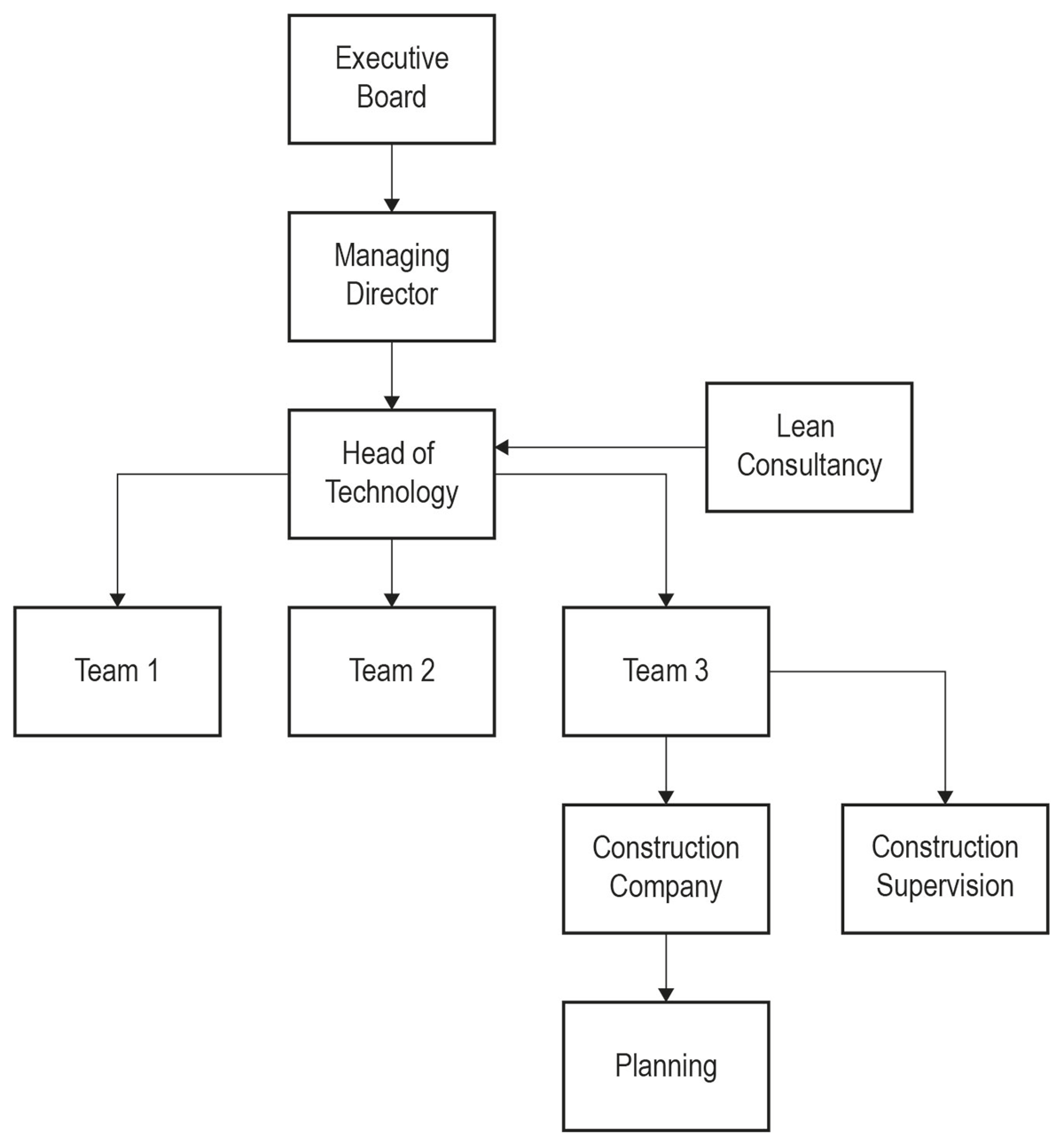
Figure 1
Case Study 1: Organizational Structure of Project.
Design Phase and Approval Phase
The combination of VSM and lean in this project started with the former project manager, who was a lean construction enthusiast from the very beginning. They brought this enthusiasm with them and thus ensured an essential support element. The operational implementation was carried out by a consulting firm from the lean construction sector.
During the design phase, all participants were trained in the basics of lean construction management. The participants were exclusively designers and technical consultants from various specialist areas familiar with production design and planning. They regularly implemented it top-down with a planning schedule based on the specified time schedule. However, to do this using a collaborative production plan based on LPS was new for everyone involved. LPS is a tool for stabilizing planning and control processes during production (Ballard, 2000; Frahm & Roll, 2022). Obstacles are to be overcome with the help of foresighted and short-cycle planning. It is a holistic and collaborative approach to increase productivity. This approach was generally well received but occasionally some “old hands” rejected the approach.
Establishing the overall process bottom-up, the collaborative implementation with the collaborative plan, the division of the work packages from the different areas, and the establishment of a production plan were good places to start. Also, the measurement using percent plan complete (PPC) with the measured focal points of the non-compliance of the promises, such as lack of advanced performance, missing quality, and ambiguity, was accepted by the project participants.
After initial vigour, however, the disciplined handling eased. This was partly due to the local separation of the participants—there was no “big room” (a large office with a variety of meeting options and large planning boards, which functions as an operations centre)—and partially because the last planner meetings did not take place regularly and sometimes after longer intervals. One reason for this was the parallel processing, the approval planning, and the objection processing for the plan approval procedure, which was not explicitly processed lean. Thus, the same parties always had to switch their mindset. On the other hand, there was no regular and disciplined work according to lean methods so that a routine could have been established. The support of the external consultants was available. This support should have been called upon more frequently and used instead of the parallel project controller.
Tendering and Awarding Phase
The lean implementation strategy was defined during the tendering phase. This included the decision to apply lean construction during construction phase. Even though there was no support from senior management, there was no resistance.
For the implementation, a separate chapter, “Lean Construction”, with its contract position to be priced as a lump-sum position, was worked out within the construction contract. This included all essential basics for lean construction, LPS, integrated project delivery, big room, and cooperative contract obligations like “talk before writing”.
For the award of the contract, requirements were placed on the future contractor, including on the one hand a letter of intent, which each competitor had to sign, but also the evaluation criteria which had to be taken into account for the award. The internal coordination with the process guardians of the purchasing department and the awarding lawyers was labour-intensive. Both parties had a different perspective—but the agreement was nevertheless successful.
Within the award framework, the subject of lean was a soft evaluation criterion compared to the price. Some bidders did nothing or the minimum necessary (enclosing their quality management manual), while others submitted a bid with the systematic lean implementation of the construction contract. In the end, the contract was awarded to the bidder with an exemplary lean implementation and an economic bid.
Construction Phase
Shortly after the start of the project, a two-day kick-off session was held with all operative participants of the project. The lean construction method was introduced, and there was time for discussions and getting to know each other outside of the project.
On the second day, after an introduction to the LPS, an LPS for a real bottleneck was carried out directly. The construction of a structure on the critical path is essential for overall success. It was very good to start with a vital process such as this. In addition, the realisation that the LPS had previously been missing turned out to be very positive for the project, with the participants discovering that the functionality of the LPS was missing for a properly planned process. The general contractor outsourced essential services to subcontractors. However, only the subcontractors knew the exact daily outputs and interfaces of their equipment trains. The meeting was repeated more effectively and regularly with the subcontractor site managers and supervisors a few days later. The building could be completed more quickly thanks to improved coordination and transparency.
In the further course of the project, lean was implemented at various levels of the building implementation. At the strategic level of middle management, regular walkarounds were accompanied by a lean coach as a normative element within a small group where conventions were kept informal and protocol minimal. After some time, however, these failed because of hidden agendas.
At the operational level, however, a good work culture had developed in the meantime. It was possible to design and build excellent technical solutions together and with trust. Disciplined production planning for the design was introduced, which was scheduled by the work preparation of the building site. There was little waste through contractual correspondence and much-added value for the product.
As is not uncommon in project business, personnel changes and absences may occur during the project. This was also the case in the present study. A young project manager suddenly had to take responsibility for a huge management task with a lot of personnel and a large budget. Unprepared, they took the VSM they were familiar with and designed the organization based on it (see Figure 2). This provided security for an intelligent organizational structure. Two critical areas of the organization were considered in detail: the coordination of the individual teams as a meaningful whole and the communication of the overall structure to face the complexity. After analysing the organizational structure based on the VSM and modelling the communication structure (the meeting arrangements; Figure 3) the organization was built. As represented in Figure 2, the function of the entire temporary organization was managed with the VSM, i.e., client/owner, contractor, planning, and construction supervision as the main protagonists. Thus, a functional optimum best for the project could be created for the entire organization, although each actor had their organizational home in a different parent organization.
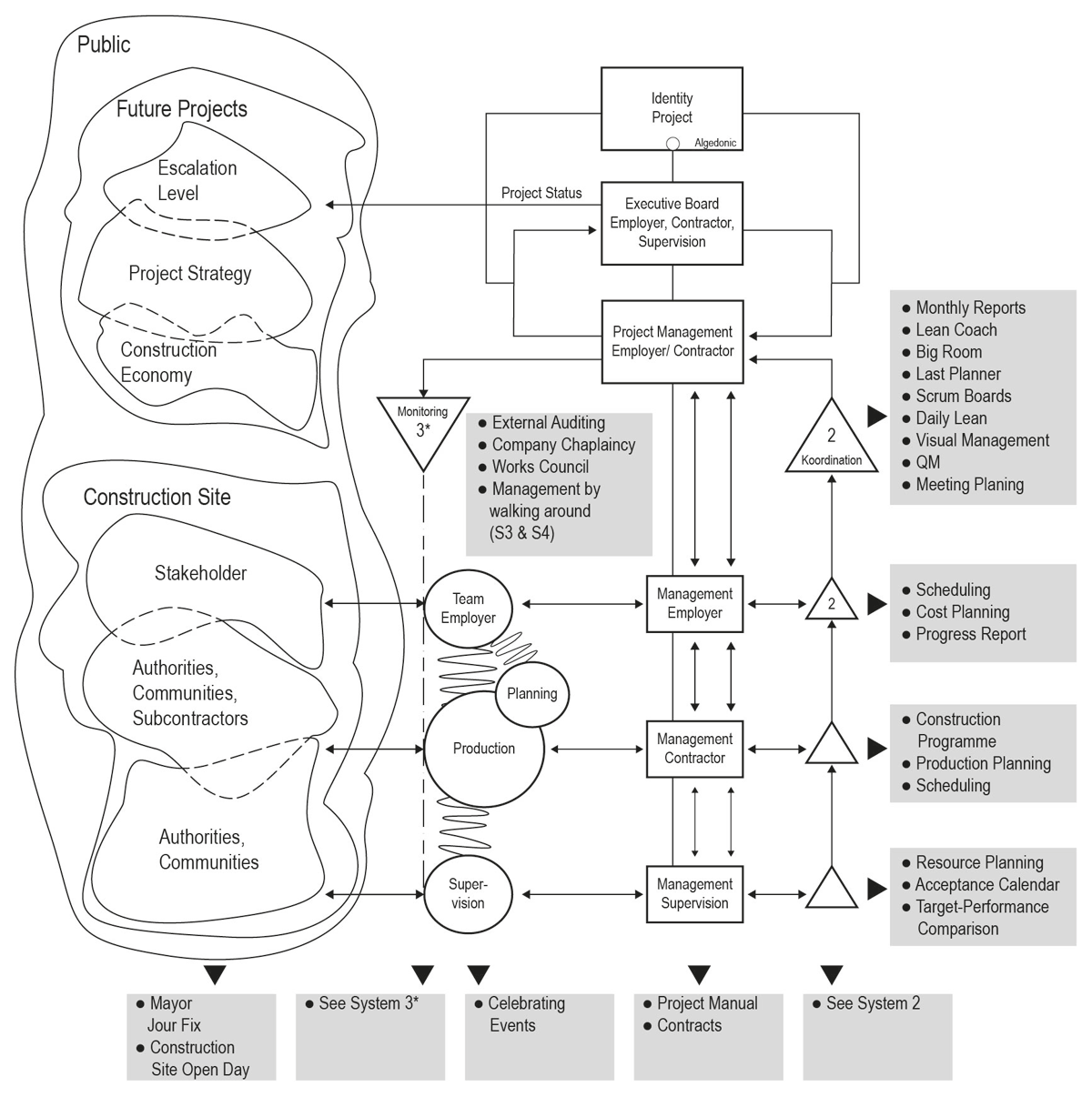
Figure 2
Case Study 1: Viable System Model.
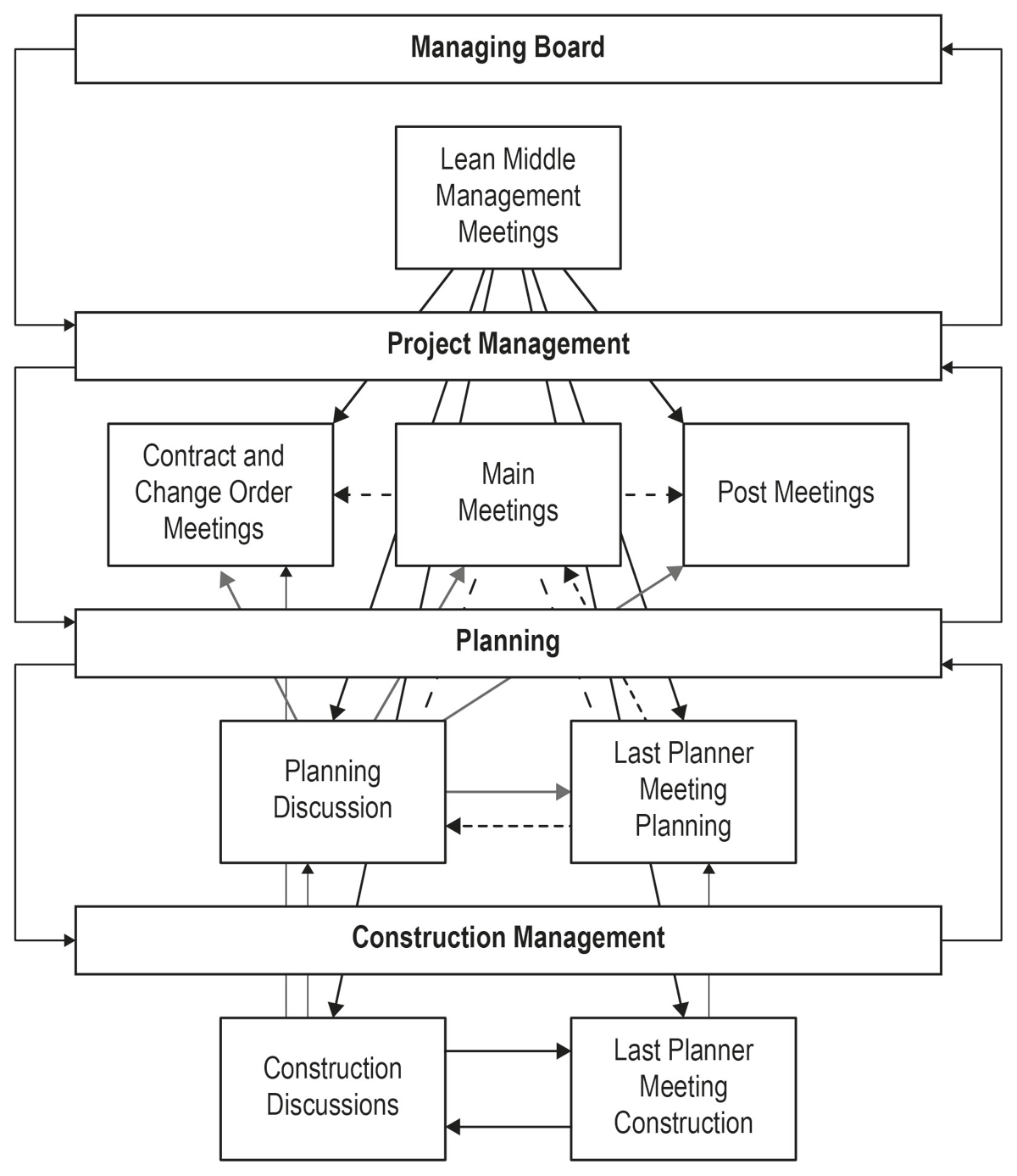
Figure 3
Case Study 1: System Dynamics-Model Meetings.
As a result, the positive boundary conditions saved half a year of construction time (Durchschlag am Steinbühltunnel ein halbes Jahr früher als geplant, 2015).
Findings
Design Phase and Approval Phase
Plus:
The support of the project manager was there and was critical; they were also a role model and budgeted for.
The kick-off and the competence building of the planning team was successful.
A planning schedule was established according to production planning criteria.
Minus:
The project did not have a big room, i.e., there was no lean environment.
The participants did not meet weekly.
The last planner system was not performed in a disciplined manner.
Tendering and Awarding Phase
Plus:
The definition of performance in the construction contract laid an essential foundation stone for implementation.
A compact but specific definition coupled with a detailed flat rate or exact single positions is recommended.
Delta:
There was a lack of support from senior management.
Competition only takes up the combination of lean and VSM if it brings a “hard” competitive advantage.
Construction Phase
Plus:
There was an intelligent organizational structure geared to the overall organization (all parties involved) of the project.
6 months’ time was saved during the construction phase.
Delta:
Hidden agendas remained partly in place.
Reflection
In this case study, lean construction combined very well with the VSM. Lean management was in this project before the VSM. With the VSM, questions about the function of the temporary overall organization could be answered that could not have been answered with lean alone. This led to a real success with a good working organization which led to time gain as described above.
When technical systems are built, a lot of energy is invested in their design (planning the structure), but one should invest just as much energy in the planning, implementation, and operation of the organization. Only then can a construction project be implemented effectively and efficiently.
Together with the organizational structure, the information architecture was created on the basis of the VSM, which did not previously exist to this extent (Figure 3). On the basis of the VSM, the necessary functions and information channels were filled and established in order to provide the necessary feedback to ensure sufficient management of variety. This was ensured by using the VSM.
If one takes the time gain of half a year as a decisive success criterion, the result is remarkable. However, it would be wrong to think that this success can be attributed to lean construction and the viable system model alone. The approaches have made their positive contribution. However, other positive circumstances also contributed, such as good cooperation between the teams across organizations, the geology was better than predicted, and the contractor did an excellent job. This case demonstrates that a combination of methods for dealing with complexity leads to success. The combination of the VSM, for mastering organizational complexity, and lean construction, for resolving bottlenecks and promoting cooperative collaboration, worked very well in this case and complemented conventional project management perfectly.
A generalization can be made, that in this example the interaction of different approaches (lean and viable system model) worked very well. In particular, this combination has proven to be well suited for the interaction of large temporary organizations with different actors to face the emerging complexity due to several project phases. The viable system model is well suited for the governance and the management of major projects (Frahm & Pfiffner, 2023).
The implementation of changes based on the LPS and the VSM as part of a large infrastructure project presented various behavioural and informational challenges.
Behavioural challenges included:
resistance to change: Some old hands resisted the introduction of the LPS because it represented a departure from traditional planning methods.
hidden agendas: Despite good progress at the operational level, there were hidden agendas at the strategic level that impacted success.
lack of coordination: Subcontracting to different subcontractors led to communication problems and lack of coordination, especially in determining daily work performance.
Informational challenges included:
lack of regular communication: The irregular meetings and the lack of collaboration in a big room led to information gaps and a lack of knowledge sharing.
lack of senior management involvement: The lack of support and interest from senior management created information barriers and hindered the successful implementation of lean methods.
coordination of information flows: Establishing an effective information architecture based on the VSM was a challenge that required clear planning and implementation to ensure that all relevant information was transferred efficiently.
The successful implementation of changes based on the LPS and the VSM required overcoming these various behavioural and information challenges. However, the combination of these two approaches proved to be highly successful and resulted in significant time savings during the construction phase. It became clear that a holistic approach that considers both behavioural and informational aspects is crucial for the success of complex projects.
Case Study 2: Mechanical Engineering
The mechanical engineering case study described below was conducted at a medium-sized plant and mechanical engineering company in southern Germany, where one of the authors of this article, Carola Ritzinger-Roll, is employed. As part of the case study, an attempt was made to develop a management system that includes both the effective control of the company with a high level of complexity and with principles and tools that focus on the efficiency of the company’s processes (Roll, 2018). At the initial situation of the case study, a combination of management cybernetics in the form of the VSM and selected lean management tools was identified as the most promising approach. This assumption is justified by the central focus of cybernetics on the topics of complexity and dynamics, which could prove to be a suitable model for the future problems as described in the introduction. In the case study, the VSM thus functioned as a structure that was concretized with the very operationally oriented methods of lean management in day-to-day business. This also benefited the lean management method, which is usually understood by many companies as a loose collection of efficiency-enhancing methods. By integrating it into the structure of the VSM, the aim was to generate a sustainable management system that is also capable of adapting the corporate strategy to the constantly changing requirements of the corporate environment.
The long-term goal of the study is to generate a sustainable and potentially ideal type of organization that is both viable and self-organizing. As a framework for this, the approach of the VSM was chosen, in which operationally oriented tools and methods from the disciplines of lean management and quality management were integrated. In support of this, the necessary process-related adjustments are accompanied by a digitization offensive to be able to provide the company’s employees with the necessary information in real-time (if possible) and also tools for documentation in electronic form, which at the same time facilitates the evaluability of the generated data and increases its quantity.
The company in which the case study is being conducted is a medium-sized contract manufacturer without an own product. In an energy-intensive industrial sector and as a supplier to numerous industries with widely differing requirements, it faces major internal and external challenges. To counter these with a sustainably effective strategy, to ensure the company’s long-term viability, and also to offer employees an attractive environment for professional and personal growth, the implementation of the VSM was chosen as the framework organizational structure. In particular, the VSM with its closed feedback loops and the controlling System 3* (audit channel) stands for the realization of the company’s claim to effectiveness. Lean management tools and tools from the area of quality management (QM) are used to achieve and improve the business objectives in the system, which stands for efficiency.
After an initial modelling of the company as a viable system with the strategic business units as System 1, it was thus possible to identify three units which are independent of each other but can also function as an internal supply chain at the same time. These are the machining, welding, and assembly business units. In a further step, the communication paths between the systems and functions were analysed for continuity and consistency. These communication paths can be presented as the meeting cascade within the framework of shop floor management, as well as by digital tools, such as the functionalities of the company’s internal data hub (lean production manager), the project-related chat tool, or through the digital networking of all employees by means of access to various digital end devices.
To measure and improve process performance and reduce waste and non-value-adding process components using different tools and methods, suitable lean and quality management (QM) tools were assigned to the respective systems. The selection of suitable tools posed a certain challenge, since the company under investigation is a single or variant manufacturer in terms of its organizational type, which processes the required products as individual projects and only produces them according to order (“make-to-order”). However, since many lean and QM tools originate from the automotive industry, or are frequently used there, they tend to be designed for the production of large quantities and the automation of processes rather than for single-item and variant production. As a result, some of the tools initially selected for the case study were later discarded. The intermediate result was the organizational model shown in Figure 4. The associated lean and QM tools and methods are coloured green for better differentiation.
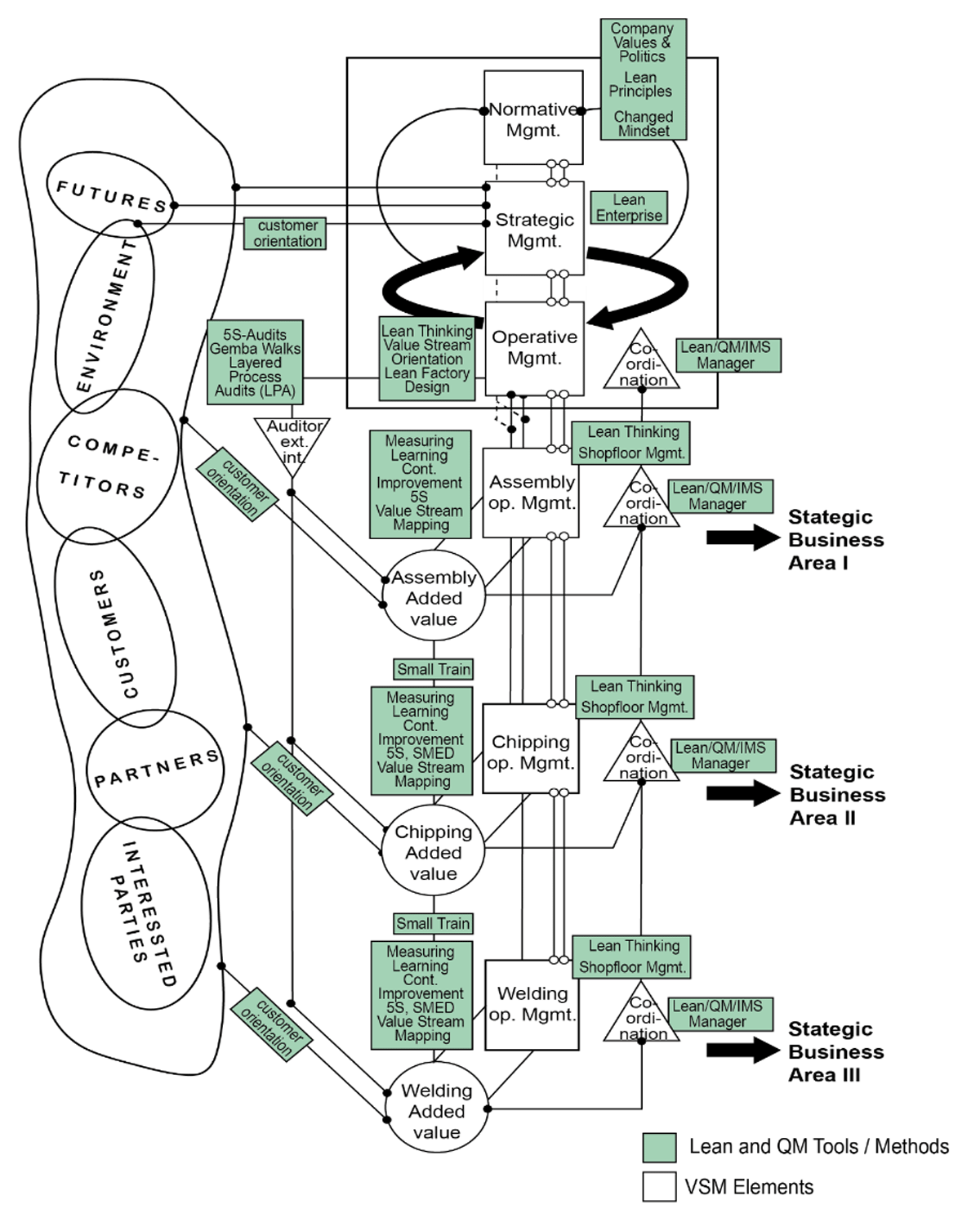
Figure 4
Combination of Lean and QM Tools With the Viable System Model as Framework.
In addition, the aim was to improve the management of projects, processes and all capacities, which simultaneously ensures greater granularity and optimized allocation of existing resources. This was achieved using a system of key performance indicators based on a total of ten different criteria for distinguishing between three levels of complexity (Figure 5). Depending on the respective complexity level, the necessary process steps and interfaces increase up to the maximum level. The company identified the area of complexity Level 3 as the most relevant in terms of future viability, as this is where the company’s high technological, organizational, and process-related performance makes it stand out most from potential competitors.
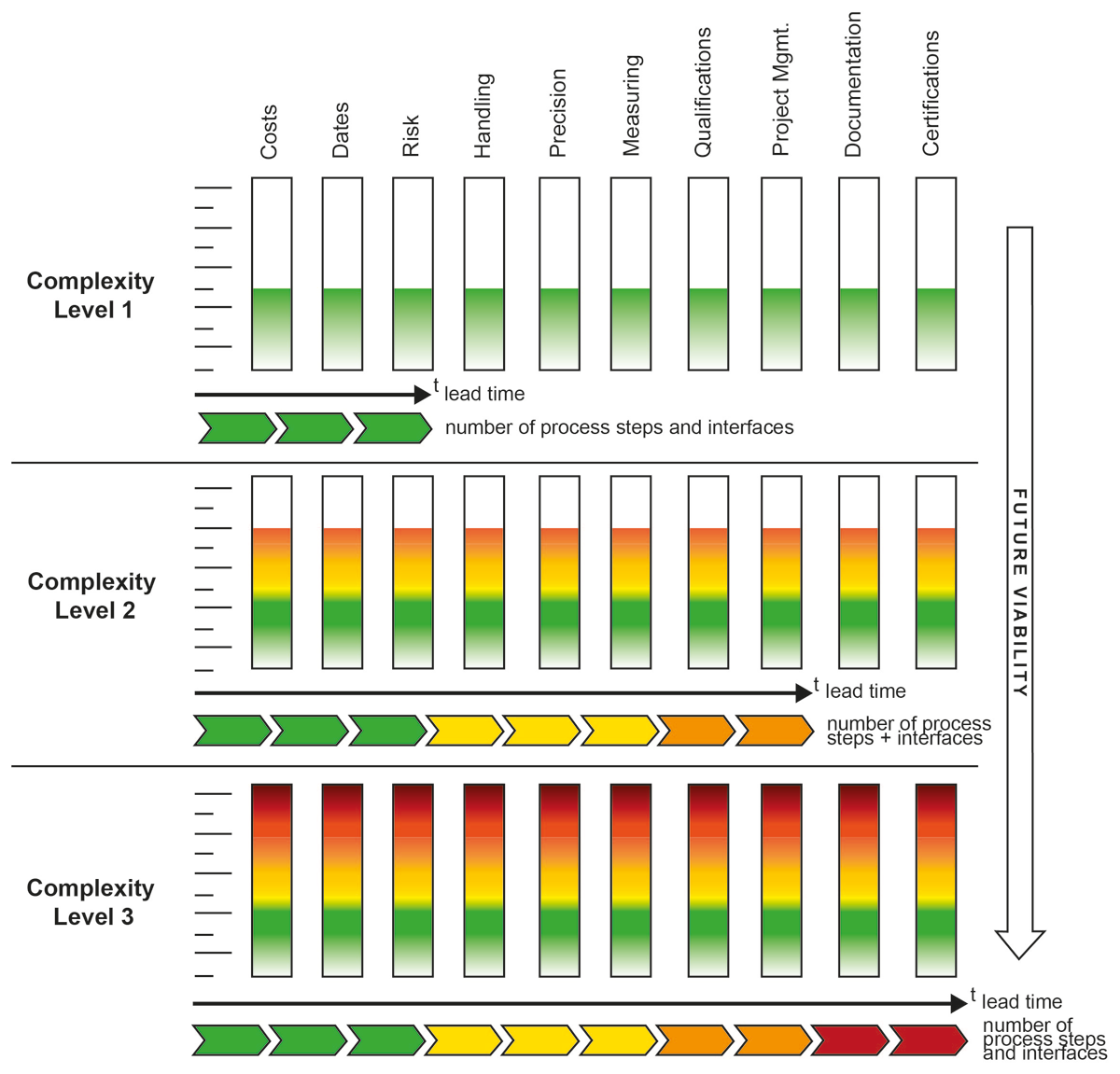
Figure 5
Complexity Levels.
In the further course of the case study, the elements that are normally used to structure the company’s organizational and operational structure were derived on the basis of the VSM framework, the lean tools used, and the defined complexity levels. Through the intensive design work on these elements, it became apparent that by tilting the representation of the VSM based organizational chart 90 degrees to the left, the basic structure of the process map, including the rough process descriptions, can be derived relatively easily. This close relationship in content, which is extremely rare in conventional hierarchical organizational charts and the corresponding process maps, is one of the significant advantages of the method described. It makes the connection between administrative units and process flows clearly recognizable for the employees and other viewers.
To deepen this transparency even further, role profiles were introduced instead of the previously used job descriptions, the categorization of which can be derived directly from the process types of the process map. Thus, each employee no longer has a single job description but a role profile, which can consist of several different roles, whose content orientation and location in the organization can range from correlating to indifferent to competing. The newly created role descriptions contain a set of values and norms derived from the management processes and core and support tasks from the associated main and support processes.
In order to be able to link these results with the company’s digitalization strategy, a complete three-dimensional and digital image (with all recursion stages) of the defined cybernetic structure was first developed—termed the organiplastik (Figure 6). The organiplastik forms the basis for the connection of the company’s own IT landscape, with which the realization of a comprehensive management cockpit, in the best tradition of what Beer referred to as the “Operations Room”, will be created (Beer, 1972, p. 268).
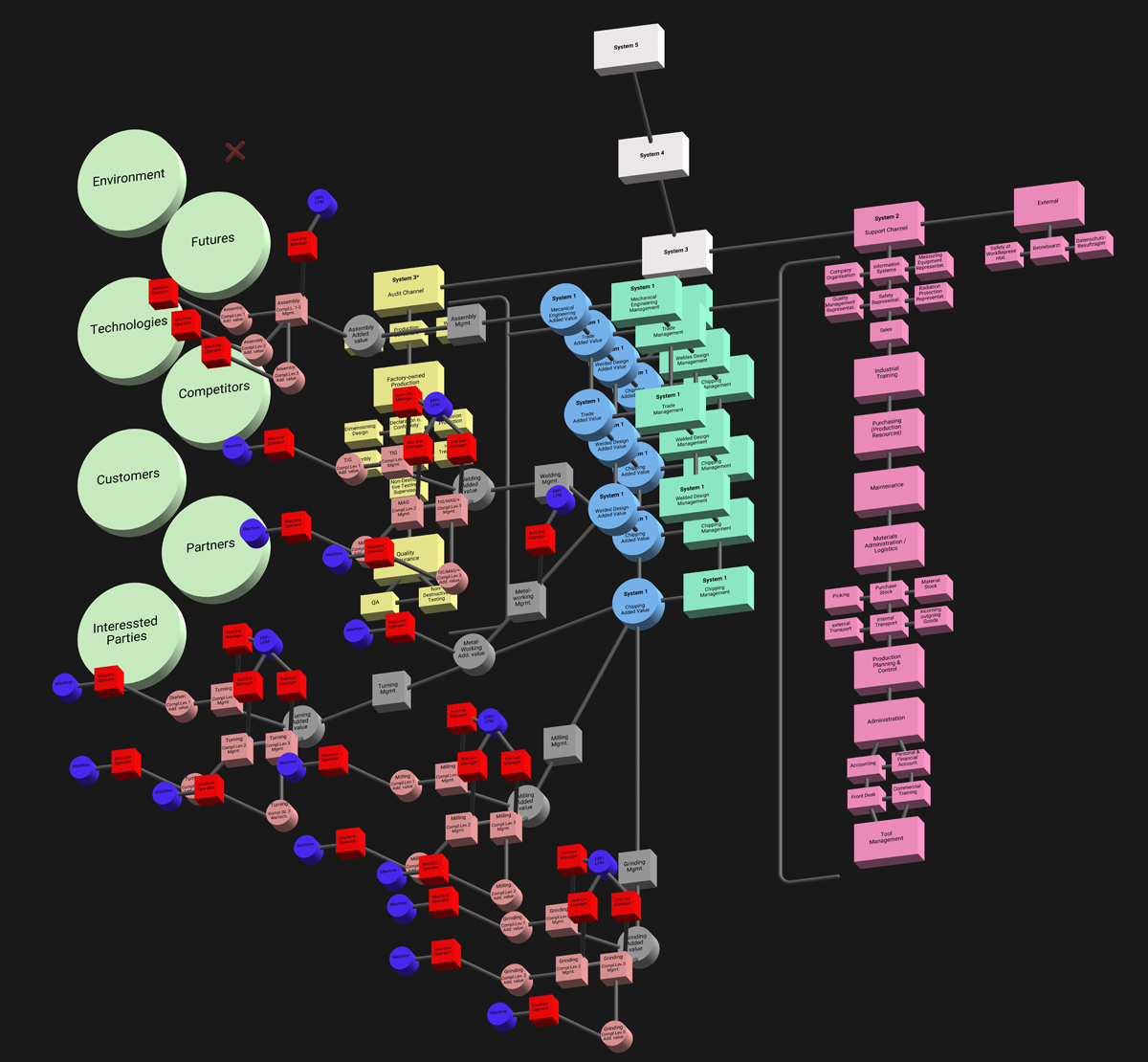
Figure 6
Complete Modelling of the Organiplastik.
The advantage of the organiplastik over the two-dimensional representation (which exists as well) is the approximation to the structural complexity of the model as well as the possibility of representing the different levels of recursion and complexity in the area of value-creating systems. In a further step, this three-dimensional representation was subjected to digital modelling, which forms the basis for the additional work steps. As part of the further development of the model, the IT systems used internally (planning tool, enterprise resource planning system, QM system, production data acquisition) are connected and function as a three-dimensional management cockpit. This management cockpit is to provide the data basis for anticipatory machine maintenance, the digital documentation of production and testing processes, and the resource-appropriate allocation of orders as well as other key figures from the interface area of business management and efficiency increase through lean management (Michalicki & Schneider, 2020). From the perspective of QM, it is planned to use the management cockpit to map project-specific organizational charts, and process structures for (customer) audits, among other things. For the employees it can be used to locate their contribution to the overall project, for project managers to continually check the status in real-time, and for the customers to precisely track deadlines and an overview and use of technical parameters of the work already during its creation.
As part of the integration of the software application used in the company, a completely new and almost hierarchy-free communication architecture was created (Figure 7), which provides data largely in real time and is one of the few organizational models to explicitly include the corporate environment.
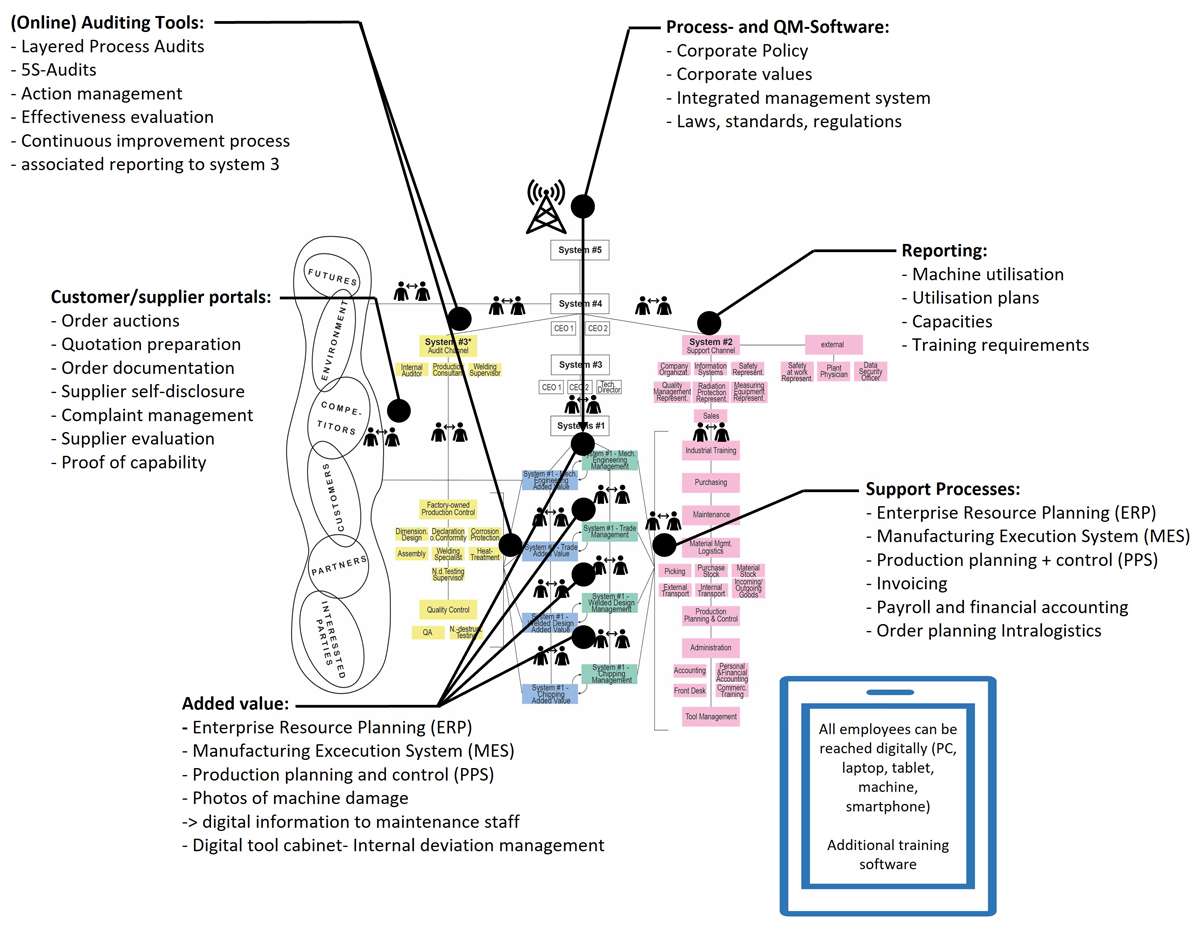
Figure 7
Communication Model With Implemented Digital Tools.
Findings
General Assumptions Confirmed During the Case Study
The application of the cybernetic control loop principle in a technical environment is extremely widespread and its effectiveness is scientifically undisputed.
The assumption that cybernetics can also be used to solve business management problems is supported by various researchers from the quantitatively orientated sector, even if there are controversial views on this.
Cybernetics is an interdisciplinary field of research, which in principle does not exclude any connection with another field of research. As cybernetics has clear links to quality management, which also overlaps with lean, it seems obvious that a combination of the two disciplines could yield useful results.
Use of the VSM as a Diagnostic Tool
A comparison of the current company organizational chart and the pathologies of the VSM confirmed the existing suspicion that System 3 (“bottleneck organization”) is overloaded.
A comparison of the organizational structure with the VSM also revealed that the link between operations and corporate values and strategies as well as an orientation towards customer wishes and requirements is currently too weak or non-existent.
Use of the VSM as an Organizational Tool
The company was able to benefit from the closed feedback loops required by the VSM, as gaps or breaks in the communication and information transfer could be detected and rectified in some cases.
The audit channel (System 3*) was recognized as an important source of information for operational management and its decisions as well as an institutionalized adjustment of the results achieved by System 1 (both positive and negative) and was therefore strengthened in its position.
The VSM’s claim regarding the structuring of the organization in roles and not, as previously, in jobs, supported the internal transformation from the use of job descriptions to the definition and use of role profiles. In contrast to job descriptions, role profiles are a more accurate reflection of the day-to-day reality in the organization.
Advantages of Combining VSM and Lean Management
As the systems in the VSM are not departments but functions, it was found during the modelling of System 1 that the structure of the VSM removes the dividing line between lean design, lean production, lean logistics, and lean administration, depending on which functions belong to System 1.
In various areas, overlaps or at least similarities between the two main elements could be identified, which speak in favour of a connection between the VSM and lean management elements.
Both elements form a close symbiosis by supporting the functionalities of the other element. Lean methods help to operationalize the VSM, which is somewhat difficult to access, by “translating” it into more tangible lean methods. The VSM in turn supports the anchoring of lean in the company so that a lean enterprise with a corresponding mindset can emerge in the long term and sustainably from the initial pure application of methods.
During the relatively short observation period of the core case study, the participation rate in the continuous improvement process was increased by 375 per cent. The process-related reorganization of the machine tool set-up process also resulted in time savings of 15–20 percent (on average) for the machine operators. In addition, the digitalization of the recording of internal and external errors, which took place at a later date, was fundamentally prepared by the company-wide introduction of the 8D problem solving methodology. In the report of the same name, 8D stands for eight decisions that are made as part of complaint management in order to track the associated measures (Pfeifer & Schmitt, 2021, p. 862). Further quantification of this process is currently being carried out through additional digitalization projects and will be the subject of future considerations.
Reflection
First of all, it can be stated that the viable system model is well suited for a connection with lean management, as cybernetics is an interdisciplinary field of research that appears to be ideally suited for connections with other specialized fields.
In terms of practical implementation, the VSM was used as a structuring element, with the main objective being the effectiveness of the system. This is to ensure that a change in the mindset of the organization can be achieved during a long-term application of lean. In this connection, lean management serves to operationalize the cybernetic system, which is very general and often somewhat difficult to grasp.
Only a relatively short period of time was considered when conducting the case study. As the research project is fundamentally aimed at a permanent change in the company organization, which can only be proven by means of a long-term view, the results obtained should be interpreted mainly as a suggestion for further research projects.
After conducting the case study in mechanical engineering, it can be observed that the VSM and lean management benefit from the combination of both elements in this case. The highly operational lean methods made the implementation of the VSM’s functionality more tangible for the users. Through the simultaneous application of the VSM, lean management is not only anchored in the company but also receives massive support for the realization of the cultural change sought with lean thinking.
Increasing complexity and market dynamics pose enormous challenges, especially for medium-sized companies. They need to be flexible and able to adapt to changing market conditions, while, at the same time, they need to realize efficiency gains quickly in order to ensure long-term business survival. This requirement can be realized in a sensible, sustainable, and practice-oriented manner with the combination of the VSM and lean management.
In general, projects of this kind, such as the case study described above, can be expected to be characterized by a certain reluctance towards innovations, which can range from anxious caution to outright rejection. To counteract this effect, the changes in the case study were communicated to employees in increasing detail, which led to an increasingly positive mood towards such activities.
In order to be able to provide the necessary information at the right time and in a manner appropriate to the target group, it was necessary to utilize existing information channels more intensively and create new ones. In addition to digital communication tools, this also includes visual communication (visual management), personal communication (meeting cascade), the continuous improvement process itself, and the management’s open-door policy, which acts as part of the algedonic channel (alarm system of the VSM) in the company in question (Lassl 2019, p. 154). At a later stage, another communication body, the employee council, was implemented to represent the interests of employees vis-à-vis the management.
Case Study 3: Healthcare
In this case study, VSM was used by clinical risk management (RM) as a diagnostic tool to analyse the organizational problems that had prevented an effective application of lean tools and some other methods for risk identification, RM, and process optimization over about five years. The subject of the analysis is a hospital group consisting of four primary care hospitals in southern Germany (Bavaria). This case study is based on observation by author Matvei Tobman, who is a risk manager and process manager of the hospital group. A limitation of the case study is that no survey results from other professional groups were included in the analyses.
The VSM analysis identified organizational barriers to a successful application of some RM measures. The analysis results, which were generated using lean tools, primarily concerned the interfaces in the organization that were not accessible to the responsible local management. This led to different perceptions of the actual causes of problems among the individual players. Such problems were discussed but not solved. Only after the systemic perspective shed light on the actual organizational causes of discussed issues, the problems were no longer attributed to personal attitudes or ineffective tools but to the system structure and system developments in the last years.
Approximately eight years ago a certified, corporate wide clinical RM system was implemented. In addition to routine methods such as audits and mortality and morbidity conferences, the preferred approach of the RM included the creation of problem-related task forces.
Over time, the reported adverse events, internal audits as well as other RM tools indicated increasing problems on the interfaces between the organizational units. Their solution often failed due to the lack of time resources, as well as unclearly regulated decision-making competences. Because of the continuous growth from a hospital to a network of two facilities to a group with a holding company for central services (such as personnel services, IT department, controlling, etc.) the previously well-functioning management and support processes became so overloaded that there was hardly any free capacity in organization for effective risk and process management. Senior management nevertheless delegated many organisational tasks to the department heads. This management style, in turn, meant that only internal departmental problems were addressed. The interfaces between the divisions and departments, which had been created by the growth of the organization, often remained unaddressed. Such interdisciplinary problems were outsourced to working groups and other committees. However, this seemingly reasonable solution did not yield required solutions either, as the workgroups consisted of the same staff members who were already overloaded.
From the beginning of its foundation, the clinical RM department used different lean tools for analysing and solving process risks. Through the training of employees as well as active personal support, many improvements were achieved with this approach. The methodical success of RM resulted in a big project ordered from the management board to the risk manager. The task was to separate the elective and the emergency areas in the central emergency department in the largest of all the hospitals in the trust.
Due to the significant changes in the general conditions (the corona pandemic, staff shortages, new legislation, pending hospital reform, etc.), massive, overriding problems increasingly arose in the departments and clinics, which the installed decision-makers could not be made responsible for.
To shed light on these problems and to work out possible solutions, a system analysis of the hospital group was carried out using the VSM as a universal framework. Initially, the group structures, leadership, and management functions were analysed for structural pathologies.
At first, two organizational levels (i.e., levels of recursion in VSM) were considered—the concern level (R0) and the level of individual clinics (R1). The management problems already became visible in the organizational chart of the concern (Figure 8). The complex environment of the group created by the merger was not accompanied by the adaptation of management structures. Here, the growing complexity of the company itself and thus the increasing organizational workload for the senior management level (operative [System 3] and strategic [System 4] management) was not absorbed by additional organizational units but distributed among the existing managers.
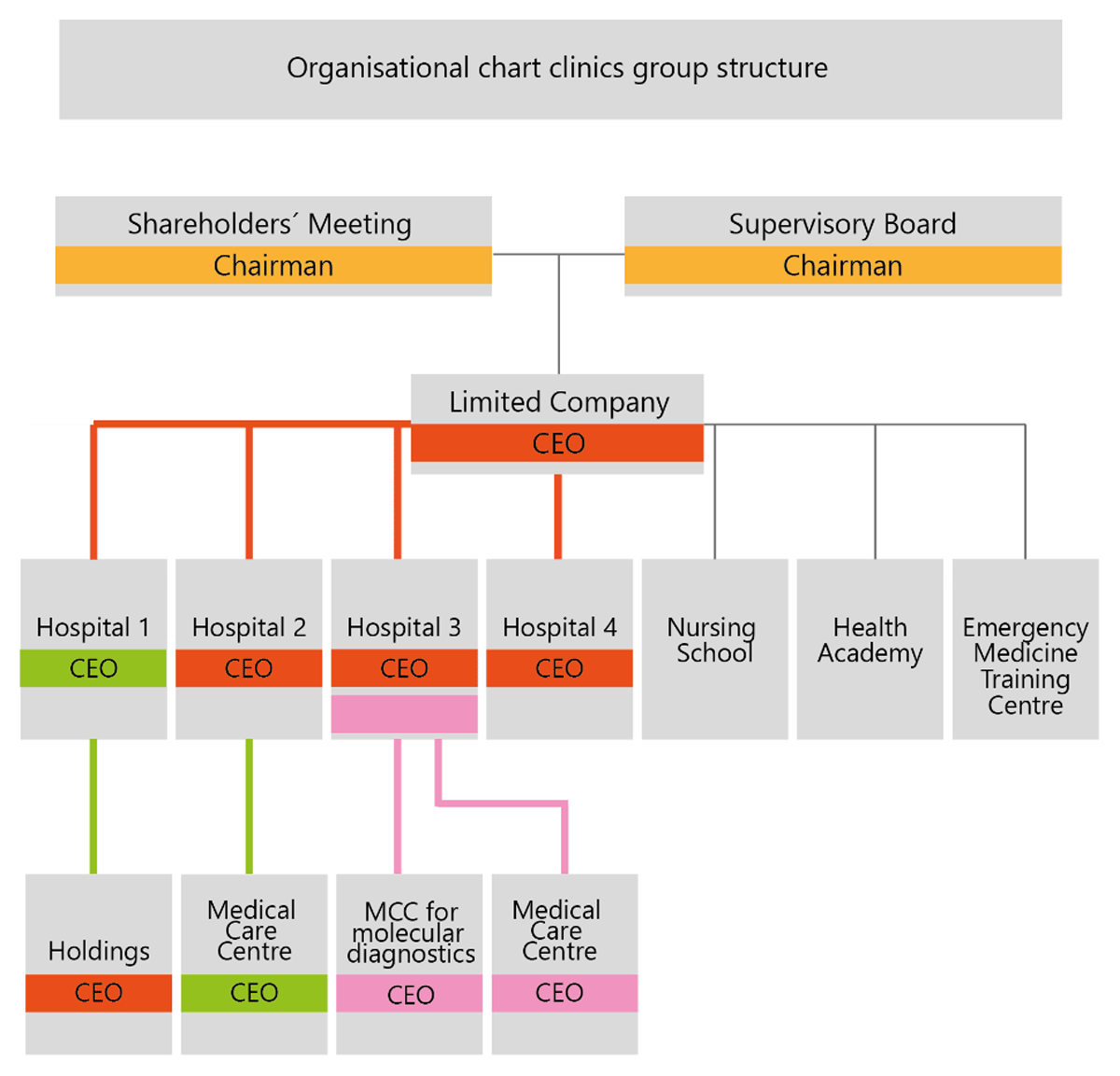
Figure 8
Organizational Chart of the Group Under Review.
As can be seen, one person (red in the diagram) had to perform their managerial duties simultaneously on three organizational levels. This employee is subordinate to another manager (green in the organizational chart) in one organizational unit and superior to them in the other two positions.
This division suggests a power vacuum at the lower recursion levels, since the installed managers will tend to pursue the goals of the highest level of recursion in decision-making and align their scope of duties accordingly.
The cause for such a division of management tasks can be located in the established culture of many hospitals in Germany. The strictly hierarchically structured healthcare institutions were usually led at the middle management level by three senior staff members: managing director, nursing director, and medical director. However, a merger of several hospitals did not lead to the implementation of another higher level of management performing the function of the e.g. System 3/System 4 homeostat in VSM. Instead, only the existing management levels were merged and hierarchized. The higher-level tasks were fulfilled by the central services or their senior staff and the management of the operational units.
However, the resource planning, allocation of accountability (the “Bargain Resources and Accountability” channel in VSM), as well as the permanent possibility to issue corrective orders (the “Corporate Intervention” channel in VSM) remain on the former operative management (System 3 in VSM), therefore no agile structure could emerge. This dynamic led to strain damage (analogous to strain damage to a nerve in a human body) in the system, with System 3 and System 4 merging upward and the formation of a System 3 replacement management unit from the senior staff of the subordinate operational units. In addition, a functioning, cross-clinical System 2 was not developed. Instead, System 2 consisted furthermore of the policies, workflows, and decision-making routines from single operational units (Figure 9).
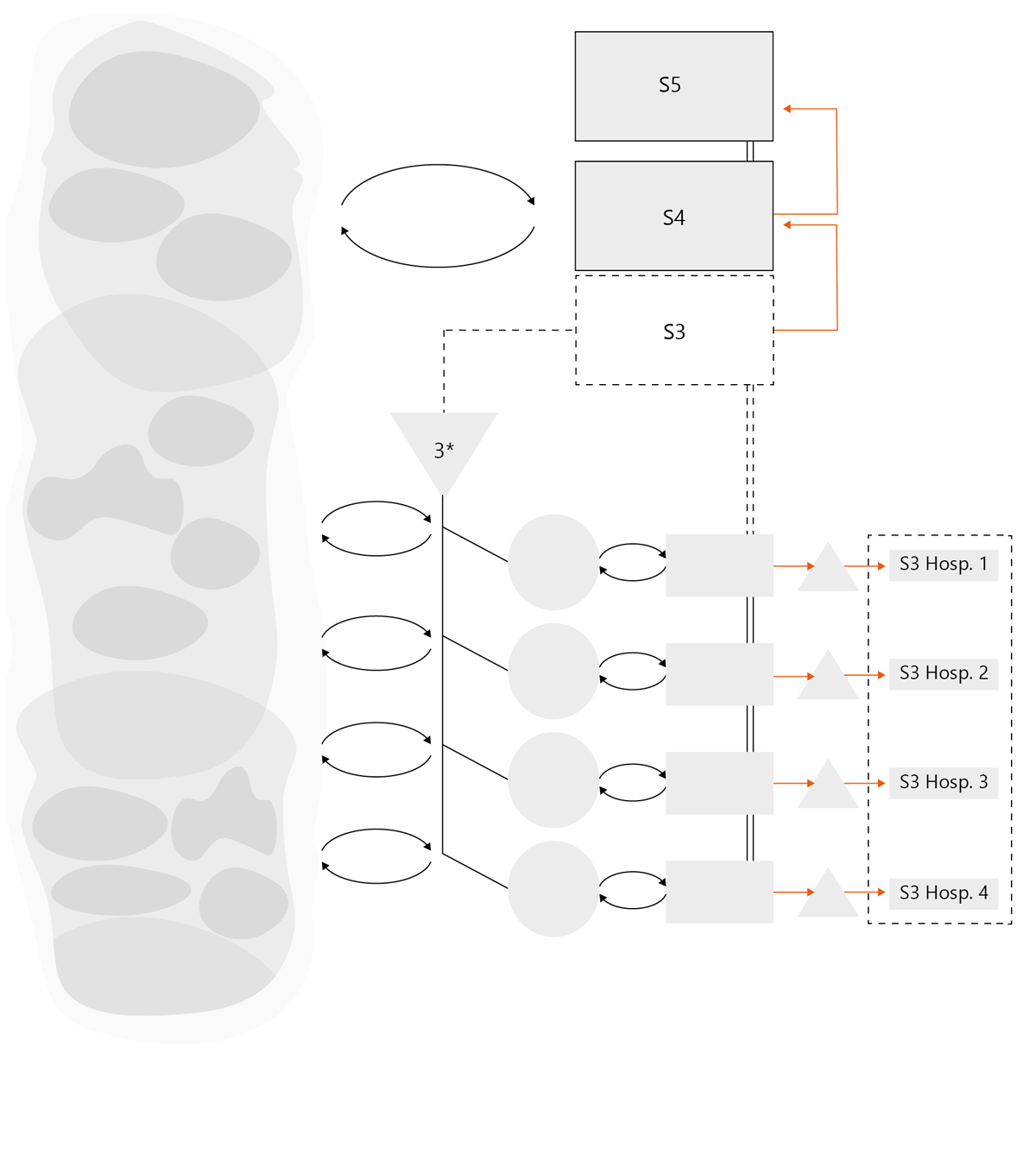
Figure 9
VSM of Concern Level.
As a result, senior staff in the clinics came under intense pressure. On the one hand, they belonged to the management of the departments (System 1 in VSM), but they had to substitute System 3 functions at recursion level 0. Since these staff members are primarily responsible for patient care, they prioritized their human and time resources in such a way that the higher-level tasks were treated only marginally. This significantly limited cohesion within the system.
Findings
Based on this analysis, the following conclusions have been developed:
There is an imbalance between vertical and horizontal variety (a system’s impact, action and communication options) in the corporation that threatens viability.
If no action would be taken, the system would be stabilized first of all by reducing the horizontal variety (e.g., excluding or closing one, or more organizational units or even entire hospitals).
Maintaining pressure on the System 3 substitute can lead to the failure of several System 1 management levels (discharge of department heads).
The development of an effective and capable operational management level (System 3 in VSM) can solve many problems.
Establishing centralized patient management and patient acquisition would lead to the reduction of environmental complexity and thus relieve pressure on operations (departments and clinics).
System 3* must be developed at the corporate level and integrated into operational management.
It is recommended to develop a concept for the suitable specialization and a closer cooperation between the single hospitals to create and to realize the synergy effects.
There is a need to expand the System 3/System 4 homeostat and design a management system with transparent operational goals derived from the strategic goals.
It is necessary to provide sufficient resources for the currently weak functions or rethink resource prioritization in total.
Developing a strong System 2 (rules, procedures, standards, conventions etc.) at the corporate level can improve the coordination of all operations together and increase the system cohesion in total.
Reflection
In this case study, lean methods were used very effectively in the context of clinical risk management. First and foremost, they contributed to the analysis and solution of process-related problems. These methods also led to the further development of quality management throughout the company. However, the case study demonstrates that if lean management is not used throughout the company, this can significantly limit the scope and effectiveness of the lean approach. It happens due to recurring changes of management structures, the emergence of new interfaces, and the development of new grey zones with unclear responsibilities. In this case, VSM provided an excellent framework for systemic analysis. This tool facilitates the searching of structural, functional, and informational problems and offers the terms and patterns for their understandable description. After the preceding VSM diagnostics, the developed measures can be implemented and maintained with lean tools.
The results of the case study allow a holistic view of the systemic causes of all the identified problems, such as the overload of senior staff, the presence of several areas of unclear responsibility, a very long and often absent decision-making process, and so on. In addition, the analysis shows a clear risk for the analysed company, caused by a significant imbalance between the vertical and horizontal variety (the system’s impact, action, and communication options). If the vertical variety is not increased, there is a high risk of an unexpected and unplanned reduction of the horizontal variety due to the selling or closure of one of the hospitals. However, the implementation of recommended measures can restore the viability of the company and enable further development.
The VSM offers a very good possibility to include the dynamic components of the analysed system in the decision making and in the discussions. This approach corresponds to the basic attitude of RM to look first for systemic and only then for personal causes of adverse events. Thanks to VSM, the existing relations (operational boundaries, responsibilities, communication channels, etc.) can be made transparent, which can significantly contribute to the effective use of lean tools. Furthermore, VSM can support the establishment of management by staggered goals, which can be implemented e.g. by hoshin kanri (a strategic planning system from lean management) or management by objectives concepts.
Conclusion
In summarising the three case studies presented, a general advantage of combining the systemic approach of the VSM with lean management and its various forms can be identified. The most important findings are summarized in Table 1.
Table 1
Summary of Findings.
| CASE STUDY 1 CONSTRUCTION | CASE STUDY 2 MECHANICAL ENGINEERING | CASE STUDY 3 HEALTHCARE | |
|---|---|---|---|
| Findings: VSM | VSM was found to be a valuable approach able to cope with the existing great organizational complexity. The successful implementation of the project demonstrated that the VSM is an appropriate approach for this. | VSM was used to initially identify weaknesses and pathologies in the system. VSM was also used to sustainably anchor the lean management system, which had already been introduced in the organization but was not permanently successful. | VSM was used to make the systemic causes of the identified risks transparent and to show objective reasons for the difficulties in achieving the desired results. The root cause of the most issues in the organization was the complexity of the organization where it had grown without adapting the managements structures. |
| Findings: Lean | As the lean implementation was already in the project before the VSM, it was possible to show that the VSM can also be combined very well with other approaches in the ongoing process. This is because the two approaches address different challenges. With lean, bottlenecks could be resolved, cooperation increased, and, thus, waste greatly reduced. This was measurably demonstrated in the result of a six-month time saving. | The participation rate in the continuous improvement process was increased by 375 percent. The process-related reorganization of the machine tool set-up process also resulted in time savings of 15–20 percent (average) for the machine operators. It was determined that a tool for analysing, eliminating and preventing errors is missing, therefore, the introduction of the 8D system was prepared and was later completely digitized. | After the VSM analysis, the organizational restrictions on the use of lean tools became transparent. As before, these tools were successfully used to solve local problems of the single departments and hospitals. In the planning phase of the interdisciplinary projects, a clear definition of objectives and responsibilities with regard to the existing system structure was demanded. This made possible the effective management of overarching risks and the implementation of cross-departmental lean projects. |
| Findings: General | Classic project management was more successful in implementation when supplemented by systemic approaches. | Both lean and VSM formed a symbiosis by supporting the functionalities of the other element. | A systemic approach provided an organizational framework to assess the limitations of other management methods such as lean tools in advance. Discussion of these limitations enabled the implementation of cross-departmental projects despite these restrictions by adapting the system structure or at least provisionally replacing missing positions. |
The present case studies show cybernetics, here the VSM, in combination with lean in three different areas by three different actors.
It was observed in the individual case studies that the combination of the VSM with lean management:
helps to answer questions that would have remained unanswered without the combination of the two elements,
generally promotes discussion and decision-making within the system,
support each other, with VSM ensuring the effectiveness and lean the efficiency of the system,
supports the achievement of (project/company) goals, and
is well suited to making high complexity and dynamics in the environment manageable.
The sensible use of this constellation of methods in very different specialist areas (both in various sectors of industry and in the service sector) and in very different project and/or company sizes emphasizes the universality of the approach, which also makes it interesting and adaptable for use in various other sectors with comparable challenges.
In the construction industry case study, by merging lean construction methodologies with the VSM, significant strides were made in managing organizational complexity within large infrastructure projects. The symbiotic relationship between lean and VSM not only optimized project timelines but also fostered cooperative collaboration, thereby showcasing the power of cybernetic-inspired approaches in project management.
In the mechanical engineering case study, the integration of VSM with lean management tools ushered in a new era of operational efficiency and adaptive organizational strategies. By leveraging cybernetic principles, companies were able to create sustainable management systems capable of navigating dynamic business environments with agility and resilience.
In the healthcare case study, transformative changes were witnessed through the application of VSM and lean management principles. By diagnosing systemic issues and implementing targeted interventions, organizations were able to address management inefficiencies, improve patient care, and enhance overall organizational viability.
Across diverse industries, the combination of cybernetics with practical management approaches has proven to be a potent catalyst for organizational transformation. While each sector presented unique challenges, the underlying principles of cybernetics provided a unifying framework for understanding and addressing complexity. Moving forward, continued research and application of cybernetic-inspired methodologies can support further innovations and advancements in organizational management and beyond.
Competing Interests
Ritzinger-Roll is writing about her work and research on the VSM in her professional environment at JELBA Werkzeug- u. Maschinenbau GmbH & Co. KG. There she develops a future-oriented organisational structure based on the VSM in combination with lean management and quality management tools. Frahm and Tobman have no competing interests to declare.
Author Contributions
All three authors were involved in planning and drafting the manuscript. Case Study 1 and all related figures were created by Frahm. Case Study 2 and all related figures were created by Ritzinger-Roll. Case Study 3 and all related figures were created by Tobman. The abstract, introduction, and all general chapters were written by Ritzinger-Roll, except the table in the conclusion, to which all three authors contributed. All authors discussed the results and commented on the manuscript.