
Introduction
In 2021, the U.S. Surgeon General’s Advisory called for the nation's immediate awareness and action to address the youth mental health crisis (Office of the Surgeon General, 2021). In 2024, the Centers for Disease Control and Prevention (CDC)'s Youth Risk Behavior Survey found most indicators of youth mental health and well-being (e.g., persistent sadness, hopelessness, suicidal thoughts and behaviors) worsened between 2013 and 2023 (CDC, 2024a). And the findings from the Substance Abuse and Mental Health Services Administration (SAMHSA)’s most recent National Survey on Drug Use and Health (NSDUH) underscores the high prevalence of mental health and substance use challenges and low rates of treatment among youth ages 12 to 17: in the past year, 18.8% (or 4.9 million) experienced moderate or severe symptoms of generalized anxiety disorder; 15.4% (or 3.8 million) experienced a major depressive episode, with 11.3% (or 2.8 million) experiencing severe impairment; 10.1% (or 2.6 million) had serious thoughts of suicide, with 2.7% (or 700,000) attempting suicide; 93.3% (or 1.5 million) with untreated substance use disorder did not seek treatment or think they should get it; and almost 2 in 5 (or 1.5 million) adolescents with a major depressive episode did not receive treatment (SAMHSA, 2025).
The U.S. Surgeon General’s Advisory highlights the protective factors that impact the mental health of young people at the family and community level, particularly their relationships with parents, caregivers, teachers, and mentors, as well as specific steps for these adults to take (Office of the Surgeon General, 2021). Likewise, both the American Psychological Association (APA, 2025) and the World Health Organization (WHO, 2025) have emphasized the positive impact of strong relationships with caring adults on youth mental health by creating safe and supportive home, school, and community environments. However, adults may not be prepared to provide, or be able to recognize the need for, appropriate mental health support for adolescents in their lives. This is illustrated by the findings of the CDC’s National Health Interview Surveys (2024b) where parents consistently reported higher perceived levels of their teens’ social and emotional support while underestimating their need for this support compared with the teens (ages 12–17)’ self-report: 76.9% of parents reported their teens “always” received the social and emotional support they needed, compared with 27.5% of teens; and only 2.9% of parents reported their teens “rarely or never” received the social and emotional support they needed, compared with 19.9% of teens. Likewise, a recent survey of teens ages 13–17 and their parents found that while 80% of parents reported feeling comfortable talking to their teen about their teen’s mental health, only 52% of teens reported feeling comfortable talking to their parents about their mental health, and 16% reported feeling “not too” or “not at all” comfortable doing so (Pew Research Center, 2025). Additionally, teens living in families at less than 200% of the federal poverty level were significantly less likely to report always receiving the social and emotional support they needed (CDC, 2024b), consistent with the current understanding that youth with a lower socioeconomic status (e.g., rural residence, lower parental education and income) experience poorer mental health (Office of the Surgeon General, 2021; APA, 2025; WHO, 2025). Similarly, during the New York State Governor’s youth mental health listening tour, 197 diverse adolescents ages 13–18 provided direct feedback that adults “need more training about how to be non-judgmental and supportive” (New Youth State Office of Mental Health [NYS OMH], 2023, p. 11), while recommending education and training of adults on how to support young people's mental health, including training on mental health literacy and listening non-judgmentally. Among the recommended youth mental health resources in the listening tour report is Mental Health First Aid (MHFA).
MHFA training was developed in 2000 in Australia to train adults to assist adults (i.e., Adult MHFA) based on the belief that “community members with increased mental health knowledge and skills can build self-efficacy, encourage help-seeking, and aid recovery in themselves and those around them” (Lee & Adkins, 2025, p. 75). Developed in Australia in 2007 and adapted in the U.S. in 2008, Youth MHFA (YMHFA) teaches adults to understand, recognize, and assist youth ages 12–18 who experience early or worsening mental health and/or substance use challenges, or related crises such as suicidal thoughts (MHFA, n.d.; Geierstanger et al., 2024; Lee & Adkins, 2025). The 6.5-hour in-person training introduces participants to adolescent development, signs and symptoms of mental health and substance use challenges in youth, and first aider self-care. YMHFA utilizes a 5-step “ALGEE” action plan
Assess for risk of suicide or harm,
Listen nonjudgmentally,
Give reassurance and information,
Encourage appropriate professional help (E1),
Encourage self-help and other support strategies (E2)
— to build skills, then provides participants opportunities to practice newly acquired skills using this action plan (MHFA, n.d.). Training sessions are facilitated by nationally certified YMHFA Instructors who are required to maintain annual recertification, and those who successfully complete YMHFA training become certified Youth Mental Health First Aiders who may recertify every three years (Lee & Adkins, 2025). As of this writing, YMHFA has been adapted in over 50 countries including Slovakia, India, Tunisia, and Canada, and more than 2 million adults have been trained in YMHFA in the U.S. at the time of this writing (MHFA, n.d.; MHFA International, n.d.).
Previous studies on YMHFA have reported positive training outcomes on participants immediately post-training vs pre-training, including increased mental health knowledge (Kelly et al., 2011; Lee & Hadley, 2020; Lee & Adkins, 2025; Jorm et al., 2010; Morgan, Fischer, Hart, Kelly, Kitchener, Reavley, Yap, Cvetkovski, Jorm, 2019; Morgan, Fischer, Hart, Kelly, Kitchener, Reavley, Yap, Jorm, 2020; Guajardo et al., 2019; Ng et al., 2021; Rose et al., 2017; Sanchez et al., 2021; Wang & Havewala, 2025; Alam et al., 2026); decreased mental health stigma (Kelly et al., 2011; Jorm et al., 2010; Ng et al., 2021; Wang & Havewala, 2025; Alam et al., 2026); increased confidence to intervene (Kelly et al., 2011; Geierstanger et al., 2024; Jorm et al., 2010; Morgan, Fischer, Hart, Kelly, Kitchener, Reavley, Yap, Cvetkovski, Jorm, 2019; Guajardo et al., 2019; Ng et al., 2021; Rose et al., 2017; Wang & Havewala, 2025; Alam et al., 2026); and increased intention to intervene (Kelly et al., 2011; Jorm et al., 2010; Morgan, Fischer, Hart, Kelly, Kitchener, Reavley, Yap, Cvetkovski, Jorm, 2019; Ng et al., 2021). Further, these training effects were sustained at follow-ups ranging from 1 month to 3 years (Kelly et al., 2011; Geierstanger et al., 2024; Jorm et al., 2010; Morgan, Fischer, Hart, Kelly, Kitchener, Reavley, Yap, Cvetkovski, Jorm, 2019; Morgan, Fischer, Hart, Kelly, Kitchener, Reavley, Yap, Jorm, 2020; Guajardo et al., 2019; Ng et al., 2021). However, studies have also identified research gaps in YMHFA, such as a relative lack of controlled studies (Sanchez et al., 2021; Wang et al., 2025) and studies that evaluate participants’ helping behavior outcomes (Ng et al., 2021; Forthal et al., 2022; Morgan, Fischer, Hart, Kelly, Kitchener, Reavley, Yap, Jorm, 2020). Meanwhile, studies evaluating YMHFA participants’ helping behavior outcomes to date have reported small (Morgan et al., 2018), mixed (Forthal et al., 2022), or no (Jorm et al., 2010; Morgan, Fischer, Hart, Kelly, Kitchener, Reavley, Yap, Cvetkovski, Jorm, 2019; Morgan, Fischer, Hart, Kelly, Kitchener, Reavley, Yap, Jorm, 2020) effects. Thus, this study aims to address the current research and evidence gaps on YMHFA by including a control group and primarily evaluating participants’ helping behavior outcomes.
Purpose
Previous studies evaluating YMHFA training have focused mostly on the training’s impact on participants’ mental health knowledge and stigma as well as confidence and intention to help, rather than participants’ actual use of MHFA skills. Therefore, this study aimed to assess this real-world helping behavior outcome to help build the evidence base for implementation and dissemination of this public education program. The purpose of this study is to evaluate whether in-person YMHFA training leads to participants’ use of MHFA skills and increased mental health literacy by comparing a YMHFA (i.e., intervention) group with a control (no intervention) group. The author hypothesized that:
YMHFA training participants will report greater youth mental health helping behavior than control group participants;
YMHFA training will lead to increased mental health literacy post-training vs pre-training; and
intervention group participants’ post-training Quiz scores will be higher than control group participants’.
Methodology
Study Design and Participants
A customized YMHFA flyer for two training sessions was distributed primarily via email by a wide range of community partners and stakeholders in the predominantly rural Columbia and Greene Counties of New York State. This flyer contained information on the training modality (in-person), training times and dates, contact information for the PI for additional questions, and a link for training registration. Any person at least 18 years of age who regularly interacts with youth ages 12–18 was eligible to register. For the control group, the PI and the main site contact for the training forwarded a customized survey link to 38 community-dwelling adults at least 18 years of age who regularly interact with youth ages 12–18.
A power analysis was undertaken to inform the sample size. Using estimated rates of helping behavior in the intervention and control groups of 60% and 20% respectively, a total sample of 44 participants was estimated to yield 80% power with alpha = 0.05. Then, using estimated baseline (i.e., for both groups) and post-training (i.e., for intervention group) Opinions Quiz scores of 9 and 12 respectively based on prior studies (Lee & Adkins, 2025; Lee & Hadley, 2020), a total sample of 32 participants was calculated to yield 80% power with alpha = 0.05.
Measurement
This study assessed helping behavior characteristics (e.g., help frequency, help recipient, context for help) using a one-month follow-up survey as a primary outcome of measure. The electronic anonymous survey for intervention and control groups contained an identical set of questions. Following a binary question about whether the respondent has helped youth experiencing mental health and/or substance use challenges in the last 30 days, the survey then asked multiple-choice questions to elicit helping behavior characteristics regarding help frequency (i.e., one time, more than one time), help recipient (i.e., self, family, friend, stranger, youth client/patient, student, other), specific ALGEE and other skills used, and the context for help (i.e., mental health challenges, substance use challenges, mental health and substance use challenges, other). Participants choosing “other” were asked to elaborate on their answer.
As a secondary outcome of measure, this study evaluated for change in mental health literacy in the intervention group participants using the MHFA Opinions Quiz, as well as compare the Quiz scores of intervention (post-training) and control group participants. The intervention group participants completed the Opinions Quiz before and immediately after training, and the same Quiz was included in the control group survey for completion. The 15-item Opinions Quiz, adapted from longer versions used in previous studies on YMHFA (Kelly et al., 2011; Jorm et al., 2010; Morgan, Fischer, Hart, Kelly, Kitchener, Reavley, Yap, Jorm, 2020; Guajardo et al., 2019) for mental health knowledge assessment, was used in this study as a measure of participants’ mental health literacy. Participants were given three answer choices (“Agree,” “Disagree,” “Don’t know”) in response to 15 statements about youth mental health (e.g., “Depression tends to show up earlier in a young person’s life than anxiety.”), and each correct answer earned one point (i.e., maximum total score, 15; minimum total score, 0).
Data Analysis
Descriptive analysis was completed for the baseline participant characteristics and Opinions Quiz scores. The chi-square test of independence was used to assess comparability of intervention and control group participant characteristics. One-tailed paired sample t-test was used to assess for change in the intervention group’s pre- vs post-training Opinions Quiz scores, and the independent sample t-test was used to compare the intervention group's post-training Opinions Quiz scores with those of the control group. For each helping behavior characteristic, the chi-square test of independence was used for group comparison. Quantitative data analysis was carried out using Data Analysis Toolpak in Microsoft Excel, and significance level was established at p < 0.05.
Ethical considerations
Ethics approval for this study was granted by the American Public University System Institutional Review Board (IRB) as an expedited review for minimal-risk human subject research (Study ID: 2025-057-OL). A number of study procedures, including YMHFA training, pre- and post-training Opinions Quiz, and one-month follow-up survey, were originally planned for quality assurance and grant reporting purposes for a youth mental health outreach project; the IRB approval allowed for the use of anonymized data from these activities for the current study.
The PI, who facilitated both training sessions as a Certified YMHFA Instructor, explained the study and informed consent procedures and presented a hardcopy consent form to each training participant. For all participants, the consent form and the cover letter guided them through the method, type, and use regarding data collection. The intervention group participants received an electronic follow-up survey one month after training completion (October and November 2025) and were given one month to complete the survey. The survey for the control group was sent out via email in October 2025, and participants were given one month to complete the survey. A completion reminder email was sent to each participant 1 week and 3 weeks after initial dispatch. All participants were given the option to receive a copy of their survey responses.
Declaration of Generative AI and AI-Assisted Technologies in the Writing Process
The author did not use AI and AI-assisted technologies in the manuscript preparation. The data sets for the current study were originally collected for recordkeeping and quality improvement purposes and sourced from a community youth mental health outreach project, which was made possible with grant funding.
The author takes full responsibility for the content.
Results
Enrollment and Survey Completion
Figure 1 shows the flow of participants throughout the trial. Twenty-four participants completed YMHFA training (cohort 1, n=14; cohort 2, n=10), and 22 participants were included in the secondary outcomes analysis due to two missing datasets from cohort 1. Seventeen intervention group participants responded to the 1-month follow-up survey and were included in the primary outcomes analysis. Four control group survey respondents who had previously completed YMHFA training and held graduate degrees were excluded in order to strengthen comparability with the intervention group. Thus, 18 participants were recruited in the control group and were included in the primary and secondary outcomes analysis.
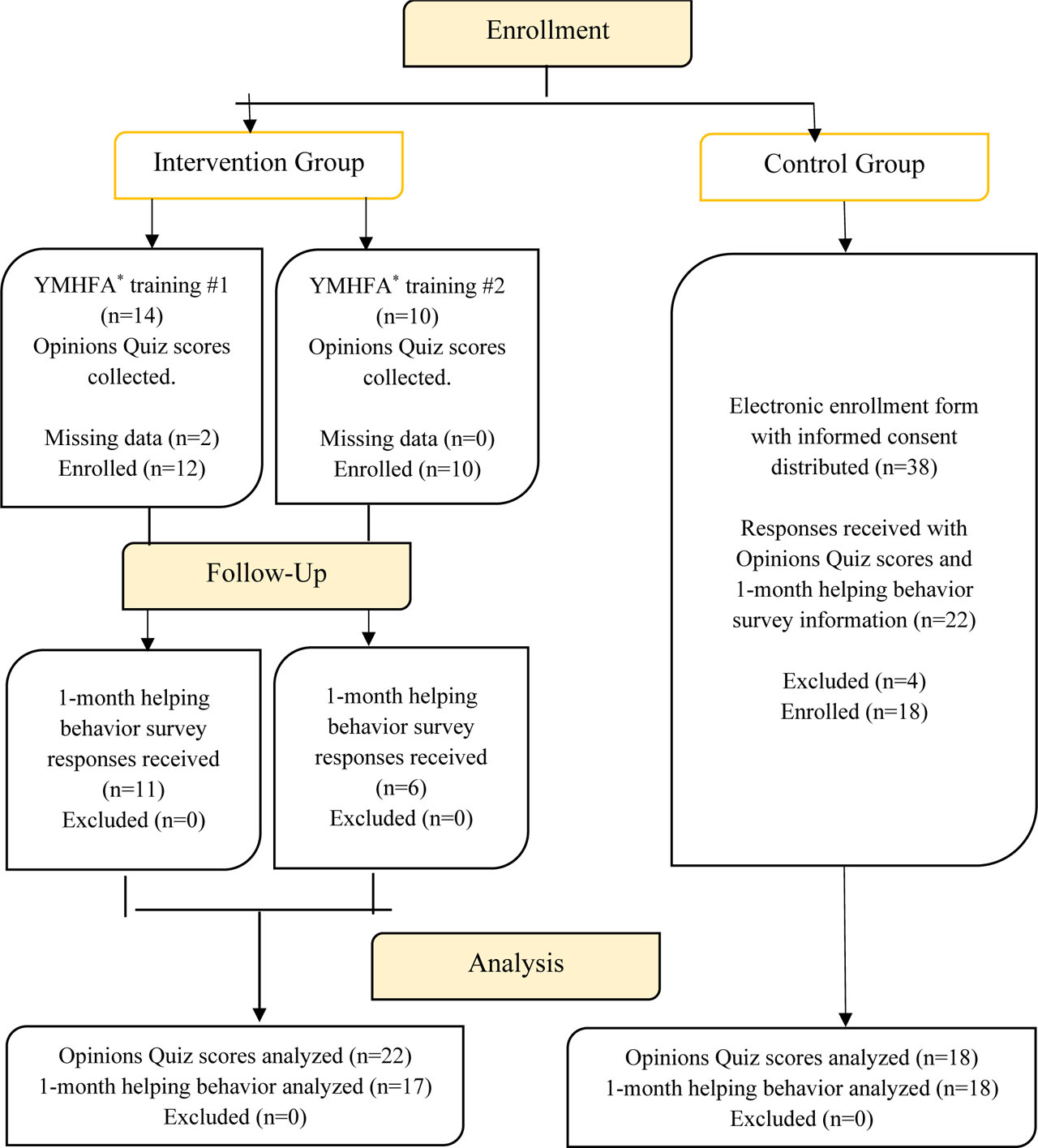
Figure 1.
Study design
*YMHFA: Youth Mental Health First Aid
Sociodemographic Characteristics
Baseline sociodemographic characteristics of intervention and control group participants for comparison of secondary and primary outcomes are shown in Table 1 and Table 2, respectively. The only significant intergroup difference was the participants’ sex assigned at birth: in both sets of comparison groups, the proportion of male participants was significantly higher in the intervention group (40.9%–47.1% vs 11.1%) and the control group had significantly more female participants (88.9% vs 52.9%–59.1%). Most participants in both groups were in the 25–44 and 45–64 age groups. Notably, the most prevalent highest completed education was high school among the intervention group participants vs a graduate degree among control group participants. All but one participant in both groups held direct youth-serving roles such as school teachers and community youth workers, yet less than 1 in 4 of them had previously received youth mental health training.
Table 1
Baseline sociodemographic characteristics of intervention and control groups for comparison of Mental Health First Aid Opinions Quiz scores
| Variables | Intervention Group (n=22) | Control Group (n=18) | χ2 |
|---|---|---|---|
| Frequency (%) | Frequency (%) | p-value* | |
| Age | |||
| 18–24 | 3 (13.6) | 1 (5.6) | 0.397 |
| 25–44 | 9 (40.9) | 9 (50.0) | 0.565 |
| 45–64 | 6 (27.3) | 6 (33.3) | 0.677 |
| ≥ 65 | 4 (18.2) | 2 (11.1) | 0.533 |
| Sex assigned at birth | |||
| Female | 13 (59.1) | 16 (88.9) | 0.036a |
| Male | 9 (40.9) | 2 (11.1) | 0.036a |
| Highest education completed | |||
| High school | 10 (45.5) | 3 (16.7) | 0.053 |
| Undergraduate | 6 (27.3) | 5 (27.8) | 0.972 |
| Graduate | 6 (27.3) | 10 (55.6) | 0.069 |
| Job role | |||
| Direct youth-serving role | 19 (86.4) | 17 (94.4) | 0.397 |
| Direct youth mental health role | 3 (13.6) | 5 (27.8) | 0.266 |
| Prior youth mental health training | |||
| Yes | 5 (22.7) | 3 (16.7) | 0.634 |
| No | 17 (77.3) | 15 (83.3) | 0.634 |
Table 2
Baseline sociodemographic characteristics of intervention and control groups for comparison of helping behavior
| Outcomes | Intervention Group (n=17) | Control Group (n=18) | χ2 |
|---|---|---|---|
| Frequency (%) | Frequency (%) | p-value* | |
| Age | |||
| 18–24 | 2 (11.8) | 1 (5.6) | 0.512 |
| 25–44 | 7 (41.2) | 9 (50.0) | 0.600 |
| 45–64 | 6 (35.3) | 6 (33.3) | 0.903 |
| ≥ 65 | 2 (11.8) | 2 (11.1) | 0.952 |
| Sex assigned at birth | |||
| Female | 9 (52.9) | 16 (88.9) | 0.019a |
| Male | 8 (47.1) | 2 (11.1) | 0.019a |
| Highest education completed | |||
| High school | 7 (41.2) | 3 (16.7) | 0.109 |
| Undergraduate | 4 (23.5) | 5 (27.8) | 0.774 |
| Graduate | 6 (35.3) | 10 (55.6) | 0.127 |
| Job role | |||
| Direct youth-serving role | 16 (94.1) | 17 (94.4) | 0.967 |
| Direct youth mental health role | 3 (17.6) | 5 (27.8) | 0.476 |
| Prior youth mental health training | |||
| Yes | 3 (17.6) | 3 (16.7) | 0.939 |
| No | 14 (82.4) | 15 (83.3) | 0.939 |
Helping Behavior Outcomes
Significantly more intervention group participants reported helping youth experiencing mental health and/or substance use challenges in the last 30 days (16/17, 94.1% vs 12/18, 66.7%, p = 0.042, odds ratio = 8.00, 95% CI [0.13–46.53], Table 3). The other significant intergroup difference in helping behavior outcomes was the rate of intervention involving only substance use challenges (5/17, 31.3% in intervention group vs 0/18 in control group, p = 0.033). The two intervention group participants who selected “other” contexts for help reported non-suicidal self-injury (NSSI), impulsive behavior, and uncertainty about future direction and goals, while one control group participant who selected “other” reported NSSI as the context for their help. From the ALGEE action plan, the L (“Listen nonjudgmentally”) and G (“Give reassurance and information”) steps were used most often by both intervention and control group participants (87.5% in the intervention group vs 91.7% in the control group), followed by E2 (“Encourage self-help and other support strategies”) in the intervention group (81.3%) and E2 and E1 (“Encourage appropriate professional help”) in the control group (75.0% for both steps). Three participants from both the intervention and control groups reported providing referrals to youth as part of their helping behavior, such as community respite and phone numbers for local community resources.
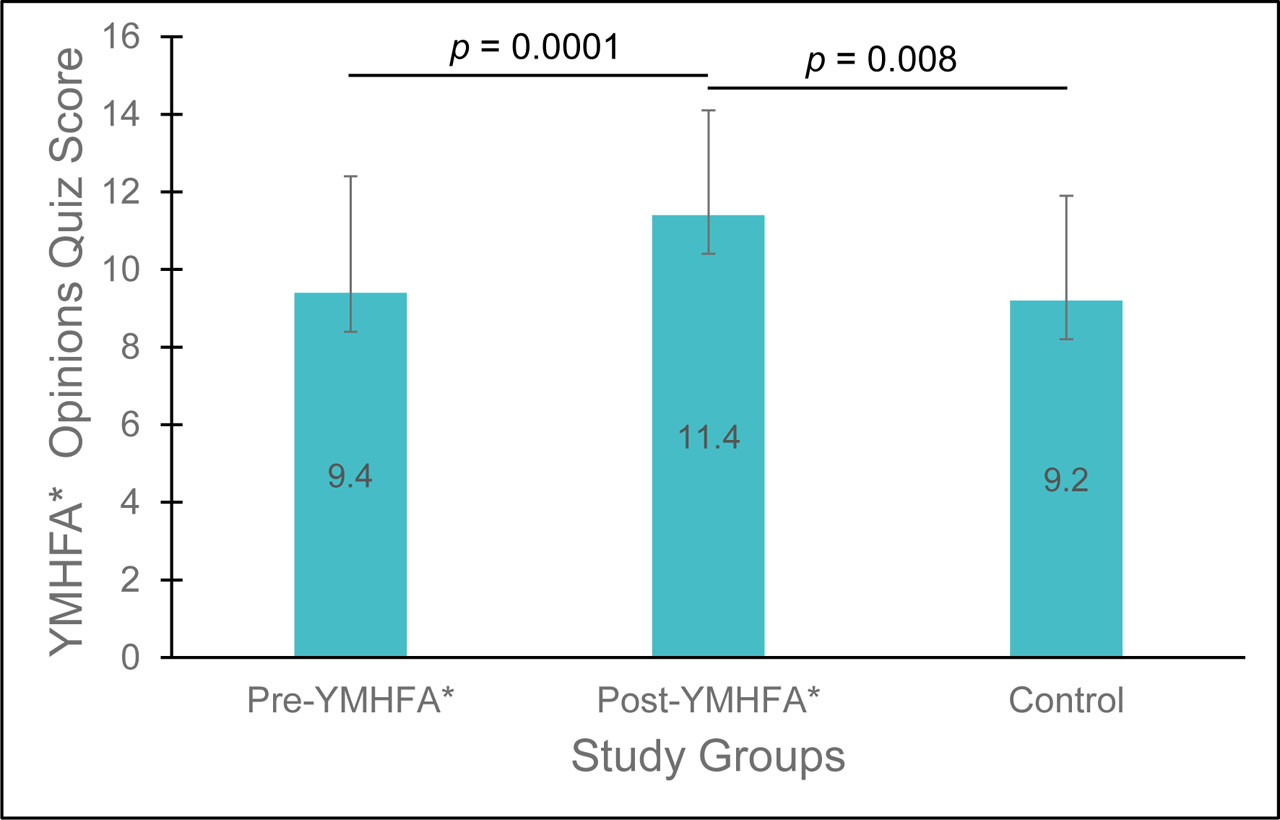
Figure 2.
Comparison of YMHFA Opinions Quiz scores of pre-YMHFA intervention group, post-YMHFA intervention group, and control group
*YMHFA: Youth Mental Health First Aid
Table 3
Helping behavior outcomes of intervention and control groups
| Outcomes | Intervention Group (n=17) | Control Group (n=18) | χ2 |
|---|---|---|---|
| Frequency (%) | Frequency (%) | p-value* | |
| Helped youth experiencing mental health and/or substance use challenges in the last 30 days | 16 (94.1) | 12 (66.7) | 0.042a |
| Help frequency | |||
| Once | 6 (37.5) | 2 (16.7) | 0.227 |
| ≥ Twice | 10 (62.5) | 10 (83.3) | 0.227 |
| Help recipient | |||
| Family | 3 (18.8) | 4 (33.3) | 0.378 |
| Friend | 3 (18.8) | 2 (16.7) | 0.887 |
| Self | 1 (6.3) | 0 (0.0) | 0.378 |
| Neighbor | 1 (6.3) | 0 (0.0) | 0.378 |
| Stranger | 3 (18.8) | 1 (8.3) | 0.436 |
| Student | 8 (50.0) | 4 (33.3) | 0.378 |
| Youth client/patient | 6 (37.5) | 4 (33.3) | 0.820 |
| Skills used | |||
| Ab | 8 (50.0) | 7 (58.3) | 0.662 |
| Lc | 14 (87.5) | 11 (91.7) | 0.724 |
| Gd | 14 (87.5) | 11 (91.7) | 0.724 |
| E1e | 8 (50.0) | 9 (75.0) | 0.229 |
| E2f | 13 (81.3) | 9 (75.0) | 0.690 |
| Reason for help | |||
| Mental health challenge | 9 (56.3) | 6 (50.0) | 0.743 |
| Substance use challenge | 5 (31.3) | 0 (0.0) | 0.033a |
| Mental health and substance use challenges | 6 (37.5) | 5 (41.7) | 0.823 |
| Other | 2 (12.5) | 1 (8.3) | 0.724 |
Mental Health Literacy Outcomes
There was a significant increase in the intervention group participants’ Opinions Quiz scores immediately post-training vs pre-training (11.4 vs 9.4, p = 0.00001, Figure 2), with an average increase in the Quiz scores of 2.0. A post-hoc analysis of the intervention group indicated no difference in the change in Quiz scores between participants whose highest completed education was high school and those with an undergraduate or graduate degree (p = 1.00). There was a significant difference in the intervention group’s post-training Quiz scores vs the control group (11.4 vs 9.2, p = 0.008, d = 0.8). In a post-hoc analysis, there was no significant difference between the intervention group's mean pre-training Quiz score and the control group’s mean Quiz score (9.4 vs 9.2, p = 0.877).
Discussion
The current study found the intervention group participants who competed YMHFA training helped youth experiencing mental health and/or substance use challenges significantly more at 1-month follow-up than control group participants. The rates of helping behavior reported by the intervention and control group participants (94.1% vs 66.7%) were considerably higher than anticipated (i.e., 60% vs 20%); consequently, the final sample size for the primary outcome measure (n=35) was smaller than that required to yield 80% power (n=64). Relatedly, the final sample size for the secondary outcome of measure (n=40) exceeded the estimated necessary total sample size of 32. Previously, Kelly et al. (2011) found that even before completing YMHFA training, 75.2% of lay community members participating in the study reported talking to a young person about mental health concerns at least once in the past 6 months, and this number increased to 88.4% post-training. The nonrandomized, self-selection recruitment method may account for the high rates of baseline, pre-training, and post-training helping behavior observed in the current study and Kelly et al. (2011), as the participants may have been highly motivated to assist youth. Additionally, almost all participants of the intervention and control groups held youth-serving roles in the current study (16/17, 94.1% s 17/18, 94.4%); however, only three participants in each group had completed youth mental health training, and the number of youth mental health providers was non-significantly higher in the control group (5/18, 27.8% vs 3/17, 17.6%). Since being a non-mental health provider was previously associated with a significantly greater increase in YMHFA participants’ confidence to help youth post-training (Geierstanger et al., 2024), this may have been a mediating factor in the current study.
Significantly more intervention group participants reported substance use challenges as the sole reason for help (n=5, 31.3% vs n=0). This may be an artifact from the membership of the intervention group participants, more than half of whom held youth-serving roles in youth clubhouses in a predominantly rural locale with above-average prevalence rates of youth substance use disorders. Meanwhile, 41.7% of control group participants and 37.5% of intervention group participants reported co-occurring mental health and substance use challenges as the reason for help. Participants in both groups reported helping students and youth clients/patients most often, followed by family (most commonly “son”) and friends. Three intervention group participants and one control group participant reported helping strangers, and one intervention group participant reported helping self and a neighbor. These are unique insights that have not been explored in previous studies commonly, as prior studies often had limited predetermined or unspecified aid providers and recipients such as high school teachers and their students (Jorm et al., 2010); parents and their adolescent children (Wang et al., 2025; Morgan, Fischer, Hart, Kelly, Kitchener, Reavley, Yap, Jorm, 2020); and general community-dwelling adults helping “a young person” (Kelly et al., 2011).
The L (“Listen nonjudgmentally”) and G (“Give reassurance and information”) steps were used most frequently by both intervention and control group participants (n=14, 87.5% vs n=11, 91.7%). The E2 (“Encourage self-help and other support strategies”) was the second most frequently used ALGEE step by the intervention group participants (n=13, 81.3%), vs E2 and E1 (“Encourage appropriate professional help”) by the control group participants (n=9, 75.0%). In comparison, participants in a previous study (Kelly et al., 2011) reported using the L step most often, followed by E1, both pre- and post-training. Another study also reported the use of the L step most frequently by virtual YMHFA training participants (Lee & Adkins, 2025). Since youth seem to most want caring adults to listen to them nonjudgmentally when they experience mental health challenges (NYS OMH, 2023), the current findings are encouraging because they indicate the adults in these studies prioritized making youth feel heard and understood and leveraged the non-linear nature of the action plan by individualizing their helping behavior. The use of non-ALGEE skills reported by participants in both groups, such as “motivational interviewing,” “grounding techniques,” and “restorative justice,” indicates their helping behavior was enriched by unique personal and professional knowledge and experiences.
The intervention group participants’ significant increase in MHFA Opinions Quiz scores post-training is consistent with the findings of prior studies (Kelly et al., 2011; Jorm et al., 2010; Morgan, Fischer, Hart, Kelly, Kitchener, Reavley, Yap, Cvetkovski, Jorm, 2019; Morgan, Fischer, Hart, Kelly, Kitchener, Reavley, Yap, Jorm, 2020; Guajardo et al., 2019; Ng et al., 2021; Rose et al., 2017; Sanchez et al., 2021; Wang & Havewala, 2025; Alam et al., 2026). Although improved mental health literacy (i.e., increased knowledge and decreased stigma) is a YMHFA training outcome with arguably the most robust evidence base, reaffirmation in this study is meaningful because mental health knowledge and stigma held by adults who interact regularly with youth have the power to facilitate or hinder prevention, early intervention, and treatment for youth experiencing mental health and substance use challenges - the original intent behind the creation of MHFA (Jorm et al., 2010; Morgan, Fischer, Hart, Kelly, Kitchener, Reavley, Yap, Jorm, 2020; Wang et al., 2025).
The proportion of male participants in the control group in the current study (11.1%) is consistent with the 11%–23.6% reported in previous studies (Kelly et al., 2011; Morgan, Fischer, Hart, Kelly, Kitchener, Reavley, Yap, Jorm, 2020; Wang et al., 2025), while the intervention group included 40.9%–47.1% of male participants. To the best of the author’s knowledge, no prior studies to date have reported helping behavior or mental health literacy outcome differences between female and male participants of YMHFA. In a post-hoc analysis of the intervention group, there was no significant difference in female and male participants’ rates of helping behavior (100% vs 87.5%, p = 0.274), pre-training Quiz scores (9.1 vs 9.8, p = 0.596), post-training Quiz scores (11.5 vs 11.2, p = 0.842), or mean Quiz score changes (2.4 vs 1.4, p = 0.322).
The intervention group’s aggregate 1-month follow-up survey response rate in the current study (77.3%; 91.7% in cohort 1; 60% in cohort 2) is higher than the 39–59% reported for follow-ups ranging from 1 month to 3 years in several previous studies (Kelly et al., 2011; Guajardo et al., 2019; Lee & Adkins, 2025; Morgan, Fischer, Hart, Kelly, Kitchener, Reavley, Yap, Jorm, 2020), but comparable with others (Morgan et al., 2018; Jorm et al., 2010), which highlights a large variability in follow-up response rates regardless of follow-up time points.
Strengths & Limitations
This study aimed to address the current evidence gaps in YMHFA identified in previous studies by including a control group and evaluating helping behavior outcomes (Sanchez et al., 2021; Wang et al., 2025; Ng et al., 2021; Forthal et al., 2022; Morgan, Fischer, Hart, Kelly, Kitchener, Reavley, Yap, Jorm, 2020); however, several limitations need to be considered when interpreting the results. First, the study is underpowered to detect a true difference in the primary outcome of measure due to the much higher rates of helping behavior reported by both the intervention and control group participants than expected. Thus, a total minimum of 32 intervention group participants (vs 17 in the current study) needed to have competed the 1-month follow-up survey. Future studies should anticipate both unexpectedly high rates of reported helping behavior and a wide range of follow-up survey response rates seen in the current and prior studies (i.e., 30%–90%) to ensure an adequate sample size. Additionally, the author acknowledges the frequent challenges engaging community participation in outreach activities. For this project, 50 seats were allocated for YMHFA training for which 30 community members registered and 24 of them attended. The exceptionally high attendance rate still could not overcome the low registration. Therefore, engagement of the members of specific groups and organizations, such as employees of high schools or pediatric hospitals, remains a viable alternative method of recruitment. Second, this study did not measure baseline Opinions Quiz scores for control group participants or pre-training helping behavior for both groups. While this was part of an intentional study design related to high attrition rates reported by prior studies that included longitudinal follow-up (Wang et al., 2025; Morgan, Fischer, Hart, Kelly, Kitchener, Reavley, Yap, Jorm, 2020), measuring primary and secondary outcomes at two time points would have strengthened the findings regarding the impact of YMHFA training in the current study. Third, participants for both intervention and control groups were self-selected vs randomly assigned, and observed differences may thus be attributable to unmeasured characteristics that motivated the participants to volunteer for the study and complete YMHFA training. Although the non-randomization was pre-determined for the current study based solely on limited resources, future studies can minimize potential confounding by employing randomization. Finally, as most participants in both intervention and control groups held youth-serving professional roles, the findings in this study may not be fully generalizable.
Strengths of this study include the recruitment of a higher proportion of male participants in the intervention group than any prior study on YMHFA. Post-hoc analyses did not demonstrate any significant differences in the primary and secondary outcome measurements between female and male participants in the intervention group. The current study was adequately powered for intragroup and intergroup mental health literacy outcome measures, which adds to the current evidence base. Finally, this study was conducted in predominantly rural counties and borne out of an outreach project in partnership with a youth-serving community mental health organization, and should serve as a model for research based on community-based mental health outreach. Additionally, the current findings have important implications for strengthening public mental health infrastructure. First, caring adults’ application of YMHFA knowledge and skills can enhance social and emotional connection and support for youth, which have been positively associated with mental health (Kawachi & Berkman, 2001; Bahkta et al., 2024). Moreover, YMHFA participants learn about the types of available professional help and how to connect youth with help, and having a trusting relationship with someone who recommends help-seeking has been associated with positive expectations about mental health services (Vogel et., 2007). Thus, support from first aiders could facilitate early intervention and prevent worse outcomes for the millions of adolescents with unrecognized or unaddressed mental health and substance use challenges. For youth living in rural communities such as where the current study was carried out, the need for and impact of this community-based support may be even greater.
Practical Value
Adolescence is the peak age of onset for mental health conditions and youth across the world are at risk of unrecognized mental health challenges that could jeopardize their future. While there is currently no unified global or national strategy to support youth mental health, caring adults who regularly interact with youth are often the first to notice changes in them, and thus have an important role in supporting their mental health. Given the continued global expansion of YMHFA training and the expectation that adults who complete the training will be ready and able to help youth experiencing mental health and substance use challenges, there is a genuine need to evaluate the utility and effectiveness of YMHFA. This study aims to help refine this evidence base.
Conclusions
In this study, YMHFA participants engaged in significantly more youth helping behavior than the control group participants at 1-month follow-up. Inadequate power yields limited precision to detect measured effects, however, and this tentative finding calls for future research with an adequate sample size and outcome measurement at two or more time points. YMHFA participants demonstrated a significant increase in mental health literacy immediately after training completion based on MHFA Opinions Quiz scores, and their mean post-training Quiz score was significantly higher than the control group. Thus, the current study supports the effectiveness of in-person YMHFA training in increasing adult participants’ mental health literacy, and presents a viable strategy to empower caring adults to support youth mental health.
Acknowledgements
The author would like to thank the nccPA Health Foundation for their funding support for the outreach project, This One’s for Youth: Mental Health Literacy, Vaping Outreach, and Care Package to Improve Social and Behavioral Well-Being of Adolescents and Young Adults, through Mental Health Outreach Grant. The author would also like to thank Mental Health Association of Columbia and Greene Counties for sponsoring the aforementioned outreach project and, specifically Mr. Kai Hillman, Director of Youth Clubhouses, for helping to bring my vision for outreach activities to life. Sincere thanks are due also to the members of St. Peter’s Health Partners Community Health Programs for their material support for the smoking and vaping cessation outreach for the project.
Notes
[12] Funding Statement
This research was supported by the nccPA Health Foundation (Mental Health Outreach Grant). Neither the nccPA Health Foundation nor any other individual or organization named herein had any role in the study design, data collection and analysis, decision to publish, or manuscript preparation