
Introduction
Open Educational Resources (OER) are teaching, learning, and research materials made available in the public domain or under open licenses that enable free access and permissions to reuse, adapt, and share content (UNESCO, 2019). Over the past two decades, OER have evolved from early advocacy and pilot repositories into a global movement supporting more equitable access to quality education, reducing costs for learners and institutions, and providing greater opportunities for knowledge sharing, contextualization, and localization of educational content. The open education movement has then shifted from content-focused (i.e., beyond OER creation and availability) to include open educational practices (OEP), the pedagogical, institutional, and governance approaches that enable OER to be used in educational practices, including teaching (Huang et al., 2020). Accordingly, OER research has increasingly focused on ecosystem-level questions, including policy preparedness and readiness, adoption and production patterns, teaching practices, institutional capacities, quality assurance, incentive structures, and inclusion.
The global OER trajectory has been shaped by several major milestones. Following UNESCO’s early role in consolidating the OER concept e.g., the 2002 forum and subsequent guidance (UNESCO, 2002), the movement gained momentum through growing international commitments to openness and sustainable education practices (UNESCO, 2012). More recently, the UNESCO Recommendation on OER (2019) catalyzed renewed policy-driven action worldwide by emphasizing enabling policies, capacity building, inclusive and equitable access, sustainability strategies, and international cooperation. At the same time, the digital transformation of education systems has accelerated, and emerging technologies are reshaping how educational resources can be created, adapted, and delivered. Since 2022, the rapid emergence of generative artificial intelligence (GenAI) has expanded possibilities for faster content development, translation and localization, personalization, and accessibility support; while also raising new questions about quality, licensing, provenance, and responsible use in open ecosystems (Bozkurt, 2023a, 2023b; Miao et al., 2023; West & Wiley, 2024). In this context, the Dubai Declaration on OER (UNESCO, 2024) represents a qualitatively distinct step in the global OER policy trajectory. Whereas the 2012 Paris Declaration provided a voluntary advocacy framework and the 2019 UNESCO Recommendation established the first formal normative instrument on OER structured around five action areas (UNESCO, 2012, 2019), the Dubai Declaration introduces two emphases not foregrounded in prior frameworks: it positions OER explicitly as digital public goods aligned with the Global Digital Compact, and it treats AI governance, including the open licensing of training data, attribution in AI-generated outputs, and the responsible deployment of generative AI, as a concrete near-term operational priority (UNESCO, 2024). Adopted at the Third World OER Congress, the first hosted in the Arab region, the Declaration carries particular salience for GCC countries as a regionally grounded call to strengthen OER creation, accessibility, and cross-border cooperation.
Within this evolving global landscape, the Gulf Cooperation Council (GCC) countries, Bahrain, Kuwait, Oman, Qatar, Saudi Arabia and the United Arab Emirates, represent a strategically significant yet under-synthesized region for understanding OER development. GCC states have been pursuing rapid socio-economic transformation, where education is positioned as a key pillar for sustainable development, human capital growth, and knowledge-based economies (UNESCO, 2022; World Bank, 2024). Several OER-related initiatives have been launched across the Arab region, reflecting varied national and institutional entry points into open education. These include ALECSO’s regional OER initiative, encompassing awareness raising, capacity-building programs, a Pan-Arab OER Hub, and a MOOC development program across Arab member states (Jemni & Khribi, 2017); Bahrain’s UNESCO-supported national OER policy process embedded within its ICT-in-Education strategy (UNESCO, 2016); Saudi Arabia’s national SHMS repository, subsequently evolving into the OERx program (NeLC, 2019, 2023); and Qatar’s Mada ICT-AID OER Hub, operationalizing accessible OER through a digital accessibility competency framework (Khribi et al., 2022). Despite such efforts, the adoption and creation of OER in Arab countries remain uneven, and persistent challenges are reported, including lack of OER development especially in Arabic-language, varying levels of awareness and usage, and insufficient attention to accessibility (Tlili et al., 2020).
Research Gap and Study Objectives
Several systematic reviews were conducted to investigate the OER status in different regions and countries, including Africa (Tlili et al., 2022), Asia (Dhanarajan & Porter, 2013), and the United States (Thoms & Thoms, 2014), among others. In a recent study, Mishra (2025) conducted a review of reviews on OER and found that most of the reviews are published by authors from the USA. Scant information exists on the OER status in the Arab region. To the best of the authors’ knowledge, only one study addressed this topic. In that study, Tlili et al. (2020) collected the data from seven hundred thirty-five Arab participants who answered a questionnaire about the OER status in their respective Arab countries. The obtained results revealed the unbalanced OER progress in the Arab region. Additionally, several Arab countries are still behind when it comes to the application of OER in universities and schools. Despite these important findings, several factors justify the need for a timely, dedicated GCC-focused synthesis (i.e., the present study). First, Tlili et al.’s (2020) findings are outdated. The post-2019 period has seen intensified global and regional policy attention to OER, while the post-2022 rise of generative AI introduces new opportunities (e.g., scalable content development, translation, personalization, accessibility support) alongside new risks (e.g., licensing ambiguity, quality assurance, provenance and integrity concerns) that have not yet been systematically synthesized. Second, the GCC constitutes a distinct sub-region with shared structural characteristics, such as comparable governance and funding models, relatively centralized education reforms, similar institutional landscapes, and common language and cultural localization needs, that shape OER trajectories in ways that may be blurred in pan-Arab analyses. These shared dynamics, combined with accelerated digital transformation agendas and strong national visions for knowledge-based economies, can produce patterns of OER adoption and production that are not readily inferred from broader regional mappings. Third, much of the influential OER activity in the region is documented outside peer-reviewed journals, through national strategies, institutional portals, policy documents, public repositories, and program reports, making grey literature essential to capture ecosystem readiness, implementation approaches, and on-the-ground progress. Taken together, these factors make it timely and necessary to revisit and update the evidence on OER in the GCC using an integrated approach that combines both academic and practice-oriented sources.
Accordingly, this study presents an integrated systematic review of OER in GCC countries, combining a PRISMA-guided synthesis of peer-reviewed empirical and review studies (2002–2025) with a structured grey literature desk review. The review is designed to produce a research-questions-led synthesis that integrates evidence from both streams, providing (i) a descriptive mapping of the GCC OER research and initiative landscape, (ii) an assessment of the current status of OER adoption and production, (iii) a synthesis of barriers and enabling conditions, (iv) a structured view of capacity-building efforts and needs, and (v) an exploratory lens on emerging dimensions, particularly AI and digital accessibility, as they relate to the future of open and inclusive education in the region. By consolidating this evidence, the study aims to inform policymakers, educators, institutional leaders, and researchers seeking to strengthen sustainable OER ecosystems aligned with global open education agendas and regional development priorities. The UNESCO OER Recommendation’s (2019) five action areas: enabling policy, capacity building, inclusive access, sustainability, and international cooperation; served as an organizing framework for the thematic coding scheme and synthesis presented in this review. The study addresses the following research questions:
RQ1 (Research Landscape): What is the landscape of peer-reviewed OER research in the GCC countries (2002–2025) in terms of temporal, geographical, sectoral, and thematic patterns?
RQ2 (Status): To what extent are OER being adopted and created in GCC countries?
RQ3 (Barriers & Enablers): What are the main barriers and enablers influencing OER adoption and creation in the GCC countries?
RQ4 (Capacity Building): What institutional, national, and cross-border capacity building efforts exist or are proposed to support OER adoption and production in GCC countries?
RQ5 (Emerging dimensions -exploratory): To what extent do existing studies address emerging dimensions of OER ecosystems in GCC countries, particularly AI and accessibility/inclusivity?
Methodology
Research Design
This study employed a hybrid methodology combining a systematic literature review and a grey-literature analysis. The systematic review followed the PRISMA (Preferred Reporting Items for Systematic Reviews and Meta-Analysis) framework as outlined by Page et al. (2021), which updates and extends the original formulation by Moher et al. (2009). The PRISMA approach was adopted to ensure methodological transparency, reproducibility, and rigor in identifying, screening, and synthesizing relevant academic studies. The process consisted of four stages: identification of relevant studies; screening to remove irrelevant and duplicate records; eligibility assessment based on predefined inclusion criteria; and finally, inclusion of the most relevant studies for analysis.
Complementing this, a targeted grey-literature desk review was conducted to capture OER-relevant evidence documented outside peer-reviewed channels, including national strategies, institutional portals, policy documents, platform documentation, and program reports across all six GCC countries. This component follows a structured purposive desk review approach, a recognized methodology in integrated and scoping reviews where evidence may reside primarily in non-indexed sources that database searches cannot adequately retrieve.
Search Strategy
The literature search was conducted following PRISMA guidelines across six major academic databases, namely Scopus, Web of Science, SpringerLink, ERIC, IEEE Xplore, and ScienceDirect, by one team member. To support search completeness, a second team member conducted a complementary search using SciSpace (SciSpace, 2023), an AI-assisted meta-search interface, applying the same search string and period. The two retrieved datasets were then combined prior to screening. The search was conducted between August and October 2025. This review included only studies published in English, reflecting the fact that the scientific databases consulted index research papers, including GCC OER scholarship (the study focus), predominantly in English, consistent with prior practice in the field (Tlili et al., 2022). The integrated methodology combining PRISMA-guided synthesis with a structured grey literature desk review was adopted in part to address this constraint, as it captures Arabic-language policy, institutional, and programmatic evidence documented outside peer-reviewed channels. A sensitivity check was also conducted on Shamaa, an Arabic-language educational research database indexing peer-reviewed studies from Arab countries, searching for OER-related terms with GCC country filters applied. The search returned four records for Saudi Arabia and none for other GCC countries; none met the inclusion criteria upon screening, confirming that the English-language restriction did not materially affect the peer-reviewed evidence base.
The search terms were applied covering the title, abstract, and keyword fields. The common search logic is reported below and was adapted to each database interface to support independent verification and replicability. The search strategy combined keywords related to Open Educational Resources and associated practices with country-specific filters for the GCC region in addition to limiting the search to the research questions’ keywords. The comprehensive search strategy was designed to identify peer-reviewed studies on OER within the GCC context. The search strings were structured around three conceptual clusters, each reflecting a core aspect of the inquiry:
open educational resources and open education;
policy, adoption, and implementation; and
regional focus terms referring to Gulf or GCC countries.
These clusters were combined using Boolean operators (AND/OR) to ensure the inclusion of studies addressing the intersection of OER practices, governance, and regional educational systems as follows:
Cluster 1 – OER concepts: (“Open Educational Resource*” OR “OER” OR “Open Education*” OR “Open Learning” OR “Open Educational Practices” OR “Open Course*” OR “MOOC*” OR “Massive Open Online Course*” OR “Open Licensing” OR “Creative Commons”)
Cluster 2 – Adoption and policy dimensions: (“adoption” OR “implementation” OR “integration” OR “creation” OR “policy” OR “barrier*” OR “challenge*” OR “enabler*” OR “capacity building” OR “strategy” OR “accessibility” OR “awareness” OR “initiative*” OR “Inclusivity” OR “Artificial Intelligence”)
Cluster 3 – Regional focus: (“Gulf Cooperation Council” OR “GCC” OR “Gulf Region” OR “Gulf States” OR “Saudi Arabia” OR “KSA” OR “UAE” OR “United Arab Emirates” OR “Qatar” OR “Kuwait” OR “Bahrain” OR “Oman” OR “Arabian Gulf”)
These clusters were combined using the Boolean expression: (Cluster 1) AND (Cluster 2) AND (Cluster 3).
The combined search string was adapted where necessary to fit the interface of each database, with no additional filters applied beyond publication date range and document type. The search strategy is sufficiently documented to enable independent verification and replication of the core search logic across the named databases.
Complementing the database search, the grey literature search was conducted across official national and institutional portals for all six GCC countries, intergovernmental and regional organization repositories, and specialized open education platforms. Sources were identified through three routes: direct portal searches on official ministry and agency websites; targeted keyword searches combining OER-related terms with country names; and citation tracing from included peer-reviewed studies.
Inclusion and Exclusion Criteria
For peer-reviewed papers, a study was included if it: (a) explicitly addresses OER adoption, creation, or policy frameworks within GCC countries; (b) reports empirical findings, conceptual analysis, or national case studies; and (c) is published in peer-reviewed journals, conference proceedings, or book chapters. Studies with only tangential references to OER, or focused exclusively on general e-learning without an open-education component, were excluded. To capture the full scope of scholarly work on this emerging topic, journal articles, conference proceedings, and book chapters written in English were included.
Massive Open Online Courses (MOOCs) were also considered relevant within the inclusion scope, as they originated conceptually from the OER movement and continue to embody key dimensions of openness in education. Although many MOOCs operate currently under commercial or restricted licensing models, they can still reflect open educational practices by providing free or low-cost access to learning materials, open enrollment opportunities, and, in some cases, content released under open licenses. Even when full reusability rights are limited, MOOCs contribute significantly to the diffusion of open pedagogical approaches, large-scale learner engagement, and the global accessibility of educational resources (Alevizou, 2015; Jemni et al., 2016). Studies focusing exclusively on commercial MOOC platforms and delivery, with no discernible connection to open access practices and OER engagement, were excluded.
Regarding grey literature, source selection was guided by three criteria: (1) primary or official origin, defined as a ministry, national e-learning agency, intergovernmental or regional organization, national library, official platform or repository, or institutional body issuing policy, strategy, or program documentation; (2) direct relevance to one or more research questions through explicit reference to OER; and (3) GCC or Arab region geographic scope. Sources meeting all three criteria were included in the retained corpus. To mitigate potential selection bias inherent in a purposive approach, source selection drew on the authoring team’s sustained direct engagement with GCC OER ecosystems, and a structured record of all sources considered with inclusion and exclusion decisions is available from the corresponding author. Sources that did not meet the three criteria were not treated as part of the retained grey-literature evidence corpus; however, selected global normative instruments, ecosystem context references, and background documents were used as framework or contextual sources where analytically relevant.
Screening and Selection Process
For the peer-reviewed stream, all retrieved records were exported in Excel format and standardized into a unified dataset containing essential bibliographic information (e.g., title, authors, publication year). A total of 202 records were obtained. In the first stage of screening, duplicate entries across databases were identified and removed. Following this process, along with the application of the aforementioned inclusion and exclusion criteria, the dataset was reduced to 44 unique studies eligible for further review and analysis. A further 13 records were eliminated on the grounds that they were not specific to the Gulf region, not accessible, or not sufficiently relevant to the research questions. This process narrowed the pool to 31 relevant studies forming the final peer-reviewed evidence base for the systematic review (see Figure 1). To ensure methodological rigor and minimize potential bias, two members of the research team independently conducted the screening and eligibility assessment of the retrieved studies, while a third member verified the final set of included papers and cross-checked all bibliographic details for accuracy and completeness. Independent screening by the two reviewers yielded an inter-rater agreement of approximately 80%, with discrepancies resolved through structured discussion and consensus, and the third team member’s involvement where needed. The final set of included studies was then organized into a coded Excel dataset following the coding schema described in the Data Extraction and Coding Scheme section, which provided the analytical foundation for the subsequent synthesis and thematic mapping.
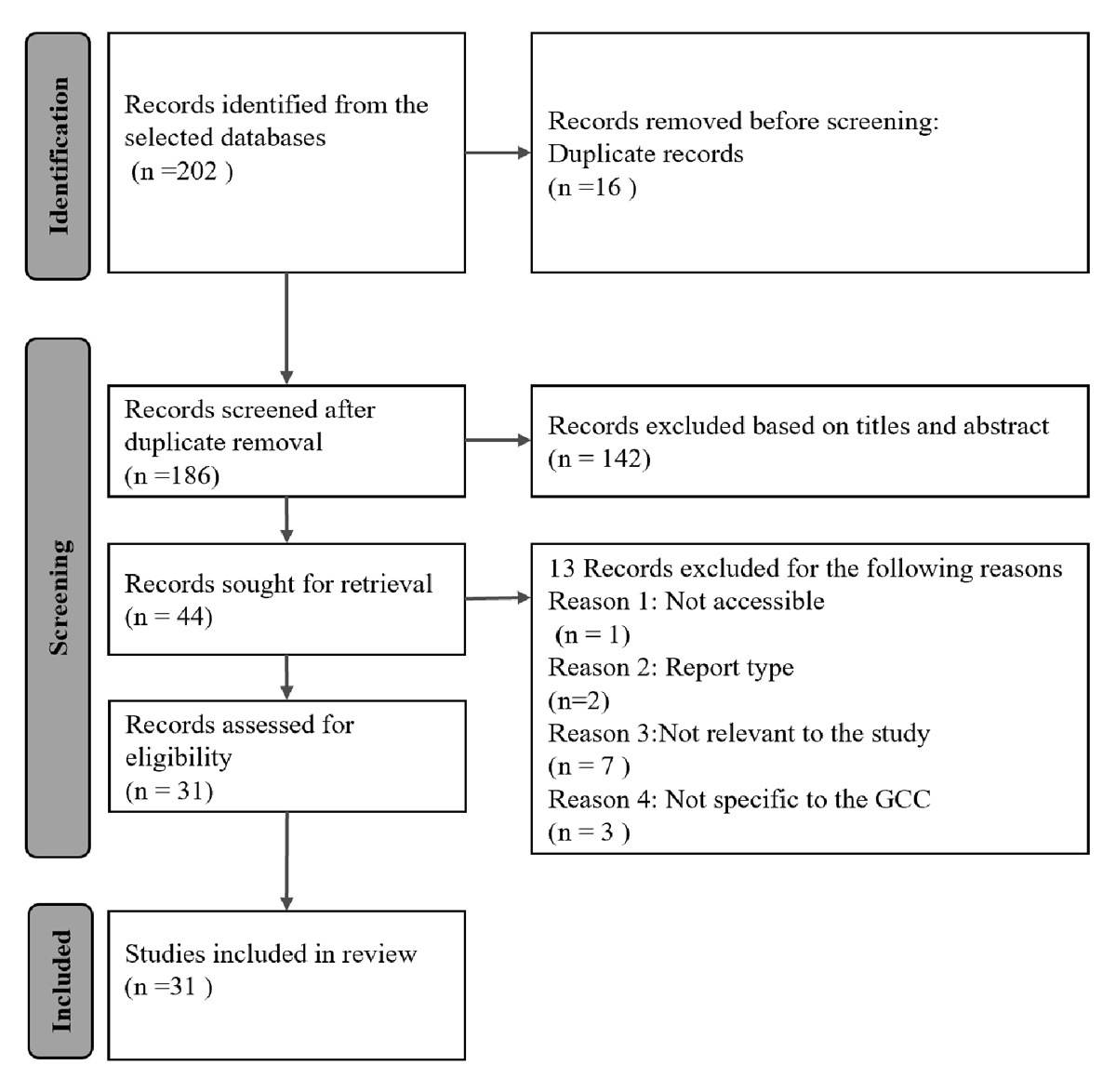
Figure 1
PRISMA flow diagram of the study selection process.
The grey-literature criteria were applied to the 41 sources identified during the desk review. Of these, 27 met all three inclusion criteria and form the retained grey-literature evidence corpus. The remaining 14 sources, comprising global normative OER instruments, ecosystem context references, and background documentation, did not meet one or more criteria but are cited where analytically relevant throughout the paper. The retained corpus covered OER platforms, repositories, and portals (n = 12), program reports and capacity-building documentation (n = 9), award and recognition documentation (n = 3), national or institutional strategy documents (n = 1), licensing and international-cooperation guidance (n = 1), and governance reports and official statistics (n = 1). Geographically, the corpus covers all six GCC states, with the highest concentration in Saudi Arabia (n = 10) reflecting the relative maturity of OER documentation in this country. Because some sources informed more than one research question, RQ-level coding was treated as non-exclusive, with the corpus contributing most directly to RQ2 (n = 23) and RQ4 (n = 16).
Data Extraction and Coding Scheme
Data were systematically extracted from each of the 31 included studies using a predefined coding schema developed in Microsoft Excel to reduce coding bias. The extraction process aimed to capture both descriptive metadata and analytical dimensions relevant to the research questions, enabling cross-comparison and thematic synthesis. Each record was coded across several fields, grouped under four main categories:
Bibliographic and Publication Metadata: publication year, country of focus, type of publication (journal article, conference paper, book chapter), and authors’ institutional affiliations.
Study Characteristics: research design (quantitative, qualitative, mixed methods, conceptual), level of education addressed (K-12, higher education, general education), and primary discipline or sector.
Substantive Focus Areas: dominant themes (e.g. OER adoption, creation, policy, capacity building, barriers/enablers, open licensing, accessibility and inclusion), mapped directly to the research questions.
Outcome and Contextual Variables: key findings, identified enablers and challenges, capacity-building initiatives, and policy recommendations.
To ensure consistency and reliability, the coding framework was piloted on a subset of five studies and refined through iterative comparison before being applied to the full corpus. Thematic coding of dominant focus areas drew on the five action areas of the UNESCO OER Recommendation (2019), enabling policy, capacity building, inclusive access, sustainability, and international cooperation, as an organising framework, informing the identification and categorisation of themes across the included studies, the synthesis of findings across RQs, and the structure of the recommendations. Two members of the research team independently coded all included studies across the predefined categories. Coding discrepancies were resolved through discussion and consensus, with the third team member consulted when needed. The final coded dataset served as the basis for producing the descriptive overview and thematic patterns presented in the subsequent sections, providing a transparent and replicable foundation for the integrated synthesis of academic literature on OER in the GCC countries.
Results
The results section is structured according to each of the aforementioned research questions. RQ1 draws on the PRISMA-screened peer-reviewed corpus to map the OER research landscape in the GCC countries, while RQ2–RQ5 integrate the analysis of the peer-reviewed corpus with the grey-literature sources.
Landscape of Peer-Reviewed OER Research in the GCC (RQ1)
The peer-reviewed corpus (2002–2025) shows an uneven geographical distribution across the GCC countries (see Figure 2). Saudi Arabia is the most frequently studied context (14 studies), followed by Oman (8 studies, including one comparative study involving Oman). The UAE is represented by two studies, while Kuwait and Qatar each appear as the least investigated OER context (1 study). No peer-reviewed study was found to focus specifically on Bahrain. In addition, five studies adopt a regional multi-country perspective (e.g., GCC/Arab, world/MENA), and are retained in the analysis as GCC-relevant evidence.
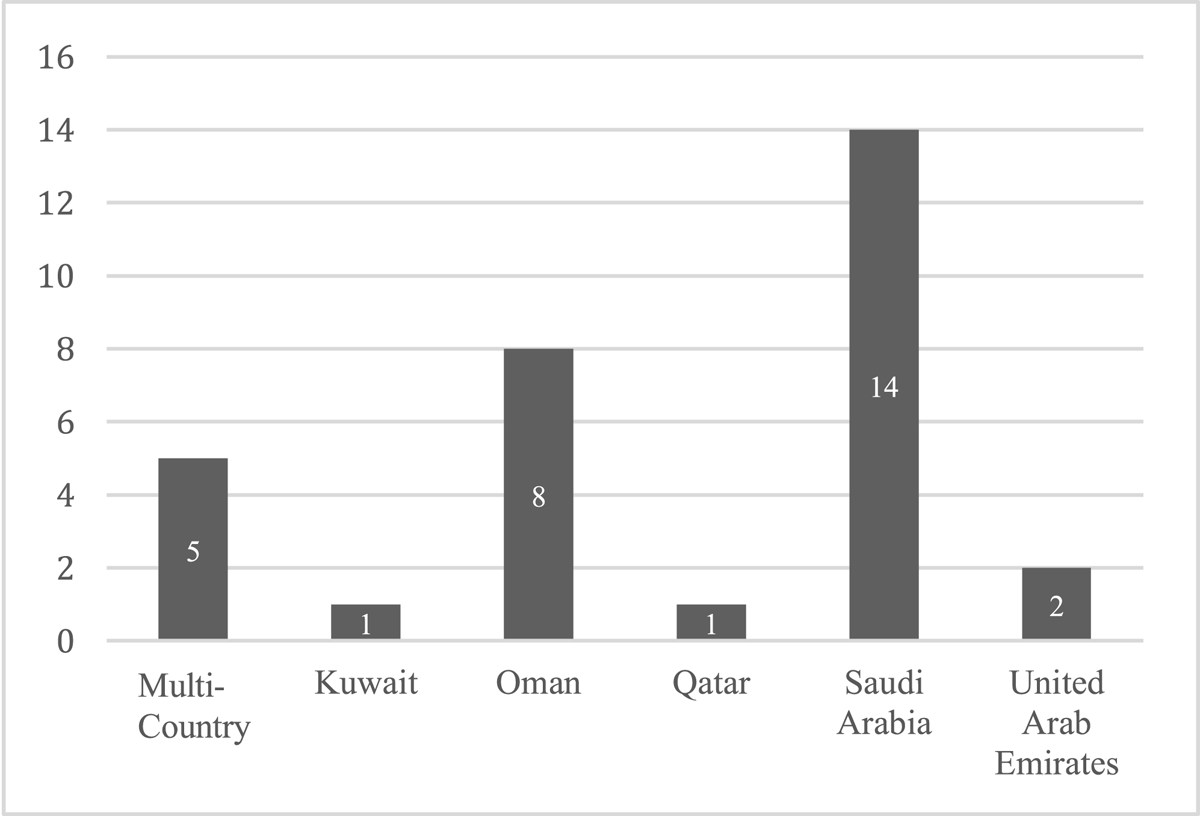
Figure 2
Country Distribution of Studies.
While the search parameters covered 2002–2025, the included publications actually span between 2012 and 2025 (see Figure 3), indicating that OER/open education research in the GCC countries remains relatively recent and still developing, with a clearer expansion after 2015 and renewed activity in the early 2020s.
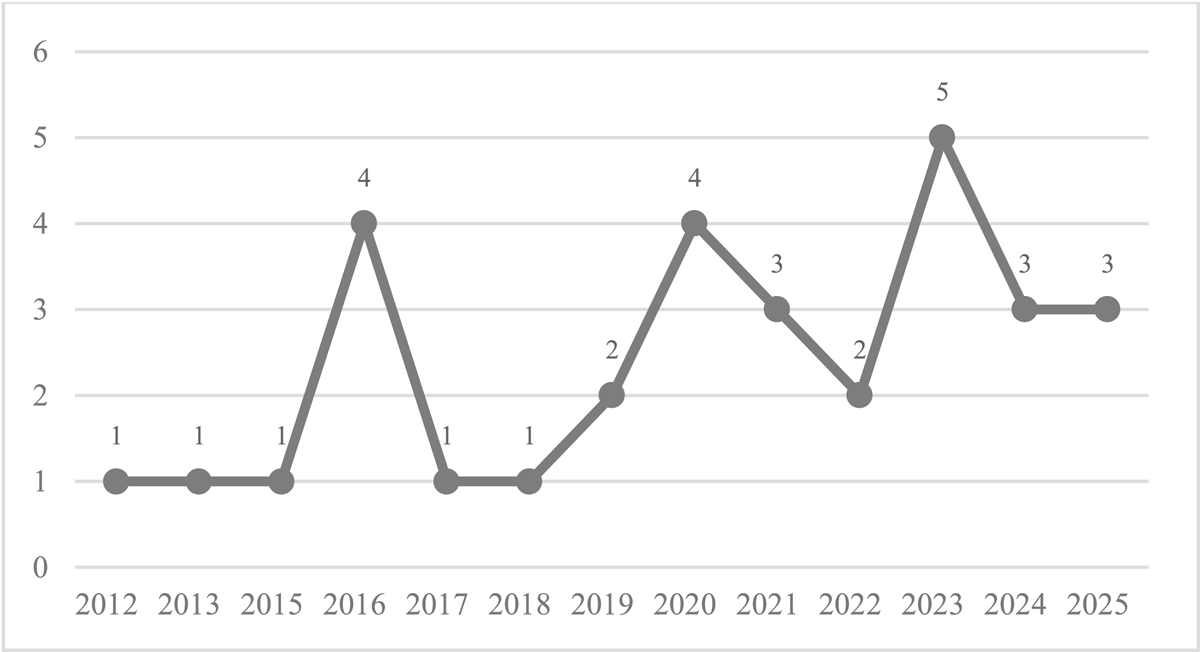
Figure 3
Distribution by Publication Year.
The publication pattern (in Figure 3) can be explained with several factors: The 2012 OER Paris Declaration could be the main event that brought attention to OER, where the first OER publication in GCC was found. The 2nd World OER Congress (UNESCO, 2017) and the UNESCO Recommendation on OER (2019) further strengthened policy attention and implementation efforts across countries (UNESCO, 2019). A pick in OER publications from 2020 onward may reflect the COVID-19 period, during which institutions intensified online and open learning practices to support continuity. Looking ahead, the 3rd World OER Congress held in Dubai (December 2024) and the Dubai Declaration on OER may further stimulate research and reporting in the region (UNESCO, 2024).
In terms of thematic patterns (see Figure 4), the peer-reviewed landscape is dominated by studies on OER adoption and implementation, reflecting that the GCC countries are still in the first phase of raising awareness and promoting the OER creation rather than moving to the phase of using OER in teaching practices, i.e., OEP. This is followed by research and evaluation work (e.g., perceptions, effectiveness, readiness). A meaningful subset addresses capacity building and training, while policy and strategy themes appear at a moderate level. In contrast, topics such as licensing/open policy, framework/model development, accessibility and inclusion, and AI/innovation remain underrepresented, highlighting gaps in open-licensing literacy, interoperability and quality approaches, accessibility-by-design, and emerging technology-enabled OER. This thematic pattern further reveals that the open education movement in the GCC countries is still in its infancy.
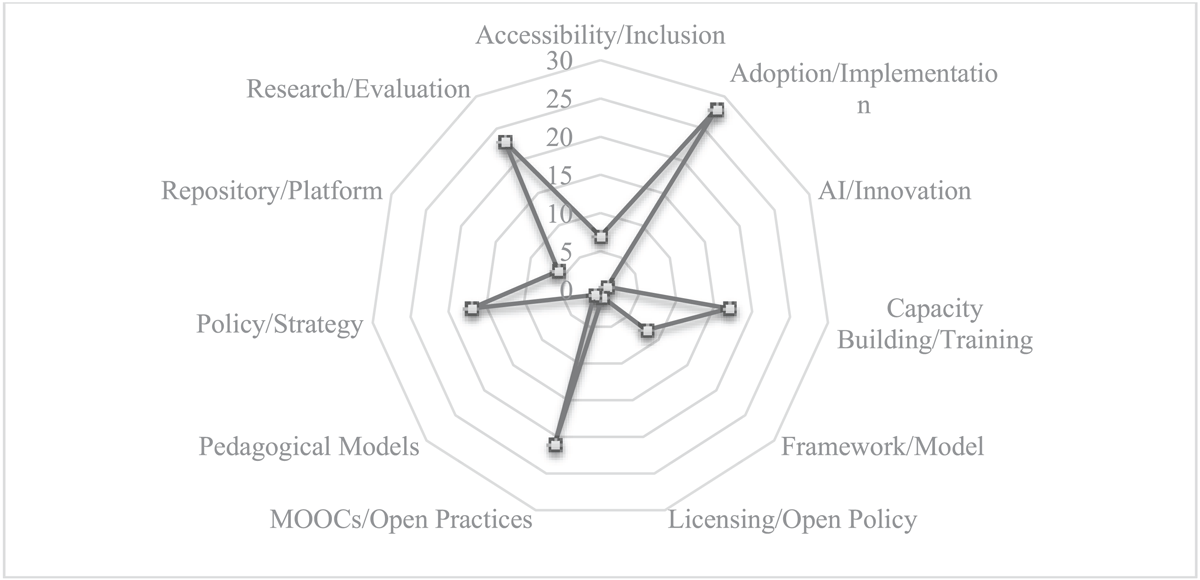
Figure 4
Distribution by Main Focus Areas.
From a contextual perspective, the OER focus is strongly concentrated on higher education: 27 studies examine OER and/or MOOCs in university contexts. (e.g., Alkawsi et al., 2025; Alhazzani, 2020; Altalhi, 2021; Almamari & Kumar, 2025; Adhya et al., 2024; Al-Zahrani, 2024). Only two studies focus specifically on K–12, typically addressing teacher development, awareness, and school-level integration (Assiri & Alnatheer, 2019; Al-Awidi & Al-Furaih, 2023). Two studies adopt a cross-sectoral lens spanning general and higher education. This indicates that the peer-reviewed evidence provides comparatively limited insight into OER adoption in school education relative to higher education (see Figure 5).
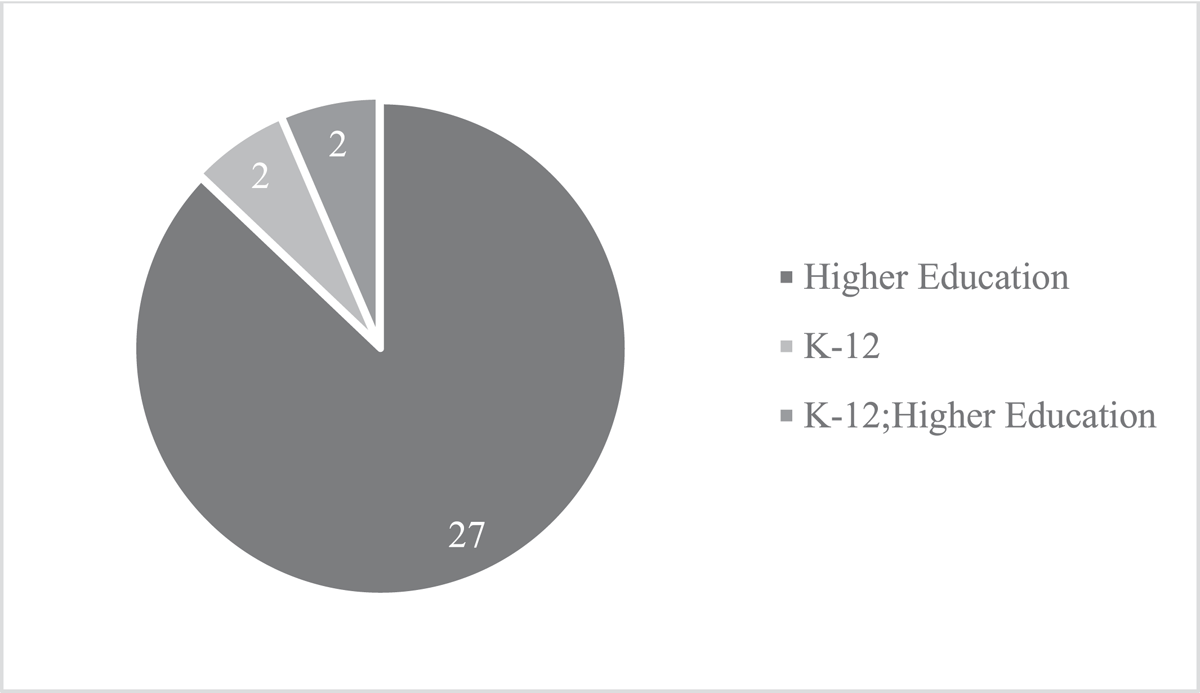
Figure 5
Study Distribution by Level of Education.
A further landscape signal concerns authorship and collaboration (see Figure 6). The authorship patterns reveal that the OER research in the GCC is largely university-driven. Most of the analyzed studies were authored solely by national universities (14 papers). Seven papers resulted from international collaboration between the GCC universities and international universities (e.g., Alkawsi et al., 2025; Badi & Ali, 2016; Al-Awidi & Al-Furaih, 2023; Alshahrani & Ally, 2016). Three papers are authored by researchers affiliated exclusively with institutions outside the GCC (Al Hosni & AlAli, 2022; Adham & Lundqvist, 2015; Abdullatif & Velázquez-Iturbide, 2020). One paper authored by a regional/international organization (Jemni & Khribi, 2017) and one other paper reflected joint authorship between international university and regional organization (Tlili et al., 2020). Two papers were authored solely by government entities (Almegren & Yassin, 2013; Khribi et al., 2022), while three papers reflected joint authorship between governmental and GCC academic institutions (Doss et al., 2024; Shemy & Al-Habsi, 2021; Assiri & Alnatheer, 2019). Notably, no evidence of cross-country collaboration among GCC universities was found in the analyzed studies. Around one-third of studies (11/31) involve cross-country co-authorship, mainly through international (GCC and non GCC) or broader Arab/MENA collaborations, while cross-country collaboration exclusively among GCC universities is absent in the peer-reviewed set. Overall, the findings point out to a fragmented research landscape where collaboration, particularly intra-GCC, remains underdeveloped with limited governmental leadership.
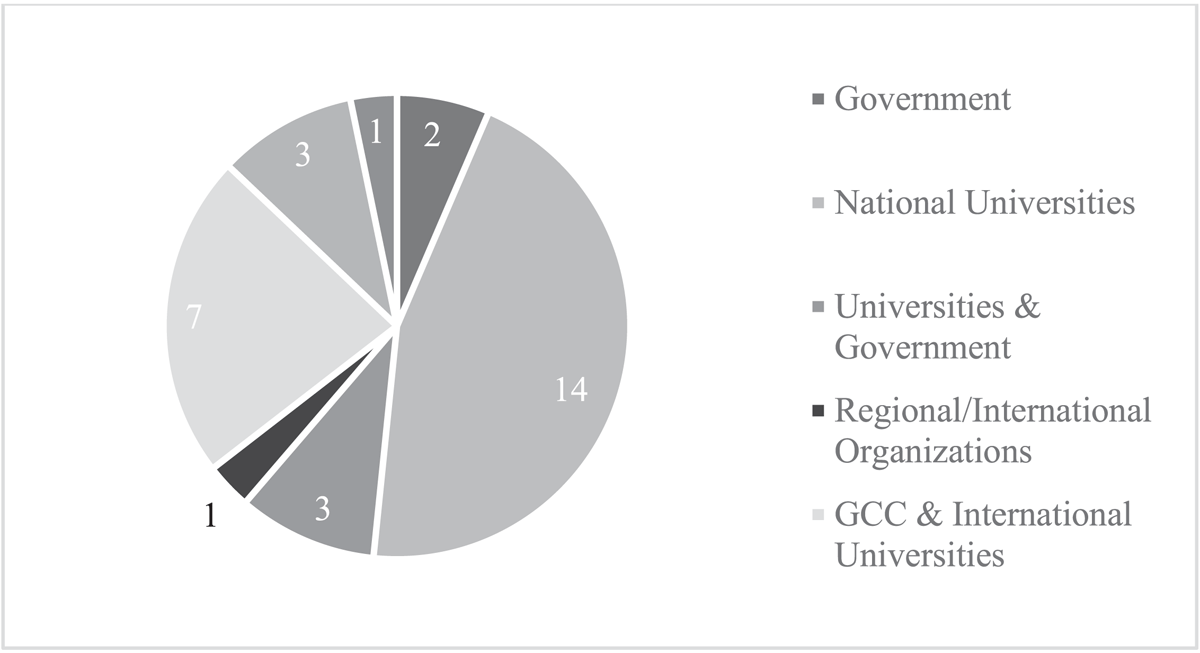
Figure 6
Distribution by Authorship Affiliation.
Taken together, the landscape of OER research in the GCC countries (2002–2025) is thus characterized by (i) a geographically skewed evidence base, (ii) a sectoral concentration in higher education, and (iii) a thematic profile centered on adoption/implementation and readiness-oriented inquiry, with comparatively limited attention to licensing, accessibility/inclusion, and AI/innovation.
OER Adoption and Creation Status (RQ2)
The peer-reviewed evidence indicates a clear but uneven move toward adopting and producing OER and related open practices across the GCC, most visibly through national repositories and MOOC ecosystems. Saudi Arabia consistently appears as the most advanced case in the peer-reviewed set, where OER national platforms (e.g., SHMS and Maknaz) are discussed as core instruments for mainstreaming openness within institutional teaching and learning (Alyami, 2020; Faridi & Ebad, 2018; Almegren & Yassin, 2013). Several MOOCs platforms and initiatives have also been created in Saudi Arabia such as FutureX, KKUx, Maarefh, Doroob and Rwaq representing collectively the most extensive national open education ecosystem in the region (Badi & Ali, 2016; Alharbi, 2023; Almegren & Yassin, 2013; Mutawa, 2017). Oman’s peer-reviewed evidence emphasizes MOOC platform development (e.g., Edlal, SQUMOOC) and research attention to learner/faculty readiness and implementation constraints (Al Hosni & AlAli, 2022; Al-Harthi & Ani, 2023; Shemy & Al-Habsi, 2021; AlMamari & Kumar, 2025). In the UAE, the studies describe government-supported platforms and programs that encourage OER participation and online learning opportunities, while also highlighting skepticism, among some faculty, toward recognizing MOOCs for formal accreditation due to assessment and verification concerns (Adhya et al., 2024; Annabi & Wilkins, 2016). It is worth noting that while the aforementioned examples of MOOCs platforms represent significant open-access infrastructure, not all content hosted on them is released under explicit Creative Commons or equivalent open licenses. Their inclusion here reflects evidence of open education engagement and digital readiness rather than OER adoption in the strict licensing sense, a distinction that recurs across the GCC countries. Qatar’s contribution is comparatively distinctive: rather than large national OER repositories, the literature highlights open, competency-aligned resources in specialized domains (e.g., ICT accessibility) and OER institutional repositories that support resource discovery and reuse (Khribi et al., 2022). Alongside this, Qatar University’s QSpace repository provides thousands of open-access scholarly works (Ahmed & Al-Baridi, 2012). Similarly, the University of Bahrain developed a bilingual institutional repository, while its National Agency (BIPA) has been recognized for best practices in smart learning (Jemni & Khribi, 2017; Ahmed & Al-Baridi, 2012). In Kuwait, research indicates that educators actively use OER for professional development, often driven by self-motivation rather than institutional policy (Al-Awidi & Al-Furaih, 2023).
Turning from peer-reviewed to the grey-literature evidence, the following country-level institutional picture largely corroborates but also deepens the academic findings above. Grey literature complements, and in some cases extends, the peer-reviewed picture by showing that OER adoption is often embedded within broader digital-education reforms, open-access infrastructures, and capacity-building programs, rather than framed as stand-alone OER strategies (COL, 2017). Saudi Arabia is documented as the most state-coordinated ecosystem, combining national programs, large-scale capacity building, and repository evolution from SHMS to OERx; the evidence reports substantial curation volumes, extensive training participation, and current OERx platform activity across higher education, K–12, and vocational sectors (NeLC, 2019, 2023, 2025a). Bahrain stands out in grey sources as an early regional policy adopter, with a UNESCO-supported OER policy process linked to its ICT-in-Education strategy, alongside operational mechanisms such as Edunet repositories and more recent portal evidence on the My Digital Library OER Program. This indicates movement from policy formulation toward digital-resource provision, although systematic evidence on reuse, remixing, and open-licensing implementation remains limited (UNESCO, 2016; Mcilhone, 2014; Khribi, 2019; Government of Bahrain, 2024). For Qatar, grey literature frames OER adoption and creation as a distributed, multi-actor model: OER is explicitly recognized within national education strategy, while institutional drivers include Mada’s ICT-AID OER Hub, Qatar National Library’s Manara open-access platform, and Qatar University’s QSpace repository as complementary open-dissemination infrastructures that can support OER discovery and reuse, even though not all operate as dedicated OER repositories in the strict licensing sense (MoEHE, 2024; Mada, 2021, 2022, 2023; QNL, 2022; Qatar University, n.d.). Oman’s grey evidence suggests strong digital readiness and institutional engagement through national and institutional digital-learning infrastructures, but also indicates a need for stronger policy alignment and monitoring specifically focused on open licensing, reuse, and impact; in other words, enabling infrastructure is present, while OER governance is still consolidating (Khribi, 2022b; MoHERI, 2025). The UAE shows emerging platform-level OER activity through the Ministry of Education’s Manara platform, alongside broader smart-learning and digital-content initiatives; however, this does not yet amount to a clearly articulated national OER policy framework with systematic monitoring of open licensing and reuse (UAE Ministry of Education, n.d.; ABEGS, 2021; UNESCO, 2022). Kuwait’s grey evidence points to digital-learning readiness and islands of practice, including university-led open-access initiatives and participation in MOOC ecosystems, rather than a coordinated national OER framework, indicating an early adoption stage in governance terms (ABEGS, 2021; Khribi, 2019; Kuwait Ministry of Education & IEA, 2024).
Taken together, the evidence suggests that GCC countries are moving from open/digital infrastructure toward OER mainstreaming, but at different speeds and via different pathways. A recurring pattern across contexts is that open access and MOOCs often function as stepping-stones toward OER, but do not automatically guarantee open licensing, reusability, or systematic OER production, hence the importance of tracking licensing, reuse, and institutional incentives alongside platform availability.
Barriers and Enablers Shaping OER uptake (RQ3)
Across the reviewed studies, barriers to OER uptake cluster around four interrelated dimensions, namely technical/operational constraints, pedagogical–institutional conditions, awareness/cultural factors, and policy–governance maturity.
On the technical side, challenges in the GCC are reported less as “infrastructure deficits” and more as capacity-to-adapt issues: educators generally face difficulties revising/remixing OER because of limited technical skills, restrictive file formats, weak metadata standards, and limited availability of high-quality Arabic OER. Accessibility-aligned design is also rarely embedded in OER authoring and selection practices, which reduces usability for diverse learners and constrains inclusive reuse (Jemni & Khribi, 2017; Assiri & Alnatheer, 2019; Al-Awidi & Al-Furaih, 2023).
Pedagogical and institutional barriers relate to how far OER/OEP are integrated into everyday teaching culture and workload models. Studies report limited institutional encouragement, weak support structures for OER development, and a lack of peer modeling that would normalize open practices. Key concerns, such as in Saudi Arabia, are related to support and flexibility in navigating intellectual property policies, establishing fair systems to recognize contributions to digital pedagogy, safeguarding intellectual property rights, and creating an enabling environment that fosters faculty engagement with OER (Al-Zahrani, 2024). Additionally, the absence of clear accreditation/recognition frameworks, especially when MOOCs are used as a proxy for openness, reduces perceived value for both faculty and learners, which is the case in Oman (Al Hosni & AlAli, 2022). Importantly, OER engagement is frequently framed as “extra work,” without protected time, incentives, or systematic professional development, and it is often complicated by unclear institutional intellectual property (IP) and licensing rules (Al-Zahrani, 2024).
Awareness and cultural barriers are repeatedly observed in the form of low open-education literacy: limited familiarity with OER repositories, self-archiving practices, and open licensing models, even when general digital competence is high (Alkawsi et al., 2025). This gap appears among both students (e.g., low OER/MOOC awareness despite digital readiness) and educators (e.g., uncertainty about permissions to reuse/modify resources) (e.g. in Oman) (Al Hosni & AlAli, 2022). In Kuwait, for example, teachers’ engagement may remain informal and self-motivated, often mediated through social media and personal networks rather than institutional systems, suggesting that openness is present but not yet “routinized” as an institutional practice (Al-Awidi & Al-Furaih, 2023). In Saudi Arabia, uncertainties are found regarding permissions for use and modification, as well as concerns about the quality of OER (Al-Zahrani, 2024). This pattern suggests that in the GCC context, OER are not yet embedded in teaching culture/practices but instead occur sporadically through individual initiatives.
At the policy and governance level, the dominant constraint is the absence (or weak operationalization) of coherent OER policy frameworks across much of the GCC. Additionally, studies highlight limited coordinated strategies, incomplete institutional catalogs, and insufficient incentives for open publishing. Saudi Arabia is often positioned as comparatively more mature because OER is aligned with Vision 2030 digital-education objectives and coordinated through national platforms (e.g., SHMS), but the wider corpus still indicates that explicit, enforceable OER policy and governance mechanisms are uneven across the region (Alkawsi et al., 2025; Alyami, 2020; Faridi & Ebad, 2018).
Despite these barriers, several enablers recur in the reviewed corpus. The most prominent are institutional investment and human-capital development, including the presence of OER and MOOC initiatives that model open practices, and evidence of positive faculty self-efficacy and attitudes toward OER. Targeted professional development interventions (e.g., OER-related teacher programs reported in Oman) are also presented as practical enablers that can accelerate uptake once policy, incentives, and licensing clarity improve. Faculty in both Saudi Arabia and Kuwait demonstrate strong self-efficacy and positive attitudes toward OER integration (Al-Zahrani, 2024; Al-Awidi & Al-Furaih, 2023), indicating a favorable foundation for scaling adoption once structural enablers mature.
The grey literature largely corroborates the previous findings but adds important system-level context about what enables, or constrains, implementation at scale. First, OER development is frequently embedded within broader national digital-education strategies rather than stand-alone OER policies. Enablers therefore often take the form of government-led digital transformation agendas linked to national visions, sustained investments in e-learning infrastructure and national repositories, and regional/global collaboration, notably through UNESCO and ALECSO, which provides policy templates and legitimacy for open education reform. Second, grey sources highlight uneven maturity across the region. As noted in RQ2, Saudi Arabia provides the clearest example of a coordinated national pathway (AlMarwani, 2013), while Bahrain illustrates early policy alignment through its UNESCO-supported OER policy process and subsequent digital-resource initiatives (UNESCO, 2016; Mcilhone, 2014; Government of Bahrain, 2024). By contrast, Oman, the UAE, and Kuwait show more transitional patterns, where digital-learning infrastructure, smart-learning initiatives, and open-access practices are visible, but explicit OER policy, open-licensing requirements, and monitoring mechanisms remain less consolidated (ABEGS, 2021; Khribi, 2022b; UAE Ministry of Education, n.d.; Kuwait Ministry of Education & IEA, 2024). Third, the grey literature makes visible persistent constraints that are less consistently elaborated in peer-reviewed studies: Arabic OER scarcity remains a continuing localization barrier; open licensing is inconsistently adopted; monitoring and impact assessment mechanisms remain limited; and accessibility/inclusion linkages are not yet systematically integrated into national open education policy agendas.
Taken together, both evidence streams suggest that the GCC region is digitally prepared and increasingly active in open and online learning, yet still consolidating the institutional and policy foundations that convert isolated OER use into sustainable OEP.
Capacity-Building Efforts and Gaps (RQ4)
Across the reviewed studies, capacity building to support OER adoption and production in the GCC is reported primarily through professional development (PD), platform-enabled learning ecosystems (repositories/MOOCs), and collaborative networks. PD and training appear as the most consistent levers. In Oman, OER-informed teacher training initiatives have been used to strengthen digital pedagogy and self-directed learning readiness, including OER-based programs designed to enhance online instructional skills (Shemy & Al-Habsi, 2021). Omani higher education institutions also report workshops and projects linked to OER integration and MOOC development (Doss et al., 2024). In Saudi Arabia, faculty development is frequently connected to the National Center for e-Learning and national platforms, where instructors are trained and supported to contribute to SHMS and related open learning initiatives (Alyami, 2020; Alharbi, 2023). In Kuwait, as noted in RQ3, informal self-directed engagement represents the primary form of OER professional learning, with limited institutional embedding (Al-Awidi & Al-Furaih, 2023) . The same study highlights that, despite the presence of ministry PD programs in K–12, perceived quality limitations create an opportunity for structured use of OER to enhance teacher learning (Al-Awidi & Al-Furaih, 2023). In Qatar, capacity building is reflected through specialized training and community-oriented programs linked to accessible and inclusive open education practices, including training aligned with the ICT-AID OER hub (Khribi et al., 2022).
Capacity building is also advanced through institutional repositories and digital infrastructures that lower the barrier to sharing, discovery, and reuse. Studies describe Saudi Arabia’s ecosystem as including national and institutional repositories and large MOOC initiatives (e.g., SHMS/Maknaz and platforms such as Rwaq), which collectively increase visibility and normalize open sharing practices within higher education (Ahmed & Al-Baridi, 2012; Almegren & Yassin, 2013; Badi & Ali, 2016; Alyami, 2020). Comparable enabling infrastructures are reported for other GCC contexts, including MOOC and learning platforms (e.g., Edlal/SQUMOOC in Oman; Manara initiatives in the UAE) and specialized hubs such as Qatar’s accessibility-focused OER initiatives (Al Hosni & AlAli, 2022; Mutawa, 2017; Khribi et al., 2022). Cross-border capacity support is also visible through region-wide initiatives such as the ALECSO OER training program through a dedicated online training platform (Jemni & Khribi, 2017).
A recurring capacity gap, also identified as a barrier in RQ3, concerns open licensing literacy and practice. While many studies reference OER and open practices broadly, fewer explicitly engage with open licensing and their different meanings. Where addressed, licensing is framed as foundational for legal reuse, revision, and redistribution (Alyami, 2020; Adhya et al., 2024; Al-Zahrani, 2024; Assiri & Alnatheer, 2019; Jemni & Khribi, 2017). Conversely, several studies focusing on MOOCs and open practices emphasize free access and participation but do not systematically address reuse rights or licensing, effectively conflating “openness” with cost-free access (Abdullatif & Velázquez-Iturbide, 2020; AlMamari & Kumar, 2025; Mutawa, 2017). Similar ambiguity appears when “open practices” are described through general social platforms without licensing clarification (Al-Awidi & Al-Furaih, 2023). This pattern suggests that capacity building needs to include not only technical and pedagogical skills, but also explicit competency development in licensing choices, rights management, and responsible reuse.
Grey literature typically portrays capacity building as embedded within national digital education transformation agendas and implemented through platform rollouts, teacher-development programs, and public-sector initiatives, often with support from regional and international actors (e.g., UNESCO/ALECSO-linked initiatives). At the regional level, the ALECSO OER Hub on OER Commons further illustrates a cross-border infrastructure for sharing Arabic and bilingual OER across Arab countries, including GCC states, complementing earlier ALECSO-linked training and dissemination activities (ALECSO, n.d.; Jemni & Khribi, 2017). In Bahrain, for example, the Regional Centre for ICT offers OER capacity-building training and technical support to teachers (RCICT, 2008). The King Hamad Schools of the Future Project also acts as a national operational hub, managing a digital repository through the Ministry’s Edunet platform that hosts e-lessons and other open-access educational resources produced by schools and teachers (Khribi, 2019). Oman demonstrates institutional engagement through teacher professional development programs, digital-skills initiatives, and regional partnerships with ALECSO and UNESCO. Platforms such as OMREN, Masader, and SQU’s e-learning environment represent scalable institutional models for OER readiness and sustainability (MoHERI, 2025). However, monitoring mechanisms to assess OER licensing, reuse, and impact remain limited. In Qatar, Mada Center engages in cross-sector training for educators and government professionals to foster accessible OER creation and dissemination, as well as supporting open and inclusive digital education practices (Mada, 2023). Additionally, Qatar University (QU) has expanded its digital education and open access ecosystem through faculty professional development support. Faculty are empowered to design and deliver online courses including MOOCs offered through the QUx platform on edX (QUx, 2025). While these courses reflect open educational practices through broad knowledge dissemination and free auditing access to course materials, full verified access and certification operate under edX’s standard commercial model and resources are not openly licensed. In Saudi Arabia, it was reported that between 2017 and 2019, more than 7,000 educators participated in over 50 national workshops, collectively producing over 75,000 OER, all curated and openly licensed in alignment with Saudi educational and cultural standards (NeLC, 2020). This initiative also included the SHMS OER Champions program, a train-the-trainer pathway where selected ambassadors were empowered to replicate OER training within their institutions (NeLC, 2019). It is worth noting that in recent years, SHMS has evolved into OERx, the current National Open Educational Resources Program in KSA under the National eLearning Center and the FutureX platform ecosystem (NeLC, 2023). Despite SHMS’s international recognition (OEG, 2018, 2023), extensive capacity-building records, and thousands of curated resources, the reviewed publicly available documentation does not clearly explain the rationale, migration plan, or impact assessment behind its integration (or replacement) by the new OERx platform under the FutureX ecosystem (OEG, 2025).
Taken together, the evidence indicates that capacity building in the GCC is progressing through (i) PD initiatives and training, (ii) expanding OER repository/MOOC infrastructures, and (iii) regional dissemination networks; however, it remains uneven and frequently platform-driven rather than anchored in systematic competency frameworks and programs. The most persistent gaps relate to structured professional learning at scale, open licensing competence, and sustained mechanisms for quality, reuse, and impact monitoring. Finally, despite examples of national and Arab-region collaboration, the evidence shows very limited intra-GCC multi-country OER programs or shared/federated platforms, suggesting an opportunity for coordinated GCC-level capacity-building mechanisms and shared standards to strengthen regional maturity.
Emerging Dimensions: AI and Accessibility (RQ5 – Exploratory)
Across the GCC region, AI-related strategies and governance activities are expanding, notably in the United Arab Emirates and through regional e-learning coordination discussions. The UAE has positioned AI as a national priority across sectors, including education and digital innovation, while recent GCC e-learning discussions have addressed AI reference models and Arabic/Gulf-focused language-model development (UAE Government, n.d.; NeLC, 2025b). However, these developments remain adjacent to, rather than directly integrated into, OER policy and practice. None of the reviewed peer-reviewed studies or grey literature explicitly examined the role of artificial intelligence (AI) in the creation, adaptation, accessibility enhancement, or dissemination of OER within GCC education systems. This finding contrasts with global developments, where the intersection of AI and open education has gained increasing attention, particularly following the Dubai Declaration on OER, which emphasized the potential of AI to accelerate OER production, localization, accessibility, and sharing, while also raising governance concerns related to attribution, licensing, quality, and responsible use (UNESCO, 2024; Aidarus et al., 2026; Belhadj et al., 2026; Tlili et al., 2026). The absence of empirical evidence suggests that the use of AI tools, particularly generative AI, remains largely untapped in supporting local OER development and contextual adaptation, especially for Arabic-language, accessible, and culturally relevant educational content.
Regarding accessibility and inclusivity, only a limited number of reviewed studies explicitly mentioned accessibility and inclusivity aspects within OER ecosystems in the GCC. Most publications refer to accessibility implicitly (in terms of ease of access and use, open availability, or general equity of access) rather than through the lens of inclusive design or universal access for learners with disabilities. Alyami (2020) underscores that the integration of OER into national education systems must be inherently linked to openness and equitable access for all learners. The study highlights that, despite Saudi Arabia’s numerous OER-related initiatives, challenges persist in accessing these resources due to the absence of specialized support structures, limited metadata, and the lack of clear accessibility guidelines. Similarly, Almegren and Yassin (2013) identify universal barriers related to communication and learner support, arguing that inclusive digital environments must be intentionally designed to address the needs of diverse learners. Adham and Lundqvist (2015) shed light on gender-related access issues in Saudi Arabia, noting that MOOCs and OER could serve as enablers for women restricted by traditional gender segregation, while stressing the importance of producing Arabic-language content to promote linguistic inclusivity. Adhya et al. (2024) further connect openness with social inclusion, collaboration, and learner empowerment, reinforcing inclusivity as a fundamental principle of sustainable OER ecosystems. Collectively, these OER studies indicate a growing but uneven attention to accessibility and inclusivity in the GCC. Most works recognize them implicitly as principles of openness, while only a few, such as Khribi et al. (2022), operationalize them through concrete frameworks and digital accessibility initiatives. Khribi et al. (2022) explicitly address the creation and adoption of digitally accessible and inclusive OER for all, in particular learners with disabilities, by proposing a dedicated ICT-AID OER Hub aligned to a competency framework on digital accessibility, thus advancing inclusive digital learning practices (Khribi, 2022a). In sum, there is a significant gap related to accessible and inclusive OER in the GCC. More focus is needed on designing and creating OER in alignment with digital accessibility standards WCAG 2.2 (W3C, 2023) and universal design for learning UDL principles (CAST, 2024), as well as featuring the use of assistive technologies in OER platforms (Ben Brahim et al., 2017; Ben Brahim et al., 2020; Zhang et al., 2020; Mrayhi et al., 2024).
Synthesis and Comparative Insights
The integrated analysis of academic and grey literature offers a consolidated view of the current state of OER in the GCC. By linking empirical research trends with policy and institutional practices, this synthesis reveals how the GCC countries are transitioning progressively from sporadic adoption toward more structured, policy-aligned, and capacity-driven open education ecosystems. The evolution observed across the GCC thus reflects a differentiated developmental trajectory: from emergent open practices in Kuwait and the UAE, to embedded digital openness in Oman and Qatar, to policy-aligned and maturing ecosystems in Bahrain, and to a more institutionalized OER ecosystem in Saudi Arabia. This spectrum indicates a collective movement toward systemic integration, albeit with different maturity levels and policy depths.
As detailed in RQ3, enablers across both evidence streams centre on government-led digital transformation agendas, institutional investment in professional development, and regional collaboration through UNESCO and ALECSO. Conversely, the most persistent barriers relate to policy fragmentation, limited open-licensing literacy, insufficient Arabic OER availability, and weak monitoring and quality assurance mechanisms.
These findings collectively indicate that while the GCC possesses strong digital and institutional readiness, the lack of policy coherence and open-licensing awareness continues to limit the consolidation of mature OER ecosystems, which highlights the need for stronger policy linkages and systematic professional learning. As evidenced in RQ4, capacity-building efforts remain uneven and frequently platform-driven, with notable exceptions such as Saudi Arabia’s OERx program illustrating what structured, policy-anchored professional learning can achieve. This asymmetry reflects broader regional disparities in institutional autonomy and OER infrastructure maturity. Building sustainable OER ecosystems in the GCC will thus depend on establishing coordinated national professional-development frameworks that embed open licensing, accessibility, and pedagogical innovation within pre- and in-service teacher training and professional development programs.
As explored in RQ5, digital accessibility remains weakly operationalized, while AI-enabled OER production is still under-evidenced and largely disconnected from OER policy and practice in the GCC. The region’s tendency to equate openness with availability, rather than with accessibility-by-design and legally reusable content, represents a structural gap that the UNESCO OER Recommendation (2019) and the Dubai OER Declaration (UNESCO, 2024) explicitly call on member states to address. These gaps in accessibility and AI-enabled OER production represent the most significant opportunities for the next phase of GCC open education development.
However, the sustainability of OER initiatives often relies on government-led projects, without established funding models, institutional embedding, or continuous evaluation. Interoperability across national repositories remains limited, an obstacle to regional knowledge exchange and data-driven policymaking. Building a federated GCC OER network/repository with shared metadata standards, quality frameworks, and accessibility compliance, could significantly strengthen long-term sustainability. This regional alignment would operationalize the UNESCO OER Recommendation’s Action Area 5, transforming national silos into a collaborative ecosystem of open learning.
Table 1 provides a structured comparative overview of OER policy, adoption, and maturity across all the six GCC countries, synthesizing peer-reviewed and grey-literature evidence discussed in RQ2–RQ5.
Table 1
Comparative OER Policy, Adoption, and Maturity Profile Across the GCC countries.
| COUNTRY | POLICY/GOVERNANCE EVIDENCE | ADOPTION / INFRASTRUCTURE EVIDENCE | MATURITY INTERPRETATION |
|---|---|---|---|
| Saudi Arabia | Nationally coordinated through NeLC and SHMS/OERx | OERx/FutureX, national repository, multi-sector resource curation | Institutionalized / state-coordinated |
| Bahrain | UNESCO-supported OER policy process | Edunet and My Digital Library OER-related provision | Policy-aligned; implementation maturing |
| Qatar | OER recognized in national education strategy; accessibility-driven niche | Mada ICT-AID OER Hub, QNL Manara, QSpace | Distributed, multi-actor, accessibility-driven |
| Oman | Digital-education readiness; limited explicit OER policy | OMREN, Masader, university e-learning infrastructures | Digitally ready; OER governance consolidating |
| UAE | Smart-learning and AI/digital strategies; no unified OER policy identified | UAE MoE Manara and broader digital-content initiatives | Emerging platform-level activity |
| Kuwait | Digital-learning infrastructure; limited explicit OER policy evidence | University-led open access, MOOC participation, scattered digital resources | Early, decentralized, policy-light |
Limitations
This study acknowledges that a number of methodological and conceptual limitations should be considered when interpreting its findings. While it represents the first integrated synthesis of academic and grey-literature evidence on OER across the GCC, its scope and methodological design introduce certain boundaries that future research should address. For example, the peer-reviewed search was limited to English-language publications, which may have excluded locally produced or Arabic-language scholarship not indexed in international databases, a constraint partially addressed through the grey-literature desk review. Additionally, although grey-literature sources were carefully reviewed and analyzed, their accessibility, consistency, and level of detail varied considerably across countries. The absence of standardized OER reporting mechanisms or open-data frameworks limited the ability to make robust cross-country comparisons or quantitative inferences regarding OER creation, adoption, and policy impact.
Given the evolving nature of OER ecosystems, the findings capture a snapshot of developments available up to the final search and grey-literature review period in late 2025. Ongoing national reforms, such as post-2024 Dubai OER Declaration follow-up initiatives, and emerging accessibility and AI-enabled education strategies are likely to reshape the regional landscape significantly. Continuous monitoring, comparative benchmarking, and longitudinal research will thus be essential to assess the sustainability, inclusivity, and policy effectiveness of OER in the region.
While this integrated review provides a valuable baseline for understanding the current state of OER adoption and creation across the GCC, future studies should triangulate multilingual and local data sources and examine, in greater depth, the GCC-specific dimensions of accessibility and inclusivity, open-licensing literacy, OER production and sharing mechanisms, sustainability models, and the emerging role of artificial intelligence in enhancing OER ecosystems.
Conclusions, Implications, and Recommendations
This study provides, to the best of the authors’ knowledge, the first comprehensive assessment of the status of OER across the GCC, combining academic evidence with grey literature. The findings show that while the GCC demonstrates strong digital readiness and growing engagement with open and digital education, OER development remains uneven: Saudi Arabia shows the clearest state-coordinated pathway, Bahrain reflects policy-aligned development, and several other GCC contexts remain more distributed, institution-led, or exploratory. These results carry important implications for policy, institutional practice, and research across the GCC region. The central challenge is no longer readiness, but institutionalization, translating momentum into coherent policy-driven governance, incentives, licensing clarity, and monitoring mechanisms that sustain OER creation, reuse, integration into teaching and learning practices, and impact at scale. The implications below translate the main findings into actionable recommendations for governments, educational institutions, and researchers.
Implications for Policy and Practice
Importantly, “open” is still predominantly interpreted as free access, with limited focus on open licensing, reuse, adaptation, or accessibility for marginalized learners. Capacity-building remains uneven; although educator attitudes toward openness are generally positive, most lack structured training in open licensing and OER production. These findings suggest that while the region has strong technological readiness, there remains a need to translate digital education infrastructure into coherent open education policies and sustainable OER practices. Future progress will depend on aligning OER initiatives with the UNESCO OER Recommendation’s five action areas, embedding open practices into national teacher-education programs, and developing interoperable, accessible, and AI-augmented OER ecosystems. The GCC stands at a strategic inflection point, poised to evolve toward a cohesive, collaborative, and inclusive regional model for quality OER adoption and production.
Recommendations for GCC Governments
The GCC governments are positioned to accelerate national OER maturity by adopting the following measures:
Develop or formalize dedicated national OER policies, aligned with the UNESCO OER Recommendation (2019) and the Dubai OER Declaration (UNESCO, 2024), promoting OER-based learning and production, integrating open licensing, digital accessibility, artificial intelligence (AI), and sustainability principles.
Adopt a phased approach to open licensing for publicly funded educational resources: beginning with building institutional open-licensing literacy and policy frameworks, progressing to a default Creative Commons license requirement (e.g., CC BY or CC BY-SA) for publicly funded educational resources supported by structured guidance, and establishing monitoring and compliance mechanisms to track adoption and impact.
Establish national OER repositories featuring quality accessible OER produced across education institutions.
Integrate OER competencies (OIF, 2016), including licensing, open pedagogy, open practices, and accessibility, into pre- and in-service professional development, teacher qualification frameworks, national professional standards, and accreditation requirements.
Establish a GCC-wide OER coordination mechanism (such as a GCC OER task force or network) and a regional GCC OER repository, to promote interoperability, GCC collaboration, metadata standards, multilingual/contextual content, and joint capacity-building.
Support AI and accessibility innovation in Arabic OER, including funding for AI-assisted translation, contextualization, adaptation, captioning, metadata generation, and WCAG-compliant content design.
Recommendations for Educational Institutions
Higher education institutions, ministries, and professional training authorities should adopt the following actions:
Establish institutional OER and open-access policies, linking OER production to faculty promotion and workload recognition.
Provide structured professional development in OER production, open licensing, open pedagogy, open practices, digital accessibility (UDL, WCAG 2.2), and AI-assisted content design.
Upgrade digital repositories and learning management systems (LMS) to include OER-specific metadata (e.g., license type, adaptability, accessibility features) and ensure interoperability with national or international OER platforms.
Create institutional incentive systems, such as OER competitions, teaching excellence awards, faculty grants, or recognition for sharing teaching materials under Creative Commons licenses.
Develop quality assurance mechanisms for OER content, ensuring cultural relevance, linguistic accuracy, accessibility, and pedagogical effectiveness.
Recommendations for Researchers and Future Studies
To strengthen empirical evidence and support informed decision-making, researchers should:
Conduct longitudinal and impact-focused studies examining, particularly within the region contexts, how OER influence student learning outcomes, learning and teaching practices, cost reduction, and instructional innovation.
Explore understudied areas such as AI-enabled Arabic OER creation, adaptive learning, accessibility-by-design, and the use of assistive technologies within OER environments.
Apply mixed-method approaches, including design-based research, learning analytics, policy analysis, and case studies, to deepen OER contextual understanding.
Develop or adapt OER adoption rate or OER maturity assessment frameworks suited to different contexts (e.g. GCC, Arab, etc.), linking, among others, policy, licensing, teacher readiness, and infrastructure indicators.
Promote open datasets and cross-country collaboration, enabling comparative monitoring of OER adoption, licensing practices, the use of emerging technologies to support OER, and accessibility compliance across the GCC.
Data Accessibility Statement
The data that support the findings of this study (including the extraction sheet and coding scheme) are available from the corresponding author upon reasonable request.
Sustainable Development Goals (SDGs)
This study is linked to the following SDG(s): Quality education (SDG 4).
Ethics and Consent
Ethical approval and informed consent were not required for this study because it is based exclusively on analysis of published and publicly available sources (peer-reviewed literature and grey literature) and did not involve the collection of primary data from human participants.
Author Contributions (CRediT)
Mohamed Koutheair Khribi: Conceptualization; Methodology; Investigation; Data curation; Formal analysis; Visualization; Writing – original draft; Writing – review & editing; Project administration. Haifa Belhadj: Methodology; Investigation; Data curation; Formal analysis; Validation; Writing – review & editing. Ahmed Tlili: Validation; Methodology (critical review); Writing – review & editing. Abdellatif Sellami: Writing – review & editing. Mohamed Jemni: Writing – review & editing. All authors have read and agreed to the published version of the manuscript.
Author Notes
The authors acknowledge the use of ChatGPT (OpenAI) to support language polishing and editorial refinement of the manuscript, and SciSpace to assist in database searching. All AI-assisted or tool-assisted outputs were critically reviewed, edited, and validated by the authors. The study design, analysis, interpretations, and conclusions are the sole responsibility of the authors.