
Introduction
The transition to distance learning has become a significant strategy for many higher education institutions (HEIs), particularly in contexts where access to technology and resources is uneven. The COVID-19 pandemic highlighted the importance of integrating various teaching and learning modalities to deliver high-quality education to the public. This research examined existing studies on HyFlex learning models implemented in higher education institutions across the Global South. HyFlex, which stands for Hybrid Flexible (Beatty, 2010, 2019; Dawkins, 2022), is a learning model that allows students to choose how they want to attend classes, which can be either in-person or online, and in real-time or asynchronously. Although HyFlex offers flexibility and the potential for inclusive, multimodal learning, its implementation in the Global South is constrained by technological, pedagogical, and institutional factors (Odhiambo & Hadullo, 2025). Students often face inequitable access to devices, unreliable internet, and limited digital literacy, while faculty may experience increased workloads and insufficient training to deliver effective HyFlex courses (Nweke, Bokolo, Mba, & Nwigwe, 2022; Barr & Luo, 2025) Institutional policies, infrastructure limitations, and contextual challenges further complicate adoption (Odhiambo & Hadullo, 2025). These gaps highlight the need for a systematic review to examine how HyFlex can be successfully implemented in developing country contexts and to provide evidence-based recommendations for equitable and sustainable adoption. Since the inception of HyFlex, many instructional delivery design formats have been developed that are comparable to it (Wong, Li, Chan, Cheung, 2023). This study explored the implementation and impact of HyFlex learning in higher education institutions in the Global South and Asia, focusing on how it accommodates diverse student needs and institutional constraints.
In this paper, HyFlex learning is based on Beatty’s (2019) model. HyFlex is a multimodal course design that allows students to choose, for each class session, whether to participate in person, synchronously online, or asynchronously through recorded materials. Beatty (2019) explains that it is built on four principles: student choice, equivalence, reusability, and accessibility, which together create flexible and inclusive learning pathways. Unlike blended learning, where formats are often fixed, HyFlex provides students with complete control over how, where, and when they learn, accommodating diverse needs and supporting engagement across multiple modalities (Beatty, 2019; Wilson & Alexander, 2021). This model requires careful course design and institutional support to ensure equitable access to technology and meaningful learning experiences for all students.
The term “HyFlex” was coined by Beatty (2007), at San Francisco State University, to address some of the contextual factors the institution was faced with, including the shortage of space against the enrollment numbers, the location of the institution and the need to give the students the best experiences, to name a few.
While literature often uses HyFlex and blended learning interchangeably (Babb, Stewart & Johnson, 2010; Garrison & Kanuka, 2004), the difference between these two is that blended learning is a combination of face-to-face learning and online learning, whereas HyFlex goes further than online learning, as it emphasises both synchronous and asynchronous interaction regarding teaching and learning. In a HyFlex design, engagement occurs in both physical spaces (face-to-face) and online spaces, including live streaming and video conferencing. HyFlex, by nature, encourages increased engagement with course content, giving students more control over the learning process and allowing for differentiated instruction to accommodate every student (Abdelmalak, 2014).
The proponents of HyFlex note the need for students who are motivated to learn but physically unable to attend classes to have open access to the program. Education is a fundamental human right, and therefore, access to it must be ensured (United Nations Educational, Scientific and Cultural Organisation [UNESCO], 2025). HyFlex affords education to students who would not have had the opportunity to access it, for various reasons, including their commitments to juggling multiple roles, such as being workers and caregivers, financial restraints, or inadequate technological and digital skills. As a result, they may lack the time and resources necessary to attend lectures and need flexibility regarding their learning requirements.
However, through HyFlex, students have the liberty to choose the way they want to learn and how they want to engage – either online or face-to-face, and synchronously or asynchronously. Beatty (2007) found that students particularly enjoyed this set-up because of the options available to them. This paper explored how the HyFlex model can be effectively implemented in HEIs in developing countries to ensure that it meets the diverse needs of students and provides them with essential support.
Background Literature
HyFlex learning enables the maximum utilisation of digital technologies to enhance the teaching and learning experience, as students can learn at their own pace, in their own time, and from anywhere. Starkey et al. (2021) crucial. They note the significant role digital technologies play in facilitating communication with students at a distance, while also providing opportunities for collaboration. HyFlex also gives lecturers a choice of whether to hold their lectures synchronously, asynchronously, or in a combination of both. Importantly, HyFlex integrates these modes to enhance flexibility, engagement, and accessibility, rather than offering them separately. However, the COVID-19 pandemic did not give educators a choice; educational institutions were forced to move their teaching activities to online platforms.
The advantage of HyFlex is that it does not disregard synchronous lectures; instead, it incorporates them into the teaching and learning process, allowing students to remain engaged in their studies, regardless of the distance. Hrastinski, Keller, and Carlsson (2010) encourages synchronous learning, as it increases students’ commitment and motivation. A significant challenge with synchronous lectures, however, is that students cannot determine the lesson’s pace, their learning is more controlled, and, for various reasons, some students cannot participate (Abdul & Maharida, 2022). Conveniently, HyFlex also allows for asynchronous learning, where students can learn at their convenience and have the opportunity to reflect on their learning, making thoughtful contributions that benefit their classmates. Asynchronous engagements provide students with ample time to think and share their views, leading to improved learning outcomes (Fabriz, Mendzheritskaya, & Stehle, 2021). By combining synchronous and asynchronous opportunities, HyFlex supports consistent engagement and accommodates the diverse needs of students.
The delivery of curriculum must capitalise on the strengths of both synchronous and asynchronous learning in HyFlex. Zawacki-Richter, Kerres, Bedenlier, Bond, and Buntins (2020) report that students receive more support from lecturers when there is a combination of face-to-face and online learning. Student support is crucial, especially in online learning environments, where students are physically removed from their instructors and peers. Such learning environments require students to be self-motivated, goal-oriented, and able to work independently (Brindley, 2014), but they also need lecturers to be available and to provide assistance when necessary. This aligns with Garrison, Anderson, and Archer’s (2000) social presence theory, which is critical in HyFlex learning, as it ensures students feel connected, engaged, and part of a learning community (Anderson & Dron, 2011; Lowenthal & Dennen, 2017; Sung & Mayer, 2012; Rotar, 2022).
Garrison (2009, p. 352) later defined social presence as the “ability of participants to identify with the community (e.g., course of study), communicate purposefully, in a trusting environment, and develop interpersonal relationships by way of projecting their individual personalities”. Rogers and Lea (2005) further noted that text-based internet communication does not significantly limit social presence, as it does not rely on nonverbal communication cues, such as body language or physical presence. Social presence is important in building group identity in online learning environments. To enhance social presence in online learning environments, online educators are increasingly experimenting with synchronous communication tools, as noted by Lowenthal and Dennen (2017). Students engaged in online learning still need to be active participants in their learning by actively engaging in the learning process. Rotar (2022) notes that ensuring students are actively engaged in the learning process reduces barriers to learning and increases motivation. Enhancing engagement in online learning environments is mainly dependent on online social presence (Sung & Mayer, 2012).
Hyflex in Developing Countries
Developing countries face challenges such as a lack of relevant resources, poor infrastructure (e.g., slow internet speeds, inconsistent or no power supply) (Oyedotun, 2020), and socio-economic factors (Chen, 2023) that hinder the effective delivery of distance learning. For example, in South Africa, scheduled power supply interruptions, known as “load shedding,” occur, where electricity is cut off for several hours a day. In contrast, many villages and towns in Pakistan only have access to electricity for a few hours a day (Shahabuddin & Khanum, 2020).
The HyFlex approach is utilised in various ways across different regions and institutions where it has been implemented. While some colleges have adopted it selectively for particular academic programmes or courses, others have fully embraced it as a conventional way to teach (Morrison, Kay, Atkinson, Mann & Tepylo, 2025).
Despite the challenges faced by various developing countries, it appears that many are adopting the HyFlex model to reap the educational benefits it offers, for example, numerous universities in China and the Gulf (Alhusban, 2022). The University of Hong Kong and Taylor’s University, in Malaysia (Alhusban, 2022), were among the first in Asia to adopt the HyFlex model, providing flexibility to students (Shek et al., 2022). To enable students to attend classes in person, remotely, or in a hybrid manner, Tecnologico de Monterrey (Mexico) simultaneously adopted the HyFlex approach (Padilla Rodriguez, 2022). In Africa, countries like South Africa (Ndlovu & Merisi, 2022) and Nigeria (Nweke et al., 2022) have also attempted to implement the HyFlex strategy.
Seemingly, the HyFlex model would better meet the needs of students in developing countries, where some must travel long distances to access teaching and learning institutions. With HyFlex, they have the option of attending classes from their homes. However, due to the challenges of acquiring gadgets and the constraints regarding technological skills, power, and internet supply, HyFlex remains a dream in such environments. These challenges may discourage the adoption of the HyFlex mode of learning and teaching in developing countries.
The HyFlex model generally encourages self-paced learning while maintaining academic protocols. A significant benefit of this option for the Global South is the support it provides to remote learners in rural or underserved areas, as well as the leverage of mobile and digital platforms for flexible access. Thus, while HyFlex promotes self-paced and flexible learning, its success in the Global South depends on addressing these structural and technological barriers. In Africa, institutions like the IMM Graduate School have adopted this approach to make education more accessible and adaptable to students’ lifestyles (IMM Graduate School, n.d.).
Theoretical Framework
A theoretical framework provides the ideas and concepts that guide a study. It helps explain how and why certain aspects of a topic are connected, and it gives structure to the way data is analysed and interpreted. In this study, the theoretical framework helps to make sense of how HyFlex learning works in different educational contexts. This study adopts the Community of Inquiry (CoI) framework developed by Garrison, Anderson, and Archer (2000). The CoI framework explains how meaningful learning experiences happen in online and blended environments. It is built on three key elements: teaching presence, cognitive presence, and social presence.
Teaching presence refers to how teachers design, guide, and support the learning process to help students achieve the desired outcomes. Cognitive presence refers to how learners build understanding and make meaning through ongoing thinking, reflection, and discussion. Social presence is the sense of being part of a real community where learners can express themselves, connect with others, and feel recognised. Using the CoI framework helps this study look beyond the use of technology in HyFlex learning. It focuses on how teaching methods, interaction, and support systems work together to shape learning experiences instead. In Global South settings, where internet access and infrastructure are uneven, the CoI framework is beneficial for understanding how HyFlex learning can promote participation, inclusion, and continuity. The research questions, data coding, and analysis in this study were therefore guided by the three elements of the CoI model to ensure a clear and consistent interpretation of the findings.
Methods
This study employs a systematic review methodology (Zawacki-Richter, Kerres, Bedenlier, Bond, & Buntins, 2020) to synthesise existing research on HyFlex learning models implemented at higher education institutions across the Global South. A systematic review is appropriate for identifying patterns, gaps and insights from diverse academic sources, to guide policy and pedagogical innovations (Davies, 2010). The review is guided by the following key research questions (RQ):
RQ1: What are the key pedagogical, institutional, and technological factors influencing the implementation of HyFlex learning in higher education institutions in the Global South?
RQ2: What are the perceived benefits and challenges as reported in the reviewed studies by students and educators regarding HyFlex implementation in these contexts?
RQ3: What evidence-based strategies have been proposed to enhance the sustainability and scalability of HyFlex learning in developing-country higher education settings?
To reduce bias and draw reliable conclusions (Heiser, Palalas, & Gollert, 2025), we followed the Preferred Reporting Items for Systematic Reviews and Meta-Analyses (PRISMA) guidelines to address our research questions (Page et al., 2021).
Eligibility Criteria
The study focused on peer-reviewed journal articles published between 2010 and 2024, as shown in Table 1. Both public and private education institutions were included. Studies were selected based on the following inclusion criteria.
Table 1
Inclusion Criteria.
| CRITERION | DETAILS |
|---|---|
| Type of Study | Original research (not reviews or meta-analyses) |
| Publication Type | Peer-reviewed journal articles |
| Language | English |
| Publication Date Range | Between 2010 and 2024 |
| Educational Level | Higher education |
| Region/Context | Global South and Asia |
| Focus | HyFlex |
Studies were excluded from the review if they did not focus on higher education or if they were not original research articles. This means that literature reviews, meta-analyses, theses, conference papers, and book chapters were not considered. Additionally, any study that did not meet the agreed-upon definition of HyFlex learning, specifically those that used only a single modality, was excluded from the analysis. Finally, articles not published in peer-reviewed journals or written in languages other than English were also omitted from the review. In this study, the term Global South refers to developing countries, as classified by the World Bank (2025). These are countries with low- or middle-income economies, primarily located in Africa, Asia, Latin America, and Oceania.
This review focused on Asia and the Global South due to the increasing adoption of HyFlex learning models in these regions, despite persistent challenges such as limited infrastructure, digital inequities, and institutional constraints. The selected studies predominantly originate from African and Asian contexts, reflecting where HyFlex implementation is actively being explored and documented in higher education settings.
Data Sources and Search Strategy
A comprehensive literature search was conducted using the Web of Science, Scopus, and ProQuest databases. These are the world’s leading scholarly citation databases, providing access to peer-reviewed literature across the sciences, social sciences, arts, and humanities. The search terms included the following combinations, using Boolean operators (AND, OR) and truncation to refine the results:
(“Hyflex learning model” OR “Hybrid-Flexible” OR “HyFlex”) AND (“Higher Education” OR “university*” OR “tertiary education” OR “post-secondary education”) AND (“developing countries” OR “south-south” OR “global south” OR “Asia”)
Screening
The first-level screening of the 945 downloaded sources was conducted on EPPI-Reviewer (Figure 1). This entailed screening of the titles and abstracts, conducted by two reviewers. The process involved continuous member checking and discussion of discrepancies related to the inclusion/exclusion criteria to reach a consensus. To ensure inter-rater reliability, we used Cohen’s kappa (κ) (McHugh, 2012) that determines the degree of consistency and agreement. Our kappa was 0.81. Inter-rater reliability is considered excellent for the coding of inclusion and exclusion criteria (Zawacki-Richter et al., 2019).
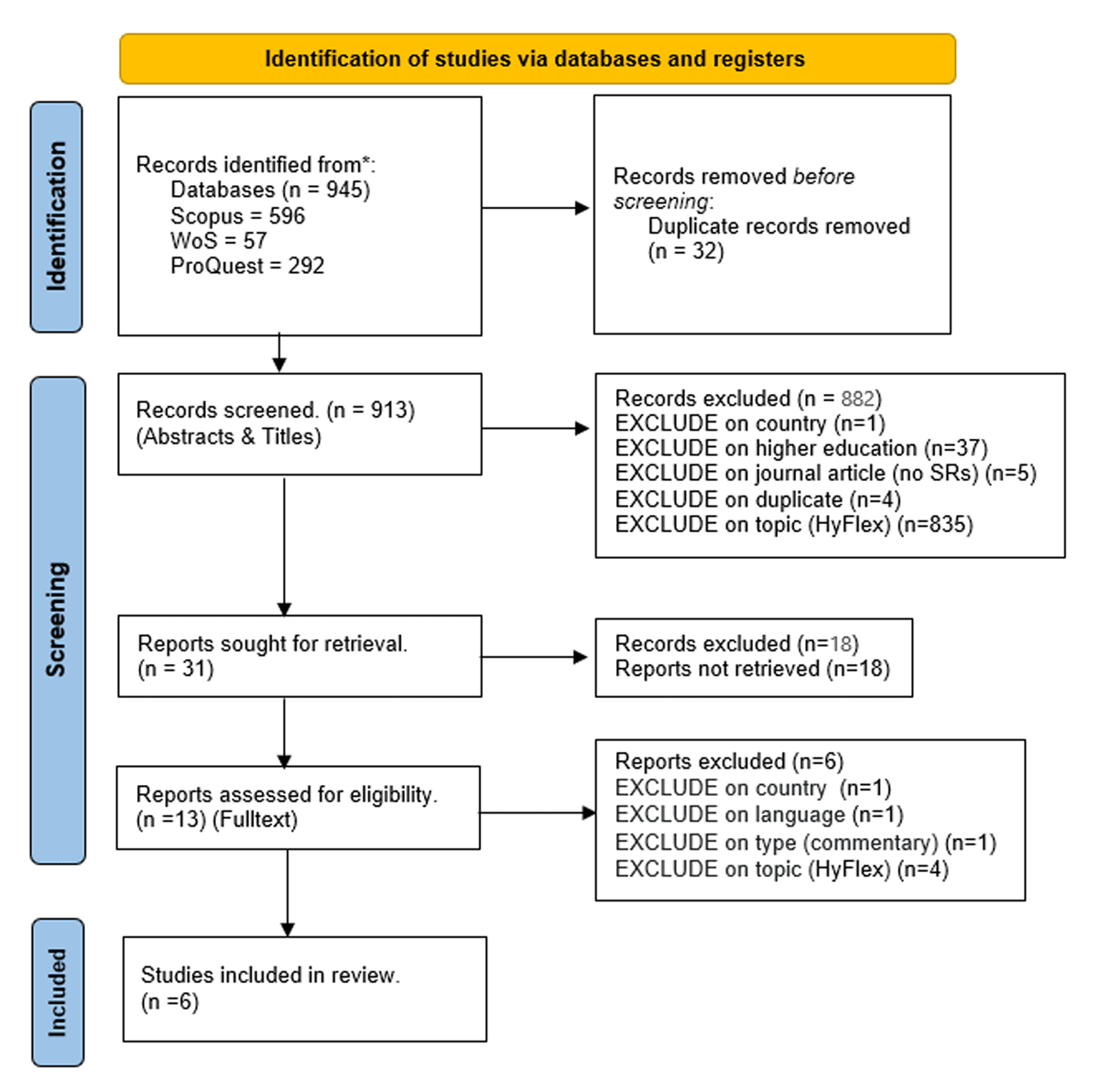
Figure 1
PRISMA flow diagram (Page et al., 2021).
The second-level screening involved full-text sources that were identified during the first-level screening; 13 items were retrieved for full-text review. After systematic identification and screening, six articles were selected for coding and data extraction, as shown in Figure 1 and Table 2.
Table 2
Included studies.
| # | AUTHORS | YEAR | STUDY TITLE |
|---|---|---|---|
| 1 | Amirova A, Zhumabayeva A and Zhunusbekova A ; Kalbergenova S ; Nygymanova N ; Arenova A | 2023 | Effect of using Hyflex technology learning on pre-service teachers’ success and attitudes |
| 2 | Kohnke L and Moorhouse BL | 2021 | Adopting HyFlex in higher education in response to COVID-19: Students’ perspectives |
| 3 | Li KC, Wong BTM and Kwan R ; Chan HT ; Wu MMF ; Cheung SKS ; | 2023 | Evaluation of Hybrid learning and teaching practices: The perspective of academics |
| 4 | Mahande R D and Abdal N M | 2022 | A HyFlex learning measurement model based on students’ cognitive learning styles to create equitable learning |
| 5 | Nweke L O, Bokolo A J; Mba G and Nwigwe E | 2022 | Investigating the effectiveness of a HyFlex cybersecurity training in a developing country: A case study |
| 6 | Shek DTL, Zhu XQ and Li X ; Dou DY | 2022 | Satisfaction with HyFlex teaching and law-abiding leadership education in Hong Kong University students under COVID-19 |
Coding and Data Extraction
Once the sources were collected from the databases, they were uploaded to EPPI-Reviewer, an online software system for systematic reviews. A coding system (Zawacki-Richter et al., 2019) and data extraction form (Van Wyk, 2025) was developed, to extract study details such as the author(s), year of paper publication, country of study, research design and methodology, key findings on implementation, challenges, student outcomes, theoretical frameworks or models used, and recommendations. We employed a narrative synthesis approach to consolidate and interpret the findings from all the studies. After extracting the data, we carefully read each study multiple times to identify recurring ideas and connections related to the implementation of HyFlex learning in higher education. Using an inductive coding process, we grouped the findings into themes that captured the pedagogical, technological, and institutional aspects of HyFlex practice.
Limitations
According to Zawacki-Richter et al. (2019), even though systematic reviews are rigorous, each review may be limited by its search strategy. Research databases were also another limitation for this study, as only three databases were used. Some relevant publications may not be indexed in these databases and may thus have been excluded. Although systematic reviews’ inclusion/exclusion criteria ensure that only relevant research is included in the study, these criteria, such as the language, may limit access to publications in a particular language, for instance. The study also focused only on peer-reviewed journal articles in open-access journals, excluding other types of sources. Future studies can consider using other databases, such as ERIC (Education Resources Information Centre), Google Scholar, and Africa Journals Online (AJOL), as well as different publication and source types and languages. The selected study included in the paper does not fully represent the Global South and Asia. The studies found to be relevant, according to the inclusion/exclusion criteria, were from Africa and Asia, excluding Oceania, Latin America, and the Caribbean.
Results
Journals, Authorship Patterns and Methods
The results section presents the characteristics of the studies, serving as a foundation for understanding the findings and recommendations that emerge from the research.
Journals
The paper included items that were published in six different journals, as listed in Table 3. Although the documents dealt with HyFlex, these were published in journals that cover various disciplines and fields of studies, including research on quality of life across disciplines, global cutting-edge educational technology research, STEM education research, an open and distance learning (ODL) journal that publishes worldwide research and practice-based articles on flexible learning, MOOCs, and e-learning policy, environmental, cultural, economic, and social sustainability. Some of these journals focus on research that bridges the gap between theory and practice in educational technology.
Table 3
Study characteristics.
| ITEM | AUTHORS, YEAR | COUNTRY | AUTHOR AFFILIATIONS | JOURNAL | STUDY FOCUS |
|---|---|---|---|---|---|
| 1 | Amirova et al. (2023) | Kazakhstan | Abai Kazakh National Pedagogical University The Eurasian Humanities Institute | International Journal of Education in Mathematics, Science and Technology | HyFlex technology-enhanced learning among pre-service teachers |
| 2 | Kohnke & Moorhouse (2021) | Hong Kong | The Education University of Hong Kong | Open Learning: The Journal of Open, Distance and e-Learning | Explored students’ perspectives on adopting HyFlex during COVID-19 |
| 3 | Li et al. (2023) | Hong Kong | Hong Kong Metropolitan University | Sustainability | Evaluated hybrid learning practices from academics’ perspectives |
| 4 | Mahande & Abdal (2022) | Indonesia | Universitas Negeri Makassar | World Journal on Educational Technology: Current Issues | Developed a HyFlex learning measurement model based on students’ cognitive style |
| 5 | Nweke et al. (2022) | Nigeria | Norwegian University of Science and Technology, Trondheim, Norway; Noroff Accelerate, Oslo, Norway; Institute for Energy Technology (IFE), Halden, Norway; Foretrust Digital Consulting, Enugu, Nigeria; Assiniboine Credit Union, Winnipeg,Canada | Education and Information Technologies | Investigated HyFlex cybersecurity training effectiveness in a developing country context |
| 6 | Shek et al. (2022) | Hong Kong | Hong Kong Polytechnic University | Applied Research in Quality of Life | HyFlex teaching and leadership education among university students |
Authorship patterns
Four studies were a collaboration between four and six authors, and two studies were written by two authors, namely Kohnke and Moorhouse (2021), as well as Mahande and Abdal (2022) (Table 2). The studies of Amirova et al. (2023) and Li et al. (2023) had the highest number of authors (n = 6), Nweke et al. (2022) were written by five authors and Shek et al. (2022) were written by four authors (Figure 2).
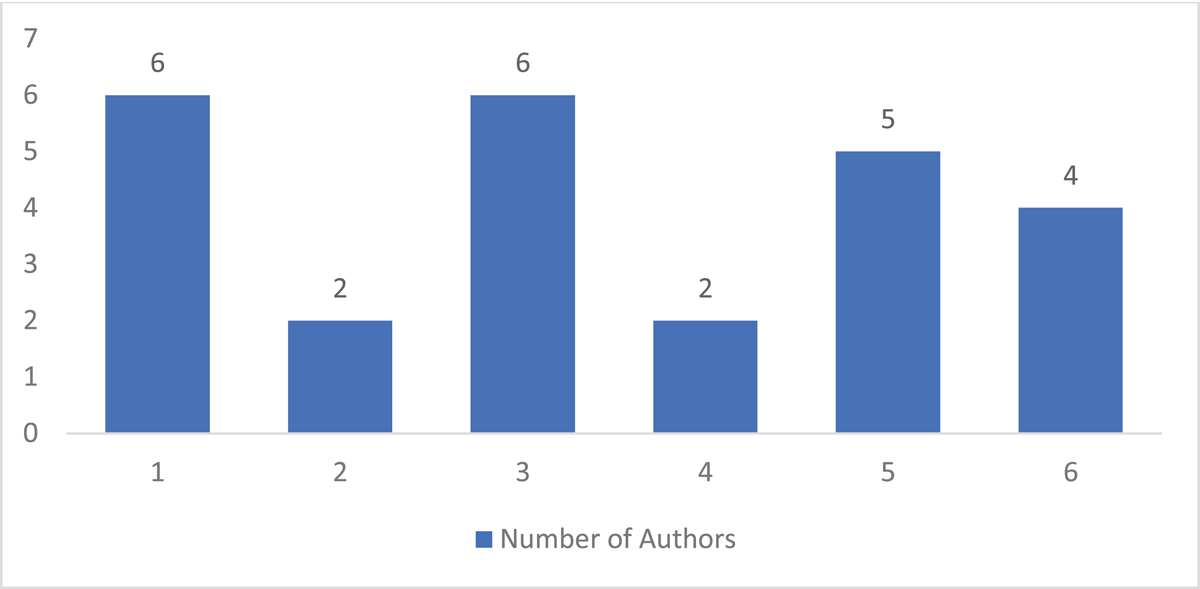
Figure 2
Authorship patterns.
Year of publication
The study included research conducted between 2010 and 2024, and the items selected for synthesis were published between 2021 and 2023, with three studies published in 2022, two studies published in 2023, and only one study published in 2021 (Figure 3).
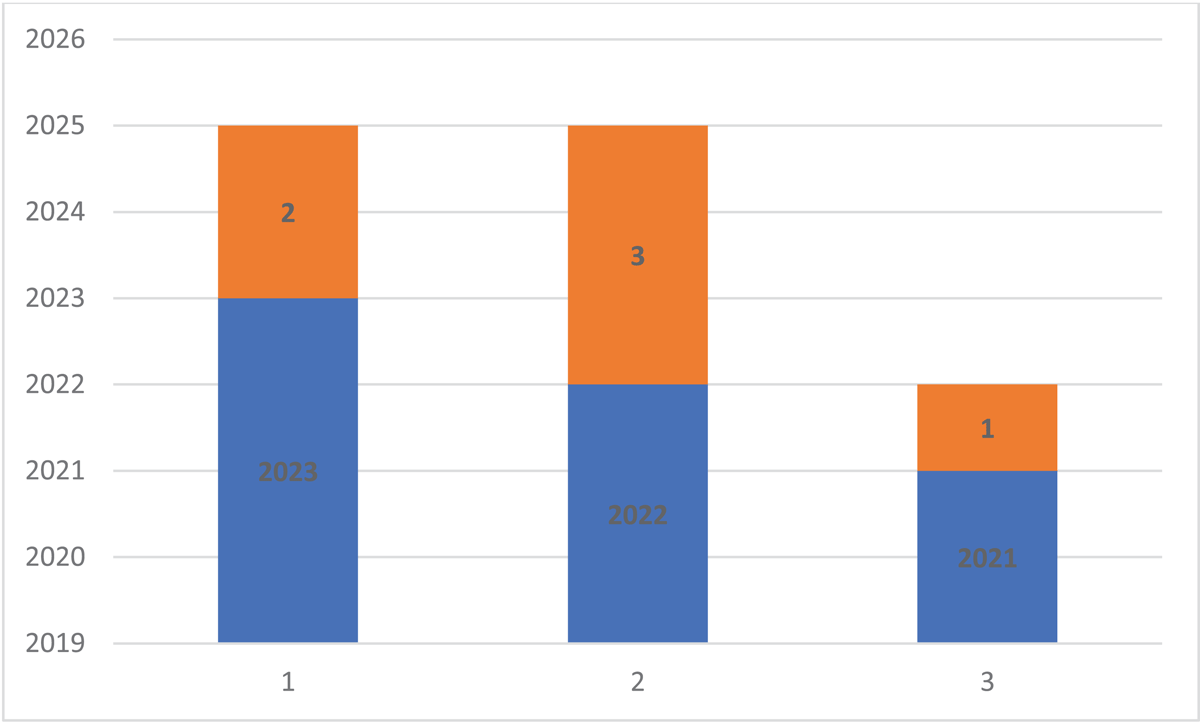
Figure 3
Studies year of publication.
Countries of study
For the geographical distribution analysis of articles, the country of origin of the first author was taken into consideration. Figure 4 shows that most studies (n = 3) were from Hong Kong, followed by one study each from Kazakhstan, Indonesia, and Nigeria, representing only two regions from the Global South Asia and Africa.
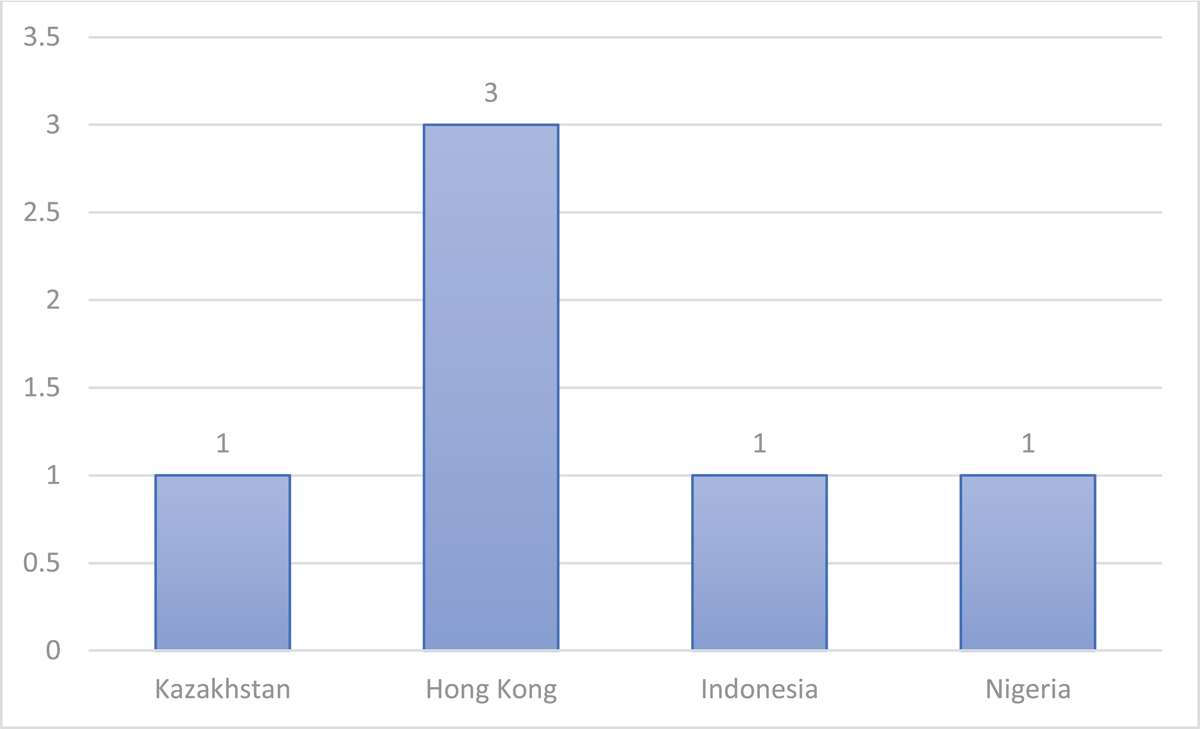
Figure 4
Studies countries of origin.
Most of the studies were conducted by authors in their country of origin, except for the study of Nweke et al. (2022), which five authors wrote, but conducted in Nigeria, with one of the authors affiliated with an institution in Nigeria and the rest of the team from institutions in Norway and Canada (Table 3). This study is unique in that it was a North-South collaboration, although it was conducted in Nigeria.
Research Design and Methodology
The majority of the studies (n = 4) employed quantitative approaches, with one study adopting a fully qualitative approach and another using a mixed-methods approach (Table 4). Thematic analysis and descriptive statistics were the primary methods used for data synthesis in most studies, with Mahande and Abdal (2022) employing structural equation modelling (SEM) analysis. Although not explicitly stated, most studies employed case studies, as their focus was on a single institution; however, some studies used multiple types of participants, such as a mix of students and lecturers. Amirova et al. (2023) was the only study that used a true experimental design, with a control group.
Table 4
Methodological characteristics.
| ITEM | AUTHORS, YEAR | RESEARCH DESIGN | DATA COLLECTION | DATA ANALYSIS | APPROACH |
|---|---|---|---|---|---|
| 1 | Amirova et al. (2023) | True experimental design types, pre-test-post-test control group, randomised design. | Standardised tests and scales (Achievement test) | Descriptive statistics | Quantitative |
| 2 | Kohnke & Moorhouse (2021) | Exploratory qualitative design | Interviews | Thematic analysis | Qualitative |
| 3 | Li et al. (2023) | Mixed methods descriptive-exploratory design | Questionnaire Focus group interviews | Thematic analysis & Descriptive Statistics | Mixed-methods approach |
| 4 | Mahande & Abdal (2022) | Survey | Likert-scale questionnaire | Structural equation modelling (SEM) measurement model analysis with SmartPLS | Quantitative |
| 5 | Nweke et al. (2022) | Case study design | Questionnaire (open-ended and Likert-scale questions) | Descriptive statistics | Quantitative |
| 6 | Shek et al. (2022) | Survey design | Post-lecture evaluation survey | Descriptive statistics | Quantitative |
While most studies detailed their data collection methods in the abstracts, Kohnke and Moorhouse (2021) did not explicitly outline their methods in the abstract, and only Mahande and Abdal (2022) explicitly mentioned the data analysis methodology in their abstract. The studies do not explicitly state a single overarching theoretical framework, with only Mahande and Abdal (2022) explicitly mentioning theoretical frameworks or models in their abstract, specifically Kirton’s Adaptation-Innovation Theory, the Felder-Silverman Learning Style model, and the measurement model for HyFlex Equity Pedagogy. Most studies also used postgraduate students and/or teachers/academics in their research (Table 5).
Table 5
Participants characteristics.
| ITEM | STUDY | PARTICIPANTS |
|---|---|---|
| 1 | Amirova et al. (2023) | 44 pre-service teachers (experimental & control groups) |
| 2 | Kohnke & Moorhouse (2021) | 9 postgraduate students |
| 3 | Li et al. (2023) | 76 academics (survey), 10 academics (focus group) |
| 4 | Mahande & Abdal (2022) | 451 undergraduate students |
| 5 | Nweke et al. (2022) | 113 students and staff |
| 6 | Shek et al. (2022) | 1,164 undergraduate students |
Key Findings of HyFlex Implementation in the Global South and Asia
The following section present the consolidated key findings reported in response to the research questions.
Pedagogical effectiveness
Most studies reported on the pedagogical effectiveness of HyFlex implementation. For example, HyFlex was found to create a constructivist, student-centred learning environment, enhancing collaborative learning and shifting teachers’ roles to facilitators (Amirova et al., 2023; Kohnke & Moorhouse, 2021; Mahande & Abdal, 2022). Amirova et al. (2023) also reported that HyFlex implementation encourages teachers to shift from traditional roles to facilitators; thus, supporting student-centred learning. However, the study cautions that teachers face challenges in delivering pedagogically sound HyFlex courses, without sufficient training and institutional support.
Kohnke and Moorhouse (2021) further reported that students appreciated HyFlex for its flexibility and the benefits it offers in terms of engagement. In their study, digital tools such as Zoom, Padlet, Kahoot and Mentimeter were identified as enhancing pedagogical effectiveness to foster collaboration, interaction and reflection.
Nweke et al. (2022) highlighted the reusability principle of the HyFlex model (sharing learning objects across modes), enhanced pedagogical effectiveness, and that HyFlex delivery in cybersecurity training maintained learning outcomes across modalities. Students reported similar performance outcomes, whether attending classes in person or online, suggesting pedagogical equivalence. Shek et al. (2022) evaluated a leadership course delivered via HyFlex and found that students reported gains in psychosocial competence and leadership attributes.
Amirova et al. (2023) argue that teachers face challenges in delivering pedagogically sound HyFlex courses in environments where there isn’t sufficient training and institutional support. Kohnke and Moorhouse’s (2021) study emphasises the need for pedagogically sound course design and teacher training.
Technological infrastructure and readiness for HyFlex implementation
Several studies in the dataset reported on technological infrastructure and readiness as key factors influencing the implementation and effectiveness of HyFlex learning.
Professional development, which prepares teachers to utilise online teaching tools and methods (such as polls, breakout rooms, and digital noticeboards), was strongly highlighted as one of the key prerequisites for the successful implementation of the HyFlex model (Kohnke & Moorhouse, 2021; Mahande & Abdal, 2022). Nweke et al. (2022) emphasise that HyFlex requires students to have the necessary technological skills, as well as reliable internet, to engage in multiple participation modes. Although Mahande and Abdal (2022) and Amirova et al. (2023) do not directly discuss infrastructure readiness challenges in identifying cognitive learning styles in online/HyFlex settings, their studies imply that technological tools are necessary for this purpose. They suggest that readiness must include the capacity to deliver face-to-face, synchronous, and asynchronous online learning effectively.
Mahande and Abdal (2022) note pedagogical challenges in designing active learning strategies that are equally effective across all modalities (face-to-face, synchronous online, asynchronous online). Kohnke and Moorhouse (2021) highlight that some students lack access to capable devices, high-speed internet or quiet study spaces.
The studies of Kohnke and Moorhouse (2021), Nweke et al. (2022) and Li et al. (2023) point out that lack of access to computers, the internet and learning spaces among students is a barrier to readiness and equitable implementation, and they emphasise the need for robust Learning Management Systems (LMS) to support material access, communication and feedback. Shek et al. (2022) highlight the need for technological and pedagogical readiness, observing that HyFlex teaching is challenging for teachers due to the simultaneous management of online and in-person students. They further proposed that the context requires adequate institutional technological support. This aligns with Padilla Rodriguez’s (2022) study, which posits that technological readiness is context-dependent and emphasises that successful HyFlex implementation requires stable technological infrastructure for both students and institutions.
Mahande and Abdal’s (2022) study emphasised the importance of aligning learning modalities with students’ cognitive styles and ensuring technological readiness to prevent disadvantaging any group. A similar study, by Padilla Rodriguez (2022), highlights that in Mexico, the success of HyFlex learning was hindered by inadequate technological infrastructure and a lack of support for teachers managing both in-person and online learners, cautioning that context and infrastructure readiness are critical for HyFlex success. All of these results point to the importance of technology infrastructure and preparedness for HyFlex learning, particularly in environments with limited resources.
Student access and equity
Access and equity are central to HyFlex learning. A study by Mahande and Abdal (2022) emphasises that students must have equal and fair opportunities to learn across all modalities (face-to-face, synchronous online, asynchronous online). The study by Kohnke and Moorhouse (2021) also reports equity issues in HyFlex courses, noting that for students, the lack of computers capable of running video conferencing, high-speed internet, or a quiet place to study is a significant issue in Global South HEIs. They recommend that such institutions consider equity when implementing HyFlex and provide the necessary technological and instructional support to ensure a fair and inclusive learning experience. Nweke et al. (2022) report significant access issues in Nigeria, including poor internet connectivity, a lack of suitable devices, and unreliable electricity. They suggest recording sessions to accommodate students who cannot attend live lectures due to these constraints.
The studies of Li et al. (2023), Amirova et al. (2023) and Shek et al. (2022) do not directly address equity issues. Mahande and Abdal (2022) and Kohnke and Moorhouse (2021) are the most explicit in discussing equity and access. Mahande and Abdal (2022) frame equity as a core design principle in HyFlex, linked to cognitive learning styles, access to resources and pedagogical justice, while Kohnke and Moorhouse (2021) highlight practical access barriers (devices, internet, quiet spaces) that affect equitable participation and learning outcomes.
These studies collectively underscore that, while HyFlex learning offers flexibility, it also risks exacerbating inequities if student access to technology, the internet and learning environments is not adequately addressed. Educational approaches must be context-sensitive, especially in regions with limited technological resources.
Institutional support and policy
Institutional support is critical to HyFlex’s success. For HyFlex to be successful, HEIs need to provide professional development to prepare teachers for online and HyFlex teaching approaches, including training in both synchronous and asynchronous instructional methods. Kohnke and Moorhouse (2021) also highlight the need for institutions to provide appropriate LMS that enable easy uploading/downloading of materials, student monitoring, feedback and communication, and they regard equity considerations as an institutional responsibility (e.g., ensuring students have access to devices, high-speed internet, and quiet study spaces). Li et al. (2023) also describe the institution-wide implementation of hybrid teaching, implying policy support; however, the study does not elaborate on specific policies or institutional support mechanisms. The other studies do not directly analyse policy frameworks or institutional support structures that involve stakeholders in policy decisions and tailor policies to local contexts. This aligns with Padilla Rodriguez’s (2022) study, in which she provides a critical reflection on HyFlex in Mexico, suggesting that policy decisions on HyFlex implementation should involve both students and teachers, rather than being imposed top-down. She further argues that institutional decisions must be context-sensitive, considering class sizes, support needs, and infrastructure limitations (Padilla Rodriguez, 2022).
Discussion
This study highlighted the discussions and practices surrounding HyFlex in higher education in developing countries during the COVID-19 pandemic and the post-pandemic period. Notably, only the studies of Kohnke and Moorhouse (2021) and Shek et al. (2022) reported on the challenges and experiences of HyFlex during the COVID-19 pandemic. Of importance is the contextual nature of these studies. The global South and Asia were chosen for their unique positions within the international educational landscape to explore how the implementation of HyFlex learning in higher education in these areas is positively impacting the teaching and learning experiences. The studies reported on the pedagogical effectiveness, the technological infrastructure requirements and readiness for HyFlex implementation, student access and equity, and the effect of institutional support and policy on HyFlex implementation.
Based on the selected studies, students appear to perform equally well in both in-person and online offerings, suggesting that HyFlex can support consistent learning outcomes across different modes (Nweke et al., 2022).
The studies suggested that professional development, investing in robust learning management systems, and equity provisions should be institutional responsibilities. It is important that, although the utilisation of HyFlex promises to deliver the sought-after flexible learning options, it should not deepen the digital divide in these contexts. Equity must be more than a principle; it must be built into the design, delivery and support of HyFlex learning, from the ground up. Based on the dataset, this study on HyFlex reveals a reconceptualisation of the teacher’s role, which institutions must support.
While both academics and students require technical support and relevant skill development training, a high level of self-directed learning and ownership of learning is also needed from students in HyFlex learning environments. Unlike other hybrid or multimodal learning models, in HyFlex learning, learning modal combinations are mixed according to this approach. This has a significant impact on the design of the HyFlex offering, removing the student from the centre of the design. On the other hand, studies also suggest that students who participate in asynchronous online lectures often lack opportunities for interaction and, therefore, bear the full responsibility for their learning (Heilporn & Lakhal, 2021; Mahande & Abdal, 2022). Communication between students attending face-to-face classes and those attending online courses is also identified as a challenge. In particular, students found that uncertainties relating to handover and turn-taking hindered their ability to collaborate (Kohnke & Moorhouse, 2021). Besides the technological barriers to student-to-student interaction in HyFlex and online learning environments, the design of learning events can also be a hindrance and contribute to worsening this gap.
Successful HyFlex implementation also heavily depends on context-sensitive institutional policies. In Mexico, Padilla Rodriguez (2022) reported that a lack of institutional support and infrastructure led to the decline of HyFlex adoption, and she recommended involving both students and teachers in policy decisions. Padilla Rodriguez (2022) further concluded that context shapes pedagogical effectiveness. However, research studies also found that HyFlex creates a constructivist, student-centred learning environment, enhancing collaborative learning and shifting teachers’ roles to facilitators.
At the same time, the studies remind us that technology and access are not peripheral issues; they’re central in determining whether the HyFlex model works or not. In many contexts, particularly in the Global South, students face challenges such as unreliable internet, limited access to devices, and a scarcity of quiet spaces for studying (Kohnke & Moorhouse, 2021; Nweke et al., 2022). These barriers can make it difficult for students to participate fully, even if the learning design is sound. Of great concern is the lack of technological infrastructure and readiness for HyFlex implementation in the Global South. Equitable HyFlex learning requires students to have access to appropriate technology and support tools. It also requires that those who teach are appropriately trained and supported to teach effectively and enabled to fully and equally support offline and online students in the HyFlex classroom. Without such intervention, the introduction of HyFlex risks deepening existing inequalities, rather than bridging them. This places a responsibility on institutions to ensure that their policies are not only technically sound, but also socially just.
What is concerning is the lack of theoretical framing in the studies, as Zawacki-Richter et al. (2019, p. 22) put it: “The lack of theory might be a syndrome within the field of educational technology in general.” The studies lacked overarching theoretical frameworks, with only one out of six studies, namely Mahande and Abdal (2022), explicitly mentioning the theoretical frameworks used in the study. Although the Kohnke and Moorhouse (2021) study is heavily based on the HyFlex course design model developed by Brian Beatty, which includes four key principles, namely student choice, equivalence, reusability and accessibility, these principles are not a theory per se but are design-based pedagogical guidelines that inform the structure of HyFlex learning environments. There is very little evidence of the advancement of pedagogical and psychological learning theories (Zawacki-Richter et al., 2019) related to HyFlex learning, or explicit linkages between teaching and learning theories and HyFlex. Researchers need to be explicit about the theories that underpin their empirical studies on the HyFlex model and how such theories can impact the design of learning, support of students and teachers, and implementation in higher education. However, the strengths of the studies lie in their quantitative research approaches, which are generally regarded as objective and generalisable (Creswell & Creswell, 2018). Only one study conducted an entirely qualitative study, using interviews as the primary data collection method, while another study employed a mixed-methods approach.
These findings demonstrate that, although HyFlex learning presents exciting opportunities for higher education in the Global South, its success hinges on more than simply introducing a flexible teaching model. Although some studies have highlighted the importance of matching learning modalities to students’ cognitive styles, we still know very little about how different learners actually experience face-to-face, synchronous, online and asynchronous formats. Future research could delve deeper into understanding whether certain cognitive styles thrive better in specific modalities, and how this knowledge might help create more personalised learning pathways within HyFlex courses. Such insights could go a long way towards designing learning environments that are not only more effective but also fairer for all students.
To further enhance the practical value of HyFlex implementation, this study highlights a set of key considerations distilled from the evidence. Successful implementation requires robust infrastructure, including minimum bandwidth and capable devices for both students and instructors, functional learning management systems, and classroom capture tools to support synchronous and asynchronous participation. Institutional supports are equally critical, encompassing professional development for teachers, manageable dual-delivery workloads, and dedicated student support services. Contingency planning for power outages, connectivity interruptions, and alternative access to learning materials is also essential. Cost and sustainability considerations, such as budgeting for equipment, instructional design time, and long-term scalability, must be factored in to ensure that HyFlex is both equitable and feasible. Integrating these elements provides a practical framework for higher education institutions aiming to implement HyFlex effectively while addressing resource constraints and promoting inclusivity.
Recommendations and Suggestions for Further Educational Research
Given the small, regionally contextual sample, these recommendations should be considered suggestive rather than definitive. The findings highlighted that students’ performance across modalities, access to technology, and institutional support are unevenly distributed. Limiting the review to publications from developing countries constrained the breadth of the evidence base. Future research should broaden its scope to include additional reports, institutional data, and studies from other regions, thereby providing a more comprehensive understanding of HyFlex adoption.
Another gap lies in the longer-term impact of HyFlex learning. To date, most research has focused solely on short-term outcomes, such as immediate performance or satisfaction. There is a need for studies that track students over time to understand how HyFlex affects their academic success, engagement, and retention, and whether it truly improves access or unintentionally widens existing gaps. In particular, longitudinal research could shed light on whether HyFlex models help to reduce educational inequalities or risk reinforcing them.
Finally, comparative studies across different countries or institutions, with varying levels of resources, would be valuable. These could reveal context-specific strategies for implementing HyFlex effectively, ensuring it works not just in well-resourced settings, but also in places where resources are more limited. Ultimately, while HyFlex has the potential to transform learning experiences and expand access, it requires thoughtful, inclusive, and well-supported implementation to achieve its promise in higher education across HEIs in the Global South and Asia.
Conclusion
In this paper, we synthesised existing research on HyFlex learning models implemented in higher education institutions across the Global South and Asia. The aim was to explore how the HyFlex model can be effectively implemented in these HEIs, to ensure that it meets the diverse needs of students and provides them with essential support. While these findings highlight important trends, they are based on a small, regionally contextual sample. Therefore, the effectiveness of HyFlex approaches may vary depending on context and resources. Although the included studies were conducted in Africa and Asia – thus excluding Oceania, Latin America and the Caribbean – it is evident that HyFlex is making serious inroads in these regions, with Asia leading the research on HyFlex.
Drawing on the Community of Inquiry framework, the synthesis revealed that effective HyFlex learning depends on the integration of teaching, cognitive, and social presence within contextually appropriate technological and institutional environments. The evidence shows that while HyFlex promotes flexibility, inclusivity, and learner autonomy, its success is shaped by infrastructure readiness, fac`ulty development, and institutional support. Studies consistently highlight that students value the flexibility of HyFlex but face persistent challenges related to access, digital literacy, and equitable participation, institutional strategies. Investing in robust learning management systems, professional development, and equity-driven policy frameworks is essential for the sustainable implementation of practical solutions.
Ultimately, HyFlex learning holds transformative potential for widening access and supporting diverse learners in the Global South and Asia. However, achieving this promise requires deliberate attention to contextual barriers, ongoing professional support for educators, and research that deepens theoretical and longitudinal understanding of HyFlex’s impact on teaching and learning outcomes.
Data Accessibility Statement
The data supporting the findings of this study are derived from publicly available peer-reviewed journal articles indexed in Scopus, Web of Science, and ProQuest. All data extracted and analysed during the review are available from the corresponding author upon reasonable request.
Sustainable Development Goals (SDGs)
This study is linked to the following SDG(s): Quality education (SDG 4).
Ethics and Consent
The study received ethical clearance from the University of South Africa’s College of Education Research Ethics Committee. Ref. 2024/11/15/000000386/07/RB.
Competing Interests
The authors have no competing interests to declare.
Author Contributions (CRediT)
Mpho-Entle P Modise: Conceptualisation, methodology, formal analysis, investigation, data curation, visualisation, writing—original draft preparation, writing—review and editing; Ntandokamenzi P Dlamini: formal analysis, investigation, writing—original draft preparation, writing—review and editing. All authors have read and agreed to the published version of the manuscript.
Author Notes
The authors acknowledge the use of AI-based language enhancement tools (i.e. ChatGPT and Copilot) to enhance clarity and coherence in the presentation of ideas in this article. All intellectual interpretations, analyses, and conclusions remain solely those of the author.