
Introduction
Globally, many post-secondary institutions have been gradually transitioning their instruction, either fully or partially, from in-person to online learning (Okoro & Aguiyi-Ikeanyi, 2021). The mental health of online students, including those in Nigeria where the study was conducted, has become a growing concern, as many online learners face challenges such as isolation, lack of social interaction, the complexities of navigating vast online information and digital infrastructure, and the pressure to perform academically in a virtual environment vis-a-vis the influence of students’ personality traits (Agwuocha, 2020; Wang, 2024). Locally in Nigeria, the significant challenges experienced by the global education system during the COVID-19 crisis, described as “the largest shock experienced in this present age” (Agwuocha, 2020, p. 91), were compounded by other technology-related issues such as connectivity problems and technology affordability issues that persist in the Nigerian digital landscape (Aboagye et al., 2021; Akaeze & Akaeze, 2024, Akour et al., 2021). Considering the interplay of the many systemic, technological, social, and personal dimensions, transitioning to an online learning environment makes recognizing and responding to mental health issues more difficult (Amarneh et al., 2021; Cullen et al., 2020).
There is a disconnect between Nigerian online learning providers’ priorities and mental health support services for their students. Despite the increasing concerns about mental health impairments among students in higher institutions around the world, generally, and in Nigeria, there is little evidence in the literature that identifies any plans of action for online students’ mental health wellness. While online students are identified as a high-risk group for mental health impairments due to the challenging academic and socio-economic conditions they face, little has been done to address these problems (Atilola et al., 2022; Buhari et al., 2021; January et al., 2018; Ratliff, 2023). This study intends to fill this gap and bring the plights of Nigerian online students to the forefront of online learning providers’ agenda.
Participants Description
In Participants’ Words
A few significant quotes extracted from participants’ responses are presented below to provide direct evidence and support for the themes identified (Table 2). These quotes are also presented to maintain the authenticity of participants’ voices while ensuring that the data analysis remains grounded in their lived experiences. The researcher embraced bracketing to separate himself and describe what is seen within the context of the participants’ experiences.
Literature
Studies indicate that the university environment presents mental health triggers for vulnerable students due to academic rigour and other factors (Obeta et al., 2022). Distance learners are particularly susceptible as a result of the remote nature of their program (Brown, 2018; Evans et al., 2018; Ezeonwuka & Uzoho, 2023; Lister & McFarline, 2021). The World Health Organization described mental health as complete physical, mental, and social well-being (WHO, 2021). Positive mental health is not merely the absence of diseases; it is an integral part of overall health, and there is no health without mental health. It is essential for human ability to think, interact, enjoy life, and earn a living. Consequently, promoting, restoring, and protecting mental health is critical.
With a renewed focus on mental health issues among online students, it is incumbent upon online learning providers to take the initiative to develop diverse approaches such as digital tools, targeted programs, and social media platforms to foster a culture of mental health support and services tailored to online learners (Direktor, 2017; Kapur et al., 2022). The prevalence of mental health conditions among post-secondary students, especially those learning online and primarily connected remotely, warrants proactive measures to mitigate the adverse effects of mental health impairments on students (Atilola, 2016; Rutkowska et al., 2022).
Almost a decade ago, Conradson (2016) noted that many university students around the world experience significant mental health issues such as anxiety, depression, and mood disorders during their studies without receiving the help they need. He advocated for a collective response oriented toward relief for students living with mental health impairments. The same year, Atilola (2016) asserted that there was no evidence to show that distance education providers in Nigeria established any dedicated support services for their online students despite the increasing prevalence of mental health impairments among students. Besides all the necessary academic support, providing a dedicated mental health support system for online students, similar to what Scheepers and Van den Berg (2022) described as dedicated affective support, would have a substantial impact on students’ emotional wellbeing, and that will translate to academic success for online students.
Mental health issues have not been given the necessary attention that problems of such magnitude deserve, as indicated in the study of two metropolitan universities in Western Nigeria, where online learning student participants experienced the phenomenon under investigation (Buhari et al., 2021; Esan et al., 2014; Oguntayo et al., 2022).
As extensively documented in global literature, the university environment presents numerous challenges that can negatively impact student mental health (Buhari et al., 2021; Massey et al., 2014; Sheldon et al., 2021). Okoro and Aguiyi-Ikeanyi (2021) stressed the need for appropriate mental health interventions and support services for post-secondary institution students in Nigeria, provided by qualified social workers and counselors, to help students attain mental health wellness and academic success. Similarly, Nsereko (2018) argued for evidence-based interventions and support services to address students’ mental health challenges, enabling universities to foster a mentally healthy and academically competitive student population. Effective detection, diagnosis, and care are crucial to supporting mental health among post-secondary institutions (Barr, 2014; Conradson, 2016; Dewa et al., 2021; Olding & Yip, 2014).
To better understand the experience of mental health issues and support systems available through the eyes of online students in Nigeria, the current study asked: What are online students’ perceptions of their institution’s mental health support services and plans of action put in place to help online students dealing with mental health impairments? Answers to the above research question provided an understanding of how students viewed the institution-wide mental health policy, and the support systems made available to them, or the lack thereof by their institution. In exploring students’ lived experiences effectively, participants also answered some carefully crafted semi-structured open-ended questions to shed light on the perceptions of their institution’s policy, support systems, and interpretations of their lived experiences.
Theoretical/Conceptual Background
This descriptive phenomenology study was grounded in pragmatist and constructivist theories. The socially constructed meaning derived from the study participants’ lived experiences in their social environment helped in understanding their realities of living with mental health challenges (Cherryholmes, 1992; Creswell & Creswell (2018); Mertens, 2005). There are no other explanations for phenomena besides the personal and social construction of meanings attached to those phenomena by the actors who experienced them (Guba & Lincoln,1988; Mogashoa, 2014; Scheer et al., 2012).
Methodology
This qualitative study adopted Braun and Clarke’s (2006; 2022) six-step descriptive phenomenological method to explore the lived experiences of online students in Nigerian universities. Focusing on human consciousness and the content of an actor’s everyday conscious experiences, the study sought to understand what it was like to live with those experiences within the specific context in which they occurred (Giorgi, 2010; Schwandt, 1994). The adoption of constructivist theory in conscious decision making (see Figure 1) was noticeable in the way conclusions were reached in making a healthy choice (Bhavana & Vijayalakshimi, 2021). Moustakas (1994) and Leigh-Osroosh (2021) described phenomenology as the study of the shared meaning of people’s daily experiences. A descriptive research design was adopted to ground the interview process, select research participants, and collect and analyze data (Barrett & Twycross, 2018; Merriam & Tisdell, 2016; Vagle, 2018). The pragmatist theory was utilized in decision making (see Figure 2) regarding the best alternative that helped in solving practical problems (Morgan, 2014).
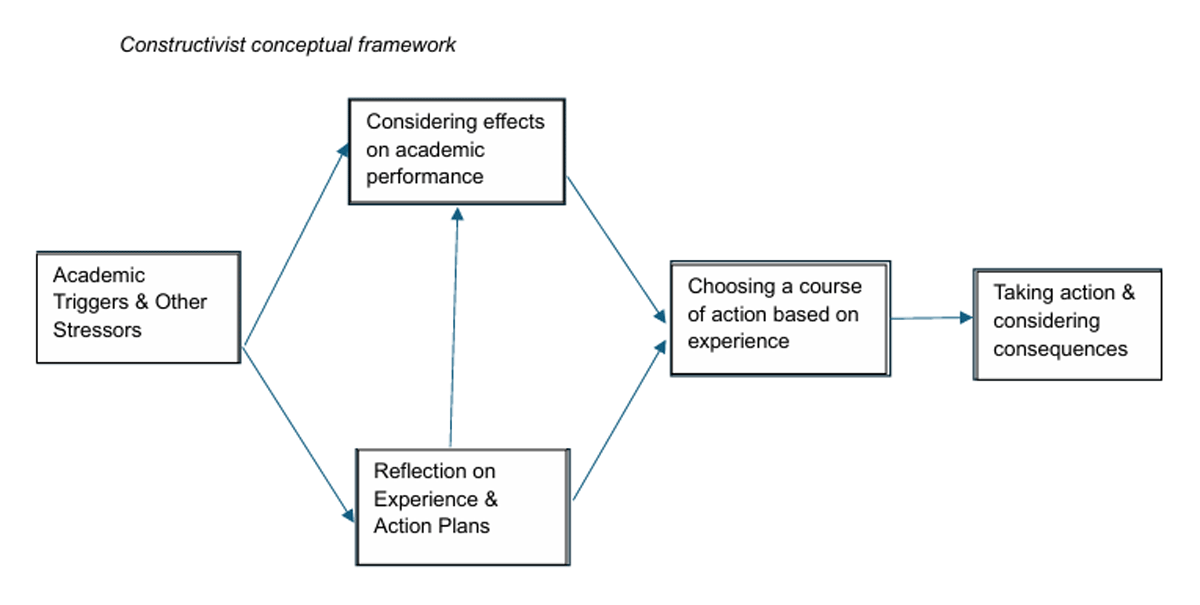
Figure 1
The constructivist conceptual framework was adapted from Bhavana and Vijayalakshimi (2021).
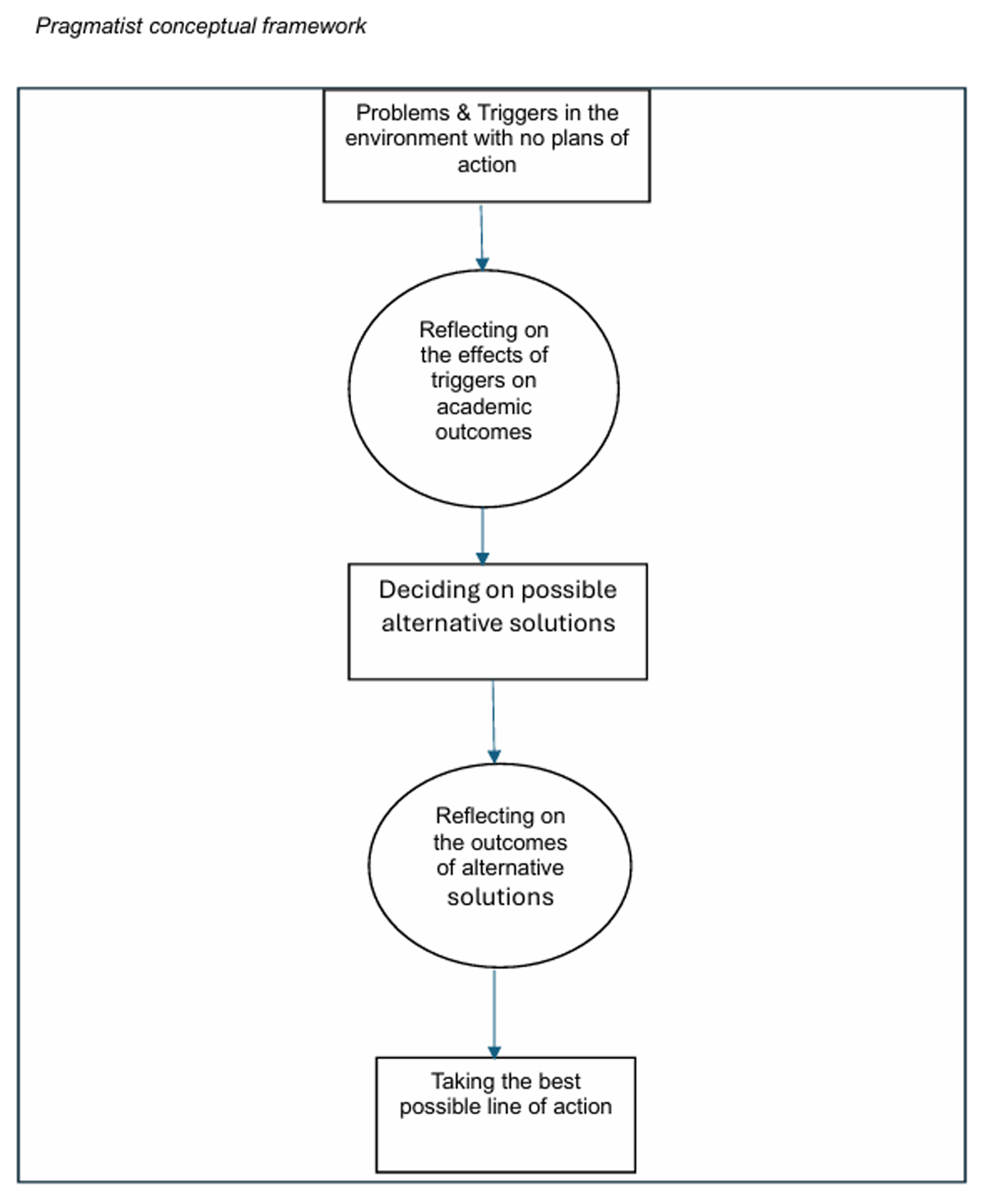
Figure 2
The pragmatist conceptual framework was adapted from Morgan (2014).
Data Collection
Data were collected through in-depth face-to-face semi-structured interviews (McIntosh & Morse, 2015) at a mutually agreed-upon location within the two metropolitan cities where the universities were situated, ensuring minimal inconvenience to the participants. Braun and Clarke’s (2006, 2019, 2022) six-step descriptive phenomenological and thematic, theoretical, and inductive data analysis methods were used to collect and analyze all the relevant data and identify emerging themes.
Data Analysis
Thematic Analysis
All the interview transcripts were read and re-read a few times, line by line, notes were taken, and significant quotations were noted to establish a series of open codes and themes. The identified themes were woven together to tell a story emerging from the data collected. Responses from multiple participants around specific issues coalesced together as much as possible to form larger themes (Attride-Stirling, 2001; Braun & Clarke, 2019, 2022; Sundler et al., 2019).
Theoretical Analysis
Theoretical analysis was used to illuminate the findings without closing the door against new emerging pieces and to view the data from another perspective by drawing on the theoretical frameworks adopted for this study and reflecting on the philosophical assumptions. The findings were based on participants’ statements and first-person subjective accounts. The collective story integrated various views and different shades of opinions of all the research participants (Leeming, 2018; Nowell et al., 2017).
Inductive Analysis
Inductive analysis was used to condense raw textual data into a summary and establish clear links between research objectives and study outcomes. I used inductive analysis to show the underlying experiences revealed in the raw data to produce codes that mainly reflect the content of the data, free from any pre-conceived theory, to represent the best participants’ lived experiences (Braun & Clarke, 2022; Percy et al., 2015).
Participants
Data were collected through interviews by engaging the research participants in conversations based on questions related to the study (Merriam & Tisdell, 2016; Tisdell et al., 2025). Data collection protocols reflecting the nature of the problems under investigation were designed to collect relevant information. Data were from the study sites, where participants experienced the phenomenon being studied. The purposive, followed by snowballing and opportunistic sampling strategies, resulted in the recruitment of nine participants (purposive: n = 4; snowballing: n = 3; opportunistic: n = 2) (Creswell, 2013; Patton, 2015; Saunders & Townsend, 2016). All participants were current online students of the Open and Distance Learning and Research Institute, Lagos State University, and the National Open University of Nigeria, Ibadan campus. They were registered in at least one online course during the initial contact and interviews, and they participated in synchronous and asynchronous online classes and text-based discussions. Table 1 shows the research participants’ age brackets, gender, course of study, and time as a distance learner, while Table 2 highlights some significant quotes from research participants.
Table 1
Research participants’ characteristics.
| PSEUDONYM | AGE BRACKET | COURSE OF STUDY | PROGRAM OF STUDY | YEARS OF DISTANCE STUDY | GENDER |
|---|---|---|---|---|---|
| Bobby | 50–55 | Business administration | Ph.D. | ≥4 years | Male |
| Benny | 50–55 | Business administration | Ph.D. | 4 years | Male |
| Frank | 30–35 | Business administration | Ph.D. | 3 years | Male |
| Jerry | 40–45 | Business administration | Ph.D. | 4 years | Male |
| Tina | 30–35 | Business administration | Ph.D. | 4 years | Female |
| Anita | 35–40 | Environmental Resource Management | Master’s | ≥2 years | Female |
| Rita | 25–30 | Cooperative and Rural Development Studies | Master’s | 3 years | Female |
| Justina | 25–30 | Peace and Conflict Resolution Studies | Undergraduate | 4 years | Female |
| Justin | 25–30 | Peace and Conflict Resolution Studies | Undergraduate | 3 years | Male |
Table 2
Significant participants’ quotes.
| THEME | QUOTE |
|---|---|
| Importance of Stable Mental Health | “The university and tertiary institutions need to understand that a clearer and stable mind is necessary for students to function in distance learning.” (Frank). “Positive and stable mental health is when you can do what should be done at the right time, and you do it right and how it should be done, and you are being calculative. You have a happy family life, and you can make and keep friends and relate well with them. Even when there is a misunderstanding, you can settle your rifts amicably.” (Anita). |
| Ubiquity of Mental Health Impairments | “Many students that I know struggle with mental health, but nobody likes to talk about their mental health status. Even if you have an-idea that a particular student needs help with mental health care, and you approach them, they are likely to tell you they have no problem. It is a normal life thing that most people don’t take or see as an issue. They will normalize it and say it is what society is, they will not talk about it” (Justin). “A lot of students are going through serious mental health issues, and this is coupled with academic stress and well-being; the university does not have any policy that I know of to help us. When we talk about mental health issues, people tend to brush them aside because it is not an open medical issue. In the end, students can’t cope with academic work and students can’t sit an examination. Students are flagged as having failed, not knowing that the students are dealing with accumulated social and mental health issues related to stress and depression.” (Jerry). |
| Creating and Publicizing Mental Health Support Services | “They do not talk about mental health, not the school, not the tutors. I just knew that I had to continue my studies no matter what and finish before they increased our school fees again. I do not want to abandon what I have started. I will describe the situation as a mental health policy vacuum. Is like nobody cares.” (Justina). “I am not aware of any detailed mental health policy put in place other than the mention of mental health generally during student orientation week shortly after admissions and resumption.” Apart from the general health care center, students are not properly educated about whom to talk to during any mental health emergency. Since I have been at this school, I have not seen any students who have visited the counseling department for mental health services. I know there are students with mental health impairments, but they do not come forward.” (Rita). |
| Talking About Mental Health Impairments and Destigmatizing Mental Health | “Mental health awareness among online students is generally poor, and online learning puts an additional burden on students because most of the time they are on their own. The inability of some students to cope with the academic demands of online learning can sometimes lead to mental health issues that nobody talks about. (Benny). “Student unions in concert with the Student Affairs unit should play a very big role through the organization of seminars, workshops, awareness education blitz, and general information sessions around the campus. The body should also organize department-to-department mental health awareness among students and maintain a huge online presence. Talking about mental health frequently both online and in virtual classrooms will encourage students to come forward and share their experiences, thereby propelling them to get help during mental health emergencies.” (Jerry). |
| Low Mental Health Priority | “None that I am aware of, not a single place or document. I am not aware of anything in school, and not on the website either. To be precise, it’s no. It is not even talked about anywhere; those who may need help do not even come forward. No, sorry, the answer cannot be no, because there are some, in this school, maybe a health center, I believe, there is someone there that can attend to students with mental health issues.” (Bobby). “In my own opinion, mental health policy among Nigerian Universities is not very encouraging. Most of these institutions do not have a committee that can tackle mental health problems among students. University authorities believe that mental health is a personal thing outside of the university’s influence. It affects students so badly that their time staying in school is just a waste. Most of them will not even graduate. Some of them will become delinquents, join cults, or even die in the process. The sad part is that the things affecting students are minor issues that the university can help with by just setting up a committee that can tackle those issues. I will call this committee a police officer or monitoring group to check, find out about students’ backgrounds, show them love, and help them to overcome their mental health problems”. (Jerry). “I know the university has a health center that covers and provides general health care for students, but I am not aware of any policy dedicated to mental health in the university. Mental health is not an area of high priority here for online students because we do not go to campus for lectures, and many lecturers do not even know us.” (Justina). |
Validity and Reliability
To ensure trustworthiness, this study incorporated the following elements of rigorous qualitative phenomenological studies (Flick, 2022; Korstjens & Moser, 2018). To maintain the alignment between the research question and methodology, data were collected through direct interactions with the participants, behaving and acting within the context where they experienced the phenomenon being investigated (Jackson et al., 2018; Merriam & Tisdell, 2016). A process of feedback from research participants through member checking was adopted to confirm the accuracy of transcription and ensure an accurate representation of participants’ perspectives (Korstjens & Moser, 2018). The study was scrutinized by colleagues, peers, and the supervisory committee to get constant feedback at every stage of the research process (Stahl & King, 2020).
Findings and Discussion
All the research participants joined instructors’ sessions and interacted with one another by posting and responding to each other’s postings. Each participant responded to the questions: (a) What comes to your mind when you hear the phrase “mental health impairments?” and (b) how would you describe your current mental health status? These two questions were posed to all participants to determine their prior knowledge of what constitutes mental health impairments, while the second question was to gauge their general awareness of their mental health status.
Mental health is a field that is permeated by structured intervention and empirical investigations; this study captured and presented data that are rarely presented in the literature. The study focused on consciousness and its contents, such as judgments, emotions, and perceptions as experienced by research participants (Balls, 2009). The findings were organized around the four primary critical constructs of the study: (a) online students, (b) mental health conditions, (c) available support services for distance education students, and (d) coping strategies of online students to shed light on students’ perceptions and thoughts about mental health.
Participants’ experiences, as expressed in their stories, were rigorously analyzed to identify recurring patterns and themes. The essence of their narratives is presented below, focusing on themes that were common to most students. This thematic analysis ensures that the participants’ voices are authentically represented while aligning with the research objectives.
Major Themes Identified
The analysis of 9 research participants’ responses yielded 21 sub-themes that were further synthesized and collapsed into a smaller, manageable number using research participants’ words to accentuate the five major themes. These major themes that reverberated among all participants were: (a) the importance of stable mental health, (b) the ubiquity of health impairments, (c) creating and publicizing mental health support services, (d) talking about mental health impairments and destigmatizing mental health, and (d) low mental health priority among online and distance education providers.
The Importance of Talking about Mental Health
Participants’ responses indicated that online students recognized the importance of mental stability and strongly advocated for establishing mental health policies and support systems. Even though many participants initially overlooked early symptoms of mental health impairments such as anxiety, mood swings, panic disorders, and depression as integral aspects of mental health conditions, they nevertheless clamoured for more robust mental health support systems. One of the findings in this study, consistent with recent research, was that online students were largely unaware of the subtle symptoms of mental health impairments. This highlights the urgent need for a more targeted awareness campaign to educate online students about these insidious signs and promote early intervention (Aluh et al., 2018; 2019).
Ubiquity of Mental Health Impairments
Participants observed that mental health impairments were prevalent among online students; some of them had close contact with fellow students with acute mental health issues who never received the necessary help. Abdulmalik et al. (2019) argued that about 21.8 million Nigerians are at risk of developing mental health impairments at some point during their lifetime, while about “10. 4 million Nigerians may be suffering from at least one mental disorder in any given year” (p. 4). The lack of open discussions and invalidation experienced by students of concern were part of the lived experiences of the research participants. It was further expressed that many students living with mental health conditions are unwilling to talk about their struggles; even when the issue is brought up, they often deny it and refuse to ask for help. This has been one of the major hurdles to improving mental health conditions among students (Ihua, 2020; Labinjo et al., 2020).
Creating and Publicizing Mental Health Support Services
Participants were frustrated about the lack of information on where to go, what to do, and whom to contact when they have mental health concerns. Students’ views on mental health services were well documented in the literature and congruent with research findings on the lack of resources, coordination, and predictability when it comes to the provision of mental health services. It was emphasized that not knowing the professional to contact for mental health support is a barrier to some students who could have come forward for help at the onset of mental health conditions (Armiya’u et al., 2022; Jack-Ide & Uys, 2013). The notion that the university authority should establish a department that would be saddled with the responsibility of creating, publicizing, and implementing mental health policies came up repeatedly during interviews. Participants were unanimous in their request for proper mental health education, promotion of positive mental health, and an open-door counseling policy for online students in their institution. Wada et al. (2021) noted that there is a need for routine public enlightenment outreach and training programs to support mental health education. Wada et al. advocated for the creation of the National Orientation Agency (NOA) to collaborate with the Federal Ministry of Health in creating “the public education and awareness campaigns on mental disorders, especially within educational institutions” (p. 3).
Depersonalizing and Destigmatizing of Mental Health Impairments
Research subjects claimed that the negative feelings and stigma attached to mental health in society would prevent them from discussing their mental health status freely and openly. There was a belief among participants that talking about their mental health openly may affect their self-esteem and their public persona. Moksnes and Reidunsdatter (2019) suggested that mental health and self-esteem are reciprocally associated; this may account for the reason why many Nigerians avoid discussing the state of their mental health openly. This was expected. However, the surprise during the interviews was that even in 2023, and despite the activities of numerous NGOs on the ground addressing mental health issues in Nigeria, very little has changed about the general belief and stigma still attached to mental health conditions. People believe that when you talk about their mental health issues, they are judged, mocked, and looked down upon. While this observation is well documented in the literature, this attitude persists – it has affected and will likely continue to impact negatively the possibility of timely intervention (Onyemelhukwe, 2016).
Low Mental Health Priority
Furthermore, research findings indicated that mental health policy and service provision are not on top of the agenda of many Nigerian higher institutions (Atilola, 2016; Amawulu & Prosper, 2018; Gureje et al., 2015; Holmes, 2020; Levecque et al., 2017). Semrau et al. (2015) identified a large treatment gap for mental health care in low and middle-income countries like Nigeria, where people receive no or inadequate mental health care. Winzer et al. (2018) pointed out that stable mental health is essential for success in post-secondary schools, as students are mostly affected during this critical period of their tertiary education due to the many stressors they face in the higher education system. Despite the lack of support, the desire to succeed and achieve their educational goals above all odds was cited by all the participants as their intrinsic motivation and their reason for perseverance.
Suggestions
Recommendations Based on Research Findings
The recommendations below are grounded in the research question, themes, and literature review of the four main critical constructs of the study, listed in the results introduction.
Campus Orientation Program for Online Students
Research findings show that students’ support services are often not fully integrated into the overall online curriculum and education experience. This regularly leads to frustration and disenchantment with online education. To address this, it is recommended that online students receive an orientation program similar to the traditional face-to-face orientation, providing essential information about processes, deadlines, settings, and available student services, including mental health support. Additionally, staff in key departments handling student support services should be adequately trained to empathize with and address the unique needs of online students and given sufficient resources to tailor services to meet these specific needs effectively (Buhari et al., 2021).
Assessment of Online Students’ Readiness
Some of these students have been out of the school system for years, and many of them are not fully prepared to take online courses. It is recommended that prospective online students be assessed for readiness to succeed in the online education system and, if necessary, provided with support to prepare them for online learning. One of the ways to do this could be through a self-assessment instrument that measures their potential for success in an online school environment. A dedicated help desk for online students for technical support should be given priority to respond to student inquiries via emails, online advising through a chat room, and phone lines during off-hour periods to accommodate online students (Torun, 2020).
Online Student Electronic Newsletter
Creation and circulation of online student e-newsletters is strongly recommended for online education service providers in Nigeria. This will encourage communication between the university and students regularly. Research participants complained about information blackouts. Students do not receive regular updates or essential information from their school, leaving them to independently seek out critical details on their own. In many cases, students complained that it is difficult to navigate their school websites. It is a good practice to provide links to all useful mental health-related information on the school website (Atwood et al., 2025).
Talking About Mental Health
Winzer et al. (2018) noted that the dearth of research on mental health is detrimental to the development of positive mental health. Evidence in the literature suggests that the knowledge of mental health impairments is low in Nigeria because people hardly talk or admit that they have problems with their mental health (Aluh et al., 2018; Okpalauwaekwe et al., 2017). One of the aims of this study was to encourage discussion about mental health impairments within the online student population in Nigeria. It is recommended that online education providers promote and encourage discussions at every level in their areas of influence.
Ubiquity of Mental Health Impairments
The UNO (2016) estimated that one in four Nigerians struggles with mental health impairments. This highlights the prevalence of mental health challenges, with many individuals unknowingly living with such conditions. Given the current higher education landscape in Nigeria characterized by the increasing proliferation of distance education programs, and recognizing that university education is often associated with stress and conflicts arising from the rigor of learning, it is recommended that online education providers in Nigeria invest in cost-effective mental health support services and establish strong action plans to cater for online students living with mental health impairments (Ihuoma & Abaa, 2022; Olayemi et al., 2021).
Creating and Publicizing Mental Health Support Services
There is a need for routine public enlightenment outreach and training programs to support mental health education among online students. Information about mental health and services is either very hard to come by or non-existent in many cases (Wada et al., 2021). Study participants also expressed their frustrations about not knowing what to do or whom to contact when in need of mental health support. It is recommended that online education providers in Nigeria establish an independent body tasked with developing comprehensive and holistic mental health support services and comprehensive plans of action to help online students living with mental health impairments.
Depersonalizing and Destigmatizing Mental Health Impairments
One of the findings of this study was the pervasive lack of knowledge about mental health and the stigma surrounding mental health conditions in Nigeria. This was also one of the barriers to mental health help-seeking among online students. The research participants claimed that the stigma associated with mental health issues prevents them from discussing their mental health status openly and freely in public. The mindset held by many students about mental health will continue to affect the possibility of intervention unless it is changed (Onyemelukwe, 2016). It is recommended that online education providers in Nigeria collaborate with mental health professionals, university administrators, and the student body to launch and sustain a comprehensive mental health education campaign. This targeted campaign may help take the stigma out of mental health impairments among students.
Low Mental Health Priority
The assertion that student positive mental health is not one of the priorities of online learning providers in Nigeria is well documented in the literature (Amawulu & Prosper, 2018). This claim was also very prominent in the participants’ responses to the research question. To be successful at school, students must be mentally alert and stable. Gureje et al. (2015) argued that the gap between the need and available services for mental health is wide. In Nigeria, there is “a gross inadequacy of mental health specialist services” (p. 2). It is recommended that online education stakeholders start and sustain conversations about mental health impairments among online students in their institutions. These discussions should be on top of their agenda and should be centered on the provision of structured mental health services and plans of action.
Education on Early Insidious Signs of Mental Health Impairments
Research findings show that many people are not sufficiently knowledgeable about the insidious signs that mark the onset of mental health impairments. Interview respondents are oblivious to the fact that symptoms such as mood swings, anxiety, depression, reduced activities, insomnia, hypersomnia, and worsening academic performance, are clear signs of mental health issues. An early intervention in this crucial moment is essential for the potential opportunity to mitigate the impact of mental health impairments on the physical and mental well-being of the affected people. It is therefore recommended that online education, in concert with external agencies, mount a targeted, comprehensive mental health education for their students (Dewa et al., 2021; Kang et al., 2021; January et al.,2018; Scheepers & Van den Berg, 2022).
Conclusion, Implications, and Suggestions for Online and Distance Education
The intent of qualitative research is not to generalize from a small sample to the larger population, but to project from the variation developed through a vigorous analysis to the larger experience of the phenomenon being studied, a process Levitt (2021) referred to as “qualitative generalization” (p. 95). Thus, these findings shall contribute to raising awareness, improving discussion, and collaboration among online learning stakeholders concerning the mental health of online students. Online learning providers might gain insight into developing a comprehensive, inclusive, and holistic approach, incorporating guidelines and policies for implementing targeted intervention strategies.
To address the current gap in research and practice, this study examined mental health experiences of online students, alongside the limited policies and support systems in Nigerian universities. Based on the students’ lived experiences and perception of their institution’s mental health supports, it was found that online students receive little attention when it comes to mental health challenges in post-secondary institutions in Nigeria. These issues are under-reported and under-researched. The study emphasizes the critical need for stable, integrated mental health policies and support programs to empower online students and improve their educational experiences. Universities should better understand and address mental health challenges faced by students and offer platforms for open conversation with students and other stakeholders.
One potential strategy to begin that dialogue would be offering anonymous mental health surveys and self-assessment tools within online university portals. This could encourage students to express their challenges without fear of stigma and provide valuable insights into their mental health needs. In addition, the research recommends introducing orientation programs for online students, seamlessly integrating mental health support services into the online education experience, and fostering a trustworthy learning environment. This would establish a solid foundation for gradual systemic changes, including all stakeholders collaborating on university-wide policies and strategies.
Limitations of the Study
Queirós et al. (2017) argued that the objective of a phenomenological qualitative study is to bring about a deep understanding of the problem under investigation, not to offer numerical representability. Qualitative analysis is particular about the nature of reality, meanings, values, motives, aspirations, beliefs, and attitudes of the research participants. The limitations of this study involved the areas over which some conscious choices were made that may inherently impact the outcomes of this investigation (Simon & Goes, 2013). These areas included the relatively small homogeneous sample size from two institutions only, the research setting, the use of a specific methodology, the biases harboured by the researcher, and the participants’ biases based on their lived experiences. The findings may not be generalizable widely, but the outcomes may resonate with other online higher education institutions in Nigeria (Korstjens & Moser, 2017, 2018; Maxwell, 2012; Theofanidis & Fountouki, 2019).
Data Accessibility Statement
All data generated or analyzed during this study are included in this published article.
Sustainable Development Goals (SDGs)
This study is linked to the following: Good health and well-being (SDG 3), Quality education (SDG 4), and strong institutions (SDG 16).
Ethics and Consent
The Athabasca University Research Ethics Board (REB) has reviewed and approved the research project noted below in: Ethics File No.: 25125.
Principal Investigator: Mr. Oluyemi Adegbite, Doctoral Student, Faculty of Humanities & Social Sciences\Doctor of Education (EdD) in Distance Education Supervisor/Project Team: Dr. Agnieszka Palalas (Supervisor). Project Title: Exploring Nigerian Universities Online Students’ Experiences of Mental Health Supports: Descriptive Phenomenology. Effective Date: April 05.
Acknowledgements
I would like to seize this opportunity to acknowledge and express my heartfelt gratitude to my supervisor, Dr. Agnieszka (Aga) Palalas, for her genuine, timely, and constructive feedback at every stage of my dissertation process. I am equally indebted and thankful to my Committee Members, Dr. Pamela Walsh and Dr. Kathleen Leslie, and my External Examiner, Dr. Mpine Makoe. I could not have completed this project without their valuable insights, meticulous scrutiny, and scholarly guidance throughout the research process. Their encouragement and positive influence have been my sources of strength and determination. Their expertise has immeasurably enriched the quality of my dissertation, and to you all, I remain ever grateful.
Competing Interests
The authors have no competing interests to declare.
Author Contributions (CRediT)
Oluyemi, A. Adegbite: Conceptualization, investigation, project administration, resources – provision of study materials, instrumentation, data curation, formal analysis, data analysis, methodology, supervision, validation, visualization, writing-original draft, writing-review and editing. Agnieszka Palalas: As doctoral supervisor, help/guidance with conceptualization, data curation, formal analysis, methodology, supervision, validation, visualization, writing-original draft, writing-review, and editing. All authors have read and agreed to the published version of the manuscript.