
Introduction
This paper explores how Open Educational Practices (OEP) are perceived and implemented by experienced practitioners who have also worked with Open Educational Resources (OER). It examines how educators and administrators in higher education engage with OEP, emphasizing the challenges and successes of adopting open practices to democratize access to higher education (HE). OEP involves more than content creation; it includes open pedagogy, open scholarship, open assessment, and open collaboration to maximize openness in HE (Cronin, 2017; Tur et al., 2020). These practices are essential for enhancing accessibility, collaboration, innovation, and sustainability in education (Bradshaw & McDonald, 2023; Karunanayaka et al., 2015).
OEP scholarship has specific priorities. Some recent studies focus on creating OEP definitions and frameworks (Andrade et al., 2011). However, less attention is paid to understanding the work of OEP from practitioners who implement these practices.
Globally, policy interest in OEP is growing, with governments and institutions investing significantly due to its potential to make education more accessible, inclusive, and innovative (Huang et al., 2020; Stagg et al., 2023; UNESCO, 2019, November 25). OEP has been discussed in a wide range of contexts over the past ten years. They have been addressed mostly in European countries and mainly in the United Kingdom (UK), which is the most contributor to the OEP in analyses of author affiliations (Koseoglu & Bozkurt, 2018). However, OEP application in developing and underdeveloped countries, including those in the Arab world and the Global South, remains underexamined. This is an important omission because OEP is increasingly important in marginalized communities such as Palestine (the setting of this study), where open educational practices can help overcome severe barriers to access, equity, and innovation in higher education. This study therefore contributes valuable insights into how educators and administrators in a Palestinian open university perceive and implement OEP in a resource-constrained environment, in a way intended to be aligned with UN Sustainable Development Goals 4 (Quality Education) and 10 (Reduced Inequalities).
The United Nations Educational, Scientific, and Cultural Organization (UNESCO) has emphasized the importance of OEP in enhancing learning quality and effectiveness. During the COVID-19 pandemic, UNESCO proposed guidance on OEP during school closure, calling for utilizing the experiences of OER to develop policies fostering a practice-centered approach to OEP as presented in Figure 1, adapted from Huang et al. (2020).
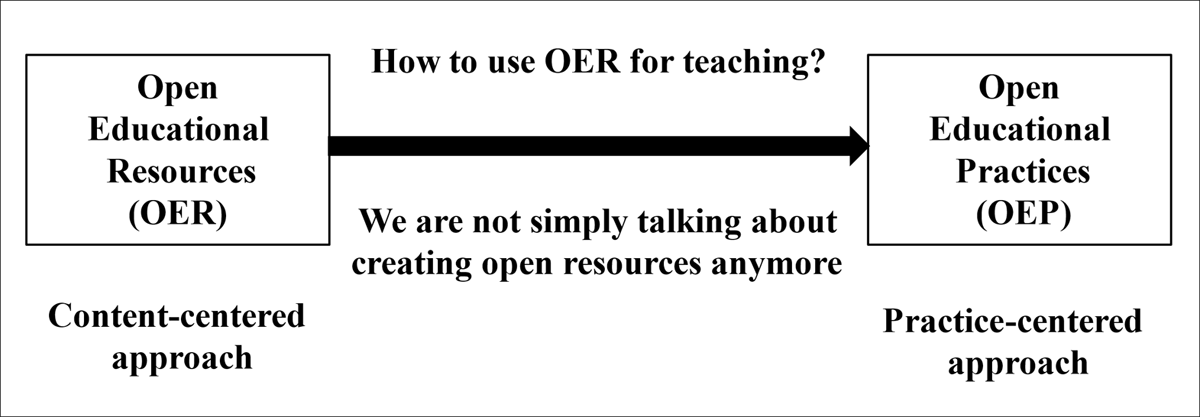
Figure 1
Shift to OEP.
The UNESCO exploration is critical because it focuses on the transformation from creating content like OER to implementing practices such as OEP to maximize openness in HE (Morgan et al., 2021). The existing literature on OEP has notable shortcomings, as it often emphasizes content-centric definitions and implementation frameworks, leaving limited exploration of practitioners’ real-world experiences and broader pedagogical approaches. Additionally, research on OEP practitioners remains underdeveloped, offering insufficient guidance on their evolving roles, recruitment, and broader impact beyond the classroom, which this study aims to address through a more holistic and practice-informed perspective.
This research employs phenomenography to capture the diverse experiences of OEP practitioners at an open university, focusing on qualitative variations in their perceptions and experiences. Variation is core to phenomenography, involving identifying critical structural elements that differentiate qualitative experiences of a phenomenon. Therefore, it was clear that the RQ should focus on understanding how practitioners perceive and comprehend OEP. The RQ is designed to achieve this aim:
“What are the qualitative variations in the perceptions and experiences of educators and academic administrators of Open Educational Practices in an open university?”.
Literature
This study contributes to the literature on OEP within the broader context of open education in higher education. The first author’s previous literature review identified 153 articles exploring this topic. As presented in Figure 2, this paper addresses two critical themes from that literature: OEP definitions and implementation, and the roles of OEP practitioners.
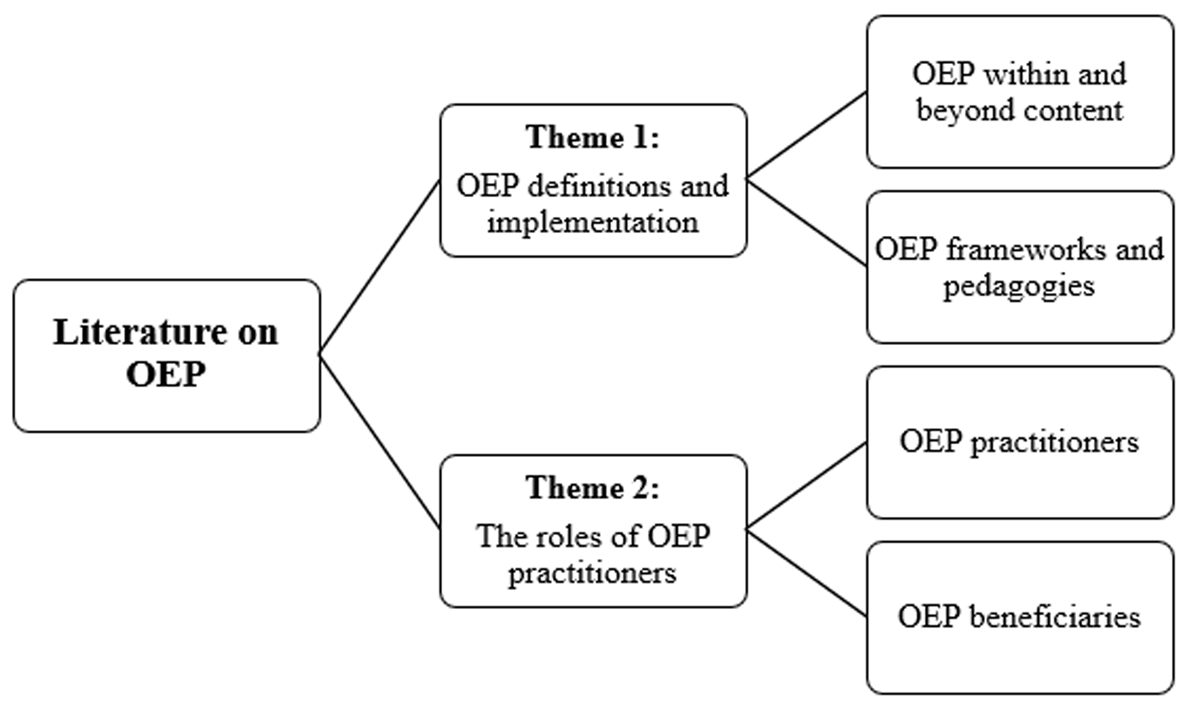
Figure 2
Themes from the literature on OEP.
A large strand of work in this literature addresses OEP definitions and implementations from diverse frameworks (Schuwer & Janssen, 2024). The first author’s literature review reveals 223 articles discussing OEP in this way, with 85 focusing on theoretical definitions, primarily comprising non-empirical studies focusing on content-based approaches. Conversely, 138 studies examine OEP implementation, building on OER frameworks or extending them to open pedagogical practices like open teaching and collaboration (Ritchie, 2018). This paper does not aim to produce a new definition or framework but contributes instead to foregrounding a nuanced understanding of OEP from practitioners.
The literature shows OEP as a term that has been contested and redefined (Morgan et al., 2021; Paskevicius, 2017), often centering on content such as OER. Other definitions go beyond a content-based approach, promoting open pedagogical practices like open learning and pedagogies (Andrade et al., 2011; Cronin, 2017; Cronin & Maclaren, 2018). The literature on OEP implementation emphasizes two strands: OEP within content, often linked to OER utilization, for instance, the 5R framework: Retain, Reuse, Revise, Remix, Redistribute (Huang et al., 2020; Wiley, 2014, March 5); and OEP beyond content, linked to open teaching, learning, assessment, and collaboration (Andrade et al., 2011; Bozkurt et al., 2019; Cronin, 2017).
Theme 1: OEP Definitions and Implementation
The theoretical foundation of defining OEP within content and implementing it through OER is associated with content creation and dissemination, underscoring OER’s role in promoting openness and empowering learners (Huang et al., 2020; Stagg et al., 2023) Our starting point for this paper is that a content-centric approach can limit OEP’s broader potential. A narrow focus on content may confine OEP, suggesting a need for a more expansive perspective. We need to understand how practitioners with extensive OER experience perceive OEP—whether they see it as part of OER, an extension, or a distinct approach.
Regarding defining OEP beyond content and implementing it beyond OER, the literature suggests expanding OEP to include open pedagogies such as open teaching, learning, and scholarship, thereby fostering collaboration and inclusivity in higher education (Rolfe, 2017). This broader approach seeks to incorporate elements like learner agency and collaboration. However, implementing these practices is often challenged by the lack of robust frameworks and empirical evidence from practitioners, raising concerns about scalability in diverse contexts (Morgan et al., 2021; Tlili et al., 2023). Consulting practitioners about their understanding of OEP could offer valuable insights into effectively implementing it within and beyond OER.
Theme 2: The Roles of OEP Practitioners
Another strand of this literature explores the roles of OEP practitioners, including educators and higher education stakeholders, in implementing OEP. Such work highlights how practitioners maximize openness through activities like creating open content and engaging in collaborative practices (Koseoglu & Bozkurt, 2018; Lee, 2020; Nascimbeni et al., 2018; Tualaulelei & Green, 2022). It also, however, emphasizes challenges such as unclear guidelines and heavy workloads that hinder effective implementation (Harrison & Devries, 2020).
The author of this paper identified 24 empirical studies addressing this theme. Practitioners are categorized into two groups in this literature: those engaged in daily practices (educators, learners, researchers) and stakeholders (administrators, policymakers). While educators are often highlighted as key practitioners, a lack of clear guidelines is seen as limiting cohesive collaboration among these groups (Harrison & Devries, 2020; Huang et al., 2020). The burden placed on educators is significant, and there is a lack of clear guidelines for collaboration between groups, which is crucial for OEP implementation (Atenas et al., 2023; Huang et al., 2020).
While the literature emphasizes practitioners’ roles in enhancing accessibility, there is limited engagement with beneficiaries beyond the classroom. This study argues for a comprehensive approach to OEP, seeking insights from practitioners transitioning from OER to understand their perceptions of diverse communities. Our conviction is that understanding practitioner perspectives and collaboration is crucial for enhancing openness in higher education. This study aims to fill gaps in empirical evidence and practical guidance by providing a deeper understanding of OEP from practitioners’ viewpoints.
Theoretical Framework
Phenomenography is a well-established methodology in higher education, explicitly developed to capture diverse perspectives and levels of understanding (Tight, 2016). Researchers often choose it for its ability to reveal patterns in human experiences, aiding in developing educational practices, interventions, and policies (Nerantzi, 2018). By focusing on varied practitioner experiences and perceptions, phenomenography illuminates different understandings and complexities, fostering empathy and improving stakeholder engagement. Such exploration provides valuable insights into understanding the phenomenon of OEP more deeply (Marton & Booth, 1997).
Rooted in a non-dualistic ontology and second-order perspective, phenomenography examines how individuals experience the world in relational terms – between subject and phenomenon, person and world (Marton & Booth, 1997). Variation theory, closely associated with phenomenography, provides a basis for identifying critical aspects that reveal variation both between and within ways of experiencing a phenomenon (Åkerlind, 2025). Phenomenography holds that meaning and structure in experience are dialectically related: what and how a phenomenon is experienced are inseparable and shaped by a partial, situated awareness (Åkerlind, 2005). These foundational assumptions underpin analyses of both the referential (meaning-related) and structural (organization-in-awareness) dimensions of experience. We suggest that this approach is beneficial for capturing how stakeholders make sense of OEP, a socially embedded, context-sensitive practice. In the complex, value-laden field of open education – where pedagogical agency, technology, and institutional culture intersect (Czerwonogora & Rodés, 2019) – phenomenography offers a robust framework for mapping qualitative differences and constructing a structured outcome space reflecting collective OEP experience.
This study aims to construct a broader understanding of OEP based on practitioners’ perspectives about their experiences of working on OEP, such as incorporating open pedagogy, collaboration, learner agency, and individual roles, highlighting challenges faced by educators, such as overburdened workloads and ineffective stakeholder engagement. The study explores collective experiences by utilizing phenomenography to identify gaps and opportunities for enhancing OEP. To do so, we draw on the framework of phenomenography. Phenomenography offers a distinctive approach for analyzing how people understand phenomena by emphasizing collective variation rather than isolated individual experiences (Marton & Booth, 1997). This approach relies on several core concepts, including “categories of description,” “outcome space,” “meaning structure,” “structure of awareness,” and “dimensions of variation” (Åkerlind, 2005; Marton & Booth, 1997). These interrelated concepts form a framework for identifying and interpreting the qualitatively different ways in which participants experience a phenomenon. Table 1 summarizes these key concepts and how they are applied in this study.
Table 1
Key Phenomenographic concepts used in this study.
| CONCEPT | DEFINITION | APPLICATION IN THIS STUDY |
|---|---|---|
| Categories of Description | Distinct, qualitatively different ways participants understand a phenomenon (Åkerlind et al., 2005). | Four categories describe how practitioners perceive OEP—from resource recontextualization to community engagement. |
| Outcome Space | Structured whole shows the relationships among categories of description and dimensions of variation. | Illustrated in Figure 5, presenting how perceptions of OEP vary in complexity and inclusivity. |
| Meaning Structure | Internal meaning of each category—what the experience is about. | Described for each category in Tables 3, 5, 7, and 9, including components like “open content,” “collaboration,” and “meta-practices of openness.” |
| Structure of Awareness | The relationship between what is focused on (theme), what is thematically relevant (thematic field), and what is marginal (margin). | Visualized for each category in Figures 6, 9, showing what participants foreground or background when conceptualizing OEP in different ways. |
| Dimensions of Variation | Aspects of experience that differ across categories, indicating variation in how a phenomenon is experienced. | “OEP Implementation” and “OEP Beneficiaries” are the key dimensions which differ across the categories (see Tables 4, 6, 8, and 10). |
These concepts collectively shape the structure of the findings and guide the interpretation of participants’ experiences. The categories of description classify the distinct ways that participants understand OEP, each representing a holistic perspective grounded in their lived experience (Åkerlind, 2005). The meaning structure reflects the referential aspects of each category – what the experience is fundamentally about – while the structure of awareness reveals how participants focus their attention, distinguishing between central themes, related elements, and background aspects (Marton & Booth, 1997). The dimensions of variation – such as implementation strategies and targeted beneficiaries – highlight the aspects that shift across categories, revealing critical points of difference in participants’ conceptualizations of OEP (Laurillard, 2002). Together, the categories and dimensions form the outcome space, a structured representation of the collective variation in participants’ understandings (Åkerlind, 2012). By employing this framework, the study explores the meanings participants ascribe to OEP, the ways these meanings are organized and related, and the broader patterns of variation that reveal shifts in awareness, practice, and engagement across an open university context.
As applied to this study, phenomenography underscores the inseparable relationship between the phenomenon of OEP and its practitioners. This study refrains from separating the OEP phenomenon from the educators and administrators who enact it. Figure 3 illustrates this unified relationship and the project’s aim in exploring practitioners’ collective perceptions and experiences and how they vary. In this context, we aim to construct an outcome space to elucidate what OEP means in practice, how practitioners perceive its implementation, and how their roles evolve within institutional contexts to accomplish OEP, thereby providing rich insights into the varied experiences of educators and administrators.
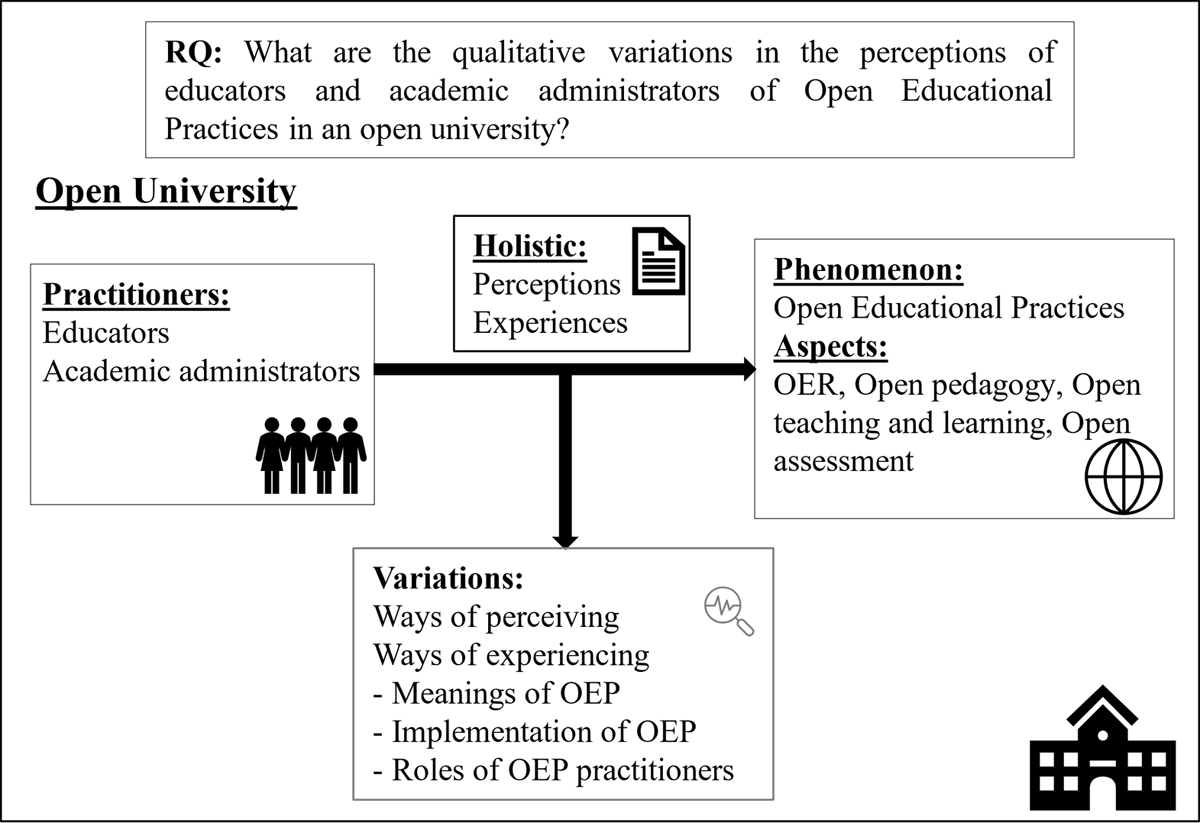
Figure 3
The structure of phenomenography in the current study.
Research Design
This section covers the rationale for choosing an open university in Palestine as the research site. It details participant recruitment methods, including demographic and qualification criteria, and describes the interview process aligned with the phenomenographic approach. Data analysis methods and the setup of a digital analysis environment are discussed, along with the steps taken to ensure research credibility and trustworthiness.
Research Site
Al Quds Open University (QOU), established in 1991 as the first open university in the Arab world, serves tens of thousands of students through 20 branches, providing flexible access to higher education for underserved Palestinian communities. QOU is a pioneer in open education, implementing OER and OEP to enhance educational access in challenging socio-economic contexts. The university’s innovative approaches and involvement in regional and international OER and OEP projects make it a fruitful site for addressing the research question of this project, which seeks to understand how educators and administrators perceive and implement OEP.
Participant Selection and Profiles
Thirteen participants were recruited from QOU, including six academic administrators and seven educators, aligning with the recommended sample size of 13 to 20 for phenomenographic research (Cousin, 2008; Trigwell et al., 2000). Selected for their extensive experience with OEP, these individuals can provide diverse insights into its practical and transformative aspects. Their roles emphasize team-based integration across expertise, fostering a collaborative environment akin to a Community of Practice (Rapanta & Cantoni, 2014). Participants play pivotal roles in planning, implementing, and innovating OEP initiatives, from decision-making to designing educational programs. Their profiles, detailed in Table 2, capture various experiences reflecting the challenges and successes of integrating OEP at QOU. Participants’ identities were anonymized using pseudonyms, and they were contacted via email to elicit their agreement to participate in interviews conducted at QOU.
Table 2
Participants’ profiles.
| GENDER | PSEUDONYM | GROUP | ROLES | EXPERIENCES |
|---|---|---|---|---|
| 3 Males | A2, A4, A7 | One | Administrators involved in planning and assessing OEP. | All hold PhDs and have over fifteen years of experience in open education, including national and international E-learning, OER, and MOOC projects. |
| 3 Males | A8, A9, A10 | Two | Administrators in admission, registration, and examination departments. | One has a PhD, two hold master’s degrees. They are involved in implementing open admission, registration, and assessment practices related to OEP. |
| 1 Female 2 Males | E1, E2, E10 | Three | Educators designing and developing educational programs. | All hold PhDs and have experience building an international learning program based on OEP. |
| 1 Female 3 Males | E5, E6, E7, E8 | Four | Educators developing open pedagogy, teaching, and learning. | All participants create and publish online OER platforms, gathering feedback from learners. They hold master’s degrees in disciplines relevant to educational pedagogies and technologies. |
Research participants received a Participant Information Sheet outlining the purpose of the study and the data which would be generated and signed a Consent Form confirming their voluntary participation. The project protocol approved by the Department of Educational Research Ethics Committee, Lancaster University.
Data Collection
In this project, phenomenographic interviews were conducted using minimal predefined questions to facilitate unstructured conversations that explored participants’ conceptualizations and experiences (Bowden, 2005; Cousin, 2008). All interviews were conducted in Arabic, the participants’ native language, ensuring they could comfortably elaborate on their perceptions and experiences. The interviews lasted between 30 and 40 minutes, totaling 11 hours and 36 minutes. A predefined question strategy began with an open-ended question about OEP, such as “What do open educational practices mean to you?” Follow-up questions like “Can you tell me more about that?” or “When you say (something), what are you actually doing?” (Åkerlind, 1999) encouraged deeper insights and clarification. This approach ensured engagement without interruption, allowing participants’ responses to shape the discussion while addressing key aspects of OEP.
Data Analysis
The data analysis followed a phenomenographic approach, emphasizing iterative engagement with interview transcripts to explore participants’ perceptions and experiences of OEP. The process included setting up a digital analysis environment using NVivo, annotating, coding, and categorizing data until stable descriptions of OEP perceptions emerged. Insights from phenomenographic literature guided this process, focusing on collective perspectives. Transcripts were organized to facilitate comparison across groups, supporting a comprehensive understanding of OEP. The data analysis process in this phenomenographic study followed an iterative approach, starting with organizing and coding transcripts using NVivo to capture collective perceptions of OEP. Open coding (43 codes) was refined into 17 categories through systematic interrogation and pattern recognition (Åkerlind et al., 2005). Figure 4 illustrates an example of the initial coding structure. By the sixth iteration, the analysis was realigned with the research questions and conceptual framework to better capture participants’ meanings. Categories were carefully constructed to reflect structural relationships and ensure clarity. The Findings section presents four hierarchically organized categories of OEP, without suggesting developmental order. Thirteen aspects of variation highlight shifts in OEP perceptions. The final iteration produced a two-dimensional matrix mapping referential and structural relationships, reflecting a comprehensive understanding of OEP.
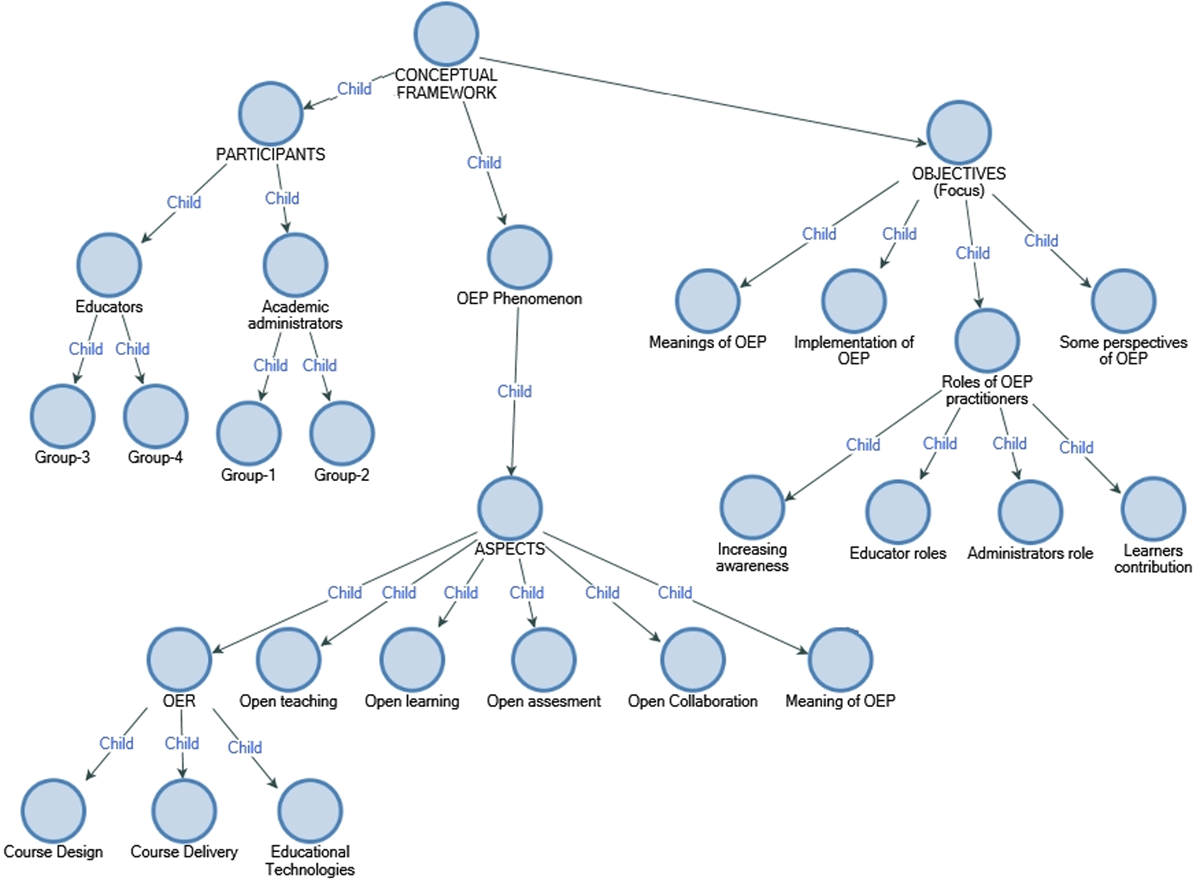
Figure 4
Initial coding.
Findings
The findings are presented here as an outcome space, which encompasses four progressively inclusive categories of description. This hierarchical structure captures increasingly nuanced perceptions of OEP, culminating in a comprehensive understanding. The categories of description are introduced first, then detailed in subsections that cover the meaning, structure of awareness, and dimensions of variation for each category. Examples from participant interviews illustrate each category without mentioning pseudonyms, focusing on collective rather than individual perceptions.
As explained in the theoretical framework section, a key knowledge product of phenomenographic research is the outcome space, comprising categories of description and dimensions of variation (see Table 1). These categories, along with the meaning structure and structure of awareness, guide the interpretation of the collective experiences presented in this section.
The outcome space answers the following research question: What are the qualitative variations in the perceptions of educators and academic administrators of Open Educational Practices in an open university?
The analysis unveiled four categories of description representing the qualitatively different ways participants perceive OEP. The four categories show that educators and administrators perceive OEP as follows:
Category 1. Recontextualizing open resources and methods.
Category 2. Collaborating and engaging learners through pragmatic activities.
Category 3. Empowering OEP practitioners through enhancing their understanding of openness.
Category 4. Engaging communities through creating knowledge and exchanging experiences.
The outcome space of this study is presented in Figure 5. This outcome space is inclusively hierarchical. Category 1 is the least complex perception and exclusive, not encompassing experiences from other categories. Category 4 is the most complex and all-encompassing, including experiences from all other categories. This outcome space is not sequential; participants may adopt any conception at any time without moving progressively through each category.
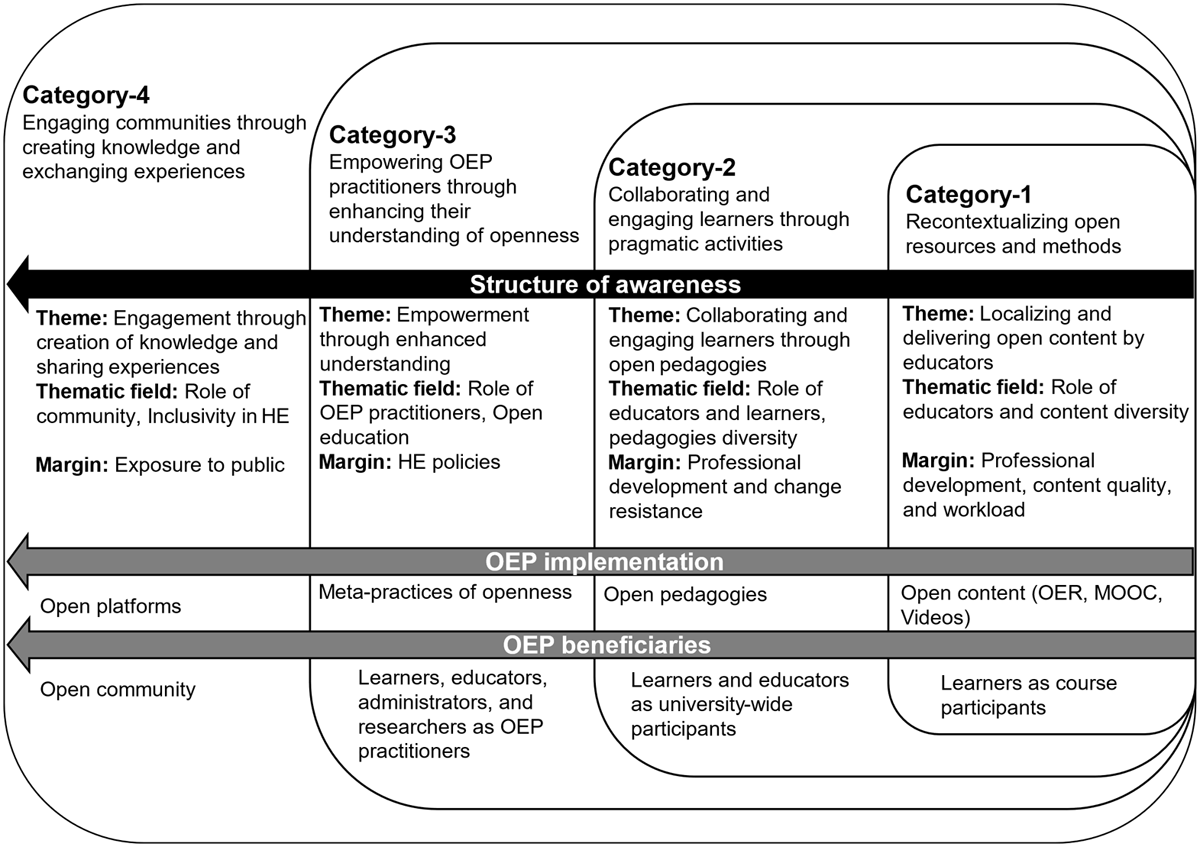
Figure 5
The outcome space of this study.
This study identified four qualitatively different ways educators and administrators in an open university perceive and engage with OEP, illustrating an evolving and inclusive understanding of openness in higher education. The findings move from basic content adaptation (Category 1) to collaborative pedagogies (Category 2), practitioner empowerment (Category 3), and finally, community engagement and knowledge creation (Category 4). Each category builds on the previous one, reflecting increasing complexity, inclusivity, and awareness of perception. Together, these categories offer a holistic view of OEP, with implications for practice, policy, and professional development aimed at fostering more equitable and participatory open education ecosystems.
When reading Figure 5, remember that the outcome space consists of key terms defined in the theoretical framework. Each category includes the structure of awareness, which consists of three levels: the theme (main focus), the thematic field (broader contextual aspects), and the margin (less common understandings).
The outcome space of this study includes two overarching dimensions across all categories, known as the dimensions of variation, highlighting different qualitative variations in participants’ experiences. Referring to Figure 5, these dimensions are OEP Implementation (ways of doing OEP) and OEP Beneficiaries (audiences for OEP). They show varying aspects within each category and illustrate how participants perceive OEP. The dimensions capture participants’ interpretations of their work and their perceptions of the recipients of their OEP efforts.
Category 1. Recontextualizing Open Resources and Methods
This category represents one-way participants perceive OEP: adapting open resources and methods to meet diverse educational needs and contexts, benefiting learners as active participants.
Meaning Structure
This category involves three main components: recontextualizing, open resources, and methods. Table 3 illustrates the meaning of the category of description, including the meanings of the three parts of the description itself. This includes some key quotes about localizing practices, as well as the involved open content and methods that contributed to the overall practices of recontextualizing open resources and methods. In this category, recontextualization involves localizing practices to match course objectives, fit learners’ needs, and cater to various educational contexts. These localization practices are applied to open resources such as the open content of OER, MOOC, and videos, and to teaching, learning, and content creation and delivery methods. This meaning structure represents one way of what OEP means to the research participants. The meaning structure of this category captures the internal meaning attributed by participants to OEP when perceived as recontextualizing content and methods. As outlined in Table 1, this concept enables a focus on “what” is experienced in each category and the parts that comprise that experience. The following extract from an interview shows experiences in understanding OEP within Category 1:
OEP means that learning is supported with high-quality open educational resources, open courseware, learning modules, open textbooks, content, recorded lectures, digital learning objects, and educational videos. This will help me record an explanation of some specific points, supported by images and drawings, to simplify concepts.
Table 3
Meaning structure of Category 1.
| CATEGORY 1: OEP IS PERCEIVED AS RECONTEXTUALIZING OPEN RESOURCES AND METHODS | |
|---|---|
| Meaning of the category | |
| The practices of localizing and delivering open content to match course objectives, fit learners’ needs, and suit diverse educational contexts, particularly within an open university setting. | |
| Recontextualizing meaning | Practices quoted from transcripts |
| Localizing | “customizing”, “reusing”, “integrating”, “accommodating”, “remixing”, “adapting”, “modifying”, and “creating”. |
| Open resources meaning | Resources involved |
| Open content | OER, MOOC, and Videos |
| Methods meaning | Methods involved |
| Teaching methods | - Incorporating open content into teaching - Matching course objectives |
| Learning methods | - shift from a teacher-centered to a learner-centered approach |
| Content creation methods | - Multimedia-enhanced - Professional production |
| Course delivery methods | - Digital and open |
Structure of Awareness
In this category, the central theme (main focus and shared understanding) is educators’ localization and delivery of open content using open resources and methods. The thematic field (broader contextual aspects) includes the roles of educators and content diversity, while the margin (less common understandings) encompasses professional development, content quality, and workload. Figure 6 presents the structure of awareness for Category 1 with its three main parts. Following the definition of the structure of awareness presented in Table 1, Figure 6 distinguishes between the theme (what is focused on), thematic field (what is thematically relevant), and margin (what is marginal within the field) in participants’ focus when describing this category.
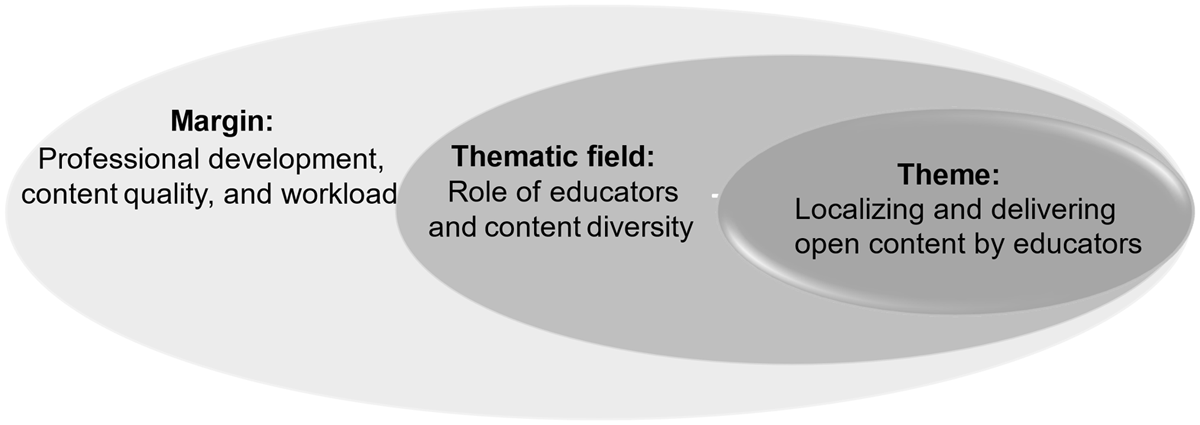
Figure 6
Structure of awareness for Category 1.
One participant perceived the role of an educator as “The educator should be allowed the freedom to choose and develop the course material he/she presents in their class…be able to customize materials, add reflection, remix several sources, and create OER-tailored modules.”
Dimensions of Variation
The first dimension of OEP implementation uses open content (OER, MOOC, videos) characterized by accessibility and adaptability.
One example from a participant described the OEP implementation as: “using high-quality open educational resources, open courseware, learning modules, open textbooks and content, recorded lectures, and digital learning objects and educational videos.”
The second dimension of OEP beneficiaries emphasizes learners’ engagement as course participants in the educational process and encourages them to engage critically with open content provided by educators. Both dimensions of variation are depicted in Table 4. As Table 1 explains, dimensions of variation represent critical differences in how participants experience OEP across categories. In this case, two overarching dimensions – OEP Implementation and OEP Beneficiaries – show how the focus evolves with each conceptual shift.
Table 4
Dimensions of variation of Category 1.
| CATEGORY 1: OEP IS PERCEIVED AS RECONTEXTUALIZING OPEN RESOURCES AND METHODS | |
|---|---|
| Dimensions of variation | Aspects of Category 1 |
| OEP implementation: | Open content (OER, MOOC, Videos) |
| OEP beneficiaries: | Learners as course participants |
One participant noted, “The diversity of presenting the topic to students, OEP offers such an opportunity to motivate and engage students to present the same content in different ways.”
Category 2. Collaborating and Engaging Learners through Pragmatic Activities
This category provides an inclusive understanding of OEP by the research participants compared to Category 1. It encompasses the previous category’s insights and focuses on how educators and academic administrators use open pedagogies to collaborate with and engage learners through pragmatic activities. Perceptions of practices such as OER co-creation and open assessment aim to enhance the teaching and learning experience not only within the classroom but also beyond, involving learners as active participants across the university.
Meaning Structure
This category involves two components: collaborating and engaging learners, and pragmatic activities. The emphasis on collaboration involves practices where educators and learners work together in the teaching and learning process. For instance, collaborating and engaging learners to co-create OER refers to educational materials, textbooks, videos, or software released to the public under licenses that allow anyone to use, modify, and share without cost. These practices are implemented using open pedagogies such as open assessment and collaboration, as shown in Table 5.
Table 5
Meaning structure of Category 2.
| CATEGORY 2: OEP IS PERCEIVED AS COLLABORATING AND ENGAGING LEARNERS THROUGH PRAGMATIC ACTIVITIES | |
|---|---|
| Meaning of the category | |
| The practices of collaborating and engaging learners through open pedagogies for university-wide participants. | |
| Collaborating and engaging learners, meaning | Practices quoted from transcripts |
| Educators and learners work together and contribute to the teaching and learning process collectively. | “communicating”, “interacting”, “supporting”, “training”, “connecting”, “sharing”, “participating”, “contributing”, “cooperating”, and “following up”. |
| Pragmatic activities meaning | Practices involved |
| Open pedagogies | OER co-creation, Learners’ contribution, Open teaching and learning, Open assessment, Open collaboration |
One participant described OEP as allowing learners to “collaborate to create their own content and (re)using OER in innovative ways,” while another emphasized that “learners should be involved in creating resources that can be used in classes.” Additionally, the value of open assessment is illustrated by the notion that “open assessment should be non-disposable assignments that can benefit others and attract educators and learners to further reuse or improve these assignments in the future.”
Structure of Awareness
In this category, the central theme is collaborating and engaging learners through open pedagogies, which was discussed in the Meaning Structure. The thematic field includes the roles of educators and learners and the diversity of pedagogies, while the margin encompasses professional development and change resistance as depicted in Figure 7.
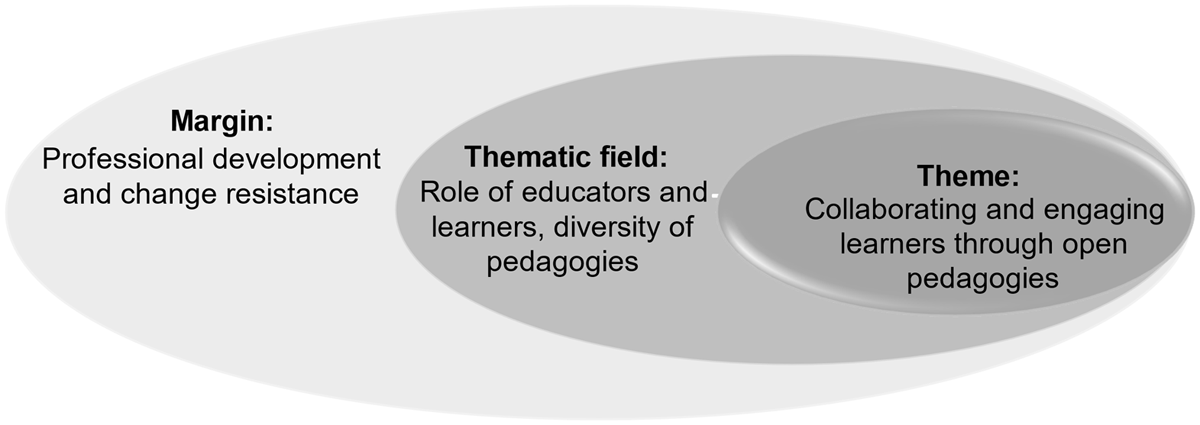
Figure 7
Structure of awareness for Category 2.
Perceptions of the role of educators and learners involve practices such as integrating online tools for collaboration and feedback, as highlighted by one participant’s experience: “I use available tools to communicate with students and allow them to share monitored knowledge and help each other complete tasks.” The diversity of pedagogies emphasizes open teaching and assessment methods that enable active learner involvement, as one participant noted: “Open assessment, such as blogs, enables students to demonstrate the relevance of their field of study and share their scholarship in real-world contexts.” The margins of awareness address challenges like professional development and resistance to change, with educators noting difficulties in adopting new pedagogies due to a lack of skills and commitment, as reflected in the view that: “The educator needs to have the skills to motivate and engage students … practicing this is not easy; it needs high commitment from the teacher”. Additionally, resistance to change is evident from challenges in learners’ engagement and motivation: “The biggest challenge that faces an educator in implementing OEP is the learner engagement and motivation.” Overall, this structure outlines how perceptions of OEP are shaped by these central and marginal aspects, providing a comprehensive understanding of its application and challenges.
Dimensions of Variation
Within this category, the dimension of OEP implementation focuses on utilizing open pedagogies to enhance collaboration and engagement in learning. This involves applying open practices such as OER co-creation and open assessment to create interactive and participatory learning environments. As one participant noted, “Using educational technologies, we need to focus on developing our pedagogy to include open practices online because we have the resources, experiences, and knowledge to do that.” The aim is to leverage technology and resources to move beyond traditional content delivery and foster active engagement through interactive assignments and collaborative activities.
The dimension of OEP beneficiaries highlights the broader impact of these pedagogies, considering both learners and educators as active participants across the university. Learners are seen as contributors to open knowledge rather than passive recipients. One participant emphasized this perspective: “Learners themselves can also be considered practitioners of OEPs if they actively engage in open educational resources, contribute to open knowledge, and openly share their knowledge with others.” Additionally, open assessments enable learners to showcase their work in real-world contexts, benefiting the wider academic community: “Open assessment, such as blogs, enables students to demonstrate the relevance of their field of study and share their scholarship in real-world contexts.” This dimension underscores the role of both learners and educators in expanding the reach and impact of open pedagogies beyond individual courses. Both dimensions are presented in Table 6.
Category 3. Empowering OEP Practitioners through Enhancing their Understanding of Openness
This category reflects an expansive understanding of OEP, emphasizing the empowerment of learners, educators, administrators, and researchers through a deeper comprehension of openness. Perceptions within this category extend beyond the use of OER and open pedagogies to include meta-practices of openness, such as philosophical discussions about open education. This broader engagement aims to enhance effectiveness and participation, benefiting not only classroom learners and university-wide educators but also administrators and researchers. This category highlights how OEP practitioners perceive and experience the empowerment that comes from an enriched understanding of open practices.
Meaning Structure
This category involves two main components: empowering OEP practitioners and enhancing their understanding of openness. Supported by relevant excerpts from the transcripts, the emphasis on empowering practitioners suggests that active engagement in OEP positively impacts their participation and effectiveness. For example, one participant stated, “Researchers in the field of open education play a significant role in developing and promoting OEPs.”
Empowerment spans a diverse range of OEP practitioners, including learners, educators, administrators, and researchers. Descriptions within this category indicate that empowerment stems from an improved understanding of openness, achieved through meta-practices such as discussions about open content and pedagogies. One participant mentioned, “We also produce content to increase their awareness of using these practices and other things related to the philosophy of open education.” These practices enhance the awareness and engagement of OEP practitioners, helping them to integrate open principles into their educational activities. Participants’ perceptions highlight that engaging in meta-practices leads to a deeper comprehension of openness, which empowers them to implement OEP better. The meaning structure of Category 3 is presented in Table 7.
Table 7
Meaning structure of Category 3.
| CATEGORY 3: OEP IS PERCEIVED AS EMPOWERING OEP PRACTITIONERS THROUGH ENHANCING THEIR UNDERSTANDING OF OPENNESS | |
|---|---|
| Meaning of the category | |
| The practices of empowering practitioners who engage in OEP by enhancing their understanding of the concept of openness in education | |
| Empowering OEP practitioners meaning | Practices quoted from transcripts |
| Empowering learners, educators, administrators, and researchers as OEP practitioners. | “Enabling”, “Enhancing”, “Encouraging”, “Motivating”, “Fostering”, “Promoting”, “Strengthening” |
| Enhancing their understanding of openness meaning | Practices involved |
| Enhancing awareness of OEP practitioners through Meta-practices of openness. | Open scholarship, Discussing openness-related topics. |
Structure of Awareness
In this category, the central theme is empowering OEP practitioners through enhancing their understanding of openness. The thematic field includes the roles of OEP practitioners and the philosophy of open education, while the margin encompasses HE policies. The role of OEP practitioners is multi-faceted, involving learners, educators, administrators, and researchers actively participating in and promoting OEP. One participant noted, “I also facilitated a workshop for university staff, funded by UNESCO, on open educational resources some years ago.” The philosophy of open education underpins their efforts to foster OEP, as highlighted by another participant: “Advocates of open education can assist in launching open educational projects and provide resources, financial support, and technical assistance.”
The margin addresses HE policies, highlighting challenges such as accreditation and policy recognition. One participant mentioned, “Open education took different aspects and non-suitable explanations, such as distance learning or E-learning. This causes some implications for the accreditation of our degree.” Overall, this structure outlines how perceptions of OEP are shaped by these central and marginal aspects, providing a comprehensive understanding of its application and challenges. This structure of awareness is presented in Figure 8.
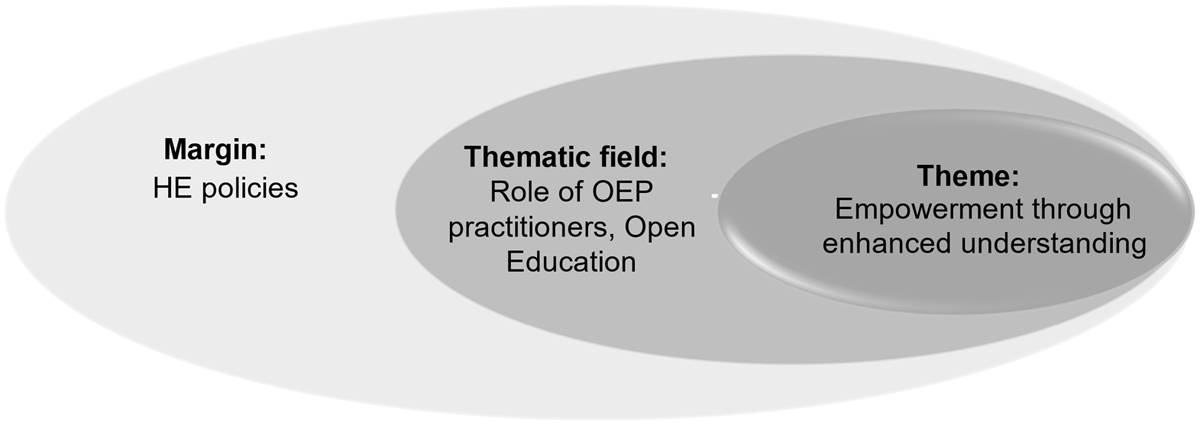
Figure 8
Structure of awareness of Category 3.
Dimensions of Variation
Within this category, the dimension of OEP implementation focuses on meta-practices of openness, which extend beyond open content and pedagogies to include broader discussions and initiatives that promote the philosophy of open education. This involves practitioners engaging in activities that foster a deeper understanding of OEP principles, such as open scholarship and collaborative discussions about open practices. As one participant highlighted, “We also produce content to increase their awareness of using these practices and other things related to the philosophy of open education.”
The dimension of OEP beneficiaries expands the scope of who benefits from OEP, including learners, educators, administrators, and researchers. This broader inclusion reflects the perception that OEP impacts many stakeholders within the educational ecosystem. Researchers, in particular, play a significant role in developing and promoting OEP through open scholarship and disseminating open knowledge. One participant noted, “Researchers in the field of open education play a significant role in developing and promoting OEPs.” This dimension underscores the importance of empowering various educational practitioners by enhancing their understanding and engagement with openness. Both dimensions are presented in Table 8.
Category 4. Engaging Communities through Creating Knowledge and Exchanging Experiences
Category 4 represents a more inclusive understanding of OEP among the research participants, integrating and expanding upon the insights from the previous three categories. This category highlights how OEP builds upon earlier practices, such as co-creating OER and engaging learners through open pedagogies, and advances to encompass broader aspects of open education. It includes creating open communities, sharing immersive learning experiences, and adopting personalized learning approaches. By focusing on engaging diverse stakeholders – including learners, educators, administrators, and external experts – this category illustrates how OEP transcends traditional educational boundaries, fostering a dynamic and inclusive educational ecosystem that benefits all participants.
Meaning Structure
Category 4 involves two main components: engaging communities, creating knowledge, and exchanging experiences. This category highlights how OEP practices extend beyond traditional education to foster active collaboration and open knowledge sharing. As one participant noted, “We invite insurance experts to collaborate with students, which can be applied online to build communities of practice.” Additionally, creating open platforms is emphasized, with descriptions such as, “We need to share content and activities using open platforms without limitations.” The category also underscores personalized learning, with one participant stating, “A modern OEP enables students to build professional profiles with micro-credentials and digital badges.” Sharing immersive learning experiences, like those facilitated by AR/VR, is another crucial aspect: “We are using virtual labs for programming courses and working on AR/VR projects for immersive learning.” These components collectively illustrate how Category 4 advances the understanding of OEP through broader community engagement and knowledge exchange. The meaning structure of Category 4 is presented in Table 9.
Table 9
Meaning structure of Category 4.
| CATEGORY 4: OEP IS PERCEIVED AS ENGAGING COMMUNITIES THROUGH CREATING KNOWLEDGE AND EXCHANGING EXPERIENCES | |
|---|---|
| Meaning of the category | |
| Practices of openly involving community engagement through the creation of knowledge and the exchange of experiences | |
| Engaging communities meaning | Practices quoted from transcripts |
| Collaboration in an open community beyond classroom and university | “Building”, “Communicating”, “Personalizing”, “Inviting”, “Practicing”, “Sharing”, “Opening”, “Immersing”, “Adopting” |
| Creating knowledge and exchanging experiences, meaning | Practices involved |
| The practices of generation and sharing of new knowledge collaboratively involving multiple stakeholders and sharing experiences among individuals or communities involved using open platforms | Building open communities of practice, Building open platforms, Adopting personalized learning, Sharing immersive learning experiences |
Structure of Awareness
In this category, the central theme is engaging communities through creating knowledge and exchanging experiences, as discussed in the Meaning Structure. The thematic field includes the roles of open community engagement and the use of open platforms, while the margin encompasses concerns related to public exposure and social media distractions.
Community engagement highlights practices that involve broader educational communities beyond traditional settings. One participant emphasized this role by stating, “We invite insurance experts to collaborate with students, which helps build communities of practice.” The use of open platforms is integral to this engagement, with another participant noting, “We need to share content and activities using open platforms without limitations.”
The margin of awareness addresses challenges such as public exposure and distractions on social media. Concerns about these issues are evident from participant feedback: “On social media, there are distractions from Ads and irrelevant comments that can detract from the educational focus,” and “Resistance to being open stems from fear of criticism and the challenges of engaging with a wider audience.” The structure of awareness of Category 4 is presented in Figure 9.
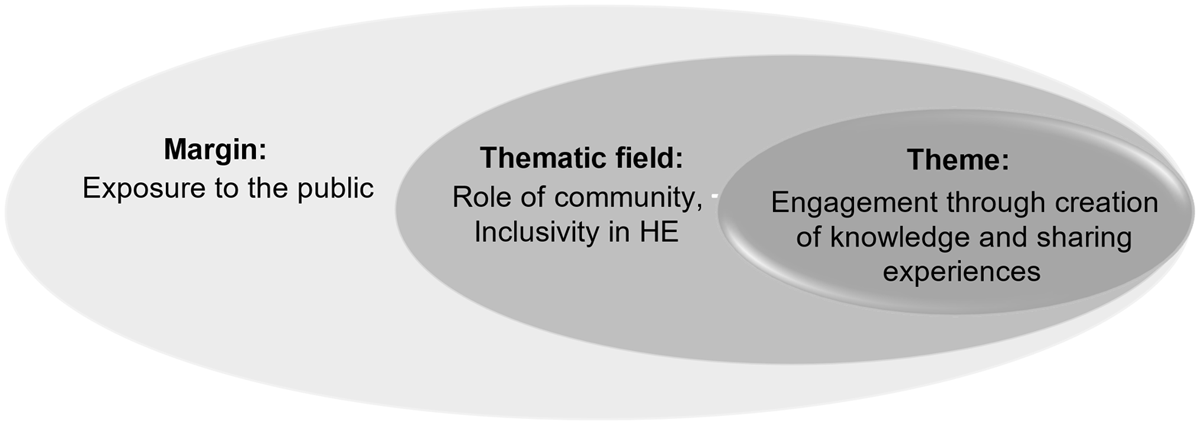
Figure 9
Structure of awareness of Category 4.
Dimensions of Variation
Within this category, the dimension of OEP implementation centers on fostering a comprehensive understanding and practical application of open principles. This involves engaging in advanced meta-practices, such as philosophical discussions and broader community interactions that transcend traditional content use. A participant described this approach as follows: “We produce content to raise awareness about open education and explore its broader philosophical implications.” This dimension highlights the evolution from practical use to a deeper, reflective engagement with openness.
Perceptions indicate that the dimension of OEP beneficiaries encompasses many stakeholders, including learners, educators, administrators, and researchers, reflecting a holistic impact of OEP practices. The expanded view acknowledges how various roles contribute to and benefit from a richer understanding of open practices. For example, one participant noted: “Researchers significantly contribute to the development and promotion of OEP through open scholarship and resource dissemination.” This dimension underscores how OEP benefits diverse practitioners by enhancing their engagement and effectiveness across different educational contexts. Both dimensions are presented in Table 10.
Discussion
This discussion explores the variations in perceptions of OEP among educators and academic administrators, revealing how these evolving, inclusive, and holistic perspectives contribute to a comprehensive understanding and implementation of OEP in higher education. The discussion highlights the contribution of these variations to addressing gaps in higher education literature on openness.
Dimensions of Variation in Perceiving OEP
In addressing the research question, “What are the qualitative variations in the perceptions of educators and academic administrators of Open Educational Practices in an open university?” four distinct categories of description emerged, each offering a unique perspective. These categories reflect a progression from primary to more inclusive understandings, showing variations in perceptions of OEP practitioners, beneficiaries, and implementation. This hierarchical structure highlights inclusivity and complexity without implying value judgments (Åkerlind, 2023; Bowden & Walsh, 2000; Marton & Booth, 1997).
Figure 10 illustrates four dimensions: OEP beneficiaries, OEP practitioners, OEP implementation, and their horizontal interplay.
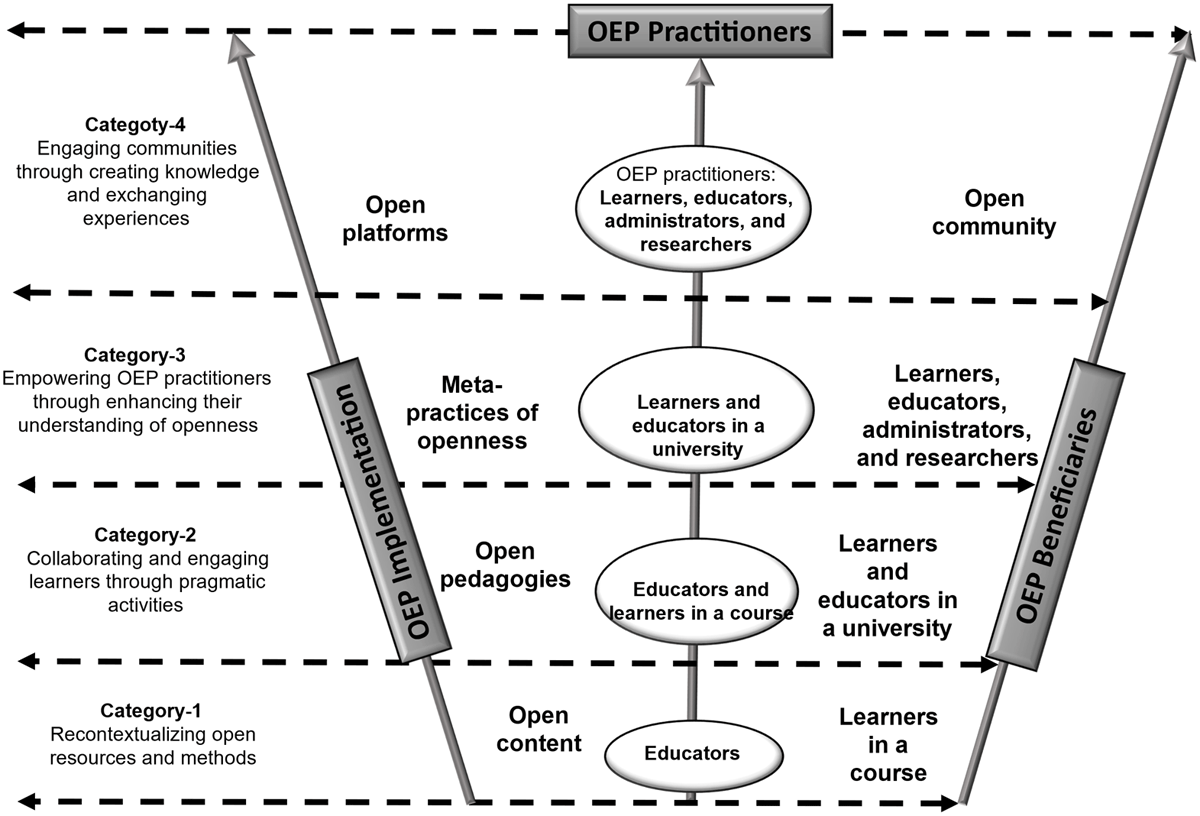
Figure 10
Variation in the perceptions of OEP practitioners, beneficiaries, implementation, and meaning.
The “OEP beneficiaries” axis shows a progression from learners in Category 1 to the entire open community in Category 4, indicating a broader conception of OEP’s impact. For example, our findings in Category 1 show that beneficiaries are learners enrolled in university courses who directly engage with open resources and methods. Category 2 expands this to university-wide participants, including both learners and educators, emphasizing active contributions to open knowledge and open assessments. As one participant noted, “Learners themselves can also be considered practitioners of OEPs if they actively engage in open educational resources, contribute to open knowledge, and openly share their knowledge with others”. Category 3 broadens the scope further to include researchers who play a key role in advancing OEP through open scholarship. Finally, Category 4 envisions an open community involving HE stakeholders, administrators, private and public sectors, and government entities, where OEP fosters lifelong learning, collaboration, and job opportunities.
The “OEP implementation” axis evolves from open content to interconnected open platforms, illustrating increasing complexity in resources, practices, and technologies. For example, our findings, represented in the outcome space, show that OEP implementation varies across four categories, each reflecting different approaches. In Category 1, educators integrate open content such as OER, MOOCs, and videos, ensuring accessibility and adaptability. As one participant noted, “using high-quality open educational resources, open courseware, learning modules, open textbooks and content, recorded lectures, and digital learning objects”. Category 2 extends OEP to open pedagogies, where educators and administrators implement OER co-creation, open assessment, and interactive learning, leveraging technology to engage digital-native learners. Category 3 focuses on meta-practices, promoting open education philosophy through discussions and awareness-building within local and regional communities. Finally, Category 4 emphasizes open platforms, fostering collaborative learning experiences by adopting open standards, interoperability, and data-driven insights to personalize and enhance learning environments.
The “OEP practitioners” axis evolves across four categories, expanding from a narrow to a broader community. For example, in Category 1, educators are seen as the primary OEP practitioners. In Category 2, this expands to include learners within a specific course, emphasizing their active role in implementing OEP. By Category 3, OEP practitioners extend to both learners and educators on a university-wide scale, highlighting a more collaborative engagement. Finally, in Category 4, the scope broadens further to include administrators and researchers, reflecting a comprehensive understanding of OEP as an institutional and community-driven practice.
The black dashed horizontal lines depicted in Figure 10 illustrate that the interplay between OEP beneficiaries, implementation, and practitioners evolves within each category. For example, the outcome space shows that in Category 1, OEP is perceived as relying on open content, implemented by educators for course-specific learners. Category 2 expands this to open pedagogies, engaging both educators and learners, benefiting the wider university community. In Category 3, OEP is seen as meta-practices of openness, integrating open content and pedagogies, implemented by educators and learners across the university to benefit administrators and researchers. Finally, Category 4 emphasizes open platforms, where OEP is collaboratively implemented by learners, educators, administrators, and researchers, extending its benefits to the broader higher education community.
Contributing to the Research Area of OEP
Our first contribution is to expand the understanding of OEP by introducing pragmatic and holistic perspectives. While much of the existing literature focuses on theoretical or content-based definitions, e.g. (Ehlers & Conole, 2010; Wiley & Hilton III, 2018), this study critiques such limited views and instead emphasizes a broader, practice-informed conceptualization of OEP that includes pedagogy, collaboration, and community engagement (Cronin, 2017; Havemann, 2016). Unlike previous studies that often propose prescriptive or note contested definitions (Czerniewicz et al., 2017; Huang et al., 2020), this research grounds its contribution in the lived experiences of educators and administrators, addressing the literature’s noticeable lack of empirical studies and capturing how OEP is defined and experienced in practice. By presenting a multi-dimensional understanding, this study responds to the call for definitions that are not only theoretically sound but also practically meaningful across diverse educational contexts.
The second contribution is to offer a nuanced view of OEP implementation that goes beyond content, focusing on interconnected open platforms and collaborative learning ecosystems. While previous studies such as those by Karunanayaka et al. (2015), Bozkurt et al. (2019), and Shareefa et al. (2023) emphasize OEP as a progression from OER-based content use, their narratives often remain centered on content dissemination and access. This study advances the field by exploring OEP as a design principle for immersive, participatory, and socially networked learning environments. Unlike many existing frameworks that remain grounded in OER practices, this research contributes a view of implementation which includes emerging practices such as digital credentialing, community partnerships, and open platforms, thereby addressing a practical and conceptual need for scalable, context-sensitive OEP models for institutions in resource-constrained settings (cf. Aksoy & Kursun, 2024).
The third contribution is to focus on the evolving roles of OEP practitioners and their recruitment into OEP. While previous studies often classify practitioners by profession, primarily focusing on educators or institutional actors (Harrison & Devries, 2020; Huang et al., 2020), this research reveals a dynamic role progression, where practitioners shift from recontextualizing content to fostering community empowerment and institutional collaboration. This research therefore presents practitioner-informed, action-oriented guidance that bridges gaps between educators and academic leaders, which is especially important in the underrepresented context of open universities. Additionally, by proposing inclusive recruitment models that invite beneficiaries (such as learners or researchers) to transition into being active practitioners, this study challenges the dichotomy between “providers” and “recipients” in OEP, which is often reinforced in the literature (Baran & Alzoubi, 2020; Karunanayaka & Naidu, 2017; Truan & Dressel, 2022). In doing so, it expands the field’s understanding of practitioner identity and community-based engagement in open education.
Finally, the fourth contribution is to shed light on how OEP practitioners help widen the range of OEP beneficiaries. Existing research tends to emphasize learners as the primary beneficiaries of open practices (Lee, 2020; Tualaulelei & Green, 2022), with limited exploration of how other groups, including educators, researchers, and local communities, benefit from and contribute to OEP. This study expands the lens by showing how practitioners view openness not merely in terms of content access but as a participatory ecosystem which supports diverse actors across higher education. It also responds to a key gap in the literature: the need to explore how beneficiaries can become co-creators or co-practitioners of OEP, not just passive recipients. By highlighting inclusive, contextualized practices that engage broader stakeholder groups, including those in marginalized or resource-constrained settings, this contribution advances the conversation on who OEP is for and how openness can be expanded institutionally and socially (cf. Cronin, 2017).
Conclusion
This research offers a nuanced and comprehensive exploration of Open Educational Practices (OEP) in higher education, particularly from the perspectives of educators and academic administrators. The findings reveal significant implications for research, policy, and practice while suggesting potential future research directions. In terms of policy, the study highlights the need for a more inclusive approach to OEP, emphasizing the role of Open Educational Resources (OER) as foundational to OEP. Current policies often fall short of capturing the diversity of perspectives from practitioners. This paper calls for a shift from theory-driven policies to practice-centered guidelines that support the practical implementation of OEP. By fostering broader community involvement and promoting open platforms, policymakers can create environments encouraging collaboration and knowledge sharing, ultimately leading to more transformative policies. Moreover, this study helps fill a critical gap in OEP research by foregrounding perspectives from a marginalized, underrepresented context. While most OEP literature comes from Western countries (Koseoglu & Bozkurt, 2018), voices from developing and underdeveloped regions remain limited. By focusing on Palestine, this study offers insights into how OEP is practiced in resource-constrained environments, contributing to global conversations on openness and aligning with SDGs 4, 5, and 10. OEP is increasingly important in such contexts, where some of its potential is still to be realized.
From a practical standpoint, our findings encourage higher education institutions to utilize OEP to reach disadvantaged learners through more flexible and inclusive models. We suggest that institutions should align open content with educational goals and learner needs while engaging various stakeholders, including administrators and researchers, to cultivate a culture of openness. The potential for OEP to raise awareness of openness as a guiding philosophy is significant, and institutions are urged to develop environments that promote this ethos, enabling greater knowledge exchange and community collaboration.
Like any work of phenomenography, this study does not claim to produce generalizable findings. While valuable for capturing localized and time-specific experiences, the findings from the phenomenographic approach used in this research may not lend themselves easily to replication in other contexts. Furthermore, excluding some individual perspectives to maintain a holistic view in phenomenography may have omitted potentially valuable individual insights.
Finally, this research opens new avenues for future exploration. Based on the four inclusive categories of descriptions and participant perceptions, we suggest there is a need for deeper investigation into evolving definitions of OEP and its cultural and contextual meanings. While OEP is gradually being recognized by practitioners, moreover, it remains underrepresented in the literature. Further research is needed to explore sustainable models of OEP implementation, its impact on knowledge co-creation, and effective evaluation frameworks. Additionally, examining its influence on learner outcomes, practitioner development, and social inclusion will be essential to advancing the field of openness in HE.
Data Accessibility Statement
The datasets used and/or analysed during the current study are available from the corresponding author on reasonable request.
Sustainable Development Goals (SDGs)
This study is linked to the following SDG(s): Quality education (SDG 4), Reduced inequalities (SDG 10).
Ethics and Consent
Research participants received a Participant Information Sheet outlining the purpose of the study and the data which would be generated and signed a Consent Form confirming their voluntary participation. The project protocol approved by the Department of Educational Research Ethics Committee, Lancaster University. Ethical approval was obtained for the work described in this article.
Competing Interests
The authors have no competing interests to declare.
Author Contributions (CRediT)
Abedelaziz Khalil: Conceptualization, methodology, resources, formal analysis, investigation, data curation, visualization, writing—original draft preparation, writing—review and editing; Brett Bligh: supervision, validation, writing—original draft preparation, writing—review and editing. All authors have read and agreed to the published version of the manuscript.