
Introduction
Distance education has a long history and has continually advanced with technological progress. The journey that started with postal services for the delivery of educational materials in the past continues as ‘online learning’ with the latest developments in technology. (Pregowska et al., 2021). Online learning relies on internet technology to provide access to educational materials (Singh & Thurman, 2019) and traditional educational materials have been transforming into online formats (Bozkurt et al., 2015). The recent COVID-19 pandemic has caused significant transformations in the delivery of education worldwide and made videos a primary method of instruction rather than conducting traditional in-person classes (Mayer, 2021). Instructional videos serve as the backbone of numerous distance learning courses and are increasingly taking on the primary role in delivering educational content (Harrison, 2020).
The use of video in education has a long history, spanning over a century (Cuban, 1986). Its application in open and distance learning can be traced back to the 1940s when television was introduced as an instructional medium (Delen et al., 2014). World War II further accelerated the growth and widespread use of instructional videos as technological advancements and experiences during the war were brought into education (Hjorth, 2023). Over time, video utilization in education has evolved, finding its place in various contexts and expanding into new areas (Arruabarrena et al., 2021). The use of videos in education, especially in online learning, has risen dramatically in recent years as a result of technological advancements (Harrison, 2020). Advances in video technology, including improved resolution, delivery speed, multimedia capabilities, and online streaming, have significantly enhanced video-based education.
Instructional videos are dynamic multimedia resources that explicitly teach factual, conceptual, or procedural knowledge (Deng & Gao, 2023; ten Hove & van der Meij, 2015). Unlike traditional content delivery methods, videos engage learners by presenting information continuously, compelling them to process the material at a predetermined pace (Fyfield et al., 2022; Ibrahim et al., 2012). These prerecorded multimedia resources combine moving images and audio, typically including spoken words or background sounds (Mayer, 2009; Mayer et al., 2020). Using motion pictures captured by a camera and recorded speech and background sounds, instructional videos provide a powerful medium for delivering educational content (Mayer, 2009) and require students to actively focus on the presented ideas and concepts (Mirriahi et al., 2021). Recognized by educators and researchers, videos have emerged as a powerful tool for cultivating effective teaching practices and enhancing students’ learning experiences in the 21st century (Blomberg et al., 2014; Hamel & Viau-Guay, 2019).
Videos serve diverse purposes in education, including presenting authentic material (Huang, 2021), simulating experiments (Coskun Karabulut et al., 2023), facilitating role-playing (Barón & Celaya, 2022), demonstrating procedures (H’mida et al., 2022), and delivering lectures (Chen & Wu, 2015). While commonly used in practical disciplines like nursing (Evi-Colombo et al., 2023), medicine (Fakhry et al., 2007), teacher training (Peguera-Carré et al., 2023), and language education (Colognesi et al., 2023), videos are increasingly utilized across academic fields. Considering the pivotal role of instructional videos in online learning and their extensive application across various disciplines, it is essential for researchers to investigate their utilization in the literature from a comprehensive perspective. Accordingly, this study seeks to analyze research on instructional videos with a focus on descriptive trends, influential contributions, key issues, prevailing research themes, and directions for future studies.
Literature Review
Instructional Videos in Education
Videos are extensively integrated into education across all sectors, especially universities adopting online learning and asynchronous multimedia through videos (Noetel et al., 2021). The COVID-19 pandemic further emphasized the importance of instructional videos in education, as online streaming and mobile learning made them prevalent (Cojean & Jamet, 2022; Deng & Benckendorff, 2021). The availability of video production tools and platforms, including YouTube, with billions of hours dedicated to instructional content, has contributed to their widespread usage (Cihangir & Coklar, 2021). The new forms of distance education like MOOCs, blended learning, and the flipped classroom have also renewed the focus on utilizing videos for pedagogical purposes (Thompson et al., 2021). Videos were one of the most used educational materials in flipped classrooms (Lo, 2023; Zhao, Hu, & Yezhova, 2024). The recent technological advancements would make instructional videos more useful, adaptive, and accessible to a global audience. Artificial Intelligence (AI) holds remarkable potential for transforming instructional videos at this point making them more engaging, adaptive, and personalized to each learner’s needs. AI would also make instructional video production easier with its distinct features such as AI-generated pedagogical agents or avatars (Lim, 2024).
Research suggests that videos generally improve learning outcomes (Noetel et al., 2021) and enhance social presence in online courses, increasing learner interaction and satisfaction (Kang & van Es, 2018; Lowenthal, 2022; Sablić et al., 2021). However, it is important to note that video alone is not inherently effective; its value lies in being embedded in appropriate instructional contexts (Seidel et al., 2013). In face-to-face lectures, students appreciate videos that are well-integrated into the course, flow seamlessly, and are not overly lengthy (Alpert & Hodkinson, 2019). Effective videos are typically shorter than 6 minutes (Guo et al., 2014) and segmented into chunks to enhance learner engagement (Di Paolo et al., 2017).
Educational videos serve various purposes, including reviewing material, notetaking facilitation, pre-class preparation, and compensating for missed classes (Kay, 2012). They can engage learners with course materials and simulate a classroom experience through online video lectures with audio and video instruction (Di Paolo et al., 2017; Chen & Wu, 2015). Videos reinforce content, bridge theory and practice, and motivate learners. However, passive consumption of videos should be avoided, as active engagement is crucial for effective learning (Mirriahi et al., 2021). Improper use of videos can be counterproductive and lead to inflated perceptions of understanding (Hobbs, 2006; Szpunar et al., 2014). Nevertheless, students generally have positive attitudes toward instructional videos and find them helpful for learning (Kay, 2012).
Research Dimensions for Instructional Videos
Instructional videos are widely used in education for diverse purposes. Many studies have reported positive results regarding learning achievements when utilizing videos in educational settings. Kay (2012), for example, presents a strong argument indicating that despite encountering certain obstacles, students express a highly favorable attitude toward using video podcasts to facilitate learning. The research also offers multiple suggestions regarding the methodological approach for conducting studies that explore the impact of video usage and design-related issues of video lectures. These recommendations encompass examining the specific features of videos that influence learning outcomes, emphasizing instructors’ presence, identifying effective pedagogical strategies for video implementation, analyzing viewing patterns of students, and comprehending the individual differences in the utilization of videos. Additionally, in a recent study, Noetel et al. (2021) conducted an extensive investigation to assess the effectiveness of instructional videos in higher education. They showed that instructional videos have the potential to enhance students’ learning and offer significant educational advantages.
The design of instructional videos often follows principles from the cognitive theory of multimedia learning (Moreno & Mayer, 1999). Fyfield et al. (2022) conducted a literature review to identify evidence-based multimedia learning principles for effective video design. While principles like coherence, segmenting, and learner control positively affect learning outcomes, there is limited empirical support for principles such as redundancy and modality. Another important aspect of designing effective instructional videos, especially for open and distance learning, is to make them interactive for the learner. According to Soydan-Oktay and Yüzer (2023), developing an interactive learning scenario is the principal step of designing interactive videos and the process of producing an effective instructional video needs costly, demanding, and well-organized teamwork.
Sablić et al. (2021) conducted a literature review on video-based learning (VBL) to explore its educational advantages for educators and practitioners. They categorized the findings into three dimensions: student learning outcomes, teachers’ reflections and feedback, and professional development of teachers. The review concluded that students find VBL engaging, motivating, and flexible, resulting in improved understanding and active participation. Moreover, teachers consider VBL a valuable reflection tool, preferring to analyze their teaching within learning communities, promoting ongoing collaboration and critical feedback among educators.
Recent research in educational video literature has explored various dimensions and technologies to enhance learning outcomes. Deng and Gao (2023) utilized eye-tracking technology to investigate the mechanisms contributing to effective video-based learning (VBL), emphasizing the role of emotional factors and the importance of careful planning in eye-tracking studies. Rosendahl and Wagner (2024) conducted a literature review on 360° video technology in education, highlighting its potential for presenting and observing content, facilitating immersive theory-practice mediation, and supporting reflection. Polat (2023) examined the impact of instructors’ presence in video lectures, finding that while it may not directly increase cognitive learning outputs, students perceive emotional benefits from instructor presence. Ploetzner (2024) focused on interactive video lectures and concluded that videos with enhanced interaction features are more effective for learning than videos with navigational interaction or no interactive features.
Previous literature reviews have explored the use of videos in education at various times. However, they mostly relied on a narrow selection of publications over specific timeframes, such as focusing on eye-tracking studies on video-based learning (Deng & Gao, 2023), investigating the use of videos in surgical education (Youssef et al., 2023), beauty education (Chairani, 2023) and K-12 education (Balıkçı, 2020). Besides, Evens et al. (2023) and Rosendahl and Wagner (2024) just examined the studies using 360-degree video technology in their reviews. Ploetzner, (2024) and Trenholm and Marmolejo-Ramos (2024) conducted a meta-analysis by studying on the same dataset just focusing on the empirical studies. Different than those, Balıkçı and Karataş (2024) conducted both a systematic review and a bibliometric analysis of student-generated videos in their article, while Soydan-Oktay and Güler (2024) conducted a bibliometric analysis in the SCOPUS database in their proceeding. As can be seen from the previous literature reviews, they were systematic review studies focused on either a narrow selection of publications, a limited time frame, or a type of instructional video. Therefore, there is a need to understand the use of videos in education from a broader perspective with bibliometric analysis. This study aims to uncover the context of video usage in education and identify research gaps from a broader perspective with the help of the bibliometric method.
The Present Study
This study aims to examine the publications conducted in instructional video literature. This study reveals the influential aspects of instructional videos, emerging trends, and critical factors. Given the pedagogical affordances of instructional videos and their influence on online education, it becomes necessary to thoroughly investigate instructional video literature to uncover the context of video usage in educational research and provide valuable insights for future research. This research seeks to provide valuable insights for guiding future research in this area. While some reviews and meta-analyses exist to grasp instructional video use in education, those studies either covered a limited number of publications over specific periods or focused on the use of videos in specific fields. Thus, existing reviews lacked a comprehensive and holistic overview of trends and issues. In this regard, the present study employs bibliometric analysis, an objective method to illustrate the collective scientific knowledge map and identify influential works without any subjective bias. The following research questions guide the present study.
What are the descriptive characteristics of instructional video literature?
What are the influential aspects of instructional videos in the literature?
What are the relationships between key issues within instructional video literature?
What are the current research themes and future research directions of instructional video literature?
Methods
In this study, a bibliometric analysis was conducted on instructional video literature. Aria and Cuccurullo (2017) highlighted the usefulness of bibliometric analysis in identifying research trends, defining research boundaries, and identifying prominent researchers and institutions. Similarly, Heersmink et al. (2011) emphasized the visual representation of relationships in a research field through bibliometric analysis. The researchers applied bibliometric mapping analysis to reveal trends and relationships in educational video literature.
The study focused on publications related to educational videos obtained from the Web of Science database on November 21, 2022. The Web of Science database was chosen to include scientifically and theoretically robust research papers. The researchers used specific keywords in the “topic” field, including “instructional video,” “educational video,” “video lecture,” and “lecture video,” excluding studies on video games. This search yielded a total of 2293 research papers. In the search process, the researchers used the topic field to achieve a broader retrieval of relevant studies, as some research papers may not include these keywords in their titles or abstracts. These specific keywords were chosen to capture a comprehensive range of studies on instructional videos, while “game” was excluded to maintain a clear focus on educational content.
To narrow down the selection, the researchers limited the papers to the “Education Educational Research” category to include only studies focused on educational purposes. This focus is crucial for gaining relevant insights into instructional videos. Additionally, the researchers chose to include only articles, early access articles, and review articles to ensure access to peer-reviewed, high-quality research. For example, the researchers did not include proceeding papers, as including them could add studies that lack depth or may exhibit potential bias, which could skew the analysis and affect the validity of the findings. Besides, the researchers restricted the search to English-language articles to ensure comprehensibility, as the primary audience for the study may primarily engage with English-language literature. As a result of this search process, the researchers obtained 266 research articles. The query link for the search can be reached through this link.
The researchers then reviewed the titles and abstracts of these articles, eliminating those that were irrelevant to the study’s topic and did not align with its objectives. Ultimately, 221 articles were included in the bibliometric analysis. The researchers exported the selected articles as a BibTeX file, including the “Full Record and Cited References” option. Figure 1 illustrates the article retrieval process.
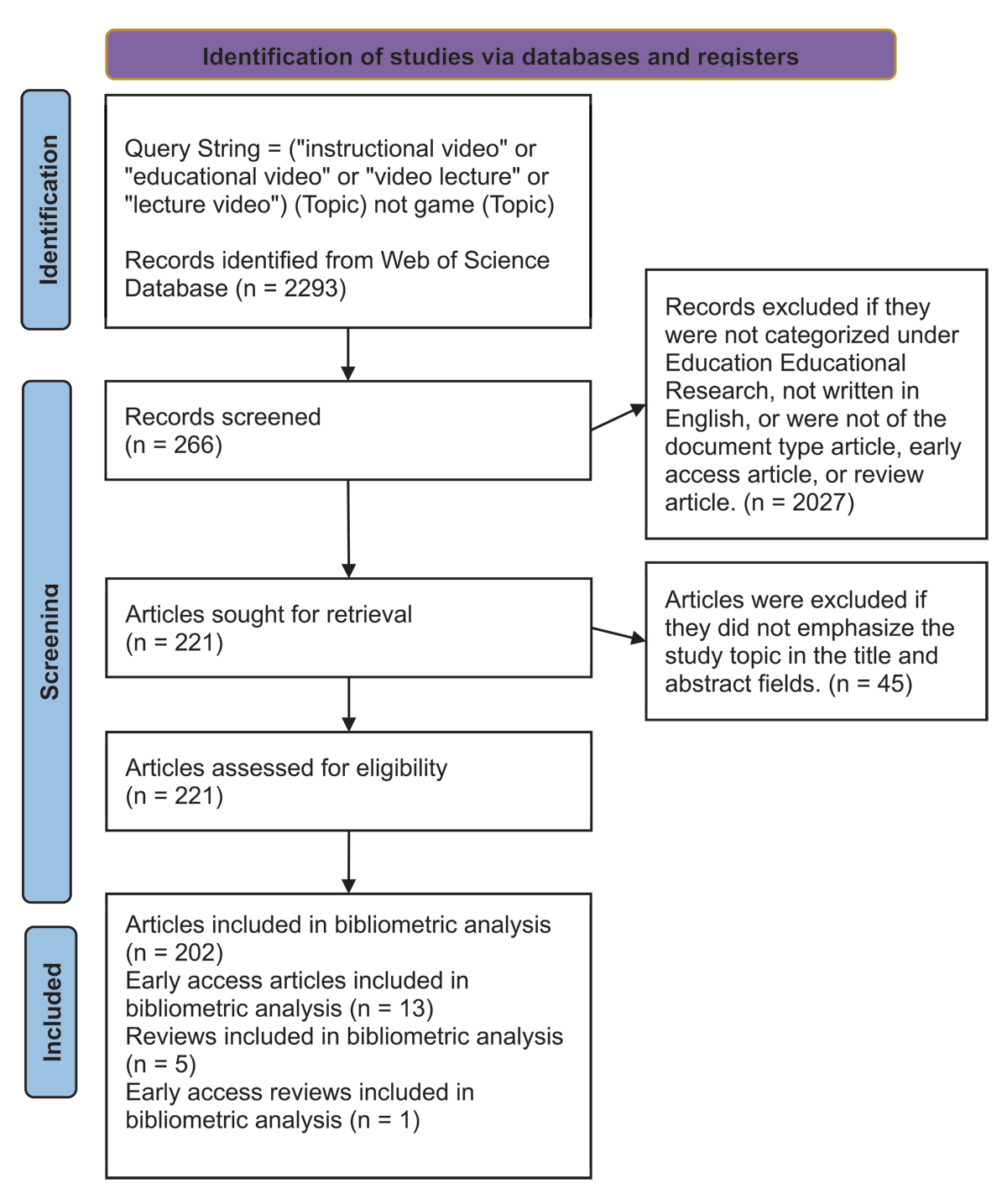
Figure 1
PRISMA Flow Diagram.
The researchers used the bibliometrix R-package for the analysis. This open-source software, written in R language, allows scholars to analyze large publication datasets and create matrices for collaboration, coupling, co-citation, and co-word analysis (Aria & Cuccurullo, 2017). Its comprehensive options for analyzing large datasets source, author, document, and conceptual structure made it the preferred choice for conducting bibliometric mapping analysis in this study. The bibliometrix package also offers a user-friendly biblioshiny application, enabling researchers to use bibliometrix without coding. Therefore, the researchers utilized the bibliometrix package in conjunction with the biblioshiny app for this study.
Findings and Discussion
Descriptive Characteristics of Instructional Video Literature
The descriptive characteristics of instructional video literature are presented in Table 1. The researchers analyzed 221 articles (documents) from 92 journals (sources). The articles had a total of 718 “author keywords” and 418 “keywords plus.” The authors provided “author keywords”, while “keywords plus” were generated by a computer algorithm from the titles of cited references (Zhang et al., 2016). The articles spanned from 1988 to 2022 and involved 554 authors, including 39 single authors. On average, the articles received 12.84 citations.
Table 1
The Descriptive Characteristics of Educational Video Studies.
| DESCRIPTION | RESULTS |
|---|---|
| Documents (Articles) | 221 |
| Sources (Journals) | 92 |
| Author’s Keywords | 718 |
| Keywords Plus | 418 |
| Timespan | 1988:2022 |
| Authors | 554 |
| Authors of single-authored documents | 39 |
| Average citations per document | 12.84 |
Figure 2 illustrates the annual article production, showing an initially limited number of articles that gradually increased over time. Although there were occasional decreases in publications, such as between 2017 and 2018, the overall trend was upward. Notably, significant increases in article production occurred in 2014, 2017, and 2019, with the peak observed in 2022. These findings indicate the continued relevance of academic research on educational videos and the ongoing progress in video-based research. This trend can be attributed to the widespread adoption of educational videos across various disciplines and technological advancements (Ozan & Ozarslan, 2016; Pappas et al., 2017), and the upcoming prevalence of online education globally (Fyfield et al., 2022). At this point, the effect of the sudden and obligatory transition to online education as a result of COVID19 pandemic was not overlooked since instructional videos were the primary method of instruction in online courses (Harrison, 2020; Mayer, 2021). Technological advances such as improved resolution, multimedia features, and online streaming have accelerated the quality and transmission of videos. The upward trend toward video-based research seems to continue in the future since it plays a crucial role in the widespread distribution of educational content. The fluctuation in some years (i.e., 2018, 2022) was in line with the literature review of Soydan-Oktay and Güler (2024).
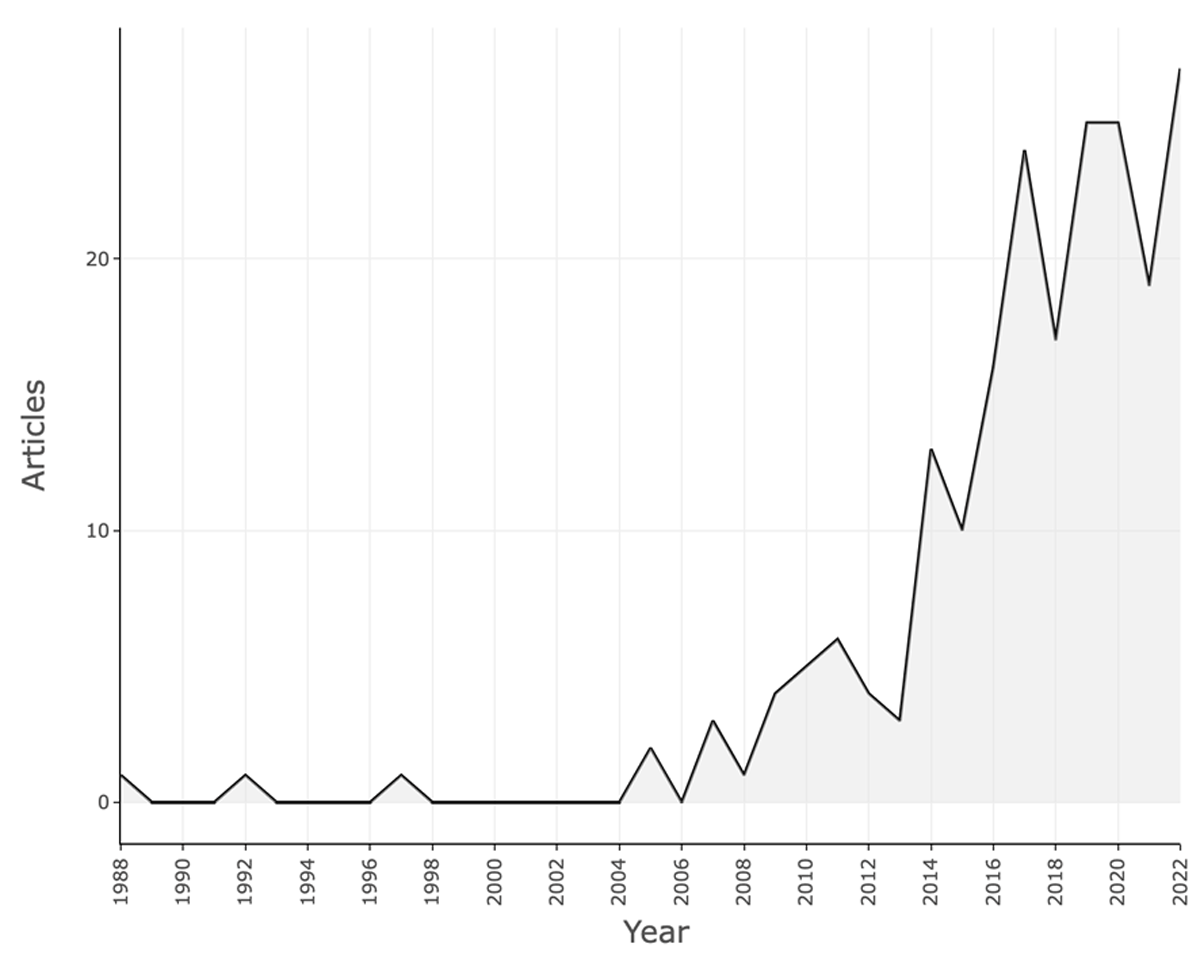
Figure 2
The Distribution of Articles by Years.
To understand educational video articles comprehensively, it is essential to consider their main topics, locations, and affiliations. Figure 3 presents a three-field plot depicting these aspects. The plot includes keyword plus on the left, countries in the middle, and affiliations on the right. “Keyword plus” was chosen for the plot due to its greater depth and diversity than the authors’ keywords (Zhang et al., 2016). The figure reveals that authors from China have significantly contributed to educational video research, followed by the USA, Australia, Germany, Korea, Spain, the United Kingdom, and Turkey. These countries have focused on various issues such as performance, cognitive load, attention, and multimedia. Consequently, the findings suggest that research addressing different aspects of the topic is primarily conducted within institutional frameworks in China, the United States, and Australia. The top countries contributing to the body of research found in this study were similar to those countries found in other video-based research reviews of Balıkçı (2020) and Lo (2023), and distance education research reviews by Zhang et al., (2022) and Zhao et al., (2024). This finding might be attributed to the characteristics of those countries such as high research capability and collaborating with other researchers, owning prestigious institutions providing high budges to their researchers (Durak et al., 2024).
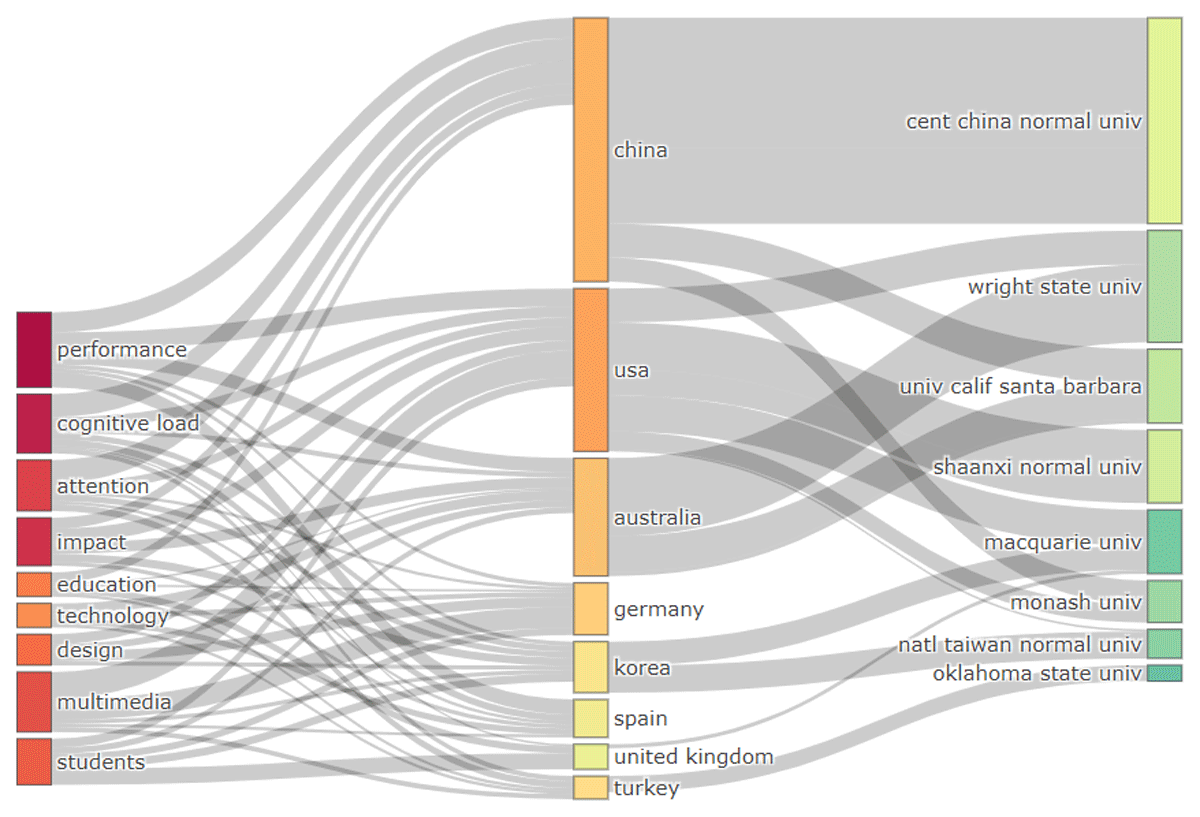
Figure 3
Three-field Plot of the Educational Video Articles.
Influential Aspect of Instructional Video Literature
Influential Sources
Table 2 presents the top ten journals based on the number of educational video-use articles in the current study. Computers & Education had the highest number of such articles, followed by the British Journal of Educational Technology, Education and Information Technologies, Educational Technology Research and Development, and the International Review of Research in Open and Distributed Learning. These journals published a considerable number of articles on educational video use.
Table 2
Top Ten Journals by Number of Educational Video-use Articles.
| SOURCES | NUMBER OF ARTICLES |
|---|---|
| Computers & Education | 17 |
| British Journal of Educational Technology | 9 |
| Education and Information Technologies | 9 |
| Educational Technology Research and Development | 8 |
| International Review of Research in Open and Distributed Learning | 8 |
| IEEE Transactions on Learning Technologies | 7 |
| Innovations in Education and Teaching International | 6 |
| Interactive Learning Environments | 6 |
| International Journal of Emerging Technologies in Learning | 6 |
| Educational Technology & Society | 5 |
Table 3 summarizes the most cited sources from reference lists of educational video use articles in the document set. A cited source refers to a journal cited by one or more research papers in the document set (Aria & Cuccurullo, 2017). The journal Computers & Education remains the primary source cited by educational video-use articles. Additionally, certain journals that did not appear in the top ten list based on the number of articles on educational video use are found among the most cited sources, including Cambridge University Press, Applied Cognitive Psychology, and Learning and Instruction. This suggests a foundation of educational video use rooted in educational psychology.
Table 3
Top Ten Most Cited Sources from Reference Lists of Educational Video-use Articles.
| CITED SOURCES | NUMBER OF CITATIONS |
|---|---|
| Computers & Education | 383 |
| Journal of Educational Psychology | 287 |
| Computers in Human Behavior | 260 |
| Educational Psychology Review | 149 |
| Learning and Instruction | 145 |
| British Journal of Educational Technology | 108 |
| Cambridge University Press | 103 |
| Applied Cognitive Psychology | 93 |
| Educational Technology Research and Development | 90 |
| Educational Psychology | 73 |
Researchers used source impact measures to identify core journals in the field of educational video use. Table 4 ranks journals based on their h-index and total citations from the document set. The h-index indicates the number of a journal’s published papers cited at least h times in other papers (Aria & Cuccurullo, 2017). Computers & Education journal emerges as the most influential source for publishing articles on educational video use. Consequently, the findings indicate that instructional videos are extensively covered in educational technology journals, highlighting their significant role in advancing the field (Hjorth, 2023). This finding is aligned with the previous review studies investigating technology use in education such as Durak et al., (2024) and Talan (2021) since these journals included educational technology-related publications and they are leading journals focused on technology in education (Arici et al., 2019). Researchers conducting educational video studies should note the influential journals identified in this study.
Table 4
Top Ten Journals Based on Source Impact.
| SOURCES | H-INDEX | TOTAL CITATION |
|---|---|---|
| Computers & Education | 12 | 610 |
| IEEE Transactions on Learning Technologies | 6 | 235 |
| Education and Information Technologies | 6 | 115 |
| Educational Technology Research and Development | 6 | 110 |
| International Review of Research in Open and Distributed Learning | 5 | 170 |
| Innovations in Education and Teaching International | 5 | 72 |
| British Journal of Educational Technology | 4 | 144 |
| Learning and Instruction | 4 | 117 |
| Journal of Computer Assisted Learning | 4 | 52 |
| Educational Technology & Society | 4 | 42 |
Influential Articles
Using the bibliometrix package, the researchers identified the primary articles in instructional video use based on local citations. Table 5 presents information about the top articles, considering local and global citations. Local citations count how many documents within the analyzed collection have cited a specific article, while global citations count how many documents in the entire database (e.g., Web of Science) have cited it (Aria & Cuccurullo, 2017). The table reveals that the top articles primarily explore the effects of educational videos on various dependent variables, such as attention, cognitive load, and performance. These findings suggest that research in the field focuses on manipulating specific video-related features or pedagogical elements within instructional videos to observe their impact on cognitive learning outcomes.
Table 5
Top Ten Articles Depending on Local and Global Citations.
| ARTICLE TITLE | LOCAL CITATIONS | GLOBAL CITATIONS |
|---|---|---|
| Effects of different video lecture types on sustained attention, emotion, cognitive load, and learning performance | 23 | 210 |
| Effects of segmenting, signaling, and weeding on learning from educational video | 10 | 36 |
| The impact of online video lecture recordings and automated feedback on student performance | 7 | 104 |
| The video lecture | 7 | 36 |
| Look into my eyes! Exploring the effect of addressing in educational videos | 6 | 30 |
| Demonstration-based training (DBT) in the design of a video tutorial for software training | 5 | 17 |
| Viewing comprehension: Students’ learning preferences and strategies when studying from video | 4 | 33 |
| Video lecture watching behaviors of learners in online courses | 4 | 28 |
| Reviews in instructional video | 4 | 23 |
| Using transparent whiteboards to boost learning from online STEM lectures | 4 | 26 |
Key Issues and Relations in Instructional Video Literature
Core terms
The researchers conducted data cleaning to identify the most frequently used words. They examined keywords from keyword plus, author’s keywords, titles, and abstracts, combining synonymous words into single terms. The keyword “educational videos” and its synonyms were excluded from the analysis since they were the main focus and dominated the lists. Additionally, generic or meaningless words were removed (e.g., found, control). Appendix 1 lists the synonyms and words removed from keyword plus and author’s keywords.
Table 6 presents the top ten most frequently used words in the field of keyword plus and authors’ keywords. In keyword plus, the most recurring words are performance, cognitive load, impact, attention, and multimedia. The most common words in the authors’ keywords are online learning, learning performance, cognitive load, lectures, and attention. Notably, performance, cognitive load, and attention are common keywords in both lists. The most used keywords found in the current study are similar to the systematic review of Soydan-Oktay and Güler (2024). From the analysis of the most used keywords based on authors’ keywords, it is possible to argue that the use of videos for educational purposes was investigated in online learning environments. This could be attributed to the fact that instructional videos were the primary materials in online courses (Harrison, 2020; Mayer, 2021).
Table 6
Frequently Utilized Words in the Field of Keyword Plus, and Authors’ Keywords.
| KEYWORD PLUS | AUTHOR’S KEYWORDS | ||
|---|---|---|---|
| WORD | OCCURRENCES | WORD | OCCURRENCES |
| performance | 28 | online learning | 39 |
| cognitive load | 24 | learning performance | 20 |
| impact | 22 | cognitive load | 12 |
| attention | 21 | Lectures | 11 |
| multimedia | 20 | Attention | 9 |
| students | 18 | Mooc | 9 |
| design | 17 | pedagogical agent | 8 |
| education | 13 | higher education | 7 |
| technology | 12 | learning outcomes | 7 |
| engagement | 9 | Teaching | 7 |
Figure 4 illustrates the word growth of the keyword plus field over time, providing insights into the accumulation of words. Keyword plus was chosen for the figure due to its greater depth and diversity than the authors’ keywords (Zhang et al., 2016). The figure reveals that educational video-use studies primarily focused on performance since 2013, reaching their highest point among other keywords in 2022. The most studied words in educational video-use research papers are student, cognitive load, impact, attention, design, multimedia, technology, education, and lecture.
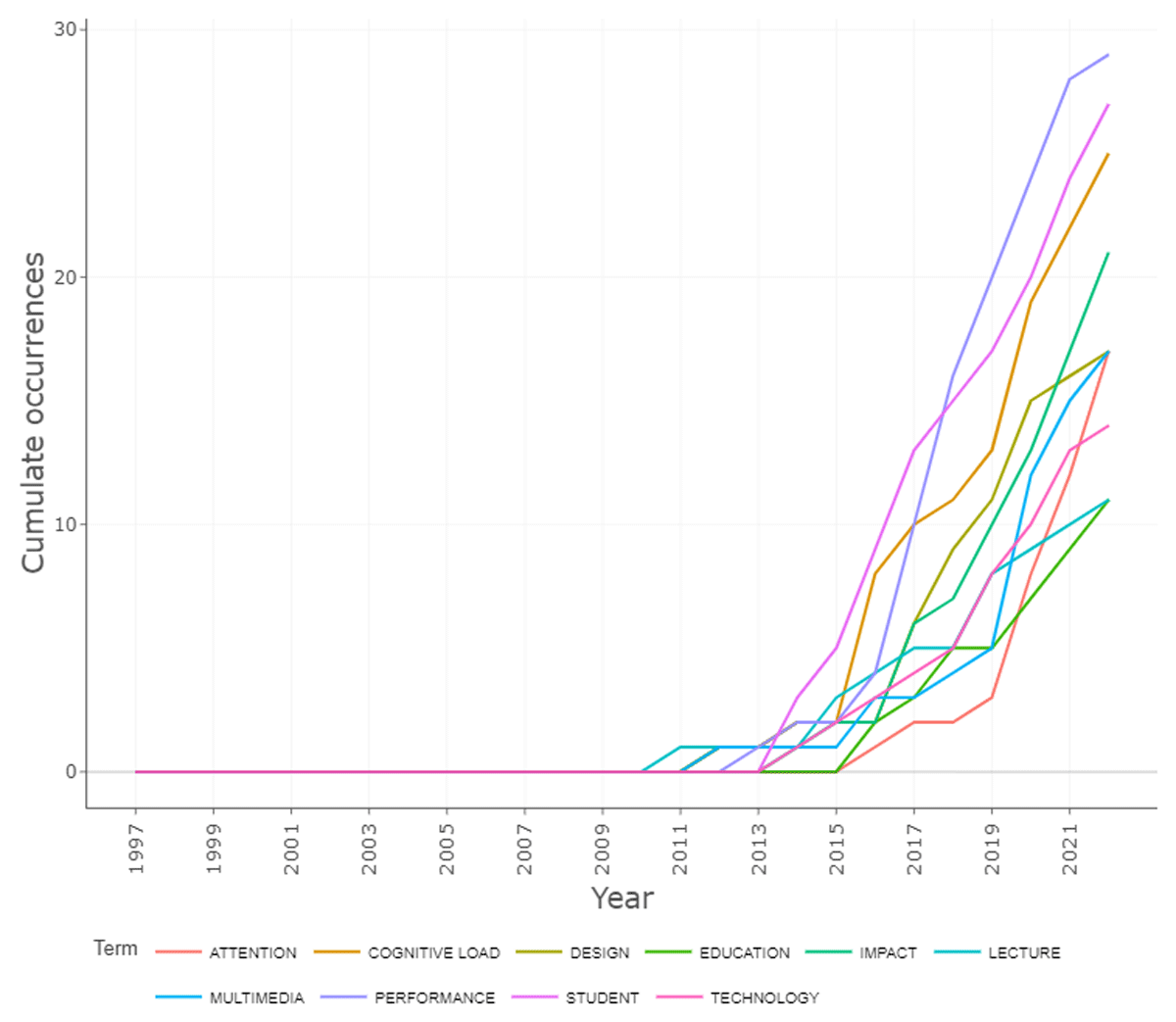
Figure 4
Top Ten Keywords Plus Word Growth Over Time.
The literature indicates that researchers have predominantly focused on the cognitive aspect of learning, as evidenced by their examination of “keyword-plus” and “author’s keywords.” Within this context, variables such as learning performance, cognitive load, and attention have received significant attention. However, to comprehensively explore learning, it is necessary to conduct video-oriented studies considering the social and affective aspects of learning.
Additionally, the findings highlight the prevalent use of learning environments and the frequently targeted learner groups for video usage. Notably, online learning environments and university students have emerged as prominent areas of focus. The prevalence of online learning opportunities and the effectiveness of videos in such environments (Fyfield et al., 2022) may explain this trend. Furthermore, it can be inferred that universities worldwide are increasingly integrating online learning methodologies, relying notably on videos (Noetel et al., 2021), which has led to increased participation of university students in studies. However, this trend also underscores the relatively little emphasis placed on other learner groups, such as K-12 students, within the context of online learning and video-based educational approaches. This argument was supported by the bibliometric review conducted by Balıkçı (2020), which focused on the use of videos in K-12 education and found a small number of publications compared to the current study. Therefore, future research should broaden our understanding of the topic by focusing on diverse learner groups.
The Co-occurrence Network of Educational Video Use Articles
Figure 5 displays the co-occurrence network of keyword plus, indicating the main nodes and their connections. Node size represents the frequency of appearance in the dataset, with larger nodes appearing more frequently. To ensure clarity in the analysis, the researchers limited the number of nodes to 50 and set the minimum number of connections between nodes to three. Isolated nodes were removed from the network, and the “walktrap clustering algorithm” proposed by Lancichinetti and Fortunato (2009) was employed. The figure reveals three distinct clusters denoted by the colors red, green, and blue, with the red cluster exhibiting a higher level of centrality.
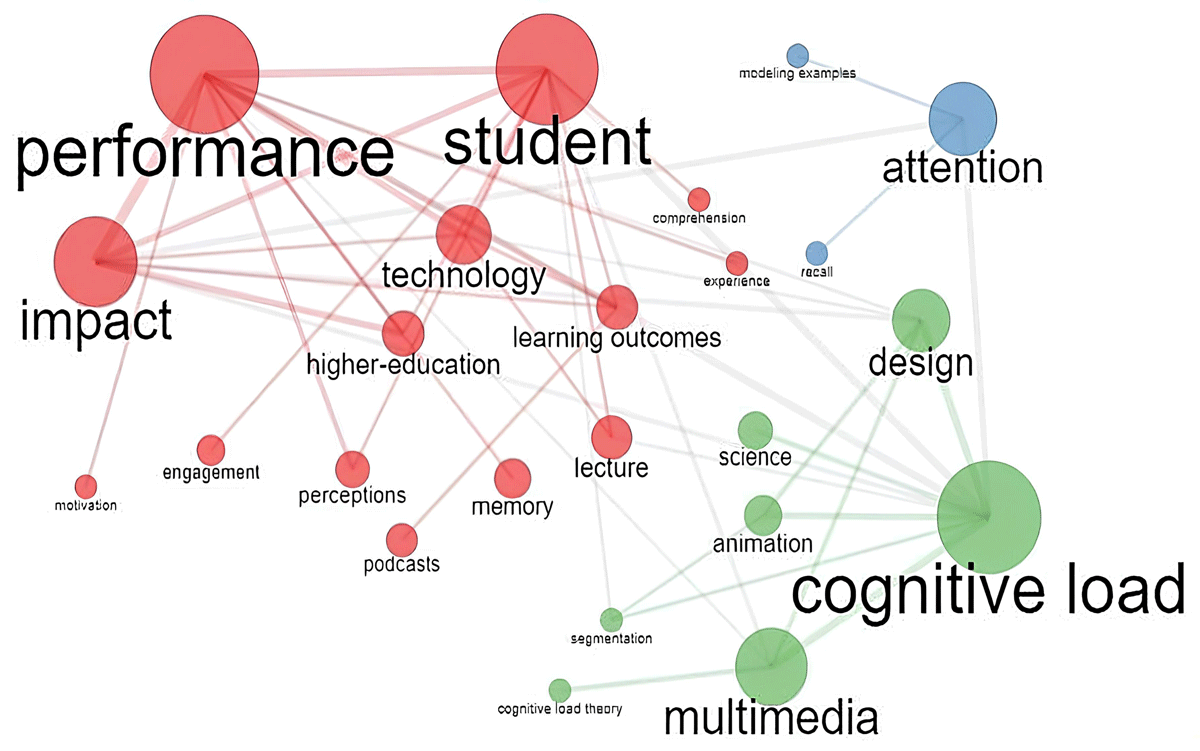
Figure 5
The Co-Occurrence Network of Keyword Plus.
The red cluster centers on learning performance, the green cluster on cognitive load, and the blue cluster on attention. The red cluster reflects the focus of educational video-use studies on student performance, with numerous connections among its nodes. The green cluster explores design elements and evaluates videos as multimedia materials concerning cognitive load. The blue cluster examines the attention variable in educational videos associated with recall and cognitive learning outcomes. Studies in this cluster evaluate video modeling examples in terms of attention. The structure of the blue and red clusters is aligned with the structure of Balıkçı’s (2020) bibliometric study except for the green cluster. Moreover, the blue and green clusters are interconnected through the link between cognitive load and attention nodes.
The co-occurrence network reveals the close alignment between prominent nodes and core terms in the educational video literature. The relationships between these terms can be interpreted in various ways. However, examining the interconnection of primary nodes within each cluster highlights the association between learning performance, cognitive load, and attention. This finding is consistent with theoretical assumptions and empirical evidence from previous studies.
Theoretically, the cognitive theory of multimedia learning (CTML) emphasizes the goal of understanding in multimedia learning environments (Mayer, 2009), which aligns with the focus on learning performance in educational videos. Additionally, managing internal cognitive load, reducing external cognitive load, and increasing germane cognitive load have been recognized as crucial for meaningful learning (Sweller et al., 2019). The close relationship between learning performance and cognitive load is reflected in Figure 5 and is supported by existing literature.
Attention is another variable associated with cognitive load, as it influences the transfer of learning stimuli to short-term memory. In multimedia learning, attention management is vital in preventing the split attention effect, which increases cognitive load and hinders learning performance (Sweller et al., 2019). Therefore, there is a close relationship between learning performance and cognitive load. As seen in Figure 5, this link is also prominently reflected in the literature on educational videos.
In summary, the findings from the co-occurrence network analysis indicate a remarkable emphasis on cognitive variables such as learning performance, cognitive load, and attention in the existing educational video literature. The CTML and Cognitive Load Theory are widely referenced and extensively investigated within these variables. The prevalence of research in this framework suggests a thorough synthesis of the subject matter within the theoretical context. However, when considering learning holistically, it becomes evident that there is a need for new studies focusing on affective and social variables to provide a comprehensive understanding of the topic.
Current Research Themes and Future Directions
The Thematic Map of Educational Video Use Articles
Researchers selected the keyword plus for analysis to reveal the thematic map of educational video-use articles. Parameters were set to ensure a thorough understanding of educational video utilization: limited to 200 words, minimum cluster frequency of 20, 3 labeled terms per cluster, and the “walktrap clustering algorithm” (Lancichinetti & Fortunato, 2009). Each bubble represents a cluster, with the bubble’s name being the most frequently occurring term. Bubble size corresponds to term occurrences in the cluster.
Figure 6 shows the thematic map based on centrality (x-axis) and density (y-axis). Centrality indicates the importance of a theme, while density reflects its level of development (Cobo et al., 2011). The figure consists of four quadrants. The upper-right quadrant represents motor themes, which are both important and well-developed. The upper-left quadrant contains niche themes, which are well-developed but have marginal importance. The lower-left quadrant includes emerging or declining themes, which are isolated and weakly developed. The lower-right quadrant represents basic themes, which are important but need to be well-developed.
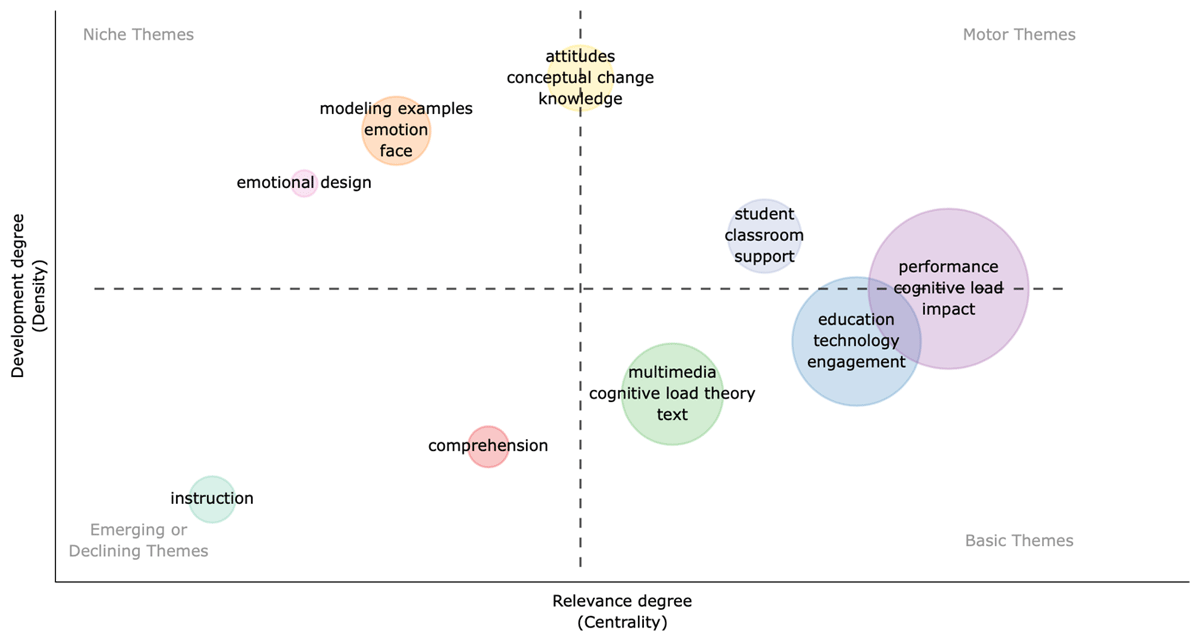
Figure 6
The Thematic Map of Keyword Plus.
Table 7 corresponds to the clusters depicted in Figure 6. The first cluster revolves around “performance” and encompasses cognitive variables and design-related aspects of videos, including cognitive load, impact, attention, and design. This cluster is found in both basic and motor themes, exhibiting high centrality and medium density on the thematic map. These findings suggest that research on instructional videos predominantly concentrates on their influence on various cognitive learning outcomes. The position of the cluster in the map implies that the literature in this area is not yet saturated, indicating the necessity for additional studies.
Table 7
Themes and Keyword Plus in the Thematic Map.
| CLUSTER REPRESENTATION | THEME | KEYWORD PLUS IN CLUSTERS |
|---|---|---|
| Performance | Motor/Basic theme | Performance, cognitive load, impact, attention, design, memory, perceptions, science, information, examples |
| Education | Basic theme | Education, technology, engagement, podcasts, higher-education, motivation, lecture, experience, online, strategies |
| Multimedia | Basic theme | Multimedia, cognitive load theory, text, working memory |
| Student | Motor theme | Student, classroom, support |
| Modeling examples | Niche theme | Modeling example, emotion, face |
| Attitudes | Niche/Motor theme | Attitudes, conceptual change, knowledge |
| Instruction | Emerging theme | Instruction |
The second cluster, represented by “education,” primarily belongs to the basic themes, while a smaller fraction is categorized as motor themes. The research topics within this theme pertain to learning environments such as technology, podcasts, higher education, and online, and certain affective learning outputs like motivation and engagement. This result indicates the relevance of literature focusing on affective variables in higher education, particularly technology-driven learning environments. However, the development degree of this cluster is not high, suggesting that further study with more focus on the affective aspect of learning in different learning environments. In recent years, this situation has drawn the attention of researchers in the field (e.g., Köster, 2018), highlighting the need to examine the issue, particularly from its affective dimension.
The theoretical aspect of instructional video literature, found within the basic themes, is covered by the “multimedia” representation. It includes various research topics such as cognitive load theory, text, and working memory. This result shows that the topic is closely related to the multimedia and cognitive load theory literature. This phenomenon was similarly highlighted in the bibliometric study conducted by Li et al. (2019), where “cognitive load” was identified as the most frequently co-occurring keyword in multimedia learning research. Accordingly, the findings of this study align with previous research within the established theoretical framework. Moreover, cognitive load remains a critical factor in the design of multimedia instruction, with numerous strategies suggested to mitigate it across diverse overload scenarios (Mayer & Moreno, 2003). This emphasis on managing cognitive load likely played a significant role in shaping the theoretical foundation of the instructional videos. However, the density of the topic is lower in the thematic map, indicating that there are still many unanswered questions in the instructional video literature in line with the relevant theoretical orientations.
The “student” appears in the motor theme in the instructional video literature, closely intertwined with the topics of classroom and support. This result suggests that instructional videos have found widespread utilization as a supportive tool within classroom settings. The literature documents successful applications of videos in classroom settings, where videos can supplement lectures, enhance initial learning, lower dropout rates, and offer tutorial support (Brecht, 2012). For optimal integration of videos to support student learning, however, it is essential to adhere to principles such as multimedia, coherence, signaling, redundancy, spatial and temporal contiguity, segmenting, pre-training, modality, personalization, voice, image, embodiment, and generative activity (Mayer, 2021).
The “modeling examples” are considered a highly developed but isolated representation. It is associated with topics related to emotion and face. The thematic map implies abundant room for further progress in determining the role of video modeling examples and the instructor’s face in video lectures. In this regard, research has highlighted that the instructor’s face is a key element in capturing students’ attention, particularly in video lessons that utilize video modeling examples (van Wermeskerken, Grimmius, et al., 2018; van Wermeskerken, Ravensbergen, et al., 2018). However, further studies are needed to understand how the combination of video modeling behaviors and the instructor’s presence impacts learning processes. This need has emerged as a guiding factor for future research in the present study. It also shows that there has been substantial growth in the number of studies addressing the emotional aspect of instructional videos.
The cluster represented by “attitudes” has a high density and medium centrality level. The main dimensions of this theme are the topics of conceptual change and knowledge. This result indicates that a substantial body of research exists in the literature regarding these topics, but they are moderately important in the field. For instance, the knowledge domain may play an important role in determining the effectiveness of videos as multimedia learning tools (Hong et al., 2018). Research indicates that the type of knowledge conveyed in a video can impact learning outcomes differently across cognitive, sensory, and social contexts (Polat et al., 2024). This study highlights that while extensive research exists on moderating factors like knowledge type, there remains a need to more closely connect such moderators to foundational sources within the field. Therefore, future studies should establish connections between these topics and the subjects covered in the basic and motor themes.
Two emerging themes, namely “instruction” and “comprehension,” are present in the thematic map. However, both themes lack substantial interconnections as no adequate clusters link them. Furthermore, these themes exhibit low development and centrality within the field. This result is, in fact, closely aligned with the goals of multimedia learning. One of the primary objectives in multimedia learning is to observe changes in cognitive processes, such as “recall” and “transfer” (Mayer, 2009). Mayer (2009) suggested that transfer may play a particularly critical role, especially in applying learning to new contexts. In this regard, the prominence or decline of the comprehension theme in the current study could be interpreted in two ways. First, researchers may have recently begun to place as much emphasis on comprehension as on transfer. This result may suggest that the instructional aspect of videos should be further explored with more emphasis on the dimension of “comprehension.” Alternatively, comprehension might be less widely accepted as a core learning goal compared to others.
A highly developed but isolated theme is “emotional design.” This result indicates several studies have been conducted on “emotional design” in instructional videos. However, these studies are not commonly linked to the topics specified in the basic themes. Emotional design in multimedia learning contributes to improved outcomes like retention, transfer, comprehension, and motivation, while also decreasing perceived difficulty (Wong & Adesope, 2021). Integrating emotional design principles into learning materials can evoke positive emotions, which aid cognitive processing and enhance learning (Um et al., 2012). Although emotional design is recognized for its positive impact on learning results, there is still a limited amount of theoretical analysis regarding its role in the learning process, especially within the context of educational videos. Thus, examining educational videos from a theoretical perspective focused on emotional design is needed.
The Thematic Evaluation of Educational Video Use Articles
A “Thematic Evaluation” analysis was conducted to observe the thematic evolution of studies using Keyword Plus. Prior to the analysis, essential deletions were made from the word list provided in Appendix 1, and synonymous terms were consolidated. The analysis employed default parameters for thematic evaluation, utilizing the Walktrap clustering algorithm. Additionally, four cutting points were selected within the biblioshiny interface, specifically for the years 2014, 2017, 2019, and 2021. These years were algorithmically determined by biblioshiny without any manual adjustments. The thematic evolution graph based on these selected years is presented in Figure 7.
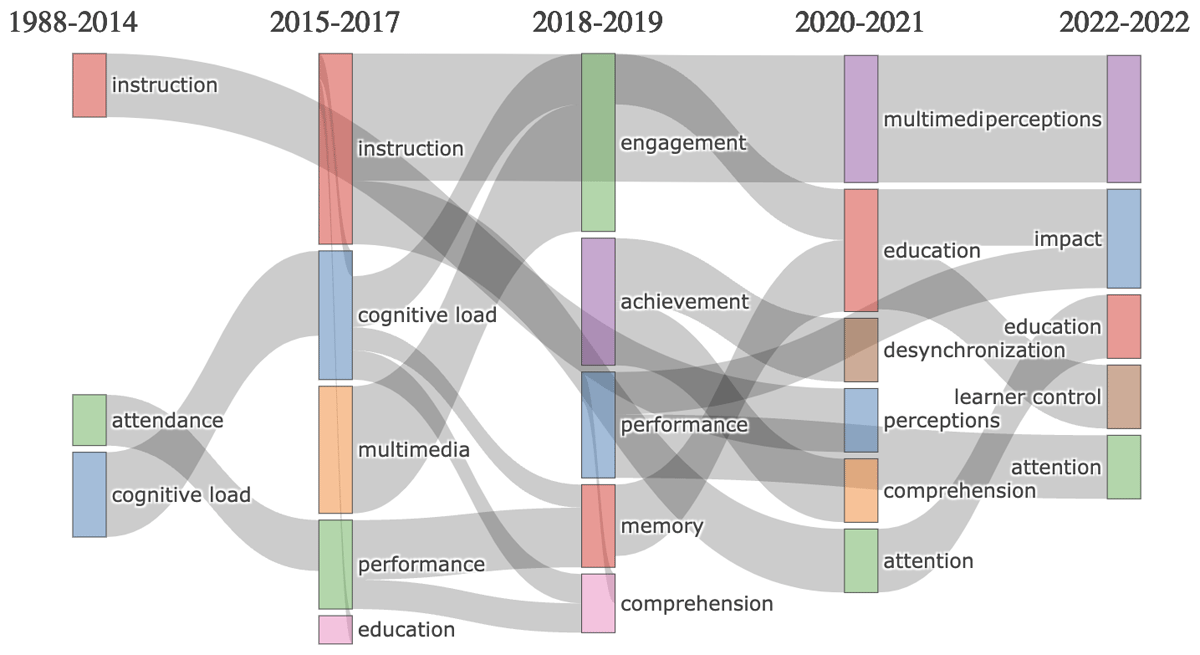
Figure 7
The Thematic Evaluation of Author’s Keywords.
The Figure 7 shows how study themes in student performance, cognitive elements, and educational procedures evolved between 1988 and 2022. Between 1988 and 2014, research first concentrated mostly on fundamental subjects like “instruction” and “cognitive load,” with a little amount of attention paid to “attendance,” reflecting attempts to comprehend efficient teaching strategies and cognitive limitations in learning. The topics changed by 2015–2017 to include “multimedia,” “performance,” and “education,” indicating a move toward using digital resources and assessing student progress. While “performance” and “comprehension” remained important, the emphasis shifted from 2018 to 2019 to “engagement” and “achievement,” indicating an interest in how students connect with educational content and the outcomes of those interactions. The research environment grew increasingly sophisticated between 2020 and 2021, with concepts like “perceptions,” “attention,” “desynchronization,” and “education” gaining. The shift toward online learning and the growing need to address student experiences and attentional challenges, particularly in asynchronous learning environments, may have contributed to the complexity of the research landscape during 2020–2021, with themes like “perceptions,” “attention,” “desynchronization,” and “education” gaining prominence. Consistent with the findings of this study, Soydan-Oktay and Güler (2024) observed an increasing trend in the utilization of videos within online learning environments. Recent topics such as “multimedia perceptions,” “impact,” “learner control,” and “education” in 2022 demonstrate an emphasis on analyzing the impact of multimedia and customizing learning experiences. A growing interest in student agency and self-regulated learning in contemporary, digital educational contexts is highlighted by the recent emphasis on learner control and multimodal perspectives. Overall, the theme evolution demonstrates how, in response to evolving educational dynamics and technology advancements, the traditional instructional focus has given way to a complex investigation of engagement, perceptions, multimedia, and personalized learning.
Conclusion, Implications and Suggestions
This study examines the characteristics and trends of the instructional video literature, including the defining features of articles, significant sources and articles, and key terms commonly used in the field. The study also provides insights into educational video research’s present condition and development by examining the number of articles, timespan, annual production, global distribution of research, most cited sources, and influential articles. Moreover, the study seeks to identify the core topics and focus areas within instructional video literature by analyzing the co-occurrence network and thematic map of core terms.
These findings underscore the importance of educational technology journals in shaping the discourse around instructional videos. The top articles primarily investigated the impacts of educational videos on attention, cognitive load, and learning performance, as reflected by the frequently used keywords. These findings highlight the focus on cognitive aspects of learning in instructional video research. However, there is a need for future studies to consider the social and affective dimensions of learning to provide a more comprehensive understanding of the topic.
The thematic analysis emphasized cognitive variables and design concerns, highlighting the need for further exploration. This study emphasizes the importance of considering affective variables in educational video research and exploring theoretical underpinnings. Future investigations should focus on video modeling, emotional design, and instructional aspects of video lectures.
Overall, the analysis of instructional video literature revealed the growing status of educational videos in academic research, with an increasing number of articles and citations. The findings provide a foundation for further exploration and development of instructional video practices, emphasizing the need for comprehensive studies considering multiple learning aspects. As the field progresses, educational videos are poised to play a crucial role in the widespread distribution of educational content, particularly in online education.
The present study offers a comprehensive overview of video use in education. However, it is important to acknowledge and explore certain limitations of this study to gain a broader perspective in this research area. The selected keywords and the use of Web of Science databases, including articles only in English limit the study’s findings. Additionally, we only included articles from the “education educational category” of the Web of Science for bibliometric analysis. Therefore, when interpreting the results, it is essential to consider these factors, and future research studies should include different databases. During the search query, we screened all publications’ titles and abstracts and excluded those unrelated to educational video use. Considering the term analysis in this study, which covers the title and abstract fields, future studies may incorporate additional criteria to evaluate the quality of the selected articles.
Data Accessibility Statement
The datasets used and/or analyzed during the current study are available from the corresponding author on reasonable request.
Appendices
Appendix 1
| KEYWORD PLUS | |
|---|---|
| INDICATED WORD | SYNONYMS IN THE DOCUMENT SET |
| cognitive load | cognitive load, cognitive-load, cognitive-load approach |
| lecture | lecture, lectures, courses |
| student | student, students, learners, medical-students |
| animation | animation, animations, instructional animations |
| performance | performance, academic-performance |
| learning outcomes | learning outcomes, outcomes |
| technology | technology, computer-technology, technologies |
| higher-education | higher-education, university |
| memory | memory, memories |
| Removed Words | instructional video, educational videos, video, educational video |
| AUTHOR’S KEYWORDS | |
| INDICATED WORD | SYNONYMS IN THE DOCUMENT SET |
| cognitive load theory | cognitive load theory, cognitive theory of multimedia, cognitive theory of instruction |
| online learning | online learning, distance education, on-line learning, e-learning, electronic learning, distance learning, open learning, and distance learning, distance education and telelearning, elearning |
| learning outcomes | learning outcomes, student outcomes |
| learning performance | learning performance, performance, student performance, learning |
| lectures | lectures, lecture, course |
| attention | attention, sustained attention, attention awareness mechanism, attention distribution, visual attention |
| mooc | mooc, moocs, moocs courses |
| student | student, medical students, elementary school students |
| pedagogical agent | pedagogical agent, virtual human |
| instructor presence | instructor presence, presence |
| Removed Words | instructional, korea, youtube, education, educational videos, educational video, instructional video, instructional videos, video, demonstration video, videos, video lectures, video lecture, lecture video, video-based learning, lecture videos, video podcasts, video instruction, video learning |
Sustainable Development Goals (SDGs)
This study is linked to the following SDG(s): Quality education (SDG 4).
Ethics and Consent
This study does not involve any living subjects; therefore, an ethics review is unnecessary. We, as the authors of this manuscript, declare that this manuscript is the result of our independent work under the reviewer’s comments. This manuscript does not include any previously published or authored research. We are the sole authors of this manuscript.
Acknowledgements
Based on Academic Integrity and Transparency in AI-assisted Research and Specification Framework (Bozkurt, 2024), the authors of this paper acknowledge that this paper was reviewed, edited, and refined with the assistance of OpenAI’s GPT-4 and DeepL (Versions as of November 2024), complementing the human editorial process. The human authors critically assessed and validated the content to maintain academic rigor. The authors also assessed and addressed potential biases inherent in the AI-generated content. The final version of the paper is the sole responsibility of the human authors.
Competing Interests
The authors have no competing interests to declare.
Author Contributions (CRediT)
Hamza Polat: Conceptualization, investigation, data curation, visualization, writing—original draft, preparation; Halil Kayaduman: Conceptualization, data curation, analysis, investigation, methodology, visualization, writing – original draft; Ali Battal: Conceptualization, investigation, methodology, writing – original draft, writing – review & editing writing. All authors have read and agreed to the published version of the manuscript.