
Introduction
In the digital age, a modern understanding of education, which emphasizes a student-centered approach, has gained prominence due to the opportunities afforded by technological advancements. This approach has underscored the significance of life-long learning, enabling learning to occur in diverse environments. While online learning environments, which have become increasingly popular during the pandemic, largely address the informational needs of learners, student motivation within these settings continues to pose a challenge (Bozkurt & Genç-Kumtepe, 2014). In cases where learners lack the flexibility to engage in learning at their own pace and convenience, a decline in motivation may occur, potentially leading them to disengage from online learning platforms (Güler & Güler, 2015). Various approaches, methods, and tools have been explored as potential solutions to this issue. Among these is gamification, defined as the application of game design elements in non-game contexts (Deterding et al., 2011).
The use of gamification in educational activities has been shown to significantly enhance student participation and motivation in learning environments (Buckley & Doyle, 2014). Consequently, numerous empirical studies have evaluated gamified online learning environments over the past decade. As the number of such studies has increased, several systematic reviews on online learning and gamification have been conducted, examining the components of gamification, the contexts in which they can be applied, and their general effects (Dicheva et al., 2015). Additionally, these reviews have explored specific gamification elements and their associated outcomes (Antonaci et al., 2019). However, a detailed analysis focusing on gamification elements and various variables within online learning environments is needed to guide future decisions in gamification design. Therefore, this systematic review aims to investigate the relationship between gamification elements in empirical studies conducted in online learning environments, the trends in these environments, and the resulting learning outcomes.
Online Learning and Gamification
Online learning involves utilizing the Internet to access educational materials, interact with content and relevant participants, and receive support throughout the learning process, with the goal of acquiring knowledge and enhancing individual learning experiences (Ally, 2004). These environments are web-based platforms facilitating synchronous or asynchronous teaching and learning interactions, presenting content in various formats such as videos, audio files, and texts, and conducting educational activities via internet networks (Anderson, 2004). Key components of online learning environments include monitoring of learning by teachers, students, peers, designers, and school contexts; tools utilized (e.g., Learning Management Systems, information presentation platforms); learning materials; information resources; and socio-cultural spaces (Durdu & Onay Durdu, 2013; Wasson, 1997). When designing online learning environments, it is essential to consider factors such as content presentation, available resources, assessment methods, classroom culture, interaction dynamics, technologies employed, and the execution of the educational process (Dringus & Terrell, 1999). Today, online learning is regarded as a student-centered, cost-effective, participatory, flexible, and favorable method that integrates technology and pedagogy, offering diverse access and communication opportunities for both students and teachers (Castro & Tumibay, 2021).
In the design of online learning, which has been a subject of discussion over the past 20 years, the elements ensuring its effectiveness have been categorized into three main areas. The first area emphasizes the importance of students possessing high intrinsic motivation, self-regulation, responsibility, and digital literacy. The second area focuses on the role of teachers, who are expected to proficiently use technology and act as facilitators. The third area highlights the need for rich and advanced instructional strategies, interactive and meaningful content, user-friendly technologies with multiple features, courses designed with regular assessment processes, clear objectives aligned with these assessments, and strong institutional support (Castro & Tumibay, 2021).
Furthermore, the success of online learning, as an individualized and self-directed learning model (Chou & Liu, 2005), largely depends on the engagement, consistency, and motivation of the learners (S. Zhang et al., 2010). However, challenges such as learner disinterest in course content, affective deficiencies, and lack of motivation in online environments necessitate the adoption of new approaches (Bozkurt & Genç-Kumtepe, 2014; Czerkawski & Lyman, 2016). As a response to these challenges, the gamification approach has emerged as an innovative solution, offering engaging and motivating techniques alongside various feedback strategies that can enhance participation in these environments (Deterding et al., 2011; Seaborn & Fels, 2015; Surendeleg et al., 2014; Zichermann & Cunningham, 2011).
Gamification has become an essential tool, particularly in business, but also in social life, education, and online environments (Smith, 2011). With the primary goal of increasing motivation, it has been shown to enhance learning abilities (Fiş Erümit & Karakuş, 2015; Lee & Hammer, 2011). Additionally, gamification not only provides rapid feedback to individuals but also fosters a sense of responsibility and makes learning objectives more appealing (Deterding et al., 2011). Studies have demonstrated that gamification can improve students’ motivation, interaction, participation, engagement, and academic performance (Antonaci et al., 2019; Broer & Breiter, 2015; Gåsland, 2011; Li et al., 2012; Su & Cheng, 2015).
Although gamification is rooted in motivation theories, there remains a lack of research on the effects of gamification practices and motivation across different individuals and learning environments (Antonaci et al., 2019; Dicheva et al., 2015; Looyestyn et al., 2017; Perryer et al., 2016). To gain a deeper understanding of the psychological mechanisms underlying gamification, it is essential to examine game design elements in detail and explore their motivational aspects (Deterding et al., 2011). However, many studies on gamification fail to analyze the specific impact of these elements. Moreover, since numerous studies employ only one or a few game elements simultaneously, they tend to focus solely on similar observable outcomes (Hamari et al., 2014; Seaborn & Fels, 2015). These elements may vary depending on the context in which they are used or the methodology applied.
Despite the limited number of fully experimental studies on gamification in online environments, the majority of research has concentrated on its effects on learner experience (Antonaci et al., 2019). While some studies have reported positive outcomes associated with gamification elements (Betts et al., 2013; Sillaots, 2014), others have highlighted negative effects (Aydın, 2021; Barringer et al., 2018; Hanus & Fox, 2015; Yaşar, 2021). Additionally, concerns such as insufficient theoretical foundations and methodological issues have been raised in previous empirical studies (Huang & Hew, 2018). Therefore, a thorough investigation into the effects of gamification elements across different contexts could serve as a valuable guide for future gamification design (Seaborn & Fels, 2015).
While numerous review studies have examined gamification (Antonaci et al., 2019; Kamunya et al., 2019; Khalil et al., 2018; Looyestyn et al., 2017; Ortega-Arranz et al., 2017), one of the most prominent concepts in recent times, this study maintains its originality due to the extensive scope of included studies, the diversity of databases reviewed, the broad timeframe considered, the elements analyzed, and the connections established among these elements. For instance, the study by Nurtanto et al. (2021) focused on databases outside of the Web of Science and primarily analyzed outcomes without incorporating contextual variables. Similarly, Zhang and Yu (2022) reviewed ten articles published between 2020 and 2022, concentrating exclusively on the use of gamification within Learning Management Systems (LMS) and virtual learning environments. However, their review suggests that the data were not examined with sufficient depth. Many of these reviews have primarily focused on the core components of gamification, thus indicating a clear need for future research to investigate the relationships between students’ learning outcomes (e.g., learning achievements, motivation, and participation) and contextual factors (Zainuddin et al., 2020). In contrast, this study aims to provide a more comprehensive analysis by exploring the relationships between gamification elements and the broader learning context.
In this context, the present study was designed to qualitatively examine the effects of gamification elements in online environments on learning outcomes, as well as the relationships between learning outcomes and environment-specific elements. Furthermore, it aims to inform decision-making processes regarding contextual elements, particularly from a methodological standpoint, and to offer insights into the impacts of gamification elements. In line with these objectives, the study sought to answer the following research questions:
What are the trends toward methodology and gamification in the academic studies evaluating online learning environments using gamification elements?
What is the relationship between gamification elements and learning outcomes? What is the impact of the gamification elements as reported in the studies?
How are the gamification items selected according to the environmental variables in online learning? What are their relationships with the learning outcomes?
Methods
A systematic review is defined as a literature review method in which existing studies are utilized through the evaluation of their content, analysis and synthesis of their data, and reporting of evidence to allow meaningful and clear conclusions regarding what is known or unknown (Denyer & Tranfield, 2009). In these studies, three key tools are employed: the identification, critical evaluation, and coherent synthesis of results (Gough et al., 2012). In this study, academic research on gamification elements in online learning environments was investigated in-depth, and conclusions were drawn by synthesizing the findings.
The data consisted of English and Turkish academic theses and articles that met the inclusion criteria based on the following keywords: “online learning,” “distance education,” “gamification,” “gamification in online courses,” and “gamification in online education.” The search for relevant keywords was conducted through various combinations, with an emphasis on maximizing inclusivity. A considerable volume of results was initially yielded by the first three search terms. However, given the broad scope of this study, which encompasses diverse online educational contexts utilizing gamification, generalized search terms were deliberately employed. Access to the theses was obtained through the National Thesis Centre of the Council of Higher Education’s thesis search page and the ProQuest database, while articles were accessed through the Web of Science and Google Scholar databases. Typically, theses are omitted from systematic review studies due to the abundance of literature and feasibility considerations. Nonetheless, their inclusion in this systematic review was deemed essential owing to their substantive methodological intricacies and empirical frameworks, despite the challenges associated with their retrieval and synthesis. The eligibility procedures for the publications are presented in Table 1.
Table 1
Eligibility procedures for the published works included in this study.
| INCLUSION CRITERIA |
|---|
|
|
|
|
|
These criteria allowed us to gather academic papers (n = 41) and dissertations (n = 24). Academic studies were accepted if they met the criteria in three areas: study title, summary, and the full study. The PRISMA procedure was implemented in the selection of publications (Page et al., 2021). Figure 1 presents the flowchart of the review and selection procedures of the study.
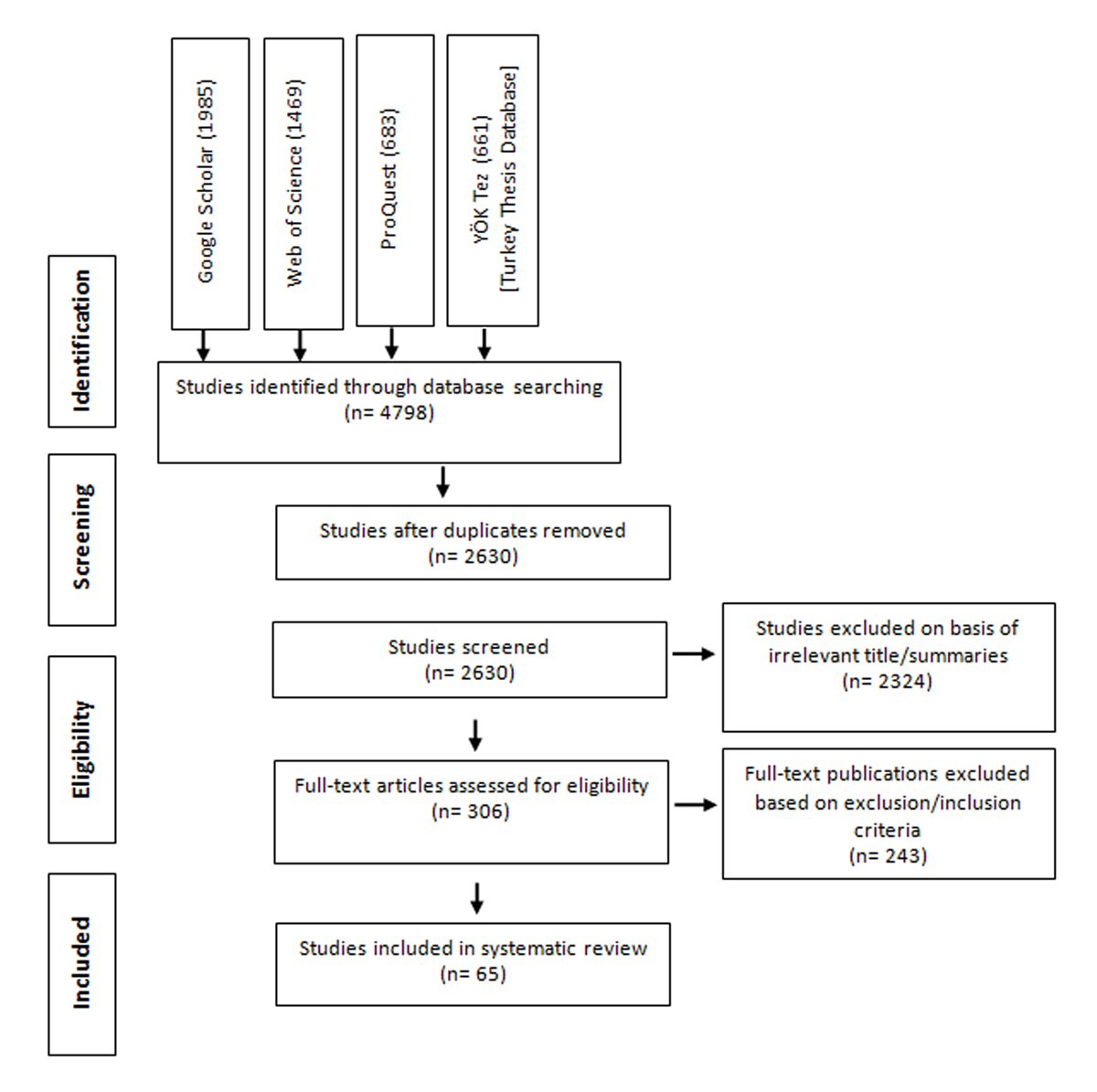
Figure 1
Flowchart of review and selection procedures (PRISMA).
In order to obtain the relevant theses, dissertations and articles, the titles of the studies that were suitable for the keywords and time intervals were first examined. Next, the abstract sections of the studies were analyzed to see whether the studies were empirical. The detailed examination of the studies checked to determine whether the gamification strategies contained in the online learning environments were evaluated with respect to their relationships with learning outcomes. A study code was given to each of the studies and shown in the tables with codes.
Using an Excel spreadsheet online, the studies were categorized into certain themes under methodological titles, such as the name of the study, aims, methods, sample groups, variables, data collection tools, and analysis methods, and environment variables, such as the technology used in the study, the method of application, the gamification tool involved, the learning outcomes under examination, conclusions, and recommendations of the studies. No additional tools were employed aside from the Excel file utilized for the analysis. The process of publication selection and analysis spanned approximately one year.
As the published work included in the systematic review continued to be examined, the number of themes increased and new codes for the themes were created. In total, the 41 academic articles and 24 theses and dissertations included in the systematic review were analyzed according to the specified themes and codes, and the results were summarized in the tables.
Findings and Discussion
RQ 1. Trends in methodology and gamification (descriptive results)
The study breakdown consists of the following: 41 were articles, 16 were doctoral dissertations, and eight were master’s theses. Of the academic papers, 38 were in English, while 11 of the theses and dissertations were in English. Figure 2 presents the research method values according to the year-of-publication indicator of the included studies on the axis of publication type and research method.
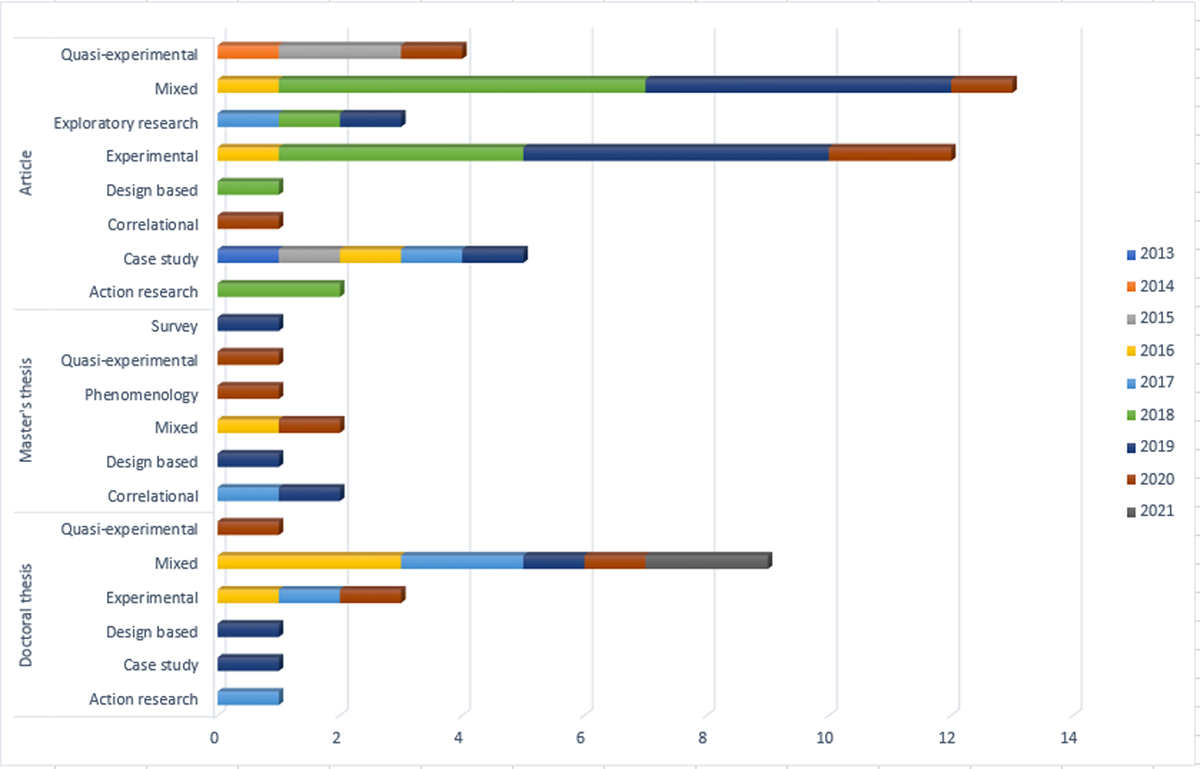
Figure 2
Distribution of the examined studies by year of publication, type, and method.
In the preliminary review section of the study, academic studies published after 2013, when online learning gained popularity, were examined. Despite selecting this timeframe, it was observed that the earliest available academic studies on gamification and online applications were published after 2013. As shown in Figure 2, the rate of studies increased significantly between 2018 and 2020. Of all the studies, a mixed design was employed in 24 studies, while an experimental design was utilized as a quantitative research approach in 15 studies. It appears that the experimental design approach was predominantly applied in academic articles, whereas the mixed design approach was used in both doctoral dissertations and academic articles. The frequency distributions of the trends in the gamification studies analyzed, according to data collection, analysis type, and application period, are presented in Table 2.
Table 2
Methodological trends in gamification studies.
| DATA COLLECTION TOOLS | F | TYPES OF ANALYSIS | F | LENGTH OF APPLIED STUDY (DAYS) | F |
|---|---|---|---|---|---|
| Questionnaire | 33 | Comparative analysis | 58 | 4–9 | 2 |
| Interview | 31 | Relational analysis | 27 | 10–49 | 24 |
| Scale | 25 | Descriptive analysis | 21 | 50–100 | 17 |
| Test (performance, achievement) | 18 | Content analysis | 20 | 101–300 | 9 |
| System records (logs) | 12 | ||||
| Student diaries | 8 | ||||
| Self & peer assessment tools | 3 | ||||
| Monitoring | 2 | ||||
| Group discussions | 2 |
As can be seen in Table 2, the survey studies mostly contained scales available in the literature, but all of the other measurement tools were specially developed for the studies. Most of the scales appeared to be associated with the motivation variable (n = 10). In the studies that utilized qualitative methods, the interviews were mostly conducted using semi-structured interview forms. As far as the types of analyses were concerned, comparison analyses seemed to be the most often used type. The lengths of the studies were expressed in different ways, such as weeks, hours, days, and months. When the lengths were examined, it was clear that the studies were generally carried out in the range of 10 to 100 days, indicating that the majority of the activities took place over two weeks or an entire semester.
As a dependent variable in gamified online learning environments, students’ learning outcomes were examined. While these outcomes were obtained with measurement tools in some studies, some of them were observed qualitatively. Table 3 presents the learning outcomes affected by gamification as contained in the studies. While academic achievement is prominent in the cognitive outcomes, the most widespread outcome in terms of the affective learning outcomes was participation.
Table 3
Learning outcomes discussed in academic studies.
| LEARNING OUTCOMES | STATISTICALLY SIGNIFICANT POSITIVE CHANGE | NO STATISTICALLY SIGNIFICANT POSITIVE CHANGE | TOTAL |
|---|---|---|---|
| Cognitive | 25 | 12 | 37 |
| Academic achievement | 21 | 9 | 30 |
| Learning (qualitatively observed learning outcomes) | 4 | 1 | 5 |
| Task completion | 0 | 1 | 1 |
| Writing performance | 0 | 1 | 1 |
| Affective | 78 | 13 | 91 |
| Participation | 29 | 3 | 32 |
| Motivation | 22 | 6 | 28 |
| Attitude | 10 | 1 | 11 |
| Interaction | 6 | 3 | 9 |
| Satisfaction | 5 | 0 | 5 |
| Interest | 3 | 0 | 3 |
| Perception | 2 | 0 | 2 |
| Self-efficacy | 1 | 0 | 1 |
| Total | 103 | 25 | 128 |
The studies generally examined more than one variable. While creating Table 3, the outcomes discussed in the studies were examined separately. As shown in Table 3, affective outcomes were examined in more studies than cognitive outcomes, and more statistically significant changes were obtained.
RQ 2. The relationship between gamification elements and learning outcomes
A wide variety of components are used in online learning environments. Badges (n = 49), leader boards (n = 40), scores (n = 36), levels (n = 28), and progress bars (n = 20) are often preferred, with more than one gamification element usually used per study. Only five of the studies analyzed used a single element of gamification, and four of these studies used badges. When creating the categories for the gamification components in the studies, four categories seemed to match the gamification dynamics presented by Marczewski (2015): autonomy, mastery (based on individual performance), relatedness, and reward. Figure 1 shows the number of studies that revealed significant results in cognitive and affective outcomes, according to the gamification categories mentioned.
As can be seen in Figure 3 and Table 4, reward and mastery-based gamification category outnumbered the other categories. While a reward was used quite dominantly, generally reward and mastery were used together. The categories of gamification applications based on autonomy, which can offer more adaptive gamifications and highlight social interactions, were used in a very limited number of studies. Table 4 presents the gamification elements in the four mentioned categories as well as the implications of their effects as mentioned in the studies.
Table 4
Effects of gamification categories and elements in studies.
| CATEGORY | ELEMENTS OF GAMIFICATION | N | REMARKABLE RESULTS WITH CATEGORY | PUBLICATION CODE |
|---|---|---|---|---|
| Reward | Badges/Trophy | 49 | * The most commonly used gamification item in each subject area * Reward elements mostly associated with participation and motivation variables. * Students appear to find the leader boards motivating, which triggers senses of competition and fun. * Badges are the most frequently mentioned motivation element by the users. * The negative effects of gamification can be seen when gamification scores are reflected on the real scores (Y16) and competition has become dominant (Y58). | P1, P2, P3, P4, P5, P6, P7, P8, P9, P10, P11, P12, P13, P14, P16, P17, P18, P19, P20, P21, P22, P23, P24, P25, P26, P27, P28, P29, P30, P31, P32, P33, P34, P35, P36, P37, P38, P39, P40, P41, P43, P44, P45, P46, P47, P48, P49, P50, P51, P52, P53, P54, P55, P56, P57, P58, P59, P60, P61, P62, P63 |
| Collection | 2 | |||
| Virtual items | 1 | |||
| Leader boards | 40 | |||
| Scores | 36 | |||
| Surprises | 1 | |||
| Mastery | Levels | 28 | * Mastery elements are mostly associated with academic achievement and participation variables, creating a statistically significant difference. * Gamification elements in this category are influential in terms of performing more activities and visiting learning environments more often. * Students have been reported to attribute more meaning to the elements in this category. * Giving tasks of interrelated difficulty that would increase the sense of achievement have turned out to be effective in the results. * Elements, such as success and certificates, and social status have been highlighted and new relationships created. | P2, P4, P7, P8, P9, P11, P13, P16, P18, P19, P20, P22, P24, P26, P27, P28, P30, P31, P32, P34, P39, P40, P41, P42, P43, P44, P46, P47, P48, P49, P51, P52, P53, P54, P55, P56, P57, P59, P60, P61, P62 |
| Progress and progress bar | 20 | |||
| Experience score | 5 | |||
| Achievement/Acquisition | 3 | |||
| Certificate | 3 | |||
| Time limit (challenge) | 3 | |||
| Task/Target | 2 | |||
| Autonomy | Avatar | 3 | * The ability of the students to customize their avatars by unlocking them has made the applications more adaptive. * The customization of the content for different learner groups has been shown to increase the effectiveness of the studies. | P11, P13, P16, P25, P28, P40, P42 |
| Customization | 1 | |||
| Fun activities | 3 | |||
| Relatedness | Teams | 3 | * These rarely included elements can create new relationships in the online environment. * The cooperation of small groups in teams and the opportunity to socialize in the studies have positive effects on social presence. * Elements of this category are often regarded by users as unnecessary or tools of which they were not even aware. For these reasons, they have caused challenges in determining the impact of the learning outcomes. | |
| Social graphics | 2 | |||
| Gifts | 1 | |||
| Statuses | 1 | |||
| Likes | 2 | |||
| Role-playing | 1 |
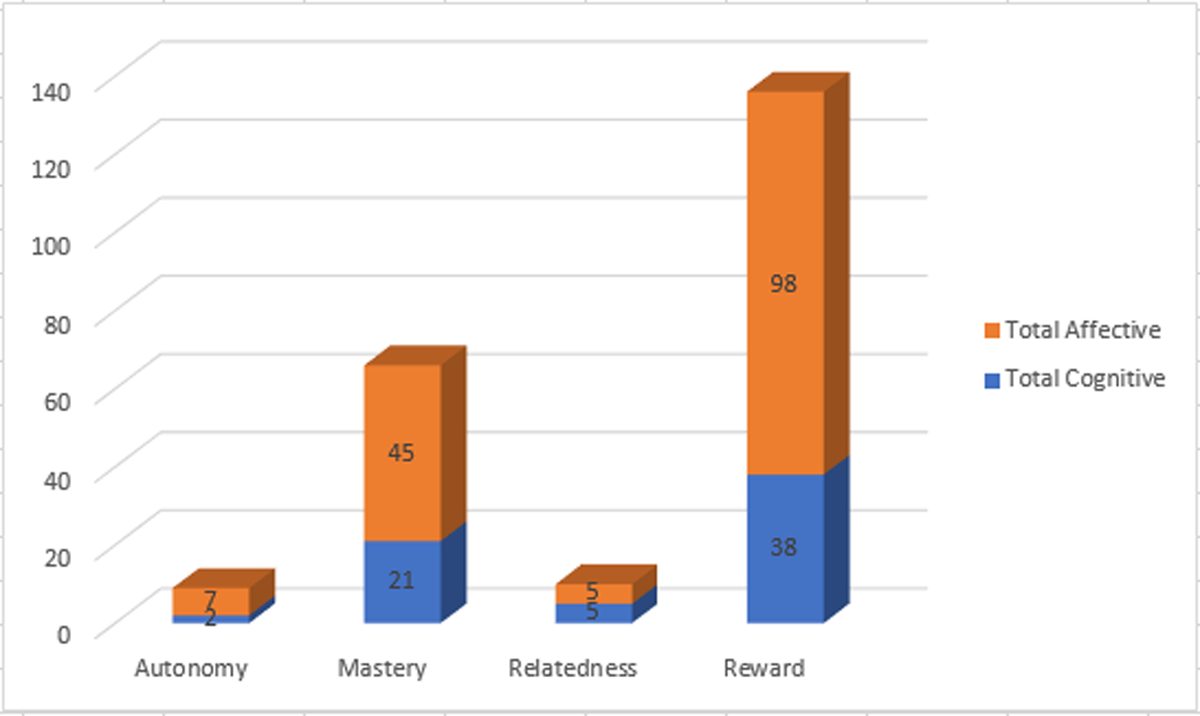
Figure 3
Distribution of learning outcomes by gamification categories.
RQ 3. The relationship between gamification elements and learning outcomes according to environmental variables
Table 5 summarizes the relationship between gamification and learning outcomes in online learning and the different prominent effects of gamification as reported in the studies covered, by taking into consideration the environmental variables in the gamification studies, namely the type of subject area, method, and technology used, as well as sample sizes and sample levels.
Table 5
The relationship between gamification and learning outcomes according to environmental variables.
| THEMES | FEATURES | C | A | TOTAL NUMBER OF STUDIES | REMARKABLE RESULTS OF THE STUDIES | PUBLICATION CODE |
|---|---|---|---|---|---|---|
| LEARNING OUTCOMES*NLO/ SLO | ||||||
| Type of subject area | Personal and professional development | 12/7 | 33/26 | 24 | * Although the gamification applications in online education by and large seems to belong to personal and professional development, most of the studies have been carried out in the field of informatics since there are trainings on information and communication technologies in 10 studies in this category. * In the field of personal and professional development, the participants are generally adults and volunteers, and it is seen that the badges used in these environments mostly reduce intrinsic motivation (P45, P23). In such environments, expectations exist of gamification applications that will strengthen autonomy rather than providing a reward (P46). * Although their number is very limited, gamification components suitable for autonomy and relatedness have been used in the fields of personal development and economics (P34, P42, P54, P9, P59). | P7, P10, P11, P12, P20, P21, P22, P23, P25, P31, P33, P34, P40, P41, P42, P46, P47, P49, P50, P52, P54, P55, P57, P60 |
| Information and communication technologies | 11/6 | 32/26 | 21 | P2, P4, P5, P8, P14, P16, P17, P18, P19, P26, P28, P30, P35, P38, P39, P51, P56, P61, P63, P64, P65 | ||
| science | 2/2 | 2/2 | 2 | P13, P24 | ||
| Aviation and space | 2/2 | 4/3 | 3 | P15, P43, P58 | ||
| economics | 1/1 | 4/4 | 3 | P9, P32, P59 | ||
| Natural sciences | 3/3 | 3/3 | 4 | P3, P27, P29, P37 | ||
| Transportation | 1/1 | – | 1 | P62 | ||
| Application method | Online courses given as part of formal education | 17/12 | 33/28 | 29 | * Most of the studies have been conducted in formal online learning environments. * MOOCs (mass open online courses) have been covered in very few publications and no theses have been found on this subject. * Although it seems that full success has been achieved in MOOCs, it is difficult to generalize the results for all participants as it is methodologically limited to only those individuals who respond to the measurement tools. * Quasi-experimental studies often seem to be carried out in online courses in formal education programs with the indications of statistically significant differences among groups. In studies with a control group, no significant difference has been found between the groups in terms of many of the variables (P16, P21, P28). * More autonomy and relatedness have been used in online courses given within the scope of formal education compared to other environments. | P3, P5, P11, P14, P20, P24, P25, P30, P31, P33, P35, P39, P41, P45, P47, P51, P52, P53, P54, P55, P56, P57, P59, P60, P61, P62, P63, P64, P65 |
| Distance education program | 11/6 | 35/29 | 24 | P2, P4, P7, P9, P10, P12, P13, P15, P18, P22, P23, P26, P32, P38, P40, P42, P43, P44, P46, P48, P49, P50, P58 | ||
| MOOCs | 2/2 | 11/11 | 7 | P1, P6, P8, P19, P27, P29, P36, P37 | ||
| Blended learning | 2/1 | 9/6 | 4 | P16, P17, P21, P28 | ||
| Technology used | Web applications | 15/12 | 45/37 | 32 | * Web applications are generally sharing tools, such as discussion forums and social networks, and a reward system is used according to the content contribution of students. * MOODLE and its plugins appear to be mostly used in open-source software. * Paid LMSs can offer automatic tracking and feedback which are part of mastery. However, those environments use reward systems more than mastery-based apps. | P2, P3, P7, P9, P11, P13, P14, P15, P17, P18, P19, P21, P25, P29, P30, P32, P33, P34, P35, P43, P45, P48, P49, P51, P52, P54, P58, P59, P60, P61, P63, P65 |
| Open-source LMS | 10/5 | 23/19 | 18 | P1, P4, P16, P20, P22, P23, P26, P28, P31, P38, P39, P40, P44, P47, P50, P57, P62, P64 | ||
| Commercial LMS | 7/3 | 13/10 | 10 | P2, P10, P12, P13, P24, P41, P42, P53, P55, P56 | ||
| Sample size | 9–54 | 11/7 | 33/30 | 26 | * Although sample sizes do not make a noticeable difference in terms of outputs, they bring about some differences in terms of implementation processes. * While the applications made in distance education courses in formal learning are mostly in the range of nine to 200 people, the number of samples in MOOCs is generally over 500. *In samples below 60, a feedback-based and participatory gamification process is dominant, requiring students to complete various tasks. *In samples with the number of participants over 100, the gamification process is more integrated with learning management systems, providing more automated feedback and motivation. | P6, P9, P10, P11, P12, P14, P19, P22, P25, P30, P31, P38, P39, P40, P42, P44, P45, P46, P47, P51, P52, P53, P56, P58, P59, P62 |
| 55–99 | 8/6 | 22/16 | 13 | P13, P16, P17, P18, P21, P24, P28, P32, P55, P57, P60, P63, P65 | ||
| 100–294 | 10/7 | 18/18 | 14 | P3, P4, P5, P7, P20, P23, P26, P34, P36, P41, P43, P5, P61, P64 | ||
| 295 & 295+ | 4/2 | 13/12 | 12 | P1, P2, P8, P15, P27, P29, P33, P35, P37, P48, P49, P50 | ||
| Educational background of the sample group | Primary school | 2/2 | 2/2 | 2 | * It appears that most of the studies have been conducted with undergraduate students (mostly first-year students). * Factors, such as creating a competition and giving badges at the undergraduate level, cause more anxiety than at the graduate level (P58). * Some studies conducted on distance education at the primary and secondary school levels have actually focused on gamification within a certain multimedia application, which are used face-to-face outside the classroom environment. * Gamification in MOOCs is mostly carried out with the aim of keeping users in the system and, in this sense, the results are generally positive. | P43, P62 |
| Secondary school | 4/4 | 8/6 | 5 | P7, P21, P24, P25, P43 | ||
| High school | 2/2 | 5/4 | 4 | P25, P35, P59, P64 | ||
| Associate degree | 1/– | 2/1 | 2 | P56, P65 | ||
| Bachelor’s degree | 20/13 | 51/42 | 33 | P2, P3, P4, P5, P9, P11, P13, P14, P16, P17, P18, P20, P22, P23, P26, P28, P30, P32, P33, P38, P39, P40, P41, P46, P47, P48, P51, P54, P55, P57, P58, P60, P61, P63 | ||
| Master’s degree | 1/– | 8/7 | 7 | P10, P31, P33, P42, P45, P53, P54 | ||
| teacher | 1/1 | 4/3 | 3 | P12, P25, P52 | ||
| MOOC user | 2/2 | 12/11 | 9 | P1, P6, P8, P15, P19, P27, P29, P36, P37 | ||
| Other | 3/1 | 2/2 | 4 | P34, P44, P49, P50 | ||
| * NLO (Number of Learning Outcomes), SLO (Significant Learning Outcomes), C (Cognitive), A (Affective) | ||||||
As can be seen in Table 5, many studies have been conducted on many different subject areas and gamification applications, mostly used within the scope of certain courses at distance education institutions and on distance education and certain courses at institutions that provide face-to-face lectures in formal education. It seems that most of the studies have been conducted with undergraduate students and few of them with primary school and associate degree students. The samples in the other category have generally included adults, experts, and company staff. In online courses in campus-based education, on the other hand, more cognitive outputs have been handled and significant outputs obtained, while affective outputs are dominant in the studies conducted on distance education and formal education. Moreover, in MOOCs a significant change can be observed in all studies dealing with learning outcomes.
Conclusion, Implications and Suggestions
The present study included research on gamification in online learning conducted between 2013 and 2021, and examined these studies within a broad framework. Although academic studies from the early 2000s—when online learning began to gain popularity—were reviewed, no publications from 2012 or earlier met the study criteria. This gap may be attributed to the emergence of gamification as a concept after 2010. Furthermore, it appears that the majority of theses and articles have employed mixed research design methods, incorporating semi-structured interviews following questionnaires and scales. Studies on gamification in online learning have primarily focused on the evaluation of gamification applications, with comparison analysis being the most frequently used analytical approach. However, future research should consider addressing topics such as the design of gamification, the influence of learner differences and environmental factors on gamification, and the development of designs for different learner groups (Mahat et al., 2022). Additionally, diverse research methods, such as action research and design-based research, should be employed to further investigate these areas.
Today, due to the impact of the pandemic, many campus-based learning environments have transitioned to providing online learning opportunities. During this period, the number of studies involving undergraduate students has increased significantly, with most studies conducted on samples of 50 to 60 participants, consistent with other systematic reviews (Hamari et al., 2014). Although small sample sizes limit the generalizability of findings (Alabbasi, 2017; Alshammari, 2019; Bovermann et al., 2018; Ding et al., 2018), research still provides valuable insights into the design of gamification through qualitative aspects. These studies are often constructed with gamification designs that promote individualization, autonomy, and collaborative work (Cheng, 2019; Klock et al., 2019; Meşe & Dursun, 2018; Şenocak, 2019; Tunga, 2016).
Despite the availability of numerous online learning platforms hosting thousands of participants, gamification is primarily used in small group settings. Notably, only five studies involving more than 500 participants were identified. The need for intensive follow-up and feedback may explain why gamification in online learning environments is typically conducted on small samples. On the other hand, many learning management systems now feature gamification plugins, and some platforms, such as TalentLMS, are specifically designed for gamification. These tools provide opportunities for broader-scale gamification applications in the future.
Reward and specialization mechanics have frequently been employed in gamification, and the resulting cognitive and affective gains are generally positive. Research indicates that badges, scores, and leaderboards are the most commonly used elements (Glover, 2013; Z. Özkan & Samur, 2017; Zichermann & Cunningham, 2011). Conversely, elements such as challenge, struggle, entertainment, and those enhancing social interaction have been utilized less frequently. This underuse can lead to a simplified form of gamification that fails to capture the more comprehensive gaming experience and hinders an understanding of its true nature (Rapp et al., 2019).
In online environments, activities such as writing in discussion forums and sharing on social media are often rewarded with badges and scores. However, if the goal of these social tools shifts towards collecting badges rather than fostering genuine social interactions, the level of meaningful interaction may decline, potentially resulting in student disengagement due to excessive or trivial sharing (Meşe & Dursun, 2019). Despite these challenges, these gamification elements remain effective in enhancing engagement. Students who actively participate in online discussions often influence their peers, encouraging collaboration, participation, and task completion (Topal, 2020). Furthermore, studies suggest that students perceive online discussion environments designed with gamification as more enjoyable and engaging compared to traditional settings.
Challenge and struggle are frequently employed elements in gamification studies for professional development programs (Mahat et al., 2022). However, in online learning, these elements are seldom used, as they are often accompanied by time constraints or content restrictions, which can lead to decreased motivation (Karataş, 2018). Future research could explore alternatives beyond conventional badge-reward mechanisms, particularly focusing on underutilized gamification elements. Emphasizing entertainment and customized applications that foster genuine social interactions could enhance learner engagement. The reviewed studies also propose various gamification designs incorporating feedback mechanisms based on real-time monitoring during synchronous activities (Ahn et al., 2013; Emek, 2019; Şahin et al., 2017) as well as individualized approaches (Cheng, 2019; Klock et al., 2019; Meşe & Dursun, 2018; Şenocak, 2019).
Cognitive learning performance, affective motivation, interactions, and attitude were among the most commonly discussed dependent variables, consistently yielding positive outcomes. As learners’ motivation increased through gamification, their anxiety levels decreased, resulting in improved perceptions of distance education (Su & Cheng, 2015). In terms of cognitive outcomes, learning management systems (LMSs) have been found to enhance learners’ academic performance and competencies while offering various learning methods. Additionally, several studies have demonstrated that gamification effectively enhances motivation, participation, academic achievement, and fosters positive attitudes (Antonaci et al., 2019; Khalil et al., 2018).
Although the existing literature appears to have extensively examined the fundamental variables (Akçapınar & Uz Bilgin, 2020; Alshammari, 2019) further research is needed due to numerous inconsistent findings. For instance, while some studies have found that badges motivate students, others suggest that they may blunt intrinsic motivation (Kyewski & Krämer, 2018; Su & Cheng, 2015). Additionally, it has been observed that individuals with positive attitudes and sufficient knowledge do not always benefit from gamified learning activities (Karataş, 2018). Despite gamification’s emphasis on fixed tasks, rapid feedback, and continuous follow-up, the lack of studies focusing on self-regulation is noteworthy. Skills such as academic self-concept, technological competency, communication, belonging, and self-control (Bovermann et al., 2018; Kyewski & Krämer, 2018) which are crucial for online learners align with various gamification mechanisms. Therefore, it is recommended that future studies select variables based on the specific characteristics of online learners and learning environments.
Examining the studies based on their implementation, it appears that gamification applications in both voluntary and compulsory educational settings yielded similar results. However, while many studies did not explicitly indicate whether participation was voluntary, they often involved partially compulsory participation, as they were conducted within courses required for a diploma or certificate—an aspect that may enhance the success of gamification. In non-compulsory activities, the results may fall short of expectations (Bovermann et al., 2018; Kyewski & Krämer, 2018). Therefore, future studies should explore the effect of gamification on intrinsic motivation and consider various factors that may influence outcomes. Additionally, the underlying reasons for these effects can be better understood by focusing on the design of gamification.
Gamification studies in online environments are frequently conducted in the fields of personal and professional development, as well as information and communication technologies. Outside of formal settings, gamification is often applied in professional development contexts related to information and communication technologies. Since gamification practitioners often perceive the use of technology as an essential component, it is not surprising that studies in this field are predominant (Dicheva et al., 2015).
Most of the studies have been conducted with undergraduate students, particularly those in their first year of study. Convenience sampling has generally been preferred, though it has been acknowledged as a limitation (Jacobs, 2016; Johnson, 2017; Lam et al., 2018; M. Özkan, 2016; Vann, 2019). Undergraduate students have been considered a suitable sample due to their access to online learning environments, their initial exposure to online education, their inclination to use gamification tools, and their availability to academics (Karataş, 2014; Meşe & Dursun, 2019).
The context of a country can also influence the intensity of gamification practices in terms of application areas and education levels. In Turkey, gamification is extensively applied in the field of Computer Education and Instructional Technology (CEIT) (Akçapınar & Uz Bilgin, 2020; Çağlar, 2017; Karataş, 2018). Additionally, a common university course in Turkey, the information technology course, is generally taken online during the first year and incorporates gamification activities (Meşe & Dursun, 2019). Future studies should focus on different groups who may be hesitant in using technological tools, examining their experiences with these technologies, their ability to utilize various features of tools like LMSs, and the challenges they may encounter during this process.
Gamification applications for MOOCs are much more limited compared to other areas. This limitation may be due to the relatively young nature of MOOCs and the lack of experimental trials (Antonaci et al., 2019; Khalil et al., 2018). MOOCs provide highly heterogeneous environments in terms of cultural diversity, making it challenging to develop gamification applications that cater to such diversity. Nonetheless, understanding how to design gamification elements that are effective in culturally diverse settings remains an important area for future research.
In the majority of the studies reviewed, web applications were the most commonly used technology. Gamification elements in these applications often involved scoring posts made during discussion forums or on social media platforms. The use of tools for in-class interaction and entertainment was limited, mainly involving well-known tools such as Kahoot and Socrative. This suggests that gamification is not typically used during the delivery of course content. To enhance engagement, future designs should consider gamified environments that offer immersive experiences through activities such as collaborative or competitive classroom work, storytelling, and treasure hunts (Mahat et al., 2022).
Most studies implemented gamification over periods ranging from two weeks to one semester (fourteen weeks). Gamification offers flexibility by accommodating both short and long-time frames. Digital games, which serve as the foundation for gamification, typically involve gameplay lasting less than one hour, and many of these studies were conducted in a single session (Hitosugi et al., 2014). However, long-term implementations may present challenges, such as maintaining students’ intrinsic motivation and helping them stay on track, as well as the increased demands on educators to monitor progress and provide continuous feedback. Therefore, it is crucial to identify support mechanisms such as manual assistance, automatic tracking systems, and appropriate gamification tools that align with the available timeframe.
While the reviewed studies provided insights into the design and use of gamification in online learning, they also exhibited several methodological limitations. These include shortcomings in sample group formation, limited generalizability due to small sample sizes, difficulties in measuring learning outcomes and the effects of gamification elements, and issues with LMS plugins (Alabbasi, 2017; Chang & Wei, 2016; Meşe & Dursun, 2018). To achieve more effective results in future studies, attention should be paid to addressing these limitations and refining gamification designs. Methodologically, quantitative analyses should consider different variables related to the environment to better understand the effects of gamification. For instance, since students take exams using their own digital tools, away from educators, scores obtained under these conditions should be examined more cautiously.
This systematic review includes a comprehensive data collection process. However, it is possible that studies conducted in different contexts and written in languages other than Turkish and English may have been overlooked. Therefore, it is suggested that researchers proficient in different languages, possibly through collaboration, also examine articles in other languages. Despite the in-depth examination, detailed empirical research is needed to address inconsistencies, trends, and challenges in the findings. In this study, gamification designs were analyzed by considering their components separately rather than holistically. Thus, future research should adopt a more holistic approach to gamification design.
Data Accessibility Statement
All data generated or analyzed during this study are included in this published article [and its supplementary information files].
Additional File
The additional file for this article can be found as follows:
Ethics and Consent
Since our study is a systematic review, it does not require ethics committee approval.
Acknowledgements
This study is derived from the master’s thesis of Esra Simsek, conducted under the supervision of Associate Professor Turkan Karakus Yilmaz.
Funding Information
This research did not receive any specific grant from funding agencies in the public, commercial, or not-for-profit sectors.
Competing Interests
The authors have no competing interests to declare.
Author’s Contributions (CRediT)
Esra Simsek and Turkan Karakus Yilmaz: Conceptualization, methodology, formal analysis, investigation, writing—original draft preparation, writing—review and editing; writing—original draft preparation, writing—review and editing. All authors have read and agreed to the published version of the manuscript.
Sustainable Development Goals (SDGs)
This study is linked to the following SDG(s): Quality education (SDG 4)
Authors’ Notes
Based on Academic Integrity and Transparency in AI-assisted Research and Specification Framework (Bozkurt, 2024), it is a acknowledged that this paper was proofread, edited, and refined with the assistance of OpenAI’s GPT-4o and DeepL (Version as of September, 2024), complementing the human editorial process. The human author critically assessed and validated the content to maintain academic rigor. The author also assessed and addressed potential biases inherent in AI-generated content. The final version of the paper is the sole responsibility of the human author.