
Introduction
All organizations today are faced with the need to develop the right positioning strategies by correctly understanding global-scale paradigm shifts. Today, such shifts are occurring faster than ever, as old paradigms are replaced by the new ones. In the era of adaptation to the AI-led new paradigm, the results can be much more disruptive than those of the earlier paradigms (Bozkurt, 2023a; Cameron & Green, 2024; Cantwell, 2019; Gupta et al., 2024; Kuhn, 1996; Zuboff, 2019).
Successfully adapting to the new paradigm grounded in AI has become an important objective for all types of institutions including universities, which assume some key responsibilities in achieving the strategic goals set by countries. Making education and training activities effective for students, bringing dynamism to management processes, increasing the impact values of research and development activities are some major effects of the AI paradigm on tertiary institutions (Kurban & Şahin, 2024; Liu et al., 2023; Malhan et al., 2024; Sidhu, 2024).
In order for AI, as a technological innovation, to be an accelerator of the social development of countries and to contribute positively to the economic growth, it must have an ecosystem structured in line with the zeitgeist. In other words, only with an AI ecosystem with sustainable development potential can countries rationally structure their adaptation steps to the digital age. Higher education institutions make great contributions to the creation of national AI ecosystems by improving their ability to train well-qualified personnel and increase their R & D capabilities (Maslej et al., 2024; Rafik, 2023; Régis et al., 2020; Zekos, 2023; Zinchenko, 2023).
The development of AI ecosystems is of great importance to countries, as they offer significant opportunities for technological development. The positive effects of these ecosystems, which are in an innovation-based dynamism, are critical for countries in the digital transformation, both for the private sector and for educational institutions. Therefore, a detailed analysis of the current structures of AI ecosystems is urgent for understanding the current situation and for the development of new national technology policies (Jacobides et al., 2021).
Literature review
Understanding the positioning strategies of ai ecosystem components in the turkish higher education system
Since their inception, higher education institutions have been periodically classified into varying categories according to their missions in society. Considering the paradigm of the period in which they exist, the first-generation universities focused on education and training processes, the second-generation universities focused on research processes along with education and training activities, and the third-generation universities have adopted the mission of education, research and entrepreneurship (Wissema, 2009).
In the age of AI, tertiary education institutions have to be effectively managed so that they can achieve their goals. This also requires them to act swiftly by responding with appropriate positioning strategies to address the new requirements of the AI age. In times of intense change and competition, such strategies are very important for universities to determine their strategic position and develop a defensive reflex for the events in their external environment. Universities can choose from education-oriented, research-oriented, or business-oriented positioning strategies. Universities with education-oriented positioning preferences have a strategy based on the dissemination of new knowledge to society, universities with research-oriented positioning preferences have a strategy based on the production of current and new knowledge, and universities with enterprise-oriented positioning preferences have a strategy based on the transformation of new knowledge into added value. The positioning strategy of third-generation universities is not limited to education and R & D activities, but focuses on value creation from an interdisciplinary perspective through established research centers (CBSBB, 2021; Donald, 2019; Fumasoli & Huisman, 2013; Fumasoli et al., 2020; Patiño-Galván, 2023; World Economic Forum, 2024).
The increased use and accessibility of AI by end-users has led to its emergence as a new field of study, with a growing number of research projects, educational initiatives, and training programs exploring its potential applications in higher education. State institutions, private enterprises and universities are some of the actors involved in the application of AI. The realization of the long-term national strategic AI policies is possible only by structuring the development of the AI as an ecosystem, with universities positioned in the heart of it. The management of R & D activities, the identification of application areas for new technologies, the training of scientists and experts, the development of public-private collaborations with greater emphasis on innovation and entrepreneurship activities reflect a general view of the role of universities in this ecosystem (CBDDO, 2021; Drew et al., 2019; Khan, 2024; Klemenčič, 2016; Lis, 2023; OECD, 2023; Régis et al., 2020).
Turkish higher education is developing strategic policies related to the integration of AI technologies into the system and the positioning of AI. Türkiye’s National AI Strategy aims to open undergraduate and graduate programs and increase the number of graduates to create a sustainable ecosystem in the field of AI by 2025 (CBDDO, 2021). In order to achieve these goals, Erol Özvar, the President of the Council of Higher Education, stated that 21 undergraduate and 50 associate degree programs in the field of AI will be opened in 20 universities (YÖK, 2024). Given that the number of units in the field of AI is expected to increase in line with the national strategy, conducting a descriptive analysis of AI ecosystem units to understand the application of AI in the Turkish higher education system is urgent.
Focus of the study
AI technologies are developing rapidly today and have a significant impact on many sectors. Therefore, examining what the units in the field of AI are trying to position as an ecosystem and what the experiences and trends in this field are is important. Thus, this study aims to conduct a descriptive analysis on the websites of the units related to AI ecosystems of public and foundation universities in Türkiye, with the following questions:
What kinds of AI ecosystem units operate within the Turkish higher education system?
What is the distribution of AI ecosystem units in Turkish higher education institutions by type of university?
How are the AI ecosystem units in Turkish higher education institutions distributed by geographical region?
What are the orientation preferences of the AI ecosystem units in Turkish higher education institutions as stated in their strategic plans?
What is the thematic distribution of the vision statements of the AI ecosystem units in Turkish higher education institutions?
What is the gender distribution of academics working in the AI ecosystem units in Turkish higher education institutions?
What is the title distribution of academics working in the AI ecosystem units in Turkish higher education institutions?
What is the distribution of academics working AI ecosystem in units in Turkish higher education institutions by their field of specializations?
What is the distribution of the AI ecosystem units in Turkish higher education institutions by their industrial collaborations?
Methods
The objective of this study is to describe the components of the AI ecosystem with regard to the implementation of policies pertaining to AI in the Turkish higher education system. The study employs a qualitative case study approach to achieve this aim. Case study is structured to examine in depth the experiences and thoughts of people participating in the research process on a specific topic. In addition to the interview data obtained from individuals, case study offers the opportunity to benefit from rich data sources such as diaries, documents, video recordings, and web pages. Thus, data in the qualitative research process can be obtained by means other than interviewing individuals or observing participants (Creswell & Creswell, 2023; Fraenkel & Wallen, 2009; Jones, 2023; Patton, 2015).
In the literature, case studies are designed in various forms. In this study, 11 different sub-dimensions specified in the research questions for the units related to AI ecosystems in higher education institutions in Türkiye were analyzed independently and holistically. Each AI unit examined in the research process was analyzed independently and the results were reported comparatively. Therefore, the research was designed as a holistic multiple case study, as described by Yin (2014).
Sample and recruitment
No sampling was used and the research universe includes all the universities within the Turkish Higher Education System. The 41 units that constitute the AI ecosystem in the Turkish higher education system constitute the study population of the research. The AI centers and laboratories included in the research are shown in Table 1.
Table 1
AI centers and laboratories included in the research.
| UNIVERSITY | UNIT |
|---|---|
| Anadolu University | Data Analytics and AI Research Unit |
| Ankara University | Smart Systems and Technologies Application and Research Center |
| Ankara Science University | Computer Vision and AI Laboratory |
| Bahçeşehir University | Applied AI Research Center |
| Başkent University | AI Research Center |
| Biruni University | AI Laboratory |
| Boğaziçi University | AI Research Laboratory |
| Bursa Technical University | Robot Technologies and Intelligent Systems Application and Research Center |
| Erciyes University | AI and Big Data Application and Research Center |
| Eskişehir Osmangazi University | Smart Systems Application and Research Center |
| Eskişehir Technical University | AI Laboratory in Health |
| Eskişehir Technical University | Joint Application and Research Center for Human Computer Interaction in Applied Education |
| Fatih Sultan Mehmet Foundation University | Data Science Application and Research Center |
| Fırat University | Robotics and AI Laboratory |
| Gazi University | AI and Big Data Analytics Security Application and Research Center |
| Isparta Applied Sciences University | AI Laboratory |
| İbn Haldun University | AI-Innovative Learning and Teaching Coordinatorship |
| İstanbul Arel University | Medical, Software, AI Application and Research Center |
| İstanbul Technical University | AI and Data Science Application and Research Center |
| İstinye University | Medical AI Research and Application Center |
| İzmir Bakırçay University | AI in Health Application and Research Center |
| İzmir Demokrasi University | AI and Data Analytics Research and Application Center |
| İzmir Katip Çelebi University | AI and Data Science Application and Research Center |
| İzmir Yüksek Teknoloji Enstitüsü | AI and Design Laboratory |
| Kahramanmaraş Sütçü İmam University | DataVision (DevLab) Lab |
| Karabük University | Robot Technologies Application and Research Center |
| Koç University | İşbank AI Application and Research Center |
| Konya Technical University | AI Application and Research Center |
| Kütahya Dumlupınar University | Smart Systems Design Application and Research Center |
| Ortadoğu Technical University | Robotics and AI Technologies Application and Research Center |
| Osmaniye Korkut Ata University | Data Analysis Application and Research Center |
| Özyeğin University | AI Research Laboratories |
| Sabancı University | Data Analytics Research and Application Center |
| Sakarya University | AI Systems Application and Research Center |
| Sakarya Applied Sciences University | AI and Data Science Application and Research Center |
| Sivas Cumhuriyet University | AI Systems and Data Science Application and Research Center |
| Sivas Science & Technology University | Lütfi Abay AI and Robotics Laboratory |
| Trabzon University | AI and Robotic Coding Center |
| Trabzon University | Big Data and AI Coordinatorship |
| Üsküdar University | AI and Intelligent Systems Application and Research Center |
| Yeditepe University | Informatics and AI Application and Research Center |
Data collection
The list of universities on the website of the Turkish Council of Higher Education was used and the websites of 204 universities (129 public and 75 foundation) were accessed between 01.12.2023 and 25.02.2024 to collect the data. Although the web page architecture of each university is different, two main criteria were used in accessing the research data. First, the research center and unit pages of the university websites were accessed. Second, the pages of the laboratory services included in the inventory of the universities and the units to which they are attached were accessed.
Data analysis
The data collection instrument was developed by the researchers based on the identified objectives. The document review form used in the data collection process was structured as an EXCEL file. The core data in this file was organized by creating a column for each sub-objective. To ensure validity, a detailed literature review on AI centers was conducted, and a data collection tool was created according to the research objectives. The opinions of qualitative research experts were sought both in the process of creating the core data in the document review form and in the finalization of the research data to avoid potential bias. To ensure reliability, detailed information about the data and web pages from which the data were obtained was shared. In addition, the data analysis process was reviewed by a researcher who is also a qualitative research specialist in the field of educational administration, and the consistency of the analysis results and the data set was checked. To ensure verifiability, the opinions of four researchers from outside the field were sought in the coding of the research data, and the data set was stored electronically to be submitted to the relevant authorities upon request. The data collected through document analysis were descriptively interpreted through percentages and frequencies.
Findings and discussion
Looking at Figure 1, which shows the distribution of units operating in the AI Ecosystem according to their type, we can see that the majority of units in the AI Ecosystem are research centers (68.29%). The fact that the majority of units in the AI ecosystem are research centers can be interpreted as the fact that research in the field of AI is mostly carried out in research center-type structures, and that research centers are primarily research-oriented. Research laboratories rank second with 24.39% of the units, indicating that, in addition to research, some units that offer practical experiences to students or researchers. While the number of coordination offices was limited with 4.88%, the research unit was the least established unit in the field of AI in universities, with 2.44%. The limited number of coordination offices and the fact that research units are the least common units in the field of AI can be interpreted as a sign that such structures are not yet widespread.
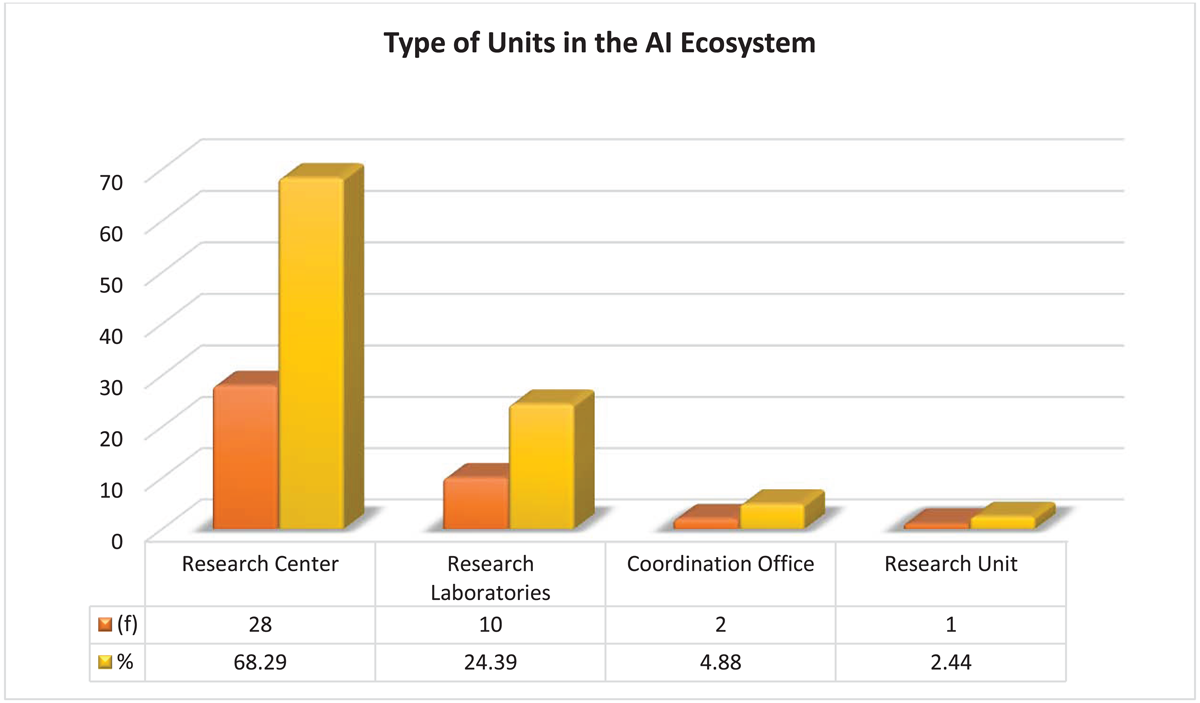
Figure 1
Type of Units in the AI Ecosystem.
In Figure 2, which shows the distribution of units related to higher education AI ecosystems in Türkiye based on the type of university, the dominance of public universities, with 68.29%, draws attention. This may be due to the fact that the number of public universities in Türkiye is higher than the number of foundation universities, and the fact that more investment support is received for the creation of units serving in the AI ecosystem within public universities.
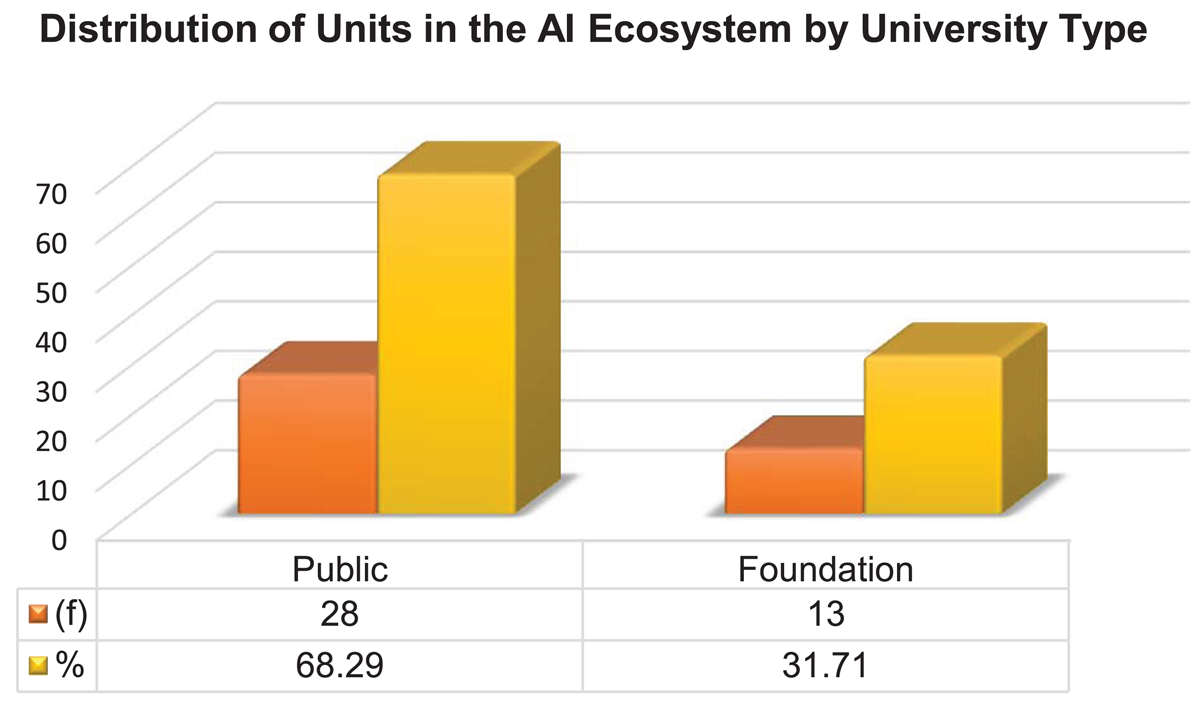
Figure 2
Distribution of Units in the AI Ecosystem by University Type.
Looking at Figure 3, the Marmara region is observed to have the highest number of units, with 39.02%. This can be interpreted as the fact that there are more industrial organizations in the Marmara region and that the cooperation between research centers and industry is more intensive. Central Anatolia is the second geographical region, with 31.71%, which shows the impact of the activities of large cities and universities such as Ankara, Eskişehir, Konya, and Kayseri in this field. The Black Sea and Mediterranean regions are among the geographical regions with the same number of units, with 7.32%. The equal number of units in the Black Sea and Mediterranean regions may indicate that the AI ecosystems in different regions of the country are trying to balance out, or that universities in these regions are operating at a similar level in the field of AI. While the Eastern Anatolia region is the geographical region with the lowest number of units with 2.44%, the fact that there are no units in the Southeastern Anatolia region is surprising. The low representation in the Eastern Anatolia region and the absence of any unit in the Southeastern Anatolia region may indicate that the potential in the field of AI in these regions has not yet been fully exploited, or that universities in these regions are not focusing enough on this field.
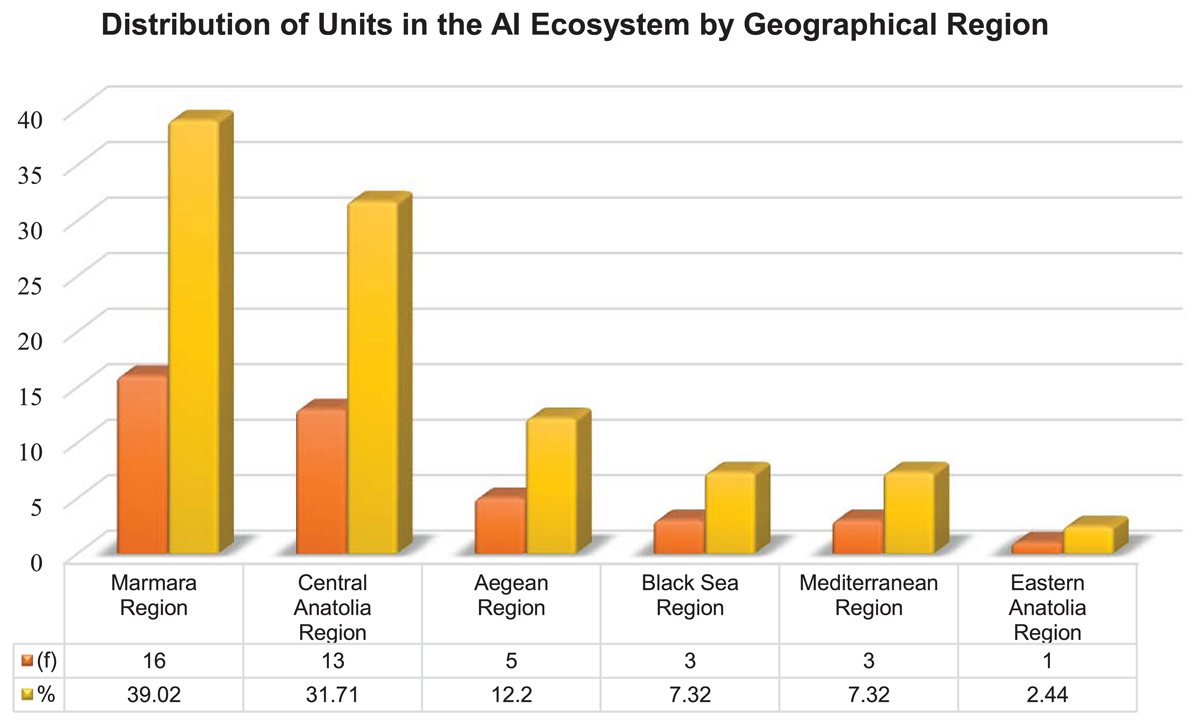
Figure 3
Distribution of Units in the AI Ecosystem By Geographical Region.
An analysis of Figure 3 shows that geographical factors play an important role in the formation and distribution of units operating in the AI ecosystem. These findings suggest that the geographical distribution of units is an important factor that should be considered in the strategic planning of universities.
The data presented in Figure 4 were derived from an examination of the parameters associated with positioning preference, which is a subcategory of the differentiation strategy identified for each university in the strategic plan that is publicly available on their respective institutional web pages. Positioning preference is observed to manifest in three distinct ways: as an educational orientation, a research orientation, and a social contribution-entrepreneurship orientation, within the context of organizational strategies, goals, and competitiveness.
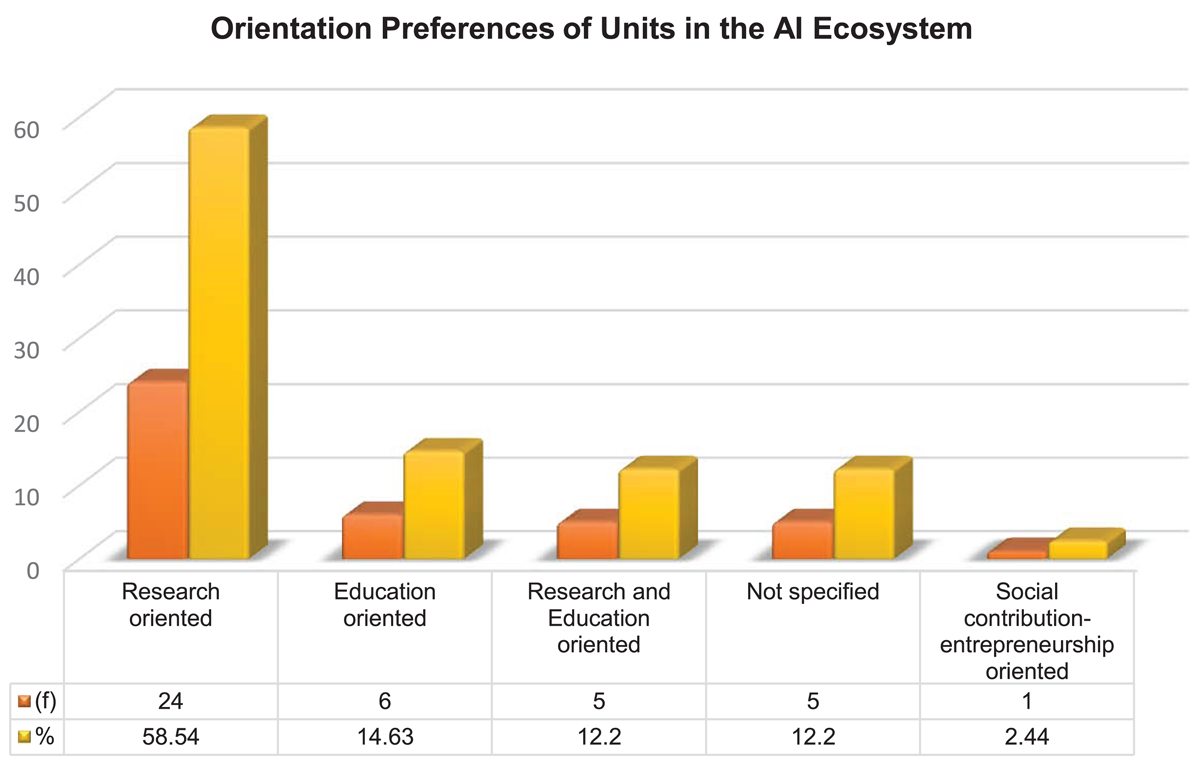
Figure 4
Orientation Preferences of Units in the AI Ecosystem.
Figure 4 illustrates that 58.54% of universities in Türkiye’s AI ecosystem prioritize the provision of research-oriented services. This finding suggests that research, projects, and innovations in AI are conducted through research centers situated within universities that are oriented toward research.
As illustrated in Figure 4, 14.63% of the universities surveyed indicated a preference for a second-ranked position in the area of education orientation. This finding underscores the significance of education in the domain of AI. The units serving at universities that have determined their positioning as education-oriented may be focused on the training of qualified personnel in the field of AI. The Data Analytics and AI Research Unit at Anadolu University, the Data Science Application and Research Center at Fatih Sultan Mehmet Foundation University, the Robot Technologies Application and Research Center at Karabük University, the Intelligent Systems Design Application and Research Center at Kütahya Dumlupınar University, and the AI and Data Science Application and Research Center at Sakarya University of Applied Sciences represent ecosystem components that focus on education.
A total of 12.20% of the universities indicated a preference for an education and research orientation in both directions. This finding suggests that units within universities that are oriented towards research and education may be more likely to form collaborations and partnerships within the AI ecosystem. These partnerships allow for the integration of diverse areas of expertise, ultimately leading to the provision of more comprehensive services. The Robot Technologies and Intelligent Systems Application and Research Center at Bursa Technical University, the AI Systems Application and Research Center at Sakarya University, the AI Systems and Data Science Application and Research Center at Sivas Cumhuriyet University, the AI and Robotic Coding Center, and the Big Data and AI Coordinatorship at Trabzon University represent the ecosystem components that serve in this location preference.
12.20% of the universities do not indicate their preferred positioning. Of the universities that did not specify their position preferences, five were foundation universities. Although the positioning strategies of the mentioned foundation universities are not clear, the fact that these universities are important parts of the AI ecosystem components can be interpreted as an opportunity for these universities to more clearly determine their education, training, research, development, and entrepreneurship preferences with the philosophy of AI in the future. Although foundation universities are not obliged to make strategic planning, 8 foundation universities clearly stated their positioning preferences in their strategic plans to guide the development of education, training and research processes. Based on this finding, it can be concluded that foundation and public universities include positioning preferences in their strategic plans with a high rate (87.8%).
The positioning preference of Izmir Bakırçay University, where the AI in Health Application and Research Center is located, was found to be entrepreneur-oriented. This finding indicates the existence of a differentiated strategic approach in the field of AI. In its strategic plan, Izmir Bakırçay University sets forth the objective of becoming an entrepreneurial university with a sustainable structure and project-oriented work, including patents and utility models. To this end, the university aims to establish strategic collaborations with public and industrial organizations in the fields of health and technology.
Figure 4 clearly shows that AI units within academic institutions engage in a range of activities, including educational activities, research studies, and collaborative projects with public and industrial organizations in the domain of AI. These activities are performed in accordance with the positioning preferences and differentiation strategies of the universities in question. As shown in the figure, the AI units in a university with an educational orientation engage in education-related activities, while those serving in a research-oriented university engage in research studies, and those serving in an entrepreneur-oriented university are involved in projects with industrial organizations.
As shown in Figure 5, 28.21% of the units were found to have no vision statement at all, showing that the units operating in the AI ecosystem generally do not have a specific vision statement. This may indicate that the units are still in the process of creating a common vision or strategy, or that the existing vision statements are not clear enough. Notably, “training well-qualified human resources” and “conducting research” are the most common vision statements, with 8.97%. This result shows that the main objectives such as training well-qualified human resources and conducting research are at the forefront among the units that include vision statements. This reflects the tendency to focus on human resources and research activities, which are fundamental to the long-term success of the AI ecosystem.
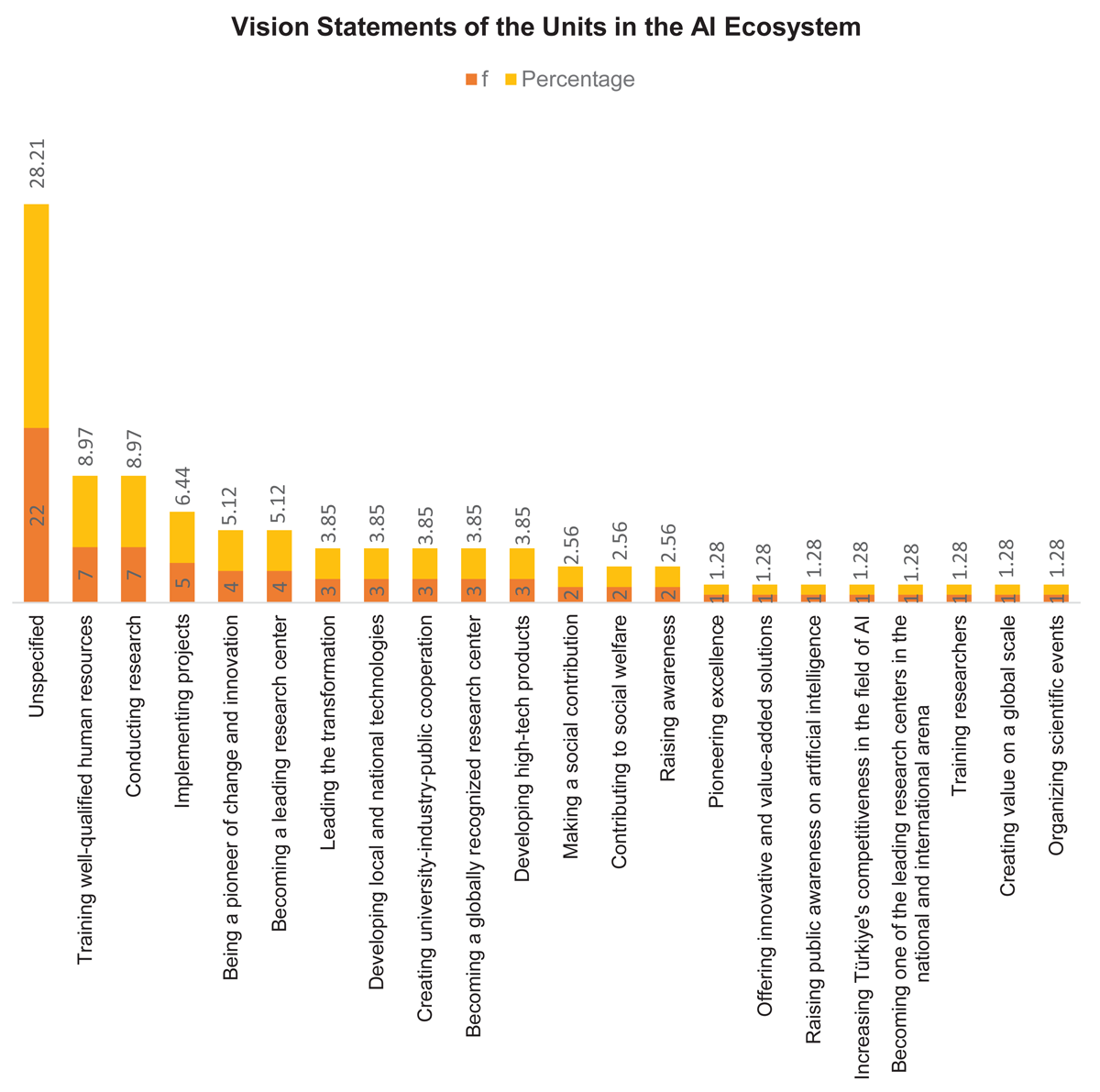
Figure 5
Vision Statements of the Units in the AI Ecosystem.
“Implementing projects” was the third most common vision statement with 6.44%. This finding may reflect the units’ tendency to focus on practical applications and technological innovations in the field of AI, their efforts to produce concrete AI solutions, and to increase their technological competitiveness.
Looking at Figure 6, we can see that most of the academics assigned to units working in the AI Ecosystem are male, with 71.43%, which indicates a clear gender inequality in the units. Therefore, this finding emphasizes that equal opportunities should be provided to female academics and the gender imbalance should be reduced. Higher education administrators should give female academics, who are in the minority with 28.57%, the opportunity to work equally with their male colleagues in these units. As such, higher education leaders need to review their policies from a gender perspective and take more comprehensive measures to promote gender equality.
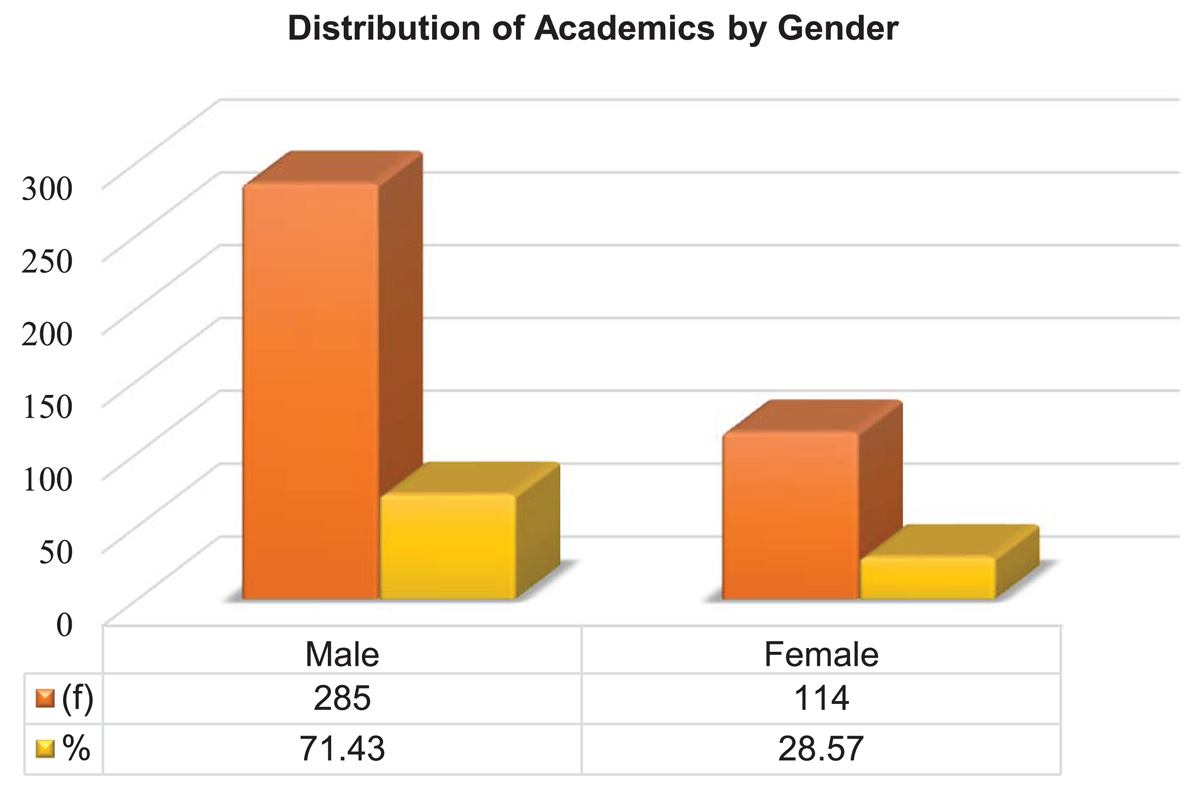
Figure 6
Distribution of Academics Working in the AI Units by Gender.
Looking at Figure 7, it can be seen that the most common academic title of staff in the units serving in the AI Ecosystem is “Professor”, with 35.09%. The academics with the title of Assistant Professor make 26.07% and Associate Professors comprise 24.31%. Student Assistants, with 5.76%, Research Assistants, with 4.76% and Lecturers with 3.51% were assigned in the units. The lowest number of personnel assigned to these units are specialists, with 0.50%.
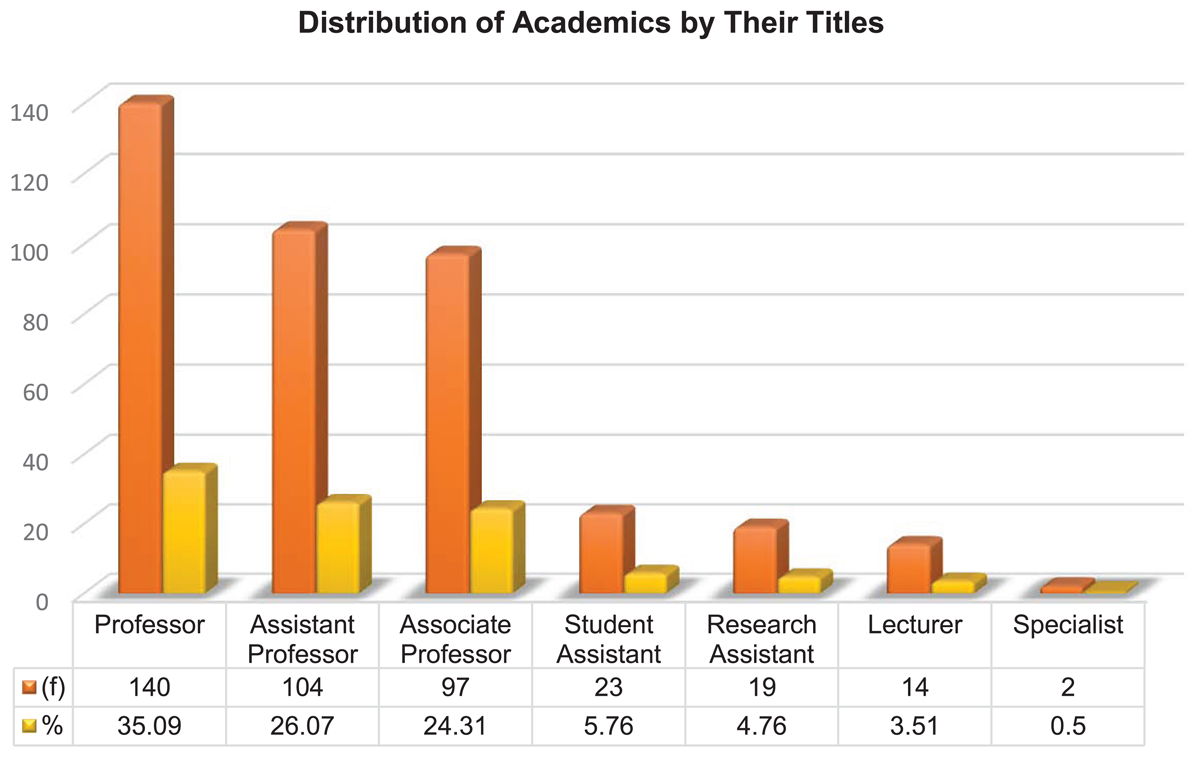
Figure 7
Distribution of Academics Working in the AI Units by Title.
Looking at Figure 8, which shows the specializations of the academics working in the units, we can see that the majority of academics work in the field of AI with 34.34%. This may be an indication that the development, implementation, and research of AI technologies is the main field of study of experts. It was found that academics working in units serving the AI ecosystem specialized in engineering and technology take the second place, with 15.04%. This finding reflects the critical importance of engineering and technology knowledge in the application and development processes of AI technologies.
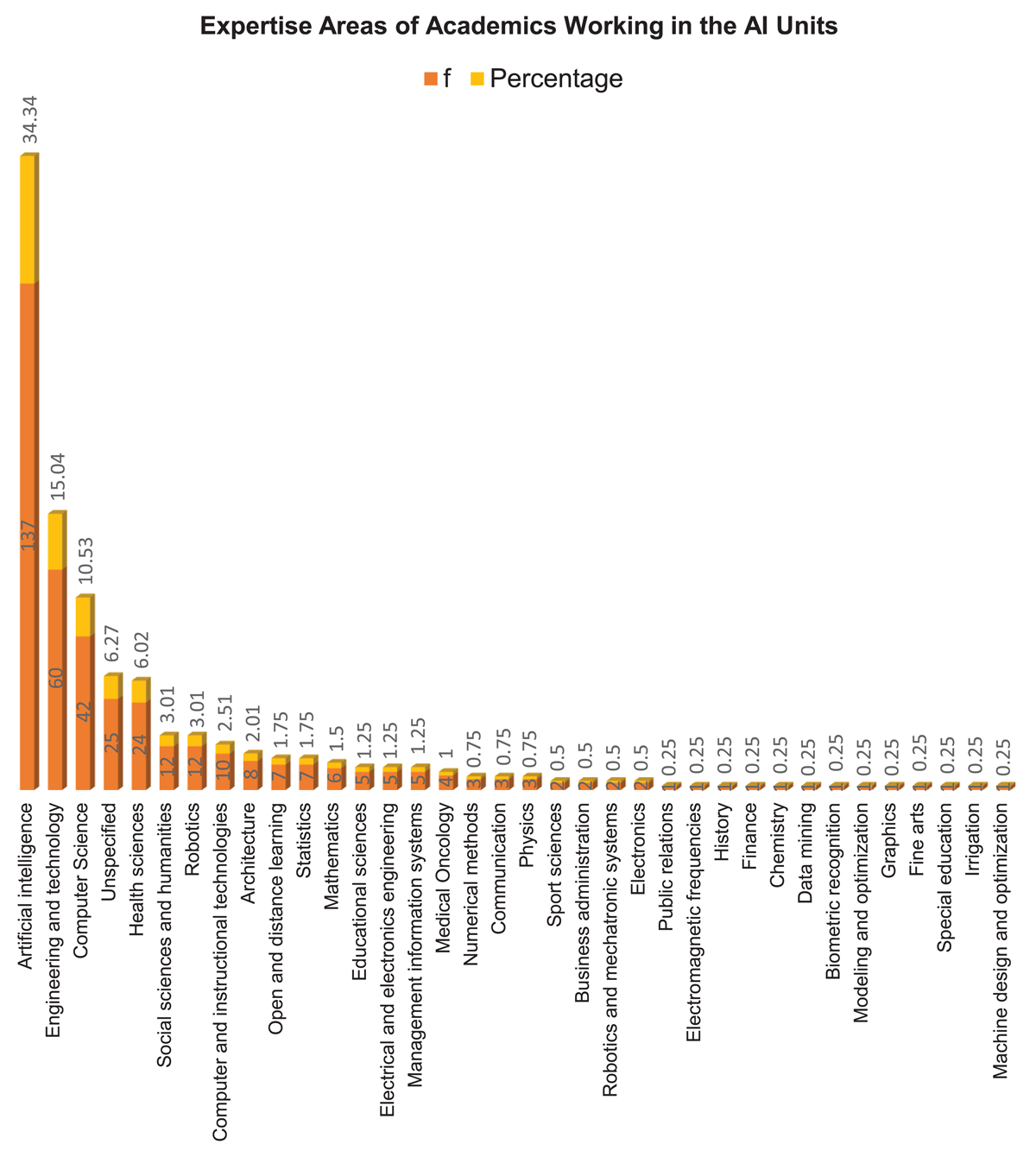
Figure 8
Expertise Areas of Academics Working in the AI Units.
The results further show that academics working in the AI ecosystem are from a variety of disciplines. The presence of academics working in different disciplines such as computer science, health sciences, social sciences and humanities underscores the importance of approaching AI technologies from multiple perspectives and undertaking interdisciplinary collaborations. The fields of study of academics working in the AI ecosystem also include health sciences, education, business and finance, showing that the use of AI technologies is increasing across all fields, and that these technologies have a wide range of impacts.
The areas of specialization of academics working in units serving the AI ecosystem are Public Relations, Electromagnetic Waves, History, Finance, Chemistry, Data Mining, Biometric Recognition, Modeling and Optimization, Graphics, Fine Arts, Special Education, Irrigation, and Machine Design and Optimization, with 0.25%. These results show that academics working in the AI ecosystem also specialize in fields other than AI. For example, the presence of academics working in disciplines such as history, fine arts, and public relations can be said to reflect the impact of AI technologies on humanity and culture. Such diversity of specialization reflects the wide specialization range of academics in the AI ecosystem and the impact of AI technologies on different disciplines and sectors.
Looking at Figure 9, it can be seen that the units working in the AI ecosystem collaborate mostly with industrial organizations, with 38.78%, which shows their heavy focus on industrial applications of AI. These collaborations may have been established to integrate AI technologies into industrial processes and provide solutions to industrial problems. 33.67% of the units working in the AI ecosystem do not include information about the institutions they collaborate with on their websites. This finding may indicate that most of the units have not yet collaborated with any other institution or organization.
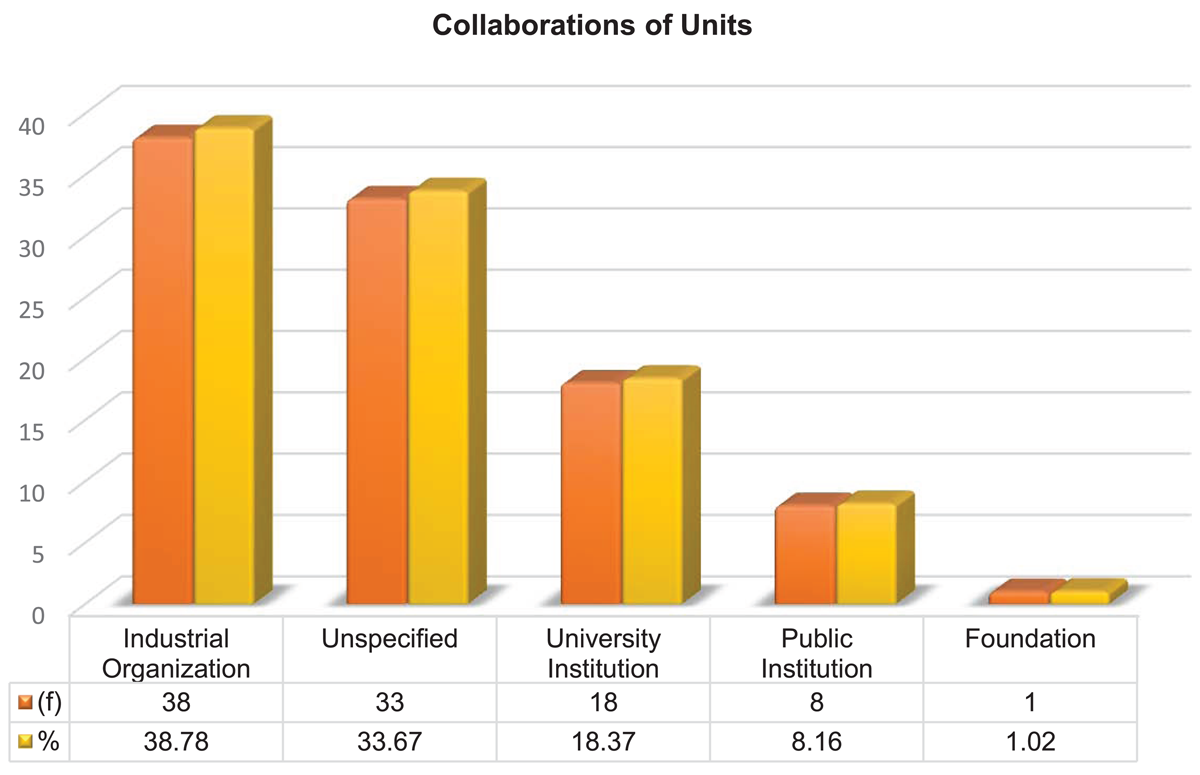
Figure 9
Collaborations Among the AI Units.
It was also found that the units operating in the AI ecosystem structured their collaborations with university institutions (18.37%), and with public institutions (8.16%). Collaborations with universities and public institutions are important for research and academic exchange. These collaborations support basic research on AI technologies and can contribute to the development of public policies.
Foundation universities are the institutions with which the AI units collaborate the least. The low number of collaborations with foundations is striking. This may indicate that units operating in the AI ecosystem generally prefer to collaborate with industrial and academic partners. It may be that foundations do not provide a suitable environment for collaboration, or that they are less active in the field of AI.
Discussion
The 41 units that comprise the AI ecosystem of universities in the Turkish higher education system represent the population under study in this research. In order to determine the type of these 41 units, the names of the units specified on the web page of the relevant university were taken into consideration. For example, the Bahçeşehir University Applied AI Research Center was classified as a “research center,” the Boğaziçi University AI Research Laboratory was classified as a “research laboratory,” and the Anadolu University Data Analytics and AI Research Unit was classified as a “research unit.” Examining the types of units serving in the AI Ecosystem, Research Centers emerge as the most common type of unit serving in the AI Ecosystem. Research laboratories are the second most common type of unit serving in the AI ecosystem. Other units serving in the AI ecosystem are coordination offices and research units, respectively. A similar conclusion that research centers and laboratories are the units that provide additional services in the field of AI within universities was reached in the report on opinions and recommendations for the development of AI in Türkiye published by the Turkish Informatics Association. The report published by the Turkish Informatics Association states that research centers and research laboratories play a very active role in the development of AI technologies and the realization of scientific research projects in the field of AI (Adalı et al., 2020).
Regarding R&D of AI-related industries, different practices exist across various countries and international organizations worldwide. The United States leads AI model production, ahead of China, Europe, and the United Kingdom. The U.S. views AI as a national priority as stated in its “The National AI R&D Strategic Plan.” According to ongoing research, AI researchers working within universities are transitioning to industrial R&D departments. Research suggests that extending this transition among students could increase guidance for individuals working in this field by supporting an increase in the workforce in higher education. In general, when looking at the strategic operations in the U.S., it can be said that R&D efforts focus first on more specific topics domestically, and later, on international collaboration. Regarding internal operations, the U.S. aims to increase the number of institutes through partnerships and funding, thus improving participation in AI research, education, and workforce development (GAIRA, 2024; Donlon, 2023; Maslej et al., 2024; NSTC, 2023).
On the European side, legal documents such as the “AI Act” provide a legal background regarding the general use of AI. Such documents can be considered the first steps toward building an AI ecosystem. On the other hand, research in India suggests that by around 2030, industries will be deeply integrated with AI technologies. Therefore, the proper use of AI and raising awareness in the next generation are crucial. To achieve this, India is conducting projects that bring together key actors such as educators, scientists, and researchers from leading institutions, organizations, and universities within R&D centers. New AI research centers are being opened in cities like Montreal and Toronto, with state funding that aims to bring together academic talents. Similarly, in Germany, the “Network of AI Research Competence Centres” project seeks to enhance the effectiveness of existing research institutes. Japan, with the establishment of the “AI Japan R&D Network” in 2019, brought together more than a hundred universities and institutions. (Arora, 2021; Mason et al., 2023; OECD, 2021).
Not only country-based efforts but also international AI collaborations are also on the rise. For instance, one such collaboration combines Canada’s technological R&D with Singapore’s potential testing environment. The most important reason behind this collaboration is the similarity between the national AI strategies of those two countries. Looking beyond individual countries, it can be said that the OECD focuses more on political aspects, and various efforts have been made to develop joint policies (Manantan et.al., 2022; OECD, 2021).
The AI units analyzed in the present study are named as research centers, research laboratories, coordination offices, and research units. Our review of the related research revealed no other studies examining the units in the AI ecosystem in Türkiye. However, Artsın, Türkmenoğlu, and Keskin (2023) examined the units offering distance education in Turkish universities, who found that the units providing distance education services in Türkiye were named as research and application center, training center, coordinatorship, and unit, respectively. Therefore, these units providing services within universities can be said to be generally named as research center, coordination office and unit.
Investigating the types of universities where the units operating in the AI ecosystem are located, it was found that the units are mostly established in public universities, which is supported by the findings of Öksüz Gül and Alpaydın (2017), whose study focused on research and application centers, and by Artsın, Türkmenoğlu, and Keskin (2023), who focused on distance education centers in Türkiye. Öksüz Gül and Alpaydın (2017) found that the majority of application and research centers were established in public universities, and Artsın, Türkmenoğlu, and Keskin (2023) found that the majority of distance education centers in Türkiye were established in public universities.
Analyzing the geographical distribution of the units serving in the AI ecosystem reveals that most of the units are located in the Marmara region. The units serving in the AI ecosystem are located in the Marmara, Central Anatolia and Aegean regions where the number of universities and industrial organizations is the highest. Thus, the fact that there is only one unit in the Eastern Anatolia region and no unit has been created in the Southeastern Anatolia region is a finding that should be taken into consideration by policy makers. In the age of generative AI, properly analyzing the pros and cons of AI and focusing on the digital divide, ethical and responsible use of AI, sustainability and regional development gaps can provide new opportunities to harness the positive potential of AI as a disruptive innovation (Bozkurt, 2024).
The results obtained by the current study regarding the geographical distribution of units providing services in the AI ecosystem are similar to the results reported by Kırkan and Kalelioğlu (2017) and Öksüz Gül and Alpaydın (2017). Kırkan and Kalelioğlu (2017) examined the distribution of distance education centers providing distance education services according to geographical regions and found that the centers providing distance education services are mostly located in the Marmara region, followed by the Central Anatolia, Black Sea, Aegean, Eastern Anatolia, Mediterranean, and Southeastern Anatolia regions, respectively. Öksüz Gül and Alpaydın (2017) found that the majority of application and research centers are located in the Marmara region, followed by Central Anatolia, Aegean, Mediterranean, Eastern Anatolia, Black Sea, Black Sea and Southeastern Anatolia regions.
Determining how universities, which employ researchers in the field of AI and undertake the mission of training well-qualified personnel, position themselves in the field of AI has critical value. Since the web addresses of the units operating in the AI ecosystem do not have a strategic plan, their positioning preferences could not be identified. Therefore, the positioning preferences of the universities where the units are located were studied instead of the units serving in the AI ecosystem.
When we look at the strategic plans of the universities where the units serving the AI ecosystem are located, we can see that the universities mostly position themselves as research-oriented. It was found that the universities position themselves as research oriented, education oriented, both education and research oriented, and entrepreneurship oriented. This result is directly related to the goals of “quality education” and “industry, innovation and infrastructure” in the context of the United Nations Sustainable Development Goals. The units in the AI ecosystem can attain this goal by developing AI applications so that quality education can spread throughout the society. In addition, the effective use of AI in higher education institutions, especially in research and development processes, can enable innovation and the production of high value-added products (UN, 2023). No other research results were found in the literature to determine the positioning preferences of universities housing the units serving in the AI ecosystem. Therefore, the findings reported here can be considered to fill an important gap in the literature.
Being one of the most popular topics in reports and academic research on the future of work, AI has been given increasing attention in the institutional vision statements (Howard, 2019). While determining the vision statements on AI in their strategic plans, Turkish organizations draw from the National AI Strategy, Türkiye’s first national AI strategy document. Within the scope of this research, the vision statements of the units operating in the AI ecosystem under the themes of “Training qualified human resources, conducting research, implementing projects, creating university-industry-government cooperation, being the pioneer of change and innovation, developing domestic and national technologies, contributing to social welfare, developing high-tech products, and creating value on a global scale” are similar to the overarching vision of the National AI Strategy, which is “Creating value on a global scale with an agile and sustainable AI ecosystem for a prosperous Türkiye” (CBDDO, 2021).
In the National AI Strategy prepared by the Presidency Digital Transformation Office and the Ministry of Industry and Technology to contribute to the determination of vision statements for AI in the strategic plans of institutions, in line with the “Digital Türkiye” vision and the “National Technology Move”, “to train AI experts and increase employment in the field, support research, entrepreneurship and innovation, expand access to quality data and technical infrastructure, make arrangements to accelerate socio-economic cohesion, strengthen international cooperation, and accelerate structural and workforce transformation” (CBDDO, 2021). The vision statements of the units operating in the AI ecosystem under the themes of “developing domestic and national technologies, developing high-tech products, and producing value on a global scale” are similar to the vision of a Türkiye that produces high added value based on advanced technology in the vision of the Twelfth Development Plan (CBSBB, 2023).
Gender equality is considered very important for the sustainable economic and social development of Türkiye (Savaş, Ertan, & Yol, 2018). Therefore, ensuring gender equality in the assignment of academics and personnel to be assigned to units serving in the AI ecosystem is critical. In the context of this research, the fact that the academics assigned to the units working in the AI ecosystem are mostly men is a finding that should be taken into consideration by managers who develop and implement policies on AI.
The fact that the academics assigned to the units in the AI ecosystem are mostly selected from academics with the title of professor, associate professor, and assistant professor, respectively, according to the title, is a finding that should be paid attention to by the administrators who develop and implement policies on AI. In the homepages of the units operating in the AI ecosystem, it was observed that the personnel assigned as the chairman and vice-chairman in the management of the units were mostly selected from academics with the title of professor or associate professor. Policies can be developed to ensure the employment of more research assistants, undergraduate, graduate or doctoral students to be assigned to research, development and project work to be carried out in these units, and more lecturers to carry out training activities on AI. It can be seen that the fields of study of the scientists assigned to the units working in the AI ecosystem mostly correspond to the fields of study indicated on the web pages of the units to which they are assigned.
Today, universities are engaged in the process of transformation into fourth-generation universities as dynamic innovation centers that produce joint projects with industrial organizations, public institutions and other universities, provide consulting services for technological development, provide laboratory environments for research and projects, and contribute to the training of the city’s highly-qualified workforce by organizing trainings for personnel of industry and public institutions (Steinbuch, 2016). Our study determined that the units operating in the AI ecosystem have cooperation protocols with industrial organizations, public institutions, and universities. In light of the growing prominence of fourth generation universities, it is imperative that all stakeholders direct their attention towards the advancement of open educational resources and open and distance education applications of productive AI. This endeavor should be undertaken with the objective of ensuring that future generations are equipped with the requisite competencies for success in the AI era (Bozkurt, 2023b).
The importance and necessity for units to cooperate with industry, public and university institutions is emphasized in the World Economic Forum’s Future of Professions Report and YÖK’s Action Plan for the Development of University-industry Cooperation. According to the Future of Professions Report published by the World Economic Forum in 2018, AI applications, cloud technologies and AI-supported big data analytics are developments that are rapidly, deeply and widely affecting the business world, the working styles of employees in industry and public institutions and human resources management (World Economic Forum, 2018). In the action plan for the development of university-industry cooperation published in 2021, YÖK planned to create new business opportunities in the areas of Internet of Things, AI, smart cities/factories, and autonomous vehicles through projects trequiring university-industry cooperation (YÖK, 2021). Therefore, it can be seen that the units have established collaborations with industry, public and university institutions in the field of AI to conduct research, realize projects and produce high-tech products.
Conclusion, implications and suggestions
Our results show that there are 41 units that serve in the AI ecosystem, 28 in public universities and 13 in foundation universities. In order to achieve the goals of creating a sustainable ecosystem in the field of AI, as stated in Türkiye’s National AI Strategy, each of the 129 public universities and 75 foundation universities needs to plan units that will serve in the AI ecosystem.
In the selection of personnel to be assigned to the units serving the AI ecosystem, gender inequalities should be eliminated, and female academics should be given more duties in these units through positive discrimination. Similarly, in the selection of staff to be assigned to units serving the AI ecosystem, more research assistants can be hired to conduct research, and a higher number of lecturers can be hired to conduct AI training.
The Internet addresses of most of the units operating in the AI ecosystem do not specify the infrastructure status of the AI units, and the technological infrastructure of the units that do specify it seems insufficient. In order to provide quality services in the field of AI, technological infrastructure can be strengthened, supercomputer systems can be created, and national software libraries for the development of AI algorithms and open source codes can be created. The training to be provided in the field of AI should be provided with the most appropriate support mechanisms to train well-qualified personnel. Given the increasing demand for AI-related educational content, as AI continues to develop and become widely used, all units within the AI ecosystem should align their efforts with the needs of researchers and those requiring training in relevant areas.
To encourage and facilitate industrial cooperation, units within the AI ecosystem may support AI-related projects, offer special tax incentives to industrial partners involved in these projects, and establish reward and incentive programs to increase the publication of articles, development of products, and filing of patents by academics working within the units. By conducting interviews with managers of AI ecosystem components within the Turkish higher education system and academics working in these units, the future direction of AI centers can be made more strategic. SWOT analyses of the ecosystem components will help identify which technologies should be prioritized, ultimately increasing the return on AI technology investments for the country.
Limitations
The data presented in this study are limited to those obtained from the websites of Turkish higher education institutions. Units that were in the preparation stage, did not focus on AI-related themes, had websites under maintenance or being updated, had names but no content, or were AI study/research groups or student communities, were excluded from the analysis.
Data accessibility statement
The datasets used and/or analyzed during the current study are available from the corresponding author on reasonable request.
Ethics and consent
Because the analysis uses open-source data from university websites that do not require expert review, this research does not require ethics committee approval.
Competing interests
The authors have no competing interests to declare.
Author contributions (CRediT)
Harun Serpil: Literature review, translation, proofreading, final editing of the manuscript according to the journal format. Eren Kesim: Literature review, methodology, analysis and interpretation of the data.
All authors have read and agreed to the published version of the manuscript.