
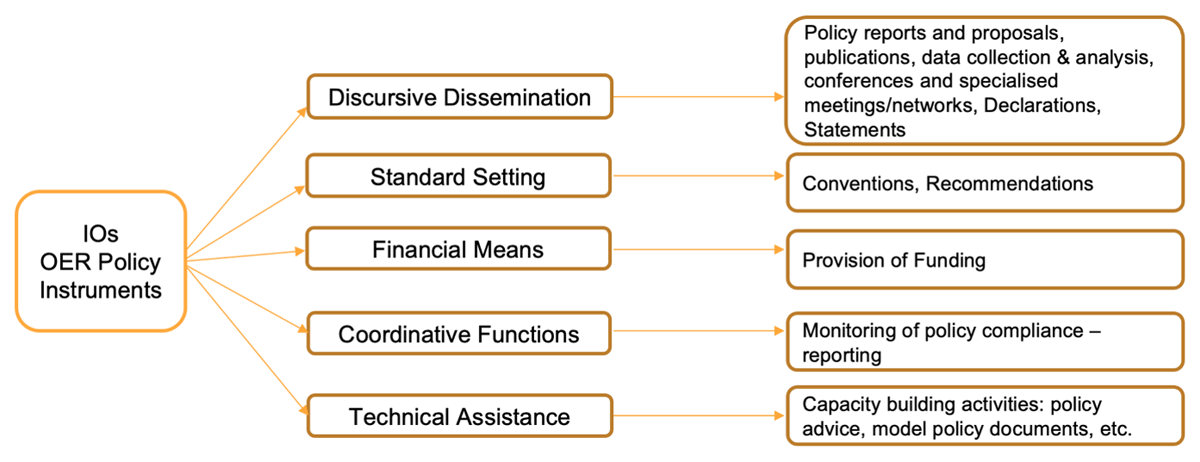
Figure 1
Proposed set of OER Policy Instruments used by IGOs.
Table 1
OER Policy Instruments – Consolidated responses per organisation (Example).
| OER POLICY INSTRUMENTS | Q2: INSTRUMENTS | Q3.1: PRIORITIES | Q3.2 ROLE – COLLABORATION | Q4.1 RATING |
|---|---|---|---|---|
| Producing policy reports | X | 1 | 1 & 2 | 1 |
| Providing policy advice | X | 1 & 3 | 1 & 3 | 1 & 2 |
| Data collection and analysis (R&D) | X | 1 | 2 | 1 & 2 |
| Sponsoring international/regional conferences, meetings and networks | _ | |||
| Organizing international/regional conferences, meetings and networks | X | 2 & 3 | 1 & 2 | 1 & 3 |
| Providing analytical advice | X | 1 | 2 | 1 |
| Carrying out country and thematic reviews (reports, journals) | X | 2 | 1 | 3 |
| Providing financial support through loans and funding initiatives | _ | |||
| Issuing guidelines | _ | |||
| Issuing declarations & recommendations | _ | |||
| Advocacy | X | 3 | 2 | 1 |
[i] Legend:
Q2: Selection of Instruments: X = YES, – = NO;
Q3.1: Organisational Priorities: 1 = Major, 2 = Intermediate, 3 = Minor;
Q3.2: Organisational Role in Collaboration: 1 = Singular, 2 = Participating and Leading, 3 = Participating, only contributing;
Q4.1: Rating of selected OER policy instruments in terms of perceived effectiveness: 1 = Effective, 2 = Uncertain, 3 = Not effective.
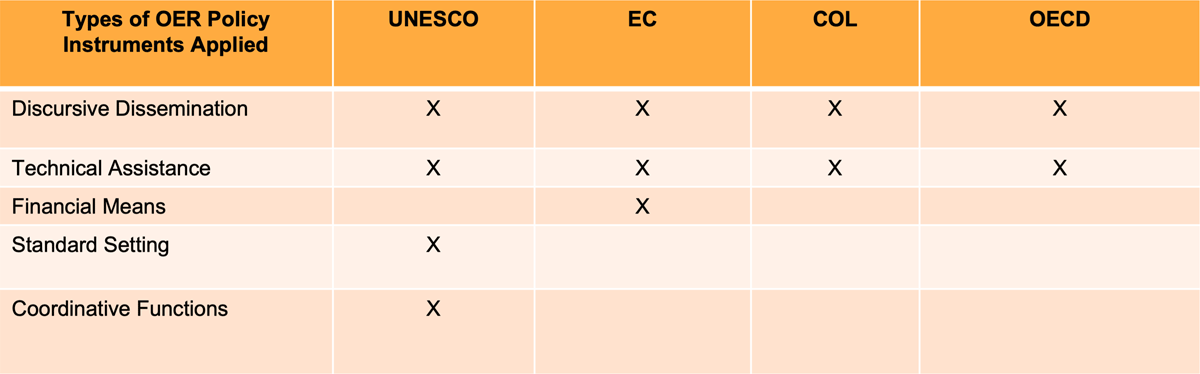
Figure 2
IGOs and OER Policy Instruments.
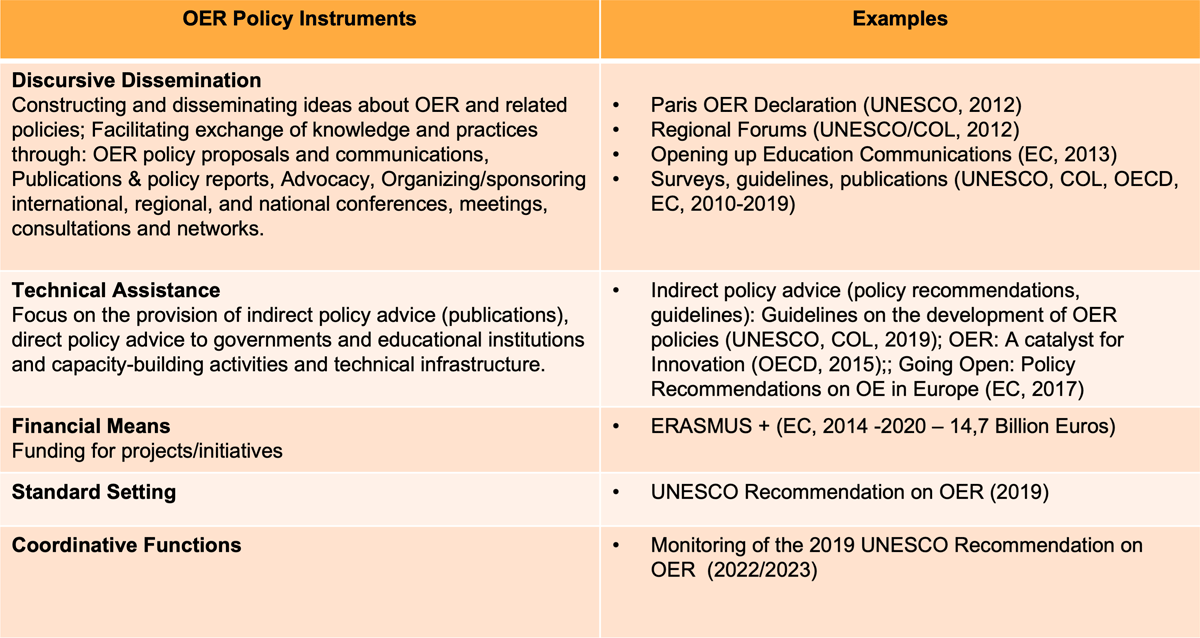
Figure 3
IGOs and OER Policy Instruments Examples.
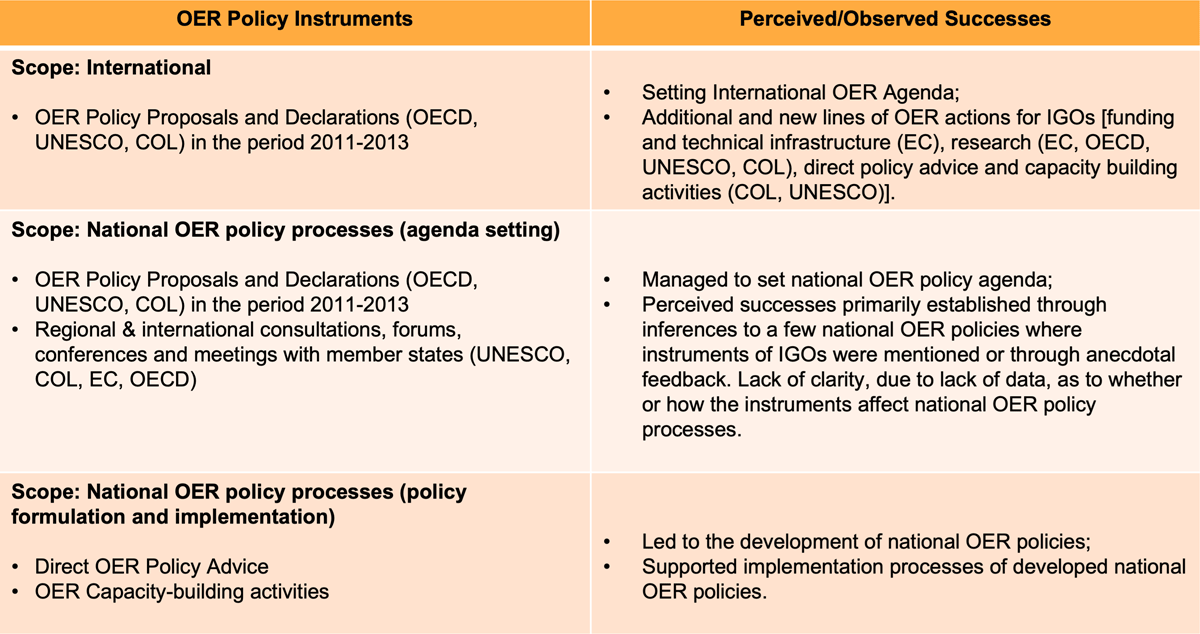
Figure 4
IGOs and OER Policy Instruments – Successes.
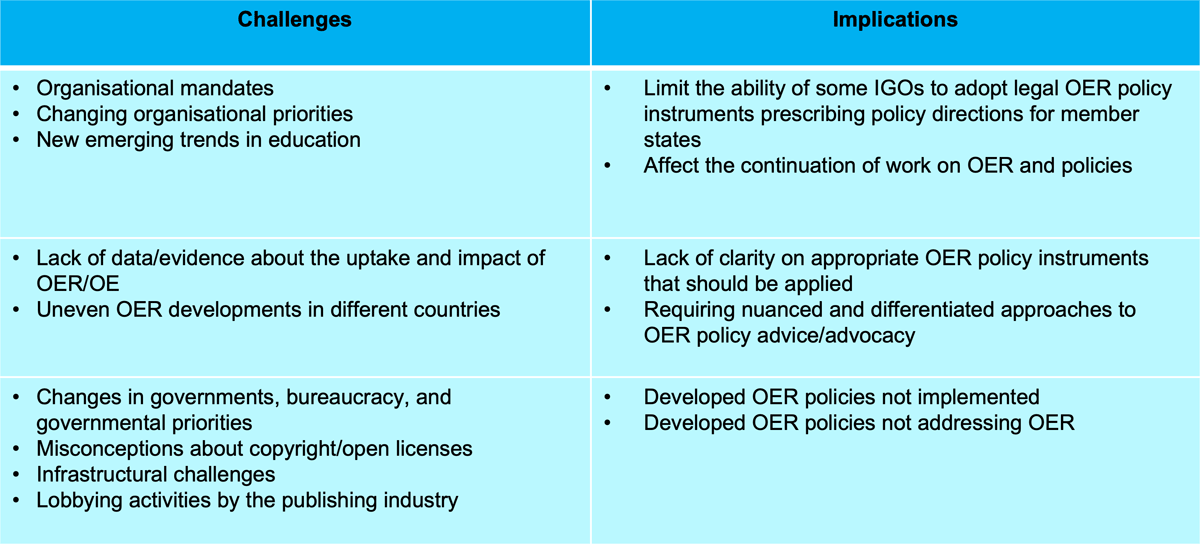
Figure 5
IGOs and OER Policy Instruments – Challenges.