
Introduction
A library enables people to read a lot of materials from books as well as media. The former can be accessed physically through hard copies while the latter can be accessed digitally through soft copies, virtually. To ensure that library users generate high-quality academic work with low expenses, librarians in university libraries have been working hard to promote the use and awareness of Open Education Resources (OERs) (McLure & Sinkinson, 2020). Open Education Resources are teaching and learning materials that are freely available online for everyone to access and use. These can include courses, course modules, syllabi, lectures, assignments, and classroom and laboratory activities in digital forms for use by all. However, OERs can also include software, tools, materials, and techniques that are used to support access to knowledge (Atkins et al., 2007). Teachers, lecturers, and students use OERs as an excellent beginning point for their intellectual endeavors. Al-Awidi & Al-Furaih (2023) have revealed that the most popular open resources used by teachers are social media, YouTube, PowerPoint, and games. In this context, the term “OER” refers to any form of publicly accessible online information resources, including full courses, course materials, modules, textbooks, streaming videos, tests, software, and any other instruments, materials, or methods used to support access to knowledge. They are called OERs in the sense that users are permitted to copy, distribute, print, and search or link to the full text.
According to Atkins et al. (2007), OERs are teaching, learning, and research resources that are in the public domain or have been made available under an intellectual property license that allows unrestricted use or re-use by others. Wynants and Dennis (2022) contend that OERs have the potential to revolutionize education by providing learners and educators all over the world with high-quality, customizable, flexible, and cost-effective educational resources. The affordability and adaptability of OER enable colleges to fairly distribute access to educational resources designed with students’ success in mind through individualized, inclusive, and interactive adaptations that include hands-on learning (Wynants & Dennis, 2022). The sudden shift of higher education to online modes during the COVID-19 pandemic of 2020 has increased the demand for free educational resources that are digitally available to all students, and lecturers who are aware of and have positive feelings about the OER had a greater chance to use these resources (Mtebe & Gallagher, 2022).
In Tanzania, higher learning institutions have recently shown significant trends in the adoption of OERs. Some institutions like the Nelson Mandela African Institution of Science and Technology also have OER policies to guide the use, sharing, and modification of online resources (Kachota 2022). Notwithstanding, the advantages of OERs have only been exploited only a small number of academics at Tanzania’s higher education institutions who are familiar with the idea. The poor usage and lack of trust in OER are attributed to the lack of awareness, negative perception of OER resources, and negative feelings about using and contributing to OER. This is most likely because a majority of OER are in foreign languages that are not easily understood by the local community. A study by Mtebe and Gallagher (2022) showed that to increase the acceptance and utilization of OER among the teaching staff, there is a need for digital training, accreditation, and localized content that is connected to the lived experiences of teachers in the Tanzanian context. This study evaluated the awareness and attitudes of lecturers about OER in the Tanzanian environment to further knowledge in the field of open education.
Objectives of the Study
The general objective of this study was to assess lecturers’ awareness, feelings, and attitudes toward the utilization of OER in two higher learning institutions in Tanzania. The study was guided by the following research questions:
What is the level of lecturers’ awareness towards the OER? and
What are the feelings of lecturers towards OER? and
What are the attitudes of lecturers toward OER?
Literature Review
Awareness of OER
Some studies have shown relative awareness of lectures in higher learning institutions of OERs. In the study by Iqbal and PM (2017) on “familiarity and consumption of OER,” in India it was learned that the majority of respondents were informed about the concept of OER and were aware that their library had an OER. Furthermore, in a study conducted by Utulu and Bolarinwa (2009) on OA initiatives adoption by Nigerian academics, it was discovered that the majority of the study participants were aware of the OER. The study further revealed that Academics in the sciences showed more promise of adopting OER as authors and readers of scholarly resources than their counterparts in the humanities, even though the study found minimal utilization among the academic staff. A study conducted by Midha and Kumar (2022) also established that the academic community of central universities in North India was aware of OERs and that the majority used OERs when they were required, with YouTube being the most frequently used OER. Furthermore, a study by Ogunleye and Okhakhu (2022) on “assessing academic staff awareness and use of open access resources in polytechnics in Lagos State” discovered that while academic staff members were aware of OERs, they encountered several obstacles when trying to use them, such as poor-quality articles, a lack of search abilities, and delayed network connectivity.
Most studies from different parts of the world have, however, shown the lack of awareness of academicians in higher learning institutions of OERs. A study by Heck et al. (2020) titled, “Open scientific practices in higher education: Discussion of survey data from the research and teaching staff in Germany,” showed that many teaching staff members are unaware of OERs and do not make their courses available online. Additionally, Matonkar and Dhuri (2021) investigated how open education and free Internet resources were used in India during the Covid-19 pandemic and discovered that the vast majority of participants were unfamiliar with OER. Further, a study by Buhomoli and Muneja (2022) shows that researchers and decision-makers have little or no awareness of issues connected to open science, such as open data and OERs. Appiah et al., (2020) conducted a study at Ghana’s Kumasi Technical University on an evocative appraisal of OER awareness, attitude, and utilization. The study revealed that the majority of academic staff (83.9%) and students (91.5%) at Kumasi Technical University were unaware of the OERs and thus rarely used such resources in their academic works. The study revealed that OERs were used in teaching, research, and consultancy services by only a few academic staff who were aware of them at the university. The study, therefore, suggested more training on awareness to increase the utilization of these resources at the university. These studies have generally recommended that OER training be held regularly to address the issues that library users face when using OERs.
Studies have also been conducted in Tanzanian higher learning institutions to assess awareness and use of OERs and established that the use of OERs is still limited especially due to the lack of awareness and resources. For instance, Baas et al., (2019) assessed ‘Teachers’ Adoption of OERs in Higher Education.’ About 42% of the teachers indicated in the questionnaire that they have heard of OERs. However, teachers’ awareness of Creative Commons was only at a14% and although some teachers may have heard of it, they were not familiar with its defining characteristics. The study concluded that the awareness of teachers can be improved by joint efforts of school leaders, educational support services, and librarians during curriculum reforms. A previous study by Samzugi and Mwinyimbegu (2013) assessed the accessibility of OERs for distance education learners at the Open University of Tanzania (OUT). The study looked at the staff and students’ levels of awareness of the types of OER available at OUT Library, access and use trends of OER by academic staff and students, challenges faced in accessing OER, and possible solutions. The findings revealed that staff and students were quite aware of the OER available at OUT and that the major use of the information found in OER is for self-learning. However, the use and accessibility of the resources were relatively low. These studies demonstrate that some lecturers in Tanzanian higher education institutions are aware of the OERs but the use of these resources is still limited.
Feelings/Attitudes of Lecturers of the Use of OERs
Similar to awareness of OERs among lectures in higher learning institutions, several studies have also assessed and demonstrated favorable or positive attitudes or feelings of university lectures over the use of OERs. Bello et al., (2021) assessed the determinants of lecturers on the ‘ utilization and attitude Towards OERs in Universities in Nigeria’s North-East. According to the findings, the performance expectancy, effort expectancy, social influence, and facilitating conditions all have an impact on lecturers’ use of shared OER. The study recommended, among other things, that the University administration expands on the provisions of the construct by strengthening the culture of knowledge sharing on OER repositories among faculties. Zaidi et al., (2022) studied the benefits and barriers to OERs: Preservice Teachers’ Perception. According to the study findings, the majority of participants agreed on the benefits of OERs, indicating a favorable attitude toward the adoption and utilization of OERs. The study recommended that initiatives and provisions should be prioritized in higher learning institutions to encourage preservice teachers to develop and share their teaching materials, as well as to promote the use of OERs during teaching deliberations. Similar findings have also been reported by Panda and Santosh (2017) who assessed faculty perception of openness and attitude to open sharing at the Indian National Open University and established that the faculty members valued sharing of resources in academic institutions and were of the feeling that learning resources should be made available free of cost.
Some studies have, however, demonstrated negative attitudes or feelings of university lectures over the use of OERs. In a study conducted by Panda (2017), it was noted that although attitudes are latent and not immediately visible, they guide visible actions and behaviors. The survey also revealed that, despite OERs being primarily created by lecturers to transmit knowledge to students in a particular context, only experienced academics had a favorable attitude toward OER and were prepared to post their course materials online for public use. Several educators were also worried that their resources were not good enough to be shared openly and that by making teaching materials available to others, they would be liable to harsh criticism from their peers. Several other studies on OER, for instance, Heck et al., (2020), Appiah et al., (2020), Matonkar and Dhuri (2021), Bello et al., (2021), Zaidi et al., (2022), Midha and Kumar (2022 have been done on topics connected to OERs in a variety of contexts. However, none of them have examined the feelings and awareness of lecturers toward OER, particularly in the Tanzanian context. In light of this, this study investigated lecturers’ awareness, feelings, and attitudes toward OER, with a focus on the teaching staff at MNMA and UDSM.
Conceptual framework
It is presumed that using OER depends on several factors, including lecturers’ awareness of OERs in this particular circumstance. Other factors being constant, a lecturer who is aware of OERs has the required equipment and knowledge towards its implementation is more likely to use it than one who is not. Similarly, lecturers who have a positive attitude toward the use and implementation of OERs are more likely to use them than those who do not. The factors most likely to suppress OER adoption by lecturers in an institution include but are not limited to, a lack of necessary tools, bands with costs, a lack of necessary search and retrieval skills among users, and poor support from the mother institutions (Mubofu, 2019). In general, it is assumed in this study that good awareness and a positive attitude toward OERs in an environment free of the identified challenges determines the acceptance and widespread adoption of OERs by lecturers in the areas under study.
Methodology
This study was conducted at the Mwalimu Nyerere Memorial Academy (MNMA) and the University of Dar es Salaam (UDSM). The study involved only teaching staff who were purposively selected for the study. By narrowing the scope to staff members involved in teaching, the study aimed to delve deeper into the awareness and feelings/attitudes of this target group towards OERs. The study adopted a quantitative research approach. Only staff involved in teaching and who were likely to make use of OERs in their academics were included in the study. This targeted approach allowed for a more in-depth exploration of the perspectives and experiences of individuals who are directly engaged in teaching and have a higher likelihood of knowing and/or utilizing OERs. A closed-ended questionnaire was developed using Google Forms and verified by two senior lecturers to ensure the validity and reliability of the data. The questionnaire in Google form (See Appendix A) was circulated to the official WhatsApp groups of teaching staff from the respective institutions for them to fill in and remained open for three weeks, this enabled participants to fill in the form and allow the researchers to proceed with data analysis and report writing. A total of 52 respondents properly filled in the survey and submitted it for further analysis. Data collected were transported into Excel for cleaning and finally were transported into Statistical Product and Service Solutions (SPSS) version 20 computer programme for calculation of descriptive Statistics. Lastly, results were presented in tables, which showed the outcomes of the analysis as percentages and frequencies.
Results and Discussion
Experience of Lecturers
Participants in the study were asked to indicate their teaching experience in higher education institutions. The analysis revealed that 38 (72.1%) of the 52 respondents had more than one year of teaching experience and 14 (26.9%) had less than one year of teaching experience. It was critical to know the participant’s experiences because the more experienced they are, the more likely they are to be familiar with the OER. This is because experienced teachers are more likely to be familiar with OER because of the length of time in teaching which can make them learn new technologies like OERs as well as adaptability after knowing the value of online teaching resources. Further, a greater number of more experienced teaching staff implies that the data was gathered from genuine people, which increases the data’s validity and reliability. Similar observations have been reported by Mishra and Singh (2017) where most respondents (41%) had 6-15 years of teaching experience and were deemed to be suitable for providing information about their attitudes concerning higher education faculty attitude, motivation, and perception of quality and barriers towards OER in India.
Awareness of lecturers on available OERs
Participants in the study were asked to rate their level of awareness about OERs. According to the findings of the analysis, the majority of 18 (34.6%) were moderately aware of the OERs, 12 (23.1%) were not at all aware, 11 (21.2%) were slightly aware, 7 (13.5%) were somewhat aware, and only 4 (7.7%) were extremely aware. The low percentage of teaching staff members with a high level of OER awareness shows that more work needs to be done to promote the advantages of OERs in the context of knowledge access and education transformation. This is because the results showed unfamiliarity of the staff with the concept of OER and the potential impact of the resources on teaching and learning in higher learning institutions in the county. On an institutional level, librarians in the respective universities under study are expected to be good OER ambassadors. This is because research suggests that due to the nature of their work, librarians are more familiar with OERs than other staff. As a result, the study by Ogunbodede and Cocodia (2023) found that librarians have a high level of awareness of the concept of OER and that the majority of librarians were actively involved in promoting the use of OER in their various institutions.
Feelings of lecturers towards OERs
Respondents were asked to indicate how their feelings about sharing their OERs and shared their feelings as shown in Table 1.
Table 1
Feelings of Lecturers towards OERs (n = 52).
| STATEMENT | RESPONSE | |
|---|---|---|
| F | % | |
| Positive statements | ||
| I believe in the idea of OERs for teaching and learning | 41 | 78.8 |
| I would be happy for someone to adapt my resources | 38 | 73.1 |
| OERs enhance the reputation of my institution | 38 | 73.1 |
| Sharing education resources enhance my reputation | 34 | 65.4 |
| Sharing education resources increases my citation index in academic social media | 32 | 61.0 |
| Negative statements | ||
| I have concerns over copyright issues | 33 | 63.5 |
| OERs cover limited subjects and disciplines | 35 | 67.3 |
| I have no support for making materials openly available online | 30 | 57.7 |
| I don’t want to share my education resources that I spent a long time preparing | 29 | 55.8 |
| Contents are not available in my native language | 29 | 55.8 |
| I fear criticism from my colleagues on the quality of content | 26 | 50.0 |
| I don’t want to give my colleague the advantage of using my education resources | 25 | 48.1 |
| Why give away education resources to other universities | 24 | 46.2 |
[i] F = Frequency % = Percent.
Negative feelings towards OERs
On the aspect of sharing education resources, the study analysis revealed that 55.8% of the respondents were not ready to share education materials that they prepared for a long time. The results suggest a reluctance to embrace OERs and a lack of understanding of the potential benefits of sharing resources (Butcher, 2015). OERs have the potential to improve access to quality education, particularly in low-resource settings, and can foster collaboration and innovation in the field of education. By refusing to share their educational materials, educators may be missing out on opportunities to learn from their colleagues and contribute to the broader educational community.
In terms of giving colleagues the advantage of sharing education resources, the results revealed that 48.1% of the respondents said they did not want to give their colleagues the advantage of using their education resources. These results may mean that there is a lack of trust or collaboration between colleagues, which can negatively impact the overall quality of education and learning outcomes (Ezenwoye & Nyam, 2020). By hoarding resources and not sharing knowledge, educators may be hindering the growth and development of their colleagues, as well as limiting their potential for learning and improvement.
Concerning support for making materials openly available online, the findings revealed that 57.7% of the study participants felt that they had no support for making materials openly available online. This shows that they were ready to prepare the education resources but they needed support on how to make them freely available online. Making OERs freely available online can be a great way to share your educational materials with a wider audience. Some steps include: choosing a platform, choosing a license, formatting the materials you want to share, uploading your materials, and lastly, Promoting your materials (GitHub, 2023). These steps show that it is not easy to share the OERs online and thus support from skilled personnel is critical.
Regarding concerns over copyright issues, the findings revealed that 63.5% of the respondents felt that they had concerns over copyright issues. OERs are teaching and learning materials that are freely available and can be modified, shared, and used for educational purposes without violating copyright laws. However, concerns over copyright issues can arise when using OERs, particularly when adapting or modifying existing materials. some of the key copyright concerns related to OERs, with references to relevant sources for more information Attribution, Derivative works, Fair use, and the public domain: materials that are in the public domain can be used freely without the need for permission or attribution.
On the fear of criticism from colleagues on the quality of content, 50% of the respondents noted that they feared criticism from their colleagues on the quality of content which indicates that they were aware of the OER but they were not ready to share the resources due to fear of being criticized. It is completely understandable to feel anxious or fearful about receiving criticism from colleagues, especially when it comes to something as subjective as the quality of the content (McAndrew & Santos, 2018). However, it’s important to remember that constructive criticism can be valuable feedback that can help you improve your work and grow as a professional.
Regarding why the giveaway or share education resources to other universities, 46.2% said that they did not see any reason why the University should give away education resources to other universities. This implies that a significant proportion of the respondents are questioning the benefits of sharing educational resources with other universities. They may be concerned about the costs or effort required to make their resources available to others, or they may be uncertain about the value of sharing resources. Alternatively, they may have concerns about the potential impact of sharing resources on their own institution’s reputation or competitiveness (McAndrew & Santos, 2018). In general, this response suggests that there may be some resistance or reluctance among educators to participate in resource-sharing initiatives and that more work may be needed to address these concerns and promote the benefits of collaborative resource-sharing.
Responses on whether or not OERs covers limited subjects and disciplines revealed that 67.3% of the participants felt that OERs cover limited subjects and disciplines. The result highlights the need for continued investment and development in OERs. While OERs have gained traction in recent years, there may be gaps in the subjects and disciplines they cover (Hilton et al., 2010). In order to fully realize the potential of OERs, it may be necessary to continue investing in their creation and dissemination, with a focus on addressing areas where there may be gaps.
Regarding the availability of contents in native language, data have revealed that 55.8% of the study participants noted that the contents OERs are not available in their native language. The results underscore the importance of promoting and supporting multilingualism in education (McAndrew & Santos, 2018). By embracing a diversity of languages and cultures, educators and institutions may be able to better serve the needs of learners from diverse backgrounds. Additionally, it suggests that educators and institutions may need to explore a variety of resources and approaches to meet the needs of learners who may face language barriers. While OERs can be a valuable tool, it may be necessary to supplement them with other resources or approaches to provide a more inclusive learning experience for all learners.
Positive feelings towards OERs
With regards to belief in the idea of OERs for teaching and learning, the results revealed that 78.8% of the respondents believed in the idea of OERs for teaching and learning. This suggests that educators see value in the use of OERs in education and are supportive of the principles of openness, collaboration, and sharing that underpin the OER movement. This positive attitude towards OERs could have several implications. It may encourage more educators to use and create OERs, which could help to expand the availability of high-quality educational resources and improve access to education for learners worldwide. It may also contribute to the growth and sustainability of the OER movement, as more educators become aware of the benefits of open education and are willing to support it (McAndrew & Santos, 2018). Generally, this result suggests that there is a strong level of support for OERs among educators, which is a positive sign for the continued growth and development of the OER movement.
Regarding how one feels about when someone to adapts his/her resources, it was revealed that 73.1% of the respondents noted that they would be happy for someone to adapt their resources. This response implies that a large majority of the respondents are open to the idea of their educational resources being adapted and used by others. This suggests that educators are generally receptive to the idea of collaborative resource development, and are willing to contribute to a larger pool of resources that can be shared and adapted by others to meet their needs. This openness to adaptation could lead to the development of more diverse and flexible resources, as educators are more likely to create materials that can be adapted to different contexts and learning needs. Overall, this response is a positive sign for the growth and development of collaborative resource-sharing initiatives, as it suggests that there is a strong willingness among educators to work together to create and share resources that can benefit a wider community of learners.
The findings on how OERs enhance the reputation of my institution have revealed that 73.1% of the study participants noted that OERs enhanced the reputation of their institutions. This suggests that the use of OERs can contribute to the overall quality and effectiveness of education at an institutional level. By using and adapting high-quality OERs, institutions can improve the educational experiences of their students and demonstrate their commitment to innovation and excellence in teaching and learning. Additionally, it indicates that institutions that are actively involved in the creation and sharing of OERs are likely to be viewed more positively by their peers and stakeholders. This could help to enhance their profile and reputation in the education community and may lead to increased collaboration and partnerships with other institutions.
On the other hand, findings on sharing OERs to enhance one’s reputation, data have indicated that 65.4% of the respondents revealed that sharing education resources enhanced their reputation as academicians. This indicates that sharing OERs can be seen as a form of professional development for educators. By sharing their knowledge and expertise through the creation of high-quality OERs, educators can demonstrate their skills and commitment to teaching and learning, which may be recognized by their peers and colleagues. This result also highlights the potential benefits of OERs in terms of networking and collaboration. Educators who are actively involved in the creation and sharing of OERs may have more opportunities to connect with colleagues and peers, both within their institution and beyond, which could lead to new collaborations and partnerships.
Data on sharing OERs increases my citation index in academic social media: have indicated that 61% of the respondent felt that sharing education resources increased their citation index in academic social media. This shows that sharing OERs can be seen as a way to increase scholarly visibility and impact. By making their work openly available through OERs, educators may be able to reach a wider audience and increase their chances of being cited and recognized by other scholars in their field (Hilton, III, Wiley, Stein & Johnson, 2010). The findings also suggest that suggests that the use of OERs can contribute to the professional advancement of educators. By increasing their citation index and scholarly impact, educators may be able to advance their careers and increase their professional opportunities.
Attitude of lecturers towards OERs
The participants were asked to state their attitudes toward OERs. The results from the analysis are presented in Figure 1.
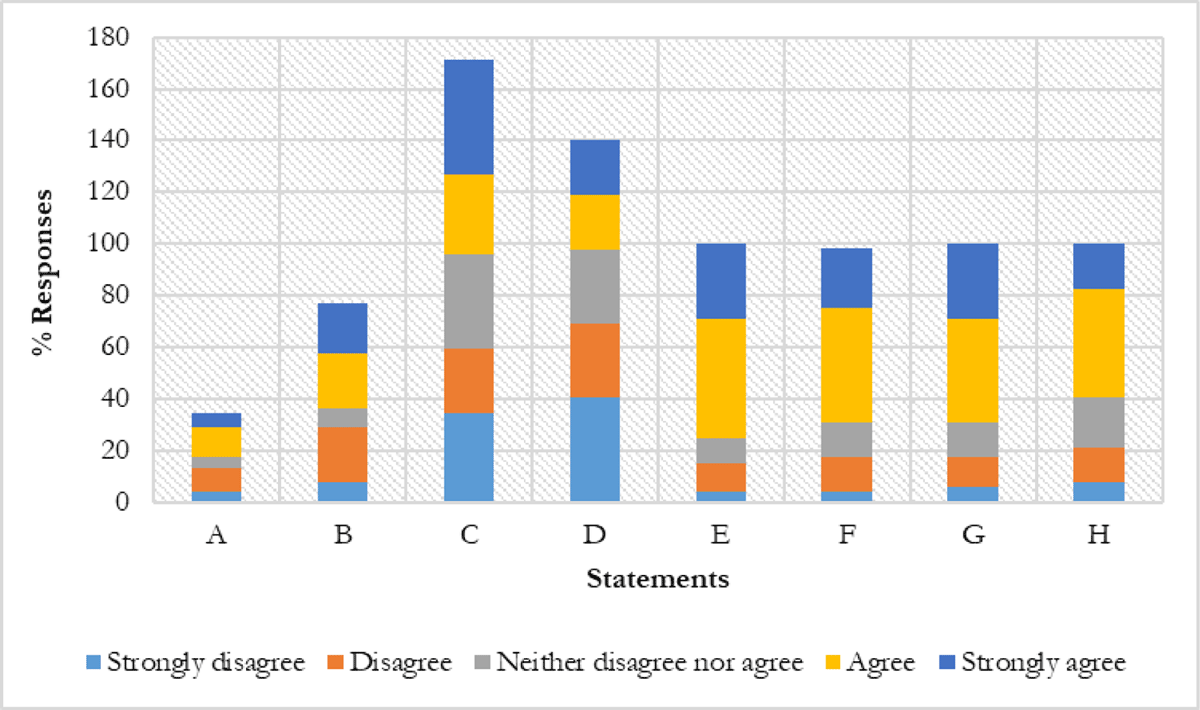
Figure 1
Attitude of Lecturers towards OERs (n = 52). A: Many OERs are published in predatory journals, B: Articles published as OERs are not recognized by the scholarly community, C: OERs have a low impact factor, D: I feel that OERs are not peer-reviewed, E: I feel that OERs are more beneficial to the academic and research community, F: I like to publish an article on the open access platform, G: I can access OERs from anywhere without any restriction, H: OERs drive innovation in research.
In terms of the low impact factor of OERs, the study revealed that 23 (44.2%) study participants strongly agreed that OERs have a low impact factor. Impact Factor is a term typically used in the context of academic journals, referring to the frequency with which articles published in that journal are cited in other academic publications. The term “impact factor of OERs” in the context of this study refers to both direct and indirect effects, such as an increase in factors relating to student performance, increased reflection on the part of educators, widespread reporting of adaptation, and an increase in sharing and open practice as a result of OER usage (Weller, et al., 2015). OERs, for instance, can significantly affect teaching and learning by giving students and teachers affordable and accessible educational resources, especially in areas with limited access to educational materials. The results of this study suggest that the participants did perceive the advantages of OERs as well as their impacts, which suggests that libraries and other stakeholders should work together to educate the public about OER-related concerns.
On the item on whether or not OERs are highly cited than closed once, the findings revealed that 17 (32.7%) respondents strongly agreed that OERs are more frequently cited than closed once. This is most likely due to difficulties in accessing and retrieving closed information resources, which require users to have credentials to access them. This is in line with Meadows and Carlson’s (2020) research which established that the inclusion of OERs in study lesson plans (PST) enhanced pre-service teachers’ utilization of these resources because they are free from obstacles that might limit accessibility. The study concluded that PST teachers heavily used OERs and citing the authors of those resources increased the number of citations.
With regards to accessing OERs from anywhere without any restrictions, the data analysis showed that 15 (28.8%) of the respondents strongly agreed that they could access OERs from any location without any restrictions. OERs are often free and accessible online, so students don’t have to worry about regular classroom hours or the availability of physical materials like textbooks to use them (Lo, Tlili & Huang, 2022). One of the main advantages of OERs is that they can be accessed at any time and from any location with an internet connection, which is perhaps why research participants used OERs more frequently.
On feelings that OERs are more beneficial to the academic and research community, the study findings revealed that 15 (28.8%) strongly agreed that they feel OERs are more beneficial to the academic and research community. This suggests that there is a need for continued investment in the development and dissemination of OERs that are specifically tailored to the needs of the academic and research community (Hilton et al., 2010). By creating and sharing resources that are designed to support research and scholarship, educators and institutions may be able to better serve the needs of researchers and academics.
On the aspect of publishing articles in open-access platforms, the study findings revealed that 12 (23.1%) respondents strongly agreed that they like to publish articles in open-access platforms. This indicates that there is a significant interest among some educators and researchers in making their research output openly available and accessible to a wider audience. The results further suggest that there is a growing recognition among educators and researchers of the potential benefits of open-access publishing. By making research output openly available, scholars may be able to increase the visibility and impact of their work, reaching a wider audience than would be possible through traditional closed-access publication.
In terms of OERs being peer-reviewed, the study results revealed that 11 (21.2%) respondents felt that OERs were not peer-reviewed. This result demonstrates that many open-access journals and repositories do adhere to rigorous peer-review standards. This is because some OERs may be created by individual educators without a formal peer review process which may compromise their accuracy and reliability. Nevertheless, peer-reviewed OERs can be of high quality and value to the academic community, especially those available in reputable platforms and publications which undergo a thorough review process conducted by experts in the field, ensuring their quality and scholarly value. This highlights the need for continued education and awareness-raising around the quality and rigor of OERs, and the important role they can play in advancing teaching and learning in a wide range of disciplines and contexts (Hilton et al., 2010).
The aspect of OERs’ recognition in the scholarly community, was discussed and data revealed that 10 (19.2%) study participants noted that articles published as OERs are not recognized in the scholarly community. The response suggests that there may be a perception among some members of the scholarly community that articles published as OERs are not considered as valuable or reputable as those published in traditional scholarly venues. This may indicate a lack of awareness or understanding about the benefits and value of open-access publishing, and could potentially hinder the growth and adoption of OERs in the academic community. It is important to note, however, that this perception is not supported by the broader scholarly community, and there is growing recognition of the value and importance of open-access publishing (Zaidi et al., 2022).
Findings on OERs drive innovation in research, have revealed that 9 (17.3%) participants argued that OERs drive innovation in research. The response suggests that OERs have the potential to drive innovation in research by providing researchers with access to a wider range of resources and information. This could lead to the development of new ideas and approaches, as well as the discovery of new areas of inquiry. The availability of OERs can also help to facilitate collaboration and knowledge-sharing among researchers, which can further fuel innovation and progress in their respective fields (Bello et al., 2021).
Data on the number of OERs being published in predatory journal, revealed that only 3 (5.8%) respondents strongly agreed that many OERs are published in predatory journals. The low percentage of respondents strongly agreeing that many OERs are published in predatory journals suggests that the issue of predatory publishing is not a significant concern for most participants in this study. However, it is still important for individuals to be aware of this issue and take steps to avoid publishing in predatory journals, as it can have negative consequences for the reputation and credibility of their work (Matonkar & Dhuri, 2021). It also highlights the importance of critically evaluating sources and doing proper research before publishing or using any OERs.
The findings of the study suggest that, in general, there may be some resistance or reluctance among lecturers in higher learning institutions to use OERs as part of their teaching and learning practices. The fact that the majority of lecturers in this study strongly agreed that OERs have a low impact factor and that articles published as OERs are not recognized by the scholarly community implies that they may not view OERs as being of high quality or as being reputable sources of information. This attitude may be a barrier to the adoption and utilization of OERs, as lecturers may prefer to use more traditional and established sources of information and teaching materials. It may also indicate a lack of understanding of the benefits of OERs, such as their potential to increase access to education and reduce costs for students.
Recommendations for Action:
It is recommended that there should be training and support for lecturers on OER because they are inexperienced with these resources and how to use them successfully. Providing OER training and support can help to boost their confidence and expertise in using these resources.
It is critical to contextualize OER to the specific African setting, taking into account the variety of local linguistic, cultural, and educational systems. This can entail developing OER materials or changing existing ones to be pertinent and suitable for the regional setting, as well as encouraging the usage of OER produced by African educational institutions and educators.
Through OERs, pupils and instructors should be given access to top-notch learning resources that can be customized to match local requirements.
Instructors should be encouraged to share their knowledge and skills, which will improve teaching and learning results.
Develop policies to incentivize OER use: Policy-makers could consider developing policies that incentivize the use of OERs by lecturers, such as providing grants or funding for OER development or rewarding lecturers who incorporate OERs into their teaching practices.
Recommendations for Further Research
Investigation of the factors that influence the quality of OERs: This study found that one of the main concerns among lecturers was the quality of OERs. Further research could investigate the factors that influence the quality of OERs, including the processes and criteria for creating and reviewing OERs.
Comparative studies of the adoption and utilization of OERs in different higher learning institutions: This study was conducted in a specific higher learning institution in Tanzania. It would be interesting to compare the adoption and utilization of OERs across different institutions, both within Tanzania and in other countries, to identify similarities and differences and to identify factors that may influence the adoption and utilization of OERs.
Longitudinal studies of the impact of OERs on teaching and learning outcomes: While the potential benefits of OERs have been widely discussed in the literature, there is limited research on the actual impact of OERs on teaching and learning outcomes. Longitudinal studies could investigate the impact of OERs on student learning outcomes over an extended period.
Appendices
Appendix A
Data Collection Instrument
Questionnaire For Lecturers
Your position as a lecturer in a higher learning institution requires you to use various information sources. You have been consequently selected to participate in our survey which requires you to fill in questionnaire that will enable us obtain data on Awareness and Feelings of Lecturers over the Open Education Resources (OERs). Your feedback will help us get a picture of people’s awareness and feelings about the use of OER for teaching, research and Consultancy. The instrument will take around 15 minutes to complete. All questions are optional and you have the right to stop at any point. Thank you very much for your cooperation.
Your Gender
Male
Female
In which higher learning institution are you working?
UDSM
MNMA
For how long have you been working as a Lecturer?
Less than one year
More than a year
To what extent are you aware of Open Educational Resources?(Please respond after going through the following definition) (OER refers to high quality, Open-licensed materials available online for global consumption)
Not at all
Slightly aware
Somewhat aware
Moderately aware
Extremely aware
Feelings of Lecturers towards Open Education Resources. Indicate how do you feel about sharing your Education Resources. Tick all that applies
S/N STATEMENT TICK 1 I don’t want to share my education resources that I spent a long time to prepare 2 I don’t want to give my colleague the advantage of using my education resources 3 I have no support for making materials openly available online 4 I have concerns over copyright issues 5 I fear criticism from my colleagues on the quality of content 6 Why give away education resources to other universities 7 I would be happy for someone to adapt my resources 8 I believe in Open Education Resources 9 Open Education Resources enhance the Reputation of my Institution 10 Sharing Education Resources enhance my reputation 11 Sharing Education Resources increases my Citation index in academic social media 12 OERs cover limited subjects and disciplines 13 Contents are not available in my native language Attitude of Lecturers towards Open Access Resources: Please put (✓) mark based on your experience in using the following Open Access Resources. 1. Strongly disagree, 2. Disagree, 3. Neither agree nor disagree, 4. Agree, 5. Strongly agree
S/NO STATEMENTS 1 2 3 4 5 1 Many predatory journals are in open access environment 2 Articles published in open-access platforms do not get recognition from the scholarly community 3 I feel that articles are frequently cited from open access resources 4 Open access journals have low Impact Factor 5 I feel that some open-access journals are not peer-reviewed 6 I feel that open-access resources are more beneficial to the academic and research community 7 I like to publish an article in open access platform 8 I can access it from anywhere without any restriction 9 Open-access Journals are cited increasing than subscription journals 10 Open access drives innovation in research
Limitations of the Study
The study’s findings cannot be applied to the total population of academicians in Tanzania because it only included teaching staff from two higher learning institutions and only those who were accessible in those institutions’ official WhatsApp groups. The term OER is very broad and the respondents might have perceived different types of OER, thus, the lack of specificity in the survey instrument may have contributed to the limitations of the study. Similarly, the term ‘impact factor’ is typically used in the context of academic journals to refer to the frequency with which articles published in that journal are cited in other academic publications. However, in the present study, impact factor was viewed from a wider perspective to refer to both direct and indirect effects, such as an increase in sharing and open practice as a result of OER usage and teaching and learning by giving students and teachers affordable and accessible educational resources, especially in areas with limited access to educational materials. Therefore, it is likely that the term could have been perceived in different ways by different participants which presents a possible limitation of the study because no clarification was provided for the respondents in the survey instrument about the specific definition of the term.
Competing Interests
The authors have no competing interests to declare.