
Introduction
Despite the growing evidence of climate change in the past few decades, many notable architects have questioned its influence on emergent sustainable design ideologies. Pressure is rapidly growing on architects to focus on issues of efficiency and energy consumption, economic drivers to design energy-efficient buildings, and to use materials that are resource efficient. In the past few decades, there has been a rapid introduction of sustainable standards. However, prominent architects such as Peter Eisenman, Rem Koolhaas, and Frank Gehry, to name a few have rejected or at least ignored them [1; 2]. Through reviewing the literature and interview scripts conducted with the aforementioned architects [1; 3], it is evident that this lack of engagement is predominantly due to an overemphasis on technocratic ideologies. It is argued in this essay that the current approach to sustainable architecture puts a heavy emphasis on technological advancement and methods of construction and less on spatial and experiential design considerations. Although building scientists and engineers have engaged with these standards, architects performing from an arts and humanities perspective have not. Expanding on this point, it is widely agreed that the architecture and engineering disciplines (the so-called technical side of architecture) have always been entwined in the creation of built form. There is, however, a distinct definition of architecture that differs from the actual construction of a building. Architecture creates a spatial setting that is produced through practical and conceptual manifestations. Eisenman goes further in expressing architecture as a theoretical substance which is much more important than real construction [4]. It can therefore be argued that the creation of (sustainable) architecture requires a deeper theoretical understanding to complement its pragmatic and positivistic dimensions. Architecture involves metaphysical speculations for its physical and spatial creation [5] but, additionally, it is rooted in approaches to the natural context.
Nature and environment as theoretical manifestations have been part of architecture from Vitruvius [6] and Palladio [7] to Frank Lloyd Wright [8]. Nevertheless, the review of recent literature shows environmental and sustainable design paradigms have shifted from a theoretical manifestation to a technical proposition. This technocratic way of thinking about sustainable architecture has reduced the theoretical understanding in practice and industry. In the context of architectural design, the notions of space and ideation have been among the main elements of architecture, as first articulated by Leon Battista Alberti [9]. Contrary to this ideology, sustainable standards have instead emphasised ‘fabric’ as the focus of their production, for instance, the ‘fabric-first’ approach [10]. We argue that this ideology has demoted the significance of architectural conception, spatial comprehension, and metaphysical speculations that sustainable architecture should manifest. Philippe Rahm’s innovative projects [11] challenge today’s so-called environmental design and propose new ways of thinking about the environment by using ‘atmospheres’ as the real material of (sustainable) architecture [11]. Rahm summarises his architecture as ‘thermodynamic mediation between the macroscopic and the microscopic, between the body and space, between the visible and the invisible, between meteorological and physiological functions’. Gevork Hartoonian [3; 12] has analysed the work of major architects through interviews, debates, and textbooks about Eisenman, Gehry, and Bernard Tschumi, and in reference to their theoretical positions, he conclude that architecture is deeply in crisis:
New design and production techniques, together with the globalization of capital … have reduced architecture to a commodified object, its aesthetic qualities tapping into the current pervasive desire for the spectacular. [13]
Following on from this critique, we argue that today’s sustainable (and environmental) design thinking does not encompass comprehensive theoretical underpinnings that are able to oscillate between the positive facts of science and the meaningful dimensions of human culture. Hence, this essay offers a different approach to architectural sustainability. Thus, we are contributing to practice, and eventually education, by instrumentalising a framework of design for sustainability which can be used for the development of architectural projects. The proposed framework offers a common language for practitioners to understand and negotiate respective viewpoints. The framework has been created by examining the literature to map its semantics against what Ken Wilber terms ‘integral theory’. The essay first introduces the reader to the theories behind our core objective to entangle subjective and objective design principles in sustainable architecture. A conceptual framework is then devised in order to construct an epistemological device that allows us to keep in sight the possible areas of manifestation of a holistically conceived sustainable architecture whenever we are designing. We then explain these aims of the conceptual framework by looking at two case studies from Glenn Murcutt which we argue are examples of sustainable/integral projects.
Integral theory
To devise an integrative approach to sustainable architecture, we are adopting Wilber’s integral theory while also substantiating its implications by using Gumbrecht’s identification of two different cultures. Wilber’s integral framework is a comprehensive metatheory that describes any form of knowledge and experience of being, and does so through four perspectives (Figure 1). We have instrumentalised this theory to arrange environmental semantics in a diagram with quadrants. From this, we devised a conceptual framework to deconstruct the semantics and meanings of architecture-environment relationships. Our framework offers multiple perspectives, from which a selection of different viewpoints can facilitate a new design attitude towards sustainability. As such, it borrows directly the four perspectives of integral theory which envisage entanglements between positivistic (objective and inter-objective) and non-positivistic (subjective and intersubjective) ideologies [14; 15].
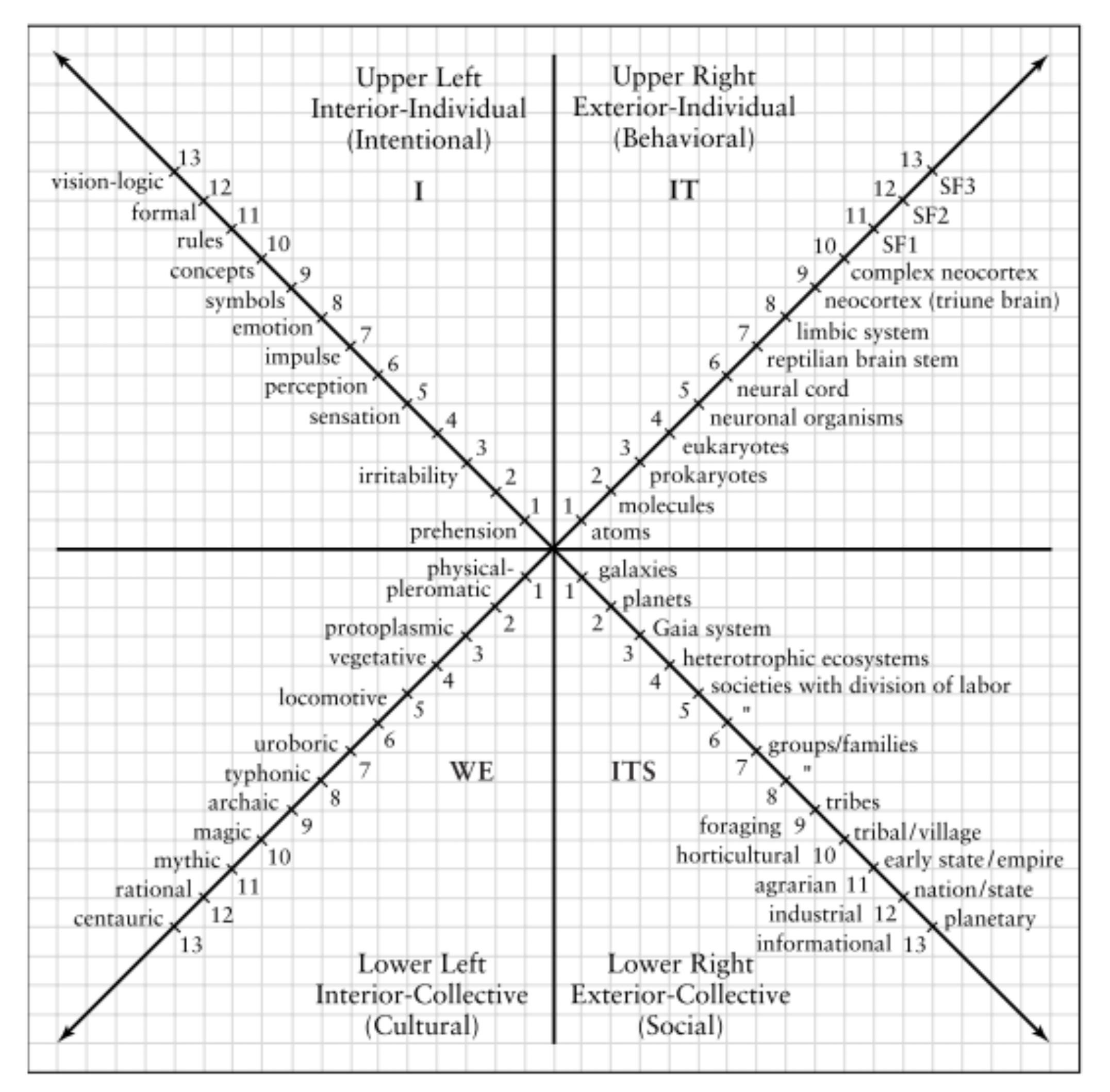
Figure 1
Diagram depicting Ken Wilber’s Integral theory.
Each of these four perspectives can bring a partial resolution to sustainability, but it is a collection of them which produces a comprehensive solution for future sustainable development. As a whole, these four perspectives are able to forge existing design codes into integral sustainable principles that engender human experience, cultural affiliation, resource efficiency, and ecological entanglements.
From our literature review, it became clear that a large body of research (88% of the papers that we read (Figure 2) takes a quantitative approach that deals with scientific positivistic information. Few studies investigate from the perspective of the humanities, or phenomenological relationships between humans and nature [17; 18], or environments as atmospheres [11]. Hence our aim in this paper is to fuse the left- and right-hand side of Wilber’s quadrants; that is objective and subjective design qualities and attributes to find a way to methodologically place these in an integral framework and establish a new mode of thinking about sustainable architecture without further exacerbating the subjective-objective dichotomy.
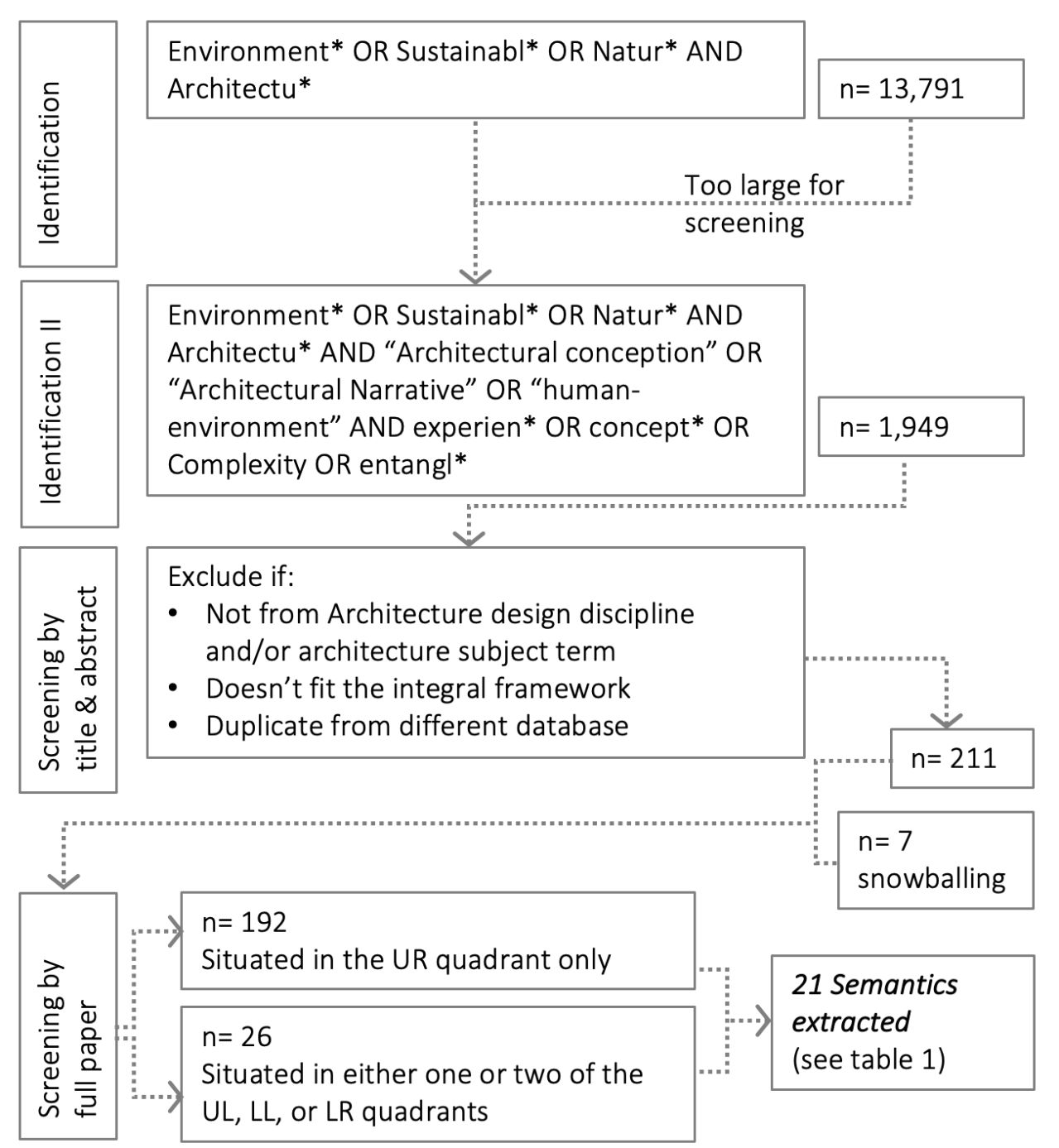
Figure 2
Diagram of our literature review’s flow chart and search protocol.
Subjectivity and objectivity; culture of presence and culture of meaning
To complete Wilber’s framework [19], we also borrowed Gumbrecht’s understanding of a culture of meaning as opposed to a culture of presence, as a useful means to critique the current status quo. This additional ontological support for the quadrant framework reminds us that its purpose is as an epistemological scaffolding and not to suggest that such divisions are rigidly fixed. In fact, it is the opposite, as is shown in the overlapping of some of the different themes within the diagram (Figure 3).
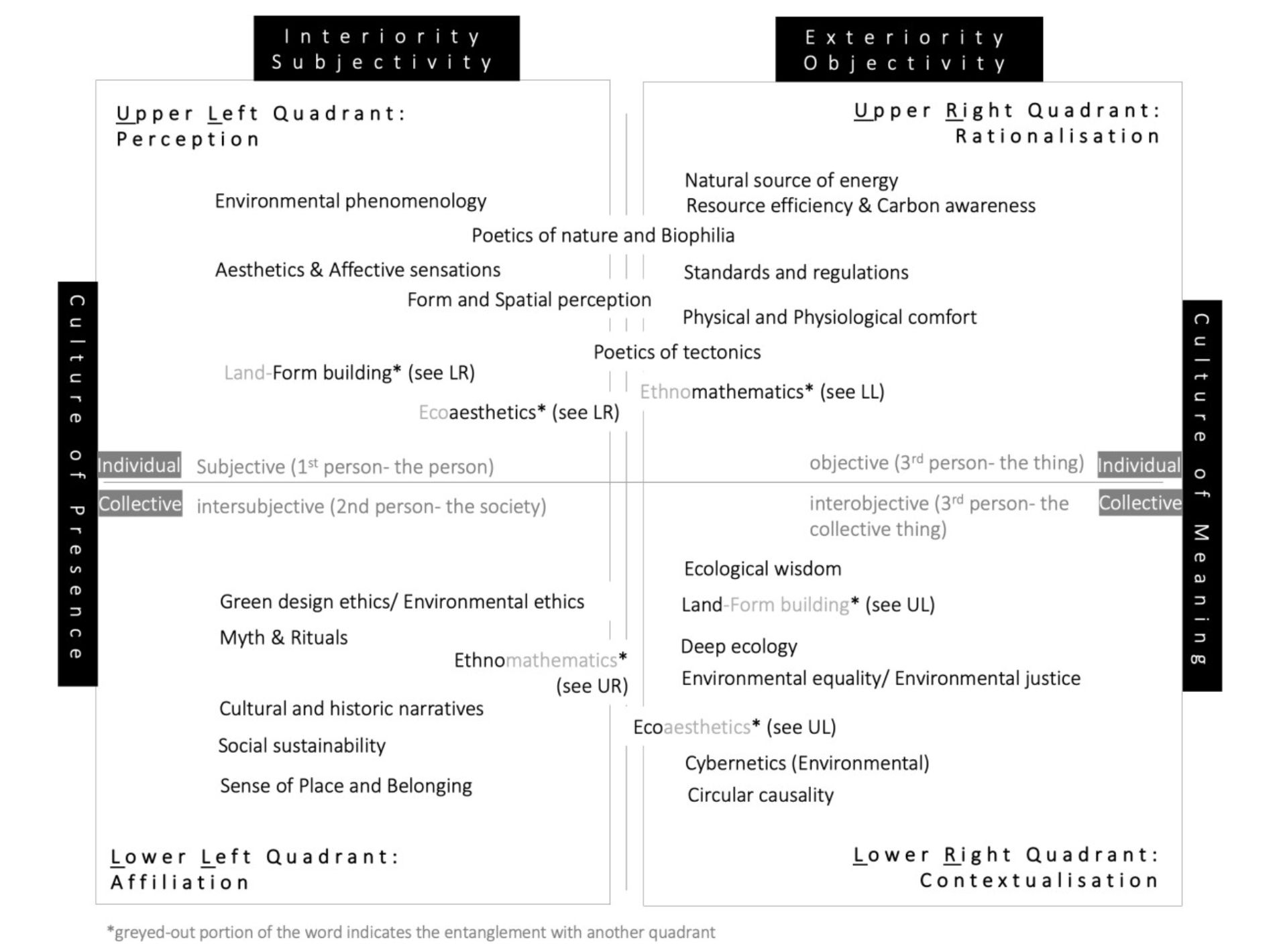
Figure 3
Conceptual framework developed by the author as; adapted from Wilber’s integral theory.
Within the dominant culture of meaning [19], there is a necessity to engage with positivistic and scientific facts. This includes, for instance, learning from vernacular architecture and current technologies. Conversely, within the culture of presence [19], there is a necessity to adpot a non-positivistic and speculative stance. One of the contributions of our proposed framework is hence that it brings together the two different cultures of architecture; namely the culture of presence and culture of meaning. Gumbrecht’s assumptions aim to dispel the idea of knowledge as simply the content of the human mind, as the Enlightenment encyclopaedists implied by their aim to gather all possible knowledge in a publication that could provide an explanation for everything – i.e. the theoretical, exact, precise, tangible, quantifiable, truthful, or ‘the positum’.
In the case of the aesthetic characteristics of architecture, we support, along with Gumbrecht, the concept of a hidden meaning of aesthetics that refers to what we encounter via our perceptual apparatus (as opposed to categories of judgement of taste in the arts etc.). Thus, the collection of experiences we are able to obtain from architecture becomes part of a lived epistemology that is integrated into our inner judgement, thereby participating in our metaphysical assumptions, our ethical inclinations, and our knowledge of nature as environment. It would configure a holistic culture of presence.
A balancing culture would aim for meaning, usually expressed through language, although it could also come from formulae, in the form of scientific explanations, or theories. These may start with a psychological theory to explain why we feel one way or it might aim for mathematical precision, objectivity, norms, or codes, or even embrace the social aspects of culture.
Following this line of thought, our aim is to highlight the dominance of a culture of meaning within sustainable responses by architects. The historical origins of this can be traced from the legacies of the Enlightenment and the Industrial Revolution to the emergence of Modernism and then the energy crisis of the 1970s. Therefore, we challenge the technocratic dominance in the profession and in education, with the intention of achieving a more holistic methodology for the processes and outcomes of architecture. In order to do this, we shall proceed by classifying the typical themes of sustainability according to our framework.
Table 1
| Reference | Semantic attributes | Semantic descriptors | Quadrant labels |
|---|---|---|---|
| [20] | Environmental phenomenology | Descriptions of experiencing architecture reflect on human-environment relationships. It is largely intangible, qualitative, experiential – even esoteric. The term emphasises the role of the environment in experiencing architecture. | UL |
| [21] | Biophilia and poetics of nature | Spatial configurations that foster positive experiences of nature. This can be a direct or indirect connection with nature to create places infused with positive emotional experiences – enjoyment, pleasure, and wonder. | UL entangled with UR |
| [22] [23] | (Environmental) Aesthetics | All human senses are connected when perceiving the aesthetics of built form. The eyes want to collaborate with the auditory, haptic systems, taste/smell, and basic orientation system. In this, the visual sense and haptic system connect the eye and skin. | UL |
| [24] | Spatial perception (eg. light and form) | Human emotional responses to architectural form and geometry and its connections with environmental factor (eg. (day)light). | UL |
| [25] with reference to Louis Khan’s served and servant spaces | Poetics of tectonic | The relationship and collaboration between poetic intentions (e.g. materiality) and technical means (e.g., science of materials) in sustainable architecture. | UR entangled with UL |
| [26] | Natural source of energy (renewables in the context of architectural design) | The relationship between built form and energy use based on environmental forces (sun, light, wind). | UR |
| Building Regulations, e.g., UK Approved Documents | Standards and regulations | Instructions and metrics that provide guidance for construction of buildings, efficiency, and safety. | UR |
| [27] | Resource efficiency and carbon awareness | Assessments of operational carbon and embodied carbon of products linked to mechanical, electrical, and public health (MEP) systems in buildings. | UR |
| [28] | Physical and physiological comfort | Design decisions made to achieve indoor conditions which provide satisfaction in the human mind and body. This includes, but is not limited to thermal comfort, air quality, ventilation, relative humidity, and daylight (these physical phenomena have implications on physiological conditions). | UR |
| [15] | Green design ethics/ Environmental ethics | Humanity and nature both thrive in regenerative human ecosystems. Design to act as a medium to interconnect culture with living systems/natural processes. | LL |
| [15] | Myth & rituals | Sustainable design should embody stories and beliefs relevant to societal and cultural meanings. Vernacular architecture is a successful axiom in finding ways to celebrate rituals. | LL |
| [29] | Social sustainability | Urban regeneration and industrial heritage influenced by neoliberal urban transformation and post-socialist transition. Emphasis on local communities, housing, open public spaces, placemaki,ng and participatory processes. Examination of urban forms and neighbourhood dynamics. Consideration of capability, resilient communities, and self- reliance. | LL |
| [30] | Ethno-mathematics | The intersection between culture and mathematics where customs provide self-organising systems. It makes use of patterns and different scales to generate form through iterations, eg. fractals in African settlement architecture. Often nature is used as a source of understanding such complex self-organising systems. | LL entangled with UR |
| [31] | Sense of place and belonging | Ephemeral quality of natural environments, such as patterns of daylight movement, can create emotional attachment to a place. Sense of attachment is a significant quality in architecture that contributes to local place and cultural identity, and hence also refers to the cognitive and emotional linkage of an individual to a particular setting or environment. | LL |
| [32] with reference to Ian McHarg’s Design with Nature (1969) | Ecological wisdom | A value system that embraces cultural, personal, and ethical design characteristics for multifunctional landscapes. This interrelationship needs to be understood in its historical and site context and cannot be replicated in a different context. | LR |
| [33] | Deep ecology | Sustainable architecture that is concerned with development based on the place and environmental education through practice. | LR |
| [34] | Eco-aesthetics | Combination with scientific cognitivism would constitute a stronger ecological aesthetics. | LR entangled with UL |
| [35] | Land-form building | The collision of forms, spaces, and activities into a landscape, just as one geological formation pushes sediment and rock onto another. This is a reflection on our worldviews and the universe itself – its non-linearity, emergence, and complexity. | LR entangled with UL |
| [36] | Environmental equality/ Environmental justice | Climate change has created unequal impacts on communities of colour, indigenous peoples, the poor, and developing countries. Design decisions made at the local scale would have global consequences. Any building in a given context should bear its responsibilities at the global scale. | LR entangled with LL |
| [37] with reference to Andrey Kolmogorov | Cybernetics (environmental) | A complex selection of invariants capable of controlling a system of any kind (e.g. built environment) with respect to human inhabitants. | LR |
| [38] | Circular causality | A sequential loop of causes that leads back to the original cause. A circular reasoning that involves reconsidering the creation of the original cause and application of it to produce a new sequence (eg. circular economy). | LR entangled with UR |
Identifying semantics of sustainable architecture
To identify the semantics of sustainable architecture, we conducted a scoping literature review of semantic descriptors (Figure 2). The search fields for screening the databases were initially set as ‘Article title, Abstract, and Keywords’. The initial identification screening was intentionally kept broad, meaning that a very high number of journal papers met the identification criteria. Therefore, we introduced more focused eligibility criteria for the second stage. Multiple online databases, including Scopus and Google Scholar, were investigated and only peer-reviewed journal papers were filtered in all our searches. The second screening was carried out by analysing the titles and abstracts of nearly 2,000 papers. Next, we introduced exclusion criteria in which papers only from the subject area of architecture or which otherwise clearly fitted our conceptual framework were admitted through. In addition, backwards and forwards snowballing using reference lists and citations were used as a more advanced search. From this process, 21 semantic attributes were extracted as a result of the entire screening process and their respective descriptors and references are shown in Table 1. These semantics were categorised and mapped against our quadrant framework using thematic analysis (Table 1; Figure 3). Four key themes emerged as a result of the thematic analysis of attributes which were incorporated into an adapted version of the integral theory to form our proposed conceptual framework.
Populating the conceptual framework
Based on the above, these four themes were labelled against each of the quadrants as follows: perception for the upper-left (UL) quadrant; rationalisation for the upper-right (UR) quadrant; affiliation for the lower-left (LL) quadrant; and contextualisation for the lower-right (LR) quadrant (Figure 3). In the upper-left quadrant, we mapped subjective attributes such as environmental phenomenology, poetics of nature, aesthetics of environment, and affective sensations. The argument is that such attributes should be investigated as part of a ‘culture of presence’ to generate integral sustainable architecture. The key methodological approach for instigating these attributes is hermeneutics and environmental phenomenology [17; 18; 39]. The allocation of each to its quadrant is shown in Table 2.
In the upper-right quadrant, objective attributes were mapped which are used to maximise efficiency and performance. Key elements from this quadrant were established through quantitative data analysis from scientific experiments and simulation studies. Semantics in this quadrant include but are not limited to, issues of material efficiency, energy performance standards, and thermal comfort.
Intersubjective attributes such as rituals, ethics, cultural meaning, social ethnography, and sense of belonging were identified as key components of the lower-left quadrant. These attributes connect our human cultural relationships with the environment, for example through expressions, liturgies, cultural identity, and vernacular traditions.
For the lower-right quadrant, the focus falls on the generation of wholes (e.g. neighbourhood, city, landscape) from their parts (e.g. elements of buildings). The key question here is how the parts fit into context and how a collection of parts can be shaped to guide flows of ecological processes. Key attributes in this quadrant include environmental equality, deep ecology, circular causality, and environmental cybernetics. Possible methodological approaches for analysing such intersubjective attributes are those of grounded theory or systems theory [40].
Table 2
| Quadrant | Themes | Methodology | Possible methodological type |
|---|---|---|---|
| UL | Phenomenology | Qualitative | Phenomenology, Hermeneutics |
| UR | Pragmatism/positivism | Quantitative | Experimental (scientific), Simulation (data-driven) |
| LL | Anthropology | Qualitative | Ethnography, Narrative analysis |
| LR | Systems theory | Mixed methods | Systems theory, Grounded theory |
Although the quadrants can be independently explained there is no ontological separation between them. Our argument is that an integrally informed sustainable architecture should emerge from a complex system in which each design decision upholds its existence by being recognised by all four quadrants. This is partly because attributes from one quadrant are dependent on one or more adjacent quadrants. For instance, culture and climate have largely influenced architectural form and spatial composition [41]. The arrangement of a house according to vernacular rituals from the LL quadrant has had implications on architectural form [30] in the UR quadrant, and hence the study of ethno-mathematics is entwined between the two respective quadrants. As another example, we may use environmental phenomenology to explain the experience of natural phenomenon such as daylight (UL quadrant). This is also entangled with the functionality of space (UR quadrant) and the sense of belonging (LL quadrant) because the ephemeral quality of light, such as in patterns of daylight movement, can create an emotional attachment to a place. This sense of belonging contributes to cultural identity and attachment of an individual to a particular setting or environment [29] as studied through ethnography and phenomenology.
Although plotting such factors using the quadrant framework can provide a conceptual map, we are aware that although the nature of the method is semantic, the results can rarely remain categorically defined, and so the boundaries are usually blurred or overlapping. The hermeneutical operation of interpreting the framework would thus bring in the personal or collective inclinations of each user of the framework. It is also critical to point out that there is always an inherent risk of misinterpretation of any schema, diagram, framework, or visual representation due to it necessarily being reductive and oversimplified. We therefore do not claim that this framework is the only possible one and indeed alternative or additional epistemological constructions could be combined with it.
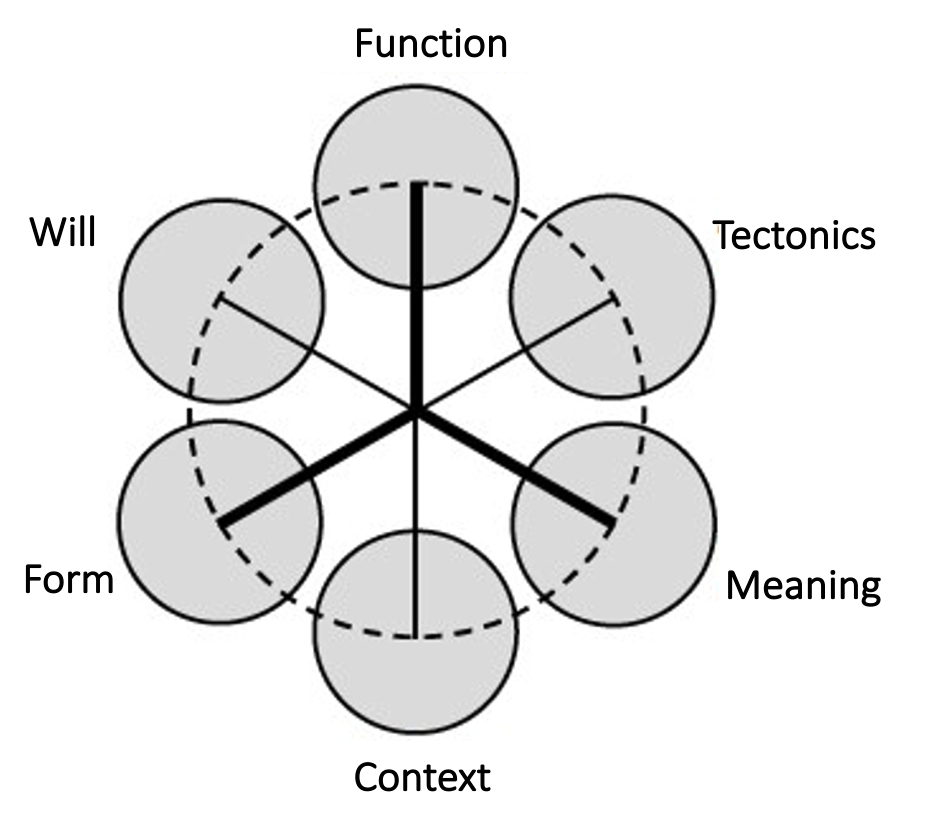
Figure 4
The manifold quaiities of architecture as diagramatically represented.
Other scholars [15; 42] have for instance used Wilber’s integral theory to criticise modernist architecture to propose new paradigms for future architecture. Peter Buchanan notably used it in his push for a ‘Big Rethink’ of architecture ina series of articles in the Architectural Review [42]. Although is instead a critique of current sustainable design thinking, it shares some overlapping ideas such as the notion of increased complexity. Furthermore, there are other useful representations that acknowledge the manifold conditions of architecture which could eventually complement and support the integral theory set of quadrants. For example, there is the systematisation that David Smith Capon developed through a series of ontological diagrams. These diagrams are explanations of different scholars that he has synthesised in his proposal of six categories for a theoretical consideration of architecture (Figure 4) [43]. Comparably, an epistemological diagram focusing on paradigms of research in architecture has been offered by Salama (Figure 5) [44]. No one diagram can fully encompass the overall complexity that something such as architecture, as an object or as a discipline, can imply, and therefore the one we are proposing in this essay has its advantages and disadvantages.
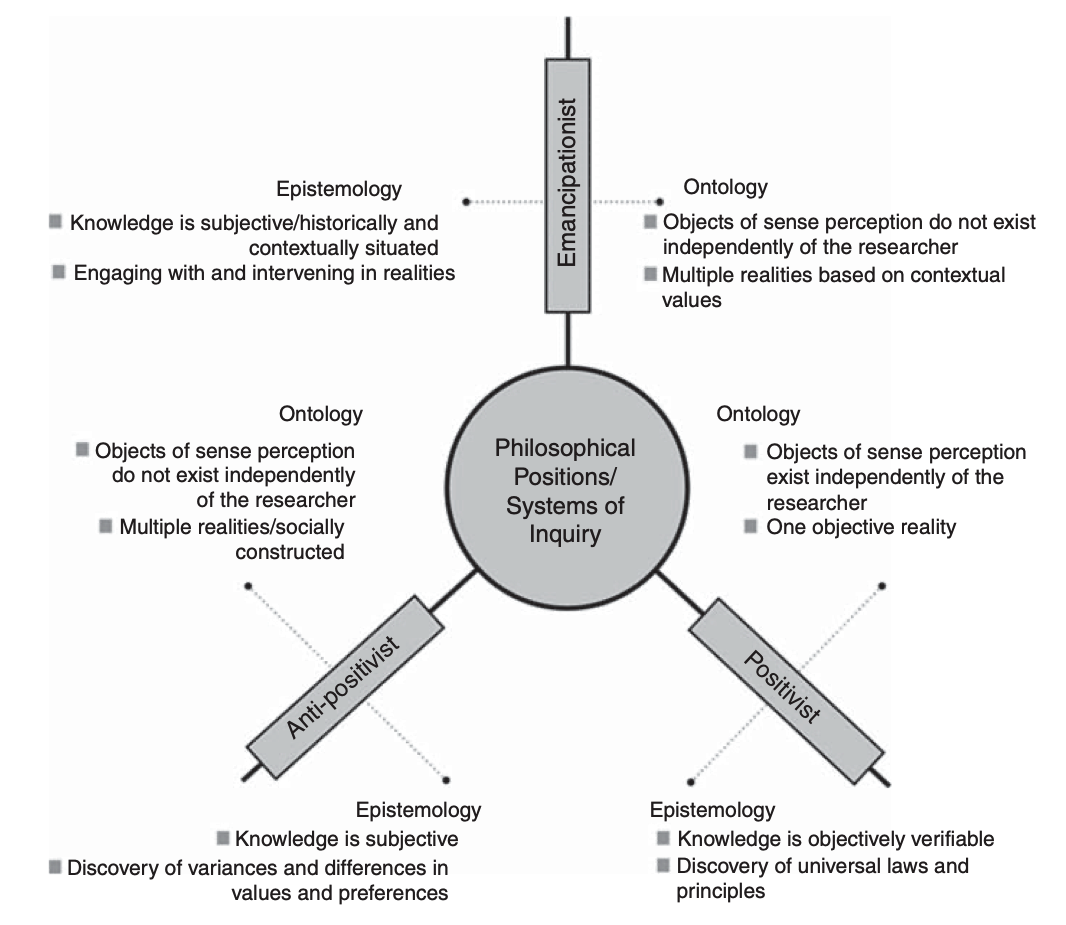
Figure 5
Methodological research approaches in architecture and allied disciplines.
To examine the practicality of our framework we decided to use a qualitative case study as an inductive investigative strategy [45] for ‘reading’ an architectural project. The method can be deployed as a design tool for the practice of sustainable architecture. To do that, we selected two projects by Glenn Murcutt and analysed them in the context of the integral theory framework. Murcutt’s work was selected as a well-known example of responsive design [46; 47; 48] that entangles subjective (culture of presence) and objective (culture of meaning) perspectives, thereby covering many aspects of sustainable architecture.
Murcutt’s work as a successful paradigm
Murcutt’s work is a helpful paradigm [47; 48] because many of his buildings present a blend of spatial sensibility (perception quadrant), modernist technology (rationalisation quadrant), local craftsmanship and indigenous structures (affiliation quadrant), and respect for nature (contextualisation quadrant).
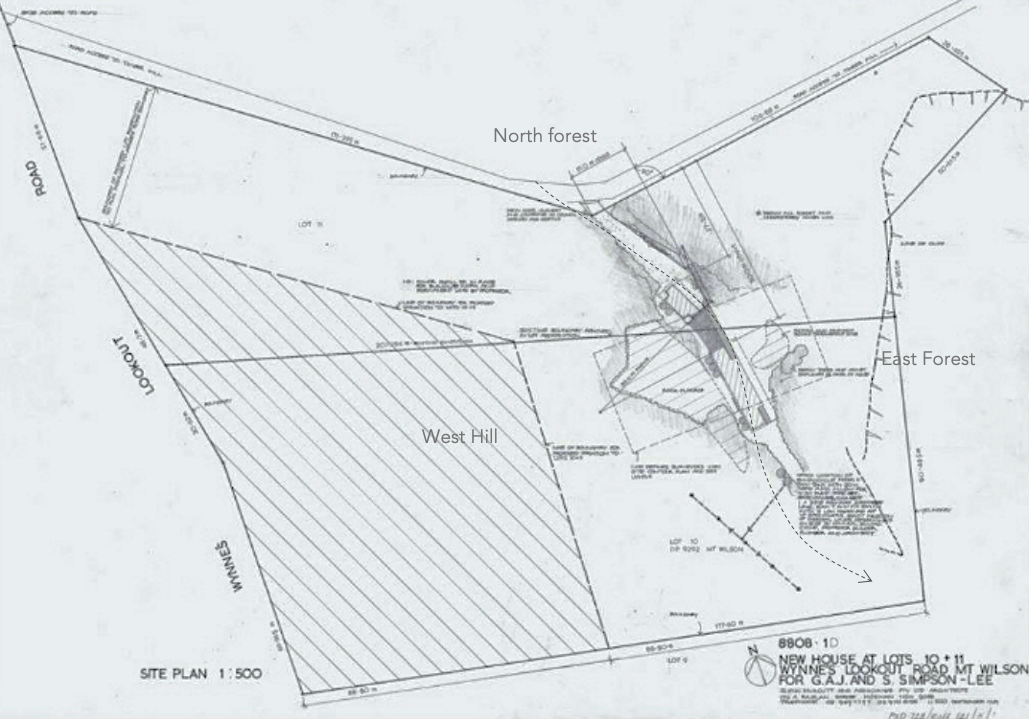
Figure 6
Simpson-Lee House, Blue Mountains, Blue Mountains, New South Wales, Australia (1993). Site plan indicating the historic route used by Aboriginal people. (Adapted from the original drawing from the project; courtesy of El Croquis).
As in his other projects, the design of the Simpson-Lee House originated from a historic narrative. Murcutt has developed a profound philosophy based on the traditional ethic of ‘touching the earth lightly’ – the moral principle of not disturbing nature more than is necessary [47]. This is a fundamental design principle to fit a building into its context (contextualisation quadrant). Any building has to be ‘present’ in the ecosystem to make a mark, but it should have a ‘high impact’ without distressing the larger web of systems (contextualisation quadrant). The positioning of the Simpson-Lee House into the context is an attempt to connect the building with its topographical contour lines. The threshold of the house is located on a path that aboriginal people had long used as the most desirable route to do trade (Figure 6). The pattern of movement describes a historical code of human-within-the-environment interaction which acts as a holistic signifier enriching the concept behind this building (affiliation quadrant).
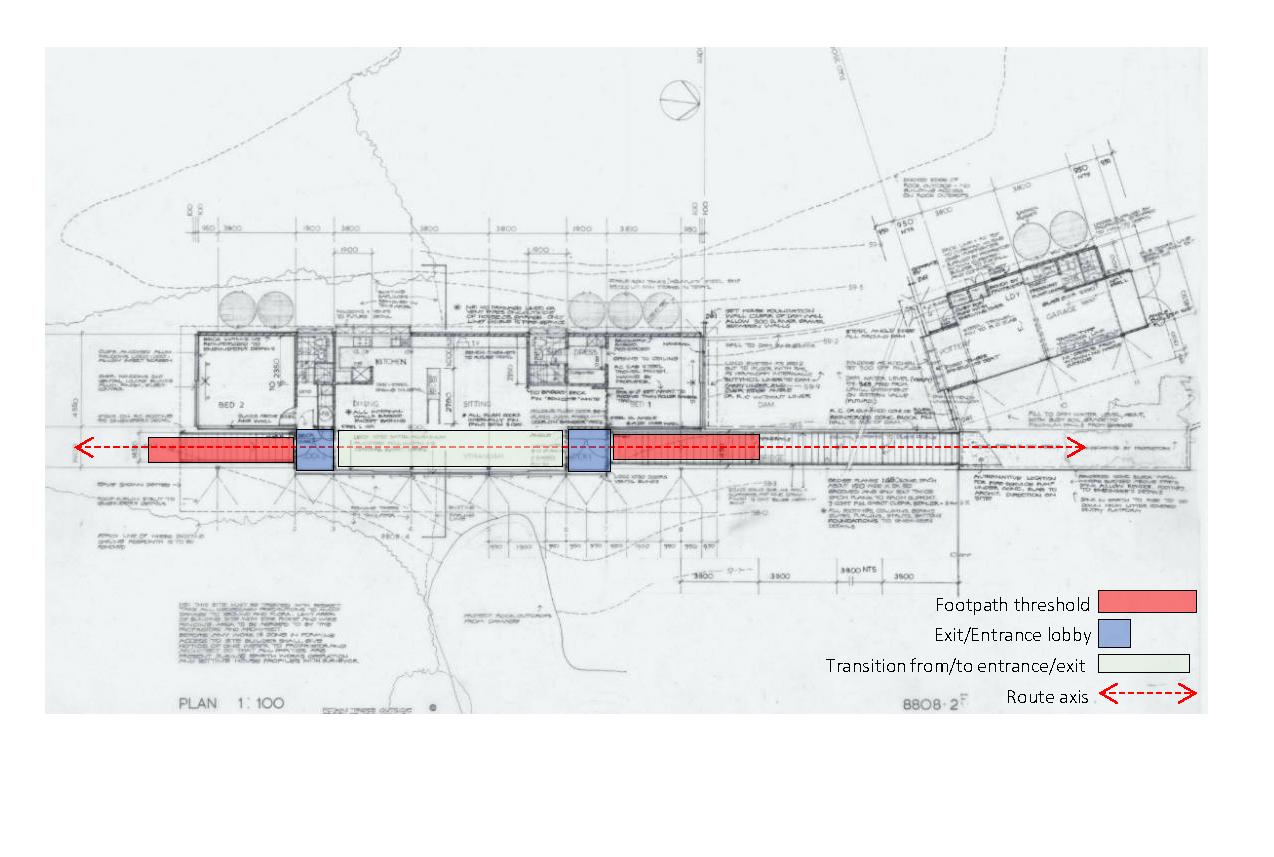
Figure 7
Simpson-Lee House, Blue Mountains, New South Wales, Australia (1993). Pathway, threshold, and entrance to the house. (Adapted from the original drawing from the project; courtesy of El Croquis).
The spatial organisation of the Simpson-Lee House is not only influenced by the schedule of programmes, or by functionality. These aspects are entwined with local beliefs and an architectural narrative (intersubjective quadrant entangled with the objective quadrant). For instance, the house’s threshold, entrance, and exit are located along a straight path, yet the entrance is positioned to be accessed from the sides rather than on that central axis. Murcutt chose to do this as it is believed that aboriginal people entered their shelters and caves from the side and so the architect made a similarly subtle entrance for this house (Figures 7 and 8).
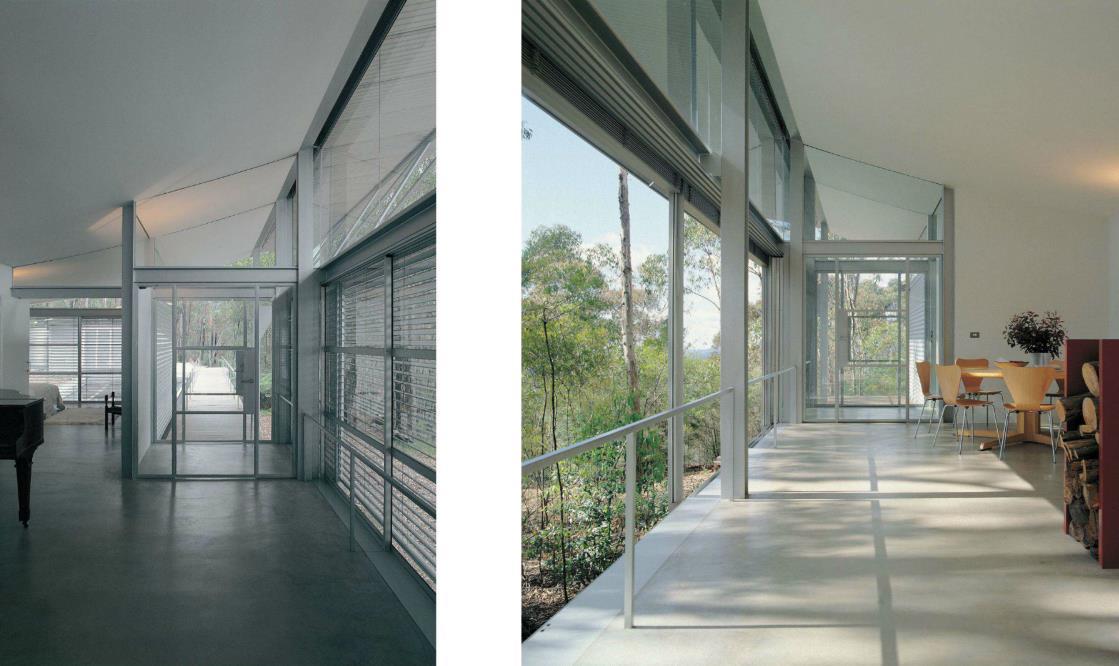
Figure 8
Simpson-Lee House: entrance/exit on the axis of the pathway threshold. (Photograph by Anthony Browell; courtesy of El Croquis).
The interior of the Simpson-Lee House was designed mindful of the fact that the clients wanted a home with ‘minimal, tough simplicity’. Therefore, it was designed as a mix of modernist thinking and local beliefs, meaning that the juxtaposition of such qualities (subjective quadrant) had a direct impact on the selection of the materials (objective quadrants). Thus, the construction material pallet of the Simpson-Lee House consists of corrugated iron, concrete, triangular steel trusses, and large V-shaped steel struts to extend the roof and protect the long ribbon windows from the sun (Figure 9). Furthermore, and from a more objective viewpoint, the corrugated steel is insulated, while the concrete base and floor create a higher thermal mass to moderate the indoor temperature in cold winter months. In contrast to this heavy-duty floor, the glazed panels below the corrugated iron roof are mitred at the corners where the steel beams join together to amplify the contrast between the materials. Following this analysis, we can see that design decisions are made in response to a set of considerations that deepen the relationship between human beings and the environment by fusing two cultures – the culture of meaning and the culture of presence – to form a holistic architecture.
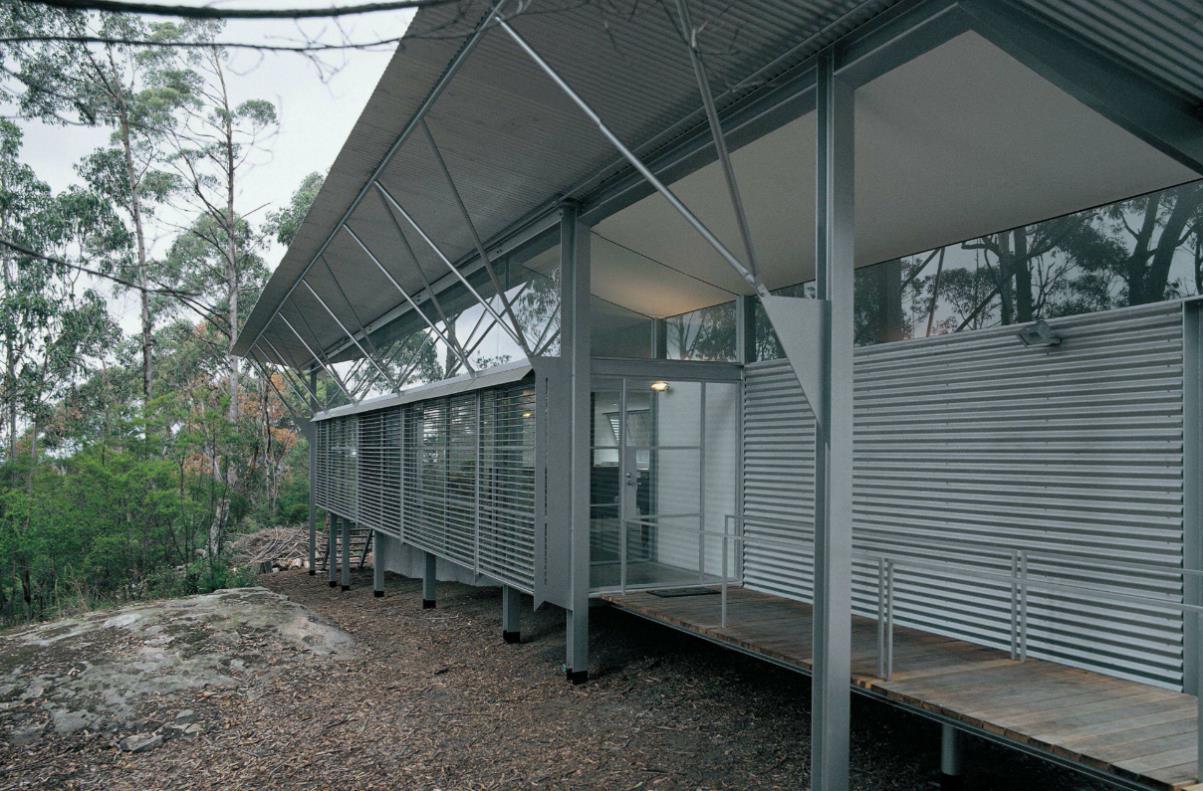
Figure 9
Simpson-Lee House: choice of materiality. (Photograph by Anthony Browell; courtesy of El Croquis).
Similarly, in Murcutt’s design of the Magney House (Figure 10), the principles that ground the building into the landscape, its location, and its orientation emerge from the historic narratives entwined with the client’s exploratory lifestyle. The house’s tent-like quality and its minimal structural elements are reflections of the client’s interest in camping and their experiences the surrounding sites over the years (affection quadrant and perception quadrant). The location of the house was not based on the best view, such as on top of the hill, but rather was selected as a flat surface to resonate with the client’s habit when setting up a tent.
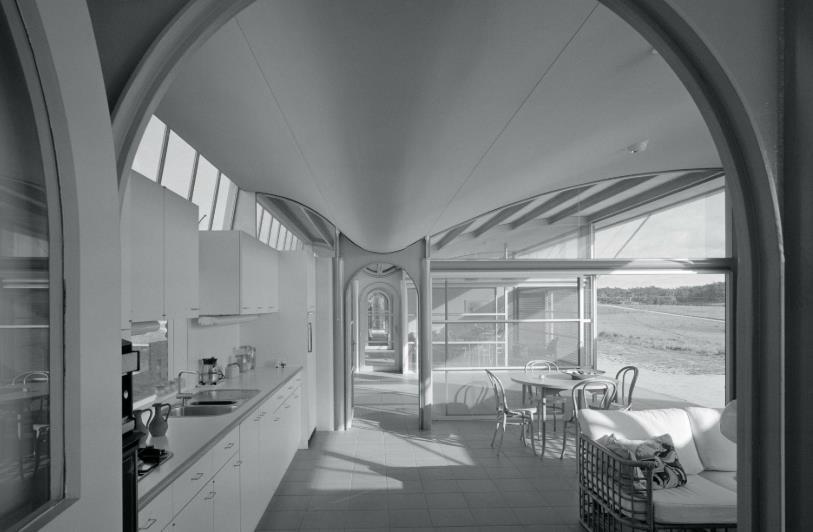
Figure 10
Interior of the Magney house, New South Wales, Australia (1984). (Photograph by Max Dupain courtesy of El Croquis).
The form of the roof of the Magney House is designed to suit the equinox sun angle (rationalisation quadrant). It also acknowledges the topographical contour lines and the falling ground surface (contextualisation quadrant). Large windows are located on the northern façade (needed to capture the sun in the southern hemisphere) and the roof extends out to provide shading. On the other façade, where the services are located, the windows are located at the top to provide some daylighting and to benefit from the natural ventilation stack effect. The aerodynamics of the roof and the positioning of the clerestory windows further promote natural ventilation by creating a stronger pressure differential, and thus the building emerges from sophisticated design traditions and vernacular forms (affiliation quadrant).
In describing Murcutt’s work, including the Magney House, Bill Lacy sees it as a testimony to how aesthetics and ecology can work together to bring harmony to human intrusion within the natural environment [48]. He elaborated:
it is an architecture of place, architecture that responds to the landscape and the climate [LR quadrant]. [The] house [is] fine tuned to the land and the weather. He uses a variety of materials, from metal to wood to glass, stone, brick and concrete [UL and UR]—always selected with a consciousness of the amount of energy [UL] it took to produce the materials in the first place. [48]
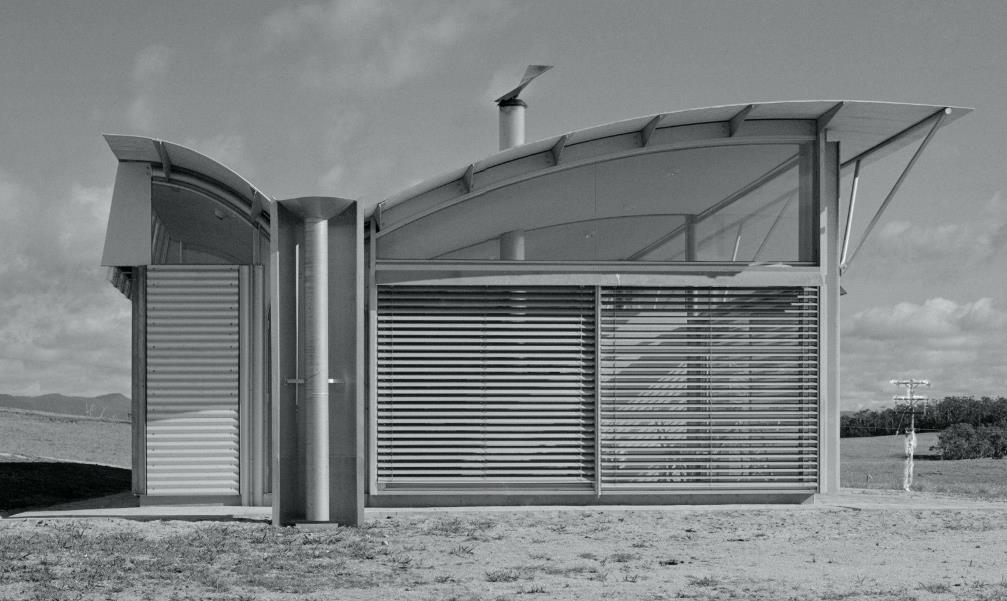
Figure 11
Exterior of the Magney house. (Photograph by Max Dupain; courtesy of El Croquis).
Integral theory as a radical device
The proposed framework devised from integral theory can thus be useful in constructing a roadmap for architects when thinking about sustainability. The framework allows designers to navigate and negotiate wicked dichotomies in architectural and environmental design: the subjective versus the objective; the conceptual versus the pragmatic; the culture of presence versus the culture of meaning. While we would not refute designs that do not emerge from using this theoretical framework, any sustainable architecture that ignores or overlooks one or more worldviews within the quadrant’s framework might prove ineffective or deficient.
Contrary to the approach we are suggesting, some of the main methods for assessing sustainable design (such as Passivhaus, LEED, and BREAAM) reduce architecture to a standardised approach that is based on drivers that overlook subjective values. The politics of construction create favourable conditions for such ideologies by pushing the agenda for certain materials and techniques which are inappropriate for a locality’s culture or climate [49]. And yet architects and the construction industry are forced to adopt them because of politics, media, and the call to urgently fix a global issue which in fact is a result of very slow transgression and decay. For instance, to meet one of these sustainable standards, the guidance requires the design team to achieve certain metrics which only fall into the positivistic quadrant. Hence, many buildings designed with sustainability labels are somehow identical, being merely quantitative data-driven (rationalisation quadrant), and lack connection to wider perspectives, especially those in the left-hand quadrants [50]. This universal approach brings a globalised vision of sustainable architecture that disregards localised visions, cultural manifestations, aesthetics, and more importantly the radical hermeneutics of design described by Bill Thompson [51]. He talks of four worldviews: authorship, technology, culture, and consciousness [51]. We would therefore like to argue in favour of ‘joggled complexity and shepherded entanglement’ for sustainable architecture practice.
Complexity, although a nebulous concept in architecture, was regarded by Charles Jencks as an amalgamation of simple contrary requirements and different worldviews [35]. This complexity arises from pluralistic views, with manifold interlinkages and holistic behaviours [35]. Furthermore, the entanglement is asource of coherence that comes into being as a result of integrally related parts; an ever-deepening reciprocity between understanding and making; between the conceptual and the pragmatic. This in part is analogous to Christopher Alexander’s theory of wholeness as a conceptual and practical way for understanding how things belong together [49]. Similar to the theory of wholeness, our proposed framework cannot be sequentially analysed by breaking it into parts. Instead, it can only be defined as a process of reciprocal understanding between the parts and a whole [52].
Alexander argued that contemporary forms of building production rely too much on the principles of standardisation, modular systems, and regulatory metrics [53; 54; 55]. Buildings seem to be the result of the highly skilled development of construction technologies and not spatially developed environments. In line with Alexander’s analysis, Rahm uses Heidegger’s critique of modernity to argue that the current-day sustainable architecture practice deprives man of regionally, climatically, and temporally localised space [11]. He argues that sustainable architecture should not become a metric composition (quantitative) and instaed advocates for a spatial and atmospheric composition (physiological and psychological), inextricably linked with culture and ecological patterns. Sustainable architecture must go beyond its current remit and create sensual exchanges between bodies and spaces while forging resource efficiency.
Competing Interests
The authors have no competing interests to declare.