
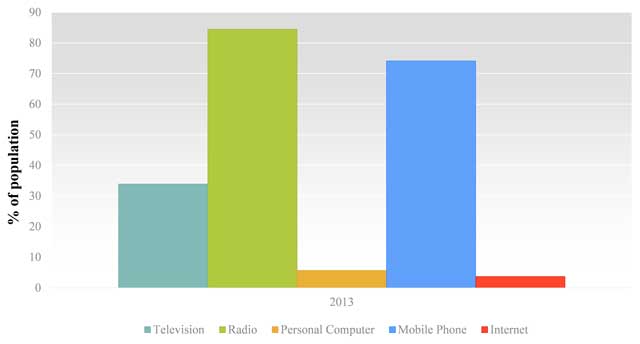
Figure 1
ICT Access in Northeast Nigeria. Source: Nigeria Bureau of Statistics.
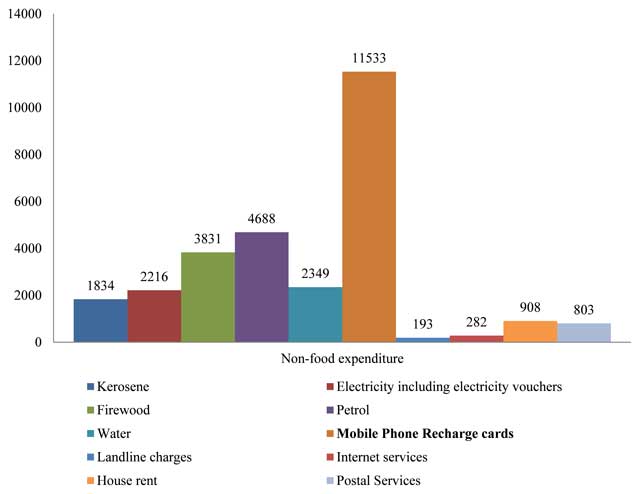
Figure 2
Comparative Expenditures on Average Monthly Non-Food Items in Households in Northeast Nigeria (in Naira, 2013). Source: Nigerian Bureau of Statistics & African Development Bank.
Table 1
List of Engagement Activities.
| 1. | Have a mobile phone and use it consistently. |
| 2. | Have been a resident continually in their community in Adamawa state for the past one year (including the period of the mobile phone disruption). |
| 3. | Attended a political rally, speech, or organized protest of any kind. |
| 4. | Been an active member of any group that seeks to influence public policy or government. |
| 5. | Held or ran for political office. |
| 6. | Been a member of the Adamawa Peace Initiative or attended a public meeting on community peace-building or reconciliation matters. |
| 7. | Served on a committee for a local organization. |
| 8. | Met secretly or openly with other members of their network to seek the interests of the community. |
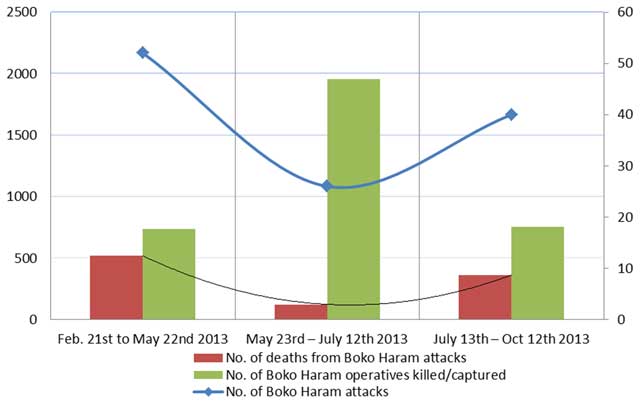
Figure 3
Boko Haram incidences before, during and after the mobile phone shutdown in Northeast Nigeria. Source: Nigerian Military & CFR.