
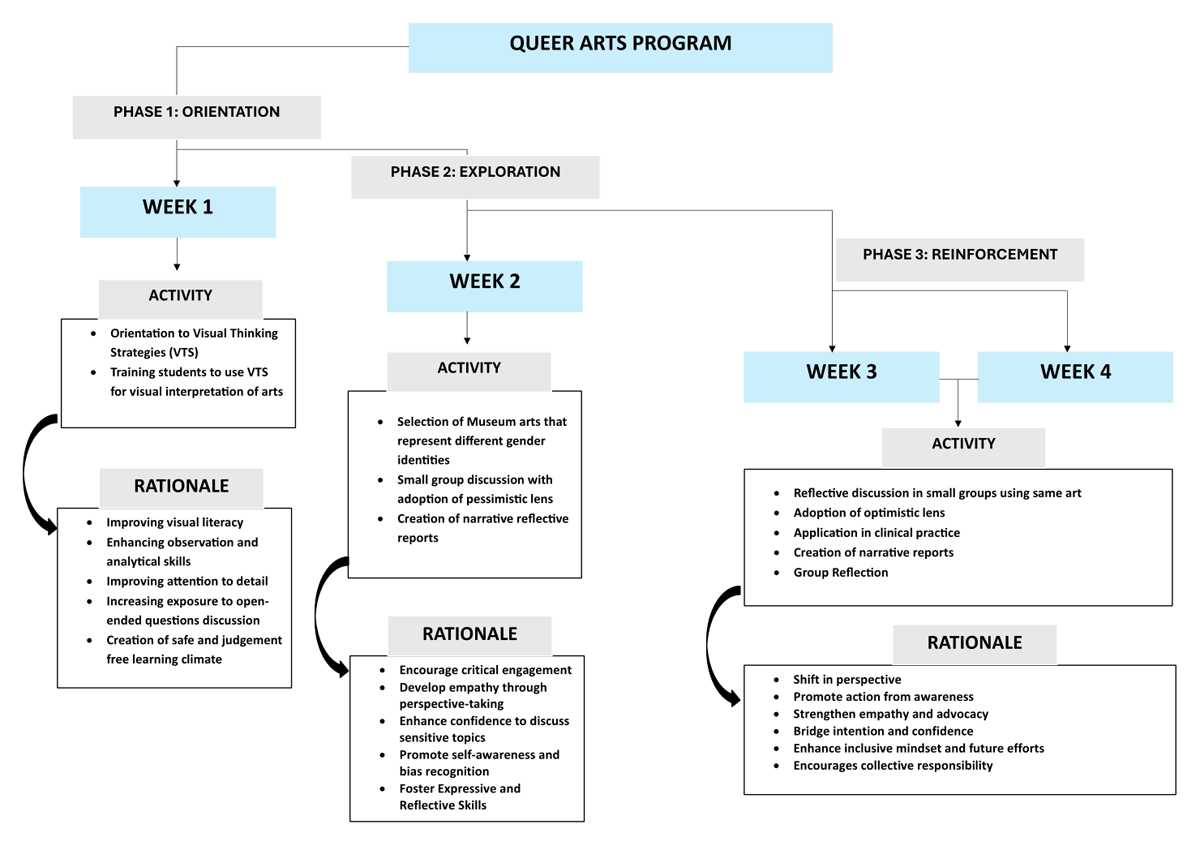
Figure 1
Implementation of Queer Arts Program.
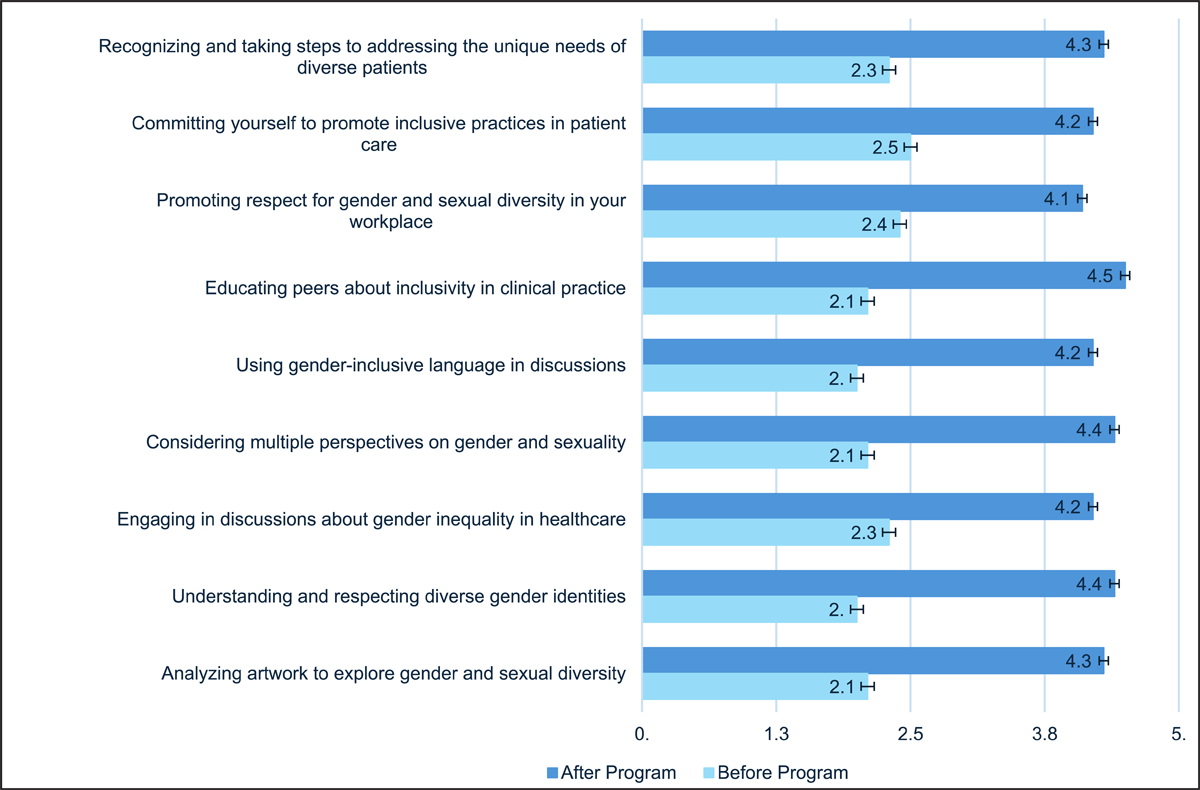
Figure 2
Comparison of confidence levels before and after the training.
Table 1
Evaluation of Program.
| EVALUATION OF PROGRAM | MEAN SCORE ± STANDARD DEVIATION |
|---|---|
| The content of this program aligned well with my overall educational goals in medical training. | 4.2 ± 0.9 |
| The creative activities within the program, such as storytelling and art analysis, fostered innovation and helped me think outside the traditional medical education framework. | 4.4 ± 0.3 |
| The group activities enhanced my learning experience by providing diverse perspectives and fostering collaborative pragmatic thinking skills. | 4.2 ± 0.5 |
| The program helped me better understand the perspectives and needs of the queer community. | 4.6 ± 0.2 |
| The program has helped me recognize and reduce my own biases against the queer community | 4.7 ± 0.4 |
| I feel more competent in being empathetic towards patients from diverse gender and sexual orientations. | 4.0 ± 1.2 |
| The program has significantly improved my visual literacy skills, enabling me to better interpret and understand visual information in the context of gender sensitivities | 4.1 ± 0.8 |
| This program has enhanced my critical thinking abilities, particularly in analyzing and responding to complex issues related to gender and sexual diversity. | 4.3 ± 1.0 |
| My perceptions of the queer community have positively changed due to the insights gained through this program. | 4.7 ± 1.1 |
| The use of arts in our curriculum provided a new educational experience that traditional medical training does not typically offer, enhancing my learning in unique ways. | 4.5 ± 0.7 |