
Introduction
Northwest Arabia is characterised by hundreds of thousands of dry-stone monuments, the most striking of which are the mustatils (D.L. Kennedy 2017; Groucutt et al. 2020; Thomas et al. 2021a; Abu-Azizeh et al. 2022; M.A. Kennedy et al. 2023). Coined after the Arabic word for rectangle (مستطيل), these monumental features have been interpreted as cultic or ritual structures, with the associated activities used as a mechanism for aggregation and a manifestation of territoriality (Thomas et al. 2021a). At present, only two excavated mustatils have been published, with these revealing a selection of carefully curated and deposited faunal remains (objects) of wild and domestic horned ruminants (Abu-Azizeh et al. 2022: 141–146; M.A. Kennedy et al. 2023: 17). These remains are specifically upper cranial elements, such as bucrania, horned frontal bones, horns, horn sheaths, and maxillary bones. Remains are found intact and also as isolated elements (maxillary teeth, horn cores, petrous and occipital bones, etc), possibly due to post-depositional deterioration. Based on these assemblages, the mustatil tradition appears to have been marked by an overall, cohesive cultic/ritual framework. This assertion appears to be confirmed by the excavation of a further six mustatils in the AlUla region. The results from these excavations are presented below, providing new insight into the economic lifeways, and the beginnings of sacral architecture and ritualised economies in the 6th and 5th millennia BC of northwest Arabia.
The AAKSA and PAKEP Projects
The authors have been investigating the mustatils of northwest Arabia since 2018. First with the University of Western Australia’s Aerial Archaeology in the Kingdom of Saudi Arabia projects (AAKSA; 2018–2022), and subsequently with the University of Sydney’s Prehistoric AlUla and Khaybar Excavation Project (PAKEP; 2023–2026). Both projects are funded by the Royal Commission for AlUla, with AAKSA devised as part of the Identification and Documentation of the Immovable Heritage Assets of AlUla programme (IDIHA). AAKSA was tasked with aerially and terrestrially documenting the archaeological sites and features of the hinterland of AlUla and Khaybar County. PAKEP is investigating the intersecting landscapes of architectural monumentality that begin in the Neolithic (6th millennium BC) and continue through to the end of the “Early Bronze Age” (3rd millennium BC) in the counties of AlUla and Khaybar. PAKEP is exploring the origins and role of architectural monumentality across these areas, considering how and why we see transitions in the expression of monumentality across the Early-to-Middle Holocene. The data presented in this paper was recovered during these two projects, between 2019 and 2023.
The Mustatil Phenomenon
Remote sensing and low-level aerial reconnaissance across northern Saudi Arabia have revealed more than 1600 mustatils (M.A. Kennedy et al. 2023: 2). Characterised by their rectangular to sub-rectangular form and ranging in size from as small as 10 m to more than 620 m in length; these structures are found in all major landscape groupings and bedrock lithologies. Examples can be found as isolated instances or as part of a group or cluster, up to 20 in number (Thomas et al. 2021a: 617; Thomas et al. 2022: 33–34). No clear orientation is discernible, with examples found facing all cardinal directions and in distinct topographic locations, such as, “hidden” on mesa summits, constructed on the sides of volcanoes, on slopes positioned under rock overhangs, or on plateaux. Instead, it has been hypothesised that these structures were orientated towards geographic and landscape features, such as water sources and areas of good pasturage (M.A. Kennedy et al. 2023: 34–37).
To date, two excavated mustatils have been published (Abu-Azizeh et al. 2022; M.A. Kennedy et al. 2023), with the results from these studies suggesting that the mustatils had a cultic or ritual function and significance. Excavations revealed the upper cranial elements of wild and domestic horned ruminants (Abu-Azizeh et al. 2022: 141–146; M.A. Kennedy et al. 2023: 17). Although the form and type of the deposited elements is homogenous to closely comparable, the species distribution of each mustatil differs. IDIHA-0000687 is marked by a higher concentration of caprines over cattle, aurochs, gazelle, and ibex (Abu-Azizeh et al. 2022: Figure 7); whilst IDIHA-0008222 is marked overwhelmingly by cattle/Bos sp. remains, with smaller proportions of caprines and gazelle (M.A. Kennedy et al. 2023: Table 1). Based on these differing faunal assemblages, the mustatil tradition appears to have been marked by a cohesive cultic/ritual framework, although the individual make-up of each assemblage was not prescribed, but potentially representative of each (individual) communities/bands’ pastoral economy during the 6th and 5th millennia BC.
Mustatil Typology
In terms of typology, the mustatils are characterised by several key components: a head, chamber, courtyard, long walls, base with entrance; and in some instances, a series of associated features, which include circular cells, orthostats, and stone pillars (Thomas et al. 2021a: 612; Figure 1). Based on the absence or presence of associated features, these structures can be divided into two broad types, “simple” or “complex” (respectively). Instances are then marked by either single or multiple courtyards, up to four in number, with corresponding chambers and entranceways (Thomas et al. 2021a: 612–613).
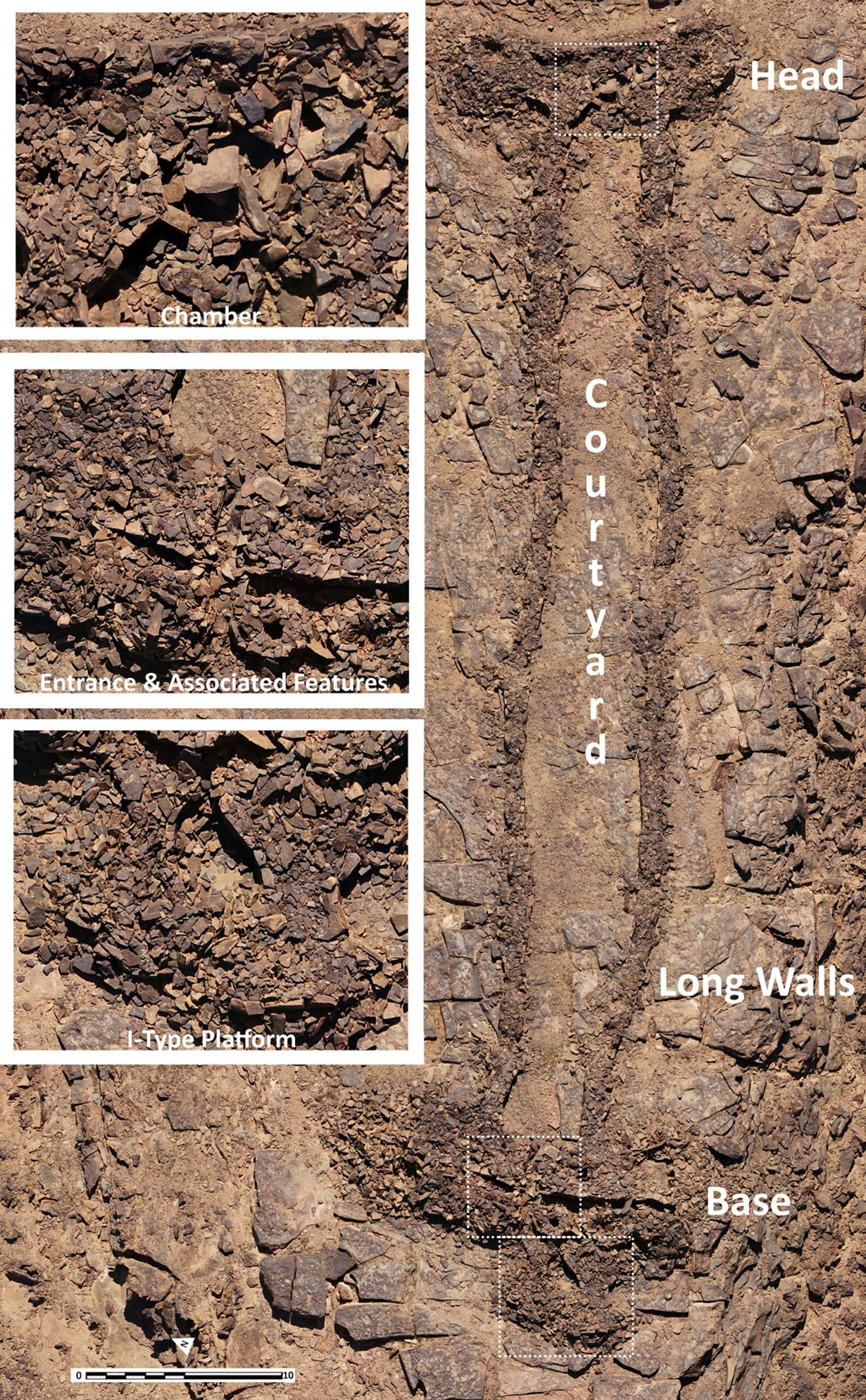
Figure 1
Key architectural features of a mustatil. © AAKSA/PAKEP and The Royal Commission for AlUla.
The overall focus of the structure is the head. The heads of mustatils are characterised by a sub-rectangular to rectangular rubble-filled platform, with almost all instances marked by an ovoid, trapezoidal or rectangular chamber in the centre (Thomas et al. 2021a: 612). The chambers can also have doorways or entrances, which connect them to the courtyard. In some examples, these entrances have been deliberately blocked, possibly as a decommissioning event. The chambers themselves appear to have been sealed by a single monumental capstone or a collection of stones; whilst others have revealed little evidence of capping, suggesting they were open-air (Thomas et al. 2021a: 612). Other architectural features, such as niches and standing stones/orthostats, have also been identified within the central chamber.
The courtyards were generally empty, except for later enclosures and funerary structures, which were often built from stone looted from the mustatil. However, there is evidence that at least some of the courtyards were decorated with pebble surfaces, as seen at IDIHA-F-0011081 (M.A. Kennedy et al. 2023: Figure 21). The long walls ranged from 0.3–1.2 m in height, and 0.5–3 m in width (Thomas et al. 2021a: 612), with several different construction techniques evident. In almost all instances these walls were preserved to their original height.
The key feature of the base (rubble platform) is a narrow entranceway, this liminal space facilitated access to the structure/courtyard and ultimately to the chamber in the head. The entranceways are positioned in the centre of the platform, opposite the chamber, with these usually ranging in width from 0.3–1 m (Thomas et al. 2021a: 612). The narrow width of these entranceways suggests access to the structure was single file, suggesting an element of procession was involved in the movement to the head and the offering chamber. Moreover, many of these entranceways appear to have been blocked and decommissioned. This blocking appears to have ranged from symbolic, a few stones blocking either end, to complete, with the entranceway entirely infilled (Thomas et al. 2021a: 612).
The Mustatils of ALULA
Over the course of the AAKSA and PAKEP projects a total of seven mustatils have been excavated in AlUla County. All examples are located in the east of the County, in the sandstone Badlands and narrow canyons to the south of the Hamra Desert and the Sharaan Nature Reserve (Figure 2). All examples were constructed from locally available stone, collected or quarried on site. These structures will be discussed from west to east. It should be noted that all sites are given the prefix IDIHA-*, with individual features given the prefix IDIHA-F-*. A full methodology for the excavation and analysis of this material, including radiocarbon dating, can be found in M.A. Kennedy et al. (2023) and Thomas et al. (2022).
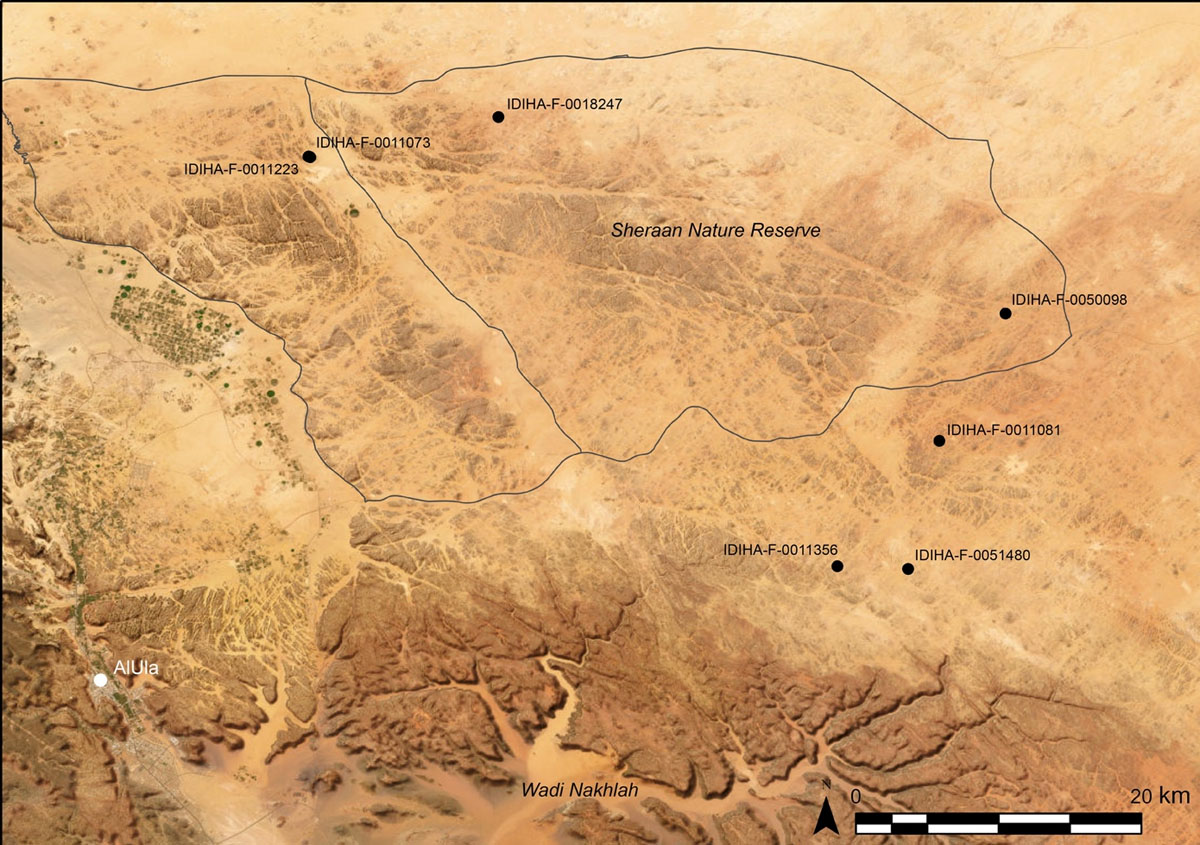
Figure 2
Map of excavated mustatils in AlUla County. © AAKSA/PAKEP.
IDIHA-0011233
The site IDIHA-0011233 is located in the north-western extent of the Sharaan Nature Reserve. The site is located on a mesa summit and consists of seven mustatils and later funerary features (Figure 3). The mesa itself sits on the western side of a wide valley, the major north-south access route through narrow sandstone canyons of this area. To the south of the mesa are the remains of several large ‘qa or possible palaeolakes, which still hold water after heavy rain (Figure 3). Two of the seven mustatils at this site were excavated in 2021 and 2022.
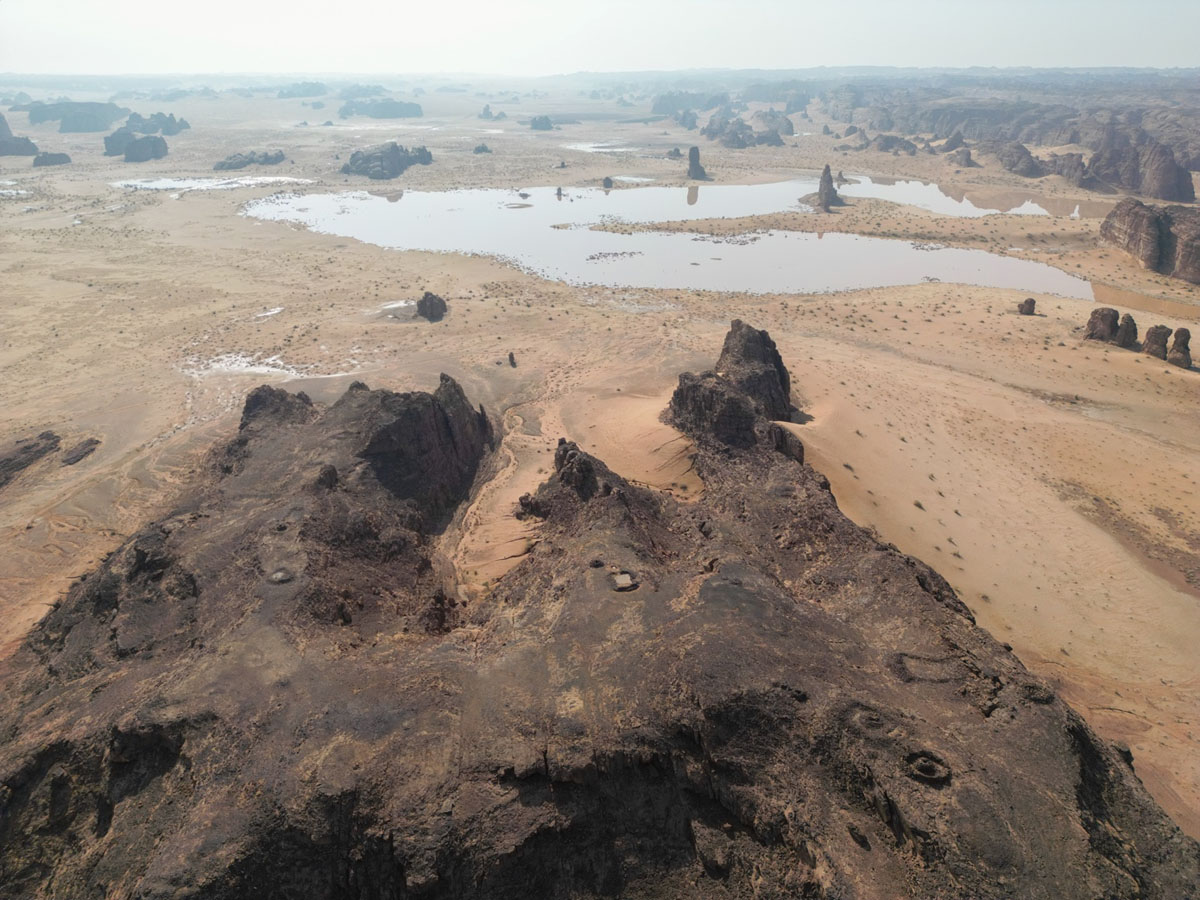
Figure 3
Aerial view of IDIHA-0011233, photo facing south. Note the area still holds significant water after rain. © AAKSA/PAKEP and The Royal Commission for AlUla.
IDIHA-F-0011073
IDIHA-F-0011073 is a complex mustatil located on the main plateau site of IDIHA-0011233. The mustatil is orientated roughly north-west (head) by south-east (base), with a single associated feature positioned directly behind the base. This mustatil measured approximately 17 m in length and 10 m in width and was constructed from unworked slabs of sandstone desert pavement. The long walls were bonded to the head and base and were formed by two rows of upright stones infilled with rubble (Figure 4). The feature then appears to have been decommissioned by a considerable quantity of stone placed upon the structure. This rubble across the head contained significant quantities of Bos sp. enamel tooth flakes (UGAMS56659). Whilst excavations revealed a small rectangular chamber (Feature 1), which measured 1.23 × 0.6 m. The top of Feature 1 was sealed by a series of horizontally laid capstones. Set directly atop of these, was a human ulna (IB0463; UGAMS56615), cranial fragments, vertebrae, and a single carnelian bead (Figure 5A). The front of Feature 1 was sealed with informally piled rubble and silt, behind which was a 0.35 m thick deposit of homogenous light brown-silt. Bos sp. tooth enamel flakes were found throughout this deposit but decreased with depth. At the base of the chamber, positioned on a roughly laid stone surface, were the remains of a human adult (IB0397; UGAMS56881). These consisted of a skull, a disarticulated mandible, and long bones (Figure 5B). The skull was positioned on the left side, roughly facing east. A small number of cattle enamel tooth flakes were also found around and beneath this individual (UGAMS56661 and UGAMS56660).
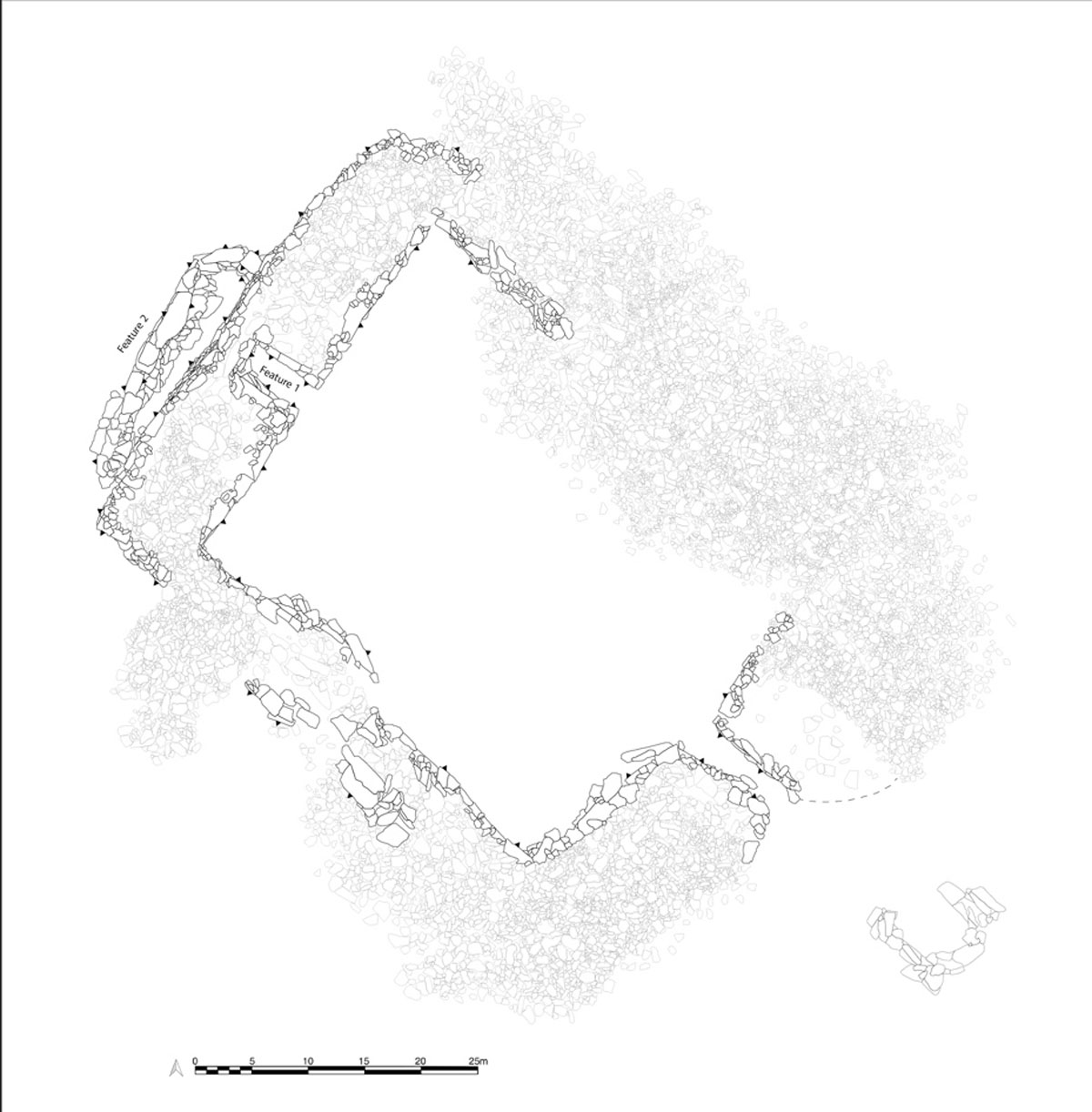
Figure 4
Plan of IDIHA-F-0011073. © AAKSA/PAKEP and The Royal Commission for AlUla.
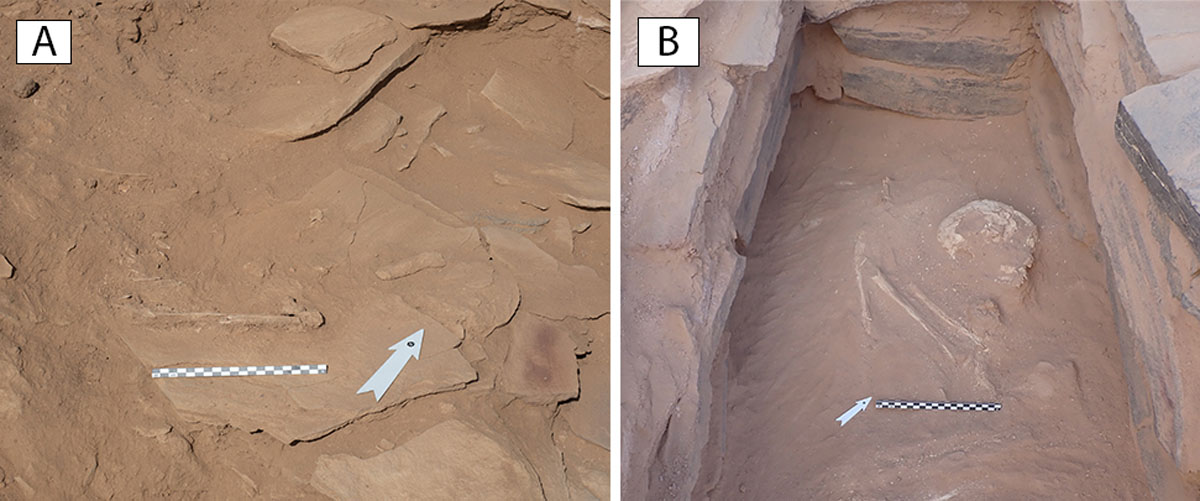
Figure 5
Human remains found within IDIHA-F-0011073. 5A: IB0463. 5B: IB0397. © AAKSA/PAKEP and The Royal Commission for AlUla.
Constructed immediately behind and abutting the head was a second chamber (Feature 2; Figure 4). This feature measured 5.05 × 0.35–0.95 m and was filled with stone rubble, with no artefacts other than a small number of Bos sp. tooth enamel flakes recovered. The function of this feature remains unknown, although it may have functioned like a rear chamber as seen at IDIHA-0008222 (M.A. Kennedy et al. 2023: 9).
Summary of faunal remains from IDIHA-F-0011073
A total of 656 animal bones (741 g) were recovered from IDIHA-F-0011073, out of which 11 bones (1.7%) could not be identified (see Table 1) The state of preservation was poor, with 99.2% of the remains composed of tooth enamel fragments, with the dentine not preserved (640 tooth fragments, of which 504 were maxillary and 136 unknown). Only one maxillary tooth was complete (0.2%), in addition to five petrous bones (0.8%) and four fragments of the cranium (0.6%). All elements found belong to the skull, tooth enamel and petrous bones being the most resistant tissues.
Table 1
Quantification of faunal remains from IDIHA-F-0011073.
| TAXA | NUMBER | % OF NUMBER | WEIGHT (g) | % OF WEIGHT |
|---|---|---|---|---|
| Cattle | 187 | 29% | 220 | 30% |
| Bos sp. | 447 | 68% | 505 | 68% |
| Indeterminate Caprine | 11 | 2% | 3 | 0% |
| Indeterminate | 11 | 2% | 13 | 2% |
| Total | 656 | 100% | 741 | 100% |
As for the taxa identified, out of a total of 645 identified specimens (henceforth NISP; Number of Identified Specimens), bovines are the most represented with 634 remains, accounting for 98.3% of the total NISP. One hundred and eighty-seven remains are attributed to domestic cattle (29% of the NISP) and 447 (69.2% of the NISP) are attributed to Bos sp. Only 11 remains (1.7% of the NISP) belong to indetermined caprines (Table 1).
Radiocarbon evidence and phasing from IDIHA-F-0011073
Five radiocarbon assays were obtained from IDIHA-F-0011073 (Table 2). These indicate two, or possibly three phases of use. Cattle teeth/enamel flakes from throughout the sequence returned overlapping dates, suggesting a single depositional event. Whilst the human remains recovered from on top of the head (IB0463), may have been deposited at the same time as the faunal remains, or just after. Perhaps most interestingly, the skull and long bones (IB0397) recovered from inside Feature 1 were deposited several hundred years after this original offering event, with the structure reopened, the chamber potentially cleared, and the individual (IB0397) buried.
Table 2
Radiocarbon assays from IDIHA-F-0011073.
| LAB ID | SAMPLE ID | MATERIAL | CONTEXT | ANALYSIS | 14C (BP) | CALIBRATED DATE BC 68.2% (1σ) | CALIBRATED DATE BC 95.4% (2σ) |
|---|---|---|---|---|---|---|---|
| UGAMS56659 | #0539 | Cattle Tooth | 004 | Bioapatite | 5990 ± 25 | 4933–4920 (8.4%) 4908–4838 (59.8%) | 4948–4793 (95.4%) |
| UGAMS56661 | #0549 | Cattle Tooth | 014 | Bioapatite | 5980 ± 25 | 4904–4861 (37.7%) 4856–4831 (19.4%) 4816–4800 (11.1%) | 4942–4791 (95.4%) |
| UGAMS56660 | #0547 | Cattle Tooth | 012 | Bioapatite | 5940 ± 25 | 4846–4784 (63.8%) 4743–4734 (4.5%) | 4898–4866 (10.7%) 4850–4724 (84.7%) |
| UGAMS56615 | IB0463 | Human Bone | 004 | Bioapatite | 5950 ± 20 | 4878–4874 (2.0%) 4846–4791 (66.3%) | 4902–4862 (16.4%) 4854–4776 (73.3%) 4758–4728 (5.7%) |
| UGAMS56881 | IB0397 | Human Bone | 012 | Bioapatite | 5510 ± 25 | 4435–4430 (5.9%) 4362–4336 (62.4%) | 4444–4417 (16.7%) 4404–4328 (786.8%) 4282–4272 (1.9%) |
IDIHA-F-0011223
IDIHA-F-0011223 is located approximately 90 m to the northwest of IDIHA-F-0011073. This is a simple mustatil, orientated roughly northwest-southeast, measuring 15.80 × 8.0 m. Unfortunately, this feature had been heavily disturbed by structural looting and overbuilding by a later cairn and pendant burial (Figure 6A). The head of the structure was half sectioned, with a 3.70 × 1.25 m sounding executed in the southern half of the chamber (Figure 6B). Excavations revealed loose rubble, which sealed a 60 cm deposit of silty-brown fill. Throughout this horizon were enamel flakes (UGAMS58732), petrous bones, degraded bone, and a single shell bead.
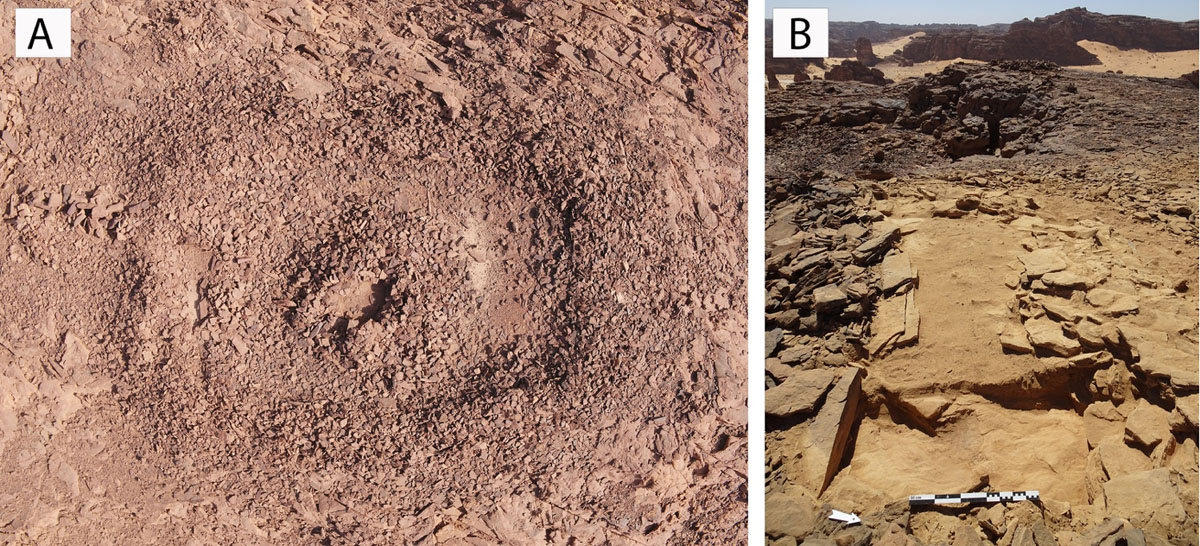
Figure 6
A: Aerial photo of IDIHA-F-0011223, note this mustatil has been turned into a pendant, photo facing south. The chamber is visible in the right-hand side of the photo. 6B: The chamber of IDIHA-F-0011223 during excavation. © AAKSA/PAKEP and The Royal Commission for AlUla.
Summary of faunal remains from IDIHA F-0011223
IDIHA-F-0011223 revealed 560 faunal remains, for a total weight of 554 g (Table 3). The state of preservation was poor and only resistant tissues were preserved. Of the assemblage, 92.3% of the remains are teeth (517 teeth, 437 g); 246 are fragments of enamel, 264 are tooth fragments with the dentine preserved and seven are complete or almost complete teeth with dentine preserved. Furthermore, 272 out of 517 (52.6%) are maxillary teeth, the remaining being too fragmented to be attributed to the maxillary or the mandible. Three petrous bones are also present. As such, it is likely that the bony parts were degraded. Altogether, 95.9% of the assemblage is composed of skull elements. Due to preservation conditions, 20.5% of the remains could not be identified. These remains are small fragments: 115 remains weighing 89 g. The total NISP is thus 445 remains (465 g).
Table 3
Quantification of faunal remains from IDIHA-F-0011223.
| TAXA | NUMBER | % OF NUMBER | WEIGHT (g) | % OF WEIGHT |
|---|---|---|---|---|
| Cattle | 172 | 30.7% | 273 | 48.8% |
| Bos sp. | 267 | 47.7% | 179 | 32.0% |
| Indeterminate Caprine | 2 | 0.4% | 5 | 0.9% |
| Small Ruminant | 2 | 0.4% | 5 | 0.9% |
| Large Ungulate | 2 | 0.4% | 8 | 1.4% |
| Indeterminate | 115 | 20.5% | 89 | 15.9% |
| Total | 560 | 100% | 559 | 100% |
In terms of taxa, bovines constitute the majority of the remains with 439 elements (98.7% of the NISP, 452 g), with domestic cattle remains accounting for 172 (38.7% of the NISP), the rest are attributed to Bos sp. Small ruminants are significantly less represented: two bones belong to indetermined caprines and two bones belong to small ruminants (altogether less than 1% of the NISP). Two more bones are large ungulate remains.
Radiocarbon evidence and phasing from IDIHA-F-0011223
A single radiocarbon assay was obtained from the lowest context of this feature (Table 4), with this revealing an early 5th millennium BC date.
IDIHA-0011182
IDIHA-0011182 is located approximately 12 km to the east of IDIHA-0011223, at the very edge of the northern Sharaan at the boundary of the Hamra Desert/Gharemeel Reserve. The site is located at the summit of a ridgeline between two saddles and consists of a complex mustatil and a desert mosque (Figure 7).
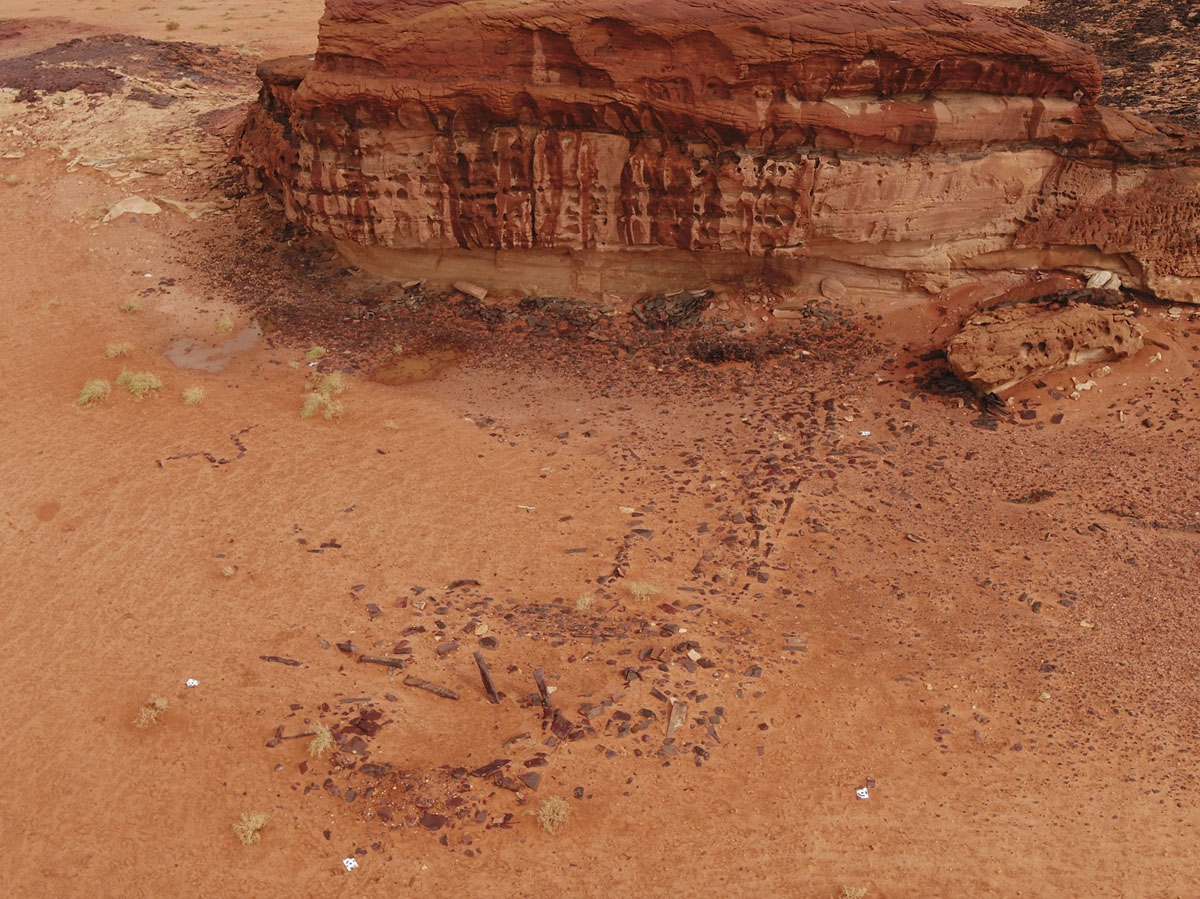
Figure 7
Aerial photograph of IDIHA-0011182, prior to excavation, photo facing northeast. © AAKSA/PAKEP and The Royal Commission for AlUla.
IDIHA-F-0018247
Mustatil IDIHA-F-0018247 is orientated roughly northeast-southwest. This feature is constructed from sandstone desert pavement and measures approximately 20 m in length and 16 m in width, with the head located under a rock overhang (Figure 8). The rest of the structure tapers inwards towards the base in the southwest. At least six orthostats were positioned in front of the base, two of which are still in situ. In contrast to the mustatils from IDIHA-0011223, the head was not bonded to the rest of the structure. This part of the feature appears to have been constructed first, with the long walls abutting. However, the long walls were then bonded with base. Excavations across the head revealed a considerable amount of collapse. Removal of this, revealed two distinct chambers, Feature 1 and Feature 4. Feature 4 appears to have been constructed first and was most probably the original offering chamber. This feature measured 3.00 × 0.55–0.60 m (extant) and had a paved surface, which was cut in the east by the construction of Feature 1. Feature 1 is a large rectangular chamber measuring 4.10 × 0.60–0.90 m, which appears to have been divided into two compartments by a low dividing wall. The western part was characterised by a paved surface, whilst the eastern had a surface of white degraded bedrock (see UGAMS56871).
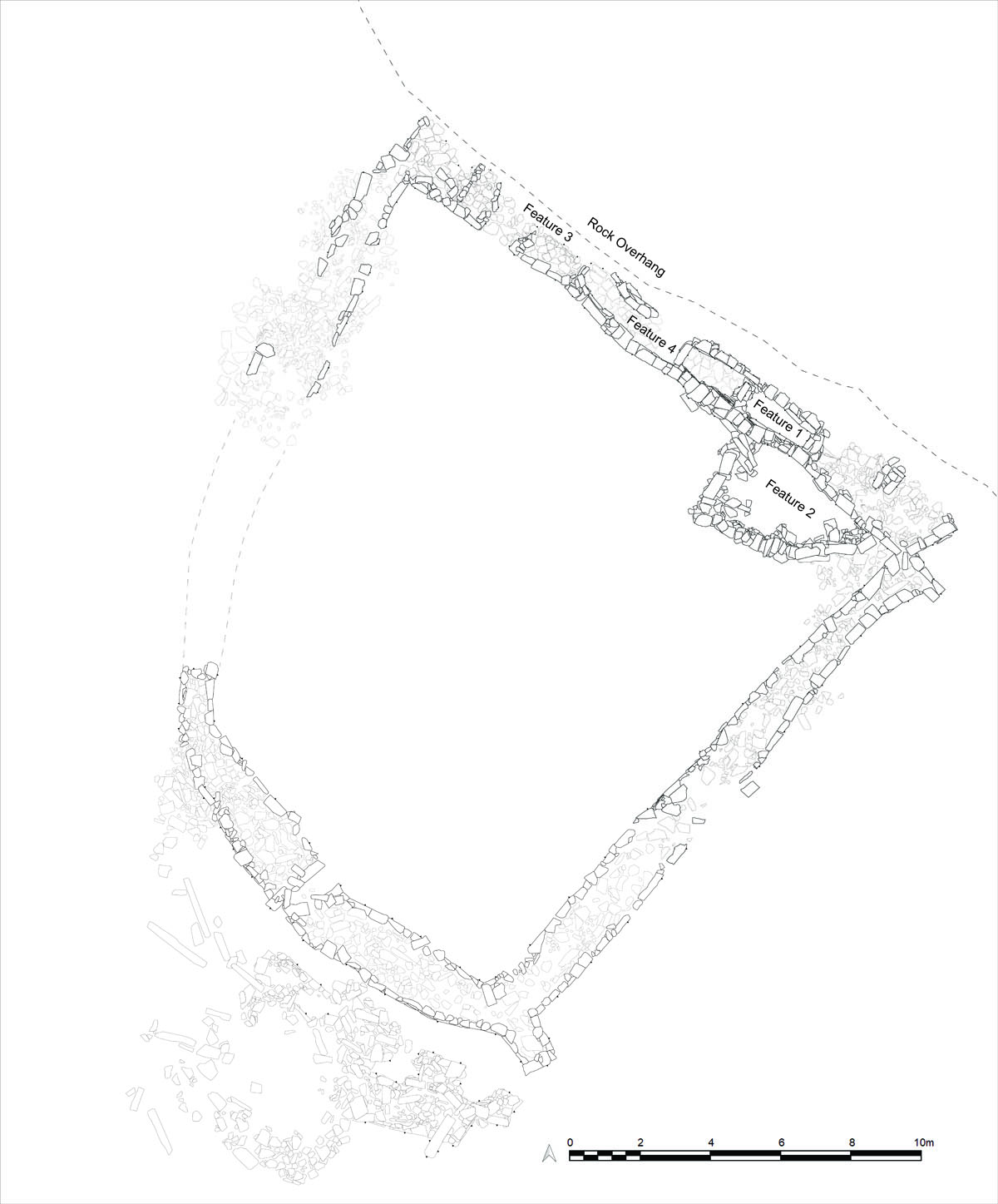
Figure 8
Plan of IDIHA-F-0018247, orthostats are in light grey. © AAKSA/PAKEP and The Royal Commission for AlUla.
Based on the excavation results three distinct phases or offering events were identified within this structure. The latest offering phase/event was associated with Feature 1 (Figure 9A). This consisted of a series of caprine petrous bones and horn fragments found on top of and behind Feature 1, against the rear wall of the rock overhang (Figure 10A; UGAMS53911). The location of these remains suggests that skulls were placed on the rear wall of this feature, with the petrous bones falling behind Feature 1 as the skulls decomposed. The second phase or event was identified within Feature 1. Excavations within this chamber revealed a series of faunal elements; horn cores, maxillaries, and maxillary teeth. These elements were concentrated in the northwestern half of the chamber, with almost no remains found in the southern or eastern part of the chamber. Charcoal fragments were found within the chamber, suggestive of small, localised fires. Finally, the earliest or primary offering phase was identified in Feature 4 (Figure 9B), with deposit of cattle (Figure 10B; UGAMS538910), gazelle, and goat identified, with these deposited on the paved surface of this feature.
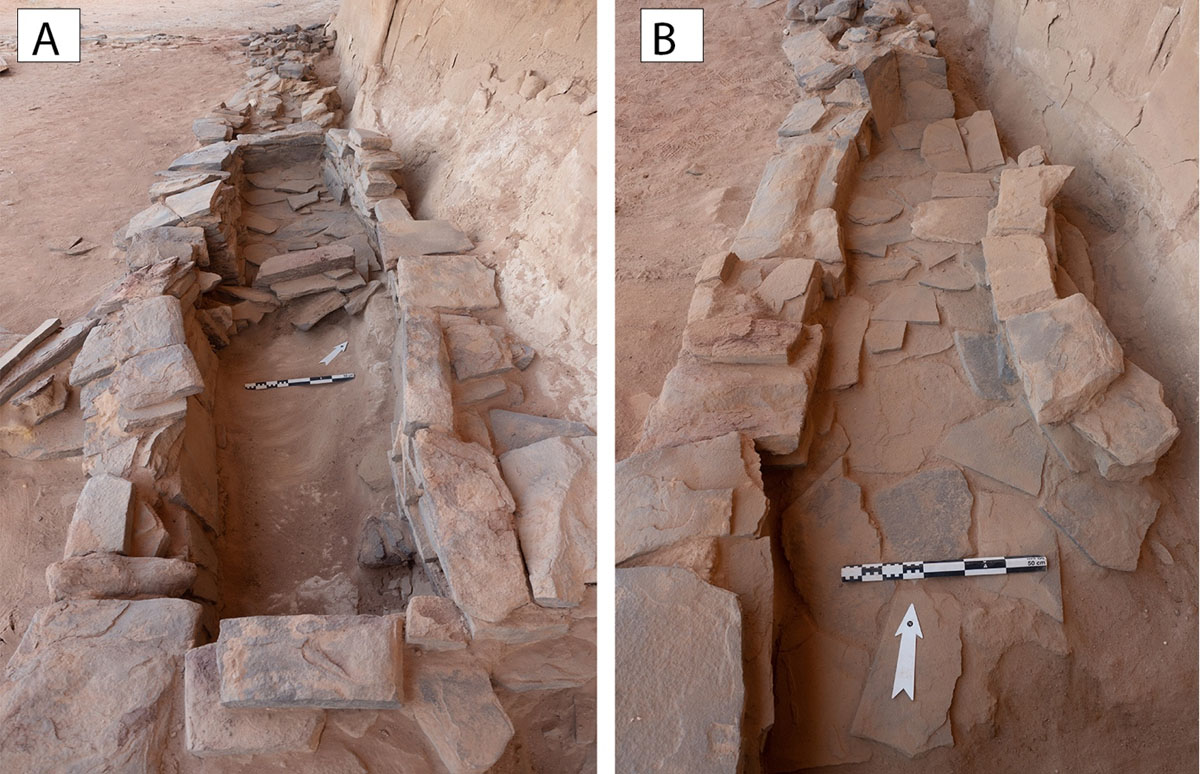
Figure 9
A: Feature 1, post excavation. 9B: Feature 4, post excavation. © AAKSA/PAKEP and The Royal Commission for AlUla.
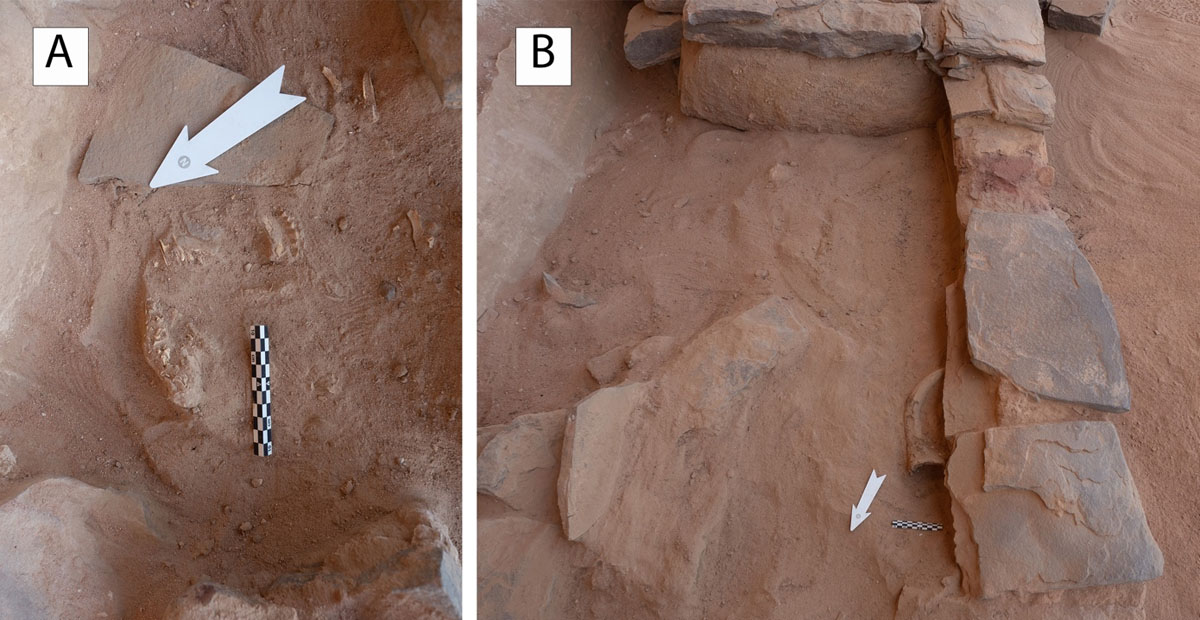
Figure 10
In situ faunal elements from IDIHA-F-0018247. 10A: Caprine remains a top of Feature 1. 10B: Cattle horns deposited in Feature 4. © AAKSA/PAKEP and The Royal Commission for AlUla.
Summary of faunal remains from IDIHA-F-0018247
The animal bones found in mustatil IDIHA-F-0018247 number 1,184 in total (2,293.4 g; see Table 5), out of which 336 fragments (28.4 %) could not be identified. The bones were in a relatively good state of preservation, with bone surface in most cases observable, entire teeth (namely maxillary teeth) and maxillaries present, horn sheaths were also preserved, as were entire horns (Figure 11). Despite fragmentation, the identification of a significant number of specimens was possible, for a total NISP of 848 remains (2,129.9 g). As for taxonomic identification, most remains belong to small ruminants that constitute 74.8% of the NISP. Among the small ruminants, caprines are the striking majority with 630 remains that includes 460 remains attributed to indetermined caprines (292.7 g), 111 remains attributed to domestic sheep or goat (580.5 g) and 59 remains, a significant number, attributed to domestic goat (365.8 g). Bovine bones total 64 (655.9 g) and constitute 7.5% of the NISP, with 24 remains belonging to domestic cattle (429.2 g). Two gazelle remains are also present (39.2 g). Indetermined ruminant and large ungulate bones are also recorded (132 remains). Ruminants dominate the assemblage (altogether 97.4% of the NISP) with domestic taxa accounting for 22.9% of the NISP (Table 5). In addition, other wild taxa were found, such as rodents (eight bones), hare (three bones), small carnivores (two bones), birds (two bones), fox (one bone) and reptiles (one bone). These may be considered intrusive, as they are amongst the local wild fauna; they were also mainly recovered in surface levels or were directly associated with coprolites. Furthermore, based on observation most examples had a differing surface appearance when compared to the rest of the assemblage. As for anatomy, 98% of the remains are part of the skull. Elements of the rest of the body attributed to (intrusive) non-ruminants were also recorded. Ruminant coprolites are also recorded in the mustatil.
Table 5
Quantification of faunal remains from IDIHA-F-0018247.
| TAXA | NUMBER | % OF NUMBER | WEIGHT (g) | % OF WEIGHT |
|---|---|---|---|---|
| Cattle | 24 | 2% | 429.2 | 18.7% |
| Bos sp. | 40 | 3.4% | 226.7 | 9.9% |
| Goat | 59 | 5.0% | 365.8 | 15.9% |
| Sheep/Goat | 111 | 9.3% | 580.5 | 25.3% |
| Indeterminate Caprine | 460 | 38.8% | 292.7 | 12.7% |
| Gazelle | 2 | 0.2% | 39.2 | 1.7% |
| Small Ruminant | 2 | 0.2% | 5.5 | 0.2% |
| Ruminant | 125 | 10.5% | 101.5 | 4.4% |
| Large Ruminant | 3 | 0.3% | 22.3 | 1.0% |
| Large Ungulate | 4 | 0.3% | 57.1 | 2.5% |
| Hare | 3 | 0.3% | 4 | 0.2% |
| Fox | 1 | 0.1% | 3.8 | 0.2% |
| Small Carnivore | 3 | 0.3% | 1.5 | 0.1% |
| Rodent | 8 | 0.7% | 3 | 0.1% |
| Reptile | 1 | 0.1% | 0.9 | <0.1% |
| Bird | 2 | 0.2% | 0.2 | <0.1% |
| Indeterminate | 336 | 28.3% | 163.5 | 7.1% |
| Total | 1,184 | 100% | 2,297.4 | 100% |
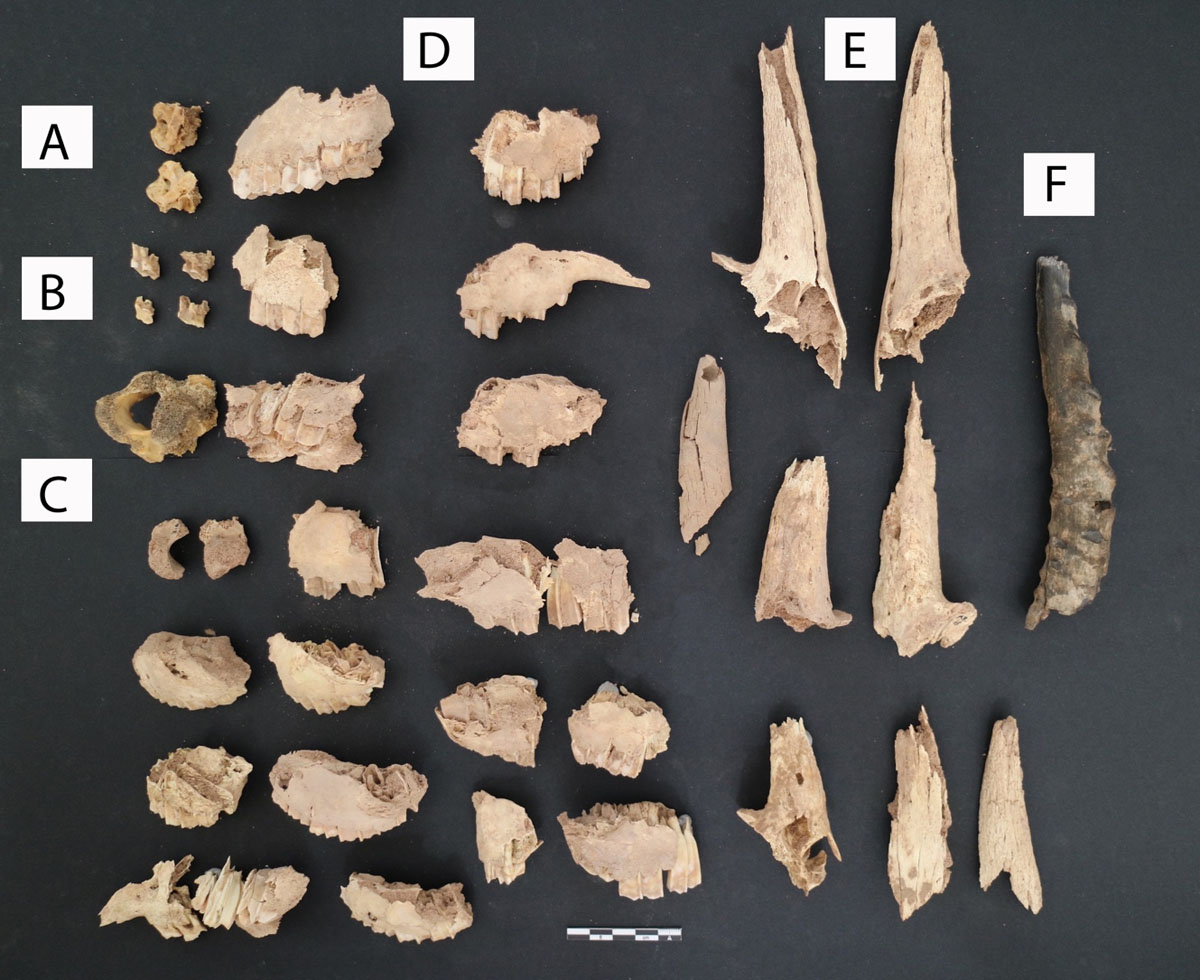
Figure 11
A representative sample of the small ruminant remains found in mustatil IDIHA-F-0018247: 11A: Goat petrous bones. 11B: Caprine isolated maxillary teeth. 11C: Caprine portions of the skull (occipital bones). 11D: Caprine and sheep/goat maxillaries with teeth. 11E: goat horn cores. 11F: Gazelle horn sheath. © AAKSA/PAKEP and The Royal Commission for AlUla.
Radiocarbon evidence and phasing from IDIHA-F-0018247
Four radiocarbon assays were obtained from IDIHA-F-0018247 (Table 6). Based on these dates, there would appear to be two to three radiometrically discernible phases of use at this structure, with all occurring in quick succession. It should be noted that a further three radiocarbon dates were obtained from this feature, these were from small hearths constructed atop of the remains of IDIHA-F-0018247, with these all dated from the 6th Century AD onwards and as such are unrelated.
Table 6
Radiocarbon assays from IDIHA-F-0018247.
| LAB ID | SAMPLE ID | MATERIAL | CONTEXT | ANALYSIS | 14C (BP) | CALIBRATED DATE BC 68.2% (1σ) | CALIBRATED DATE BC 95.4% (2σ) |
|---|---|---|---|---|---|---|---|
| UGAMS56871 | #0397 | Charcoal Chenopodiaceae sp. | 021 | Charcoal | 6270 ± 25 | 5302–5254 (59.4%) 5223–5215 (8.9%) | 5316–5207 (95.0%) 5140–5135 (0.5%) |
| UGAMS53909 | #0533 | Keratin (Goat Horn) | 008 | Collagen | 6120 ± 30 | 5204–5176 (17.5%) 5067–4992 (50.7%) | 5208–5152 (23.2%) 5126–4947 (72.2%) |
| UGAMS53910 | #0411 | Keratin (Cattle Horn) | 023 | Collagen | 6100 ± 30 | 5200–5187 (6.8%) 5051–4982 (50.2%) 4975–4952 (11.3%) | 5208–5162 (13.6%) 5121–5096 (2.2%) 5078–4932 (78.3%) 4923–4906 (1.3%) |
| UGAMS53911 | #0346 | Keratin (Goat Horn) | 002 | Collagen | 6070 ± 30 | 5030–4936 (68.3%) | 5201–5186 (2.6%) 5053–4896 (88.8%) 4868–4848 (4.1%) |
IDIHA-0008385
Located in the southeastern Sharaan Nature Reserve, IDIHA-0008385 is located on a sandstone mesa and is characterised by a mustatil (IDIHA-F-0050098), which runs up to a rock overhang, and later funerary features (Figure 12).
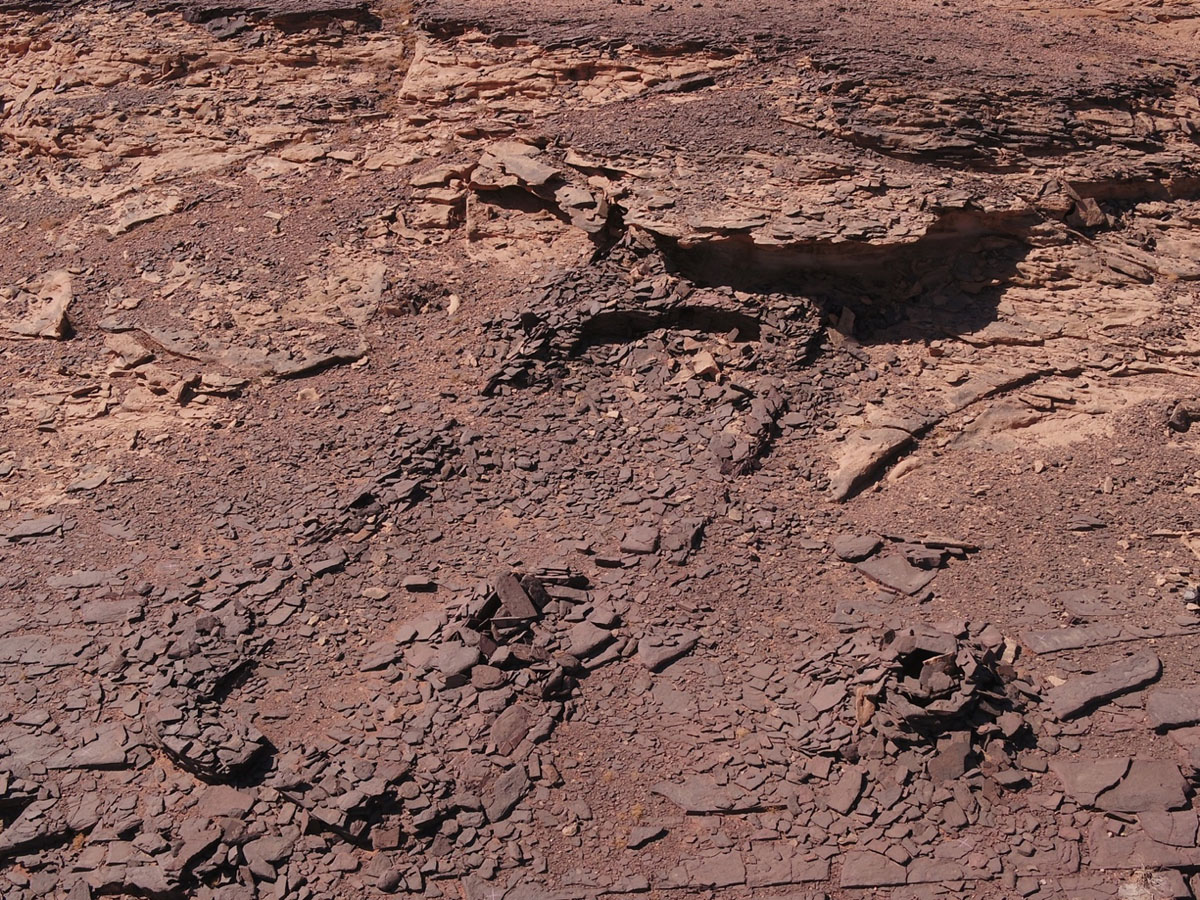
Figure 12
Aerial photograph of IDIHA-0008385, photo facing southwest. © AAKSA/PAKEP and The Royal Commission for AlUla.
IDIHA-F-0050098
IDIHA-F-0050098 is a simple, southwest-northeast orientated mustatil. Measuring 12 × 6 m, this feature runs upslope, with the head located under a shallow rock overhang. The mustatil was constructed from locally available slabs of sandstone desert pavement, marked by a heavy patina of desert varnish. IDIHA-F-0050098 suffered extensively from structural robbing, with the later burial cairns constructed from stone robbed from this feature. Architecturally, this mustatil is marked by a courtyard with a narrow entranceway, and a small narrow chamber located in the head (similar in form to IDIHA-F-0011073), as well as a rear chamber built against the rock overhang (Figure 13, Figure 14).
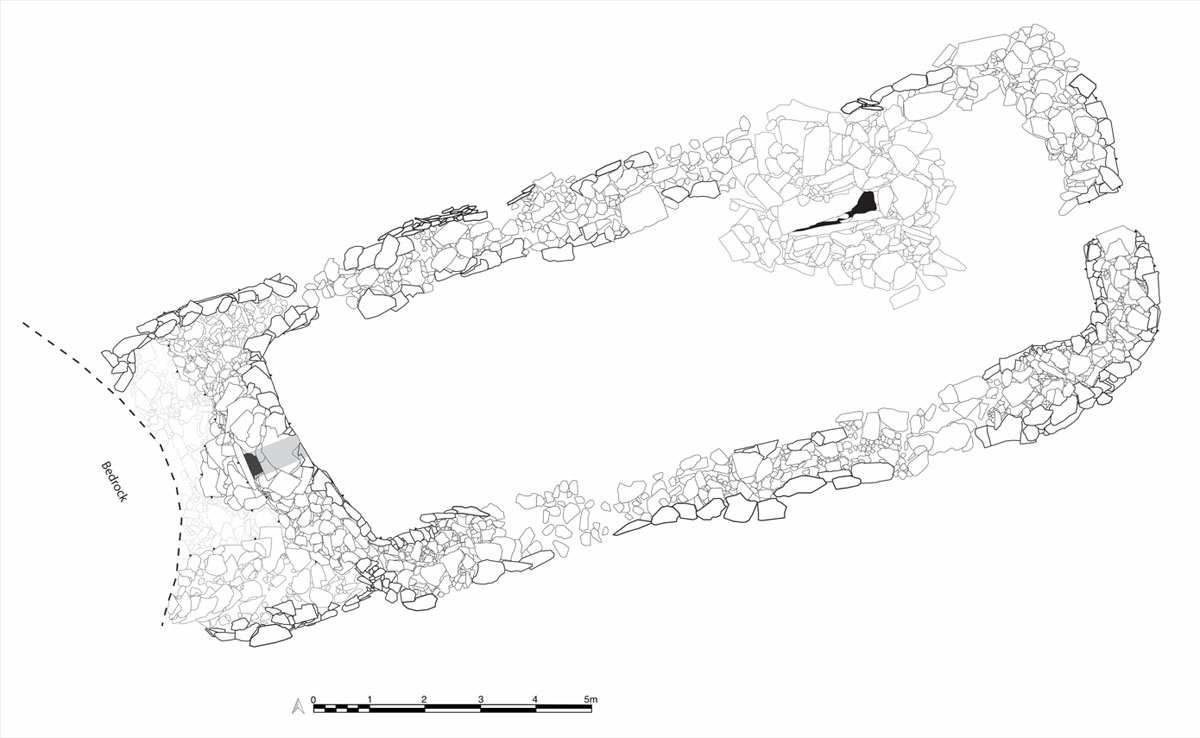
Figure 13
Plan of IDIHA-F-0050098. © AAKSA/PAKEP and The Royal Commission for AlUla.
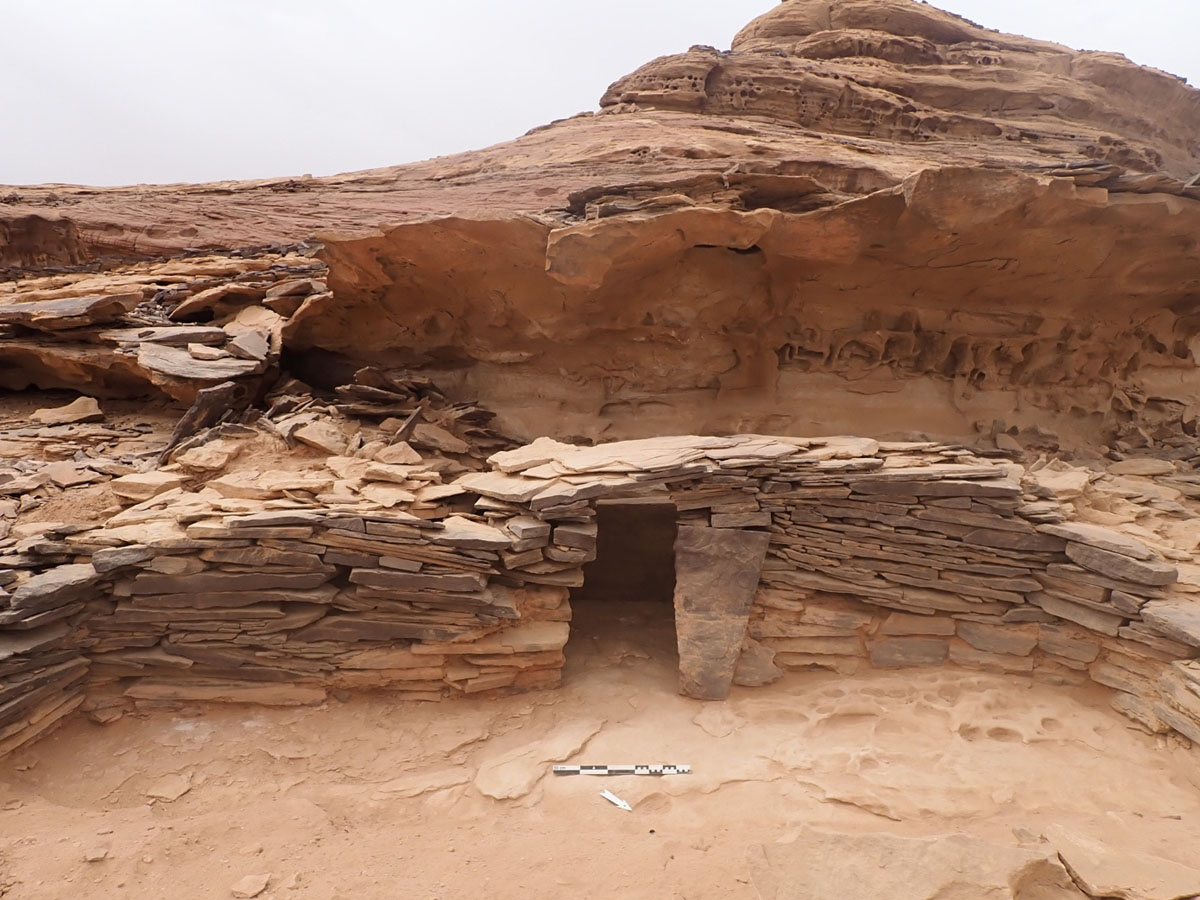
Figure 14
The main chamber and head of IDIHA-F-0050098, post excavation. © AAKSA/PAKEP and The Royal Commission for AlUla.
The main offering chamber in the head had been disturbed in antiquity, with the blocking stone moved but still found partially in situ. Excavations within the courtyard, immediately in front of the head revealed cattle tooth enamel flakes, as well as the fragmentary remains of a human sub-adult (SK012; UGAMS58723). Human remains associated with SK012, were also found in the rear chamber. The concentration of these remains in this part of this structure suggests that this individual was originally interred in the rear chamber, perhaps in the northwest corner where a higher bone concentration was identified. Faunal remains were also found in the rear chamber (UGAMS56667 and UGAMS58754). Excavations in the main chamber in the head also revealed faunal elements (UGAMS58753), as well as broken ceramic vessel. These finds were located on the original surface level of the chamber, suggesting that they may have been deposited contemporaneously.
The vessel was handmade from a coarse buff fabric. It has an incurved, rounded rim and is best described as an elongated, V-shaped open vessel with small perforations, and a stump (thickened) base (Figure 15). This vessel most probably functioned as a bowl or small vat. Decoration consisted of a possible self-slip, with two perforated holes located close to the base (Table 7). To date, no parallels for this vessel have been identified, with this the earliest, locally produced ceramic vessel identified in Saudi Arabia. This suggests that the Neolithic horizon of this region may not in fact have been aceramic.
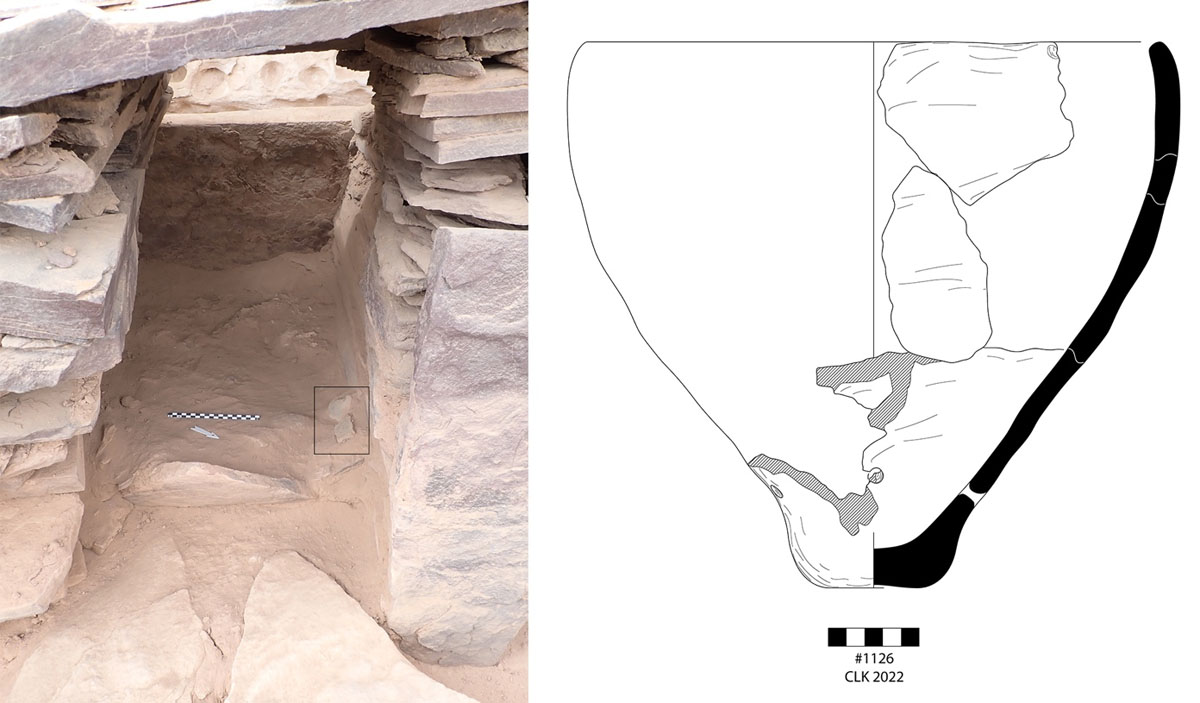
Figure 15
Vessel #1126. On the left in the black box are two in situ fragments of the vessel. © AAKSA/PAKEP and The Royal Commission for AlUla.
Table 7
Description of Neolithic vessel from IDIHA-F-0050098.
| CAT. NO. | INV. NO. | TYPE | DIAMETER | FABRIC | COLOUR | MUNSELL | INCLUSIONS | DECORATION | CORE | MANUFACTURE |
|---|---|---|---|---|---|---|---|---|---|---|
| #52 | #1126 | Bowl/Vat | 30 cm | Coarse | Grey | 5YR (4/1) | Medium density, grey (basalt) & white (calcareous) grits & vegetal matter | Possible self-slip, two perforations towards the base. | Dark Grey | Handmade |
Summary of faunal remains from IDIHA-F-0050098
A total number of 1,237 animal bones were found in mustatil IDIHA-F-0050098, for a weight of 2,474.7 g (Table 8). Preservation was sub-optimal, with bone not well preserved. Most of the remains are teeth (953 remains, 77%), primarily maxillary teeth, with a significant number of petrous bones present (34 petrous bones, 2.7%), suggesting that cranial boxes and maxillaries were likely present but were not preserved. Moreover, a significant proportion of the teeth have only the enamel preserved (924 teeth, 97% of the teeth), while 29 are complete or almost complete maxillary teeth with the dentine preserved. Despite poor preservation, three fragments of horn sheath were recovered.
Table 8
Quantification of faunal remains from IDIHA-F-0050098.
| TAXA | NUMBER | % OF NUMBER | WEIGHT (g) | % OF WEIGHT |
|---|---|---|---|---|
| Cattle | 346 | 28.0% | 1353.9 | 54.7% |
| Bos sp. | 555 | 44.9% | 734.2 | 29.7% |
| Goat | 3 | 0.2% | 16 | 0.6% |
| Indeterminate Caprine | 5 | 0.4% | 35 | 1.4% |
| Small Ruminant | 44 | 3.6% | 60.1 | 2.4% |
| Large Ungulate | 27 | 2.2% | 53.5 | 2.2% |
| Hare | 5 | 0.4% | 9.1 | 0.4% |
| Fox | 2 | 0.2% | 1.4 | 0.1% |
| Indeterminate | 250 | 20.2% | 211.5 | 8.5% |
| Total | 1,237 | 100% | 2,474.7 | 100% |
Identification was affected by the state of preservation, leading to many indetermined bones. Indeed, indetermined fragments are 250 (20.2%), weighing in total 211.5 g. As such the total NISP is 987 faunal remains (2,263.2 g). Altogether, head elements constitute 96.3% of the total NISP, with upper skull elements being 95.7%.
As for the taxa identified, the most represented are bovines that account for 901 remains that is 91.3% of the NISP (Table 8). Out of these 901 remains, 555 are identified as Bos sp. (56.2% of the NISP, 734.2 g of weight) and 346 are identified as domestic cattle (35.1% of the NISP, 1,353.9 g of weight). Small ruminants are represented by 52 remains (5.3% of the NISP, 111.1 g) and include five bones of indetermined caprines and three bones of domestic goat. In addition, 27 bones are large ungulate bone fragments (2.7% of the NISP, 53.5 g), five remains belong to hare and two to fox. Altogether, the assemblage is mostly composed of ruminants, accounting for 96.6% of the NISP (with 35.4% domesticates). Considering the heavily disturbed situation observed in the structure during excavations, the slightly more mixed anatomical representation recorded in this mustatil compared to others cannot be taken as decisive argument against the anatomical pattern observed so far in mustatils. However, future studies will shed light on the question.
Radiocarbon evidence and phasing from IDIHA-F-0050098
Five radiocarbon assays were obtained from IDIHA-F-0050098, indicating three distinct phases of use (Table 9). UGAMS58754 and UGAMS56667 were obtained from the deepest context (007) and the surface (respectively) of the rear chamber, these samples are identical in date and relate to the earliest dated phase of use. UGAMS58753 was recovered from the chamber in the head and can be considered a terminus post quem for the ceramic vessel, with this date potentially indicative of a second phase of ritual deposition. UGAMS58723 was associated with SK012 and represents the third and final of use at the mustatil, some 200–300 years after its initial use.
Table 9
Radiocarbon assays from IDIHA-F-0050098.
| LAB ID | SAMPLE ID | CONTEXT | MATERIAL | ANALYSIS | 14C (BP) | CALIBRATED DATE BC 68.2% (1σ) | CALIBRATED DATE BC 95.4% (2σ) |
|---|---|---|---|---|---|---|---|
| UGAMS58754 | #1331 | 007 | Cattle Tooth | Bioapatite | 6010 ± 25 | 4939–4880 (47.7%) 4872–4847 (20.5%) | 4991–4835 (93.9%) 4811–4803 (1.5%) |
| UGAMS56667 | #0699 | Surface | Animal Bone | Bioapatite | 6000 ± 25 | 4935–4916 (13.7%) 4911–4844 (54.5%) | 4987–4966 (3.2%) 4955–4827 (86.3%) 4821–4797 (5.9%) |
| UGAMS58753 | #1327 | 006 | Animal Bone | Bioapatite | 5890 ± 25 | 4786–4724 (68.3%) | 4836–4811 (7.0%) 4804–4706 (88.5%) |
| UGAMS58723 | SK012 | 001 | Human Bone | Bioapatite | 5750 ± 30 | 4668–4666 (1.4%) 4658–4636 (13.6%) 4616–4544 (53.3%) | 4691–4502 (95.4%) |
IDIHA-0010759
IDIHA-0010759 is located on the edge of the Wadi Nakhlah canyons to the south of the Sharaan Nature Reserve. The site consists of a mustatil (IDIHA-F-0011356) and several hearths. The mustatil was constructed upon a slope, with the structure running up to a northwest-southeast orientated yardang. A seasonal wadi was located immediately to the north of the structure, with this running northwest-southeast (Figure 16).
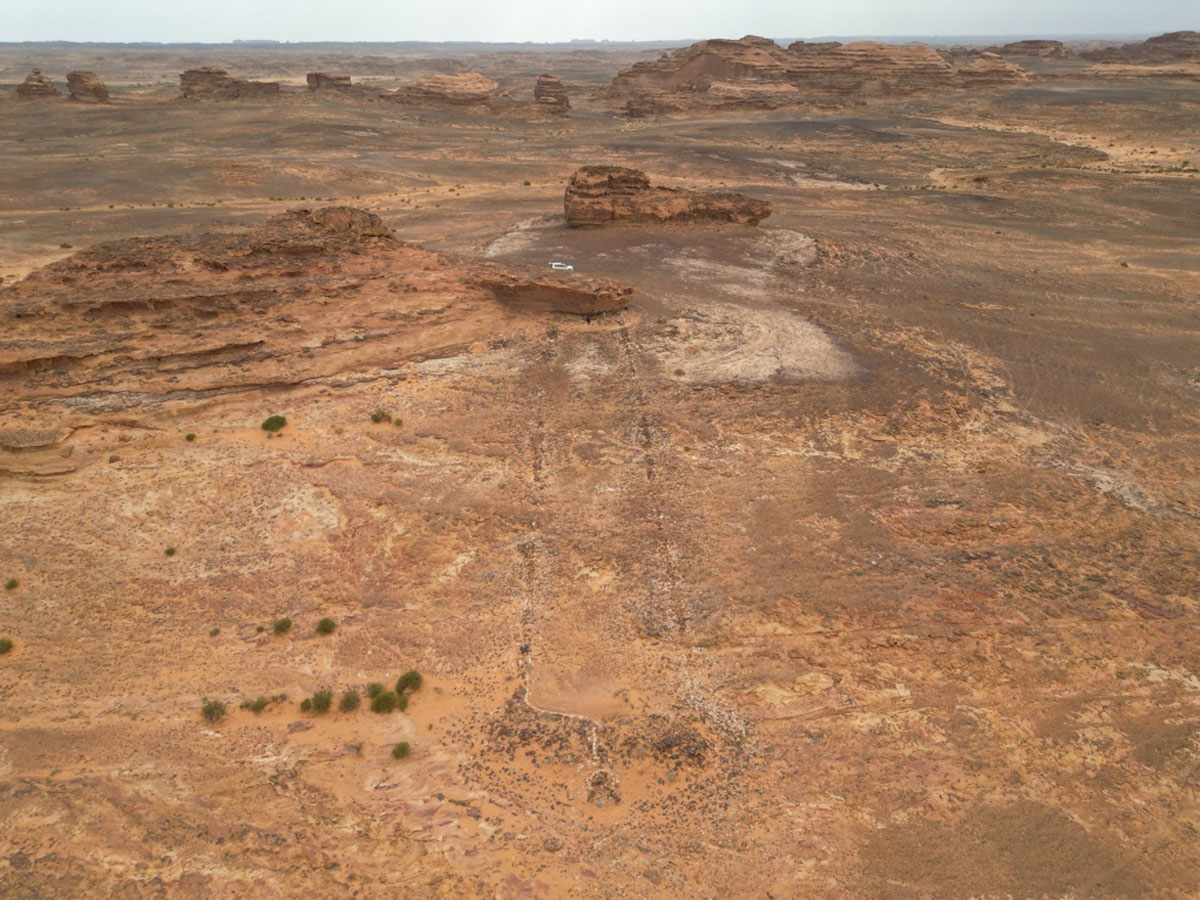
Figure 16
Aerial view of IDIHA-F-0011356, photo orientated to the southwest. © AAKSA/PAKEP and The Royal Commission for AlUla.
IDIHA-F-0011356
IDIHA-F-0011356 is a complex, southwest-northeast orientated mustatil. The structure measures 100 m in length and 17 m in width. The head is positioned in the southwest, under a rock overhang, with the base in the northeast. During the initial survey of the structure, a large orthostat was visible in the centre of the head (Figure 17), a similar feature had been identified previously at IDIHA-0008222 (M.A. Kennedy et al. 2023: 9). A rear chamber, located immediately against the rock overhang, was also noted during ground survey, a feature also notable at IDIHA-0008222.
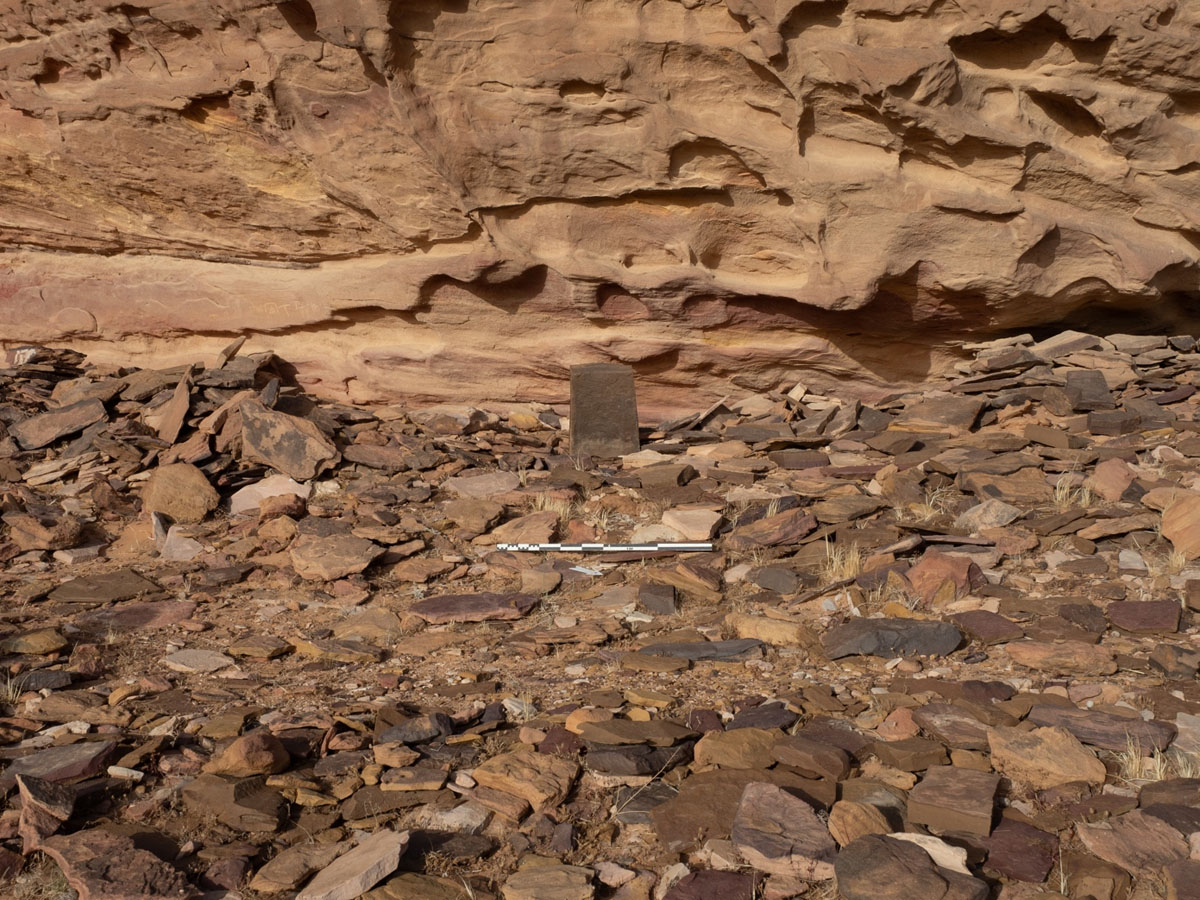
Figure 17
Orthostat in central chamber, pre-excavation. © AAKSA/PAKEP and The Royal Commission for AlUla.
Three phases could be discerned, with these encompassing five locationally distinct depositional events. The earliest phase was composed of three depositional events, two in the main chamber and one in the rear chamber. The main chamber measured 2.86 × 1.65 m, with a series of faunal elements (UGAMS65381), specifically maxillary teeth and horns, deposited behind the orthostat. These remains were found in association with 11 arrowheads. The arrowheads share a typological affinity with the Ha-Parsa tradition of the Levant but demonstrate a local stylistic variation of this form – now termed the Nakhlah point (Figure 18). Also associated with this phase was a series of small diffuse hearths or fires (UGAMS65377 and UGAMS65376), these were located predominantly in the north against the walls of the chamber and directly in front of the orthostat. In the rear chamber, horns and upper cranial elements were also recovered (Figure 19; UGAMS65382 and UGAMS65383). Both chambers were then sealed with approximately 30 cm of sand and stone. The second depositional event associated with this phase, in the main chamber, consisted of a single cattle horn (keratin sheath; UGAMS65378), positioned atop of this fill layer against the rear wall of the main chamber. This offering was then covered by a further 10–20 cm of fill.
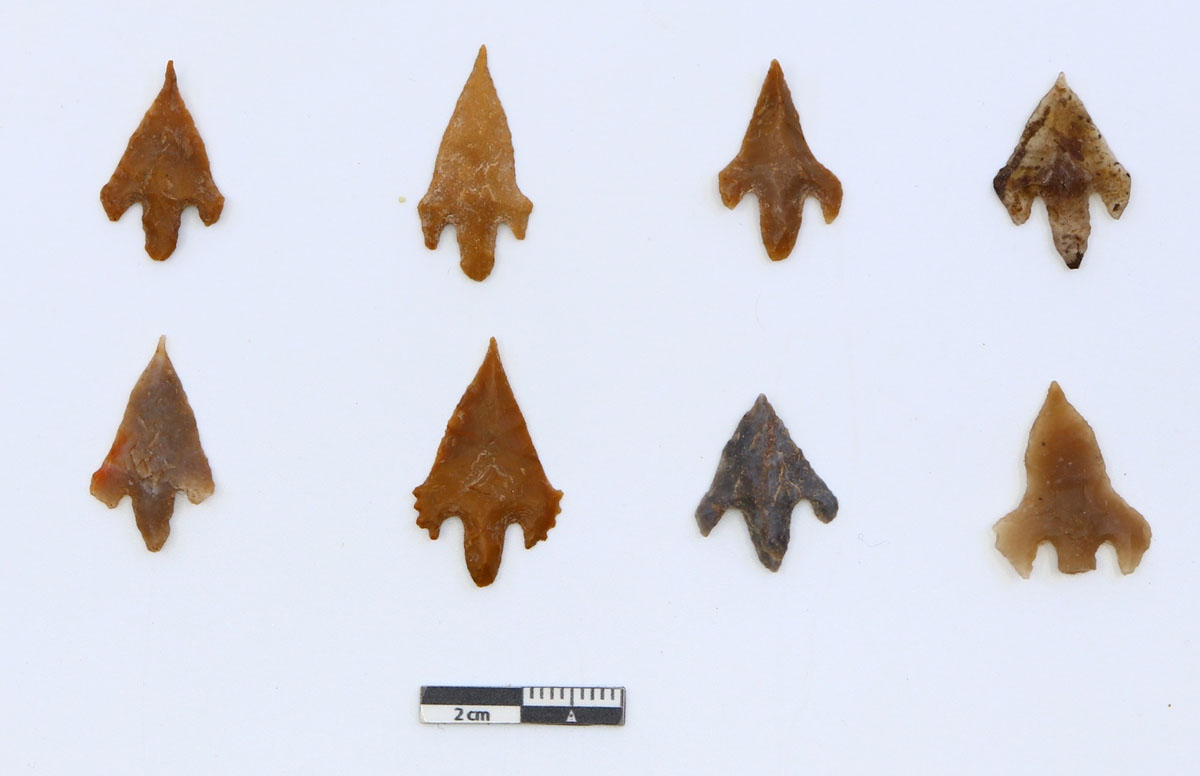
Figure 18
A selection of the arrowheads found in the main chamber of IDIHA-F-0011356. © AAKSA/PAKEP and The Royal Commission for AlUla.
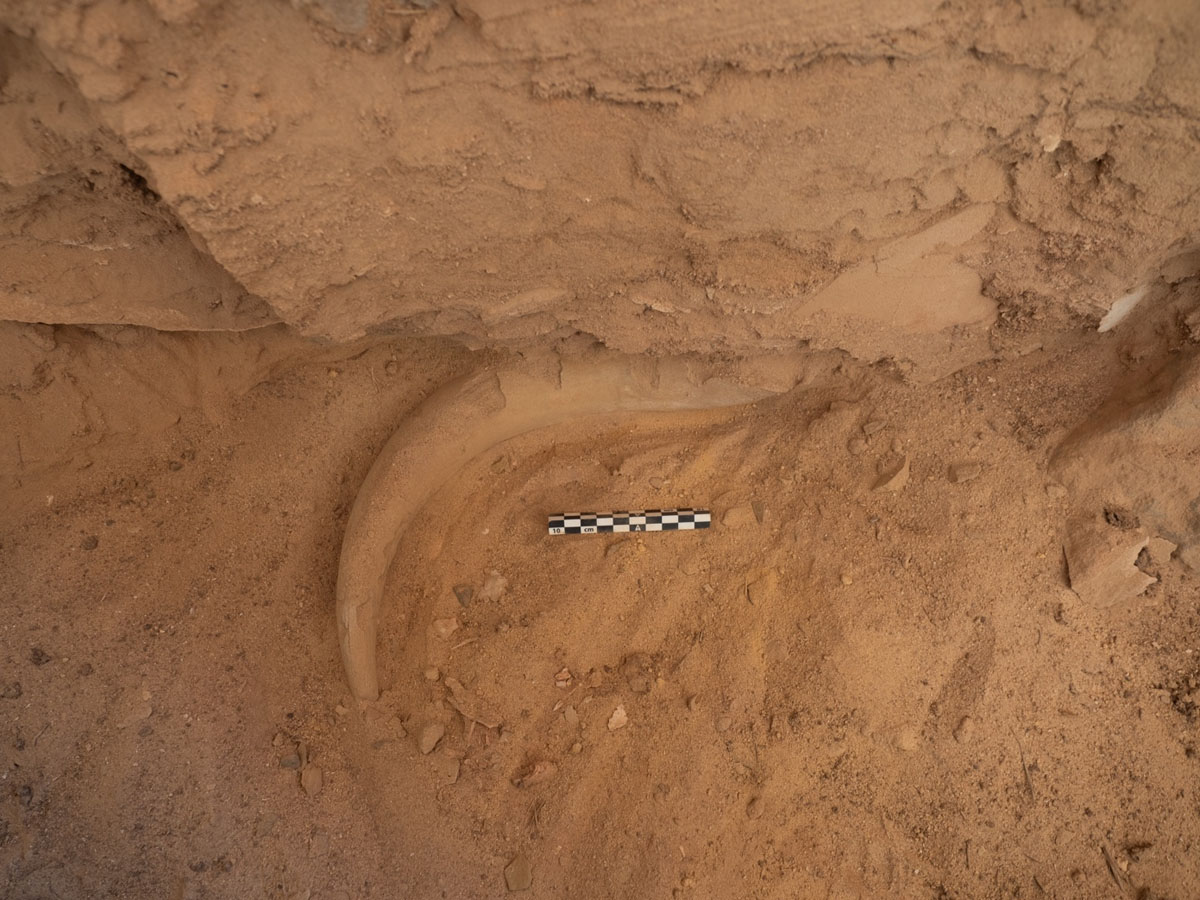
Figure 19
In situ faunal elements from IDIHA-F-0011356. © AAKSA/PAKEP and The Royal Commission for AlUla.
The second phase of use was identified in the rear chamber, this consisted of a series disarticulated human bones that appear to have been haphazardly deposited and mixed in with the faunal remains. As no repeating elements were found the Minimum Number of Individuals (henceforth MNI) is 1 (IB1012; UGAMS65373 and IB1008; UGAMS65372). The mixing of the human and animal remains in this part of the structure suggests a far more complex depositional event, with these perhaps deliberately interspersed (see below).
The third and final phase of use consisted of modifying the rear and main chamber, to create a small, semi-circular cist with a paved surface. This cist had a diameter of 1.3 m and was constructed primarily within the rear chamber using the rock overhang as a rear wall. However, construction of this feature cut part of the northwest wall of the main chamber. Immediately to the south of this cut, the chamber wall exhibited a clearly defined edge. This does not appear to be a modification, associated with the cist, but an element related to the initial construction of the mustatil. It is possible that this may denote one side of a niche or passage, which allowed access between the main and rear chambers (Figure 20). This space was then blocked by the construction of the cist. Interestingly, the packing/support stones for the cist located in both the rear and main chamber appear to have been placed directly atop of several faunal elements, specifically cattle horns. Excavations within the cist revealed several alternating layers of fill and stone packing. Faunal remains were found within this feature (UGAMS65379 and UGAMS65380), including a cattle horn wedged into the northern edge of the cist wall, which most probably relates to an earlier phase of use.
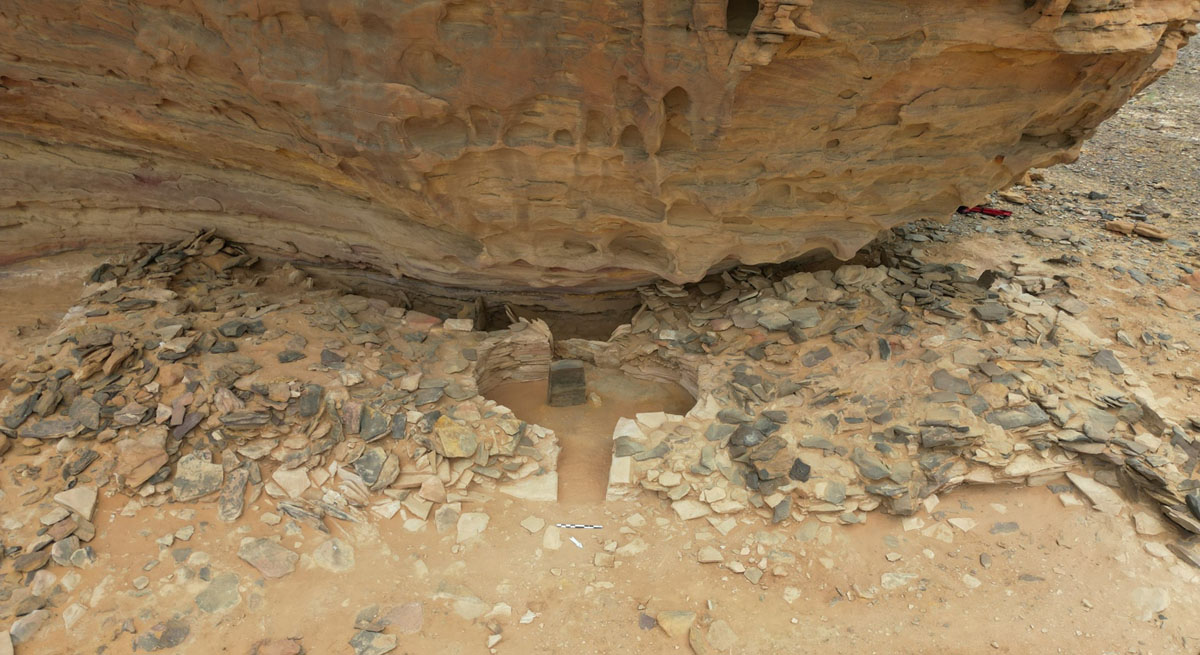
Figure 20
Overhead photograph of all chambers in IDIHA-F-0011356, post excavation. © AAKSA/PAKEP and The Royal Commission for AlUla.
Summary of faunal remains from IDIHA-F-0011356
A total number of 498 animal remains (5,038.4 g) were found in this mustatil during excavations (Table 10). Preservation was fair, with 54.2% of the remains being teeth (270 fragments), and 167 remains being part of the skull, including 33 fragments of the more fragile cranial box, 27 petrous bones, 10 horncore remains, 74 fragments of keratin horn sheaths, and 36 (50.9 g) indetermined bones. Regarding the teeth, in 65.9% of the remains only enamel is preserved, while dentine is preserved in the rest of the tooth assemblage (including 53 complete or almost complete specimens).
Table 10
Quantification of faunal remains from IDIHA-F-0011356.
| TAXA | NUMBER | % OF NUMBER | WEIGHT (g) | % OF WEIGHT |
|---|---|---|---|---|
| Cattle | 302 | 60.6% | 4486.7 | 89.1% |
| Bos sp. | 8 | 1.6% | 45.8 | 0.9% |
| Goat | 3 | 0.6% | 54 | 1.1% |
| Sheep | 6 | 1.2% | 98.6 | 2.0% |
| Goat/Sheep | 7 | 1.4% | 28 | 0.6% |
| Indeterminate Caprine | 34 | 6.8% | 76.5 | 1.5% |
| Small Ruminant | 16 | 3.2% | 37 | 0.7% |
| Ruminant | 63 | 12.7% | 73.9 | 1.5% |
| Large Ruminant | 14 | 2.8% | 74.8 | 1.5% |
| Hare | 6 | 1.2% | 2.5 | <0.1% |
| Fox | 1 | 0.2% | 3.9 | 0.1% |
| Rodent | 1 | 0.2% | 0.1 | <0.1% |
| Bird | 1 | 0.2% | 0.7 | <0.1% |
| Indeterminate | 36 | 7.2% | 50.9 | 1.0% |
| Total | 498 | 100% | 5,033.4 | 100% |
Out of a total NISP of 462 (4,987.5 g), the most represented taxa are bovines (310 remains). That is 67.1% of the remains (4,532.5 g), with domestic cattle dominating the assemblage (302 remains; Table 10). Small ruminants follow with 66 remains (14.3% of the NISP). This includes 16 indetermined small ruminant remains, 34 indetermined caprine remains, seven sheep/goat, six sheep, and three goat remains. In addition, six hare bones, one rodent bone, and one bird bone were found. It is worth noting that the bones recovered in the cist (third and final phase of use) are identified as sheep and sheep/goat and included parts of the skull, the axial skeleton and the limbs. Considering that these bones come from a context stratigraphically, radiometrically, and architecturally distinct and later than the mustatil itself, it is less surprising to observe that the anatomical elements recorded differ from the pattern usually documented in mustatils (i.e. the selection of skull elements). As such, one may consider these remains as a different deposit, later in date and possibly different in meaning. In addition, large and small carnivore coprolites were recovered in different layers of the mustatil, suggesting the mustatil was temporarily used by carnivores, who may have acted as a disturbing agent.
Radiocarbon evidence and phasing from IDIHA-F-0011356
Ten radiocarbon assays were obtained from this feature, suggesting the presence of three main phases of use (Table 11). UGAMS65377-78 and UGAMS65381-83 all relate to the initial or primary phase of use, although UGAMS65382 may represent a distinct, later phase, not stratigraphically discernible. Whilst radiocarbon determinations related to the human bone suggest that they belong to a subsequent phase(s) of use, that post-dates the initial faunal deposits, by at least 200 years. Finally, samples UGAMS65372-73 obtained from the cist reveal an early 4th millennium BC date, some 1000 years after the initial faunal deposition.
Table 11
Radiocarbon assays from IDIHA-F-0011356.
| LAB ID | SAMPLE ID | CONTEXT | MATERIAL | ANALYSIS | 14C (BP) | CALIBRATED DATE BC 68.2% (1σ) | CALIBRATED DATE BC 95.4% (2σ) |
|---|---|---|---|---|---|---|---|
| UGAMS65383 | #1524 | 044 | Animal Bone | Bioapatite | 6120 ± 25 | 5203–5181 (16.4%) 5060–4996 (51.9%) | 5208–5157 (23.2%) 5124–5092 (5.5%) 5082–4949 (66.7%) |
| UGAMS65377 | #1492 | 033 | Charcoal (Unidentified) | Charcoal | 6090 ± 30 | 5042–4950 (68.3%) | 5206–5173 (8.9%) 5072–4901 (85.6%) 4864–4853 (1.0%) |
| UGAMS65376 | #1498 | 042 | Charcoal (Unidentified) | Charcoal | 6080 ± 30 | 5034–4944 (68.3%) | 5204–5180 (5.2%) 5060–4898 (88.1%) 4866–4851 (2.1%) |
| UGAMS65378 | #1393 | 013 | Cattle Horn | Keratin | 6070 ± 30 | 5026–5019 (3.4%) 5011–4938 (64.8%) | 5198–5191 (1.1%) 5046–4900 (92.1%) 4864–4852 (2.4%) |
| UGAMS65381 | #1468 | 032 | Animal Bone | Bioapatite | 6060 ± 25 | 5002–4934 (64.2%) 4918–4910 (4.1%) | 5042–4896 (90.2%) 4868–4848 (5.2%) |
| UGAMS65382 | #1490 | 039 | Animal Bone | Bioapatite | 5930 ± 25 | 4840–4782 (56.5%) 4748–4730 (11.7%) | 4888–4870 (4.4%) 4848–4722 (91.0%) |
| UGAMS65373 | IB1012 | 028 | Human Bone | Collagen | 5910 ± 30 | 4828–4820 (6.7%) 4798–4725 (61.6%) | 4878–4874 (0.5%) 4846–4712 (95%) |
| UGAMS65372 | IB1008 | 044 | Human Bone | Bioapatite | 5870 ± 25 | 4784–4742 (45.9%) 4734–4714 (22.4%) | 4824–4821 (0.4%) 4798–4684 (95.1%) |
| UGAMS65379 | #1411 | 020 | Animal Bone | Collagen | 5030 ± 25 | 3940–3871 (47.0%) 3809–3776 (21.3%) | 3946–3762 (90.5%) 3738–3713 (5.0%) |
| UGAMS65380 | #1416 | 021 | Animal Bone | Collagen | 5000 ± 25 | 3891–3884 (4.8%) 3798–3756 (36.1%) 3746–3711 (27.3%) | 3938–3874 (21.2%) 3806–3704 (70.4%) 3674–3658 (3.9%) |
IDIHA-0041426
IDIHA-0041426 is situated on the spur of a mesa, between two large rock outcrops, in the sandstone canyons to the south of the Sharaan, approximately 4.5 km to the east of IDIHA-0010759 and consists of a single mustatil (IDIHA-F-0051480). The site overlooks a seasonal wadi and is surrounded by several ‘qa or possible palaeolakes, with one located approximately 1 km to the north and another 1.4 km to the west. The position of the mustatil on the spur of a mesa between the two rock outcrops ensures that the structure was not visible from ground but has a commanding view of the surrounding area (Figure 21).
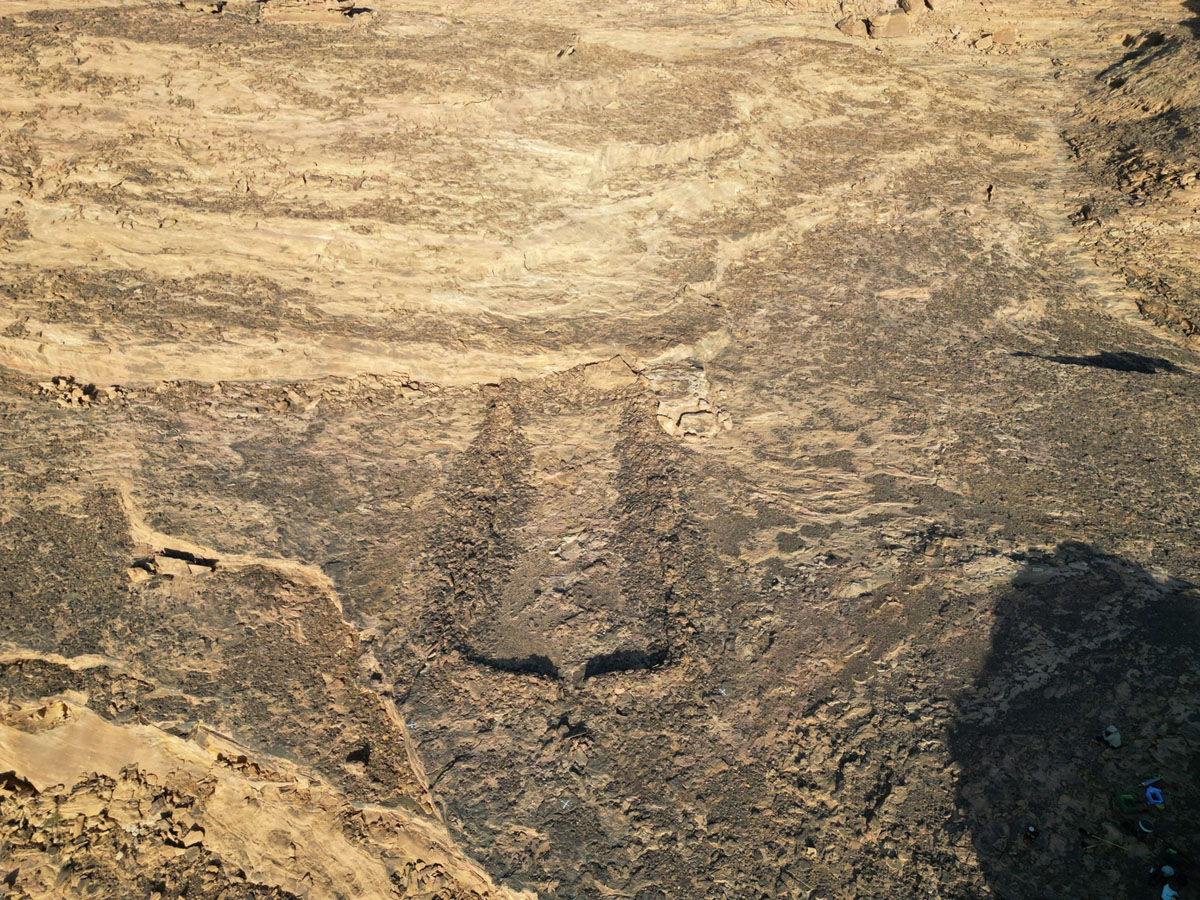
Figure 21
Aerial photograph of IDIHA-0041426, photo orientated to the east. © AAKSA/PAKEP and The Royal Commission for AlUla.
IDIHA-F-0051480
IDIHA-F-0051480 is a complex mustatil orientated east-west, measuring 25 × 10 m and was preserved to a height of 6–8 courses (0.68 m). The head was positioned in the west, against the face of the mesa. The northern extent of which was covered by a large sandstone boulder that appears to have slipped off the mesa. A small entrance was also present in the east of the structure, with a single associated feature positioned directly in front of the entrance.
Although IDIHA-F-0051480 had a similar architectural form to other investigated mustatil in AlUla, such as IDIHA-F-0011073, one key difference was discernible. In comparison to other mustatil the chamber was very ephemeral, measuring 1.67 × 0.6 × 0.2 m is size, and was very hard to discern. Moreover, very little archaeological material was found within this part of the structure. Instead, significant quantities of animal bone and teeth were present across the head, this included articulated petrous bones and cranial box fragments, as well as caprine horn cores (Figure 22). Based on this pattern of distribution and the fact that the remains were found in relatively equal quantities; it can be hypothesised that the remains were not deposited in the chamber but were in fact displayed across the extent of the head (Figure 23).
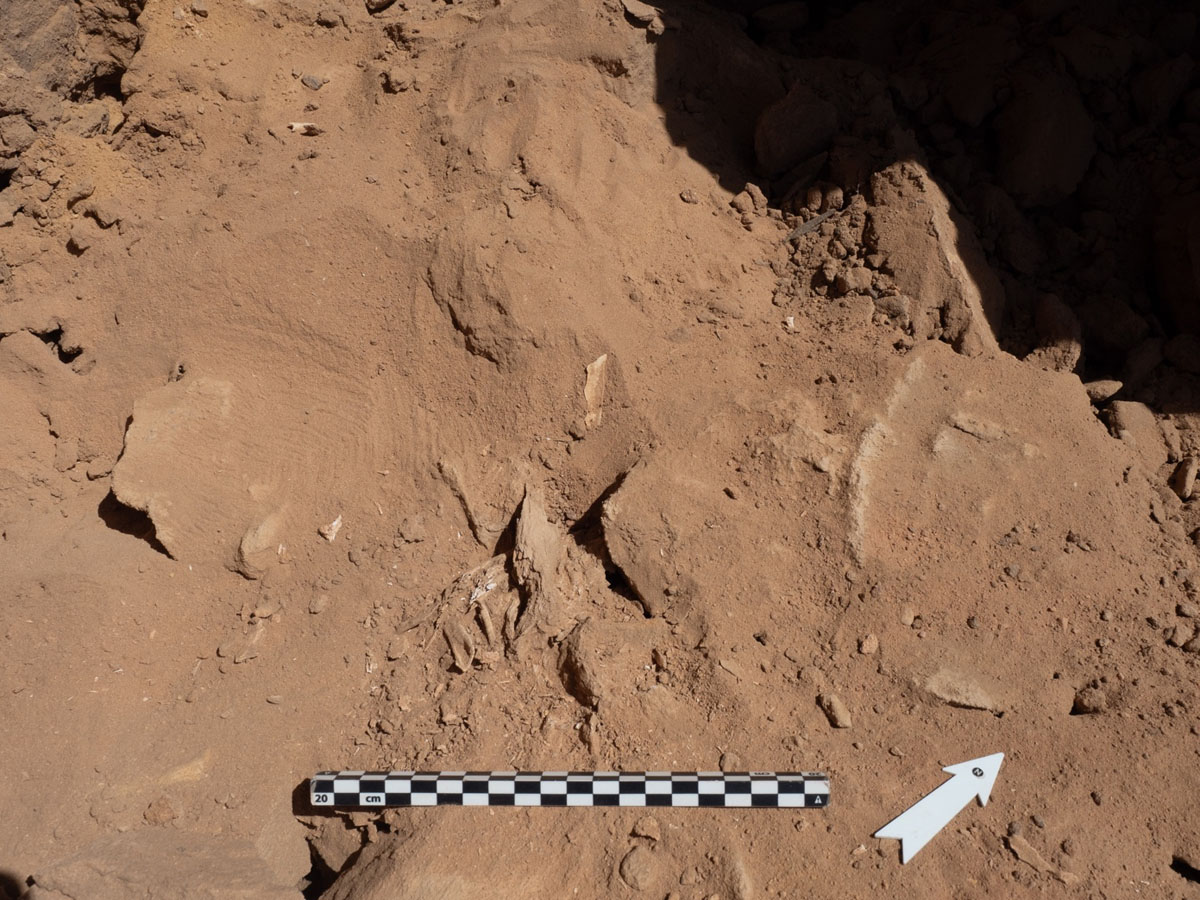
Figure 22
In situ faunal remains from IDIHA-F-0051480. © AAKSA/PAKEP and The Royal Commission for AlUla.
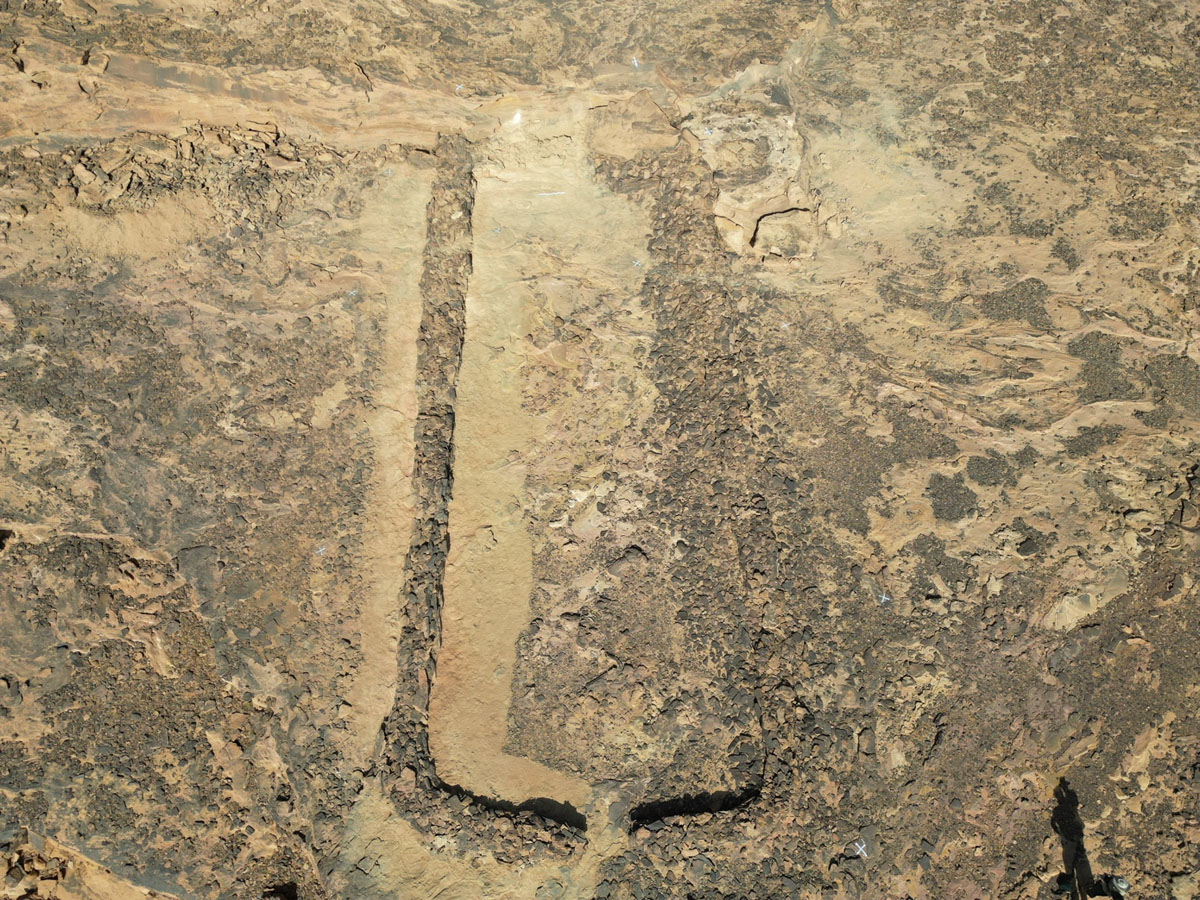
Figure 23
Post excavation aerial photograph of IDIHA-F-0051480, photo photo orientated to the east. © AAKSA/PAKEP and The Royal Commission for AlUla.
Summary of faunal remains from IDIHA-F-0051480
Excavations in mustatil IDIHA-F-0051480 revealed 1,308 animal bones, with a total weight of 1,544.4 g (Table 12). As for the preservation of the remains, fragmentation was a significant factor, with 564 of the remains unidentified (43.1%; 408.8 g). 56.9% of the total corpus is composed of teeth (709 remains; 751.1 g), mostly maxillary teeth, and petrous bones (35 remains, 185.8 g), the most resistant skull elements. In particular, 98.6% of the teeth remains consist only of the enamel, with the remainder of the teeth complete with the dentine preserved.
Table 12
Quantification of faunal remains from IDIHA-F-0051480.
| TAXA | NUMBER | % OF NUMBER | WEIGHT (g) | % OF WEIGHT |
|---|---|---|---|---|
| Cattle | 204 | 27.4% | 588.7 | 51.8% |
| Bos sp. | 231 | 31.0% | 285.9 | 25.2% |
| Goat | 8 | 1.1% | 100.8 | 8.9% |
| Sheep | 2 | 0.3% | 6 | 0.5% |
| Indeterminate Caprine | 70 | 9.4% | 45.1 | 4.0% |
| Small Ruminant | 71 | 9.5% | 20 | 1.8% |
| Ruminant | 136 | 18.3% | 41.1 | 3.6% |
| Large Ruminant | 20 | 2.7% | 47.5 | 4.2% |
| Rodent | 2 | 0.3% | 0.5 | <0.0% |
| Total | 744 | 100% | 1,135.6 | 100% |
The total NISP for this structure is 744 remains (1,135.6 g), with the majority of these being bovine remains, 435 (58.5% of the NISP; 874.6 g). Among bovines, domestic cattle are represented by 204 remains, that is 27.4% of the NISP, corresponding to a weight of 588.7 g (Table 12). Small ruminant remains total 285 (38.3% of the NISP; 171.9 g). Among the small ruminants there are 70 (45.1g) indetermined caprine remains present, eight domestic goat remains (100.8 g) and two domestic sheep (6 g). In addition, indetermined ruminants are represented by 136 bones (41.1 g), large ungulates by 20 bones (47.5 g) and rodents by two bones (0.5 g). In terms of anatomy, 99.7% of the NISP is composed of elements of the skull. As such, the assemblage is dominated by ruminants (with 28.8% of the NISP of domesticates) and by skull elements.
Radiocarbon evidence and phasing from IDIHA-F-0051480
Two radiocarbon assays were obtained from IDIHA-F-0051480, these were collected from the uppermost (002) and lowest (007) contexts of the structure. Both dates were almost identical, suggesting a single radiometric horizon for this feature (Table 13).
Table 13
Radiocarbon assays from IDIHA-F-0051480.
| LAB ID | SAMPLE ID | CONTEXT | MATERIAL | ANALYSIS | 14C (BP) | CALIBRATED DATE BC 68.2% (1σ) | CALIBRATED DATE BC 95.4% (2σ) |
|---|---|---|---|---|---|---|---|
| UGAMS65399 | #1356 | 002 | Animal Bone | Bioapatite | 6210 ± 25 | 5214–5206 (6.1%) 5171–5112 (41.6%) 5104–5072 (20.6%) | 5295–5261 (8.2%) 5220–5200 (9.7%) 5186–5053 (77.6%) |
| UGAMS65400 | #1361 | 007 | Animal Bone | Bioapatite | 6180 ± 30 | 5177–5140 (23.9%) 5134–5066 (44.4%) | 5216–5030 (95.2%) 5018–5016 (0.3%) |
IDIHA-0008222
IDIHA-0008222 is the most easterly of the mustatils investigated in AlUla by the AAKSA and PAKEP projects, located approximately 9 km to the northwest of IDIHA-F-0051480. This structure has previously been published (M.A. Kennedy et al. 2023) and will only be discussed here briefly. IDIHA-0008222 is situated in a narrow valley between two, roughly north-south running yardangs in the sandstone canyons to the south of the Sharaan Nature Reserve. The site consists of a mustatil (IDIHA-F-0011081), four I-type structures (IDIHA-F-0011144, IDIHA-F-0011146, IDIHA-F-0011147 and IDIHA-F-0011148; Figure 24), a cist burial (IDIHA-F-0011213) and a hearth (IDIHA-F-0011091).
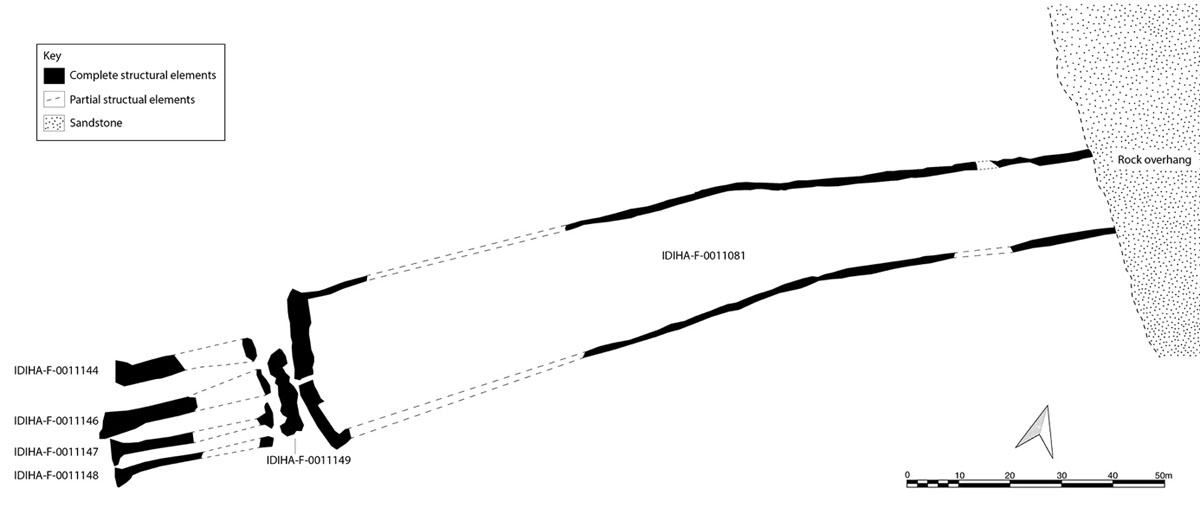
Figure 24
Plan of the various features at site IDIHA-0008222. © AAKSA/PAKEP and The Royal Commission for AlUla.
IDIHA-F-0011081
IDIHA-F-0011081 is 140 m long, complex, southwest-northeast running mustatil (Figure 24). The base is positioned in the southwest, with four I-type structures located immediately behind this part of the structure (M.A. Kennedy et al. 2023: Figure 3). The head of the mustatil is in the northwest and is positioned under a rock overhang. Excavations across the head revealed a trapezoidal shaped chamber measuring 3.10 × 2.80 × 2.85 m. Stratigraphic analysis from within the chamber revealed four chronologically indistinguishable phases, and five distinct depositional events (M.A. Kennedy et al. 2023: 9–16). These consisted of cattle/Bos sp., caprine, and gazelle horns, and maxillaries with teeth, frontal bone fragments with horns and cranium fragments; dating to the late 6th to early 5th millennia BC (M.A. Kennedy et al. 2023: 17–24; Figure 25). Each of these depositional events were orientated around or were located in close proximity to a large central standing stone or orthostat, which appears to have functioned as a betyl (M.A. Kennedy et al. 2023: 9; 34). Immediately to the north of the structure and cutting the edge of the head of a mustatil was a rectangular cist. This feature measured 2.25 × 1.55 × 3.54 × 1.35 m, and contained the partial, disarticulated remains of a single adult human (M.A. Kennedy et al. 2023: 26–29). Radiocarbon analysis indicates this individual was interred some 400 years after the initial faunal deposits (M.A. Kennedy et al. 2023: Table 3).
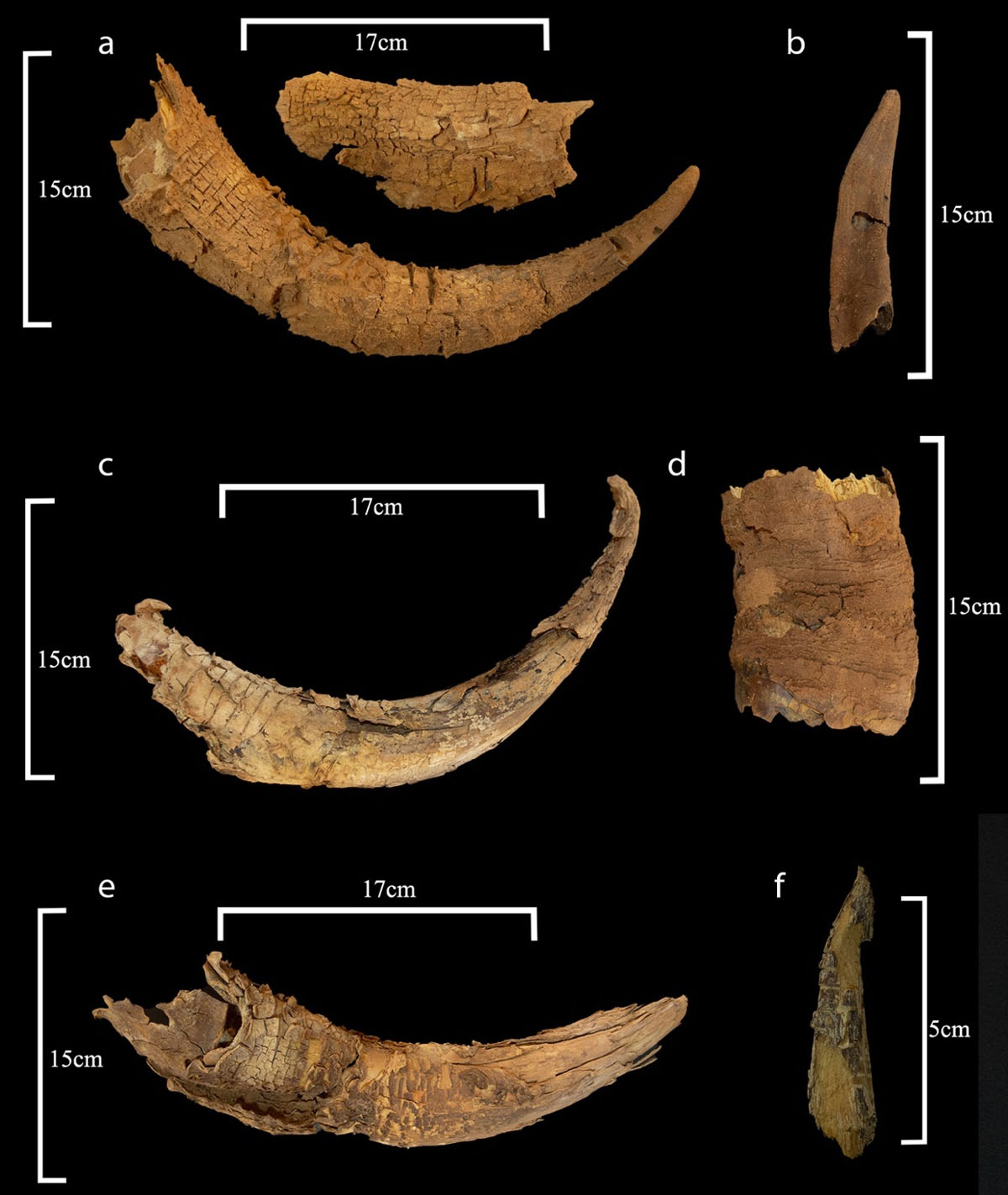
Figure 25
Faunal remains from IDIHA-F-0011081. 25A: Cattle horn. 25B: Goat horn. 25C: Cattle horn. 25D: Cattle horn. 25E: Bos sp. horn sheath. 25F: Gazelle horn. © AAKSA/PAKEP and The Royal Commission for AlUla.
Summary of faunal remains from IDIHA-F-0011081
IDIHA-F-0011081 revealed a total number of 260 faunal remains, for a total weight of 3,311.9 g (Table 14; M.A. Kennedy et al. 2023). The remains were in a fair state of preservation, with a significant number of well-preserved horns and horn sheaths (altogether 36, in addition to two specimens of frontals with horn), maxillary teeth with dentine preserved (207 teeth, 39 complete upper teeth), parts of the cranium box and face (34), and petrous bones (four). The number of unidentified specimens is 247 (3,185.9 g). The identified remains are mainly bovines, with 217 remains (87.8% of the NISP, 3,033.7 g). Out of these, 89 remains are attributed to domestic cattle (36% of the NISP) and 128 remains to Bos sp. (51.8% of the NISP). Small ruminants represent the remainder of the NISP, with five remains of domestic goat (2% of the NISP), 19 remains of undetermined caprines (7.7% of the NISP), one gazelle remain and five remains of undetermined small ruminants (2% of the NISP). The assemblage is thus only composed of ruminants, with a significant presence of domesticates (38.1%), exceeding identified wild taxa.
Table 14
Quantification of faunal remains from IDIHA-F-0011081.
| TAXA | NUMBER | % OF NUMBER | WEIGHT (g) | % OF WEIGHT |
|---|---|---|---|---|
| Cattle | 89 | 34.2% | 2223.2 | 67.1% |
| Bos sp. | 128 | 49.2% | 810.5 | 24.5% |
| Goat | 5 | 1.9% | 153.3 | 4.6% |
| Indeterminate Caprine | 19 | 7.3% | 15.9 | 0.5% |
| Gazelle | 1 | 0.4% | 3 | 0.1% |
| Small Ruminant | 5 | 1.9% | 6 | 0.2% |
| Indeterminate | 13 | 5% | 100 | 3.0% |
| Total | 260 | 100% | 3,311.9 | 100% |
The anatomical representation includes only elements of the skull. The state of preservation was good enough to suggest that the original deposited portions could be horns and sheaths, parts of the skull, possibly horned frontals and possibly complete bucrania (as attested in the better preserved mustatil at IDIHA-0000687, see Abu-Azizeh et al. 2022). The evidence seems to indicate a focus on horns. Coprolites identified as hyaena faeces were also found, suggesting that animal disturbance affecting the spatial and stratigraphical distribution of the remains cannot be ruled out. However, the assemblage does not correspond to typical hyaena bone deposits and is thus an anthropic deposit. In two cases the remains were clearly intentionally placed in significant locations, such as in association with the betyl, or intentionally clustered.
Radiocarbon evidence and phasing from IDIHA-F-0011081
A total of 10 radiocarbon assays were obtained from the mustatil and associated cist burial (Table 15). Previously published modelling of these dates revealed that the four stratigraphic phases were chronologically indistinguishable, spanning the late 6th through to early 5th millennia BC (M.A. Kennedy et al. 2023: Table 3; Figure 20). This suggests that the depositional events of this mustatil happened in quick succession, and that it was not in use for a sustained period.
Table 15
Radiocarbon assays from IDIHA-F-0011081.
| LAB ID | SAMPLE ID | CONTEXT | MATERIAL | ANALYSIS | 14C (BP) | CALIBRATED DATE BC 68.2% (1σ) | CALIBRATED DATE BC 95.4% (2σ) |
|---|---|---|---|---|---|---|---|
| SANU-66604 | #0086 | 014 | Charcoal (Unidentified) | Charcoal | 6210 ± 27 | 5214–5206 (6.1%) 5172–5112 (41.2%) 5106–5072 (21.0%) | 5296–5269 (9.0%) 5220–5199 (9.8%) 5186–5052 (76.7%) |
| SANU-64603 | #0102 | 007 | Animal Tooth | Keratin | 6192 ± 59 | 5216–5196 (7.1%) 5191–5046 (61.2%) | 5306–5238 (12.3%) 5231–4994 (83.2%) |
| SANU-65412 | #0034 | 011 | Cattle Horn | Keratin | 6187 ± 41 | 5211–5204 (3.7%) 5180–5061 (64.5%) | 5292–5266 (4.0%) 5219–5008 (91.4%) |
| SANU-66605 | #0037 | 011 | Cattle Horn | Keratin | 6116 ± 27 | 5203–5181 (15.1%) 5060–4994 (53.1%) | 5208–5158 (21.2%) 5124–5092 (5.0%) 5082–4944 (69.3%) |
| SAUN-66606 | #0039 | 011 | Cattle Horn | Keratin | 6115 ± 27 | 5203–5181 (14.9%) 5060–4993 (53.4%) | 5208–5158 (20.7%) 5124–5092 (4.7%) 5081–4944 (70.1%) |
| SANU-66609 | #0043 | 011 | Cattle Horn | Keratin | 6111 ± 27 | 5203–5182 (18.5%) 5058–4991 (54.7%) | 5208–5161 (18.5%) 5122–5094 (3.5%) 5080–4941 (73.5%) |
| SANU-66607 | #0042 | 011 | Goat Horn | Keratin | 6111 ± 28 | 5203–5181 (13.7%) 5060–4990 (54.5%) | 5208–5160 (18.7%) 5122–5094 (3.9% 5080–4940 (72.9%) |
| UGAMS-46488 | #0072 | 012 | Cattle Horn | Bioapatite | 6050 ± 20 | 4996–4932 (59.6%) 4920–4908 (8.7%) | 5026–4894 (88.2%) 4870–4848 (7.3%) |
| SANU-65411 | #0100 | 011 | Cattle Horn | Keratin | 5911 ± 29 | 4829–4818 (8.6%) 4798–4770 (24.9%) 4764–4725 (34.8%) | 4846–4712 (95.4%) |
| UGAMS-46484 | SK003 | 003 | Human Bone | Collagen | 5720 ± 20 | 4602–4534 (56.9%) 4520–4504 (11.3%) | 4672–4637 (5.2%) 4616–4491 (88.5%) 4472–4461 (1.7%) |
Contextualising the Mustatil Phenomenon and Neolithic Ritualised Economies in the Arabian Peninsula
The data presented above represents the first comparative study of the mustatil tradition, with the excavated remains shedding new and important light on these monuments. Previous studies on two mustatils in the AlUla region (Abu-Azizeh et al. 2022; M.A. Kennedy et al. 2023) revealed that the ritual deposits in these monuments were the result of a structured selection and deliberate deposition of animal portions. The current study leads us to affirm, for the first time, that this selection is a considered, recurrent, and precise pattern, and that the mustatil tradition must have been deeply rooted within the psyche of the inhabitants of northwest Arabia during the 6th and 5th millennia BC. Moreover, the evidence presented here illustrates that not only were the mustatils part of a well-defined and homogenous architectural tradition, but they appear to represent a cohesive ritual ideology and shared symbolic system.
Faunal remains are present in all the analysed mustatils and consistently constitute the main find in each structure. The predominant taxa recorded in all the deposits are horned ruminants, with a significant proportion of domestic taxa identified (32.2% of the total NISP), predominantly domestic cattle and goat, while gazelle is attested to in much lower proportions, with instances in only two mustatils (Table 5; Table 14; Table 16). The same observation applies to mustatil IDIHA-0000687, where ibex and aurochs remains are also present amongst the less frequent proportions of wild taxa (Abu-Azizeh et al. 2022: 10).
Table 16
Quantification of faunal remains from all seven excavated mustatils in AlUla County.
| TAXA | NUMBER | % OF NUMBER | WEIGHT (g) | % OF WEIGHT |
|---|---|---|---|---|
| Cattle | 1324 | 25.8% | 9574.7 | 61.6% |
| Bos sp. | 1676 | 32.6% | 2787.1 | 17.9% |
| Goat | 78 | 1.5% | 689.9 | 4.4% |
| Sheep | 8 | 0.2% | 104.6 | 0.7% |
| Goat/sheep | 118 | 2.3% | 608.5 | 3.9% |
| Indeterminate Caprine | 601 | 11.7% | 473.2 | 3.0% |
| Gazelle | 3 | 0.1% | 42.2 | 0.3% |
| Small Ruminant | 140 | 2.7% | 133.6 | 0.9% |
| Ruminant | 324 | 6.3% | 216.5 | 1.4% |
| Large Ruminant | 37 | 0.7% | 144.6 | 0.9% |
| Large Ungulate | 33 | 0.6% | 118.6 | 0.8% |
| Hare | 14 | 0.3% | 15.6 | 0.1% |
| Fox | 4 | 0.1% | 9.1 | 0.1% |
| Small Carnivore | 3 | 0.1% | 1.5 | <0.1% |
| Rodent | 11 | 0.2% | 3.6 | <0.1% |
| Reptile | 1 | <0.1% | 0.9 | <0.1% |
| Bird | 3 | 0.1% | 0.9 | <0.1% |
| Indeterminate | 761 | 14.8% | 627.9 | 4.0% |
| Total | 5,139 | 100% | 15,553 | 100% |
Analysis of the faunal remains reveals a further pattern: the selected portions are elements of the skull, particularly its upper part, which includes the omnipresent maxillary teeth, petrous bones, and horns, with mandibles and other axial elements and limbs consistently excluded from the deposits, most probably the result of intentional choice. This strict selection was noticed in previously published mustatils, where entire bucrania and horned frontal bones were found, and for which a possible focus on horns was hypothesized (Abu-Azizeh et al. 2022: 17; M.A. Kennedy et al. 2023: 33). The present study extends this pattern to all excavated mustatils in AlUla County. Moreover, considering that several taxa are deposited and the modalities of deposition, such as the placement around betyls, mustatil faunal assemblages can be interpreted as offerings (Abu-Azizeh et al. 2022: 17; M.A. Kennedy et al. 2023: 34). The extant evidence also suggests that a certain importance and solemnity must have accompanied the act of the ritual deposition of these offerings, with this practice/tradition spanning 500–600 years, if not longer, over a vast geographic area, some 350,000 km2.
The ritual behaviour manifested through the mustatil tradition reflects the symbolic importance of horned ruminants, predominantly domesticates, to the Neolithic peoples of the northwest Arabia. These people were most probably the first herders in this environmentally challenging landscape, with domestic livestock (both bovine and caprine) a crucial resource that shaped the economy, culture, society, and lifestyle of these communities (cf. Makarewicz 2020). This shaping was to such an extent that it became a key focus of their ritual/cultic identity, resulting in the emergence of an early ritualised economy for northwest Arabia (cf. McAnany (ed.) 2008; Flad et al. 2023). Moreover, the environment of northwest Arabia during the Neolithic although wetter than at present, was still a mosaic of pasture zones subject to seasonal fluctuations in rainfall and water availability, with a tendency towards aridity from ca. 6000 BC onwards (Dinies et al. 2015; Breeze et al. 2017; Neugebauer et al. 2022). As such, Neolithic communities must have developed herding strategies adapted to these conditions, especially for their cattle. More in-depth studies of mustatil faunal assemblages are currently ongoing, providing more data to refine our understanding of these strategies. Likely, subsistence in this region required seasonal mobility, as well as profound and detailed knowledge of the territory and a socio-political system for maintaining herds and for accessing, but at the same time preserving, vital pastoral resources. As such, mustatils probably acted as a central place, and a material manifestation of such systems and ideological networks. These first conclusions support the interpretation that the mustatil tradition, including the complex ritual behaviour linked to it, was of great importance, with its homogenous architectural form a distinctive marker of specific local identity. Indeed, other archaeological evidence of Neolithic ritual behaviours in neighbouring areas do not exhibit the same specificities, even when animals appear to play an important role in these cultural/ritual manifestations (e.g. Munoz et al. 2020; Martin & Roe 2020).
Mustatils faunal spectra are thus not only highly informative about animal ritual selection, but also Neolithic subsistence, offering insight into the region’s pastoralist practices. This most likely was characterised by mixed herding, which was supplemented by hunting. Goat herding in particular is well suited to arid and semi-arid areas and have an important milk yield. Cattle are also a highly valuable resource in terms of meat, as well as secondary products like milk and blood (Dahl & Hjort 1976; Greenfield 2010: 33–35; Allentuck 2015: 97–98), although these animals have important water and pasture requirements. Mixed herding during the 6th and 5th millennia BC would appear to be supported by the evidence from the region’s domestic sites, excavations within the standing stone circles of the Harrat ‘Uwayrid (see below), have revealed evidence for caprines, bovines, as well as wild taxa (McMahon et al. 2024). Most interestingly, although cattle and Bos sp. comprise the bulk of the identifiable mustatil assemblages (58.4% of the total, 68.5% of the NISP; Table 16), only 1.5% of the identifiable NISP could be attributed to cattle and Bos sp. in domestic contexts; wild taxa was also low, with less 1% of the NISP, whilst caprines formed the bulk of the identifiable assemblage at 42.5% of the NISP (McMahon et al. 2024). The low proportions of cattle/Bos sp. in domestic contents may suggest that cattle were used predominantly for secondary products rather than meat consumption. The possibility also remains that cattle may never have been ubiquitous across the region, with communities perhaps only having a small herd of animals or being highly mobile. This would appear to contrast with the rock art of the region, where large herds of cattle are frequently rendered and goat depictions rare (Guagnin et al. 2017: 144–145; Makarewicz 2020: 173; Guagnin et al. 2021: 11–12; Stewart et al. 2024: 18). A similar scenario has also been identified in the eastern desert of Jordan at Wisad Pools (Hill et al. 2020: 256–258). As such, the apparent disjunction between the ritual and domestic spheres, as well as the predominance of cattle in the rock art, hints at the symbolic and ritual significance of the cattle to the Neolithic inhabitants of northwest Arabia.
Such variance between the mustatils and contemporaneous domestic occupation is also occasionally mirrored within the mustatils themselves, with variability observed between structures in terms of taxa and bone quantifications. This can be seen in the predominance of caprines in IDIHA-F-0018247, with the remaining six mustatils characterised overwhelmingly by cattle and Bos sp. remains. Comparable variability is also on occasion observed in the architectural details of the mustatils, i.e. simple and complex variations, despite an overall strong homogeneity of conception. These distinctions potentially a mirror to both the symbolic world and the socio-religious organisation of the Neolithic in northwest Arabia.
However, it is also worth stressing that bone preservation is a fundamental factor that needs to be taken into consideration when studying mustatil faunal assemblages. Indeed, the most resistant skeletal elements (such as tooth enamel and petrous bones) and the most resistant taxa (such as stronger-built bovine bones) tend to predominate when preservation is poor. Indeed, if we compare for instance the faunal remains of mustatils IDIHA-F-0018247 or IDIHA-F-0011081 with those from mustatils IDIHA-F-0011073 or IDIHA-F-0011233 (see above), it is possible that caprines are underrepresented in the latter, as well as cranial boxes, complete maxillaries with teeth and horns. Furthermore, the exceptional preservation of keratin horn sheaths in four of the mustatils presented here, plus IDIHA-0000687 (Abu-Azizeh et al. 2022: 9) is of note. Keratin undergoes complete degradation and is usually not preserved in archaeology, unless specific conditions interfere with the process, such as desiccation.
The Emergence of ‘Sacral’ Architecture in Ancient Arabia
In addition to the highly ritualised deposits of wild and domestic taxa, the mustatil tradition also marks the genesis of a sacral architectural form. Extensive survey across AlUla and Khaybar has revealed widespread occupation during the Neolithic, with this evidenced not just by the mustatils but architecturally distinctive sites of habitation (Thomas et al. 2022: 34–35; McMahon et al. 2024: Figure 3–4). In areas such as the Harrat ‘Uwayrid, to the west of the AlUla oasis, hundreds of 6th and 5th millennia BC settlements can be seen. These small, most probably seasonally occupied sites are characterised by a specific architectural form, what we have termed ‘standing stone circles’ (McMahon et al. 2024: 4–6). Standing stone circles are characterised by a perimeter wall composed of a single or double concentric ring of stones (Figure 26A–B), formed from megaliths set either horizontally or vertically into the ground (McMahon et al. 2024: 4–6). Within the structure was either a central standing stone or a series of standing stones, with the number of stones determining whether an example can be classified as a ‘single standing stone circle’ (Figure 26A) or ‘multi standing stone circle’ (Figure 26B; McMahon et al. 2024: 4–5; Figure 5). These structures were then accessed by a doorway with a threshold. Like the mustatils, many of these doorways/entrances appear to have been blocked (McMahon et al. 2024: 4). In addition to the standing stone circles, clusters of adjoining curvilinear enclosures, are visible across northwest Arabia (Parr et al. 1978; Ingraham et al. 1981; Figure 26C), suggesting the widespread use of curvilinear architecture for domestic purposes. Excavations also suggest these structures were used concurrently with the standing stone circles, often within the same site, although their use appears to extend beyond the 5th millennium BC (McMahon et al. 2024: Figure 7).
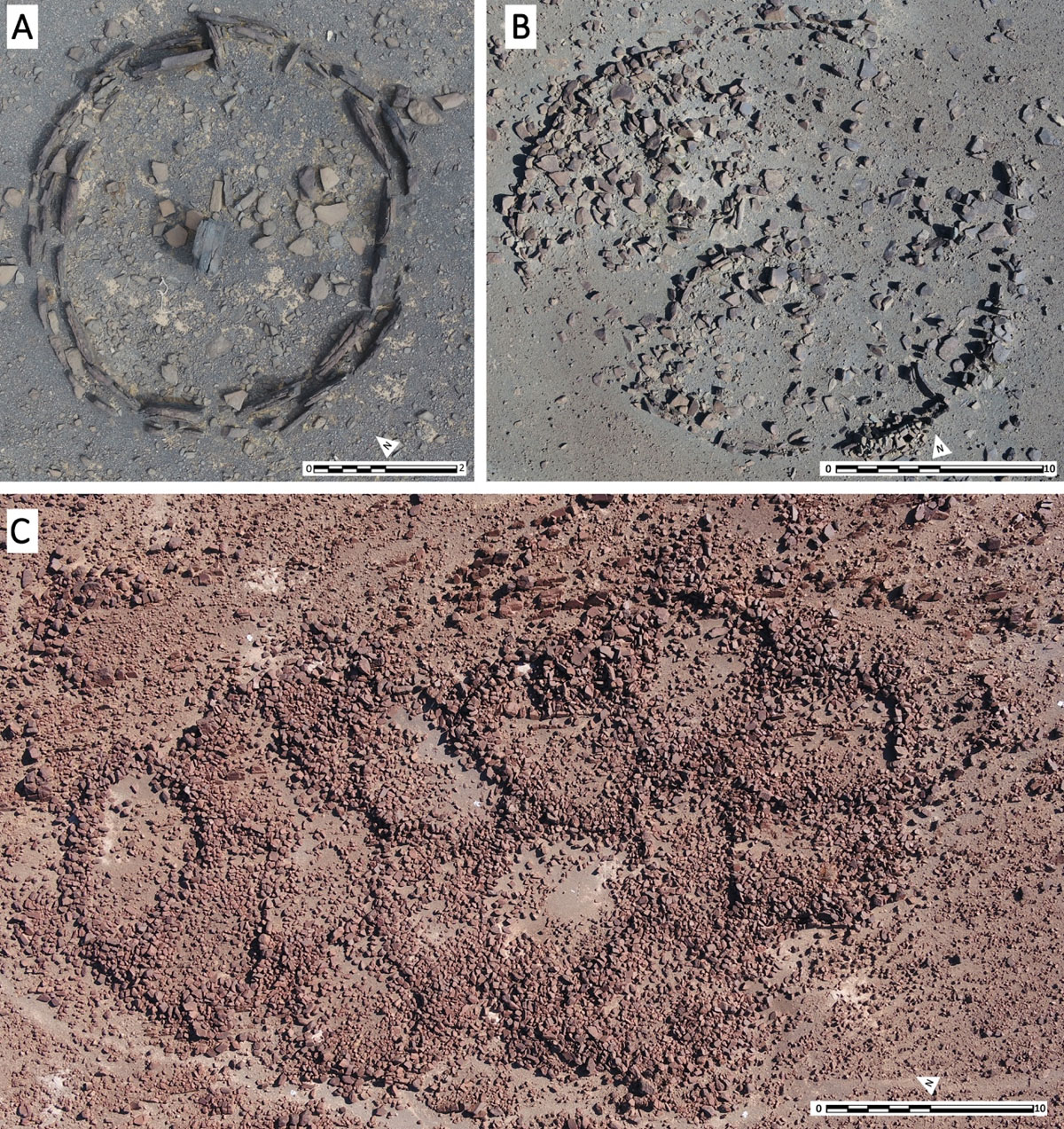
Figure 26
Curvilinear architecture contemporary with the mustatil tradition in northern Arabia. 26A: Single standing stone circle. 26B: Multi standing stone circle. 26C: Agglomerated curvilinear enclosures.
What therefore becomes apparent when comparing these two structure types, mustatils and standing stone circles/enclosures, one sacred and one profane, is that there are two distinct, yet coeval architectural forms in use in northwest Arabia during the 6th and 5th millennia BC. Based on the extant evidence, curvilinear architecture was associated with everyday habitation activities, whilst rectilinear forms were reserved for the sacral. As such, it can be hypothesised that this distinction is a deliberate architectural delineation between these two realms/functions. This assertion may be further supported by the fact that other ritually interpreted, Neolithic rectilinear structures have been identified across the Arabian Peninsula and beyond. In northern Arabia, the best example of this phenomenon is the monumental platform at Dûmat al-Jandal (Munoz et al. 2020). Dating from ca. 5600–5000 BC onwards, this feature is marked by two architectural phases and four depositional events (Munoz et al. 2020: 604). Although the overall form of this feature differs from the mustatils, several similarities, including its date range, can be discerned between the two; specifically, the presence of niches, the deposition of Bos sp. maxillary teeth, and the subsequent interment of human remains (Munoz et al. 2020: 611). Likewise, further to the east in Oman, work in the Dhofar has revealed a series of Neolithic platforms, which may on the basis radiocarbon evidence transition from curvilinear to a more rectilinear form during the mid-5th millennium BC (McCorriston 2023: 51). Interestingly, enamel flakes, possibly belonging to cattle, have also been recovered from within these structures (McCorriston 2023: 51). Likewise, in southern Jordan rectangular/trapezoidal platforms of unknown (possible ritual) function have been identified (Abu-Azizeh et al. 2014: 172–175). Whilst in the Negeb, the rectangular, open-air shrines of the 6th Millennium BC, with their use of standing stones (Avner 2018: 34–39), echo a similar sacral architectural form to the mustatils. A form, which contrasts with the earlier and contemporaneous, curvilinear domestic architecture of the region (Bar-Yosef 1992: 36; Goring-Morris 1993). As such, the presence of these rectangular features may suggest a wider sacral (rectilinear) architectural form across the arid zone of southwest Asia during the 6th and 5th millennia BC.
Elsewhere in Western Asia the transition from circular to rectilinear domestic architecture has been viewed as a key moment in the cultural and social evolution of the Neolithic, marking changes in kin and household relationships (Flannery 1972; 2002; Aurenche 1981). Although these arguments have been challenged over the last few decades (Banning & Byrd 1989; Banning 1998; Duru et al. 2021), this transition in form appears to have been a key architectural feature of the Neolithic. However, based on the extant evidence from northwest Arabia, there is no evidence for such a transition (McMahon et al. 2024), even though rectilinear architecture is known and practiced throughout the region. As such, it can be argued that this is a deliberate choice, that the builders of the mustatils chose this form for a specific reason. Although the reasoning behind this choice/distinction remains unknown, it suggests that the overall form of the mustatils was as important as the ritual offerings deposited within them. Yet, despite these clear distinctions in architectural form, elements of the domestic can be seen in some mustatils, specifically in the shape of the offering chamber, many of which were circular or oval, contrasting with the overall rectilinear form of the structure. Similarly, the presence of a central standing stone(s), in some instances, as well as entranceways, which were often blocked, has parallels with the domestic structures of the region (McMahon et al. 2024: 5; Wasse et al. 2024: 5–7). As such, the inclusion of these features may hint at a domestic element to the ritual. Are the offering chambers reflective of some form of ritualised occupation unit or dwelling, albeit one that is not occupied, but is housed within a larger sacred form? This suggestion may be supported by the fact that utilitarian domestic objects, such as the ground stone items were recovered from IDIHA-F-0011081 (M.A. Kennedy et al. 2023: 11; Figures 9 and 19), which show clear evidence of use, and the ceramic vessel from IDIHA-F-0050098, utilitarian in form and purpose – although the ceramic vessel is amongst the only known (local) Neolithic vessels in Saudi Arabia. However, it should be noted that despite the presence of these utilitarian objects, there is no evidence for contemporaneous occupation within these structures. Despite this, the overwhelmingly ritualised nature of the economy during this period may lend further credence to the suggestion, that the mustatils incorporated aspects related to both the sacred and profane. These remain key questions to be explored and answered.
Death, Ritual, and Territoriality in Neolithic Northwest Arabia
In addition to the carefully selected and deposited faunal elements, articulated and disarticulated human remains have been identified either within or directly adjacent to four of the seven investigated mustatils, specifically IDIHA-F-0011073, IDIHA-F-0050098, IDIHA-F-0011356 and IDIHA-F-0011081 (Figure 26). MNI’s range from one to two, with only SK012 from IDIHA-F-0050098, a primary inhumation; with the remainder only partial (disarticulated or partly articulated). Moreover, all but the individual associated with IDIHA-F-0011081 were found either within the central or rear offering chambers. Yet despite this clear patterning in location, these individuals all differ in deposition and positioning. In IDIHA-F-0011073, the skull and long bones (MNI 1) were carefully arranged and deposited within the central offering chamber, with the earlier faunal deposits deliberately removed. Conversely, the remains from IDIHA-F-0011356 appear to have been haphazardly thrown in to the rear chamber and mixed in with the faunal elements, which were left largely in situ. Importantly, Abu-Azizeh’s excavations at IDIHA-000687 also revealed a deposit of human remains, with an MNI of nine identified; including five adults, one adolescent or young adult, one non-adult under 18 years-of-age, and two neonates (Abu-Azizeh et al. 2022: 139). All nine individuals were disarticulated and were deposited as a single event.
Based on these five assemblages, it can be hypothesised that there was a strong ritual-funerary element associated with the final stage of mustatil use. However, this practice does not appear to have been universal, with certain sites specifically chosen for this purpose. The reasoning behind this choice remains unknown. One thing is clear across all five assemblages. Almost all post-date the initial faunal offerings, often by several hundred years (Figure 27). The two potential exceptions are IB0463 from IDIHA-F-0011073, and the two (bioapatite) samples from IDIHA-000687. Regarding IB0463, this radiocarbon assay overlaps with the latest date for the faunal remains (UGAMS56660). However, IB0463 appears to predate the remains (IB0397) found within the central offering chamber, by as much as 400 years (Figure 26). Most interestingly, IB0463 appears to have been positioned on the capping of the chamber, essentially sealing this later deposit (IB0397). This suggests one of two scenarios, either IB0463 was contemporaneous with the faunal deposits, but was possibly moved and then redeposited on top of the chamber after the deposition of IB0397 (access to Feature 1 may also have been through the front of the structure rather than the top), or this element was curated for generations or exhumed and deposited in association with the interment of IB0397 (Figure 27). Likewise, although no repeating elements were associated with the human remains from IDIHA-F-0011356, two different chronological dates are present, although this may be the result of diagenesis, with one sample collagen and the other bioapatite. A similar hypothesis has been suggested for the differential dating from IDHIA-0000687 (Abu-Azizeh et al. 2022: 148), with bioapatite potentially offering a more recent date range than the actual age (Zazzo & Saliège 2011: 60; Zazzo 2014). Although it should be noted that PAKEP has dated both collagen and bioapatite on the same sample with these revealing an identical date range. PAKEP has also recently done a wide ranging unpublished FTIR-ATR study of radiocarbon dated bone samples, which revealed little evidence for diagenesis in AlUla and Khaybar Counties.
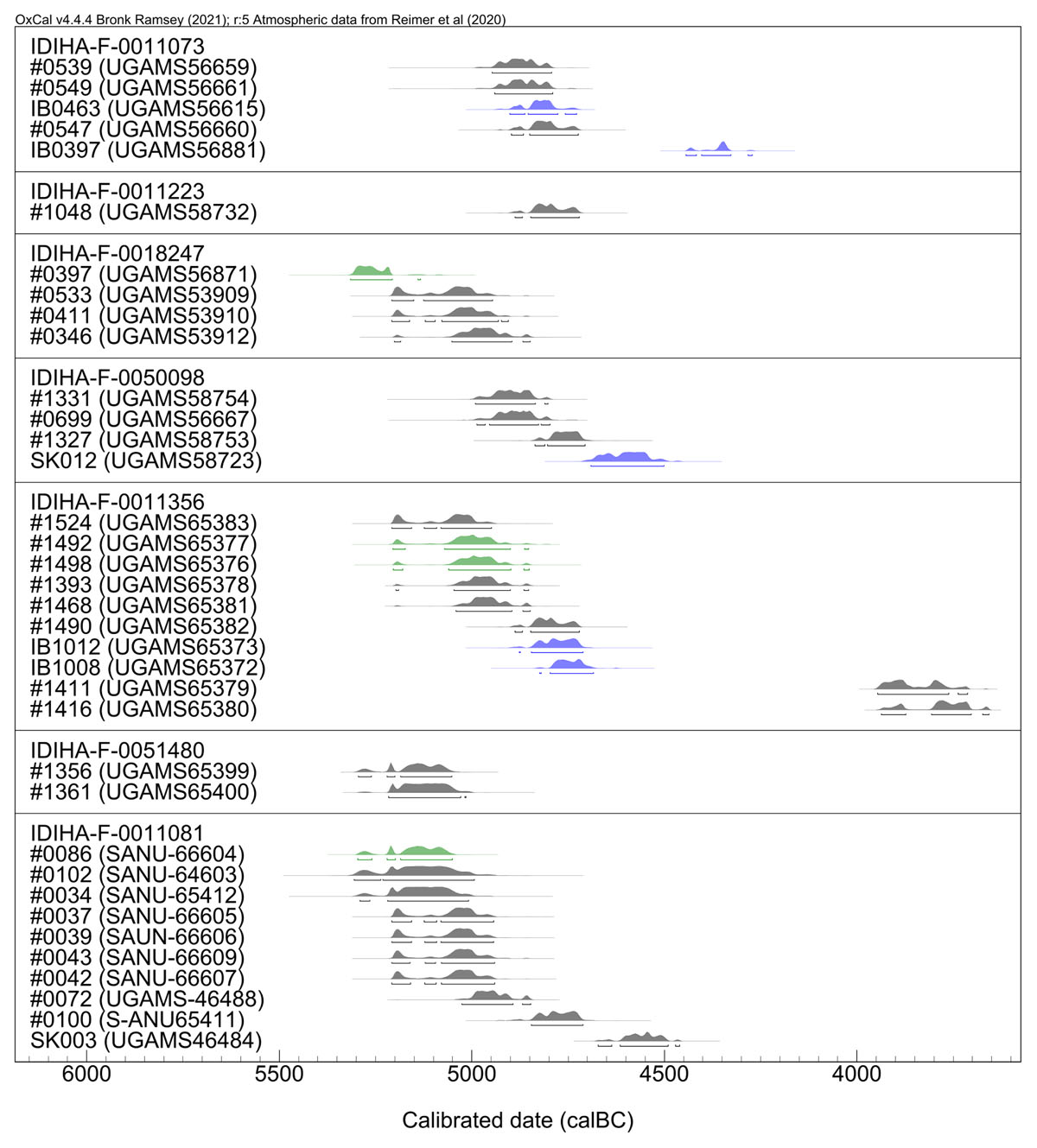
Figure 27
Radiocarbon dated remains from the mustatils of AlUla: charcoal (green); human (blue); and animal (black).
This brings into question why human remains were deposited within the mustatils. Although this will be the subject a forthcoming, stand-alone paper, it is important that it is touched upon here. We would argue that the deposition of human remains is an example of early “dead body politics” (Veredy 1999). That human body parts became a symbolic vehicle for exploring and expressing early territoriality and identity in northwest Arabia during the 6th and 5th millennia BC. Indeed, human remains have been used throughout time for this very purpose, as they can be moved and manipulated (cf. Veredy 1999; Bonogofsky 2003; Millaire 2004; Haddow & Knüsel 2017). Everyone has a body, and as such it is a medium in which everyone can see themselves, as death is the great universal (Veredy 1999: 23). Based on this concept, we assert that the later deposition of human remains was used as a means of claiming an affinity or staking a territorial claim over these earlier structures. We have previously suggested that the mustatils themselves were constructed as an expression of early territoriality and aggregation (Thomas et al. 2021a: 621–623; M.A. Kennedy et al. 2023: 38), but what we see with these later depositions, is a transition in form. The method of claiming structural ownership and all its symbolic significance, fundamentally shifts, from faunal to human, suggesting a profound reconfiguring of the ritual and symbolic landscapes during the 5th millennia BC. That human remains, perhaps ancestors, rather than an economic/pastoral lifeways become the key tie and connection to landscape and place during the 5th millennium BC is of note. Perhaps most interestingly, appearing in tandem with these depositions of human remains, are northwest Arabia’s large, highly visible collective tombs (Thomas et al. 2021b). These have also been interpreted as markers of territoriality and collective identity (Thomas et al. 2021b: 253–255), with this concept perhaps finding its best expression in the Bronze Age, with the development of the pendant burials and the funerary avenues of the 3rd millennium BC (M.A. Kennedy et al. 2021; Dalton et al. 2022).
Conclusion
The evidence presented from the seven mustatils excavated by the AAKSA and PAKEP projects, indicates that these structures were not only architecturally homogenous, but were marked by consistent ritual deposits of faunal remains, specifically elements related to the upper skull of horned ruminants. Indeed, all aspects of the mustatil tradition, from its form, to offering selection and placement, the use of betyls and upright stones, speaks to a complex and evolving cultic practice in northwestern Arabia during the 6th and 5th millennia BC. All of which has profound implications for understanding the social organisation and cultic ideology of this region during the Neolithic period. Furthermore, the clear preference for horned ruminants, specifically domestic taxa (by quantity) suggests that the transition to a mixed pastoral economy may have been a significant factor in the formation and the socio-cultural function of this tradition. The predominance of cattle and Bos sp. remains within these assemblages correlates with the high frequency of cattle depictions in the rock art of northern Arabia (Guagnin et al. 2017; Guagnin et al. 2021). However, these would appear to be at odds with the high proportion of caprine remains found within the region’s domestic contexts (McMahon et al. 2024: 12; Table 3). This raises the question as to the socio-religious and economic significance of cattle in the region, with perhaps these animals holding a special place within the collective psyche of these communities. If this is the case, the possibility remains that outliers to this practice, such as IDIHA-F-0018247, may be indicative of the practical variability of the localised hunting and herding practices of these highly adaptive and ecologically responsive early pastoralist communities.
In addition to their contents, the appearance of the mustatils would appear to mark the inception of a highly ritualised architectural form in northwest Arabia and beyond, with rectangular architecture reserved only for the sacral, whilst curvilinear/circular forms were used for the profane (domestic). The complexity or entanglement of these spheres is further illustrated by the fact that domestic elements can be found within the (“offering”) chambers of the mustatils. As such, echoes of daily life permeate these highly ritualised spaces. Finally, at some point towards the mid-5th millennium BC, there appears to be an ideological shift in the conception/ideology surrounding the mustatils, with the deliberate deposition of human remains. This divergence may suggest a profound reconfiguration of the cultic landscape, with territoriality no longer expressed through the collective deposition of faunal remains but by the placement of “ancestors”. This cultic reconfiguration may perhaps be indicative of a wider social reorganisation occurring across the region at this time, potentially in response to the onset of more arid conditions, with new mechanisms needed to explain these new realities. It is perhaps this conceptual reorganisation that lays the foundations for the appearance of the monumental funerary landscape of the Bronze Age.
Data Accessibility Statement
All relevant data are within the manuscript.
Acknowledgements
The authors would like to thank The Royal Commission for AlUla for its support in undertaking this work, and we extend special thanks to the Governor, His Highness Prince Badr bin Abdullah bin Mohammad bin Farhan Al Saud; Dr Abdulrahman Al-Suhaibani, Dr Rebecca Foote, Dr Wissam Al-Khalil, and Dr Laura Moribito. We would also like to thank the two anonymous reviewers for their insightful feedback. We must also acknowledge the work and valuable contributions to this study by Professor David Kennedy and AAKSA project team members, Dr Rebecca Repper, Dr Mat Dalton and Dr Don Boyer. Finally, we must thank the many members of the AAKSA and PAKEP field teams, who assisted in the gathering of this data. In particular, our workmen for their tireless work, we could not have done this without them.
Funding Information
This work was funded by the Royal Commission for AlUla. The funders had no role in study design, data collection and analysis, decision to publish, or preparation of the manuscript.
Competing Interests
The authors have no competing interests to declare.