
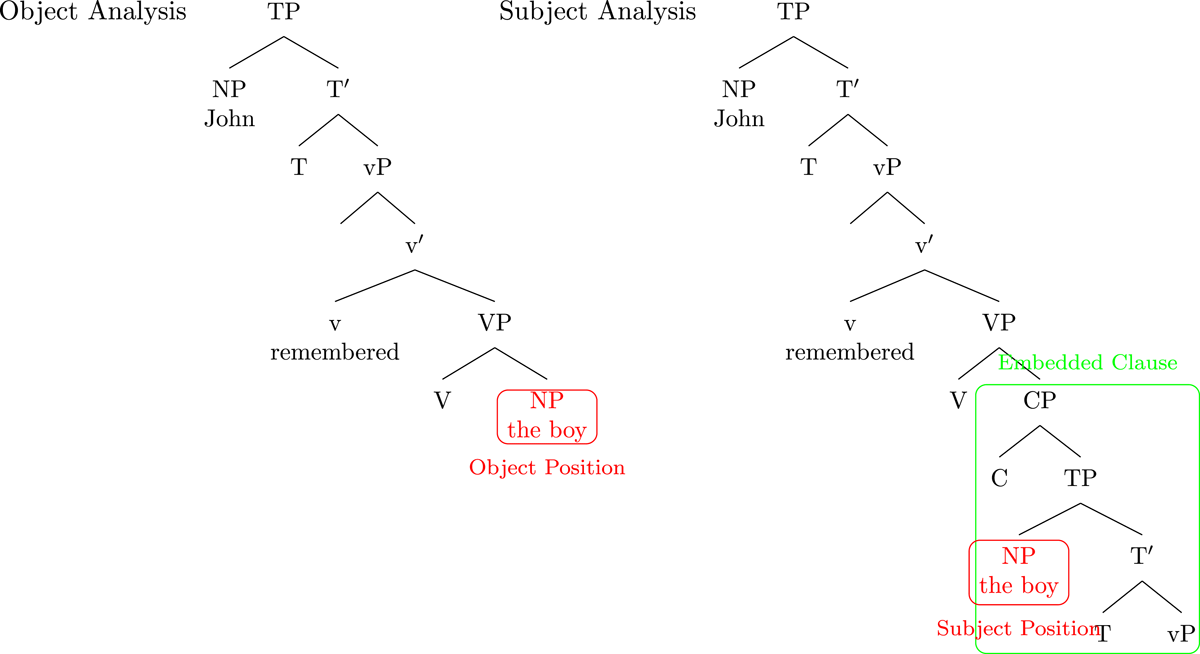
Figure 1
Object and subject analyses in (1) “John remembered the boy…”.
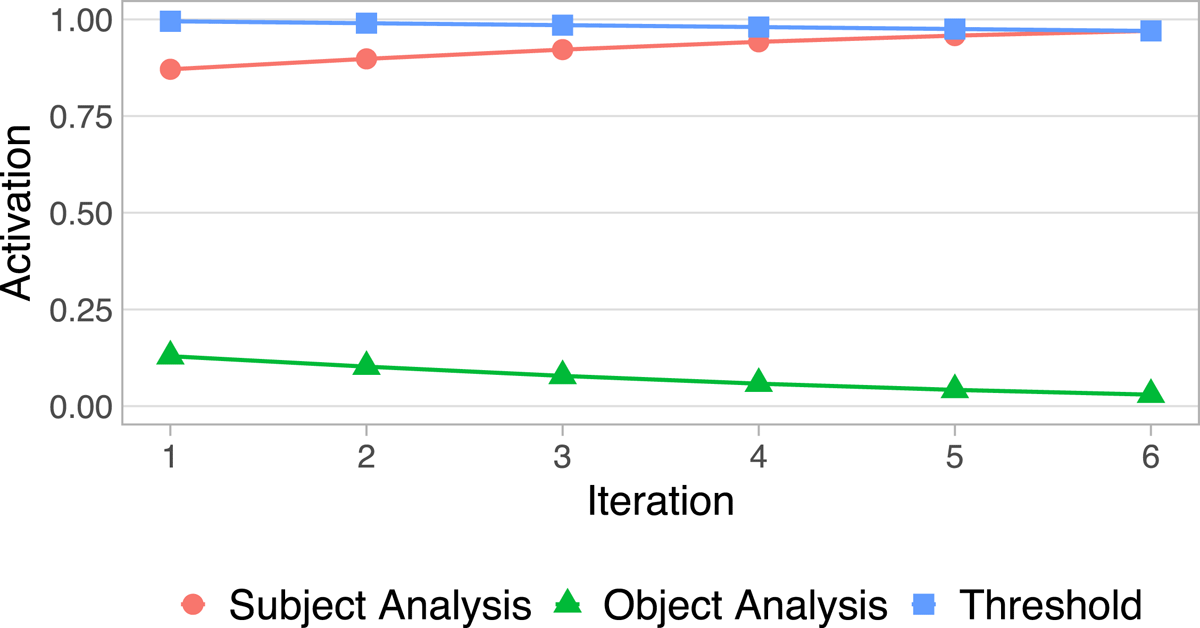
Figure 2
Constraint-based model simulation for sentence (3b).
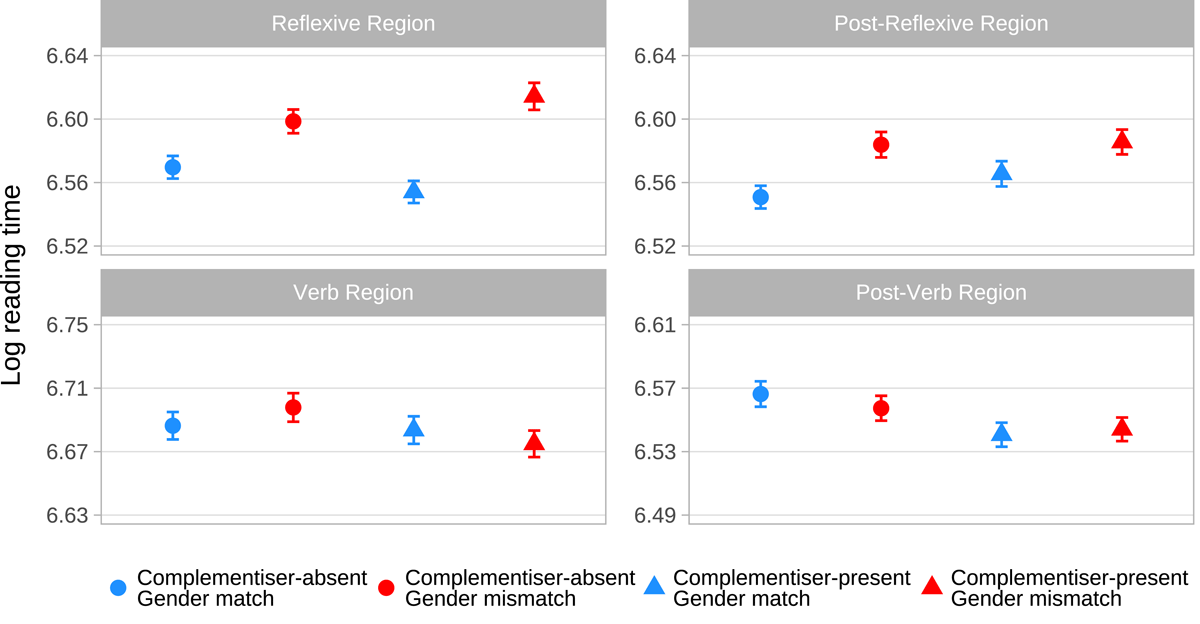
Figure 3
Log-transformed reading times at the (post-)reflexive and (post-)verb regions in Experiment 1. Error bars are standard errors.
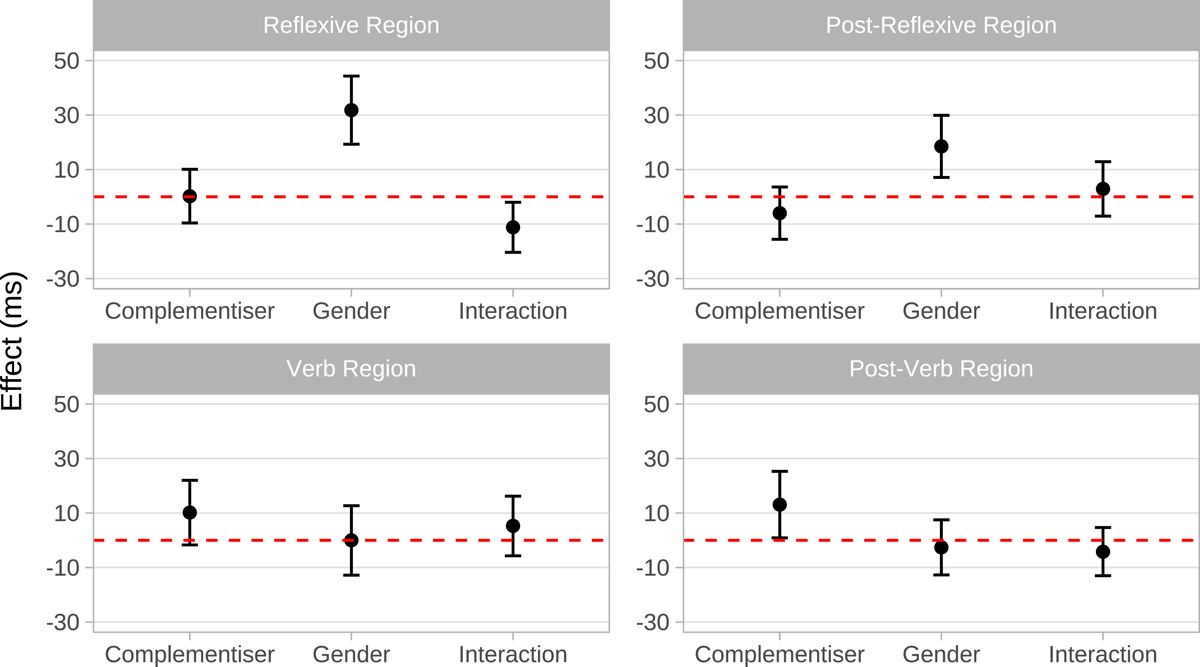
Figure 4
Effect estimates and 95% compatibility intervals at the (post-)reflexive and (post-)verb regions in Experiment 1.
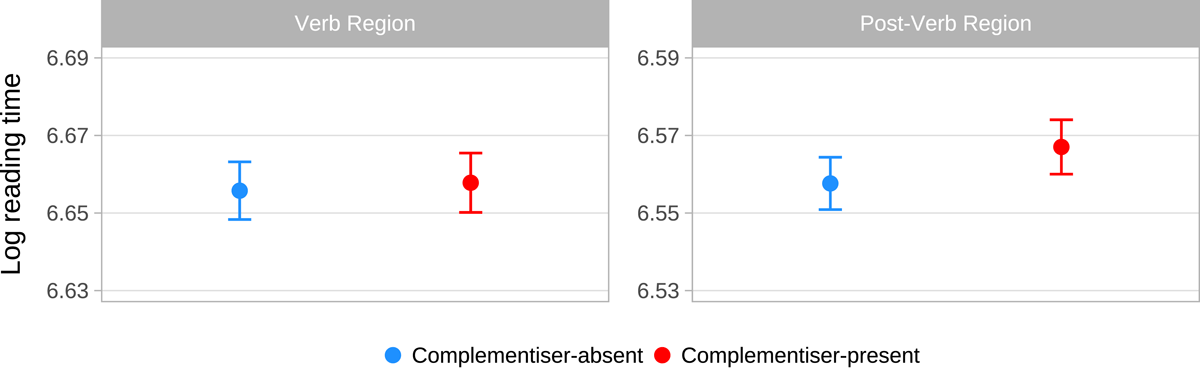
Figure 5
Log-transformed reading times at the (post-)verb regions in Experiment 2. Error bars are standard errors.
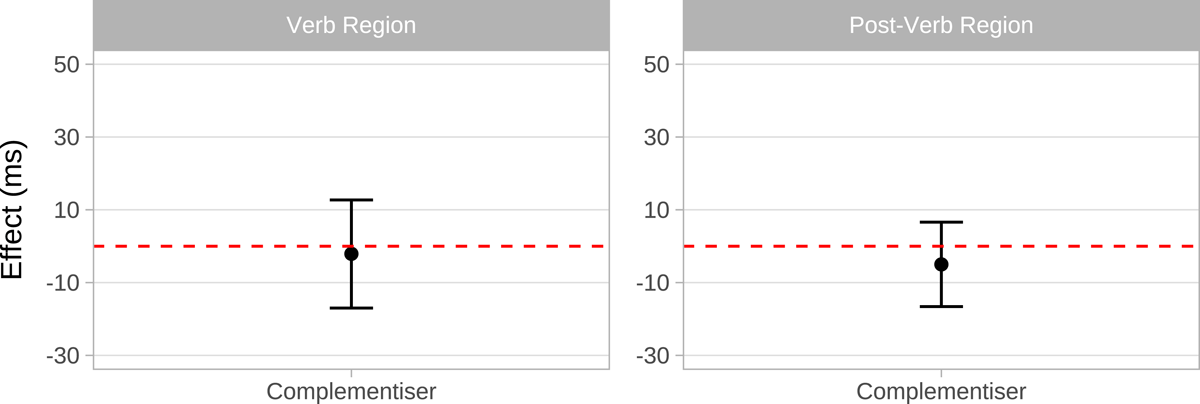
Figure 6
Effect estimates and 95% compatibility intervals at the (post-)verb regions in Experiment 2.
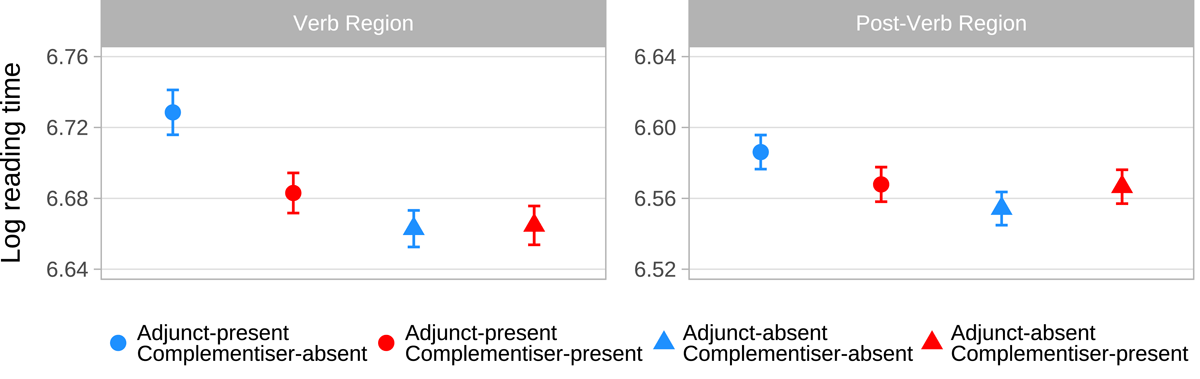
Figure 7
Log-transformed reading times at the (post-)verb regions in Experiment 3. Error bars are standard errors.
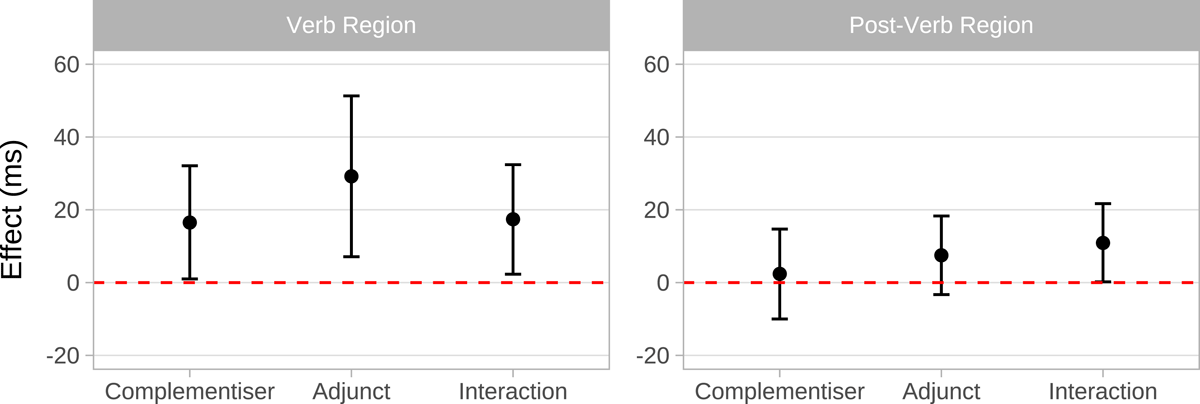
Figure 8
Effect estimates and 95% compatibility intervals at the (post-)verb regions in Experiment 3.
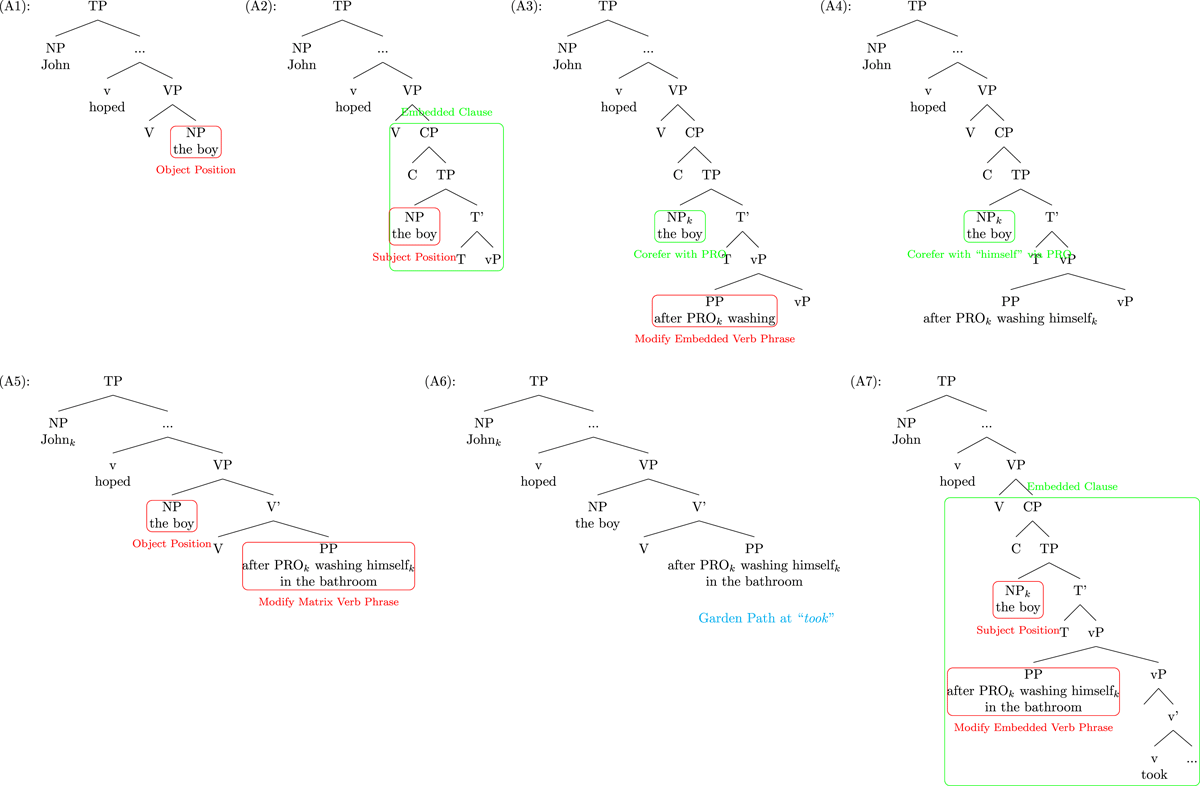
Figure 9
A proposed parsing process in the complementiser-absent sentence: “John hoped the boy after washing himself in the bathroom took…”.
Table 1
Normalised strengths of the three biases and bias weights in the sentence: “John hoped the boy after washing himself in the bathroom…”.
| BIAS | SUBJECT ANALYSIS | OBJECT ANALYSIS | WEIGHT (AFTER) | WEIGHT (HIMSELF IN) | WEIGHT (THE BATHROOM) |
|---|---|---|---|---|---|
| Semantic/Categorial Constraint | 0.76 | 0.24 | 1/3 | 3/10 | 2/10 |
| Selectional Frequency | 0.94 | 0.06 | 1/3 | 3/10 | 2/10 |
| Temporal Adjunct | 0.02 | 0.98 | 1/3 | 4/10 | 6/10 |
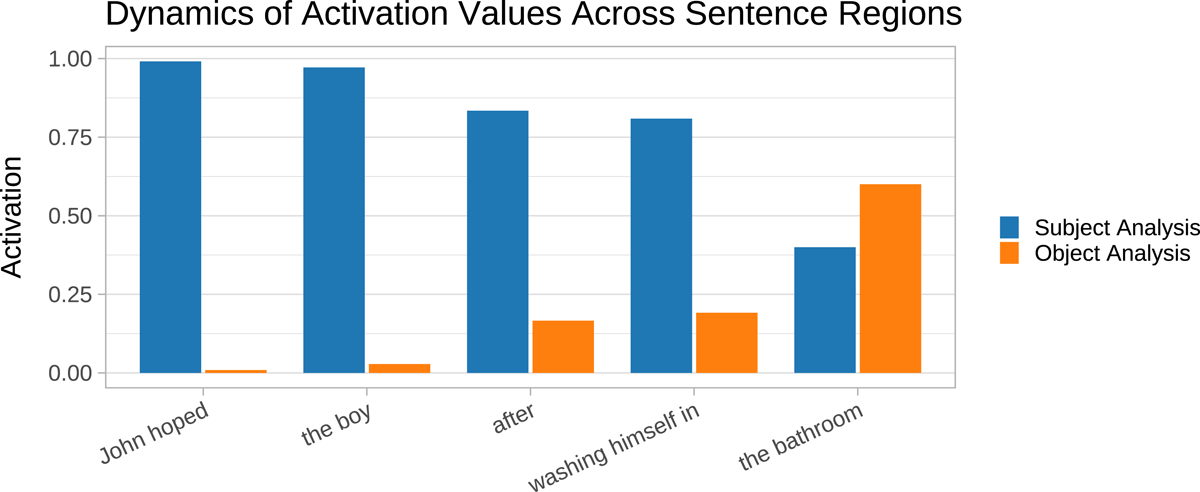
Figure 10
Constraint-based modelling result. Activation values shown are those that reach the thresholds.