
Table 1
The APDEF indicators.
| FOCUS AREA/IMPACT INDICATOR | INPUT INDICATORS | PROCESS INDICATORS | OUTPUT INDICATORS | OUTCOME INDICATORS |
|---|---|---|---|---|
| Teacher knowledge, skills, and practice | 1. TPD delivered by staff with appropriate qualifications and experience. 2. TPD is aligned with University guidelines on good teaching and staff needs. | 3. TPD provides a pedagogical framework for understanding teaching and learning in HE. 4. Delivery of TPD models teaching and learning strategies, resources and assessment practices which enhance the quality of teaching and learning. | 5. Number of staff who complete the TPD. | 6. TPD evaluations. 7. Teacher perceptions of changes in their approach to teaching and learning following completion of TPD. 8. Quality of teaching following completion of TPD. 9. Evidence of student focused approach in course or teaching materials. |
| Teacher reflective practice and scholarship of teaching | 10. TPD aligns with institutional commitment to self-reflective practice and research informed teaching practice. | 11. TPD encourages critical reflection of participants’ beliefs and practices regarding teaching, learning and assessment. 12. TPD incorporates research which informs teaching and learning in higher education. | 13. TPD participants report the use of student feedback when reviewing courses and teaching. | |
| Student engagement and enhancement of learning | 14. TPD aligns with espoused priorities related to student learning experiences and engagement. | 15. TPD draws on a framework of evidence-based teaching and learning practices. 16. Student perceptions of teaching are incorporated into TPD. | 17. Unit evaluations. | |
| Student approaches to learning | 18. TPD incorporates University graduate attributes. | 19. TPD highlights importance of relevant, authentic and inclusive assessment tasks. | 20. TPD participant perceptions of quality of student assessment tasks. |
Table 2
Sources of evidence used for the outcome indicators.
| EVIDENCE TYPE | NAME | NO. OF RESPONDENTS | WHEN | |
|---|---|---|---|---|
| A | Written survey Likert scale & free text | UKOU learning and teaching survey (immediate) | 18 | Sep 2018 |
| B | Online survey Likert scale & free text | UKOU LDCC workshop experience survey | 15 | Sep 2018 |
| C | 2 x face-to-face focus groups | BELL Project LDCC workshop focus groups | 18 | Sep 2018 |
| D | Records | Teaching awards and promotions | 32 | Oct 2020 |
| E | Online survey | BELL Project satisfaction survey | 18 | Jan 2020 |
| F | Online survey Likert & multiple choice | UKOU learning and teaching survey (reflective) | 19 | Mar 2020 |
| G | Online semi- structured interviews | UKOU learning and teaching interviews (reflective) | 9 | April 2020 |
| H | Face to face interviews | BELL Project learning and teaching interviews (reflective) | 18 | May 2020 |
| I | Evaluation report | ERASMUS+ evaluations of the courses | 5 courses | Oct 2020 |
| J | Evaluation report | HEI Management evaluations of the courses | 5 courses | Oct 2020 |
Table 3
Sources of evidence mapped to outcome indicators.
| FOCUS AREA | APDEF OUTCOME INDICATORS | EVIDENCE SOURCES |
|---|---|---|
| Teacher knowledge, skills and practice | 6. TPD evaluations. | B, C & E |
| 7. Teacher perceptions of changes in their approach to teaching and learning following completion of TPD. | A, B, F & G | |
| 8. Quality of teaching following completion of TPD. | D & H | |
| 9. Evidence of student focused approach in course or teaching materials. | F & G | |
| Teacher reflective practice and scholarship of teaching | 13. TPD participants report the use of student feedback when reviewing courses and teaching. | G & I |
| Student engagement and enhancement of learning | 17. Unit evaluations. | I & J |
| Student approaches to learning | 20. TPD participant perceptions of quality of student assessment tasks. | G, H & I |
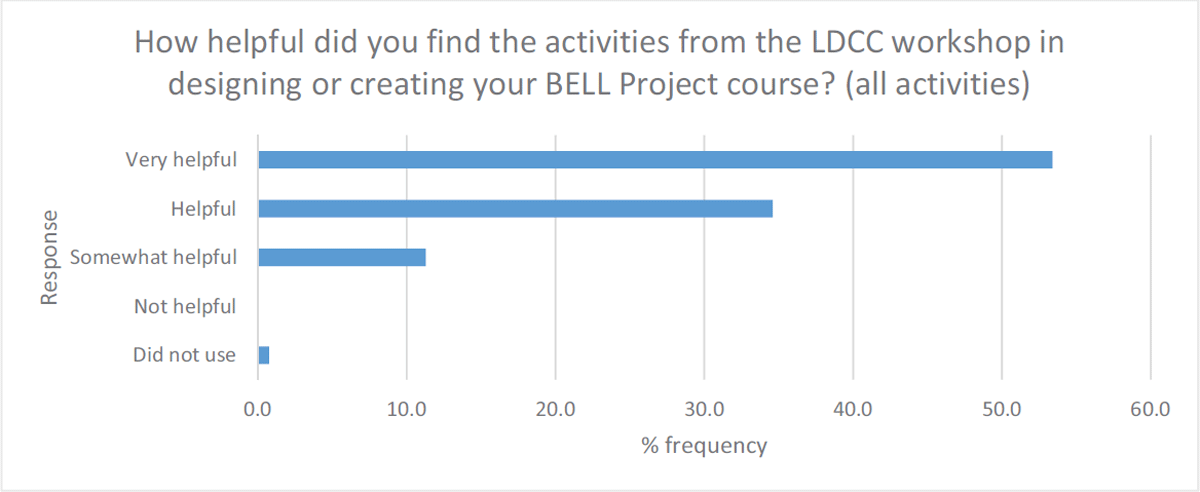
Figure 1
Helpfulness of LDCC activities (evidence source F).
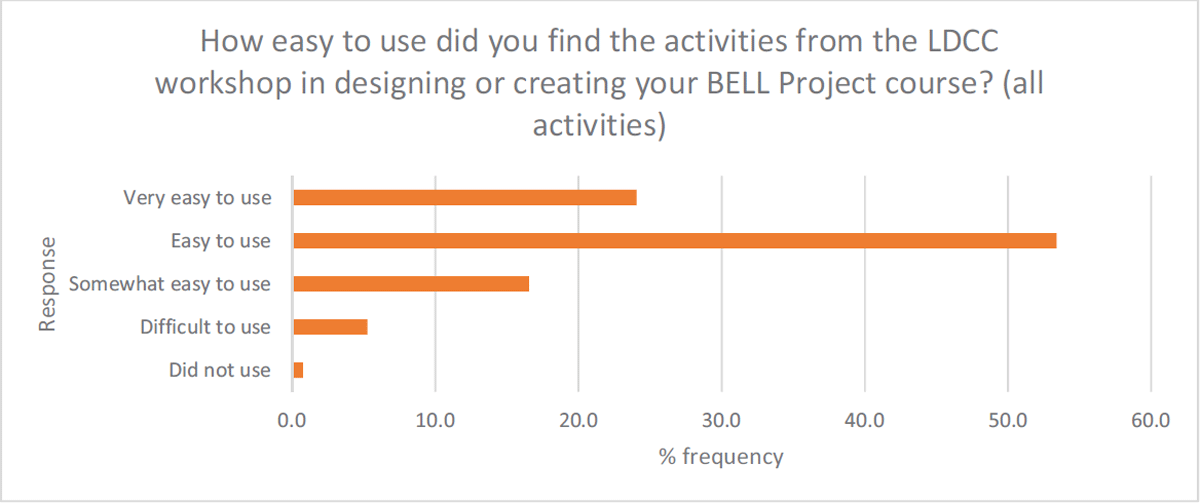
Figure 2
Ease of use of LDCC approaches (evidence source F).
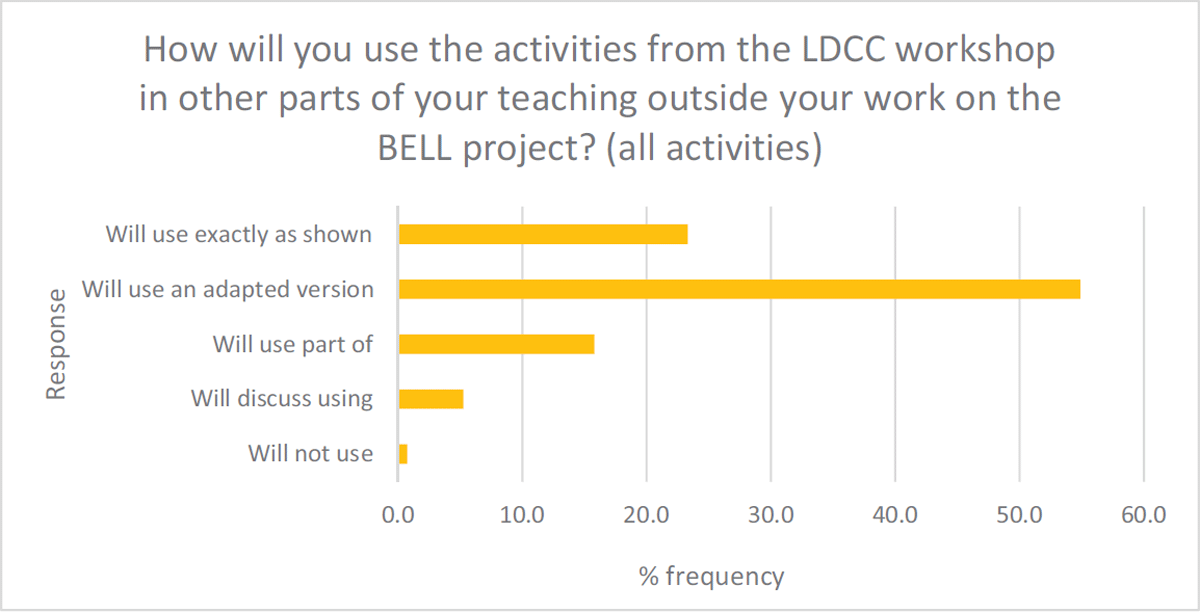
Figure 3
Intention to use LDCC approaches in future (evidence source F).
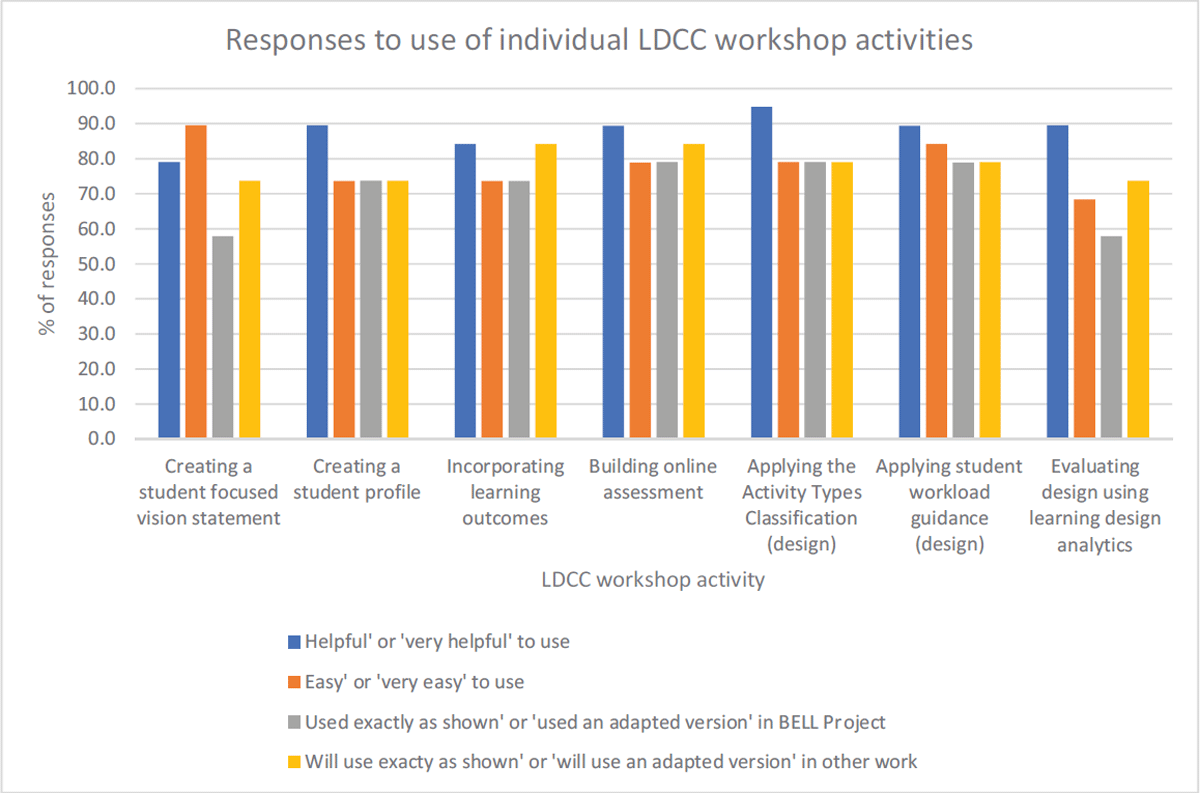
Figure 4
Comparison of the use of the student focused approaches from the LDCC Workshop (evidence source F).