
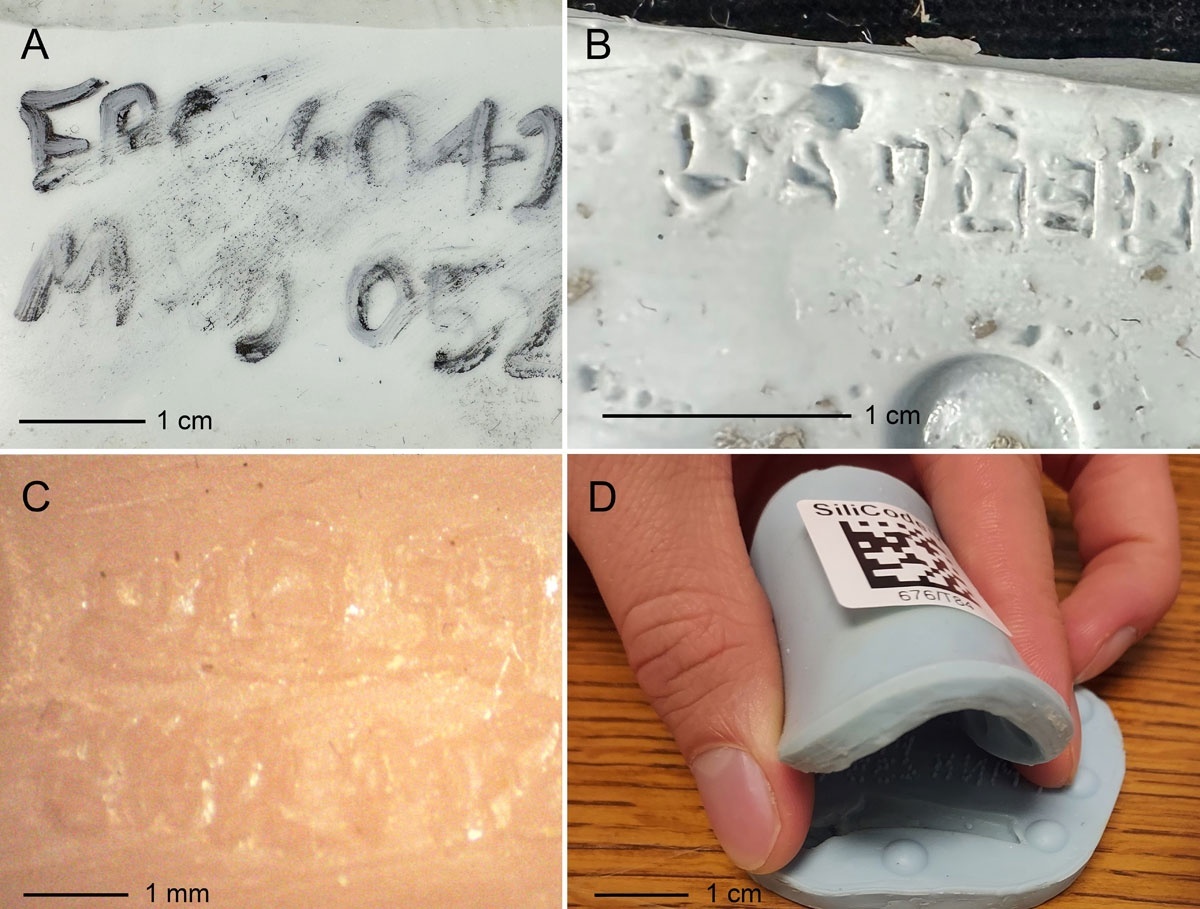
Figure 1
Issues with previous methods for labeling RTV silicone molds. (A) Marker label smeared illegibly. (B) Stamped label, which is legible but difficult to read. (C) Illegible stamped label. (D) SiliCode sticker separating from silicone during flexion of mold.
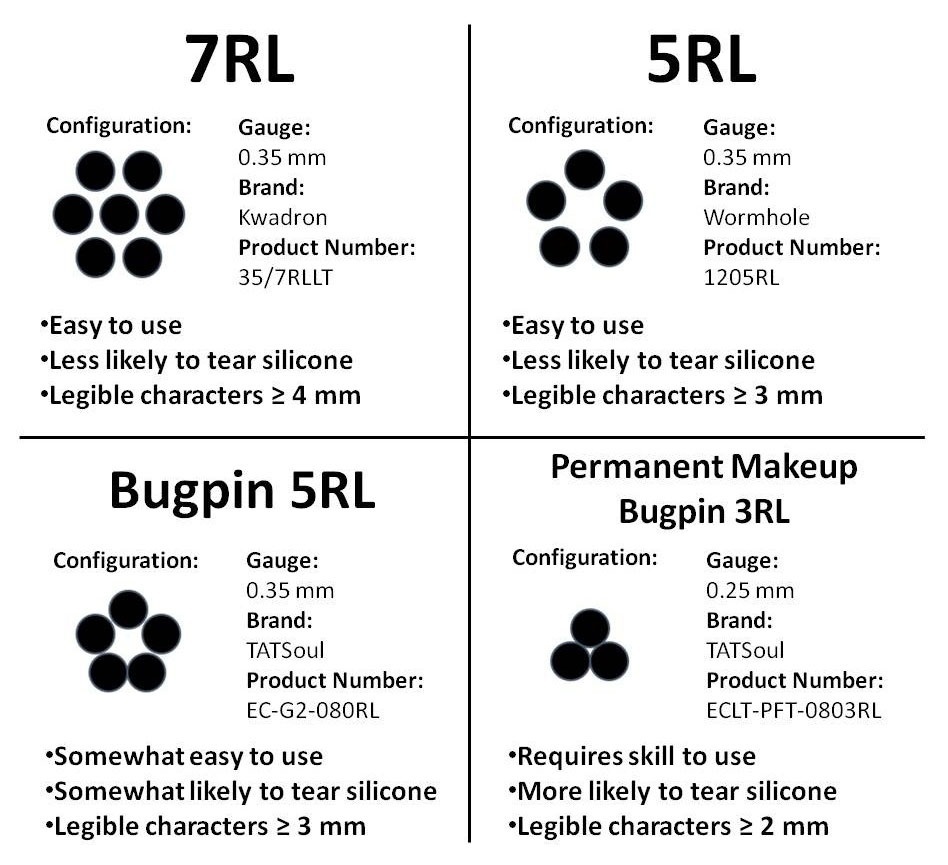
Figure 2
Needle cartridge configurations, product information, and results.
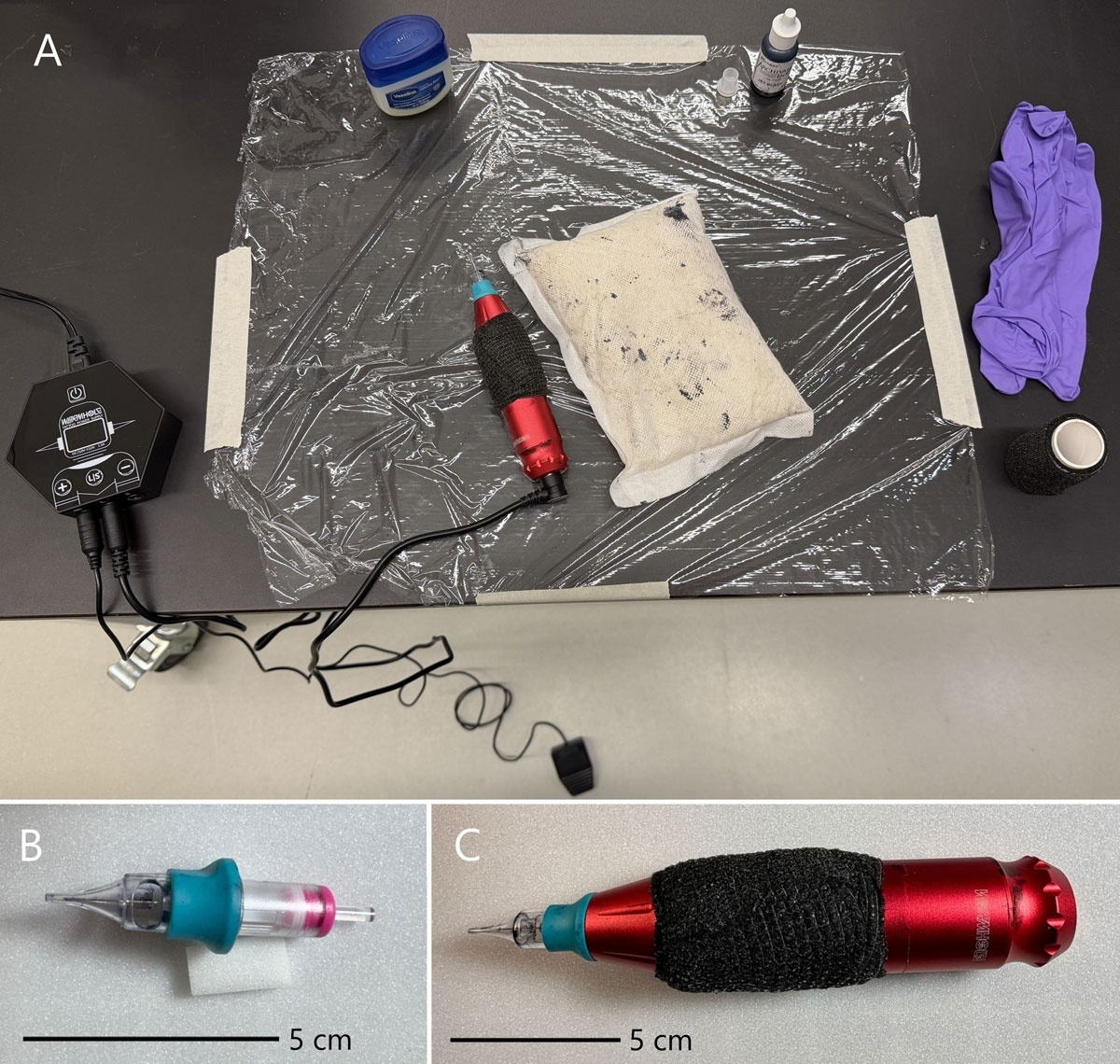
Figure 3
Setup and equipment for tattoo labeling RTV silicone molds. (A) setup includes plastic wrap to prevent ink staining, easily accessible paper towel, archival ink, and petroleum jelly, an ink cap filled three quarters with ink, a sandbag or similar object for wrist support during labeling, nitrile gloves, and a pen-style tattoo machine with a round liner (RL) cartridge. Tattoo machines vary; the one pictured is operated by a foot pedal on the floor. Voltage and other adjustments are made with buttons on the small hexagonal piece set to the left of the main work station. (B) close-up of round liner needle cartridge. The left end is inserted into the tattoo pen and twisted until locked in place. See Figure 2 for more detail on types of RL cartridges. (C) Wormhole C3-C pen machine with round liner needle cartridge inserted. Machine is wrapped with elastic bandage to reduce vibration and increase comfort and grip for the user.
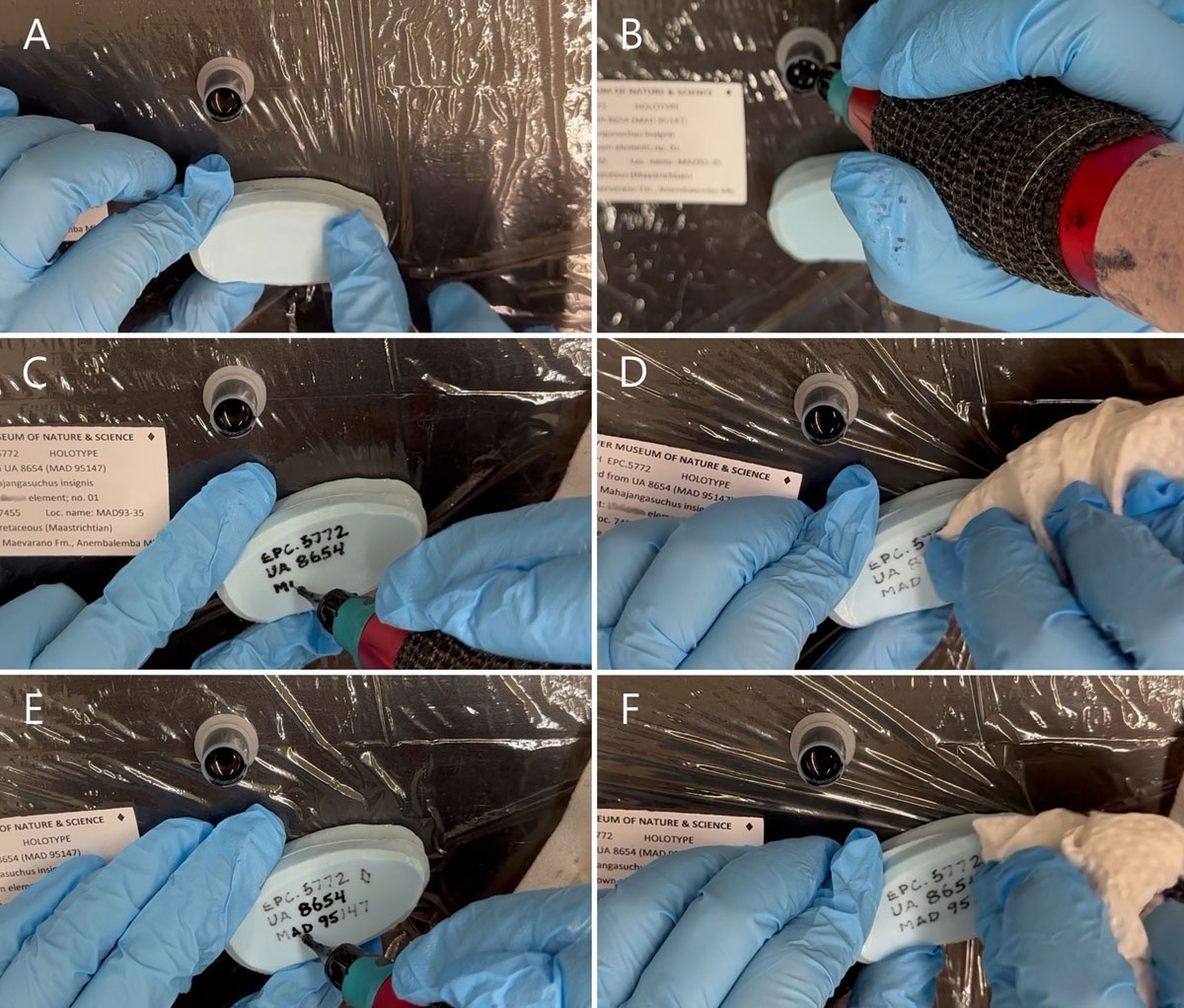
Figure 4
Process of applying tattoo label to RTV silicone mold. (A) If dirty, silicone surface is cleaned with a paper towel and alcohol. A thin layer of petroleum jelly is applied across the label surface with a finger to guide the ink into the surface and reduce splatter. (B) The machine is started at 5–6 volts (some machines are operated by foot pedal, others by button). The needle tip is dipped into the ink cap while running. It is best not to strike the bottom of the ink cap, as this can lead to a dulled, barbed, or separated needle grouping, which produces frayed or unstable lines. (C) Characters are written by pulling the machine as one would pull a pencil, but held more vertically than a pencil. Movement speed should be slow enough to form a solid line, but not so slow as to shred the silicone. The needle tip should penetrate 1.5 to 2 mm into the silicone. The needle is redipped in the ink cap every few characters to ensure sufficient ink coverage. (D) Petroleum jelly and excess ink are removed with a firm but gentle wipe with a paper towel. The label is assessed for quality. (E) If any lines are deemed too light, additional petroleum jelly is applied and the characters are written over a second time. (F) A final paper towel wipe is used to clean the surface of the silicone.
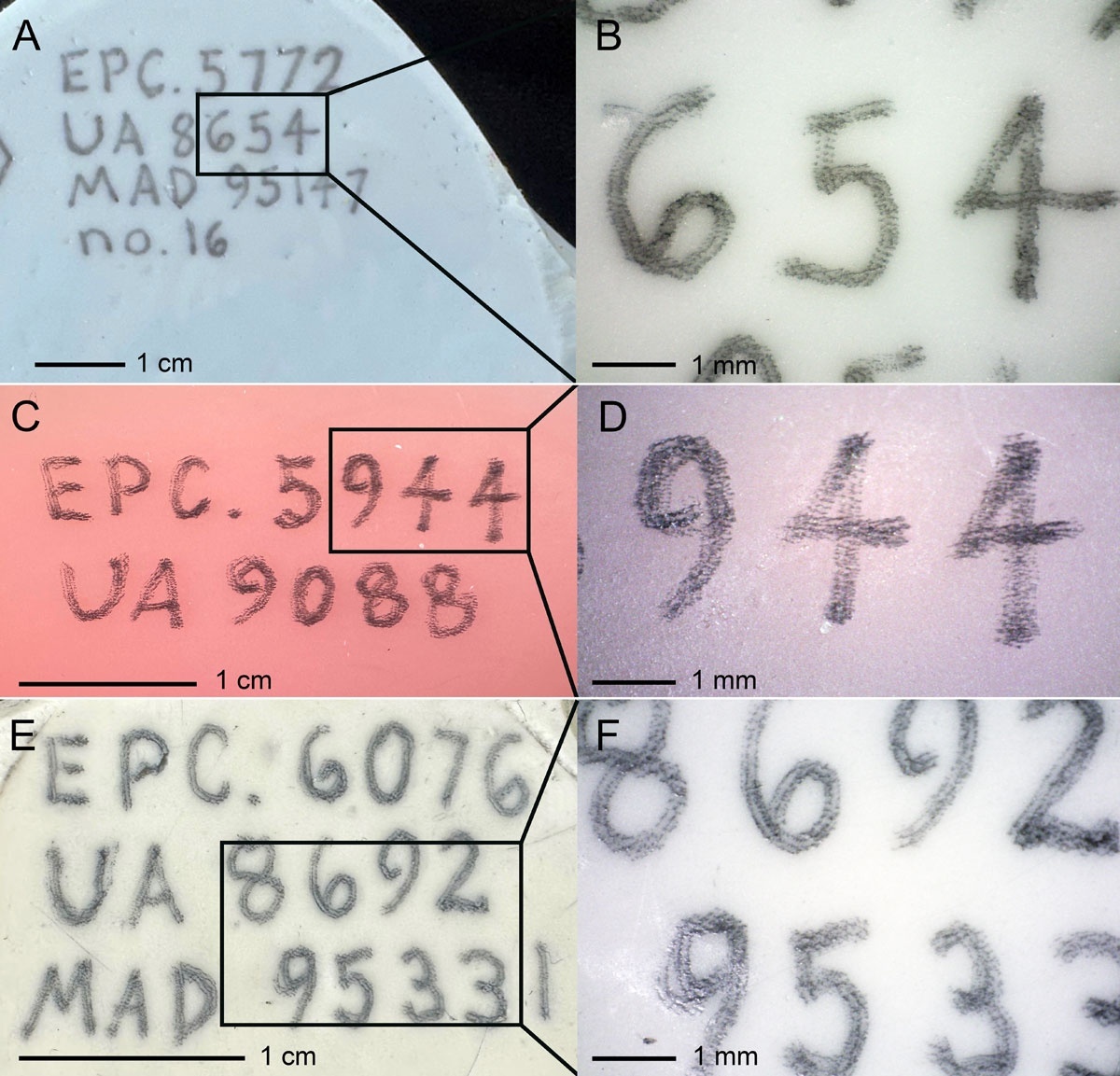
Figure 5
Tattoo labels on three types of RTV silicone. (A, B) Silicones Inc. GI-1000. (C, D) Silicones Inc. GI-1100 with GI-2020A catalyst. (E, F) Dow HS III. Labels were written with a 5RL needle cartridge at 5.5 volts with the Wormhole tattoo pen.
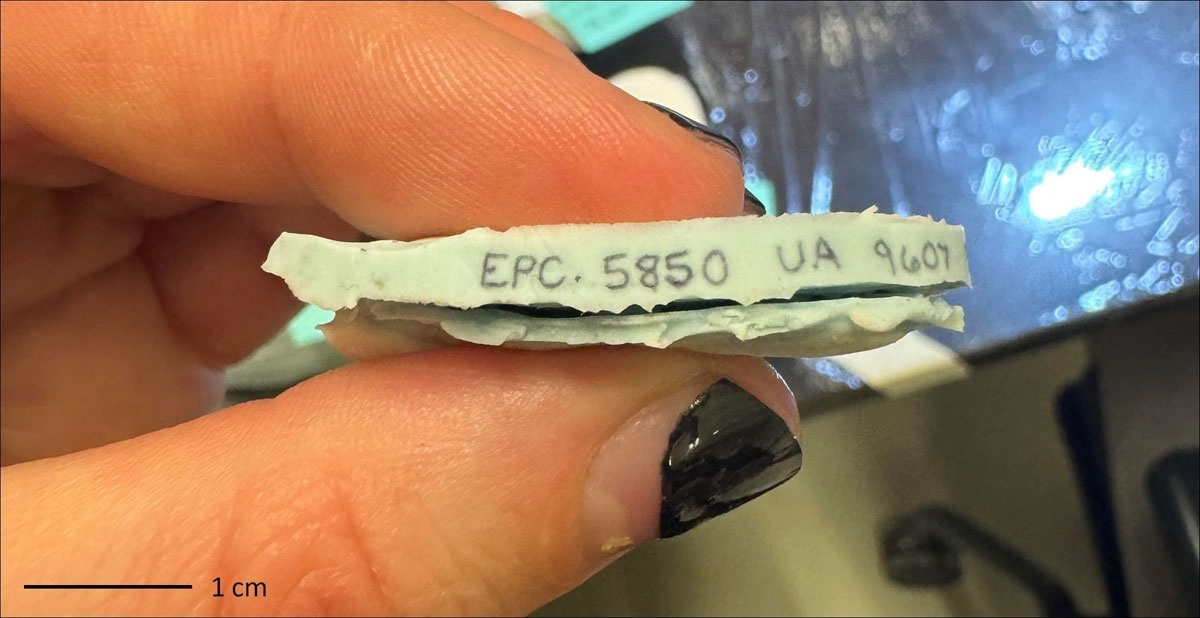
Figure 6
Labels written by professional tattoo artists with the permanent makeup bugpin 3RL cartridge and FK Irons Spektra Flux 2 tattoo pen were incredibly small and precise.
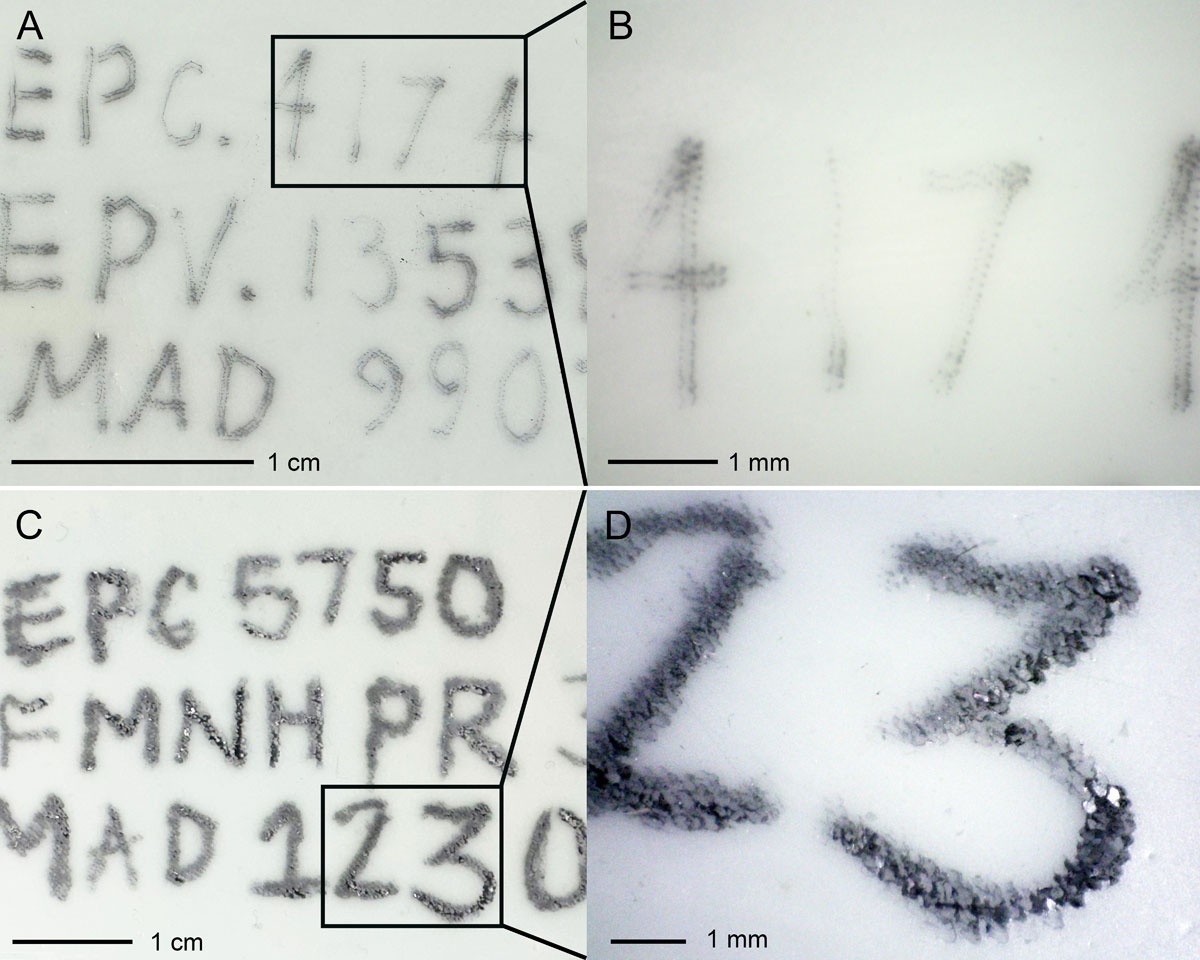
Figure 7
Problems with tattoo labels on RTV silicone. (A, B) Lettering can appear faded and difficult to read when too little depth, voltage, or ink is used. (C, D) Silicone can split, tear, or shred when too much depth or voltage is used. Labels were written with a 5RL needle cartridge with the Wormhole tattoo pen on Silicones Inc. GI-1000 at varying voltages.
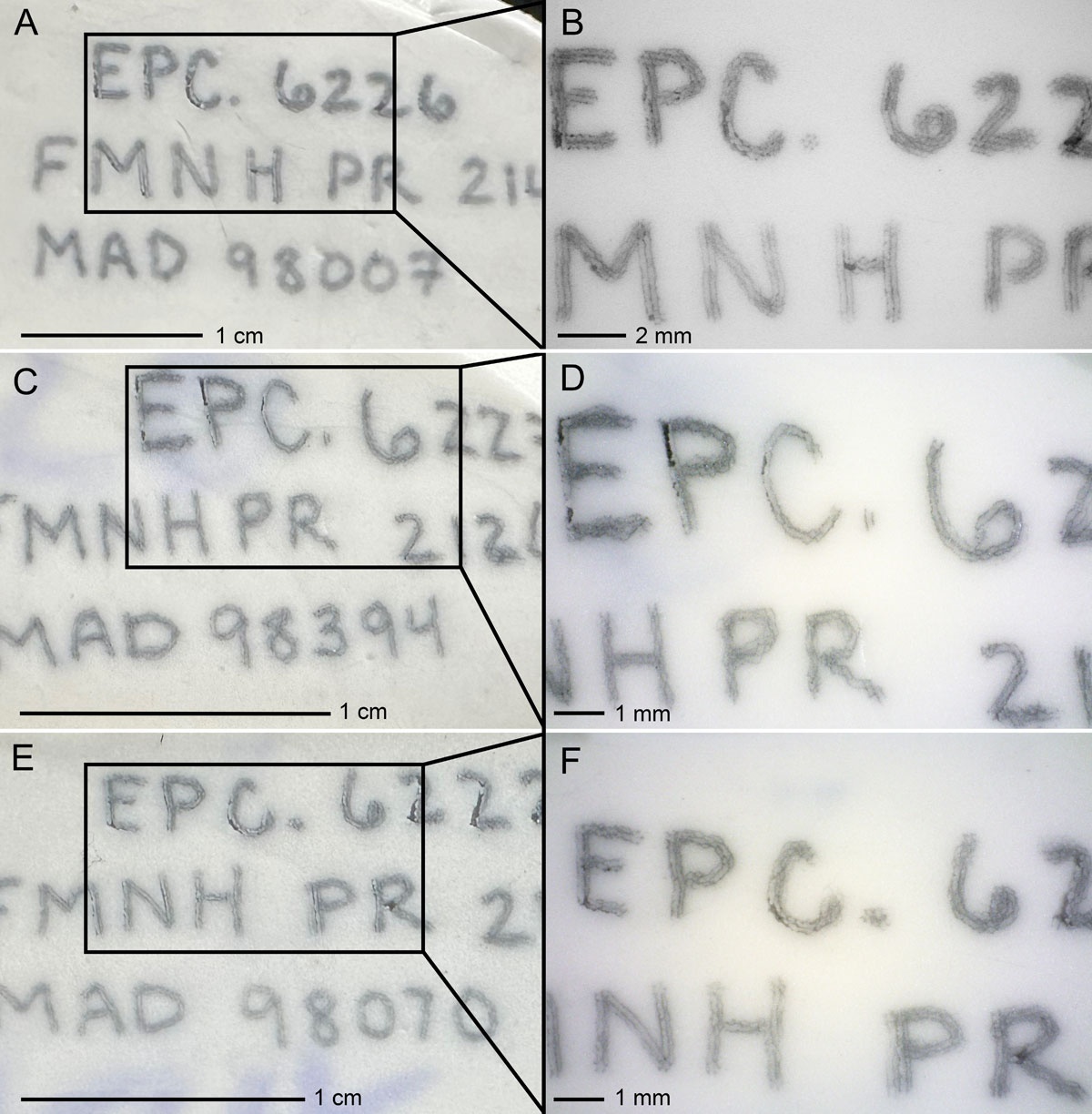
Figure 8
Tattoo labels made with three different needle cartridges on Dow Silicone HS III. (A, B) 7RL cartridge. (C, D) Bugpin 5RL cartridge (E, F) Permanent Makeup Bugpin 3RL cartridge. Labels were written at 5.5 volts with the FK Irons Spektra Flux 2 tattoo pen. Note that Dow Silicone HS III is less resistant to tearing than Silicones Inc. GI-1000 (shown in Figure 9).
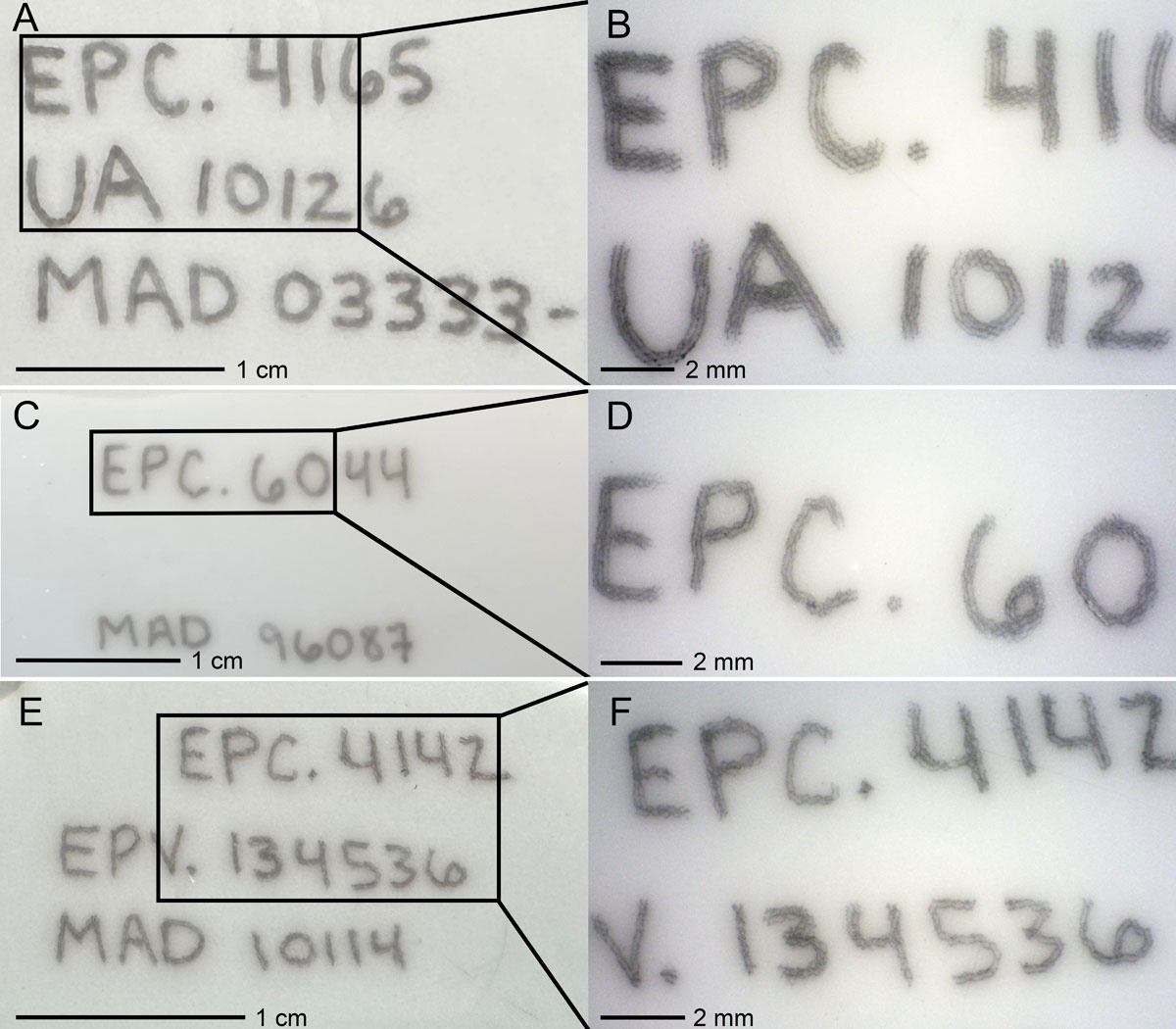
Figure 9
Tattoo labels made with three different needle cartridges on Silicones Inc. GI-1000. (A, B) 7RL cartridge. (C, D) Bugpin 5RL cartridge. (E, F) Permanent Makeup Bugpin 3RL cartridge. Labels were written at 5.5 volts with the FK Irons Spektra Flux 2 tattoo pen. Note that Silicones Inc. GI-1000 is more resistant to tearing than Dow Silicone HS III (shown in Figure 8).