
Table 1
The three main conceptual entities on which the logical structure of NAUTICC is based.
| ENTITY | TABLE | CONTENTS |
|---|---|---|
| Archaeological sites. Areas with the presence of artefacts and features suggesting the presence of techniques and tasks | Sites | Geographical and chronological indications, site typology and general notes |
| Different types of archaeological artefacts, eco-facts and structures involved in different taskscapes | Finds | General observations on the characteristics of the finds, context of discovery and brief descriptions |
| Any array of related activities carried out by skilled agents | Taskscapes | Interpretations of techniques and tasks based on the discovered finds in the archaeological sites |
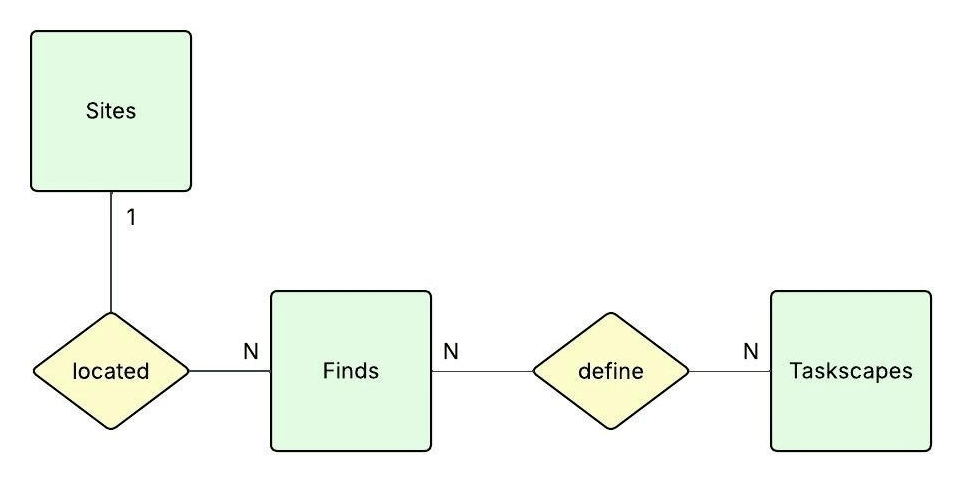
Figure 1
Simplified Entity-Relationship Diagram (ERD). The diagram shows the main entity types and their relationships (generated with Lucidchart; Lucid Software, 2025).
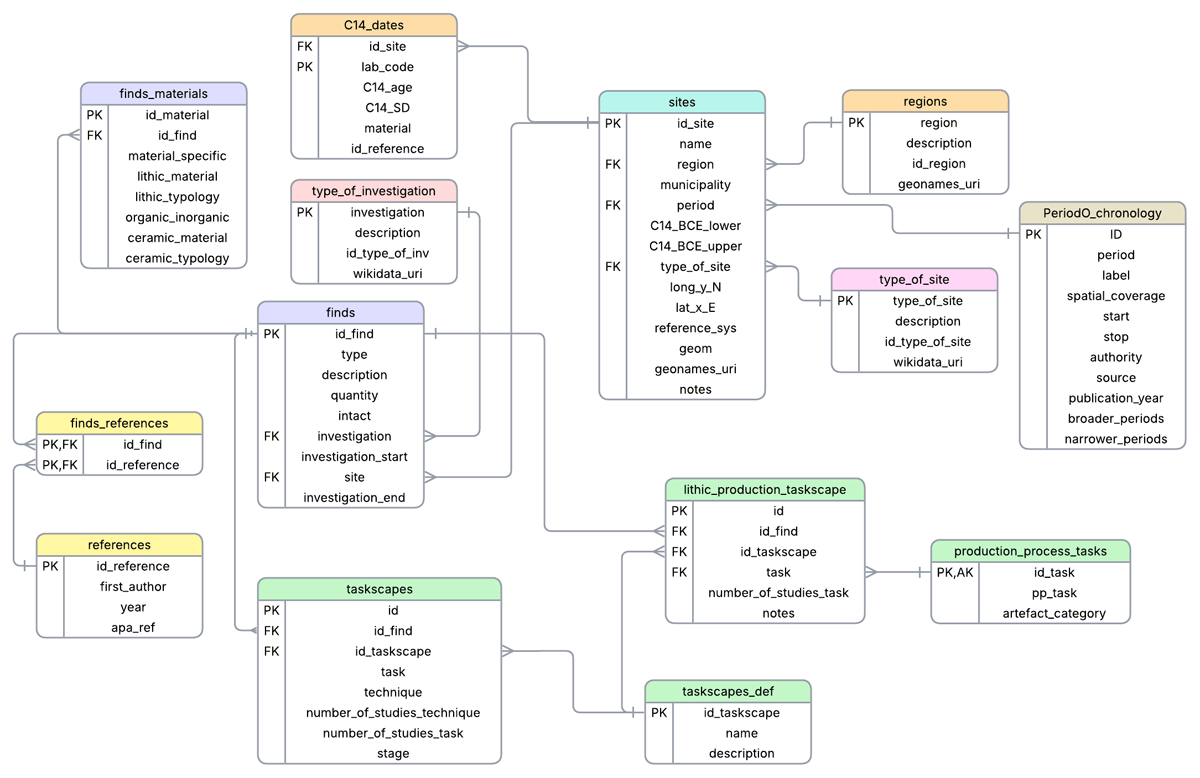
Figure 2
Relational schema model of the NAUTICC database. All attributes are listed for each table, with Primary Keys (PK) and Foreign Keys (FK) clearly identified. The connecting lines indicate relationships between tables, including one-to-many and many-to-many associations (generated with Lucidchart; Lucid Software, 2025).
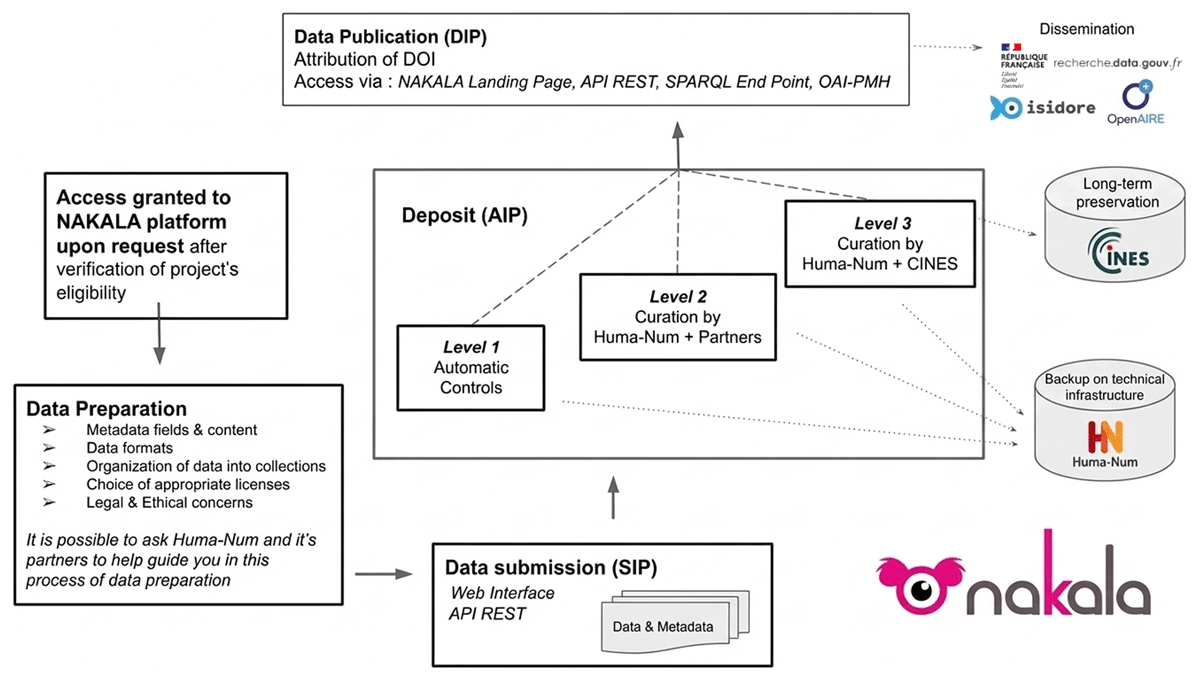
Figure 3
Nakala deposit and curation workflow: step-by-step process of how to submit research data (Huma-Num, Nakala documentation. https://documentation.huma-num.fr/en/nakala-workflow-en/).
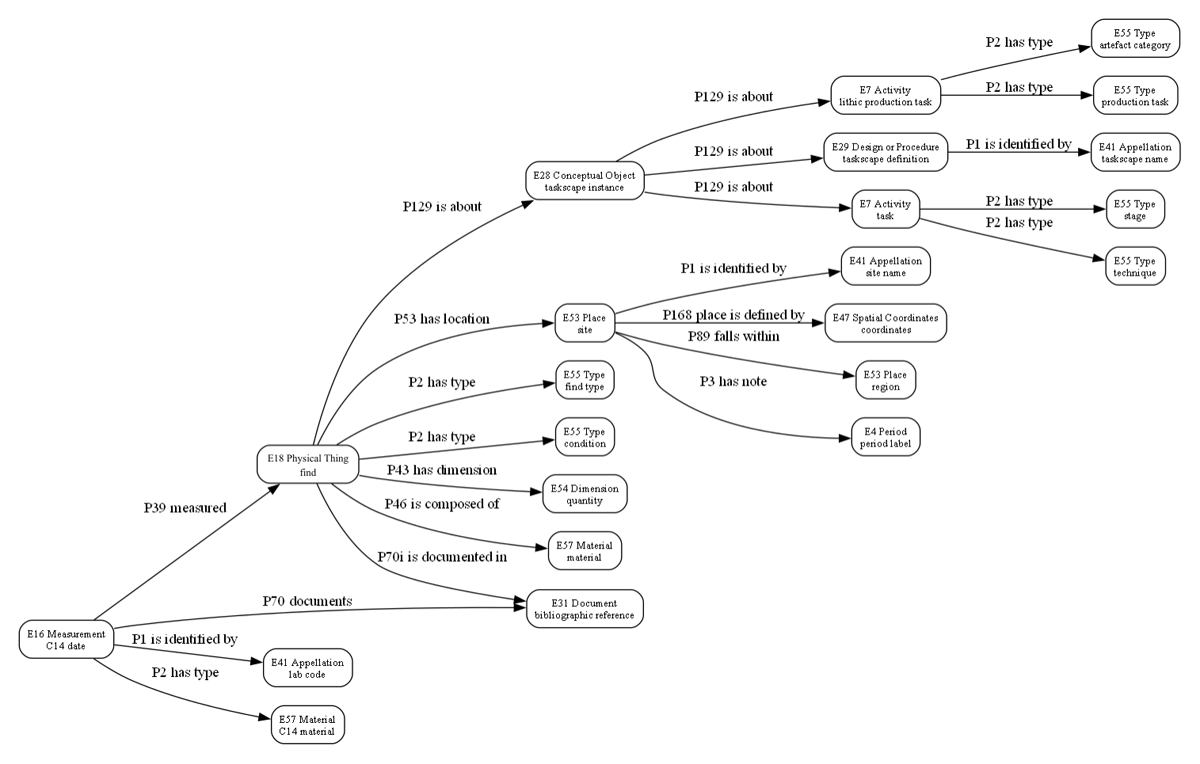
Figure 4
Simplified mapping of the NAUTICC database to the CIDOC CRM ontology, showing the main classes and properties (generated with Graphviz, March 2026).
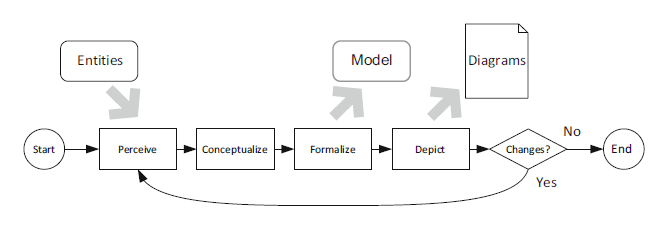
Figure 5
Iterative and incremental modelling process (Gonzalez-Perez, 2018, Fig. 32.2, © Springer, license CC BY-NC-ND 4.0).
Table 2
Operational sequence for the production of lithic flake tools. Adapted from Eriksen (2000), as cited in Berg-Hansen (2017).
| STEP | ACTIVITY | DESCRIPTION |
|---|---|---|
| 1 | Procurement (of raw materials) | Localisation/source, testing, selection and transport. |
| 2 | Preparation | Primary preparation: initial shaping of raw materials as preparation for the blank production. Secondary preparation: maintenance, correction and reworking of cores. |
| 3 | Blank production | Production of blanks for further modification into tools. |
| 4 | Production of tools | Selection of blanks, shaping of tools. |
| 5 | Use | Use of tools including resharpening and reworking. |
| 6 | Discard | Damage, wear, loss, deposition. |

Figure 6
The NAUTICC production_process_tasks table. A lookup table storing artefact categories and their associated tasks, defining six stages of the knapping chaîne opératoire, based on Schild (1980) and Berg-Hansen, Damlien, and Zagorska (2019).