
1. Introduction
1.1. Underuse problems
“The Tragedy of the Commons” authored by Hardin (Hardin 1968) is known as one of the most influential scholarly papers regarding natural resource management (NRM). Hardin has explained the depletion of natural resources using common pasture as an example, where excessive use of pasture by each herdsman for livestock grazing amounts to ruining of the pasture.
Aside from criticism for his negative conclusion regarding the sustainable management of common pool resources (CPRs) and subsequent development of the commons theory,1 in this paper, I would like to emphasize that this tragedy was triggered by the overuse of natural resources. A sequence of the commons theory originating from Hardin’s paper assumes that in overuse situations, resources retain their economic values and that a deluge of demands for use depletes CPRs, e.g., common pasture.
In contrast, underuse problems caused by the abandonment of resource use arise in advanced industrial countries (Schlueter 2008; Short 2008; Hayashi and Kanazawa 2014). A well-known theory about underuse problem is “The Tragedy of the Anticommons” authored by Heller (Heller 1998), which suggests that when many owners of a scarce resource hold rights to ban others from using it, it disturbs effective resource use and causes underuse problems. Although this theory is regarding underuse problems, it takes up situations whereby people are still interested in resource use. In other words, similar to commons studies which deal with overuse problems, the discussion of the anticommons is underlaid by scarcity and competitivity for resources that retain utility value.
However, the anticommons theory cannot clarify the entire structure of underuse problems. In some cases, a loss of demand for CPRs results in underuse situations. One of the most typical cases is “Satoyama,” which developed in Japanese rural areas. This traditional landscape comprises various ecosystems, such as farmlands, secondary forests, and grasslands, and has sustained the livelihoods of local residents. People perform farming using organic fertilizers from grasslands and produce firewood and charcoal in the neighboring forests. In addition, mosaic landscapes, maintained by moderating human disturbance, have sustained several kinds of life within different habitats and have played significant roles in creating biodiversity hotspots. However, since 1960s, modern lifestyles have resulted in rural residents to abandon resource use and management, resulting in Satoyama to gradually decrease (Takeuchi 2010; Morimoto 2011).
Several studies on semi-natural grasslands2 have shown a developing process of underuse problems in Satoyama (Shimada 2015; Miyanaga and Shimada 2018). Semi-natural grasslands have attracted the attention of researchers probably because such grasslands provide several ecosystem services3 (Egoh et al. 2016) and are under high risk of disappearance in the temperate humid climate of Japan.4 These studies treat the underuse of semi-natural grasslands as a problem because it declines ecosystem services.
Shimada (2015) conducted a case study in Soni Village, Nara Prefecture, Japan, to describe a process by which the management system of semi-natural grasslands changed following a loss of the former utility value. This case was characterized by the following two points: (1) a community-based volunteer association took over grassland management from a traditional community organization and continued a process of burning5 and cutting. Thus, grassland management was converted from “manage for use” to “manage for management” (Shimada 2014); (2) the Nara prefectural and Soni Village offices subsidize this association in exchange for hard labor. Shimada recounts that a shift in the ecosystem services that people expect of grassland has management continued with financial support from local governments. Although local people once expected only provisioning services (e.g., roofing materials, forage, and green manure) from grasslands, currently, those who live in much wider areas expect cultural and regulating services (e.g., beautiful landscapes and fixing carbon). Thus, the necessity for a multi-level management system is argued to achieve a wider range of benefits of NRM for the expanded range of stakeholders.
Miyanaga and Shimada (2018) have shown that underuse problems are caused not only by institutional drivers, such as the anticommons theory, but also by demographic and socio-economic drivers. They explained that the roots of underuse are that populations move from rural to urban areas in search for higher income, which results in an underutilization or abandonment of rural farms owing to relatively low economic returns of the primary industry sectors, along with greater dependence on non-renewable resources or imported renewable resources to save costs. A fundamental perspective of this model is “human-environment interaction” (Miyanaga and Shimada 2018, 345), in which a decrease in the interaction is considered the root of the problem.
These studies provided major contributions to our understanding of the structure of underuse problems and raised the need for new governance. “Governance” refers to “the totality of interactions, in which public as well as private actors participate, aimed at solving societal problems or creating societal opportunities; attending to the institutions as contexts for these governing interactions; and establishing a normative foundation for all those activities” (Kooiman 2003, 4). When concerns in relation to underuse problems are due to “human–environment interactions” (Miyanaga and Shimada 2018, 345), a management system based on several actors’ participation is inevitably important for the regeneration of natural resources. However, in previous studies, little attention has been provided for a concrete state of governance for the regeneration. As long as indifference to underused resources continues, this problem will keep getting worse. To prevent the progression of underuse problems, it is important that new governance that reflects the present value of natural resources is discussed as a matter of urgency.
1.2. Objects and Methods
This paper addresses underuse problems on semi-natural grassland and discusses features of new governance for resolving these problems. This paper uses a case study approach and generalizes its results, as it is considered more practical than theoretical approach based on simplified models in addressing underuse problems with complicated contexts.
The subject of this case study was the regeneration of traditional landscape of grassland dominated by Miscanthus sinensis, in Fujiwara District located in a Japanese mountain village. This paper focused on grasslands because previous studies have sufficiently explained the process of underuse in contrast with other resources (Shimada 2015; Miyanaga and Shimada 2018); therefore, underlaying them possesses the potential to lead problems to solutions. In Japan, the loss of semi-natural grasslands is prominent, and statistics show that there is a 90% reduction in the area covered by grasslands in the early 21st century compared with the 5 Mha present in the early 20th century (Ogura 2012). In such situation, Fujiwara District is a unique example where underused grasslands have been regenerated. Illustration on shifts of NRM in Fujiwara District should benefit other areas that face underuse problems.
Analysis has been conducted to former governance as well in the time when the primary worth of resources was not lost yet. This apparent new underuse problem reflects the ineffectiveness of the previous governance; thus, an understanding of the factors resulting in this ineffectiveness is required to address the underuse problems.
Data were obtained from 25 semistructured interviews (cumulative total number) (Table 1), nine participant observations from April 2015 to April 2017 and documents concerning this case, such as internal materials of organizations participating in governance and land registers. Interviewees were representative of each group and provided informed consent.
Table 1
Summary of the group, gender, age, and profile of all individuals interviewed for this study.
| Group | Person | Gender | Age | Profile |
|---|---|---|---|---|
| Urban residents | Interviewee 1a | Male | 70s | Ex-Representative of Forest College Seisui |
| Interviewee 2 | Male | 60s | Representative of Forest College Seisui | |
| Interviewee 3 | Male | 50s | Organizer of Forest College Seisui | |
| Interviewee 4 | Male | 60s | Organizer of Forest College Seisui | |
| Interviewee 5 | Male | 50s | Organizer of Forest College Seisui | |
| Interviewee 6 | Female | 50s | Member of Forest College Seisui | |
| Interviewee 7 | Male | 30s | Member of Forest College Seisui | |
| Interviewee 8 | Female | 40s | Member of Forest College Seisui | |
| Settlers from urban areas to Fujiwara District | Interviewee 9 | Male | 40s | Member of Water Resources Network of Okutone |
| Interviewee 10 | Male | 30s | Member of Water Resources Network of Okutone | |
| Interviewee 11 | Male | 30s | Member of Water Resources Network of Okutone | |
| Interviewee 12 | Male | 50s | Member of Water Resources Network of Okutone | |
| Local residents in Fujiwara District | Interviewee 13 | Male | 30s | Representative of Water Resources Network of Okutone |
| Interviewee 14 | Male | 30s | Member of Water Resources Network of Okutone | |
| Interviewee 15b | Male | 80s | Representative of Native Guides Club of Fujiwara | |
| Interviewee 16b | Male | 60s | Member of Native Guides Club of Fujiwara | |
| Interviewee 17b | Male | 80s | Member of Native Guides Club of Fujiwara | |
| Interviewee 18b | Male | 80s | Member of Native Guides Club of Fujiwara | |
| Interviewee 19b | Male | 70s | Member of Native Guides Club of Fujiwara | |
| Interviewee 20b | Female | 70s | Inn landlady in Fujiwara District | |
| Interviewee 21b | Female | 80s | Inn landlady in Fujiwara District | |
| Administrators | Interviewee 22 | Male | 50s | Administrator of Minakami Town Office |
| Interviewee 23 | Male | 50s | Administrator of Minakami Town Office |
[i] a The survey for interviewee 1 was conducted three times.
b They used CPRs before grassland management was abandoned.
2. Location and Outline of the Case Study Area
Fujiwara District is located in Minakami Town, Gunma Prefecture, Kanto Region, Japan (Figure 1). The Tone River originates in Minakami Town, meanders through the plains of Kanto, and supplies water to the Tokyo metropolitan area. Minakami Town is rich in nature, has hot springs, and has been added to UNESCO’s Biosphere Reserves list in 2017.
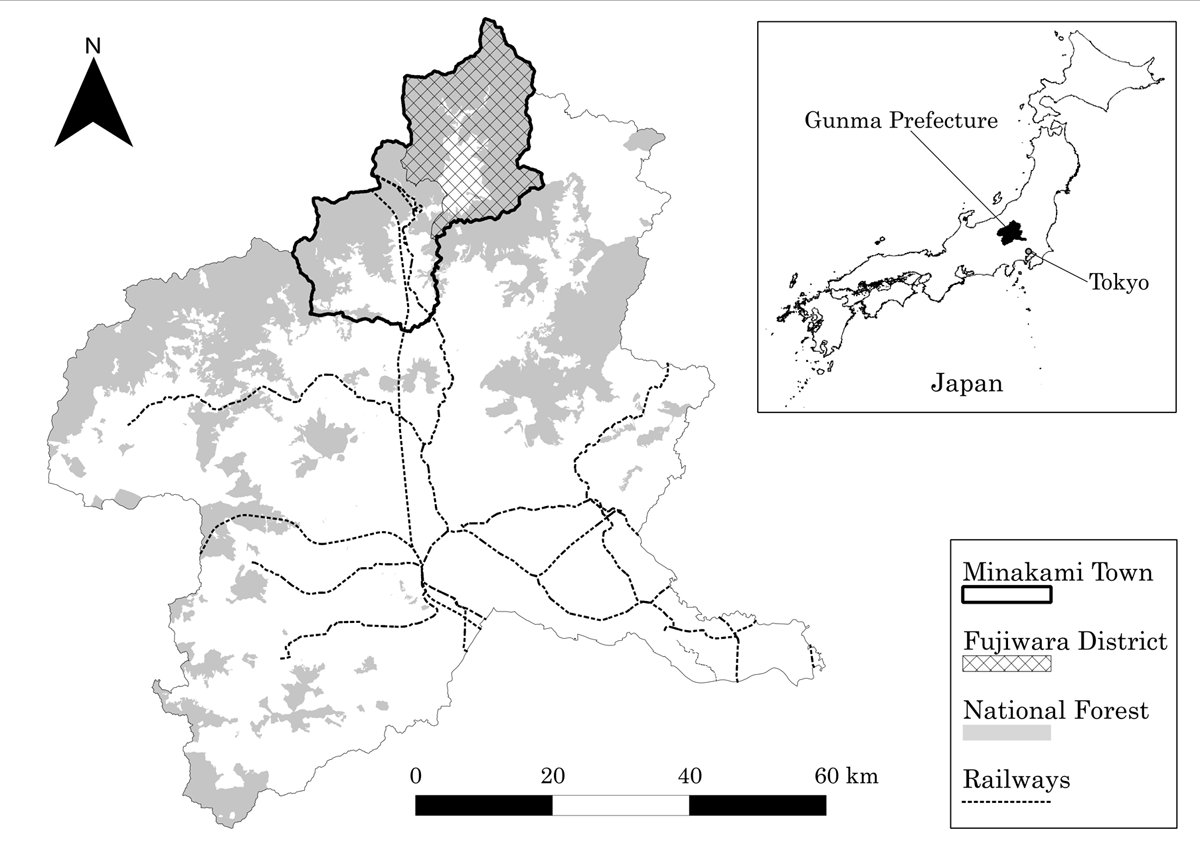
Figure 1
Map showing Fujiwara District in Minakami Town, Gunma Prefecture, Kanto Region, Japan.
Minakami Town is located at a distance of approximately 130 km from Tokyo. The travel time from Tokyo station to Minakami Town is not more than 1 h by bullet train. Fujiwara District is situated in a mountainous area of Minakami Town. The travel time from Jyoumou-Kougen station to Fujiwara District is 1 h by car. Fujiwara District receives heavy snowfall (≥3 m), and a large proportion of its area is covered by national forest.6
The Minakami Town Office has divided Fujiwara District into Fujiwara-Kami-Ku (FKK; high-altitude area of Fujiwara), Fujiwara-Naka-Ku (FNK; medium-altitude area of Fujiwara), and Fujiwara-Shimo-Ku (FSK; low-altitude area of Fujiwara), which comprise six, 11, and one hamlet, respectively. In the whole district, 429 people reside in a total of 238 households (as of October 2015).
This study focused on a 9.7 ha grassland area at an altitude of 1,050–1,220 m. The members of NPO7 explained in the following section, which are the main players in the new governance of NRM, refer to this grassland and the surrounding 11.8 ha forest dominated by Quercus crispula as “Uenohara” (total 21.5 ha). Uenohara (Picture 1) adjoins resort facilities, including a hotel, skiing ground, and golf course, which have been built by a major resort developer. Once upon a time, hundreds of hectares, including the current location of these facilities, were grasslands, which were common to the inhabitants of FKK and FNK.
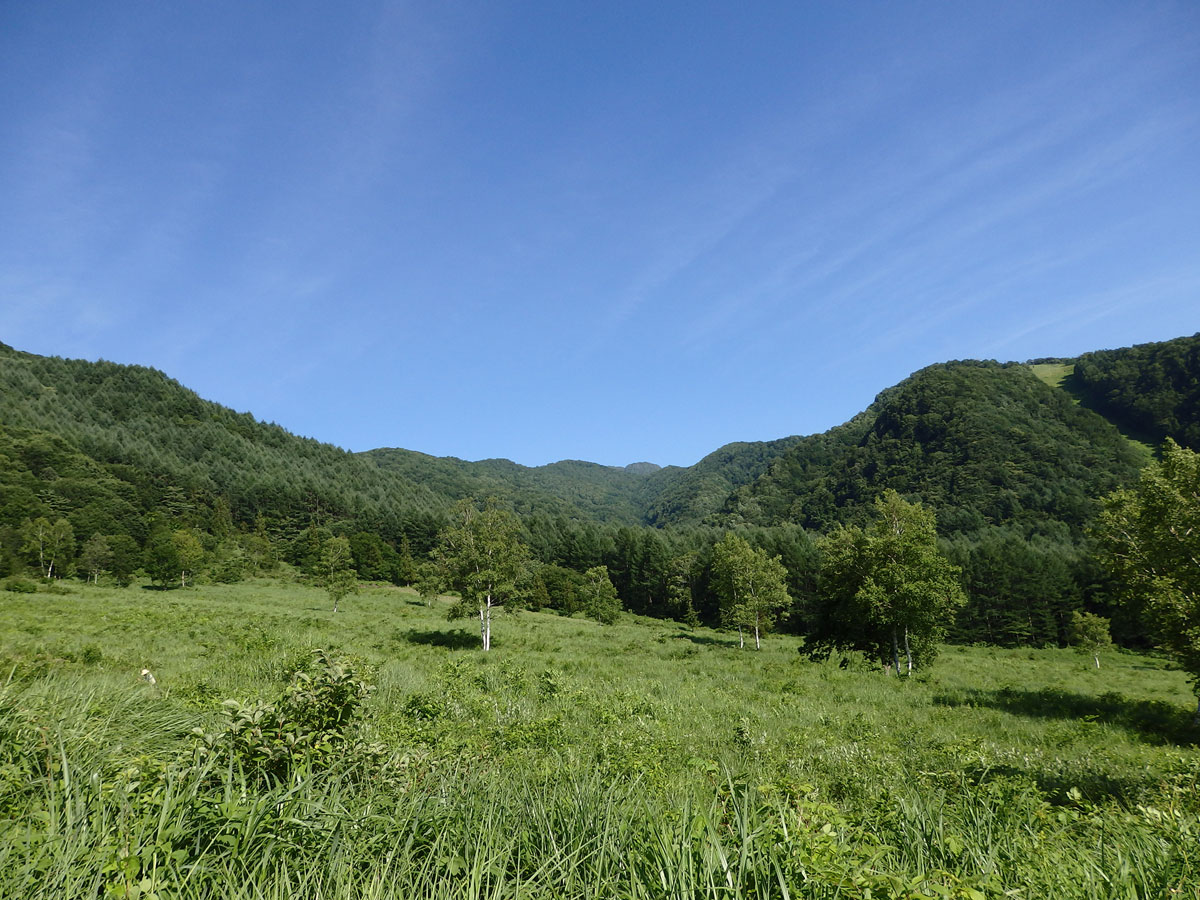
Picture 1
The present state of Uenohara. Photo by the author, July 11, 2015.
3. Former Governance of NRM
3.1. Traditional Use of Uenohara
The land tax reform was implemented in 1873 in Japan, which established the right of private land ownership. Although Uenohara was previously used by the local community, most of it was designated as national land by the land tax reform. For instance, out of 330 ha that could be traced from the present area of Uenohara, 320 ha was owned by the state and 10 ha by others. However, the state-owned land was regarded as unsuitable for national forests, which maintain a steady supply of quality timber. As a result, 220 of 320 ha were transferred to Minakami Village (the forerunner of Minakami Town) in 1921, and the remaining land was sold to an individual in 1928.
Although the ownership of Uenohara changed from the late 19th century to the middle of the 20th century, local residents continued using Uenohara for local commons (this institution is referred to as “Iriai” in Japanese). The most important and primitive use of Uenohara was the cultivation of “Kaya,” which is used to build the roofs of traditional buildings (Picture 2). The word “Kaya” generally refers to any grass that can be used as material for building thatched roofs, but specifically refers to Miscanthus sinensis. Thatched roofs provide both heat insulation and airflow and were used for houses and shrines throughout Japan until the middle of the 20th century (Andou 1983). Today, thatched roofs are rare and are considered as cultural assets that should be preserved in places such as the World Heritage Site “Shirakawa-go and Gokayama” located in Gifu and Toyama Prefecture. Grasslands used to grow Kaya were called “Kayaba”; Uenohara was one such Kayaba.
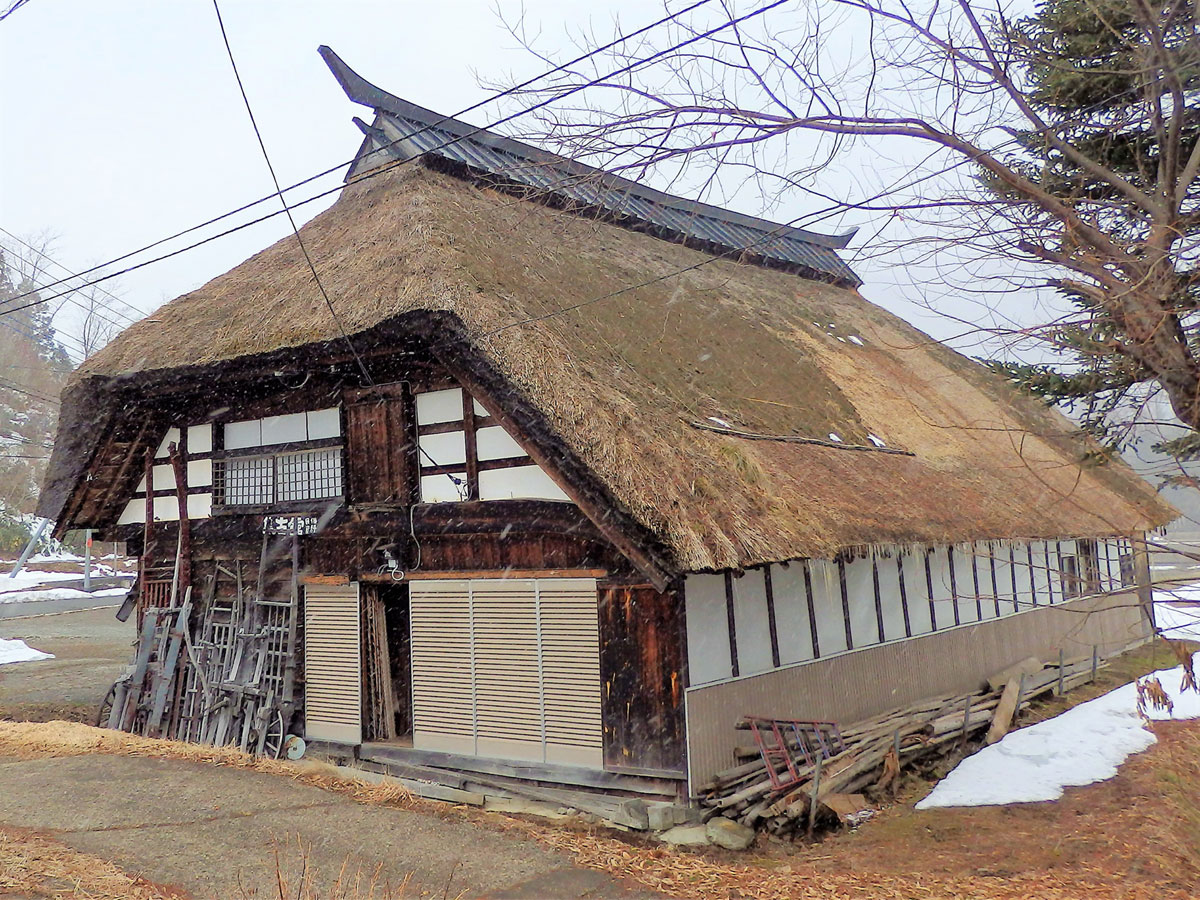
Picture 2
Traditional Buildings thatched with Kaya. Photo by the author, March 12, 2016.
Moreover, Uenohara supplied fertilizer, forage, and food to the local population. Figure 2 shows the annual cycle of the local livelihoods around the year 1950. The life of locals revolved around the cultivation of rice-paddy and other crops as well as the production of charcoal during winter (Kikuchi et al. 1995). Because organic fertilizers and forage for horses, which were used for cultivation, were produced from Uenohara in addition to Kaya, this land was called “what made a life of Fujiwara.”8
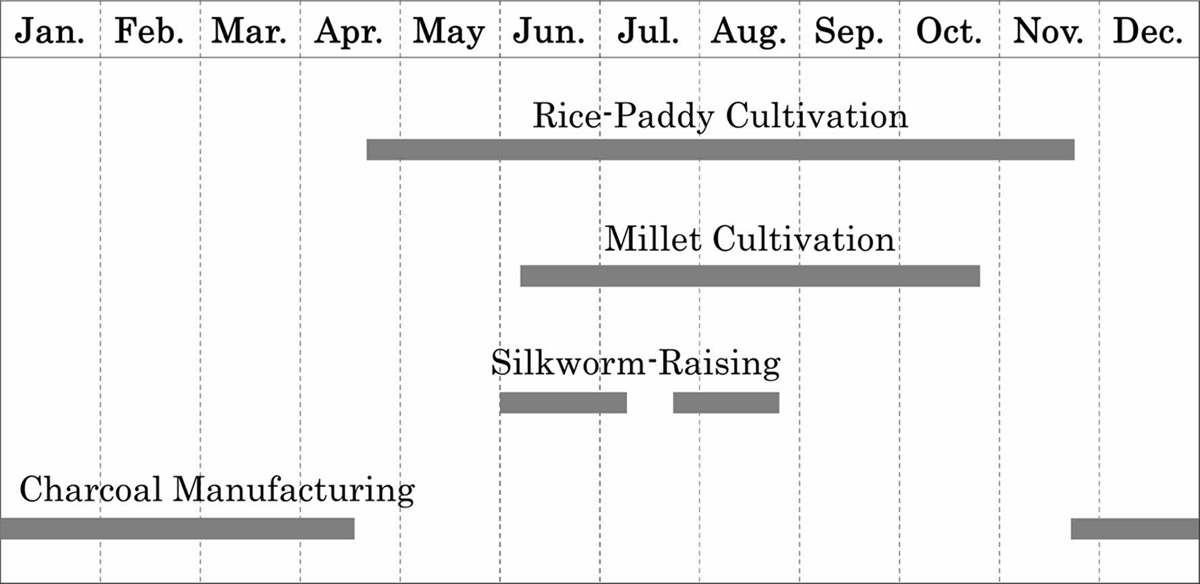
Figure 2
Annual cycle of the livelihoods of locals around the year 1950 in Fujiwara District (modified from Kikuchi et al. [1995]).
Resources from Uenohara, especially Kaya, were CPRs for the population. A roof of an average farmhouse in Fujiwara District required 5,000 sheaves of Kaya, and changing the decrepit roofs was practiced for two houses per year in association with all residents (Board of Education of Gunma Prefecture 1971). Cropping of Kaya was performed from late October through November just before snowfall; this was referred to as “Kayakari.” Farmers gathered cropped Kaya in a sheaf with a diameter of 15–25 cm (Picture 3) and weathered them by arranging five sheaves against each other (referred to as “Bocchi”) (Picture 4). For sustaining grassland (Kayaba) and preventing bush growth, control burning was also practiced in early spring each year. Control burning was usually referred to as “Noyaki” in Japan. Although this was a labor-saving method of vegetation management, there was danger of the spread of fire. Therefore, local residents used the residual snow to control fire and called this manner “Yukima-wo-Yaku” in the regional dialect.
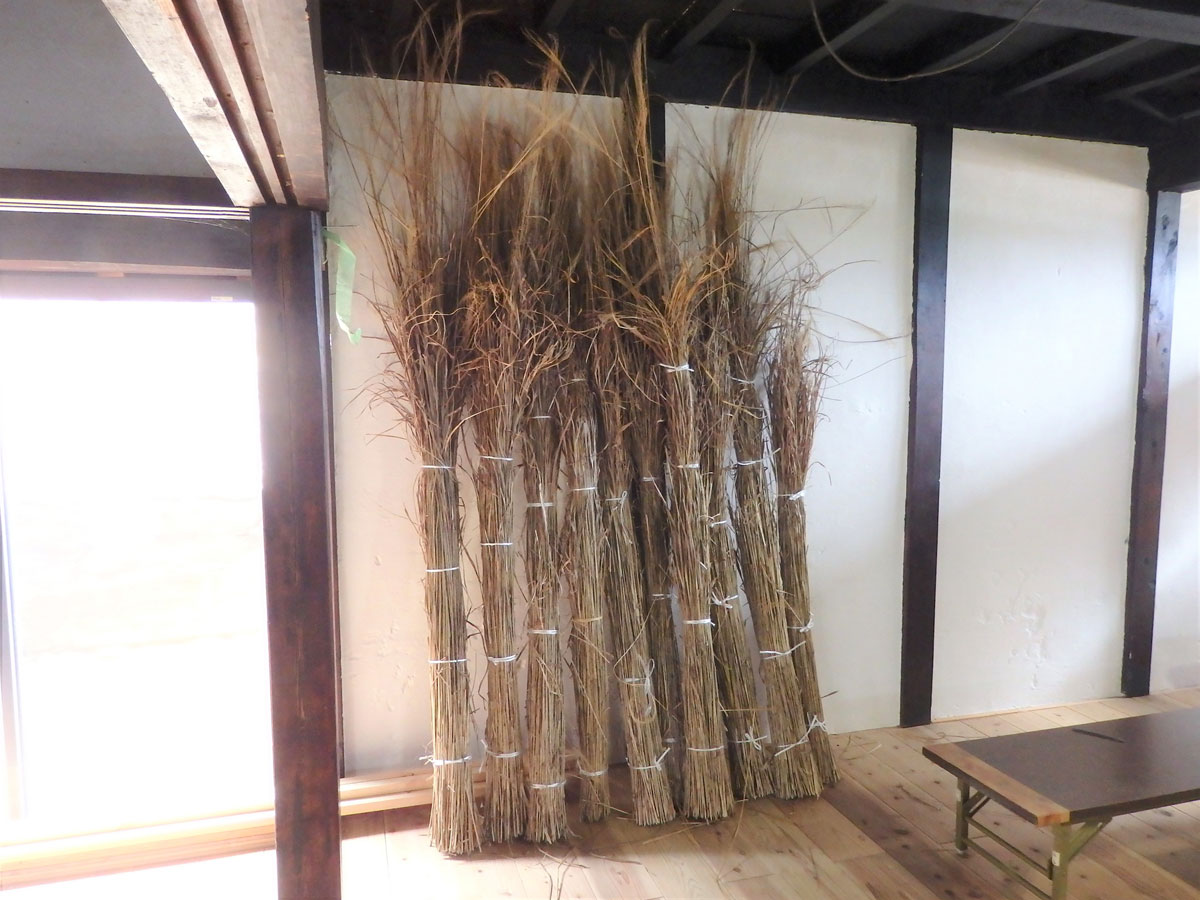
Picture 3
Sheaves of Kaya. Photo by the author, March 13, 2016.
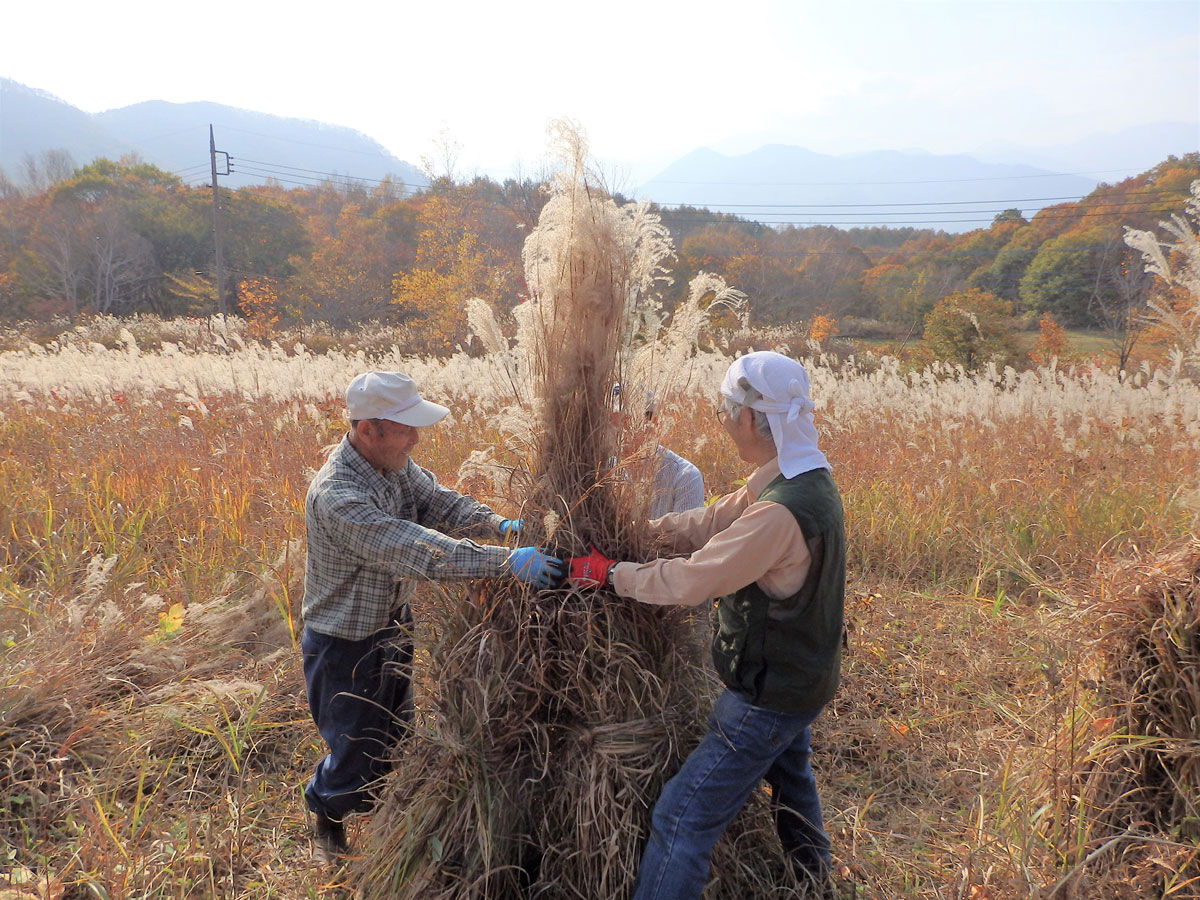
Picture 4
Making of Bocchi. Photo by the author, October 24, 2015.
These resource management techniques (such as Kayakari and Noyaki) were performed as mutual works among local residents (referred to as “Ee”). The most fundamental unit of such a type of mutual work was a group of households residing in the neighborhood (referred to as “Kumi”). Each Kumi had a cooperative relationship with another Kumi (referred to as “Mura”) and asked them for help when a required labor could not be satisfied only within Kumi. In some cases, the range of participants to mutual works was wider than Kumi or Mura. When changing a thatched roof, cropping of Kaya was practiced by the relatives, Kumi and Mura, whereas carpentry was practiced by the whole district (Board of Education of Gunma Prefecture 1971).
The management of CPRs requires the establishment of rules preventing the overuse of resources in addition to mutual works which support sustainable use (Ostrom 1990). Fujiwara District had two such rules. First, available places for resource use in Uenohara were roughly assigned to each Kumi. Second, leaders of Kumi determined the start of a season for specific uses (Table 2). In Fujiwara District, there were no stipulated sanctions against those who had broken the rules because they could not receive the benefit of mutual works from the next season in compensation for their selfish action. In addition, for a long time, residents were severe with strangers who would disturb the order of local community. For example, even a person who moved from the neighboring Kumi was restricted his/her rights of life, such as prohibition against holding an official position in the Kumi. These closed customs originated from wariness, for example, “It is disagreeable that our lands are spoiled,”9 and worked thoroughly 20–30 years ago.10
Table 2
Summary of resource use of Uenohara (modified from the document of Forest College Seisui).
| Local name | Material | Use | Start of season |
|---|---|---|---|
| Kaya (Susuki) | Miscanthus sinensis | Roofs | End of October |
| Charcoal sacks, mountages, and snow fences | After cropping for roofs | ||
| Kacchiki | Green grass | Organic fertilizer | N/A |
| Kapposhi | Green grass | Forage and organic fertilizer | N/A |
| Kuzoba | Leaves of Pueraria lobata | Forage and strings | October 10 |
| Kazura | Roots of Pueraria lobata | Edibles | N/A |
| Warabi no Ne | Roots of Pteridium aquilinum | Starch and edibles | N/A |
| Hagi | Leaves and branches of Lespedeza | Forage and skewers | End of September |
| Sansai | Wild plants | Edibles | N/A |
| Yamaguwa | Leaves of Morus australis | Silkworm-raising | N/A |
3.2. Decline of Traditional Resource Use and Transition to the Tourism Industry
In the early 1950s, changing of thatched roofs was abolished in Fujiwara District, and the traditional resource use of Uenohara epitomized by Kayakari and Noyaki started to decline gradually. These shifts in local lifestyles were caused by modernization with exogenous factors (Table 3) in addition to the high cost and significant efforts involved in changing thatched roofs. Four times of dam construction especially provided the locals with opportunities for wage labor resulting in them abandoning their former work.
Table 3
Exogenous factors of development in Fujiwara District.
| Year | Event |
|---|---|
| 1931 | Opening of the entire Jyouetsu Line |
| 1934 | Opening of Fujiwara Prefectural Route |
| 1951–1958 | Construction of Fujiwara Dam |
| 1952–1955 | Construction of Sudagai Dam |
| 1954–1957 | Realigning and extending Fujiwara Prefectural Route |
| 1959–1967 | Construction of Yagisawa Dam |
| 1972 | Opening of Fujiwara Ski Resort |
| 1973–1990 | Construction of Naramata Dam |
| 1979 | Opening of Houdaigi Ski Resort |
| 1982 | Opening of Jyouetsu Bullet Train |
| 1983 | 38th National Sports Festival in Gunma Prefecture |
| 1986 | Opening of Minakami Highlands Ski Resort and Golf Course |
Advances in transport, such as the opening of railways and arterial roads, brought tourists to Fujiwara District. Some tourists visited Uenohara to pick edible wild plants, and local residents levied an entrance fee on tourists in the 1950s and 1960s. Subsequently, the ownership of Uenohara was transferred to a major land developer, Kokudo Inc. (later known as Seibu Holdings Inc.), for developing a resort business site. The present of Uenohara was the rest of the resort site. Following resort development and the opening of inns with a reception for the National Sports Festival, the tourism industry grew significantly. From then onward, accommodation and food service became the principal employment in Fujiwara District; the percentage of employees was as high as 60% in October 2015.
Thus, few people would like to obtain Kaya, fertilizer and forage from Uenohara for their livelihoods. The abandonment of grassland management such as Kayakari and Noyaki has led to Uenohara being underused. This proceeded vegetation succession, and more than 25-year-old stands of Betula pendula and Weigela hortensis invaded the grassland around 2000 (Forest College Seisui 2010).
4. New Governance of NRM
4.1. Participating Organizations
In this section, I describe the regeneration of Uenohara from the 2000s. Participants involved in the regeneration process are listed below.
4.1.1. Forest College Seisui
Forest College Seisui (FCS; “Shinrin Juku Seisui” in Japanese) is an NPO composed of urban residents in the Tokyo metropolitan area. In April 2003, FCS contracted with the Minakami Town Office, who has land ownership of Uenohara, to begin various activities in Uenohara. The slogan of FCS is “Insui-Shigen,” which means “Remember water sources, when you drink water.” FCS practiced NRM by encouraging cooperation between locals residing in the same drainage basin while enjoying activities in nature-rich and rural areas. More specifically, FCS called for the participation of tourists in the conservation of Uenohara and for learning the local culture of Fujiwara District through the Internet (Table 4). Activities were usually carried out over two days, which required approximately 10,000 yen ($90.9 or €81.4 as of May 2019) per person as participation fee covering accommodation and premium. Although the regular members of FCS who paid 5,000 yen in annual fee received a discount, others could also participate in events and subscribe for the electronic newsletter to receive invitations. As of April 2017, the number of regular members is 73, with more than 300 subscribers. In addition to being tourists, 11 of the regular members were organizers of FCS, who managed its administration. Engaging with an environmental consultant or a forester, some organizers have a specialized knowledge of wild plants and animals.
Table 4
Activities of Forest College Seisui in 2016.
| No. | Date | Event | Number of participantsa |
|---|---|---|---|
| 1 | Mar 12–13 | Help with a local event (Candle Night) Trekking in snowfields | 19 |
| 2 | Apr 16–17 | Ritual for the god of the mountains Control burning (Noyaki) Nature observation in Uenohara | 26 |
| 3 | May 21–22 | Picking of edible wild plantsTransplanting roots of Miscanthus sinensisStrolls of Fujiwara District | 13 |
| 4 | Jul 9–10 | Photography of wild plantsMowing and preparing fire-blocking zones | 11 |
| 5 | Aug 17–18 | Participation in a local festivalCooking of traditional food | 7 |
| 6 | Sep 24–25 | Thinning of a forestMaintenance of forestry roads | 15 |
| 7 | Oct 29–30 | Thatch cropping (Kayakari) | 22 |
| 8 | Nov 12–13 | Transport of Kaya | 13 |
[i] a Instructors were excluded from the number of participants.
4.1.2. Native Guides Club of Fujiwara
The Native Guides Club of Fujiwara (NGCF; “Fujiwara Annainin Kurabu” in Japanese) is an association of local residents. The Ministry of Agriculture, Forestry and Fisheries had awarded a grant to the Minakami Town Office for restoring of cultural property and constructing of an assembly hall in Fujiwara District in 1999. Subsequently, some residents established NGCF for local revitalization against population decline and an aging society, while utilizing these buildings. The founding members of NGCF included 20 men in their 60s with diverse occupations, such as farmers and inn landlords, as well as numerous residential hamlets.
The development of ancient roads to footpaths for sightseeing was a prime example of the activities of NGCF. FCS and NGCF worked in collaboration for NRM in Fujiwara District. Members of NGCF also participated in FCS’s activities as instructors of outdoor events. In return, FCS honored NGCF members with 5,000 yen a day as a token of gratitude. This helped in building motivation among members for continuous partnership, which was indicated by a member’s comment: “We understand that local people should provide the labor. But we cannot go on helping them as pure volunteers.”11
4.1.3. Water Resources Network of Okutone
Water Resources Network of Okutone (WRNO; “Okutone Suigen Chiiki Nettowaku” in Japanese) is an NPO that has been supporting settlers and working on local revitalization since 2012. “Okutone” means the upper area of the Tone River. Five young residents, including individuals from urban areas who settled in Fujiwara District with the aim of residing in nature-rich countryside, manage this organization. Some of their activities were conducted in Uenohara. For example, a charcoal kiln was built with guidance from a member of NGCF. In addition, three of the five WRNO organizers joined FCS and acted as mediators between urban and local residents.
4.2. A Beginning of New Efforts
Mr. Shimizu, who took charge of nature conservation as a social action program of his office, started FCS in September 2000 for forest observation in Suigen-no-mori located in FKK. He was always concerned with the conservation of natural resources because he was raised in a town with a wealth of nature. Therefore, in addition to fieldwork, he held study meetings regarding traditional institutions of communal forests four times in Tokyo near his domicile.
In the summer of 2002, an administrator of the Minakami Town Office consulted Mr. Shimizu on the effective utilization of Uenohara which had been an idle land. Consequently, FCS’s activities shifted to the regeneration of the semi-natural grassland of Uenohara from the forest observation in Suigen-no-mori. However, local residents did not approve the regeneration of Uenohara by a newcomer at first. One of them looked back at that time and said “There had been several meetings, and we were announced that an organization called FCS would come to Fujiwara District and carry out grassland management from now on. We were anxious for prohibition of entering Uenohara, although we had no purpose to go there. These complex feelings recurred to our minds.”12 Ultimately, local residents understood the meaning of regenerating the traditional landscape and approved FCS’s visitations.13
Because Mr. Shimizu cared greatly about working in Uenohara, which was once a common land shared by the local residents, FCS held meetings with the elderly regarding conventional resource use and developed an understanding of the customs. On the basis of the knowledge gained, FCS arranged the “Modern Custom of Commons” in March 2004, which has been mentioned in the behavior rules of Uenohara. In addition, Mr. Shimizu frequently visited Fujiwara District on trips that were not FCS’s activities and communicated with the locals. Because of his efforts, he received much recognition, which was evident from this quote from a local resident: “There is no one who does not know him in Fujiwara District.”14
4.3. Regeneration of Uenohara
Because semi-natural grassland shifts to woodland without human interference, thatch cropping (Kayakari) in the autumn and controlled burning (Noyaki) in the spring of each year have been essential for the conservation of grassland landscape. However, these activities disappeared in the mid-20th century. FCS revived them to restore traditional knowledge and local culture in addition to the natural environment in Uenohara (Pictures 5 and 6). The goal of FCS was not only to seemingly restore the grassland but also to revive Kayaba culture. Therefore, FCS requested for technical guidance from NGCF when field activities were held in Uenohara and followed the original method. Two main activities are discussed in greater detail below.
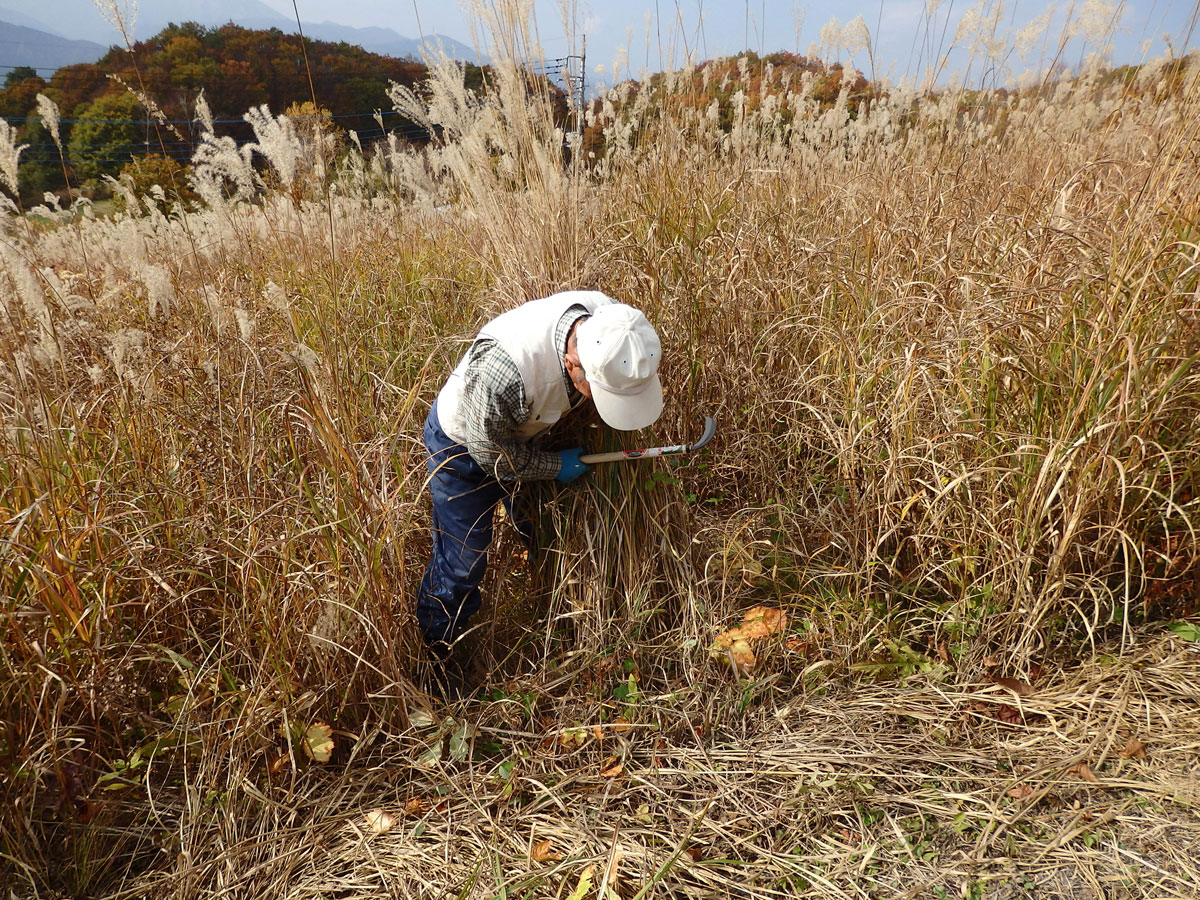
Picture 5
Kayakari regenerated by Forest College Seisui. Photo by the author, October 24, 2015.
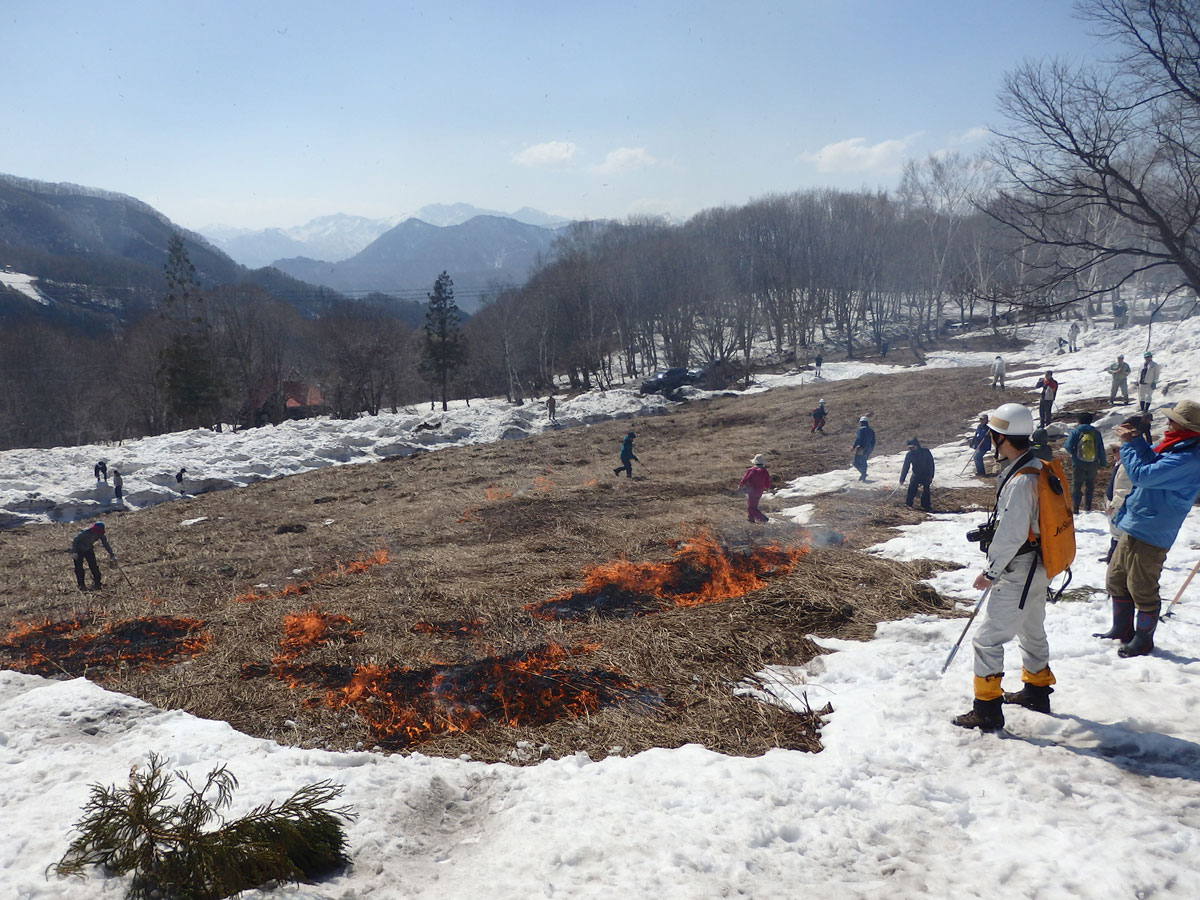
Picture 6
Noyaki regenerated by Forest College Seisui. Photo by the author, April 25, 2015.
4.3.1. Thatch Cropping (Kayakari)
Although Kayaba could not be regenerated without the supply destination of Kaya, currently, there is no thatched house and no mutual works for the construction. FCS explored a sales channel of Kaya with a construction company, which engaged in the restoration of cultural assets and demanded Kaya for building materials.
Two types of Kaya are produced in Uenohara since 2003: one is cropped by urban residents at the event organized by FCS, and the other is produced by members of NGCF after FCS’s activities. Usually, 30 urban residents participate in the event organized by FCS, producing a total of 300–600 sheaves of Kaya. Although members of NGCF and craftsmen of a construction company instruct urban residents to make Bocchi, they cannot produce Kaya with good quality and these Kaya are unsalable. However, these are used to repair a shrine within Fujiwara District effectively. Members of NGCF produce 2,000–4,000 sheaves in several weeks, which is sold at a price of 100 yen per sheaf. FCS adds 50 yen to this sales price using funds received as grants from private foundations to provide incentives to cooperation. As a result, locals earn 150 yen per sheaf, which amounts to a total of 100,000–150,000 yen per person during the cropping season. To date, Kaya has been used to change the roofs of six historic buildings in the Northern Kanto Region.
4.3.2. Controlled Burning (Noyaki)
FCS revived controlled burning in 2004 for the first time in about 40 years. Although local residents objected to the location of many forest fires, they finally approved controlled burning because of FCS’s eager attitude and the market value of the Kaya crop in the preceding year.
To prevent fires from spreading, FCS adopted the former method of using snow as firebreaks. However, it is impractical for urban residents living in the Tokyo metropolitan area to monitor the field condition at any given time and burn spots where snow has thawed. Moreover, the Minakami Town Office requires them to submit an implementation plan and to obtain permission in advance to perform controlled burning. Therefore, each year FCS requests local residents to remove snow and arranges to burn these areas. This job requires heavy machinery, and FCS spends 200,000 yen annually on labor.
The activity of controlled burning has the most number of participants in annual events organized by FCS. Before burning, traditional rituals are held for the god of the mountains. According to a member of NGCF, it is unusual to burn grassland without a ritual. He said: “If not having followed the local rule caused an accident, I worried that a village community might stop their activities”.15 To add to the ritual, local customs are followed, and bushes are removed before setting fire to the grassland. A member of FCS, who specializes in vegetation ecology, said: “Since it all burns out as a result, this action is almost meaningless ecologically. However, the local’s mind for resource use differs.”16 A fire brigade comprising local residents attends the event for safety reasons in case of an emergency. WRNO manages the liaison and coordinates the snow-removing efforts between FCS and the locals.
4.3.3. Relationships Between Various Participants
The regeneration of Kayaba in Uenohara is achieved not only through FCS’s efforts but also through the collaboration between various participants (Figure 3). NGCF plays an important role as a provider of skilled labor and as an instructor for producing Kaya. Mr. Shimizu stated the following: “Local seniors taught us anything. This brought us the best result. I think that our activities were not accepted when not doing together but doing only by us.”17
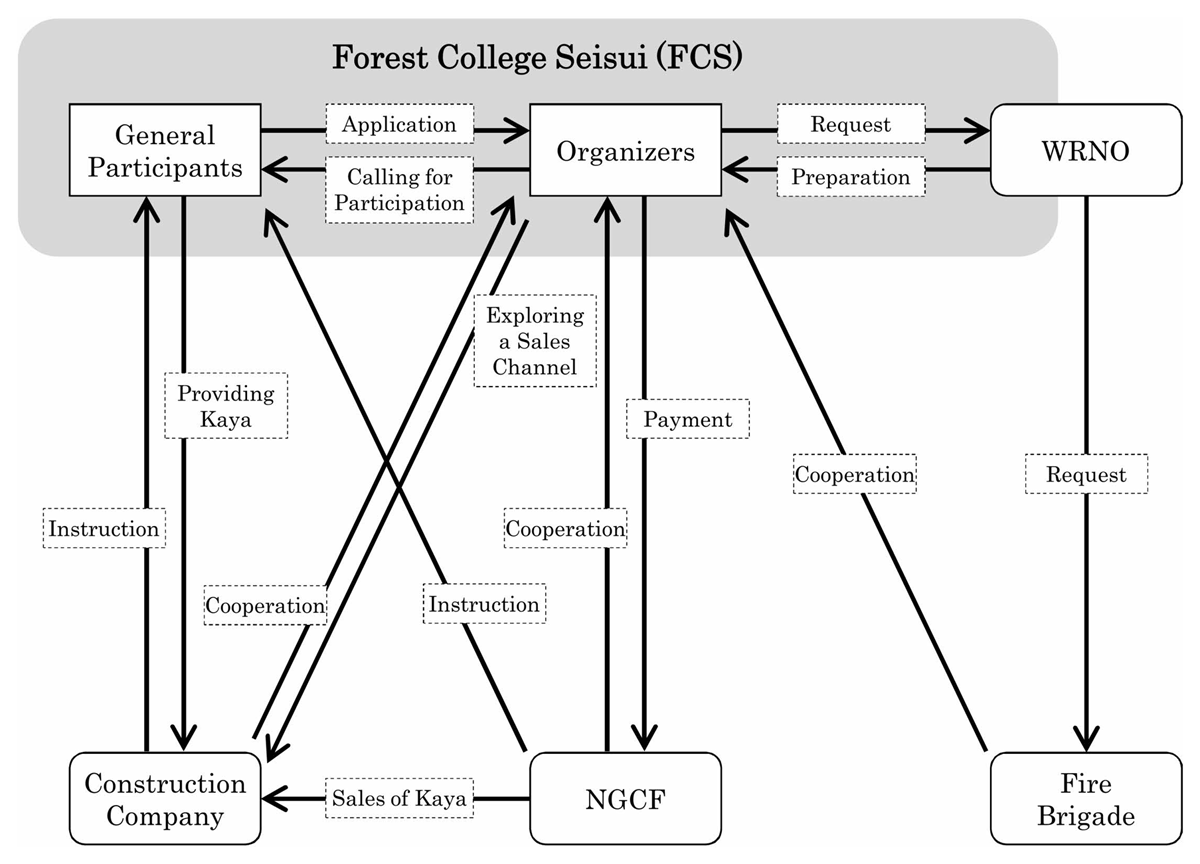
Figure 3
Relationships between various participants.
Regeneration efforts were acknowledged and appreciated by the local residents of Fujiwara District. One of the residents stated that “Uenohara has been improved beyond recognition,”18 and another said that “It returned to a former Kayaba.”19 However, several members of NGCF are >80 years of age. This raises the question of whether NGCF will continue its activities.
4.4. Signs of Further Growth
Although it might be difficult for NGCF to continue its efforts, the progress at Uenohara indicates two signs of further growth. First, the market value of Kaya increases as compared with the value in the beginnings of activities. A nationwide shortage of Kaya raised the price of NGCF’s Kaya to 120 yen per sheaf in 2016. Kaya produced by urban residents was recognized in quality improvement and could be sold at 60 yen per sheaf. Second, in cooperation with WRNO, local currency was adopted, as it can be used at the farmers’ market in Fujiwara District and as participation fees at FCS’s events. When the event of thatch cropping is held, participants can gain local currency worth 200 yen per Bocchi from FCS in addition to the price of Kaya. In the event in 2017, participants bought agricultural products, which were brought by farmers. Therefore, these new efforts extend the personal connections of local collaborators and have a few economic impacts.
4.5. Attitude Toward NRM
I have previously discussed the process of regenerating underused natural resources sustained by various organizations and their interrelationships. In this section, I mention the attitude of individuals residing in urban or rural areas toward these activities.
The foremost motive of urban residents is to enjoy activities in Uenohara including thatch cropping and controlled burning. Most people generally believe that the practices followed by NPOs and volunteers for the conservation of nature originate from their willpower toward social contribution. In this respect, a member of FCS, who succeeded Mr. Shimizu as a representative in April 2014, said: “We are hardly anxious about biodiversity conservation or local revitalization in a pompous manner from the beginning. No one joins our party with social motives.”20 In addition, other members commented: “The reason I have participated in FCS’s activities is because these bring me extraordinary experience, which is not received in cities”21 and “Since I can play with comrades, I haunt Fujiwara District.”22
However, as the efforts for regenerating Uenohara continued, emotional attachment to Fujiwara District among the urban residents gradually increased. For example, a representative of FCS stated the following: “I have come to feel the social meaning of our activities steadily. Possibly, aren’t these a little helpful to Fujiwara District? Although I was only motivated by my own feeling like pleasantness at first, much experience has broadened my horizons.”23
Conversely, members of NGCF and WRNO intended to utilize regenerated resources for community development. A member of WRNO, who was born in Fujiwara District and left his hometown for 15 years after graduating from a junior high school, stated: “Management of grassland creates new value and enables local community to attract tourist.”24 In addition to NGCF, which is covered with actual labor, FCS also plays an essential role. Referring to FCS, a member of NGCF said, “They give us the beneficial viewpoint unique to strangers which we don’t possess.”25
5. Discussion
5.1. Comparison of Former and New Governance
The utility of Uenohara, which had supplied the local community with CPRs at one time, disappeared in the 1950s. Approximately 50 years later, the traditional landscape of this semi-natural grassland was regenerated through various activities undertaken by collaboration between urban residents and local participants. Here, I compare the features of new governance with those of former governance to get a clue toward the resolution of underuse problems (Table 5).
Table 5
Constitution of former and new governance.
| Governance | Participants | Benefits from NRM | Role sharing in NRM |
|---|---|---|---|
| Former governance | Local residents in Fujiwara District | Living necessaries such as Kaya | Mutual works (Ee) |
| New governance | Forest College Seisui | Enjoyment of activities with comrades | New and unique viewpoint |
| Native Guides Club of Fujiwara | Application to local revitalization Subincomes | Labor and skill Instruction | |
| Water Resources Network of Okutone | Application to local revitalization | Local liaison and coordination | |
| Construction company | Building materials for cultural property restoration | Assistance for instruction |
5.1.1. Diversification and Expansion of Participants
In the former governance, all participants comprised local residents who led similar lives. In the new governance, various participants such as urban residents, settlers and a company concern Uenohara besides the local residents. Diversification of participants also includes expanding the range supporting governance. NGCF and WRNO are local associations in Fujiwara District. A construction company is located in Nakanojo Town, which is outside Minakami Town, and it has mainly received orders from Gunma Prefecture. Furthermore, the domiciles of FCS members are around Tokyo and are located downstream of Tone River, which originates in Fujiwara District. Therefore, in addition to diversifying the participants, the range that supports new governance has expanded from a local to regional and basin areas.
5.1.2. Role Sharing in Grassland Management
A series of activities in Uenohara could not begin without finding new values by FCS. Therefore, FCS plays an essential role in establishing new governance. However, members of NGCF are responsible for actual labor and for instruction of two major activities, Kayakari and Noyaki. Although urban residents practice NRM via various events, the number of cropping sheaves and the sales price of Kaya show a large amount of local labor, in terms of both quality and quantity. In addition, local liaisons and the coordination of WRNO, along with the purchase of Kaya by a company, have important functions in new governance.
As shown above, regeneration of Uenohara can be achieved by role sharing and organic structuring among the various participants (Figure 3). This can be distinguished from the structure of “Ee” in the former governance, in which each local resident shares equivalent roles.
5.1.3. Shifts in Benefits of Participants
As shown in Table 2, in the former governance, the locals in Fujiwara District used Uenohara to earn a living. Everyone equally wanted these resources; accordingly, there were regulations to avoid their overuse. In contrast, participants in the new governance have different expectations from the present grassland. Members of FCS do not want Kaya to replace the roofs of their houses. They want extraordinary experiences from Kayaba, which cannot be obtained in Tokyo.26 The reason that local residents who belong to NGCF or WRNO participate in governance is because it provides an opportunity for local revitalization of mountain villages that are affected by declining and aging populations. Therefore, they find value in the regenerated grassland landscape as a local tourist resource.
Regenerated grassland also has economic value as a source of Kaya for cultural property restoration. A construction company participates in the project of Uenohara for business and not charity. Additionally, payment for thatch cropping and instruction provide income for NGCF members; however, this is not substantial enough to be the main motivation for participation.
5.2. Factors to Solve Underuse Problems
This case study aimed to solve underuse problems by collaborating between urban and rural residents, as demonstrated by the points shown in Chapter 5.1. Consistent with my findings, previous studies have also found clues to explain underuse problems in wide-area governance. For example, Shimada noted a disagreement between the ranges of benefits received from ecosystem services and the cost burden of grassland management and insisted that using a multi-level management system would be an appropriate solution when combined with wide-area financial support (Shimada 2015). In summary, this chapter has explored the factors for resolving underuse problems by comparing a case of Fujiwara District with a multi-level management system.27
5.2.1. Management for Use
A distinct case in Soni Village, which is the subject of Shimada’s work (2015), is classified as “manage for management.”28 Accordingly, area wide support from taxpayers is necessary. However, in Japan, it has been estimated that the Satoyama landscape accounts for 60% of the total land area (Yoshioka et al. 2013). There is evidence for remarkable population decline.29 In these situations, because it is difficult to maintain secondary nature, including grasslands, only with financial support, it is necessary to promote a “management for use” strategy for national land conservation.
In the case of Fujiwara District, each participant receives each benefit, practicing regeneration of grassland for resource use. Each motivation for resource use may be little less than that in the past, where life would not have been possible without grasslands. However, accumulation of each participant’s motivation is the driving force behind the creation of new governance.
The most important factor in new governance is the rationality of each participant for resource use. “The Tragedy of the Commons” (Hardin 1968) is a typical case of social dilemmas, which explained that “each individual receives a higher payoff for a socially defecting choice than for a socially cooperative choice, no matter what the other individuals in society do, but all individuals are better off if all cooperate than if all defect” (Dawes 1980, 169). With the usage of “tragedy,” Hardin intended to explain that the most rational actions by individuals invite irrational situations as a whole. This point is common to an underuse model by Miyanaga and Shimada (2018). They state that resource depletion (and environmental degradation) is brought about by rational economic actors or activities.
The result of this case study indicates that an underuse situation derived from rational actions could be improved by rational actions. It does not mean that the members of FCS should visit Uenohara to help an aging village. The members of NGCF do not intend to instruct urban residents to be pure volunteers either. They act according to each rational incentive.
5.2.2. Placeness of the Object of NRM
The need for a multi-level management system is demonstrated by a shift in ecosystem services, which are expected in semi-natural grasslands. Particularly, there has been a shift from provisioning services to cultural and regulating services. Certainly, when compared to a time when various supplies were provided to local residents, this trend is apparent. However, to establish a “management for use” strategy, it is essential to reinterpret ecosystem services as a specific usage and not as an invisible abstraction.
Members of FCS do not recognize grassland as a source of ecosystem services. They simply regard Uenohara as a playground. Therefore, they haunt Fujiwara District with spending lots of time and money. The view that FCS receives cultural services from Uenohara is only a kind of taxonomy if it is a means to justify sharing management costs for taxpayers. If the solution of underuse problems is to be achieved through “management for use,” it is crucial to recognize placeness of the object of NRM. Then it is not critical to determine whether expected services are provisioning, cultural, or regulating. Instead, it will be necessary to identify usage of a specific place.
5.2.3. Succession of Knowledge for NRM
There is a common thread between the cases of Soni Village and Fujiwara District; that is, local residents hold the knowledge required for grassland management. Not everyone can perform grassland management. For example, controlled burning, a main method of vegetation management, has been practiced as a collection of knowledge, including setting up firebreaks, ignition, and judgment of climatic conditions. This traditional knowledge, formed by abundant experience, is called Traditional Ecological Knowledge (Berkes 1993), which has been claimed to be important in NRM.
Moving forward, the most serious challenge is to determine who will inherit this knowledge of grassland management. In the first place, underuse problems are a consequence of a decrease in traditional players due to population decline. Although regeneration of Uenohara is performed by collaboration between urban and rural residents, urban residents do not replace exhausted rural residents. FCS has regenerated Uenohara by finding new values and drawing local knowledge. The main role is not actual labor but coordination of various participants.
The issue of knowledge succession must be addressed for sustainable grassland management. Fortunately, in addition to local residents, there are various parties involved in the regeneration of Uenohara. There is an urgent need to examine methods for transferring knowledge about grassland management, such as technical training for settlers and urban residents. In this regard, it is essential to take a rational approach, and as with current governance, some economic value will need to be incorporated. In addition, it will be necessary to continue reorganizing governance according to changes in societal conditions.
6. Conclusions
This study focuses on underused natural resources that have lost their former utility and have caused negative externalities such as a decline in biodiversity. In this study, I demonstrated governance of regenerating the semi-natural grassland of Uenohara in Fujiwara District. The results showed that FCS, mainly comprising urban residents, practiced thatch cropping and controlled burning in collaboration with local organizations. I compared the old and new governance of Uenohara; the latter was characterized by (1) diversification and expansion of participants, (2) role sharing and organic structure, and (3) shifts in benefits. In addition, this study showed that the three factors are important for solving underuse problems: (1) manage for use, (2) placeness of the object, and (3) succession of knowledge. These results helped to understand the particularity of underuse problems and enabled progress. In the future, similar case studies and the creation of a theoretical framework are needed. It is important that future studies indicate practical solutions. Understanding the needs of NRM practitioners is a prerequisite for making progress in solving underuse problems.
Notes
[3] Because his conclusion was based on the assumption of open access for everyone (Ciriacy-Wantrup and Bishop 1975; Feeny et al. 1990), his theory received criticism based on cases of sustainable CPR management with limited access and conduct rules (Acheson 1975; Berkes 1977; McCay 1980; McKean 1982; Wade 1986). Ostrom’s study is one of the most important landmarks, illustrating design principles for long-enduring management of CPRs through the accurate analysis of several case studies (Ostrom 1990).
[4] Grasslands are classified as natural, semi-natural, and improved. Natural grasslands are formed in semiarid regions with little precipitation, whereas improved grasslands are typically found in golf courses and urban parks (Maenaka 1993).
[5] Ecosystem services are the benefits people obtain from ecosystems (Millennium Ecosystem Assessment 2003) and are supplied directly or indirectly (Costanza 1997). They are categorized into provisioning, regulating, cultural, and supporting services (Millennium Ecosystem Assessment 2003).
[6] Semi-natural grasslands have difficulty in being maintained without human intervention. They are positioned as a seral stage of vegetation succession. The abandonment of cropping and grazing invites the invasion of intolerant trees and bushes (Maenaka 1993). Therefore, using resources from semi-natural grasslands also involves their management.
[7] Grassland burning is a method of vegetation management. During burning, the underground part of a plant is exposed to a relatively constant temperature despite the temperature above the ground exceeding 100°C. Therefore, herbaceous plants, the buds of which rest below the ground surface during early spring, are not affected by burning. This labor-saving method of vegetation management is potentially dangerous, if the fire is not adequately controlled (Tsuda 2010).
[8] The national forest, which is owned by the state, is 758 million ha and covers nearly 20% of the total land area or nearly 30% of the forest area in Japan.
[10] Interviewee (16). A local resident of FNK. Transcription from the original language: Japanese. Gunma Prefecture, Japan. October 25, 2015.
[11] Interviewee (19). A local resident of FNK. Transcription from the original language: Japanese. Gunma Prefecture, Japan. March 11, 2016.
[12] This feature of clearly defined boundaries of using CPRs was in agreement with Ostrom’s principles (Ostrom 1990).
[13] Interviewee (15). A local resident of FNK. Transcription from the original language: Japanese. Gunma Prefecture, Japan. October 26, 2015.
[14] Interviewee (16). A local resident of FNK. Transcription from the original language: Japanese. Gunma Prefecture, Japan. October 25, 2015.
[15] Interviewee (19). A local resident of FNK. Transcription from the original language: Japanese. Gunma Prefecture, Japan. March 11, 2016.
[16] Interviewee (16). A local resident of FNK. Transcription from the original language: Japanese. Gunma Prefecture, Japan. October 25, 2015.
[17] Interviewee (19). A local resident of FNK. Transcription from the original language: Japanese. Gunma Prefecture, Japan. March 11, 2016.
[18] Participant observation. Control burning organized by FCS. Gunma Prefecture, Japan. April 24, 2015.
[19] Interviewee (1). An urban resident. Transcription from the original language: Japanese. Gunma Prefecture, Japan. October 26, 2015.
[20] Interviewee (16). A local resident of FNK. Transcription from the original language: Japanese. Gunma Prefecture, Japan. October 25, 2015.
[21] Interviewee (20). A local resident of FNK. Transcription from the original language: Japanese. Gunma Prefecture, Japan. October 25, 2015.
[22] Interviewee (2). An urban resident. Transcription from the original language: Japanese. Tokyo, Japan. December 12, 2015.
[23] Interviewee (6). An urban resident. Transcription from the original language: Japanese. Gunma Prefecture, Japan. October 24, 2015.
[24] Interviewee (4). An urban resident. Transcription from the original language: Japanese. Tokyo, Japan. December 12, 2015.
[25] Interviewee (2). An urban resident. Transcription from the original language: Japanese. Tokyo, Japan. December 12, 2015.
[26] Interviewee (14). A local resident of FNK. Transcription from the original language: Japanese. Gunma Prefecture, Japan. October 25, 2015.
[27] Interviewee (18). A local resident of FNK. Transcription from the original language: Japanese. Gunma Prefecture, Japan. October 26, 2015.
[28] Although these may be provided without limitation, it is incorrect. An excessive use of recreation reduces satisfaction in nature experience. Wagar defined “recreational carrying capacity” as “the level of recreational use an area can withstand while providing a sustained quality of recreation” (Wagar 1964, 3).
[29] See Lockwood (2010) for general governance principles for natural resource management, not restricted to underuse problems.
[30] The terms “manage for use” and “manage for management” are provided by Shimada (2014).
[31] The total population of Japan in 2015 is 127 million, but it is estimated that it will decrease to 88 million in 2065 (National Institute of Population and Social Security Research 2017).
Acknowledgements
I would like to thank all informants for their cooperation in this research. I am grateful to Toshiyuki Tsuchiya for meaningful discussions.
Competing Interests
The author has no competing interests to declare.