
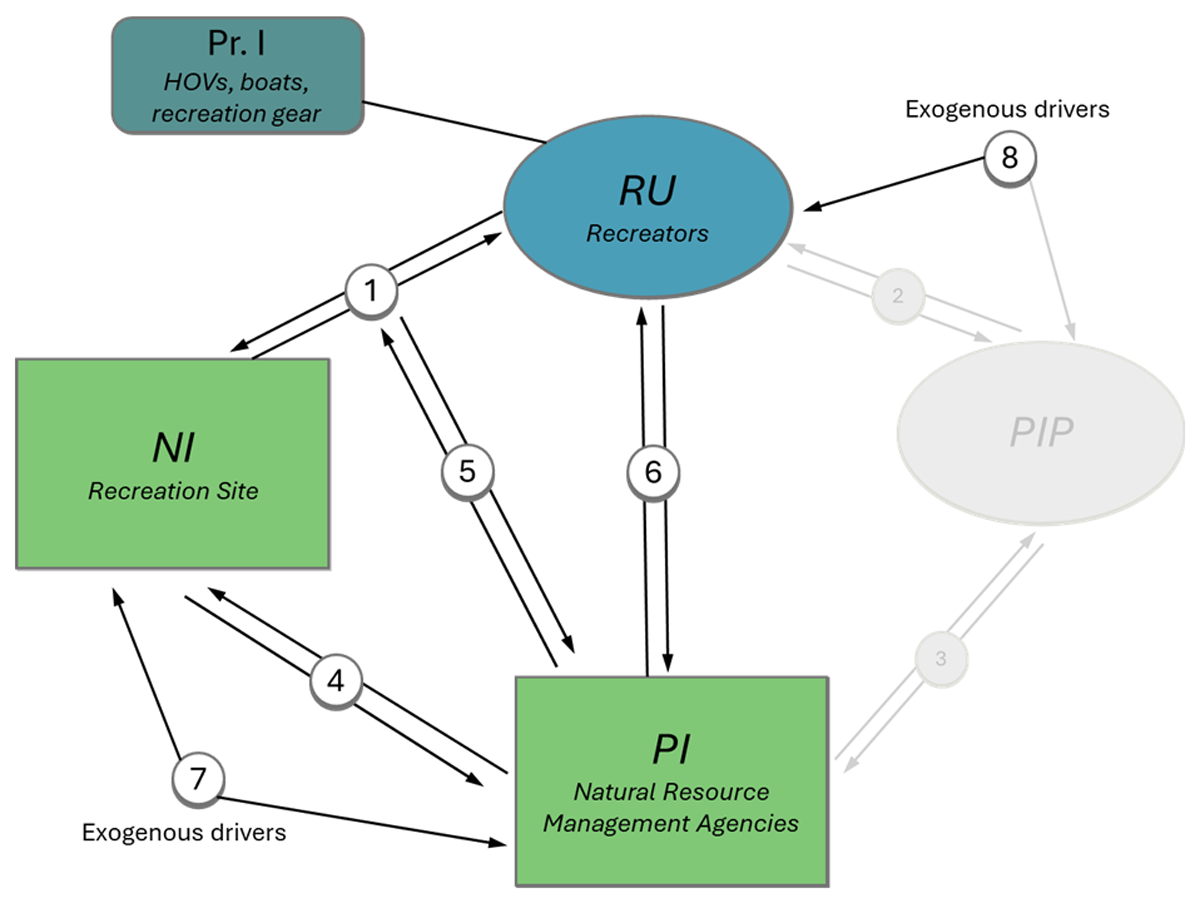
Figure 1
The CIS Framework operationalized for nature-based recreation. The CISF traditionally includes a fourth actor that sets mandates and allocates funding for public infrastructure. We treat this public infrastructure provider as exogenous, because resource managers’ mandates and funding availability are relatively fixed on the time scales of interest here. This is indicated by that part of the framework being greyed out, i.e. these elements are not addressed in this study. See text for more details. Adapted from Anderies et al. (2016).
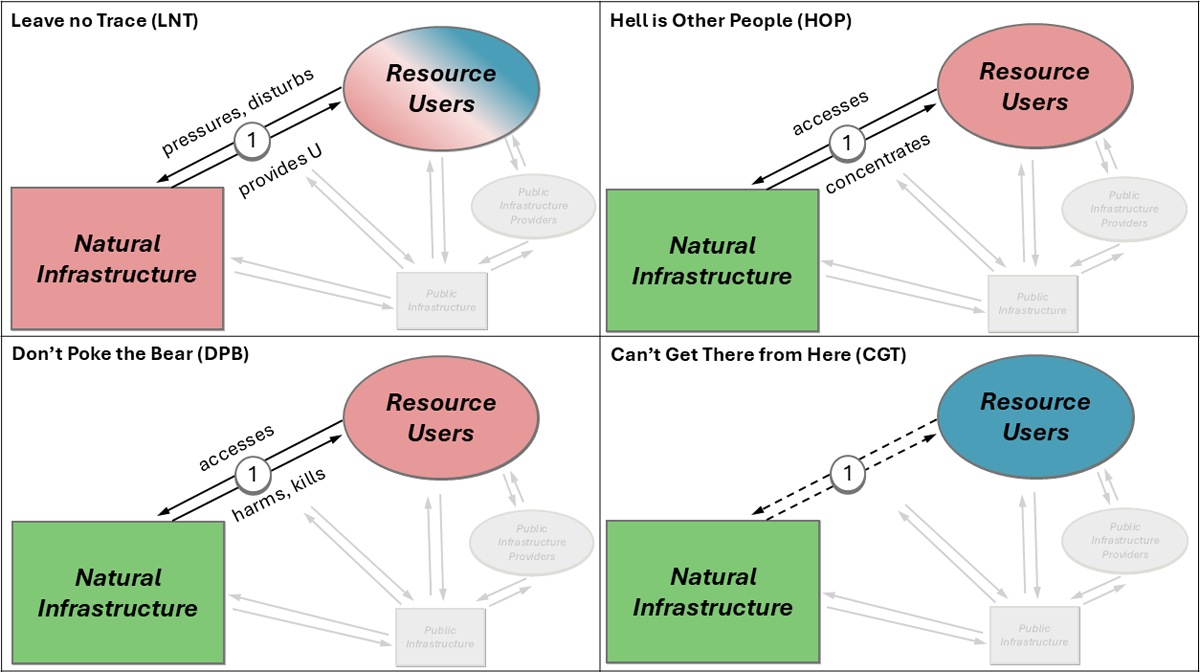
Figure 2
The four primary dilemmas. Verbs along links describe modifying effects between nodes. Red shading indicates the node where symptoms of failure appear. Partial shading in LNT indicates resource users may or may not be worse-off under this dilemma. The dashed line CGT represents a weak or missing recreational link. The small, gray public infrastructure and public infrastructure provider nodes and associated linkages indicate these primary dilemmas are products of institutional context. What these dilemmas have in common across all cases is the nature of the resource user-natural infrastructure interaction.
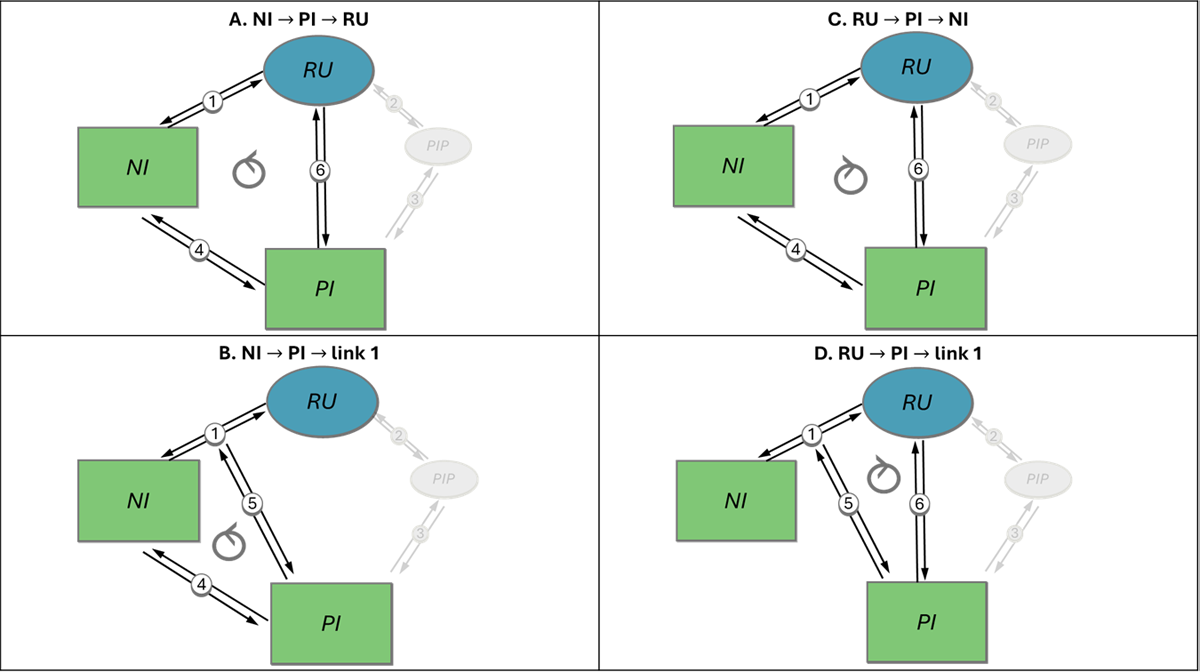
Figure 3
Secondary dilemma system diagrams.