
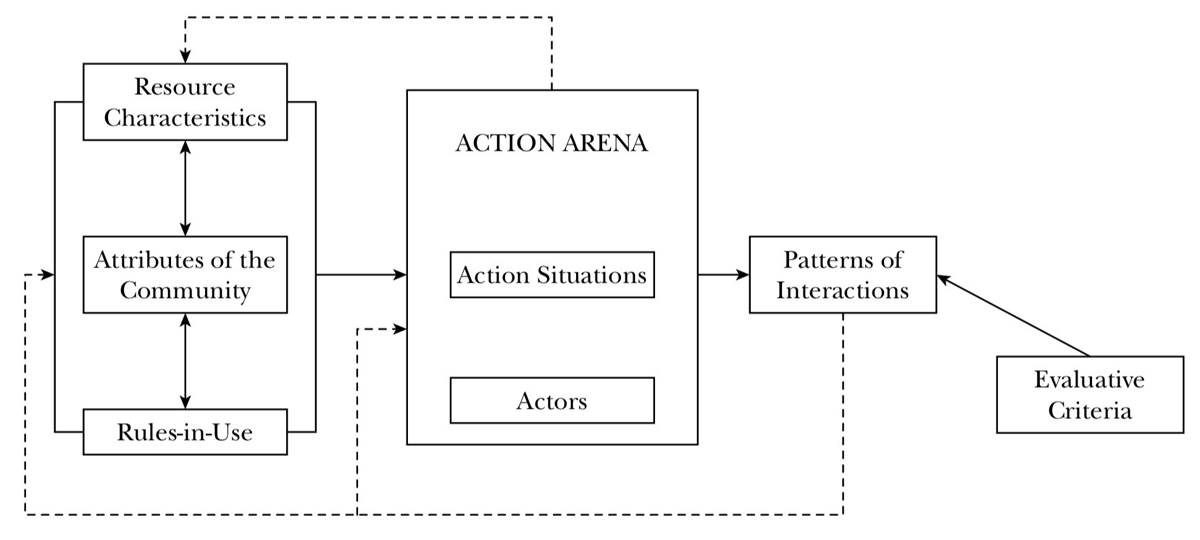
Figure 1
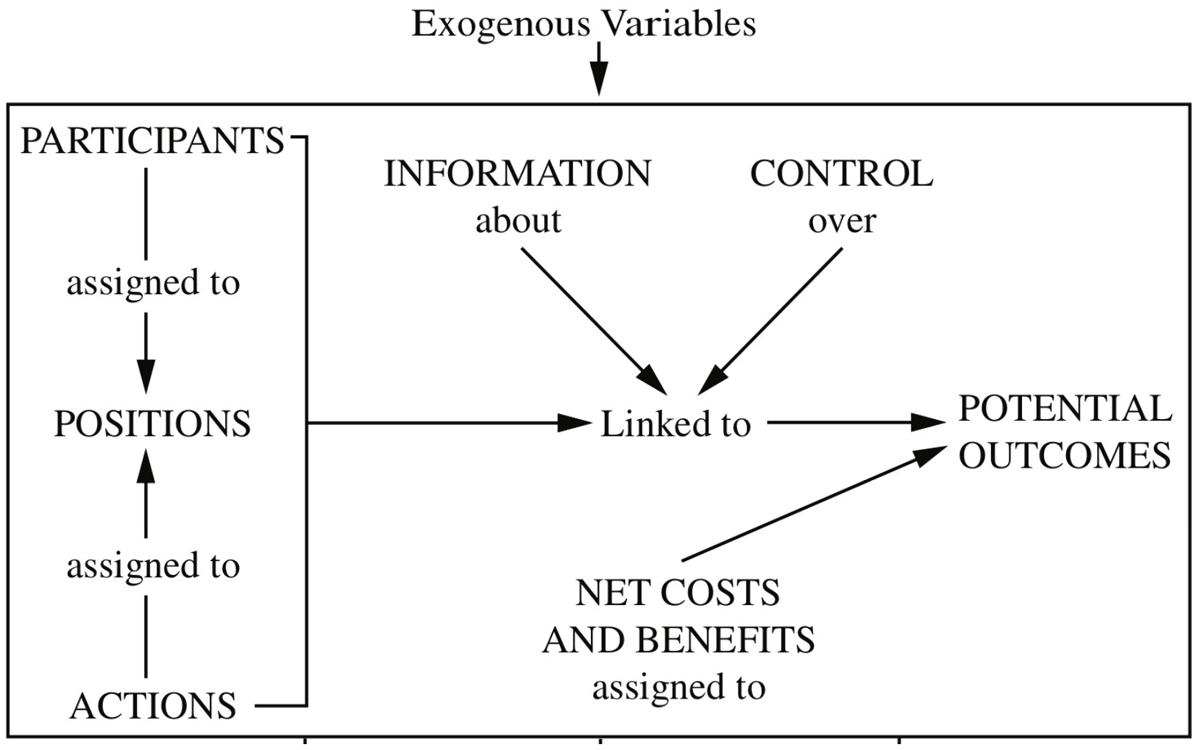
Figure 2
(Adapted from Ostrom, 2005, p. 33).
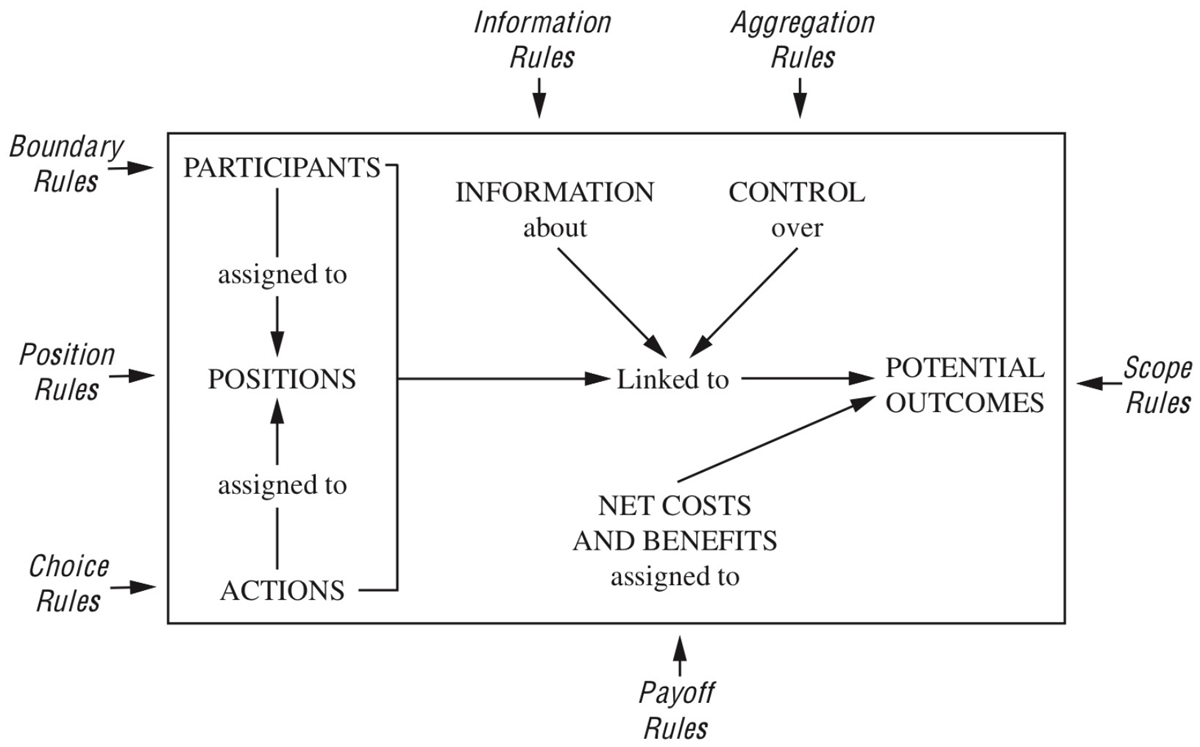
Figure 3
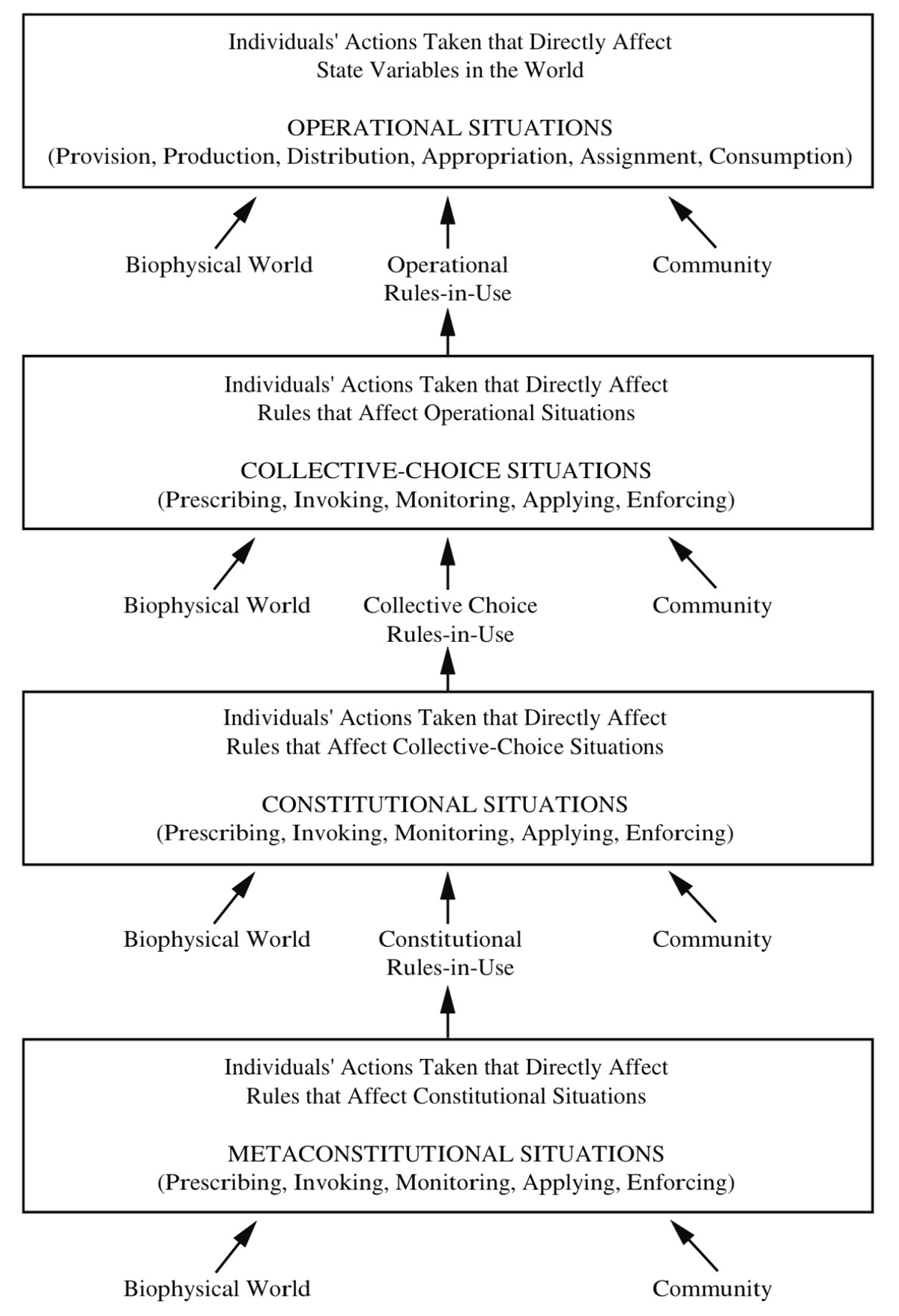
Figure 4
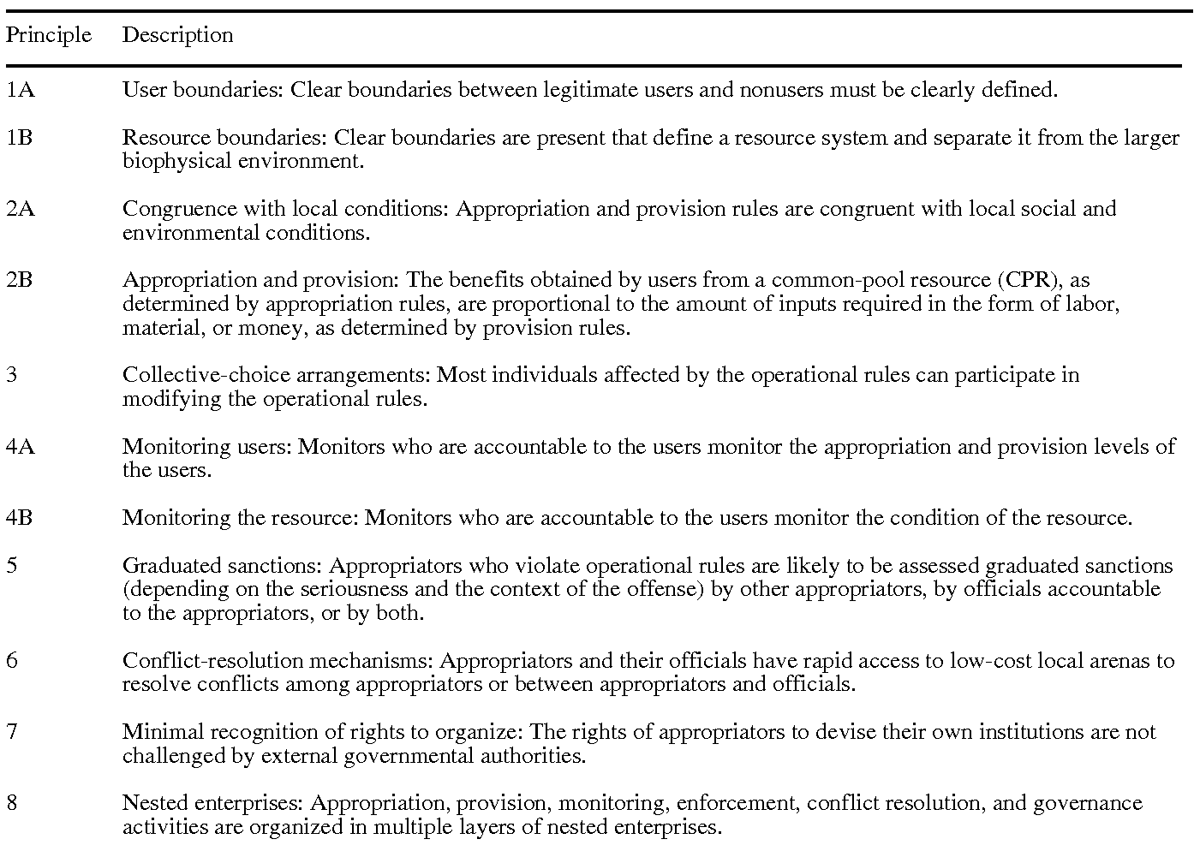
Figure 5
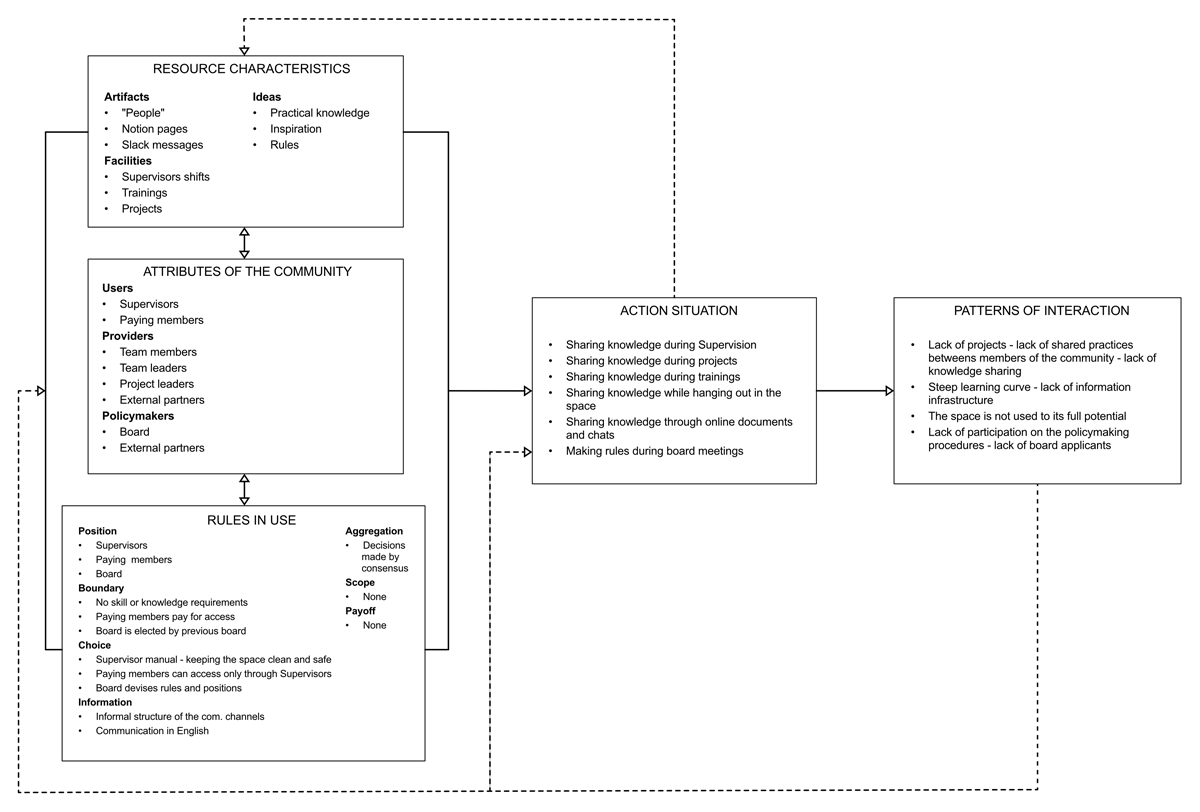
Figure 6
Visual overview of the findings (authors’ elaboration).
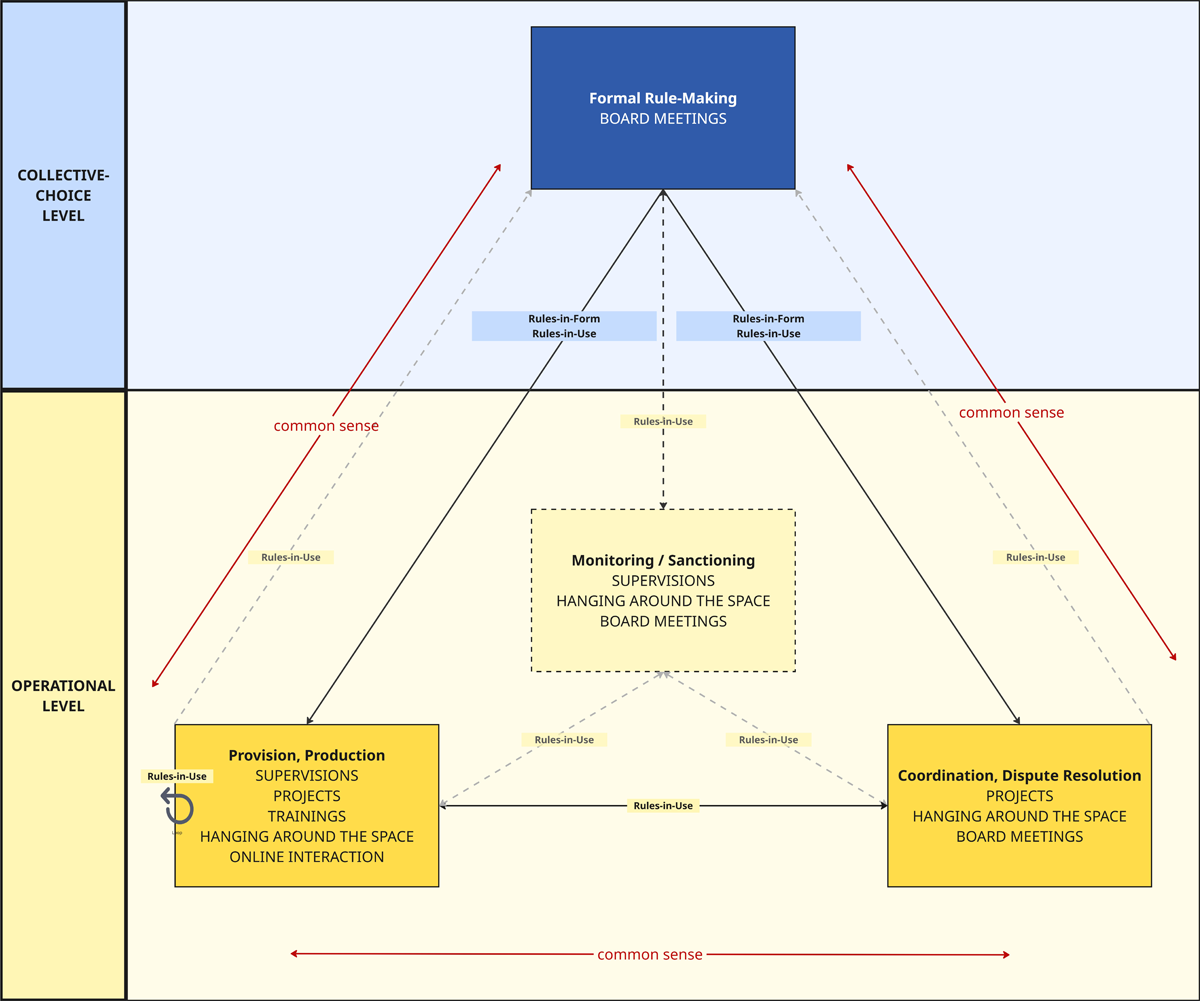
Figure 7
Network of adjacent action situations in MSD (authors’ elaboration).
Table 1
Presence of Ostrom’s design principles, as modified by Cox et al. (2010), in MSD (authors’ elaboration).
| NO. | PRINCIPLE | PRESENCE IN MSD |
|---|---|---|
| 1A | User Boundaries | Yes: it is mostly clear who is member of the community and who not |
| 1B | Resource Boundaries | Yes: only people with key from the gate can access the MSD |
| 2 A | Congruence with Local Conditions | No |
| 2B | Appropriation and Provision | No |
| 3 | Collective Choice Arrangements | Weakly |
| 4A | Monitoring Users | No (only for tool operation) |
| 4B | Monitoring the Resource | No (only the tools) |
| 5 | Graduated sanctions | No |
| 6 | Conflict Resolution Mechanism | No |
| 7 | Minimal Recognition of Rights | Yes: the MSD is recognised by the Dutch law |
| 8 | Nested Entreprises | Weakly |