Have a personal or library account? Click to login
Governing Communal Forests in Rural Zimbabwe: The Incentive Mechanisms Embedded Within Governance Structures Cover

Governing Communal Forests in Rural Zimbabwe: The Incentive Mechanisms Embedded Within Governance Structures

Open Access
|Aug 2026

Figures & Tables

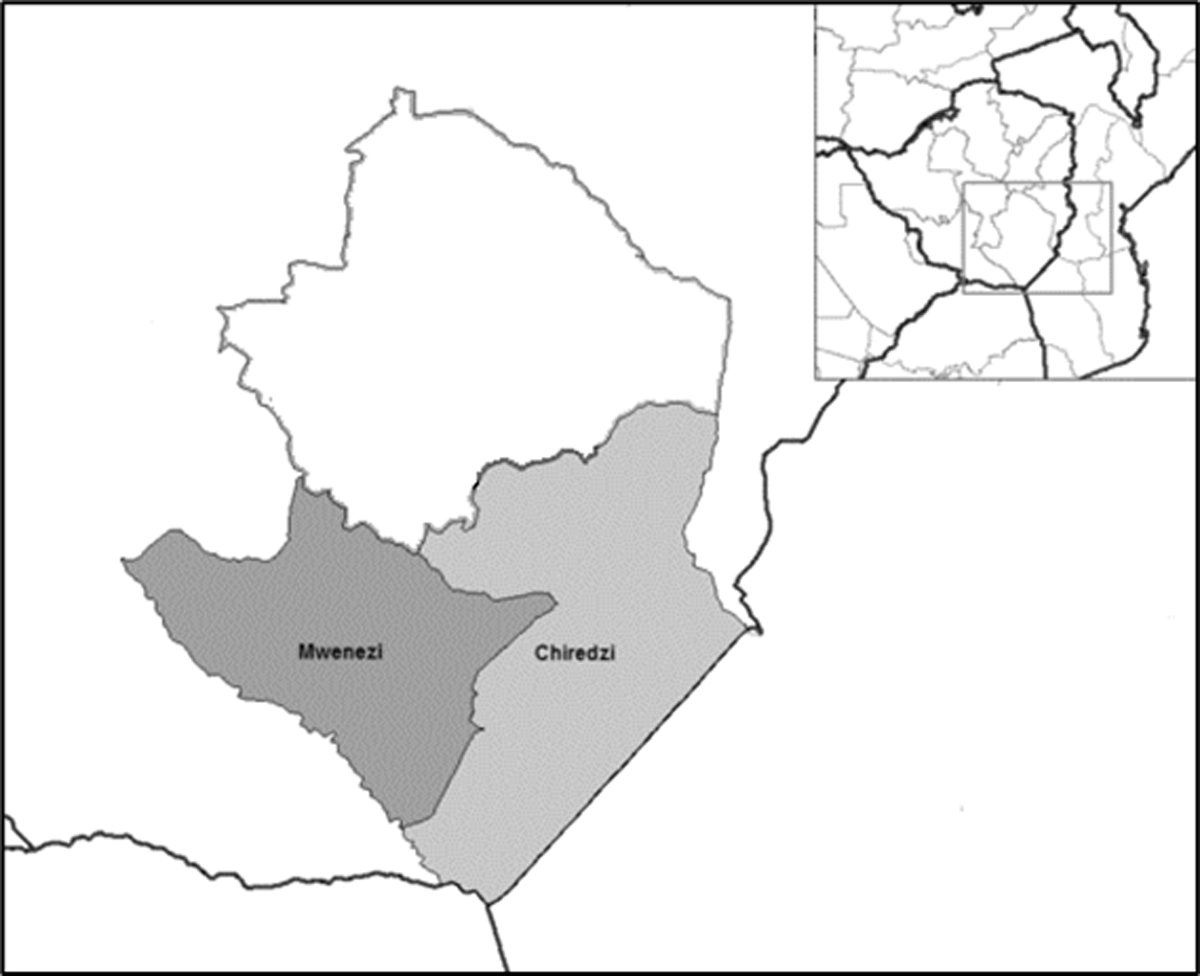
Figure 1

Map of Mwenezi and Chiredzi districts study sites in Zimbabwe.

Source: Adapted from https://commons.wikimedia.org/w/index.php?curid=3840468.

Table 1

Summary of interviewees.

ACTOR TYPEACTOR NAMENUMBER OF INTERVIEWEES
Rural householdsChiredzi Ward 11 (Chikombedzi) and Mwenezi Ward 13 (Masaswe/Chingwizi)22
Traditional leaders (village heads)11
Non-governmental organizations(PhytoTrade Africa, SAFIRE, Bio-Innovation Zimbabwe).4
Private traders (individual business owners)Afrideli, B’Ayoba, Chipundo produce, Innscor, Tulimara-SFA, Utsanzi and 2 vendors.8
Governmental organizationsForestry Commission, Environment Management Agency4
Table 2

Summary of findings.

MECHANISMGOVERNANCE STRUCTURESDETAILSGOVERNANCE CHALLENGES
Moral mechanismTaboos and norms
  • Indigenous fruit trees are not cut

  • Traditional rainmaking ceremonies under sacred trees

  • culturally NTFPs are not supposed to be sold

  • applicable to the natives thus leaving outsiders.

Social relationships and reciprocity
  • an area under the jurisdiction of one chief sometimes ignores village boundaries

  • absent or limited state presence.

Material mechanismMultilateral environmental agreements
  • Zimbabwe became party to the UNCBD which paved way for the access to funds from GEF Small Grants Program (GEF/SGP)

  • parallel power structures created to meet legal requirements are causing problems of allegiance and legitimacy.

  • lack or low demand of the NTFP, the projects or both

  • difficult to work in groups to establish enterprises for processing and marketing for some NTFPs due to spiritual beliefs and magic practices; and taboos

Programs and projects
  • Southern Africa Regional Natural Resources Management Project NRMP I (1989-1994) was fully financed by USAID

  • The UNDP/GEF supported the implementation of the activities mentioned in the NBSAP through the Conservation and Sustainable Use of Traditional Medicinal Plants in Zimbabwe Project

Mutual reassurance mechanismSafety standards
  • EU novel foods approval, Generally Recognized as Safe (GRAS),

  • most companies request results from laboratories in South Africa, only a few accept results from local laboratories at Standards Association of Zimbabwe

  • membership is conditional for trading

  • highly prescriptive and technically burdensome which breeds a tendency to trade NTFPs through the informal channels which are barely monitored

  • the costs to local collectors who want to regularize production, processing and marketing are exorbitant

Sustainability standards
  • verified assurance of ethical sourcing, sustainable harvesting, organic certification and fair trading

Internal audit measures
  • BÁyoba has set up an internal control system for members

  • PhytoTrade works with members through their pre-qualified supplier (PQS) system

Empowerment mechanismCoalitions
  • The Southern African Marula oil producers’ network was formed to enable the sustainable marketing of Marula oil products

  • PhytoTrade Africa was formed to promote trade in novel indigenous plant derived ingredients or natural products

  • PhytoTrade Africa also ensures that natural products have legitimate Intellectual Property and Access and Benefit Sharing arrangements for its members

  • projects were started but not completed due to lack of funds

  • uptake by other donors failed except for a few isolated cases

Capacity development
  • SAFIRE with funding from Liechtensteinischer Entwicklungsdienst (LED)-Zimbabwe are supporting the Carbon reduction project in Chiredzi

DOI: https://doi.org/10.5334/ijc.1591 | Journal eISSN: 1875-0281
Language: English
Page range: 291 - 304
Submitted on: May 28, 2025
Accepted on: May 29, 2026
Published on: Aug 3, 2026
Published by: Ubiquity Press
In partnership with: Paradigm Publishing Services

© 2026 Grace Mudombi-Rusinamhodzi, published by Ubiquity Press
This work is licensed under the Creative Commons Attribution 4.0 License.