
Introduction
Forest products and services are essential to the livelihoods of rural communities (Chivenge et al., 2015, Hazari et al., 2025). Most rural households combine agricultural production with the collection of forest produce and directly rely on many such products as food, animal feeds, fuel, and medicines for basic sustenance. As stated in Shukla and Pandey (2015), indirectly numerous other forest products contribute to food security as they are used to make farm implements, for food storage or preservation, or are traded and marketed to ensure that basic needs are met. Some forest resources may be used exclusively by a small local community while others involve many different groups (Pérez et al., 1996). In 1990, approximately 71% of Zimbabwe’s population lived in rural areas, and in 2023 approximately 67% of Zimbabwe’s total population still lived in rural areas (Cilliers, 2025) and depended directly on forest resources for everyday needs. And almost 30% of the total income for some households is from forest resources (Frost et al., 2007). This highlights the centrality of rural populations for the future of the bulk of Zimbabwe’s biodiversity and the linkage between conservation and development (Murphree, 2000).
According to Marshall et al. (2006) and Belcher and Schreckenberg (2007), production through harvesting, value addition, and marketing of Non-timber Forest Products (NTFPs)1 can help deter destructive utilization of forest resources, incentivize ecological preservation of individually valuable species and the environment in which they grow. However, commercialization of NTFPs has produced mixed results for both forest and livelihood across different products and communities (Ingram, 2017, Mudombi-Rusinamhodzi and Thiel, 2020). As Murphree (2000) notes, successful community-led conservation remains the exception rather than the norm. The broad picture remains one where successes of community participation in conservation and governance initiatives stand as islands in a sea of initiatives. Both individual and collective action are shaped by economically ‘rational’ incentives and socially embedded motivations (Cleaver and Nyatsambo, 2011). Actors participate in the governance of communal forests depending on how they weigh the dis/incentives of negotiating, agreeing, monitoring, enforcing and adapting institutions (Thomson and Schoonmaker Freudenberger, 1997). The dis/incentives are related to transaction costs of governance, as governance instruments (institutional arrangements) serve to formalize mutual expectations of cooperative behavior, enforce compliance through sanctions, and, thereby, reduce the transactions costs to an individual (Cleaver and Nyatsambo, 2011, Rusinamhodzi, 2023). Not only do individual decisions have an immediate effect on the resource, they also have secondary effects on future actions of others in the community thereby shaping resource use patterns by both individuals and the community as a whole (Thomson and Schoonmaker Freudenberger, 1997).
In this study, the focus is on the dis/incentive mechanisms of the governance instruments for governing communal forests. This research is an effort to decompose group/communal action into individual actions so as to explain collective outcomes in terms of individual motivations. The study is guided by the following main research question: what are the governance instruments that influence communal forest governance, and the dis/incentives embedded within? To understand the motivations for the governance of communal forests, the paper starts by conceptualising the discriminative alignment hypothesis of Transaction Costs Economics followed by the methods section which highlights the study site, data collection, and data analysis tools. The analytical sections first identify the governance instruments, describe the dis/incentive mechanisms embedded within an instrument and how the mechanisms purportedly work. The discussion section deliberates on the implications of the dis/incentives on the governance of forest resources in communal areas. The last section is a conclusion. This study is crucial in offering insights relevant to policy formulation on the conservation of communal forests.
The transaction costs approach
Governance is an effort to craft order to mitigate conflict and realize mutual gains (Hagedorn, 2009, Williamson, 2000). Governance is characterized by interactions among actors to produce and enforce socially binding decisions in a particular context based on social interdependencies (Rametsteiner, 2009, Kooiman et al., 2005). In governing common-pool resources, cooperation or free-riding are not only the outcomes of weighing up expected social and economic costs generated by the common-pool resource itself (internal variables) but also of the consideration of alternative options embedded in the external contextual factors (Edwards and Steins, 1999). Actors are intendedly rational and an actor’s choice of strategy in any situation depends on how they perceive and weigh the benefits and costs of various strategies and their likely outcomes (Ostrom, 2011). As such external contextual factors define: (i) what is physically, legally, economically and socially feasible in terms of the supply of products and services and (ii) what is economically, socially and culturally desirable by establishing the demand factor (Edwards and Steins, 1998). Ultimately, the existing governance arrangements in the present are the result of successful transaction cost-minimizing efforts in the past. In the present, further effort is always being made to reduce transaction costs (disincentives), as circumstances and competitive environments change (Buckley and Chapman, 1997). Governance is all about ex-ante incentive alignment and ex-post administration (Williamson, 1996).
Transaction costs of governance are costs of actors informing themselves about options as well as the costs of negotiating, agreeing, monitoring, enforcing and adapting institutions (Thiel et al., 2012). Therefore, transaction costs of governance include the time, effort, material, and financial costs involved in deciding to coordinate human actions, monitoring the application of the rules and ensuring compliance; and resolving conflicts when disputes erupt concerning how new rules are enforced (Thomson and Schoonmaker Freudenberger, 1997, Imperial, 1999). The discriminating alignment hypothesis (Williamson, 1981, 1996) suggests that actors choose those institutions that minimize transaction costs to coordinate transactions as governance structures (Williamson, 1996). Depending on the total level of transaction costs, agents are able to align governance structures in a transaction cost minimizing way (Thomson and Schoonmaker Freudenberger, 1997).
The transaction costs of governance depend on the processes by which institutions are invested with stimuli functions comprising dis/incentives. However, the interactions of the governance instruments, heterogeneities of interests or identities, inequalities and path dependencies are characterized by processes at multiple social and institutional levels (Agrawal, 2007). These dynamics demonstrate that dis/incentives are a combination of both tangible and intangible costs/benefits which implies that conservation is a social, economic, and political issue (Rosendal, 2013) where actors both internalize norms through social learning, and comply with norms based on strategic calculations (Dimitrov, 2005). Hence the need to evaluate beyond rational choice framings, to recognize the link between norms, governance and international institutions to both tangible and intangible costs/benefits that sustain collective action.
For a systematic ordering of the analyses, this study adopts an institutionalist perspective on governance by integrating Dimitrov (2005)’s and Rosendal (2013)’s complementary models of normative influence and incentive structures. Dimitrov distinguishes between two mechanisms: a constructivist approach, where decision-makers internalize norms through social learning, and a rationalist view, where actors comply with norms based on strategic calculations shaped by domestic and international pressures and opportunities (Dimitrov, 2005). Building on this, Rosendal (2013) identifies four institutional mechanisms that incentivize participation in governance (coordination of transactions). Together, these models provide a lens through which the study examines how governance structures shape actor behaviour and participation. The lens views the incentive component as a combination of both tangible and intangible benefits which implies that conservation is a social, economic, and political issue. The four institutional mechanisms operate along a continuum, where the presence or absence of one can influence the effectiveness of the others (Rosendal, 2013). These are:
Moral mechanisms, which rely on informal mechanisms that oblige actors to enforce what is informally held to be legitimate governance community expectations, with non-compliance often leading to informal community sanctioning such as social disapproval.
Material mechanisms, which rely on material compensations to improve the actor’s capacity and ability to absorb transaction costs.
Mutual reassurance, where institutions mitigate uncertainties related to free-rider problems, rent-seeking behavior, and externalities through monitoring and sanctions.
Empowerment mechanisms, which enhance local participation from individuals and civil society groups (Rosendal, 2013) by improving their advocacy at the national level, increasing the extent to which they are taking control of their own lives, and developing new skills and capacity (Jones, 2004). Though the mechanisms for empowerment may also consist of moral and material argumentation, the addressees are individuals or non-governmental organizations rather than governmental agencies (Rosendal, 2013).
Research Method
Description of study site
A field study was conducted in Chiredzi Ward 11 (–21.6383; 31.2624) and Mwenezi Ward 13 (–21.2921; 30.9646) districts in the south-east lowveld of Zimbabwe. South-east Lowveld is in natural regions 4 and 5 characterized by low annual rainfall (<650 mm) and recommended for semi and extensive farming. The vegetation in natural regions 4 and 5 is typical of semi-arid savanna dominated by Mopane woodlands and scrubland, and Riverine woodland along the three major rivers (Runde, Save, and Mwenezi rivers) (Gumbie et al., 2011, Underwood et al., 2024). Most tree species in this region are used for timber, poles, firewood, fruits, and medicines. Thus, the area is well-endowed with a wide diversity of useful NTFPs among them medicinal plants, food, and non-food items (Patterson et al., 2007, Gobvu et al., 2024). Some highly commercialized NTFPs, including Baobab fruits, Marula fruits, Ilala palm leaves products and Mopane worms are found almost exclusively in natural regions 4 and 5. Also, in the study sites, there have been several development initiatives through the Communal Areas Management Programme for Indigenous Resources (CAMPFIRE), Environment and Development Activities (ENDA-Zimbabwe), Southern Alliance for Indigenous Resources (SAFIRE), BÁyoba, and Tulimara-Specialty Foods of Africa (Tulimara-SFA) that have promoted marketing of various NTFPs under community-based natural resources management projects (Odero, 2004, Munondo, 2005). Figure 1 shows the location of Mwenezi and Chiredzi districts study sites in Zimbabwe.
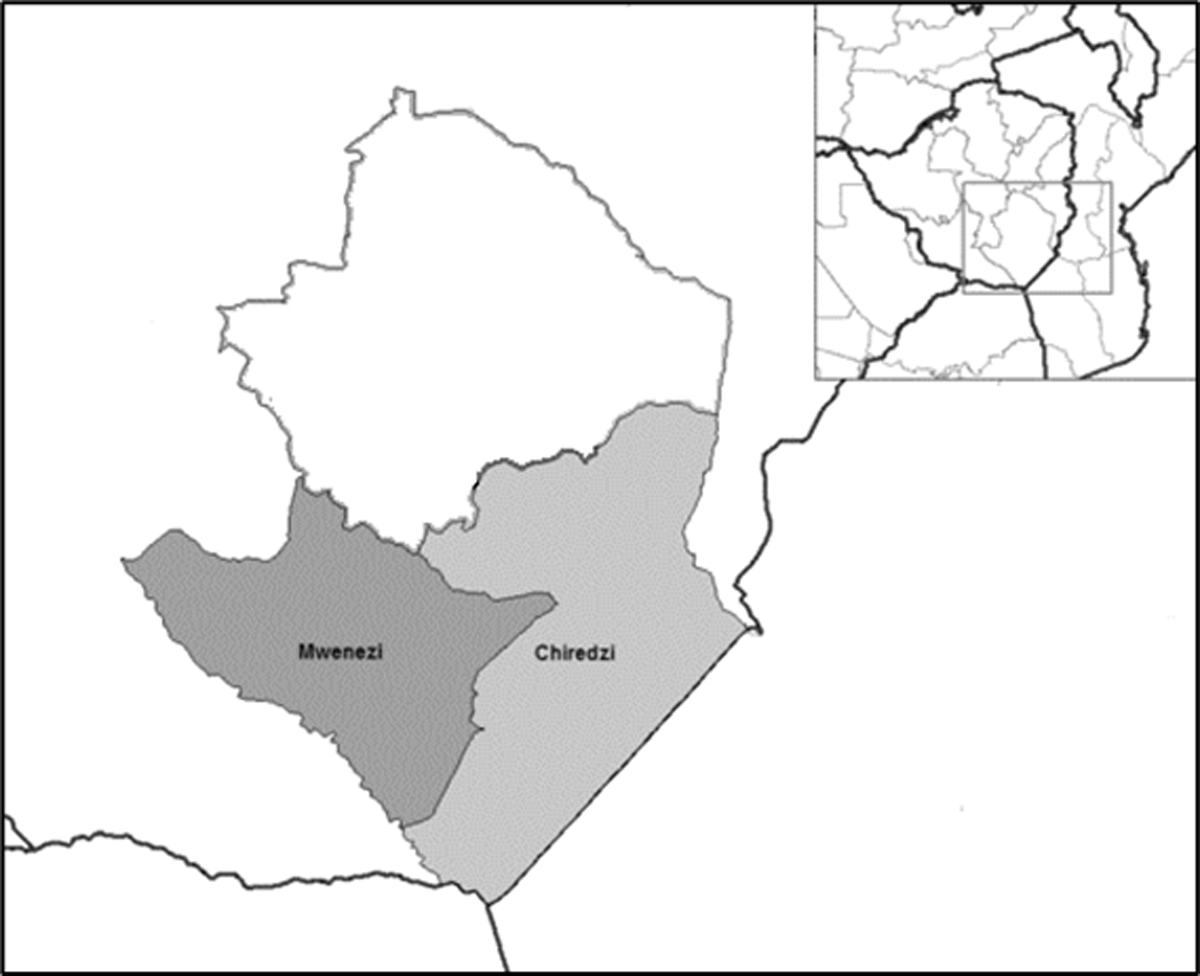
Figure 1
Map of Mwenezi and Chiredzi districts study sites in Zimbabwe.
Source: Adapted from https://commons.wikimedia.org/w/index.php?curid=3840468.
Data collection and analysis
Primary data was collected using a combination of semi-structured interviews, narrative interviews, and focus group discussions first in April–May 2017 followed by a second visit from August-October of the same year. Purposive sampling was used for individual interviews of rural inhabitants, and the snowballing method was used for sampling of the different practitioners engaged in market-driven harvesting of NTFPs or conservation of communal forests. Interviews for rural inhabitants covered eight villages in Chiredzi Ward 11 (Chikombedzi) and 11 villages in Mwenezi Ward 13 (Masaswe/Chingwizi). Interviewees included 22 rural households involved in NTFPs production and marketing, 11 traditional leaders (village heads) who have the jurisdiction over communal forests, four non-governmental organizations promoting the marketing of NTFPs, eight private traders who are individual business owners who source NTFPs from communal forests, four governmental organizations into forest resources conservation, among others. This description of interviewees is summarized in Table 1.
Table 1
Summary of interviewees.
| ACTOR TYPE | ACTOR NAME | NUMBER OF INTERVIEWEES |
|---|---|---|
| Rural households | Chiredzi Ward 11 (Chikombedzi) and Mwenezi Ward 13 (Masaswe/Chingwizi) | 22 |
| Traditional leaders (village heads) | 11 | |
| Non-governmental organizations | (PhytoTrade Africa, SAFIRE, Bio-Innovation Zimbabwe). | 4 |
| Private traders (individual business owners) | Afrideli, B’Ayoba, Chipundo produce, Innscor, Tulimara-SFA, Utsanzi and 2 vendors. | 8 |
| Governmental organizations | Forestry Commission, Environment Management Agency | 4 |
All key informants’ interviews were triangulated with information available on the government of Zimbabwe websites, international conventions websites, and NGO websites. A total of four focus group discussions; two in Mwenezi Ward 13 and another two in Chiredzi Ward 11. Secondary data included 14 NGO reports and 11 News articles. Thematic content analysis was used to analyze the data. Thematic content analysis is a qualitative descriptive method used to identify patterns, recurring themes, and relationships within a dataset (Vaismoradi et al., 2013, Clarke and Braun, 2013). Data was coded using an R-package for Qualitative Data Analysis (RQDA) (Chandra and Shang, 2017) to identify the common threads and pertinent data excerpts. The results were presented in the form of a data story. Data storytelling is the concept of building a compelling narrative that shows context based on complex data thereby upending the public’s assumptions about a causal relationship (Matei and Hunter, 2021, Lee et al., 2015). To make the data story, the common threads and pertinent data excerpts extracted through coding in RQDA were assembled into a storyline.
Results
The aim of this section is to analyze the governance structures that influence communal forest governance, describe the dis/incentive mechanisms embedded within an instrument and how the mechanisms purportedly work. The results are summarised in Table 2.
Table 2
Summary of findings.
| MECHANISM | GOVERNANCE STRUCTURES | DETAILS | GOVERNANCE CHALLENGES |
|---|---|---|---|
| Moral mechanism | Taboos and norms |
|
|
| Social relationships and reciprocity |
|
| |
| Material mechanism | Multilateral environmental agreements |
|
|
| Programs and projects |
| ||
| Mutual reassurance mechanism | Safety standards |
|
|
| Sustainability standards |
| ||
| Internal audit measures |
| ||
| Empowerment mechanism | Coalitions |
|
|
| Capacity development |
|
Moral mechanism
Taboos and norms
In both Chikombedzi and Mwenezi, the inhabitants indicated knowledge of taboos and norms around forest resource use and management. Several indigenous fruit trees including Marula trees and Baobab trees are still regarded as sacred trees. Some of the large indigenous trees such as Pod mahogany are used for shade when holding traditional ceremonies, village meetings, and other rituals thereby signifying cultural significance. Sticks and stones were not allowed to be thrown to bring down fruits but in 2017 when there was a hype for selling baobab fruits, people climbed and used poles/hooks (zvingongova) to bring down fruits. Also, the disposal of baobab shells is deeply intertwined with local spiritual beliefs. It is considered taboo to leave the shells scattered around, especially near residential yards, as doing so is thought to attract lightning strikes. Nevertheless, a representative from a local NGO explained, “In most of those areas that do Baobab projects they cannot afford inorganic fertilizers, so we say (after shell removal and pulp extraction for marketing) just throw the shells in the fields. If they put it in the fields this year, it will be effective next year. It’s a very good organic fertilizer”. Despite the traditional prohibitions, nobody was prosecuted for disregarding the taboos because some traditional leaders, or members of their household, along with their friends, and relatives were also involved in the violation of these taboos. Moreover, no lightning-related disasters were reported as a result.
Traditional leaders emphasized that though nowadays they accept the marketing of NTFPs, culturally NTFPs are not supposed to be sold. Marula fruit is an ingredient for Marula fruit alcoholic beverage (Mukumbi) which is used for traditional rainmaking ceremonies. Also, forest products (particularly Mukumbi) used to be shared for free thus bringing people together, but now it is sold thereby excluding villagers who cannot afford, to socialize with others. The absence of such events which bind all people together was associated with the disunity and lack of cooperation in implementing development projects within communal areas. One traditional leader bemoaned that people who are travelling on foot are now going hungry as people are harvesting everything for sale; when long ago even people from neighboring Mozambique would walk through their forests en route to South Africa (Wenera) and would survive on indigenous fruits. According to the traditional leaders, the situation is exacerbated by people who are collecting baobab and Marula fruits for a pittance to make any tangible difference to their lives. During interviews, a traditional leader in Mwenezi stated that, “From our culture all natural resources should not be sold. To make matters worse, people are collecting these fruits for far too little to make any tangible difference. For anyone to be able to buy a goat, you should have collected five to six 50 kg bags of Baobab fruit. Imagine everyone picking such quantities from our forests”.
Resettled farmers in Mwenezi stated that “they do not know” about the sacred areas in the resettlement areas. This results in the harvesting of NTFPs without seeking permission from the spiritual owners of the land and conveniently enables harvesting even in no-take zones as well as from sacred forests. Under traditional beliefs forests are generous but if traditional beliefs are violated and the proscribed edicts are not adhered to; the forest becomes angry. A violation of harvesting rules is believed to result in the forests/trees withholding their produce in subsequent years, periods of drought, plagues, pestilence, and unexplained migration of game and birdlife. Some rural inhabitants have associated the violation of taboos and customs with the now dwindling Mopane worm harvest in the A1 resettlement areas. One villager in Mwenezi stated that, “When we were resettled into this area in 2001, there was Mopane worms everywhere. If Mopane worm were not being sold maybe God was going to help us recover from this dwindling harvest”.
Social relationships and reciprocity
The use of communal forest resources is hinged upon reciprocity and social relationships which results in erasing boundaries so anyone interested in crossing over to another village to harvest Mopane worms can do so. One villager remarked that, “Most of the people coming to Masaswe for Mopane worms are their relatives or neighbors from their previous homelands Negari and Mfula before the Fast-track Land Reform Program (FTLRP). Making people, especially a relative to pay or even just denying them access is socially unacceptable”. However, the maintenance of social relationships comes with a huge cost as villagers tend to protect their relatives even in the event of veld fires or overharvesting. “We don’t normally sell-out because if a person appears before the traditional court, they will be made to pay a fine of a beast or a herd of goats. I cannot afford to break our relationship because of a fire. We will pretend like we don’t know, and it ends there”. Also, people who come from other areas increase competition for high-value NTFPs such as Mopane worms. They camp in the forest which gives Mopane worms no chance to burrow for ‘seed’ preservation. Previously, people would only be allowed to harvest Mopane worms after thanksgiving ceremonies at the sacred shrines. This was a sustainable practice that made Mopane worm populations thrive as locals would take live Mopane worms to the shrines. But outsiders rarely observe local customs and traditions, and locals feel incapable of limiting the level of harvest or stopping outsiders from harvesting. A traditional leader from Mwenezi bemoaned, “But those outsiders, they don’t take it (following local rules) seriously, they don’t take it as an important thing. They just come in and start harvesting in their own way, processing in their own way, they don’t care. So, I don’t know now how the government will handle things”.
Material mechanism
Multilateral environmental agreements
The United Nations Convention on Biodiversity (UNCBD) signed at the Earth Summit in Brazil in 1992 entered into force in 1993. To facilitate the implementation of programs and projects and the meeting of objectives of international environmental conventions and agreements, the United Nations Development Program’s Global Environment Facility (GEF) was established during the Earth Summit to provide funding to signatory countries. From the country profiles on the UNCBD website, Zimbabwe became party to the UNCBD in 1992 and ratified it in 1994 which paved the way for the GEF Small Grants Program (GEF/SGP) implementation from 1993 to 2005. As a recipient of GEF support, the Government of Zimbabwe developed the country’s first National Biodiversity Strategy and Action Plan (NBSAP) in the year 2000. In 1991, the 1987 National Conservation Strategy received a five-year financial boost from the Canadian International Development Agency (CIDA) through the Zimbabwe Natural Resource Management Programme. The Strategy broadened the mandate of coordinating all conservation and environment matters resulting in the creation of the Ministry of Environment and Tourism.
As a response to the 1987 National Conservation Strategy and 1992 Agenda 21, Zimbabwe introduced District Environmental Action Plans (DEAPs) in 1994 and reformed its environmental laws culminating in the enactment of the Environmental Management Act in 2002 which provided for the preparation of National Environment Action Plans (NEAPs) by the minister of environment and Local authority Environmental Action Plans (LEAPs) since 2003. A representative from Environmental Management Agency stated that, “Based on the Environmental Management Act, there should be local environmental action planning within communities. So, we get resources yearly, for capacitation of local communities so they can open their minds in managing resources, so that they do the planning and in turn can implement projects for environmental management”. While NEAP is an environmental plan for the management of the country’s environment, the LEAPs are local plans that local authorities develop for the management of the environment within areas under their jurisdiction. However, upon realization that the LEAPs is a district plan that might not be fully representative of environmental issues at ward and village levels, the Environmental Agency has seen the need to develop ward and village plans; Ward Environmental Action Plans (WEAPs) and Village Environment Action Plans (VEAPs) respectively. One villager in Chikombedzi remarked that “This area needs an EMA committee like in other villages because on our own we have failed”.
Mutual reassurance mechanism
Safety standards
Formal marketing channels involve relatively high-quality international standards. To export to the European Union, i.e. the biggest market for NTFPs from PhytoTrade members, an application for novel foods approval has to be made before the launch of the new product. A founder of an NGO stated that, “We had to satisfy the Novel foods requirements for Europe and in the United States, we had to substantiate efficacy claims and that the new ingredient is safe”. PhytoTrade Africa applied for EU novel foods approval for the use of baobab pulp as a food ingredient within the EU in August 2006 and spent not less than £15 000 in the process. Baobab fruit was granted the European Union (EU) Novel Foods Regulation (EC) No 258/97 approval to have access to European markets in 2008 through PhytoTrade Africa. Approval for the Generally Recognized as Safe (GRAS) status to have baobab used as a food ingredient in the United States of America was received in 2009. A private producer also stated that, “To export Baobab fruit pulp to Japan, a laboratory analysis is required for every batch -the bacterial count, Escherichia coli tests and Phytosanitary, nutritional requirements as well. Some of the companies accept results from local laboratories at the Standards Association of Zimbabwe (the main institution for setting standards in Zimbabwe) but most request results from laboratories in South Africa”.
Sustainability standards
In 2007, PhytoTrade Africa and others instigated a process on the sidelines of the UNCBD that led to the establishment of the Union for Ethical BioTrade (UEBT). A representative of PhytoTrade Africa stated that, “I could see that there were some manufacturers that had a very strong interest in ensuring that their supply chains were sustainable and ethical. But there were other manufacturers that couldn’t care less and there was no way to differentiate them. So, it occurred to me that we needed some sort of independent verification system to show that we are sustainable. We hooked up PhytoTrade Africa and some other producers mostly in Latin America and we instigated a process on the side lines of the UNCBD. And we started a process that led to the establishment of the Union for Ethical Bio Trade”. The UEBT certification program for natural ingredients began in 2015 and the UEBT ethical sourcing system certification began in 2018. Through the BioTrade Seed Fund and Technical Assistance Facility, the UEBT supports businesses financially to transition from artisan to industrial-scale manufacturing, increase quality control and standards, and expand ingredients and products into new export markets. PhytoTrade Africa has also provided certification grants to members. Certification has been done through Ecocert-Afrisco which has accreditation for IFOAM-Organics International Norms, ISO/IEC Guide 65 and EU equivalence. Efforts have also been made to develop a harmonized global standard with the UEBT for NTFPs certification.
All marketing of NTFPs must comply with the requirements for using plant resources agreed under international treaties and protocols within the UNCBD. Like under the UNCBD, companies need to comply with the Nagoya Protocol’s guidelines for accessing and utilizing genetic resources and traditional knowledge, as well as the fair and equitable sharing of benefits. The guidelines created a benchmark against which the Ethical BioTrade standards for ecological sustainability, organic, wild harvesting, access, and benefit sharing, Fair Trade, and product safety and efficacy standards are assessed. Global markets include Italy, the United Kingdom, Sweden, Australia, and the USA, and locally, a sizable local market for several NTFPs is available through local produce markets, supermarkets, and pharmacies. Thus, taking part in community producer groups means being bound by certification standards, rules, and norms though it also means access to export markets.
Internal audit measures for transparency
NGOs and private traders have helped NTFPs producers meet international standards, quantities, and quality required through improved storage and processing technologies, coupled with supporting services to provide the required marketing, business, and organizational skills to successfully run a small-scale enterprise. As stated in the FairWild Manual for Internal Control Systems Wild Collection, certification schemes such as FairWild require certified member companies such as B’Ayoba to implement a resource management framework to ensure sustainable harvest levels; and establish fair trade partnerships with the communities. This saw FairWild introducing an Internal Control System (ICS). According to the United Nations Conference on Trade and Development (UNCTAD)’s BioTrade Initiative report, since 2007, to help meet regulatory requirements PhytoTrade Africa introduced the Pre-Qualified Supplier (PQS) system which gave priority on commercial orders to members with demonstrable capacity to produce, process, and export natural products reliably to agreed quality and pricing specifications. Both the PQS system and ICS enable standards compliance by producer groups. Producer group activities create a platform for dialogue; assurance systems for transparency of operations; credible traceability systems and product claims; and enable the creation of commercial partnerships and access to niche markets.
Programs and Projects
Several programs to address the problem of deforestation have also been put into place as part of Zimbabwe’s National Strategy for the sustainable management of forests. Southern Africa Regional Natural Resources Management Project NRMP I (1989–1994) was fully financed by USAID through an agreement with the government of Zimbabwe. The project was designed as a pilot initiative to test the CAMPFIRE hypothesis on a limited scale before committing more substantial USAID resources. USAID expanded its support to CAMPFIRE through NRMP II (1994–2003). The country-level goal of NRMP II was to use natural resource management to develop economically sustainable communities on lands marginally suitable for agriculture (Taylor, 2006). Another notable project was the UNDP/GEF Conservation and Sustainable Use of Traditional Medicinal Plants in Zimbabwe Project Number Zim/01/g35/a/1 g/99 which ran from 2002–2007. According to a project evaluation report, the Traditional Medicine Project aimed to implement the activities mentioned in the NBSAP, which was developed by the Government of Zimbabwe with financial support from UNDP/GEF. The project objectives were to promote the conservation, sustainable use, and cultivation of endangered medicinal plants in Zimbabwe.
Empowerment mechanism
Coalitions
The Southern African Marula oil producers’ network was formed in the year 2000 to facilitate the sustainable commercialization of Marula oil products in southern Africa and to satisfy an opportunity with The Body Shop in terms of Marula oil volumes. A representative from PhytoTrade Africa stated that, “The Body shop said we would not start using your fair-trade natural ingredients until we know that you can produce 30 tons of oil per year. But we had one project in Rushinga that had produced about 20 kilos and another down in Chiredzi that was maybe doing about 20 kilos of oil, so we were far far far from the 30 tons. So, I realized this isn’t going to work. In early 1998 I said to some of my colleagues, we need to go and look at some other people in the region that are also involved in the same type of activities and see if we can figure out a way to get to scale. We formed a network in 1998 called the Southern African Marula oil producers’ network”. About 2000–2001, The Body Shop agreed to incorporate Marula oil as a community trade ingredient. Thus, for Southern African Marula oil producers’ network to initiate a market for Marula oil with The Body Shop it took a network of four countries in southern Africa: Zimbabwe, Botswana, Namibia, and South Africa. Again in 2001, PhytoTrade Africa a trade association initially called (Southern African Regional) Natural Product Trade Association-NaProTA was formed to promote trade in new novel indigenous plant-derived ingredients or natural products. To ensure consistent supply, PhytoTrade Africa provides technical support and business development advisory services to its members, coordinates production to meet the bulk volume requirements of the market and assists members in attaining the required quality standards for export. PhytoTrade Africa also ensures that natural products have legitimate Intellectual Property and Access and Benefit Sharing arrangements for its members.
Capacity development
According to a project report, SAFIRE rolled out the Managing our Indigenous Tree Inheritance (MITI) project between 1997 and 2001. The goal of MITI was the economic development of communal areas based on sustainable productive use of natural resources, with a focus on woodlands and trees. From 2013–2022, SAFIRE with funding from Liechtensteinischer Entwicklungsdienst (LED)-Zimbabwe supported rural communities to protect 4000ha of community forests under the Carbon reduction project in Chiredzi district wards 13 and 15 to reduce carbon emissions through the protection and enhancement of their forest resources. Furthermore, natural resources management committees in both wards have been trained in carbon assessment methods and they are now conversant with the use of clinometers, diameter tapes, GPS units, and callipers among other tools that are normally used by qualified foresters.
Discussion
The aim of this discussion is to deliberate the implications of the dis/incentives (individual de/motivations) on the governance of forest resources in communal areas. The analysis has revealed that at the village level the moral mechanisms working through legitimacy and perceived obligations have limited sanctioning mechanisms to induce compliance and adherence to cultural practices by outsiders. The presence of outsiders in the harvesting of NTFPs makes it more challenging for traditional leaders to perform their duties. The increasing demand for NTFPs coupled with insubordination on the part of outsiders has resulted in locals redefining sacredness, taboos and norms to enable harvesting from sacred trees and forests. McGregor (1991) states that most of the traditional controls (particularly those associated with the sacred forests) were not solely conservationist but acted to symbolize and enhance the political authority of certain lineages. Therefore, the redefinition of sacredness, taboos and norms is a manifestation of a weakening customary governance system. This is coupled with an absent or limited state presence as the Environmental Management Agency has only one officer per district and one environment monitor per ward. With low resource provisions for the rural district council to administer natural resources management; the statutory framework is largely dysfunctional, inconsistently applied, and indiscriminately enforced (Zinhiva and Chitakira, 2017). Gaps in the governance of communal forests are encountered due to a lack of institutional mechanisms to bind outsiders. Bruce et al. (1993) recommends that where outside users are involved in harvesting for subsistence use, efforts should be dedicated to incorporating the outside users into a joint management strategy rather than on punitive exclusionary measures which are likely to generate resistance.
The material mechanism enhanced the Zimbabwe’s capacity to formulate and enforce environmental policy. Zimbabwe incorporated MEAs into legislative policies which provided for the preparation of NEAPs. In addition to the national level regulations, there was an introduction of regional and village-level rules that govern the use of natural resources through the LEAPs, WEAPs and VEAPs. The LEAPs paved the way for local authorities to work parallel both the rural district councils and the traditional leaders. Campbell and Shackleton (2001) and (Mudombi-Rusinamhodzi and Thiel, 2020) noted that though Zimbabwe’s legislation accords certain powers to traditional leaders, the legislation has also given legal status to another hierarchical system through drawing on MEAs to craft national law thereby creating parallel structures. The duplication of roles and the existence of parallel power structures are creating problems of allegiance and legitimacy (Kowero et al., 2003). Kowero et al. (2003) states that the new structures or practices are created more to appease public expectations or meet legal requirements than to achieve effective implementation. Although the extent to which global forest governance influences local institutions and processes remains unclear, Arts et al. (2024) argues that international institutional arrangements have contributed to a complex forest governance regime accelerating forest loss.
Also, national programs and community-based projects serve as a framework for developing by-laws that regulate access to financial and technical resources necessary for resource monitoring and protection. These initiatives support activities such as fencing critical resources, establishing village natural resource management committees, and conducting periodic resource assessments. Material mechanisms have been instrumental in incentivizing the governance of communal forests. To minimize logistical difficulties in giving financial, technical assistance and support services such as legitimate Intellectual Property and Access and Benefit Sharing arrangements to rural households; rural households have to work in groups (producer groups) of which regular meetings are a major feature especially in the project planning and initiation phase when various rules and regulations are made. Even in the execution and monitoring phases of the projects various tasks, especially with regards to use of machinery as well as repairs, must be coordinated. Also, producer groups need to consistently monitor production practices so as to meet ethical and sustainable harvesting requirements to ensure compliance with certification standards. Rusinamhodzi (2023) suggests that this increases transaction costs of monitoring as members need to monitor for compliance of rules for harvesting related to customary rights, rules for harvesting related to certification standards as well as machinery usage.
Programs and projects activities come with commitments, obligations and internal control systems which provide mutual reassurance thereby reducing uncertainty about free riders. As such material mechanisms through programs and projects may be leveraged to induce important conditions for the activation of the mutual reassurance mechanism. Rosendal (2013) also found that both moral and material mechanisms were important conditions for the activation of the mutual reassurance mechanism for biodiversity policies by member parties to comply with the UNCBD. However, the challenge with inducing the mutual reassurance mechanism through programs and projects is that only participating actors are bound by project regulations related to sustainable harvesting obligations. There is an institutional gap in ensuring that sustainable collection methods are used by all who are using a particular communal forest resulting in disincentives. Once the programs and projects cease subsequent donor engagement are minimal and project continuation by other donors usually fails except for a few isolated cases of continued support (Manjengwa, 2007). The link with the international market also breaks and the sustainable harvesting obligations discontinue. The equipment and machinery introduced through programs and projects are highly specific and cannot be readily redeployed for other purposes. Additionally, Manjengwa (2007) observed that programs that promote conservation and governance of communal forests largely fall short in fulfilling their objectives as the implementation is fragmented and benefits limited to a few villages within one or two wards per district. In some cases, projects were initiated but left incomplete due to funding shortages. Banks et al. (2015) noted that, in the meantime NGOs remain ill-equipped to intervene through projects and overall unable to engage with transformative development agendas.
Standards certification schemes are applied in parallel with the international policy framework, national level policies and laws as well as regulations at a subnational level. All these mechanisms focus on the sustainability of harvesting activities and how the harvesting is carried out, which serves to conserve biodiversity as well as ensuring that the harvesters receive fair prices under ethical working conditions. In addition, marketing of NTFPs is subject to approval of specific market regulations such as European Union’s (EU’s) Novel Foods Regulation (EC) No. 258/97 and the United States Food and Drug Administration for a Generally Recognized as Safe (GRAS) as well as additional buyer requirements relating to quality, packaging and labeling requirements. The guidelines for internal audit measures (ICS and PQS) not only enforce and assess standards for ecological sustainability, organic, wild harvesting, access and benefit sharing, Fair Trade, and product safety and efficacy standards but also give the financial and technical support for harvesters from rural Zimbabwe to govern their forests. Standards certification has an impact on material mechanisms, mutual reassurance and empowerment mechanisms. However, all the above instruments are predominantly ex-ante in character and are therefore directed at creating or changing the attitudes of harvesters or promoting collective action. The ex-post measures to deal with outsiders infringing on the rules and regulations are absent thereby leaving outsiders with neither social constraints nor sanctions for non-compliance with the regulations that come with programs, projects, and certification standards. There is a gap for mutual reassurance mechanism through which mutual expectations among the actors are stabilised. Furthermore, the regulations are costly, bureaucratically burdensome and technically difficult which breeds a tendency to trade NTFPs through the informal channels which are barely monitored (Ingram, 2017, Counsell, 2009).
Conclusion
The moral mechanisms seem to cover natives through taboos, norms, and traditional beliefs; and those involved in formal NTFPs trading through obligations and commitments of certification programs while outsiders and hawkers bypass both spiritual motivations for environmental conservation and formal/informal sanctions for non-compliance with regulations. Through financial support, Zimbabwe has been able to implement several programs and projects and meet the objectives of international environmental conventions and agreements. Financial and technological transfers have also promoted the creation of new institutions for rural households and parallel power structures at the local level as the international standards, commitments and obligations are incorporated into legislative policies. Thus, material mechanisms are playing a key role in fostering collective action and enhancing the governance of communal forests. However, material mechanisms have also created discord between those sanctioned by ancestors versus those elected by the people as the mandate is not always clear at the local level. Overall, the newly created structures are void of a shared value system, collective cohesiveness, shared history and legitimacy derived from kinship and descent which are the pillars of moral mechanism.
The empowerment mechanisms largely driven by NGOs have facilitated the integration of NTFPs producing regions with NTFPs consuming regions which played both an allocative role and an exploitative role. Allocative role in that most NGOs are working with marginalized households by providing resources to support the commercial exploitation of NTFPs. And an exploitative role in that mutual reassurance mechanisms to reduce uncertainty about free-rider problems, rent-seeking behavior and externalities are missing. Overall, the governance system has a complex incentive framework lacking in mutual reassurance mechanisms which are the factors contributing to high transaction costs for governance and continual communal forest resources degradation. Gaps in the institutional mechanisms to govern outsiders make it unappealing for rural households to view the marketing of NTFPs as an incentive for the governance of communal forests. As such it is essential to streamline institutional mandates, reduce duplicative/parallel power structures from material mechanisms, and promote mutual reassurance mechanisms so as to stabilise mutual expectations among all actors using communal forests. A national, multi-stakeholder forest governance strategy that aims to move beyond fragmented, reactive governance and toward a more coherent, inclusive of outside users, and enforceable system would empower Zimbabwe’s communities to sustainably manage and benefit from their forest resources.
Abbreviations
CAMPFIRE Community Areas Management Plan for Indigenous Resources
UNCBD United Nations Convention on Biodiversity
DEAPs District Environmental Action Plans
EMA Environmental Management Agency
GEF/SGP Global Environment Facility/Small Grants Program
GO Governmental Organizations
GRAS Generally Recognized as Safe
ICS Internal Control System
LEAPs Local authority Environmental Action Plans
NGO Non-Governmental Organizations
MEAs Multilateral Environmental Agreements
NEAP National Environment Action Plan
NRMP Natural Resources Management Program
NBSAP National Biodiversity Strategy and Action Plan
NTFPs Non-timber Forest Products
PQS Pre-Qualified Supplier
RQDA R-package for Qualitative Data Analysis
SAFIRE Southern Alliance For Indigenous Resources
SFA Specialty Foods of Africa
MITI Managing our Indigenous Tree Inheritance
UEBT Union for Ethical BioTrade
VEAPs Village Environment Action Plans
Notes
[1] NTFPs encompass all biological materials, other than timber, which are extracted from ‘natural’ systems, the remnants of ‘natural’ systems or managed systems RUSINAMHODZI, G. 2023. Market-driven harvesting of non-timber forest products and the governance of communal forests in the south-east lowveld of Zimbabwe. Doctor of Agricultural Sciences, University of Kassel.
Acknowledgements
I appreciate the reviewers for the insightful comments, which have contributed to improving this work. The paper has also benefited from discussions with our IASC-ECN colleagues during the ECN Workshop in 2024.