
Table 1
Selected reviewed literature.
| FUNCTIONAL | SENSORY | COST | ORIGIN | LABEL | LOCATION | SOCIOECONOMIC | SUSTAINABILITY AWARENESS | HEALTH | HABIT | SENTIMENT | SOCIAL NORMS | |
|---|---|---|---|---|---|---|---|---|---|---|---|---|
| (Andorfer and Liebe 2012) | V | V | V | V | ||||||||
| (Bangsa and Schlegelmilch 2020) | V | V | V | V | V | V | V | V | V | |||
| (Cornish et al. 2019) | V | V | V | V | V | V | V | |||||
| (Kossmann and Gomez-Suarez 2019) | V | V | V | V | V | V | V | V | ||||
| (Kushwah et al. 2019) | V | V | V | V | V | V | V | V | V | |||
| (Massey, O’Cass, and Otahal 2018) | V | V | V | V | V | V | V | V | ||||
| (Pristl, Kilian, and Mann 2021) | V | V | ||||||||||
| (Rana and Paul 2017) | V | V | V | V | V | |||||||
| (Samoggia and Riedel 2018) | V | V | V | V | V | V | ||||||
| (White, Habib, and Hardisty 2019) | V | V | V | V | ||||||||
| Total 10 Review papers | 7 | 7 | 7 | 5 | 4 | 2 | 5 | 7 | 2 | 6 | 3 | 7 |
| (Antonschmidt and Heo 2025) | V | V | V | V | V | V | V | V | ||||
| (Bartoloni, Ietto, and Pascucci 2022) | V | V | V | V | V | V | V | V | ||||
| (De Canio and Martinelli 2021) | V | V | V | V | V | V | ||||||
| (Czarniecka-Skubina et al. 2021) | V | V | V | V | V | V | V | V | V | V | ||
| (Peattie 2010) | V | V | V | V | V | V | ||||||
| (Scalco et al. 2017) | V | V | V | |||||||||
| (Trudel 2019) | . | . | . | V | . | V | ||||||
| (Vos et al. 2022) | V | V | V | V | V | V | V | V | V | V | V | |
| (Robichaud and Yu 2022) | V | V | V | V | V | V | ||||||
| Total 9 Analytical papers | 5 | 4 | 4 | 5 | 6 | 3 | 7 | 8 | 5 | 5 | 1 | 7 |
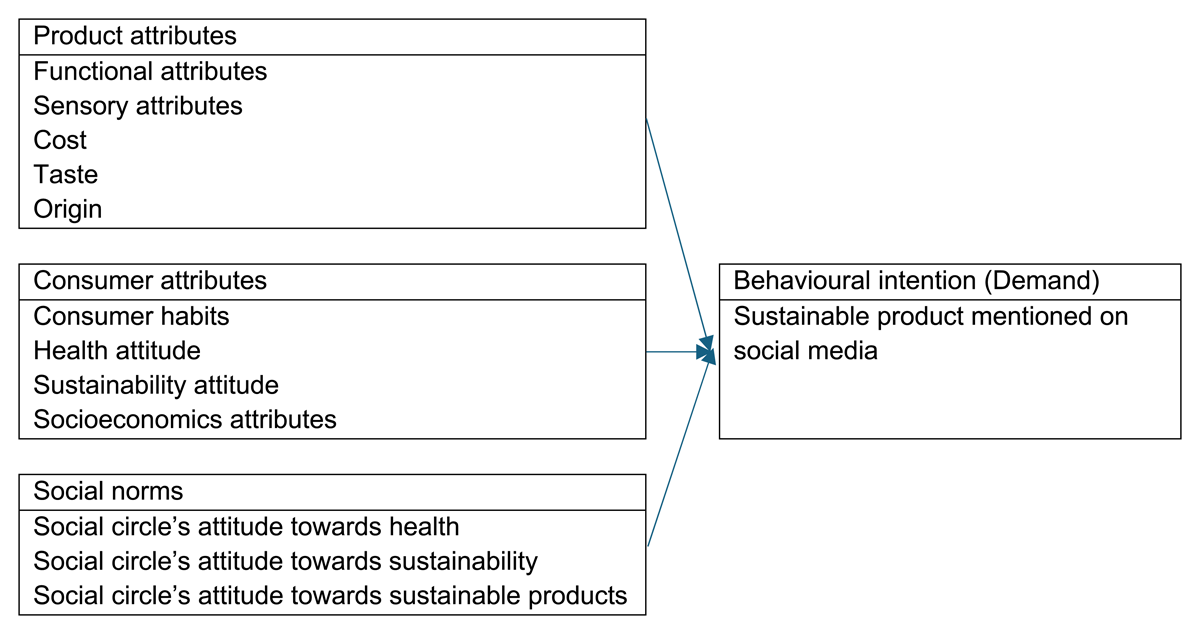
Figure 1
Sustainable Coffee Consumption Conceptual Framework.
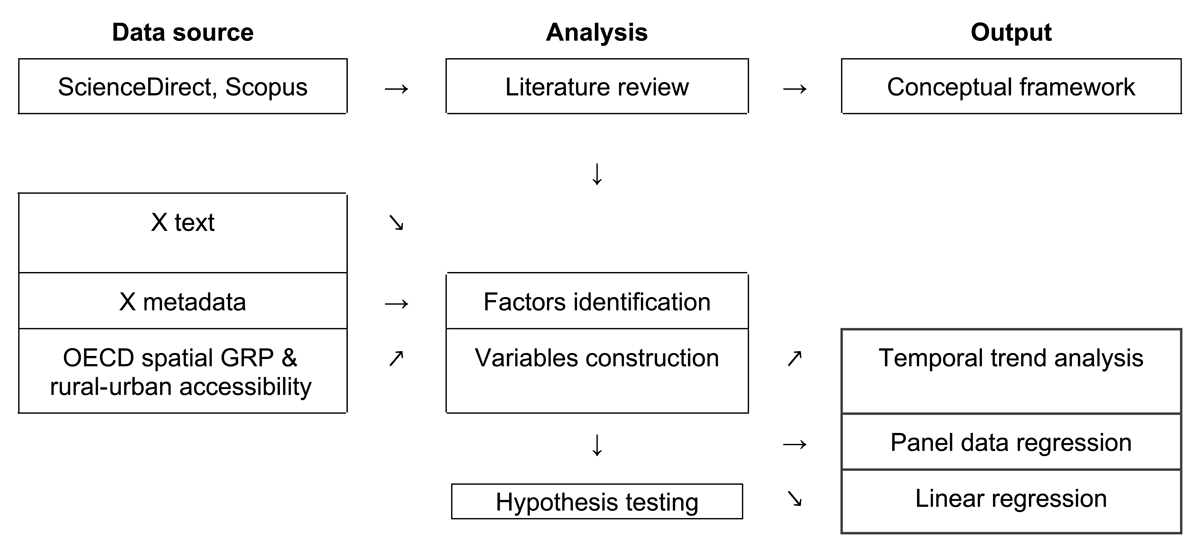
Figure 2
Workflow to build a methodological framework for sustainable product consumption. The data came from three primary sources (scientific articles, X, and OECD spatial regional data), leading to three main types of analysis: literature review, factor identification, and analysis of influence.
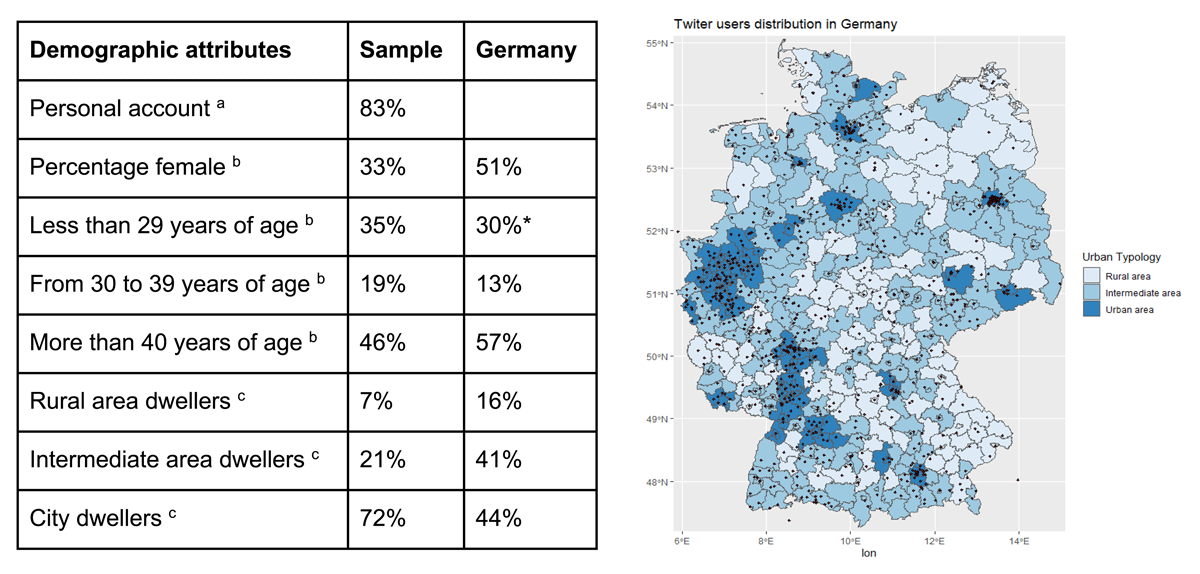
Figure 3
Demographic attributes from X account data based on metadata and profile photos vs the national average (left) abd German urban-rural typology (OECD, 2020) overlaid by X user distribution: The darker shade denotes a higher population density area (right).
a based on 5,756 accounts whose pictures and metadata are available for analysis (80% of primary users).
b based on 4,750 personal accounts (66% of primary users).
c based on 3,528 personal accounts with location data available for analysis (50% of primary users).
* we aggregated the first two groups into “less than 29 years of age” in both our sample and the national average.
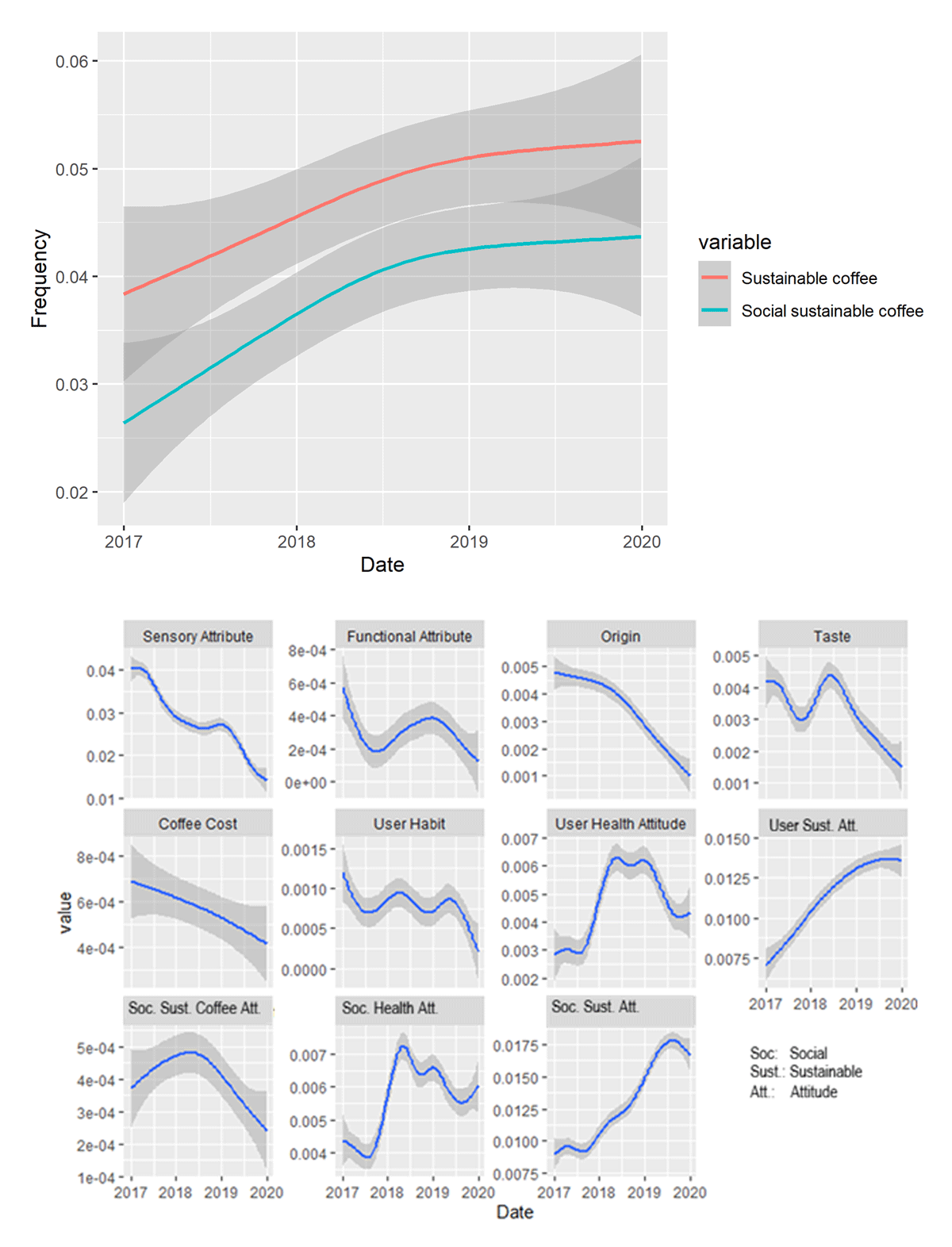
Figure 4
Observed temporal trends of independent variables (upper) and dependent variables (lower) over frequency of tweets. The grey margin shows the minimum and maximum values in the dataset.
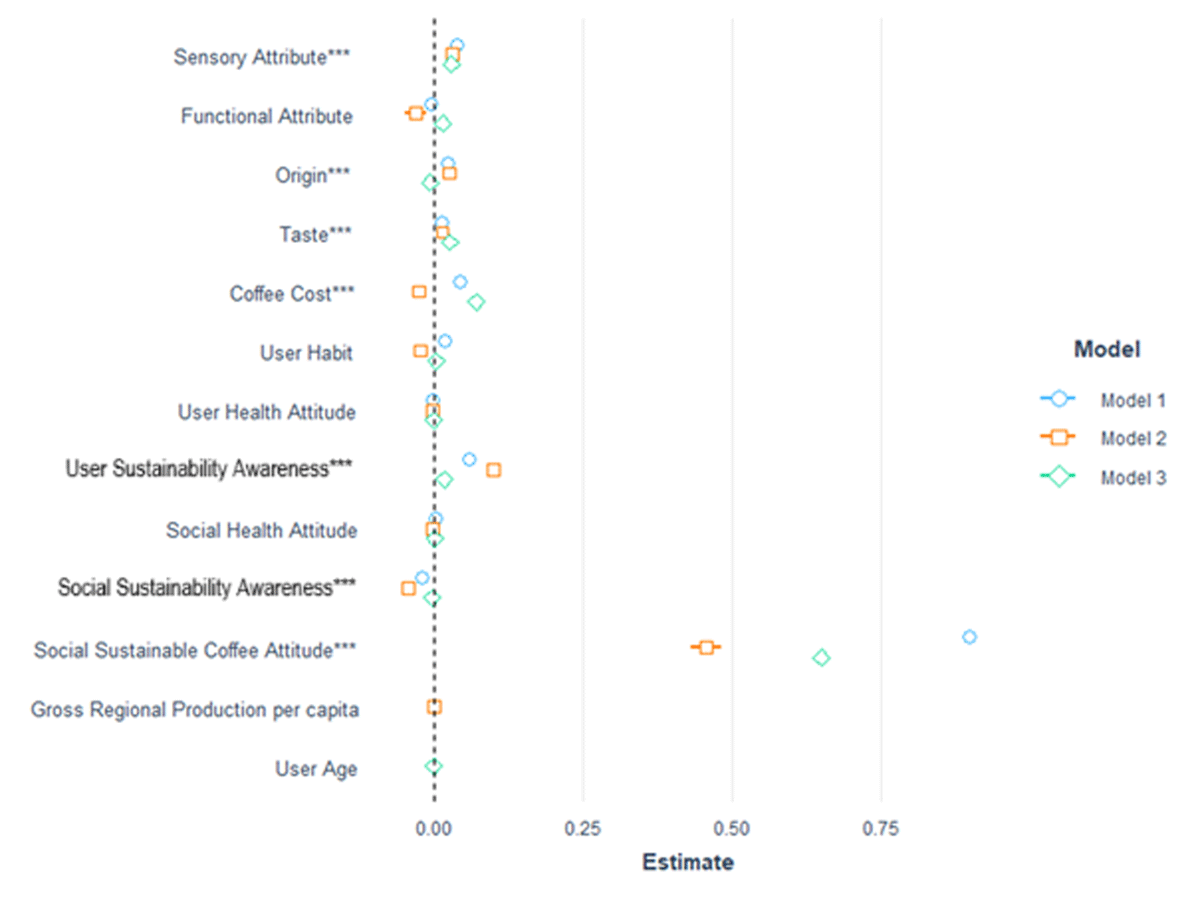
Figure 5
Fixed effect regression standardised result. Model 1 includes all variables except age and income; model 2 consists of all variables except users’ age, and model 3 includes all variables except users’ income (proxy by gross regional production per capita). From the result, we see that socially sustainable coffee attitude has the highest significant correlation to sustainable coffee mention, followed by coffee sensory attributes, user’s sustainability awareness, coffee origin, coffee taste, and coffee cost in respective order.
All continuous predictors are mean-centred and scaled by one standard deviation.
*** p < 0.001; ** p < 0.01; * p < 0.05.
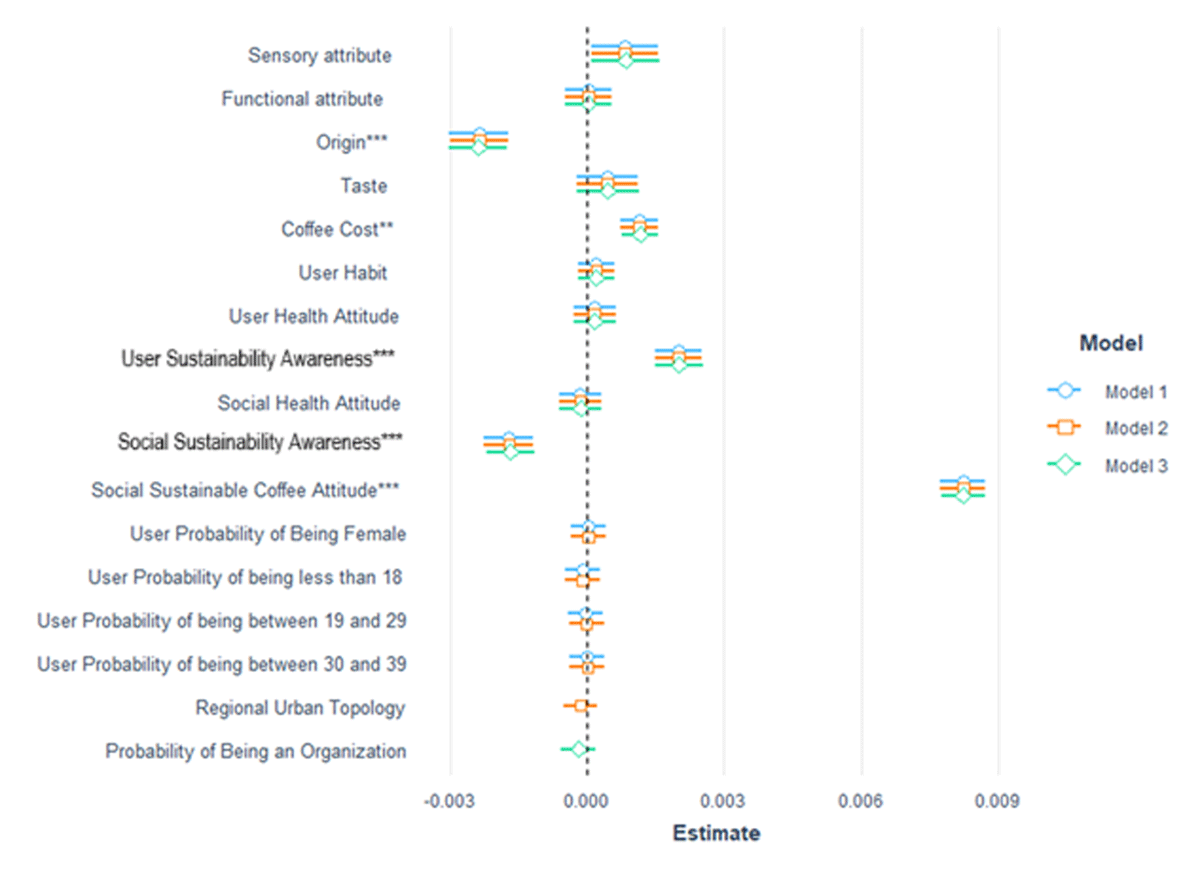
Figure 6
Linear regression model standardised result. Model 1 includes all variables except users’ accessibility (proxy by a regional urban-rural topology) and organisational status; model 2 consists of all variables except users’ organisational status, and model 3 includes all variables except users’ accessibility. The result shows that socially sustainable coffee attitude has the highest significantly positive correlation to sustainable coffee mentions, followed by user’s sustainability awareness, coffee sensory attributes, and coffee cost. In contrast, coffee origin and social sustainability awareness correlate significantly negatively with sustainable coffee mentions.
All continuous predictors are mean-centred and scaled by one standard deviation.
*** p < 0.001; ** p < 0.01; * p < 0.05.