
Introduction
Scholars, practitioners, and decision-makers increasingly recognise the importance of traditional knowledge for addressing and adapting to climate change (Rarai et al., 2022). The concepts of indigenous knowledge, traditional knowledge, traditional ecological knowledge, local knowledge, and cultural knowledge all describe (with some differences) knowledge beyond mainstream scientific discourse that relies on local people’s close relationship with their environments (Adade Williams et al., 2020). These knowledges are collective and reflect shared community experiences (Combest-Friedman et al., 2012). Some scholars opt for the more encompassing term “Traditional Ecological Knowledge” (TEK) (e.g., Adade Williams et al., 2020), which includes the relationships between living beings and their environment and elements of natural resource management, history, social norms, governance structures, and spiritual beliefs (Berkes & Berkes, 2009). Such knowledge is often expressed through cultural forms (e.g., stories, songs, proverbs, and customary laws).
Local communities in the Sahara have long managed and shared common pool resources, particularly water (Ghorbani et al., 2021; Saidani et al., 2023). They continuously add, adapt, and modify their knowledge, practices and institutions in response to evolving environmental conditions and external pressures (ibid). For instance, in times of drought, there are emergency institutions or infrastructures for sharing water (Benessaiah, 2015: 156). When appropriate, they integrate external knowledge and technologies with traditional practices to enhance community resilience in the face of environmental challenges (Hamamouche et al., 2017; Idda et al., 2021, Saidani et al. 2022).
Community-managed irrigation systems offer valuable lessons for the sustainable governance of contemporary common pool resources (Aubriot, 2022; Yu et al., 2016). However, many local communities now struggle to conserve TEK, particularly in the context of climate change and socio-environmental problems (Kaijage, 2021; Aguilera et al., 2020). Climate change alters the physical events (e.g., the water cycle) that such knowledge revolves around. For instance, extended droughts pose a challenge to the maintenance and transmission of practical water management knowledge. Institutional memory about rules, norms, strategies, and practices can be lost (Folke et al., 2003), especially when knowledge transmission relies solely on oral traditions, which are more easily forgotten or distorted over time.
This study investigates the transmission of TEK in community-managed irrigation systems in the context of global and environmental change (Bentz, 2020; Eastwood et al., 2023), taking as case study an oasis in the M’zab Valley, Algeria. It uses interdisciplinary, participatory visual approaches to explore what young people know about traditional common water resource governance systems and how they can help transmit institutional memory about it. Participatory visual research allows individuals and groups to document and express concerns, emotions, and feelings associated with water resources, infrastructures, and their governance (Fantini, 2017). We selected a participatory video method given its potential in terms of personal transformation, peer education and knowledge co-creation, particularly by members of the society whose voice remains often unheard (Tremblay & Harris, 2018). In doing this, participatory video creates a more level playing field between experts and research participants (Rusca, 2018). In this study, ‘experts’ included the researchers and traditional ecological knowledge holders, while ‘participants’ were young scout group members.
Participatory video can also address a generational issue, as art readily engages young people on abstract, distant, or complex subjects like climate change (Bentz, 2020). Art conveys complex concepts in accessible, relatable, and emotionally resonant ways (Leavy, 2020). Participatory video, especially, can help young people to connect, own, and care for local environments and natural spaces (Eastwood et al., 2023); it empowers them “to raise important issues with decision-makers and advocate for change on…behalf of their communities” (Haynes & Tanner, 2015: 357).
This article dialogues with our previous hydrology research on traditional surface and ground water governance in Algerian oases to offer three contributions. First, we helped traditional groundwater managers transmit their knowledge and institutional memory to younger generations and sparked several youths’ curiosity through a video documentary. Secondly, we reflect on the strengths and challenges of participatory visual research (video) as a vehicle for co-production and communication across generations. While video is now widely used in climate change research, it remains under-explored in (ground)water issues.
Third, we quickly realized that communication and the commons shared the same etymological root (i.e., the notion of sharing in public). In the commons’ literature, communication is mainly explored through experiments and game theory (Janssen et al., 2014; Mitra et al., 2017). However, this study contributes to a conversation on participatory video as a tool to co-produce and disseminate knowledge about traditional commons systems. Communication is an inherent component of governing the commons, and a coherent communication style should adopt a commoning approach. Therefore, participatory video holds great potential for raising awareness, promoting dialogue, and identifying solutions for managing the commons across generations.
Context and Methodology
Case study
The M’zab Valley is situated in the Ghardaïa Department in southern Algeria, about 600 kilometres south of the capital, Algiers. The first Mozabites (also known as Ibadis) settled in this region around the eleventh century (see appendix). They built five fortified towns or ksour, collectively known as the Pentapolis (Ghardaïa, Melika, Beni Isguen, Bounoura, and El Atteuf; see Figure 1).
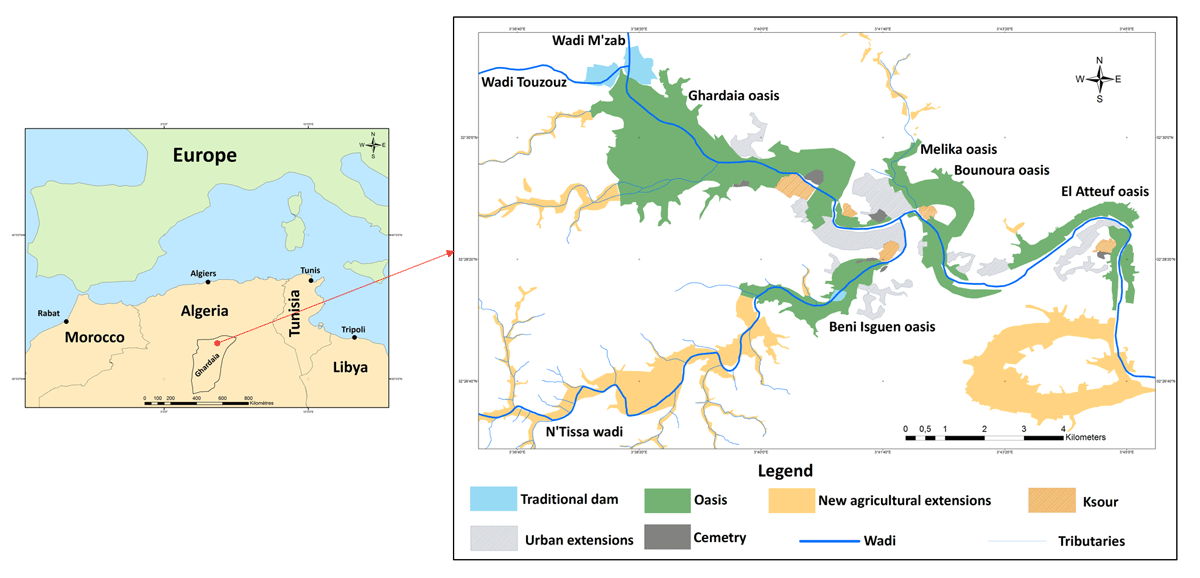
Figure 1
Map of the M’zab valley and their oases (source: M-F HAMAMOUCHE).
The M’zab Valley’s groundwater recharge system sustains water resources in the region. In the Beni Isguen oasis (the case study site), the community relies on a sophisticated hydraulic system based on spate irrigation that dates back to the fourteenth century. This system channels occasional flash floods from the Wadi1 N’tissa and runoff from the surrounding hills to irrigate palm groves and recharge the shallow aquifer. The local religious authority has overseen the community’s groundwater recharge and surface and ground water usage for centuries, allocating water among different users and organizing collective works to manage and maintain the systems (Saidani et al. 2023). However, the last flood was more than a decade ago (in 2011), meaning many young people have never witnessed this system in action. Young people may start to see traditional transmission methods as archaic and outmoded. This could contribute to a loss of knowledge and appreciation for local human-engineered methods to replenish underground aquifers. Without exposure to traditional methods and knowledge, young people may express less interest in preserving valuable water resources using TEK. Such a failure to understand and implement these practices could hinder future efforts to maintain and enhance the groundwater recharge system.
Members of the customary water management organisation—the Umana Essayl—brought these concerns to us.2 They asked how knowledge can be transmitted to a younger generation that has never seen the system in action, how to raise awareness about the system and common resource governance knowledge and practices, and how to train a new generation of Umana Essayl (when learning TEK through physical practice may not be possible). The Umana Essayl were open to modernising their knowledge transmission system with new methods, tools, and social media. Given our involvement and commitment to the local community over the past five years (see appendix), they requested we undertake an action project with the young people.
Integrating interdisciplinary research and visual methods
This study uses a hydrosocial approach to understand community groundwater recharge and use systems in the Beni Isguen oasis. The hydrosocial approach acknowledges that water is not merely a physical resource, but also a deeply embedded social and cultural element (Wesselink et al., 2017). It considers the complex normative and technical structures of water, such as rules, rights, institutional mechanisms, and knowledge systems (Kumar & Saizen, 2023). This study also integrated participatory video into water research to 1) involve local actors in the co-production of knowledge about common groundwater resource governance; 2) collect narratives connecting the physical and human aspects of the oasis; 3) identify community concerns, strengths, aspirations, and solutions; 4) help younger generations express their concerns and aspirations, and imagine sustainable alternatives; and 5) promote intergenerational dialogue, transmission, and the co-production of knowledge. We also used aerial drone photographs to better represent the stories and narratives; however, the images from the scout videos were low quality and are not reprinted here.
We chose to work with a scouting group that had been promoting the transmission of water governance know-how and oasis ecosystem preservation for several years. The young local scouts led summer vacation learning sessions about the oasis ecosystem for Mozabite children living outside Beni Isguen (i.e., in urban areas or abroad). The field trips connected children with their origins and raised awareness about caring for their heritage, if only from a distance. However, the prolonged droughts had made this mode of transmission predominantly theoretical. The lack of practice over an extended period can result in a loss (or misinterpretation) of institutional memory. Eventually, this gap between theoretical understanding and practical implementation will pose significant challenges for effectively addressing groundwater governance in the Beni Isguen oasis.
Participatory visual research protocol
We first showed the young people a documentary film on the traditional community surface and ground water governance system made by the researchers to elicit conversation and encourage them to record their own video stories. The film illustrated the researchers’ perspectives on the main challenges facing the system, and alternative solutions for its sustainability. It was screened for a small group comprising two Umana Essayl and four young scouts.
We then asked the four scouts, aged 15 to 20, to produce three videos, each addressing a simple question:
What do you know or would like to know about the community groundwater recharge and use system?
In your opinion, what is the main problem facing the oasis?
What is your desire for the future of the oasis and its community groundwater recharge and use system?
These questions were devised by the researchers and validated by the Umana Essayl to ensure they met the needs and concerns of the community. The scouts answered these questions by filming the story of a specific site. They were given considerable freedom in how to do this (e.g., interviewing knowledge-holders, appearing on or off screen, or filming themselves). We supported the scouts with materials (e.g., smartphones, tripods, microphones). We also invited two local videographers to provide training on audio-visual and video editing in their native language (Tumzabt). A WhatsApp group was created for ongoing communication to facilitate collaboration and exchange ideas between researchers, scouts, and trainers.
Parental permission was obtained for three under-age scouts who participated in the visual research (the informed consent process is explained in the appendix). This group of scouts was selected due to 1) their interest in the topic, 2) their connections with some people involved in traditional system management, and 3) their knowledge-sharing community engagements. Two of the four scouts who participated in the visual research were sons of an Umana Essayl member.
Lastly, the researchers also undertook four qualitative interviews with local knowledge-holders3 to document different knowledge domains. These interviews focused on the traditional community groundwater recharge, and surface and ground water use system, and governance and how knowledge and know-how were transmitted intergenerationally. They also elicited stories about the past, present, and future of the community system to highlight challenges, expectations, and potential conflicts around water governance.
Results
The four scouts4 produced twelve video clips (see appendix). The video styles differed by scout age, though none of the videos feature the scouts’ faces (perhaps due to shyness). The two older scouts (Yacine and Khaled) created narrative videos, while the two youngest scouts (Karim and Anis) opted for interviews. Four local knowledge-holders—an urban engineer and heritage researcher, an author and heritage researcher, an Umana Essayl, and the president of an environmental conservation association—agreed to participate.
All four scouts started their videos by introducing the oasis through visual sequences (with or without narration) to demonstrate their regional, cultural, and social belonging. The scouts showed the ancient fortified village (ksar, singl. of ksour) set on the hilltop (Figure 2), the palm grove in the wadi at the bottom of the hill (Figure 3), and the various hydraulic infrastructures. These three elements form the basis of life in the Sahara. According to the interviewee Yahia, “The oasis ecosystem relies on three fundamental pillars, which are permanent housing in the ksar, agricultural or gardening activities in the palm grove, and the collective use and management of water resources” (Anis’s Video 2; 0:50–1:10).
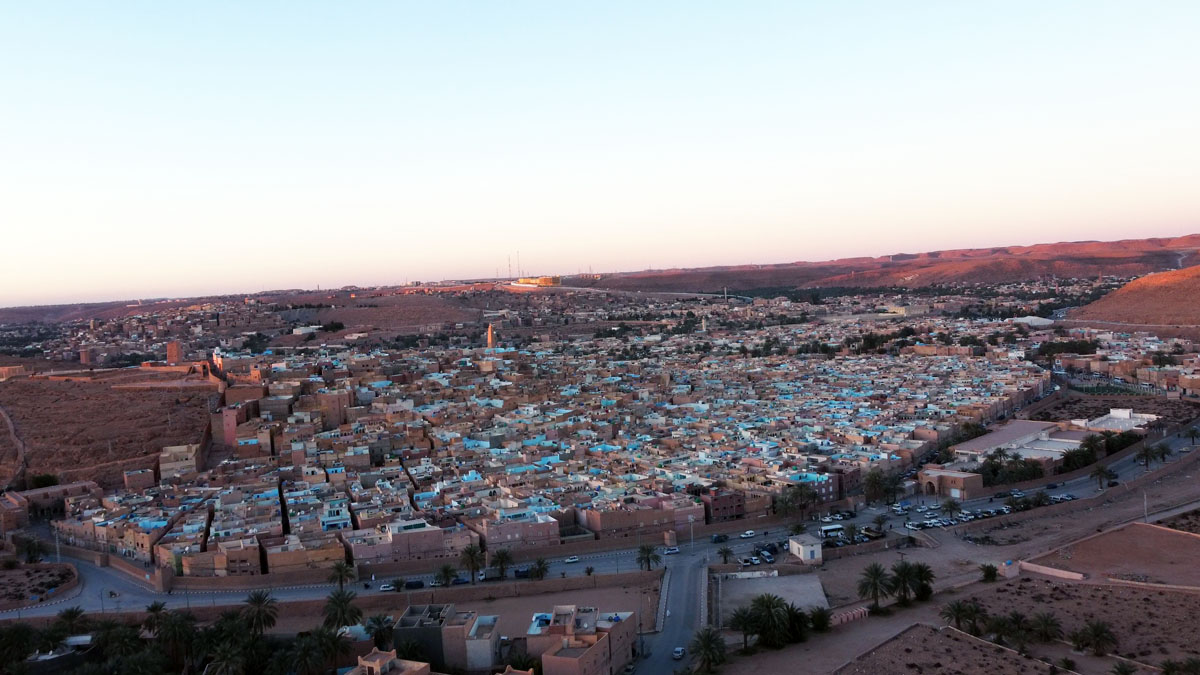
Figure 2
Beni Isguen fortified village (Ksar) from the sky (source: M Khouadja, July 2023).
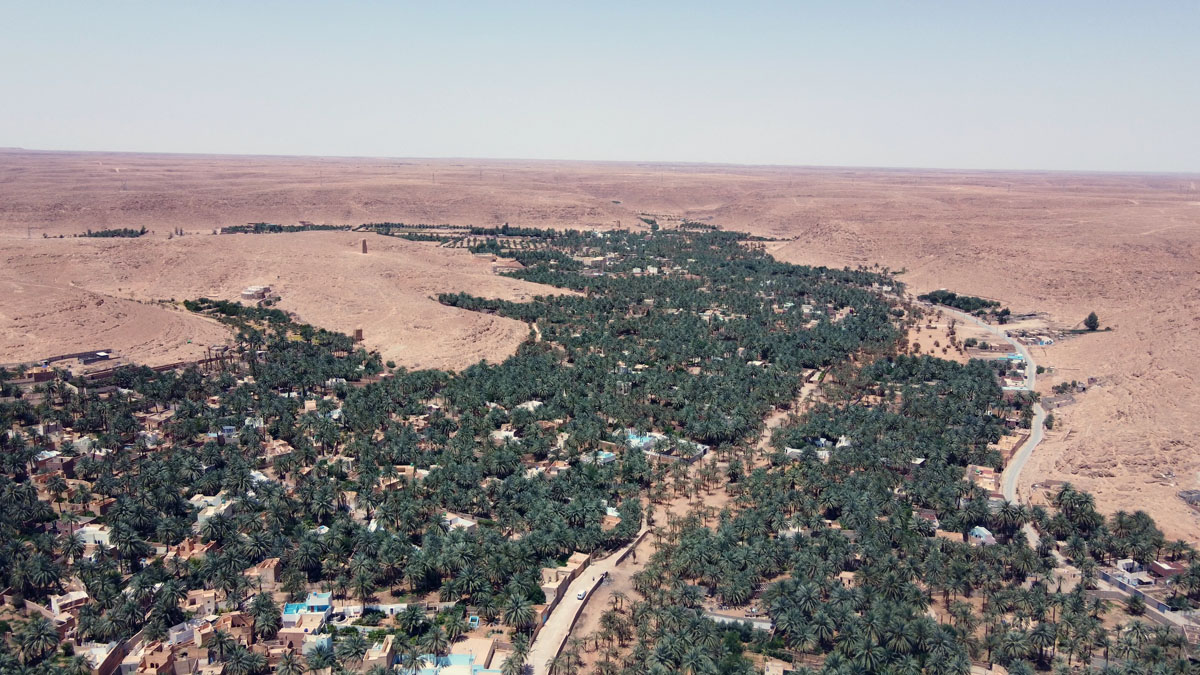
Figure 3
Beni Isguen palm grove from the sky (source: M Khouadja, July 2023).
The remainder of this section analyses the scouts’ responses to the three questions. Their perceptions are compared with the stories and histories collected by the researchers (in our previous video documentary and the more recent interviews).
What you know: Recalling the past
In both the scouts and researchers’ films, speakers talk about the region’s history and water heritage (material and immaterial) with enthusiasm and pride. Three main messages emerged: 1) the link between water management and the origin of the Mozabite community in the region, 2) practices for sharing and using surface and groundwater, and 3) the community management of groundwater resources.
The absence of permanent water flow and the Ibadites’ settlement
The various off-screen exchanges between researchers and knowledge holders tend to converge on the same story of their origins. The original inhabitants of the M’zab Valley settlement were driven from their former stronghold, Ouargla, and gradually settled in the inhospitable Oued M’zab Valley. According to interviewee Said,5 “As they were fleeing the persecutions of their enemy, they thought they would be more at peace in a hostile, inhospitable and completely deserted region instead of in an oasis that was already occupied.” Salah6 added, “In a desert environment, people generally settle in regions where there is natural water… but it was precisely this lack of natural, easy access to water that was one of the main reasons why the Ibadites settled in the M’zab Valley.” Moussa,7 an Umana Essayl from Beni Isguen, confirmed, “There was no permanent source of water when the pioneers settled… there was no spring, no permanent run-off, no wells drilled.” Salah added that the Ibadites chose the M’zab Valley for its geological formations that “allow the capture and storage of the rare floodwaters indispensable to the agricultural development.” The management of common resources, particularly water, was clearly at the very heart of life in the oasis. Three scouts linked the Beni Isguen oasis’s geographical location, the scarcity of rainfall, and the need to ensure year-round water supplies to the floodwater diversion and groundwater recharge system. As Khaled narrated, “The water-sharing system was imagined by our ancestors in order to store water and benefit from the torrential floodwaters that rarely happen because the region is desert with rare rainfall” (Video 1; 0:16–0:41).
Tazouni N Waman: A common water sharing system for equity and efficiency
All four scouts described the technical operations of the Tazouni N Waman system, which uses ephemeral torrential flood water to irrigate the palm groves and restore the underground water reserve. However, the scouts’ videos mainly focused on the flood management infrastructure, only briefly addressing the groundwater recharge system (perhaps indicating a lack of knowledge). As Samir states in an on-screen interview, “When they settled in the wadi valley, our ancestors thought about using the floodwater by diverting it to the gardens for use by the local people and then to the recharge wells to be stored underground” (Anis’s Video 1; 0:40–0:56). Ahmed8 told us: “As water is the determining factor for all life on earth, the Mozabites have understood this… They have built a circular hydraulic system for efficient and sustainable management of surface water resources (floodwater) and groundwater. The rare flash and torrential floods, which vary in number from zero to three a year, are the valley’s main source of water”.
Scout Yacine shared a story from his elders about the founder of the Tazouni N Waman system: “A person called Bouchemdjan was the first to think of diverting water from the wadi N’tissa… The community subsequently contributed to its progress, establishing rules and management principles to ensure the most efficient and complete use of floodwater, with an equitable distribution of water among all the gardens in the oasis (Video 1; 0:29-0:52)”. We heard this story many times during our exchanges, although no one can confirm or deny its veracity.
The common water sharing system of Tazouni N Waman begins at El Maguedar, a depression where floodwater naturally accumulates before continuing on its way (Anis’s Video 1; 1:02–1:07 and Karim’s Video 1; 3:34–3:40). The system’s founders installed several metres of low wall between the depression and a hill bordering the oasis (Figure 4) to capture about one-third of the floodwater from the Wadi N’tissa and its tributaries. All the scouts mentioned this wall in their videos. However, only Karim’s interviewee, Yahia, and scout Khaled mentioned its local name (bouguefa) (Karim’s Video 1; 0:56 and Khaled’s Video 1; 0:41).
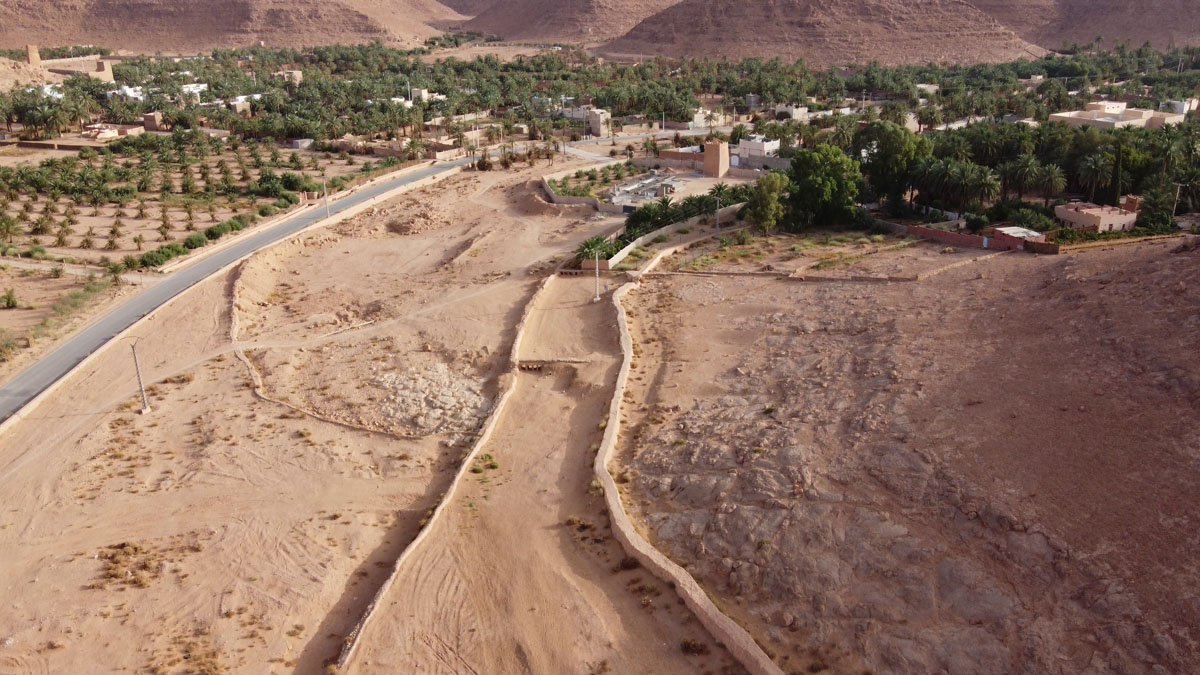
Figure 4
Bouguefa wall diverting water from the Wadi N’Tissa to the palm grove from the sky (source: M Khouadja, July 2023).
Next, the diverted water is channelled to the palm grove entrance, where the original inhabitants created a space to share and control the water flow (Figure 5). The two main channels (seguia; pl. seguiat)— ‘Tagherbit’ and ‘Agoulane or Raî’—originate here. All the scouts filmed and described these infrastructures in their videos.
The water is not equally allocated to the two seguiat. It is first diverted to the priority channel, the Tagherbit. This channel funnels water to the right side of the palm grove and most of the gardens. In the researchers’ video, El Hadj explained, “Thagherbit seguia has more than 300 openings called kadous (water intakes) which ensure the distribution of water to the gardens according to water rights of each garden” (8:08–8:10). If the floodwater discharge rate exceeds the Tagharbit seguia’s limits, the surplus is diverted to a second seguia, Agoulane or Raî. Karim’s interviewee, Yahia, explained, “the seguia Agoulane or Raî irrigates gardens at a lower altitude than those irrigated by the seguia Tagherbit” (Video 1; 3:36–3:43).
While the scouts never specify how the water is distributed to farmers, the water control infrastructure (tissanbat- see Figure 5) has several rectangular openings (Yacine’s Video 1; 1:18). The alleys become secondary and tertiary channels to transport the water to the gardens. According to El Hadj, “The water enters the gardens through kadous… To ensure that the water was shared equally, a rock sill (rafsa) was installed in the alley after each kadous, perpendicular to the flow direction… The latter raises the water level and facilitates the flow of water through the opening…the width of the water intakes is proportional to the number of palm trees per owner… As water is linked to the land, the founders of this system used a specific variety of date-stone to measure the width of the kadous and thus determine the water rights of each owner” (Researchers’ video; 8:10-8-36).
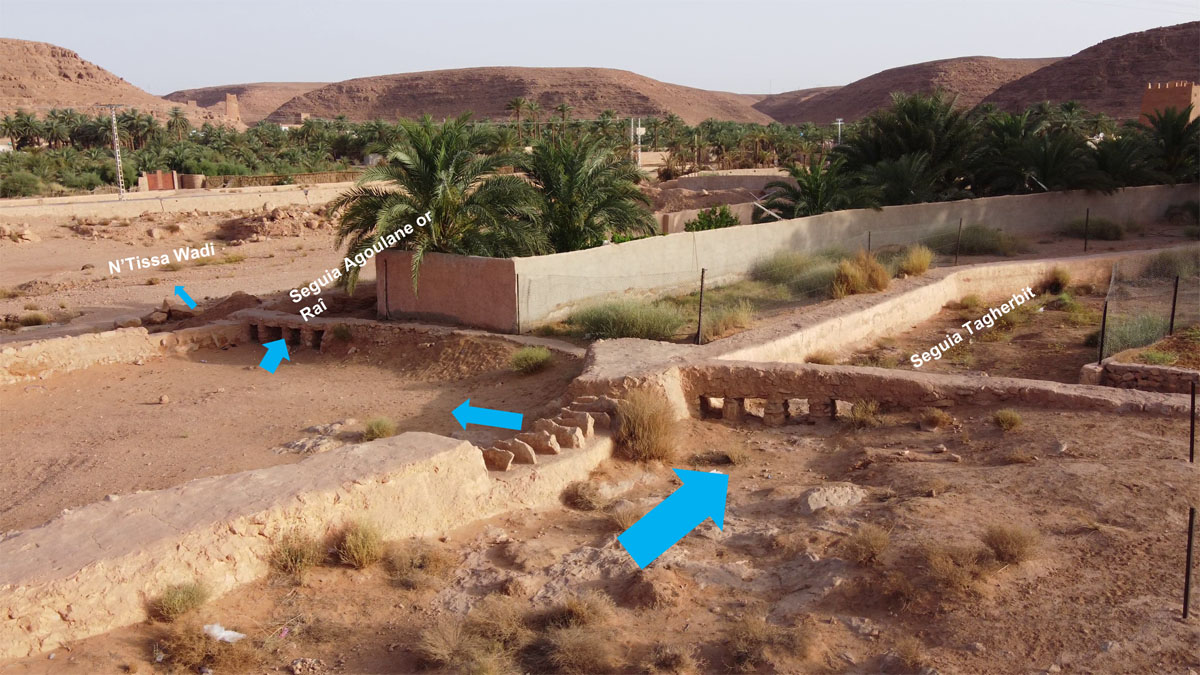
Figure 5
Space for sharing and controlling the water flow at The Beni Isguen palm grove entrance from the sky (source: M Khouadja, July 2023).
The akarbouch variety of palm trees in this area produce a date fruit that never changes its pit size, regardless of the difficult conditions (e.g., water stress and disease). Once all the palm trees and other crops have been gravity-irrigated, the water irrigation overflow is drained through another opening (tenfass). Each garden is equipped with koua and tenfass so that surplus irrigation water can be drained into the Wadi N’tissa.
When the floodwater in the seguia Tagharbit reaches the last garden (bouguafer), all the diverted flood water will be redirected into a third seguia (bouchemdjan) (Karim’s Video 1; 2:52 and researchers’ video; 8:55). The bouchemdjan transports water to a main recharge well, the Charoun (Karim’s Video; 3:15 and Anis’s Video 1; 1:50; also mentioned by three Umana Essayl interviewed by the researchers). In the researchers’ video, Moussa explained that “the Charoun well is practically the recharge well that swallows all the flood water it receives.” Scout Yacine shared other details about the recharge wells: “they are locally called ‘balouatte’ (recharge well) in reference to their role in swallowing large quantities of floodwater in a short time…In this way, floodwater supplies shallow groundwater in an artificial and intentional manner and, consequently, all nearby irrigation wells” (Video 1; 1:25–1:44).
Two-thirds of the original floodwater that was never diverted upstream to the palm grove continues to flow into the wadi until it reaches a traditional dam (Ahbass) with a 200-meter-long dike (Figure 6). The four scouts mentioned the Ahbass in their videos but did not describe its role. The traditional dam, located downstream of the palm grove, has three functions: 1) to stop the water flow so it can infiltrate and recharge the water table, 2) to protect downstream housing from torrential flooding, and 3) to provide farmers with rich organic materials (wadi silts) that improve cultivated soils. The several recharge wells in the dam basin recharge the groundwater quickly so that (most of) the water does not evaporate.
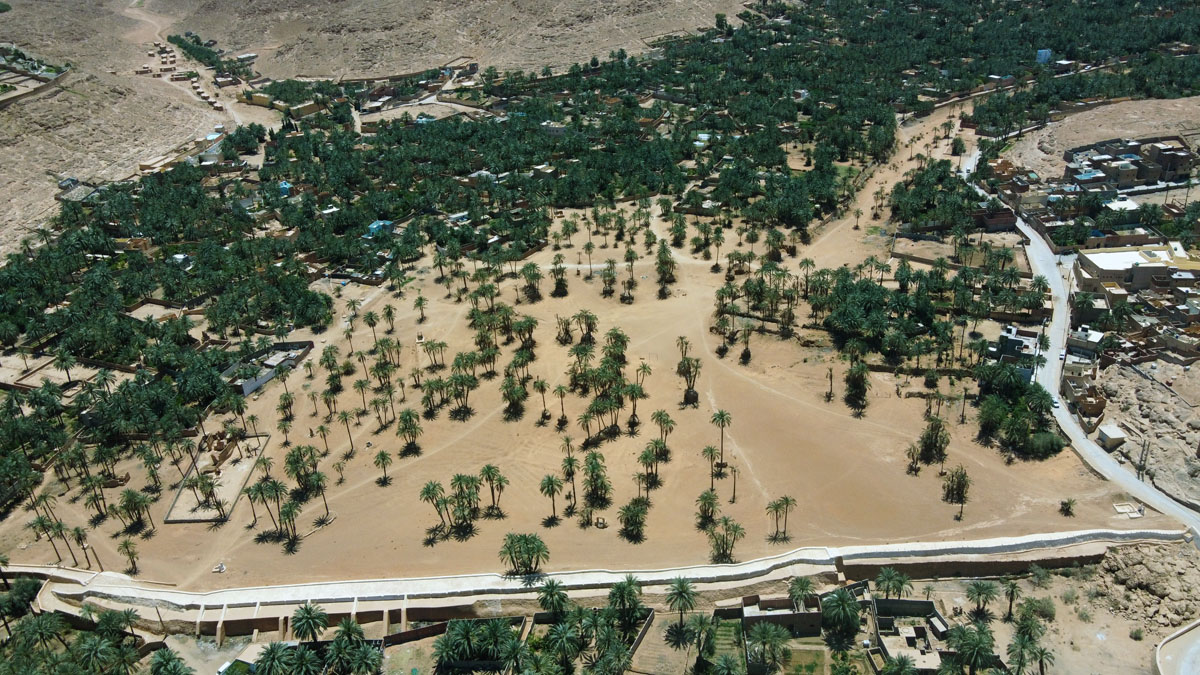
Figure 6
Traditional dam (Ahbass) view from the sky (source: M Khouadja, July 2023).
Outside of flood periods, oasis people access the water stored underground through irrigation wells (hassi). The Beni Isguen oasis has more than 300 collective hassi. As El Hadj9 told us, “In the past, building a well with a depth ranging from 10 to 50 metres was considered to be a lifelong project… In some cases, it took three successive generations of diggers to carry out a well in the rock.” Given this difficulty, and the many descendants of the original well owners, most wells are shared by several families (up to 15). In the past, the groundwater was extracted using animal power; a goatskin bag was lowered to the bottom of the well (the system is called dalu). The water was then transported to the gardens of the well’s rightsholders via channels made of local stones and lime that prevented leaks. The low flow rate of extracted groundwater made simultaneous distribution to several farmers impossible. Therefore, a system of turns and rights was established to share the water between the well’s beneficiaries.
The Mozabite community has been able to domesticate water in a region where rain is very scarce by creating a water reservoir that could cope with future droughts and ensure water availability outside of flood periods. The artificial recharging of the water table through irrigation and recharge wells demonstrated both an abstract knowledge and practical know-how gained from several centuries of learning in the Saharan environment.
Tazouni N Waman: A system rooted in social life and governed by customary rules and principles
The Umana Essayl group is charged with the fair and efficient distribution of water in the oasis. They were first established in the fourteenth century and operate under the aegis of the Azzaba (religious authorities), who are responsible for wider spiritual, moral, and social life. The scouts highlighted the Umana Essayl’s multifaceted responsibilities to community customary practices, particularly the orf (customary law).
As scout Yacine narrated, “this group of people works as an executive authority to ensure that the water customary ‘orf’ rules and principles are respected… These include the sharing and use of floodwater, the recharging of the shallow groundwater, and their equitable distribution of water between all the oasis gardens” (Video 1; 1:44–2:01). Interviewee Samir added that “Umana Essayl is also responsible for cleaning and rehabilitating water infrastructures during dry periods” (Anis’s Video 1; 1:42–1:50).
The Umana Essayl members are appointed by the imam based on specific criteria like trustworthiness, integrity, and socio-technical water management knowledge. They must understand the Tazouni N Waman system, know the garden owners, and be familiar with topography and meteorology. We classified the Umana Essayl’s roles and responsibilities into seven main areas based on interviews conducted with several members of customary organisations:
Social equality and representation: One or two Umana Essayl members are chosen from each of the three ashirat (clans) in the Beni Isguen oasis to ensure water management decisions are inclusive, representative, and good for social equality (researchers’ video; 6:29–6:34).
Conflict resolution: The Umana Essayl resolve land- and water-related conflicts by finding amicable solutions that maintain community harmony (researchers’ video; 6:22–6:28).
Hydraulic sector management: Each Amin Essayl (singl. of Umana) oversees a specific hydraulic sector in the oasis. They assess flood intensity, announce its arrival, and coordinate responses to mitigate flood impacts.
Communication and alert systems: the Umana Essayl use telephone calls to alert the community about floods (in the past, this was done with baroud10 shots and light signals). They also coordinate with the imam and local authorities to disseminate information through mosque loudspeakers and other channels.
Cultural custodianship: the Umana Essayl uphold and preserve traditional customs, practices, and governance structures related to water management. They ensure that decisions and actions are aligned with cultural norms and values to maintain the integrity and sustainability of customary water management practices.
Collaboration with upstream communities and authorities: the Umana Essayl maintain communication with upstream farmers to anticipate flooding events. They also collaborate with local authorities (e.g., meteorological stations, town halls, and water resource departments) to gather information and coordinate responses.
Knowledge transfer and capacity building: the Umana Essayl share TEK and expertise with community members to enhance resilience in the face of environmental challenges like water scarcity, floods, or droughts. They also design organized learning opportunities and capacity-building initiatives to empower community members in water management and disaster preparedness.
Umana Essayl work is voluntary and based on a sense of commitment and duty. The role is typically passed down from father to son to ensure continuity and preserve accumulated wisdom. The children of Umana Essayl actively learn about water management from a young age. Moussa11 told us his family’s story: “My father, El Hadj, took me with him as soon as I reached the age of seven…I even slept overnight in the watchtowers to survey the arrival of a floodwater…These years with my father enabled me to succeed him when he became older…physical ability is primordial in this work… I use the same method with my three boys… During holidays and weekends, I take them with me to the palm grove… Unfortunately, they have never witnessed a great flood since the last one was in 2011”.
The transmission of water management knowledge, culture, and values plays a crucial role in ensuring the sustainability of oases and the well-being of their inhabitants. Such water stewardship knowledge is passed down through generations, often in the form of practical experience, storytelling, and hands-on learning with elders.
The main problem: Documenting the present
With the shift from past to present, the scouts’ tone became sad and bitter, indicating a deep emotional response to the present state of affairs. The scouts’ videos outlined three main factors underpinning the breakdown of the water management system and loss of TEK: climate change-induced disruptions, waste accumulation, and urban encroachment.
Prolonged drought-induced disruptions
Respondents explained that residents’ behaviours toward water and the palm grove had changed due to climatic conditions, particularly droughts. Two scouts, Yacine and Karim, examined how climate change-induced fluctuations in water availability directly impacted water management practices and rituals, with profound implications for TEK transmission. For instance, many farmers have turned to groundwater and modern irrigation technologies (drip irrigation); these are individualistic approaches that provide short-term relief but undermine the collective ethos. In this context of technological change, the Umana Essayl have shaped new rules to avoid anarchy when installing electricity meters, electricity supply networks, and PVC pipes. For example, electricity meters and PVC pipes had to be installed alongside the traditional irrigation and recharge system, managed as a commons. In contrast, electricity meters previously had to be installed on private property and not on common property (Hamamouche and Saidani, 2020).
If farmers prioritize their own immediate needs over communal well-being, the traditional Tazouni N Waman network (which is built on principles of collective action and shared responsibility) will be rendered obsolete. As interviewee Djamel explained, “the scarcity of rainfall and therefore of floodwater, caused by recurrent and severe droughts, has disrupted [the] oasis ecosystem” (Karim’s Video 2; 0:29–0:43), so part of the community is no longer interested in ancestral water culture.
Yacine’s narration outlined how “some ancient low walls, channels and water distributors are broken or buried underground” (Video 2; 0:55–1:01). This image of a network in ruins has negatively impacted some oasis inhabitants’ behaviour and disrupted their links with the environment. Some farmers have extended their gardens to the edges of the (supposedly obsolete) traditional channels and enclosed them with concrete walls. Others have built houses on the edge of the N’Tissa wadi bed. The local population has forgotten flooding safety measures and, in the case of torrential flooding, the water will certainly generate material and human loss (as it did in 2008).
Prolonged droughts pose a threat to the preservation and transmission of TEK-related water management. Younger generations lack exposure to the rituals, customs, and oral traditions that embody the wisdom of their ancestors. This erosion of TEK may weaken Umana Essayl’s institutional strength, as they are sidelined in favour of more expedient but less culturally relevant solutions. Ultimately, this will diminish the whole community’s resilience against future droughts and water-related challenges.
Waste accumulation in the traditional Tazouni N Waman network
All four scouts highlighted the pressing issue of waste discharge into the traditional network and the wadi. Their footage shows sections of the Tazouni N Waman network littered with domestic waste, plastic waste, and agricultural waste (see, e.g., Khaled’s Video 2; 0:15–0:40). Yacine and Khaled used their videos to raise awareness about the dangers of waste during flooding, while Khaled warned of possible health risks like the spread of disease.
The accumulation of waste in the traditional water-sharing system not only compromises its functionality but also undermines its cultural significance. The trash symbolizes a broader neglect of traditional practices and values. Younger generations see these deteriorating systems and perceive them as outdated or irrelevant, leading to a loss of interest in preserving TEK.
Urban encroachment on the palm grove
The four scouts also revealed the negative effects and potential consequences of anarchic urban encroachment on the palm grove. Yahia explained:
When a malfunction occurs in one of the pillars, the tryptic (ksar, palm grove, water), the balance of the oasis ecosystem is affected…In fact, the problem of palm grove urbanisation disrupts this balance since it generates other problems, such as the reduction of green spaces, the increasing volumes of wastewater discharge and the deterioration of groundwater quality (Anis’s Video 2; 0:32–1:55).
Khaled adds that “these underlying environmental problems have affected agricultural products that are consumed by the local population” (Video 3; 0:42–0:51). Urbanization in the palm grove has also caused genetic erosion, leading to a significant reduction in the diversity of date palm varieties. According to one local environmental group member,12 “The Beni Isguen palm grove has lost more than 75% of its palm trees’ heritage in recent years”.
The five M’zab Valley’s palm groves are no longer just an occasional summer garden home (Dar el Ghaba); they have become a permanent residential space. Djamel describes how lifestyle change has led to a decline in the oasis ecosystem: “the new technologies of individual groundwater exploitation, the new lifestyle and seeking of comfort that accompanies the new cement housing in the palm grove (such as wet toilets, washing machines, etc.) are in contradiction with the oasis philosophy of water frugality (Karim’s Video 3; 2:51–3:15). These changes, coupled with the multiplication of guesthouses, have led to increasing amounts of discharged wastewater, which pollutes the shallow groundwater (Bekaddour et al., 2021).
The use of concrete as a building material also poses several challenges. Firstly, concrete deviates from the vernacular (energy efficient) architecture in the ksour (Messaitfa & Bencherif, 2023) and is not well-suited to the extreme climatic conditions of the region. Concrete’s poor insulation properties exacerbate temperature fluctuations inside buildings, leading to increased energy consumption for heating and cooling. Furthermore, non-traditional building materials and designs erode the cultural identity and architectural heritage of the region. Finally, younger generations are presented with fewer physical spaces for traditional activities and cultural heritage, likely diminishing their understanding of the palm grove ecosystem and its importance to the community.
Visions for the oasis: Imagining the future
Some participants expressed pessimism about the challenges ahead, while others maintained optimism about the oasis and its common groundwater resources. Despite these differences, all the videos called for collective awareness and passing the torch to ensure the sustainability of the oasis ecosystem.
Collective awareness to care for the oasis ecosystem
All four videos emphasized the importance of collective awareness and local involvement in the oasis and its ancestral Tazouni N Waman system. Khaled’s second and third videos combined images illustrating environmental problems with a call for collective awareness. His narration exposed the socio-environmental problems caused by climate change and human activity. The interviewee Moussa added, “the local population must understand that their survival in this arid and hostile environment is closely linked to the sustainability of the oasis” (Anis’s Video 3; 1:15–1:30).
Two other scouts appealed to viewers’ emotions. For instance, Yacine invoked local tradition and pride: “Taking care of our heritage and historic monuments is one of the most important duties of every member of our society… The monuments and archaeological areas of Tazouni N Waman represent the identity of the region and its ancient civilisation, as well as the link with the roots of society” (Video 3; 0:10–0:28).
Moussa appealed to history and social obligation: “It is our duty to perpetuate the transmission of a clean oasis to future generations, as our ancestors did” (Anis’s Video 3, 1:03–1:08). Both Anis and Yacine proposed public awareness campaigns in schools, mosques, and local associations. Yacine also suggested promoting the region on social media, organising exhibitions and awareness-raising visits, and placing ‘no littering’ signs near the traditional network. Finally, he called on the state to protect and restore the M’zab Valley’s historic sites, including the Tazouni N Waman network (M’zab has been a UNESCO World Heritage Site since 1982). Moussa added that civil society should coordinate regular clean-up campaigns, with or without local people: “Local associations working to preserve and promote oases should organise more frequent volunteer campaigns to clean up the palm grove…We need to keep the palm grove alive, like our ancestors” (Anis’s Video 3; 0:45–1:01).
Other interviewees noted a recent renewed interest in the community recharge system (for more details see Saidani et al., 2022). A general collective awareness—catalysed by drought, degradation of groundwater quality, and depletion of irrigation wells—had prompted action to restore the recharging structures. In difficult times, mutual aid becomes useful. Moussa explained, “the drought has also a positive side: our region is subject to a drought period every 20 to 30 years…This drought is made by God to give us the opportunity to clean our wells and water channels to prepare a water reserve for future generations. Just as past generations thought of leaving a water reserve for the present generation. We, as the present generation, must think of leaving a water supply for future generations” (researchers’ video; 9:59–10:26).
Recent years have seen several awareness and restoration campaigns for the Tazouni N Waman network (with the last large-scale campaign in 2020 during the Covid19 lockdown; Leonardelli et al., 2021). As Moussa told us, “the lockdown measures, combined with the lack of flooding, are a good opportunity to clean up the irrigation network and the recharge structures to be ready for the next flood to constitute a groundwater reserve for several years.” The members of Umana Essayl organised a touiza, a system of mutual aid and cooperation for the benefit of a third party or the community. The Beni Isguen community, and its diaspora in other Algerian towns and abroad, helped raise funds to restore 22 recharge wells (Figure 7), clean several hundred meters of water channels, and remove accumulated sediment and waste from the Ahbass dam basin.13
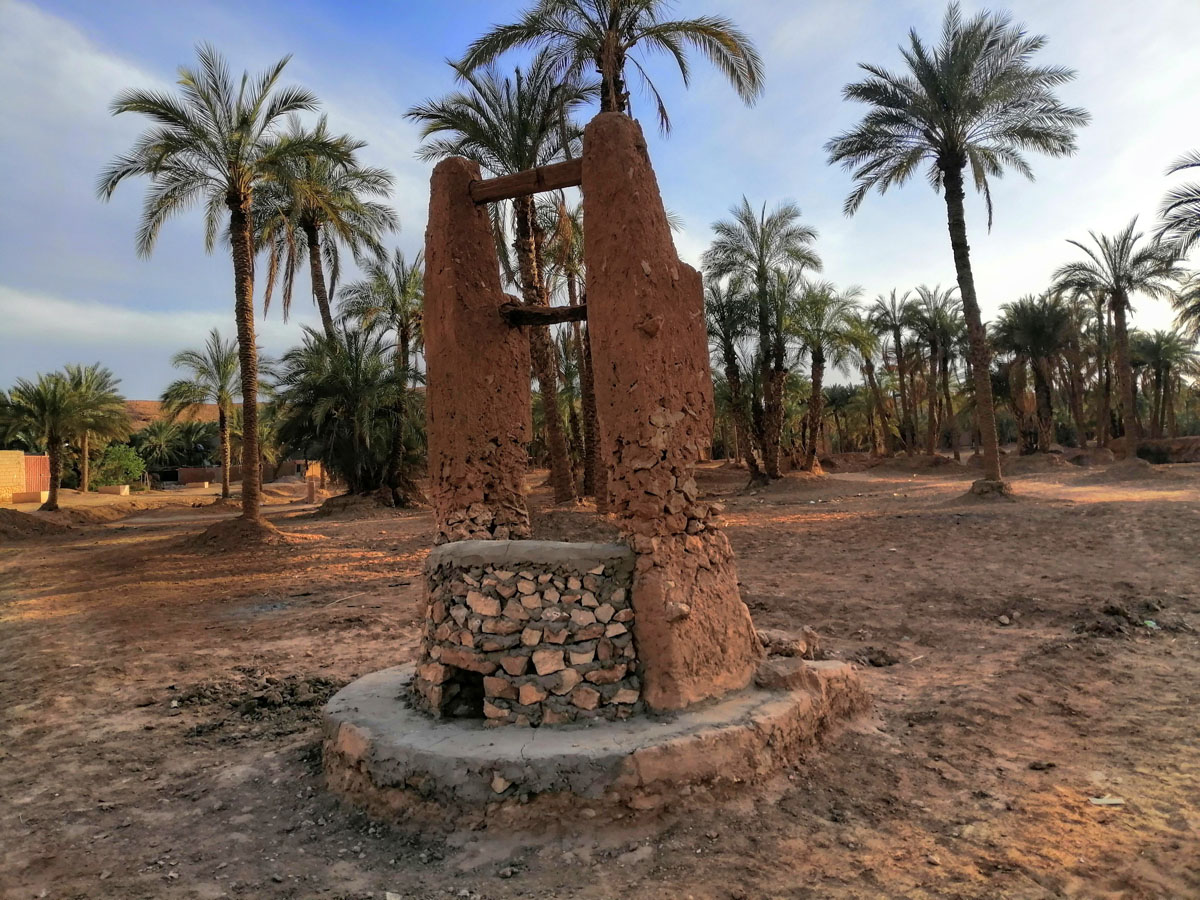
Figure 7
Recharge well restored during the national lockdown period in 2020 (source: M-A SAIDANI).
Passing the torch to young people
The scouts’ videos and the testimonies collected by the researchers stressed the importance of involving the community, especially young people, in oasis ecosystem conservation and the sustainable governance of common pool resources. According to interviewee Djamel “We try to encourage younger generations to take up the torch” (Karim’s Video 3; 2:20–2:29).
In arid and hostile environments, water is a precious resource that needs to be used sustainably and equitably. As one Umana Essayl14 member explained, “it is crucial to transmit and educate the younger generations about this sustainability issue, especially since they have not experienced significant flooding in their lifetime.” The intergenerational transmission of local knowledge—practices, values, rules, and philosophies developed by ancestors with a long history of interaction with the natural environment—is a key concern for the community. Any vision for the oasis must be community-driven and emphasize collective awareness, active participation, and the passing of knowledge and responsibility. According to interviewee Ahmed:15 “By combining traditional wisdom with modern awareness campaigns and youth engagement, the oasis ecosystem can be preserved for the benefit of present and future generations”.
Discussion and conclusion: the potential of participatory video to transmit traditional ecological knowledge across generations
Addressing the impacts of droughts and sharing TEK requires a multifaceted approach that integrates community-based adaptation strategies with sustainable water governance practices. Communities should foster dialogue between elders and youth, promote intergenerational learning, and revitalize the Umana Essayl’s role as TEK guardian to bolster their resilience against environmental change. Unfortunately, the drought, which has now lasted more than ten years, has challenged the transmission of local know-how. It is difficult to maintain long-term memory when place-based practices cannot be regularly practiced.
Therefore, we explored how a participatory visual approach could address the local elders’ concerns about involving the younger generation in common groundwater governance and conservation. The participatory video experience enabled the scouts to document and transmit TEK, identify problems, and imagine future/alternative solutions. It also facilitated communication and the transmission of culturally salient environmental knowledge by fostering connections between young and old. Participatory visual methods can also generate new knowledge for new conditions through engagement “with art, where art serves as a medium to facilitate dialogue and express learning,” “in art, where art is used as a platform to introduce or communicate the issue,” and “through art which conceptualises art as a means of transformation” (Bentz, 2020: 1597). Indeed, when the scouts’ videos were shown to the research participants, two points emerged from the discussions. First, the effectiveness of participatory video to raise young people’s awareness about various social, cultural and environmental issues. According to Ahmed: “Through the use of real-life examples and experiences captured on film, it is easier for young people to grasp the complexity of these issues and understand their implications”. Second, the importance of featuring young people as agents of change. It not only legitimises them to express their perspectives, but also empowers them to take an active role in addressing the challenges faced by their generation and those to come. Portraying young people as capable of making a difference, helps bridging the intergenerational gap by fostering collaboration and mutual respect between different age groups.
Documenting and transmitting traditional ecological knowledge with participatory video
The four scouts sought out information from different knowledge holders, and so deepened their own knowledge about the Tazouni N Waman system. The participatory video project also facilitated communication and cooperation between young people, water customary organisations, local researchers, and environmental association members. Through such co-production of knowledge (Tremblay and Harris 2018, Rusca 2018), the scouts were able to illustrate the main aspects of the TEK to their peers, to identify the main concerns about the traditional groundwater management system (prolonged drought-induced disruptions, accumulation of waste in the traditional Tazouni N Waman network, and urban encroachment in the palm grove), and to define their vision for the future of the oasis.
Although the four scouts succeeded in telling a story about the Tazouni N Waman system, there were limitations to their videos. They often failed to fully capture technical and hydrological features, instead focusing on the most visible problems. This indicates how “making the invisible visible” – as it is often called for when it comes to groundwater governance, remains a challenging task. Our experience points at the fact that participatory video needs to be complemented with other methods and sources (like interviews or hydrological measurements). On the other side, we should acknowledge that what the scouts’ video contributed to make visible perhaps is not the traditional system for groundwater management, but rather the emotions and values that people associate to it.
Personal transformation and social learning
This active process of knowledge generation can be a tool for social learning on common resources management. According to Muro & Jeffrey (2008), social learning is based on the communication and interaction of different actors within a participatory framework. Participatory visual research appeals to young people and should be used as part of their social learning. The scouts’ experiences with visual methods aligned with Muro and Jeffrey’s findings on social learning. According to these authors, social learning should lead to a range of outcomes, such as the production of new knowledge, the acquisition of technical and social skills, the development of trust and relationships, and a shared understanding of issues, mutual agreement, and collective action. The young scouts emphasised how participatory video contributed to their personal transformation (Tremblay and Harris, 2018), through the acquisition of technical skills, the production of new knowledge, and the development of self-confidence. Anis16 emotionally confided: “To successfully carry out this visual project, I had to overcome my shyness to contact and convince knowledge-holders to participate in my videos…it wasn’t an easy task…because I had to be convincing in my arguments for this. I prepared a speech to argue the interest behind the videos… I advanced two arguments: to enable me to concretize an individual project based on my video editing hobby, and to use the videos to sensitise other young people to take care of the oasis”.
Karim confided these perspectives: “The visual project gave me the opportunity to acquire a new tool to animate my activities within the scout group and thus provoke awareness and change among other young people to understand and solve complex problems and thus support the transformation towards sustainability of the oasis ecosystem”.
Participatory video for cross-generational conversation and collaboration on common groundwater governance
The current climate crisis, that deeply impacts on the sustainability of traditional groundwater governance system, has a significant intergenerational dimension, illustrated by youth activism and claims all around the world, and also by the challenge of transmitting TEK to the younger generations. Participatory visual research, in this case, proved an effective method to elicit a cross-generational conversation and co-production of knowledge on a traditional groundwater management system.
Remembering the past, documenting the present, and imagining the future through participatory videos, enabled the participants to bridge different knowledge systems (e.g., traditional, scientific, and emotional) and to contribute to more sustainable common resource governance.
Through their videos, the four scouts showed that they can connect with their social and hydrological environment, that they are able to voice their concerns and the concerns of their community, and also that they are ready to take responsibility for it. On the basis of this experience, we call for more co-production and communication of knowledge across generation, through methods such as participatory video, as an inherent component of groundwater commons governance.
Additional File
The additional file for this article can be found as follows:
Appendix
The appendices contain two main sections. The first section gives more details about the mozabite society, our local involvement, the concerns about the transmission of traditional ecological knowledge to young people, the informed consent and ethical research. The second section summarises the profile of the interviewees and provides a detailed description of the scout and researcher videos in two separate tables. DOI: https://doi.org/10.5334/ijc.1363.s1
Notes
[1] In North Africa, a wadi is a typically intermittent river or valley in dry regions, particularly in the Sahara. Almost all its water comes from run-off and it usually ends in a closed depression or disappears after exhaustion.
[3] The profiles of the individuals interviewed on or off camera by the researchers and scouts are available in the appendix.
[10] Baroud is the name for black-powder guns. These traditional firearms are associated with the cultural heritage and traditions of North Africa.
Acknowledgements
The visual projects produced by the scouts and researchers and the collection of narrative data were supported by the project “A Water-Energy-Food Nexus Toolkit” (WEF-Tools), funded by the Water and Development Partnership Programme (Phase2), funded by the Dutch Ministry of Foreign Affairs. The research carried out by MFH, MAS was also co-funded by the MASSIRE project – Integrating multiple water sources and local institutions for enhanced food security in North Africa’s hinterland by reinforcing agricultural & rural innovation systems, funded by IFAD (N° 2000002013).
We would like to acknowledge and sincerely thank all the knowledge holders and people interviewed in the videos who shared their stories and experiences with the scouts and us. We wish to thank the editors of this special issue and two anonymous reviewers for their insightful comments into a previous version of this article. We would also like to thank the coordinators of the Careful Irrigation project, funded by the Water and Development Partnership Programme (Phase3), which in turn is funded by the Dutch Ministry of Foreign Affairs, for supporting the financial costs of it. Support for article publication and editing of this special issue on groundwater governance was provided by the CGIAR Research Initiative on NEXUS Gains: https://www.cgiar.org/initiative/nexus-gains/. Usual disclaimers apply.
Competing Interests
The authors have no competing interests to declare.