
Table 1
Summary of most important periods and moments of the Mexican Land Reform era (1910–2000s) (own elaboration).
| YEAR | EVENT |
|---|---|
| 1910–1917 | Mexican Revolution with as one of the main demands ‘land to the tiller’. |
| 1917–1992 | Mexican Land Reform distributing half of Mexican arable land to over 28,000 ejidos (communal lands that were inalienable). |
| 1930s–1970s | Agrarian support system aimed at making smallholders agriculturally productive and competitive in the market |
| 1980s onwards | Neoliberal reforms and a gradual reduction in support to smallholders leading to stallholder bankruptcy, increased rural migration and proletarianization. |
| 1992 | End or Mexican Land Reform and amendments to Mexican constitution allowing the privatization of ejidos. |
| 1994 | Water reforms and the establishment of private water concessions that separated land and water ownership. |
| 2001 | Provisions in the water law that made water rights tradable. |
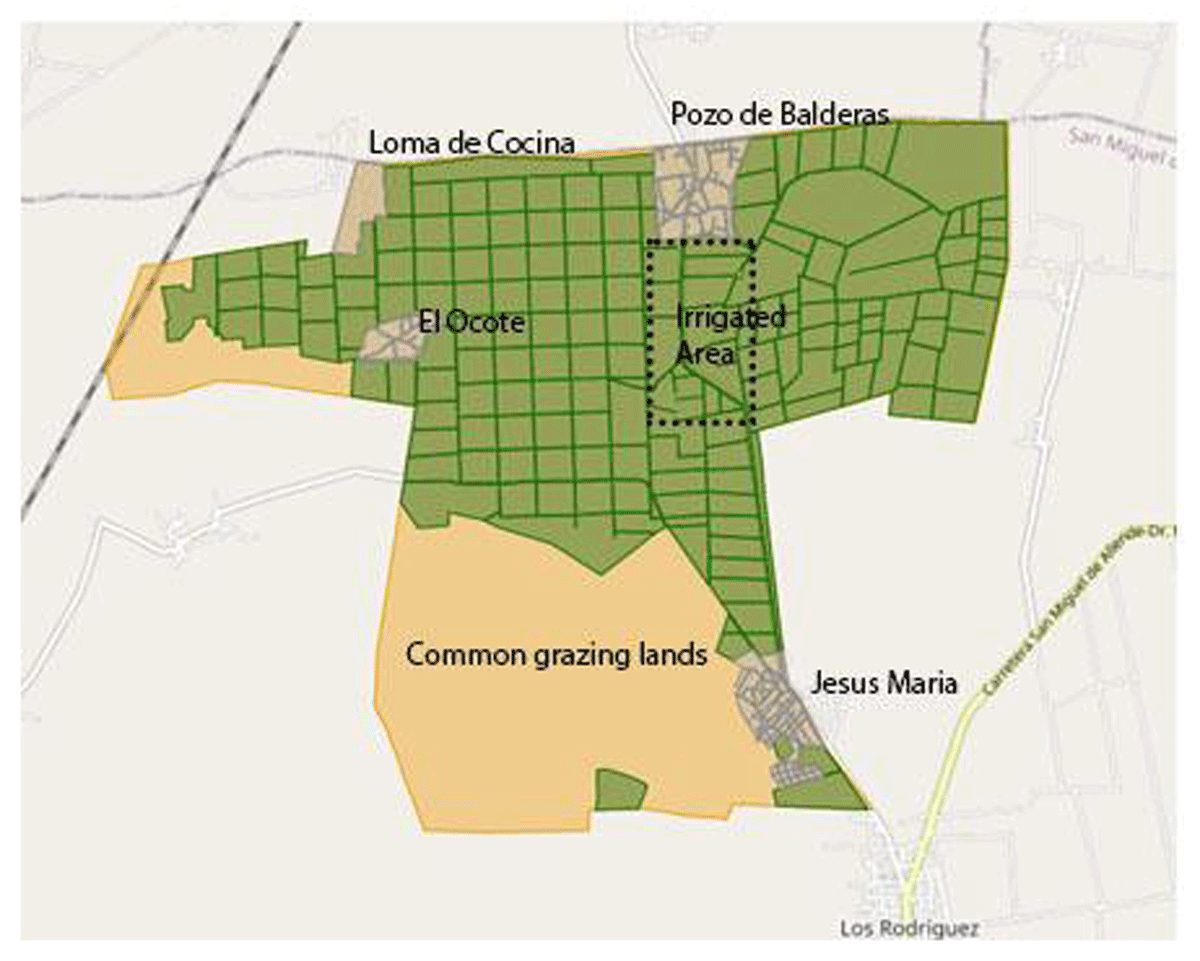
Figure 1
The ejido Jesús María with its communities, parcels and the irrigated area (own elaboration based on PHINA, 2020).
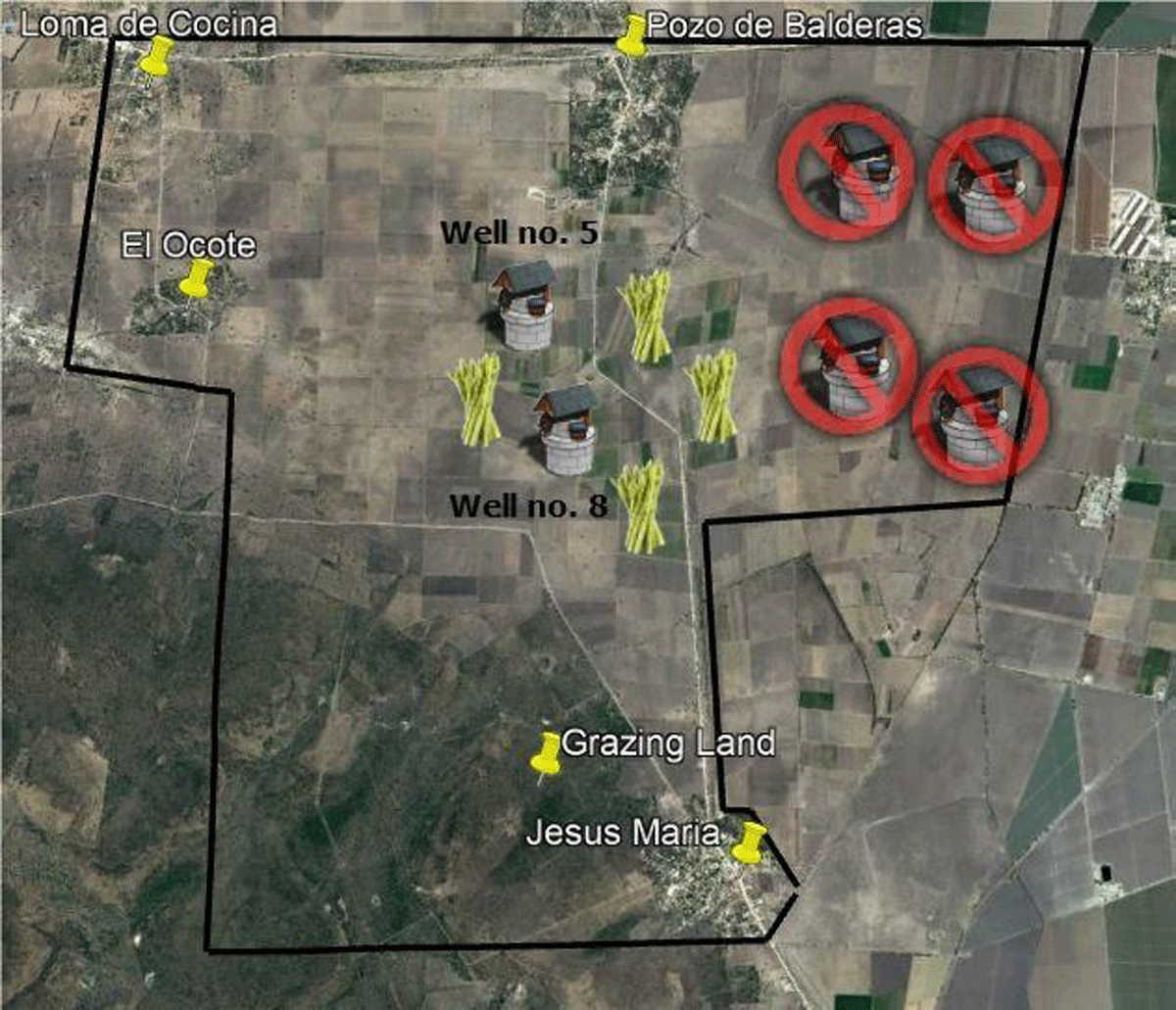
Figure 2
Ejido Jesus María and position of well in the ejido (source Hoogesteger and Rivara, 2021).
Table 2
Producers’ expansion of asparagus production.
| PRODUCER | STATUS IN EJIDO | START ASPARAGUS PROD. | INITIAL ASPARAGUS PRODUCTION (HA) | ASPARAGUS PRODUCTION 2018 (HA) |
|---|---|---|---|---|
| 1 | Miguel (Posesionario) | 1998 | 2 | 28 |
| 2 | Antonio (Ejidatario) | 1998 | 1.5 | 20 |
| 3 | Jose (son of Antonio) Ejidatario | 1998 | 1 | 13 |
| 4 | Posesionario | 2005 | 2 | 2 |
| 5 | Ejidatario | 2005 | 2 | 4.5 |
| 6 | Posesionaria | 2007 | 3.5 | 6.5 |
| 7 | Posesionario | 2008 | Unknown | 8 |
| 8 | Son of ejidatario | 2009 | 2 | 6 |
| 9 | Ejidatario | 2010 | 2 | 3.5 (2 with a partner) |
| 10 | Ejidatario | 2011 | 2 | 3 |
| 11 | Ejidatario | 2011 | 1 | 4 (2 with a partner) |
| 12 | Ejidatario | 2011 | 1 | 6 |
| 13 | Ejidatario | 2011 | 1 | 1.5 |
| Total | 22 | 99 |