
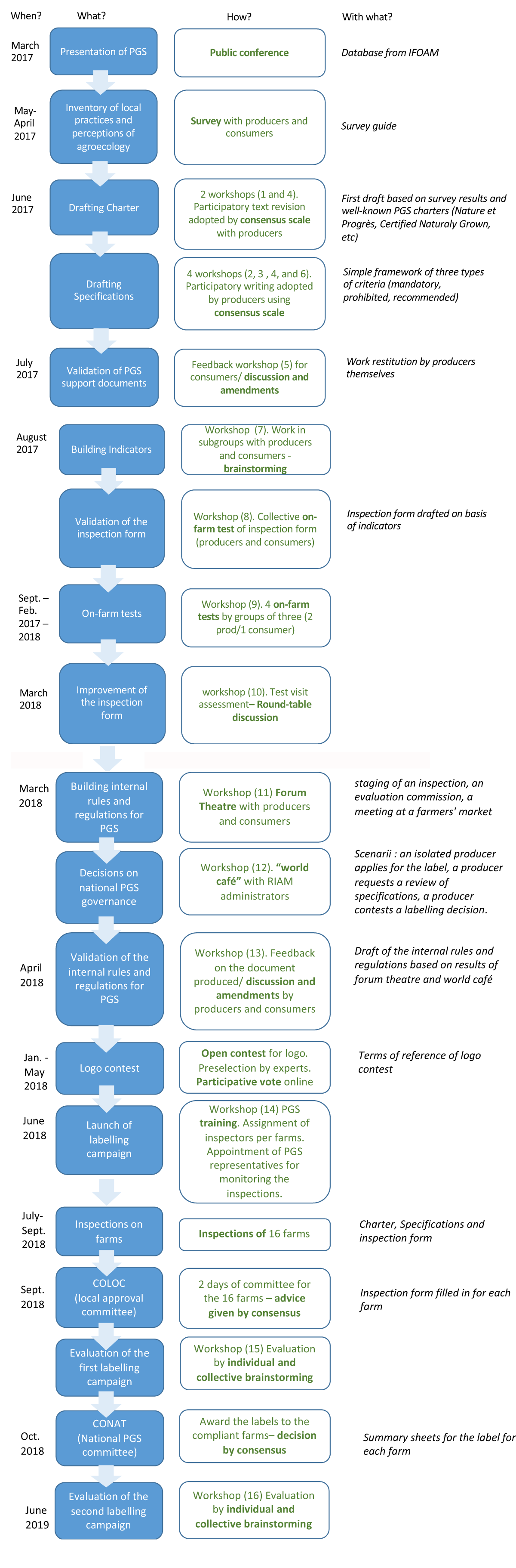
Figure 1
Timeline for the PAR process.
Table 1
Variables used for each evaluation indicator.
| Direct objectives | |
|---|---|
| Understanding and acceptance of the PGS principles | The workshop objectives are clear to you (1, 2, 3) |
| The project objectives are clear to you (1, 2, 3) | |
| Producing documents and tools for their PGS (charter, specifications, inspection form, PGS rules and regulations, etc.) (substantive results) | The workshops were useful (1, 2, 3) |
| The charter proposals are relevant (1) | |
| The specifications’ “obligations” and “prohibitions” are realistic (1) | |
| The criteria recommended by the specifications are achievable by all (1) | |
| The proposals made for PGS improvement are globally relevant (3) | |
| Indirect objectives | |
| Exchanging knowledge (procedural and operational results) | You learned about agroecology practices in these workshops (1) |
| You learned about organizing participatory certification in this workshop (2) | |
| During the inspections, you learned about practices in agroecology (3) | |
| During the COLOC, you learned about practices in agroecology (3) | |
| Strengthening a community of practice (procedural and operational results) | Attendance lists for workshops (1–16) |
| You learned about the other producers in the network at these workshops (1, 2) | |
| During the inspections, you learned about the other producers in the network (3) | |
| During the COLOC, you learned about the other producers in the network (3) | |
| Reflexive understanding of the process | |
| Assessing whether the process is fair: participants’ representativeness and ability to express their opinion (procedural results) | Attendance lists for workshops (1–16) |
| The interests of all producers (in agroecology) were represented at the workshop, if not who was missing? (1) | |
| The interests of all members of the PGS were represented at the workshop, if not who was missing? (2, 3) | |
| You could express your ideas | |
| You are ready to get involved in the next steps (1, 2, 3) | |
| Assessing the tools used (procedural results) | Attendance lists for workshops (1–16) |
| The facilitator was neutral about the content of the discussions (1, 2, 3) | |
| The way of working was effective (1, 2, 3) | |
[i] Note: The questionnaire’s number is shown in brackets.