
Graphic Abstract
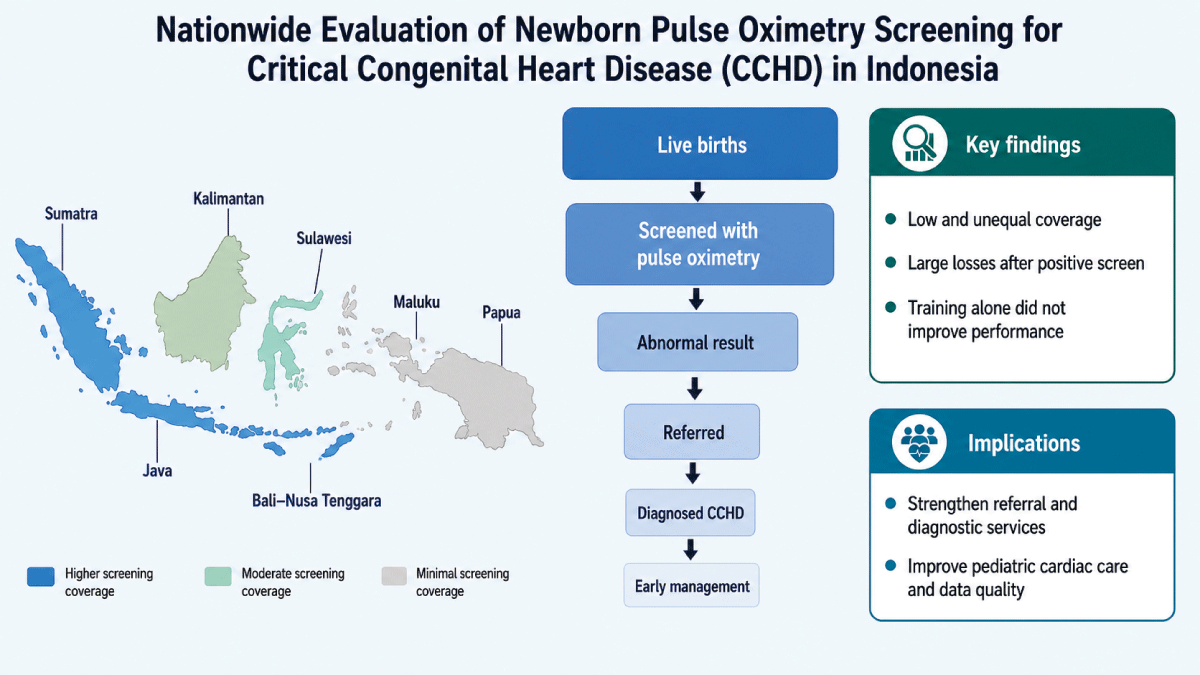
Background
Critical congenital heart disease (CCHD) comprises a group of severe cardiac malformations that typically require surgical or catheter-based intervention in early life to prevent death or irreversible morbidity. CCHD accounts for approximately 25% of all congenital heart defects (CHDs), with an estimated global birth prevalence of 2.5–3 per 1,000 live births (3, 4, 5). Although advances in neonatal and cardiac care have substantially improved survival in high-income countries, delayed diagnosis remains an important cause of preventable neonatal morbidity and mortality, especially in low- and lower-middle–income countries (LMICs).
Early diagnosis of CCHD is challenging because many affected newborns appear clinically well before hospital discharge and may not exhibit overt cyanosis or circulatory compromise (1). Up to 39% of infants with CCHD are discharged without a diagnosis and later present with circulatory collapse, severe hypoxemia, or cardiogenic shock, which is consistently associated with worse preoperative status, higher surgical risk, and increased mortality. In Indonesia, where roughly five million infants are born each year, an estimated 12,500 newborns are affected by CCHD annually (3, 4, 5, 20). Hospital-based data from a national referral center have documented high mortality and a predominance of late diagnoses among children with CHD, underscoring the consequences of delayed detection.
Pulse oximetry screening (POS) is a simple, inexpensive, and non-invasive method for detecting hypoxemia before overt clinical deterioration occurs (7, 8, 9, 10). Numerous population-based studies and meta-analyses have shown that POS has high specificity and a very low false-positive rate for detecting previously unrecognized CCHD (11, 12, 13). In settings where universal screening has been implemented, POS has been associated with earlier diagnosis, reductions in cardiac mortality, and favorable cost-effectiveness, supporting its incorporation into national newborn screening programs (6, 11, 12, 13).
Despite this evidence, implementation of POS in LMICs has been inconsistent (14, 15, 16). Barriers include shortages of trained healthcare workers, limited and poorly maintained equipment, early postnatal discharge, weak referral networks, and restricted access to pediatric cardiology and cardiac surgery services (4, 5, 14, 15, 16). As a result, early detection alone does not necessarily translate into improved survival when timely diagnostic confirmation and definitive treatment are unavailable (5, 14, 15, 16). These challenges highlight the importance of evaluating CCHD screening as a continuum of care—from screening and referral through diagnosis, treatment, and follow-up—rather than as an isolated screening intervention (14, 15, 16).
Indonesia introduced nationwide CCHD screening through the 2022 Ministry of Health Decree (No. HK.01.07/MENKES/1936/2022), mandating POS for all newborns before discharge (8, 18, 19, 20, 21). Implementation has been supported by the Indonesian Pediatric Society through the Indonesian Newborn Pulse Oximetry Screening Training (INPOST) and Pulse Oximetry Newborn Screening E-Learning (PONSEL) initiatives for physicians, nurses, and midwives (8, 18, 19, 20, 21). However, the national policy did not include dedicated funding for screening equipment, device maintenance, diagnostic evaluation, or definitive treatment, leaving implementation largely dependent on existing institutional resources and local budgets (17, 18, 19, 20, 21).
These policy constraints intersect with Indonesia’s complex health system context. As the world’s largest archipelagic nation, with more than 280 million people living across over 17,000 islands, access to specialized pediatric cardiac services is highly uneven (18, 20, 21, 22, 23). Pediatric cardiologists, echocardiography services, and cardiac surgical centers are concentrated in a limited number of tertiary hospitals, predominantly on Java and Bali, while many provinces rely on long-distance inter-island referral for diagnosis and treatment (26, 27, 28, 31, 32, 33). Although facility-based delivery has increased under the national health insurance system, delays in referral, limited neonatal transport capacity, workforce shortages, and persistent geographic inequities in access to cardiac care continue to impede timely management of infants with CCHD (21, 22, 23, 28, 29, 30).
To date, no nationwide evaluation has examined how Indonesia’s CCHD screening program is functioning across provinces or whether expansion of healthcare worker training has translated into improved implementation (8, 17, 18, 19, 24). Previous Indonesian and regional studies have primarily focused on feasibility, single-center performance, or other newborn screening conditions (8, 17, 18, 19, 24, 25). Consequently, important questions remain regarding screening coverage, data quality, and health systems readiness for CCHD screening at scale.
Therefore, this study aimed to evaluate provincial performance of Indonesia’s national CCHD screening program by assessing screening coverage, referral completion, diagnostic confirmation, early management, mortality, and loss to follow-up. We also examined the association between provincial training coverage and implementation outcomes and identified geographic disparities at the provincial level to inform strategies for strengthening equitable CCHD screening and downstream pediatric cardiac care across Indonesia.
Study Design and Data Sources
This was a cross-sectional, province-level evaluation of the national CCHD screening program in Indonesia using aggregated provincial data from two national sources. The first comprises healthcare worker training records maintained by Ministry of Health, which included the total number of eligible personnel (physicians, nurses, midwives, and medical laboratory technologists), the number completing newborn screening training during 2024 and provincial training targets for 2026.
The second data sources was the National Newborn Screening Program Database, which provided provincial screening and outcome data from January–December 2024 and January–May 2025. The database included the number of live births, newborns screened by pulse oximetry at primary healthcare facilities, abnormal screening results (positive or technical error), referral to advanced healthcare facilities, confirmed diagnoses of CCHD and non-CCHD, initiation of early management, referrals for management, deaths among infants with confirmed CCHD, and loss-to-follow-up (LFU). For 2024, live births represented all births recorded in the national database during the calendar year. For 2025, data reflected only the first five months of program implementation, and reporting completeness varied across provinces. Consequently, analyses of 2025 data were interpreted as interim findings rather than direct annual comparisons with 2024.
Pulse oximetry screening protocol
Pulse oximetry screening (POS) was performed according to the Indonesian national CCHD screening algorithm, which was developed from previous feasibility studies and incorporated into the 2022 Ministry of Health guideline. Screening was recommended between 24 and 48 hours after birth or immediately before discharge for newborns discharged earlier. Pre-ductal oxygen saturation was measured on the right hand and post-ductal saturation on either foot using handheld motion-tolerant pulse oximeters with neonatal sensors.
A screening result was considered positive if any of the following criteria were met: (1) oxygen saturation (SpO2) <90% in either extremity on a single measurement; (2) SpO2 of 90–94% in both extremities on three consecutive measurements performed at least one hour apart; or (3) a pre- and post-ductal SpO2 difference >3% on three consecutive measurements. All other results were classified as negative.
Newborns with positive screening results underwent clinical evaluation and were referred to designated pediatric cardiology centers for echocardiography and diagnostic confirmation. Newborns with negative screening results but persistent clinical suspicion of CCHD could also be referred at the discretion of the attending physician.
Analysis
Descriptive cascade analysis
A stepwise screening cascade was constructed at the provincial level to describe the flow of newborns from initial screening to confirmed CCHD diagnosis and downstream outcomes. Cascade indicators included live births, screened newborns, abnormal screening results, second screening completion, CHD diagnosis, confirmed CCHD, early management, mortality, and loss to follow-up (LFU).
For each indicator, descriptive statistics were calculated separately for 2024 and 2025, including means, medians, and interquartile ranges (IQRs). The 2025 data were analyzed independently to account for the shorter reporting period (January–May) and for differences in reporting completeness (22, 23, 24).
Logical plausibility checks were applied to identify inconsistencies across cascade steps. Implausible values were retained in the analysis to reflect real-world reporting patterns and were interpreted descriptively (21, 22, 23, 24, 37). This approach was chosen to preserve transparency and avoid masking early implementation challenges commonly observed in administrative health data.
Training coverage and association with screening performance
Training coverage was defined as the percentage of newborn healthcare workers who had received CCHD screening training in each province. Associations between training coverage and screening performance indicators were first assessed using pairwise correlation analyses. Pearson correlation coefficients were calculated for continuous variables, with p-values reported to assess statistical significance.
To further examine whether training coverage independently predicted screening coverage, multivariable linear regression models were constructed with screening coverage as the outcome variable (24). Geographic region was included as a categorical covariate to account for regional differences across Indonesia.
Geographic and regional comparison
Provincial and regional variation in screening coverage and cascade continuity was assessed descriptively using measures of central tendency and dispersion. Provinces were grouped into major geographic regions (Sumatra, Java, Kalimantan, Sulawesi, Bali–Nusa Tenggara, Maluku, and Papua), and regional summaries were calculated to compare screening performance across areas.
Patterns of missing data across cascade stages were examined descriptively and compared across regions to assess differences in reporting completeness (21, 22, 23, 24).
Geospatial visualization
Choropleth maps were generated to visualize geographic variation in screening coverage and confirmed CCHD detection at the provincial level. Additional spatial overlays illustrated absolute numbers of detected CCHD cases and reported CCHD-related mortality.
Geospatial analyses were conducted using aggregated provincial data. Maps were used to support descriptive interpretation of geographic patterns and do not imply causal relationships (21, 22, 23, 24).
Results
Provincial screening performance and cascade volumes
The analysis included 38 provinces with data from a complete reporting year (January–December 2024) and a partial reporting period (January–May 2025). Table 1 summarizes national screening volumes, and Figure 1 shows the provincial distribution of screening coverage and downstream cascade indicators. In 2024, screening coverage remained low overall, with a median provincial coverage of 21.8%, and performance varied markedly across provinces, indicating substantial geographic inequality in implementation.
Table 1
National newborn CCHD screening cascade volumes and median provincial coverage in Indonesia, 2024 and January–May 2025.
| INDICATOR | 2024 TOTAL, n | 2025 TOTAL, n* |
|---|---|---|
| Live births (n_bbl) | 4,591,122 | 2,166,946 |
| Newborns screened (n_skrining) | 1,645,706 | 584,460 |
| Abnormal screening results (n_positifgagal) | 1,756 | 873 |
| Second screenings completed (n_skrining2) | 1,482 | 706 |
| CHD diagnoses (n_chd) | 524 | 332 |
| Confirmed CCHD cases (n_cchd) | 273 | 210 |
| Early management provided (n_earlym) | 261 | 228 |
| Deaths among confirmed CHD/CCHD (n_death)† | 4,873 | 20 |
| Lost to follow-up among confirmed CHD/CCHD (n_lfu) | 58,446 | 0 |
| Median provincial screening coverage, % | 21.8 | 8.6 |
[i] *2025 data represent January–May only; reporting completeness varies by province.
†Deaths reflect all reported deaths among infants with CHD in the cascade, not necessarily limited to CCHD.
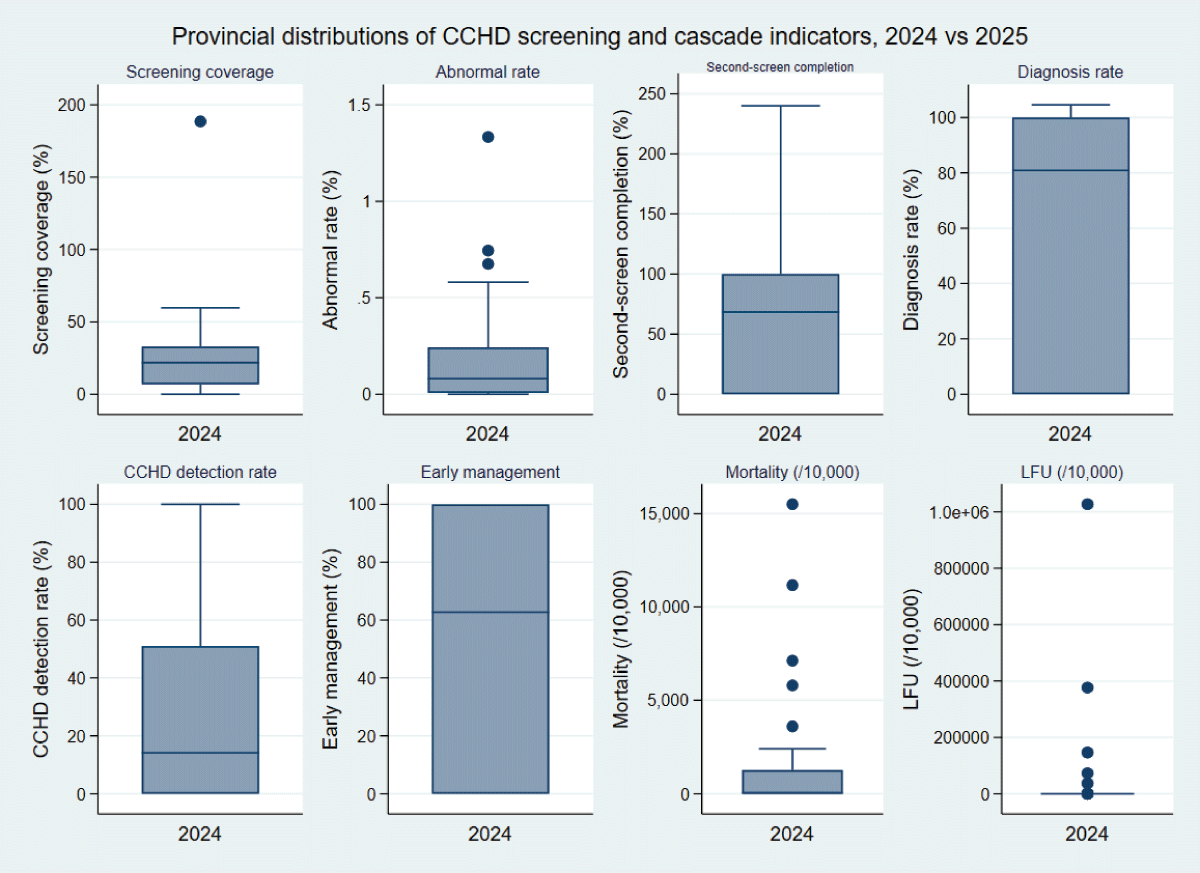
Figure 1
Provincial distributions of CCHD screening coverage, cascade completion, and outcomes in Indonesia, 2024 and January–May 2025.
The number of infants decreased progressively at each stage of the screening pathway, from abnormal screening results to repeat screening, diagnostic confirmation, and initiation of management. Reporting also became increasingly incomplete in the later stages of the pathway, with many provinces recording zero values for referral, diagnosis, or follow-up outcomes. This pattern likely reflects a combination of real service-delivery gaps and under-reporting in routine program data, both of which are common challenges in large-scale health system monitoring.
The 2025 data showed lower screening coverage and fewer infants progressing through the screening pathway than in 2024. However, these findings should be interpreted cautiously because the dataset covered only the first five months of the year and reporting remained incomplete in several provinces. In particular, the absence of reported loss to follow-up events in 2025 is unlikely to represent true program performance and most likely reflects incomplete reporting. Overall, the apparent decline in screening activity between 2024 and 2025 is more consistent with shorter observation time and reporting limitations than with a reduction in program implementation.
Boxplots show the distribution of provincial values across 38 provinces for each major indicator in the screening cascade. Panels display screening coverage, abnormal screening rate, second-screen completion, diagnosis rate, CCHD detection rate, early-management rate, and mortality and loss-to-follow-up (LFU) rates per 10,000 live births for 2024 and January–May 2025. The distributions are highly skewed, with a small number of provinces showing relatively high activity and many provinces reporting minimal or no activity across multiple cascade steps.
Year-to-year differences in screening activities and data completeness
Compared with 2024, fewer newborns were screened and progressed through each stage of the screening pathway during January–May 2025. Because the 2025 dataset covered only the first five months of the year and reporting completeness varied across provinces, these findings should be interpreted as interim program data rather than direct annual comparisons.
Reporting quality remained inconsistent, particularly for downstream indicators. All provinces reported zero loss to follow-up (LFU) in 2025, which is unlikely to represent the true absence of LFU and more likely reflects incomplete documentation. Missing data were common in both years and became more frequent at later stages of the screening pathway, including referral, diagnostic confirmation, and follow-up, indicating persistent weaknesses in the national reporting system.
Screening rates and cascade performance
Provincial screening rates varied substantially (Table 1). Abnormal screening rates remained low in both years, while completion of second screening was generally high but varied considerably between provinces. Several provinces reported rates exceeding 100% for downstream indicators, suggesting inconsistencies in reporting denominators or data entry. Consequently, estimates for referral, diagnostic confirmation, mortality, and LFU should be interpreted with caution, particularly for provinces with small numbers of screened newborns.
Geographic variation in coverage, cascade continuity, and outcomes
Regional differences in screening performance were pronounced (Figure 2). In 2024, screening coverage was highest in Kalimantan, followed by Bali–Nusa Tenggara, whereas Java, Sumatra, and Sulawesi demonstrated moderate coverage. In contrast, all Papuan provinces reported minimal or no screening activity. Similar geographic disparities persisted during the 2025 reporting period, with Java and Sumatra maintaining relatively higher screening coverage and Papua continuing to report near-zero implementation. Overall, these findings highlight substantial inequities in the implementation of Indonesia’s national CCHD screening program.
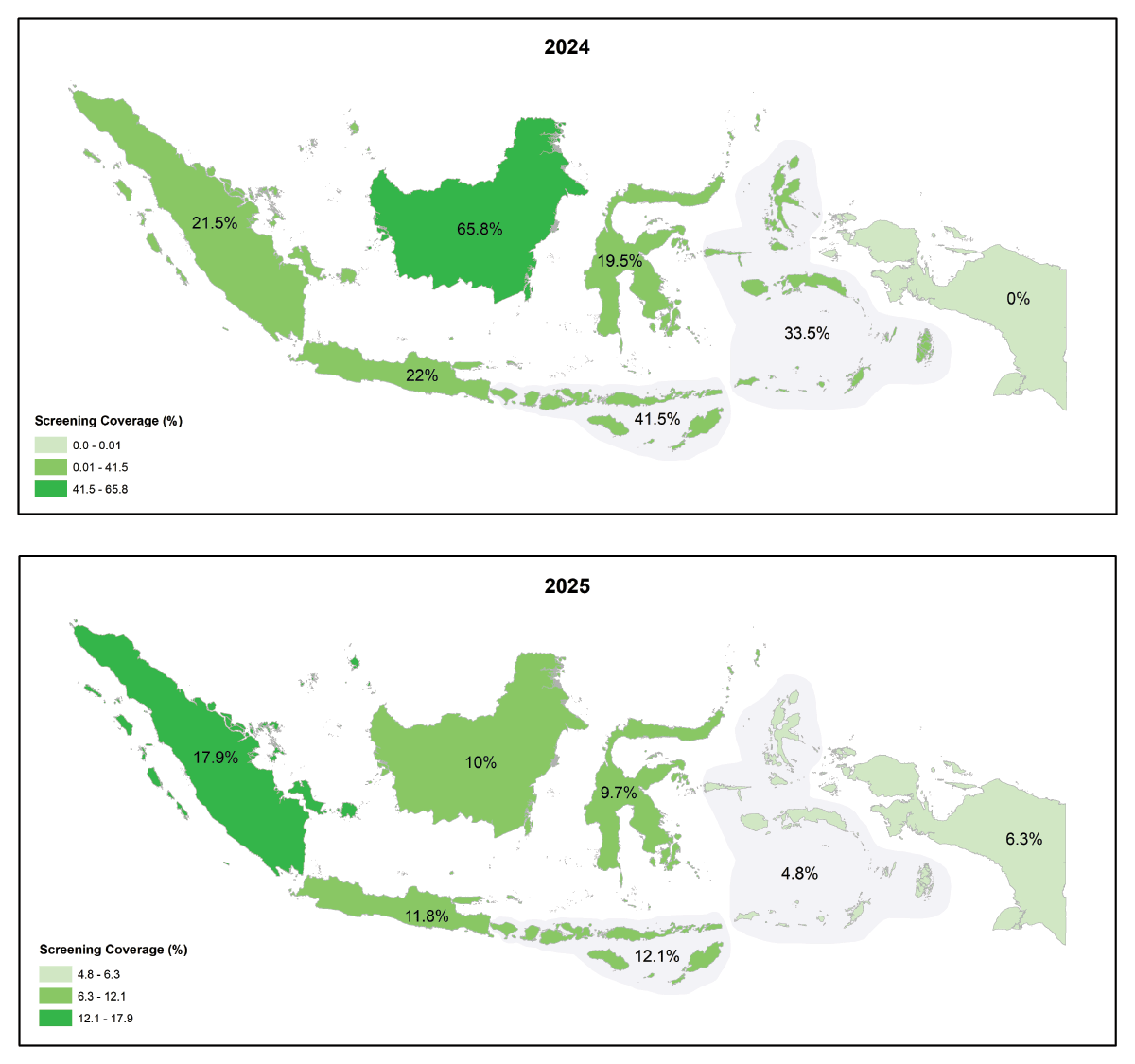
Figure 2
Regional mean screening coverage for newborn CCHD screening in Indonesia, 2024 and January–May 2025.
Marked geographic variation was also observed in CCHD detection and related outcomes. Most confirmed cases were reported in Java, Bali–Nusa Tenggara, Sumatra, and parts of Sulawesi, regions with larger birth cohorts and higher screening uptake. Papua and Maluku reported very few or no cases, consistent with their limited screening activity rather than an absence of disease.
Figure 3 illustrates the spatial distribution of CCHD detections and newborn deaths in Indonesia. Provinces are shaded according to the positive screening rate by district, with darker green indicating higher proportions of abnormal screening results. Filled circles represent the number of confirmed CCHD cases detected by pulse oximetry in each province, with larger and darker symbols indicating higher case counts, while the intensity of red shading denotes the absolute number of all-cause newborn deaths per province. Mortality clusters were most prominent in several provinces in Sumatra and Kalimantan. Provinces with high newborn mortality but relatively low numbers of detected CCHD cases likely experienced delays in identification, incomplete diagnostic pathways, or limited access to definitive treatment despite the availability of screening.
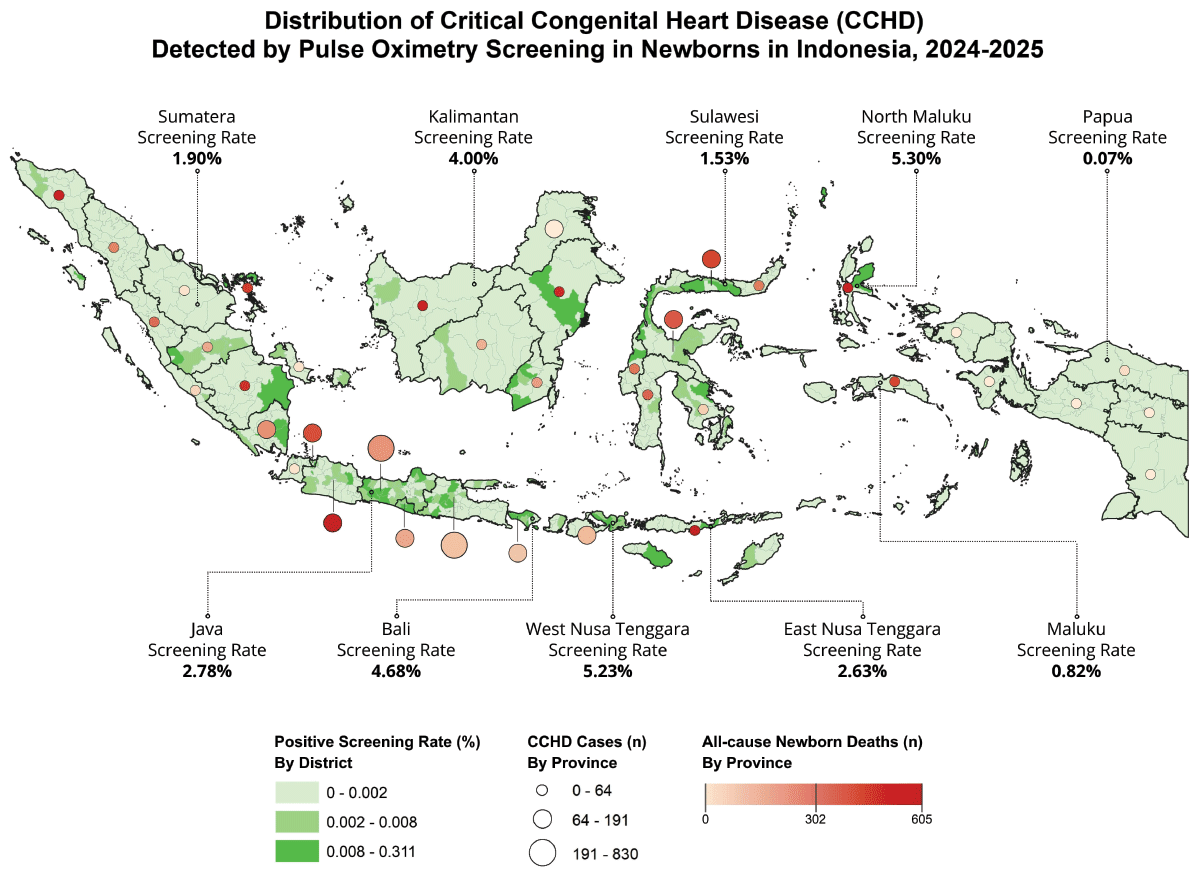
Figure 3
Spatial distribution of CCHD detections and deaths among infants with congenital heart disease in Indonesia.
Training coverage and association with screening performance
Training indicators are summarized in Tables 1. Although healthcare worker training had been implemented across all regions, coverage varied considerably between provinces. Higher training coverage was observed in Java, Papua, Maluku, and Kalimantan, whereas other regions reported more limited participation.
To explore the relationship between training and implementation, scatterplots (Figure 4) were used to compare provincial training coverage with screening coverage and other key cascade indicators, including abnormal screening rates, second-screen completion, diagnostic confirmation, and CCHD detection. These visual analyses showed no clear positive association between higher training coverage and better screening performance or downstream outcomes; provinces with relatively high training coverage often exhibited low screening coverage and substantial losses along the cascade, while some provinces with modest training coverage achieved comparable or better screening performance (8, 17, 18, 19, 24).
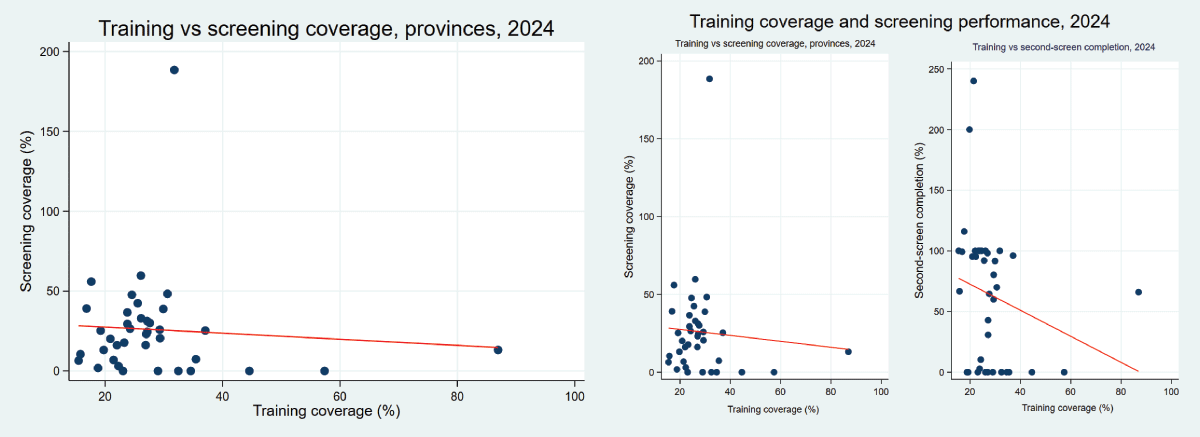
Figure 4
Pairwise correlations between training coverage and screening cascade indicators across provinces, Indonesia, 2024.
In contrast, strong positive associations were observed between successive steps of the screening pathway, such as between abnormal screening and second-screen completion, diagnostic confirmation, and CCHD detection, indicating internal consistency of the cascade where data were available. Overall, these patterns suggest that expanding healthcare worker training alone was insufficient to improve program performance and that broader health system factors, including screening infrastructure, referral capacity, diagnostic services, and data reporting, likely play a more important role in determining successful implementation (14, 15, 16, 35, 36, 37).
Each panel displays provincial training coverage on the x-axis and a screening cascade indicator on the y-axis (screening coverage, abnormal screening rate, second-screen completion, diagnostic confirmation, and CCHD detection). Points are colored by geographic region to illustrate spatial patterns. No consistent positive association is observed between training coverage and any cascade indicator, whereas provinces with higher cascade completion at one step tend to perform better at subsequent steps.
Multivariable regression analysis (Table 2) similarly demonstrated no significant association between provincial training coverage and screening coverage in either unadjusted or region-adjusted models (24, 35, 36, 37). After accounting for geographic region, training remained unrelated to screening performance, whereas regional variation emerged as the primary determinant of provincial screening coverage. The final model explained approximately one-fifth of the variation in screening coverage, indicating that factors beyond healthcare worker training, such as resource availability, health-system readiness, and geographic access, contributed substantially to implementation differences (20, 21, 22, 35, 36, 37). Although Papua tended to have lower screening coverage than the reference region (Bali–Nusa Tenggara), this difference did not reach statistical significance.
Table 2
Linear regression models assessing the association between training coverage and provincial screening coverage in Indonesia, 2024–2025.
| MODEL | PREDICTOR | β COEFFICIENT | 95% CI | p-VALUE |
|---|---|---|---|---|
| Unadjusted | Training coverage (%) | –0.191 | –1.040 to 0.658 | 0.651 |
| Adjusted for region | Training coverage (%) | 0.036 | –0.841 to 0.913 | 0.934 |
| Region (overall effect)* | 0.046 |
[i] *The overall effect for region reflects joint significance across all regional categories based on F-test results.
Outlier assessment and plausibility checks
Several unusual patterns were identified in the screening cascade, including second-screen completion rates exceeding 100% and very high diagnosis or CCHD detection rates in some provinces. These patterns are more consistent with inconsistencies in reporting or denominators than with true differences in program performance and highlight the importance of routine plausibility checks when interpreting administrative data. In contrast, training data appeared internally consistent, although the training progress indicator showed a ceiling effect in some provinces that limited its ability to distinguish between different levels of implementation.
Discussion
Overall implementation and health system readiness
This nationwide evaluation shows that implementation of Indonesia’s CCHD screening program remains at an early stage, with low overall coverage, marked geographic disparities, and substantial losses along the screening pathway (2, 5, 17, 18, 19). Although pulse oximetry screening has been mandated nationally, implementation has been uneven, with screening concentrated in a small number of provinces while others report little or no activity, similar to early policy-to-practice gaps described in other middle-income settings where newborn screening recommendations preceded full integration into routine care.
The observed disparities appear to reflect differences in health-system readiness rather than a lack of policy commitment. Indonesia’s archipelagic geography, unequal distribution of healthcare resources, shortages of specialized personnel, and concentration of pediatric cardiac services in a limited number of tertiary centers continue to constrain nationwide implementation. Comparable challenges have been reported across low- and middle-income countries, where limited diagnostic capacity and referral infrastructure restrict the expansion of newborn and cardiac services beyond urban centers (5, 14, 28, 29, 30). In addition, although facility-based delivery is common, many newborns are discharged within 12–24 hours after birth, which reduces opportunities to complete pulse oximetry screening unless it is fully embedded into routine immediate postnatal care (17, 18, 19).
Regional differences were particularly striking. Screening activity was concentrated in Java and Bali–Nusa Tenggara, whereas eastern provinces, especially Papua and Maluku, reported minimal screening (18, 20, 21, 22). Consequently, the low number of confirmed CCHD cases in these regions is more likely to reflect under-screening and constrained access to diagnostic services than a lower underlying disease burden (3, 18, 20, 21, 22). Similar geographic inequities have been observed in other large middle-income countries, such as China and India, where early implementation of CCHD or related cardiac services has occurred primarily in economically stronger regions with greater pediatric cardiology capacity. Provinces with higher screening activity also reported more confirmed cases and deaths, suggesting that increased case detection has not yet been matched by equivalent improvements in referral and definitive treatment (5, 28, 29, 30).
Cascade attrition beyond screening
A major finding of this study is the substantial attrition observed after initial screening. Many provinces were able to initiate pulse oximetry screening, but only a minority of infants with abnormal results completed referral, diagnostic confirmation, or early management (8, 17, 18, 19, 20, 24). Similar losses along the screening cascade have been documented in India and sub-Saharan Africa, where weak referral systems and limited specialist services reduce the effectiveness of newborn and cardiac screening programs (14, 28, 29, 30, 39).
The greatest losses occurred at stages requiring specialized care, including echocardiography, pediatric cardiology assessment, neonatal transport, and cardiac surgery. These services remain concentrated in a small number of tertiary centers in Indonesia, making timely diagnosis and treatment particularly challenging for infants born outside major urban areas (26, 28, 29, 30, 31, 32, 33, 34). Furthermore, pulse oximetry is not a stand-alone diagnostic test and may miss certain lesions, especially some left-sided obstructive defects (11, 12, 13). Consistent with earlier work, these findings emphasize that POS achieves its intended benefit only when coupled with careful clinical assessment and effective referral pathways to diagnostic and surgical services (7, 11, 12, 13).
Collectively, these results reinforce a central principle: early detection alone does not improve outcomes. Screening can reduce mortality only when abnormal results are reliably linked to timely diagnosis, referral, and definitive treatment.
Training alone is insufficient
In this analysis, healthcare-worker training coverage was not associated with screening coverage or progression through the screening pathway. Provinces with higher training coverage did not consistently achieve better implementation or downstream outcomes (8, 17, 18, 19, 20). Similar patterns have been reported in other LMICs, where the effect of training on service delivery was limited by shortages of equipment, workforce, supervision, and referral capacity. These observations suggest that scaling up training without addressing structural constraints is unlikely to improve program performance substantially (35, 36, 37).
Data quality also emerged as an important challenge. Missing data and inconsistent values became more common at later stages of the screening pathway, indicating weaknesses in routine reporting systems. Similar documentation problems have been described in other LMICs, where fragmented health information systems limit the ability to monitor newborn screening and other health programs reliably. Strengthening data quality, including clearer reporting guidance, better integration of screening registers with routine health information systems, and regular data-quality audits, is therefore essential for accurately evaluating program performance and identifying regional gaps (36, 37, 38).
Implications for national scale-up and screening criteria
Taken together, these findings indicate that future expansion of CCHD screening in Indonesia should prioritize health-system readiness rather than screening coverage alone. Strengthening referral pathways, neonatal transport, diagnostic services, pediatric cardiology, and cardiac surgery capacity is essential if early detection is to translate into improved survival in a context where the underlying burden of CHD is substantial (3, 5, 28, 29, 30). A region-specific implementation strategy may be warranted: provinces with limited screening activity may need to focus first on integrating pulse oximetry into routine newborn care and ensuring basic referral mechanisms, while higher-performing provinces prioritize improving diagnostic capacity, transport, and access to definitive treatment.
These results are consistent with the Wilson and Jungner principles for population screening and their contemporary refinements, which emphasize that effective screening requires not only an acceptable test but also accessible diagnostic and treatment services and a reasonable balance between case-finding costs and overall health expenditure (40). Indonesia has successfully established a national policy framework for newborn screening but continues to face significant gaps in downstream services and financing (17, 18, 19, 21). Aligning future investments with modern screening criteria will be critical to ensure that CCHD screening delivers meaningful clinical benefit rather than simply increasing case detection in settings where definitive care remains difficult to access.
Strengths and Limitations
This study provides the first nationwide evaluation of Indonesia’s CCHD screening program using real-world administrative data, offering valuable insight into implementation across diverse healthcare settings. However, several limitations should be acknowledged. First, the use of aggregated provincial data precluded patient-level analyses and causal inference. Second, incomplete reporting and data inconsistencies may have underestimated screening performance and downstream outcomes. Third, the 2025 dataset represented only the first five months of implementation and should therefore be interpreted as interim findings rather than annual program performance.
Conclusion
Indonesia has made important progress by introducing nationwide pulse oximetry screening for CCHD, but implementation remains constrained by low coverage, substantial geographic inequities, and major losses after initial screening. These challenges primarily reflect limitations in health system readiness, including diagnostic capacity, referral pathways, pediatric cardiac services, and data quality, rather than deficiencies in healthcare worker training alone. Future national efforts should therefore focus on strengthening the entire continuum of care so that early detection is consistently translated into timely diagnosis, definitive treatment, and improved outcomes for newborns with CCHD.
Acknowledgments
The authors gratefully acknowledge Iskran Dwi Rahmanto (iskrandwi13@gmail.com) from the Pediatric Research Office, Sardjito Hospital, for assistance with data visualization, mapping, and related graphical analyses.