
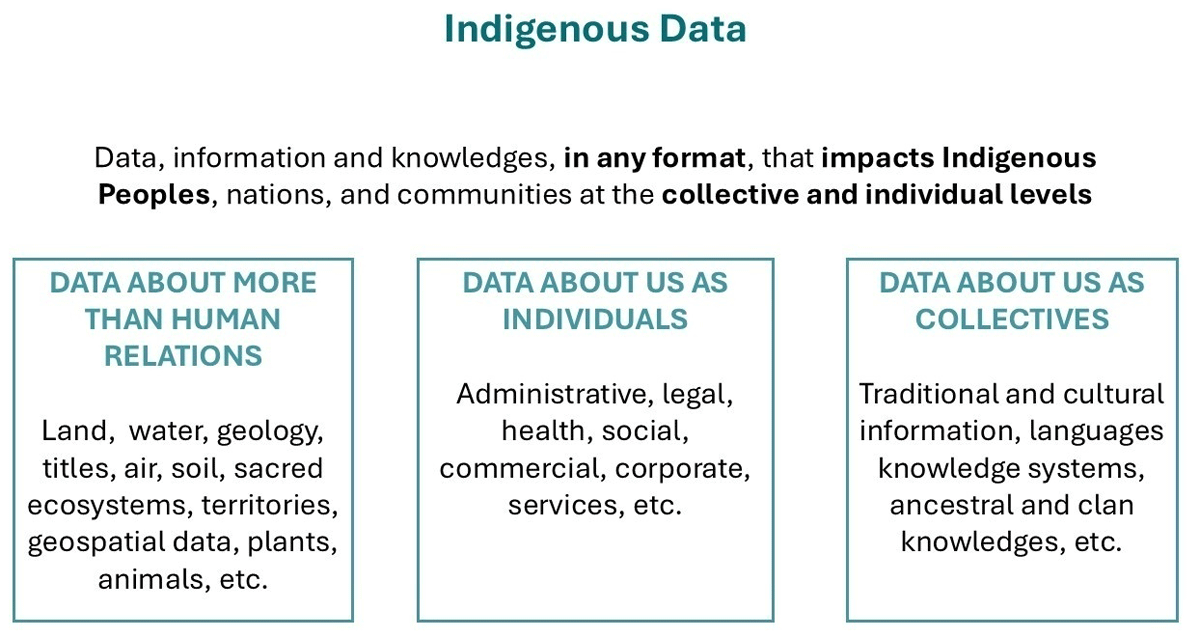
Figure 1
Indigenous Data interconnected domains, encompassing people, Country, language, culture, and resources. Adapted from Jennings et al. (2025), British Columbia First Nations’ Data Governance Initiative (2018), and Maiam nayri Wingara (2018).
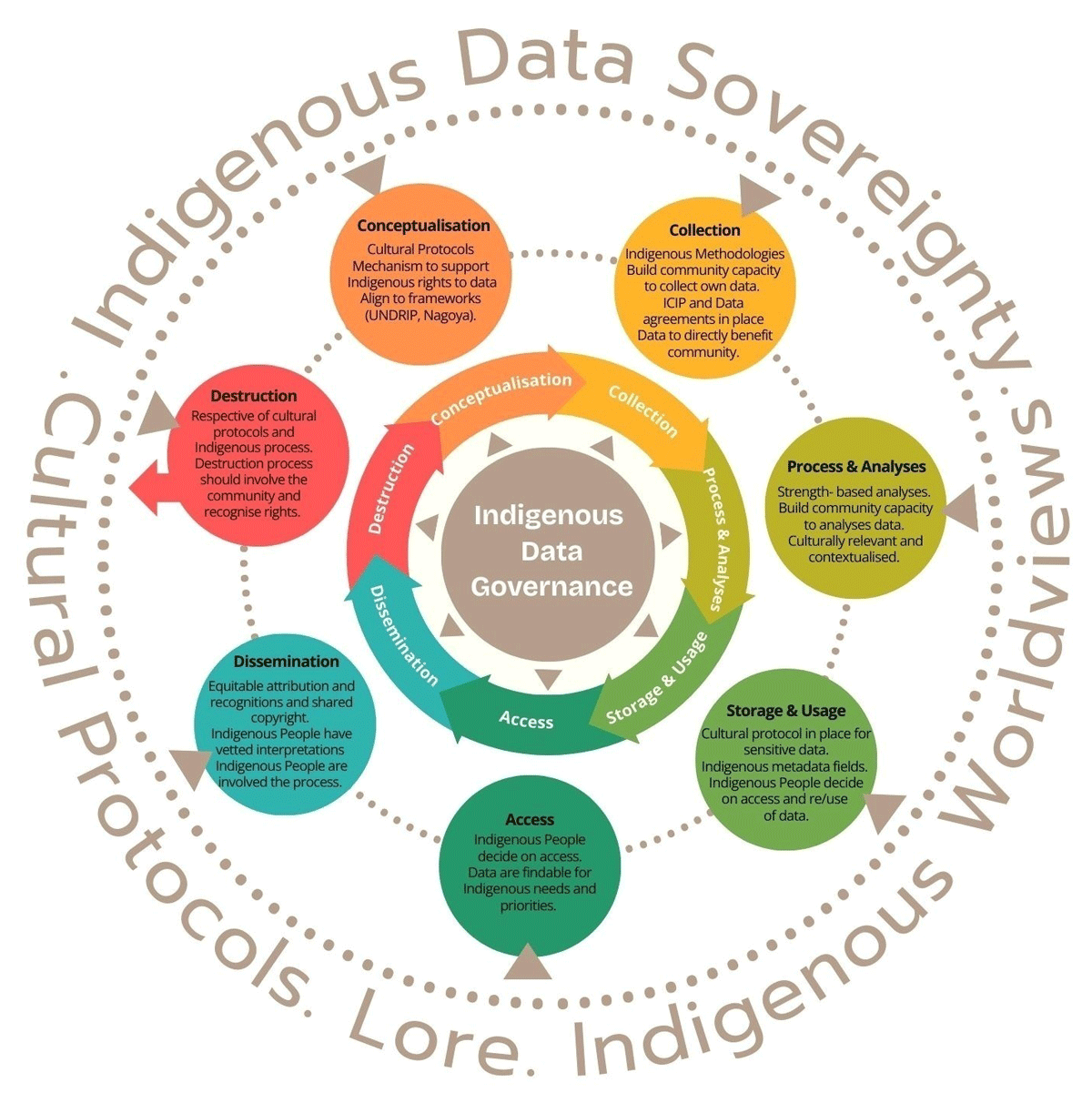
Figure 2
The Indigenous Data Lifecycle.
A simplified data lifecycle from an Indigenous viewpoint, showing the broad stages through which data move and the points at which Indigenous rights, interests, and decision-making apply.
Table 1
Indigenous data register example from an Indigenous data audit, 2024.
| NAME OF INDIGENOUS DATA ASSET | ABOUT | SOURCE | DATA QUALITY ASSESSMENT | ISSUES IDENTIFIED | STORAGE LOCATION | CUSTODIAN | WHAT IS CURRENTLY REPORTED FROM THE ASSET INTERNALLY | WHAT IS CURRENTLY REPORTED FROM THE ASSET EXTERNALLY (PUBLICLY) | ACCESS/USE POLICIES FOR COMMUNITY | CURRENTLY SHARED WITH? |
|---|---|---|---|---|---|---|---|---|---|---|
| Admitted Patient Collection | This asset contains person level inpatient data for public and private hospitals. | Public and private hospitals | Ongoing. Data is cleaned and checked for consistency as it is processed. Data is cleaned and checked for consistency as it is processed. | Inconsistent provision of private hospital data. Missing Indigenous identification on a small number of records each year. | Health data warehouse | Chief Health Data Officer | Significant internal reporting, including activity, safety and quality, costs, planning & population health. | Significant national and jurisdictional reporting, including activity, safety and quality, costs, planning & population health. | Data Access Policy Link Requests for aggregate data analysis and unit record data are made directly via a customer portal | Australian Institute of Health and Welfare The National Health Funding Body Independent Health and Aged Care Pricing Authority. |