
1. Introduction
Persistent identifiers (PIDs) are defined as global, unique, resolvable, and persistent references (Juty et al., 2020) that have evolved from being a tool to becoming fundamental elements of scientific infrastructure since their introduction over 20 years ago (Klump and Huber, 2017). The purpose of PIDs is to ensure the unambiguous and persistent identification of objects, processes, and methods involved in the research process, as well as their research outputs. Their value arises not only from accurate identification but also from the interoperable interplay among PID-assigned entities and services (Czerniak et al., 2013). Significant progress has been made in using PIDs, as demonstrated by the PID Monitor (PID-Monitor, 2025),1 for example, through the visualization of the distribution of DOIs for datasets over time.
In recent years, national PID strategies and policies have been developed and/or are being implemented across multiple countries worldwide (PID Forum Finland, 2023; National Open Research Forum and MoreBrains Cooperative, 2024), reflecting a growing recognition of PIDs of their importance for research infrastructure. This trend is situated within the broader international emergence of national PID strategies, supported by the Research Data Alliance2 (RDA) as a forum for coordination, exchange, and community alignment. In this context, the PID Network Germany project has contributed3 to the Interest Group over recent months, thereby engaging with international discussions on the development and alignment of national PID strategies. The German research landscape is notably heterogeneous, comprising a wide range of institutional structures and disciplinary domains. This diversity creates both challenges and opportunities for developing a coordinated PID strategy. Numerous initiatives have focused on specific types of PIDs and entities, with the ORCID iD for researchers being the most notable example, whose dissemination in Germany was promoted by the ORCID DE project (ORCID.DE – Förderung der Open Researcher and Contributor ID in Deutschland, 2016–2019). There is still a lack of a systematic approach that considers PIDs across different entities and contexts. Previous studies have generally examined the adoption and prevalence of individual identifiers within specific contexts (Ferguson et al., 2018; Vierkant et al., 2022; El-Gebali and Böhm, 2025). While these surveys provide a valuable foundation, further research using questionnaires is needed to examine how different types of PIDs are embedded within organizations and infrastructural settings. In particular, the field would benefit from an in-depth analysis of how the combined use of multiple PID types influences interoperability and the pragmatic implementation of the FAIR (Findability, Accessibility, Interoperability, and Reusability) data principles (Wilkinson et al., 2016). This suggests a progression towards an extensive analysis that moves beyond isolated case studies to gain a greater understanding of the dynamics of PID ecosystems in both cross-organizational and cross-disciplinary contexts.
The presented survey was conducted within the project of ‘PID Network Deutschland – Netzwerk für die Förderung von persistenten Identifikatoren in Wissenschaft und Kultur’ (Bertelmann et al., 2023), funded by the German Research Foundation (DFG)4 and carried out in collaboration with the Helmholtz Open Science Office, DataCite, the German National Library (DNB), the TIB – Leibniz Information Centre for Science and Technology, and the Bielefeld University Library. The approach taken in this project—to establish a national overview of the PID landscape—was unique at the time of the survey’s publication.
This article reports on the findings of the Survey on the Need for and Use of Persistent Identifiers at Research and Infrastructure Organizations in Germany (original in German: Quantitative Umfrage zum Bedarf und zur Nutzung von Persistenten Identifikatoren an Forschungs- und Infrastruktureinrichtungen in Deutschland). The survey seeks to bridge the gap between conceptual expectations and the practical use of PIDs in a pragmatic, everyday operation within the German research landscape.
The survey systematically maps the commonly known types of PIDs and their corresponding entities across different organizational groups in the German research landscape. Given its complexity, an in-depth examination of the entities and their respective metadata was beyond the scope of this survey. Instead, the survey focused on questions relating to their perceived importance, interoperability, and quality.
The quantitative survey is part of a broader investigation, which included ten project workshops (Genderjahn and Czerniak, 2025) aimed at examining specific use cases of PIDs and gathering stakeholder perspectives on their use, dissemination, acceptance, and the barriers faced within research infrastructure services. By adopting a more comprehensive, empirical approach to understanding awareness and acceptance of PIDs, this survey offers valuable insights that can inform the development of strategies and infrastructure. A key opportunity is to enhance the efficiency and potency of managing and monitoring research activities not only5 at German academic as well as non-academic organizations, while strengthening the traceability and reproducibility of research outputs. The survey also provides an important evidence base for developing a national PID roadmap that derives recommendations from the empirical findings and supports the further strategic alignment of PIDs in Germany.
2. Survey Design and Data Collection
This section outlines the survey’s conceptual framing and methodological approach. Conceptually, PIDs are treated as a connective infrastructure across the research lifecycle: linking people, organizations, outputs, instruments, and services through interoperable metadata and governance. Methodologically, a maximally diverse target group design is used to capture both the scope (awareness, acceptance, and use cases) and the context (needs, gaps, and development potential) within academic and non-academic research and infrastructure organizations.
2.1. Survey design
A cross-sectional online survey targeted research-performing and research-supporting organizations in Germany. The questionnaire combined closed questions (single- and multiple-choice, Likert) with optional free-text fields. Recruitment was conducted through targeted contact via national networks, functional email addresses, and web forms; participation was voluntary and anonymous. Analysis relied on descriptive statistics and groupwise comparisons; free-text responses were lightly coded to contextualize quantitative patterns.
2.1.1. PIDs and entities
To enable a detailed examination of the landscape of PIDs, twenty-two identifiers were selected from the broad range of existing PIDs. The selected identifiers, which serve as the basis for the subsequent analysis, encompass a wide spectrum of PIDs commonly encountered across the German academic and non-academic landscape and communities.
Listed in alphabetical order, these are the identifiers:
Archival Resource Key (ARK)
CrossRef Funder ID
Digital Object Identifier (DOI)
edu-ID
ePIC (Handle)
GERit ID
Integrated Authority File (GND)
Handle
International Generic Sample Number (IGSN)
International Standard Book Number (ISBN)
Open Researcher and Contributor ID (ORCID iD)
PubMed Identifier
Persistent Uniform Resource Locator (PURL)
Research Activity Identifier (RAiD)
Ringgold Identifier
Research Organization Registry (ROR ID)
Research Resource Identifier (RRID)
Scopus Affiliation ID
Scopus Author ID
SoftWare Hash6 IDentifiers (SWHID)
Uniform Resource Name (URN)
Wikidata ID
The selection was based on the prominence of these identifiers within the German academic landscape, as used in previous work in the field of scientific communication (Schirrwagen et al., 2020), supplemented by a review of the OpenAIRE Guidelines for CRIS Managers (Dvořák et al., 2023: 5ff) and the GND,7 the most extensive and diverse collection of authority data for cultural and research use in the German-speaking countries.
Alter (1999; 111) describes an entity as a specific thing about which information is collected. The kinds of things it collects information about are called ‘entity types’. Thalheim (2000; 27–30) refers to the term ‘entity’ as something that involves information and is typically identifiable. Each entity has certain characteristics, known as ‘attributes’ or ‘metadata fields’. A grouping of related entities becomes an ‘entity set’. In this survey, ‘entity type’—mostly known as ‘entity’ or ‘entity categories’—and the term ‘resource type’ are used synonymously.
2.1.2. Target group
The German research landscape is characterized by a highly diverse range of universities, non-university research organizations, governmental research institutes, and large-scale research infrastructure nodes. The first pillar includes public universities and universities of applied sciences within the higher education sector. The second pillar of the German non-university research landscape comprises organizations with different institutional structures, research profiles, and infrastructure capacities, which is relevant for interpreting PID adoption and implementation practices: The Fraunhofer-Gesellschaft8 is one of Germany’s largest organizations for applied and industry-oriented research, with numerous institutes focused on technology transfer and innovation. The Helmholtz Association9 is Germany’s largest research-performing organization and operates large-scale research centers and scientific infrastructures supporting long-term strategic research programs. In contrast, the Leibniz Association10 is organized as a decentralized network of comparatively smaller and disciplinarily diverse research institutes and infrastructure facilities, from natural, engineering, and environmental sciences to economics, spatial and social sciences, and the humanities. The Max Planck Society11 complements this pillar through its focus on basic research in the natural sciences, life sciences, and humanities. The third pillar is governmental departmental research, conducted by federal and state research institutions attached to ministries. These organizations operate at the interface of science, regulation, and public administration. And finally, as the fourth pillar, Germany hosts and participates in research infrastructures (RIs) on European and international levels through nodes. These include large-scale facilities, distributed, data, and service infrastructures that provide access to highly specialized instruments, data, expertise, and training for international research communities. In total, over 550 organizations are represented in organizational groups.
This survey employed a census methodology, encompassing all relevant public, academic, and non-academic research organizations and departments, in addition to European and international research infrastructure nodes located in Germany. The approach was chosen in lieu of sampling to ensure wide coverage and to enhance the representativeness of the findings. The organizations were requested to submit a consolidated response on behalf of the institution and, when applicable, to involve multiple employees in preparing it. From a conceptual perspective, the online survey cannot exclude the possibility that several questionnaires were completed in full by a single participating organization.
2.1.3. Questionnaire
The quantitative survey was carefully organized into five distinct sections, each targeting a specific aspect of organizational engagement with PIDs, and was built upon assumptions derived from previous workshop12 and user reports. Each section was designed with four core questions that were developed to capture both the breadth and depth of organizational practices and perceptions, ensuring a comprehensive understanding.
Moreover, the survey was designed with context-sensitive follow-up questions that were presented dynamically, depending on the respondents’ answers. This adaptability allowed for greater differentiation and ensured that the survey was responsive to the unique perspectives of each respondent. The first section of the survey plays a crucial role in providing context for responses. It collected general information, such as organizational type, federal state, primary institutional function, and the organization’s field of specialization. The second section focused on the familiarity and actual use of PID types within the institution. The third section concentrated on informational and training needs. This included an analysis of existing competencies, preferred formats for support, and identified knowledge gaps. The fourth section analyzed the needs and gaps in infrastructure and procedures. This included issues related to the need for interoperability standards, essential components, and coordination mechanisms that could impede the effective use of PID types.
The final section focused on organizational strategies and expectations for promoting the sustainable use of PIDs. This included examining perceived responsibilities, support needs, and opportunities for long-term integration.
The full questionnaire is provided as supplementary material and can be accessed via the Additional File 1 section of the Appendix.
2.2. Data collection
This section outlines the process of data collection, the composition of the survey population, the overall response rate, and the subsequent curation of the collected data. It provides the basis for evaluating the representativeness and reliability of the survey results.
The survey was administered electronically to maximize organizational reach and minimize logistical barriers. Data collection was conducted using the online survey platform LimeSurvey,13 hosted on servers operated by Bielefeld University – Faculty of Sociology, thereby ensuring compliance with institutional and German data protection regulations and providing a stable technical infrastructure. The survey was open for participation from March 11 to May 31, 2024. Respondents had the option to save their responses as a draft, allowing them to consult with colleagues and complete the questionnaire at a later time before final submission.
To protect respondents’ privacy and encourage open feedback, all responses were collected anonymously. No identifying metadata (e.g., IP addresses or institutional codes) was stored. To increase the response rate, a series of reminder messages was sent to the contact points at the organizations during the field phase.
2.2.1. Survey distribution
Organizations within the target group (defined in section 2.1.2) were contacted through two outreach methods: (i) email addresses compiled from the oa.atlas14 from the open-access.network15 project and organizational websites, as well as (ii) organizational web forms located using official organizational websites. Five hundred one organizations across Germany were successfully contacted through these channels. One challenge was that some of the previously identified individuals/functional email addresses were no longer available.
2.2.2. Responses
Of the 501 organizations contacted, 277 initiated the survey, and 126 completed it in full, yielding a 25% completion rate. Assuming that respondents are broadly comparable to nonrespondents within the contacted sampling frame. A margin of error of approximately three percentage points at the 95% confidence level indicates a comparatively high level of statistical precision (see Appendix, Margin of Error). Under these conditions, the survey estimates can be expected to reflect the characteristics of the target population with a relatively small degree of sampling uncertainty, thereby providing a robust empirical basis for interpretation and informed decisions.
The results are representative of several organizational groups and highly informative for the contacted population as a whole.
Although some questionnaire items were phrased with reference to the individual respondent, the survey was designed to capture organizational responses. Respondents were therefore treated as informed representatives of their organizations, and their answers were interpreted at the organizational level. Where several persons contributed to a response, the questionnaire was intended to capture a consolidated organizational position rather than separate individual views.
Table 1 shows the responding organizations by category and across the federal states of Germany.
2.2.3. Data processing and visualization
All data processing and visualization steps were conducted using the programming language Python (Python Software Foundation, 2016) within the Google Colab22 notebook environment to ensure transparency, reproducibility, and collaborative accessibility. The raw survey data underwent a structured pre-processing workflow, which included the treatment of missing values, standardization of categorical variables, and resolution of inconsistent or ambiguous entries. Data manipulation within the notebook was performed using the pandas library (The pandas development team, 2024), while visualizations were generated using matplotlib (Hunter, 2007) and seaborn (Waskom, 2021) for static plots and Plotly (Plotly Technologies Inc., 2025) for interactive and exploratory visual analysis. The notebook (see section Additional File 3 in the Appendix) is documented and enables researchers to reproduce and explore additional combinations of responses.
During data preparation, minor modifications on field elements were made to improve analytical consistency. In particular, responses that were not formally submitted but contained complete and coherent data were reviewed and, where appropriate, incorporated into the dataset (seven responses). In one such case, a correction to the institutional affiliation category enabled the inclusion of an additional valid response.
As a result, a total of nmax = 126 fully completed questionnaires were included in the final analysis. These adjustments ensured a more accurate representation of the organizational diversity within the respondent group while maintaining the integrity and comparability of the dataset.
3. Survey Results
This section introduces the survey findings and presents selected key results from the analysis, organized according to the structure of the questionnaire. The complete survey response dataset is provided as a CSV file in the Appendix (Additional file 2).
3.1. General information about the respondents
In response to the question, ‘Based on which primary capacity within your organization are you participating in this survey?’, most participants identified themself as library staff (74%, n = 93), followed by research data management (RDM) staff (29%, n = 36). By contrast, comparatively few respondents report positions in executive management (9%, n = 11) or in research and teaching units (7%, n = 9). Operational publishing and technical units are less represented, with university press staff (4%, n = 5) and IT services/computing center staff (4%, n = 5) contributing only small shares, and administration represented by a single respondent. Overall, about 25% of respondents indicated that they hold multiple roles or formal appointments within their organization (Figure 1). The distribution of respondent roles suggests that the survey predominantly captures perspectives from organizations’ information and research support infrastructures.
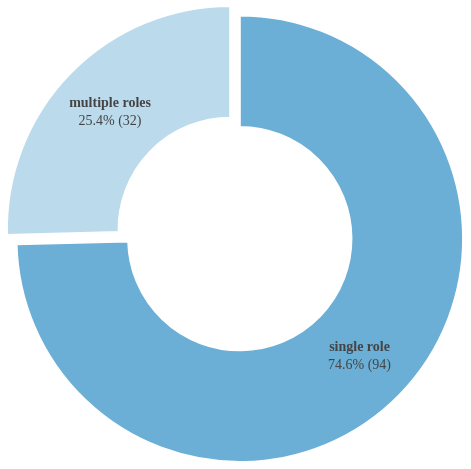
Figure 1
Single and multiple roles of respondents.
The surveyed organizations represent a wide range of disciplines as outlined by the DFG subject classification system, with more information available in section 3.1.1. Nevertheless, cultural institutions do not constitute a significant segment within this landscape. Furthermore, at the current level of aggregation, the DFG classification does not provide the detailed categorization needed to fully represent its specific disciplinary characteristics.
Finally, as with survey-based studies more generally, the findings may be subject to error arising from (1) the characteristics of the sample of individuals responding and (2) the nature of the responses themselves (Fowler, 2014).
3.1.1. DFG classification of scientific disciplines
Figure 2 presents the interdisciplinary distribution of responses, categorized according to the DFG Classification of Scientific Disciplines for 2020–2024 (German Research Foundation, 2021); organizations could select multiple disciplines to reflect their cross-disciplinary scope. Since the survey primarily targeted representatives from large, interdisciplinary research organizations, the responses are accordingly distributed relatively evenly across the various research fields. The majority of organizations that participated in the survey are active across all four main research fields: humanities and social sciences, engineering sciences, life sciences, and natural sciences.
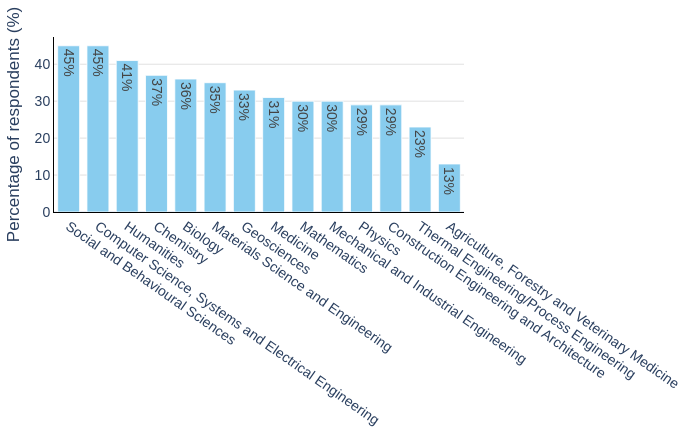
Figure 2
Responses from organization based on the DFG Classification of Scientific Disciplines (2020–2024).
3.1.2. Membership in PID provider communities
To assess organizational engagement with PID provider infrastructures, respondents were asked whether their organization is a member (either directly or through a consortium) of a PID community. DataCite membership was reported most frequently, with 46% (n = 58) of organizations indicating affiliation, followed by ORCID (23%, n = 29) and Crossref (5%, n = 6). Membership in ePIC was rare (2%, n = 2), and no respondents reported affiliation with the RAiD provider community, which shows that this new service, which has only been active in Europe around 2022, is not yet established.
3.2. Familiarity and use of PID types
PIDs are employed across a wide range of contexts. This section examines the level of familiarity with different PID types, e.g., DOI and GND, and the ways in which these identifiers are combined with various entities, e.g., journal articles or research datasets. The intended context of PID ‘use’, whether referring to article-level identification, API-based integration, or other forms of application, is inferred through the wording and context of each individual survey question.
3.2.1. Familiarity
Participants were asked to assess their familiarity with a range of PID types (section 2.1.1) commonly used across research and infrastructure contexts. The highest levels of recognition were reported for the DOI (97%, n = 122), ISBN (91%, n = 115), and ORCID iD (89%, n = 112). Substantial familiarity was also reported for the GND (72%, n = 91) and URN (69%, n = 87). In contrast, identifiers such as RAiD, RRID, edu-ID, ARK, and SWHID remain largely unknown to the majority of respondents, with 80% of respondents reporting a complete lack of familiarity. Intermediate levels of familiarity were observed for identifiers such as the ROR ID, PubMed ID, and Handle.
Overall, the results display a pronounced structure in familiarity: a small subset of PID systems is recognized by nearly all respondents, whereas many others remain largely unfamiliar across the surveyed community (Figure 3).
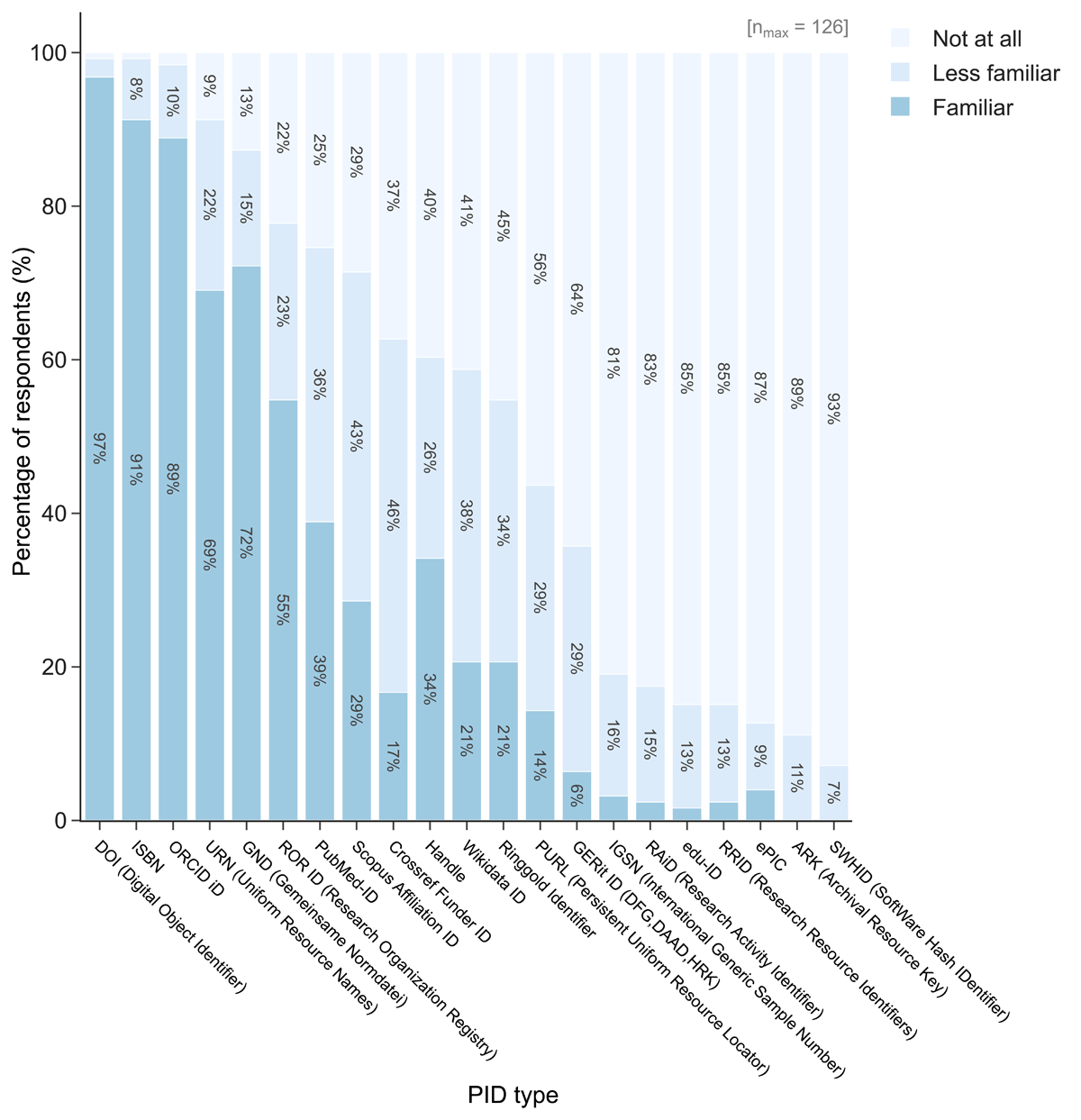
Figure 3
Distribution of familiarity levels across the PID type spectrum.
3.2.2. Use of PID types by entity
In order to understand the implementation of PIDs in practical applications, respondents were requested to specify the PID types utilized for particular entity categories within their respective institutions/organizations. The entity categories are academic events, books, cultural objects, data- or software-management plans (DMP/SMP), instruments or equipment, journal articles, research data, organizations, physical objects, projects, researchers, services, and systems as well as software and code.
Figure 4 visualizes the reported use of PID types across entity categories, thereby making visible both concentrations and blind spots in current organizational PID implementation. The pattern is clearly non-uniform: rather than a one-size-fits-all approach, organizations appear to operate with a differentiated portfolio of identifier infrastructures that are activated selectively in relation to entity-specific workflows, governance arrangements, and community norms. In this sense, the matrix provides a robust descriptive baseline for more fine-grained analyses, including comparisons of adoption profiles across organizational groups, disciplinary orientations, and functional mandates (e.g., libraries, repositories, research support, and research data management units). The use of DOIs across multiple entity categories is clearly evident, as is the widespread uptake of the GND and URN. Similarly, the high levels of use for ORCID iD and ISBN stand out.
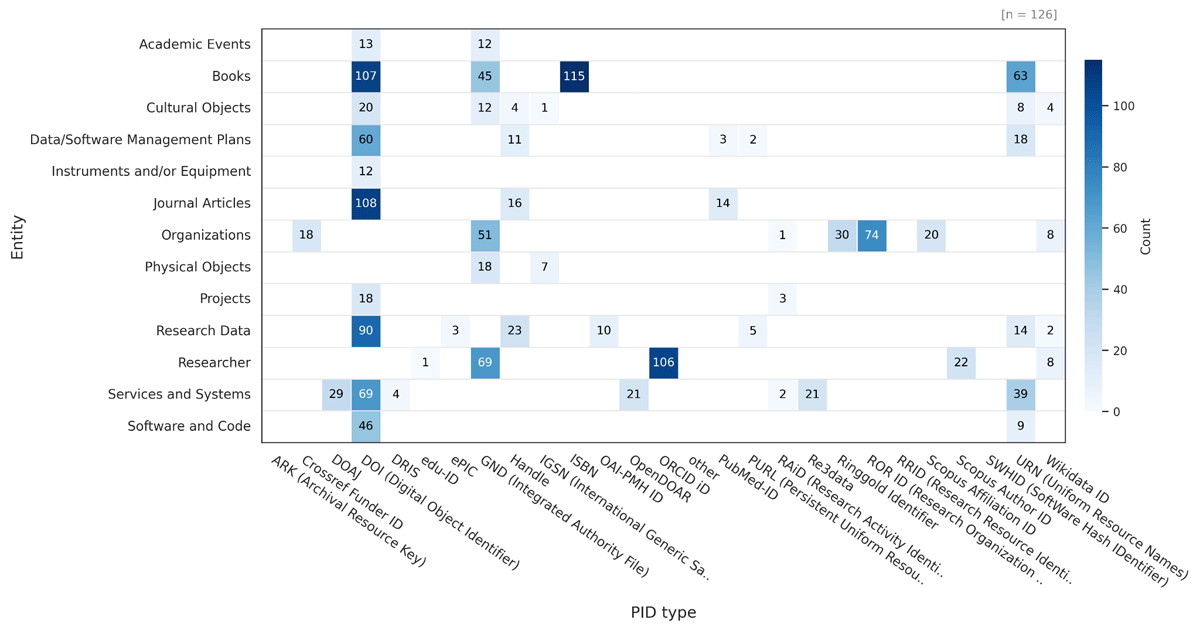
Figure 4
Overview of the use of entities and PIDs.
3.2.3. Context of PID usage
To better understand the organizational contexts in which PIDs are applied, respondents were asked to indicate the systems or settings where they are actively used within their organizations. The results show a strong concentration of PID usage in infrastructures dedicated to publication and research data management (Figure 5).
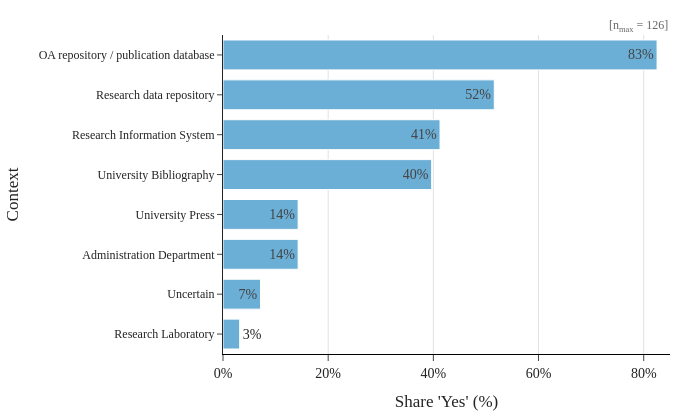
Figure 5
Distribution of ‘In which context do you use PIDs?’
The most frequently cited contexts were open-access repositories or publication databases (83%, n = 104), highlighting the central role of PIDs in scholarly communication and dissemination. Research data repositories followed as the second most common setting (52%, n = 65), underscoring the importance of PIDs for ensuring the findability and citation of datasets. Other notable contexts include research information systems (41%, n = 52) and university bibliographies (40%, n = 50), which reflect the integration of PIDs into institutional/organizational documentation and reporting structures. One-sixth (14%, n = 18) of the respondents mentioned university presses and administrative departments, suggesting emerging or supportive roles in PID workflows. Only a small number of respondents associated PID usage within research laboratories (3%, n = 4). Notably, nine participants indicated that they were uncertain about the specific areas within their organization where PIDs are applied.
3.3. Training and information
A critical element in the effective dissemination and utilization of PIDs is the availability and incorporation of training materials. It is necessary to determine whether training opportunities are currently available and, if so, whether they have been utilized. This inquiry pertains to the availability of training opportunities, which may be offered in both online and in-person formats. Researchers are the main focus of institutional/organizational infrastructure, which is why this section emphasizes them.
3.3.1. Training opportunities
Respondents were asked whether their organization provides training related to the use of PIDs for researchers (Figure 6). Only one-third (33%, n = 42) of respondents indicated that such training is offered. In contrast, more than half of respondents (58%, n = 73) reported that no training opportunities are available, while 9% (n = 11) were unsure. In contrast, the data suggests a higher level of individual engagement with PID-related training opportunities. When asked about participation in relevant workshops, webinars, or courses, over 60% (n = 76) of respondents reported attending training sessions focused on specific PIDs such as DOI or ORCID iD. Additionally, just under 40% (n = 49) indicated they had participated in training related to application scenarios for specific PIDs, and 37% (n = 47) had attended events covering metadata and metadata standards. Over one-third (34%, n = 43) of the respondents indicated that they have participated in training courses in general on the topic, while 16% (n = 20) reported exposure to reuse scenarios and 12% (n = 15) to systems-specific implementation issues. A smaller proportion of respondents (11%, n = 14) had received training on sources and registration procedures for PIDs. Figure 7 summarizes respondents’ training-related activities and offerings in the PID context.
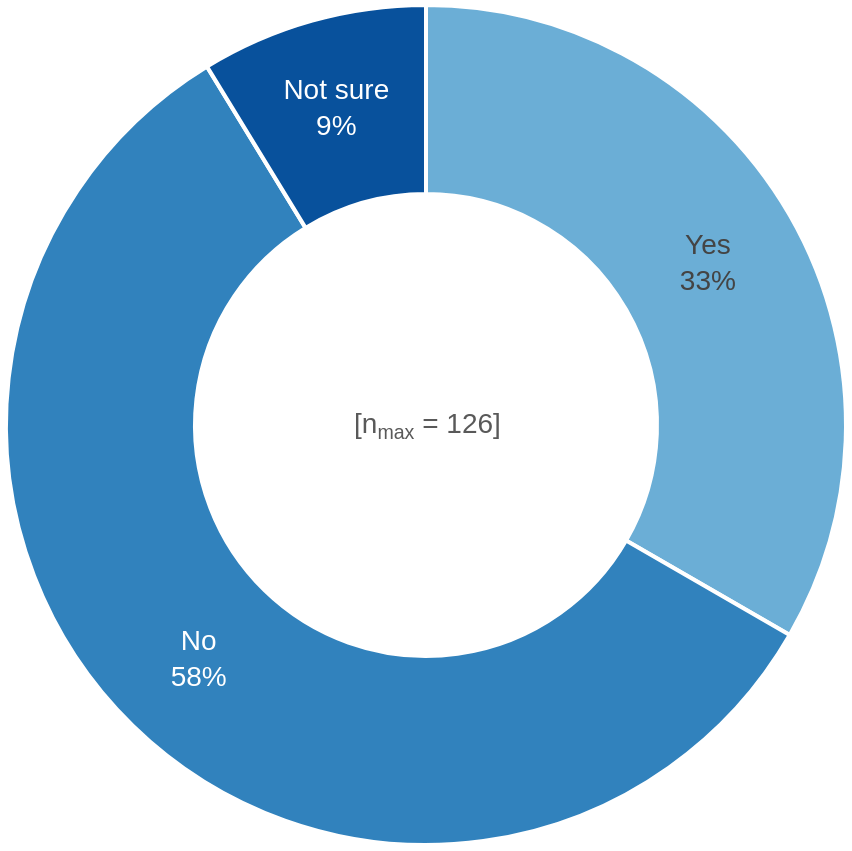
Figure 6
Percentage of organizations offering training on PIDs.
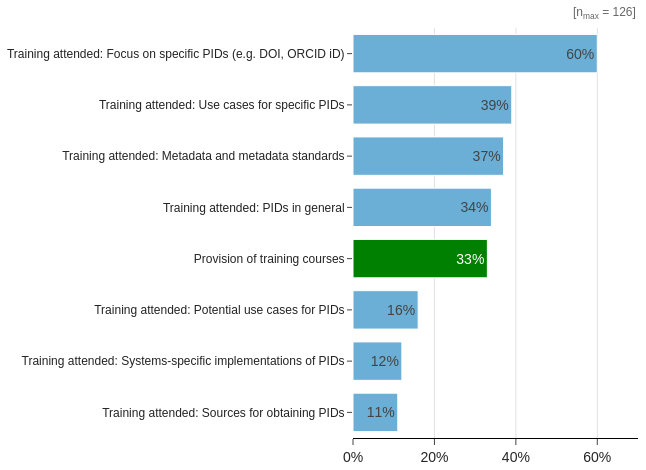
Figure 7
Training attended vs training offering (green) on PID-related topics.
3.3.2. Interest in PID-related training and information materials
The participants were asked to indicate PID-related topics for which they would like to attend training courses or receive informational materials, which is shown in Figure 8 on the right. The most frequently selected area was application scenarios for specific PIDs (56%, n = 70), followed by interest in metadata and metadata standards and the potential for reuse of PIDs (each 44%, n = 55). A notable number of respondents also expressed interest in system-specific implementation of PIDs (42%, n = 53) and focused sessions on particular PIDs such as DOIs or ORCID iDs (33%, n = 42). Topics such as general information about PIDs (30%, n = 38) and sources for obtaining them (27%, n = 34) were somewhat less in demand. Only a small minority (13%, n = 16) reported no need for further training or materials, and no participants specified other topics. Figure 8 also illustrates the discrepancy between attended and needed training.
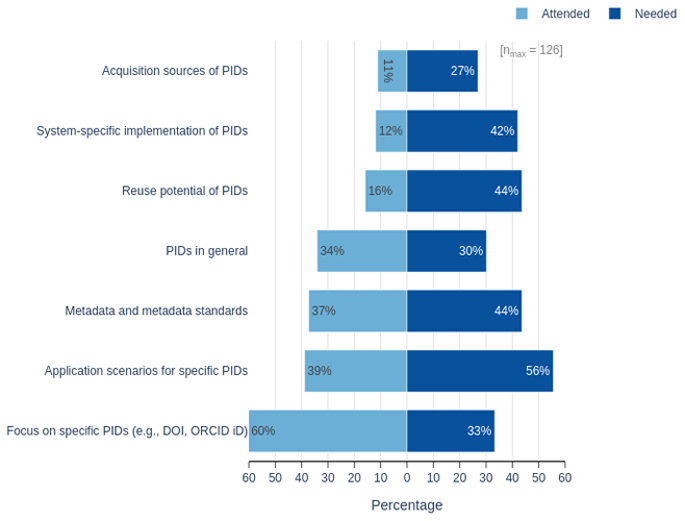
Figure 8
PID Training topic; differentiation of attended vs needed.
3.3.3. PIDs and organizational integration
This section focuses on the extent to which PIDs are institutionally embedded within the organizational structure. Forty-one percent of respondents indicated a positive response, 21% indicated a negative response, and 38% stated that they were unsure. To gain more fine-grained insights into the specific organizational contexts of PID integration, follow-up questions were posed. Among those who reported institutional embedding (i.e., the 41%), more than 86% stated that PIDs are integrated into institutional repositories, almost 55% reported the existence of institutional guidelines or policies, 49% indicated that PIDs are included in informational materials and guidance documents, and just under 14% noted that PIDs already play a role in employee onboarding.
3.4. Gaps and needs
This section introduces key gaps and needs in the organizational use of PIDs. Based on four question blocks, it addresses (1) organizational and technical requirements for PIDs, (2) expectations regarding the quality and structure of associated metadata, (3) perceived barriers that hinder PID implementation, and (4) plans for future PID use. Together, these dimensions provide a structured overview of where current practice stands, what goals should be pursued, and where concrete support is needed.
3.4.1. Perceived requirements for PIDs at the institutional level
The participants were invited to indicate their agreement with a series of statements pertaining to PID requirements within their respective organizations. In Figure 9, the highest levels of agreement were recorded for the practical aspects of implementation, with more than 90% (n = 115) of respondents affirming that PIDs should be easy to implement by the institution (e.g., in repositories and journals). Similarly, 88% (n = 111) of respondents agreed that PIDs should be easily linkable to research data and organizations, and 87% (n = 110) emphasized that they should enable citations of research outputs.
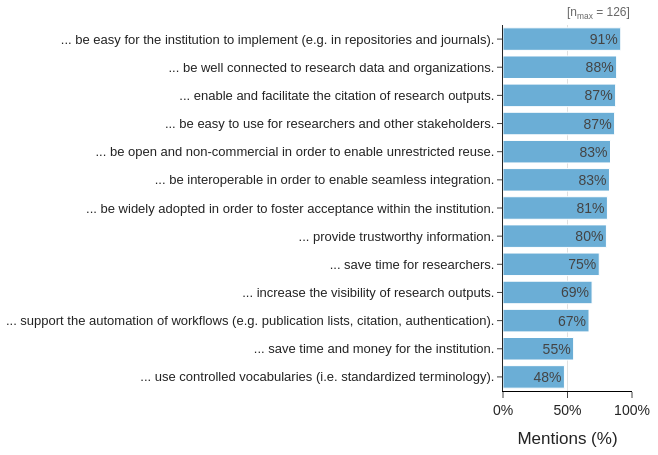
Figure 9
‘Strongly agree’ PID requirements at the organization level.
Ease of use was also highlighted, with 87% (n = 109) of participants stating that PIDs should be easy to use by researchers and others. Openness and interoperability were considered essential as well: 83% (n = 105) of respondents supported the idea that PIDs should be open and non-commercial to enable free use, and 83% (n = 104) noted the importance of interoperable PIDs to facilitate seamless integration. Other key expectations included wide adoption to foster institutional acceptance (81%, n = 102), provision of trustworthy information (80%, n = 101), and automation of workflows (67%, n = 84).
Comparatively fewer respondents emphasized controlled vocabularies (48%, n = 60) or saw PIDs primarily as a means to save time and money for the institution (55%, n = 69) or represent a time saving for researchers (75%, n = 94).
3.4.2. Metadata requirements
Respondents were asked to indicate the extent to which they agree with various statements regarding metadata requirements at their institutions. As shown in Figure 10, the strongest consensus was for metadata to be of high quality, characterized as complete, accurate, and up-to-date (90%, n = 113). A similarly strong consensus emerged around the need for metadata to support connections between different scholarly outputs and entities (87%, n = 109) and to adhere to widely used metadata standards while remaining adaptable to local needs (84%, n = 106).
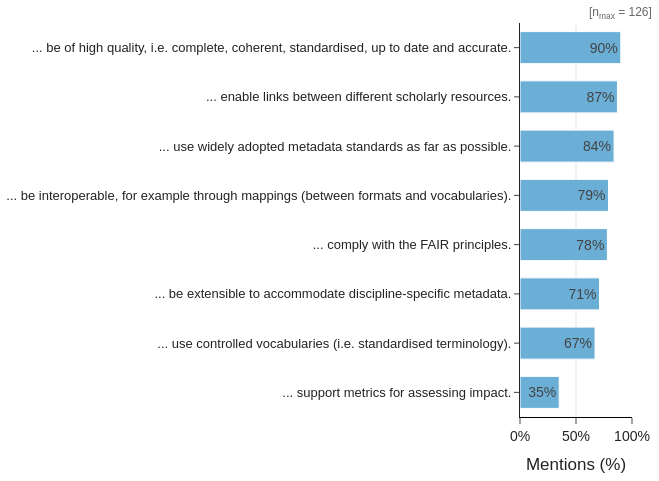
Figure 10
Strong consensus of metadata requirements at the organization level.
The responses indicate a broad consensus on stringent metadata requirements. Almost four out of five participants highlight interoperability and machine-readability as central priorities (79%, n = 99), and a similarly high share emphasizes compliance with the FAIR principles (78%, n = 98). In addition, a majority supports metadata models that can be flexibly extended with discipline-specific elements (71%, n = 90) and underlines the importance of controlled vocabularies to secure consistent semantic interpretation (68%, n = 85).
In contrast, only 35% (n = 44) of respondents agreed that metadata should enable impact measurement through metrics. Overall, the responses indicate a broad consensus on the essential importance of quality, interoperability, and standardization in metadata practices, alongside a recognition of disciplinary specific aspects.
3.4.3. Planned PID usage by entity type
Respondents were asked to indicate for which types of entities their organization plans to adopt PIDs in the future; the results are summarized in Figure 11. The most frequently mentioned entities were research data (69%, n = 87), followed by journal articles (57%, n = 72), persons (e.g., researchers, contributors), and books (each 53%, n = 67). Several participants also indicated plans to assign PIDs to services and systems such as open-access publication platforms (45%, n = 57) and to software and code (34%, n = 43).
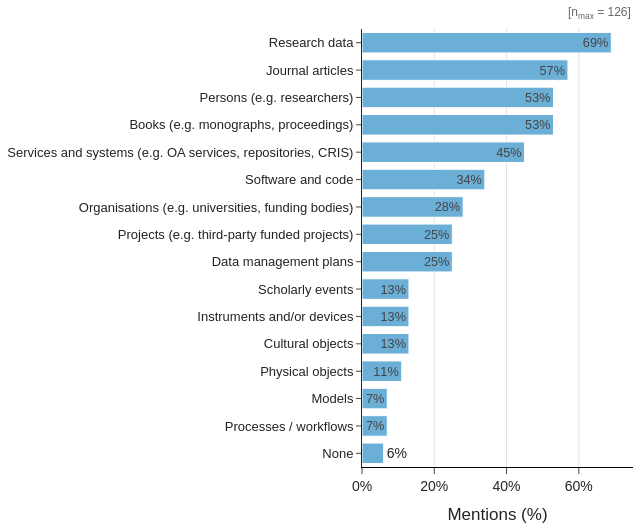
Figure 11
Planned PID use by entity type.
Less frequently mentioned were organizational entities (28%, n = 35), data management plans (25%, n = 32), and projects, such as externally funded research initiatives (~25%, n = 31). Assigning PIDs to instruments or devices, scientific events, cultural objects, physical specimens, workflows, and models received relatively low levels of endorsement, ranging from 7% to 14% (n = 9 to n = 17). Only a small minority of respondents (5%, n = 7) reported no plans to implement PIDs for any entity type.
3.4.4. Barriers to PID implementation
To better characterize organizational constraints on PID adoption, respondents were asked to indicate which factors hinder implementation. As shown in Figure 12, the most frequently reported barrier is a lack of human resources (71%, n = 89), followed by limited knowledge of PIDs (52%, n = 65). Additional organizational challenges are reported at similar levels, including general organizational obstacles (36%, n = 45), a lack of clarity regarding the benefits of PIDs (33%, n = 42), and excessive implementation effort (33%, n = 42). Financial constraints are mentioned less often (25%, n = 32), as are legal concerns such as data protection issues (18%, n = 23).
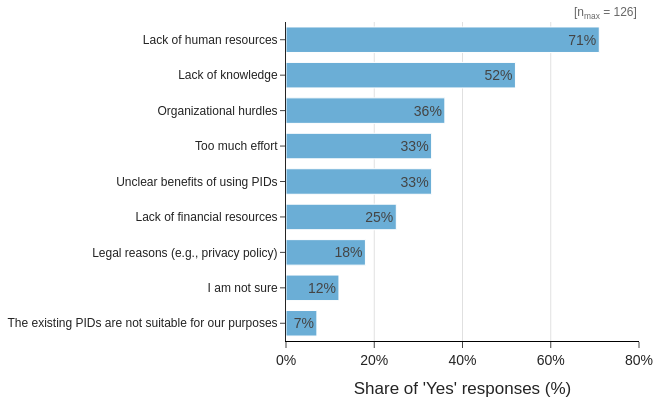
Figure 12
Reasons against the implementation of PIDs.
3.5. Sustainable promotion of the use of PIDs
Ensuring that efforts to embed PIDs across all system components are sustainable is critical. Accordingly, respondents were asked to assess the importance of key stakeholders and strategic approaches for effective PID integration.
3.5.1. Stakeholders in realizing the potential of PIDs
The respondents were asked to identify the stakeholders they considered capable of making a significant contribution to better realizing the potential of PIDs. A significant proportion of respondents (98%, n = 124) strongly advocated for the functionality of important infrastructure facilities such as libraries and data centers. Additionally, 94% championed research organizations from both university and non-university settings (n = 119), while 91% favored research funders (n = 115).
PID providers (e.g., Crossref, DataCite) were also widely recognized as key enablers (85%, n = 107), alongside publishers and superordinate science institutions (both 81%, n = 102).
National-level projects were frequently identified as important contributors (76%, n = 96), although with lower endorsement than the most highly rated stakeholder groups. At the same time, a minority of respondents assessed national-level projects as having limited impact (12%, n = 15), potentially reflecting concerns about project sustainability. A comparable pattern is evident for researchers: while most respondents considered researchers necessary for realizing the potential of PIDs (72%, n = 91), they also attracted the highest share of negative responses (24%, n = 30), indicating greater skepticism about their capacity to influence PID implementation at the system level (Figure 13).
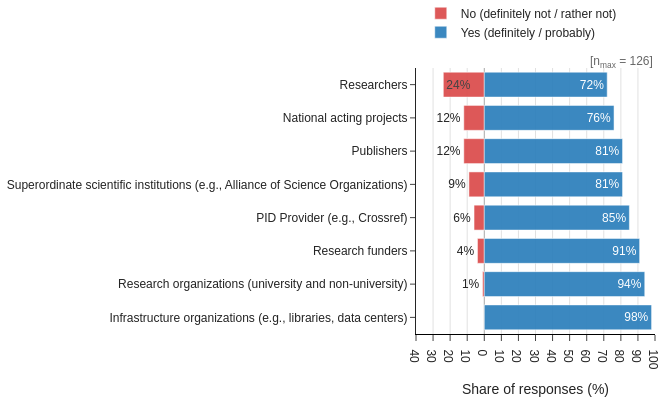
Figure 13
Stakeholders perceived as key to realizing the potential of PIDs.
3.5.2. Attitudes toward strategic and structural conditions for PID adoption
The survey results indicate a strong consensus among respondents regarding the systemic conditions required for the successful and sustainable adoption of PIDs. A high level of agreement was recorded for the statement that effective and efficient PID implementation depends on the strategic coordination of actors within the research system to create meaningful incentives (94%, n = 119). This underscores the perceived importance of governance-level alignment and the coordinated distribution of responsibilities across stakeholder groups. Closely related, 94% of participants (n = 118) agreed that technical infrastructures should be FAIR by design. In addition, 91% (n = 115) of respondents affirmed that the development and use of PID infrastructures should be explicitly supported through research and infrastructure funding. Furthermore, 83% (n = 105) endorsed the need for a clear national strategy to guide PID adoption, standardization, and international interoperability, emphasizing the value of coordinated policy-making and national-level oversight.
4. Discussion
PIDs are vital to building a robust and interoperable research infrastructure. While the survey reviews existing research (Vierkant et al., 2022), it substantially extends these approaches, thereby generating new insights. The findings show that PIDs are widely adopted and accepted among users in some areas. However, significant challenges remain with respect to strategic coordination and implementation. By focusing on the perspectives of academic and non-academic research and infrastructure organizations, this survey lays the foundation for future areas of action, including those that address the strategic dimension for the dissemination of PIDs.
With responses from 126 institutions, the survey offers a broad and heterogeneous empirical basis for examining familiarity with and use of PIDs in Germany. Because the questionnaire was typically completed on behalf of the institution, the findings can be interpreted as an aggregated organizational perspective rather than as individual-level attitudes. Respondents were primarily affiliated with libraries and research data management units (Section 3.1), reflecting the central role of these departments in supporting scholarly communication and in ensuring the publication, discoverability, and accessibility of research outputs.
4.1. Dissemination of PIDs within the German research landscape
Within the German research landscape, well-established PID types and systems such as DOI, GND, ISBN, ORCID, and URN predominate within their respective areas of application. More recent PID systems, such as RAiD, RRID, or SWHID, were infrequently used at the time of the survey (Figure 3). The findings indicate that some PIDs are employed for multiple purposes (e.g., DOI, GND, URN), whereas others are intentionally designed for a single, clearly defined target entity (e.g., ORCID for researchers, ROR for research organizations, or IGSN for physical objects).
The survey analysis shows (Figure 4) a predominant use of DOIs across all queried application areas, primarily for traditional text publications and research data. The prevailing importance of DOIs seems to stem from the system’s recognized capability to provide persistent, reliable identifiers for various types of digital research objects. In the meantime, the DOI standard has also been extended to new areas of application, including software and research data publications as well as data and software management plans (DMPs, SMPs). In contrast to other PIDs, such as GND or GERiT, DOIs are internationally established and widely accepted by publishers, repositories, and funding organizations. Moreover, they are supported by a well-developed infrastructure, making them the prevalent standard within the scholarly community. The significant dissemination of ISBNs results from their internationalization as a globally recognized standard and their capacity to uniquely identify every book or published medium, including its various editions and formats. In doing so, ISBNs substantially facilitate economic and organizational processes in the book trade, cataloguing practices, and the scholarly use of publications.
The GND is a widely used PID type in German-speaking countries, primarily shaped by libraries. Its long-standing establishment is based on deep integration into the national research infrastructure. The GND is jointly maintained by the German National Library (DNB) and numerous library consortia across Austria, Switzerland, and Germany and has been continuously curated over many years, which ensures high data quality and reliability. The GND covers various entities such as persons, corporate bodies, subject headings, conferences, geografica, and works. In Germany, the assignment of PIDs for physical objects is also increasing (PID-Monitor, 2025). Figure 4 additionally illustrates that GND is used for certain objects, such as museum exhibits and collection items (GLAM sectors), while IGSN is rather used for subject-specific purposes, such as geological samples. It is worth noting that the IGSN was initiated in the field of geosciences to ensure the reuse and discoverability of samples and associated data; especially the German research community is a significant driving force behind IGSN IDs and the governance structures of the IGSN association (IGSN e.V.). The project results suggest that there is often a lack of awareness of the use of DataCite DOIs for physical objects,23 perhaps because application-specific solutions dominate, as mentioned above, or because other, less expensive identifiers are used for certain use cases, for example, ARKs for large numbers of objects in collections. However, the survey findings do not reflect this pattern.
The reasons for the limited use of certain PIDs in specific areas of application are complex and multifaceted. In addition to a possible preference for internal identifiers within organizations, other factors may also play a role (Figure 12). These include, for example, a lack of awareness of the benefits of particular PID types and their entities, insufficient resources for implementing new identification systems, or the complexity of integrating PIDs into existing workflows. Moreover, factors such as a preference for established procedures, as well as legal considerations mentioned by respondents, may also be relevant. These observations are consistent with the results of an NFDI-wide survey on the dissemination and use of PIDs within the NFDI consortia (El-Gebali and Böhm, 2025: 46), as well as with qualitative data collected through thematic user reports in the context of the PID Network project (Vierkant et al., 2025: 14). In particular, limited human and financial resources as well as insufficient knowledge were identified as the main barriers to integrating new PIDs into existing institutional systems. This convergence of quantitative and qualitative evidence underscores the need for a coordinated approach.
Furthermore, it is important to note that simply introducing new identifiers is not enough to create sustainable PID systems. This raises the question of the actual benefits of adding more PID systems. Although a clear one-to-one mapping between a PID type and its target entity can improve understanding and therefore accelerate theoretical adoption, it can also complicate the practical implementation process within existing information systems and their interconnected components. A central challenge lies not in the availability of identifiers, but in their widespread adoption and integration into existing workflows.
The establishment and further dissemination of ORCID iDs for the unambiguous identification of individual researchers has been implemented in a pioneering way in Germany (PID-Monitor, 2025). The initial impetus came from major funding organizations such as the DFG, which recommended ORCID iDs for grant applicants, thereby creating a strong incentive for researchers to register. This was supported through the ‘ORCID DE’ projects. National developments related to Open and FAIR Science are intensifying the focus on unique and persistent identifiers that can be used by researchers and research administrators across the scholarly landscape.
In addition, ROR represents a promising step in this direction, as it provides a standardized method for identifying research organizations. However, its level of recognition has not increased significantly compared to earlier surveys (Vierkant, Schrader and Pampel, 2022), remaining at around 50%. The integration of ROR into existing systems and the further promotion of awareness within the research community still require continuous efforts.
In recent years, the use of PIDs in Germany has further evolved. While their potential fields of application are diverse, there remains considerable scope for expansion and improvement. Organizations primarily plan to focus on assigning established PID types to traditional research outputs (publications, data) as well as to individuals, whereas the extension to other entities, such as cultural or physical objects, is currently of lower priority. A noticeable trend, however, is the planned assignment of PIDs for software and code (section 3.4.3, Figure 11).
PIDs are increasingly becoming an integral component of research data management (RDM), publication, and research information workflows. Their use is supported by national initiatives and projects, such as ‘PID Network Deutschland’ and PID4 NFDI, the basic service for PIDs in the German National Research Data Infrastructure (NFDI; Bingert et al., 2024). At the same time, the degree of implementation still varies considerably between disciplines and organizations, and challenges remain with regard to standardization, interoperability, and user acceptance. Overall, the use of PIDs is in a state of dynamic development.
4.2. Metadata requirements as a key factor for the sustainable use of PIDs
There is growing interest in the interlinking of different entities (resource types) and in the associated quality of metadata. Respondents emphasize the need for complete, precise, high-quality, up-to-date, and standards-compliant metadata. Equally important are interoperability, support for links between scholarly resources such as research outputs, and adherence to the FAIR principles. Metadata should be flexibly extensible in order to accommodate discipline-specific requirements and should make use of controlled vocabularies to ensure semantic consistency (Figure 10). Only one-third of respondents consider metadata suitable for impact measurement. The majority of survey participants have a library and RDM background, which may lead them to prioritize technical and structural aspects. Controlling and strategic management areas, which prioritize reporting functions, are less represented. The results thus reflect the specific priorities of the specialist groups and should not be interpreted as a general assessment of the importance of impact metrics.
Overall, the survey emphasizes the importance of robust, coherent, and interoperable metadata standards to improve the discoverability, networking, and reusability of research resources.
4.3. Institutional framework conditions for training and guidelines
The survey results show that institutional training opportunities on PIDs are currently limited: Only about one-third of participating institutions offer relevant training for researchers (Figure 6). This underscores the continuing need for structured training measures, especially given the increasing relevance of PIDs in research processes.
At the same time, there is a high level of individual commitment, as many respondents independently participate in workshops, webinars, and courses, especially on practical topics such as the application of specific PIDs, metadata standards, and possibilities for reusing PIDs (Figure 7). There is a marked interest in further training, which focuses on specific use cases and technical implementations. This discrepancy between institutional offerings and individual commitment points to a central need for action. In order to promote the sustainable integration of PIDs into everyday research and to fully exploit their potential, it is essential to establish easily accessible, practice-oriented, and technically differentiated training offerings at the organizational level.
In addition, the survey reveals a critical gap in institutional PID awareness: more than half of the respondents were either unaware of the establishment of PIDs or confirmed the absence of any institutional usage guidelines. Furthermore, one-third of respondents are unclear about the “benefits of PIDs” (Figure 12). This finding corresponds with the results of the project-related events (Vierkant et al., 2025: 9) and signals a clear need for action on the part of the organizations. The lack of binding guidelines impairs the consistent and standardized use of PIDs by scientific staff and employees in supporting areas such as libraries and research data management.
4.4. Strategic control and future viability
The survey confirms the central role of infrastructure providers, research organizations, and funding bodies in realizing the potential of PIDs (Figure 13). At the same time, the feasibility of centrally coordinated, policy-driven approaches is being questioned by some survey respondents. This highlights the need for ongoing dialogue to build trust and communicate the benefits of centralized control and responsibilities.
Clear views on the role of researchers, national projects, and publishers indicate uncertainty about the long-term influence of individual or temporarily funded actors. In particular, time-limited funding for national projects can jeopardize the continuity of such services.
In addition, the governance structures, guidelines, and responsibilities of research funders, research institutions, publishers, and PID providers are a crucial factor (Figure 9 and 13). Clear guidelines from funding or research organizations are necessary to ensure compliance with standards and the sustainable use of PID systems. At the same time, agreement on these implementation-related requirements was not unanimous, although broad consensus might have been expected. This variation indicates that organizational context may play an important role in shaping perceptions of PID implementation and management and should therefore be taken into account in future surveys.
Overcoming practical, organizational, and informational barriers requires targeted support measures. Future efforts should focus on improved communication about specific PID use cases, optimized integration strategies, and the establishment of training opportunities to clearly demonstrate the benefits and increase the adoption rate. While infrastructure providers supply technical frameworks and services, research funders bear a crucial responsibility by developing and enforcing guidelines and funding programs that require and promote the use of PID systems. The management of research institutions is called upon to implement these guidelines organizationally, provide resources, and establish a clear governance structure for the sustainable use of PID.
5. Conclusion
This article reports on the first nationwide, cross-organizational survey of PID use, gaps, and needs as well as strategic conditions in Germany, spanning a broad range of PID types and entity categories. By systematically mapping twenty-two identifiers across diverse research, cultural, and academic organizations, the survey extends earlier, more narrowly scoped investigations and provides an empirically grounded overview of the German PID landscape. The findings indicate that PIDs are already a core component of scholarly communication and research data management in many organizations. At the same time, the results point to both strong foundations and substantial unrealized potential: while well-established identifiers are widely adopted and supported by robust infrastructures, newer and internationally emerging PIDs remain comparatively less well known and less consistently integrated. Established identifiers, particularly the DOI, ISBN, ORCID iD, GND, and URN, continue to function as de facto standards within their respective domains, anchoring current practice while also highlighting where further diffusion and integration efforts may be required. By contrast, newer or more specialized PIDs (e.g., RAiD, RRID, SWHID) remain weakly known and rarely implemented. Current and planned use is strongly concentrated in research data, publication, and researcher contexts, with anticipated expansion particularly for research software and instruments. Other entities, including cultural or physical objects and events, currently play only a marginal role in the implementation of PID in organizations. The findings highlight the need for coordinated national approaches that align governance, training, metadata standards, and infrastructure development.
In an international and European (Open Science Cloud – EOSC) context, where comprehensive PID frameworks are increasingly treated as a cornerstone of modern, FAIR-aligned research infrastructures, Germany appears to be at a pivotal point. European initiatives and policy frameworks emphasize PIDs and high-quality metadata as foundations for interoperability, sustainability, and machine actionability within federated research environments. Aligning national approaches with these developments is therefore essential to ensure that German research outputs can be seamlessly connected in European and global research infrastructures. As data-driven research and algorithmic discovery become more pervasive, the ability of PIDs combined with structured, interoperable metadata to support automated linking, provenance tracking, and reliable reuse becomes even more consequential for transparency, reproducibility, and participation in emerging machine-actionable workflows. The introduction of new PID (systems) with specialized metadata alone will not result in the establishment of a sustainable PID ecosystem. This is due to the fact that the robust, interoperable metadata and appropriate governance structures are required, alongside reliable regional service availability and transparent, sustainable pricing models.
In practical terms, the results point to a coherent set of priorities for strengthening the German PID ecosystem: aligning training provision more closely with community needs; building institutional capacity through dedicated staff, guidance, and integration of PIDs into digital strategies; clarifying roles and responsibilities across stakeholder groups; and incorporating PID components and metadata support into the infrastructure design from the project’s inception. Addressing these gaps will require coordinated, adequately resourced, and inclusive efforts that integrate policy instruments, sustainable infrastructures, and capacity building. Pursued strategically and participatorily, such measures can substantially enhance the transparency, interoperability, and resilience of the German research system and improve the visibility, reusability, and connectivity of its research outputs within an increasingly collaborative, data-driven, and global scientific landscape. A 25% response rate provides a solid empirical basis; nevertheless, higher participation would be desirable in future studies, and, as a lesson learned from the current survey, future questionnaires should employ more precise wording to reduce ambiguity and ensure more consistent interpretation by respondents.
Looking ahead, the forthcoming German national PID roadmap offers a timely opportunity to translate this survey’s insights and the findings from community workshops into coordinated actions to consolidate current strengths and accelerate systematic PID adoption across organizations and infrastructures.
Appendices
Appendix
Additional Files
The additional files for this article can be found as follows:
Quantitativer Umfragebogen zum Bedarf und zur Nutzung von persistenten Identifikatoren an Forschungs- und Infrastruktureinrichtungen in Deutschland, https://doi.org/10.5281/zenodo.18772816
PID-Network Germany quantitative survey dataset (March–May 2024), https://doi.org/10.5281/zenodo.17856122
Google CoLab notebook for analyzing survey data and plotting figures, https://doi.org/10.5281/zenodo.17864409 https://colab.research.google.com/drive/1szzGRF5ZUG5WLPreg-DyQCkEPz3O6YJe (probably non-persistent, executable)
Margin of error
N = 501 (population size)
nmax = 126 (fully complete responses)
z = 1.96 (z-score, confidence level 95%)
p = 97% (percentage of responses selecting a specific option: Section 3.2.1 figure 3: ‘DOI familiarity’)
= 0.97
Calculation on Margin of Error:
Sample Size Impact: The margin of error is based on 126 responses. Increasing the sample size will improve the reliability of the data and reduce the margin of error.
Notes
[1] https://pid-monitor.org/Sparten/Datensaetze/doi.html, last accessed 2025-10-10.
[2] https://rd-alliance.org/groups/national-pid-strategies-interest-group, last accessed 2026-05-08.
[3] https://www.rd-alliance.org/groups/national-pid-strategies-interest-group/plenary-participation/?application_id=187951, last accessed 2026-05-22.
[4] https://gepris.dfg.de/gepris/projekt/506475377?language=en, last accessed 2025-10-10.
[5] e.g. Landesforschungsbericht Jahre 2021 bis 2023 (2025), https://www.mkw.nrw/system/files/media/document/file/landesforschungsbericht.pdf, last accessed 2026-05-18.
[6] Word changed from “Heritage” to “Hash” since public available ISO/IEC 18670:2025, https://www.iso.org/standard/89985.html.
[7] https://gnd.network.
[8] https://www.fraunhofer.de/en/about-fraunhofer.html, last accessed 2026-05-20.
[9] https://www.helmholtz.de/en/about-us/, last accessed 2026-05-20.
[10] https://www.leibniz-gemeinschaft.de/en/about-us/about-the-leibniz-association, last accessed 2026-05-20.
[11] https://www.mpg.de/11761628/profile-visions, last accessed 2026-05-20.
[12] https://www.pid-network.de/en/news/events, last accessed 2026-05-29.
[13] https://www.limesurvey.org/ (Accessed: 28 November 2025).
[14] https://open-access.network/services/oaatlas, last access 2025-10-10.
[15] https://open-access.network/, last access 2025-10-10.
[16] https://www.fraunhofer.de/de/institute.html, last access 2025-12-26.
[17] https://www.helmholtz.de/ueber-uns/helmholtz-zentren/, last access 2025-12-26.
[18] https://www.leibniz-gemeinschaft.de/institute/leibniz-institute-alle-listen, first access 2023-12-12, last access 2025-12-26 (96).
[19] https://www.mpg.de/zahlen-und-fakten, last access 2025-12-26.
[20] https://www.hochschulkompass.de/hochschulen/downloads.html, access 2024-03-01.
[21] https://www.hochschulkompass.de/hochschulen/downloads.html, access 2024-03-01.
[22] https://colab.research.google.com/, runtime version: 2025.10, last access 2026-01-28.
[23] https://schema.datacite.org/meta/kernel-3.1/index.html, last access 2026-01-08.
Abbreviations
ARK Archival Resource Key
DNB German National Library
DOI Digital Object Identifier
EOSC European Open Science Cloud
GERiT German Research Institutions identifier
GLAM Galleries, libraries, archives, and museums
GND Integrated Authority File from the German National Library
ISBN International Standard Book Number
IGSN International Generic Sample Number
NFDI Nationale Forschungsdateninfrastruktur (German National Research Data Infrastructure)
ORCID Open Researcher and Contributor ID
PID Persistent Identifier
PURL Persistent Uniform Resource Locator
RaiD Research Activity Identifier
ROR ID Research Organization Registry
RRID Research Resource Identifier
SWHID SoftWare Hash IDentifier
URN Uniform Resource Name
Acknowledgements
We thank the many survey participants for their time and engagement, our colleagues from the Faculty of Sociology of Bielefeld University for LimeSurvey support, and all contributors for the constructive discussions.
AI tools such as ChatGPT (GPT-4o, GPT-5.2 Thinking), DeepL, and Grammarly are used to improve the clarity of non-native speakers’ writing styles.