
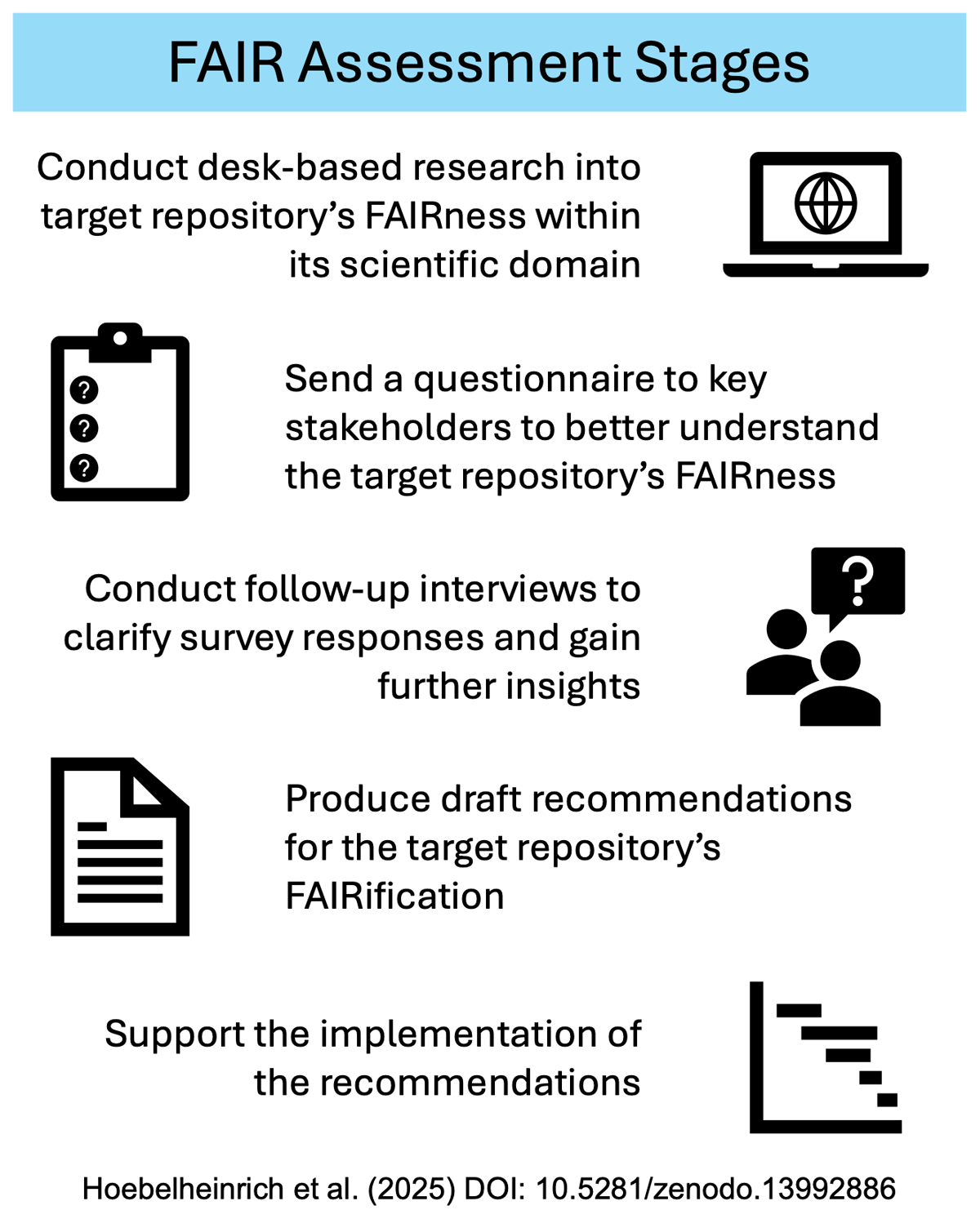
Figure 1
The five stages of the persona-specific methodology for FAIR assessments.
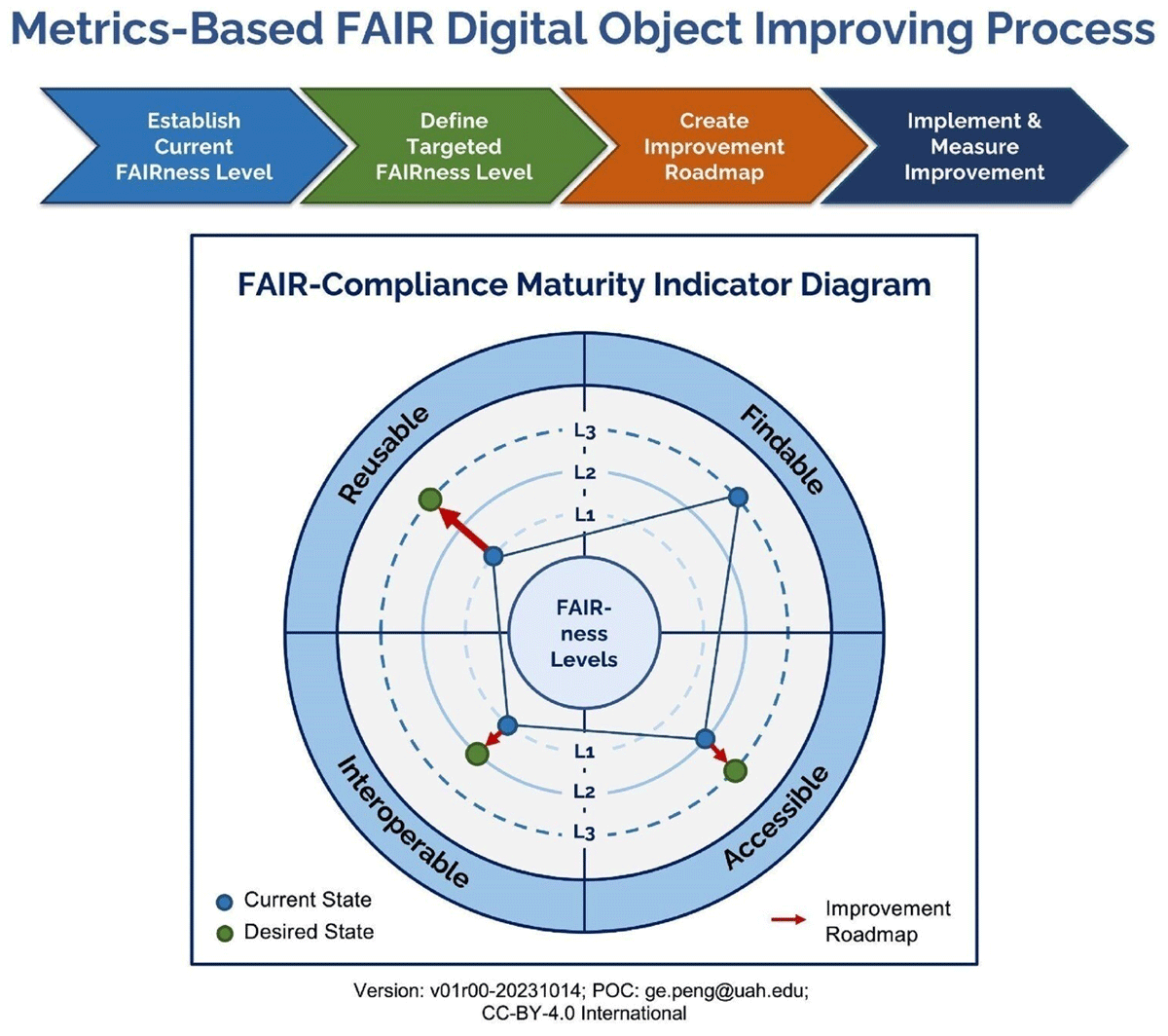
Figure 2
FAIR-compliance maturity indicator diagram.
Table 1
How GO FAIR US’s Assessment Methodology mirrors the FAIR-QMM.
| METRICS-BASED FAIR DIGITAL OBJECT IMPROVEMENT PROCESS | GO FAIR US ASSESSMENT METHODOLOGY |
|---|---|
| Establish current FAIRness level | Using the persona-based methodology, describe and document what a target repository is doing to implement the FAIR principles |
| Define targeted FAIRness level | Based on the findings from the persona-based methodology, develop a Preliminary Work Plan |
| Create improvement roadmap | Seed the Preliminary Work Plan with tasks associated with one or more of the five Work Plan strategic areas; work with the target repository and its stakeholders to choose, prioritize, and plan to implement the strategic choices |
| Implement and measure improvement | Complete the assessment process by finalizing the target repository’s Work Plan and identify the vision for and measurement of successful achievement of the target repository’s goals |
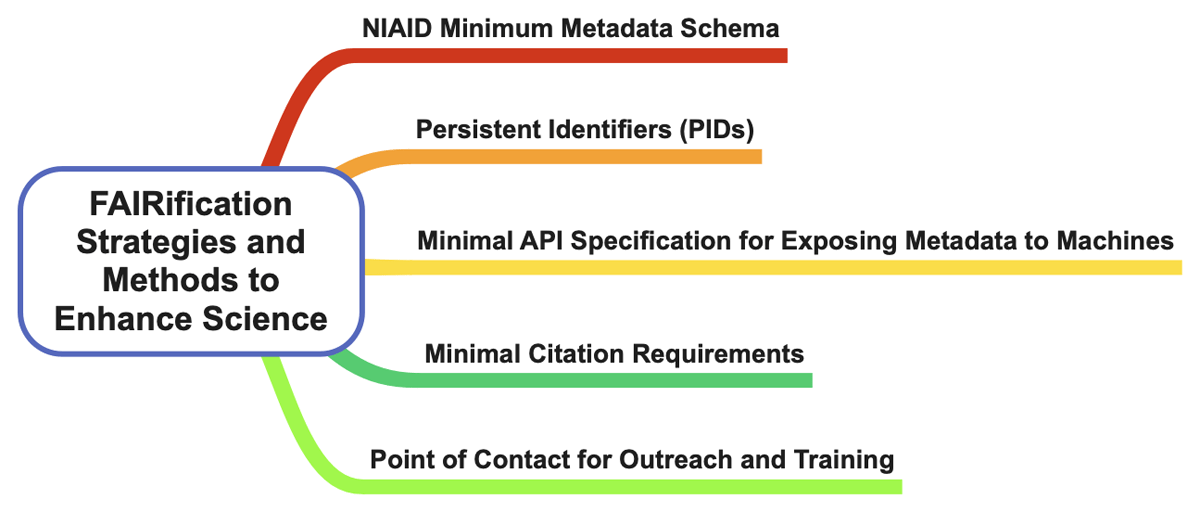
Figure 3
FAIRification strategies and methods to enhance science.
Table 2
Sample PID Strategy sections from the Generic Work Plan template.
| ITEM # | PRIORITY | FAIRIFICATION TASK DESCRIPTION | EXPECTED OUTCOME | FAIR PRINCIPLE | METRICS | DEPENDENCIES, RESOURCES REQUIRED, AND NOTES |
|---|---|---|---|---|---|---|
| 1 | PID Implementation Strategies These strategies focus on identifying the data and metadata artifacts, and their component entities, using identifiers that are globally unique, persistent, resolvable in a browser for humans or computers, and citable in documentation and publications. All of these features increase the value of the underlying data and metadata to scientific researchers, and to anyone else who wants to explore or work with the resulting resources. | |||||
| […] | ||||||
| 1.4 | High: A, B Medium: C, D, E | PID Strategy: Dataset Citation (A) Present to submitters the format and use of citation strings for datasets and data files (using corresponding identifiers) in addition to publications. (B) Publish the citation strings on the site for each dataset. (C) Identify datasets in the best way possible, and report results to data providers and repository managers (D) Add citation information to presented information in the repository. (E) Evaluate the prospects of adding dataset identifier/citation fields to relevant data portals and clinicaltrials.gov. | Increased familiarity with, adoption of, and respect for data citations; increased visibility of dataset reuse. | F1, F2, F4 | 1) Number of citations of repository’s citation identifiers 2) Number of other references to repository’s dataset citations 3) Altmetrics value for repository’s datasets | Effort:  Dependencies: - Notes: - Data citation and identification strategies can work hand-in-hand. - GO FAIR US can suggest best options for citation strings for the repository. - GO FAIR US could offer tracking strategies to detect dataset citations of all of the repository’s datasets. This is a large-scope item but would have benefits across many repositories. |
Table 3
Sample Community Assessment Strategies section from the Generic Work Plan template.
| ITEM # | PRIORITY | FAIRIFICATION TASK DESCRIPTION | EXPECTED OUTCOME | FAIR PRINCIPLE | METRICS | DEPENDENCIES, RESOURCES REQUIRED, AND NOTES |
|---|---|---|---|---|---|---|
| Community and Assessment Strategies These strategies explicitly address the ability of research communities to work together, to understand and define their own discipline’s needs and any transdisciplinary needs, and to ensure their community’s objectives are well met. When these strategies are implemented, scientific cooperation within specific communities or domains and across domains can be enhanced while making the sharing process more efficient and effective. | ||||||
| 3.1 | High: A, B, C Medium: D, E | Assess Strategies for Expanding Domain Researcher Data Sharing and Reuse (A) Assess existing data sharing and data use agreements to determine whether recommendations can be included that will allow the creation of citations for datasets. (B) Solicit feedback from research data submitters or re-users on their experiences with the repository for purposes of assessing and improving submission and download workflows. (C) Assess whether there are other places on the repository’s public web pages where examples of recommended formats for citing published outputs from use and reuse of the datasets can be displayed prominently. (D) Consider adding information about the repository to repository registries such as fairsharing and SciCrunch to expand awareness of the repository and its data. (E) Assess whether more data usage metrics can be added to the download functions or to associated search methods. | Increased awareness of the repository’s existence, with improvement in both dataset downloads and uploads (sharing). | F4, I1 | Measure impacts on data usage statistics of expanded sharing of information about the data collections within the repository (e.g., increased number of citations, altmetrics) For a given modification or set of modifications: 1) Percentage change in citations 2) Percentage change in altmetrics 3) Percentage change in visits to relevant page type 4) Percentage change in user access requests | Effort:  Dependencies: - GO FAIR US staff time Notes: - These strategies more broadly evaluate project-specific opportunities for improving data sharing and reuse, with GO FAIR US team members providing significant analytical support. - Each strategy pursues targeted improvements, at relatively low cost. |